V. Moody's Blog, page 95
November 26, 2012
Knowledge Is Power But Story Is King

Knowledge is power. Or is money power? Maybe power is power. Certainly a gun is
power. But if there are two guns and only one has bullets, and you know which,
then we’re back to knowledge is power. Unless what you know is that the empty
gun is the one in your hand.
The point I’m making is that no rule is universal. Just
because something is true in one situation, doesn’t make it true in another.
You need to understand the context.
Eight months into the
pregnancy she was literally as big as a whale.
The word ‘literally’ has a meaning which in the above case
doesn’t make sense. You can’t be literally
as big as a whale unless some sort of weird genetic experiment has gone
horribly wrong. The above line is therefore incorrect. Only it isn’t. It’s a
form of expression called hyperbole.
Unrealistic exaggeration for effect is a completely
acceptable way of communicating. And we know this because if you use hyperbole
to another person, that person won’t take it literally (even if you use that
word).
Our understanding of language goes beyond simple one-size-fits-all
rules. We always look for what the person means, rather than what they have technically
said. Unless, of course, we’re in an argument and losing.
As writers, it’s comforting to have basic guidelines to help
us shape the mess of ideas in our heads, but you can’t cling to them through
thick and thin. You can’t rely on what’s been decided as true in general will
also be true in your specific case. But neither can you ignore all standards
and practices and rely on the reader guessing at your intentions.
The important things is to communicate what you mean. To do
that you must know what you mean. And what you mean has to be worth
communicating.
That’s why it’s possible for a popular book to contain
what’s considered bad writing. It’s not that readers like the stilted, juvenile
prose, it’s that they don’t particularly care if they like what the tale they’re
being told. In the context of being
engrossed by a character’s adventures, individual word choices don’t register
very highly.
Great, so we can all write with no thought to spelling or
grammar! Not quite. It depends on your context. Do you have a rip roaring tale
that just won’t quit? Perhaps a love story that consumes with a passion never
before seen? If you have, hurray! But chances are you’re not really sure.
Those rules about good writing, clear writing, professional
writing, they definitely help make things clearer, but they can also keep your focus
on the tiny details and away from the actual point of storytelling (the story).
Similarly, when other people read your work and offer advice about adverbs and
info-dumps and whatnot, it’s easier for them to point out grammatical errors
than it is to say the story’s a bit dull. Awkward!
Even if you write beautiful, technically flawless sentences,
if the story isn’t up to snuff, nobody will care how good the writing is.
How you choose to write, what standard you aspire to, that’s
a choice. Most writers would be embarrassed to be thought of as having the
competence of a distracted high school student and making the words on the page
flow and engage is a matter of pride. Other writers do the bare minimum
stylistically, and focus on one outrageous event after another. While awards
tend to go to the former, readers tend to go to the latter.
In case it feels like I’m sending mixed signals, let me
clarify what I’m trying to say. Improving your writing is a good thing. When
people point out grammatical mistakes, they’re probably right. But if they don’t
mention the story, how it works or doesn’t, if it excites or bores them, if it
makes sense, then that’s the real problem. You can get to the technical
tweaking later, first sort out the story.
The far more important aspect of writing a book is what
happens. And taking time to go over the events a character experiences without
thinking about language, just focusing on whether it’s interesting, whether it
could be more interesting, literally
the most important thing you, as a writer, will ever do.

If you found this post useful, please give it a retweet. Cheers.
~*~
Don't forget to check out The Funnily Enough. New articles for writers are up.


November 22, 2012
The Funnily Enough: A Place for Writers

Since the web’s going to be fairly quiet today, I thought I’d take this time to mention my other site, The Funnily Enough. A place for writers to find information that will help them write a better book.
I visit a lot of writing blogs on a daily basis (usually when I
should be doing something useful) and I come across a lot of posts about the
craft and business of writing. Sometimes it’s a tiny site with hardly any
followers, or it could be a huge corporate site with many contributors covering
a host of subjects.
Unlike most collator sites which use an automated system to hoover up vaguely pertinent articles, I select everything personally and leave out stuff which is either too basic or overly esoteric.
Ideas, creativity, style, story, technique, advice, tips,
publishing, querying. Blog articles, infographics, interesting images, videos.
Whatever I feel might be of help to other writers I stick on The Funnily Enough, making it easier for writers to find stuff that deals with whatever issues they're having with their WIP, and hopefully send a little more traffic
the way of worthwhile content.
I update the site Mondays and Thursdays, usually a dozen or
so links at a time. So if you’re interested in improving your writing, finding
out what’s going on in the publishing world, or just looking for interesting
bloggers to connect with, please drop in on The Funnily Enough and have a quick
browse.
Headings and summaries tell you what the article is about. Just click on any post that catches your eye and you’ll be taken
directly to that site.
There’s also a widget you can add to your own blog that will
let you see the latest posts as soon as they go up.


November 19, 2012
What Episodic TV Teaches Novelists

After the last post on episodic writing a lot of people
mentioned TV as an example of where an episodic structure works very well. So I thought I'd address that.
The first thing to bear in mind is that just because
something is delivered in an episodic format, doesn’t mean it’s episodic
narratively speaking.
If I take a novel and split it up into sections, and then
let you read one chapter a week, then that’s an episodic way to read the story, but it
makes no difference to the story itself.
The fact a TV show is watched in weekly segments doesn’t automatically
define the kind of storytelling it contains. It can be a serial that takes up
from where it last left off (usually with a Previously
on... opening), or each episode can be entirely stand alone (this week
Angela Lansbury solves the murder of a husband by his wife, next week she
solves the case of a monkey accused of stealing a banana...).
And then there’s a third approach where each episode is
stand-alone, but an overarching storyline is introduced bit by bit. That could
be a will they/won’t they romance, the emergence of a Mr Big pulling the
strings behind the scenes, or a recurring bad guy who has a special connection
to our hero.
The thing to remember though is that the audience has a
clear idea of what kind of story they’ve tuned in for and adjust their
expectations accordingly. And that’s true of someone reading a novel, too.
In an ongoing serial or mini-series, the main character has
a specific aim and the audience expect that story to be furthered with each
episode. Occasionally that kind of show is a big hit and in order to extend its
life, the writers try to go off on various tangents. Can that work? Sure. Does
it? Rarely.
The reason is simple. You had an agreement with the audience
as to what kind of story you were telling, then you changed it. That’s fine if
the new version is as good as the old, but different approaches have different
rules, in much the same way novels and short stories are judged differently.
The truly episodic shows, where cases are solved or jokes
are made, and then next week it’s like everything starts from scratch again,
are like a collection of short stories. There’s nothing wrong with that, people
enjoy them and they take skill to do well, but a short story is not a small
novel.
Ten great short stories strung together, even if they are
connected by theme or setting or featuring the same characters,
is not the same as reading a good novel. That’s not to say it can’t be very
enjoyable or even preferable to some people, but in the scheme of things it’s
pretty obvious which is harder to write and the more satisfying artistic experience
to read.
People know what they’re getting with TV shows that have
self-contained episodes, and they judge them on that basis. You can still
develop feelings about the characters and their general predicament, but you
know that each week they’ll pretty much be the same and possibly stuff that
happened previously will be conveniently forgotten.
Over time though, character development is introduced. A
long-running series gets a bit stale if nothing ever changes and storylines
that stretch over episodes or even series start to appear. There’s a very good
reason for this. The audience cares more if the story switches from an episodic
to a long-form structure. They have time to engage with the narrative on more
than a superficial level.
You may have noticed more and more of these kind of show are
appearing. And pretty much in all cases they get to a point where they fall
apart and people go from being obsessed with them to not caring at all.
This is because when you change the structure, you change
the rules of engagement. And after the couple you’ve been on the edge of your
seat wondering if they’ll get together finally get together, you can’t then
just go back to the old stand-alone episodes. The audience notices the
difference. They are aware that they cared more when things had a specific goal.
And why would they want to go back to the less involving version? (Answer: they
wouldn’t.)
Similarly, the standards for events in a short story are not
the same as those for a novel. People will allow you time and space in
long-form that they won’t in short-form. That’s true of all formats, movies,
TV, comics...
And the simplest way to see that difference is to consider
if you had a popular TV series with both episodic and overarching storylines
that you wanted to turn into a movie, which elements of the original would you
cut?

If you found this post useful, please give it a retweet. Cheers.
~*~
Nominations for WRITE TO DONE's annual TOP 10 BLOGS FOR WRITERS 2012 are open. Go HERE and leave the name and URL of your favourite writing blog (*cough* Moody Writing *cough*) in the comments section with a few words about what you dig about the site.
WRITER'S DIGEST 101 Best Websites for Writers is also open for nominations. Send an email to writersdigest@fwmedia.com (with the subject line: 101 Websites). Include the blog name, URL (*ahem* http://moodywriting.blogspot.com), and reason for nomination.
Obviously you don't have to nominate MOODY WRITING, any site that you feel has helped you or the writing community in general would be worth the couple of minutes it'll take to write a comment or send an email. Perhaps there's a helpful ninja you admire, or an interior decorator who spreads positivity, or perhaps a kick-ass Californian who set up her own writer's group. The usual suspects will of course have received multiple votes already, but it would be nice to see some of the smaller sites get a little love.


November 15, 2012
Episodic Storytelling Is A Problem
The problem with episodic storytelling is that often the
writer can’t really see the problem with it.
Stuff is happening to the main character, as it’s supposed
to. Maybe even quite interesting stuff. Different scenes may not be directly
connected, but they’re still happening to the same person, so it feels like
there’s a connection.
But when you have a character who goes from one thing to another
seemingly at random, what you end with is a character who has nothing better to
do. It’s not very captivating when the story meanders and the main character
doesn’t know what he’s doing.
It is of course possible to write a good episodic story. A
character can go through a series of adventures and experiences. It’s possible,
but rare.
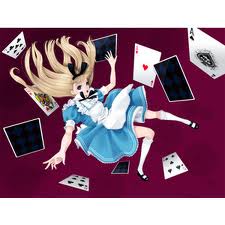
A classic example of an episodic story is Alice in
Wonderland. One crazy thing after another. No real point to any of it. And in
the end she wakes up and it’s all been a dream.
Why does that story work? Easy, it’s a unique work of genius. Each
individual moment, each character, is so brilliant and unique that quite
frankly he could have written it in any form he wished and it would work. And I
can’t think of any other story that manages that feat.
The closest I can think of is The Wizard of Oz, which also
has some very amazing creations, but it has a very strong throughline: find Oz
and get home. Everything in the story is done with that in mind. Now imagine a
story where Dorothy lands in Oz, has no idea where she is or what to do. She
wanders around, picking up a few friends who decide to tag along, and eventually
they end up at the Emerald City where they discover a wizard.
Nobody tells her to find Oz; lots of roads to follow; people
join her because why not? Would that have the same effect? I would suggest not.
Episodic: Mick is in love with Mary, but doesn’t know how to
tell her. He goes to see his pal Jim. Jim is having an argument with his wife
so Mick and Jim go to a local bar. In the bar an entertaining drunk bets them
he can guess their star sign or he’ll give them his lucky shamrock...
Even if each of these individual scenes are brilliantly
written with exciting moments, hilarity, drama and whatnot, overall it will
feel lacking. Because what has any of this to do with his problem with Mary?
And if we’re going to get to Mary later, is she really that
big a deal to him if he can go off and do all this other stuff?
Non-episodic: Mick is in love with Mary, but doesn’t know
how to tell her. He decides to ask the advice of his pal Jim who’s been happily
married for ten years to beautiful Debbie, Mary’s best friend. And also maybe
Debbie can put in a good word for him. He gets there in time to see Debbie
storming out with bags packed, screaming about how all men are scum...
In order for a story to feel like it’s going somewhere, the
main character needs a goal and he needs a plan. The goal can change, the plan
can fail, but when a character sets off he needs to know where he’s going and
why.
The key is to consider what your character wants. Then, what
are they doing to get it? You can still have other stuff happen to them, they
can still be sidetracked or waylaid by events or people, but if they have this
thing they need to do, then that will provide a framework for the scene, which
will even allow you to work in elements that have nothing to do with the story
but which you find entertaining.
Episodic: I’m wondering what to do with my day when there’s a
knock at the door. Aunt Fanny’s dropped round for tea. There follows a
fantastic scene with the wonderfully witty Aunt Fanny...
Non-episodic: I’m trying to get the money I owe a mobster
before he has me killed, but wonderfully witty Aunt Fanny has dropped round for
tea. Now I have to get rid of her, without freaking her out, and get on with my
mission...
You can still have the fun with Aunt Fanny scene, but
there’s also the added facet of trying to get rid of her to get back to the
main goal. And so it remains integral to the overall story.
Episodic stories tend to be plagued by convenient moments
that help the main character figure out what to do. The character ends up in an
arbitrary place for no particular reason, and someone just happens to be there
who can tell them where to go next or what they need to do. To avoid that, you
need a goal and then you need to make the character pursue that goal.

If you found this post useful please give it a retweet. Cheers.


November 12, 2012
Secrets Of Language Revealed!

The point of language is to communicate your thoughts. The
rules of language are there to clarify structure and prevent misreading. If you
can communicate what you want to communicate without following those rules,
that’s perfectly okay.
However, it’s easier to follow the rules because that’s why
they’re there—to clarify your meaning—and most people are already aware of them.
And, generally, if you’re not sure if it should be a
semi-colon or an em-dash, is the adverb necessary, does the repetition work as
emphasis or is it clumsy, chances are you’re over-thinking it.
I know what I want to say but I don't know how to say it is another way of saying you don't really know what you're trying to say.
It’s far better, when faced with a complicated sentence you
aren’t sure how to punctuate, to rewrite the whole paragraph from scratch. Don’t
waste time trying to communicate your literary skills, focus on communicating
the story. And definitely don’t do a half-assed job and leave it to the reader
to figure it out for themselves.
Of course, for every cast iron Thou must... commandment from the writing gods, there is at least a
handful of writers who did the opposite and did it well. But there was a reason
why it worked for them. You don’t have the right to cite them as a
justification for why you can do the same if you don’t understand that reason.
If you write something down and then look at it thinking, I’m not sure what this is saying, but maybe someone
will like it, then you’re just splashing around in the water to no real
purpose. I’m not saying you’re drowning, but it’s going to take you a long time
to swim across the English Channel that way.
Take time to figure out what you want to say. Don’t get me wrong, I’m not saying don’t
study grammar (to be honest you should already know all the basics you need
from school), but when people point out technical errors in your writing, what
they’re really saying is I was so bored/confused/lost that I started counting adverbs.
The only real secret to getting your writing to work in a
way where the reader is too involved with the story to bother thinking about
how many adverbs you’ve used, is to just read it back to yourself and decide,
consciously, if it says what you want it to say.
It really is that simple, and yet it’s one of the hardest
things for aspiring writers to do. They avoid looking too closely because they’re
afraid of what they might see. What if it
isn’t clear what I mean? What do I then? Start again? Oh, god, no...
This isn’t a question of talent, it’s a matter of laziness. We
may not all be equally talented but we are all equally lazy. Yes, more work will
be required. One draft, throw your pen on the ground, walk out of the room with
both hands raised... that’s not how it works (sadly).
But if you take a section of your work that doesn’t sit
right with you (or even if other people say it doesn’t work) and play around
with it, change the structure, the wording, whatever—and then you decide you
preferred it the way it was, that’s okay.
That’s not to say it now works and everyone who thinks otherwise
is wrong, it could be terrible, but by being aware there’s an issue, and
seeking to address it, your brain is on the case. Even if the writing
ultimately fails to do what you hoped it would do, you will learn something. That’s
all part of the writing process, to discover your own approach to language with
its quirks particular to you.
In most cases, however, that time spent going over a
sentence, a chapter, a whole story, will produce alternative ways of doing it.
Better ways. Sometimes change comes incrementally, sometimes all at once.
We all use language every day. We all make mistakes every
day. Whether in writing or speaking, we all screw up is small ways all the
time. Yet we manage to make ourselves understood.
Along with our capacity to communicate our own thoughts, we
also have the ability to understand other people’s. Even when they make it difficult,
we want to understand. It’s the communication that’s the important thing, far
more than the technicalities of which words you choose to employ.
And bear this in mind: Anytime you feel mired in getting the
grammar right, the punctuation correct, when you can’t figure out where the commas
go, most likely the real problem isn’t a poor grasp of the Queen’s English. Chances
are you’re not really sure what you’re trying to say.

If you found this post of use, please give it a retweet or leave a comment. Or both. Or neither. God save the Queen.


November 8, 2012
Story Questions Worth Pursuing

You don’t make readers want to know what happens next by not
telling them what’s happening now.
There’s a guy, he’s being chased by someone. We don’t know
who, we don’t know why. Clearly he doesn’t want to be caught, but other than
that everything is a mystery. So as the reader you’re going to keep reading to
find out what’s going on, right?
Well, maybe if you have absolutely nothing else better to
do. But for most of us, that implication that everything will become clear if
we keep reading, and that it’ll be totally worth it, just doesn’t pay-off in
most cases.
Because it’s easy to make it seem like there’s something
amazing around the next corner. It’s much harder to actually have something
amazing waiting there.
So how do you make it clear that the journey will be
worthwhile, and at the same time not reveal too much and ruin the surprise?
First you have to realise that a hyperbolic claim, even if
it’s true, will feel suspect. That suspicion could be totally wrong—makes no
difference.
Then again, we all know from adverts and marketing that hype
works, but you need certain things to make it so. Things like money, spamming,
brand, name recognition, notoriety, reputation... basically a concerted effort
to convince as many people as possible.
When it comes to engaging a reader’s interest in a story,
making hyperbolic claims can certainly make a difference. If reviewers and
blurbs from famous people are telling you it’s fantastic, that can be very
convincing. But when you make the claim yourself, it probably won’t sway so
many people.
If in a story a woman is being chased through the woods, and
she’s desperate not to be caught and is desperately afraid of being caught and by
God it’ll be terrible if she’s caught, then that’s just the author claiming his
own story is exciting and dangerous. That’s a problem, since what writer isn’t
going to claim that?
Where’s the evidence for these claims?
I know a great recipe
for hot chocolate. This claim may or may not interest you. I might be telling
the truth, but are you really in the market for another way to make hot
chocolate?
I know a great recipe
for hot chocolate like you’ve never tasted before. Now I’m being a bit more
hyperbolic, but in a fairly standard manner like you might see in an advert.
It’s so generic it ends up not really meaning anything.
I know a great recipe
for hot chocolate like you’ve never tasted before. And you won’t believe the
secret ingredient. Okay, now I’ve given you something specific. What
separates this hot chocolate is “something special”. I still haven’t told you
what it is though, and I could be bullshitting (The secret ingredient is love!),
but it catches the attention a little more.
I know a great recipe
for hot chocolate like you’ve never tasted before. And you won’t believe the
secret ingredient that means no calories. That’s right, zero calories. My
claims are still unsubstantiated and hyperbolic, but I’m specifying the area
I’m dealing with. I know there are people interested in this area, but also
there are those who are not. By narrowing the focus I make it more attractive
to some, and at the same time, I give others an excuse to move on.
The fear for a lot of writers is if they reveal what the
story is about people will realise they don’t care about that subject and stop
reading. So the writer keeps things as vague and mysterious as possible under
the delusion that once the reader gets far enough into a book, they’ll keep
going no matter what.
But a crappy idea is crappy no matter where in the book it’s
revealed. The only real reason to delay and delay and delay isn’t to intrigue
the reader, it’s to give into the feeling of insecurity that it won’t be good
enough, so don’t tell anyone. And the thing is it may well not be good enough.
But the only way to find that out—and then fix it—is to put it out there and deal
with the reaction.
I know a great recipe
for hot chocolate that masks the effects of poison. You can kill someone over a
delicious beverage and leave no evidence behind.
As long as you’re dealing with generic, familiar ideas, the
only people you’ll attract are those who happen to be already interested in the
subject. Fans of particular genres fall into this group.
It’s only when you move onto something people aren’t
expecting that the premise becomes interesting to everyone, and knowing specifics
makes you want to know more. In the example above, you still don’t know what’s
in the chocolate, but now there’s a reason to find out.
A woman running through the woods from a serial killer who
wants to kill her (as serial killers are wont to do) doesn’t seem a very
gripping idea because it isn’t. Hiding
who or what she’s running from doesn’t make it any more gripping. Emphasising how
scared and desperate she is also doesn’t help. The only way to make it
thrilling and enticing is to give her something truly horrifying to run from,
and then tell the reader what it is from the outset.
Not knowing what’s going on doesn’t make the story interesting,
although you can string people along for a bit. Knowing what’s going on doesn’t
necessarily make things interesting either if what’s going on is familiar and
predictable. Knowing what the situation is and making the reader curious about
what the character is going to do about it is what keeps readers turning pages.

If you found this post useful, please give it a retweet. Cheers!


November 5, 2012
Stealing Good Ideas Is Okay

While there’s nothing new under the sun, somethings are blatant
rip-offs. And although it's perfectly possible to successfully repeat an established character or familiar story concept, those successes are fairly rare (not that it stops people trying).
The problem is most people steal the wrong bit of a story.
The superficial, obvious stuff isn’t what makes a story work, it’s just the
easiest to copy.
It’s Cinderella, but she’s a vampire who has to leave the
Prince’s Ball before dawn...
I see a lot of that sort of cosmetic change. Cinderella is
an android, it’s Princess Charming, it’s set in Nazi Germany... I could do you
a hundred variations.
The plot's already written, people are comfortable with the familiar and plenty of other writers get away with it, so why not you?
And that’s perfectly fine. If you’re happy working at that
level, I certainly have no issue with it. But there is a way to take what you
find engaging about a story and make it your own.
Take Star Wars as an example. Sure, turning out to
be a Jedi is cool for Luke, but that born to be king set up has never impressed
me. Han Solo, on the other hand, too cool for school. But he’s a criminal so
why is he so loved? I think because even though he doesn’t play by the rules,
he takes on far superior opponents.
If we’re having a race, and you’re in a car and I’m on a
bike, people are going to be rooting for me. Even if I cheat, you’ll be treated
like you deserved to lose. But Han Solo will not only take that race, he’ll sit
on his bike and let you and your Ferarri have a head start. There’s something
very appealing about that.
That idea of the confident underdog is probably not how
other people would see that character. But once I have it in my head, anywhere
I take it won’t feel like a Star Wars knock-off.
Or Harry Potter. Kids and magic and
boarding school, those are the things most fan writers focus on. This leads to a
school for druids, a college for witches, etc. But if you narrow
your focus and choose a specific moment, that can inspire you far more than the
overall idea. Anything in a favourite story that makes you feel something or
sticks in your mind.
In my case, I find the idea of the Mirror of Erised
interesting. It shows you the thing you desire the most, and dead parents are
obviously emotionally compelling (although in a world where ghosts exist and
often stop to chat, the impact is a little lessened). But the thing I find
compelling is the idea of having a definitive answer to the question of what we
want most, because in most cases people don’t really know. And having no doubts
about what you want can give you a whole new way of looking at things.
If I take that idea and run with it what I end up with is a
President who is shown a computer that can work out from choices inputted the
likely outcome. Meant for the battlefield it can also predict more mundane
things. When the President inputs silly suggestions, assassinating opponents, lying
to force through legislation, banning media outlets, the predicted outcome is a
utopian America. Heinous acts would lead to a paradise on earth...
Now, I’m not saying that’s a good idea for a story, what I’m
saying is if I told you that’s what my story’s about, would you go, “Harry
Potter, right?”
The trick is to take that bit you like and start ascribing
reasons and motivations that have no basis in fact. My view of what the mirror
represents probably isn’t JK Rowlings’s. And that’s a good thing.
1. Narrow your focus.
2. Look at it through your own filter.
3. Create a premise.

If you found this post useful please give it a retweet or leave a comment, or both.


November 1, 2012
Why First Chapters?

This post is
more a question than the usual rambling on about the craft of writing I usually inflict on you.
The question
is this: When you send out stuff to agents, why do they insist on getting the
opening chapters?
Is there something especially telling in those chapters? And if so, what?
I think it’s
pretty obvious the first chapter in particular is one of the hardest to get
right. I think that’s normal.
Chances are
when the book gets published the chapter you had as your opener in your
submitted draft won’t be the one at the start of the published version. I think
that’s probably true of most authors—apart from the ones too big to pay
attention to editors.
That’s not
always going to be the case, some writers know exactly where to start their
book, and it was like that from draft number one. But by and large, knowing
where to bring the reader into the story is one of the trickier things to
figure out.
Too soon and
the reader feels lost, too late and the reader’s bored. It’s not so much about
good writing, but more a technical thing. And it’s hard to judge because as the
writer you can’t see it the way a reader will, or a good editor will.
So, why is it
agents want to see one of the weakest parts of an unedited draft, rather than
one of the strongest? After all, once you see what a writer is capable of then
getting the rest of the book as good as that would seem a much more exciting
prospect.
But then
maybe that isn’t an agent’s job.
Thinking
about it, I came up with the following possible reasons for judging a writer by
the first few chapters:
1. Good writers always get the beginnings right.
2. Seeing how
writers handle the difficult bits gives the agent a clear idea of what they’re
dealing with.
3. It means a
lot less work for them, and that’s what they like (couldn’t be this one).
4. They’re
looking for an excuse to say no, and this is where it’s easiest to find.
5. They want
to see how the writer draws the reader into the story, this being the sign of a
true storyteller.
Of course
this is all speculation. My view that asking a writer to send what he or she
considers the best chapters in the book gives you their best to read, and also
tells you something about the writer’s mindset, could be because I’m so
terrible at opening chapters.
Not that I
think you should send chapters six, thirteen and twenty-seven. That would be
weird. But do chapters 16-18 tell you less than chapters 1-3? Maybe they do, it’s
hard to tell from this side of the desk. Still, I do wonder why every single
agent seems to want those opening chapters and nothing else. Any thoughts?

Having had some feedback on this subject in the comments, I'm going to add this to clarify (hopefully) what I mean.
If I wanted you to watch a movie but you weren't too sure and I decided to show you a scene from the movie in order to convince you to watch the whole thing, would you expect the clip to be the opening of the movie?
Would you be confused about what was going on if I showed you something from the middle? If it's a cool scene designed to get you interested, do you need all the set up you'd want if you were watching it properly?


October 29, 2012
The Subconscious Storyteller

This is the ideal: blank page,
close eyes, start writing.
Sometimes that actually works.
Stuff just comes out of somewhere and you know what needs to happen next.
Sometimes.
Most times it’s a struggle.
But if we have a part of us that
can create the stories we want to tell and can come up with brilliant ideas out
of nowhere, why doesn’t the subconscious just produce the goods when we need it
to?
The picture most people have of
the subconscious as a separate entity that knows all the good stuff is a little
misleading. It’s very much a part of you, even if you don’t have access to it
all the time. And what comes out of it
is dependent on what you put in.
You need two basic things to be
able to pull ideas out of your deep dark places:
1. Fuel in the tank
2. Access
1. Fuel in the tank
As a young person you absorb
everything. It’s new, it’s interesting, you engage with it. As you get older,
for whatever reason, the brain stops automatically getting fired up about
things the way it used to. Toys in cereal don’t hold the same allure (do they
still put toys in cereals?)
On one level we are always taking
stuff in, processing it and coming up with ideas, feelings, and doubt. Some of
it gets lost in the shuffle, some pops up at the weirdest times. And some of it
is actually of artistic merit and can be used in writing or any other art form.
But if you want strong, useful,
consistently-present ideas to draw from, that general mush won’t be all that
helpful. Occasionally it will, mostly it won’t. The key thing is you can’t rely
on it and you can’t control it.
If you tell yourself to remember
to buy avocado, you’ll come back from the market with everything but. If you
write it down you’re more likely to remember, even if you write it down and
then leave the piece of paper at home. When you’re actively engaged in taking
stuff in, it makes more of an impression. When you’re passively absorbing
stuff, it glides over the surface.
Watching television and movies,
listening to the radio, these things add to your internal library. But reading
a book, watching a movie over and over, these things imprint much harder. Not
that you can’t actively engage with music or TV shows, you just don’t have to
so mostly you don’t.
Because there are times in life
when things do fully engage you, whether you happen to be in the right mood, or
marketing and hype have you all excited, or you get caught up in something very
good, it can fool you into thinking it’s a natural process you don’t have to
concern yourself about. And to some degree it is. But while I don’t want to say
you need to study art to be able to integrate it into your subconscious, I do
think enthusiasm, focus and motivation (rather than lying on the sofa watching Castle
half asleep) make a big difference.
Or you can also just lead a very interesting
and exciting life and draw from that (so I’ve heard).
2. Access
Once you have all this stuff
rolling around inside you, it helps to be able to draw from the well when you
need to. Again, because sometimes this happens without even trying—ideas pop
into your head just when you need them—it can make you think the whole process
is automatic and you just need to let it happen. We’ve all experienced those moments.
But if you keep writing, that manna from heaven becomes less frequent,
especially after you use up all the good ideas you’ve been ruminating on since
you were a kid.
Allowing yourself time to think
is important. Not just a couple of minutes on how to makea scene better and
then using the first thing to come to mind, but spending half an hour thinking
of different ways for things to play out and if nothing seems quite right, not
settling for the nearly right, but changing things up, sometimes drastically.
One of the best ways to get the
motor running is to write something that’s just very hard to figure out.
Creating awkward situations, impossible
problems, questions with no answers all force the brain to rummage around in the
ideas box. That doesn’t mean you’ll find anything of use in there, but once you
start filling the box regularly you’ll be surprised how often you do.
Even if you don’t find the answer
to the question you’re looking for, often you’ll find the answer to an even
more interesting question. And the beauty of being in charge is that you can
change the question to suit your solution.
If I work out a way for the bank
robbers to escape if only the getaway car was red, and earlier I said it was
green, I can go back and make it red.
Putting yourself in a corner,
taking away the easy ways out, making the problem harder than it needs to be,
that’s what makes the brain go into overdrive. Obviously there’s also the
chance you’ll have a nervous breakdown, but what great writer hasn’t had one of
those?

If you found this post useful please give it a retweet. Cheers.


October 25, 2012
Reader Meets Character
In order for a reader to like a
character that reader has to feel like they know the kind of person the
character is.
This is easiest to achieve using
archetypes, stereotypes and clichés. The cynical but brilliant detective, the
unfairly betrayed wife, the shy but sweet nerd... You feel like you know these
characters because you really have known them, in one guise or another, all your life.
And while the received wisdom is
too avoid the overly familiar, I don’t think it can be denied that lots of
successful books use character-types we’ve all seen many, many, many times before (maybe
with an added twist, but not always); and these variations on Cinderella or
Philip Marlowe or whatever can be very successful.
But often the reason writers fall
back on the tried and tested is because they don’t really know how to get the
reader to know the character quickly without resorting to the shorthand of
referencing traits already out there.
If Mary is your best friend and I
give you a hypothetical situation such as:
Mary’s going out with a guy for
six months when he tells her it’s over because she’s put on a bit of weight and
he doesn’t want to date a fat chick.
And then I ask you to tell me
what you think Mary would respond, maybe even give you a few options:
a) punch him in the face.
b) burst into tears.
c) thank him for being honest and
go to the gym.
I think, if you know Mary well,
you’d have a pretty good idea of what Mary would do.
However, if you didn’t know Mary
and I gave you some background information on her, and then asked you the same
question, what sort of info would you need to be able make an educated guess?
What about her parents’ jobs,
financial status, where her grandparents originated from?
These all might give you a sense
of the type of person Mary might be, but lots of people are born on the same day
in the same town, and they’re all pretty different, so knowing those sorts of
details won’t really tell you anything specific in terms of personality.
In fact, only by relying on
clichés can I really suggest anything with personal info of this sort. If I
tell you she’s a single child of a lawyer and a doctor both of whom work long
hours, then you might get the idea she’s lonely and starved of attention. But
only because that’s how that particular family setup is portrayed. I’m sure
there are a lot of kids with busy parents who are fine, or who wish their
parents wouldn’t bother them so much.
Let me tell you a story about Mary. Back in nursery, we were only four,
a boy came up to me and called me a bad word. There were no adults around (in
those days kids weren’t mollycoddled like they are today, plus I think our
nursery teacher had a terrible hangover). I burst into tears. Mary grabbed the boy
by the back of the collar and dragged him into the bathroom, where she sat on
his chest and forced him to eat a whole bar of soap, which she’d heard was what
you did to someone who was rude.
Now, if I ask you the
hypothetical question about Mary, would you have a better idea of which option
to pick?
And it's not even that there's some similarity in backstory and hypothetical. If Mary was in the army and her unit was hit, if she was stalked by a serial killer or if her came face to face with an alien, that childhood story would still give you a sense of how she'd react.
The point is details may provide
details, but only story tells you the story. Backstory, exposition, general
background information all makes more sense to the reader when it is portrayed
as an event that happened rather than a list of data.
And while filling outa character
sheet is a good place to start the getting to know
you process, it isn’t until you know the gossip-worthy moments of a person’s
life that you get a feel for them as a person.
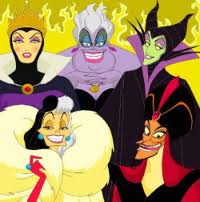
Then again, a one-dimensional villain isn't always a bad thing...
If you found this post useful please give it a retweet. Cheers.