A.D. Croucher's Blog, page 9
December 22, 2013
THE COMPOUND
A dystopian thriller that crackles with tension, THE COMPOUND is a stunning debut for YA author S.A Bodeen. In its content, as well as its very existence, this novel is a testament to the power of perseverance: the author wrote nine novels before this one was accepted for publication. Writers: never, ever stop. A similar truth faces Eli, the 15-year old narrator of THE COMPOUND.
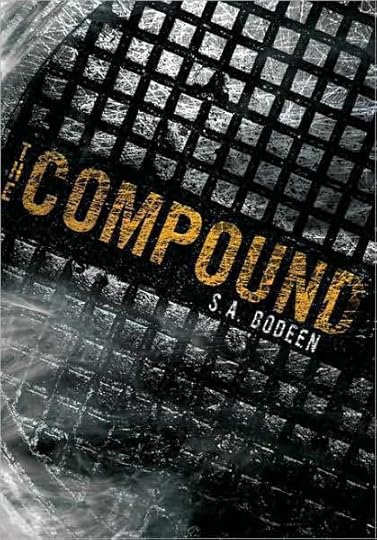
Six years ago, Eli’s family entered the Compound as nuclear war broke out across the world. Most of his family, that is. Even in the very opening pages, Bodeen delivers heartbreak and pain as not all the members of Eli’s family make it to the underground lair before the doors are sealed shut.
We jump from that first night to six years later. His family have fallen into their sanity-preserving routines, but the cracks are beginning to show, and there are dark, terrible secrets lurking in the shadows, behind closed doors and in mysterious labs. The Compound was constructed by Eli’s billionaire father, Rex. The family have accepted everything he’s told them thus far. But increasingly, things are not as they seem, and truth always has a way of making itself known.
From these few initial hints and clues, Bodeen spins a tense thriller, keeping the pace pounding and the atmosphere electrifying as Eli digs deeper into the real nature of the Compound, and why they are there. This novel races along, the characters are sharp and authentically awkward, the emotions are shocking, and Bodeen choreographs all the elements into a thrilling finale. It’s hard to stop reading, and impossible to resist immediately picking up the sequel, THE FALLOUT. If you’re looking for a great piece of YA sci-fi that thrums with the power of believing in yourself and your possible future, as well as delivering that page-turning, “what’s going to happen next?” urgency of all great YA, this is the book for you. A fantastic debut indeed. We’re lucky that Bodeen believed in herself and this tenth book enough to write it. You should believe in it too.



October 10, 2013
FORGIVE ME, LEONARD PEACOCK
FORGIVE ME, LEONARD PEACOCK is the story of Leonard Peacock’s eighteenth birthday, on which he intends to shoot his high school nemesis, and then shoot himself.

Heartbreaking and life-affirming in unexpected ways, this is an unflinching portrait of how a person can feel like their humanity has been steadily stripped away from them; in this case, a teen who hopes this will be the last day of his life. It holds nothing back, and tells the truth, weaving in a vivid cast of characters in Leonard’s life as it does so, in a beautifully authentic story. It also has some fresh, completely unexpected narrative tricks up its sleeve that rock you out of your expectations, and ultimately make you feel… all the feels, as they say.
In the manner of a more snarky, introspective Jack Bauer, we follow Leonard, 24-style, as the day unfolds, class by class, hour by hour, flashback by flashback, and the pressure and tension mount. His voice is acerbic, angry, hurt, lonely, yet also witty, humane, and understanding. He’s an amazing creation. The writing, the craft on display here, is fantastic. Quick is a brilliant writer, able to take his own humanity and understanding and turn it, incredibly skillfully, into a page-turner that is completely grounded in the narrator’s inner world, as well as the perfectly evoked Philly/NJ setting.
Quick has said that Leonard’s depressed, rage-filled voice came to him when he was relaxing in Paris on his first trip to the city with his wife; it was a voice that he could not ignore, despite the beautiful surroundings, and thank goodness, because this is one of the greatest YA contemporary novels ever written.
It also proves something essential about writers: we should never, ever ignore the voices in our heads. That’s what it feels like sometimes (all the time); our stories come to us unbidden, begging for our attention. If we don’t give it to them, they can just fade away again, like lonely ghosts. Having ideas is one thing; actually grabbing them and following through on them is a whole other thing. As Pink Floyd guitarist David Gilmour replied when he was asked if he thought he was getting better at playing as time went by: “I’m not getting better, but I think I’m better at capturing the good moments and hanging onto them.” Listening to the muse and doing what she says is critical, in life as well as in writing. Like J.K. Rowling, for whom Harry Potter and the seven-volume plotlines marched into her head during a train journey — if you don’t capture and explore it, you’ll never know where it could take you.
Quick certainly captured this story, and with Leonard’s unique and transformative perspective on his life, it makes you see everything differently in yours. In that sense, it’s a book that can change the world; a book that everyone should be shouting from the rooftops about. It’s also a massively compelling, terrifying, wild, emotion-shaking ride, which is what YA needs to be (and ideally, what all literature would be). It’s amazing when all those things are true of one book. So, please, do yourselves a favor: read this now, and then go tell everyone how brilliant it is.


September 15, 2013
MORE THAN THIS: Patrick Ness, YA sci-fi and the Carnegie Prize
Here is the boy, drowning.
Thus begins MORE THAN THIS, Patrick Ness’s third novel this year, a dazzlingly brilliant piece of YA sci-fi that must surely win him his third Carnegie.

More Than This, by Patrick Ness. Inevitable Carnegie not pictured.
Ness broke onto the YA scene with his CHAOS WALKING trilogy (the conclusion of which bagged him his first Carnegie), a series of books so incredible in stature and impact that he almost single-handedly destabilized the publishing industry in favor of YA. Literary fiction had nothing to offer that could compare to YA at this level. It fought back, sure, swinging the occasional dizzying heavyweight punch: Hilary Mantel’s WOLF HALL and BRING UP THE BODIES, Haruki Murakami’s 1Q84. No problem, thought Ness, as his devastating follow-up to CHAOS WALKING, A MONSTER CALLS, put a second Carnegie on his mantelpiece.
However, possibly sensing the unfairness of his actions, he returned to his literary roots earlier this year with THE CRANE WIFE, an impossibly beautiful and haunting fable that righted the imbalance that he himself had created. It belonged with the Mantels and the Murakamis, joining them to form a group of books that, much like the Avengers, came together in unlikely fashion to save the world (of literary fiction).

The beautiful full UK cover of The Crane Wife
With balance restored, Ness took a quick detour into the world of Doctor Who, publishing a novella featuring the sixth doctor as part of the show’s 50th anniversary year. It was a humorously inventive and pleasant read, and felt just like a lost Peter Davison episode.
All seemed well.
Until now.
Because MORE THAN THIS is something extraordinary.
On its surface, it’s a smooth, propulsive read, elegantly written, with a narrative that flows. Below that beautifully-crafted surface, it has terrifying conceptual and emotional undercurrents that could pull you under, were it not for the fact that this novel overflows with compassion and hope. Those contradictions create a beautiful paradox, a knife edge of possible realities, a thrilling state of flux that Ness keeps us in throughout this novel.
The novel opens in chilling style, with the brutal and shocking description of the violent, irrevocable death by drowning of the lead character. It’s a bold, stunning opening, made even more so by the fact that, one page later, Seth seemingly wakes up, somewhere far removed from where he died.
As Seth explores his surroundings, Ness plays with the possibilities; is this purgatory? hell? another chance at life? something else entirely? This deceptively simple story engine – where is Seth and what has happened to him? – creates a powerful momentum that never lets up. Seth’s journey and memories give Ness the perfect opportunity to weave in his themes of hope and redemption. Bad things have happened to Seth and his family in the past, some of them because Seth happens to be gay. His sexuality, and the less than welcome reception it provokes in the outside world, is treated in a heartfelt and heartbreaking way by Ness. Seth carries a crushing amount of guilt; he’s destroyed by it. This novel is, in part, the story of how he comes to understand the nature of the guilt, and see the possibility of putting it aside.
The more Seth learns about himself, his past, and his present, the more we come to realize that the apparently dystopian landscape that he wakes up in is not as deserted or lifeless as he thought.
Ness is willing and able to fully embrace the potentially science fiction elements of his story (as he said in a recent BBC interview, he’s not snobbish about any element that a story might need). The book deals with ideas that bring to mind elements of THE MATRIX, TOTAL RECALL, even INCEPTION, but the key thing is that Ness absolutely knows it. He plays with it, dances with it, even has the characters comment on the movie-like story beats. It’s meta, but it also goes way beyond meta. Which is totally Ness’s point – what is reality? Yes, Patrick Ness isn’t afraid to totally get ontological up in here.
MORE THAN THIS is, in a way, old-school, well-crafted, classic YA sci-fi, that brings to mind Melvin Burgess and David Almond with its strong simplicity and its other worlds. But it’s also all new, all now, all just ahead of us; a hugely original piece of writing that uniquely elides past, present and future with its knowingness, its playfulness, its lacing of potential bleakness with light and heart and warmth, its colliding of sci-fi and contemporary, and its witty characterizations.
It is an intriguing, moving and ultimately hopeful experience. There is sadness, there are tears, but there is also warmth, laughter, companionship and compassion. The sci-fi is seamlessly woven into the emotional narrative, making it even more compelling. It’s such a human book; full of what it means to be human. To feel. To love. To lose. To die. To live.
Ness had better make sure there’s room on his mantelpiece for that third Carnegie, because this is surely the YA book of the year.


June 2, 2013
We Bought A Zoo: Writing, zebras, and asking “why not?”
We Bought A Zoo is such a Cameron Crowe movie, in the most awesome of ways.
Quirky, self-aware yet beautiful dialogue? Check. Heartwarming scenes that stumble over themselves to move you (and always succeed)? Check. Naturalistic, charming performances? You know it. Eddie Vedder and Bob Dylan on a (killer) soundtrack? Of course. Heartbreaking/epic use of Sigur Ros music? Duh. Awkward relationships that blossom in the end? Yep. A seemingly insurmountable situation that… well, spoiler… gets surmounted in the best, most uplifting, “happy tears” and punch your fist in the air kind of way? Hell yeah.
Basically, there is a surplus of things to love about this movie, and that’s all down to Cameron Crowe’s singular and inspiring vision.
And, as a writer, there are two added bonuses: a perfectly constructed and naturalistic script, full of character revelations, callbacks, heart, humor and forward momentum; and this most true and undeniable fact:
We Bought A Zoo is one of the best analogies for being a writer that I’ve ever seen.
Think about it: when you write, you’re basically trying to do what Matt Damon does in the movie. You take a massive leap into the absolute unknown, risking everything, while trying to wrangle a zoo’s worth of wild animals (AKA plot points, act breaks, characters etc), while rebuilding the infrastructure, moving walls, extending boundaries, deciding what to keep and what to lose (and kill), all while you constantly readjust to this ever-changing new world. So many moving parts, all seemingly with a will of their own. It’s frustrating and rewarding, despairing and uplifting, with success dependent often on the whims of outsiders, with people frequently telling you that you’re crazy (“stop just before zebras get involved”) and that you should be an accountant or work in sales; and it all builds up to the opening date, when you have NO IDEA if anyone at all will even show up. It could be the most amazing thing you’ve ever done, something that touches the lives of others and moves them, inspires them; or, it could be nothing. A lion roaring in an empty zoo with no one around to hear it still makes a beautiful sound; but it’s a lonely one.
Writers: always include the zebras.

Scarlett Johansson, Matt Damon, zebras
Crowe may not have intended this — his movie is more generally about taking that leap, choosing the thing that scares you, starting over, asking yourself “why not?” — but it mirrors the life of the writer in eerily accurate and joyous fashion. It resonates emotionally, like all his movies do, because his movies have spectacular heart. He’s sometimes/often on the receiving end of criticism that his movies are too sentimental. No. They are unashamedly sentimental, yes, but they mean it. They mean it so much and so hard and so intensely that it’s impossible not to feel it too. He writes about connections between people, the incredible joy in a certain smile at the exact right moment, the rush of taking twenty seconds of insane courage to do the thing you want to do (for writers, that could be 20 months or 20 years of insane courage), and the extraordinary happiness when it all works out.
No cynics allowed, in Cameron Crowe movies or in writing. You just have to believe. When you inevitably ask yourself if you should continue because it seems crazy, there’s only one real response, one question to ask yourself.
Why not?


May 2, 2013
Influence Is Bliss, episode three: Laini Taylor
It’s sometimes said that people look like their scripts/resemble their writing. It’s often true. In Laini Taylor’s case, with her awesome bright pink hair, she could be the long lost sister of the blue-coiffeured Karou, hero of DAUGHTER OF SMOKE AND BONE and DAYS OF BLOOD AND STARLIGHT, two of the most stunning YA genre novels ever published.

Laini Taylor. Awesome Hair.
Taylor is a HUGE inspiration to us. And not just because we admire her hair (although, A really does). She is one of the most extraordinary storytellers out there, not just in YA, but in fiction, and even beyond. If you put together an elite band of the greatest storytellers from the realms of novels, TV and movies, like a superhero team up (Marvel’s Writers Assemble?), Taylor would be one of the first writers you would choose.
Her storytelling is a thing of wonder. It’s robust, muscular, epic, capable of soaring into light and diving into darkness; it’s visceral in the most emotional of ways, which are the ways that really count. But plot counts too. Her books are not just character studies. They are deeply, thrillingly plot-driven. They achieve the perfect harmony whereby character and plot are the same thing. That’s the holy grail of great writing. Karou’s emotional journey in book one is the driver of everything that happens. In book two, Taylor expands to include much more of Akiva’s story — action and character are simultaneous in his chapters too.
Her situations challenge the characters in deep, testing ways, driving them beyond their ability to cope and into that exciting, edge of your seat realm of not knowing what the hell they are going to do, or what the hell is about to happen. That’s the essence of the greatest drama, in any format: testing your characters beyond their endurance. Taylor puts her characters through unimaginable stresses and horrors, situations that are emotionally intense, and emotionally devastating. They are also situations that do not allow the characters to dwell or wallow, even for a second. They are situations that demand further action. Taylor’s worlds are kinetic on every level — there is always forward motion, which is the first law of awesome writing. Motion can be emotional, physical, plot-related, atmospheric; however it manifests, it needs to be there. And boy, is it there in Taylor’s writing. She has a beautiful understanding and grasp of advanced narrative mechanics, and she wields her characters and stories like blades in the hands of an angel.
It’s as though she’s in a simultaneous state of nithilam and sirithar.

Daughter Of Smoke And Bone
Any writer of any kind would learn much from these two books. SMOKE AND BONE is a masterclass of character-grounding, scope-expanding narrative flights. Taylor sets up a complex array of characters, both human and otherwise, and also complex worlds and societies. Read this book closely; it’s impossible to see her doing it. Her lightness of touch is remarkable; the worlds illuminate the characters, and the characters illuminate the worlds.
BLOOD AND STARLIGHT rapidly expands its core cast and develops an array of new characters, all while driving forward a terrifyingly inexorable storyline that, somewhat amazingly, makes the events of book one seem small in comparison.
It’s a masterclass in how to write a sequel.

Days Of Blood And Starlight
Sequels are notoriously tricky. It’s genuinely rare to find a sequel that is even as good as the original. They exist. But sequels that dwarf the preceding book, eclipse it, go supernova on it… those are like goddamn unicorns. BLOOD AND STARLIGHT is one of those unicorns.
It happens in movies slightly more frequently; a subsequent installment that goes harder, does it differently, expands its universe while still retaining the spirit of the original — ALIENS, THE DARK KNIGHT, TERMINATOR 2, J.J. Abrams’ STAR TREK (technically it’s STAR TREK 11), THE EMPIRE STRIKES BACK. Just a few examples at the highest end of the quality spectrum.
DAYS OF BLOOD AND STARLIGHT is in that company.
SMOKE AND BONE got progressively bigger emotionally and plot-wise, then exploded in a mind-blowing, stunning revelation that took us literally up to the skies at the end. BLOOD AND STARLIGHT made that ending look like a grainy YouTube video on a flip phone compared to its VAST, gorgeous, perception-altering, universe-expanding IMAX scope of emotion and action. That’s how you do it.
With just these two books, Taylor has made her way to the very top of our inspiration list. We devoured both books; and they consumed us. That’s the most beautiful kind of reading experience. And as writers, we bow down to her. She’s the standard we want to reach, the stars we aim for; even if we don’t always get there, we’ll be much further along that we would have been otherwise. This inspiration really is bliss; her writing is incredibly gorgeous, wild and dangerous, entrancing, stunning, exhilarating.
It’s writing you lose your head to; writing to lose your soul in.
Not only that, she writes more perceptively, intelligently and inspiringly about the act of writing than almost anybody. Just spend some time on her site at www.lainitaylor.com and you’ll see what we mean. She’s so open and honest about the whole messy, thrilling, terrifying and wonderful process of writing. Her words are always encouraging, like beacons of light in the dark night of the soul that all writers face at some point.
Thank you, Laini. For all the above.
We can’t wait for book three.


February 24, 2013
Still time! YA sci-fi giveaway!
In the mood for some free YA sci-fi? Craving a fast-paced, gritty tale of genetically modified superpowers? Enjoyed Chronicle, Arrow and The Amazing Spider-Man, and feel like something kinda similar? Then head on over to Reading Lark, because those lovely peeps are giving away THREE copies of ALTERED!


January 29, 2013
YA sci-fi: THE DROWNED CITIES
Paolo Bacigalupi first stormed his way into the world of YA sci-fi with SHIP BREAKER, an award-winning and richly imagined tale of scavengers in a post-apocalyptic future. It was vivid, hyper-detailed in its world-building and characterization, and told with verve and a crackling, dangerous energy.
He has returned to this world with a companion novel — not a direct sequel — called THE DROWNED CITIES.
And it’s somehow even more immersive, propulsive and compulsive.

Bacigalupi has crafted a narrative that is more dangerous, more richly imagined, and wider in scope than that in SHIP BREAKER, even as he hones his focus. It’s a rare achievement.

THE DROWNED CITIES explodes out of the gate with an extraordinarily visceral and thrillingly sustained reintroduction to one of SHIP BREAKER’s most fascinating characters, the genetically engineered, ferocious, mythic and complex half-man called Tool. Although the story takes a few beats after that, crunching gears to suddenly slow down its pace as we meet the new characters Mahlia and Mouse, it picks up again steadily, and then just doesn’t stop building its intensity and pace. Seriously, it just gets bigger and badder and faster and more overwhelming until it reaches its crazy, symphonic crescendo of a conclusion.
It’s one of those stories that propels you through it, making you care about every character, every detail. Bacigalupi has a natural affinity for the rough-hewn poetry of his brutal, hybrid future-state America. The environment and atmosphere, the humanity, the tech, are all grounded in a gritty, visceral reality. It really does feel like a believable, if terrifying, future. The apex of this kind of YA literature must surely be Melvin Burgess’s BLOODTIDE, which fused Norse myths with the burnt-out tech of a dystopian future London to create a stunningly imaginative and rawly poetic YA tour-de-force.

It’s to Bacigalupi’s credit that he builds his powerfully imagined world pretty much from the ground up, and reaches those same innovative, poetic heights of violence and mayhem, sadness and hope.
THE DROWNED CITIES is powerful, hypnotic story that will consume you, and stay with you. We can only hope that Bacigalupi has plans for a third novel set in this world. The velocity and trajectory of this novel demand it. Come on, Paolo. You know you want to!


Guest post alert!
Hello everyone! Just a quick heads up that the kind and wonderful Kelly over at Belle Of The Literati gave us the chance to write a guest post! We love geeking out about our favorite things, so you know we jumped at that chance: we talk about ALTERED, where the inspiration came from, how it was written… we also get into TV, YA, sci-fi, and some other cool things. Check it out right here!


January 21, 2013
Influence Is Bliss, episode two: Russell T. Davies
How do you know when you’re watching something written by TV writer, showrunner extraordinaire and all-round genius Russell T. Davies? You’re probably crying.

Russell T. Davies
And by the way, those tears probably started in laughter. Which happened in the middle of a thrilling action sequence in which the characters you LOVE are thrown into high stakes peril, and have to use extreme cleverness to save themselves from a situation that somehow blends terrifying concepts with overwhelming heart, soul and emotion.
That’s just an average scene for Davies, because he is the master of the human heart. When he REALLY wants to mess with you, it’s just devastating.
Davies is best known for his tremendous resurrection of the longest running sci-fi show in TV history, DOCTOR WHO (it first aired in 1953!). This tale of a time-traveling Time Lord known only as The Doctor who journeyed through the universe in a TARDIS (a time machine in the form of a blue police box), usually in the company of one or two humans who were looking for adventure, was originally a much-beloved, yet quaint, show on the BBC. It was known for its charm, inventiveness, futuristic electronic scores and less-than-stellar special effects. Sadly, over time, ever more ridiculous storylines resulted in the show being axed in the eighties, seemingly never to return (with a brief exception in the form of a TV movie that popped up in 1996).

The TARDIS. There’s a reason why it looks like that.
However, Davies, who, despite his roots in the gritty, everyday dramas of everyday people, was a huge sci-fi fan, and a fan of the show, rescued it from its cancellation wasteland in 2005 and rebooted it into a glossy global phenomenon.
How did he do it?
With brilliant writing. With feelings. With, as the ultra-smart and Scottish late night talk show host Craig Ferguson describes it, a healthy dose of “intellect and romance.” Because no one does feelings quite like Davies. His stories and scripts are overflowing with heart and emotion. And they’re extraordinarily clever too. But it’s not the cleverness that keeps us there: it’s the people. Davies’ background in writing astonishingly great dramas about “everyday” people was key to the success of this most fantastical of shows. Davies knows how to give us the shortcut right into a character’s soul, and make us feel what they feel. Although the show is called DOCTOR WHO — and although Davies did reimagine the Doctor as intelligent, bold, and very funny, as well as being a dangerous and charismatic hero-figure — he was the first to truly realize that the heart of the show (one of them at least) should be the human companions that accompanied this alien Time Lord. Because they were our stand-ins. Our view into the conceptually mind-bending experience of actually traveling through time.

The Doctor (on the left) and something REALLY SCARY on the other side of the wall
Davies was rebooting a sci-fi show and making it fresh and “now.” He could have focused on spaceships, spectacle, action. Instead, to begin this new journey, he crafted a beautiful hour of television that showed us how a girl with dreams plucks up the courage to try and chase them. And so his first episode, the one that relaunched the show, was simply titled Rose, after the girl who decides to give up her life on Earth to follow the Doctor into the stars.

Rose Tyler, played so perfectly by Billie Piper
Rose Tyler is an ordinary, working class girl, living a regular life, living with her mother in a tiny flat, working in the local department store, just trying to get by. But she dreams of so much more than that. When she gets chased by mannequins possessed by an evil alien lifeforce, has to deal with her store blowing up, and, in one brilliant scene, fails to notice that her boyfriend’s monosyllabic responses are not due to his disinterest but the fact that he is a replica created by the aliens, Rose realizes that life doesn’t have to be ordinary, or even safe. She chooses the thrill of the unknown, and accepts the Doctor’s offer (once he’s saved the day), to journey with him. The smile on Rose’s face as she runs into the TARDIS is one of the emotional high points of the entire show.
Davies understands what it is to dream of something more than what you have, and how you can become something extraordinary when you’re in the most challenging of situations. His characters, his writing, resonate so powerfully. As writers often like to say on Twitter, his writing has ALL THE FEELS.
His era of Doctor Who ran from 2005 through 2009, and it was extraordinary. It’s up there with the best of TV sci-fi like BUFFY, FIREFLY, STAR TREK, BSG, FRINGE, and Davies’ own WHO spin-off, TORCHWOOD. Davies wrote a book about running DOCTOR WHO, called The Writer’s Tale. If you are writer of any kind, a storyteller of any sort, a fan of the show, a fan of sci-fi, a fan of TV, an aspiring showrunner, or just interested in how stories are told, you need to read this book. It’s one of the greatest books about writing, about stories, about TV, ever written. You can see the detailed evolution of stories from initial idea to treatment to draft to shooting script. It’s fascinating, and it shows you above all how important character is.
It doesn’t hurt that Davies is a genius sci-fi writer, able to spin incredible ideas together and create deep and detailed worlds, often one after another to fulfill the hungry demands of a long-running episodic TV show. And he subtly layers in long-running arcs that build to insane crescendos like a boss.
But whatever he is writing, however fantastical the setting, Davies’ primary concern is always the character, and how to make us feel.
And boy, does he make us feel.


Influence is bliss, episode two: Russell T. Davies
How do you know when you’re watching something written by TV writer, showrunner extraordinaire and all-round genius Russell T. Davies? You’re probably crying.
Russell T. Davies
And by the way, those tears probably started in laughter. Which happened in the middle of a thrilling action sequence in which the characters you LOVE are thrown into high stakes peril, and have to use extreme cleverness to save themselves from a situation that somehow blends terrifying concepts with overwhelming heart, soul and emotion.
That’s just an average scene for Davies, because he is the master of the human heart. When he REALLY wants to mess with you, it’s just devastating.
Davies is best known for his tremendous resurrection of the longest running sci-fi show in TV history, DOCTOR WHO (it first aired in 1953!). This tale of a time-traveling Time Lord known only as The Doctor who journeyed through the universe in a TARDIS (a time machine in the form of a blue police box), usually in the company of one or two humans who were looking for adventure, was originally a much-beloved, yet quaint, show on the BBC. It was known for its charm, inventiveness, futuristic electronic scores and less-than-stellar special effects. Sadly, over time, ever more ridiculous storylines resulted in the show being axed in the eighties, seemingly never to return (with a brief exception in the form of a TV movie that popped up in 1996).
The TARDIS. There’s a reason why it looks like that.
However, Davies, who, despite his roots in the gritty, everyday dramas of everyday people, was a huge sci-fi fan, and a fan of the show, rescued it from its cancellation wasteland in 2005 and rebooted it into a glossy global phenomenon.
How did he do it?
With brilliant writing. With feelings. With, as the ultra-smart and Scottish late night talk show host Craig Ferguson describes it, a healthy dose of “intellect and romance.” Because no one does feelings quite like Davies. His stories and scripts are overflowing with heart and emotion. And they’re extraordinarily clever too. But it’s not the cleverness that keeps us there: it’s the people. Davies’ background in writing astonishingly great dramas about “everyday” people was key to the success of this most fantastical of shows. Davies knows how to give us the shortcut right into a character’s soul, and make us feel what they feel. Although the show is called DOCTOR WHO — and although Davies did reimagine the Doctor as intelligent, bold, and very funny, as well as being a dangerous and charismatic hero-figure — he was the first to truly realize that the heart of the show (one of them at least) should be the human companions that accompanied this alien Time Lord. Because they were our stand-ins. Our view into the conceptually mind-bending experience of actually traveling through time.
The Doctor (on the left) and something REALLY SCARY on the other side of the wall
Davies was rebooting a sci-fi show and making it fresh and “now.” He could have focused on spaceships, spectacle, action. Instead, to begin this new journey, he crafted a beautiful hour of television that showed us how a girl with dreams plucks up the courage to try and chase them. And so his first episode, the one that relaunched the show, was simply titled Rose, after the girl who decides to give up her life on Earth to follow the Doctor into the stars.
Rose Tyler, played so perfectly by Billie Piper
Rose Tyler is an ordinary, working class girl, living a regular life, living with her mother in a tiny flat, working in the local department store, just trying to get by. But she dreams of so much more than that. When she gets chased by mannequins possessed by an evil alien lifeforce, has to deal with her store blowing up, and, in one brilliant scene, fails to notice that her boyfriend’s monosyllabic responses are not due to his disinterest but the fact that he is a replica created by the aliens, Rose realizes that life doesn’t have to be ordinary, or even safe. She chooses the thrill of the unknown, and accepts the Doctor’s offer (once he’s saved the day), to journey with him. The smile on Rose’s face as she runs into the TARDIS is one of the emotional high points of the entire show.
Davies understands what it is to dream of something more than what you have, and how you can become something extraordinary when you’re in the most challenging of situations. His characters, his writing, resonate so powerfully. As writers often like to say on Twitter, his writing has ALL THE FEELS.
His era of Doctor Who ran from 2005 through 2009, and it was extraordinary. It’s up there with the best of TV sci-fi like BUFFY, FIREFLY, STAR TREK, BSG, FRINGE, and Davies’ own WHO spin-off, TORCHWOOD. Davies wrote a book about running DOCTOR WHO, called The Writer’s Tale. If you are writer of any kind, a storyteller of any sort, a fan of the show, a fan of sci-fi, a fan of TV, an aspiring showrunner, or just interested in how stories are told, you need to read this book. It’s one of the greatest books about writing, about stories, about TV, ever written. You can see the detailed evolution of stories from initial idea to treatment to draft to shooting script. It’s fascinating, and it shows you above all how important character is.
It doesn’t hurt that Davies is a genius sci-fi writer, able to spin incredible ideas together and create deep and detailed worlds, often one after another to fulfill the hungry demands of a long-running episodic TV show. And he subtly layers in long-running arcs that build to insane crescendos like a boss.
But whatever he is writing, however fantastical the setting, Davies’ primary concern is always the character, and how to make us feel.
And boy, does he make us feel.