A.D. Croucher's Blog, page 7
December 3, 2015
Making your short film: what equipment do you need?
You might want to make a short film, but feel like you can’t because you don’t have a RED camera or know anyone who does. You might believe that because you don’t have access to professional sound and lighting, you won’t be able to make anything good. Basically, you might think it’s all about how expensive your equipment is.
You’d be wrong.
It may have been true even 10 years ago, when digital was still not the norm, and you had to deal with actual celluloid — there were a lot more logistics to handle back then. Now? Honestly, you can do it all on your phone or iPad. Seriously. You can shoot using your iPhone’s video, edit using the free iMovie software, and upload right to YouTube, all without ever needing any other devices or equipment.
Of course, there are some technical limitations to that approach — sound and lighting could be limited, and your movie will have that high frame rate iPhone video look. Here’s the thing — you can come up with a story to make those limitations work for you, just make it a feature of the story, e.g. your short could be a “found footage” movie based on video that your characters have been shooting.
One of the key skills you need as a low budget short film director is making your limitations a virtue. Since equipment costs money, it’s usually the case that you need to work around visuals, sound and lighting, to some degree. We’ll go into detail on that in a second, but back to the camera itself.
You can use an iPhone as is, or you can start tricking it out, depending on your budget. The two things you can do are use apps to film the movie, instead of the phone’s native video function, and add lenses to the phone. Both of these can immediately give your short a more cinematic look and feel, and for a relatively low price. For example, the critically acclaimed Sundance movie Tangerine was shot on an iPhone 5, using the FilmicPro app and the Moondog Labs anamorphic lens for iPhone. The lens is around $150, the app is $10 or so. Still an expenditure, but a relatively affordable one, given that a RED camera will set you back a substantial five figures.
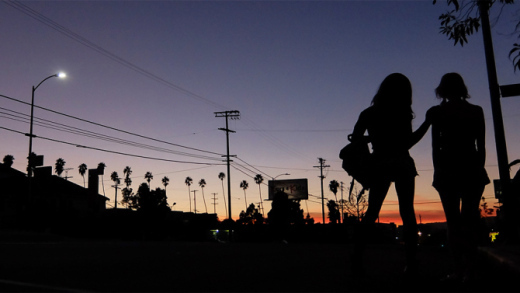
Tangerine, directed by Sean Baker, shot using an iPhone 5
If the phone isn’t an option for you, consider regular digital cameras/camcorders, which you can get hold of for a couple hundred bucks, although if you don’t already have one, you almost certainly know someone who does (and hopefully they’ll lend it to you!). This can be an easy, low cost way to get decent quality shots. Put it on a tripod, MacGyver a dolly track of some kind (that’s basically a way to move the camera through a space smoothly) to give you more fluid movement, and you’re on your way.
When shooting, you also need to think about sound and light. If you know your camera, you’ll know what kind of light it likes — basically, what light conditions does it perform well in. If you’re not sure, take it out for a spin and find out. We’ve covered lighting before, but if you don’t have a professional you can work with, or a student cinematographer, then do lighting tests to work out how you can work with everyday light sources. You’d be surprised how far you can get with some well placed lamps, funky-cool IKEA lights, and even strings of lights. Experiment until you find the perfect blend of natural and artifical light that gives your actors enough of a glow so that they don’t look washed out or overlit. And so that your movie looks cool. Improvise.
You can record your sound using the phone or camera onboard mic. It won’t be the best quality, but as with all of the above, remember this: what will really hook viewers of your short is a good story and good performances. Those are the top priorities for you. Remember we talked about the Duplass brothers’ Sundance-winning short in a previous post. That used on-camera sound. And won Sundance. It can be done. If you prefer to step it up a notch, you can buy a microphone to mount on your camera, as well as a boom pole to get your mic much closer to the actors, for under $200. This will make a noticeable difference in your sound quality, and again, is fairly affordable.
With all of these things, of course you can spend more. Your budget will dictate whether you spend low three figures or north of four on equipment to shoot the short. The key thing is to make use of what you can get your hands on — and make it work for you.
Once you’ve shot the movie, you then have to edit it. We’ll get into the art of editing another time, but you do have to decide how you’ll edit. As mentioned earlier, you can do a lot with iMovie. It has a timeline to allow you to edit clips and move them around. You can add filters to give your movie a certain look (including black and white). You can add songs and sound effects from Garageband, and you can upload to YouTube. Very simple, very easy, and free.
If you want something more robust which will give you more control over your picture, consider Adobe Premiere, or Final Cut. Both of these feature a complex and exhaustive array of sound and visual editing capabilities. Final Cut, for example, which is what we use, gives you extensive sound editing capabilities, so if you were forced to use on-camera sound, you can clean it up to a certain extent. Same for the visuals — there are sophisticated color correction controls that really let you give your shots a filmic look (even if they were taken on a camcorder).
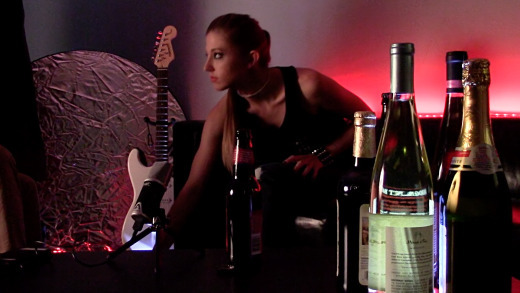
Rachel Keefe in our short film The Real Quinn Hardy, shot using a camcorder, lit using IKEA lights, and edited on Final Cut for a moodier look
Final Cut also allows for “plugins” — paid extra functionalities that you can “plug in” (see what they did there) to the software, to give you additional editing powers, like cleaning up visual noise from low lighting conditions, or even more advanced sound enhancing options. Some are free, some cost money. Final Cut itself is $299, so not cheap, but if you plan to make more than one short, it could be a sound investment.
The point is, you can have access to all the equipment you need for under $500, or under $1000, depending on what you already have or what you can borrow. You might have everything you need right now! Of course, an awesome script and wonderful actors are pivotal, but we’re assuming you took care of that. Now you just have to make sure you do your story justice, and make your actors look good. And the good news is, these days, it’s very easy to do that for free, or close to it.


November 28, 2015
Things We Like: Illuminae (The Illuminae Files 01) by Amie Kaufman & Jay Kristoff
Every so often, a book comes along that makes you want to retroactively drop the ratings of pretty much all your books on Goodreads by a star, because now you know what five stars really looks like (pretty much all; not actually all… *cough* JK Rowling and Patrick Ness and Laini Taylor are exempt *cough*).
ILLUMINAE is that book.

It’s a five star book. Really, it’s six stars. All the stars, in fact, and appropriately enough, because this is, simply put, a rollicking, gripping, adrenalin-rushing, heartrending and emotionally bad-ass space novel. It’s YA sci-fi, in space, and then some. No spoilers here, but the novel opens with an attack on a remote mining outpost, deep in space. The occupants scramble to escape as space fights erupt in the skies above.
Space fights, people. Space fights.
The survivors make their escape on three different spacecraft, but the attackers won’t give up so easy. The rest of the novel unfolds from there in a relentless and thrilling story that Never. Lets. Up. It keeps evolving, spinning, reversing, tricking you, lulling you, surprising you, breaking your heart, and you JUST CANNOT PUT IT DOWN.
Seriously, when a book contains awesome space stuff and what scientists are describing as ALL THE FEELS, how can you be expected to live your life and go about your normal business?! You can’t — you can only keep reading as the authors build and build their tension to unbearable levels… and then keep building it some more.
And then some more.
Essentially, this book checks every box you could think of, and plenty that you would never imagine. It goes way beyond what you’d expect: it has pictures, diagrams, beautifully creative layout and typography. Its form often reflects its content in a poetic, mesmerizing way; it’s endlessly creative in the way it presents its story. And it’s not a gimmick that it does this, or that it’s composed of emails, surveillance reports, IM chat transcriptions, etc — it’s entirely necessary, and with a story as unstoppable as this one, you barely notice that this isn’t a traditional narrative.
ILLUMINAE is something we’ve never seen before, and Amie Kaufman and Jay Kristoff need all the praise for that. They are amazing writers who know how to tell stunning, emotional and epic stories. They’ve made something extraordinary here.
Here are some awards that this book wins:
Best space scenes in YA sci-fi (intergalactic travel, awesome spaceships, insane battles, the majesty of the universe, etc)
Best use of nonstop, brutal sarcasm in stressful situations
Most thrilling novel of 2015
Coolest novel of 2015
Most “when you’ve finished, turn back to page 1 and read it again” novel of 2015
Best Artificial Intelligence in popular culture since HAL in 2001 (that NEEDS to be voiced by David Tennant in the Brad Pitt-poduced movie adaption)(seriously, Brad Pitt is producing the movie adaptation)
Best Brad Pitt movie adaption of all time (to be awarded at some point in the future)
Rating:
Six out of five space battles


November 19, 2015
ALTERED and CORRUPTED new covers alert!
We’re really excited to reveal all new covers for ALTERED and CORRUPTED! Here they are… feast yer eyes on these beauties!
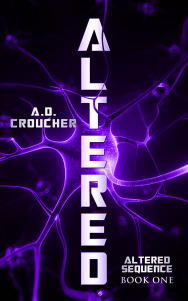
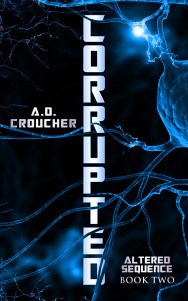
We love them; they really capture the tone and feel of the books. We hope you like them too! If you want to find out more, check out the details below!

ALTERED is book one of the YA sci-fi series ALTERED SEQUENCE.
Reese has a plan: keep his grades up, work hard on the basketball court, apply to his favorite Ivy League college, and don’t get arrested.
There’s just one problem: Reese knows things no one should know. He always thought he just had good instincts, but he’s noticed that it’s been getting worse. Lately it seems like something else.
Something more than instinct.
And he’s not the only one that has noticed.
They’ve been waiting.
Watching.
And now it’s time.
With his life in danger, Reese needs a new plan:
Escape.
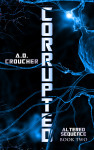
CORRUPTED is book two of the YA sci-fi series ALTERED SEQUENCE.
Reese and Erika are on the run in the shadows of Detroit.
They need to find Reese’s father, because hard as it is to admit, Reese has never needed him more.
But his father’s past might be the biggest threat of all.
They thought Wilcox was the real danger, but others are hunting them too. And Reese and Erika have no idea just how lethal those hunters can be.
As they try to keep each other and those they care about alive, one word keeps coming back to haunt them: Equinox.


November 12, 2015
Things We Like: Supernatural
Get this:
According to the lore, it’s really tough for a TV show to last more than a few seasons. It’s even tougher for it to stay good. And it’s basically impossible for it to stay at the very top of its game (and the top of everyone else’s game too).
But Supernatural doesn’t follow those rules. It’s like nothing we’ve seen before, Bobby.
Much like great rock’n’roll is based around “three chords and the truth,”, Supernatural has a similar stripped-back but insanely high-yielding premise and story engine: two brothers, a ’67 Impala, and an unending supply of monsters.
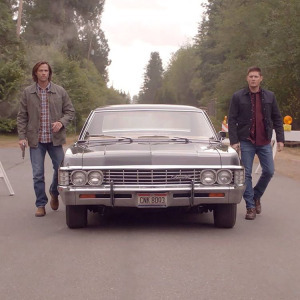
Unending supply of monsters not pictured
From that simplest of foundations, the various show runners, from Eric Kripke through Sera Gamble to Carver/Edlund, have forged eleven unstoppable, powerhouse seasons. We have to say it again: It’s seriously rare for a TV drama to be punching with the same weight after eleven seasons.
Yet Supernatural is hitting harder than ever.
How do they do that? How do they deal with the apocalypse in season 5, and still keep raising the stakes in season 11? They find a way. They work it out. They always do. Here’s how —
They take the key ingredients for good drama: dynamic character dynamics (yeah, we went there), reversals, setups, payoffs and callbacks, developing motifs, and a constant evolving of the stakes, and the format. And they use a few key, powerful questions to power it: What does family mean? Where is home? What does that even mean when you’re constantly on the run, on the move, on the hunt?
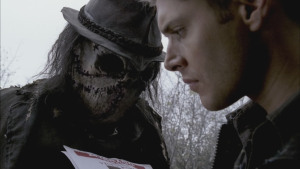
Dean. And a scarecrow (spoiler: not one of the good guys).
And then they execute that with extremely smart, clever, self-aware writing, inventive but grounded directing, and some truly great acting.
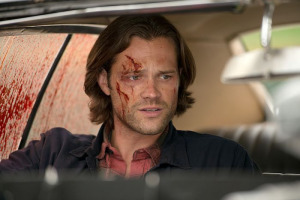
Sam, covered in blood. Pretty regular occurrence.
In this show, drama, plot, character, emotion and humor are all intertwined. They’re all one thing. There are heavy moments, terrifying moments, light moments, all bound by a roughhouse humor, the kind of humor that helps you cope with the uncopable, that helps you deal with stuff that’s way above your pay grade. It’s humor like a bar brawl; the Winchesters trade quips like punches, sometimes alongside actual punches (they are brothers, after all).
A show can’t last for 11 seasons without rock-solid emotional and psychological underpinnings, and an engine that can yield constant and evolving conflict. Supernatural is a masterclass in show construction, character development, and the art of the 22-episode arc (and the art of the 229 episode arc as of the time of writing!).

Supernatural always evolves in ways you never expect
Watch the pilot again, and see how show creator Eric Kripke did it. It’s deceptively simple. We see the two boys at a very young age as the defining incident of their lives takes place, then we cut to 22 years later when Sam is at college, and the same incident repeats, just as Dean comes back into Sam’s life. The gears of life grind on, and Sam has no choice but to follow Dean into the wilderness.

And THAT’s how you set up a series in your pilot.
Sam was supposed to be the lead character, the Luke Skywalker, while Dean was positioned as the Han Solo type, essential, but secondary to the lead. That soon changed as both brothers took and held center stage. The writers gave Dean more to do alongside Sam, and that’s one of the key strengths of the show: if you want your show to last, give your actors something to do. Both Jared Padalecki and Jensen Ackles get intense emotional scenes, awkward and hilarious physical comedy, subtle snark, action, confusion, heartbreak, fear, hope, cynicism, soul-less fury, and much more besides. The showrunners keep throwing stuff at them, and they keep hitting acting home runs.
Supernatural keeps things fresh and relevant in other ways too. It’s important to nourish your fanbase, to be self-aware, to be able to poke fun at your own show, and not be scared to evolve your format and characters. The show gradually introduced two essential characters, the angel Castiel, and the demon Crowley, firstly as small roles for a few episodes, but, as the brilliant Misha Collins (proving that “acting on camera” really is one of his “special skills”) and genius Mark Sheppard worked hard, crushing it on a regular basis, they proved how capable they were with the show’s tone (and how popular they were with the fans), and they became series regulars alongside the brothers. With four leads, the emotional and plot possibilities increased exponentially, allowing for season-long arcs based on Castiel/Heaven, and Crowley/Hell.
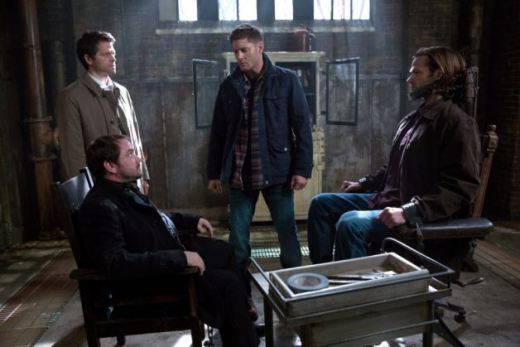
Castiel, Crowley, Dean and Sam.
Nourishing the fanbase and having the skill to be meta without sacrificing the integrity of the show (going beyond postmodern to a post-postmodern state, a kind of genuine and sincere postmodernism) has also helped the show stay as damn good as it’s ever been. The 200th episode was a beautiful example of how a show can deconstruct itself and still move you to tears. Once a show proves it can do that… it can do any damn thing it wants.
So, 11 seasons in, Supernatural shows no signs of slowing down, and there’s no reason it should. It’s the show that has everything.


November 5, 2015
Rewriting your short film script
When you first start writing your script, you should censor… nothing! Let the ideas flow, let the characters do something crazy. Think big, dream big… all that good stuff.

You need to get all Field Of Dreams up in here…
When you’ve finished that first draft though, you’re going to need to switch out of writer mode and put on a different hat.

Spoiler: there’s more than one hat
Several hats, actually. The first is your editor hat. With any type of writing, you need to go over your work and approach it with unnerving, surgical precision, cutting away and removing things that you couldn’t possibly imagine losing but that the piece will be much better without.

You, editing
It’s often brutal, always necessary. If something is slowing your story down, making it too long, or is tonally off — snip snip! Once you have a tight script, in which every word is weighted with pivotal importance, it’s time for a wardrobe change as you look for your set designer hat.
This is where you have to evaluate your script on the basis of what the director (spoiler: this is you just with a different hat) can actually, practically shoot. This means dealing with the reality of your situation. If you set your script in a cafe, or a store, or an airplane, do you actually have the ability to (a) shoot in a real cafe, store, or airplane, or (b) recreate the interiors you need using creative set design (see our previous post)?
Shooting in a real location, such as a cafe or store, involves getting permission from the owner and working out all the details with them. Most will only let you film after hours for a set period of time, and they may insist their employees are present to keep an eye on things… which could be costly. They may let you use the location but not their materials — meaning you’ll have to bring in your own props (mugs, coffee machine, etc.). Along with props, you’ll need to bring in lighting and, if the script calls for them, extras. There are a lot of logistics involved with real locations, and depending what your relationship is with the owner, there could be insurance issues involved as well.
But don’t let this deter you!
The golden rule of making short films is that it NEVER hurts to ask. Just be polite and make sure they are comfortable with every aspect of your set and production. Don’t paint a wall or move a table without clearing it with the owner first.
If you do manage to make a deal and secure a real location, and get the limitations worked out, you’ll have to put your director hat back on (retroactive spoiler: you were wearing your producer hat in the last couple of paragraphs) and work out your shot list. That’s basically a list of all the places you want to point your camera — we’ll cover that in a later post. A shot list will help you as the set designer figure out what will be in the scene. If it’s not exactly as the script described — you can’t have your lead character cleaning out the uber-expensive espresso machine because part of the deal with the owner was no touching anything that cost more that the coffee you were buying the cast and the crew — then you’ll have to change your script.
Sometimes it’s as simple as a tweak to an action sequence (e.g. instead of running across rooftops, your chase takes place on the street), but if that espresso machine represented all your character’s hopes and dreams of one day moving to Italy (and your short was a beautiful yet melancholic ode to the poetic symbolism of said machine, which actually sounds kind of cool!), you’re going to have some serious rewriting to do.

It’s so pretty…
Being unable to get a location you were hoping for, like getting turned down by American Airlines to make your movie on a 747, doesn’t mean you have to toss your script out the window. First, that’s littering and we would never encourage that, and second, it’s all part of the process, baby. With your set designer hat back on, you’re going to have to look around at what you can do. Is it possible to recreate the interior of an airplane? How about just the tiny space where the flight attendants hang out as they load the drink cart and talk about that rude bastard in row 23. All you need is a cart and a ridiculously small room.
If your original script had a flight attendant who’s scared of heights walking down the aisle, dealing with one flyer after another as she/he rolls past the rows, you’ll have to put your writing hat back on and change the dynamics without losing the tone, or the essential point of your story (it’s surprising how well the point of your story can survive intact through huge rewrites). Having the flyers approach the attendant as they load the cart instead could be a quick solution, but if it’s not as funny, or seems too contrived, you’ll have to dramatically change the scene, and possibly even aspects of the characters. If you changed the setting to a bank, for example, where customers are more likely to approach a teller, your bank teller being afraid of heights wouldn’t be so impactful, and any callbacks to that fact would have to be removed from the script: anytime you make changes, it’s a ripple effect.

Any excuse to reference Jurassic Park…
This is the messy art of rewriting.

Seriously, it’s messy
Sometimes you might need to lose the scene altogether. In that case, you’ll have to make sure the important information in any cut scene is dispersed throughout the rest of the script. Keep in mind that you may also need to adjust the scenes before and after the cut scene, so that your story still flows (ripple!). And watch out for any callbacks to that lost scene. If you edit out a set-up, you need to take out the payoff too. You might even need to create a new scene to replace the one you lost. If you can reuse a set that is already booked or built, all the better for the set designer (which is still you, by the way).
As a writer, it can be extremely soul-crushing to have to change your vision to cater to the pain-in-the-butt reality of the situation (#writerslife). But don’t give up. Ever. Try to be open to all the possibilities. You might have written a REALLY cool fight sequence in a train station, but thanks to ‘security concerns’ you weren’t allowed to film it. Exchanging that scene for one in which your character stumbles out of the station doorway, covered in blood, clothes torn up, could be all the action you need. Add a few words to another character about the fight and you’ve taken a logistically challenging three minute scene and turned it into a 30 second scene that was simple to shoot. Nothing of the plot was lost, and your film is now tighter.
Short films: the art of the shortcut.
Setting isn’t your only potential obstacle though. If you’ve written a key part for a 6’4″ lady with extreme martial arts skills and the ability to trapeze (because, you know, your short is called Circus Ninja 3)… kudos for the creativity, but get ready to rewrite the part if you can’t find an actress with the physical look and skill set to do that. Gwendoline Christie just might not be available, sorry! Depending on your pool of available actors, you may not be able to find someone to fit that role, so you grab your casting director hat. It fits snugly over your writer’s hat, don’t worry.
As casting director, you have to remember that it’s far more important to get the best actors you can to really make your lines sing. As a writer, you’ll need to zero in on what is important about your character, and find an actor who can work with those aspects and make them their own.
Rewriting your short film can seem overwhelming, especially when you started out with an in-air action movie about a vertiginous flight attendant and her extremely tall arch-enemy who works at the circus… and it then becomes about a bank teller fighting a spirited average-height nemesis who studied judo for a few months. Your new version will still have a comedy and truth all its own; all your own. The key thing to remember throughout the rewriting process is that operating with restrictions can spark your creativity even more (there’s a reason you could write a 5000 word term paper the night before it was due), whether it’s with set design, casting, or shooting.
Embrace these moments as you work towards making and finishing your short as opportunities to make your script even better.


October 29, 2015
Winning the Comcast/NBCUniversal TV Prime Time Award
Writing can be a lonely process, even when you’re writing as a team.
For the majority of the time, you write with absolutely no knowledge at all of whether people will ever respond to your writing. You’re writing in the dark. That’s the job; we signed up for it, it’s part of the crazy wonderful life of being a writer. That said, it’s always nice when, every now and then, someone shines a light on the writing that you’re doing. We look up, blinking, slightly taken aback that someone likes what we’re doing. It’s a funny life — you have to believe in what you’re doing 100% with ironclad certitude — you couldn’t possibly make it through the rejections and knockbacks if you didn’t — and yet when someone actually says, this is good, there’s always that feeling of surprise. Like… really? Us?

So, when our TV pilot script USE OF FORCE was one of three finalists for the Greater Philadelphia Film Office SIP Screenwriting TV awards, we were shocked. When our script won, officially the Comcast/NBCUniversal TV Prime Time award, we were stunned and overjoyed! That recognition and validation meant so much. It was a particularly nice kind of light to have shone on your work.
Plus, writers don’t get out much. So getting to attend an award ceremony in a beautifully designed space in Center City (with a great view), talk to some awesome people, and eat some fine food… yeah, that was nice!

So we’re grateful on many counts — we really appreciate all the people who helped get us there — the readers, the GPFO (special shout-out to Joan!), and the judges. A heartfelt thank you to all who believed in us.
Here’s the official press release.


October 22, 2015
Costume design and set design: not just the icing on your short film cake
Wardrobe and set design may seem like frivolous aspects of filmmaking, as if they’re the frosting on top of a cake — nice when they’re there, but not necessary to satisfy your hunger. Wrong! Trying to capture an audience without a setting is like serving a cake without having mixed the ingredients together first. And without icing. And who wants that?! Wardrobe and set design are what give the ‘cake’ its shape, and are often what holds everything together.

Mmmm… cake
Visual clues give the audience a deeper understanding of a character or situation; they appeal to our visual intelligence. It’s a way of communicating a ton of information without saying a word. Visual clues give the audience the time: are we in the future, the present, the past, an alternate reality timeline? They can also convey the financial and social standing of your characters, their points of view, as well as where they’re from. You can reflect their beliefs, morality, even their education, just by giving them the right background and attire.

So, not going to a rave, then?
In Captain America: The Winter Soldier, Black Widow wears a simple arrow necklace. As a spy, her clothes, even her hairstyle, are often arranged to fit the job she’s working. That necklace was the only piece that was her: unconnected to any SHIELD assignment. The arrow reminded the audience of her relationship with Clint Barton, and that underneath her killer moves was a person with relationships that she would break her own rules for. It was pivotal to the story that the audience remember that Natasha has a history, and isn’t just an action hero to provide backup to Steve.

Statement jewelry. Steve not pictured.
The wardrobe can give the audience all they need to know about a character, and the set design can ground the story in less than a second. The messy desk of a lawyer in a well-tailored suit shows us someone who presents themselves as having it all together, but has a messy hidden life. A woman in flip flops on a cream couch surrounded by nautical-themed accents has the audience smelling salt in the air without a shot of the ocean or the sound of waves crashing.

You can hear the seagulls. Seagulls not pictured.
Design is especially important in a short film, since you have limited time to tell your story. You need to use as many short cuts, visual or otherwise, as you can. However, coupled with a limited budget, design can cause some massive headaches. As with every aspect of making a low budget short, you’re going to have to get creative to to work with what you have. We hate to break it to you, but you’re not going to be able to build that Nancy Meyer kitchen set. But (assuming you don’t know anyone with a Nancy Meyer kitchen willing to let you use it, or Nancy Meyer herself), you can find a kitchen island at IKEA, put it in front of a large window, and have your cast orbit around it, giving the impression that there’s a large kitchen around them, just out of shot. As long as you evoke the impression of a large fancy kitchen, your audience will see it.

No one fights in this kitchen.
The key things to remember are:
No blank spaces (sorry Ms. Swift). Actors standing in front of blank walls gives off a vibe — the boring kind. Everything the actors say to one another will be infused with that vibe. Don’t undercut the dialogue and their performance by sending out the sleepy signal. (The only exception to this is when a character is about to say or do something integral to the story and you want all the attention on them. Which bring us to…)
Don’t overwhelm. Everything in the space should serve a function. If it’s not there to reflect something about the location, story or characters, it shouldn’t be there. You don’t want your audience so engrossed in your beautifully designed backgrounds that they lose focus on the unfolding story.
Downsize. If the scene is taking place in one location, you only need to create a part of that location. Like the kitchen example above, why create a huge set if your actors are just sitting in place? Dressing up the corner of the room can be all you need — just remember to ensure that all your angles are covered, so wherever you want to point your camera, we’re seeing what we need to.
Reuse-Recycle. This is where it’s good to be a hoarder. Or know one. If not, try craigslist, eBay, garage sales and flea markets. Felicia Day even picked up abandoned pieces of trash off the street for some props in The Guild! Home decor magazines, Pinterest, and of course movies and TV shows can provide inspiration. Just make sure to keep your characters in mind. A pig-shaped cutting board may be cute (and hopefully cheap), but ask yourself, would your character have that in their kitchen? (If you are going for a Nancy Meyer’s look then the answer is definitely not!)
Have fun. You know what makes movies repeat-watching worthy? All the little things you discover each time you watch them. Keep that in mind when putting together your set. On the God’s Work episode of SouthLAnd (moment of silence for that AMAZING show), in one scene children’s alphabet letters were arranged on a table to form the producer’s initials (admittedly, this is not character-based, but it’s a fun easter egg, which is another reason to spend a lot of time on the details). In every J.J. Abrams movie there’s an R2 D2 hidden somewhere (probably won’t be too hard to spot in his next film). In Supernatural’s season 2 episode Playthings, the Shining homages didn’t end with the desolate old hotel.

That’s a spooky room number you got there…
As we mentioned before when talking about writing, characters don’t often say what they mean. With an absence of history or internal dialogue, the setting and wardrobe are what raise the volume of what is not being said.


October 15, 2015
Casting your short film
Casting is one of the trickier aspects of making your short film, but it’s also one of the most rewarding. Watching a great actor bring your words to life in a way that’s better than you could have imagined is a genuinely thrilling experience.

Even something as simple as a coffee shop scene comes to life with great actors
So… how do you find actors?
You can check out local theater companies or groups, general acting classes, or try to reach out to college students on film and theater courses. Finding groups or classes is a matter of googling in your area, but you can also check the noticeboards in local coffee shops, or go to some theaters near you and ask if they know of any acting classes nearby. For schools, you can reach out to the relevant professor of acting or theater courses. In all cases, speak to whoever runs the class or course or workshop, and ask if you can sit in. This way you can watch the actors doing their thing, and start getting an idea of who you might want in your movie.
If you find a local acting class or workshop, consider joining it and taking part. It will only help you as a writer if you know what it feels like to be saying words in front of a camera, and it will also help you genuinely connect with actors. You might also get the chance to test drive some of your pages or scenes — this is a hugely helpful process, since sometimes you only know when a scene is working once you get it on its feet. Oftentimes, you’ll want to rewrite when you see things aren’t working, or if the actors discover something about your scene beyond what you originally wrote — that’s especially satisfying!

When actors make you look good
Before you cast, you will need to consider whether you want to hire SAG actors, or nonunion actors. Working with SAG will require more logistics and a great budget. If you’re at the lower budget, DIY end of the short film spectrum (like us, and most others), your best bet is to use nonunion actors. If you’re really low budget, you may not be paying them at all — the key thing is to be upfront about your project with them. You will absolutely have to feed them, on the shoot day, maybe at table reads, and you should make sure to burn the movie onto DVDs for them afterwards, so they have material they can use for their acting reels. Many low budget shorts don’t pay the actors, and often don’t pay anyone else either. The art of making a low budget short movie is the art of calling in favors, and being amazingly efficient with the money you do have. (More on that in a later post).
Good actors love working, and nonunion actors will often agree to work for free if your project is genuinely small, low or no budget, and you are upfront with them. They get to do the thing they love, get something for their reel (and free food for however many days you shoot for), and they get to work with someone who might make it big someday (we’re talking about you! Yes, you!). Be passionate about your script, and be understanding and supportive of your actors, and you can get beautiful results.
If you attend an acting class, you may get an idea of which particular actors you’d like to cast, especially if you bring some scenes and have different actors play the roles. If you’re not sure, you can set up an audition. If it turns out that you can’t find the right actor for a particular part, it may be worth rewriting the script slightly to accommodate the actors that you have access to. (We’ll cover that later to0)!
If you’re part of a local class or course of actors, setting up an audition in the space they use can be relatively easy, if you have the OK of the class leader or professor. You’ll have a ready made space, and usually cameras and lights too. Again, as long as you’re respectful and professional, actors won’t mind auditioning for you — it gives them extra practice at the nerve-wracking art of auditioning.

Auditioning — it’s how you’ll find your Joey
If you don’t have a connection to local actors, you can advertise locally, by putting up notices in coffee shops, or theaters, or community centers. You can also put your notice on backstage.com, which is an essential resource for actors. You’ll need somewhere to hold your audition — you might want to try asking favors, e.g. if your local coffee shop has a room for events or readings, you can ask if you can use it for a reduced, or no, fee. Same for your local library. Be resourceful — you need a room, with an area outside for your actors to wait their turn. Be aware, this all refers to open auditions, so you have no idea of who is going to show up! It’s easier all round if you can sync up with a local group of actors, but we get that it’s not always possible. As with every aspect of making a short film on a low budget, you can only do what’s realistic for you and your situation. If you can’t make a local connection, and the idea of setting up and holding auditions seems beyond the scope of what you had planned, you may need to use friends and family. You never know, you may uncover some hidden talent!
Once you’ve tracked down your gang of actors and hired them, you should have them sign release forms — basically, you cannot use someone’s likeness unless they specifically give you written permission to do so. You can then proceed with the rest of preproduction, and also start scheduling your shooting days.
It’s always exciting when you lock down your cast, because then you can really start to see how great your short is going to be!


October 8, 2015
Making It Big In Shorts (and other books to read)
While you’re thinking about making a short, or as you’re writing one, but definitely before you get into postproduction, it’s a good idea to get to know the world of short films. While you can find a ton of info online, there are some books out there that provide very useful looks at the short film industry and ecosystem.
Two we’d particularly recommend are —
Making It Big In Shorts, by Kim Adelman (2009):

Making It Big In Shorts
And Short Films 101, by Frederick Levy (2004):

Short Films 101
Some of the practical info they discuss is out of date, sure — some of the websites they mention no longer exist, and technology is already WAY ahead of when the books were written. Like, so far ahead. Like Star Trek level. There are chapters on negative cutting and film processing, for example, which likely just won’t apply to you anymore, with your digital camera or iPhone and Final Cut. (Somewhere, Quentin Tarantino and Christopher Nolan are weeping)
However, both books are JAMMED with fascinating, insightful stories into how many different directors made their first few shorts, and translated them into movie careers. Inspirational!
Both books also contain immensely practical guides to writing, casting, preproduction and shooting short films, as well as ways to budget effectively, editing, and, of course, submitting to festivals. Well worth checking out.
More generally, we’d also recommend a couple of other books just for sheer getting-it-done inspiration. First up, Robert Rodriguez’s brilliant classic, Rebel Without A Crew. It’s the story of how the filmmaker, now known for Sin City, From Dusk Til Dawn, and the Spy Kids movies, went out and made his first movie, El Mariachi, pretty much on his own, for $7000 (worth noting: that’s a lot less than some of the shorts mentioned in the other two books!). It took Sundance by storm, and made his career.

Rebel Without A Crew
The book really gets into the nitty-gritty details of how Rodriguez took matters into his own hands, worked out what he could film that was around him, who he knew that he could cast, and what equipment he realistically had access to. Pretty much everything he says can apply to you as you work out what your short will be, who will be in it, and how you’ll shoot it. It’s a great example of how to think practically, and make something for you. For more on Rodriguez and his super-practical approach to just getting out there and making movies his own way, check out his interview on the always inspiring Nerdist Podcast right here. It’ll get you fired up!
Lastly, we must recommend Felicia Day’s WONDERFUL book, You’re Never Weird On The Internet (Almost):

You’re Never Weird On The Internet (Almost)
Did we mention it’s WONDERFUL? Not only do you find out how she became the awesome nerd/geek/gamer legend that she is today (it’s basically her origin story), but there is also a huge amount of detail about how she motivated herself to write and shoot The Guild, the epically brilliant online series that truly set her career in motion (it’s had 300 million online views to date!). She made her own destiny by writing the perfect script for her strengths as an actress, but also one that could easily be shot on an almost nonexistent budget in her own house. The story of how she wrote and made 70 episodes across six seasons of The Guild alone makes this worth buying. Luckily, there’s a whole lot more inspiration where that came from, making this book indispensable for any kind of creative person. Buy it! And then watch The Guild if you haven’t already!
Outside of these books, of course you need to hit Google. Look for interviews with filmmakers about their early experiences, look for blogs from people who have made shorts (oh wait, like this one — go you!), and do your research. Even though most of what you’re going to learn will happen during the process of making and editing your short, the more you know going in, the better.


October 1, 2015
Writing short movies
When you first start writing something, it can be hard to know what it is.
You might have a line of dialogue in mind, or a character, the beginning of a scene, even just an emotional atmosphere. You might write a few more lines, but still not know… is it a primetime sitcom? An edgy cable sitcom? An indie movie? A webisode? It’s only as you keep on writing (and keep on writing, and keep on…) that you realize what shape your story is… e.g., is it novel-shaped, movie-shaped, short-story shaped, just a single scene… or maybe, is it short movie-shaped?
(This is why the best way to write something is to write it… if you don’t start putting words next to other words, you’ll never get to the words after that… eh, that sounded better before we wrote it — but you get the idea! You won’t write if you don’t write. Boom!)
What counts as short-movie shaped, you ask? (Thanks for asking!) Well, we’ll tell ya.
Firstly, you don’t really have room for the traditional three act structure of movie storytelling. If you’re on the (ideal) shorter end of the spectrum, up to 10-15 mins, you don’t have a lot of runway to set up a story, develop it, and pay it off. Everything in a short movie has to be brutally efficient: each line, each beat, each shot has to work hard to propel your short to its (hopefully awesome) ending.
So a short movie will usually drop you into a situation, which means your writing has to be extra sharp, and your characters have to show themselves quickly and organically. If you want to think of your short movie in acts, each act might only be around 1-3 minutes.
The key to short movies is the reveal, also known as the punchline, or the twist, or the pay-off. A short movie is basically one set up, and one payoff. You can structure that any way you want. As we saw in our last post, Eric Kripke balanced his set-up and pay-off pretty evenly, Colin Trevorrow’s set-up was in the first 30 seconds, and the rest of the short was all pay-off, while Neil LaBute’s short was 99% set-up, with a brilliant pay-off right at the end.
So, as you can tell, the other key characteristic of a short movie is how flexible it can be. That’s the beauty of shorts.

Sorry. Again.
Their lack of formal structure allows you to be truly experimental and bold in your storytelling; the smaller canvas rewards bolder strokes.
Your short movie story could be real-time, or a day in the life, or have massive time-jumps and cover years, or even centuries. What makes it a short movie is that set-up, and pay-off.
You’re usually playing with one idea, or one concept. It could be a war between neighbors that gets resolved in an unexpected way, or someone having a really bad day, or something that’s a set-up and pay-off at the same time — one joke or idea played out to its conclusion, as in Jay and Mark Duplass’s 2003 “$5 short” This Is John, which got into Sundance, and opened a lot of doors for them. It’s the simplest of ideas, executed inventively.
As with all writing, there needs to be tension, conflict, something the lead character is fighting against, or fighting to get. Things need to go wrong in some way. In This Is John, all John wants to do is leave a successful answerphone greeting (remember, it was 2003. Old!). And it’s the one thing he can’t do. It’s the tension between dreams and reality played out to escalating, tragicomic effect.
Your short can be simple, like that, or it can be grandiose, like Neill Blomkamp’s Alive In Joburg (which was later developed into District 9), which obviously has a bigger budget, but it still uses guerrilla tactics to create the impression of scope and scale.
It doesn’t hurt that he had the CGI skills to pull it off. Don’t worry if you don’t. Remember, This Is John was literally just one brother pointing a handheld camera at another brother talking into an answering machine. And it got into Sundance, and it did great there.
As Jay Duplass has said, “the best thing to do is just make your stuff, and make it as best you can at the level you can make it at… and it will speak for itself.”