A.D. Croucher's Blog, page 4
December 8, 2016
Steps to self-publishing, Part 1: Should you self-publish?
So here’s the thing. This is not going to be a damning indictment of traditional publishing, nor will it be an ad for why self-publishing is the only option. Self-publishing is more simple than that: It’s nothing more and nothing less than a means to an end. A tool in your writerly grab-bag. A way to tell your stories in a way that will be heard. The literary equivalent of putting your short movie on Vimeo, or your web series on YouTube, or your album on SoundCloud. As an approach, self-publishing has pros and cons, and we’re going to take a deeper dive into what they are. You might find that you want to try it; you might be like, uh, no.
It’s all good.
But this is the first step — deciding if this is the approach for you.
If you’re writing, or have written your story, you need to know several things. Firstly, what the hell is that thing? Is it a short story, a novella, a long short story, a novel, a mighty word-beast of several hundred thousand words? The reason we’re asking is that if you’re thinking of going the traditional publishing route (you get an agent, the agent gets you a publisher), you need to know exactly what you have, and what part of the bookstore it would be shelved in. You also need to make sure that your work meets the current accepted word length for whatever it is, e.g., YA novels are usually in the ballpark of 70k-80k, literary novels around 80k-90k, and fantasy novels more like 100k-12ok (on account of all that awesome world-building). These are just broad outlines, and they tend to change over time (only a few years ago YA novels used to be closer to 30k than 80k), but literary agents often won’t consider a novel if it’s too far away from the appropriate total. If you want to go the traditional route, your book must fit the traditional categories with all their requirements. Which is cool. You just need to know that as you’re writing and editing. If your book does match up with the traditional requirements, that’s great!
But…
That doesn’t mean that you have to go traditional. It’s a necessary requirement if you do, but doesn’t force your hand. Traditional publishing has many advantages—marketing, distribution—but some disadvantages too, e.g. everything happens extremely slowly (it may take upwards of a year to find an agent, the same to get a publishing deal, and your publication date will likely be 18 months to 2 years after that), and, the kicker, it’s pretty challenging to get through the slush pile. Think of it from the agents’ perspective. Every single day opening their inbox to look at queries feels like this:
How are they supposed to really know which of all those super brief blurbs will turn out to be mighty-mega-bestsellers? It’s hard being an agent. If an agent gets thousands of queries a year (and most of them do), your chances of standing out from two paragraphs in a query letter are very slim. Not impossible, but on average, an agent may take on only a handful of new clients each year. That’s single digits, out of thousands.
But that could be you. And you should damn well believe that it will be you. you’re awesome!

None of this is to discourage you; it’s just to let you know what you’re up against, and what you’ll need to be ready for. Still up for it? That’s fantastic! Write yourself a knock-out query (there are plenty of reputable sites and services offering query critiques, and Writers Digest has a great series analyzing successful query letters)[link], select your list of literary agents (making sure they handle the type of book you’re submitting), and get at it!
If that’s not for you for whatever reason (your book is unconventional, you don’t want to wait that long, you just HAVE TO GET THIS STORY OUT THERE RIGHT NOW DAMNIT), or you’ve been down that road and have amassed a collection of rejections and want to try something else, then self-publishing might be worth a shot.
Making that decision carefully and thoughtfully is step 1.
We’ll take you through the next steps in part 2!


November 24, 2016
Giving thanks for these 7 must-read non-US YA reads of 2016
Monsters, music, psychopaths, love stories, and more await you in these 7 essential YA reads from outside the US.


November 10, 2016
Editing: Beta Readers
Finally, the words you’ve been waiting for: Your draft is done!
You finally get to take a break. So power down your computer and relax… while you hand your manuscript over to… someone else.
Okay, so maybe relax is the wrong word. CRINGE might be more accurate. PANIC, definitely. SKIN-CRAWLING FEAR, possibly.
We’ve said before that writing can be an isolating experience. It’s just you, your computer, the wild and crazy thoughts in your head, and that beautiful bowl of peanut M&Ms (replace with the snack of your choice). It’s no wonder that bringing someone else into the mix feels so disconcerting. You might feel that what you wrote was awesome, just the way it is.
But once your draft is polished, the next step is sending it out into a little corner of the world for feedback. It’s gotta go.
But what that corner looks like is totally up to you. Do you have a group of trusted friends that you could ask to give your work a read through? Are you a part of, or could you join, a local writing group? Are you lucky enough to have a mentor?
We all need a Yoda to give our work the Jedi side-eye
It’s important that you can trust whomever you ask to give honest feedback. If your mom is the type to praise your achievement at finally completing something and will focus on the quality of the paper your story is printed on, she’s not the right person to ask. Nor do you want to give your work to a friend who prides themselves on getting through school without ever opening a book.
You need a reader who, you know, reads. And can be critical.
If you don’t have anyone that fits that description, don’t worry, there are loads of professional editors out there that will be willing to go over your manuscript… for a fee. Finding that editor is kind of like online dating. You need to check their profile and their background, make sure they’re legit, see what they’re into, and then ask if they would be interested. Hiring an editor who works mainly on historical YA fiction may not be a good fit for your sci-fi opus. There are a lot of groups online that have several editors “on staff” and once you describe your work, and what kind of feedback you’re looking for, will hook you up better than match.com.
Once your manuscript is in someone else’s hands, do your best to distract yourself. Rewatch of Gilmore Girls anyone? Whenever that annoying box pops up to confirm that you are still watching, take a moment and start to mentally prepare yourself for when your beta reader gets back to you. Because it’s gonna hurt. It doesn’t matter if only one tiny error is found, it’s still going to sting. Spoiler: There’s going to be more than one.
But remind yourself that the good news is, you can fix it.
You can fix anything.
That’s what the next draft (which might be the 4th, or 9th, or 16th, whatever it takes) is all about; fixing what you couldn’t see because you were too close to it. When the feedback is ready make sure to take notes, ask questions, and before walking away, have a clear understanding of exactly what your beta reader is telling you. Even if you disagree, be clear on what they feel didn’t work. Then take those notes and put them away for a day.
Chances are you’ll be a mixture of desperately wanting to jump right in and fix any blemish, and furious that it was there in the first place. But give yourself time to adjust to the feedback. It’ll feel overwhelming, but once you start to tackle one issue after another you’ll see the full solution. As we mentioned before, sometimes those solutions were already there in the first draft and need to be added back in.
Come up with a game plan before you turn your computer back on. This way you’re not going over and over the same sections. At times it will go smoother than you think, other times it will drag. But you’ll get there. Every problem is solvable and when you’re done, you’ll have a completed manuscript!


October 17, 2016
GEMINA review: Wow.
One year after the all-conquering ILLUMINAE took over the YA world, Amie Kaufman and Jay Kristoff are back with the glorious and somehow even more epic GEMINA—and this time they’ve brought along Marie Lu for the ride to do the illustrations!! It’s CRAZY AMAZING. Bigger, bolder, more action, more emotion… Here’s D’s review on the BN Teens Blog. You need this book. You need it. Buy it. Now.
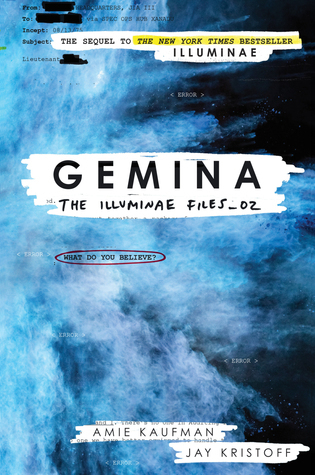
Seriously. Wow.


October 13, 2016
Editing: Structure
So you’ve gone through and tightened your plot, strengthened your characters, confirmed that the dialogue is realistic, and shaped your world until it was so tangible you forgot you didn’t live there. Congratulations! You have a solid second draft! Feels good, doesn’t it?
Now it’s time… to create the (drum roll) THIRD DRAFT. We know what you’re thinking: wait, shouldn’t I be taking a break? Reconnecting with Netflix and friends? Or just Netflix?
Sorry, but no. You’re on a roll and you need to keep rolling.
Editing requires discipline and momentum. Whether you’re working on it eight hours a day every day, or during your forty-five minute lunch break Monday through Friday, or grabbing 20 minutes before your commute every day, you’re doing some serious work. Don’t stop now.
Serendipitously, your third draft will be all about momentum. Does your story have it? Is there a pace and/or structure that’s keeping the reader turning the page?
This is where you have to make some hard decisions about the structure of your story. Are you going to follow the classic formats (three act structure, eight point arc, etc.) or follow your own? Are you going to have a change in narration or setting with each chapter/break? Are you going to have one chapter flow into the next, or end each break on a cliffhanger, so when your reader says they’re just going to read one more chapter before bed, they wind up finishing the book at three in the morning — loving and kind of hating you when their alarm goes off the next morning?

While it’s tempting to fall back on classic structures and forcing your story into a mold, we recommend reading through what you have so far first. Chances are you’ll see some kind of structure already peeking through. It may be close to a classic format or it might be something completely new. Do what feels right for the story. The key is that it’s consistent throughout. Once you decide on your structure, make sure the work follows the shape from beginning to end. You shouldn’t ask your readers to fight to stay in your story — especially at three in the morning.
Once your story has a firm shape, like everything in life, it’s all about the details. You’ll need to go into every arc, scene, act and/or chapter and make sure they each achieve something that furthers the plot — whether it establishes an aspect of the setting, a facet of your character(s) or moves the action forward. Break down your story into smaller stories and make sure that they are essential.
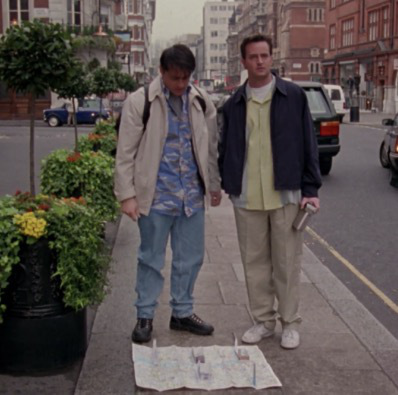
If they aren’t essential, you have to either give them more depth, or cut them loose.
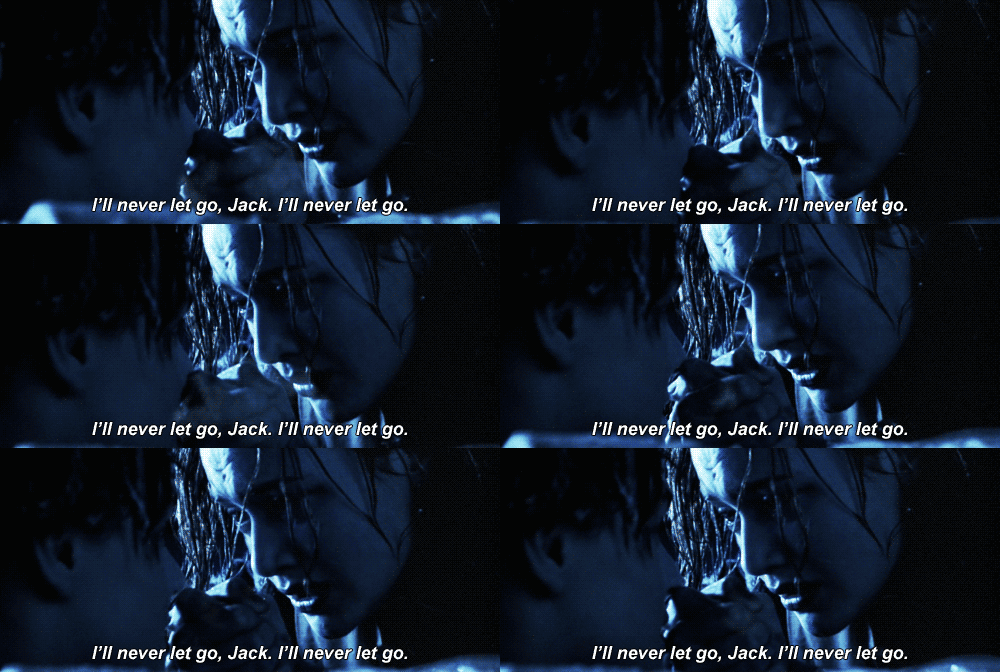
Just remember, if you really love a scene and desperately want to keep it, chances are it’s trying to say something but isn’t quiet there yet. Work on it, find its meaning and let it shine through.
Your number one task is to be brutally honest with yourself, though; if you can’t make it work, no matter how much you love it and how good it is on its own, it will only hurt the whole piece. Chocolate is amazing, but not on a steak. So if a scene doesn’t fit, even if the writing is impeccable, cut it. But paste it to a new document.
Who knows, it could be the pivotal ingredient to the second course/sequel!*
*Finish what you’re working on now first though!


September 29, 2016
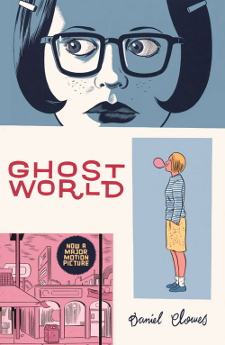
7 graphic novels with all the emotions
If you’re chasing the feels—and honestly, aren’t all of us?—here are 7 graphic novels that you need to read. Warning: emotions ahead.


September 15, 2016
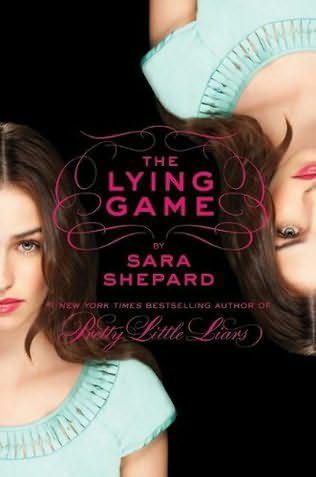
7 awesome liars in YA
YA is full of liars—some great, some… not so great—but they’re usually hard to ignore. They’re not necessarily the good guys (or gals), but they’re often your fave characters in the book.
Here are 7 of the best.


September 1, 2016
Editing:World-building
We’re all familiar with world-building in sci-fi and fantasy. The religions, politics, powers, and ancient mythology (and, yes, even the trade laws) that exist in Star Wars, Star Trek, the MCU, and the Potter-verse. But world-building isn’t just for magical characters wielding all-powerful technology.
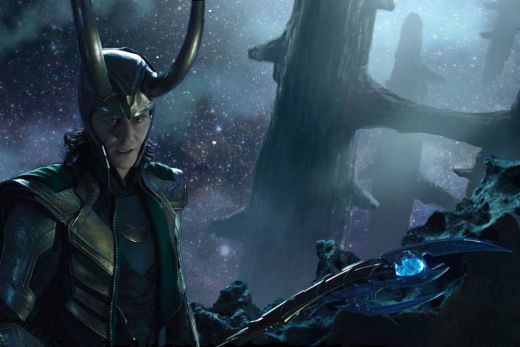
Magical character? Check. Wielding all-powerful technology? Check.
No matter the genre, the world in which your story takes place is more than just a backdrop to invoke a location (like a white sheet behind a stage to show an empty sky). Your setting is literally and figuratively your characters’ world. It has/will shape them, and possibly crush or inspire them.
The first step to building your world (and ensuring it’s presented in just the right way when you’re editing) is to decide how much influence you want the setting to have. Will it enrich each scene in subtle, nuanced ways (like the music subculture in Begin Again), or will your world be so vivid that it’s almost a character unto itself (like The Matrix)? Either way, just like your characters, you need to know the ins and outs of where your story unfolds. What’s its history? Its defining features? How does the air smell (if it even has air)? How does the water taste (if there’s even any water)? What does it sound like at night? Is it any different at dawn from how it is at dusk?
This also extends to culture and society: you need to know the mechanics of how your invented society functions, and how your characters work those mechanics. Mad Max: Fury Road has a fully complete society and eco-system: it’s grounded in details. Utterly insane details, to be sure, but it’s 100% consistent and feels real.
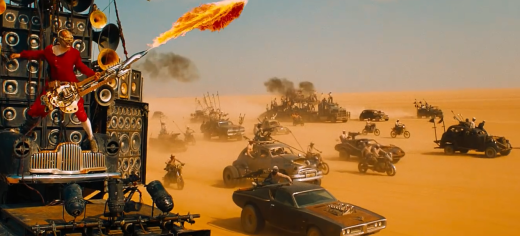
World-building, son. This photo never gets old. Ever.
If you’re so inclined, draw your world, as much as you can. If not, look for pictures, photos, paintings, etc. that both look like your world, and conjure the feelings you want your world to provoke in your characters, and in your readers. Having a visual reference can be a huge help in creating your atmosphere. If there’s a part of the world that has similar geography, go visit it and soak it in. Basically, do what you need to in order to live there in your head. Then attack your draft and make sure that feeling you have when you’re living in your world is conveyed between the action and dialogue lines, and in and between each line of your prose. Make sure every action follows the law of your world: readers and viewers have an unerring instinct for inconsistency, even if it’s felt more than thought, it will turn them away from your work. For example: if there is no air, there is no rust.
Grab your nearest copy of Harry Potter (everyone has a set of Harry Potter books in each room, right? That just us?), open it up, and see how long it takes you to figure out where Harry, Hermione and Ron are. We’re betting that in a few lines you can tell what room in Hogwarts they’re in, or which shop in Diagon Alley. (Just for the record, J.K. Rowling is a master world-builder, on every possible level — if you want to see how it’s done, read the Harry Potter books, and for a more gritty, contemporary kind of world, her Cormoran Strike crime novels, written under the pen name of Robert Galbraith).
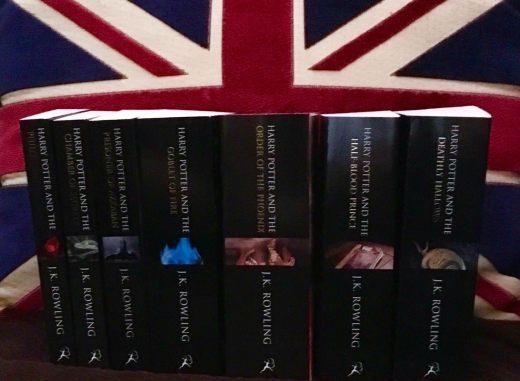
Can never have too many of these, Harry
It’s all in the details, the feelings that bring you… well… home.
When you’re editing your story, be it script or prose, it’s important to shape your world to feel like a home. It’s your home as the creator, your characters’ home because they exist in it, and your readers’ as they escape to it.


August 18, 2016
Dual YA narratives (of the timey wimey variety)
You know those times when you want a YA novel that’s like a contemporary, and a historical? Here’s 5 YAs that give you both.


August 4, 2016
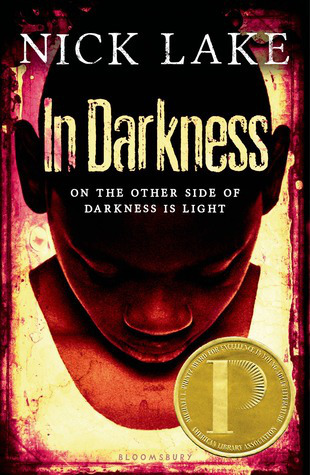
The wild and lovely worlds of David Almond
Here’s a beginner’s guide to the beautiful, extraordinary fiction of David Almond, author of some of the most hypnotically and gorgeously written YA novels, ever.