A.D. Croucher's Blog, page 3
April 20, 2017
Get Writing! Warming up…
The winter weather was brutal at times this year. It felt like the clouds would never part, the sun would never shine, the dirty snow piles would never melt… But, finally, the sun started to peak out more and more, and spring finally arrived, bringing with it new buds and greener landscapes.
[image error]
Spring is the season of birth and revitalization, and that doesn’t just apply to your garden. The air is full of ideas and inspiration, all you need to do is take the time to look for them. But ideas, like your garden, need tending to.
[image error]
Since writing requires talent, skill, and constant practice, we’ve decided to launch a new series of posts for inspiration and cultivation.
So throw open the windows and let the fresh air and inspiration in, as, first up, we have a warm-up exercise…
[image error]
Write a conversation between two people, where they each find a way to tell the other one they love them, without actually saying anything that could be found in a Hallmark card.
[image error]
No “I love you”s, no generic flattery. So, although, yes, this is probably the greatest love you scene in cinema…
[image error]
… you have to do it without using those words! Just make sure your characters know by the end of their conversation that they are truly seen and cared for like no one else has cared for them.
Get writing!


April 13, 2017
New YA Patrick Ness TV show alert!
One of the greatest YA writers of all time—two-time Carnegie winner Patrick Ness—has a new TV show starting on BBC America this Saturday!
It’s bitingly funny, beautifully diverse, insanely emotional, and super intense. It’s a grounded sci-fi show set in a high school, a little bit like Buffy, but darker and edgier. And ruder.
Here are 5 reasons why you need to watch it!!
[image error]


April 6, 2017
What to read while you wait for Philip Pullman’s THE BOOK OF DUST
It’s been a long time—14 years to be precise—since Pullman dropped THE AMBER SPYGLASS and concluded the HIS DARK MATERIALS trilogy. There have been occasional glimpses of hope… short stories set in that world showed up here and there, but the big rumor was for a some sort of sequel called THE BOOK OF DUST.
It’s a rumor no longer. It’s officially a new trilogy, set before and after the events of HIS DARK MATERIALS, and volume one comes out in October 2017!!
That feels like a long way off though… So here are 6 books you should be reading while you wait, including titles by Neil Gaiman, Madeleine L’Engle and Garth Nix.
[image error]


March 23, 2017
Beyond self-publishing
Last time, we looked at ways to get your self-published novel out into the world. For those of you who aren’t novelists, we wanted to spend some time on you! We’re nice that way.

If you write short stories, or scripts, or songs, just for example, there are other things you can do to get your work noticed.
For screenwriters, competitions are definitely something you should look into. There are some notable and reputable comps out there: PAGE Awards, Scriptapalooza, the highly prestigious Nicholl Fellowship (run by the Academy of Motion Picture Arts & Sciences, AKA, the Oscars!), Final Draft’s Big Break, the Austin Film Festival Screenplay Competition, the Set In Philadelphia Screenplay Competition, etc. What these have going for them is a combination of great reputation and judges who are working in the film and TV industry. Winning is nice, of course it is. We love winning. But if someone in the industry likes your script and wants to meet you and read more, that’s even better. The huge, almost unsurmountable challenge you face as a screenwriter attempting to break in is getting your work read. Competitions like these will help that happen.
Another route you can take is uploading your script to The Black List. You’ll pay a small fee for hosting, you can pay a larger fee for evaluations (which give you detailed coverage on your script, plus it adds to your ratings—yes, people will rate your scripts on there). It’s another way to potentially get more industry eyes on your work. If your scores are high enough, you’ll be included in an email that gets sent to industry subscribers on weekly basis, highlighting the top scripts on the site.
Now, you might be a songwriter. In which case, we’re going to recommend competitions again. If you’re inclined in a country direction, you have to go for the NSAI (Nashville Songwriters Association International) Annual Song Contest. You can enter your song as a performance, or on a lyric-only basis. Well worth it (as is joining your local NSAI chapter).
If you write outside of country, there are other contests you can look at: The Great American Song Contest, and the International Songwriting Competition, are just two notable examples.
Of course, you also have to just get your music out there, which means putting your songs on YouTube, SoundCloud, or your own site, tweeting them out, Instagramming clips etc. And, if you’re a performer too, start playing wherever and whenever you can. Bars, pubs, clubs, whatever works.
Last but not least, short stories. There are probably thousands of journals and publications that accept short stories. Your job is to research them and find the ones where your stories might fit. Great resources for research are Duotrope and ShortStops. Look for journals, magazines, quarterly or yearly anthologies, standalone anthologies. Of course, you have to try The New Yorker. Send copies of your story to competitions. Keep sending. This is a raw numbers game. Send hundreds or even thousands of times. Set them free!
Much the same applies to the poets among you. The New Yorker has online submissions for poetry, and there are many other outlets too. Find them and send them your work.
The common thread to all of this is research and legwork. You have to find the places that seem like they’ll be receptive to your work, and then get your work to them. More often then not, you’ll be sending your creations out to hundreds more places than will actually accept them, but that’s the life. That’s the game. Just keep creating, keep enjoying creating, be super organized about your submissions, and don’t. Ever. Stop.
You can do this!


March 9, 2017
YA vs. the Multiverse
You know how it is. You’re just moseying along, minding your own business, when you stumble into a whole multiverse situation. Universes everywhere. They look the same, but some things are slightly different…. Ugh. Should’ve stayed in bed today and read a bunch of books instead.
You know how it goes. You’re moseying along, minding your business, when you find yourself in a total multiverse situation. Universes all over the place. They seem the same, but they’re not quite the same. Should’ve stayed in bed this morning and… uh, wait a minute…
Check out our guide to 5 YA novels that dive deep into that messy world of parallel universes and alternate realities.
[image error]


February 23, 2017
Steps to self-publishing, Part 4: Marketing
Still feels good, doesn’t it? Checking Amazon or Barnes & Noble to look at your book listing. Realizing all over again that you wrote a book, damn it! You wrote it, and you did the work necessary to get it out there to the world.
You’re all kinds of awesome, you know that?
[image error]
But, and there is a but, what you’re going to find is that listing your book on Amazon isn’t nearly enough. Thousands upon thousands upon thousands of people have books listed on Amazon. You need to stand out from the crowd. You need to get noticed. You need people to care.
There are many ways to shine a light on your work. One way is a good social media presence. Social media is simultaneously one of the best, and worst ways to try to market your work. It’s very, very bad, for example, to keep tweeting about how awesome your book is and telling people to buy it. People don’t like being sold to, especially in their social media feeds. So tweeting the price of your book over and over is likely to get you unfollowed and consigned to the social media phantom zone.
[image error]
Seriously. No one wants that. Also, spoiler for Superman, I guess.
The best way to get people interested in your book, is to pretty much never mention your book. Yeah, it sounds weird. But trust us. Just be you. Be authentic. Offer something, whether it’s funny cat GIFs, cool writing advice, humorous observations, sharing interesting or unusual news stories… Basically, curate a feed that you would want to follow, and make sure it reflects who you are as a writer. Authentic is the key word here. Find the channels that work for you, don’t do a bunch of Snapchat dog or star filters if that’s not you, and fill them with cool stuff. Interact with others genuinely. This isn’t to say you can’t ever mention what you do. It’s fine to drop it in here or there, but don’t make that the point of being on social media. If you put your book on sale, it’s fine to tweet or post about it a couple of times, but keep the other stuff coming too.
Paid social—paying to have your posts appear in the feeds of people who don’t follow you—is challenging to pull off successfully, if you’re too on the nose about it. If the tweet or post is compelling, hilarious, and not exactly about telling people to buy your book, you might get people to respond, but on the whole, you’re better off spending your money on other things.
Paid ads on blogs and Goodreads and the like might work for you. They can be hit or miss, and will be expensive. Think about your behavior on websites… do you ever click on banner ads for books you’ve never heard of? Again, it all comes down to the ad itself. If it’s visually astonishing, genuinely hilarious, or just utterly fascinating, you might get people to click through. But it’s not the most compelling way to increase sales.
However, what can work is a good review from a book blogger. Reach out to your favorite book blogger and offer them a copy of your book in exchange for a review. It is a legit and great way to get word out there about your book. Book bloggers are awesome, and that community is a wonderful place.
Giveaways on Goodreads work well too. They’re really easy to set up, and you just have to follow through when winners are selected, by mailing your book out to them (including a personal note is a nice touch too, as long as it’s simple and polite!)
Another route you can take to get the word out there is to submit to contests. Some examples include the Writers Digest Self-Published Book Award, and the Bath Novel Award. Getting long- or short-listed (or, you know, actually winning!) one of these helps make your novel a little bit noisier out there.
So far, we’ve focused on the online side of things. But, of course, that’s not the only way to get your book the attention it deserves.
[image error]
There is another…
We’re talking about bookstores. Actual real-life, wonderful bookstores.
We love bookstores. They can be beautiful and transcendent temples to other worlds. Ann Patchett owns one of our faves, Parnassus Books in Nashville; check out her incredible guide for bookstore lovers, and then spend a small fortune in plane tickets to all those cities.
We digress. But just mentioning bookstores got us all dreamy-eyed…
Now, to get your self-published book into a bookstore takes legwork, and, way more importantly, also being a nice human being. Build relationships with your local store, genuinely. Support them by buying books from them. Be nice. Talk about books in general, because it’s always fun to talk about books. And, then, in a reasonable, non-creepy way, ask if they’d consider stocking books from a local author. The local author being you. To be honest, quite a few indie bookstores are set up for that anyway, and are happy to if you just pop in and make the request. Some will ask for you to bring in copies, so it’s good to have a few extra copies on hand. Others prefer to order via their distributor. But you gotta get out there and ask. You have to build your career, one book at a time, one sale at a time. No shortcuts.
In the end though, when all’s said and done… the best way to market your book is to write another book. And then another. And another. The more books you have available, the more you’ll sell, and the more the sales of each title will impact all the others.
In other words, just keep writing.


February 9, 2017
Escaping the winter blues
Winter, huh? Ugh. If you’re suffering with the dark, the cold, and maybe the coming apocalypse, you might need a little escapism. Nothing wrong with a little me-time. Even Harry and Hermione found time to dance while Voldemort and the Death Eaters took over the Ministry, tore up the rules to society and civilization, and terrorized the world. Just a completely random example.
[image error]
So what better way to escape than with some awesome 80s—and 80s-inspired—novels? Here’s your guide to escaping those winter blues.
[image error]


January 26, 2017
Steps to self-publishing, Part 3: Prepping your book
So, you’ve written your thing and decided to put it out there yourself, indie-style. You’ve picked the best platform(s) for your work and now you have to make sure your book is fully ready to be uploaded and released into the wild.
Step one, which we’ve discussed before, is professional editing. Get your pages to an editor you trust. Most of the better ones offer different levels of editing, e.g. proofreading (checking for typos) vs. big picture editing (where they look at things like consistency of character, plot mechanics etc). Choose your service (be honest with yourself about what your work may need), send it out, and receive their notes with an open mind. Getting a new set of eyes on your story is invaluable. Doesn’t mean you have to make every single change; with any notes, you have to be able to translate them into what’s relevant for your work. Sometimes the specific note/suggestion wouldn’t work, but whatever’s underlying the note is something you need to look at (e.g. you may hear a certain character needs more page time, which might destabilize your plot… the underlying issue might be that when that character does appear, it’s not in an impactful way, so you’ll actually need to make their few scenes hit harder, mean more emotionally, that kind of thing).
Once you’ve made your changes, your book really is at its final draft. That’s exciting!
Now you’ll need step two: cover design. If you’re handy with Photoshop, you can take a shot at this yourself, using each platform’s size/design guidelines. Or, you can use a professional designer. The goal is to create a cover that looks professional, slick, and impactful in color, black and white, and at thumbnail size (since that’s how most people will first view it). So, you decide. If you have the chops, that’s awesome. We’ve done both, and often use ebook launch, since they produce awesome work like—#shamelessplug—our covers below.
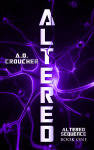
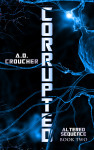
Step three is formatting. Each platform will require your book to be formatted a specific way. While this is something you can do yourself—and if you want to, please have at it!—there are many places that will do that for you. We use 52 Novels, since they’re quick, reliable, cost effective, and very easy to work with, but there are many other options available too (e.g. Bookbaby, Lulu, etc.). They’ll prepare your manuscript so that when you upload it to the publishing platform, it’ll be accepted first time and published forthwith. Which is nice. They’ll usually ask for the cover as well as the manuscript, since some of your files will need the cover to be included “inside” the file, attached to the manuscript.
Once you get your files back from the formatter, you really are ready.
Are you though? Are you ready? Because once you upload your files, write your book’s blurb for the site, add all the tags so that people can search for it, include your financial info so they can, you know, actually pay you… then the only thing left for you to do is hit the button that says PUBLISH.
Eek!
Go on. Do it. It’ll feel great.
We’ll let you coast on that beautiful feeling of having the book you wrote out there for people to read for a while… but soon, we’ll cover what comes next (spoiler: marketing!).
So go enjoy being published! You did great!


January 12, 2017
Steps to self-publishing, Part 2: Platforms
You’ve written your book, and it’s awesome (we just know). You went through whatever process you needed to, in order to arrive at the point where you want to self-publish it.
Firstly, go you! In just about every art form, the creator—that’s you!—is expected to share their work. Bands record songs and albums and put them on Soundcloud. Movie makers film shorts and features and upload them to Vimeo or YouTube. Artists create their works, photographers take their pictures, and they try to find ways to display them online and in galleries, or even at cons. So, you’re just doing what everyone else does! There can be a little bit of a ‘tude in some circles when this is applied to books, but you can ignore that. Art is art, whatever form it takes. Those dudes in the caves way back when didn’t wait for permission or approval to share those extraordinary drawings for generations to come. You don’t need to wait for permission to display your art either. Again, some folks might want to tell you otherwise… but nah. People want to make things, other people want to see and experience those things… The trick is to figure out how to connect the two.
In this case you made a thing—your book—and now you need to get it out there to the world.
So, the question becomes, where ya gonna put it?
There are many platforms and options available. Your first major decision is format. Do you want it to be an ebook, or just a paperback, or both? If you’re thinking ebook-only, you can focus on one or all of services like Amazon (Kindle), Barnes & Noble (Nook), Kobo (Sony and other devices), and Smashwords (which covers everything else, including Apple’s iBooks). In some cases, Apple will let you upload directly to iBooks (more on that here), but if you find it all a bit above your technical knowhow, you can use a service that does it for you. Smashwords is one, but there are others, like Bookbaby, which does print as well as ebooks. Here’s a resource on Apple’s site to help you find one that you like.
Knowing where you want to put it is important for the next phase, which we’ll talk about in the next installment (professional editing, interior formatting, and cover design), as each service can have its own specs for how the text should be formatted, what size the cover image should be, etc. So if you choose ebooks, do your research for each platform to see what exactly they need from you.
The same applies if you want to hold your masterpiece in your hand (not a euphemism). There is something magical about actually picking up the BOOK THAT YOU WROTE and turning the PAGES THAT YOU MADE. It’s kind of amazing, tbh. So, if you dig that idea (and also want your book to have any kind of chance of being stocked in a physical bookstore, which we also recommend, because holding that book is a lot sweeter when you just picked it up off a bookstore shelf where it was sitting next to a Leigh Bardguo novel, for example), then you have to look at the various options for printing your book.
[image error]
Subtle
There’s CreateSpace, of course. The big kahuna. They print on demand, which is probably the most efficient way to go. Before POD, you would have to essentially choose how many copies of your book you wanted to be printed, have those shipped to you, and then deal with the rest of it yourself. With CreateSpace, they store the digital version and whenever anyone orders it, they print and send it. They also offer “expanded distribution” so that bookstores and libraries can see your title available from their distributors. Lulu is another option that offers a range of services including distribution, and there’s Bookbaby too, who we mentioned earlier; they offer the full spectrum of editing, formatting, printing and distribution services.
You just need to decide which one of these feels right for you, and your project. Each service has its pros and cons, its quirks and restrictions. But they all give you what you need: your book, ready to be read!
Next time: everything you need to know about getting your book ready to upload…


December 22, 2016
Yes, there were some good things in 2016!
In somewhat festive partridge in a pear tree fashion, here’s our top books, movies, TV shows, albums, and a special final category.
5 Awesome Books
It was a banner year for books by famous people who don’t normally write books. Sure, ’tis the season for such things—every year we get a glut around this time of celebrity memoirs—but this year, there were three that really stood out as special.
[image error]
Anna Kendrick, whose acerbic, snarky, and essential Twitter feed has been showing us for years that she knows her way around a finely honed sentence, gave us Scrappy Little Nobody, a brilliantly titled collection of essays covering her life from childhood to Broadway debut to Twilight to Up In The Air and beyond. What many of these books lack is a point of view; that’s not something Kendrick has an issue with. Bracingly honest, her often savagely funny and poignant stories are fascinating and hilariously told, and what becomes very clear is that her Thanksgiving and Christmas parties would be the absolute best.
[image error]
Not to be outdone in the Dorothy Parker-esque observational acting category, Lauren Graham, already a novelist as well as an actress, dropped Talking As Fast As I Can, which focused mainly on filming the Gilmore Girls, both the original run, and the revival. It’s a breezy, chatty, very, very funny read, and if you’re still basking in the warm glow of the revival, this will absolutely keep it going just a little longer. Graham has a smart, hyper-self-aware, quick-thinking, and warm view of the world, and she can tell a story with the best of them (one of the reasons why she’s such a perfect fit for Amy Sherman-Palladino’s quick-fire, storytelling dialogue… but—spoiler—more on that shortly!).
[image error]
As brilliant as those two books were, there was one more autobiography that truly shone, to the extent that it’s a contender for book of the year (or maybe of the decade). The mighty Bruce Springsteen brought forth one of the greatest autobiography/memoirs ever written with Born To Run. It was full of thunder and subtle profundity. Every sentence was poetic, hard-won, hewn from life’s granite face of truth and wisdom. The hyperbole is deserved. Nobel Prize, anyone? It should be no surprise; Springsteen has spent the last 30 or 40 years writing tough, beautiful and grittily evocative stories of American life, and he knows how to make every turn of phrase feel true, hit hard, and make you dream.
[image error]
In the world of novels, Dark Matter by Blake Crouch was a welcome slice of atmospheric quantum techno-thrills, which took the concept of multiple universes and turned it into an unstoppable page-turner which was equal parts mind-bending, haunting, and terrifying. Deftly written but morally hefty, it made you think and feel and gasp, and the consequences of it all reverberate for long after you stop reading.
[image error]
But, when all’s said and done, at the end of the day, there was a novel that might just have to be the book of the year. Even more universe-shatteringly awesome than Dark Matter was GEMINA, Amie Kaufman and Jay Kristoff‘s epic, EPIC, follow-up to last year’s book of the year, ILLUMINAE. Now, that book was huge. Momumental. It changed your perspective of what fiction, sci-fi and books could be. But GEMINA is bigger, and better (HOW?! What sorcery is this, Kaufman and Kristoff???). It takes place during and after the timeline of ILLUMINAE, which followed the Alexander as it tried to escape the pesky Beitech attack, and shows us what went down on Jump Station Heimdall. With a mix of all-new characters (and some old faves), it spins a thrilling, massive tale. It’s even more unputdownable that ILLUMINAE. It has all the action you could want, snark and sarcasm to spare, so many laugh-out-loud moments, and FEELS, man. SO. MANY. FEELS. Kaufman and Kristoff are sick, twisted puppetmasters… and we love them for it. GEMINA, folks. Book of the year. So, no pressure for the next one, you guys