Hugh Thomson's Blog, page 7
April 22, 2014
Gabo: The Death of Gabriel García Márquez
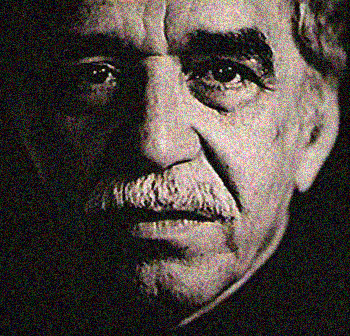 ‘He’s won, he’s won,’ Guillo shouted excitedly.
I couldn’t think what he was talking about. The Ecuadorian bar was filling up with excited revellers ordering brandies, even though it was only eleven in the morning. It was 1982 and Gabriel García Márquez had just won the Nobel prize. It had been announced on Radio Grande de Bahía, so it had to be true. Although Colombian, the town was treating him as if he were a local boy.
My friend Guillo was impressed that he was using the money to fund his own independent newspaper: he had read all Márquez’s books – they were piled high in the local stationery shop, along with the comics and murder stories.
And Gabo remains one of the few recent novelists to combine huge literary acclaim with matching commercial success. When have you ever seen a Martin Amis book in a Tesco?
Márquez was writing of their world, with its perpetual llovizna, that wonderful word for a soft drizzle of rain playing over the dampness of the platanales, the banana-plantations, while the oceano nítido, the bright ocean, stood off in the distance. The predominant mood in his books was one of nostalgia, ‘tratando de recomponer con tantas astillas dispersas el espejo roto de la memoria, trying to reconstitute so many scattered shards of the broken mirror of the memory,’ a nostalgia weighed down with decay. In La Crónica de una Muerte Anunciada (The Chronicle of a Death Foretold), the townsfolk had not been able to find a fridge big enough for the body of the title: there was a police colonel who took a correspondence course in spiritualism; the gold coin they found in the dead man’s corpse was one that he had swallowed when he was six years old and the favourite dish of the archbishop was a soup of cocks’ crests.
I have come back time and again to the way Gabriel García Márquez plays with memory – in some ways every one of his novels could include the ‘Foretold’ tagline as he is a great one for telling you what the plot is going to be at the start of proceedings (‘this is X who will die many years later from unrequited love’), so that you then read to see not what is going to happen but how.
And for the way no novelist since Proust has had a more acute sense of smell than Márquez, see my piece a few years back on Love in the Time of Cholera.


April 14, 2014
In Memoriam Peter Matthiessen
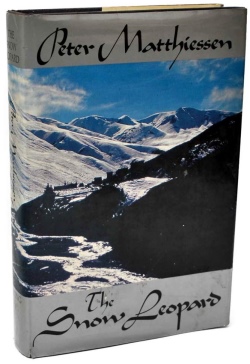 The Snow Leopard is a book more quoted than read these days. It should be celebrated not just for its spiritual honesty, but for the courage with which it fails. Imagine a TV channel or even publisher today prepared to put up with a book that does not even glimpse its subject.
“Zen is really just a reminder to stay alive and to be awake,” Peter Matthiessen told the Guardian in 2002. “We tend to daydream all the time, speculating about the future and dwelling on the past. Zen practice is about appreciating your life in this moment. If you are truly aware of five minutes a day, then you are doing pretty well. We are beset by both the future and the past, and there is no reality apart from the here and now.”
March 30, 2014
At The Captain’s Table
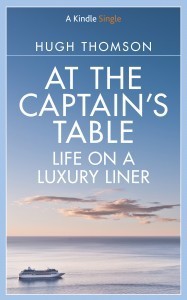 At The Captain’s Table: Life on a Luxury Liner Kindle Singles £1.99
Round the world the soft way. For less than the price of a cappuccino grande, a frothy confection of a travel book with double shots of autobiography and world analysis thrown in. How could anyone resist? (unless like me, you don’t own a Kindle…). If you do, buy it here.
Kindle Singles is an interesting new initiative. Kindle have commissioned established writers like Stephen King, Jon Krakauer and Amy Tan – and way down the pecking order, uh, me – to do books directly for them, and put them in a specially branded bit of their store. Something which should be getting traditional publishers worried, as a harbinger of more to come.
I certainly enjoyed writing this – light-hearted, it involves all the classic elements of comedy: life on the high seas, some rampant snobbery and even a marriage at the end of it…
March 5, 2014
The Vikings got to Ukraine first
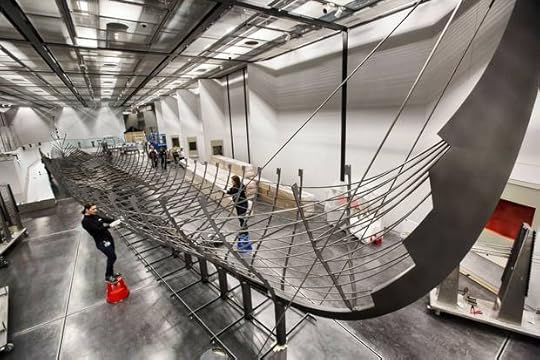
Funny how things come together. I’ve just been to a preview of the British Museum’s new blockbuster show on the Vikings, which opens later this week just as the world is focussed on Ukraine. A side-bar to the exhibition, which naturally focusses on the Viking invasions of Britain – is the less well-known Viking progress east, when ‘the Rus’ travelled down to Novgorod and Kiev in their longships and founded what became Russia.
The Viking leader Rurik and his dynasty established their base in Kiev from about 862 on – the same time as ‘the great army’ landed in East Anglia, martyred King Edmund and put Alfred the Great’s kingdom to the sword.
The difference is that in Russia the Vikings won. Kiev is as a consequence as central to Russian identity and history as Winchester or Canterbury to England. Hardly surprising they should take a proprietorial interest in what happens there; or that the descendants of the Vikings should value the navy at Sevastopol enough to protect their Crimean base.
The Vikings themselves travelled on past Kiev and down through the Russian river system to reach Constantinople. Now that must have been a clash of civilisations. Islamic commentators of the time were impressed by the Vikings’ fighting spirit, but less by their personal habits, reporting that they did not wash after urinating, or after sex, or indeed much at all.
January 13, 2014
In Memoriam – Michael Jacobs
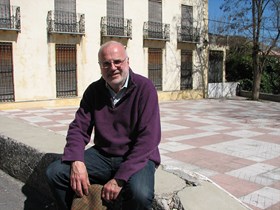 Deeply saddened by news of Michael Jacobs’ sudden death a few days ago, from cancer of the kidney which was only diagnosed in September. He was 61.
Michael was a good friend and very kind man. A dedicated hispanophile who lived in Andalucia, he wrote many books about both Spain and South America. For my money his very best was his last, The Robber of Memories, a quite magical account of travelling down the Magdalena river in Colombia. I reviewed it when it came out last year:
“Subtle and precise, it may well be Jacobs’ finest work after a lifetime of studying the Hispanic world. This is travel writing at its best, with the memories a country creates about itself weaving with those of the author for a journey that pulses with an elegiac, penumbral light.”
My daughter Daisy also interviewed him for Isis Magazine at Oxford and ended her piece by saying:
“For Jacob, travelling creates memory and it is these memories that keep us alive and moving forwards. As Jacobs says, ‘It is our memories that sustain us in later life.’ “
He will be much missed.
December 10, 2013
Faces of Tradition
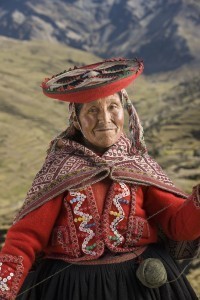
Attended the recent Tinquy, which was a quite wonderful get-together in Cusco of the world’s weavers – and what a great place to have it, as weaving has always mattered so much more in Peru where, while there was no pre-Columbian writing, they could always express themselves with textiles.
It’s the only time when I’ve addressed an audience who were mainly spinning as they listened – on the good principle that, however boring I might be, they would still get something out of the session.
To mark it, a fine book published by two of the moving spirits of the festival, Nilda Callañaupa and Christine Franquemont, Faces of Tradition: Weaving Elders of the Andes, which I cannot commend too much (and have on the cover as well!) – not least because the photographs by Joe Coca are quite excellent, with moving and dignified portraits of the elders of weaving, the old women – and some men – who have kept the ancient traditions alive.
Tragically, Christine Franquemont died on the first day of the conference in Cusco, and this book stands as a memorial to her.
October 27, 2013
All that glitters
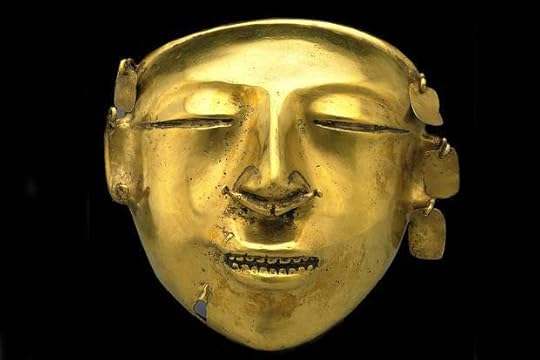
I go to see the press opening for El Dorado at the British Museum, which is excellent – one of the best curated and lit shows there of recent years. The exhibition is careful to remind us that while the Spanish conquistadors were excited by the gold they found, even more enticing was the gold they didn’t – and nowhere was this more embodied than in the legend of El Dorado, a myth so potent it has persisted from Sir Walter Raleigh to Walt Disney.
.
The Colombian civilisations made gold offerings in liminal places – like mountains or lakes, such as the one of the El Dorado legend in which a naked gold-powdered leader offered precious jewellery into the water. They used gold to transform themselves into otherworldly creatures with a metallic second skin, their nose pieces and earrings swinging so as to catch the light.
And the exhibition is well timed, not just because it is the first major show for many years that the British Museum has had on South America, but because our obsession with gold continues: a rise of some 1000% in its price of the last 10 years; an accompanying gold-rush in those countries like Peru whose mines have been reopened, or the Amazon panned, with devastating environmental effects like arsenic run-off. For a searing indictment of quite what this has meant on a human scale, read Marie Arana’s recent extraordinary article about the La Rinconada mine, ’Dreaming of El Dorado’.
September 4, 2013
Choquequirao will open to the public
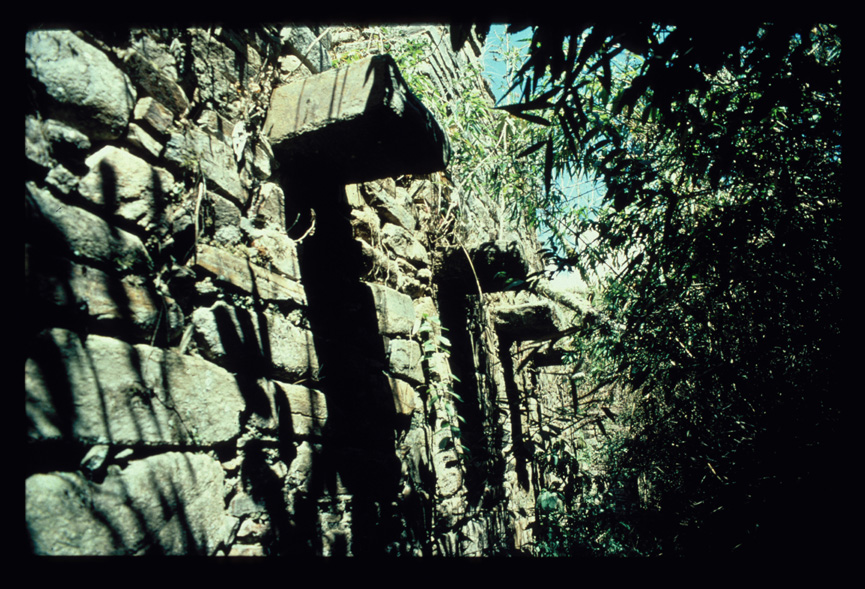
Choquequirao – overgrown kallanka walls in 1982
(c) Hugh Thomson
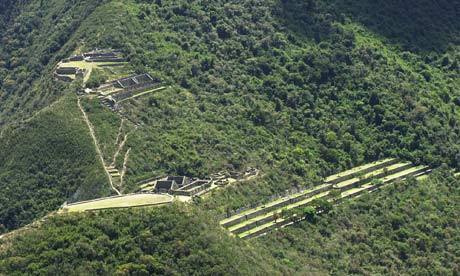
The news that Choquequirao, sister city to Machu Picchu, is finally to get opened up to mass tourism obviously raises mixed emotions in me – at first romanticising my own early visits to Choquequirao 30 years ago when still covered in scrub, as in the photo I took here – and more recent visits with just a few others there, after a 5 day trek – but is that being selfish? If managed well – and I do think the Peruvians manage Machu Picchu exceptionally well given all the problems of access – then opening up Choquequirao is all to the good and a cable car may be better than having lots of buses going up a road….
The fascinating new discoveries of just the last couple of years make it even more worthwhile seeing the site now that it’s cleared, as below. And the vantage point 6,000 feet above the Apurimac makes its position in some ways even more spectacular than Machu Picchu.
.
August 19, 2013
Salutary Salgado
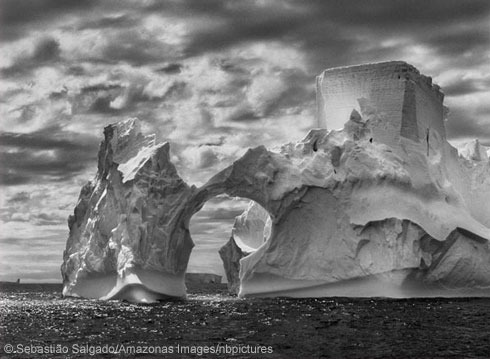 Although you can see some of this striking exhibition – a worldwide preview – on the website, while there’s still the last chance, how much better to see the photographs at the Natural History Museum in the flesh (of which there’s plenty, as nude bodies often feature in the virgin landscapes; the penis gourds of jungle tribesmen are flourished exuberantly by their wearers.)
Sebastião Salgado’s previous acclaimed epic projects and books include Workers and Migrations, about human displacement.
Now, for Genesis, he sets out, in what may well be a last elegiac photographic project, to document the 40% remaining of untouched planet.
What prevents this from being National Geographic writ large is the tenderness. Where Nat Geo follows Ansel Adams in presenting pin sharp images – life at f.64 – Salgado has a softer depth of field and texture to his black-and-white prints: a cloud of Antarctic petrels rise up, the mountain massif behind them a misty backdrop; or a Yali man collect insects from a giant fern in Papua New Guinea, his skin rippled with articulated tension like the sprung branches.
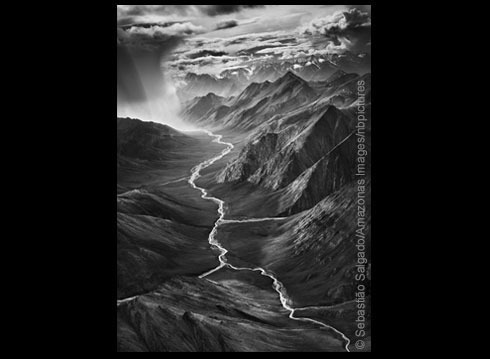 The project took him so long that he started shooting on a film camera and ended on a digital one, with a lot of retouching and “painting” in the lab. Occasionally the black-and-white can frustrate (hard to see a picture of red and green macaws without wishing for colour), but it often works beautifully, like the large egrets in the Pantanal or Disappointment River winding its way through Canada.
For a man who is seventy next year, the sheer energy of his range and travelling is impressive – from sand dunes in Algeria to some lovely wondering albatross in the South Atlantic to a herd of buffalo seen from a balloon in North America. As a reminder of the still undiscovered or seldom visited world, it is salutary. And if you miss the exhibition, there is always the excellent book.
June 20, 2013
New discoveries in Cambodia
New discoveries in Cambodia by an Australian team from the University of Sydney are another confirmation that lidar will be a game changer for the discipline, just as radio carbon dating was in the 1950s.
Long term readers of this blog will know of my continuing interest in lidar (light detection and ranging) in archaeology (see past post).
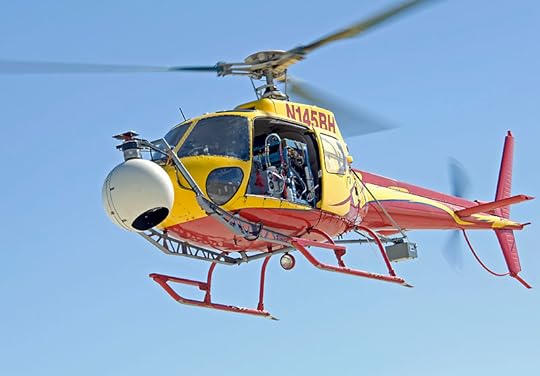 The ability to fly over dense forest and build up a 3D picture of what may have once lain beneath is quite phenomenal. Unfortunately it´s also expensive, as the going international rate for a helicopter is around $1000 an hour – rather more than it costs for a few volunteers to scrape away at the dirt on a traditional dig. The Australian team covered some 370 sq kms in Cambodia so the bill must have been eye-watering – but worthwhile.
.
They uncovered ´the ruins of five other previously unrecorded temples and evidence of ancient canals, dykes and roads´, which they confirmed on the ground after lidar had indicated their presence; all this was in the area of Phnom Kulen, an antecedent of the neighbouring Angkor Wat temple complex in north-western Cambodia. A collateral benefit is that it will provide conservation and tourism work for the dirt-poor locals who were unaware of the temple complexes nearby.
One important point is that while lidar may make completely fresh discoveries, it can also help shade in existing ones – that while, say, all the churches of a medieval town might have survived, now we can trace in all the other buildings and roads to give a more complete picture of the settlement.
Watch this space for more, as they say….