
Michael Lopp's Blog, page 34
October 12, 2015
On Apple’s Insurmountable Platform Advantage
The truth is the best people in chip design no longer want to work at Intel or Qualcomm. They want to work at Apple. I have plenty of friends in the Valley who affirm this. Sure Apple products are cooler. But Apple has also surpassed Intel in performance. This is insane. A device company – which makes CPUs for internal use – surpassing Intel, the world’s largest chip maker which practically invented the CPU and has thousands of customers.


September 6, 2015
August 31, 2015
4am Panic
It’s a definitive characteristic of the people I work with that they sign up for too much. They’re optimists. They believe they can do anything. They’re eternally growing. That’s the poetry, here’s the reality.
There are two paths for these eager optimists. The first path is the individual who is capable of both signing up for everything and also completing everything. These unicorns exists and I am fascinated by them because I am so completely on the second path. It’s on this path where I sign up for too much, which I invariably learn three weeks later when my eyes pop open for my 4am Panic.
The 4am Panic is achieved when the work I need to complete exceeds my mental capacity to consider it. Something annoyingly biologically chemical is triggered at 4am where apparently I must uselessly consider all of my current work on my plate for no productive reason at all. Just stare at the ceiling and fret until I fall back to sleep.
You might not have the 4am panic, but you know the state because you’ve probably been there. It’s the state of constant reaction. It’s when you start blocking time off on your calendar just to keep up. You reinvent your productivity system, you write list after list after list, and you sleep poorly.
It’s worth taking some time to think about how you got here, but that’s not the point of this piece. I have simple advice and, well, it involves two more lists.
The First List
We’re going to write two lists and my request is that you don’t read about the second list until you’ve completed the first. I suspect if you understand the full exercise right now that your first list will be skewed and biased, so when I say “go”, stop reading, grab your favorite pen, and write the first list.
This is a list of the impossible things on your plate right now. Now, they aren’t actually impossible, but they’re big rocks. They’re sitting in your inbox or in your favorite productivity tool and each time you see them, you’re brain freezes and thinks, “That’s big – skip it for now.”
Now, you can skip it a few times, but at some point you start to take some type of small credibility hit because forward progress isn’t being made. When you take that hit and multiply it by the fact there are four other impossible tasks on your list, you’ve got a date with the ceiling at 4am.
Make a list of the impossible tasks. The big rocks. Everything that is weighing on you. Don’t worry, this is just for you.
Go.
The Second List
I’m really curious about the size of your impossible list. Three? Twenty? Any cathartic moments as you wrote? Revelations? It’s not the point of this piece, but one of the reasons to make a simple list is to get it out of your unstructured and emotional head and onto structured and readable paper.
Ok, turn that piece of paper over. We’re going to make a second list and, as much as possible, I want you to forget about the first list. List the people who merit your belief in their reliability, truth, ability, or strength. We’re talking about work here so I’m assuming these are co-workers, but don’t limit yourself to your immediate team or leads. Who is everyone in the company that you fully trust?
Next, for each person on your list. I want you write why you trust this person. “Bruce. I trust Bruce to consider a problem from every angle. Hannah. I trust Hannah to always provide realistic dates. Marty. I trust Marty to always put his team before himself.”
Go.
How to Sleep Well
This second list is the reason you’re reading this piece. Earlier this year, I woke up at 4am for some ceiling time. The impossible was swirling and as I settled into my fretting, I realized I was deeply tired of the unstructured worry, so I rolled out of bed and I wrote the second list. 22 people that I completely trusted in one way or another. I was struck both by some of the names on the list and how I trusted them. If you’ve blown through both exercises and are just reading this piece, you can still have a rewarding moment of understanding that you are surrounded by a diverse set of trustworthy people.
I stared at the list for a few moments and realized I had a stunning amount of unrealized capacity around me. It was this moment which was behind the quote I recently gave to TechCrunch:
“My job is to my get myself out of a job. I’m aggressively pushing things I think I could be really good at and should actually maybe own to someone else who’s gonna get a B at it, but they’re gonna get the opportunity to go do that … [I’m always asking] does this legit need to be on my list. Should I be doing this, or is this something I can give to someone else and they should be actually going and doing it? That’s one of my principles, to get myself out-of-the-way. Ideally there’s some morning where I get up and have my coffee and there’s absolutely nothing to do, everything else has been delegated.”
This is your task. Take your first list and see who on the second list can help out. There’s a reason you signed up for all these impossible tasks and big rocks. You were coming from an enthusiastic and optimistic place, but if you’re a leader of humans, the right answer might be to ask for help. The right answer might be to give the task to someone else who might not do as good a job, but who will learn more than you.
You might think that this is a long way to say “Delegation Matters!”, but there are other lessons. Your brain protects you in strange ways. Enthusiasm might not be strategic. You’re underestimating the people you trust.
I didn’t write or match to my first list until the next day. All I did at 4am was consider the list of the people I trusted and what I trusted them to do. After a few minutes, I went back to bed and slept all night.
August 20, 2015
August 14, 2015
My Apple Hardware Hierarchy of Need
There was a snarky tweet forming in my head about my Apple Watch this morning. Something about liking it, but not needing it. This triggered an interesting mental exercise where I started stack ranking all my Apple hardware products by need. I found both the exercise and the results interesting.
Here is my Apple Hierarchy of Need in reverse order and labeled either as Nice to Have, Necessary, or Critical.1
Apple Watch. It sits there on my desk on a marvel of a charger and each morning I stare at it and ask myself, “Should I wear it?” The bottom line is I have no compelling reason to put it on it. Yes, I like that it alerts me when my phone is ringing, but that’s a nice to have, it’s not critical. (Nice to have)
Apple TV. This flip-flopped with the iPad a couple of times as I worked on this list and it lost to the iPad in the regular usage category. I use my iPad every night when I go to bed. I use my Apple TV maybe a couple times a week. Apple TV usage suffers because much of free time goes to watching on my iPad or MacBook and cough playing Destiny. (Nice to have)
iPad. The iPad has become my go to nightstand accessory. I don’t use it at work and rarely use it outside of the bedroom. My primary use case is lightweight content consumption. I have a bunch of books, but in the last six months I’ve moved back to atomic-based books because I love books. I purposely didn’t put product versions as part of this list, but it’s worth noting that this is relatively old iPad, it works great, and I’ve currently no compelling reason to upgrade. (Nice to have)
iMac. My iMac and my secondary monitor used to be my primary computing rig and I still derive great pixel you when I sit down at stare at a sea of pixels. I still receive this joy, but I spend vastly more time at my beloved MacBook Pro. Even at work, where everyone has a secondary display, I see folks staring at their MacBooks and often forgetting to plug their MacBook into their display. Convenience is winning over function. (Necessary)
MacBook Pro. I’ve walked into the Apple Store no less than five times with cash in hand to buy a gold MacBook and each time I’ve talked myself out it. I like the feel of the new keyboard, but I need the weight of the MacBook Pro. I love the weight of the aluminum of the MacBook. This is my primary computer, I use it hours every single day – it is essential. (Critical)
iPhone. It’s not hard to pick the the piece of Apple hardware I need the most. Yes, if my MacBook Pro vanished, I’d be screwed, but if my iPhone vanished I wouldn’t sleep. My iPhone is my connection with my family, it’s reliable read access to all of my communication mediums, it’s my WiFi connection, it’s my camera, it’s my music player, and I am aware of where my iPhone is 24 hours a day because it’s as important (and rapidly replacing) my wallet. (Critical)
I’m sad that the Apple Watch is sitting at the bottom of the hierarchy. It is gorgeous, but it’s not necessary nor remotely critical. I love the jellyfish that playfully wander the screen when I go to check the time, but gorgeous animated wallpaper and a steady flow of notifications is simply nice to have.
Unrelated useless observation. As I was building the list, it was noteworthy which products required Apple as part of the name and which didn’t. ↩
August 3, 2015
Be Unfailingly Kind
DJ and I play Destiny. I’ve never met DJ, but each week he and I and a dozen or so other regulars are sitting on our respective couches, chairs, and bean bags tackling the various parts of this gorgeous first person shooter.

You can play much of Destiny by yourself. There are daily missions on various planets where you can find and kill the bad guy and then collect the loot. There are daily strikes where you are paired with two random strangers to run a slightly harder mission where there is no need for formal communication, just the collective fire power of three players versus one player.
Finally, there are raids. These are complex and longer missions requiring multiple people who are actively communicating and coordinating. This means someone – however subtly – needs to lead the group. In my ideal raid, DJ is the leader.
While this piece is going to talk a lot about Destiny, it’s really about leadership. See, in the many hours of listening to DJ walk the group through Venus’s Vault of Glass or the Crota’s End on the Moon, I’ve learned the power that comes with DJ’s leadership style – he’s unfailingly kind.
Regarding Colorful Personalities and Opinions
If you’ve ever read YouTube comments, you know that public spaces on the Internet attract humanity’s most colorful personalities and opinions. While I completely respect your right to have an opinion, I am not interested in your colorful agenda during my precious downtime. I’ve chosen Destiny because I need an escape. I need a gorgeous puzzle to solve that involves as little of my daily routine as possible. Often those puzzles require other humans.
Having played many multi-player games before Destiny, I’m aware that joining a group of strangers from the Internet can be problematic. There is the Never_Stop_Talking player who sees this particular raid as an opportunity to talk about… anything… forever. There is the I_Know_Everything player who is immediately verbally frustrated when the group’s level of experience is lower than theirs. One of the reasons I wrote this first piece regarding Destiny was to find a collection of somewhat likeminded players with roughly the same experience. 1
The experiment was successful and at any given time there are 20 to 30 players in my friends list. From this list, it’s minimal work to cobble together a group to tackle any part of Destiny. Even within this likeminded group, there is still diversity. There are still competing agendas and differing experiences and that bring us back to DJ.
Raid Mechanics
To understand the difficulties of DJ’s job, you need to understand a bit about raid mechanics. If you start to glaze over when you read the phrase “raid mechanics”, please stick with me, I will explain how you can be a better leader.
In order to successfully raid, you first need multiple, competent, willing humans. Raids often involve more powerful enemies (or “bosses”) who need to be conquered in a specific fashion in order to gain access to raid-exclusive loot. For example, for an encounter in Destiny, the boss must first be hit with massive damage by multiple players at precisely the same time just so another player who is carrying a sword (acquired from another baddie who also must be killed with a coordinated attack, as well) can inflict damage on the boss. Failure to perform this sequence in this precise order results in the quick death of your entire party. It’s called a wipe. Oh yeah, you need to perform this entire sword killing maneuver multiple times in order to actually kill this boss.
It’s fun. I swear. And there’s more.
Six strangers speaking via headset need to show up at the same time of day and organically anoint a leader whose job it is quickly determine the relative experience of each stranger, ascertain who needs to know what about the mechanics of this particular raid, and then need to clearly explain these mechanics. Once the encounter has begun, the raid leader needs to make strategy adjustments in real time based on the performance of the team.
These humans show up late. These humans have a variety of experience with first person shooters and with Destiny. Even the most experienced humans screw-up during a raid. These humans have real lives and often need to vanish at a moment’s notice. However, these humans are collectively motivated to learn and progress through the game because it gives them joy.
No Worries…
Having run dozens of raid, DJ has four consistent leadership behaviors:
He clearly explains the situation. As many times as possible. Calmly.
He has an insightful answer ready to any question. He’s done his research to become an expert in his field.
Once the raid has begun, he monitors the situation, provides real time feedback, and updates to the other players in a helpful and educational manner.
In the face of disaster, he never loses composure.
Clear communications, demonstrated expertise, clear and actionable feedback, and remaining even keeled. I’m describing a set of solid leadership traits here, but I’m not even to the important part, yet. See, I’ve seen all these behaviors before in a great many humans. What makes DJ unique are two things: he’s always this leader. I’ve come to expect precisely this behavior out of DJ each time we’ve played – like clockwork. I aspire to be a good leader, but I have bad days. I slept poorly. I sat in that one meeting where nothing but uselessness was contemplated for an hour and I lose my faith in humanity.
DJ is always this leader. DJ communicates clearly and competently. Need to leave a raid after we’ve been at it unsuccessfully for two hours to be with your family? DJ says, “No worries, we’ll find someone else…” Having repeated difficulty fulfilling your role in this part of the raid which is resulting in multiple wipes? “No worries, let’s try a slight different strategy, ok?” Never played this raid before? Didn’t mention this before the raid began? “No worries, let me walk you through how this works…” Want to practice a part of the raid that will result in additional wipes? “No worries, here’s how it works…”
I’ve played a lot of video games with a lot of humans. I’ve lead and been lead by a lot of different people and personalities, but never have I seen the clear results of being unfailingly kind. Following DJ’s lead, we communicate better, we learn from each other, we celebrate our successes, and we laugh heartily about of failures.
Regarding Jerks
Leadership in volunteer organizations is perhaps the best way to think about leading a raid. You have a set of humans hopefully dedicated to a common goal and they are donating their time in supporting this goal. Most volunteer organizations have a far more noble mission than the acquisition of epic loot, but the theory is that when you have a volunteer workforce of people donating their time out of the kindness of their heart, you need a different leadership approach.
I believe two things. First, an unfailingly kind leadership protocol seems like a solid approach for a volunteer organization. You don’t hire your team and they likely come from a diverse backgrounds, so your ability to explain and guide is key. Your ability to convey credibility and be the expert as quickly as possible is paramount because volunteers leave… randomly. This makes the final trait essential: in the face of disaster, you remain the calm and focused leader. Disaster is a strong word, but in a world where volunteers are doing work they are choosing to do rather than work they must do, unexpected situations are the norm.
Second, why isn’t being unfailingly kind the best approach for every leadership situation?
You’re going to leap to a leader you know who has been wildly successful being the exact opposite of kind. They are dictators, they are micro-managers, they are yelling, driving, huge personalities. You heard the story about the leader who asked an employee what they worked on, didn’t like the answer, and so they fired the employee on the spot. It’s a great story, but it’s not great leadership.
Leadership is an outfit you choose for others to see and I choose unfailingly kind.
Yes! I’m still playing. Yes! I’d like to play with you. I’m on PSN as kurzinator. ↩
August 2, 2015
“I’m worried about my coffee intake, but otherwise things are going great.”
Me over at TechCrunch:
There’s three models I’ve seen in the last decade. At Apple, engineering and design run the show. Those are the two big things, they’ve got some sort of leadership team but those are the two functions. It seems to be working well. The one I most recently saw is Palantir, which is famously mostly engineers. They run the show. There’s a design component as well, but what do you know about Palantir? What are they up to? They’re doing amazing things and it’s all amazing engineers.
But when you talk about a broad appeal service like us, you want a balance of those three folks. You want the engineers to have the voice of the technology. You want to have the designers who are the voice of the users, that handle the consistency, the beauty and the taste. And you have the product side — and this is a hard side — which is, what is the strategy, how does it all fit together. All the disciplines, technology, taste, strategy are all melded together.
July 29, 2015
The highest form of intelligence: Sarcasm
Some really good news for me via Quartz:
… Yet a new study on sarcasm claims that it can help boost creativity and abstract thinking—not just for the person speaking, but also for the listener. Yeah, right?
July 26, 2015
Dressing smartly makes you smarter!
Via The Register:
“So HP is asking its R&D engineers to dress smartly. Apparently dressing well improves the holistic ambiance of a brain struggling with esoteric things like coding. That in turn improves the quality of the software products that it delivers. HP knows this, and HP knows that its customers know this. So, now HP’s R&D organizations know this as well.”
July 5, 2015
What is better than Gotham?
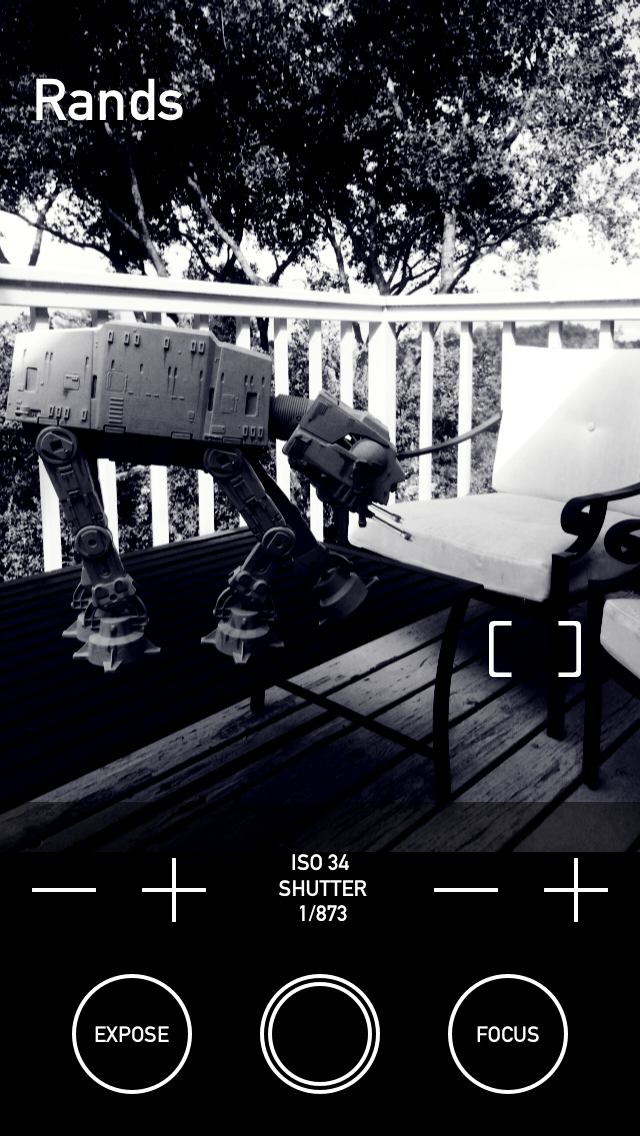
A Gotham-inspired filter called Rands. Obscura Camera is a fine addition to my folder of photo apps. And the Gotham filter is pretty good, too.
Michael Lopp's Blog

- Michael Lopp's profile
- 144 followers

