
Michael Lopp's Blog, page 30
December 4, 2016
Is ‘Empathy’ Really What the Nation Needs?
What social networks like Facebook really offer is empathy in the aggregate — an illusion of having captured the mood of entire families and friend networks from a safe, neutral distance. Then they turn around and offer advertisers a read on more than a billion users at once. Buzz Andersen — a tech veteran who has worked for Apple, Tumblr and Square — told me that in Silicon Valley, “empathy is basically a more altruistic-sounding way of saying ‘market research.’ ”
(Via Amanda Hess on the New York Times.)


November 25, 2016
Five Pages
Whoooooooooo. You looked stressed. I know, right? First, it was a joke. Then it was unimaginable. Then unthinkable. Improbable. Unlikely. Then it happened and now we’re are all wondering, “When will it get worse?”
Still not sleeping well? Me either. Are you reading the news? Me either. I’m 165 pages into the history of the building of the Panama Canal. Developing a credible strategy for dealing with malaria and yellow fever. Boy, those were the days.
The holidays seem tainted, right? Like it’s not ok to let your guard down and relax? Yup. Same. I’m on high mental alert, and we’re not going to get much done in this state.
What we need, however brief, is an escape. I have just the thing.
Here are five of my favorite pages:

I’ve been shilling the Joss Whedon’s Astonishing X-men for years, and I will continue to to shill because if you don’t care about comic books or if you’ve never heard of the X-men, you will still love this work. Whedon is the Aaron Sorkin of comic book dialog. Strike that. Whedon is the Joss Whedon of comic book dialog. It’s clever, well-timed, and distinctly human. Characters I’ve been reading for years becoming more developed and more familiar in this book.

My re-entry into comics came roughly three years ago when I dropped in somewhere in the middle of the Secret Invasion plot line. In an exercise which is surprisingly hard, I reverse engineered the genesis of this entire plot line which was Avengers Disassembled. It’s not the best book on this list, but it kicks off a whole series of fascinating plot lines including the New Avengers, Planet Hulk, Civil War, House of M, and a bevy of other plot lines that a worth your time. Read them before they come to big screen.
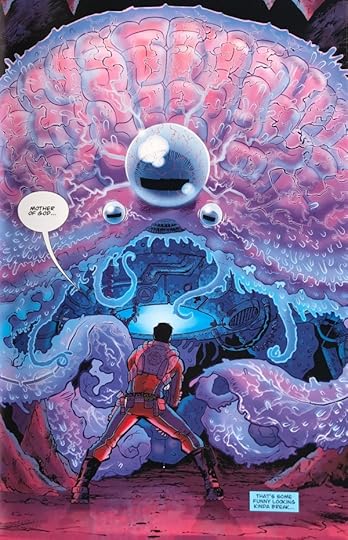
Leaving the comfort of Marvel, Dark Horse’s Fear Agent is an offbeat delight. Following the adventures of Heath Huston, a Fear Agent who is a member of a task force dedicated to eradicating aliens threats to member planets. It’s kitschy science fiction. It’s those horrible low-budget sci-fi shows I watched as a kid. Huston quotes Mark Twain, drinks incessantly, but somehow saves the universe.
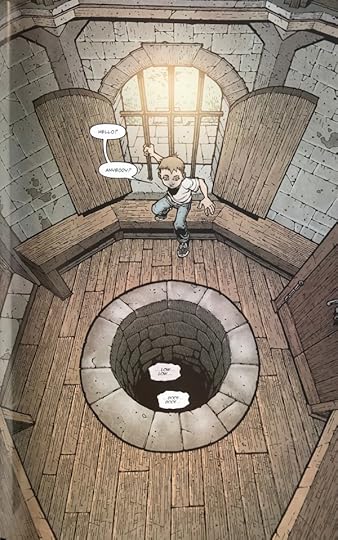
I’m not going to say a lot about Locke & Key other than to remind of that time you picked up a book and it was so good that you forgot to sleep? That. The complete collection is six books, and only one of the middle books is slightly meh, and you’ll forget all about that by the end. When you’re done, read about the author.

Hawkeye deconstructs the superhero. In this book, he’s certainly superheroing, but he rarely wears the gear. The problems he solves are relatively mundane because, as the book states, this is what he does when he’s not being an Avenger. The page above is the chapter told entirely from the perspective of his dog. It works bro.
Five pages, five paragraphs. If you were to purchase and read all five books, I guarantee you a brief respite from the world. The stories are rich; the art is compelling. You’ll discover tales you’ve heard over and over again told in ways you did not expect. You’ll laugh. You’ll be disgusted. Time will pass, and you’ll be mentally refreshed.
Good, now we’ve got work to do.
November 22, 2016
The Likeability Feedback Loop
For years, the numbers of comments on articles here have decreased. Comment-worthy articles from five years ago would get dozens and sometimes hundreds of comments. Similarly trafficked articles from the past few years get a handful.
It is not without pain, but I believe open comments are part of the deal with running a weblog. If you’re taking the time to write down your thoughts and put them in a public place, you provide a safe place for others to agree or disagree otherwise it’s just you… thinking publicly.
It’s no secret that traffic to weblogs is way down. Kottke wrote back in 2013 that “sometime in the past few years, the blog died.” Those eyeballs still wander the Internet, but they’re spending their time on social services whose initial allure was, “People you like are here. Follow them and see what they like. Because you like them, you will like what they like.”
This likeability feedback loop tastes great. Who doesn’t want a steady flow of relevant, interesting, and targeted information? Who doesn’t want the world synthesized and simplified into a palatable set of information that one can easily consume in just a few moments? And who doesn’t like the simple satisfaction of sharing or retweeting that likable and relatable piece of information that just speaks to me.
The likeability feedback loop feeds on itself. It uses its signal to prioritize and resend what resonates and what does not. It is good business to do this well because the more we find what we search for, the more likely we will return. The business often does not care if we’re more or less informed, it monetizes that we come back as many times as possible.
Some of my lowest points with this weblog are a result of critical comments. They were comments saying how I was uninformed, biased, or just plain lazy. My brain does what many brains do when receiving critical feedback.
I rage, “Jerks.”
I rationalize, “They don’t understand me.”
But then, after years of practice, I think, “Why does this feedback sting? What does this teach? And how can I learn?”
After years of raging and rationalizing, I understand feedback is the means to improve critical thinking. Feedback leads to understanding the strategic value of considering as many points of view as possible, especially from people you do not like.
Social media gleefully feeds a post-truth society and it does so by design, but social media is not the problem. Fake news is not the problem. The problem is we the people taking the time to think critically.
Comments are open here because I know that while it is my great joy to understand and write about a few select topics deeply, what will make these topics honest and true is if you tell me what you think.
I would love to hear your comments.
November 21, 2016
Stay Angry
Our actions or inaction help determine the direction the world takes. If we quickly accept a new normalized state of being in order to avoid the discomfort of being frustrated or angry, we put ourselves in a dangerous position of inaction. If you let your mind say that everything will be okay, tune out, and coast back to a relaxed state of mind, no change is ever going to come of the world.
(Via Quartz)
November 17, 2016
Social Media Loves Echo Chambers
Quattrociocchi has published a series of papers (awaiting peer-review) that analyze the rigidity of “echo chambers.” His findings suggest that people, not social networks, have been their driving force. We commonly sort ourselves into rigidly like-minded groups—and stay there.
(Via Quartz)
November 7, 2016
Gossip, Rumors, and Lies
Everyone is just… sitting there.
Six of you. All managers who report up to Evan, your boss, who decided two weeks ago that “it’s probably a good idea for this leadership team to get together on a regular basis and talk about what is up.” He dropped an agenda-less, sixty-minute recurring meeting on everyone’s calendar and that meeting is now.
Six of you. You know these humans. You work closely with two of them every single day. You’ve had occasional projects of significance with two others. The last two are friendly first names.
Evan kicks off the meeting repeating exactly what he told each of you face-to-face and in the meeting invite. It’s probably a good idea for this leadership team to get together blah blah blah. He finishes his bland opener and everyone is just… sitting there. Saying nothing.
Welcome to your first staff meeting.
An Unacceptable Amount of Crap
I’m solidly on the record as 1:1s being the most important meeting of the week. A very close second is the staff meeting. I find that 1:1s beat staff meetings in two important categories: trust building and quality of signal. But, there are ongoing compounding benefits to a regular well-run staff meeting. Team building, efficient information dissemination, and healthy debate are three I can think of off the top of my head. There are more.
Definitions first. I define a staff meeting as “the correct collection of leadership gathered together to represent a team, product, company, or problem.” Lot of words. A simpler and perhaps more immediately applicable version is, “a meeting of your direct reports.”
Great! You have directs which means you should have a staff meeting, right?
Maybe.
The decision to start your first staff meeting requires judgement. Ask yourself the following questions:
How many direct reports? 2? Yeah, no staff meeting necessary. 3 or more? Keep reading.
How many of your directs spend time working together? If it’s more than half, consider a staff meeting
Do your directs have direct reports? You needed a staff meeting awhile ago.
How much has your team grown in the last six months? A lot? Have a staff meeting.
How much of the crap that you’ve dealt with in the last month smells like it could have been resolved if people on your team were just talking with each other? If the amount of crap is unacceptable to you, have a staff meeting.
Did something recently organizationally explode? Have a staff meeting.
A Well-Intentioned Hatred of Meetings
A new staff meeting is understandably a pretty quiet affair. It’s a delightful combination of unfamiliarity combined with a well-intentioned hatred of meetings. In our hypothetical example above, Evan set horrible initial meeting tone because he committed the worst meeting sin: no agenda.
Here’s an initial agenda:
The Minimal Metrics Story
Rolling Team-sourced Topics
Gossip, Rumors, and Lies
Before I dive into these agenda topics, let’s talk about two essential meeting roles. 95% percent of the activity in a well-run staff meeting is healthy conversation and debate. Keyword: “healthy.” It’s a clear signal that a staff meeting is working when attendees jump into conversations and drive those conversations in unexpected directions. It’s a clear sign that no one is curating those conversations when those unexpected directions are not revealing insight or value.
The Meeting Runner has two jobs: set the agenda and manage the flow. We’ll talk agenda shortly, so let’s first talk about managing flow. The Meeting Runner is responsible for making the following call throughout the meeting: When is this particular conversational thread no longer creating enough value? It’s a nuanced job, but without this human curating the conversation, a staff meeting can turn into directionless heated vent session. Fortunately, as we’ll learn shortly, the Meeting Runner has an essential driving force at their disposal – the agenda.
The role of Meeting Runner is traditionally the human who called the meeting. It’s usually the he or she accountable for the team, which allegedly gives them the context to run the meeting efficiently. Usually.
The second role is Meeting Historian. This non-obvious role is not required in the first few get-to-know-you meetings, but is essential long term. Their job: capture the narrative of the meeting. We’re not looking for every single word, we’re looking for major themes and points that are discussed. Action items, relevant thoughts, jokes, it’s all captured by the Meeting Historian.
Two guidelines for Meeting Historian. First, it can’t be the Meeting Runner because this human has their hands full keeping this meeting pointed in the right direction. Second, the Meeting Historian is not responsible for editorial or curation. Their job is to capture everything. This seems like a no-brainer until you understand that your next job is to send these notes to the entire company.
Wait. What?
Humans have complicated relationships with meetings. If they’re in the meeting and it’s not meeting their expectations, they’re mad. If they’re not invited to a meeting where they believe they should be present, they’re mad. Combine this slippery situation with that fact that meeting efficiency devolves as a function of the number of humans greater than seven and you’ve got a maddening set of complicated constraints. The simple but perhaps controversial practice I’d recommend is that every single meeting have a Meeting Historian and the work of that Historian is broadcast to the whole company.
If you’re a frequent meeting denizen and the hair on the back of your neck stands up when you imagine the notes of your meeting being shared with the whole of your company, my question is, “What are you talking about in that meeting that can’t be shared?” Of course, the Meeting Runner will remove confidential information about individuals as well as other clearly confidential company information before sending. If that doesn’t calm you down, I’m still curious what you think is being said in this meeting that can’t be shared with your team?
Meetings create power structures. Intentionally or not, they become a measure of status. Are you in that meeting? No? Well, I am. If you found sound reason to have a staff meeting in my list above, I’m not worried about the first three month of this meeting’s existence. It’s year two when that good reason may have vanished and now you have this formerly important meeting purely out of habit.
The rule is: in the absence of information, humans fill the gap with the worse possible version of the truth. Two years into your meeting when you’re not sharing the notes, the humans not in the meeting tell the most interesting and untrue stories about what happens in your meeting. I guarantee it. This isn’t out of spite. They aren’t being malicious. They just don’t know what is going on, so they’re going to tell their version of the story.
Share your notes. Every time. The act of doing so will force you to ask the following question before you share them “Is what we are doing here valuable?”
A Three Point Agenda
The Minimal Metrics Story is the list of essential metrics this group must review on a regularly basis and I recommend leading with them because they frame the whole meeting. Not knowing precisely why you chose this precise time and situation to start a staff meeting makes it tricky to recommend what type of metrics you need to review.
What are the key metrics this group is responsible for? Revenue? Application performance? Security incidents? Number of critical bugs filed? The list is endless and it’s ok if your first meetings don’t have these defined. But after a month, if these haven’t shown up, I’m wondering why you pulled this group together? What problem are you trying to solve? I’m not saying you demonstrated poor judgement by calling the meeting, but if a concrete set of measurable things hasn’t shown up, why is the group meeting on a regular basis?
You’ll know you’ve found a good initial set of metrics when they tell a story and leave you with questions. Total billings in the last week were X millions. Recurring revenue added was Y thousands. Last week they were X and Y? That’s a big change. What do we think happened? The questions and the debate that surround the story both align the room and frame the rest of the conversation. There will be weeks where the metrics story is, “Tracking. Nothing to discuss,” but if it’s been three months and that’s the only story, you’ve either got the wrong metrics or the good reason to have this meeting has passed.
A Rolling Team Sourced Agenda is the heart of your meeting. For the first iteration of this meeting, you’ll need to build the agenda yourself. This shouldn’t be hard because there are pressing reasons for these humans to be together. Once, twice, or perhaps three times you can set the agenda for the meeting to address that pressing reason, but at end of the first meeting you say, “Here’s a document I’ve shared with everyone, please add any agenda topics for next time.”
They won’t.
The social fabric and the sense of team that you are building with this meeting will take time to form and you’ll need to be more involved in both building the agenda and moving the narrative along for the first handful of meetings. You’re looking for two important developments over the course of the first three meetings:
1) Unexpectedly useful conversational detours. You’re going to do a lot of talking in the first few meetings because you’re the leader, you’ve identified some problem, and you’re attempting to solve it. Good job, but very quickly you need to stop talking. Introvert leaders of the world will have no problem with this advice. Extrovert leaders. Listen to me. It’s not your meeting, it’s their meeting. You need everyone in the room to bring their experience, their questions, their curiosity, and their drive to the table and they each need to feel comfortable sharing these thoughts. If you don’t stop talking, they won’t start.
2) A similar positive health sign is the arrival of unsolicited agenda items by the rest of the room. I’m not talking about the ones you ask for, I’m talking about the agenda items that just appear. These random new additions are emerging proof that the rest of the room is beginning to see that this is a meeting where work is done.
Staff meetings are an hour. It feels like a lot of time, but when this meeting is working you’ll effortlessly fill the time.
It’s a rolling agenda because the steady healthy state for this meeting is that you never get through the agenda – there are too many topics to discuss.
Gossip, Rumors, and Lies is the final permanent agenda item. With the last five to ten minutes of your meeting, you’re carving off time for communication error correction. I’ll explain.
The reason you’re having this meeting is because of a seismic shift. Your team suddenly grew, your company changed direction, major responsibility shifted, or maybe a reorganization occurred. The knee-jerk move when a shift occurs is to call all the relevant parties into the room and ask, “WTF?” This feels good. People talk and explain their feelings regarding the shift. Information is shared, we nod, and feel aligned, but other than the therapy, we didn’t solve whatever problem existed that precipitated the need for this meeting. Meetings are a symptom of a disease, they are not the cure.
The metrics framing and rolling agenda should give you an actionable narrative. They should give you the opportunity for the airing and discussion of grievances. They should create a set of follow-up work that is far more likely the cure. However, you should still be asking, “WTF?”
This final section of your staff meeting is a safe place for all participants to raise any issue, to ask any random question, or to confirm any hallway or Slack chatter. Chances are, whatever seismic event caused this meeting to occur is still being organizationally digested and often the stories being told are absurd. Gossip, Rumors, and Lies is time to get that important absurdity out in the open, so you can begin to construct a healthy response.
Meetings are a Symptom, Not the Cure
High on my list of professional pet peeves is the emergence of corrosive politics within a company. Politics are a natural development in a large group of humans working together. Corrosive politics give me rage: taking credit for other’s ideas, hoarding information, or not allowing the best idea to win. The list goes on and on and when I discover this type of politics where I work there is rage, so I’ve spent a good portion of my career understanding the root causes.
Seismic shifts within your company or team create change, and humans attempting to get work done consistently, of high quality, and at velocity don’t like change. It harshes their productivity buzz. The intensity of their response to change is a function of their discomfort and that discomfort increases exponentially the longer their discomfort remains unresolved.
The reason meetings have evolved as an acceptable first response is because they do address one key issue: they give the team an opportunity to discuss their perceptions of the change. This feels good. The reason meetings are often hated is because while talking feels good, it’s not true progress.
If you’ve called the meeting for the right reason, if you’ve discovered story-filled metrics, if you build a compelling team-sourced agenda, if you give everyone time to discuss the absurd, and if you share the insights from this meeting with everyone, you’ve given the team a chance to collectively resolve the core issue. The sharing of this work will decrease miscommunication, it can help inoculate against politics, and it will create unexpected serendipity.
No one is going to just sit there when they understand the problems at hand, they trust they can be heard, and they can count on resolution.
November 1, 2016
Kyle the Octopus
Eagle-eyed readers noticed resting on the best couch ever that there was an orange octopus. His name and how he ended up there is a great story.

When my daughter was in elementary school, we participated in a program called Indian Princesses that started in kindergarten with graduation in 5th grade. Each month there were two activities: a meeting at one of the family’s homes and another event where we embarked on an adventure like camping, rock climbing, or other outside activity.
At the monthly meeting, after snacks and drinks, we’d sit in a circle, and each daughter would introduce herself and her Dad. She’d then have a choice. With an item she brought from home, she’d either let the other daughters guess the item she brought, or she could just tell a story about the item.
New daughters were naturally nervous about speaking in front of twenty strangers. My daughter spent the first three meetings completely silent sitting on my lap – so did a lot of her friends. No problem, I would introduce us, and I would do the sharing. Next daughter, next dad.
At the fourth meeting, my daughter said her name. At the fifth meeting, her name and mine. At the sixth meeting, her name, mine, and she shared a brief story about a small stuffed bear she brought that evening. A year later, she leaped at the opportunity to stand up and speak in front of these people. When she graduated from Indian Princesses, the idea of standing up in front of a group of strangers and telling a story about anything was second nature.
Writing as a person who in my 40s still struggles with public speaking, I feel immense pride when my daughter effortlessly – expertly – stands up in public and confidently speaks. This leads us to Kyle.
Our best Indian Princesses adventure was the sleepover at the Monterey Bay Aquarium. The tribe arrived at night and had a behind-the-scenes tour of the facility and then we slept overnight right in front of the massive tanks full of, ya’know, sharks.
After we had awoken, my daughter and I walked through the store and she grabbed the octopus you see sitting on my couch. Dad, this is perfect for you. Ok. She also found herself a hammerhead shark that she named Miles.
Her stuffed animals are mostly gone now. My daughter moved onto horses and then onto Twenty One Pilots, but I kept the octopus because that octopus reminds me of not only the value of conquering fear but the earned lifelong confidence that accompanies this act.
Each year or so, I do a Rands Charity Shirt. Every single cent of profit goes to a children’s literacy fund called First Book that gets books in the hands of the disadvantaged. When I was brainstorming artwork for the shirt, I asked the Rands Leadership Slack for ideas and someone suggested the octopus, not knowing any of the backstory.
When we arrived at a good design for the logo, I showed it to my daughter and asked, “Does this octopus have a name?” She looked at me exasperated, “Dad, his name is Kyle.”

October 31, 2016
Break Rules and Be Yourself
A third reason for the prevalence of conformity is that we tend to prioritize information that supports our existing beliefs and to ignore information that challenges them, so we overlook things that could spur positive change. Complicating matters, we also tend to view unexpected or unpleasant information as a threat and to shun it — a phenomenon psychologists call motivated skepticism.
(via hbr.org)
October 28, 2016
Expose the Vampires
It is difficult to measure the internal cost of energy lost to process because no one measures the energy of organizations. No one can really quantify the costs energy-sucking people and tasks exact from your people. Instead, you see the costs indirectly: In the defection of your stars, in the recruits you didn’t land, and in the direct advice and feedback you’re not getting because the truth-tellers are reporting to energy vampires.
(Via hbr.org)
October 27, 2016

Michael Lopp's Blog

- Michael Lopp's profile
- 144 followers

