Alex Robinson's Blog, page 108
October 7, 2012



October 4, 2012
Humans are a Tomb Wight’s favorite prey. Through arcane...
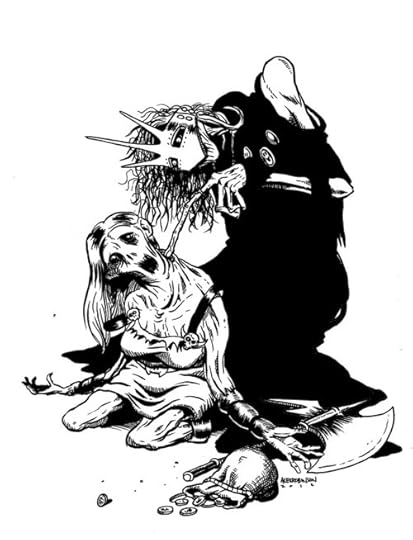
Humans are a Tomb Wight’s favorite prey. Through arcane dark magic, these wretched undead will spread legends of secret hoards of gold, encouraging adventurers to explore long-abandoned crypts—and right into the Tomb Wight’s trap.
Studies of the souls of the various races have revealed some startling figures: a human essence provides two weeks of sustenance for the wights, dwarves six days, a sand pixie four days and orcs only five hours. Killing green elves seems to actually harm the Tomb Wights, possibly explaining the otherwise puzzling idiom “avoid [him] like a wight do an elf.”
This hapless fighting woman almost made it out with a sack of the wight’s silver, but the Disorient spell protecting the tomb insured she would never make it out alive. Once it is done feasting the wight will fall into a meditative state, dropping the lifeless husk, which will usually take 1d4 days to turn to dust. In this case, our dizzy heroine is in luck: Phobos of Riverswamp, a fifth level adept, breaks into the tomb, banishes the wight and returns her to life with a Reverse Energy Drain incantation.
Phobos himself meets an unfortunate end: his years of alcoholism finally catch up with him when he falls asleep and is killed in a wagon accident.




October 3, 2012
CRACK!
Its ability to disintegrate virtually anything at a range...
CRACK!
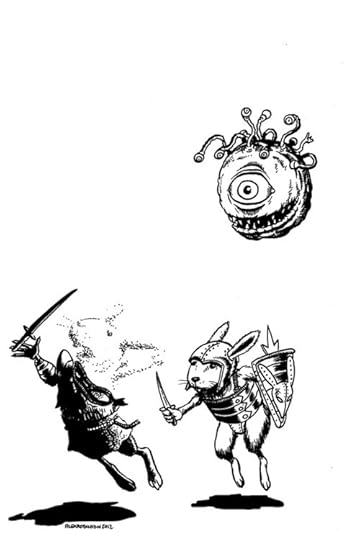
Its ability to disintegrate virtually anything at a range of 20 meters is perhaps the fearsome Beholder’s most terrifying power. The disintegration ray itself is invisible and silent—the cracking sound is produced by air rushing into the vacuum created.
This eye tyrant is injured: its telekinetic eye stalk was lost in a showdown with another Beholder that drove it from its cavern home. This explains why this one is taking over the warren of a Nijntye commune, resulting in the chilling scene above. Nijntye warrens are generally not appealing to Beholders, being too close to human cities, but proper caves are scarce in this area and beggars can’t be choosers. After driving out or enslaving the rabbit folk this Beholder will remain in the warren for months, waiting for its eye stalk to grow back and plotting its revenge.
October 2, 2012
sciencepopularis:
tastysynapse:
Zen Pencil Comics: 52. PHIL...


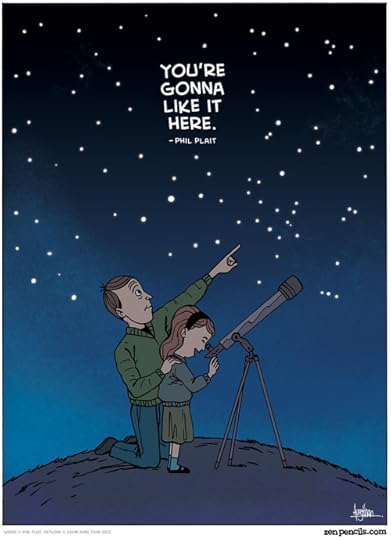
Zen Pencil Comics: 52. PHIL PLAIT: Welcome to science
Wow. What a brilliant comic, great illustrations, great discourse.
September 30, 2012
aliasspace:
topherlooks:
Dowling Duncan and redesigning the...


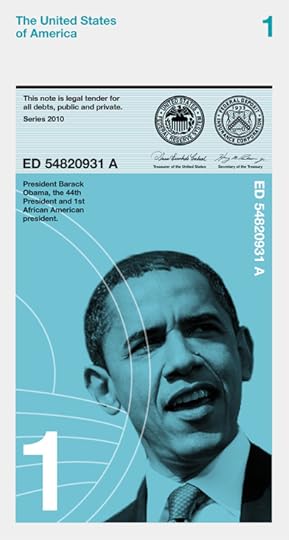
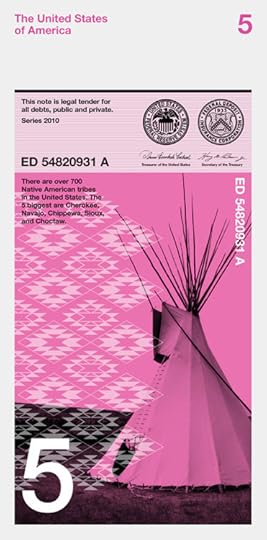
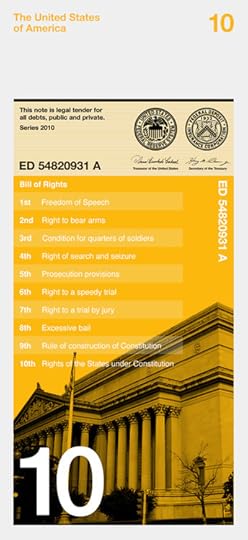
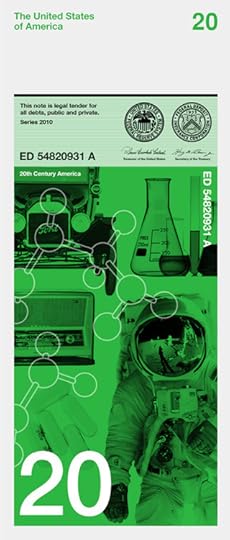
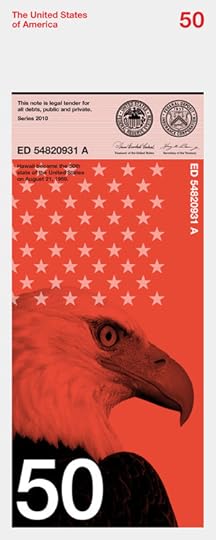

Dowling Duncan and redesigning the American Dollar:
Why the size?
We have kept the width the same as the existing dollars. However we have changed the size of the note so that the one dollar is shorter and the 100 dollar is the longest. When stacked on top of each other it is easy to see how much money you have. It also makes it easier for the visually impaired to distinguish between notes.
Why a vertical format?
When we researched how notes are used we realized people tend to handle and deal with money vertically rather than horizontally. You tend to hold a wallet or purse vertically when searching for notes. The majority of people hand over notes vertically when making purchases. All machines accept notes vertically. Therefore a vertical note makes more sense.
Why different colors?
It’s one of the strongest ways graphically to distinguish one note from another.
Why these designs?
We wanted a concept behind the imagery so that the image directly relates to the value of each note. We also wanted the notes to be educational, not only for those living in America but visitors as well. Each note uses a black and white image depicting a particular aspect of American history and culture. They are then overprinted with informational graphics or a pattern relating to that particular image.
$1 – The first African American president
$5 – The five biggest native American tribes
$10 – The bill of rights, the first 10 amendments to the US Constitution
$20 – 20th Century America
$50 – The 50 States of America
$100 – The first 100 days of President Franklin Roosevelt. During this time he led the congress to pass more important legislations than most presidents pass in their entire term. This helped fight the economic crises at the time of the great depression. Ever since, every new president has been judged on how well they have done during the first 100 days of their term.
Love these.
It’s inconceivable that Republicans would ever allow two Democrats on the currency but this is a cool idea. Maybe the could do it like the state quarters, where every year would see new themes.
September 29, 2012
sciencesoup:
Water Bears In Space
These magnificent and...


Water Bears In Space
These magnificent and slightly terrifying creatures are tardigrades—stocky organisms less than 1mm long, also known as “water bears”. They’re found all over the world, from deserts to the Arctic, but they always need water to perform necessary biological processes. However, if their habitats dry up or they’re exposed to physical or chemical extremes, they can enter a state of total metabolic shutdown called anhydrobiosis, and survive in this state for years—then, when conditions are right again, they can just spring back to life. Anhydrobiosis involves processes at molecular and physiological levels, but basically, when cells become stressed through dehydration, ‘bioprotectors’ are formed to protect the cell’s important molecules and minimise cell damage. Tardigrades are nicknamed the hardiest creatures on Earth, and they appear to be just as hardy above it, too. In 2007, an experiment launched them into a 10-day orbit, and proved that they can survive exposure to the sub-zero temperatures, intense radiation, and oxygen-deprived vacuum of space. Now they’re part of Project Biokis, a program sponsored by the Italian Space Agency that aims to study creatures like tardigrades and develop techniques to protect other organisms—humans especially—from the extreme conditions of space.
THIS IS A REAL CREATURE!!