
Becky Lower's Blog, page 25
March 25, 2017
Sometimes It's The Little Things
I've been having car trouble lately. When a 'check engine' light comes on, I pay attention.
 My local mechanic had the car for a week. He replaced a big-ticket part, replaced some hoses that were cracked, he ran it through his checklist. But in the end, he couldn't fix it enough to have it pass the emissions check. Fortunately, he's an honest man and didn't charge me since he couldn't fix it, despite the time he'd put into it. His suggestion was to take it to the dealer, the pros.
Turns out, in addition to the big-ticket part, the experts found one niggly wire that had a leak. The fuel tank had to be dropped in order to get to it, but in the end, that one little leak made the difference between success and failure.
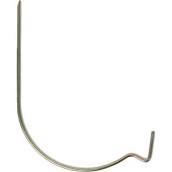
Which made me think of producing a manuscript... of course. Possibly because the wire reminds me of a hook.
I recently participated in judging some books for the RITA contest. The finalists were announced this past week, and, like most romance authors, I spent some time trying to decipher why these particular books made it into the final round. I looked at their Amazon ranks, number of reviews, read the blurbs and came to a conclusion. It only takes one little thing to make a book rise from being good to being, as Tony The Tiger says, "G-R-R-EAT!"
 What is that one little thing? If I had the answer, I'd be on the bestseller list. But my thinking after doing this research is that one little thing is a great hook. Take a traditional trope and turn it on its ear. Hook the reader with your opening scene, your opening line. If you write historicals, try to insert something modern, like Tessa Dare accomplished in her book When A Scot Ties The Knot and her Captain MacDreamy. Fans of Gray's Anatomy get it and laugh at the cleverness, and Miss Dare does it while never dropping the historic bent of the book.
I could cite a couple of examples from the current crop of RITA books, but I can't go into detail on which books I've read. But the overriding thread, the hook, in each of them is they are extremely clever. You can have a really well-written book, but if it's not got something to draw a reader in, it's only going to be that, a good, well-written book like the thousands of others released each year. You can go through your checklist, remove and rewrite huge chunks of the book. You can tweak little parts of your story. You can have a pro look at it, help you polish it to a shine. But unless you can find the elusive niggly wire that will make people talk about it, want to read it, you'll remain in the mid list.
I'm working on finding that niggly wire.
 My local mechanic had the car for a week. He replaced a big-ticket part, replaced some hoses that were cracked, he ran it through his checklist. But in the end, he couldn't fix it enough to have it pass the emissions check. Fortunately, he's an honest man and didn't charge me since he couldn't fix it, despite the time he'd put into it. His suggestion was to take it to the dealer, the pros.
Turns out, in addition to the big-ticket part, the experts found one niggly wire that had a leak. The fuel tank had to be dropped in order to get to it, but in the end, that one little leak made the difference between success and failure.
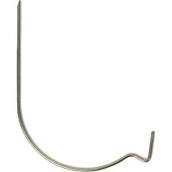
Which made me think of producing a manuscript... of course. Possibly because the wire reminds me of a hook.
I recently participated in judging some books for the RITA contest. The finalists were announced this past week, and, like most romance authors, I spent some time trying to decipher why these particular books made it into the final round. I looked at their Amazon ranks, number of reviews, read the blurbs and came to a conclusion. It only takes one little thing to make a book rise from being good to being, as Tony The Tiger says, "G-R-R-EAT!"
 What is that one little thing? If I had the answer, I'd be on the bestseller list. But my thinking after doing this research is that one little thing is a great hook. Take a traditional trope and turn it on its ear. Hook the reader with your opening scene, your opening line. If you write historicals, try to insert something modern, like Tessa Dare accomplished in her book When A Scot Ties The Knot and her Captain MacDreamy. Fans of Gray's Anatomy get it and laugh at the cleverness, and Miss Dare does it while never dropping the historic bent of the book.
I could cite a couple of examples from the current crop of RITA books, but I can't go into detail on which books I've read. But the overriding thread, the hook, in each of them is they are extremely clever. You can have a really well-written book, but if it's not got something to draw a reader in, it's only going to be that, a good, well-written book like the thousands of others released each year. You can go through your checklist, remove and rewrite huge chunks of the book. You can tweak little parts of your story. You can have a pro look at it, help you polish it to a shine. But unless you can find the elusive niggly wire that will make people talk about it, want to read it, you'll remain in the mid list.
I'm working on finding that niggly wire.


March 18, 2017
Going Backwards
Sometimes I feel like I'm taking two steps backwards for every forward step. This week I took a major, Grand Canyon step backwards.
 As often happens when I try to do computerly things fast, my fingers got ahead of my thought process and deleted the manuscript I'd been working on for months. Rather, I overrode a complete manuscript with only the first three chapters. My stomach hit the dirt as I realized the impact of what I'd done.
Frantic phone calls to Apple, and then to the local store, both came up empty.
 So, I took a deep breath and tried to assess the extent of the damage. Fortunately, I still had the copy I'd sent to Lori Wilde a month ago, with all her comments. And I had the first three chapters. I had gone through the entire manuscript, addressing all of Lori's notes, and then started over again, embellishing the story and adding scenes–nearly 10,000 words had been added so far. I'd gotten halfway through my third draft when I hit the button too fast and lost it.
It could have been worse. But it also could have been so much better. I've learned, thanks to all those who commented on my Facebook page, that I can have the Word program create a backup file each time I add to it. And, who knew I had a Time Machine on my laptop? Always wanted one of those.
It's a horrible way to learn a hard lesson, but I'm glad I had an older version of the story, so I didn't lose it all. I'm back to where I was three weeks ago, going through Lori's notes again. As I read through it, though, I'm remembering things I'd added in over the past few weeks, so maybe it'll come out better than it originally was.
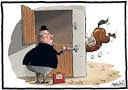 This story probably won't be ready when I originally estimated it would be. But having a setback of a month or so is not so bad, considering the learning experience this has been. I will use the backup file, figure out the Time Machine, and email copies to myself. Overkill is better than losing the file. I'm sure there are others out there who forget about backing up your work, so this is a cautionary tale. As I told a friend, it's like closing the barn door after the horse escapes. I hope this never happens to any of you.
 As often happens when I try to do computerly things fast, my fingers got ahead of my thought process and deleted the manuscript I'd been working on for months. Rather, I overrode a complete manuscript with only the first three chapters. My stomach hit the dirt as I realized the impact of what I'd done.
Frantic phone calls to Apple, and then to the local store, both came up empty.
 So, I took a deep breath and tried to assess the extent of the damage. Fortunately, I still had the copy I'd sent to Lori Wilde a month ago, with all her comments. And I had the first three chapters. I had gone through the entire manuscript, addressing all of Lori's notes, and then started over again, embellishing the story and adding scenes–nearly 10,000 words had been added so far. I'd gotten halfway through my third draft when I hit the button too fast and lost it.
It could have been worse. But it also could have been so much better. I've learned, thanks to all those who commented on my Facebook page, that I can have the Word program create a backup file each time I add to it. And, who knew I had a Time Machine on my laptop? Always wanted one of those.
It's a horrible way to learn a hard lesson, but I'm glad I had an older version of the story, so I didn't lose it all. I'm back to where I was three weeks ago, going through Lori's notes again. As I read through it, though, I'm remembering things I'd added in over the past few weeks, so maybe it'll come out better than it originally was.
 This story probably won't be ready when I originally estimated it would be. But having a setback of a month or so is not so bad, considering the learning experience this has been. I will use the backup file, figure out the Time Machine, and email copies to myself. Overkill is better than losing the file. I'm sure there are others out there who forget about backing up your work, so this is a cautionary tale. As I told a friend, it's like closing the barn door after the horse escapes. I hope this never happens to any of you.
March 12, 2017
GMCD
I recently participated in a two-week workshop with the infamous Lori Wilde, where she went through my entire first draft. At the end of about every scene, her comment was "What's the GMCD of this scene?"
Most every author who's been at this writing thing for awhile knows about Goal-Motivation-Conflict. But D? I had no idea what that even stood for. Even some so-called experts in the writing business don't address it.

Turns out, the "D" stands for DISASTER. Every scene has to end with one. Big or little, the players in the scene have to be worse off at the end than at the beginning. Or they think they've reached their goal, but at what cost?
Obviously, this is an area where I'm weak, as an author. It's a hard concept to wrap one's head around. So, I decided to apply the approach to everything in my life, come up with a GMCD in real life events. Maybe if I can get used to the approach in a practical way, it will become second nature when I write.
As most of you know, I'm trying to sell my house. That's a definite goal that's been set, so it seemed the most logical GMCD to pursue right now. Here's the way it went:
GOAL--Sell the houseMOTIVATION--I need to reduce my monthly billsCONFLICT--(Usually divided into both internal and external) Internally, I'm comfortable living in Oberlin. I know my way around, have made some friends here, have nice neighbors, hate the thought of packing up again. Externally, the house is cumbersome to live in, many sets of stairs, and is way too big for me. DISASTER--The first inspector through the house uncovered a problem I wasn't aware of. And it's a biggie. Cue scary music.
It only makes sense that the disaster is in the basement. Isn't that where every horror show ends up? Yes, friends, one of my basement walls is in danger of collapse, and for some reason, every potential buyer is frightened away by the prospect. I can't fix it myself (see Motivation), yet I must disclose the hazard to all potential buyers.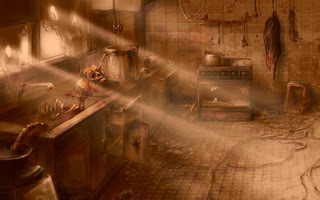
Scenes must end at which point you ask yourself Was the goal met? If the answer is no, things must be worse off than at the start of the scene. Got that covered, in spades. If the answer is yes, it must be followed by a "but." The "but" here is the buyer now has a huge bargaining chip to bring the price down. So far, I haven't found anyone who will play out the scene with a yes, but...
I'll keep looking. Somewhere out there is a person who wants to take on the challenge of owning this home. And I can't wait to complete this scene and move on to the next.
Most every author who's been at this writing thing for awhile knows about Goal-Motivation-Conflict. But D? I had no idea what that even stood for. Even some so-called experts in the writing business don't address it.

Turns out, the "D" stands for DISASTER. Every scene has to end with one. Big or little, the players in the scene have to be worse off at the end than at the beginning. Or they think they've reached their goal, but at what cost?
Obviously, this is an area where I'm weak, as an author. It's a hard concept to wrap one's head around. So, I decided to apply the approach to everything in my life, come up with a GMCD in real life events. Maybe if I can get used to the approach in a practical way, it will become second nature when I write.
As most of you know, I'm trying to sell my house. That's a definite goal that's been set, so it seemed the most logical GMCD to pursue right now. Here's the way it went:
GOAL--Sell the houseMOTIVATION--I need to reduce my monthly billsCONFLICT--(Usually divided into both internal and external) Internally, I'm comfortable living in Oberlin. I know my way around, have made some friends here, have nice neighbors, hate the thought of packing up again. Externally, the house is cumbersome to live in, many sets of stairs, and is way too big for me. DISASTER--The first inspector through the house uncovered a problem I wasn't aware of. And it's a biggie. Cue scary music.
It only makes sense that the disaster is in the basement. Isn't that where every horror show ends up? Yes, friends, one of my basement walls is in danger of collapse, and for some reason, every potential buyer is frightened away by the prospect. I can't fix it myself (see Motivation), yet I must disclose the hazard to all potential buyers.

Scenes must end at which point you ask yourself Was the goal met? If the answer is no, things must be worse off than at the start of the scene. Got that covered, in spades. If the answer is yes, it must be followed by a "but." The "but" here is the buyer now has a huge bargaining chip to bring the price down. So far, I haven't found anyone who will play out the scene with a yes, but...
I'll keep looking. Somewhere out there is a person who wants to take on the challenge of owning this home. And I can't wait to complete this scene and move on to the next.
March 4, 2017
Reassessing--It's Not Just For Editing
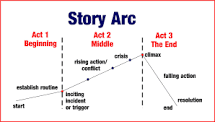 You know how it is. You are rolling merrily along on your story. Words are coming to you faster than you can write them down, your story arc is so compelling, and you are completely in love with your hero. Then you step away for a day, come back to your work and wonder what planet your brain was on when you wrote such drivel.
The same thing is happening to me right now, in real life. I had a contract on the house. The potential buyers showed up on my doorstep right around Christmas asking if I'd like to sell. What a great idea! We began working together, things were clicking, and then the inspector came. And stayed.
 Five hours later, the potential buyers backed out of the deal, since the inspector uncovered some things I didn't even know about. My house flunked, was bleeding red ink.
So now it's time to reassess. Decide what to do. As I do with every book I write, when it comes time to edit, I make up a checklist of things to watch out for during my first edit. I need to do the same with the house. My first question when I finish a first draft is--Is this a good idea?

Applying that to the house, I asked myself--Is a move the best idea? Yes, I still believe it is. This house is too big for one person, even with a dog. I no longer can handle the upkeeping chores that need done. I don't have the resources to fix the problems the inspector found.
What should be my next step? With my manuscript, the next step would be to go through it, a scene at a time, and remove the fluff, the repetition, the extra commas. Does the scene accomplish what it needs to? Does it move the plot along? So my next step with the house is to meet with my agent, review the listing, add a disclosure sheet and lower the price. Lowering the price is the right way to move the plot along and get me to new living quarters. Much like an editor, my agent will tell me what needs modification, and how to make the house appealing. I may not like what I hear from an editor or my agent, but they both have the same agenda--to pound my work, or my house, into the best possible shape so it can be sold. So, I'll swallow my ego and follow their advice. We'll see where it leads.
Stay tuned.
On a professional note, I'm becoming the Bundle Queen. In addition to my bundle of all the Cotillion books, in April one of my books. The Forgotten Debutante, will become part of a new bundle called Love In Wartime. And then, in May, another of my books, Expressly Yours, Samantha, will be included in a bundle called Wild, Wild West. These latest bundles are so new, I don't have links for them yet, but here's a sneak peek at the cover of the Love In Wartime cover.

February 25, 2017
Holding Pattern
 Lately, I've been feeling like I'm an airplane over O'Hare Airport, stuck in a holding pattern and hoping I can land before I run out of fuel. I've accepted a contract on the house, but until the inspection and appraiser give it their blessing, I can't take the next step and sign on the dotted line for my new place. I can't even decide which state I'll be in, since my sister who lives with me is still checking on the viability of returning to Phoenix, where she lived for so many years. We'll figure it all out soon, but in the mean time, I'm clearing out the clutter, selling off some of my furniture since I'm downsizing from a four-bedroom house with a basement to a two-bedroom something or the other. Baby steps forward. First thing on my agenda is to train my dog, Mary, how to ride in the car. She likes my lap, but she needs to learn to like the back seat.
 And professionally, I'm taking baby steps as well. I finished my workshop last Friday. My instructor was the mighty Lori Wilde, who told me she was enjoying my manuscript and it was different! Due to a few emergencies, she couldn't get the edited version of my manuscript back yet, but it's the first in a Regency series, and I didn't want it to read like all the other Regencies out there. Mission accomplished, I guess. Now, I need to finish it, taking Lori's suggestions, tweaking my work to a polished format and then sending it out there. Did I mention it's about roses?
On the contemporary front, I just received my second edits for Sweet Caroline, my second Lobster Cove book with Wild Rose. The editor for my Wild Rose books is one of the best I've ever had the pleasure of working with, but she's tough. Especially when it comes to commas and the word "it." There's a lot of work to do on that manuscript to pound it into shape. I'll be working on that today.
I usually do my best work amidst chaos, but even I'm feeling a bit overwhelmed these days. I need to land soon! Or maybe pack a box.

February 18, 2017
How Selling A House Is Like Revising A Manuscript
Most everyone who reads this blog is aware I've been trying to sell my house for some time now. Lately, it's been off the market, but the idea remained in the far recesses of my mind. Kind of like an idea for a story. You know how it is. Your idea begins with a lightbulb moment,
 a big what if? Same with putting a house up for sale. The house is too big, too many stairs, so why not sell it? What if I could move to a warmer climate? And so it begins. You toy with the idea for a while, weigh the pros and cons, come up with plot points, action to be taken, create one list after another and finally, decide to put pen to paper.

And just like with writing a manuscript, sometimes you need to step back and revise your work. Often times, in my case. I'm taking a workshop right now that's making me look at my writing in a completely different way, try out new approaches to the work. It's making me a better writer, one scene at a time. As for the house, I did a thorough edit of each room, removing clutter, making it as clean and polished as I could before I let anyone see the place. And it worked! I thought I had a completed transaction, or nearly so. The couple had visited multiple times, they mentally placed their furniture in the various rooms, they were ready to go. We were at lift-off. But then, it all fell apart.

So what do you do? As I see it, there are two options in both writing and selling a house. You can give up, shove the manuscript under the bed, take the house off the market and continue on, unfulfilled on both counts. Or, you can hire a professional who can ease the way for you, show you where you're having trouble, guide you to a finished, polished manuscript which will garner you an agent who will obtain a nice contract with maybe an advance. Same with the house, hire a professional who will obtain a solid contract on your house that will result in enough of a profit to buy something smaller and more suitable.

I choose to go full speed ahead on both counts. I've got one week down on the two-week workshop which is making my manuscript sellable. And I've hired a realtor to help me sell the house. I have high hopes for both projects and hopefully, by summer time, I'll be writing a killer sequel to this manuscript from a warm and sunny locale. Stay tuned.

 a big what if? Same with putting a house up for sale. The house is too big, too many stairs, so why not sell it? What if I could move to a warmer climate? And so it begins. You toy with the idea for a while, weigh the pros and cons, come up with plot points, action to be taken, create one list after another and finally, decide to put pen to paper.
And just like with writing a manuscript, sometimes you need to step back and revise your work. Often times, in my case. I'm taking a workshop right now that's making me look at my writing in a completely different way, try out new approaches to the work. It's making me a better writer, one scene at a time. As for the house, I did a thorough edit of each room, removing clutter, making it as clean and polished as I could before I let anyone see the place. And it worked! I thought I had a completed transaction, or nearly so. The couple had visited multiple times, they mentally placed their furniture in the various rooms, they were ready to go. We were at lift-off. But then, it all fell apart.

So what do you do? As I see it, there are two options in both writing and selling a house. You can give up, shove the manuscript under the bed, take the house off the market and continue on, unfulfilled on both counts. Or, you can hire a professional who can ease the way for you, show you where you're having trouble, guide you to a finished, polished manuscript which will garner you an agent who will obtain a nice contract with maybe an advance. Same with the house, hire a professional who will obtain a solid contract on your house that will result in enough of a profit to buy something smaller and more suitable.

I choose to go full speed ahead on both counts. I've got one week down on the two-week workshop which is making my manuscript sellable. And I've hired a realtor to help me sell the house. I have high hopes for both projects and hopefully, by summer time, I'll be writing a killer sequel to this manuscript from a warm and sunny locale. Stay tuned.

February 11, 2017
Making A List and Checking It Twice
 I am a consummate list maker. I have a grocery list, a general to-do list for household chores and another list for book deadlines. And don't get me started on my list of words not to use in my writing. But I've recently had to add another list to the mix–associated with a possible move.
My best friend told me the other day that if she had as much on her plate as I do, she wouldn't be able to sleep at night. So she's assuming I can sleep. I'm glad she got that impression, but the reality is I wake up every morning long before I want to with nightmares of empty moving boxes interrupting my sleep.

Of course, I'm compiling a list of things to take into account when I'm searching for a new residence. Things like climate, proximity to family, moving expenses, do I want the hassle of home maintenance or is it time for a condo? Then, there's another list for closing down this home's operation. Closing out accounts at the bank, cable company, phone, gas, utilities, etc. Switching over my social security money, turning in the keys to my safe deposit box, etc. The lists are piling up and nothing is getting done. Because until I have a signed contract in my hands, I can't go forward. Even if my new buyers have given me a target date to move.
So right now I'm in limbo, with lists piling up on every side. I will finish out February taking a two-week-long workshop with Lori Wilde, after which my second round edits should be back from my publisher. I'll try to get that signed contract into my hot little hands, and plan my next steps. And I'll keep making lists. It's the only way I'll ever get any sleep between now and May.

How about you? Do you live by your lists, or do you fly by the seat of your pants?
February 4, 2017
Super Monday!
I know it's only Sunday, and there's some big game scheduled for this evening, but I've got Monday on my mind.
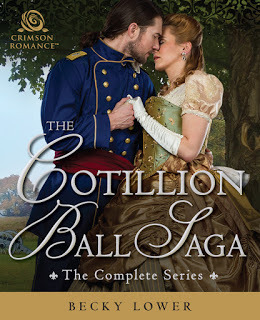
My Super bundle of all the Cotillion books plus the novella about Charlotte and George, is on sale until February 12 for only 99 cents. BUT, on Monday, Feb. 6, it's going to be a BookBub ad!
For those of you who are unfamiliar with BookBub, it's a daily email for books that are on sale or free and is sent out to hundreds of thousands of readers. The number of books selected each day are limited, and are highly sought after. The selections are based on whether the author is a known entity, if the book has a lot of 4 and 5 star reviews, or if the sale is really MEGA! I think my bundle qualifies for reasons 2 and 3, and I'm working hard on reason 1. I'll be posting the link to my Facebook page tomorrow, but you can grab your copy today for the 99 cents price. Here's the link, for your convenience: https://www.amazon.com/Cotillion-Ball-Saga-Becky-Lower-ebook/dp/B01MXCL8V1/ref=sr_1_4?ie=UTF8&qid=1486241987&sr=8-4&keywords=becky+lower
My advice to get us all through the rest of February in Ohio is to curl up in front of a roaring fire with a good book. Or maybe nine of them, plus a novella.
My Super bundle of all the Cotillion books plus the novella about Charlotte and George, is on sale until February 12 for only 99 cents. BUT, on Monday, Feb. 6, it's going to be a BookBub ad!
For those of you who are unfamiliar with BookBub, it's a daily email for books that are on sale or free and is sent out to hundreds of thousands of readers. The number of books selected each day are limited, and are highly sought after. The selections are based on whether the author is a known entity, if the book has a lot of 4 and 5 star reviews, or if the sale is really MEGA! I think my bundle qualifies for reasons 2 and 3, and I'm working hard on reason 1. I'll be posting the link to my Facebook page tomorrow, but you can grab your copy today for the 99 cents price. Here's the link, for your convenience: https://www.amazon.com/Cotillion-Ball-Saga-Becky-Lower-ebook/dp/B01MXCL8V1/ref=sr_1_4?ie=UTF8&qid=1486241987&sr=8-4&keywords=becky+lower
My advice to get us all through the rest of February in Ohio is to curl up in front of a roaring fire with a good book. Or maybe nine of them, plus a novella.
January 28, 2017
Becoming a Big 5 Author
Okay, I am well aware I snuck in the back door of Simon & Schuster. But I can still lay claim to the fact I'm part of a Big 5 publisher.

Last week, the changeover was finally completed and the Crimson Romance line became a part of the offerings at S&S. So my Cotillion books appear on the S&S website for the first time. Please take a moment and go to my author page and become a fan. Here's the link: http://www.simonandschuster.com/authors/Becky-Lower/2137651463
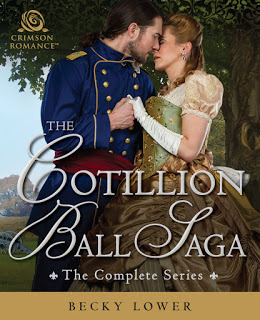 I'm honored and apprehensive about being the first of the Crimson authors to be promoted by S&S in the form of a BookBub ad. On February 6, the bundle of all nine of the Cotillion books plus the novella about how the parents, Charlotte and George, met and fell in love, will be featured on BookBub. For only 99 cents, this collection can be yours. So if you've been tempted before to buy one of these books, but didn't want to commit to the entire series, here's your chance to scoop them all up for one low price. How can you beat 99 pennies?
As if that's not enough, all the Crimson titles are going on sale for the month of February, our Valentine's gift to you. For only $1.99 you can load up on all those tempting Crimson titles. All e-books are available on Amazon.

In addition to the changeover happening, I've been going through the first round of edits for my second Lobster Cove book through Wild Rose Press. This romance is called Sweet Caroline, and I'm in love with Grant, my hero. Caroline is a cousin of Abbey and Penny, who appeared in the first Lobster Cove book, "Love's In The Cards"and she returns to the Cove after sixteen years away to participate in Penny's wedding to Del.
My editor hates the word ït" and has challenged me to banish it (see what I mean?), rather, banish the word from my manuscript. I never gave much thought to how often the word shows up in my work before now. I'll add it to my naughty word list and will decide whether to put it in the "Don't Use At Any Cost" list or the "Use No More Than Five Times In A Scene" list. I climbed out of the editing cave today in order to work on my Regency, and to begin thinking about my next American historical. However, regardless of what I'm working on, there will be no "It" in the book. I'm proof you can teach an old dog new tricks!


Last week, the changeover was finally completed and the Crimson Romance line became a part of the offerings at S&S. So my Cotillion books appear on the S&S website for the first time. Please take a moment and go to my author page and become a fan. Here's the link: http://www.simonandschuster.com/authors/Becky-Lower/2137651463
 I'm honored and apprehensive about being the first of the Crimson authors to be promoted by S&S in the form of a BookBub ad. On February 6, the bundle of all nine of the Cotillion books plus the novella about how the parents, Charlotte and George, met and fell in love, will be featured on BookBub. For only 99 cents, this collection can be yours. So if you've been tempted before to buy one of these books, but didn't want to commit to the entire series, here's your chance to scoop them all up for one low price. How can you beat 99 pennies?
As if that's not enough, all the Crimson titles are going on sale for the month of February, our Valentine's gift to you. For only $1.99 you can load up on all those tempting Crimson titles. All e-books are available on Amazon.

In addition to the changeover happening, I've been going through the first round of edits for my second Lobster Cove book through Wild Rose Press. This romance is called Sweet Caroline, and I'm in love with Grant, my hero. Caroline is a cousin of Abbey and Penny, who appeared in the first Lobster Cove book, "Love's In The Cards"and she returns to the Cove after sixteen years away to participate in Penny's wedding to Del.
My editor hates the word ït" and has challenged me to banish it (see what I mean?), rather, banish the word from my manuscript. I never gave much thought to how often the word shows up in my work before now. I'll add it to my naughty word list and will decide whether to put it in the "Don't Use At Any Cost" list or the "Use No More Than Five Times In A Scene" list. I climbed out of the editing cave today in order to work on my Regency, and to begin thinking about my next American historical. However, regardless of what I'm working on, there will be no "It" in the book. I'm proof you can teach an old dog new tricks!

January 21, 2017
Layering Up
Even though it's winter in Ohio, my post today is not about adding layers of clothing to keep warm during the next few months.
 I'm in the midst of revisions to my WIP. Each author has to figure out what style of writing works best for them. For me, I need to write a flash first draft, to get the story line down. I don't want to spend a lot of time writing scene after scene only to decide the story's going off in the wrong direction and have to scuttle my work. So, I start with a beat sheet, a rough outline of the story. Then, I'll write the story quickly, leaving out details, descriptions and possibly even a scene or two. If I can get my story line from Start to Finish without mishap, then it's time for revisions.
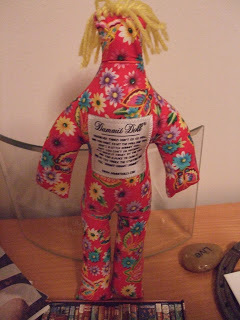
Revisions, at least my version of revisions, are different from editing. I sprinkle in a lot of Margie Lawson, a little Blake Snyder, a bit of Stephen King, a healthy dose of things every editor I've worked with has cautioned me about and a little checklist of other things I've developed over the years. I add a lot more words to the story, dig deep into my descriptions, add layers and depth to the story. I hate the process while I'm going through it, but when I go back and read what I started with as opposed to what I've got now, I love the process I've developed. I just have to keep reminding myself of the end product when I want to bang my head on my desk or knock the stuffing out of my Dammit Doll.
After revisions come polishing. Does the timeline flow properly and I haven't celebrated Christmas before Halloween? Does the heroine have the same eye color/hair color from the first scene to the last? Have I grounded the reader by showing them where each scene takes place and who's in the scene?
I check the format, make certain each chapter is about the same in size, and then go through it again. Only when I can read through it and make only minor tweaky changes do I declare it ready to send out into the world. It's properly layered up and ready to go.
 Obviously, I spend far more time fixing my first draft then I spend writing the first draft. My method works for me, but for others, it would drive them crazy. You have to keep working at it to figure out what works for you. But I always remember the great advice from Nora Roberts, who long ago said she can fix anything but a blank page. I'd rather work on fixing a lousy draft than have no draft at all.
And, in the immortal words of Stephen King: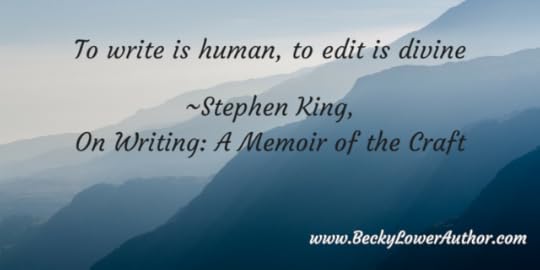
 I'm in the midst of revisions to my WIP. Each author has to figure out what style of writing works best for them. For me, I need to write a flash first draft, to get the story line down. I don't want to spend a lot of time writing scene after scene only to decide the story's going off in the wrong direction and have to scuttle my work. So, I start with a beat sheet, a rough outline of the story. Then, I'll write the story quickly, leaving out details, descriptions and possibly even a scene or two. If I can get my story line from Start to Finish without mishap, then it's time for revisions.
Revisions, at least my version of revisions, are different from editing. I sprinkle in a lot of Margie Lawson, a little Blake Snyder, a bit of Stephen King, a healthy dose of things every editor I've worked with has cautioned me about and a little checklist of other things I've developed over the years. I add a lot more words to the story, dig deep into my descriptions, add layers and depth to the story. I hate the process while I'm going through it, but when I go back and read what I started with as opposed to what I've got now, I love the process I've developed. I just have to keep reminding myself of the end product when I want to bang my head on my desk or knock the stuffing out of my Dammit Doll.

After revisions come polishing. Does the timeline flow properly and I haven't celebrated Christmas before Halloween? Does the heroine have the same eye color/hair color from the first scene to the last? Have I grounded the reader by showing them where each scene takes place and who's in the scene?
I check the format, make certain each chapter is about the same in size, and then go through it again. Only when I can read through it and make only minor tweaky changes do I declare it ready to send out into the world. It's properly layered up and ready to go.
 Obviously, I spend far more time fixing my first draft then I spend writing the first draft. My method works for me, but for others, it would drive them crazy. You have to keep working at it to figure out what works for you. But I always remember the great advice from Nora Roberts, who long ago said she can fix anything but a blank page. I'd rather work on fixing a lousy draft than have no draft at all.
And, in the immortal words of Stephen King:


