James Erich's Blog, page 8
June 13, 2012
Sex and the LGBT YA Novel
[image error]Calico, by Dorien Grey, may very well be the first gay YA novel I ever read, not counting novels like A Separate Peace, which weren’t actually intended to be gay.
It was published in 2006 by Zumaya Boundless at a time when the very idea of a gay character in a YA novel was scandalous. It came to my attention, in fact, because it was on a list of books people were trying to ban. As I recall, the same people who were throwing fits about this novel were also in a frenzy over the children’s book Jennifer Has Two Daddies (by Dr. Priscilla Galloway and Ana Auml), despite the fact that that had been out for over twenty years. I mention this, because it probably factors in to what I’m going to say later.
In the novel, young Calico Ramsey is hired to escort two 17-year-old siblings, Josh and Sarah, to Bow Ridge to live with their aunt. Along the way, it becomes clear that somebody wants the twins dead and Calico finds himself falling in love with Josh.
Repeating History: the Eye of Ra by Dakota Chase was published a few years later in 2010 by Prizm. It follows the adventures of two teens — Aston and Grant — who are sent back in time by Merlin to retrieve an Egyptian artifact (the Eye of Ra) from King Tutankhamen. They manage to ingratiate themselves to the young king, but they soon realize that they might be in a position to thwart an assassination plot against him. Can they change history and save King Tut? And will doing so cause them to be trapped for the rest of their lives in Ancient Egypt?
Both of these YA novels are excellent and I highly recommend reading them. They also share a loving attention to historical detail. The tone is different, with Calico presenting the reader with a very gritty (and often dangerous) Old West and The Eye of Ra depicting a much lighter-hearted, but still richly detailed, story of two boys trapped in a time and place they’ve only read about in the history books.
I have one criticism of both of the novels, which is why I’ve grouped them together in this blog entry. It just happened that, while I was reading each of these two novels, completely independently, I was struck by the same thought: Where’s the sex?
Now, I’m not insisting that every YA novel should have sex in it, or saying that an author doesn’t have the right to choose whether or not to include sex. Certainly, there are times when sex is appropriate in a novel and times when it is not, and one could argue that the latter is usually the case with YA novels. I also recognize that both authors may have felt that their readers or their publishers may not have tolerated anything more than a chaste kiss or two. Certainly I’ve seen plenty of reviews of YA novels with gay content where readers echo the tedious sentiment, “There’s a little gay romance, but not that bad. You can ignore it and get into the story, if you like.”
Um…thanks?
But all that aside, what bothers me is when the lack of sex doesn’t feel true to the characters to me. Now, keep in mind that when I was 17, I was shy and hated undressing in front of my classmates in gym. I also went to a fundamentalist church that was extremely disapproving of same-sex…exploration…and as a result, I didn’t even know that I was gay. Seriously. I just thought I was a late bloomer. Yet somehow even I managed to see quite a lot of male nudity and raunchy sexual humor amongst my friends. And when I finally met another gay man (I was nineteen, by then) who was willing, I couldn’t wait more than a few days before “doing it.”
Of course, your mileage may vary.
But I do find it extremely unrealistic when two teenage boys are alone together and horny, knowing that they’re both interested…yet they refuse to do anything. In Calico, Calico and Josh kiss about midway through the book. Then Calico refuses to kiss for the rest of the novel, until the end, fretting that Josh isn’t legally an adult yet. In The Eye of Ra, Aston and Grant start making out one night in the dunes and suddenly they feel they have to stop, because, as Aston puts it, “It would be bad.” Bad? What would be bad? Both of these feel contrived. In reality, a 17-year-old would probably have been considered adult in the 1800s and two hot-and-bothered teenage boys really need a better reason for putting on the breaks than, “It would be bad.”
Keep in mind that when two boys start groping at each other, the context is vastly different than when a boy starts groping at his girlfriend. They don’t have all that baggage of “Good girls don’t do this!” and “What if she gets pregnant?” and “What if he’s just using me?” to contend with.
There is baggage, certainly, but it’s different. There’s no chance of pregnancy. There’s little sense of having to maintain an image of purity. And even though there is some chance of exposure to HIV and other STDs, if both boys are sexually inexperienced, they’re unlikely to worry too much about that, assuming that neither could have caught anything yet. (Not always true, of course.)
What there is, is fear of being of being labeled a “fag,” and that’s a real fear. The social stigma is enormous, even today, and certainly would have been a major concern in the 1800s. But there’s also a sense of mutual transgression: it’s more difficult (though not impossible) for one to accuse the other without implicating himself. (Whereas a teenage girl might risk losing her reputation, if her boyfriend chooses to boast about having sex with her, while his status with his friends would likely increase.) There is also guilt, of course. But my experience was that my brain tended to shut off at the time, and I didn’t fret about things until afterward, my religious bent notwithstanding. Lastly, there is just plain shyness and anxiety about venturing into sexual maturity.
Again, everybody is different. Some boys may just go for it; others may have too much anxiety about it and may push back. Or perhaps one will be shy, while the other will be more aggressive. All of these are valid options. But the reader shouldn’t be left feeling that the reason the characters aren’t having sex is simply because it’s a YA novel and the publisher forbids it.
Again, both of these novels are terrific and I hope the authors aren’t offended by me using them for examples. It just so happened that they both brought the same thought to mind, while I was reading them. I do recommend them as good YA novels with gay characters.
Part of the YAM LGBT 2012 Blogathon.





June 12, 2012
“Seidman” Receives A Four-Star Review From YAM!
[image error]
Seidman just received a terrific 4-star review from Camiele at YAM Magazine, an online magazine that provides coverage and reviews of film, books and other media worldwide!





June 11, 2012
Writing Ourselves Back Into History
 To the best of my knowledge, my YA novel Seidman is the only book that describes what it might have been like to grow up in the Viking Age, knowing that you feel a strong attraction to another boy. I’m not boasting — I’m merely commenting on the fact that, after twenty years of researching this time period (mostly focusing on Viking Age Iceland), I’ve never come across a novel that explores this subject. If anyone reading this knows of such a book, please feel free to tell me about it in the comments.
This statement can be said about many historical periods and cultures: with the exception of adult gay romance, I haven’t seen many depictions of LGBT men and women, or LGBT youth, in different historical periods. There are some — Dorien Grey’s Calico; Jere’ M. Fishback’s Josef Jaeger – but not nearly enough.
There are people who make a concerted effort to pretend that the LGBT community sprang whole cloth from the 20th-century, as if we simply didn’t exist before before Stonewall. I’ve angered people on discussion groups about Vikings for suggesting that there may have been gay Vikings. I was told that only “decadent” civilizations, such as ancient Greece, would have allowed homosexuals to exist. The Vikings (more properly called “Norse,” since not all of them were Vikings) would never have permitted such a thing!
Except that they had no choice. The idea that any culture, no matter how homophobic or obsessed with “manliness,” could prevent people from being born gay is utterly ludicrous. It’s true that, until people first began being diagnosed as “homsexual” in the mid 1800s, people didn’t tend to think in terms of being gay or lesbian or bisexual or trans. It was more something that a person did or did not do. A man might feel an attraction to another man, or a woman might prefer to learn swordsmanship and wear men’s clothes. If they acted upon those feelings, they could be big trouble. Both of these things were punishable by death in many cultures throughout history. But keep in mind that behavior that we would consider to be “gay” or gender related was more often viewed as “manly” or “unmanly”; “womanly” or “unwomanly” — not specifically “homosexual.” It was about the role you were expected to play. People played the role society had cast them in and remained discontent, unless they found themselves in a situation where they could act on their desires in secret.
But the fact that it was kept secret doesn’t mean it didn’t exist. GLBT men and women have always been here. We didn’t just miraculously appear. Many people want to believe that. They want to believe that, if we suddenly came into being with the advent of “gay rights,” then taking away “gay rights” will make us go away. But that isn’t the case. We are simply lucky enough to live at a time when it’s less dangerous for us to be open about ourselves than it used to be (though obviously we have a long way to go), and that is due to the hard work and suffering of the GLBT men and women who came before us. They existed and their existence should be celebrated. It’s time for us to reclaim all of those centuries that we’ve been expurgated from.
Part of the YAM Magazine 2012 LGBT Blogathon.





June 8, 2012
Am I Famous Yet?
 So…Seidman has been out for eight days now.
I’ve pimped it on Facebook, and blogged about it and given away some copies to friends. I have a stack of the paperbacks to wave in front of people’s faces. But not many people appear to have noticed it yet.
I did get a couple great ratings on Goodreads. This review, in particular, was very nice! And I’m sure…pretty sure…that I’ll get more people noticing it and rating it over time. After all, it’s just been one week.
As a new author, you tend to have these milestones in your head, placed there by the movies and even novels, in which a character has his or her ”big break” as a writer and gets to quit that soul-crushing corporate job and go on book-signing tours. Magazines and books about writing perpetuate this by emphasizing How to Get Published, as if that will solve all of your problems. Once you get Published, it seems, you will be a Success!
Sadly, getting published is just the first step. It’s a big first step, admittedly, but it’s not the only step. Stephen King and Phyllis A. Whitney (two of my favorite authors) published a lot of short stories, before their first novels were published, and my all-time favorite author, Robert A. Heinlein, published several stories in the pulps for over a decade before breaking out of the “pulp ghetto” in the 1950s. I myself published a few shorter works before getting my first novel (Seidman) published.
Looking back at the lives of these authors (not me — the other ones), and many other brilliant authors, one is struck by how much they were willing to persevere over years, if not decades, to get noticed. On the other hand, all we hear about nowadays is how to become Dan Brown or Stephanie Meyer overnight. And yes, this can happen, but far more often, it won’t. (And by the way, I read Dan Brown’s mediocre first novel, Digital Fortress, a decade before Da Vinci Code put him on the map, so he wasn’t an overnight success, either.)
But that doesn’t make it any easier to watch the novel you spent years writing and polishing just…sitting there.
It has only been a week, though. I’m sure it will hit the bestsellers list next week, or the week after.





June 3, 2012
“Seidman” has been officially released!
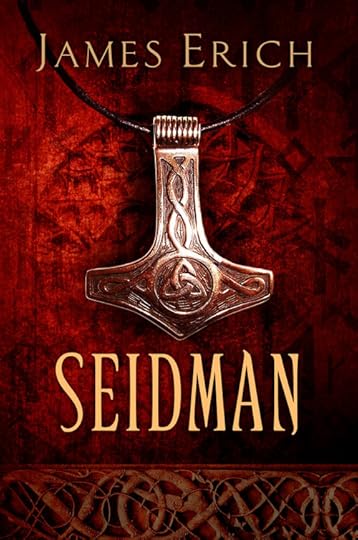
Seidman has officially been released and is now available for Kindle on Amazon!
So far, it’s received one reader review — a great four-star review on the Goodreads site. That review can be read here.
Goodreads hasn’t yet linked my author profile to the novel. Hopefully, that will happen in a day or two.
Unfortunately, as much as I am excited about this, I’m also terrified that people will either trash it, or worse, nobody will even notice that it exists. The reviewer on Goodreads brought up some things I’ve been worrying about, such as the Old Icelandic being a deterrent to readers and difficulty sympathizing with the archaic attitudes of an ancient culture. But she still thought it was good!





May 26, 2012
Interview with author J.R. Lenk about his YA novel, “Collide”!
Author J.R. Lenk was kind enough to be the victim…subject…of my first ever interview. His YA novel, Collide, was released by Harmony Ink Press last month and has been getting great reviews!
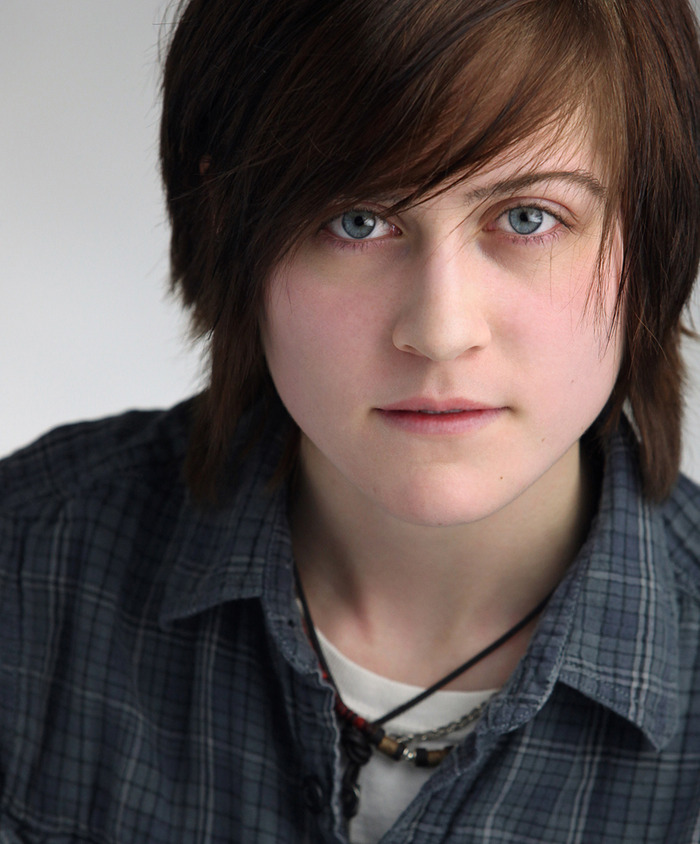
AUTHOR BIO:
If E.L. Doctorow was on point when he said, “Writing is a socially acceptable form of schizophrenia,” J. R. LENK is a self-confessed pretty boy severely in need of a psychological once-over.
Cursed by a height barely scraping five foot five, he is a culture connoisseur. He’s a sucker for overcast skies and the smell of books, particularly good old-fashioned horror and gothic thrillers, à la Rice or Michael Cox. He enjoys a lot of things from movies about castrati to smoking cigarettes on the roof of his house, to classy sweaters and wayward glances, to successful sex hair and hobo chic. He’s an old soul with a little bit of a potty-mouth and a friends with benefits relationship with Red Bull and Microsoft Word that goes hand-in-hand with his love for Vivaldi and alternative rock in equal parts.
J. R. has been penning stories of the M/M or bisexual persuasion for years. He’s known to sometimes spontaneously burst into song, go off on twenty-minute tangents, and quote Sherlock Holmes (usually assuming the Robert Downey Jr. interpretation).
He currently lives near Pike’s Peak with his family and his one and only better half, but Seattle is his hometown and he finds himself inexplicably thinking about the West Coast every day. Visit J. R. on Twitter at http://twitter.com/prettyboysays/ or on Tumblr at http://mainliningsunsets.tumblr.com/.
INTERVIEW:
Is Collide your first novel?
You know, it’s funny. Collide is far from my first novel. It’s actually my third, out of about… six or seven now? Ha ha! One day I just sort of had one of those rare light bulb moments, when it hit me that I could make money off my writing. I’d been writing for fun for a good 8 or 9 years up until that point, but that was the moment I really forced myself to persevere through to the end of an ambitious project. And from there it’s just been a blast.
What inspired you to write Collide?
Hmm… The first two full-scale novels I wrote are actually gothic historicals, a resurrection of elegant Victorian-era vampires and their gory, grim creep factor, so deviating from that to write Collide was really a leap off the high dive for me. I don’t entirely remember what sparked the flame for Collide, but I think it had something to do with itching for a new idea and taking a 3-year old idea (albeit in “fanfiction” form from soooo long ago!) and deciding to experiment and see what happened if I made it “real fiction”. It became something so much more than I’d ever envisioned, and while it’s far from the way I write now, and rather whimsical as I feel most (even serious) YAs are, I could never be the writer I am now if I hadn’t written Collide.
According to your biography, you were eighteen when Collide was published. Is Collide much like your experience of High School?
Yes!  I was 17 when I finished Collide, but 18 when I sent it to Harmony Ink Press. Yeah, I would definitely have to say that there are some scenarios in Collide that come from little pieces of personal experience… Though I’d have to say I was more a Jesse than a Hazard, in some senses.
  Watch out.
Do you plan on making writing a career, or do you have other career plans?
Oh, yes. Writing is and has been a passion of mine for years and years and years. A love for the arts is in my blood, and I’ve always been told to make a career out of the things you love rather than get stuck in “a job”—so I hope to make a career of the things that make up my life, a trifecta of writing, acting, and modeling.
How long does it usually take you to write a novel?
This definitely varies, ha ha! The first two novels I wrote took me a month each, while Collide didn’t take much longer because it was something of a transition, having written a good chunk a few years ago only to rewrite and transform a little. The other three novels I’ve written in the last few months have been about the same, a month of actual pedal-to-the-metal, can’t-stop-thinking-about-it writing, getting up early and working hard during most free time, and then casual editing between that and sending it off somewhere.
Do you have a favorite genre?
I would have to say my favorite genre, hands down, is paranormal. I love ghost stories. I love vampires (although I am not really a Twilight fan). I love horror. I cut my teeth on Stephen King and from there progressed to more gothic paranormal stories, but they definitely have to be written a certain way for me to get into them. I also really adore historicals.
However, I do like contemporary! I like raw, edgy, tragicomic kind of stuff. And sex. I enjoy sex from subtle hints to erotica to all-out smut.
How would you describe your experiences working as an author with Harmony Ink Press?
Mm, my experience working with Harmony Ink Press has been nothing but a blast. Not once did I ever feel like a “newb”, or ignorant in any way. And trust me, I asked maaaany questions, ha ha! It was really fun, though, working with a small publishing company like them because it’s a lot more… down-to-earth for lack of a better phrase, as I’m sure a lot of the authors and editors working at Harmony Ink Press are into the same things I am outside of m/m.
What advice would you give novice writers looking to break into the YA M/M Romance genre?
Advice I would give to novice writers looking to break into the YA M/M Romance genre is to just write what you’d want to read. You’d be surprised how many people want to read it, too.
[image error] Being bisexual is cool now—unless you’re a boy. Or so it seems to invisible fifteen-year-old Hazard James. But when he falls in with bad apple Jesse Wesley, Hazard is suddenly shoved into the spotlight. Jesse and his friends introduce him to the underworld of teenage life: house parties, hangovers, the advantages of empty homes, and reputation by association. So what if his old friends don’t get it? So what if some people love to hate him? Screw gossip and high school’s secret rules. There’s just something about walking into a room and having all eyes on him when just last year nobody noticed him at all.
For a while Hazard basks in the attention, and before he realizes the depth of the waters he’s wading, he and Jesse strike up a “friends with benefits” routine. It could be something more, but what self-respecting teenage boy would admit it? Not Jesse—and so not Hazard, either. Not until it’s too late. Hazard and Jesse have collided, and Hazard’s life will never be the same.





May 19, 2012
The Cover Art For Seidman!
 The cover art for Seidman has just been released and it’s beautiful! The artist is Anne Cain and she’s managed to create a striking image that’s simple, memorable, and intense. There have, of course, been other books about Vikings with Thor’s hammers on the cover, but Anne created a richly layered image with runes fading in and out and a beautiful use of light and shadow. It really blows me away.
This weekend marks the end of editing. I’ve received the galley proof, which is a PDF copy of the entire novel, including all of the forewords and afterwards and dedications, and even some ads for other Harmony Ink releases at the end. The only thing that isn’t in final format is this cover, which didn’t arrive in my inbox until a couple hours ago, and a map I created of Viking Age Scandinavia.
The map was something I’d been working on for a while, but since it wasn’t done when the editors wanted it, I gave up and figured I’d just have to settle for putting it up on my blog. Fortunately, the editors contacted me and asked me if I still planned on having a map, so I was able to polish it up and send it to them this weekend. They say it looks all right, so it will be included!
NOTE: You may have noticed that I’m now calling it Seidman, instead of Seiðman. This was a decision my publisher and I came to recently (I was actually the one who suggested it), because it just didn’t make sense to call the novel something people couldn’t type without having to look up an extended ASCII code. How would anybody know what to search for on Amazon? Inside the novel, we’ve kept the Old Icelandic words as they were, but the title is now easier to remember and spell.
As far as I know, Seidman is on track to be released in mid-June! This is going to be great!





May 12, 2012
Runes In Viking Age Iceland
So late last night, as I was finishing up a third edit of my Seidman for Harmony Ink (note that the name of the novel had to be changed to remove the “ð” for ease of spelling, so people can search on the name), I discovered that I’d been using the rune names found in popular books on runes.
If you’ve ever read any books like this, such as Futhark or Runelore, both by Edred Thorsson, or Taking Up The Runes by Diana Paxson, you’re probably already familiar with names such as Laguz, Ansuz, and Jera. Well, the fact of the matter is, nobody really knows for certain that these names were ever used for the runes. They’re proto-Germanic, which means that linguists derived them by applying their knowledge of the way languages evolve over time, coming up with what they think the names of the runes could have been in the distant past. But there is no actual record of these names.
What we do have, are rune poems, written in Old English, Old Norwegian, and Old Icelandic. These are poems written towards the end of the Viking Age — 8th or 9th century — and they give us lists of the runes, along with mnemonic phrases which where presumably used to remember their meanings. For instance, in the Anglo-Saxon Rune Poem, we find:
[Đorn] is exceedingly sharp,
an evil thing for any knight to touch,
uncommonly severe on all who sit among them.
If you remember the verse, then you can remember what the rune Þorn represents. Unfortunately, the translations of the poems aren’t always particularly memorable to modern English speakers, but they do tell us what the runes were called in the 8th and 9th centuries. And many believe that the poems hint at the deeper occult meanings of the runes.
Since Seidman takes place in 10th-century Iceland, my characters would most certainly not be referring to the “L” rune as Laguz. Instead, they would call it Lögr. This might not trip up readers, but I think using the Old Icelandic names will actually add to the realism of the setting. There is always the danger of taking it too far, of course, and boring or confusing the reader with details about the language and culture of a particular time and place. but I think readers also have a sense of what feels generic. A specific detail dropped in here and there can bring the setting to life.
I only use a few rune names in Seidman, but for anybody interested in the subject, I’ll throw out a little information here:
By the 9th century, Icelanders were using a runic alphabet that had been simplified to just sixteen runes, as opposed to the twenty-four you usually come across in rune books. These were:

And this is the Icelandic Rune Poem, with the names of each rune (in the order above) in brackets:
[Fé = Wealth] source of discord among kinsmen and fire of the sea and path of the serpent.
[Úr = Shower] lamentation of the clouds and ruin of the hay-harvest and abomination of the shepherd.
[Þurs = Giant] torture of women and cliff-dweller and husband of a giantess.
[Óss = God] aged Gautr and prince of Ásgarðr and lord of Vallhalla.
[Reið = Riding] joy of the horsemen and speedy journey and toil of the steed.
[Kaun = Ulcer] disease fatal to children and painful spot and abode of mortification.
[Hagall = Hail] cold grain and shower of sleet and sickness of serpents.
[Nauð = Constraint] grief of the bond-maid and state of oppression and toilsome work.
[Ís = Ice] bark of rivers and roof of the wave and destruction of the doomed.
[Ár = Plenty] boon to men and good summer and thriving crops.
[Sól = Sun] shield of the clouds and shining ray and destroyer of ice.
[Týr = Týr] god with one hand and leavings of the wolf and prince of temples.
[Bjarkan = Birch] leafy twig and little tree and fresh young shrub.
[Maðr = Man] delight of man and augmentation of the earth and adorner of ships.
[Lögr = Water] eddying stream and broad geyser and land of the fish.
[Ýr = Yew] bent bow and brittle iron and giant of the arrow.
This particular English translation was done by someone on the Ragweed Forge Website.





May 10, 2012
The President And Vice President Publicly State Support For Same-Sex Marriage!
Earlier this week, Vice President Joe Biden stated his support of same-sex marriage in an interview and, after a depressing decision by voters to add discrimination to the state constitution of North Carolina, President Obama stated his support for same-sex marriage, as well.
This is huge! It doesn’t change things in any legal way, but it marks the first time in the history of our country that the highest officials have publicly stated their support of same-sex marriage. The President also has an enormous influence overseas, so other countries will be affected by his support.
[image error]
Here is the video for Vice President Joe Biden’t earlier interview: