James Erich's Blog, page 5
January 27, 2013
The Kingdom of Dasak – geography and climate

This week, I’m participating in a fun idea for a bloghop that Sharon Bayliss came up with: to blog every day about a different aspect of the worldbuilding you’ve done for a novel (or series of novels)!
The challenge for Day 1 is to describe the geography and climate of your world. The world I’ve chosen to describe is the Kingdom of Dasak from my Dreams of Fire and Gods trilogy.
The Kingdom of Dasak is much like medieval Europe in terms of climate and the types of vegetation and animals one might find, though it is just a bit different, inhabited by creatures like the ghusat and the ten’nak (described below). The trilogy takes place in late summer and early fall, so the nights are growing chilly, but it is still possible to camp outdoors without much hardship. Winters in Dasak are moderate, but they do have snow. The kingdom occupies the basin of a large valley, bordered by mountains to the north and uncharted forests to the south. The capital is on the southwestern shore, beyond which lies a vast ocean. To the extreme northeast of the valley lies a trade route to other kingdoms that few in Dasak have ever seen.
First, let’s take a look at the map:

The entire kingdom was united at one time, when the roads built by the Old Empire still provided relatively easy passage from east to west. But two hundred years ago, the enormous bridge that spanned the chasm between Mat’zovya (a city founded upon the fishing industry of Lake Zovya) and the Dead Forest (the brownish area in the middle of the map) collapsed. Now the East Kingdom is ruled by the emperor’s regent, known as the vek, while the emperor resides in zü-Khemed in the West Kingdom. (More on the political structure tomorrow.)
There are many more cities and villages than those labeled on the map. Those are simply the ones Sael, Koreh and Geilin come across in their travels.
A place best avoided:
Old Mat’zovya used to be Mat’zovya several centuries before the bridge collapsed. But the accumulation of silt over time caused the lake to retreat from its boundaries, causing bogs to form on both the eastern and western sides. In the east, the bogs are still there, causing the route from the lake to the forest to be treacherous. A path through the bogs is marked by small stone obelisks, but they can be difficult to see in the mist that tends to settle there. On the western side, the bogs eventually dried up and became fields. So the city was relocated to remain near the shore of the lake. The old town was allowed to fall into ruin and is now the home of wayfarers, thieves and cutthroats.
Harleh Plain:
The circular walled city of Harleh, which can be seen in the northeast, lies in the middle of a large flat plain called Harleh Plain. This was once a great forest, but the Great War of the gods, a thousand years ago, laid waste to it and the ground was so tainted by foul magic that nothing would grow there for centuries. Now it is miles of gently sloping hills covered in grass and shrubbery. However, at the end of Dreams (the first book of the trilogy) this all changes, and the ancient forest returns once again, springing up almost in an instant and surrounding Harleh.
The Mountains:
The mountains are home to the gods known as the Stronni. These are forbidden to humans and no one who wanders into them is ever heard from again. It is best to avoid even straying into the foothills.
Some of the local flora and fauna:
In addition to harmless gamebirds, such as the speckled kikid, and pack animals such as the ghet and the donegh, there are more dangerous creatures one might encounter in Dasak, the result of magics unleashed by the gods thousands of years ago that poisoned the land and the waters:
The Dead Forest is a place entirely held together by magic. Nothing lives there. The trees are dead, the water is rank and stagnant, and there are no insects. The only “animals” there are the wretched demen — walking corpses comprised of parts of animals that wandered into the forest and died there. Occasionally one might kill a human and the next time someone reports seeing it, it may have a human arm or head attached.
Lake Zovya is home to a species of enormous aquatic serpent with a head bristling with horns, known to the locals as a ghusat. They keep to the deep waters, so fishermen prefer to keep close to shore, unless it is necessary to cross the lake. Fisherman will charge a considerable sum to transport someone across, because ghusats are known to destroy boats.
In the bogs on the eastern side of Lake Zovya, one might come across a ten’nak. These are a species of plant which feed off the life force of passing animals or humans that drown in the bogs. What makes them dangerous is their ability to affect the mind and make a man think he hears a voice calling from a certain direction, or that he sees a friend waiting for him. Before he realizes, he may find that he’s strayed out onto the shifting “ground” of the bog, where he soon falls through to drown in the underlying muck.
The Eyes:
Dasak is looked over — literally — by the sun and its single moon. According to legend, the Stronni goddess, Imen, plucked out the eye of her husband’s faithful manservant, Atnu, and threw it into the sky, where it became a ball of blazing light, watching over the land by day and reporting everything it sees to the gods. It is called the Eye of Atnu. She then plucked out the eye of her own servant, Druma, and this became a light in the night sky, spying on the land during the night. But Druma is elderly and unable to keep her eyelid from drooping. So once a month the Eye of Druma is fully open and once a month it is fully closed. Anything touched by the light of the Eyes can be seen by Imen, so those who wish to remain hidden must keep to the shadows.
I hope that was an interesting look at the geography and environment of the kingdom. Tomorrow, we’ll be looking at its history and political system!
Powered by Linky Tools
Click here to enter your link and view this Linky Tools list…


January 20, 2013
Great review for “Dreams”!
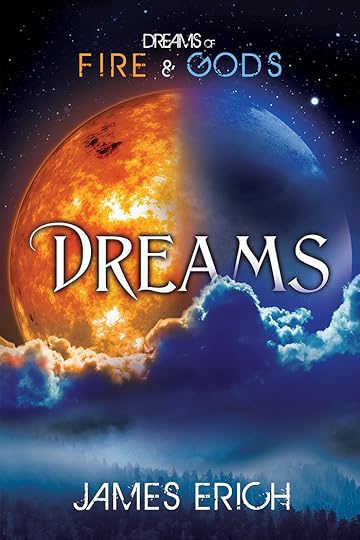 Jamie Deacon just reviewed Dreams of Fire and Gods: Dreams and had some great things to say about it!


January 3, 2013
New cover art for “Dreams of Fire and Gods: Fire!”
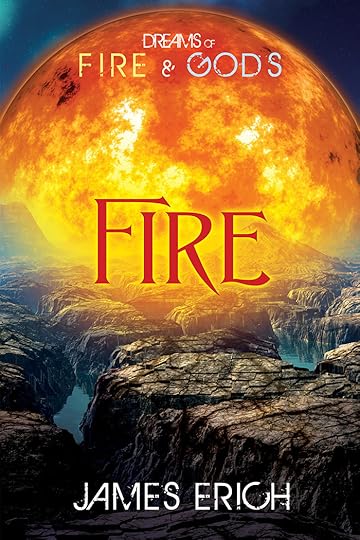 I’ve just received the finalized version of the cover for book two of the Dreams of Fire and Gods trilogy (called Fire). I absolutely love it!
Of course, it had already been decided that the artist (Paul Richmond, who also did the cover for Dreams) would try to keep the basic thematic elements of the first novel, but he did a terrific job and I’m very happy.
For Dreams, Paul symbolized the overall theme of a battle between gods of fire/light and gods of darkness (though, I should point out, not exactly “good” and “evil”) by giving us the striking image of a sun and moon merged together. Since we see the gods of darkness much more in Dreams than we do the gods of light, the color scheme of the cover is still largely blue and dark, with clouds to symbolize the idea of dreaming.
In this novel, the gods of fire make an appearance, so Paul gave us a sense of the sun rising over the barren mountains where these gods dwell.
I can’t wait to see what the final novel cover looks like!


December 23, 2012
How would Kol and Thorbrand celebrate Yule?
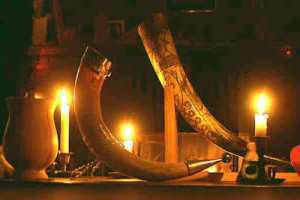
Gleðileg Jól
Though the earliest recorded feast celebrating the birth of Christ on December 25th dates back to the fourth century A.D., the celebration of Christmas didn’t really take hold until the Middle Ages, after the end of the Viking Age in Europe. However, at the time Seidman takes place (995 A.D. – 1000 A.D.), Viking Age Iceland had been celebrating the tradition of Yule or Jól for several centuries. Nobody knows how far back the tradition goes, but certainly it dates back to before the 6th century. (Not in Iceland specifically — Iceland wasn’t settled until 870 A.D — but it was brought there by settlers.) Also, there are various speculations about the meaning of the word Jól (and it’s variants), but nobody really knows what it meant. Some people say it’s derived from a word meaning “wheel,” as in the “wheel of the year,” though I don’t think there’s any real proof of that.
It is from the Norse cultures that we get the tradition of the “Twelve Days of Christmas.” Yule lasted from the winter solstice (roughly the 21st of December) through the beginning of January. In modern Iceland, it goes from Christmas to January 6th, but I believe that’s more modern.*
During this time, the Icelanders feasted and drank — a lot. In the Sagas, there are several mentions of “drinking Yule.” And yes, Kol and Thorbrand would have been able to drink alcohol. In a country and time when it wasn’t uncommon to be married by 15 or 16, nobody stopped a teenager from quaffing ale along with the rest of the family. Bees are not native to Iceland, so honey would have been imported. Likewise, the honey-based mead popular in other Norse regions (though generally among the wealthy) would have been imported, so the most common alcoholic beverage would have been ale, made from fermented grain.
The most common meats would have been mutton and pork, with a bit of beef thrown in. During Yule, a boar would be sacrificed to the god, Freyr, for prosperity over the coming year. Norsemen would place their hands on the boar before the sacrifice and make solemn pledges about what they intended to accomplish over the next year, so that the animal’s spirit could take their promises up to the god when it was slain. These were very serious oaths and to break them would offend the god. The animal would then have its head carried into the hall ceremoniously, and the rest of it would be carved up or stewed for the feast.
There would of course also be plenty of singing. The Icelanders cherished good singers and good storytellers, who made those long, dark winter nights more bearable. At this time of year, the sun rises around 11:30 a.m. and sets just a few hours later.
The tradition of wassailing — going door-to-door and singing for free food and drink — began at least a few hundred years before Kol’s time, but it probably wouldn’t have been popular in a country where the farmsteads were fairly isolated in the winter. I grew up in New England and we had cars, but we were still disinclined to travel very far in midwinter. People did visit, of course (we’re back in Iceland now), and when they did they probably stayed a few days. Another tradition that may have been around in Kol’s time would have been that of the Yule Goat, a straw figure of a goat made from the last sheaves of the harvest and possibly derived from Thor’s goats, Tanngrisnir (“Teeth-barer”) and Tanngnjóstr (“Teeth-grinder”). It was brought from house to house to bless the people who lived there. But as with wassailing, I’m skeptical about this “house to house” thing in the dead of winter.
Thorbrand’s family might very well have had a Yule Log, though. Trees didn’t grow very tall in Iceland, but there certainly were trees. So the custom of bringing one into the longhouse, more or less whole, to keep feeding into the hearth fire for as long as it would burn may have been part of the Yule celebration.
One Icelandic Yule tradition that was most likely not part of Kol and Thorbrand’s Yule, because it doesn’t date back before the 17th century, is that of the Yuletide Lads (Jólasveinar). I mention them because they’re such an interesting Icelandic tradition. The Yuletide Lads are the sons of two ogres, Grýla and Leppalúði, who appear in folklore as far back as the 13th century. These two ogres devoured bad children, so Icelandic parents used them to frighten their kids into behaving. The Yuletide Lads were similarly used to frighten children in the old days, but by now they’ve come to be known as fairly harmless pranksters, causing mischief but not doing any real harm.
They each arrive on a different day of the Yule season and hang around the household for about twelve days. They are often accompanied by the Yuletide Cat, a large beast who has the odd habit of devouring children and servants who haven’t received a new set of clothes for Yule — because if they were good, they would have gotten a present of new clothes from their parents or masters.
I’ve taken the liberty of swiping this handy table from a Wikipedia article with only slight modifications. It lists the most common names of the Yuletide Lads (taken from a popular poem called Jólasveinarnir, written in 1932 by Jóhannes úr Kötlum):
Icelandic Name
English translation
Description
Arrival
Departure
Stekkjastaur
Sheep-Cote Clod
Harasses sheep, but is impaired by his stiff peg-legs.
December 12
December 25
Giljagaur
Gully Gawk
Hides in gullies, waiting for an opportunity to sneak into the cowshed and steal milk.
December 13
December 26
Stúfur
Stubby
Abnormally short. Steals pans to eat the crust left on them.
December 14
December 27
Þvörusleikir
Spoon-Licker
Steals Þvörur (wooden spoons with long handles) to lick. Is extremely thin due to malnutrition.
December 15
December 28
Pottaskefill
Pot-Scraper
Steals leftovers from pots.
December 16
December 29
Askasleikir
Bowl-Licker
Hides under beds waiting for someone to put down their askur (a type of bowl with a lid used instead of dishes), which he then steals.
December 17
December 30
Hurðaskellir
Door-Slammer
Likes to slam doors, especially during the night.
December 18
December 31
Skyrgámur
Skyr-Gobbler
A Yule Lad with an affinity for skyr (an Icelandic food similar to yogurt. I wrote more about it here).
December 19
January 1
Bjúgnakrækir
Sausage-Swiper
Would hide in the rafters and snatch sausages that were being smoked.
December 20
January 2
Gluggagægir
Window-Peeper
A voyeur who would look through windows in search of things to steal.
December 21
January 3
Gáttaþefur
Doorway-Sniffer
Has an abnormally large nose and an acute sense of smell which he uses to locate laufabrauð (“leaf bread”).
December 22
January 4
Ketkrókur
Meat-Hook
Uses a hook to steal meat.
December 23
January 5
Kertasníkir
Candle-Stealer
Follows children in order to steal their candles (which in those days was made of tallow and thus edible).
December 24
January 6
So, as they say in Iceland: Gleðileg Jól (“Happy Yule!”)
*NOTE: If you’re getting the impression that I’m winging it…well, let’s just say I didn’t have time to dig up too many sources, so this article is mostly from memory, with tidbits from a few easily accessible websites thrown in. If you find any inaccuracies, feel free to send me a note. :-)
Some interesting links:
An Icelandic article about the Yuletide Lads
A nice informal Icelandic website about Yule
Recipes for Icelandic Yule foods from the site above
A more detailed recipe for laufabrauð


December 15, 2012
“Dreams of Fire and Gods: Dreams” has been released today!

My new YA fantasy novel, Dreams of Fire and Gods: Dreams, is now available for Kindle on Amazon!
Blurb:
A thousand years ago, two factions of gods, the Stronni and the Taaweh, nearly destroyed the Kingdom of Dasak by warring for the land and the frightened humans who lived there. Then suddenly the Taaweh vanished and the Stronni declared victory.
Now, as tensions escalate between the emperor and his regent, Vek Worlen, the vek’s son, apprentice mage Sael dönz Menaük, finds himself allied with a homeless vagabond named Koreh. Together they flee the capital city and make their way across a hostile wilderness to the vek’s keep, mere steps ahead of the emperor’s assassins.
But Koreh has dreams—dreams of the ancient Taaweh—and he knows the looming war between the emperor and the vek will be nothing compared to the war that is about to begin. The Taaweh are returning, and the war between the gods may destroy the kingdom once and for all.


Join me today on the Harmony Ink Facebook page for an author chat from 1-6pm EST!
I will be hosting an author chat today on Harmony Ink Press’s Facebook page from 1pm – 6pm EST!
Join me to chat about the release of my new YA fantasy novel, Dreams of Fire and Gods: Dreams, and win a free copy of the eBook! And of course I’ll be posting some excerpts!
I’ll also be giving away two free drawings of the main characters, Sael and Koreh, created by artist (and fellow Harmony Ink author) Beau Shemery!
Did I manage to work in enough colors and typeface variants to be exciting?


December 12, 2012
Interview with YA author Gene Gant
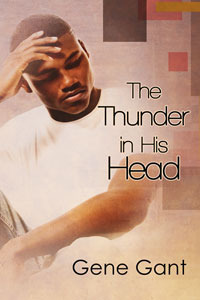 Gene Gant is a fellow YA author whose novel The Thunder In His Head was published by Harmony Ink Press this past May. I asked Gene if I could interview him months ago, but things kept coming up (on my part). I’m thrilled that it finally came together!
Author Bio:
Gene Gant lives with his family in a small, rural community in West Tennessee. He has been a ghost writer for many years and is looking forward to publishing more works under his own name.
Interview:
Is The Thunder In His Head your first YA novel?
No, it is actually the fifth young adult novel I’ve written. It just happened to be the first that, through a couple of revisions, reached a point where I felt comfortable enough to submit it to a publisher. Sometimes, writing a novel can be a long and painful process, especially when you have to admit to yourself that certain parts of it have to be cut because they just don’t work. In the case of The Thunder in His Head, that meant dumping almost the entire first half of the book.
What inspired you to write The Thunder In His Head ?
Several kids I know are experiencing a lot of pain and confusion with parents who are in the midst of very ugly, contentious divorces. I grew up in a stable, two-parent family, as did my neighborhood friends, so it is especially heart-rending to hear these kids talk about the hell their parents are taking them through. That, and my personal experience with the death of a parent, are the two things that inspired the book. The parental death theme was dealt with mostly in the discarded first half of the book, but it is still touched on somewhat in the novel.
Is The Thunder In His Head much like your personal experience of High School?
Somewhat. The kids I went to school with floated a lot of gossip and rumors about each other. But there were two openly gay guys at my school, and they never had to fight their way to acceptance the way Kyle did. Not only were they never bullied or ridiculed because of their sexuality, they had many straight friends, male and female.
Apart from the level of explicitness in sex scenes, what in your opinion makes a story YA, as opposed to a novel for adults?
Well, it is certainly not the age of the protagonist, as some of my friends seem to think. There are plenty of novels with teenaged main characters that are clearly intended for adults. The main character in The Talisman, a collaborative effort between Stephen King and Peter Straub, is only twelve, but you certainly won’t find that book in any kids’ section. These days, YA novels cover the same issues addressed in adult novels. The distinction between the two, in my opinion, is that a young adult novel is one specifically written for and marketed to the 14 to 18-year-old age group.
How long does it usually take you to write a novel?
It takes about six months to finish a first draft. Rewrites and revisions take a lot longer. Sometimes, I have to put the manuscript aside for a few months and move on to other projects. When I come back to it, I’m usually better able to see what does and does not work, and I wind up with a better manuscript. So the actual process can take about a year.
Do you have a favorite genre?
Not really. I enjoy all genres pretty much equally. All I want is a good story that draws me into the author’s world and characters. I’ve read books in every genre that have grabbed me in such fashion. I also write in many genres. I am currently writing a fantasy novel and will soon begin plotting a science fiction story.
How would you describe your experiences working as an author with Harmony Ink Press?
It has been great. The editors are very supportive throughout the process of taking a work from manuscript to published novel. They provide invaluable feedback and help polish my writing by reining in my excesses. I enjoy working with them.
Do you plan on making writing a career, or do you have other career plans?
I’ve been writing for a living for almost ten years now. Most of that has been in the form of training manuals and such, which requires more creativity than you might think. It is rewarding work, in its own way, but nothing compares to the sheer fun of the world-building that goes into writing a novel. I look forward to doing more fiction writing.
What advice would you give novice writers looking to break into the YA M/M Romance genre?
Read every book in the genre that you can get your hands on, and make sure that you write something every day. Nothing can help a writer learn the ins and outs of a particular genre better than reading. And writing something every day is great practice. It doesn’t mean that you have to work on a novel every day. The daily writing can be a paragraph describing a character, or a page of dialog between two characters who disagree about what to have for lunch, or the jumbled, frantic thoughts of a character who has accidentally fallen out of a ten story window. Not only does this help develop writing skills, it can spark story ideas.
Can you tell us a bit about your next project?
My next YA novel is The Battle for Jericho, which will be published by Harmony Ink Press, probably in January, 2013. The main character, Jericho, has a girlfriend and strict, highly religious parents. When he realizes he is attracted to both boys and girls, he not only worries about how this will affect his relationships, he begins to question his faith and his identity. Despite the somewhat serious theme, I had a lot of fun writing it.
Blurb:
Kyle Manning is a tall, strong, openly gay sixteen-year-old who makes decent grades and plays on his school’s basketball team. He’s a good kid who cares deeply about his family and friends. But his life has become a mess. His mom, Lela, has finally had enough of her husband Joe’s serial cheating. Kyle’s parents are headed for divorce, and the collapse of their marriage torments him.
Divorcing parents is bad enough, but Kyle also has to deal with new people in his parents’ lives. He likes Stephanie, his father’s girlfriend, but he finds himself increasingly attracted to his mother’s handsome boyfriend, Reece. As Kyle struggles with his fear and frustration, he grows angrier and more erratic.
Then he meets Dwight Varley, a buff, attractive athlete from another school who takes an instant liking to him. Having Dwight around doesn’t solve all Kyle’s problems, but it does make life more bearable. As their relationship develops, Dwight becomes a bright oasis in Kyle’s harried life. But Dwight’s life is more complicated than Kyle ever imagined, and just when things start to get better, Kyle discovers the truth about Dwight—and about his father.


December 9, 2012
An Interview with James Erich (Me) at The Boys On The Brink Blog
I’ve been posting about this on my Facebook page, but I can’t believe I’ve forgotten to post it on my blog!
Jamie Deacon, over at The Boys On the Brink Blog, posted an interview with me here. There is also an excerpt from Seidman accompanying it here.
Thank you very much, Jamie!
In other news, Dreams of Fire and Gods: Dreams is done with post-production and will be released on this coming Saturday, the 15th! There is an author chat with me on that day, on the Harmony Ink Facebook page, so I hope to see some of you there!


December 2, 2012
“Seidman” has received two honorary mentions at the Rainbow Awards!

So yesterday the winners of the Rainbow Awards were announced. The Rainbow Awards are given out by a panel of judges (quite a large panel, in fact) on the popular Elisa Rolle review site. I don’t know how many years they’ve been going on for now, but they’re pretty big, with a huge list of books in the competition, so it’s really an honor to win.
Seidman didn’t win, but it did get an honorable mention in two categories:
BEST LGBT YOUNG ADULT / COMING OF AGE
and
BEST GAY DEBUT NOVEL/BOOK!
In honor of this, my publisher has discounted Seidman by 25% for the entire week at All Romance eBooks!
In other news, Dreams of Fire and Gods: Dreams has gone into galley proof, which means that it’s mostly done — we’re just checking over the formatted novel for typos and other errors. It will be available on December 15th!
Coinciding with the release, I (James Erich, in case you’ve forgotten who I am) will be doing my first online chat! It will be on the Harmony Ink Facebook page: https://www.facebook.com/HarmonyInkPress
So come and say hello! And win free stuff! We’ll be giving away a free eBook copy of Dreams of Fire and Gods: Dreams, as well as some original sketches of the main characters, Sael and Koreh, by Beau Shemery! I think it’s from 1pm EST to 6pm EST, but I’ll double check that and post the hours here again, when I’m more certain. The first Harmony Ink chat was yesterday, featuring Beau Shemery (in his author guise, but with plenty of giveaways of his sketches), discussing his steampunk novel, The Seventh of London, and it went pretty well.
Lastly, I’ve submitted Seidman for consideration in the Lambda Literary Awards. As they say, you can’t win, if you don’t enter. The competition is steep, but the award is prestigious. Even being a finalist would be amazing!


November 21, 2012
Dreams of Fire and Gods: Dreams has a cover!
 We’ve just been through some rough drafts of the cover for book one of Dreams of Fire and Gods and this is what the finalized cover looks like!
The art is by Paul Richmond, who I’ve worked with in the past, and I think it does a great job of showing the struggle between the gods of night and the gods of the day in my fantasy kingdom of Dasak — and doing so in a way that really grabs your attention!
We’ve finished the first rounds of edits on the novel and it’s scheduled to be released on December 15th through Harmony Ink Press!