James Erich's Blog, page 4
March 21, 2013


March 7, 2013
Amazon frustrations
 So right after my novel Dreams of Fire and Gods: Fire was released, last Friday, a problem cropped up in the Amazon listing.
Apparently, Amazon was confused by the fact that both Dreams and Fire were called Dreams of Fire and Gods. Understandable, and I think the confusion stemmed from the way Dreams was first listed. It was simply called Dreams of Fire and Gods, without mentioning the actual title, Dreams.
What ended up happening was that the new novel (Fire) replaced the first (Dreams), except that they kept the blurb for Dreams and replaced the cover with the cover for Fire. They also moved the reviews for Dreams (or perhaps just kept them in place), so that they now looked like reviews of Fire.
My publisher stepped in and tried to sort it out and things seemed to improve… but not really. Currently, it looks like you can buy Dreams for Kindle and Fire as a paperback, but they’re both connected, so they might still be the same book.
I’ve talked to my publisher again and they’ve talked to Amazon and we’re hoping the listings will be straightened out over the next 72 hours. I certainly hope so. I dread someone getting angry because they purchased the sequel to Dreams and ended up with the same book!
So please, if this happens to anybody, get in touch with me! I promise we’ll get it straightened out!


March 4, 2013



March 1, 2013
“Dreams of Fire and Gods: Fire” has been released!
 Book two of the Dreams of Fire and Gods trilogy, Fire, has been released by Harmony Ink Press!
It’s now available on Amazon, Barnes & Noble. and other reseller sites!
And of course I’m busily writing book three!


February 23, 2013
“Fire” coming soon and some reviews of “Seidman” and “Dreams”!
I received the final release versions of Dreams of Fire and Gods: Fire yesterday. I think it came out great and I’m very excited to have it hit the shelves next Friday, March 1st! I also can’t wait to get a paperback copy of it to hold and caress and put on my bookshelves next to Dreams and Seidman.
Speaking of Dreams and Seidman, I was also notified of two new reviews—one for each of them.
Rya at Hearts on Fire Reviews gave Seidman 4.5 stars, saying that “The stages of Kol and Thorbrand’s friendship are beautifully presented. I enjoyed their together-scenes a lot. There is so much innocence in their actions and the transition between hugs and kisses was cute, if I may say so.”
Dreams likewise received a 4.5 star rating from CrossroadReview on NightOwlReviews, saying “And let me tell you it is good! He build such a great fantasy world that you just couldn’t stop reading it! I just can’t get over how good this book was! I’m looking forward to more from this author.”


February 20, 2013
In Defense of “It Gets Better”
When Dan Savage created the It Gets Better project, I thought it was amazing. It was such a brilliant idea to reach out like this and let kids know that they aren’t alone. But lately I’ve run into a lot of people finding fault with the project and with Dan Savage in particular (such as those interviewed in this article), and I think it’s time to address some of the criticisms that have been going around.
In no particular order, these are some of the things I’ve been hearing:
Dan Savage is a middle-income white guy who knows nothing about what minority (in terms of race) gay teens are going through.
Dan Savage is hostile to the trans community.
The It Gets Better project encourages teens to do nothing to improve their situation. Instead, it tells them to sit it out and wait for things to magically improve.
The project allows adults to create a video and pat themselves on the back for doing something, when in fact they’ve done nothing to help bullied gay teens.
The project does nothing to address broader issues of discrimination in the LGBT community.
Let me begin by saying that I am a middle-income white guy and I really don’t appreciate the implication that being middle-income and white makes me callous to minorities or incapable of doing anything to help them. I grew up poor and I am very aware of issues that affect low-income people in this country. I am certainly not familiar with what a latino boy in high school might be going through, so I don’t feel I can write a novel from that viewpoint or claim that I understand him. But that isn’t the same thing as saying I don’t care. And I am still capable of trying to help in any way that I can—I can do what I can to draw attention to the issues, and more importantly I can strive not to be a jerk to minorities.
As far as Dan Savage and the trans community is concerned, I think this article makes some very interesting points in his defense—primarily demonstrating that a lot of the “evidence” has been taken out of context. But frankly, this is at best an ad hominem attack—a classic logical fallacy, which posits that we should ignore something regardless of its own merits, because it was spoken (or created) by someone of dubious character. It’s the same reasoning that leads people to smear the characters of famous people like Martin Luther King and Gandhi, as if that renders their accomplishments moot. The only relevant concern would be if It Gets Better itself was transphobic. I haven’t yet encountered anyone claiming that, and in fact many of the videos on the site are supportive of the trans community and made by trans people.
Ultimately, the project was created by Dan Savage (and not someone else) because he was angered over the bullying that lead to the suicides of Justin Aaberg and Billy Lucas. That doesn’t automatically mean he’s the best choice, but he happened to have the idea. Dan Savage can be abrasive and he isn’t always politically correct. As he himself has said, “I’m a terrible messenger because I’m a potty mouth and a cusser, I’m an imperfect ambassador for this whole concept.”
But that doesn’t invalidate the project.
Before I go into the last three points, let me relate a little history—my own personal history, but through that a little history of gay culture in this country.
I was in high school from 1979 to 1983. The Diagnostic and Statistical Manual of Mental Disorders, version 3 (DSM-III) came out after I graduated and only then was homosexuality removed from the list of mental disorders that psychologists and psychiatrists were using to diagnose patients. After its release, President Reagan went on national news to express his disapproval and tell the country that as far as he was concerned, homosexuals were still mentally ill. Every novel I could find about gay men ended with the death of the main character, or at least it ended with him alone and miserable. (The one exception that I recall was Marion Zimmer Bradley‘s The Catch Trap.) The gay men’s group in my town (which I didn’t find until a year after I graduated high school) was advertised largely by word-of-mouth and met clandestinely each month at different people’s houses, flagged by balloons tied to the mailbox.
These were not happy times for the gay community.
I was so alone and miserable that I used to come home from school and rush to lock myself in my bedroom, because I cried so much. There were no Gay-Straight Alliances in my school. There were no quirky-but-lovable gay characters on television. I remember finding one book about finding your gay soul-mate which I devoured, but the author had this odd notion that gays were only half-souls, cut off from the full soul that straights had. A notion I found ludicrous then, and insulting today.
Luckily, I did eventually find people I could talk to. I met my first boyfriend through a local shopping center “newspaper” that accepted MSM (Male-Seeking-Male) personals, and fortunately he didn’t turn out to be a psychopath, but someone who was able to introduce me to the local gay community. (On the downside, though Michael helped me considerably, I was unable to help him. He committed suicide when we were in college.)
It was only after I’d been seeing Michael for a while that I found the courage to come out to my family. It seems strange, looking back, that I was so nervous about it, since they were very accepting, and I should have known they would be. But I wasn’t the first or the last gay teen to find that hurtle daunting, even knowing that it would probably work out all right.
Since I wasn’t out in high school, I wasn’t bullied for being gay, apart from one incident where my best friend and I had a fight and he told everybody I was gay (he suspected before I did). But even that was relatively minor compared to what many teens experience every day. My friend and I patched things up within a week and our friends basically forgot all about it. The problem for me, especially after moving away from my friends in New Mexico, was how isolated and lonely I felt, coupled with the image of gay men as diseased and doomed to a life of sleazy backroom hookups. Nowhere did I see anything that told me I could expect to meet someone and be part of a happy family. Even after I met Michael, the idea that we could ever marry and live together without hiding our relationship from the neighbors was inconceivable to me.
If something like It Gets Better had come along in the early 80s, when I was going through all of this, it would have been a godsend! To have thousands of people from around the country making videos for me to watch, telling me that there are millions of us in the country—around the world—and that there was nothing wrong with being gay, and that it was possible for me to look forward to what I in fact have now: a happy marriage, a house in the country, pets, not having to worry about my job firing me (for being gay anyway) or the neighbors beating me up… This would have blown my mind!
I find it truly baffling that people can fail to see how absolutely amazing it is that we now live in a world where the President of the United States has made an It Gets Better video and later issued a public statement supporting same-sex marriage; a world in which several sports teams and celebrities have used the It Gets Better platform to show their support of LGBT kids. As a teenager, I would not have considered this insignificant. I would have thought it was epic!
Is the project guilty of encouraging teens to accept their plight and do nothing to change it? What a bizarre concept. How does telling young people that they’re not diseased or evil, that they deserve to live full lives, and that a lot of people in the country support the LGBT community render them incapable of lifting themselves out of unpleasant circumstances? Is this some kind of social Darwinism theory, claiming we should just let them take their punches until they toughen up? Do the critics fear that we’re coddling them?
Regardless of the motivation behind the criticism, I simply don’t see what they’re getting at. As Dan Savage says, “There’s nothing about this project—nothing about participating in this project—that prevents people from doing more.” And there isn’t. I don’t see anyone telling kids to hide under a rock until it’s all over. They still have the option to do whatever they can to improve the situation. But now they know they aren’t alone.
Sadly, many of the teens who commit suicide are already doing their best to improve the situation. Often, they’ve reported the bullying to their parents and school administrators, in some cases their parents have backed them up against the school, and some of them have participated in The Trevor Project and It Gets Better themselves. Yet it still wasn’t enough to prevent them from taking their lives.
But the fact that something isn’t always enough doesn’t mean we should just throw it out until something better comes along. Every little bit helps. It’s simply untrue to say that it doesn’t. For some teens, all they need is hope to help them hang on through a rough time of their lives, and that is what this project does for them. I know it would have helped me immensely.
Does it encourage people to do too little? Are people making It Gets Better videos because they’re easy, and not doing more for the LGBT community? I find the implication that making an It Gets Better video somehow saps all of your motivation to do more flatly ridiculous. Some people would have likely done nothing to get involved, so for them making a video is at least more than they would have done previously. Even if it’s just to jump on the bandwagon and feel good about themselves, it may very well help someone. And for many, participating in something like this is a launching point for doing more later.
Lastly, the question of whether the It Gets Better project files to address issues of discrimination and intolerance within the LGBT community itself. Aside from the fact that it was never intended to address these issues, a quick search on the site turns up videos made by blacks (or African Americans, if you prefer), Latinos, Asians, trans people, bisexuals, etc. Pretty much anybody can make a video.
So really, for those who feel that It Gets Better leaves something to be desired, I just have this to say: Come up with something to take it further. Don’t look at what Dan Savage has accomplished and complain that it doesn’t go far enough. Take the next step.
Here are some sites that are trying to do just that. If you know of any, in addition to these, that are trying to take that next step, I’d love to hear about them!


February 6, 2013
Free giveaway of “Dreams of Fire and Gods: Dreams” on Boys On The Brink Blog!
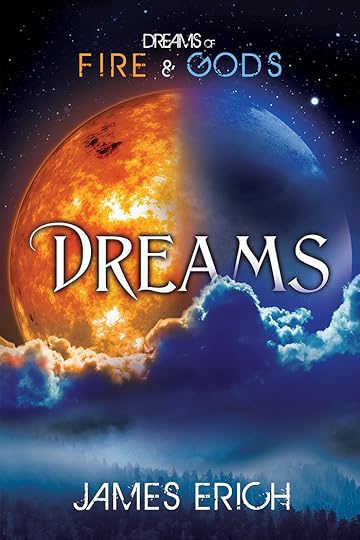 The Boys On The Brink Blog is hosting a free giveaway of Dreams of Fire and Gods: Dreams this week, so hop on over there and put your name in the hat for a free copy!
You can read an excerpt of the novel here.
And for those who missed it, Jamie Deacon’s terrific review of Dreams can be read here!


February 5, 2013
The Kingdom of Dasak – Food, Drink, Holidays & Culture
Despite the long title, I plan on keeping this blog post fairly short, to make up for the epic post I put up yesterday. :-)
The challenge for Day Four of Sharon Bayliss‘s worldbuilding bloghop was to describe some aspects of the culture, such as foods, music, and how holidays are celebrated. I was unable to complete the week of challenges, because my week suddenly got very busy. But I’d like to post them anyway, for readers of the Dreams of Fire and Gods trilogy to refer back to.
The culture in Dasak is basically similar to medieval Europe and many of the of foods and drinks are the same: breads, sausages, ham, bacon, ales, etc. Sael and Koreh share a pork pie in one scene and have kikid eggs for breakfast. The kikid was described earlier—it’s a brown and white spotted game bird.
One common drink is stosum, which is an ale spiced with herbs that are are steeped in it after the majority of fermentation has completed. It is a very popular drink and each tondekan (a city-keep and it’s surrounding lands) has their own characteristic flavors.
The people of Dasak are fond of ballads and one of the popular ones making its way around the kingdom at the time of the story is called The Farmer of Dussikh. It’s described in book three:
Tanum sang a beautiful, tragic ballad that had been popular in the royal court about a year ago—one about a simple farmer who loved a nobleman. Every day, the nobleman’s carriage passed by the farm, on its way between the man’s estate and the city, and the farmer saw the handsome face of the nobleman in the carriage window. The farmer tried everything to get the attention of the nobleman, standing by the side of the road or riding alongside the carriage for a short distance on horseback. But the nobleman was always preoccupied with his day’s business affairs and never looked up to see him. Then one day, bandits attacked the nobleman’s carriage and killed his guards. They dragged him into the road and were about to slash his throat and steal all of his gold and jewels, when the farmer charged out of the forest brandishing nothing more than a hunting knife. He fought valiantly for the man he loved, killing all of the bandits, but he was mortally wounded in the battle. As he lay dying, the nobleman saw him clearly for the first time and was struck by how handsome he was. He held the farmer’s head in his lap and bent weeping to give him one tender kiss before he died.
Dancing is of course popular in the kingdom, with the peasants tending toward noisy, energetic group dances, with both men and women dancing together in lines or circles, while the nobles separate the men from the women. Court dances are also much more staid and “dignified.” Or, as the peasants like to say, “boring.”
There are a number of other cultural things I could go into, but I’ll just mention one more: the game of gönd. This is a popular gambling game with playing pieces of little wooden disks (known as “shields”) and little sticks (“swords”). Bets are placed and the playing pieces are tossed onto a table or the floor, at which point the score is calculated from the way the swords and shields touch each other. Someday, perhaps, I’ll write up the rules of the game. :-)
Powered by Linky Tools
Click here to enter your link and view this Linky Tools list…


January 30, 2013
The Kingdom of Dasak – Religion and Magic
The challenge for Day Three of the Worldbuilding bloghop is to describe the religion and/or magic in your world.
There are two rival factions of gods—the Stronni and the Taaweh—and the type of magic practiced by their followers differs.
The Stronni
The Stronni themselves worship the Perfect Order, which is somewhat like the Norse concept of wyrd or fate. They watch the stars for omens and guidance, and attempt to divine the path the Perfect Order wishes them to follow. By doing so, they believe that they will be guided along the path of least resistance to achieve their goals. The Stronni pride themselves on their ability to be rational, while at the same time they are ruthless and often pitiless to those who displease them.
The Stronni live high up in the mountains and humans are forbidden from venturing into the mountains or the foothills. Those who do are never heard from again. When the gods are particular angered, they cause immense balls of fire to rain down upon the valley. They are not evil, but they are very strict and demand obedience and discipline from their subjects.
Humans who worship the Stronni
The Stronni demand that the humans build towering cathedrals in their honor, with large circular openings in the tops of the domes to allow the Eyes to see down into them. Only when it rains are tarps permitted to be drawn across the metal arches that crisscross over the opening.
A priest of the Stronni is called a caedan, after the Stronni king Caednu. (An acolyte is called a tadu, which is the Stronni word for “boy.”) The caedan have little magical ability beyond lighting small ceremonial fires for services or lighting the incinerating blazes of funeral pyres. The caedan believe that they are promised a position of honor in the Great Hall of the Stronni after death (see below). In true “sun-worshiper” fashion, the Stronni males are always naked and their bodies are works of art, perfectly formed and decorated with glistening magical tattoos. The caedan emulate the gods by wearing nothing more than a golden loincloth and decorating their bodies in similar tattoos. They are permitted to wear cloaks in cold weather. However, as imperfection displeases the gods, tadu and caedan are required to remain physically trim, at least until old age renders them unable to do so.
Sorcerers dedicated to the Stronni are called vönan. They are exclusively male, as are the caedan, and specialize in fire magic and magic involving air. They can cause massive destruction with firebolts and windstorms and they have the ability to fly. It isn’t permitted for a vönan to be trained, unless he is attached to a noble house, and they are often used as weapons in battles between city-keeps. Like the caedan, vönan have magical tattoos that mark them as “owned” by the gods—in this case, just a single tattoo of an eye on the top of the skull, which must be kept shaved. As we see in book two (available in March), this tattoo fades away, if the magical link to the gods is broken. Stronni magic must be invoked through chanting, so it is possible to disarm a vönan by preventing him from speaking.
Female Stronni are treated respectfully, but not equally. They are required to wear gowns that keep most of the body covered, though diaphanous materials are permitted, and this is reflected in the culture of the humans. Still, they do have power. The queen of the Stronni, Imen, is a powerful sorceress, and women dedicated to her have the ability to see anything in the world illuminated by the Eyes. They are called ömem, and they are the spies of the kingdom. They also have the ability to cast healing spells to a small degree. Generally, they mix up herbal formulas and link the spell to the potion. Because of their abilities and their control of the elite assassins known as samöt (see yesterday’s post), the ömem are treated as untouchable. They have no political allegiances and will sell information to the highest bidder, unless it pleases them to make a temporary alliance. Not even the emperor dares punish an ömem for supplying information to an enemy, for fear that the Sisterhood will send the samöt after him or deny him information he needs in the future.
The Great Hall
The Great Hall of the Stronni is where caedan believe they will reside in the afterlife, but this is, at best, a misunderstanding. Where this misconception arose is uncertain, but the Stronni themselves never specifically promised this, nor do they have any ability to grant an afterlife to the men and women who worship them. However, they have no desire to disabuse their worshipers of this misconception, since it serves their goal of bringing order and perfection to the humans. Peasants and farmers care little for the Great Hall, since they have no expectation of being anything more than servants there.
The Taaweh
The Taaweh were the original gods, before the Stronni attempted to drive them out. They chose to disappear a thousand years ago, when they saw their human charges being driven to extinction by the Great War, but they have merely lain dormant. Their worship didn’t vanish entirely, but the offerings left for them at sacred pools and the ruins of their stone circles have become little more than blind custom and superstitious attempts to gain blessings from unknown spirits. The name Taaweh is similar enough to the Stronni word towe, which means “small,” that the misconception arose that there were tiny people living in the forests and streams.
The Taaweh have little structure to their society. All are treated equally and in fact they have no names and no word for “I”. When a Taaweh wants something, she is likely to say, “It is desired that….” rather than “I want….” Only two Taaweh have names: the Iinu Shaa (“Beloved Lord”) and the Iinu Shavi (“Beloved Lady”).
The Iinu Shaa is a frightening figure. He is taller than a man and has two faces. One face looks like a handsome man, but as a corpse, bluish and waxen, while his other face looks even more corpse-like, with blue-black skin and lips drawn back in a grimace from shrunken gums and elongated teeth. The first face is called the Iinu Shaa‘s “kind face,” whereas the latter is called his “fearsome face.” Both faces have hollow eye sockets in which can be seen a black so deep that it appears to be endless. The Iinu Shaa wears mismatched pieces of armor taken from the battlefield, damaged and bloody, and it is he who comes to collect warriors who die in battle. The peasants long ago distorted the name Iinu Shaa into “Neesha.” If a warrior has been noble and virtuous, it is said that he sees the “kind face of Neesha” coming for him as he lies dying. If he has been malicious or cowardly, they say that “the fearsome face of Neesha” will come for him. Though what happens after that, nobody knows.
The Iinu Shavi is the opposite of her consort. She is fair and beautiful and so full of life force that she positively shimmers. It is impossible to kill her, as it is impossible to kill any of the Taaweh, but she is bound to the earth. If she is separated from it, she loses strength. Imen was clever enough to figure this out and arranged a trap for the Iinu Shavi, in which the old Great Hall was magically lifted above a deep chasm, while the Iinu Shavi stood in the hall, attempting to arrange a truce. The Iinu Shavi fell unconscious and there she has remained, imprisoned, for a thousand years. The Stronni built a second Great Hall for themselves, leaving the first to serve as a tomb.
Worshipers of the Taaweh
At the beginning of the series (in Dreams), only one young man—Koreh—even knows that the Taaweh are still around. Through his dreams, they teach him an ancient form of magic, which allows him to merge with the earth to escape detection and to move in the shadows. Later, Geilin learns how to cause a seed to sprout magically and the Taaweh cause a forest to spring up on Harleh Plain. They also have control over water, as Koreh demonstrates to Sael:
Koreh stretched out his other hand and cupped it, then tilted the pitcher until water began to flow into it. But the water never touched his skin. It pooled in the air above his palm until he stopped pouring and set the pitcher down. The water hovered above his outstretched hand, oscillating slowly back and forth until it settled into the shape of a globe. Koreh held it up for Sael’s inspection, grinning triumphantly.
Sael took a couple steps forward and reached out to touch it. Where his finger tapped the surface of the globe, ripples moved outwards as they would on the surface of a pond. But the ripples continued around, converging on the back of the globe to create a shadow of a fingerprint there, before bouncing back to the front.
“It doesn’t seem very practical,” Sael said skeptically.
“Well, just wait until I get better at it.” Koreh focused his attention and the globe began to flatten and expand until a hole opened in the center, making it resemble a wheel. Koreh caused it to rotate a few times before letting it return to the globe shape. Then he made the water elongate into a tube with a wide bulge at the base, until it so obviously resembled an erect phallus that Sael gave a startled laugh.
Koreh smiled and dumped the water back into the pitcher. He’d seen one of the Taaweh explode a ball of water into mist, but he doubted he could do that without getting them both drenched.
Unlike Stronni magic, Taaweh magic is quiet and doesn’t require anything to be spoken. It all takes place in the mind.
The Tyeh-Areh
Unlike the Stronni, the Taaweh do have power over life and death. When people die, they find themselves in the forest surrounded by the mist—the tyeh-areh “great mist.” They soon come across a stranger—perhaps a kindly old woman, perhaps a child—who offers to walk with them. As they go deeper into the mist, it grows thicker and closes in about them. What is beyond the mist, no living person knows…but we find out in Book Three! :-)
This has been an extremely long post, but tomorrow’s should be shorter.  And then we’ll finish up on Friday with an excerpt!
Powered by Linky Tools
Click here to enter your link and view this Linky Tools list…


January 29, 2013
The Kingdom of Dasak – History and Politics
The challenge for Day Two of the Worldbuilding Blogfest is to describe the history and politics of your world. So lets begin with the map again:

Three thousand years ago, this kingdom was home to humans who worshiped the Taaweh. I’ll be giving more information about the Taaweh tomorrow, but for now let’s just say that they were the original gods. Then a rival tribe of gods called the Stronni moved into the valley from the northeast and declared war. After two thousand years of fighting, much of the valley had been laid waste and the human civilization had been reduced to small bands struggling for survival.
Then the Taaweh disappeared and the Stronni declared victory. The humans were allowed to rebuild their civilization under the guidance of the Stronni, who taught some of their magic to their new charges, in exchange for obedience and worship. (More on religion and magic tomorrow.)
The ruins of the ancient keeps were rebuilt and walled cities grew up around them. These were ruled over by warlords known as dekan. The dekan vied for power for several centuries, until the warrior king Khemed united what would later be called the West Kingdom, from the Great Chasm to the ocean, and forced the most powerful dekan in the east to pay him tribute. He proclaimed himself emperor and the Old Empire was born (though of course, it was merely “the Empire” at the time).
Several generations of emperors followed after Emperor Khemed. The empire expanded to include the East Kingdom, roads were built to connect the city-keeps, and the Emperor Salekh Bridge was built to span the chasm. This both facilitated trade throughout the empire and strengthened the emperor’s hold on the East Kingdom. It was the great achievement of the empire, along with the great temples built to honor the Stronni.
About a hundred and fifty years after the death of Emperor Khemed, Emperor Agrehn foolishly attempted to imprison the ömem—women dedicated to the Stronni goddess, Imen. These women possessed the ability to see through the Eye of Atnu by day and the Eye of Druma by night, and they provided their services to the emperor and the rulers of the city-keeps for extravagant fees. Agrehn thought that he could force them to serve only him, but the ömem retaliated against him. They chose the best of his guards and promised them great power, if they would swear to serve the ömem and betray the emperor. In one bloody night, Emperor Agrehn and all of his most loyal nobles were slain, and the samöt came into being—a deadly brotherhood of assassins magically linked to the Sight of the ömem.
For centuries, the empire was subject to internal conflict as emperors rose to the throne, only to quickly fall to coups or assassination. Then in the eighth century after the Great War, the Salekh Bridge collapsed under disrepair and effectively cut off the East Kingdom from the capital, gü-Khemed, on the western shore.
The emperor was forced to appoint a regent in the east. The vek, as the regent was called, soon became immensely powerful in his own right. Though the dekan have diminished in power over the centuries, they still rule their respective city-keeps (known as tondekan), paying tribute to the emperor in the west, or the vek in the east. The Kingdom of Dasak is now effectively two kingdoms and civil war is threatening, as tension mounts between the emperor and the vek.
Powered by Linky Tools
Click here to enter your link and view this Linky Tools list…