James Bow's Blog, page 6
November 13, 2024
Happy Belated Book Birthday to Me!


This day (yesterday) kind of snuck up on me. Things have been busy at work and at home, and I've also been working hard on the whole book launch, looking back on a great Can*Con event, and looking ahead to launch parties at Bakka-Phoenix Books and the Waterloo Public Library (with help from Words Worth Books). Then there's the current political situation to weigh down on my psyche. I hadn't realized official launch day was upon me until my editor/publisher Ed sent me these images above. So, today is, for me at least, a good day. The initial reviews have also been quite favourable.
(Note: if you read these books and like them, please review them. It's oxygen to a writer's life)
I am happy that The Sun Runners is now in print, and I'm really proud of what me and my fellow authors put together for Tales from the Silence, and it amazes me that it all started from one line back in 2014. Around then, noodling with a few images in my head, I came up with this first line:
Frieda Gibbons, crown princess of the Messenger, knew from very young that when she came of age, she would have to marry an engineer. But that wasn't why she was fascinated by the engine rooms.
That has since been changed to:
For as long as she could remember, Her Highness the Crown Princess Frieda Koning had wanted to be an engineer.
Thanks to Erin for helping me tighten these words into their essence, but you can see the launching idea stayed put. And, boy did it launch a few things. By asking questions about Frieda, her life, her world, and following those answers wherever they would go, the universe expanded and expanded. Why was Mercury isolated? Why had the Earth gone silent? What about the other colonies in the inner solar system (because you know that if they put something on Mercury, they're sure as heck not going to ignore Venus and Mars). Soon, I had a draft not only of The Sun Runners, but the companion novel The Cloud Riders, a short story entitled The Phases of Jupiter, and the idea for The Fall of McMurdo. About then I realized, there was no way I was going to get everything published, given the slow nature of publishing.
Fortunately, I ran into Ed at Shadowpaw Press, who loved The Sun Runners and agreed to give it his full support (which has been tremendous). Also, fortunately, I realized that my universe was big enough for others to play with, so I reached out, proposing an anthology exploring the other corners of Frieda's universe in what would become the anthology Tales from the Silence.
I think a lot of writers share this trait: they don't just create stories about their characters: they know the universe around those characters is something real and bigger than them, informing their lives, making them who they are. Most readers don't get to see this. But I am pleased to have launched an entire universe starting from one paragraph.
I have a lot of thank yous to give out, which I did in the foreword and afterword of my books, but let me again thank Erin, my kids Wayfinder and Eleanor, Ed, my friends, and the authors who helped and/or contributed to Tales from the Silence for believing in me and believing in this universe, helping to make it happen.
It's been a long journey, but it's been worth it, and it isn't finished yet.


October 27, 2024
The Sun Runners/Tales from the Silence November Launch Celebrations
As we prepare for the launch of my new YA SF novel The Sun Runners and its companion anthology Tales from the Silence, I've been setting up a series of launch celebrations to help mark and promote this.
We start in Ottawa on the weekend of November 1-3, at Can*Con. I last visited Ottawa's sci-fi, fantasy and horror literature con in 2019 and had a great time, and I'm looking forward to returning and checking out the seminars and other fun gatherings. I'll be signing in the vendor's room at 12:30 p.m. on Saturday, and Bakka-Phoenix will be on hand, with copies of both books for sale. Also, as a number of authors who participated in Tales from the Silence will be in attendance, we're going to have a fun little scavenger hunt. We'll identify the authors in attendance and, if you buy a copy of Tales from the Silence and get those authors to sign beside their stories, the first ones to get a complete set of the authors in attendance will win one of five $20 gift certificates to Bakka-Phoenix. I should note that this independent bookstore has an online component and ships around the world!
As Sunday's convention programming winds down, most of the authors and I will be retiring to the Lieutenant's Pump at 381 Elgin Street for some great food and conversation. We have booked the Sun Room from 4 p.m. to 6 p.m. for Sunday dinner and look forward to seeing you there!
On Saturday, November 16, from 3 p.m. to 5 p.m., Bakka-Phoenix bookstore will be hosting us at their location at 84 Harbord Street just west of Spadina Avenue. Again, I'll be there, as will a number of the authors who participated in Tales from the Silence. There will be readings, a Q&A, book signings and more. Bakka-Phoenix will be providing snacks, and we'll all be providing the conversation, so if you're in Toronto that Saturday afternoon, come out to enjoy it all.
Finally, on Saturday, November 23, from 2 p.m. to 4 p.m., we've booked the main auditorium of the Waterloo Public Library branch at 35 Albert Street. I'll be on hand along with authors from Tales from the Silence for more readings, Q&A and book signings. Words Worth Books will have books for sale.
Outside of these launch events, a wider scavenger hunt continues. The first person who is able to get every author in Tales from the Silence to autograph their story within the book will win a $100 gift certificate good for Bakka-Phoenix Books. The second prize is a $50 gift certificate to Words Worth Books.
I would like to thank everybody who have helped put these events together, and also everybody who helped put these books together. I think they're really special, and I'm looking forward to releasing them to the world. I hope you like them, and say so in as many venues as possible.
October 19, 2024
They Are Here, by Erin Bow (Fiction Special)
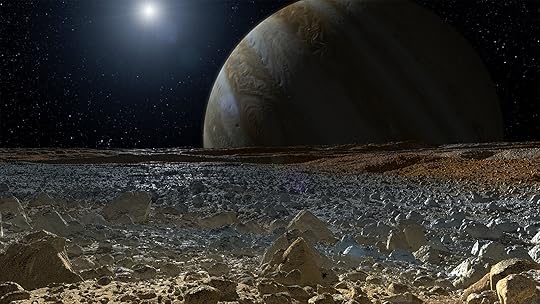
Back in 2019, when Erin won the Governor General’s Award for Young People’s Literature for her novel, Stand on the Sky, the CBC asked her to write a short story to be published on their website. They also invited other Governor General award winners, Don Gilmour and Joan Thomas, to submit their own stories. The deadline was quite tight, so Erin asked to borrow the plot of my story that would eventually become The Phases of Jupiter, which leads off my anthology Tales from the Silence. I was honoured to be asked and, of course, said ‘yes!’ Her story was eventually published as They Are Here
This is why Phases of Jupiter is set on Ganymede, whereas They Are Here is set on Europa, and why Phases of Jupiter mentions the work of scientists on Europa. This makes They Are Here kinda-sorta part of the Silent Earth Universe, and actually, the first published story set in that universe. Though she started from my story idea, as you’ll see when you read Phases of Jupiter, we went in different directions, and not just because she had a far tighter word count to work within. That is one of the joys of you and your partner both being writers; it’s fun to compare and contrast.
Erin’s story is no longer on the CBC website, and we retained the reprint rights for the story, so as we approach the launch of Tales from the Silence, she gave me permission to reprint the story here. I hope you like it!
THEY ARE HERE, by Erin BowThey have thirty-seven days of food left.
They do not know, and will never know, precisely what has happened back on Earth. They are aware that things have been troubled for some time. They have monitored the confusing flurry of transmissions - the tearful final one that said, “Forgive us.”
It takes time for the news to sink in: contact with the mother planet has ceased, leaving a solar system full of not-quite self-sufficient colonies on its own.
But they are not one of the colonies; they are a small scientific expedition of eighteen humans and an artificial intelligence. The crucial distinction: they are not equipped to grow their own food.
Their mission is to drill through the 10-mile-thick ice crust of the sixth moon of Jupiter, which they call Europa, to reach the ocean beneath. Though they have spread out across the solar system, humans have found no life they did not bring with them. But Europa might be different. Europa has liquid water. They think there might be life, here.
Though, one of them jokes, not for much longer.
They are here, and they think they are alone.
-#-
They have thirty days of food left.
For a week, they have worked the problem. They can create edible carbohydrates from water, carbon dioxide, and electricity, but they lack the lipids, the micronutrients. The hope of rescue.
The commander tips her head up to look out the overhead viewscreen. It is not a window - they are vulnerable to the high radiation environment - but the “view” of the “sky” fulfils some psychological need. The big moons they call Ganymede and Io are both out, and a couple of the smaller moons too. A sky full of crescent phases. She thinks: as if a bio-hazard sign exploded.
-#-
They have twenty-seven days of food left.
The commander shakes her head, and her grey braid moves in the low gravity, rippling like a tentacle in a gentle current. Some of them had begun noticing things like that.
She outlines the state of their mission. They have been drilling for six months, and are close to the ocean. Yet, she does not think they will have time to reach it, unless they speed the drill.
She asks for opinions.
For a while they fall into the science, the way they would have before. There are risks to going faster. How likely is a sudden breach, a deadly eruption of pressurized water?
Does it matter?
They still have transmitters. If they could sample the ocean directly - if they could finish the mission - they could still get the data out. Some of the colonies will survive, surely, something of Earth. The knowledge will survive them.
They decide to speed the drill.
-#-
They have nineteen days of food left.
One of the exo-life specialists is growing excited; she’s been analyzing impurities in the ice, how the chemical traces grow more complex as the drill goes deeper. She’s been afraid to use the word “biosignature” until now. She uses it now.
Overhead the moons swim by, and one limb of Jupiter rises, swelling orange and beautiful.
-#-
They have fifteen days of food left.
They speed the drill again. It makes the floor hum, but not unpleasantly. One of them remembers trains.
The exo-life specialist gives a presentation about the chirality in the amino acids she has found. Life, she says. The rest of them are skeptical but as they ask questions she begins to weep: she is sure, she is sure.
-#-
They have ten days of food left.
They have not rationed. There is no point, no reason to stretch things out. Still, they cannot help counting the packages.
The oceanographer, to distract himself from that number, tells them the numbers they already know. That Earth’s ocean reaches six miles deep. That the ocean below them might reach a hundred. The seismologist reports that the ocean is close. The exo-life specialist dreams of amoebas. The oceanographer dreams of something larger.
Around them ice flexes and creaks with huge tides.
-#-
They have three days of food left.
Little ice quakes rattle the habitat as the drill presses deeper.
The artificial intelligence requests that a hibernation mode be developed, so that it will not need to endure alone, and the systems engineer, its best friend, cries with shame because he did not think of this earlier.
The head rigger and several others work together to move the viewscreen from the ceiling to the floor, and link it to the sonar images they are beginning to obtain.
Static and phantoms eddy across it, and they each spend time alone watching it, fulfilling some psychological need.
-#-
They have no food left, and they are hungry.
They come in twos and threes to watch viewscreen. Sometimes they whisper. The sonar images are grey on white, and those that watch do not trust what they are seeing. They think it is something that moves like the commander’s braid.
-#-
They have no food left, but the hunger is gone now.
They have all gathered, around the view screen as if around a table. They have stopped whispering; they only watch. The ice grows thin. The ice grows thinner. The artificial intelligence turns on the transmitters so that they may fulfill their mission: send news to the survivors of the solar system of what they have found, under the ice.
We gather. We have brought the lipids, the micronutrients. We have brought the hope.
The drill breaks through. They are here, and they are not alone.
END.
September 14, 2024
"They're (Not) Eating the Dogs in Springfield!" (or, News Flash: Trump and his supporters are racist!)
 A lot of people did the good and understandable thing of laughing uproariously when Donald Trump went on his racist non-sequitur about immigrants eating dogs and cats in Springfield, Ohio. I laughed too, because it sounded like something only someone completely unhinged would say. Except that, for me, it had eerie echoes.
You all know that my grandfather is Chinese, and faced plenty of racist policy growing up in Canada. His parents had to pay a headtax to get him into the country in 1910. And despite being brought over to build major national infrastructure like our transcontinental railway, the Chinese Canadian community were not allowed the rights of citizenship, including serving in the army and voting, until 1947. Chinese Americans faced similar systemic discrimination in the United States. So, it's more than likely that my grandfather faced personal discrimination of anti-Chinese behaviour and rhetoric, including the old trope that Chinese restaurants served up dog and cat meat. He was a chef at several of them, after all, and owned a few at one point.
So, the fearmongering about dogs and cats of Springfield the same-old same-old anti-(insert scapegoat here) rhetoric that fascists and wanna-be dictators take up to distract people from the real threats, such as the very fascists and wanna-be dictators that would co-opt their support. This isn't so much a racist dog-whistle as it is a trumpet.
But there is more to this story that should make those of us who laughed at Trump's unhinged raving stop laughing. Because it wasn't as out-of-nowhere as you think. There are real targets here, who are being scapegoated.
Springfield, Ohio, with a population of 60,000, now has 15,000 Haitian immigrants. They were taken into the United States from a collapsing country, and deposited into a city that used to be significantly larger, but had fallen on hard-times, losing population and jobs. Thanks to the policies of the Biden Administration, many of those jobs were brought back, but because of Springfield's population decline, there weren't enough people to work them. So, the new Haitian community was brought on board, to work some of those jobs and contribute their economic activity to the economy. That strikes me as a sound and mutually-beneficial arrangement for the old community of Springfield, and the newly-arrived immigrants.
Like any demographic shift, there have been points of tension, but the overwhelming majority in Springfield would tell you that this move has been a boon to the wider community. And living in a diverse community like Toronto or Kitchener-Waterloo, I can tell you that Springfield has benefitted and will continue to benefit from these hardworking immigrants. This is the story of Toronto. This is the story of Canada. Heck, it's the story of America.
But, sadly, so too is the lies that get told at immigrants' expense. We're dog eaters. We're not like "normal" people. We are people who should be feared. We are people who should be attacked and driven away.
This is why, as I write this, racists are calling in bomb threats to schools in Springfield. The Haitian community isn't laughing at Trump's racist non-sequitur, they're terrified. And they absolutely did nothing to deserve this.
Fuck Trump. Fuck his supporters. They all belong in jail.
September 9, 2024
Back to the Blog

It has to be said: social media has gotten really bad. Worse, it has made itself addictive.
I have some understanding of addiction. I’ve never abused drugs, alcohol or tobacco, but there is a history of alcoholism in my family (a history which ended two generations go). My father and I both have fearsome sweet tooths and our justification of, “well, there are worse things to be addicted to than sugar” is only half a joke.
So, when I see myself flipping through reel after reel on Facebook or short after short on YouTube, craving these little nuggets of flashy content before suddenly realizing that I’ve been at this for an hour and I’ve been doing nothing else, alarms trip in my head. Admittedly, I am exhausted, given all that has happened this year, and my reaction may be not much different from slumping onto the couch at the end of the day, back in the day, and tuning out in front of the television. However, the social media giants have distilled this instinct into its purest form, and I feel that they are actively trying to suck me in.
Worse, the quality of Facebook’s written posts — the means I’ve used to stay in contact with friends and family and to promote my work and my employer’s work — has diminished substantially. Have you noticed how many ads and “sponsored content” have crept into your feed? Think hard: are there people you were previously close to who you haven’t heard from for months, only to look them up and see that they still have an active social media feed; you just haven’t seen their posts? Have you noticed that some of your posts appear to connect with a lot of people and get a lot of likes, while others aren’t noticed at all?
That’s the algorithm talking.
We joined Facebook to spend time online with our friends, to share our triumphs, commiserate over our tragedies, to connect, but we paid nothing for this product that Facebook offered to facilitate this. That’s because we are the product (hat tip Cory Doctorow). And now that we are hooked (and I use that term deliberately), Facebook wants to serve up as little as what we actually came for as it can, while shovelling as much sponsored content as it can get away with, including flashy baubles that will draw us into its more lucrative offerings, addicting us, while separating us from each other.
This pattern has been discussed elsewhere (see “enshittification”, again hat tip to Cory Doctorow) and it’s hardly limited to Facebook. Just about every other corporate social media structure out there is either run along these lines, or run by a crypto-fascist, or both.
I’d like to say “enough”, but it’s not easy. Social media is a big part of my job, and on a personal note, if I want to promote my upcoming novels, I have no other realistic option but social media. This is what happens when you allow a small number of corporations to monopolize the space. We used to break up companies for a lot less. In Canada, we used to buy up bankrupt competitors and run them in competition with the would-be monopolies as non-profits. I’d support doing that today, though I don’t see that happening any time soon.
But if I can’t stop my addiction to corporate social media, maybe I can find a way to slow it down.
Do you remember the blogosphere? Some of you might not. It has been at least twelve years since blogs were a thing. For those who don’t remember, many of us used to have websites where we could post our everyday thoughts every day. And people would visit and comment. And we’d have conversations and make connections. These could be individual web pages on websites called Blogger or WordPress, or if you were somewhat technically savvy, you could install your own blogging software (like Movable Type) on domains that you bought, and people would actually come to see what you had to say. There were communities of blogs on their own websites, connecting blogs from multiple websites. There were political blogs, and while there were echo chambers, there was no single algorithm that blocked content that you didn’t immediately agree with. You were still able to step out of those chambers and encounter content that differed in opinion to your own without it being the work of a troll.���
What happened? Well, many of us joined Facebook and other corporate social media to connect with friends and promote our blogs for free, but that same corporate social media sucked the communities out of our blogs. Commenting and other participation dropped precipitously. Readership followed soon after, and one by one, many blogs became dead sites. Social media wanted our readers, our connections, and they took them.
My own site has flirted with dead status many times these past few years. Some blogs remain, though, like Dave Simmer’s Blogography or Steve Munro’s Transit and Politics site or the Candid Cover’s Canadian YA Book Blog, or author J.M. Frey’s blog, or Kerry Clare’s Pickle Me This. Near as I can tell, bloggers like these are focused more on their own writing and are content to let their audience come to them. They deserve a wider reach.
Do you have links to active personal or writing blogs on the Internet? Feel free to post them in the comments below.
We need to reduce the influence that corporate social media has on our lives. We have to open ourselves up to searching for connections that don’t come quite as easily. And we need to make use of some of our older technology such as RSS Newsreaders, that corporate social media has striven to replace.
If you are a Mac user and you want to read blogs, download NetNewsWire now. This app searches for and highlights new entries in your favorite blogs. Simply enter the web address of any blog, and the application should be able to give you a list of the most recent articles you can read, and highlight whenever a new entry comes online. It even reads and serves up the feeds of peoples’ Mastodon accounts. Using this application, you’ll never miss anything new without the need to constantly schlep over to each individual website — a feature corporate social media promised but then reneged on in favour of ads and sponsored content. Windows and Android users can check out this web article about RSS feeds that they can use (and do you have other Newsreaders that you enjoy? Post links to them below).
The point is, if we want better ways to connect with each other on the web, we’ve got to make them. I’ll still be making videos on YouTube; I’ll still be posting on Facebook, but I’ll try and make more time to write to this blog. Maybe if more of us take these steps, we can carve out a bigger space for the Independent Web.
I’ve promised myself and others that I’d write more on this blog before, and I’ve reneged on that promise. It’s hard to keep a journal going when you’re exhausted, but there are rewards if I can make the effort, and I intend to make the effort.
I hope you’ll join me. And if you do, consider leaving a comment below.
September 5, 2024
My Father's House
My Father's House was originally written and recorded by Bruce Springsteen for his 1982 album Nebraska. There have been a few covers, including by Emmy-Lou Harris, but this cover by the Cowboy Junkies, clearly not intended for their albums, which appeared in Rarities, B-Sides and Slow, Sad Waltzes is my favourite. I think it's likely due to Margo Timmins singing most of this song unaccompanied, in a place with great acoustics. The sounds of the rest of the band and the sound recording crew working lend a rough edge of authenticity. And though everybody jokes around a bit when they join in for the last verse, it somehow retains the power of the original song, which is about losing chances for reconnection with the people in your family. You should give it a listen.
This has been on my mind since my father's stroke and memory issues, and the fact that we've had to move him out of his home into assisted care. Thanks to a tremendous amount of work from Erin, and help from all sorts of sources, we finally cleaned out his house and sold it to ensure that my father is safe and comfortable for the rest of his life. Saying this undersells the emotional and physical tonnage of this task. We consigned close to half a metric ton to the dump, gave over fifty boxes of books to the Elora Festival Book Sale, gave even more things to charity, preserved key mementoes for the family, and still filled my garage with things I'll have to sort through sooner rather than later.
And today, I picked up the last things from this house which my father has lived in for 33 years, that my mother lived in for 26 years, that I lived in for six years after moving to Kitchener from Toronto. Empty houses sound wrong. They echo. And when they come coupled with 33 years of memories -- let's just say that I wasn't prepared for the emotions that the echoes evoked. But I am glad that I had one last look and walk around. I could not finish this journey without saying goodbye.

September 1, 2024
Wendell Noteboom (1944-2024)
 It may be illusionary, but parents--especially grandparents--have an air of immortality around them. After all, they have been there forever, and it's natural, though inaccurate, to assume that this will always continue. So, when reality does shatter this illusion, it hurts, no matter how prepared you may think you are for it.
A couple of weeks ago my father-in-law Wendell Noteboom passed away. While it wasn't unexpected, it was still fast, and we had to work hard to ensure that Erin was able to go down to Fresno to be with her father at the end.
I've told you about my mother-in-law Rosemarie, and how you got on her bad side at your peril. Wendell was, in some ways, the opposite of that. He always struck me as a friendly and affable man, slow to raise his voice or confront. That affability, however, masked a sharp intellect and a passionate core that bent but never broke. Just as I was proud to have earned Rosemarie's respect, I was also proud to earn Wendell's respect because he didn't just give it away. And he was, after all, someone raised in a Dutch Calvinist household who married a Catholic. Part of that comes from being affable enough to set aside differences and focus on commonalities, but part of that is also knowing what you want and committing to that, regardless of the obstacles.
Wendell and Rosemarie divorced when Erin was in her late teens. Both would go on to remarry (Judy and Michael, respectively, who stayed with them until their dying days), but they remained on good terms with each other and fiercely loved their daughter, Erin, and their grandkids. Though it meant a lot of trekking, especially around Christmas, it was still a blessing to have three sets of grandparents to watch their grandkids grow.
But time marches on, and Wendell was living on borrowed time, born as he was with a congenital heart defect. The story I heard was that, when he was five, his mother was told that he wouldn't live to see the age of twenty. Because of his damaged heart, there was nothing they could do. It was just something he was going to live with. But this was just after the Second World War. The technology improved, and he received surgery to give him more years of life. When he was in his twenties and he and Rosemarie were courting, they were told that he would pass away before their kids were in their late teens. They married anyway, and had two kids. But this was the seventies, and the technology improved, and he received surgery that gave him even more years of life. Soon after the turn of the millennium, Erin and I gathered with the rest of the family as he went to the Mayo Clinic to have a groundbreaking surgical procedure that finally closed the hole in his heart, giving him another twenty years of grace.
Finally, soon after he turned seventy-five, he was told that his heart and the technology inside him that was supporting it was wearing out, and there was little anybody could do. But why should they apologize, he asked. Wasn't this what they said seventy years ago? Successive interventions had borrowed enough time for Wendell to have a full life, with kids and grandkids. Who could ask for anything more?
It's one thing to think you're prepared for the end, but it's another to encounter it. Erin is doing as well as can be expected, and I know that the kids and I will miss Wendell fiercely. We know that his wife Judy will miss him, as will her kids, who got to call him Dad, and the grandkids. I am grateful for the times I spent with Wendell, especially so knowing how hard fought they were won.
June 16, 2024
The Cloud Riders, Chapter One: The Asteroid Scow
We successfully pushed our Kickstarter campaign past the goal line to help fund my upcoming science fiction anthology, Tales from the Silence. It and my new novel, The Sun Runners, will be released through Shadowpaw Press (and its Endless Sky imprint) on November 12, 2024. I'm organizing launch parties around these two books in Ottawa, Toronto, and Waterloo with the help of Bakka-Phoenix and Words Worth Books. Thank you to everyone who made the Kickstarter campaign a success, and look for further announcements about book launch events in the coming weeks.
I'm looking forward to sharing these books with you, especially with the different takes my guest authors had on the Silent Earth universe. Between Tales from the Silence and The Sun Runners, you will get a clear picture of how the worlds of Mercury, Venus, Earth, Mars and the Asteroid Belt fare when the Earth's climate crisis catches up to it and silences human civilization on the home world.
One of the more interesting things about this project is the fact that the writers who were setting their stories on Venus or Mars (or even the Asteroid Belt) were writing short stories that were technically anticipating their source material. The Cloud Riders is the companion novel that I'd like to publish after The Sun Runners, featuring an interplanetary Country Mouse/City Mouse storyline set on Venus and Mars which I hope will see print late in 2025 or early in 2026.
Even though the draft of my novel was written first, the writers were writing continuity that hadn't been formally established by my novels yet. I think they did a great job. But to help you judge that, and to help set up the Venus and Mars stories on Tales from the Silence (as well as to further promote The Sun Runners and ultimately The Cloud Riders), I'm posting the first chapter of The Cloud Riders as it currently stands.
I'd like to thank Ben Berman Ghan for editing my previous draft of The Cloud Riders and making this novel better. I hope you enjoy this introduction to life on Venus, and the characters of The Cloud Riders.
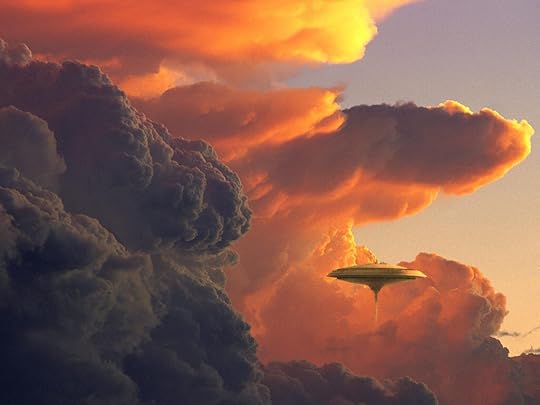
Cloud City at Sunset, by Belsavor, used in accordance with their Creative Commons license.
The Cloud Riders
Chapter One: The Asteroid SkowVanera 4 Elementary School
Chris Jones HAVOC, Venus
September 12, 2152Dear Martian,
How are you? My name is Samantha Dekker; my friends call me Sam.
Actually, they usually call me Sammy. Then there's Xiaur, who's a friend who calls me Samantha, no matter how often I correct him.
I'm twelve years old, by Earth years. If Venus had a calendar, I'd be just over 18 days old. Do you think it's weird we still measure things by Earth's years, even though the Earth isn't around anymore to tell us what day it is? Still, I think I can see why. I mean, how old are you in Martian years? Six?
My teacher is making me write this letter. The whole class got this assignment to write to Martian kids like you. I hope you like the paper. I don't even know who you are, but I'll find out when you write back. Jin is already teasing people, mostly me, about becoming pen pals with a Martian Prince.
I know you don't really have princes and princesses over there.
Well, prince, princess, or not, it doesn't matter. Whatever your gender, I'm sure you'll be cool because you're from another planet, and that's cool. You have ground to walk on and ice to skate on, and that's cool, too. I've seen some of the drones you've sent us, as they come in from the surface after mining. We took apart an old Martian robot at school yesterday, which was really cool!
I'm in my sixth year at elementary school. Next Blueberry Season, I'll be moving on to vocational school. I'm going to be a police and rescue officer, just like my Dad. He's cool, though not quite as cool as the police detectives in the old Earth movies. Did you ever watch those? I like The Big Sleep. And Die Hard. And Greenwich Beat 2050.
We don't get crime here like old Earth did, but being a police and rescue officer is still cooler than being a farmer or a cloud miner. And I'd like to see Dirty Harry do his takedowns in the air.
I look forward to hearing from you and hearing about what life is like on Mars, what old Earth movies you enjoy, and what cool things you do.
Sincerely,
Sam Dekker=+=+=
Viking 7 Grammar School
Biosphere 7, Elysium Planitia, Mars
September 19, 2152Dear Sam,
How do you do? My name is Pandorian.
You will notice that I called you Sam, not Samantha, nor Sammy, because I'd like to be your friend. And I didn't call you 'Venusian' either, because if you're going to introduce yourself to somebody you don't know, my etiquette teacher says that, on Venus, you should call them 'senior', or 'honoured', and not Mx. Planet That You're Living On. Right, Mx. Venusian?
And am I a Martian prince? I don't know. I've never been called one, and I would be much obliged if you didn't start.
Seriously, though: you live in a HAVOC? How do you sleep in all that noise?
Yes, I looked it up: High Altitude Venusian Operating City. You live in a giant balloon that floats above the acid clouds of Venus.
Which is absolutely cracking cool!
You fly fifty-five kilometres in the air! Which I suppose you'd have to, since I'm told the surface would kill you quicker than a gunshot. Our surface would kill us too, but I think yours would kill you faster, so, you win that race!
My parents run a business (not a monarchy), mining water, mostly. It's really too boring to write about, and I want to know more about your world! How do you make this super cool paper? And what's it like to wake up on a cloud? That last one sounds like something drippy my sister would say, but I really want to know!
Outside my window, all I see are red rocks and pink sky. Maybe I can see mountains in the distance if the dust storms settle down. If I want more colours, I can go to my biosphere's garden. I walk there with Pounder, my robot dog. My favourite colour is blue because it's the rarest of them all. I see pinks and reds all the time outside my windows. I see blacks, white, silvers and browns in the corridors and classrooms. There are greens, yellows, and oranges in the gardens, and that's nice, but the only speck of blue are the buntings in the biosphere, and they won't stay still!
Well, there was the other time, when my father took me to see a cavern we'd opened up in a glacier where we mine some of our water. The ice seemed to suck in the light from our head lamps and radiate it back as black-blue. It was like nothing I'd ever seen. And, unfortunately, I can't just walk back to the glacier; I'd get in the way of the workers.
I've seen pictures of Old Earth in our classrooms: again, so much blue! But these are just pictures. Neither of us have seas, and we can't see the Earth's sky, so how is yours?
Is the sky blue in your world?
Sincerely,
Pandorian Anastas, age 12 (Earth years).=+=+=
(Six Years Later)
It was an early breakfast at the cadet school's Mess Hall as, sucking on a carb-candy, I looked out the windows at the beauty of Venus below.
The sulphuric clouds were mounded black and orange. The sky above was turning slowly red, tinting towards blue. Soon, the Sun would rise, turning everything white on white. Our HAVOC's engines purred beneath our feet.
"Hey, Sammy?" Jin's voice almost broke my concentration. "You with us?"
The Mess Hall was full of people, divided by year. The first-year students clustered around their tables, excited, chattering. The second and third years sat relaxed, smiling benignly and not-so-benignly at the younger students, wondering if they were ever that uncool. Watching over them all were the seniors, who'd been given their first taste of authority and liked it too much. They perched around the edge of the room, eying their charges.
Xiaur sighed. "She's speaking into her sub-vocal recorder again."
"Really? I can't hear her."
"That's why they call it a sub-vocal recorder."
I'm a first year, but I know the next four years will be hard work, and I'm ready for it. I've been waiting for this chance all my life. I'll graduate strong, get a placement aboard a large cloud-miner, maybe even the capital, and make my dad proud.
"Samantha Dekker!" Xiaur shouted. "will you pay attention?"
I flinched. "What?"
He held up a cup.�� "You want the last yogurt?"
Did I look like I wanted the last yogurt? Did police detectives let themselves be caught dead with yogurt? Did--
"It's blueberry," Jin chimed in.
Blueberries! I crunched and swallowed my carb-candy and snatched up the cup. "Thanks!"
Xiaur smirked at me. He knew police detectives didn't let themselves get caught dead with yogurt. But Bean Season was over. Blueberry Season had begun. It was time to dedicate ourselves to work and also enjoy their sweet tartness.
Xiaur knew this, and I respected that.
And I liked that smirk.
=+=+=
These were my friends, Jin Moodley and Xiaur Naidoo, at the start of Blueberry Season and the start of cadet school. We were surrounded by students from all around Venus, ready to learn the ropes and become members of the Venusian Police and Rescue Force.
Jin, Xiaur and I were local kids. We'd grown up together on the Chris Jones HAVOC, the second largest Cloud City of Venus. But local kids were a minority here. Most of the class came from the other Uber-Zeppelins like the Geoffrey Landis and Pamela Sargeant HAVOCs, or the farm and forest platforms. Some even came from the capital, Perelandra. We were fresh faces, all.
Jin's the youngest of us -- just a couple of weeks from turning eighteen, but he preens. He admits it. He's always the first to dance. As elementary school gave way to vocational school, he landed dates. People liked his green eyes, chestnut hair, and cheeky grin. Nobody left disappointed. Not even me.
Jin laughed. "Hey, Sammy, are you narrating us like your hard-boiled Raymond Chandler novels again?"
"Why do they call them hard-boiled?" Xiaur muttered. "It's not like they have yokes."
Xiaur had been with Jin when I glommed onto their group after hearing them talk about police detective movies from Old Earth. Even after their interest in old movies waned, we stuck together. Jin cracked jokes, I laughed, and Xiaur nodded and rolled his eyes. We made a good team.
Where Jin was exuberant, Xiaur was grounded. He looked as immovable as a mountain from Old Earth, with dark skin, black hair and dark eyes. Solid. Reliable. He never danced -- recreationally, at least. I think it was because he wouldn't let himself be asked, and I never asked him.
He frowned at me. "Samantha, enough. I can see your jaw muscles moving."
And he called me Samantha, to this day, when everybody else called me Sammy, and I wanted to be called Sam. But that was his way, and I'd long given up trying to correct him.
"Samantha," said Xiaur. "I'm going to take that recorder off your throat and toss it into recycling."
He looked at the world with a sombre, dark gaze until he smiled. Then it was like the Sun rising.
"Right." Xaiur's chair scraped back. "Give it here!"
The bell rang as he came for me. I scurried back, putting a hand to my throat. Jin shoved back his seat and picked up our plates while I struggled to twist away from Xiaur's grip. "Come on, you two!" he called "Class time!"
"Kind of occupied!" I grunted. Xiaur gripped my shoulder and pulled me back.
Just then, we heard a cough that, though we hadn't really met anybody yet, still told us to stop what we were doing right now. We turned.
You can tell a lot about a person by how they change the room around them. Every student within a four-chair radius was now staring at their plates. Many had their hands discreetly over their mouths, stifling their laughter at us.
Xiaur and I faced a man built like my father but older, white-haired, and with a longer face. He didn't look angry, but he looked like he'd seen a lot, and what he was seeing right now was a disappointment.
This was Captain Nevins, cadet school administrator and our first teacher for the day. Sulphur!
"Ah." Nevins nodded as though we'd lived down to his expectations. "Cadet Dekker and Cadet Naidoo. Nice to see you ready to start the day. I look forward to you applying your enthusiasm to your studies. Carry on." He turned and marched off.
Xiaur glared at me. "Thanks, Samantha."
"What for?"
"For getting us into trouble!"
"You were the one who was all over me!"
Jin guffawed.
"Shut it!" Xiaur and I snapped at him in unison.
Jin just grinned. "Come on, you two. We're going to be late."
Everybody else was filing out. Xiaur and I glanced at each other again before he headed off to our first class.
=+=+=
Jin, Xiaur and I found seats in the middle of a small auditorium. Twenty of us, clumped by city of origin, faced the front whiteboards, talking amongst ourselves, waiting.
Suddenly, the door by the front of the hall burst open, and two upper-class students marched in: a young man and a woman, both seniors. They faced us beside the lectern.
"Greetings, cadets," said the young man, emphasizing the second word in a way that made us instantly hate him. "I'm Corporal Peter Mode, and my colleague is Corporal Susan Callister. We're here to help Captain Nevins, your instructor, teach you what you need to know about aerial work."
"So, listen up!" Susan smacked a desk with a ruler. "Respect your betters and pay attention to your lessons. What you hear from us will probably save your lives."
"The first thing you need to know about aerial work for the Venusian Police and Rescue Force is how to fall," said Peter.
"Yeah." Susan chuckled. "Don't. Because if you fall, you will die."
"I know you think you'll be wearing aerial suits, and you will, but aerial suits don't help you fly," said Peter. "They help you glide, which is like falling, only slower."
"You'll still be falling faster than anybody could ever hope to catch you," said Susan. "So aerial suit or no, falling beyond your last handhold is death. Eventually."
Peter nodded. "Yeah. Eventually. One good thing about falling on Venus is that you don't die from the impact. You're dead before you hit the ground."
Susan laughed. "Long before you hit the ground."
"Every meter you descend, the temperature goes up," said Peter.
"Along with the pressure." Susan brought her hands together as though squeezing air from a balloon. "Until it's like there's rocks on your chest."
"Then you pass into the cloud level," said Peter.
"Boiling masses of sulphuric acid!"
"Not to mention perpetual lightning."
"Zap!" cried Susan.
"By this point, the temperature around you is above boiling," said Peter.
"Above the combustion point of paper, in fact," Susan added. "Not that you'd spontaneously combust; you'd need oxygen for that. Instead, you just kind of... melt."
"By the time you reach the surface, the pressure is enough to compress you into your oxygen mask," said Peter. "Which makes you a conveniently-sized package to bring back up from the surface, though we won't do that."
Susan cackled. "We don't have the resources for that."
I'll say this for them: they had our full attention.
The door opened, and Peter and Susan snapped to attention. Captain Nevins strolled past them. "Cadets," he said. "Welcome to your first week of training for the Venusian Police and Rescue force. I see that you've met my teaching assistants, Corporals Mode and Callister." He began slow-stepping up the aisles between us. "Now, before I begin, there are things I want to make clear: I am here to teach, and I expect you to learn, because if you don't learn well enough in this job, you will die, and I won't have that." He walked to the back of the class before turning. By some instinct or ancient knowledge, we kept our ears open and our faces forward.
"You may not think it to look at me," Nevins went on, walking back to the front of the class, "but I am not averse to a little fun now and then, so long as any comic relief or letting-off-of-steam doesn't threaten anyone's health or safety. However, if I see you losing focus when lives may be on the line, you will know your mistake and take steps to fix it, or else."
At the front of the class, Nevins paused, then sighed and smiled. "That's the standard speech. It's true, but it's not mine. I first heard it from one Blake Dekker."
I stiffened in my seat.
He looked at us. "You may have heard that name. He used to teach this class. Blake Dekker was also commissioner during the Troubles that occurred after the Earth government collapsed and all communication with that planet ceased." He started to walk up the aisles again. "You may remember, or will have read in your histories, that he held this colony together. Those histories are correct. I served alongside him. He was brave, dedicated, honourable and, above all, ambitious."
And he was commissioner while you're still a captain. Is that why you put such emphasis on the word ambitious?
"I didn't expect him to retire so soon," Nevins added.
My knuckles whitened on the edge of my notes table.
Nevins faced me, and I couldn't decide whether the twitch in his lips was a smile or a smirk. "Can we expect similar great things from his daughter?"
Science tells me that people's eyes do not exert a noticeable physical force on the things they stare at. I have my doubts. I felt everyone staring at me, and I could feel the blush rising up my neck. But I knew the next thing I said would mark me for the rest of cadet school. I couldn't help but be irked. I hadn't asked for this, but what else could I say?
Perhaps it wasn't what I said, but how I said it?
I took a steadying breath. "I'll do my best, senior. Thank you, senior."
Nevins held the stare a moment longer, and I returned it.
Finally, he turned away. "I expect nothing less, Cadet Dekker. I expect nothing less from all of you." He snatched up a marker and stormed the whiteboard like a tank on a trench. "Let's begin."
=+=+=
So began our instruction as police cadets. It was hard, but it wasn't bad. Captain Nevins watched over us. I lived with my celebrity, downplaying it by staying calm and working hard. We lifted weights and practised aerial moves in the gymnasium. We turned the dance and gymnastics of vocational school into martial arts. We learned about our aerial suits and the breathing masks that would save our lives.
Police and rescue work is not the fiery excitement old Earth movies make it out to be, but it's not boring. Four weeks into our drills, they put us on one of the rescue Zeppelins and took us ten clicks from our HAVOC. There, we changed into our aerial suits and masks. We stood to attention, facing doors whose windows opened onto a blank and fluffy horizon while Nevins gave us our last instructions.
"As far as you're concerned," said Nevins, "these masks are an organ of your body. Losing it is as bad as losing a lung." He slapped the mask he was holding. "If ever you are in any part of a craft that is at all likely to experience an envelope breach, you are wearing your mask. You will check the seals and submit them for repair if any flaw is found. Carbon dioxide can be a stealthy killer as well as a vicious one. Any small leak can make you slow, fatigued, and confused, and in this job, if you are any of those things, you are dead. Now, find a partner and help each other put on your mask."
We partnered up. Xiaur, Jin and I slipped our masks on, then helped pull strands of hair back that would have compromised the seals.
"You really should cut your hair shorter," Xiaur admonished as he pushed back my bangs.
I glared at him. "It's regulation! I gave up my ponytail. I'm not doing the buzz-cut."
Jin laughed. "Yeah. They'd better not go messing with our locks, eh, Ginger?" He gave his hair a playful sweep. Xiaur rolled his eyes.
The masks, well, masked most of our faces with a breather that mimicked our mouth and nose in black enamelled metal. We looked like robots, except the mask and the goggles focused attention on our human eyes.
Corporal Callister cleared her throat on the radio, directly into our ears. "Is everybody ready?"
There were mumbles from us.
"I mean it!" she shouted, making us flinch. "This is the real deal! Check the status of your seals now! We open the doors in sixty seconds!"
I checked my seals, touching the controls by my temple and watching the indicators scroll across my visor. Air seals tight. Oxygen levels full. I was ready. I gave a thumbs up, as did Xiaur, Jin, and everybody else.
At the doors, Susan nodded. "Let's see what you lot can do outside."
She pressed a control. Fans whirred to life, sucking in the precious oxygen-nitrogen mix. The outer doors of the deck opened.
As we stepped out onto a metal platform, the green portions of our uniforms changed colour, shifting to brown, then dark red, then scarlet, further warning that we were in a toxic atmosphere. I resisted the urge to recheck the fit of my mask. This was it. Just keep breathing steadily. In. Out. Do not hyperventilate. Focus.
Peter's voice crackled in our headsets. "All right, cadets. Time to show what you learned indoors. Moodley!"
Jin perked up.
"Lucky you," Peter drawled. "You're with the pilots today."
Jin pumped his fist. "Yes!"
"Don't get too excited," Peter snapped. "They're not letting you near the controls until you're good and ready. Naido, Dekker! You're on the rungs. The rest of you, get ready to toss the darts."
Some of my classmates were insulted to have to do the tasks we'd learned inside over again now that we were outside, though they were wise enough not to show it. Others, myself included, were wiser still to know that training outside was a whole different balloon than training inside. For one thing, there was the wind, but most of all, there was the depth.
Venusians are not afraid of heights, but the depths can fool you.
As I prepared to leap and grab an overhead girder sticking out the side of the Zeppelin, I looked down at the sulphuric-acid clouds. Suddenly, my perspective changed. One moment, I thought they looked so close I risked burning my foot in them. The next, I realized those clouds were kilometres below. You'd fall for five minutes and still be a speak that could be seen from the Mess Hall windows.
"Hey." Xiaur's baritone whispered in my ear. I looked at him. The explanatory text on my visor told me he'd found a private channel to speak to me.
"Don't freak yourself out," he said.
I took a deep breath, then nodded, and looked away from the clouds. I leapt for the girder, then went hand over hand to the end, touching the finishing button. "Thanks," I replied as Xiaur passed me on the way back.
We switched up after that, joining the group tossing darts. A training Zeppelin pulled alongside our platform and moved back about twenty metres. I spotted Jin in the co-pilot's seat, intently watching the pilot's hands on the controls.
Cadets stood on the Zeppelin's platform, keeping one hand to the ship and the other holding a weight (called a "dart") at the end of a long cable. Swinging the dart, we judged the distance, took aim, and lobbed it across. One side had to catch these darts and reel them in before tossing their own darts back, weaving a rescue net from the trailing cables. Xiaur and I had gone a couple of rounds when movement caught my eye. I found myself looking up.
There was a speck in the sky.
Specks should not be above you, unless they were other Zeppelins. This looked so small, I thought it was a person. And if a person was alone in the sky, they were falling.
But the speck was moving too slowly. As it got bigger, I realized it wasn't small enough to be a person. Instead, it had been too far away to judge properly. It was bigger. Much bigger. But it still wasn't a Zeppelin.
I pointed. "What's that?"
"What?" Xiaur's voice rasped in my ear. He tried to follow my point. "I don't see anything."
Then the speck did something no person nor Zeppelin could do: it fired a rocket burner.
"What--"
Other students looked up as the speck fired more rockets in short bursts, trying to slow its descent. A tossed dart missed my legs and clanged against the metal platform.
"Dekker, what the hell are you doing?" Peter roared, delighted at the chance to ream me out.
"But, Corporal!" I pointed at the speck again. "Look!"
He looked, and his hands fell to his sides.
It was all over the radio, now.
"What in sulphur's that?"
"That doesn't look like a Martian robot shuttle."
"What's it doing out here?"
Nevins' voice cut through the chatter. "Quiet, all of you! Corporal Mode, report!"
Xiaur identified it, though I could tell he hardly believed it. "It's an asteroid scow."
Peter scoffed. "Are you joking, Naidoo? That's over a hundred million kilometres too far away and years too late--"
Susan's voice cut in. "No. He's right." She stared up, her shoulders slack.
I looked up and realized Xiaur was right, even if Peter wasn't out of line to doubt him. I still had a copy of Jane's Book of Spacecraft, and now that I realized my eyes weren't deceiving me, the outline became obvious.
But it should have been impossible. After the Earth collapsed, the asteroid scows abandoned their mines and formed huge convoys, pooling resources to complete their evacuation. The bulk launched from Ceres and ran to Mars while a smaller group gathered at Vesta on the other side of the Belt and came here. Most didn't make it. The ships that did were now in dead storage in high orbit.
If this was a single ship from the Asteroid Belt, it would have been harder for it to survive.
And, as the rockets fired intermittently, pitching the scow back and forth, I realized it hadn't survived, yet.
"It's in trouble," I said into the radio. "We need to catch it, or it's going into the clouds. Tie off the cables! We've got to finish the net!"
"You're not the one to give orders, cadet!" Peter shouted into my ear, even as I saw cadets latching cables into place and gathering up the darts.
I faced him. "If we don't do anything, whoever's in there is going to die!"
He shook his head. "The pilot's probably dead already. Those rockets are firing on automatic."
"What's our job here?" I yelled.
"Cadet, stand down!" Susan snarled. "Let the professionals handle it!"
I rounded on her. "We're ten clicks away from the nearest HAVOC! It'll take too long to muster a rescue crew from there. We're the only ones out here, and we're running out of time!"
Susan glanced at Peter, who looked up at the struggling scow. He tapped his radio. "Captain Nevins, senior? What are your orders?"
Silence stretched. Everyone kept an eye on the struggling scow as it descended. "Come on," I breathed.
Finally, Nevins sighed. "All right, Cadets, this is not a drill. We're going to catch that scow."
My stomach lurched as the engines revved, and we dropped. I imagined that the temperature rose, though I knew rationally that the temperature didn't change that fast. We needed to get far enough under the scow to have time to finish the net to catch it. I wasn't afraid. I wasn't excited, either, though my heart pounded. Maybe it was equal parts of both, knowing that training was over, and we were moving to save someone's life.
If there was somebody alive in there to save.
When we stabilized, the other Zeppelin flashed a light and lobbed a dart.
"There she goes!" Susan shouted. "Dekker, catch it!"
My eyes were already on the dart, its nib rounded to keep from puncturing the Zeppelin's outer skin. Its cable trailed behind as it arced across the distance between us. I traced that arc, seeing how far to reach out...
I leaned above the cloud floor and embraced the falling dart in both arms. Xiaur, who'd already clenched his fingers on the strap across my shoulder blades, hauled back, and I swung up my prize.
"Good work, cadet!" Peter shouted. "Now, tie her off!"
More darts flew, sending cables back and forth across the gap. The net stretched out. I looked up. The asteroid scow was still a few hundred metres above us, but it was falling fast.
Susan touched her communicator. "Captain! She's coming in hot!"
"More power to the engines," Nevins called. "Everyone, brace!"
I gripped a stanchion as the scow hit our net. The cables sagged. The gap between the two Zeppelins narrowed sharply. The platform pitched. Our engines strained. Nevins' orders rang in our ears, but there was nothing we could do until the engine crews stabilized our altitude.
Finally, the floor stopped pitching. The cables tightened, and the scow rose as our two Zeppelins pulled apart. A look at where we'd tied them off told us everything was holding. Now stable, the scow's rockets stopped firing.
So, we had the asteroid scow. Now what? Somebody had to look in, and as soon as all departments reported all clear, the order came through.
"Dekker! Naidoo!" Susan called. "You're up!"
Xiaur and I glanced at each other, then at the cadets behind us, who signalled that our harnesses were ready. I focused on the scow in our net.
Okay, so today, I got lucky. This was more excitement than I'd had any right to expect from being a police cadet. I didn't care. So I'm no Raymond Chandler, but could Philip Marlowe do this?
I leapt from the gantry and opened my arms. The frills of my aerial suit caught the air, and I flew.
Corporal Mode would correct me to say that I glided, not flew, but it was easy to forget that. The wind buffeted my mask as I rushed towards the scow. Then I tucked in my arms and legs, braced, and landed against the nose of the spaceship. Xiaur's boots clomped as he hit the metal beside me. The window shields weren't engaged, so I could see into the cabin. Someone sprawled against the controls.
"Somebody's in there!" I said into my radio.
"Are they alive?" asked Xiaur.
I frowned. "I don't--"
Then the figure stirred. Whoever it was pushed away from the controls and looked up at us through the helmet of a pressure suit. I couldn't see much through two panes of vacuum-rated glass, but I saw a pair of eyes that were wide, afraid, and pleading. Then the figure slumped back onto the console.
"Yes," I shouted. "We're going to need oxygen and some way to get through the airlock."
"We can haul in the scow." This was Peter's voice. "Get it to a secure room where we can blast the doors--"
"Whoever it is, they're almost unconscious in there," I snapped. "I think they may be out of air. We can't wait to get this scow back to the HAVOC. We must go in, now!"
"Orders, Captain," said Susan through the radio.
I waited. I'd pushed as far as I could without risking charges of insubordination. Actually, I was pretty sure my outburst was going to go on a report somewhere. But I waited.
Finally, Nevins said, "Get them oxygen tanks. Cadet Naido, move to the airlock. Tell me what you see."
Xiaur clambered across the hull of the scow. The grips in the gloves and toes of his aerial suit helped, but he found footholds I could not have seen. Finally, he reached the scow's airlock and pulled the cover off the control panel. He let the cover fall to the clouds below as he peered in.
"Whoever's in there cut most of the security lockouts on the airlock," he said. "I can override the rest. Samantha, is the pilot in a spacesuit?"
I looked again. "Yeah, though I don't know how useful it is, right now."
"Captain Nevins," said Xiair. "Requesting permission to enter."
"Do it," Nevins replied. "You too, Dekker. We're sending people with oxygen."
I crawled across the hull to where Xiaur was keying in codes. The screen flashed green. The door slid back, only to jam halfway. The keypad let out a digital blort as Xiaur tried the codes again. He swore. "There's only enough power to open the inner airlock, now. Are you sure the pilot's in a spacesuit?"
"Yeah," I said. "But he's suffocating. We need to get in and get him oxygen, now."
We squeezed through the half-open door, and Xiaur pulled off the cover of the control panel on the inside airlock door. It flashed green, and the locks disengaged. The lights cut out, then. Xiaur and I looked at each other in the semi-darkness. Then we put our shoulders to the door and pushed. Easing it open just enough, we stepped through.
The scows were built on the cheap; they needed to be to make asteroid mining profitable. The inside was sparse, just one room which served as a control centre, kitchen, and place to sleep. A single cot had been pulled down from its receptacle. The wall around it was festooned with gauges and dials, all slowing nearly empty.
We looked at the bow and saw the pilot slumped over the controls. We stepped closer when suddenly a metal shape rushed at us.
Xiaur and I backed up as a small robot crouched between us and the pilot. It had four legs with knees that poked out on all sides of its body. It had no head, just a cube-like body, though a single camera lens focused on us. It reminded me of a dog from an old Earth video I'd seen.
"Naidoo? Dekker?" Nevins' voice came through the radio. "Have you found the pilot?"
"Yes, senior," said Xiaur. He flinched as the robot swung at him. It trembled, though it didn't look scared. The whirr of gears and motors sounded disturbingly like growl. Xiaur took a step back. "But we have a problem."
The pilot shifted. I heard a muffled cough through the helmet. "Pounder," he wheezed -- a man's voice. "Stand... down."
I frowned at the robot dog. It was named Pounder?
The robot immediately folded up at its knees and sank to the floor. Xiaur and I rushed to the pilot.
He was dressed in the modern form-fitting pressure suit, and he looked to be my age, around eighteen, though I wasn't sure how I could tell. Even slumped at the controls, he looked taller than us, and thinner, like a willow tree.�� His arms looked like delicate branches.
He jerked as I touched his arm. He let out a cough, then rolled over, slipping off the console onto the floor. He blinked up at us, then reached up to undo the locks of his helmet.
"Whoa! Whoa!" I grabbed his hands and held them as he struggled. "Take it easy! The air's no good in here."
"She's right." Xiaur came forward, flourishing a silver tank before pushing the pilot onto his back. I looked at the airlock and saw to more cadets staring, watching, not sure what to do with themselves now that they'd delivered the oxygen.
"Just hold on," Xiaur continued. "We've got oxygen."
But the pilot wasn't holding on, he was panicking, letting out a mewling whimper. His arms flailed so much I thought he would break.
Xiaur pulled the covering off the air valves of the pilot's pressure suit and fitted the tank to one of the nozzles. He screwed the tank in until the seal broke, and the air hissed into the pressure suit.
The effect was immediate. The pilot's chest heaved as he gulped in better air. Xiaur pressed a hand to the man's stomach to tell him not to hyperventilate.
The pilot's breath came in slower, longer. He looked at us -- looked at me, carefully. Through his fogged visor, I saw blue eyes, brown-blond hair, and pale skin. His nose was long and narrow. His lips were a dark line, blue with hypoxia.
Slowly, he reached up and touched a knob on his helmet. He spoke. At first, all I could hear was his voice muffled through the helmet before it finally sparked on my radio.
"Can you hear me?" he gasped, his voice soft and wispy. There was an accent I could not place. It reminded me of old Earth country homes and Agatha Christie.
"We can hear you." I clasped his hand to keep him from tuning out of our common frequency. "We've got you. You're safe, now."
"Can you move?" Xiaur asked.
The man tried to sit up, but fell back instantly. "No..." He grunted, and there was pain in that grunt. "I... can't..." Panic rose in his eyes. "I can't... Everything is so... heavy!"
My brow furrowed. "What do you mean?"
"Everything! Everything is so heavy!" He let out a cry. "Help!"
The mysteries piled up. Who was this man? How did he get here? Where did he come from? The Asteroid Belt had been dead for three years, now; there was no way an isolated miner could survive.
"Samantha!" Xiaur stared at a flickering monitor on the console. "This ship launched from Mars."
Mars...
This man was a Martian.
On a planet with three times the gravity.
I shouted into the radio. "We're going to need a med team with an exoskeleton right now!"
"What?" In my ear, Susan sounded incredulous, and I didn't blame her. "Where do you think we're going to get an exoskeleton?"
"Find something or make something," I shouted. "This man's going to need it!"
I found the man's hand and clasped it, gently. "It's okay. We're getting you to a hospital. You're going to be safe. What's your name?"
The man struggled for breath. His eyelids fluttered, but he focused on me.
"Can anybody else hear me?" he wheezed.
I glanced at my visor message, then touched the radio controls. "We're on a private channel."
"Sam," he breathed. "Sam! It's me."
I blinked. "What-- Who--?"
"It's me," he gasped. "It's Pandorian. Please don't tell anybody I'm here."
His eyes closed. His head fell back.
I held him, staring.
Pandorian?! What in sulphur are you doing here?
April 27, 2024
Tales From the Silence Cover Reveal and Kickstarter
 Please click here to support my Kickstarter.
It gives me great pleasure to show off the cover for my upcoming Silent Earth SF Anthology, Tales from the Silence. This cover was produced by Bibliofic Designs, who also drafted the wonderful cover for my novel The Sun Runners and Robert J. Sawyer's upcoming novel, The Downloaded. I highly encourage you to check them out, and if you need a book cover, consider commissioning them. It's important to pay our artists.
Tales from the Silence is an anthology of sixteen short stories by myself and ten other SF, Fantasy and YA authors. The back cover blurb is as follows:
On August 4, 2151, the world will end. It's been a long time coming: climate disasters brewing conflict, conflict breeding chaos. But on that fateful day, someone will set off the nukes. On August 4, 2151, human civilization on Earth will fall silent.
There are survivors, of course���and not just on Earth. There are scientists on the Jovian moons. Miners in the asteroid belt. Thriving colonies on the surface of Mars and above the clouds of Venus. Far more precarious ones on Mercury. When the silence falls across human space, one thing is clear: Earth's space-born children are on their own. No more supplies are coming. No more orders. No more meddling. No more help.
Set in the universe of James Bow's new novel,��The Sun Runners,��Tales from Silence��is a gathering of award-winning science fiction, fantasy, and YA authors who explore the worlds the Earth left behind, as well as the Earth itself, as it struggles through its new dark age.
Join James Bow, Phoebe Barton, Kate Blair, Cameron Dixon, Mark Richard Francis, Jo Karaplis, Kari Maaren, Fiona Moore, Ira Nayman, Kate Orman, and Jeff Szpirglas as they tell the stories of what happens after the end of the world.
I an really pleased at how this has come together, especially given that it started as a spur of the moment idea back in July. I've been blessed with great and talented friends and colleagues (who I hope I can now call friends) who explored the worlds of post-Silence Earth, and expanded the universe tremendously. A shared universe is a daunting thing to compose, as you try to herd the diverse artistic visions of your authors. I am especially pleased with how well we worked together, and how new ideas sparked out of this collaboration. I've already had to incorporate some new ideas in The Cloud Riders in order to maintain continuity, and I find that to be a fantastic thing, as they're pretty great ideas.
The Sun Runners and Tales from the Silence officially launch on November 12, 2024 under ShadowPaw Press and its Endless Sky imprint respectively, with great help from ShadowPaw's publisher and editor-in-chief Ed Willett. I am self-publishing Tales from the Silence to help promote The Sun Runners, but also to explore the ins-and-outs of short fiction (the last time I wrote a story that was shorter than 40,000 words was literally decades ago). and also just have fun, exploring the wolrds of the Silent Earth with different people, collaborating on something together -- something which I haven't done since my fan fiction days. At the same time, I made sure to pay all my writers for their work, because exposure isn't worth nearly what some consumers think it is, and as the saying goes, people can die from it.
Which brings me to my Tales from the Silence Kickstarter. To help ease the initial burden, I am running a crowdfunder to cover the initial costs of publication by encouraging people to offer their support, receiving copies of Tales from the Silence and The Sun Runners in return. Kickstarter does not like the use of the phrase "pre-order", but my intention is that Tales from the Silence will be released with or without the funds we raise through Kickstarter, and this is a chance to secure a first printing of this book, as well as possible other neat things, like a limited hardcover edition, and your name listed in the acknowledgements. If you wish to give, give what you can, as every little bit helps, but I'm hoping you'll take advantage of the rewards available, and we all work together to help make the launch of my first anthology as successful as it can be.
I'd like to thank everybody who helped make this happen, especially to the authors, to my supportive wife and kids, to other friends and family and people in the SF, Fantasy and YA communities, and of course to Ed Willett of ShadowPaw Press. Look for announcements of events coming up in November, and I look forward to seeing you all there.
On ShadowPaw Press
A word about ShadowPaw Press: Edward Willett has set up a fascinating boutique publishing company out in Saskatchewan that is punching well above its weight. ShadowPaw is publishing some of our biggest science fiction authors and, as a member of the Literary Press Group of Canada, making his books easily available to bookstores across Canada. And you can see from the covers he's been able to put in front of our books, he's got game.
He's also got experience. He's a longstanding science fiction author of his own, and has won Prix Aurora Awards for his work. He has done a tremendous job helping others in the industry, running the award-winning Worldshapers podcast, and editing multiple multi-author anthologies, including his most recent, Shapers of Worlds - Volume V. He seems to have made it a personal mission to help Canadian writers get their words out in the best ways possible, and it's been an honour to work with him.
Speaking of getting the words out, Ed is running his own Kickstarter campaign to help launch Shapers of Worlds - Volume V. He's gathered a number of great names for this anthology, and this fundraiser is your chance to help this lovely labour come to pass, as well as nabbing some great rewards along the way. I would consider it a personal favour if you would support his cause, either on Kickstarter, or his Crowdfundr campaign to support ShadowPaw Press's Spring List (where you can nab a number of great books).
I really appreciate the worl that Ed is doing bringing more Canadian science fiction and fantasy into the world, so please support him, and support this industry, ensuring that our voices continue to shout.
Finally, here's a book trailer for Tales from the Silence.
April 26, 2024
In the End, There is Tea
The past few months have been hard and stressful in so many ways, I can't count. I'm also leery of sharing too many details because of privacy. But I will say that, this week, my father went into an assisted care home so he can remain safe and comfortable while he lives with dementia. I am amazed at how quickly this has come on, although if I'm honest with myself, the signs had been building for a while. Still, back at Christmas, my father was well enough to drive over to have breakfast with us. Now I'm paying all his bills, and he's never driving again.
And while it's hard to admit, we have been very, very lucky these past four months. We were warned by a friend who had to deal with a similar situation before to secure a Power of Attorney while my father was capable of giving it, because (for obvious reasons) it becomes a lot, lot harder once someone progresses to the point where they can't give it. Then he had a stroke which we caught and called the ambulance on early thanks to Wayfinder's quick thinking. Then we had another need for hospitalization that occurred while we were at a follow-up appointment in a hospital. That routed my father to a hospital that he wouldn't normally have been sent to, and they recommended an assisted care facility that wouldn't normally have been on our radar. And thanks to our healthcare system, these multiple hospital interventions have cost us almost nothing out-of-pocket. A pox on any politician that tries to take that away from us (and should that send you to hospital, may you receive as good quality of care as you intend for the rest of us).
Best of all, my father accepted this. We'd been worried that this would be a terrible fight. But after being told by a doctor that he had dementia, he agreed to assisted care, and now he is safe and cared for, receiving three meals a day and laundry service, medicine reminders, just steps away from the help of qualified nurses should he need it. It is a tremendous load off our shoulders that had been pressing us flat for weeks.
But it's still a time of change. We now have a house we have to settle, bills to pay, services to shift or delete. A lot of work is ahead, and although it comes with less stress and deadlines, it's still a melancholy task.
However, I'm still visiting my father -- this time in his private room -- and we share a tea every second evening. We've been doing that for a while, since my mother passed away, and that's not going to change anytime soon. If you ever find yourself in a similar situation, give thanks for these quiet moments of relative normalacy. Be thankful that, in the end, there is tea.