Saffron Bryant's Blog, page 7
June 28, 2013
The Role of GGS in Rheumatic Heart Disease
Firstly, forgive me for the dry nature of this post but hey, I wrote a thesis and I’m proud of it!
In the name of open-access research I have posted my thesis here for your enjoyment. However, if you don’t feel like wading through pages of scientific writing, here’s the quick version (and a cool picture).
Rheumatic heart disease is associated with repeated group A streptococcal infections however there is substantial epidemiological evidence to support the role of group G streptococci in this condition. Prevalence studies have shown significantly higher levels of group G streptococcal infection in areas endemic for rheumatic fever and rheumatic heart disease. This study investigated this relationship through the use of the rat autoimmune valvulitis model. It was found that exposure to whole killed group G streptococci caused heart valve infiltration by mononuclear cells and increased production of acidic mucopolysacharides, a major contributor to valve remodelling in rheumatic heart disease. This response is similar to the valve infiltration and remodelling characteristic of exposure to group A streptococcal M‑protein, the protein thought responsible for rheumatic heart disease. It was also found that antibodies produced against group G streptococci are also responsive to group A streptococci and the group A streptococcal M‑protein.

Rat heart tissue at 40X magnification with H&E staining
So what did I learn from my 1 year honours and 4 years volunteer work? That group G streptococci could have a role in rheumatic heart disease… and that if you want to do ELISAs on whole-killed bacterial cells you have to bake the plates…
So, I’m sorry this post doesn’t break the boundaries of current knowledge but if you do want to learn more about my research you can read the full thesis here.
Please note that the research and the thesis are copyright to me and must be cited as follows:
Bryant, S 2012, ‘The role of group G streptococci in rheumatic heart disease’, Honours thesis, James Cook University, Townsville.


June 22, 2013
Indie Interview – David Allen Kimmel
Today I am lucky to have David Allen Kimmel, author of Rockin’ Across the Galaxy, for an Indie Interview. Earlier this year I reviewed David’s book Rockin’ Across the Galaxy (which I thoroughly enjoyed) and now I’m excited to hear his thoughts on writing. He has some great advice for authors and a fantastic sense of humour.
So David, how long have you been writing and how did you get started?
I’ve been writing in one way or another since I can remember. My current “day-job” is Director of Communications for an energy company which involves considerable amounts of PR and journalism types of writing. My real passion, however, is fiction and within that category, science fiction. I grew up on Asimov and Bradbury (and Douglas Adams for the humorous side).
The desire to write really comes from the love of reading. From the time I learned to form letters into words and words into sentences, I read everything that came across my line of sight (including EVERY road sign on family trips, which rapidly became annoying to everyone else in the car). It didn’t take long to realize that I had stories of my own to tell. Characters who introduced themselves to me and wanted me to tell their stories.
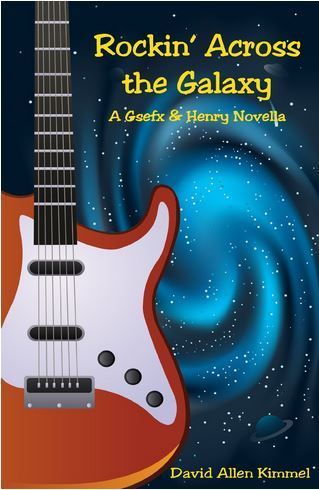
Rockin Across the Galaxy is doing well,
Tell us a little bit about it…
I’m very pleased with the reception Rockin’ has received so far, because this story really makes me smile. I love the characters – I know that sounds cliché, but that’s actually why I love them so much. Rockin’ was my first complete beginning-to-end story and as you might imagine, the characters started out a bit flat and, well, cliché. But then, as I kept at it, the real magic of writing happened, the characters reached out from the pages, grabbed me by the throat and forced to recognize them for who they really are. And that becomes even more apparent in the sequel, which is currently underway now. This is especially true for one character, who still hasn’t forgiven me for what he feels is a bum rap in the first book. (Smiles).
But, back to your question, the basic premise is relatively simple, Gsefx, (pronounced “Zef”), is a non-terrestrial in what we all might recognize as a very terrestrial situation. He’s stuck in traffic and is about to be dreadfully late for work…again. Meanwhile, his human counterpart, Henry, is an artist whose creative inflexibilities prohibit him from getting along in the world. He’s just lost his job and his wife and is, essentially at the end of her rope. They are two different beings from opposite sides of the galaxy. But they do have at least one thing in common, and that one thing that connects them in a way nothing else could.
How does it differ from other sci-fi novels?
It’s much lighter in tone than most sci-fi. I really loved Douglas Adams tongue-in-cheek humour and commentary on the human condition through his Hitchhiker’s series. I’m not nearly as funny as Mr. Adams, nor do I wish to even make that attempt – that’s not my goal. But, I do appreciate his ability to provide light-hearted entertainment, and that’s what I hope to do with the Gsefx & Henry books.
Do you have any special tips that you’d like to share with other authors, regarding writing, marketing or publishing?
Finding an audience is really, really difficult for an unknown and marketing is both necessary and seemingly impossible. I believe that’s true for writers, singers, artists or anyone looking for that big break. The one piece of advice that I’ve received that seems to ring the most true is to keep writing. Of course you must continue developing and executing your marketing plan, whether it’s social media, blogging, print or whatever, but you must continue to write. That is the only way to have a real chance of finding an audience. Having a full catalogue of offerings that your target audience can connect with provides a larger opportunity for them to find you. Now, keep in mind that I say this with the full knowledge that I have only one novella and one short story currently published – both of differing genres. But, I’m working on it!
Is there anything you’d like to say to your readers?
While I certainly hoped you enjoyed Rockin’ and that it offered you a pleasant escape from your daily routine, I also heard – quite loudly – your concerns over the abruptness of the ending! I understand its, abruptness, was, shall we say, unexpected. That said, however, I stand by my ending for the one reason that it was appropriate for the characters and I think that will become more clear when the next book is finished.
Why did you choose to write in the sci-fi genre?
In truth I write in both sci-fi and general fiction categories. For short stories, general fiction seems to come easier, but my love has always been sci-fi – that’s where my daydreams tend to play and so that is where I would like to make my mark.
Do you also read? What sort of books?
Yes – reading and writing go hand-in-hand. I believe, as Steven King has advised, that to be a good writer you must read constantly and write constantly. I love both Fantasy and Sci-Fi. (Contrary to popular opinion, they are two separate genres!) Obviously, Tolkien, CS Lewis, Terry Brooks and Stephen Donaldson for the Fantasy genre (as well as a terrific new up-and-comer by the name of Saffron Bryant!) and Bradbury and Asimov on the Sci-Fi side of things. (Asimov’s Robot and Foundation series will always be the pinnacle for me!)

How did you learn to write?
Certainly not in school! Haha! Actually I’m only kinda kidding. I actually flunked out of English Comp (College English 101) TWICE – before I finally just tested out of it. I was always so bored by the professors I never went to class. In truth, I think I learned to write mostly by reading a lot. For the most part, I follow the rules of writing without really knowing the rules – but I know what works and what doesn’t. And…for all of that, I’m a writing snob. I will rewrite someone else’s words without hesitation if I believe I can make them sound better. It has gotten me into trouble more than once! Ha!
What are your thoughts on self-publishing vs. traditional publishing?
Self-publishing is both much easier and much harder. Publishing something on Amazon or Barnes & Noble takes a matter of minutes. Getting someone other than your friends or family to actually buy your publication is a totally different matter. As I said earlier, you have to get out there and do the marketing work – social media, etc., but the bigger matter is to keep writing. Traditional publishing, on the other hand is much more difficult to break into – query letters, reject letters, query letters, reject letters, etc. etc. But, once you break into that realm, you do know one thing – not that you’ll be successful, necessarily, but that your work is good enough to have attracted the eye of an editor who reads an endless succession of stuff not good enough to be published. That alone should be enough of a confidence boost to help you keep going. Ultimately, I believe it’s going to be a combination of both self and traditional publishing.
Do you have any more books being released soon?
I’m working on the sequel to Rockin’ but since I just started it, I can’t promise when that will be released. I do have a couple of other works in review – one is a part one of a post-apocalyptic tale that spans the lives of several characters. The other is a general fiction short story entered into a contest – hoping to hear about that one in the next few weeks. I also have several other books in my head – I just need to find the time to get them out of my head and down onto paper.
Is there anything else you’d like to tell us about yourself or your books?
As much as I want people to buy and read my works – I’ve found that the real joy for me is in the writing itself. The experience of not only telling the story, but telling it in a way that is surprising even to me at times. I really think that’s why I want people to buy and read my books – not as much for the money (although that’s nice!) – but so they can, hopefully, experience the same pleasure reading it as I had writing it.
Click here if you’d like to read Rockin’ Across the Galaxy. Or learn more about David on Goodreads
June 20, 2013
Echolocation- Map a Room Instantaneously
This week in When Science Fiction Becomes Reality I want to highlight a very cool piece of technology which is just starting to come into its own… echolocation.
This incredible science uses echoes and sounds to measure the dimensions of a room (kind of like sonar). More of the science is described here, but I wanted to talk more about the future of this technology.
So at the moment we need several microphones which will will map out the dimensions of a room (or a cathedral!). In just a few years I’m sure this will advance to mapping out entire buildings, perhaps complete with furniture and lifeforms. And maybe this technology could come from something as simple as a phone? Smart phones can already do so much, with this new algorithm and a bit of tweaking they could become personalised sonar devices.
What does this mean for the future (and for our beloved science fiction genre)? Well, soldiers could instantaneously get a floor plan for a building complete with enemy locations- that kind of technology could definitely come in handy! Of course at the moment this technology is aimed at optimising amphitheaters etc. but there is so much more potential! Aside from soldiers, this technology could help sight impaired people, if you combine it with a pin-point accurate GPS- it could walk a person through their house using audio, stopping any collisions! Architects, builders, interior designers; all could benefit from this kind of technology, from the ability to instantly measure a room.
Explorers would also get a kick out of these advancements. Have you ever been stuck in a dark cave and you don’t know how far it goes or which way is out? No problem! Just send out your sonar and up comes a map of the cave system.
How can you see this technology being used? Tell us about it in the comments section below.
Don’t forget to check out my new Pinterest board which illustrates some of the great When Science Fiction Becomes Reality moments.
June 16, 2013
The Herald of Darkness- Revealed!
Here it is ladies and gentlemen, the moment you’ve all been waiting for…
The Herald of Darkness- Revealed!
I’m afraid you’re going to have to wait a few more weeks for the release, but in the meantime here’s the cover and the blurb to wet your appetite:
I am the one who walks the night,
I am the heart that sees no light,
I am the crow upon the carcass,
I am the bringer, the herald of darkness.
Like the calm before the storm the Draconum are thrust from their peaceful oasis into a vicious war. Refugees flood the shores in a desperate attempt to escape the coming darkness and the death it carries.
Allies become enemies and trust becomes a thing of the past. Laila and Sarin must wrestle to maintain control as racial tension and disputes threaten to tear apart their command.
The dragons struggle in a strange new land and no place is safe as they very shadows reach for their throats. What is it about their past that comes back to haunt them?
Astrocytes tries to contain an army which is bent on its own destruction. But how can you find the light in a world consumed by darkness??
The clouds are gathering and no-one can outrun them…
June 12, 2013
Cloak of Invisibility – So Many Choices
All fantasy and sci-fi fans have dreamt of being invisible. I know when I was young and asked what super power I want, it had to be invisibility. Well, in this week’s When Science Fiction Becomes Reality I’m discussing the many ways in which invisibility has become a reality.
There are now so many avenues being explored for invisibility that there’s almost too much choice!
Firstly there is the camera/screen option, whereby cameras on one side of the object record and project the received images onto the other side. As in the following image:
Or, there are mirrors and tricks of the light (which magicians have been using for years), as shown in this image:
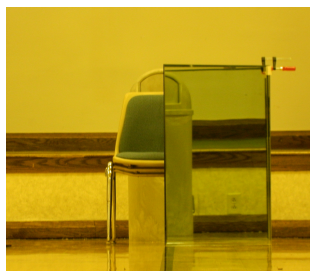
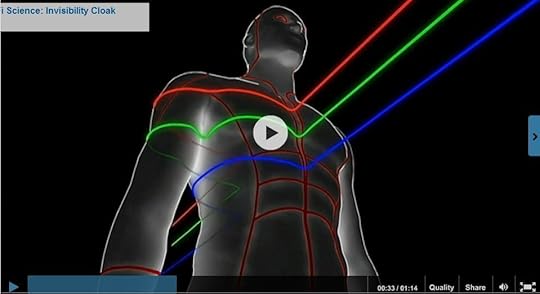
Then there is the new field of metamaterials which also cause light to bend around objects:
http://science.howstuffworks.com/40116-sci-fi-science-invisibility-cloak-video.htm
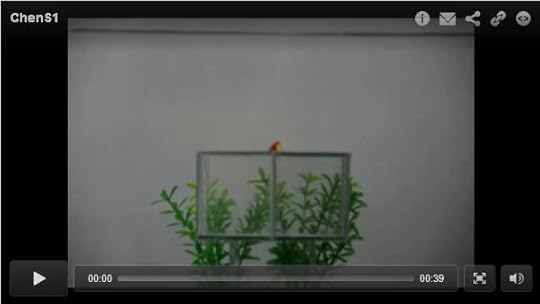
And don’t forget this clever set of prisms which is taking the world by storm as it makes first a fish and then a cat disappear (personally I think they could have done a better job at showing off the ability of this technology, but it’s still pretty cool)
http://www.scientificamerican.com/article.cfm?id=invisibility-cloak-hides-cats-and-fish
So where do all these inventions leave us? With a world of possibility! With all of these inventions being explored it’s only really a matter of time until the fully-functioning invisibility cloak comes along. Sure it may be a bit rough now, but look how far we’ve come in just a decade? Imagine what 100 years will bring?!
So where does that leave science fiction? In my opinion the rapid advancement of this field means it’s hard to imagine a future without invisibility…
June 7, 2013
5 Newest Fantasy/Sci-fi Titles
Here for your enjoyment are the five newest and top-rated books in fantasy and sci-fi. Have you read them? What did you think? Personally I can’t wait to get back into the Riftwar Saga!
Deeply Odd- Dean Koonts 4.5 Stars
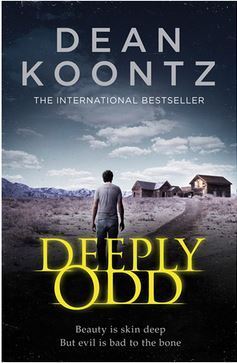 The sixth Odd Thomas thriller from the master storyteller. Our reluctant hero is drawn once more into a strange encounter with the lingering dead.
Later that morning, when I walked downtown to buy blue jeans and a few pairs of socks, I met a guy who offered to neuter me with a .45 pistol.
In a sinister encounter with a rogue truck driver, Odd – who has the gift of seeing the dead and the soon-to-be dead – has a disturbing vision of the slaughter of three innocent children.
Across California, into Nevada and back again, Odd embarks on a road chase to prevent the tragedy. But he is to discover that he is not up against a single twisted sociopath but a mysterious network of evil men and women whose resources appear supernatural.
Luckily, in this world that Odd finds so beautiful and full of wonders, and deeply odd as well, he meets a collection of like-minded eccentrics who will help him to take the next giant step towards his destiny.
The Fall of Arthur- J.R.R. Tolkien 3.5 Stars
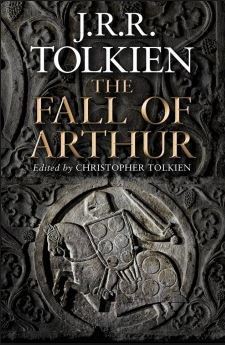 The Fall of Arthur, the only venture by J.R.R. Tolkien into the legends of Arthur King of Britain, may well be regarded as his finest and most skilful achievement in the use of the Old English alliterative metre, in which he brought to his transforming perceptions of the old narratives a pervasive sense of the grave and fateful nature of all that is told: of Arthur’s expedition overseas into distant heathen lands, of Guinevere’s flight from Camelot, of the great sea-battle on Arthur’s return to Britain, in the portrait of the traitor Mordred, in the tormented doubts of Lancelot in his French castle.
Unhappily, The Fall of Arthur was one of several long narrative poems that he abandoned in that period. In this case he evidently began it in the earlier nineteen-thirties, and it was sufficiently advanced for him to send it to a very perceptive friend who read it with great enthusiasm at the end of 1934 and urgently pressed him ‘You simply must finish it!’ But in vain: he abandoned it, at some date unknown, though there is some evidence that it may have been in 1937, the year of the publication of The Hobbit and the first stirrings of The Lord of the Rings. Years later, in a letter of 1955, he said that ‘he hoped to finish a long poem on The Fall of Arthur’; but that day never came.
Associated with the text of the poem, however, are many manuscript pages: a great quantity of drafting and experimentation in verse, in which the strange evolution of the poem’s structure is revealed, together with narrative synopses and very significant if tantalising notes. In these latter can be discerned clear if mysterious associations of the Arthurian conclusion with The Silmarillion, and the bitter ending of the love of Lancelot and Guinevere, which was never written.
Magician’s End- Raymond E. Feist 4.5 Stars
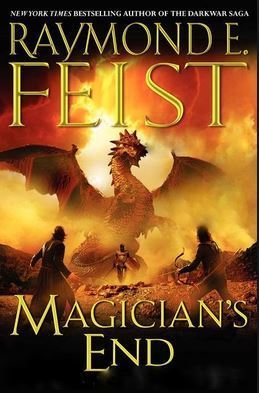 THE FINAL VOLUME IN THE EPIC RIFTWAR CYCLE.
The dragons are calling…
Civil war is tearing apart the Kingdom of the Isles, for the throne lies empty and rivals are converging. Having spirited his beloved Princess Stephané safely out of Roldem, Hal – now Duke of Crydee – must turn his attention to the defence of the ancient realm so that a king can be anointed by the Congress of Lords, rather than by right of might.
But the greatest threat may well lie out of the hands of men. Somewhere in the Grey Towers Mountains something not of this world is emerging. It will require that alliances be made between mortal enemies if disaster is to be averted.
Elves and men must stand together, ancient heroes must rise again, dragons must fly and Pug, Magnus and the other magic-users of Midkemia must be prepared to make the ultimate sacrifice if the whole world is to be saved.
The Shining Girls- Lauren Beukes 4 Stars
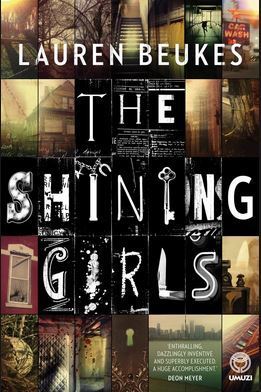 He′s the perfect killer. Unstoppable. Untraceable. He thinks.
CHICAGO, 1931.
Harper Curtis, a violent drifter, stumbles on a house with a secret as shocking as his own twisted nature – it opens onto other times. He uses it to stalk his carefully chosen ′shining girls′ through the decades – and cut the spark out of them.
′It′s not my fault. It′s yours. You shouldn′t shine. You shouldn′t make me do this.′
CHICAGO, 1992.
They say what doesn′t kill you makes you stronger. Tell that to Kirby Mazrachi, whose life was shattered after a brutal attempt to murder her. Still struggling to find the attacker, Kirby′s only ally is Dan, an ex-homicide reporter who covered the case and now might be falling in love with her.
As Kirby investigates, she finds the other girls – the ones who didn′t make it. The evidence is … impossible. But for a girl who should be dead, impossible doesn′t mean it didn′t happen …
Abaddon’s Gate- James S.A. Corey 5 Stars
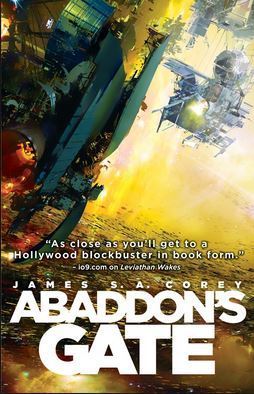 For generations, the solar system – Mars, the Moon, the Asteroid Belt – was humanity’s great frontier. Until now. The alien artifact working through its program under the clouds of Venus has now appeared in Uranus’s orbit, where it has built a massive gate that leads to a starless space beyond.
Jim Holden and the crew of the Rocinante are part of a vast flotilla of scientific and military ships charged with studying the artifact. But behind the scenes, a complex plot is unfolding, with Holden’s destruction at its core. As the emissaries of the human race try to decide whether the gate is an opportunity or a threat, the greatest danger is the one they brought with them.
ABADDON’S GATE is the explosive third novel in the acclaimed Expanse series, following the Hugo-nominated Leviathan Wakes and Caliban’s War.
List, description and ratings came from Amazon and were true as of 8/6/13
June 5, 2013
Mind Controlled Legs
So, a few weeks ago I spoke about an incredible, mind-controlled robotic arm. This week in When Science Fiction Becomes Reality, I’m taking it a step further with MindWalker. This incredible invention consists of a frame and robotic parts which move in response to brain impulses.
The frame is designed to be used by people with paralysis who are unable to walk. It is strong enough to support the body’s weight and is also capable of moving in such a way that it allows the patient to ‘walk’.
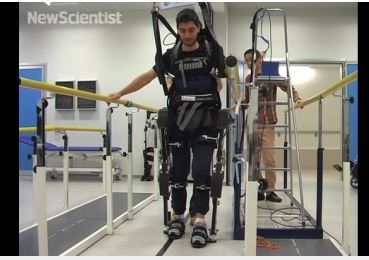
Unfortunately at this stage the ‘mind-reading’ component gets interference from the mechanical movement but the research team is well on its way to solving that problem. In the meantime the frame has been fitted with pressure sensors which respond to the patient leaning left or right, resulting in the opposite leg stepping forward.
The team plans to perfect the brain interpretation mechanism and create a commercial product.
This invention has many similar implications to that of the Robotic Arm. While the brain-control aspect isn’t as streamlined it does have incredible potential. With technology such as this people who have been permanently paralysed will be able to walk. Take it a step further and quadriplegic’s could have a full-body frame which allows both arm and leg movement.
In similar fashion externally controlled robots are easy to perceive: instead of the frame being around your body, you sit comfortable in your chair while the robot does your mind-controlled bidding. These kinds of ‘brain-reading’ advances are fantastic for the medical field but think of the other potential consequences. If we stretch it out into the realm of science fiction it’s easy to see a mind-controlled spaceship. What about mind-controlled cyber-soldiers? How long until implants in our brains can do almost anything for us, from controlling the lights, television, our car, doors and so on?
If you think about it, our brains are just organs which generate electrical impulses. We have technology which can detect and interpret these impulses so really it’s only a matter of time before every thought we have can be read and translated by a machine (for good or evil). The idea of your thoughts appearing on a TV screen isn’t so far fetched if you ask me…
What do you think of this up-and-coming thought-controlled technology? Where do you see these advances leading us in the future?
May 31, 2013
The Herald of Darkness- Map
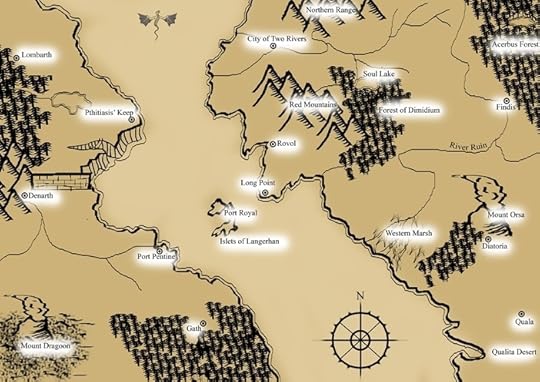
Hello everyone, today I would like to reveal to you the map for The Herald of Darkness, Book Two of The Lost Child Saga, which will be released later this year.
This map is an expansion of that shown in The Fallen Star, and encompasses the new lands described in the second novel.
Have a look and tell me what you think!
May 29, 2013
The Invincible Mould
If you thought Superman was tough, wait till you hear about this mould!
In this week’s When Science Fiction Becomes Reality, I’m looking at an amazing mould which has been collected from Sverdrup Pass, Canada. This mould has been trapped under a glacier for over 400 years and yet plant it in some fertilizer and give it some water and BANG healthy new mould starts to grow.
At least, that’s what these researchers have found. This particular mould (or bryophyte), was lying dormant for all of those years until it was given the right conditions and essentially came out of hibernation.
Bryophytes are extremely good at surviving, in fact, any one of their cells can act as a ‘stem cell’ and grow into a complete organism. Bryophytes are also capable of controlling water content and therefore can go into hibernation when conditions are unfavourable (such as when they are crushed by a glacier), and then come back to life when conditions become more favourable (fertilizer + water).
Now you may not think re-born mould is very exciting but think about the implications. It has been assumed that after the ice-age, when the glaciers retreated that all of the land left behind was essentially barren. But wait! There was more than likely mould, living on, which sprang back to life once the glaciers retreated. What could this mean for plant evolution? Or re-population of the ‘barren’ landscape?
Now looking to the future, what could these moulds mean for the future of the Earth (whether real or science fiction). Let’s say disaster strikes (for whatever reason) and all life as we know it is wiped out. You may think that the Earth will remain as a barren wasteland, but, I propose that little bryophytes will live on, protected by the glaciers. As temperatures change the glaciers will move and some of these moulds will be freed. From there it is a simple process for them to spread and re-populate the earth; essentially starting evolution all over again (albeit a few million years ahead of schedule- no need to gather those self-replicating molecules again).
What other ancient organisms (or dare I say creatures), might be hidden in the ice waiting to come out? Could the future of Earth contain nothing more than a mould take-over?
Tell me your thoughts below, and don’t forget to tune in next Wednesday for another exciting episode of When Science Fiction Becomes Reality.
Read the study here: http://dx.doi.org/10.1073/pnas.1304199110
Photo courtesy of C. La Farge
May 22, 2013
Bacterial Calculator
So a calculator made out of E. coli cells might not be the most classiest thing you’ve ever heard of but that’s what we’re disucussing in this weeks When Science Fiction Becomes Reality.
So what is this bacterial calculator? Well some clever scientists over at MIT have decided to scrap the idea of converting bacterial signalling into digital and instead have embraced the analogue.
In simple terms they have put pieces of DNA into these E. coli cells which causes them to emit a signal in the presence of different substances. Depending on how much of the substance is present the cells will release a corresponding amount of signal.
Now imagine, if you have two cells, each detecting a different substance but emitting the same signal. If you were to measure the amount of signal being outputted that would tell you the combined amount of each of the original substances- there you have addition.
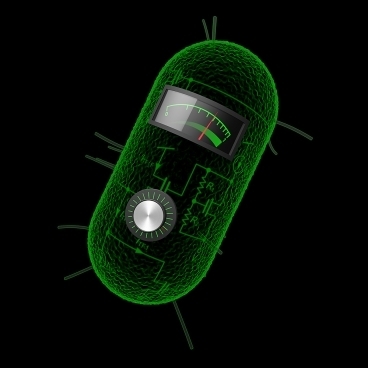
A similar principle is used for subtraction, division, multiplication and power functions. Incredible!
But what’s the point? I hear you ask. You already have a very nice calculator that can do all that. Well the scientists are hoping that in the future cells such as these will be able to measure and detect abnormal cells, such as cancer cells, and then eliminate them from the body.
It’s a simple system using feedback responses but an ingenious invention and has many future applications. Let’s take it one step further. Everyone’s seen Dr. Who (if you haven’t go and watch it, then come back), where the nanobots can enter someone, diagnose the problem, fix it and then leave all in the blink of an eye. Well couldn’t this technology be used for just that? You inject the cells, they move around the body and when they come into contact with a cell which is producing chemicals associated with cancer these little angels start producing their own chemicals which ultimately results in the offending cell dying. Cancer cured; just as good as any nanobot.
Aside from detecting and destroying abnormal cells, these kinds of ‘computerised cells’ could achieve all kinds of other things. What about detecting radiation levels? Or poisonous gases?
What if these clever little cells could tell us how a person feels based on the hormones and chemicals they’re producing?
Of course detector cells such as this have other uses too, let’s say you are a lonely wanderer on another planet. Roaming the belly of a dark tunnel. What do you use for light? Simple! You pull out your bacteria, expose them to the right substance and they become luminescent, lighting your way back to the planet’s surface.
How do you think these computerised bacteria could be used? Where will this new advance take your sci-fi dreams?
Read the full paper here.
(Image from MIT website)