Saffron Bryant's Blog, page 4
November 8, 2013
Dawn of Djesus Undead – Book Review

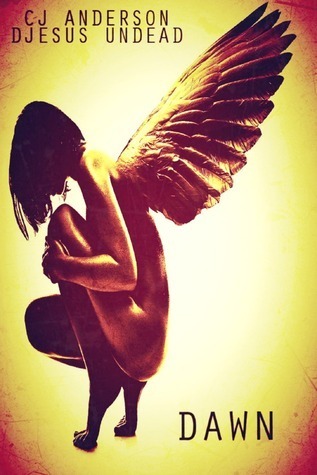
Dawn of Djesus Undead is the story of God gone mad. A rabid killer Jesus is on the lose sending natural disasters and plagues to Earth. Even the angels are not safe as the bounds of God’s fury know no bounds.
Overall the concept of this book is fantastic; a God with human imperfections is unleashed on the world.
However, I feel that the novel could do with some more polishing. For a fairly short book there were quite a few errors which jarred my reading a little. But, let’s be fair C.J. Anderson is kindly giving this book away for free so I can easily forgive a few typos.
 The one thing I couldn’t forgive, which significantly brought down my rating of this book (otherwise it could well have been 4 stars) was the character inconsistencies. So a lot of the book is told in the third person with no specific characters, that’s fine. But the rest of it is told from the perspective of one man who used to be in special ops.
On the face of it, an ex-special ops is a great character to choose. However, I found that the man and his partner’s personalities just didn’t make sense. They’re both deeply religious (enough to delay sex until marriage), that is until the ‘apocalypse’ comes, at which point all inhibitions are thrown out of the window. I don’t want to spoil all the saucy details but within the time frame of about 24 hours the main character goes from not wanting to have sex before marriage, to doing a succubus.
There were several other character inconsistencies throughout the book which I found really detracted from my reading experience. It’s a great idea, great concept and I think if it underwent a bit more polishing, with some input from readers it could be a great book.
So, having said all that at this stage Dawn of Djesus Undead gets 2.5 stars, so not bad but not good- just average. However, if you’re someone who doesn’t really care about characters than I encourage you to pick up this book, I think you’ll really enjoy it and at the moment it won’t cost you a cent.
Check out C.J. Anderson’s other books here.


November 5, 2013
Draw in 3D
This week in When Science Fiction Becomes Reality I have a very cool invention which is hot off the press to show you: a 3D pen.
It works in much the same way as a 3D printer except that you use it like you would any other pen. It uses melted plastic which cools to a solid almost as soon as it comes out of the pen.
I highly recommend you watch the videos of it in action, it really is almost like drawing in thin air.
 Ok, so at the moment you may say that its more of a toy without ‘real world’ applications but I disagree. Sure at the moment you would mostly use it for decorations (but that’s an important part of the ‘real world’ too) but what about the future?
Even now you could build some useful things with such a pen. What do you currently use that’s made of plastic? Need a paper clip? BAM draw your own!
 But more seriously folks; let’s say you’re trapped in your space ship with nothing but that pen (and several bags of the unmelted plastic which acts as ‘ink’). Need a cup? No problem, just draw one! Need a box to hold something valuable? No problem, just draw one! Need to patch up your space ship so you don’t die? No problem, just draw one!
And that’s just what could be achieved with the technology as it is. What could be achieved with further adaptations? What if the pen was modified so it could use items other than plastic? 3D printers are already being modified to use other ‘inks’ like cells and collagen to build bionic ears.
We already have soldering pens which put out metal much like this, using it to ‘draw on’ wires isn’t really that big a step. Or what about when we eventually get printing food worked out? It’s not a big stretch of the imagination to see putting the ingredients for a pizza into a pen like this and drawing yourself an edible pizza!
What would use this pen for? How would you want it to be adapted for even cooler uses?
The space ship in my science fiction novel has a 3D ‘food generator’ (read it here). How would you use this technology in your writing?
Learn more about this 3D pen here: http://www.the3doodler.com/
November 1, 2013
Dr Who: The Sontaran Games – Book Review
So you love Doctor Who. You’ve watched every episode (several times) and now you’re eagerly awaiting the 50th Anniversary special. But what do you do in the meantime? There’s a complete Doctor Who drought!
 Well, if you’re like me you turn to other platforms, in this case; books. Little did I know that there are many MANY Doctor Who books just waiting to be explored. So then of course came the dilemma, which one to read?
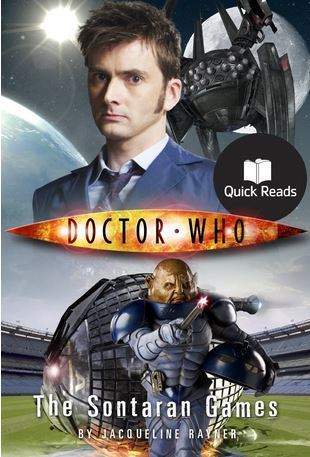
I ended up going with Doctor Who: The Sontaran Games, one of the ‘quick reads’. Now, I was nervous about reading a Doctor Who episode, what if it was nothing compared to the TV series, or what if it changed all the basic rules of the Whovian universe?
Well rest-assured, it did no such thing and I did thoroughly enjoy the book. I’m giving it 4 stars but please read on to find out why.
Firstly, it was well written and perfectly edited, so full points on that front. It only took me just over a half hour to read but that was expected, it’s clearly advertised as a ‘quick read’. Because of it’s length I didn’t get an opportunity to bond with the characters, which would have been a problem if it was any old sci-fi novel, but of course it’s Doctor Who, so I already know who he is, what a TARDIS is and who the Sontaran are.
The story was entertaining and fast-paced with the obligatory twist at the end. Overall it was a good read. I would warn however that if this had been any other science fiction novel, where I wasn’t familiar with the universe the depth of this book wouldn’t be enough. So if you’re not familiar with Doctor Who, and aren’t already a fan then I would recommend you don’t select this book, pick one of the full length novels so you can really get to know what it’s all about.
 On the other hand, if you are already a hard-core Whovian and need a fix to last until the next episode you’ll enjoy the Sontaran Games. As with the TV series it has some humour which had me giggling out-loud in places. So please go ahead and have a read and be sure to let me know what you thought.
Have you read any other Doctor Who books? Which ones have you enjoyed?
To read a snippet of my work-in-progress science fiction novel go here.
If you’d like to see more book reviews for ideas on what to read this weekend, see the full list here.
October 29, 2013
Bacterial Lightbulbs
This week in When Science Fiction Becomes Reality I want to show you something very cool: light-bulbs made of bio-luminescent bacteria.
What is it?
Basically the idea is to have a light ‘bulb’ composed entirely of glowing bacteria. This system would provide light without using any electricity.
The Science:
The science behind this concept is relatively simple. The gene for a glowing protein is inserted into a bacteria (e.g. E. coli) and these form part of an ecosystem contained within the ‘bulb’. This is a self-contained system which recycles its own waste while emitting the glow.
 The Future:
With this kind of technology it would be possible to completely replace electrical lights with bacterial ones. These bacteria driven lights wouldn’t require any electricity, making them almost completely waste free. At the moment the production is limited and the glow wouldn’t replace a standard electrical bulb but it’s early days.
It’s even possible to insert these glowing genes into plants and animals. Imagine if streets and parks, and even your home, was lit by the glow of fluorescent plants? While your glow-in-the-dark cat walks down your driveway.
In-fact, imagine a whole world which is lit by the cold glow of luminescent proteins (don’t generate heat). “Have you fed the lights yet dear?” As you go along sprinkling nutrient broth onto the glowing bacteria.
————————————————–
Personally I’m excited by this field of synthetic biology, the benefits to the environment in terms of power-saving are tremendous but mostly I’m excited about the truly ‘alien’ nature of this technology. In my head I can see a spaceship lit by the glow of bacterial swarms… [Goes back to writing science fiction novel].
What do you think of these breakthroughs? If you could pick one thing to glow in the dark what would it be (living or inanimate)?
Don’t forget to check out other cases of When Science Fiction Becomes Reality.
You can read more about this project (and see some great pictures) here.
October 25, 2013
Pippa Jay – Author Interview
Are you an aspiring science fiction author? Are you fan of Dr Who and science fiction? Do you enjoy a little bit of romance thrown into your novels? Then Pippa Jay is just the author for you.

My name is Pippa Jay, author of science fiction with a romantic soul. I live in Colchester in the East Anglian region of the UK, in Britain’s oldest recorded market town which was burned to the ground in Roman times by Boudicca, Queen of the Iceni tribe. My household includes my husband of twenty years, three red-haired little monsters, a leopard gecko by the name of Yoshi, and six bantam hens – Eowyn, Rush, Kyru, Chiana, Scoop and Tails.
What books have you written?
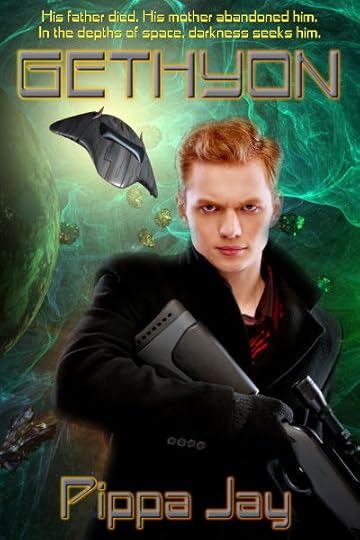
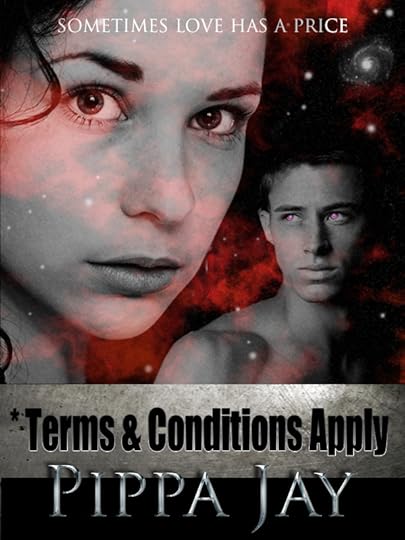
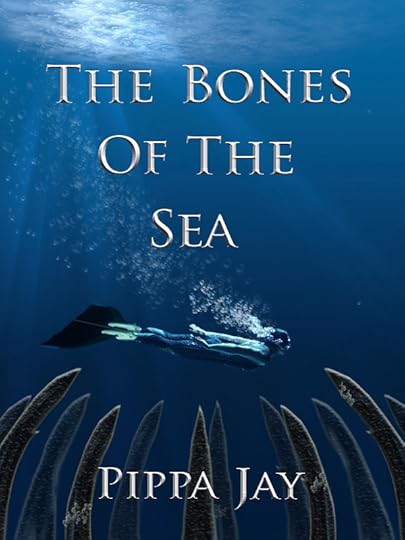
I have two novels – Keir (science fiction romance) and Gethyon (YA scifi), plus three short stories, one of which is part of a free science fiction romance anthology – Tales from the SFR Brigade. The other two are The Bones of the Sea (free scifi) and Terms & Conditions Apply (hot scifi romance).
Who is the target audience for your books?
Primarily scifi and/or romance fans, ranging from YA to adult. Most of my readers fall into the sfr category.
 Briefly describe your books:
Most of my books are a reflection of the scifi series and films that I love best. If you like Doctor Who, then Keir might be the book for you. If it’s Star Wars, then Gethyon. Most of what I write comes under the space opera umbrella, and are action/adventure at heart. Some are quite light on the tech side, but Gethyon is my favourite in terms of technology, mostly because it has spaceships!
Is there a particular genre that you prefer to write?
Scifi, without question.
Do you also prefer to read this genre?
Yes, but I’ll read most speculative fiction, with or without romance. I’m not a fan of horror though.
Do you read a lot?
I’m reading less and less published works these days, but I do more beta reading for friends and colleges than I used to. My TBR pile is scarily huge though.
What is your favourite book?
A Wizard of Earthsea by Ursula Le Gui.
Why?
A tortured hero bordering on the line between good and evil, magic, wonderful world building, and DRAGONS! What’s not to like? Also Ged has been a big influence on some of my heroes.
How do you write? E.g. pen/computer, do you plan everything out first or just write on the fly?
I do a lot on my smartphone now – while away on holiday in the summer, I did 17K of a novella just on my phone! But it’s mostly straight onto my computer. Nothing is planned. I tried to plot for the couple of times I attempted NaNoWriMo, but didn’t stick to it.
 What advice do you have for other authors regarding writing? (e.g. getting over writers block, editing, etc.)
I always quote Galaxy Quest, “Never give up – never surrender!” Persistence is key. Also research. For things like writer’s block – look for inspiration by flicking through a photo stock site like dreamstime.com. Go for a walk or a drive, play some music, watch a film, read. I found one of the best cures is housework. Muse hates it!  In terms of editing, get together a good group of crit partners and beta readers (try CritiqueCircle.com or join writing groups/communities. Or join one of the many weekly blogging rings). Try EditMinion – a free automated piece of editing software – but don’t treat that as the only thing you’ll ever need. It helps, but a good and (at least partially) human editor is far better!
What do you think is the most important thing in science fiction writing?
Get your science right and keep it consistent. That doesn’t mean it has to stick exactly to current theories, although don’t go breaking the laws of physics with long established basics like gravity and momentum. But if you give a plausible explanation for how and why something works, don’t go breaking your own scientific rules. Also don’t rely on things you see in science fiction films. Remember, they’ve been created by Hollywood to look good on the screen, not necessary based on fact like something by NASA!
How do you create your characters?
Usually I start with an action scene in my head, so I’ll have an idea how they look, and how they react in that scene gives me the start of their personality. Names often come with that or soon after.
Who is your favourite character (that you created)? Describe them….
Whichever one features in whatever story I’m working on at the moment! So right now that would be my rogue superhero Nelle, a kind of Art Deco Catwoman/Batman hybrid. Her super strength, speed and invulnerability come from a black second skin that she grows every night, transforming her. She’s arrogant, sassy and conflicted, but she’s determined to bring down the bad guy even while not considering herself one of the good guys either. She’s so much fun.
 How do you market your books?
Blogging, social networking, and the odd giveaway mostly. I’m active on several social media platforms, although I have to admit Twitter is my favourite. If you ever want to chat, that’s the best place to find me.
Are you happy with how well they sell?
Could always be better! No, I’m surprised to be selling any, being a new author in a niche genre. But I don’t have any marketing skills and I’m still trying to figure out the best way to improve those.
Are you happy with how they’ve been received?
Yes. Overall the feedback has been positive, and generally the negative ones have been down to a reader not connecting to a character rather than down to flaws in my writing. Not much I can do about that, except write a wider range of characters.
What advice do you have for other authors in regards to marketing?
What’s worked best for you? Please don’t spam people with your book! Getting hit by DMs on Twitter, particularly the automated ones, almost demanding that I check out their book/website/FB page is an instant turn off. Also constant tweets to buy the book, with little or no interaction between. Same on Goodreads and Facebook. I’m much more inclined to check out a book or author if I’ve interacted with them first. The whole point of social media for me is the social part. Just using it as free advertising space is not going to work. I would say the best thing is to (and I quote my friend Liana Brooks here) a. Write excellent books, b. Write lots of them, and c. Be visible. That last bit is my own thought.
 The covers of your books are lovely, Did you come up with the ideas/artwork yourself? Was it difficult to get the covers to match what you had in mind?
Thank you! With my debut novel Keir, I had minimal say on the cover, and it was nothing like I expected. But it was a hard one to do when my male MC is a blue-skinned, tattooed guy, and the cover has had plenty of compliments. For Gethyon, I was lucky to be able to request and work with the publisher’s cover designer (Misa Buckley) because I already knew her outside of work. I didn’t get the final say in it, but was able to bounce ideas back and forth, and send her images including a mock draft I made myself. The Bones of the Sea was made by another friend and cover designer (Dani Fine) after she’d read the story, and it matches the elements in the story perfectly. For Terms, again I did my own rough draft first, and Dani did the final polished design.
What is your opinion on Traditional vs. Indie publishing?
I think an author should follow whatever path makes them happy and ignore the nay sayers. Too often people think that it really is a case of one or the other being the only ‘right’ way, and that one has no merit over the other. There’s still a huge bias against indie authors, and I’ve actually seen it getting worse rather than better. For me, I’ve very happy being a mixture of small press and self published. I still harbour a tiny hope of having an agent and a Big 5 deal one day, but I’m content with where I am.
What has been the hardest part about writing?
Time. Writing, researching, editing (and promoting) are all massive time sucks. Tricky when you also have a family, and they have to come first. Right now I consider myself very fortunate to be able to spend the days my kids are at school almost fully devoted to writing.
Where do you see the future of your writing going?
I would love to make a paying career out of this. At the moment it isn’t, but until my youngest goes to secondary school, hubs and I have agreed I can spend that time working toward it. That gives me five years. I also want to explore different subgenres of scifi. I have a decopunk and a cyberpunk I’m working on, both things I’d never thought I’d write.
 If you could say anything to your readers, what would it be?
Thank you so much for buying my books and I hope you’ve enjoyed them!
Pippa, thank you very much for joining me. Readers if you’d like to know more about Pippa: A girl who writes scifi. Whovian, Scaper, & Sith-in-training. Loves The Rasmus. Published by Lyrical Press Inc. & Champagne Books. 2012 Readers Favorite Finalist, 2013 Aspen Gold finalist, 2013 Gulf Coast RWA Chapter Silken Sands Self-Published Star Award Finalist, The Kindle Book Review’s 2013 Best Indie Book Awards semi-finalist, and 2012 SFR Galaxy Award winner.
Then check out her various online presences:
Website: http://www.pippajay.co.uk
Blogs:
Adventures in Scifi http://www.pippajay.blogspot.co.uk
Spacefreighters Lounge http://www.spacefreighters.blogspot.com
Romancing the Genres http://www.romancingthegenres.blogspot.co.uk/
Twitter: https://twitter.com/pippajaygreen
Goodreads: http://www.goodreads.com/author/show/5054558.Pippa_Jay
Facebook: https://www.facebook.com/#!/pages/Pippa-Jay-Adventures-in-Scifi/114058821953752
SFR Brigade: http://www.sfrcontests.blogspot.co.uk/
October 23, 2013
Device Can Monitor Your Health and Deliver Medication
It’s time again for When Science Fiction Becomes Reality.
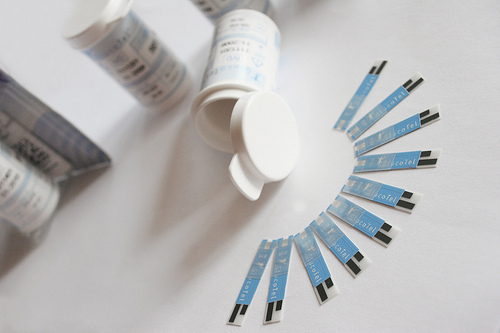
This one is pretty cool and has tremendous implications for medicine and health. The basis is that a tiny device is implanted into a person. The device is composed of cells which are programmed to respond to certain conditions. So far two types have been presented:
1) Insulin increase implant: This clever little device reacts to blue light and causes increased insulin production.
2) Monitoring implant: This version of the device is programmed to emit a green light when it comes into contact with heavy metals. This provides a kind of ‘warning’ or indication of toxicity.
So far these devices have been used in mice but I’m sure it won’t be long before they roll out human trials.
 What does it mean? In this regard the possibilities are endless, such devices could remove the need for long term injection therapy e.g. targeted cancer therapy and diabetes injections.
They could also be used as a broad spectrum warning system, imagine if they were programmed to detect chemicals related to tumours, or kidney failure, or if they could detect blood deficiencies. The device could be programmed to respond differently depending on the problem, thus giving an early warning and potentially saving millions of lives. If everyone had this kind of portable 24/7 health monitor we would see a major decrease in fatalities due to certain conditions.
Read the study here.
Science Fiction: The world of science fiction needs new and exciting technologies, it’s not enough to just have a spaceship (already got them), or a Mars colony (estimated to happen in 2021), or portable communicators (cell-phones), or genetic manipulation (done it). The science fiction of today must push the boundaries of reality and what we know to be true. Implanted health monitors (with the ability to administer the required medicine) could be just the futuristic technology your sci-fi story needs.
Helpful hint: If you’re writing a science fiction novel, find a scientist! It’s possible the technology you invision as super-futuristic has already happened. I know I’ve beta-read manuscripts where I’ve had to point out to the author that the genetic manipulation they have described can already be done.
What exciting futuristic technology are you looking forward to?
Would you get a personalised health monitor?
If you enjoy science fiction check out this sneak peak of Volume #1 of the Nova series.
Image thanks to Bodytel at flickr
October 19, 2013
Murder Has Consequences – Book Review
I literally had goosebumps the entire way through this book. I read the first one in the series a few months ago and absolutely loved it (see a review of Murder Takes Time here), but I have to say, this was even better.
 Giammatteo has an incredible talent for weaving in mystery and suspense along with deeply thought out and believable characters. Murder Has Consequences is a phenomenal read, with spine-tingling scenes that had me burning through pages. I finished the whole thing in just two days because I couldn’t wait to see what happened next, and now I’m pining away for book 3.
I don’t want to give too much away but suffice to say, there are murders (lots of them), and there are investigations. You get to know the victims, the investigators and even the perpetrators. It’s almost as if you’ve known them your whole life. I found myself screaming in my head “No, no no!”, and it wasn’t because what the characters were doing was unrealistic but because it was so dammed true to life!
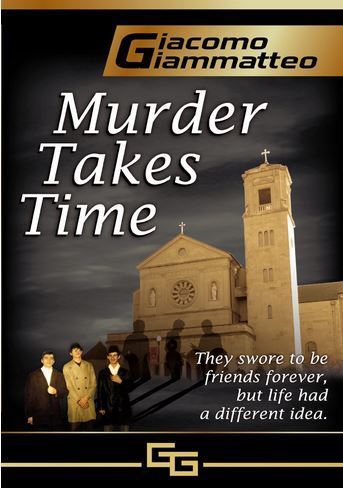 I don’t usually read murder mysteries but I will be first in line for the third book in this series. So, 5 stars for this one (and trust me, that almost never happens), the formatting was spot on, I think I noticed 1 typo in the entire book and the storyline was just brilliant. If you’re a fan of murder mystery (or even if you’re not) go and buy Murder Takes Time; you’ll be so sucked in that I won’t even have to encourage you to buy Murder Has Consequences- you will have already done it!
One warning though, it’s not for children or the feint of heart. If you have a weak stomach, maybe these books aren’t for you. They’re murder mysteries, so don’t be shocked when there’s violence. It’s not all and out gore but it is there, told in such a way that a shiver is forced up your spine. So, with that warning in mind go forth and be trapped in Giammateo’s world.
See how Giammatteo’s work compares to that of Agatha Christie’s Body in the Library.
If you’d like to know more about this series read an interview with Giacomo Giammatteo.
What mystery books have you read recently? Have you read Giammatteo’s books, what did you think?
October 16, 2013
Mind Reading: with electrodes
This week in When Science Fiction Becomes Reality, I’m excited to touch on a topic that everyone is interested in; mind reading.
So far the idea of mind-reading has been mostly confined to the realms of sorcery, but what if someone could actually look at the activity of your brain and determine your thoughts?
 Researchers have recently shown (by accident), that a very specific area of the brain lights up when a person thinks in terms of quantity, e.g. ‘more than’. At the time the researchers were analyzing which areas of the brain are involved in certain activities and noticed that this particular area (activated when solving mathematical equations etc.) was also activated when involved in everyday conversations about quantities.
While this may be only a small step in terms of the brain’s entire vocabulary it’s a pretty incredible achievement. The work in this study could lead to more advancements, like the association of other areas of the brain with other thought patterns. Eventually this could be put into almost a ‘brain-wave translation dictionary’, e.g. activity in section C7 means ‘I’m hungry’.
Medically this kind of technology could help people who have been rendered mute or unable to speak e.g. through strokes. Imagine if you have been unable to communicate, and then suddenly people know exactly what you want?
Of course at this stage we can’t go around attaching electrodes to everyone (aside from the ethical issues), it’s not a simple process. The people in this particular study had parts of their skulls removed to allow attachment of the electrodes. However, as we all know, technology is becoming more advanced everyday. How long before such electrodes become a tiny chip which is clipped onto a person’s hair?
Moving even further into the realm of science fiction, this technology could certainly be used for evil as well as good. Just think George Orwell’s 1986- a tiny chip that reads your thoughts and conveys them straight to the ‘overlords’. CCTV’s don’t look so invasive now do they?
And of course a step on from that is the possible follow on to mind-control. Ok, so now we can read brain activity but what if you could influence it? What if you could insert electrodes to stimulate certain regions and cause a person to think about something specific or to think or feel a certain way (fear, anger, aggression, love)? Further down the rabbit hole we go…
You can read the original article here.
What do you think of this method of mind-reading? What was the coolest piece of science trivia you heard about this week?
If you’d like to read about more incredible scientific breakthroughs check out past episodes of When Science Fiction Becomes Reality.
And if you’re a fan of science fiction make sure you check out my sneak peak, of the up-and-coming Nova series.
October 12, 2013
How to Survive the Zombie Apocalypse
We’ve all thought it; what would I do if the zombie apocalypse happened right now. There are memes flooding social media; e.g. what would your weapon be if you only had time to grab one thing from your desk? The world has definitely fallen into another zombie craze, with Walking Dead and World War Z being just two examples.
 But I want to get serious people. I’ve spent a long time thinking about this (way too long really) and here are 5 steps you can take to survive the zombie apocalypse.
Now I’m going to make a proviso here; while these strategies might help in any old zombie apocalypse they are tailored to a specific type of zombie; the fast-moving, rabid, but not overly intelligent zombie. Think the speed of World War Z zombies with the intelligence of Walking Dead zombies.
Ok, let’s get started, you may want to take notes if you plan on surviving the coming apocalypse:
1. Decide on a primary safe-house.
This should be a secure location preferably away from population centers. You should know exactly how you plan on getting there, remembering that roads may be blocked.
 2. Supplies.
Where will you get the necessary supplies for the coming apocalypse? Food, fuel, weapons. Is there an army-store near your secure location? A shopping center? A fuel station? Eye them off now, in a zombie outbreak there’s no time to torment yourself with the ethics of stealing fuel from dead people.
3. Don’t wonder off alone.
We’ve all seen it. Who wanted to kill Carl (Walking Dead) when he wondered off into the forest on his own? Well then don’t do it! I don’t care if you’ve had an argument with your group, or if you hear a strange noise in the darkness- DON’T GO WONDERING OFF.
4. Learn to hunt and survive in the wild.
So, zombies come from people. Therefore there are going to be more zombies where there are more people. So, logic would suggest the best survival method is to go into the middle of the wilderness or desert and wait for all the zombies to starve. Who knows how long that will take??? So, you have to be able to live without provisions in the middle of no-where. I’d start practicing now if I were you.
5. Don’t fall in love with a zombie.
Please, please, please, don’t believe what you saw in Warm Bodies, it was all lies. Zombies will not grow feelings and want to protect you- they want to eat you. So, don’t under any circumstances try to save, protect, befriend or fall in love with a zombie!
I hope you find these tips useful in the zombie apocalypse! Personally I’ll be getting on a boat and sailing out to the middle of the ocean, maybe find a nice deserted island, and spend the rest of my days fishing in the sunshine. (I’m operating on the premise that zombies can’t swim).
And if you like zombies, be sure to check out the short story by Michael Cairns, it’s a fantastic read.
Did I miss anything? What would you do in a zombie apocalypse? What’s your safe-house like?
September 18, 2013
Science Fiction Which Became Science Fact
Today in When Science Fiction Becomes Reality I have a fun list to share; major science fiction technologies which have since been created. That is, how our world now is the ‘science fiction’ setting of past decades.
 1. Jules Verne predicted the moon landing in incredible detail (including the weightlessness of the astronauts) 100 years before the Apollo mission.
2. Again Jules Verne conceived the submarine. In fact, it’s often thought that it was his imaginative idea that sparked research into the possibility of deep sea exploration in the first place!
3. Mark Twain, in a little-known story; From the ‘London Times’ of 1904, predicted the internet. That’s right, he dreamed up the ‘telectroscope’ which used the phone system to allow information sharing in 1898!!.
4. H.G. Wells predicted the Atomic Bomb in 1914. He even predicted the danger of radioactive fallout.
5. Hugo Gernsback predicted radar (and roughly how it would work) about 20 years before it was invented.
6. In 1968 Arthur C. Clarke and his 2001: A Space Odyssey described the iPad (in his case called the ‘newspad’).
7. Who knows who first came up with the idea for a flying car but the hover-car has certainly been a staple in many science fiction stories. Now we have them in a variety of forms.
8. The Star Trek communicator devices are eerily similar to modern day flip-phones.
9. In 1920 Karel Apek’s play Rossum’s Universal Robots introduced robots for the first time and the name has stuck.
10. In 1988 Edward Bellamy predicted the elimination of money due to plastic cards loaded with credit. That’s right, 100 years before the first credit card Bellamy’s novel Looking Backward predicted their existence.
Isn’t it incredible how far we’ve come? What science fiction items will become science facts in the near future? What predictions do you have for new technology? Tell us about it in the comments section below.