
Matthew Arkin's Blog, page 5
May 28, 2013
COMMENCEMENT ADDRESS TO THE AMERICAN ACADEMY OF DRAMATIC ARTS.
Thank you, Karen, for those very kind remarks. The credits were accurate, but I wish that even a tenth of the nice things that you said about me were true. If your teaching is only a mere shadow of the acting ability you just displayed, then these students have indeed been in good hands. I also have to say that I am truly honored to be here to speak to you all today, current students, the distinguished faculty and staff of the American Academy of Dramatic Arts, and the gathered families and friends who have come to help us all celebrate you, the graduates, on this wonderful day. I am thrilled as well, because in 1932 my grandparents met and fell in love at the New York City campus of this institution. But as I stand here, I’m only left wondering, as I so often am when I’m on stage, who backed out? Who wasn’t available? But let’s move on to more important things.
We all know the saying, “If at first you don’t succeed, try, try again.” Good advice, particularly for those of us in the dramatic arts. In a 2012 Wall Street Journal ranking of unemployment rates by occupation, actors were listed as number two, sandwiched in between “textile bleaching and dyeing machine operators and tenders” in the number one slot, and “boilermakers” in third place. The journal somehow has the employment rate for actors listed at 35.2 percent. I don’t know who they’re talking to. Using that statistic, we’d have to say that 64.8% of actors are working and having some measure of success. If we look at the Actors Equity Association statistic, which is, I think, a far more accurate number, we have a 90% unemployment rate. So that means that only 10% of actors are having any measure of success. “Wow,” you must be thinking, “this is a gloomy way to start off a commencement address. I thought it was going to be a little more inspirational than this.” Not what you expected at all, huh? Well, I’m here to tell you that I am undaunted by these numbers, and I think you should be as well. I think your chances of success in your chosen field are infinitely higher than 10%. I think they are infinitely higher than 64.8%. I think they are close to one hundred percent, and I’ll tell you why, but first, a little background.
As some of you may know, some of you may not, I grew up in a fairly successful theatrical family. My earliest memory of going to visit my dad at work is hanging out backstage at Broadway’s Booth Theater while he was performing in the hit comedy Luv, by Murray Schisgal. I remember after the show, being allowed to jump off the set of the Brooklyn Bridge into the waiting mattresses, just like my dad did in the show. Really cool. Decided right there and then that I wanted to become an actor. The rest of my childhood was spent on movie sets, and that’s where I learned what an actor’s life is really like. Sure, I learned a lot about craft, about story, about how the rhythms of the day go when you’re making a movie. But I also learned that being an actor is a financially secure career, where big job follows big job follows big job, and there is always enough to take care of your family, to send your kids to private school, to buy the new car that you want.
Then, when my older brother graduated high school just before I entered it, he came out to Los Angeles to pursue his own career, and again, I learned some valuable lessons. I learned that when you get to LA, you immediately start getting guest starring roles on shows like Barney Miller, Happy Days and Hawaii Five-O, and that within a couple of years, you land the lead in a television series. Yet for some reason, all of these incredible lessons about how easy it is to succeed in show business were lost on me. I ignored them all, went to college, went to law school, practiced law for five years, and was miserable. Then I finally gave in, accepted reality. I threw away my wild fantasy of making a living as a lawyer and decided to settle for the safety and security of an acting career. Boy, was I in for a surprise.
Actually, I can’t complain about the trajectory of my career. I’ve been truly blessed, starting out with showcases in New York City, moving up to smaller regional theaters, then to Off-Broadway, then Broadway, all the while slowly but steadily collecting film and television credits along the way. But what was happening inside my head was another story entirely. I knew, although I would never admit it, that if I wasn’t as successful as my older brother, then I had failed. The notion of actually attaining the heights of my father’s career, well, that didn’t even enter my mind, so I was in some sense guaranteed not to succeed. Finally, through enough therapy and self-examination, something I hope you’re taking part in as well, I started to grapple with the idea that I was perhaps holding myself up to a standard too high. Sure, I would tell people that I was satisfied in many ways with my career, which was the envy of many of my friends. I would tell folks that if my dad was a plumber or an accountant, I would already consider myself very successful. So why should I hold myself against the difficult standard of my father’s or my brother’s “success.” I would say all that, but it didn’t really penetrate.
One evening, in 2000, I was having dinner with my older brother, Adam. At the time he was in a very successful television series called Chicago Hope, and he had flown in to see me in the original production of Dinner With Friends. During dinner I mentioned, in one of those rare moments of candor that siblings sometimes have, that I struggled with jealousy over the success he was having. He looked at me and said, “I struggle with jealousy over the success that you’re having.” I couldn’t believe it. I was having the time of my life, mind you. Dinner With Friends was the toast of New York, and I had gotten a Drama Desk nomination, but I was making probably a fortieth of what he was making, and people in the restaurant were recognizing him, not me.
“What do you mean?” I asked.
“You’re in a play that just won the Pulitzer Prize. You’re working with one of the best playwrights and one of the best directors in America. I go to work each week and get handed a script, and I’ve got to do it, like it or not. Sometimes it’s a script that, if I wasn’t on the show, if they just offered it to me as a stand alone episode or film, I’d turn it down.” Hearing him say that was a shock to me, and it was the beginning of an ongoing journey to redefine for myself the meaning of “success.”
I knew a young woman who I had recommended for Austin Pendleton’s advanced scene study class at HB Studio in New York. When she was assigned her second scene, she worked with her partner several times, but always delayed putting the scene up. I finally pressed her on the point and asked her what the problem was. She told me her scene partner was terrible, wasn’t doing the scene the right way, and so she didn’t want to put it up, because Austin wouldn’t be able to see her best work, wouldn’t be able to evaluate her properly. I told her, in no uncertain terms, that she was making a big mistake. She was laboring under the illusion that when she got a Broadway show, or a role on a television series, that she was going to be working with brilliant actors. But that’s not always the case. The quality of your coworkers is never guaranteed. You might be working with some of the greats. But these days you’re also just as likely to be working with Snookie.
You see, one of the problems that we are facing in the arts, in our society, at this point in time, is the cult of celebrity. Being rich and famous has become a goal in and of itself, and reality television and the like only reinforce this. Do you want to be on Broadway? The sad truth is that you’d have better odds of getting there by being on a reality show than by studying your craft. But at what price to your own self-respect? We have to guard against that trend, keep fighting the good fight, so that future generations of artists have examples, something to aspire to.
So given this somewhat sorry state of affairs, what do we do with the phrase, “If at first you don’t succeed, try, try again.” Well, in one sense, as actors, we have to live by it. We have to keep auditioning, keep looking for work, constantly. That will never change. But the challenge that I would like to put to you today is to balance the “try, try again,” with something else: “If at first you don’t succeed, then examine your definition of success.”
What is “success?” One way of evaluating it is by external factors. Other factors are internal. On the external side, it’s clear that so many of us, from time to time, are going to have to find alternative ways of bringing in income. I would encourage you to do so in ways that fill your creative soul, even if they are not what you would be your first choice as an acting gig. I have a friend who is, I think, a brilliant actor. But the world has not yet recognized his talent with the kinds of roles he thinks he should be playing. He has looked on with a mixture of both curiosity and disdain at many of the jobs that I have taken, while he kept donning his waiter’s apron, waiting for something that was fitting for a man of his talents. He is still catering. So don’t fall into the trap of thinking that there is only one way that your creative hunger can be sated. Don’t say, “It’s acting, or nothing.” Creative endeavor will breed creative endeavor, and keeping those juices flowing keeps you better prepared for each opportunity that comes along. Act, teach acting, write a one woman or one man show and tell the stories of your life, direct. Above all, create! It is too easy to fall into the actor’s trap of waiting for someone else to give us a job so that we can be fulfilled. I beg you, don’t give anyone else that power over you.
Many of us are initially attracted to acting because of the charge we get from performing, the pleasure we feel at moving the emotions of others, the thrill of hearing the applause, the attention. For some, it’s a way to find a new kind of home, family, social group. Take the example of my son, He’s a different kind of kid, as I’m sure so many of you are. He doesn’t fit in to any one group. He’s on the Varsity Wrestling Team, but he’s also a writer and an artist. He’s a reader, and a cross-country runner. He’s into fantasy role-playing card games, and into girls, two things that I have tried to explain to him don’t really go together. Then suddenly, because of the insight of one teacher, he was pulled into the high school musical, and now at 15 has just had his first real theatrical experience playing The Man in the Chair in his high school’s production of The Drowsy Chaperone. This was a chance for him to really find himself in a new way, and now the fire has been ignited. I suspect that many of you found your way into the dramatic arts in a similar way. And all of that is great. It’s wonderful to finally find a place where you feel that you belong. But I would like to suggest something to you. The charge you get from performing, the thrill of the applause, even the deep relief and comfort you may feel at finally finding your place in the world … all of that is great. But in my experience, eventually it won’t be enough. All of those ways of evaluating success are centered on what working in our field will do for you. I want you to think about something else. I want you to think about what it can do for others.
Another way to look at “Success” is to break it down into three categories: There is Work, there’s Recognition, and there’s Livelihood. And for each of these, there is a dark side and a light side. Let’s look at work.
There is steady work, and there is work that feeds your soul. Steady work, the kind that you get from a hit television series, can bring incredible financial security. But be careful of this. Remember my conversation with my older brother, where he expressed disappointment at the quality of the scripts he was so often handed. Or my conversation with another friend, who had played the same character for ten years on a police procedural. For most of that time she was bored out of her mind, and now she confesses to me that she thinks she has forgotten how to act, and is terrified of auditioning.
The other kind of career, which may not bring in mountains of money but which pays off in other ways, comes from developing relationships with your peers who are up and coming, as you are. You can experience the wonder of working on new plays, independent films. It may not be for much money, but you can be working with the newest, the best, the brightest, out there on the cutting edge, without the worry of getting fired by the network or the studio if some bean-counter’s bottom line is not met.
Let’s look at recognition. There is fame, and there is the respect of your peers. As to fame, what the heck does that mean, other than getting a table at the hottest new restaurant without having to go on a waiting list? But the respect of your peers? Talk about a thrill. You might not be the one who is getting hounded for autographs, but when Helen Mirren or Anthony Hopkins wants to talk to you after they see you in a show because they were impressed with your work — that’s something that you will carry with you for the rest of your days.
Finally, there is livelihood. There are riches, and there is enough to get by. Again, that big house starts to feel pretty cold and empty if your heart is not filled by the work you do. Nothing beats going to bed at night tired and satisfied, knowing that what you did during the day fed your soul, and lightened the load that someone else was carrying.
Remember above all that we are tellers of stories, and that the stories we tell have the ability to profoundly affect the lives of others. I, for one, know all that I need to know about how things don’t work out. I think the rest of the world is suffering from the same malady. In my work, what I want to do is talk about other things. I think often of the list that William Faulkner enumerated in his 1950 Nobel Prize acceptance speech, a list of the only subjects worthy of artistic endeavor: They are love and honor and pity and pride and courage and hope and compassion and sacrifice. As actors, we have the chance to to live in, and share with others, an imagined universe, an alternate universe, a universe where these are the qualities towards which we strive. My challenge to you today is to worry not about whether you are successful in a material way, but whether you are successful in your attempt to make that imagined, alternate universe a reality.
Break a leg on this quest, and congratulations.


February 24, 2013
NAVIGATING THE WHALE: PART VI
Being a record of my journey as I undertake a new role that, unlike many others I have played, fills me with a sense of immense challenge and a promise of growth, both as an actor and a seeker.
Facebook status, February 11th, 2013: What an amazing first day of rehearsal for The Whale, at South Coast Rep. A wonderful director, incredible cast, great creative team, and an incredibly moving and ultimately inspiring play. So thrilled to be a part of this production.
The first day of rehearsal at South Coast Rep is always so exciting. It starts with a meet-and-greet in the Argyros Theater, where we will be performing. The artistic and managing directors welcome and introduce the playwright, cast, and creative team to the assembled staff at the theater, all of the many people in the different departments that make a huge organization like the Rep run. The director says a few words, and the designers, costume, set, and lighting, present their models and sketches, describing the concept for the show. Next, the cast retires to the rehearsal hall to elect an Equity deputy, sign contracts, and take care of other administrative business. Then a big crowd, all the folks from marketing, wardrobe, props, and other departments, gather to hear the first reading of the script. This reading is somewhat more a performance than part of the rehearsal process proper, to give those assembled a feel for the tone and energy of the play. After that read-through, there are many congratulations and declarations of what a great show this is going to be. Finally, all depart, except for the director, playwright, stage management team, and the actors, and we are left with the small group that will spend the next three weeks in this windowless basement space, getting to know this piece, and each other, intimately. We read the play again, without the pressure of an audience, stopping, discussing, beginning the process of dissection. At the end of the day, we join the rest of the theater staff again to relax at a social gathering on the patio in front of the theater, snacking, drinking soda, beer, or wine. The next day we return to begin our work in earnest.
 With cast members Blake Lindsley, Wyatt Fenner,
Helen Sadler and Jennifer Christopher.Facebook Status, February 13, 2013: Ah, those wonderful first days of blocking a show, when you realize that you have completely forgotten how to act, and you know in your heart it will never come together. Thank God I’ve been through this enough to know that this is only a phase, a necessary part of the process, when we dismantle the whole thing so that we can put it back together, whole, complete, alive. What a great team we have on this journey.
The first week of rehearsal I am struggling through a big learning curve. I’m trying to track the downward spiral of my (Charlie’s) health, working on wheezing and shortness of breath, trying to figure out how to keep that going without hyperventilating or damaging my voice. How do I realistically represent someone who can’t get any breath, and still make sure that I am heard in a 336 seat two-tiered house? I’m trying to understand the symptoms of congestive heart failure, so that I can make my physical symptoms and limitations as specific as possible, rather than projecting a general portrait of someone who just feels lousy all the time. Where does it hurt? How much? When? The theater connects me to two doctors who give me some insights, but this presents an additional wrinkle. Some of what might be authentic has to be expanded or modified for dramatic purposes. What is realistic doesn’t always tell the story in the best way.
Facebook Status, February 14, 2013: This is exactly how I feel, every time the stage manager says, “Okay, let’s take ten.” (This post is linked to a video, illustrating the feeling.)
I am working in the prosthetic suit, which I refer to as my body, for half the rehearsal day period each day. That’s about 3 hours, or just about as long as the ice packs last in the cooling vest. Getting into the suit is an ordeal, but it’s getting a bit easier each day as we practice. The suit itself is such an amazing, intricate piece of design, it deserves another post all to itself, but that will have to wait until after the show opens, so that we don’t spoil the “reveal.” For now, suffice it to say that wearing the suit in rehearsal is exhausting, but necessary. The prosthetic becomes the obstacle through which I am struggling, instead of my having to pretend that there’s an obstacle. The first time I sit down on, and then try to get up from, the couch on the set, everyone watches. “Wow, that was fantastic,” they say. “It looked so realistic, like you were really struggling.”
“Really?” I reply. “Because I was just trying to get off the couch.” I love it when props and costumes do the work. I’m fundamentally lazy, and then I don’t actually have to “act.”
At the end of the first week, the cast comes over to the home of my friend Mitch Cohen, where I’m crashing during this production. We throw some steaks on the grill and have our first chance to relax and bond outside of rehearsal. Mitch is a former student of mine from the South Coast Rep conservatory. After he took my class, I coached him for an audition for a role that he really, really wanted to land. I’m happy to say he’s in rehearsal himself right now for a production of Brooklyn Boy at Newport Theater Arts Center. When I got The Whale, he told me I should stay with him to save myself the commute back and forth from LA, and also so we could spend time helping each other learn our lines. It’s good thing he made the offer, because this play is the most rigorous I have ever done. Staying with him gives me the luxury of focusing on a single-minded daily schedule, as follows:Get up, shower, drink a large glass of water, then coffee and an egg white omelette. Take care of necessary emails and assignments for my acting class. Record and send any voiceover auditions that came in the day before.Drive to Starbuck’s near the theater. Another cup of coffee. Study lines and work on the script. Sitting alone with script, after the first time of putting each scene on it’s feet is always a great time to pull it apart even more, to break things down in the actual story, to get the timeline and present circumstances of each relationship and scene fixed in my mind. We always rush, rush, rush, when we’re first running through scenes, especially if it is stuff that your character is doing alone on stage. It’s important to go over things in slow motion in your mind, to figure out the moment-to-moment beats.Stop at Trader Joe’s next to Starbuck’s and pick up a salad to have during rehearsal break, and something healthy-ish to have for dinner. Then get to the theater early, and check in at the costume department about any changes to my body, and then get into my body when rehearsal starts.Rehearse for three hours.Get out of my body and rehearse for another 3 hours.Go back to Mitch’s house. Have some dinner, maybe a scotch or a glass of wine. Watch some mindless TV, go to bed.Rinse and repeat.Facebook status, February 23, 2013: First stumble-through of The Whale today, at South Coast Rep. This amazing cast has pulled together so quickly, and now we are in great shape to start putting in the fine details. This is turning out to be an incredible ride, and I am so happy to be sharing it with these terrific, generous artists, with the Martin Benson at the helm.
The last day of our second week of rehearsal. I have been struggling to be off book enough to make it through this without holding my script for any of the scenes. The only one I am sure about is Thursday Afternoon, but that’s only because, although I am on stage, I’m asleep through the whole scene. Which is a good thing. It gives me a breather before the race to the end, which feels like kicking it out in a sprint at the end of a marathon.
Before the stumble-through, I talk to Martin about the plan for the next week. I am hoping to have the chance to do each scene a few times without the struggling for breath. I have been focusing on that so much that I feel that I haven’t fully explored some of the relationships and events enough. The cardiac and breathing problems are happening to Charlie, not something that he is himself trying to make happen. It is the other things in the scene that he is struggling to achieve, things that he wants from the other characters, and I feel that I have been losing track of those because my attention has been split. Martin agrees that we should to do that, but I also realize his wisdom in having me try to tackle the breathing from the beginning, before we take it out to work on the other elements. We need to feel confident that it’s going to work when we put it back in, and the other cast members have needed to see it, because my condition has such a strong impact on their own emotional life.
Acting always involves multitasking, but Charlie requires much more of me than usual. I feels like someone is saying, “Pat your head. Now rub your belly. Okay, now lift your left foot up and balance a plate on it. Now hop up and down on your right foot. Now sing “Una Furtiva Lagrima. Oooops, you’re not patting your head … okay good, but now you dropped the plate.” But we still have two weeks till the first performance. Plenty of time. I’ll get it.
We start the stumble-through, and it goes better than any of us thought it would, I suspect. That is until about twenty minutes before the end, when my hands start to tingle, then go numb, and I am totally lost, with no idea where I was in the story. This is not the normal “What’s my line” or “What happens next?” moment. I am completely disoriented. I’m not sure exactly what happened, but I think I was experiencing something similar to what athletes call the “bonk.” We stop for a few minutes, I eat an orange, drink some water. The feeling returns to my fingers, my hands stop shaking so much, and I’m able to refocus and get through to the end.
The first stumble-through, as daunting as it is, is always such a rewarding experience. After pulling the text apart, it is so good to put the pieces back together, as rough as it might be, so that again we can get a sense of the arc of the whole show. For me, in this show, it has helped me to see how I have to pace myself, and also showed me that a lot of the progression of the physical symptoms, and the heightening of the emotional circumstances, will be easier to do when the scenes are stitched together and each element is occurring in context. It also helped us to figure out that there’s got to be plenty of Gatorade around, so that the audience doesn’t have to come back to the theater on another day, to catch the rest of the show.
For more information about this production of The Whale, visit the the South Coast Rep website, and please be sure to sign up for the Matthew Arkin Studio Newsletter.
February 10, 2013
NAVIGATING THE WHALE: PART V
I sit in a chair in the costume shop, and I suddenly find it a little hard to breath. I am almost overwhelmed with sadness, a feeling of isolation, and a distant sense of a deeply buried rage. I’ve come down to South Coast Rep for a fitting with Amy Hutto and Laurie Donati, who are designing and building what I am calling “my body.” I am calling it my body because, as I mentioned in an earlier post, I don’t want to call it by the more common industry name. I will inhabit it this body to become Charlie in The Whale. To call it by its common name would be to separate myself from myself. I want to be as integrated with this new body as I can possibly be for the next two months.
Laurie and Amy have done the preliminary work on the innermost layer of my body, which is made from Powernet, a spandex fabric which resembles a very thick, strong stocking material. It needs to have a snug fit so that it can anchor the rest of my body. Amy and Laurie are making sure it fits properly before they begin the extensive work of attaching the huge amount of necessary foam and padding. First I don a cotton onesie that covers me from just below the knees to just past my elbows. This can be washed between each performance, which will make life more pleasant, especially for anyone having to spend time near me. This body can only be washed once a week, since it will take two days to dry. On top of the onesie goes a specially designed vest worn by performers playing characters at theme parks in hot weather. It has four large pockets running top to bottom, two on the front and two on the back. The pockets hold large packs of a special gel. The packs are kept in the freezer between shows, and will go into the vest to keep me from overheating during performances. On top of the onesie and the vest goes the innermost layer of my body. Once I have it on, Laurie measures and pins. When that’s done, she and Amy ask if I want to try on a prosthetic suit that they made for another actor in a different play. It’s about a quarter of the size that my body will become, but they say it should give me a preliminary idea of what it will feel like. They help me into it, and I stand for a few moments, getting a sense of this new bulk and shape. Then the feelings begin to flood in. I sit, and hold back the tears.
There’s has been a flurry of other activity this past two weeks as we gear up to start rehearsal. There’s an audition session where I read with the actors called back for the roles of my daughter, my best friend, and my ex-wife. I am not part of the casting decision process, but the next day I speak with Joanne DeNaut, SCR casting director, to find out the results. The actors cast in each of the three roles were the ones that I would have chosen, so I’m feeling very confident about the team being assembled. In addition I have to keep up with my reading list, which is growing instead of getting smaller. Song of Myself has been added. I’m still working my way through Moby Dick along with the rest of the material, and on some wild tangent I found myself reading The Rhyme of the Ancient Mariner. Don’t ask me why. I also I found time to read the play again, start to finish, in one sitting, since that is how it is supposed to be experienced, all of a piece.
 Kevin Haney and his team.Another fascinating and crucial aspect of my transformation is being handled by Kevin Haney, the man responsible for turning Martin Short into Jiminy Glick, as well as many other projects. I met him at his lab last week, and his team spent two hours taking a life-cast of my head, neck, and shoulders for use in building my neck and facial prosthetics. We’re not going to reveal anything of the full transformation prior to the opening of the production, but without giving anything away I can include some photos here of that first day in the lab, and the resulting life-cast.
 Completely covered.At the lab, they clothe me in a large garbage bag, shave my chest, shoulders and back, (yeah, middle-age is so attractive), put a bald cap on me, and slather all exposed skin with cholesterol, which will stop the casting material from sticking to me. Then they begin to trowel liquid goo over me from the top down, covering everything but my nostrils. Before beginning the process there was much concern that I might be claustrophobic, and they tell me that they’ll be checking in with me, that I have to give them a thumbs up or thumbs down. Apparently some people freak out when they’re encased in the quickly hardening goop. I assure them that I’m actually the opposite of claustrophobic. In fact, at one point in the operation, I cause some consternation to the team because I stop responding to their queries. The problem: I have fallen asleep.
 Nap time.When the team is done with the layers of goop, they cover it in quick-setting plaster bandages, the kind used to make a cast for a broken limb. It will act as a casement to hold the flimsy-floppy rubber mold when they use it to make the bust, or positive, that they will use to build the prosthetics. That’s when things get interesting. I thought plaster dries. But it doesn’t. It hardens as a result of a chemical reaction. And as everyone knows, chemical reactions generate heat. No one has told me this, and towards the end of the session it starts to heat up, very quickly, inside my cozy little head case. I start to wonder just how much and how quickly the heat will increase. But I trust Kevin and his cohorts, and before my brain is baked, they pull off the plaster cast, and cut off the rest of the mold. The whole thing takes two hours, with only about forty-five minutes in the dark.
 Me and my head.The next day I return to the lab, and get to pose with my bust. It’s strange feeling, to look at this replica of me. At first I’m a little disoriented, thinking there’s something off with the image. Then I realize that I’m most used to seeing my reflection in the mirror. Now it’s reversed. Or not, depending on how you look at it. I’m back at the lab again a few days later to watch as Kevin sculpts layers and folds onto my life-cast, transforming it into an image of what my neck and face would look like with an additional 475 pounds on my frame. It is shocking to see, but also fascinating, and I return to the lab often over the next several days to watch as the process continues, and as his assistants work on other elements of the piece, experimenting with different materials under Kevin’s direction. Making a piece this realistic for a stage production is a challenge. We won’t be able to call “cut,” and have a team there for touchups, and so Kevin is experimenting with some new materials, to give the prosthetics the durability they will need for the run, while still having the enough flexibility for necessary movement and facial expression.
 The finished bust.And now, after awaiting the day with much anticipation, rehearsals will start tomorrow. Never before have I had a role that required this degree of preparation even before rehearsals start. It has been in large part solitary work, and I am looking forward to the camaraderie of the rehearsal hall. My next report will be from the front, after we’ve started rehearsal, or as Uta Hagen liked to call it, die probe, from the German word for rehearsal, with its roots in probe, or attempt. That’s where we will push, poke and prod the text, playing with each other in order to discover the hidden meanings and undercurrents of the events and relationships. Like medical students dissecting a body in anatomy class, we will pull the play apart, so that we can learn its intricacies. But unlike medical students, when we are done with our work, we will put everything back together, breath new life into the text, and The Whale will come alive.
December 29, 2012
"Desire for an idea is like bait. When you’re fishing, you have to have patience. You bait your..."
The beautiful thing is that when you catch one fish that you love, even if it’s a little fish—a fragment of an idea—that fish will draw in other fish, and they’ll hook onto it. Then you’re on your way. Soon there are more and more and more fragments, and the whole thing emerges. But it starts with desire.””
- David Lynch, from his book, Catching the Big Fish. True in art, and in life, as well.
July 13, 2012
A Chat with Dr. Bob Phillips.
Transcript of Matthew Arkin’s Interview on Dr. Bob Phillips’ Coping Conversations, on June 18, 2012. You can listen to the original audio here.
Announcer: You’re listening to Coping Conversations on copingconversations.com. And now here’s your host, Dr. Bob Phillips.
Dr. Bob Phillips: Hello again, everyone. I’m Doctor Bob Phillips. Welcome to Coping Conversations. My guest today is actor Matthew Arkin. He has performed on Broadway, in movies and on television, and is also an acting teacher. Matthew, welcome to the show.
Matthew Arkin: Thank you for having me.
DB: First, give us a summary of your acting career.
MA: Well, let me see. It started in 1968, when I was eight years old. I did a short film that my father directed. He directed my older brother Adam and me in a short film called People Soup which was based on a short story that he had written … His acting career was going well and he was starting to want to direct a little bit, so we spent three days making this film and it was just me and Adam in it and it ended up getting nominated for Best Short Subject in ‘69 or ’70 … a terrific, sweet little movie, and that’s where I got my SAG card, at eight. Then I continued working here and there through elementary school and high school, an episode of Kojak, An Unmarried Woman, and then I took a detour after college. I wanted to try something else for a little while. I ended up going to law school and practicing law for five years. But then I wasn’t happy doing that, so I quit in 1989 and came back to acting and started doing a lot of theater in New York, and like every other theater actor in New York, the obligatory episodes of Law and Order, et cetera, et cetera. And all of that eventually lead to Dinner With Friends, which was I think my favorite play that I’ve had the privilege of being associated with. Since then, it’s just continued with New York theater and regional theater, and some film and television work.
DB: Well, you’ve been in so many different modalities … do you have a preference? Do you prefer stage or screen or the tube?
MA: You know, I don’t really have a preference. I love all of them. I love different aspects of all of them. Theater is such a laboratory, where you really get to dive in and spend weeks and months building a character, getting the chance to work on new plays and do really fine detail work, and then film can be a little like that, because it moves a little slower than television, and you can have some time to work on something, and then television is like a quick combat raid where you can come in and be shooting two scenes on an episode of a TV show and you’re there for six hours. And that’s all you have to do it. So that can be really interesting and exciting in another way, and you have to shorthand all of the tools that you use in those months of working on a play. You have to suddenly put all of that stuff to work in six hours and try to create something that has the depth and details that a theatrical performance would have, in that short period of time.
DB: Matthew, the Arkin name is certainly a recognized name in show business. Talk to us a little bit more about your acting family. Is there a friendly competition? Do you work together well? Are there different types of rolls you each prefer?
MA: I think there similarities that we all have. I made a joke a couple of years ago because there was a play that my older brother had done a workshop of here in California, and then he ended up not being available for the production and they cast me. Right after they cast me I got a call from a theater in New York asking me to do a play there and I said, “I’m not available. I’m doing this play in California.” And so they called my younger brother Tony, and he ended up doing a phenomenal job in this play in New York. And I was joking that now they’ll want Tony for something and he’ll be unavailable so they’ll call Dad. And I said “You know, maybe we should just rent a room somewhere, with a card table, and we should just sit around and play gin rummy and have a phone on the table and the phone will ring and we’ll say ‘You need an Arkin? How old? We’ll send one over.’”
DB: That sounds like a good story, and it’s good to hear that kind of camaraderie between brothers and the father and all of that.
MA: Yeah, we’ve all had the chance to work together at different times over the years and we’ve all really, really enjoyed it. This play that I just did down at South Coast Rep. One of the workshops of it, it was about two brothers and one of the workshops of it was done with me and Adam did it, and it was just a ball. He unfortunately was unable to do the production, but we had a great time together.
DB: Talk to us about your teaching. That’s interesting because there a lot of people who go into show business, but they really remain on the performing side. But you’re bringing something in addition to the table.
MA: Teaching is really … I get such a benefit out of the teaching. Aside from enjoying it, it really requires me to sharpen my thinking on things, and it requires me to go back to basics. Which is so important. I think no matter what level you are in your career, you have to go back to the basics all the time. So I started teaching … I sort of fell into it several years ago. I was meeting a friend for lunch who was taking a class at HB Studio in New York. And I was standing in the lobby and the director of the school walked through the lobby and remembered me from my time there. And he stopped and he said “What are you doing here?” and I said, “I’m meeting a friend for lunch,” and he said “Oh. Do you want to teach here?” and I was so surprised — that’s where I had studied and I held the teachers there in such esteem, it never occurred to me that they might want me. And I thought about it, and I said, “Yeah, I would like to,” and they ended up putting me on the staff. And I really enjoyed it, and got a lot out of it, and found that I had some talent for it. Then when I moved out to Los Angeles two years ago I started my own class here, and have since taken on an associate teacher, a woman named Melissa Kite who teaches the class with me. And I think it’s a really interesting class because we have very different backgrounds, and we really have a very dialectical approach to teaching, because we have different points of view about stuff. We have similar points of view in terms of where we want the students to end up, but different ways of getting there. And so we really challenge each other, and challenge the students to build their own tool box. It makes for a really interesting evening.
DB: Do you feel that people who are interested in being performers really should be schooled in this type of environment? Do you find that there are some people who are such naturals that they don’t need it?
MA: I think everybody needs training. Natural ability helps you get through a reading or one performance, but the ability to keep doing it over and over and over again, and to refine it for theatrical work … I think training is really crucial for that. And then also I think if what you want is a career, rather than a job, I think training is so important because I think we see, particularly in Hollywood, we see so often that somebody has a particular quality that they are able to market and that makes them popular, and that can bring some very high profile, immediate success. But to turn that into a long term career, I think takes craft, and craft is something you have to learn, you have to work at.
DB: So you find that you’ll channel what you have learned through your years into your students to try to help him to develop their own voice?
MA: Yes, absolutely. And I think it’s so important also to teach them … there was a brilliant quote that I just heard last week for the first time, and I posted it up on my Facebook page and I posted it on my Tumblr page. It was a quotation from Orson Welles talking about the actor’s craft, and he was saying that every one of us has every bit of every character we’re playing inside us already, and that the job of the actor is not to put something on for when you’re going on stage, but rather to take the parts of you away that don’t serve that character. And I think he ends it by saying everyone has a murderer within us, every one of us has a saint within us. And I think when you’re able to go inside and look at those parts of yourself, that that’s when you can bring some truth to your portrayal of a character on stage. And it requires a lot of courage, because it requires us to go to some dark places and admit that we have that kind of darkness inside us, and also, equally challenging, it requires us to go to places of light, which is also frightening to go to, to say that I have heroism inside me. A lot of us say “Who am I to say ‘I’m a hero?’” Well, we all have heroic qualities, we all have dark qualities, and the courageous actor will look at all of those places and bring them to their work.
DB: What are some of the most difficult things that you’ve encountered as an actor and how do you try to help your students to overcome those things?
MA: The hardest thing that I’ve had to face as an actor … I think is … I’ve been really blessed to several times be cast in the role that would have the moment in the play that could be subtitled “And now a word from our author,” if you know what I mean, where the character finely gives voice to … really what the play is about, and there can be an impulse in those moments to bring a lot of showmanship to it. And I think what those moments really require of us, more than any kind of showmanship, is a willingness to get out of the way and let the truth of the play come through, so that rather than behaving as some sort of trophy on a pedestal, you’re more behaving as a vessel or a conduit, and that requires you to just trust and relax. So we spend a lot of time in class, Melissa and I, a lot of time in class getting … working with our students on exercises that will get them to trust that they are enough; that their impulse, that their truth, that their worth, is enough. They don’t have to put anything on, they don’t have to pretend. And it’s really exciting when you see people start to trust themselves.
DB: It almost sounds like you’re bringing an element of psychotherapy into your work.
MA: There is that aspect to it, although we are very clear with the students that that’s not what we are. I think those pathways are crucial for an actor or any artist to go down, the pathways of self-exploration, be it psychoanalysis, be it meditation, be it with your rabbi or your priest or your pastor or you’re imam. I think you’ve gotta go down those roads. I don’t think you should do it with an acting teacher, but I think our job as acting teachers is to foster and encourage the exploration that hopefully the student is doing on their own in appropriate modalities.
DB: If people would like to get in touch with you to learn more about what you’re doing or possibly get involved with one of your activities, what’s the best way for them to reach out?
MA: The best way is to go to my website, which is just my name, matthewarkin.com, and all of the information about my career, about the class, is on that website. And you can also email me through that as well.
DB: What are your hopes for how you want your career to move forward from this point?
MA: My dream is to spend my time divided between teaching, theater and film and television. I’ve been fortunate to work in all of those areas. I think they all feed each other, and there’s a great deal of excitement to me about the variety, of waking up … for instance, today I have this interview with you. As soon as we get off the phone, I have a voiceover audition. And then I teach tonight, and then tomorrow night I start teaching at a new school. I’m teaching at South Coast Rep, and then I’ll be involved in a reading of a new play later this week. So the variety keeps me interested and alive.
DB: Well, I’m glad that it’s keeping you alive and looking forward to good things ahead. Matthew Arkin, thanks so much for being with us on the show.
MA: Thank you for having me. This is great.
DB: And thanks to all of you for joining us on this episode of Coping Conversations. This is Dr. Bob Phillips reminding you that no matter what problem you may face, you can always improve the quality of your life. So long for now.
Announcer: This concludes this edition of Coping Conversations. For further information, or to contact Dr. Phillips, please go to the Center for Coping website at www.coping.com, or follow us on Twitter at www.twitter.com/centerforcoping for updates, information, or news about the latest shows. In the meanwhile, we invite you to return often for more Coping Conversations.
July 11, 2012
"80% of directing is casting, and another 18% is the ground plan."
-
Elia Kazan, as reported by Austin Pendleton in an interview on Theater Talk.
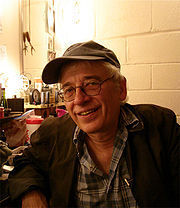 Austin Pendleton
July 10, 2012
Kolvenbach Rules!
Playwright John Kolvenbach, a friend, has developed what he calls “A Practical Guide to Producing a Kolvenbach Play.” In reading it over as I guide students through his work, I have come to believe that it provides insights that are useful to actors addressing any text, not just the wonderful plays that John has written. I offer it here and encourage you to read it, and also to pick up some of Mr. Kolvenbach’s lovely work, if you haven’t had the luck of running into it yet.
From my observation of various rehearsals over the years, what works and what doesn’t. The plays present a dual challenge: they are technically difficult and they require all the heart you have to give. They are demanding. May this make them less so.
The beats and pauses are plot. They aren’t theme. They serve the same purpose as the lines in the play. They convey information. If they are adhered to, the meaning of the scene should become quickly clear.
A pause is twice as long as a beat, roughly.
The plays are scored, and the music of the play is essential to the experience. The audience will only receive the play if the music is in place. The plays should sing. To do this, keep the ball in the air. I’ve heard this called “repartee” though I don’t think it’s that, exactly. I’ve worked with directors who have had ping pong tables in rehearsal, likening the dialogue to the game. Technically, (especially in the more comic plays) it’s that there is no pause after your line and before mine, unless one is written. No space for thought. Throw it back and forth.
Then, when there is a beat/pause, take it. You will have earned it. Don’t coast up to the stop sign and then creep away. Slam on the brakes and peel out.
But the music cannot be mechanically performed. If you bat the dialogue back and forth, it will be dead and the audience will not receive it. It must be full and fully lived in. You’re living through the scene, with a foundation of the score beneath you.
The score is there to reinforce intention. So go get what you want.
It can’t go too fast. This happens a lot. Don’t speak too fast. It’s difficult, but you need to excise filmic, behavioral pauses without allowing it to become a runaway train. The actors need to be on their front foot, but they must be in control of it, they have to Own it. My characters don’t speak quickly, they react immediately.
The best way to get the music of the play in place, in the bodies of the actors, is to run lines with someone on the script, calling out the beats/pauses when they occur. This must be done again when the actors are on their feet in the scene. Run lines with beats/pauses vocalized (say “beat.”) The actors can do this too, speaking the beats/pauses as if they were lines.
9. If you just review these things at the table, the actors will get cranky. They will begin to feel put upon. So it needs to be drilled. I encourage the director to be more like Balanchine, less like Freud.
10. The stakes in every scene and in the play need to be as high as is possible. Please don’t stage them as funny. The comedy will play if the music is in place. The people are real and want real things and each actor needs to bring themselves to the play Personally. The plays can hold a lot, please fill them up.
11. Then if you have the music in place, and the souls of the actors exposed and at risk, then you can let it rip. The plays require passion.
12. All of this should lead to freedom. After all the work is done, improvise within a very supportive form. The plays should end up being exciting to perform. Wild. And the audience should feel a great sense of suspense.
13. They don’t mean a thing if they ain’t got that swing. Good luck.
JK.
John Kolvenbach’s plays include Goldfish, Fabuloso, Love Song, Gizmo Love, and On An Average Day.
July 6, 2012
Links in a Chain
I believe that the work that we do as actors and writers sends energy out into the universe, and we can never know where that energy is going to go, or what it is going to do when it gets there. Meditating on this simple fact can be very freeing in your work. It will help you to get your focus off of yourself. It will make your work about something outside yourself, and your petty concerns. That will make you a better actor. It is ironic, but true, that the less you think about yourself, the more of yourself you can bring to your work. Of course, so many of the jobs that we do to survive seem to have no redeeming value other than the money that they bring us. This is true even of many high paying acting jobs: the Tide commercial, the 3 episode arc on Gossip Girl — probably not going to save a marriage with either of those. But again, links in a chain, and work that enables you to go out and pursue all the other jobs that do have the potential to be a gift in someone’s life. Think of the Beverly Hills plastic surgeon who does liposuction, breast augmentation, botox and collagen injections, and then volunteers at a low income medical care clinic and fixes a child’s cleft palate. One job supports the other, and a life is changed.
This is an excerpt from the article An Actor’s Credo: Why What We Do Matters, which appeared in my Acting Technique and Scene Study Blog in January, 2012. To subscribe to my newsletter, containing these and other articles on acting technique, click here.
June 29, 2012
My Toolbox, and Uta Hagen's Six Steps.
I’m often fond of saying the toolbox that we carry to work is our past and our experiences. That’s what’s in my toolbox. I open it up, and I look in there, and I need to know as much as I can about my personality, how I appear to the world, what my emotional state is.
You’ve gotta know these six things about every scene and exercise you do. Uta [Hagen] calls them the six steps (See A Challenge for the Actor, by Uta Hagen, Macmillan 1991, p. 134): Who am I? What is my present state of being, how do I perceive myself, what am I wearing; What are the circumstances? What time is it, the year, the season, the day? Where am I, what city, what neighborhood, what room, what’s the landscape like? What surrounds me, the immediate landscape, the weather? What are the immediate circumstances? What has just happened in the room that I left? What is happening in the room that I am in? And what do I expect to happen in the room that I am going to; What are my relationships? How do I stand in relationship to the circumstances, the place, the objects, the other people; What do I want; What is in the way of what I want; And what do I do to get what I want?
So, you need to know all of those things. And what’s amazing is I sit there in class and watch students come in and do these exercises [from A Challenge for the Actor]. And I swear to you, each and every one of you would sit there, you wouldn’t be able to tell what the difference was, but you would know instantly who knows where they’re coming from and where they’re going, and who doesn’t know where they’re coming from and where they’re going.
It’s metaphysical. I don’t know how to explain it, but you can feel the difference when somebody’s done their homework and when they haven’t. It’s just crystal clear.
This is an excerpt from a talk I gave on acting as a career as part of the Working Professional Series at the Theater Department of Lehman College. It is also available as a transcript and podcast on the Lehman College Website.
June 17, 2012
Orson Welles' brilliant, succinct definition of acting.
This is the stuff! To explore this, and more, come by my class in West Hollywood for a free audit any Monday evening.
Matthew Arkin's Blog

- Matthew Arkin's profile
- 18 followers

