Paul David Adkin's Blog, page 42
January 3, 2015
KNOWING THE LIE – CONSCIOUSNESS (1)

One cannot be free unless one has the power to change one’s circumstances in a positive way. One cannot change one’s circumstances unless one can see what needs to be changed. Consciousness is therefore an a priori necessity for freedom. Dictatorship can be achieved by simply making the people it oppresses unconscious of the reality that really dominates them.
Consciousness has to be an alert force, if it is not alert it cannot be consciousness. Its power lies in its ability to see through the veil of systemic mystification. Consciousness allows us the right to be critical, sceptical, or even cynical.
Of course consciousness can also be false. False consciousness lacks clarity as it is muddied by its own ideologies: ideologies that stem from identities. For consciousness to be clear it needs to transcend all ideology-mask identities.
False consciousness could also be called misguided consciousness – a consciousness looking for a reality which is simply just not there, and probably never will be, is a misguided one. Consciousness needs to see through the masks, but that does not mean it must cut through all still surfaces. The cutting open can have negative results if the process itself does nothing but churn already clear waters and makes them no longer transparent.
Can we say that reality should be that which needs to be? What about want it to be? If we accept the validity of the both possibilities, which is stronger: want or needs? Desires must be subject to needs. Desires can only be gained when needs are satisfied. Likewise, in order to uncover reality and therefore find truth, consciousness must be guided by needs at first and desires only when those needs are satisfied or safeguarded. The first thing consciousness must look for is necessity.


November 17, 2014
Time Travel Simulation in Lab Using Particles Solves Grandfather Paradox of Warped Identities
 Originally posted on Pictures.Dot.News - Global Magazine - World, Breaking News, Current Affairs:
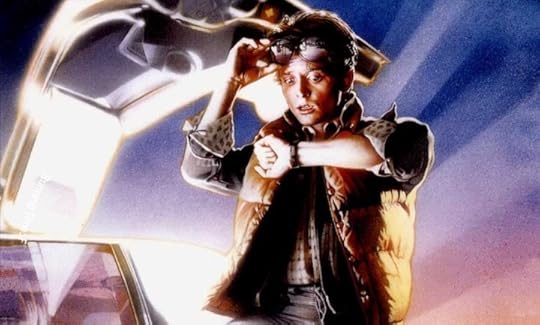
Experiments with quantum particles that travel a time loop to turn on a switch on a machine that then creates the particle seem to indicate travelling in time may not be impossible
Quantum particles have boldly gone where bigger objects have hesitated to tread. A recent experiment using photons has proven that time travel without drastic changes to the traveller’s identity is possible.
The present simulation was to test an earlier model dealing with the “grandfather paradox,” a hypothetical scenario in which someone uses a closed time-like curve (CTC) to travel back through time to murder her own grandfather, thus preventing her own later birth.
Einstein’s theory of general relativity describes gravity as the warping of spacetime by energy and matter. In theory it allows for this spacetime fabric to bend back on itself under an extremely powerful gravitational field, making time travel possible.
Experts have frowned on any practical…
View original 326 more words


November 14, 2014
THE HOW AND WHY OF WRITING LITERATURE?

Literary authors don’t sell and finding a publisher for a well-crafted book can be a nightmare. So, why bother? Why write literature?
Italo Calvino answered this question by analysing another interrogative: Why Read the Classics? In that essay Calvino presents 14 definitions of what the classics are. If there is a reason for having the Classics there must be a reason for trying to write a classical work of literature. We are going to borrow Calvino’s definitions and transform them a little in order to work out why some writers (like us) still bother to persist with the literary genre, while giving special relevance to the drafting of our latest novel When Sirens Call.
Writers of literature have to want to write books that people will want to reread. The first encounter with the book is immaterial, the aim is to create a product which will find a permanent place on the reader’s bookshelf.
How is this achieved? The literary writer has to create complexity through detail, levels of interpretation and depth of meaning. For the literary writer the narrative is less important than the message. Non-literary works are a meal, but literature is a recipe book as well all the meals that can be made from that book.
In the case of When Sirens Call we began with a complex folding and unfolding of forms. Our book is a retelling of Homer’s Odyssey via Joyce’s Ulysses, transforming Harold Bloom back into Odysseus but now in the body of a young Australian girl on her own odyssey in the Mediterranean. The link is through form: syntax mostly. The syntax of Ulysses pushed back into the epic voyage home of the Odyssey. Right from the first sentence the readers of literature will hear echoes of distant books, seeping into and flowing through the unfolding narrative of Belinda Babchek. The depth in literature lies in the depth of literature itself.
Writing literature means writing books that want to be treasured by those who have read them. But readers will only treasure a great book if they encounter it in the best conditions.
As Calvino says: “reading in youth can be rather unfruitful, due to impatience, distraction, inexperience with the products instructions for use, and inexperience in life itself.”
These negative barriers between the reader and the writer have to be expected by the literary author. It is also the main reason why so often agents and publishers fail to see genius when great works are presented to them. What this means for the literary author is that he or she must persist with his or her attempts to get their book to the readers. Once it is read in the right conditions the book will find its place … and there is always a place somewhere for great literature.
But it also means that the writer of great literature must have: patience, good concentration, and a deep experience with literature and life itself.
The literary author wants to write a book that will exert an influence on its readers: “both when they refuse to be eradicated from the mind and when they conceal themselves in the folds of memory, camouflaging themselves as the collective or individual unconscious.”
Again this is managed by creating depth, both in form and meaning.
Writing literature is about making the work so complex that every rereading “is as much a voyage of discovery as the first reading.”
And hence …
“Every reading of a classic is in fact a rereading.”
Or …
What we are writing is a book that “has never finished what it has to say.”
When writing we must always bear in mind that we are not trying to create something out of nothingness. The writing is a bringing forward in a new way what has always been there, and we must leave traces for the reader pointing to readings of other great works. Literature is an accumulation of literature. When a reader reads When Sirens Call that reading will be enriched if they have in mind Homer’s text, or Joyce’s, or both of them.
How does the writer achieve this? By carefully reading the classics and absorbing them.
The literary author does not necessarily write things that teach us anything new. Literature is about origins, relationships and affinities. The writer of literature has to be prepared to (and must want to) crawl through the labyrinth.
Write books that will always be found fresher, more surprising and more marvellous each time they are read. And the key to this again is “complexity”. When one writes literature, one is creating an entire universe.
Desire to write the total book. Establish a “strong rapport in terms of opposition and antithesis.”
Be the kind of author to whom no one will be able to feel indifferent.
Great literature flows through us like a river over which we stand. The ultimate aim of your writing is the future and never the now. A future built on the accumulation of all that flows with it, and carries it forward. Your work needs the river to carry it forward.
Remember this point by Calvino: “A classic is something that tends to relegate the concerns of the moment to the status of background noise, but … this background noise is something we cannot do without.”
And: “A classic is something that persists as background noise even when the most incompatible momentary concerns are in control of the situation.”
All the quotes in this essay are from Italo Calvino’s “Why Read the Classics?” published in English in THE LITERATURE MACHINE, Picador, 1989, pp. 125 – 134.


November 12, 2014
Music and Mathematics are Apolitical
 Originally posted on Math Online Tom Circle:
This “Butterfly Lovers Violin Concerto” (梁山伯与祝英台: 梁祝 小提琴协奏曲 ) composed 50 years ago by 2 Chinese music students, now played so lovely by a Japanese lady violinist: 诹访内晶子 (Akiko Suwanai), who is the current user of the violin ”Dolphin”, one of the top 3 violins in the world made by Antonio Stradivarius
Only in the kingdom of Music (the other one is Mathematics) where human political hatred does not exist between countries due to past wars: Japan and China, Germany and the Allied Nations, … Just only yesterday China President Xi and Japan PM Abe both showed awkward “poker face” hand-shake at the APEC Beijing meeting; contrast to the 20th century’s greatest mathematician David Hilbert from Nazi Germany was welcome in America to chair the inauguration of the International Congress of Mathematics.
If more students love Math and Music, the world of tomorrow will be more…
View original 102 more words


November 4, 2014
MAKING THE MASK ��� IDENTITY AS IDEOLOGY (2)

Ideologies are masks. And if we add to this Althusser���s idea that ���Human societies secrete ideology as the very element and atmosphere indispensable to their historical respirations and life,��� then we start to get an image of the veiling process of human society in the falsifying process of mask-making. It is through the creation of masks that society paints (in a secreting way) its own suitable, fake reality around itself. Any reality that is secreted or painted on must be regarded as a false one.
Once we have recognised the existence of the ideological mask we must ask ourselves: what is the real condition under that mask? Is it so ugly or so drab that it needs a mask to make it interesting or presentable? Of course the mask bearer erroneously thinks he or she is looking at his or own reflection in the mirror ��� and in this way we must see ideology as a bewildering hoax or scam, and the society as a clever grafter who has its subjects in its pocket. But why is it that the subjects are so susceptible to this hoax?
The first mask is the name which itself comes out of a language that frames us within that name. And here we have the paradox of language: it frees us by allowing us to communicate but enslaves us by making us subject to the requirements of the other���s communication. Without language our society and culture, indeed humanity itself, would be inconceivable, but it is not until one can escape into another new language that one can ever be aware of the power contained in the mask that we were given in the first place. Language unites but also separates us. It makes us different to those who speak other languages and unites us with those we immediately understand. They who speak our language are our own, but this is another restriction. If language is our most human trait, it is also our most anti-human as being the prime cause of human division and our lack of species consciousness.
The masks of cultures make demands on us and ultimately strive to condition our existence, pushing our self-perception towards a sense of belonging to a part of humanity that is different to, separate from and better than the rest of humanity ��� and this is the fundamental error.
Emphasis on difference is always there whilst the dividing lines are clearly and deliberately drawn, and emphasis on differences engenders the competitive spirit ��� the struggle against the others; the creed of us and them; the multifarious masks of isolating identities.
Ideologies grow like mushrooms, sprouting out of the damp earth of separation and the fertile soil of competition. Ideologies look for their antithesis to give them purpose, furbishing them with the power of dialectic against the rivals and enemies. Ideology needs to coexist with its ideological antithesis in order to give itself meaning. ���We only makes sense whilst we stand by Them,��� is the unmasked motto of all ideologies. Ideologies coexist in order for them to compete and clash, and it is in this coexistence that these opposing forces seep into each other, muddying each other and forcing each other to evolve into hypocritical absurdities that eventually become unsustainable.
The falsity of the mask can only be maintained for so long. Eventually all lies must be seen for the fictions they are. Reality will always push its way through to the surface of the artificial cover that is hiding it. Our own Moloch system is a massive ideological mess of a mask which is rapidly starting to peel and crack.


MAKING THE MASK – IDENTITY AS IDEOLOGY (2)
Ideologies are masks. And if we add to this Althusser’s idea that “Human societies secrete ideology as the very element and atmosphere indispensable to their historical respirations and life,” then we start to get an image of the veiling process of human society in the falsifying process of mask-making. It is through the creation of masks that society paints (in a secreting way) its own suitable, fake reality around itself. Any reality that is secreted or painted on must be regarded as a false one.
Once we have recognised the existence of the ideological mask we must ask ourselves: what is the real condition under that mask? Is it so ugly or so drab that it needs a mask to make it interesting or presentable? Of course the mask bearer erroneously thinks he or she is looking at his or own reflection in the mirror – and in this way we must see ideology as a bewildering hoax or scam, and the society as a clever grafter who has its subjects in its pocket. But why is it that the subjects are so susceptible to this hoax?
The first mask is the name which itself comes out of a language that frames us within that name. And here we have the paradox of language: it frees us by allowing us to communicate but enslaves us by making us subject to the requirements of the other’s communication. Without language our society and culture, indeed humanity itself, would be inconceivable, but it is not until one can escape into another new language that one can ever be aware of the power contained in the mask that we were given in the first place. Language unites but also separates us. It makes us different to those who speak other languages and unites us with those we immediately understand. They who speak our language are our own, but this is another restriction. If language is our most human trait, it is also our most anti-human as being the prime cause of human division and our lack of species consciousness.
The masks of cultures make demands on us and ultimately strive to condition our existence, pushing our self-perception towards a sense of belonging to a part of humanity that is different to, separate from and better than the rest of humanity … and this is the fundamental error.
Emphasis on difference is always there whilst the dividing lines are clearly and deliberately drawn, and emphasis on differences engenders the competitive spirit – the struggle against the others; the creed of us and them; the multifarious masks of isolating identities.
Ideologies grow like mushrooms, sprouting out of the damp earth of separation and the fertile soil of competition. Ideologies look for their antithesis to give them purpose, furbishing them with the power of dialectic against the rivals and enemies. Ideology needs to coexist with its ideological antithesis in order to give itself meaning. “We only makes sense whilst we stand by Them,” is the unmasked motto of all ideologies. Ideologies coexist in order for them to compete and clash, and it is in this coexistence that these opposing forces seep into each other, muddying each other and forcing each other to evolve into hypocritical absurdities that eventually become unsustainable.
The falsity of the mask can only be maintained for so long. Eventually all lies must be seen for the fictions they are. Reality will always push its way through to the surface of the artificial cover that is hiding it. Our own Moloch system is a massive ideological mess of a mask which is rapidly starting to peel and crack.
November 3, 2014
OUR GREATEST MISTAKE

Is competitiveness a part of human nature or is it our first great mistake? When our needs for survival evolved from the mere need to adapt to our environment and became a desire to take complete control of it, we were suddenly geared toward a will to want to take control of our own species. From this came the suspicion that we no longer liked our neighbours very much and that, in fact, it would be better to control them. Eventually the desire to be better than all those around us became so widespread that struggling to get on top of the tribe became the only logical way to act, as if it were the only natural way to behave. Of course when everyone wants to be on top the result is competition. And when the competitive spirit really hits in then the human condition becomes reduced to a life of a constant struggle between winners and losers, between masters and slaves.
That this is now deeply ingrained in all human society there is almost no doubt, but its ubiquity does not mean that it is good or essential. All of our envious, greedy evil stems from this competitiveness and humanity as a practical, workable concept is impossible whilst the competitive mood is dominant in societies.


November 2, 2014
ARTIFICIAL INTELLIGENCE, SAPIENS, AND TALKING TO THE ANIMALS

The idea of a World Will as a Will-to-be-Known has become a pivot around which our positive philosophy of real necessity is concerned. Through it we hope to find the human-motivator, inspiring a positive impulse for a development of intelligence as a creative movement away from our system of vulgar competitiveness and its anti-human economy of alienation and differentiation.
Let’s sum up our main point of departure: a thorough revaluation is necessary. This needs to be anchored in necessity in order to redirect progress away from the current juggernaut, all-consuming destruction of the biosphere and ecosystem. Now, up to now we have assumed that this revaluation could only come about through a humanity made up of intellectually and morally advanced Sapiens societies, and because of this our philosophy is a new positivism, or positive humanism. Nevertheless, this same positive end may very well be achieved via less human-positive means. The acquisition and perpetuation of knowledge may well be far better ensured not by our Sapiens’ carbon-based minds, but by silicon-brain intelligences created by us. It may well be that the evolution of the homo sapiens will be into this silicon form, fixed in more durable and resilient bodies that can survive in even the most adverse climatic conditions allowing for space exploration and even the survival of intelligence in a post–apocalyptic lifeless-earth scenario.
If real Being in the universe is to come about by the universe itself being known absolutely and perpetually, then humanity, as we now understand it, falls short of guaranteeing such a portentous destiny. However, even if we are too fail as survivors in the universe, perhaps we might be capable of creating the real Sapiens and intelligence and knowing will find its ultimate realisation not through a final evolutionary leap, but rather through a development of our present technological know-how and the creation of an intelligence far superior to our own.
The idea of humanity being superseded by intelligent, self-reproducing machines of its own creation is a common nightmare of science-fiction narratives. From the internecine struggles between machines and humans in the Terminator or Matrix sagas to the madness of HAL in the Space Odyssey or the complex android psychologies in Ridley Scott’s creations, the idea of a collaboration with a robot that has superior intelligence is a deeply disturbing one. And yet, in all futurology it seems that the presence of the super-intelligent robot is essential. We cannot imagine progress, even if that progress is a suicidal one, without it. In fact, the dawning of the nightmare is already upon us and anthropomimetic robots that can think more or less like a human child have already been created.
Yet twenty years ago scientists like Roger Penrose were proclaiming Artifical Intelligence to be an impossibility. Twenty years ago researchers were stumbling through an erroneous association between intelligence and logic, believing that decision making was a logical process. In reality cybernetics tells us quite the opposite. The binary algorithmic brain, whilst being very good at making calculations and winning chess games, can only go so far in answering meaningful questions. Human reason is more poetical than logical and the anthropomimetic work taking place in robotology demonstrates a link between the human corporal reality and our intelligence, or our form of intelligence. In order to construct a silicon brain that can communicate effectively with humans that brain will have to be inserted into a humanoid-type body, with human-type sensors. In other words, if a manufacturing leap into a more than human body is to take place, it will have to to be created out of our own image. We might be able to build robot octopi or robot insects, but we will not be able to communicate with them on any deep meaningful level for even an octopus machine fitted with a cyber-capacity for self-learning would need to teach itself a language appropriate to its own unique perception of the world. A perception that would be incommunicable to humans, or at least at first.
Perhaps the most profound discovery being uncovered by research into Artificial Intelligence will be a mechanism allowing us to interpret the languages of different kinds of animals. Research is being carried out to find ways of communicating with apes and dolphins, but no great in-roads will be made until we decipher how the corporal experience of different species and their very non-human sensory perceptions create their own knowledge of the world around them. A knowledge which we should not underestimate. A true Sapiens will not only benefit from communication on a complete human level, but from an even greater communication with diversity itself. True wisdom may only start once we can talk to the animals.
In this sense the creation of insect-like or octopus-like robots may have an interesting Sapiens purpose. Perhaps such robots could be designed to act as translators, allowing us to have conversations with ants and birds and elephants and dogs. But for we will ever be able to ever do that we have to firstly learn how to communicate properly with our neighbours.


October 27, 2014
PURGATORY AND ANTI-HUMAN HISTORY

If human history is the description of human progress towards fulfilment, then the real historical process has not yet begun. Instead of an unfolding toward a better world for all of humanity we are immersed in a process geared unto the satisfaction of the greed of power. True human fulfilment, or the procedure towards it, only exists in our fantasies and our projections of Utopias.
When I immersed myself in the historical archives of Spanish libraries, to start research on my novel Purgatory, now more than twenty-five years ago, I was conscious that I was not creating a work of historical fiction so much as opening a door towards the human historical dream within a background of anti-human history. In the 16th century the Terra Australis was such a dream: a potential paradise on earth that could, once it was discovered, redirect humanity towards real human fulfilment. Or, at least, that the journey itself towards this “impossible” and unreachable Utopia would take us there.
It is no accident, therefore, that the first of the three Spanish attempts to reach the Terra Australis Incognita (what we now call Australia) was inspired by an alchemist. The alchemists knew that human fulfilment could only be realised through science. From the alchemist’s point of view, the myth of the Fall is inherently misunderstood – it is not the fruit of the Tree of Knowledge which has caused human perdition, rather it is the discovery of that fruit that will allow for human salvation as Humanity living in harmony with the world. Knowledge and the technology that is the fruit of that knowledge, will bring humanity back to the Earthly Paradise as Humanity.
Purgatory, then, is a fictional recreation of that historical dream, spawned with a deep conviction that the Utopian dream is important. Perhaps it is the only guide humanity has. But it is also important that we understand that the magical processes of the alchemists were ignorant attempts at what can now be achieved through science.
The human historical process only begins when humanity starts to move toward the Paradise on Earth, a process that does not come through prayer but through the advancement of knowledge and the power of creative thought.


October 13, 2014
SAPIENS IN THE IRON MASK – IDENTITY AS IDEOLOGY (1)

Althusser revealed the meaningful link between ideology and identity. Not only meaningful but also a potentially liberating discovery if we first accept identity as a mask, more precisely an iron mask. But even the iron mask can be removed, and so can all ideologies. Once we recognise our identity for what it is we can submit it to necessity: a process which will firstly require a stripping away of masks and make up in order to establish the true essence of what one is, and recreate our masks, more honestly, according to that essence.
If the essence of our species is sapiens, then our identity will have to be anchored in our ability to think and know things. This is a continual process. Our first honest mask is therefore a fluid thing, a painting on, a face make-up rather than the fixed appendage that is the iron mask that so many of us wear now.
If the nature of Sapiens is the flowing continuity implied by knowing things then ideological identities are dangerously anti-sapiens, and anti-human. Societies and cultures give us masks that inhibit the progressive nature of the sapiens’ thought-unto-knowing flow. The socio-cultural mask says: “This is it,” and allows for no further reflection. An identity made up of these elements on its own, or the identity of the tribe, the team or the club, is a perversion for Sapiens, who needs the capacity for continuity of thought. Society traps the sapiens nature in a rigid mask forged in the metals of ideologies.
The only healthy ideology for Sapiens therefore is the ephemeral face that is painted on us and can be easily rubbed off. In the same way that we can paint our face to be a clown tomorrow, a beautiful woman the next day or an absolute ghoul if need be – the identity of the continually thinking Sapiens must be a morphing one.
At first the idea must seem repulsive for it is anti-natural to our iron-mask ideologies and it could be accused of being an apology for superficiality. In the ideology-identity society there is a blind faith in the values of one’s identity that gives each one of us our own character. In this way we confuse strength with an anti-sapiens quality of firm, unbreakable convictions. In the system’s fiction the mainstream narrative can make a hero even out of an ethical cripple as long as he or she remains faithful to his or her convictions. And yet this is the most dangerous fiction of all and has led to all of humanity’s most tragic debacles. The debacle of fascism and Nazism, the human debacle of the communist state and the religious empires with their Inquisitors and fundamentalists.
Of course it is true that humanity has always been a mask-inspired species, and identity probably arose with consciousness itself. This is why we make the distinction between the mask as make-up that can be wiped away, on the one hand, and the solid iron mask that we are imprisoned in, like the king’s unfortunate twin brother in Dumas’ novel, on the other. A dual potential arises in humanity: the one allowing us to paint our own identity or, the submission to the mask that we are locked into. But only the former has the flexibility to allow Sapiens to properly evolve.