Paul David Adkin's Blog, page 36
October 6, 2015
POLITICS IS DEAD
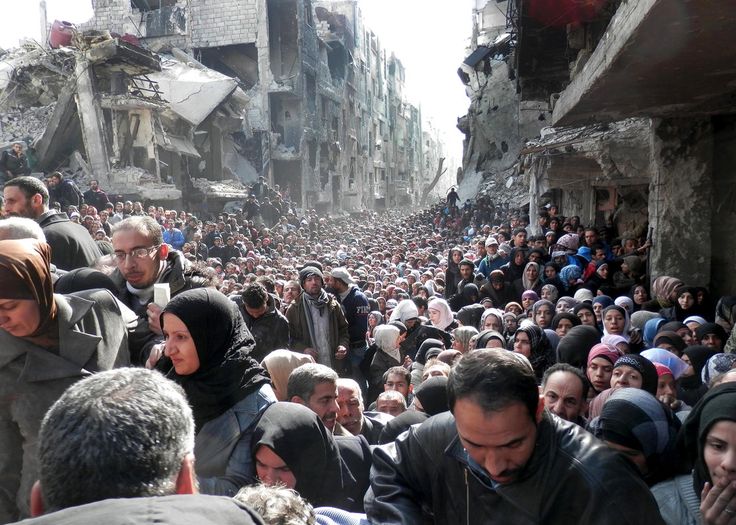
Everything is politics, said Brecht. True, it has now become such a ubiquitous concept that it has evolved into nothing – or nothing that is meaningfully representative of what we think it is or would like it to be. We confuse it with the class struggle and so we have to see it in a cyclical way with constant “new” beginnings. But these are really just echoes of an age-old dialectic between the workers and the owners, between the lower class and the upper, between the rich and the poor, or the right and the left, etc. In actual fact this dialectic no longer exists because it has been absorbed by the State, which renders the dialectic impotent. State politics serves the State, not the people, and therefore it is not politics. Politics, by definition, must serve the polis. The State’s anti-politics however, moulds the polis and makes it subservient to the State.
Politics has certainly become a concept that is anti-reason. Its purpose, either in the actuality of the State or the nostalgia of class struggle, is to support or attack the ways things are in a myopic way, from the point of view of the present. It hates to wrestle with “big-picture” concepts like what we should be doing or where we are going. The philosophy of the State is an anti-philosophy that has managed to enslave a world to the dictates of a mad, capitalist economy in which vision, creativity, science and education are shackled and enslaved to the ephemeral dictates of the market. An ephemerality which is falsely rendered positive by interpreting it as a “dynamic” force, even though it is a Jacuzzi dynamism, swirling around in an enclosed space. It looks impressive and feels good, but in the larger scheme of things it serves no great purpose.
If the State, especially State-capitalism, has become a hindrance to progress and a force of separation for humanity, then this State must be seriously questioned. There have to be better paths, one’s which will take everyone forward and instil our condition with meaningfulness again. For if hope and satisfaction are ever to become common human traits, then they must be preceded by meaning.



THE SYSTEM AS LANGUAGE

The System doesn’t merely speak to us: it itself is structured as a language with its own grammar and logic that we all now misinterpret as being “reality” or “the way things are” and “the way things must always be”. The language of civilisation is its gift to us that tells us that the System itself is ours.
But the gift is a Trojan Horse, as soon as we accept it we are enslaved to them. Once we have accepted the gift we must close our eyes to the consequences, because the truth is that our truth is an unbearable one. It is the worst of all truths: the most shameful side; the originator of all our problems, woes and stupidities; the reason why we are doomed to the cruellest separation from what we really are. It is the tremendous wall between what the System wants us to be and our humanity.


October 3, 2015
ON WILL

Will works within both the unconscious and conscious realms. It drives and is driven: for that reason it is hard for us to claim ownership of it. It is driven by the big Other, the Big Brother, the Moloch civilisation and the Wall Street Whale. It is stamped on us by the symbolic order that creates our norms and language, which gives us the slogans and axioms that are the foundations of our beliefs. It is Oedipal and despotic, even fascistic. Its blood is money.
On the more conscious level, it lies in the “causes” that we come to identify with and act along with. Causes that may either conform or non-conform to the big Other’s symbolic stamping and the money-blood sanguinary system that runs through society’s veins. But unless it can vanquish that big Other, the system will survive and absorb all revolution into its perpetual oedipal fascism.
Civilisation survives through its power of creating and maintaining the walls of separation between us and the great diversity of separating identities. Separating and amalgamating humanity into sub-groups of humanity with no real consciousness of being truly human. The real Identity – the species identity – is completely undermined by interests of wealth, which can only be sustained by maintaining an idea of us against them. For a real revolution to occur, in which the big oedipal Other can be made obsolete, we need to revaluate our identity in terms of the species. We need to confront the truly big picture of existence – the great panoramic mural of humanity.


October 1, 2015
THE MONEYLESS STATE – JUST GIVE US BREAD AND BEER

The Great Pyramid of Giza was erected more than four thousand years ago in the Early Kingdom of Egypt. How it was actually built is still mainly speculation. Nevertheless, there is one thing we do know for certain – they were built by a civilisation that did not use money.
Egypt in the Early Kingdom had an economy of barter and gift-giving. Of course this gave the Pharaohs the advantage of not having to find money to finance the construction of their dreams. Yes, they would have to find enough workers to dedicate their sweat and time to the construction tasks; they would have to feed and provide some sort of housing for these workers. According to the official records, what was handed out to these workers was bread and beer.
How could the greatest architectural feat in the world be paid for with bread and beer? Could it be that the primitive economy actually favoured the task? Or, let’s go one step further: could it be that a monetary system would have made the great pyramid’s construction impossible?
We are so concerned about the collapse of our markets; so worried about the fragility of our economies. There is more money in the world than ever, and less to go around. The economy demands sacrifices: wage cuts, tax increases. Money is so important, and can be so deadly … and yet …
The best pyramids were built long before money had been invented.
Great things happened without money before … why can’t they happen without money again?


September 22, 2015
POSITIVE AND NEGATIVE DESIRES

positive and negative thinking crossword puzzle
Desire has its positive and negative qualities. It can be productive and creative on one hand and obsessive and delusional on the other. Negative desire comes from wanting what is lacking when what is lacking is not necessarily what we authentically need. In this face of desire we can see an eternal yearning for more and more; a desperate attempt to fill an emptiness, even though the emptiness is not really there. Most desire-for-lack in our civilisation has become a desire for imaginary lacks that are created by the publicists.
On the other hand there is the desire for creation – for producing interesting and better things; for solving problems; for progress.
Productive-desire, therefore, is a positive one only when it is removed from the manufactured desires that spring out of a myth of lack. Even the desire-for-lack would be positive if it was removed from this myth.
The way to tackle the problem of desire is to tackle the myth itself. To attack the manufacturer of false-lack, which, unfortunately, is the very basis of the capitalist system.


September 21, 2015
THE PROBLEM OF WILL (PART TWO)

(IN OUR FIRST INSTALMENT WE ARGUED THAT WILL IS A COMPLEX THING, HARD TO PIN DOWN, AND THAT THAT COMPLEXITY HIDES THE POTENTIAL FOR AN UGLY REALITY – THAT FREE WILL DOES NOT EXIST. IN ORDER TO ANALYSE THIS EQUALLY COMPLEX QUESTION OF FREE WILL, WE LOOKED AT THE WAYS THAT ADULTS USE TO COERCE CHILDREN AWAY FROM THEIR FAVOURITE GAMES IN ORDER TO TRY NEW THINGS. THROUGH ASSOCIATION WE CAME TO THE AGGRESSIVE MARKETING TECHNIQUES THAT INVADE OUR LIVES AND THE ATTEMPTS BY MARKETING TO MAKE ITS WILL BECOME OURS, SUGGESTING THAT OUR PASSIVITY FACING SUCH AGGRESSIONS DEMONSTRATES A WEAKNESS OF WILL ON OUR BEHALF. FINALLY, WE CONCLUDED THAT THIS EXAMPLE TELLS US SOMETHING ABOUT WILL ITSELF)
III
We want to be happy. We want to enjoy ourselves. But does that mean that our basic drive is to achieve happiness? If it were, wouldn’t our civilisation be far more hedonistic?
We quickly grow tired of the game, even forget that we ever had a favourite one. Likewise, we grow sick of the attempts to coax us into playing new games. Non-will starts to become more real than will.
Stressed by constant cajoling, we become resistant rather than submissive. New tactics for seduction have to be employed. The System knows we will give in eventually. It is certain of its own power to manipulate any of our desires with ease. So, what does this tell us about our will?
What this narrative seems to be unfurling is the conclusion that will is not that which actually drives our desires at all. The relationship between will and desire is a kind of shimmering mirage.
Will must be something deeper. In order to get a more solid representation of it we need to root it in another kind of soil instead of the sandy stuff of desire. It needs to be allowed to grow from a more substantial, fertile terrain. Let us now imagine what it could grow into if we let our will sprout from the bedrock of Necessity.
The more that will becomes associated with desire, the weaker it becomes, whereas, in a proportional way, it is strengthened by any association with need.
So, the best way to resist the aggressive desire implanting of our surplus-creating culture is to move toward that which is really necessary. A movement which, as Nietzsche preached, will require a revaluation of all values. The revaluation of those systemic values which are oedipal norms and codifications.
Paradoxically, will is the drive that takes us toward that which needs to be done. But the paradox here is a revelation: by simply paying attention to will, rather than desire, we can put our free will back on track, in the direction of what we need. The revaluation has to be through the separation of will from desire.
The Last Men, the ignorant nihilist, and the slave to the surplus-market system – they are all weak-willed creatures, seduced by the desires imposed on them and imbued in them. Strength of will is needed in order to see the greater human purpose. The purpose beyond nihilism and beyond the oedipal system of human separation, towards a non-segregated, truly human and homo sapiens’ idea of that which really must be done. That which is necessary in order to fulfil human potential and create a truly human course of history in which we are able to establish a meaningful partnership with the world we depend on.
Desire is in our bodies and minds. In our organs and in our libidos. In our DNA and in the chemical reactions that outer stimuli produce on us. But the will depends on decision making. Will is the how we drive our machine. The towards what we decide to go unto. Will is a directional faculty. We use it to navigate with.
Desire is not will. But if we are to be able to redirect the mechanism of our will so that it in turn can take us on a different, more positive and more human journey, then we need a desire to change our will. From the will-to-want-more to the will-to-be-human.
But, in order to achieve this revolution of wills we must temper our desire. Desire to want less. Desire to break down the walls and codes of separation between ourselves as human beings. A desire to be a conscious part of the world in a conscious way. A desire to understand, and a desire to be in partnership with reality through knowledge.


September 19, 2015
THE PROBLEM OF WILL (PART ONE)

I
What is will? It is related to intentionality and becomes that which allows us to act in a voluntary way. There are etymological roots to be found in the Sanskrit vrnoti – chooses, prefers – or the Greek elpis – hope. If we think of the power of will, or willpower, we can associate it with another Greek term thymos, which is alike to spiritedness and was used by the Greeks to describe the way the gods inspire us into action. In the Homeric world of the Iliad it was the gods that moved men to action through the agent of thymos.
So, is will just an agent in the mind that we can turn on and off at will? The pun here was unintentional, but interesting none the less. In order to turn off the power of will that is driving us we need to exert another more powerful will. So will has different faces. It is not desire exactly, but rather that which drives or tames our desires. It does not decide actions – our reason does that – but it does power them. It powers our choices and preferences, it is the intentionality that can make our hopes and dreams a reality.
Traditionally, the problem of will has been anchored in where it actually comes from, which is its relation to free will. Is it, like thymos, inspired or influenced by some outside, divine force, or is it just an agent of the mind that could be associated with obstinate, determined attitudes? Of course the answer depends on your beliefs or what you’re willing to accept – which means the question of what will is, is also a question of will itself.
Will in fact is all pervasive – I’m writing about will because I have the will to do so. To tackle it then we need to firstly anchor and analyse it from just one of its facets. In order to do this, let’s define will as that which drives our desires. However, once we have done this, rather than simplifying the question what we do is reveal the complexity of the problem – who can actually say what drives our desires? If there is a force behind our desires it comes from all over the place. Most of it comes from the exterior: the propaganda machines of advertising and ideologies; the norms and collective desires of society; the family; as well as necessities for survival or well-being. Much of this may seem to be a product of our own free will because will itself feels like an interior drive. But it feels that way because the exterior has punched its own will into us via our superego or by stimulating the pleasure centre of the nucleus accumbens.
If this is the case, what hope do we have of possessing free will? Could it be that free will really is a mere fantasy?
Most of us would reject this idea. Free will is a precious idea for the individual, if not a necessary complement. Can one be an individual without free will? We certainly do not want to surrender so quickly. So, let’s analyse the situation more deeply …
II
How can free will be lacking in a species which seems to be so absolutely wilful?
The child asks if she can play her favourite game and you tell the child that she has been playing the same game all week and that today she will learn a new game. The child protests – she doesn’t want to learn a new game, she wants to play her favourite one. If you remain strong willed yourself and insist, you will be able to make the child learn the new game. When the child plays the new game she enjoys it. The next day you ask the child what she wants to do and she replies: “play the new game”. Which you do. And you continue doing it until you teach the child another new game.
What can we deduce from this? That we have an innate will to repeat that which we have learned to enjoy? How long does it take us to become consciously bored with our favourites?
The capitalist, market-will is geared toward the increase of the boredom-factor whilst at the same time reducing or concentrating options into simple packages. The current trend is toward a market of updates and complements for the product. It is an obsession with improving the product the consumer may already have and love. Of course, to make this politics of constant modification profitable, it has to be implemented without provoking a rejection from those who loved the original product when they are presented with the modified version. In other words, the company has to be sure that the new games it offers are better than the previous versions of it.
The result is, at times, a very aggressive invasion into the consumers’ lives from the competing companies, desperate for our allegiance to their own platform. They plague our lives, not only with a barrage of image-based and aural advertising, but make direct incursions into our lives through personal contact via the telephone, or through decades-old technique of knocking on our doors.
The advertising war becomes a way of enticing us away from our favourite game, to make their game our new favourite. So, where is our will there?
We only have two options if we remain within the system: the will to submit, or the will to resist. The only other viable step would be to try and step out of the system itself …
But what does this tell us about will itself?
(WE WILL ANSWER THAT QUESTION IN A SECOND INSTALMENT)


August 31, 2015
CAPITALISM AND INNOVATION

We tend to associate innovation with capitalism. Capitalism is a dynamic system and the incentives for making huge profits from patents have inspired many great inventions and innovations. However, it is often said that innovation would not happen without capitalism and that society would be a more backward place. How true is that? Just how necessary, if at all, is capitalism to innovation?
If we look closely into the market place we start to see instances of the opposite happening. In many cases, innovation is actually retarded by the market. One example is the way that corporations delay product releases until the most potentially competitive and profitable date arrives. Once the ideal machine is invented, an inferior version of it is released at first, and it may take a decade before the original ‘ideal’ product is actually up and fully running to its full potential in the market place. But by then there could be a much better product out there. In this way, technology under capitalism is always loping behind its real potentials.
If to this system of staggering we add the notion of pre-programmed obsolescence, then what we see is a massive waste creating machine that is supposedly geared to giving us what we want whilst ensuring that the quality of what we want is sadly lacking. Why can’t we really have what we desire and need, which is a good product that will not be obsolete two years after buying it?
But even this slogan that capitalism only gives us what we want is perniciously misleading. So much necessary technology has never been produced because there was no profit to be made from them, or, the maximum profit was to be made somewhere else. Clean, hydrogen-fueled cars could have been manufactured eighty years ago, if the profit to be made in petrol was not so lucrative. In the question of car motors what was at stake were the profit margins, not clean air. Capitalism is a system of waste, enormous, unnecessary and dangerous waste.
Clean-energy technology development is loping at least thirty years behind where it could and should be. Here we see how capitalism is completely antagonistic to necessity. But progress has to be intrinsically linked to necessity. Because of this capitalism has to be suspect of actually working in a non-progressive or even anti-progressive way.
In terms of innovation, the greatest achievements we have made in the last century would have to be those made in the space race. They were achievements made with public, not private money. Capitalist innovations have so often be nurtured through the breakthroughs made by state promoted projects, especially military ones, that, rather than a great innovator, capitalism is really just a very clever parasite.


August 28, 2015
THE URSTAAT

There can be no nostalgias for Golden Ages before the System, for if any existed we have long forgotten what they were like. The System is ancient. It emanates from Ur, the first city. An Ur which has evolved in a replicating way from Egyptian Thebes to the Thebes of Oedipus, from Babylon to Tokyo, from Rome to Washington via Seville and Tenochtitlan. The City is a mushroom phenomenon, engendering thousands of spores, each one with metropolis DNA, an anti-human genetics of wall-builders. With the City came the dreams of money and power, of the divisions of labour and the creations of castes and classes. A sucking-in mentality. The City is a magnet, to be successful it must process an expanding gravitational field, spread its spores, create an empire of mushroom allies, all copies of the original dream in a fairy-ring around it.
Innocuous mushrooms, or deadly toadstools?
All civilisations are bloodstained. Ours is a patricidal, incestuous, oedipal culture of competition and struggle. A struggle to suppress that which is growing old in order to feed a narcissistic love-hate relationship with the System that engendered us. The struggle to stand out above our brothers and sisters. A struggle that demands to be recognised and loved. That demands that we prove our worthiness, even to our long-dead ancestors.
Of course, it will be argued that without the cities there would have been no progress. Didn’t our expanding empires trample over the non-Ur peoples and their primitive Stone Age? Human creativity and production is a result of Ur. The development of art and science depended on the mushrooming of the Ur-concept.
But while this argument fortifies and defends the concept of Ur, it does not vindicate the abuse of the concept. For our Civilisation is in an abusive stage of Ur, in which production happens for production’s sake, and the vision of a great future for humanity is swamped by immediate needs, which is usually an immediate greed. In our civilisation the rich get richer and the poor get poorer. Of course the poorest who have nothing cannot get any poorer than that. However, now there is more money than ever before, and the tiny minority who possess most of it are richer than anyone who came before them. This should not be surprising, it is what the System is designed for.


August 27, 2015
LAW AND DESIRE

Law represses desire. But how could such a thing come about? What must the society fear in order to control precisely what we crave for? Is it a fear of the desire, or of what the desire consumes? Isn’t the negative force of desire this power to burn up everything that gets in its way?
It is what can be destroyed by desire that makes it so feared, and we need to remind ourselves of that. We, who have bent all laws for the spirit of freedom, for the unshackling and unleashing of desires. We must now contemplate what might be the real price to pay for our daring. We consume the world that engenders and supports us. We consume more than we need, with the simple justification that we are feeding our emancipation. However, liberation from necessity can only create a greater necessity.
Law does not repress desire enough. The definition of vice has to be amplified to include the unnecessary consumption, exploitation or degradation of anything which is necessary for human well-being or survival. Natural resources are obvious candidates for protection against their over-exploitation, but it’s time now to nip the canker at the bud. It’s time to declare the abuse of money as a vice.