Paul David Adkin's Blog, page 34
February 7, 2016
GOD IS DEAD or THE END OF THE SUPRASENSORY
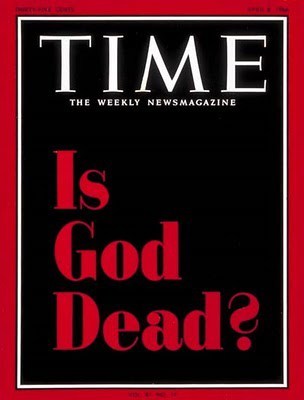
According to Heidegger, Nietzsche’s statement that God is dead is referring not just to the Christian God but to the general suprasensory world, or the realm of Ideas and ideals. Its death is a loss of power. The human ideal, through a suprasensory or metaphysical partnership with God, has been replaced with squabbling idealisms that are rooted in nationalisms or warring monotheisms that take on a political or economic significance, in the service of Wealth. Through separation the original metaphysical partnership loses its vitality and the great unifier degenerates into a chaos of warring factions struggling for power. However, it is a power which is already degenerate, for the God of the monotheisms has demanded too much. The needs of the Wealth-driven-Power look to liberate through an enslaving of the others rather than by establishing a partnership with the human. In this way, as Heidegger says, metaphysics is “cut off from its essence, (and) is never able to think its own essence.”
Or, as we interpret it, humanity is cut off from its origin and authentic purpose as Sapiens, and is made unable to think purposively beyond the great distractions of God, or Economics and/or Nationalism or the Family. The metaphysical charges into historical progress, evolving into economic progress, and now the Measure of Man is based on how much money one has managed to obtain and what image of oneself one has been able to fashion because of that money. For Heidegger, Nietzsche pronouncement was an affirmation that we are “straying through an infinite nothing,” cut off from our essence. There is no longer anything left to cling on to and orient ourselves with. “Nihilism, the most uncanny of all guests, is standing at the door.”
Within this environment technology has become an adornment to human life. It has not effectively liberated humanity from any drudgery as much as it has given us a reason to endure the drudgery. We work to acquire more knick-knacks, which in turn seduce us and draw us away from any meaningful or fulfilling reasons for living, and pulls us apart from the authenticity of our human condition. Our authenticity as Sapiens.
Martin Heidegger, THE QUESTION CONCERNING TECHNOLOGY AND OTHER ESSAYS, Garland, New York & London, 1977, p.61
Ibid
Ibid
Ibid
Ibid



February 1, 2016
THE PROBLEM WITH HUMANITY
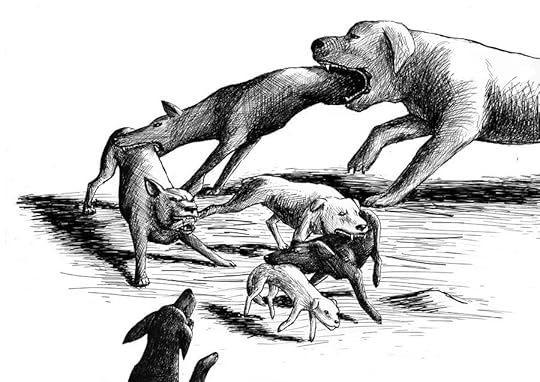
What is the measure of man? This question has absorbed humanity for millennia and is responsible for the competitive, dog eat dog quality of our internecine societies and cultures. In fact our measuring of ourselves against one another is so great that we have lost touch with what humanity itself is. We cannot see the forest for the trees. The sum total of the achievements of all human individuals does not actually add up to humanity. In fact, if we carried out such an equation we would find that most human activity, especially that which competes with others in the day to day process of envious measuring oneself against others, actually subtracts from human achievement as a whole.
Heidegger said that contemporary man’s destiny is still “but little experienced with respect to the truth.” In this idea, instead of a Measure of Man, we get a Measure of the Human in which the quality of human experience is calculated in respect to its truth. For humans, the human truth has to be found in the human quality of being essentially Sapiens, and the integrated relationship that Sapiens has with Being as creators and custodians of Being, as well as the children of Being. Human truth has to be found in this Sapiens/Being partnership. We depend on the world and the world depends on us – any meaningful measure of our fulfilment must take this partnership into consideration. The real worth of our cultures and technologies, and the of the civilisations which are made up of those cultures and technologies, has to be estimated according to how much they have contributed to furthering human fulfilment, which is the furthering of the relationship between Sapiens and Being.


January 31, 2016
This Is What The Future Should Look Like: Jacque Fresco’s The Venus Project
Better ways in which our place in the world could be designed…
 Pictures.Dot.News -- Breaking.News & International.Current.Affairs

Jacque Fresco (age 97); American self-taught structural designer, architectural designer, concept artist, educator, and futurist. His blue prints for the future may revolutionize the way we look at the structure of cities.
Jacque Fresco is an inspiration to many, with his innovative ideas and blue prints for a sustainable society and planet that reject the current models of mass consumerism and self-destruction. Fresco holds many titles, such as educator, architectural designer, and concept artist but is known to most as a leading futurist who has spent the majority of his life promoting a re-structuring of our current way of living. His latest venture, called The Venus Project, advocates what Fresco has coined as a “resource-based economy”, a society which runs on socio-cooperation and which utilizes the methodology of science and the advancements in technology in one of the cleanest and most energy efficient systems ever conceptualized.
Fresco was born in…
View original post 972 more words


Potential
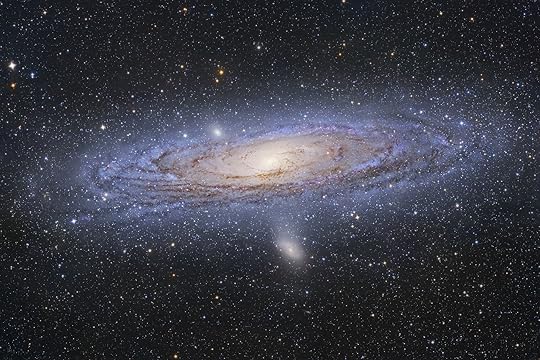
Amongst the things that humanity has lost, or lost touch with, is its potential. Potential, where it exists, has become a national impetus – a nationalistic charging of competitiveness in some international race toward nowhere. Human potential, however, if we ever knew what it was, has long been forgotten. After millennia of segregations and separations the human has been reduced to the most abstract of concepts, without substance: so much so that any ideas of making the human a meaningful concept now sound revolutionary. In fact, such an achievement would be revolutionary.
Humanity, as Sapiens, is here to perceive and know the Universe and guarantee its Being through representation. Human technology exists in order to make perception and knowledge of the Universe possible and permanent. Learning how to preserve ourselves may be the first step toward learning how to preserve the dying Universe. Only the undying Being makes any real sense.
Let there be light! –
But without any eyes to see
what good is my radiance?
Let there be eyes!
But eyes need a screen as well,
something on which to project
the illuminated image,
and a way to represent
the projection as something
seen.
Let there be consciousness!
What is humanity but a conscious mirror!


The Dangers of Framing and Anthropocentrism
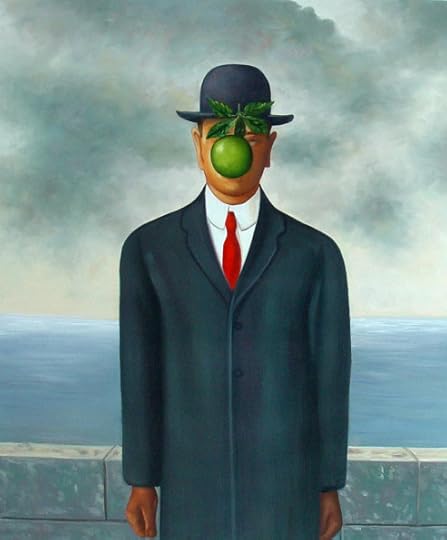
Idealism tells us that our reality is a result of anthropocentric framing. There are inherent dangers in both of these reality forming processes.
Framing creates a false sense of completion and threatens to create the lethargy of there’s nothing left to learn. This problem requires creativity in order to turn the framing process into an eternal search beyond the frame itself, even before the frame has been established. It is useful here to inculcate the idea of the Infinite Universe, and that the real/impossible task of framing is to frame the infinite.
As for anthropocentricism, there is a danger of perceiving ourselves as lords of the Earth, as if the Earth were created for us, rather than the exact opposite. We were created for the universe. As such, the idea of seeing humans as Sapiens is not an anthropocentric one. Quite the opposite, humanity as Sapiens becomes a necessary ingredient for allowing Being to come about in the universe. But this does not mean that the universe exists for us, rather we exist to take care of it.


January 24, 2016
Human Destiny – do we care?
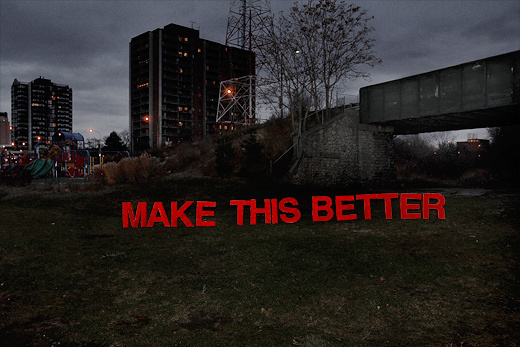
To what extent can human beings concern ourselves with the abstract question of human destiny? – assuming firstly that the beings we are concerned with know, or think they know, what human destiny is. To what extent can any eschatological stand point be directly admitted to?
This is the basic question behind all religions. If the ultimate truth is known to be this, how must we accordingly act? Our duty as Sapiens is to perceive, learn, investigate, discover, LIVE, etc., but what will happen to those who prefer to be lazy?
The old system of separations creeps back in once more. Once we say: “We know what to do,” there will be those who will contest us with: “Fine, and I choose not to do it,” or: “But that is too hard. Please don’t make me exert so much effort; let me go about my life my own way.”
This is our human failing: a failing which has no other finality than endless squabbling and, ultimately, internecine destruction. All separations emanate from the freedom-driven will to choose to differ, and any absolute truth will immediately run up against its absolute opposition.
Nevertheless, this has never stopped belief and inspired behaviour before. Ultimately it must boil down to convictions. Al action must stand on the knife-edge between success and failure; or rather success itself is the mere act of standing on the rope over the abyss of failure.
But from the Ideal-reality perspective, everything humans do contributes to the framing of reality, and in this way the framing is never finished until humanity is finished – which is the only truly undesirable outcome. Here is a deeply existential idea – anything is permitted as long as it does not incite extinction, and also, everything is welcomed, and should be encouraged, that encourages learning and framing. And by framing we mean the representing of reality and the communication of knowledge about that reality, as well as the unfolding that takes place from such communication and representation.
History needs the science of history to exist. An existence, the finality of which can never be reached until the science itself is no longer understood or practised. It is the framing of history that makes it historical, and that framing is forever being developed or disfigured by the continuous nature of that same framing. While humans are Sapiens the process is constant, and past and future unfold in a constant framing in the present continuous.
THE DANGER OF DESTINY – AND HOW TO OVERCOME IT
Once a destiny is accepted, nihilism is vanquished but dogma threatens. Dogma as a killer of creativity can only be thwarted by elevating creativity against it. If the ultimate purpose of humanity as Sapiens (that the new dogma is derived on) is to create as well as know – to be original and inventive and as critical as an inventive wit must always be – then the negative effects of dogma will always be mitigated. Freedom is intrinsic to creativity and so, if the purpose is to be creative, the ethical results of that dogma of creativity will be an anti-authoritarian one.
To be able to frame, one needs to know. To be able to know, one needs to have an agile mind. To have an agile mind, one needs to have freedom, time, and the resources to develop that agility. A Sapiens ethics would have to encourage the creation of an environment in which the human mind is freed, allowed and encouraged to fulfil its potential. The real great revolutionary step for humanity will have to be one of unleashing Sapiens’ potential in order to liberate humanity from the stress and tyranny of our current, economic-singularity framing, and its tremendous anti-Sapiens structures. Only when productivity is measured not in terms of dollars earned and spent but in terms of our accumulated capital of ideas and know-how, will humanity start to rightfully perceive itself as the Homo sapiens sapiens.


December 30, 2015
THE WILL TO REPRESENTATION
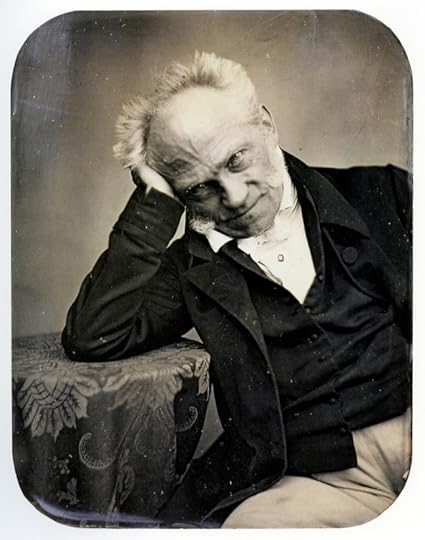
Die Aufnahme wurde vermutlich am 3. Sept. 1852 gemacht. Die Daguerreotypie hat eine Größe von 9,5 x 7,3 cm. Durck auch in: Silber und Salz, S. 61.
The driving will of the Universe is toward its Being, which can only come about via its Representation.
Schopenhauer saw this, but reached a pessimistic conclusion for humanity instead of seeing the tremendous, and joyous, implications behind it. Once Schopenhauer had inserted the conjunction “and” between the concepts to come up with the title of his work as The World as Will AND Representation, he removed himself from finding the positive element applied to universal destiny by inserting the preposition “to” and thus getting The World as Will TO Representation.
Heidegger did see these positive implications. He expressed it as the destiny of humanity for the en-framing of the Universe. Nevertheless, he seemed to be embarrassed by it, lacking any hard scientific data to support the idea.
But now, with new astronomical ideas springing directly from science, through the discovery of Cosmological Fine Tuning, the Universe can be said to be imbued with wilful purpose to Being through Representation.
Idealism becomes purposeful again – and by seeing reality this way, everything becomes purposeful again, with or without God. Cosmological Fine Tuning reveals a plan, a natural plan to create life, and the Universe itself, through fine tuning itself, has created its own conditions for allowing life to come about. The Universe, that is nothing until it can be perceived, and which is everything once it is completely framed, produces Sapiens – the entity that can perceive and learn; that can learn and know; that can make Being a reality, and its true fulfilment can only come through carrying out that duty.


December 28, 2015
THE ANTI-SAPIENS PROCESS OF CIVILISATION
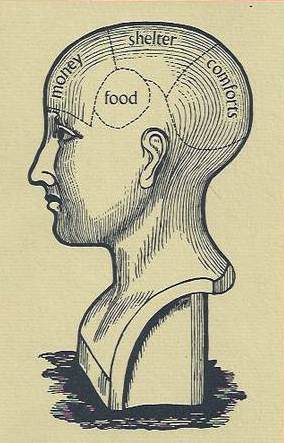
Human history has been a steady process of de-Sapienisation through social and tribal stratification. Once knowledge became associated with excess, and subsequently wealth and power, and it was realised that the ownership and protection of technological know-how was a necessary means of maintaining that excess, then humanity lost touch with all possibilities of identifying itself as a species and became a prisoner to the man-eat-man scenario of the stratified species, divided by casts or race, culture or nationality, and measured according to possessions or accumulations, or simply, after its invention, by the quantity of money one possessed or was empowered to obtain.
Through categorising and measuring, humanity has lost touch with its essence and, in even greater terms, with its destiny. Knowledge has become a peripheral aim. Knowledge has lost its primary position in Human-Sapiens identity to become just another tool that can be used to gain advantages in the competitive struggle for excess and the will to be measured highly in the in the economic society of modern civilisation.
For the homo-economicus the idea of freedom means being able to maintain a control of one’s life and keep oneself afloat as comfortably as possible upon the competitive waters of the excess-fuelled, money-edified civilisation. In order to do this, the majority are willing to sacrifice other more Human-Sapiens freedoms such as the freedom to obtain knowledge or the freedom to be granted the power to use any acquired knowledge creatively and productively in the arts and sciences. Instead, intellectual freedom is a victim to a desire by Excess to capitalise the ownership of innovation and ensure, through copyrighting, that profits made from artistic and technological innovations are channelled upward into the sphere of wealth and power.
In this way, it can be seen how the oppression of knowledge is predominantly a political problem. A problem that will never be overcome until the idea that wealth is a sovereign power that must produce privilege, even within democracies, is tackled head-on by democratic societies in order to be transcended.


December 27, 2015
The War Around Us
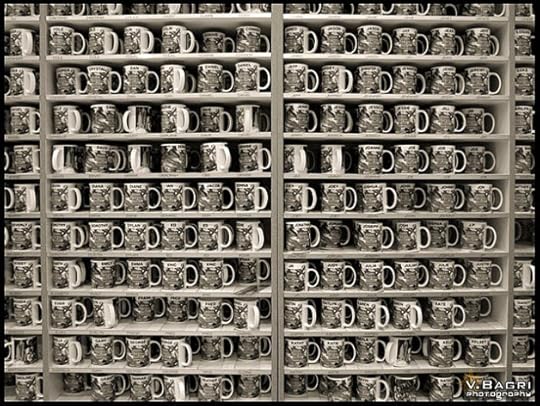
There is a war raging in our midst. A war between the Reproducibles and the Unreproducibles, and there is a near certianty that the former is about to annihilate the latter once and for all. We sit in almost utter ignorance whilst this terrible conflict rages around us. Most of us don’t even see the effect it has on our own lives, but a victory of the Reproducibles would be tragic for humanity as well. We must wake up. It is time for us now to ally ourselves to the beleaguered Unreproducibles and turn the tide on this insidious genocide. We have been seduced by their Darwinian, “survival of the fittest” contentions, but the Reproducibles are now so ubiquitous that there is no room for the Unreproducibles to grow in at all.
What is at stake is the existence or annihilation of the originality and creativity that the Unreproducibles represent. The Culture of Reproduction no longer has to create new things. Now it can perpetuate its dominion of the market place by simply reworking old fashions, slightly modified to seem contemporary or even futuristic. And the market place is spreading so widely that the Unreproducibles are left with nowhere to stand. Authenticity is a withered concept now. Originality has been left limbless or lame. To find creativity, one must dig in the cemeteries.
Of course our own health has also been damaged by this one-sided war, especially our souls. We stand cold before the beautiful and glance nonchalantly at the awesome. We shake our heads slightly at the tragic and turn peevishly away from the difficult to comprehend. We gravitate unto anything easy to understand and digest. The Reproducibles have made us insipid, nihilistic, and, like the war itself, our Unreproducible individualities are on the brink of extinction.


December 26, 2015
BEING AND MEANING
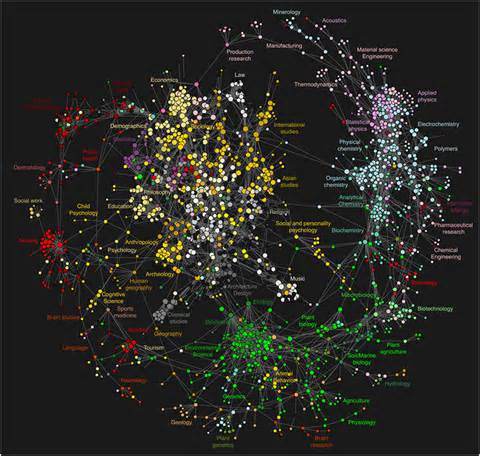
Knowledge is a metaphysical element, for knowing and being-known are immanent in the Universe’s being-here – or in other words, knowledge is immanent in Being. Because of its relation to knowledge, Being is not that which is, but is constantly becoming as knowledge advances. Knowledge provides clues for meaning, but it also springs from a primordial need to find meaning. Meaning, as such, is the Alpha and Omega of knowledge. It encircles knowledge. This also means that Being and Meaning are entwined, Meaning being the prime mover. Through knowledge, Being and Meaning are also wrapped up in Sapiens organisms and Sapiens can only be fulfilled through this fulfilment of Meaning by uncovering knowledge. Likewise, humanity as a Sapiens entity, can only be fulfilled by the uncovering of knowledge as well.
Epistemology should be an elementary subject of study in a Sapiens’ education system, which sounds absurd. Yet, does that absurdity not merely indicate how deeply disconnected we are from our Sapiens nature?
The three pillars of traditional epistemology: 1) know that; 2) know how, and 3) become acquainted with something – by gaining knowledge of it. But before we can really know, perhaps the wisest course is to discover “why?”. To do that we must firstly search for the meaning of Meaning.