
Michael Formichelli's Blog: Nero's Niche, page 18
September 9, 2012
My Review of Count Zero, by William Gibson
I know I'm probably going to rattle a few people's cages by saying this, but I found Count Zero to be remarkably dense and a bit difficult to get into. It revolves around three POV characters, Bobby (Count Zero) a young street-rat type with a talent for "running the net", Marly a corporate agent, and Turner, a mercenary. The three are all drawn into the same corporate plot as it touches and destroys life as they know it.
The biggest problem I have with Count Zero is that William Gibson's world is a little too full of color and culture. Having a fully fleshed out world is a good thing, but here elements seem to fly in without preparation, background, or explanation throughout the book. One of the good exceptions to this was how he wove the Loa (gods of the Voodoo religion) into the culture of those living the cybernetic lifestyle. The thought of the "ghosts in the machine" or AI's taking on the personalities of human gods and spirits was a nice twist that added a unique flavor to the story. Unfortunately, most of the other elements were not so well introduced or explained. It made it a big hard to follow what was going on, and whereas I can appreciate sharing a character's confusion at events they don't understand, I did not appreciate the sense I had of not knowing what the relevance of certain things were even within fifty pages of the end.
Still, for a book that's nearly twenty-five years old, and shows it (there was no attempt to predict what world powers might be different in the future, the Japanese and the Germans pretty much own the world in William Gibson's universe which dates the work to the American fears of the 1980's), the story holds up fairly well. I just found that I couldn't really get into it as much as I would have liked. I enjoyed Neuromancer much more, though I can't pin down exactly why.


September 1, 2012
Supernatural Longings for Tuesday
So I have a confession to make, though it won't come as a surprise.
I'm a bit of a dork when it comes to certain games and spec-fic content. As much as I like to be a serious sci-fi person, I enjoy the silly, the manic, and the just-for-fun stuff, too. I love getting to play in the many speculative fiction worlds in both the literary and gaming worlds. That's why I'm looking forward to Tuesday's release of The Sims 3: Supernatural expansion.
For those of you not familiar with the Sims 3, it's a "life-simulator" game that allows you to create and control digital people. The game engine lets you to construct digital beings (Sims) practically from scratch. you can determine their appearance (which is passed down through the game's "genetics" to their offspring), and set their personality traits which causes them to behave in certain ways when you're not giving them commands. Funny enough, I've managed to create Sims that actually act like the real life people I know before.
The game also allows you to build houses, gardens, and neighborhoods in which your Sims can interact, live, and die. For me, this has been one of the game's most addictive aspects. I've been known to pass an interesting house on the street, go home, and try to recreate it in the game. I love being able to design my "isn't this a neat idea" houses, too. I may have missed my calling as an architect...
Although the supernatural is not new to the Sims 3 world (there are already vampires, genies, mummies, and limited magic), the Sims 3 Supernatural expansion is taking it to a whole new level. For the first time players will be able to create supernatural Sims from scratch, including Witches, Vampires (new and improved with special powers and traits), Faeries, and my personal favorite- Werewolves. Full on spell-casting, and even raising the dead, are going to be a part of the Sims 3 world now. For fans of the supernatural and urban fantasy, this game is going to allow you to live and play in a setting you create yourself, and I can't wait!
See the trailer below:

I'm a bit of a dork when it comes to certain games and spec-fic content. As much as I like to be a serious sci-fi person, I enjoy the silly, the manic, and the just-for-fun stuff, too. I love getting to play in the many speculative fiction worlds in both the literary and gaming worlds. That's why I'm looking forward to Tuesday's release of The Sims 3: Supernatural expansion.
For those of you not familiar with the Sims 3, it's a "life-simulator" game that allows you to create and control digital people. The game engine lets you to construct digital beings (Sims) practically from scratch. you can determine their appearance (which is passed down through the game's "genetics" to their offspring), and set their personality traits which causes them to behave in certain ways when you're not giving them commands. Funny enough, I've managed to create Sims that actually act like the real life people I know before.
The game also allows you to build houses, gardens, and neighborhoods in which your Sims can interact, live, and die. For me, this has been one of the game's most addictive aspects. I've been known to pass an interesting house on the street, go home, and try to recreate it in the game. I love being able to design my "isn't this a neat idea" houses, too. I may have missed my calling as an architect...
Although the supernatural is not new to the Sims 3 world (there are already vampires, genies, mummies, and limited magic), the Sims 3 Supernatural expansion is taking it to a whole new level. For the first time players will be able to create supernatural Sims from scratch, including Witches, Vampires (new and improved with special powers and traits), Faeries, and my personal favorite- Werewolves. Full on spell-casting, and even raising the dead, are going to be a part of the Sims 3 world now. For fans of the supernatural and urban fantasy, this game is going to allow you to live and play in a setting you create yourself, and I can't wait!
See the trailer below:
August 25, 2012
The Dexterous, the Amazing, Robonaut!
 Image Courtesy NASA
It's kind of like watching a baby take its first steps.
This past Thursday, Robonaut (technically, Robonaut 2)- the General Motors-NASA sponsored robot aboard the International Space Station, posted a video to its Facebook page demonstrating its ability to operate a task board. I was filled with a sense of wonder while I watched the robot flip a switch and press buttons in a specific order. Although many people I know are afraid of what a robotic future might mean, I'm hopeful for one in which humans walk side by side down the street with our inorganic progeny.
Artificially intelligent robots could power a future in which the tireless, cheap labor they provide could make life a whole lot more affordable for us all. They could serve as aids to the elderly and infirm, they could do the jobs too dangerous or too undesirable for humans. The possibilities are endless, and I think if done right, most of them can be beneficial for us all.
Part of Robonaut's purpose is to conduct repairs on the outside of the International Space Station, but looking at the number of attachments for Robonaut's lower half (including treads for extra-terrestrial planet exploration), it looks like there could be a lot more in store for the hard working robot.
Watch the video and see Robonaut in action for yourself below!
(Video Courtesy YouTube & NASA)

August 10, 2012
Guest Post: Alien World Building
Greetings to all!
Today please welcome sci-fi romance author, Debra Soles!
Debra surprised me by providing an excellent guest post that fits right in with the Designing Alien Cultures series I ran. Debra's post focuses on world-building, and makes a marvelous complement to the others in the series.
So without further delay:
In an interview this year at-
http://paranormalromancedeepdarkanddelicious.blogspot.com/2012/03/character-blowout-debra-soles-talkers.html?zx=c75e61104fd49c49
I was asked these questions. Here is my answer, which I will expand on here in depth for our wonderful host, Mike.
“When you world build, do you use a system ? In anthropology, researchers have a top-down or bottom's up approach. What's yours? Do you throw everything in, including the kitchen sink, from line one. Or do you slowly write toward the end and add layers as you're confronted by them (I call this second approach painting oneself into a corner or pantsing the world!). And if you paint the world, how many times do you revise the story to layer religious, political, economic, technological, natural facets, etc. into the world?”
In my Zogone saga, I give hints about what the Zogone races’ world is like. As each book in the four book saga, progressed I give more detail and more until the Zogone’s home planet of Adrivar and even their surrounding universe seem real. But I can’t say it was all thought out before I wrote any of the books. Actually the first book, Old Dreams, started in Scotland. The monsters my character Arlene was dreaming of turned out to be the alien Zogone race later in the book, along with aliens from allied cultures.
I tend to let my worlds flow to me. As I write, I let my characters move me in the direction that fits them. Do they come from a harsh poor planet or a thriving green one. Something that important would make the character the way they were.
Ritter and Petrus, twins from my newest release Talkers, are from a healthy planet that is closer to well off. If they came from a poorer planet like Talker’s heroine Shayle, living on a dieing Earth, I don’t think the twins would be as outgoing and confident. Honestly, I’m sure they would still be just as cocky though.
So, I’m more of a go back and layer type of writer. Look, listen and add what is right for the characters. If a character loses a family member, what would their funeral be like? Graveside? Fasting? Long silent vigilance? Or their beloved planes flying overhead. I don’t think a farmer would have planes or a playboy a Catholic style vigilance.
My what ifs, always make me end up editing my books a couple of times, before I’m happy enough to pass them on to my publisher, New Concepts Publishing. If the character’s planet isn’t a real home to them, then it isn’t the right world for them and I haven‘t done my job properly. So, it is back to the drawing board to add yet another alien planet to my already expanded galaxies.
My Bio:Since, coming across her first romance novel at twelve she has been enthralled. By fifteen she knew she had to be a romance writer and help spread the love, but in a new more spectacular way, thinking outside the box. Mainly writing Futuristic Romance, she makes stories of vampires, witches, weres, aliens, a pirate found through time-travel and even a contemporary about Native American Indians, to share her own feelings on the L word. Debra grew up in the Carolinas, but now lives in Massachusetts with her hubby Tim and their wonderful son T.J.
Twitter- https://twitter.com/debdebss
Facebook- http://www.facebook.com/#!/DebraASoles
Site/blog- http://debraasoles.blogspot.com
Amazon- http://www.amazon.com/s/ref=ntt_athr_dp_sr_1?_encoding=UTF8&field-author=Debra%20A%20Soles&search-alias=digital-text
Can find my books on publisher site at- http://store.newconceptspublishing.com/debra-a.-soles/

Talkers info-Rating: Spicy- Adult language, violence and sexually detailed scenes. My first Epic length novel. Blurb:When the safety of Ritter’s band is compromised by stalkers his uncle recommends Shayle to protect the band and catch the stalkers. Though famous, talented, gorgeous young men, they have a secret from their past that makes them who they are and fuels a nasty stalker problem. When Ritter decides Shayle is the love of his life, how will she ever resist him.One-liner:Doing her job instead of melting into a puddle of lust was harder than Shayle could have ever imagined.

Today please welcome sci-fi romance author, Debra Soles!
Debra surprised me by providing an excellent guest post that fits right in with the Designing Alien Cultures series I ran. Debra's post focuses on world-building, and makes a marvelous complement to the others in the series.
So without further delay:
In an interview this year at-
http://paranormalromancedeepdarkanddelicious.blogspot.com/2012/03/character-blowout-debra-soles-talkers.html?zx=c75e61104fd49c49
I was asked these questions. Here is my answer, which I will expand on here in depth for our wonderful host, Mike.
“When you world build, do you use a system ? In anthropology, researchers have a top-down or bottom's up approach. What's yours? Do you throw everything in, including the kitchen sink, from line one. Or do you slowly write toward the end and add layers as you're confronted by them (I call this second approach painting oneself into a corner or pantsing the world!). And if you paint the world, how many times do you revise the story to layer religious, political, economic, technological, natural facets, etc. into the world?”
In my Zogone saga, I give hints about what the Zogone races’ world is like. As each book in the four book saga, progressed I give more detail and more until the Zogone’s home planet of Adrivar and even their surrounding universe seem real. But I can’t say it was all thought out before I wrote any of the books. Actually the first book, Old Dreams, started in Scotland. The monsters my character Arlene was dreaming of turned out to be the alien Zogone race later in the book, along with aliens from allied cultures.
I tend to let my worlds flow to me. As I write, I let my characters move me in the direction that fits them. Do they come from a harsh poor planet or a thriving green one. Something that important would make the character the way they were.
Ritter and Petrus, twins from my newest release Talkers, are from a healthy planet that is closer to well off. If they came from a poorer planet like Talker’s heroine Shayle, living on a dieing Earth, I don’t think the twins would be as outgoing and confident. Honestly, I’m sure they would still be just as cocky though.
So, I’m more of a go back and layer type of writer. Look, listen and add what is right for the characters. If a character loses a family member, what would their funeral be like? Graveside? Fasting? Long silent vigilance? Or their beloved planes flying overhead. I don’t think a farmer would have planes or a playboy a Catholic style vigilance.
My what ifs, always make me end up editing my books a couple of times, before I’m happy enough to pass them on to my publisher, New Concepts Publishing. If the character’s planet isn’t a real home to them, then it isn’t the right world for them and I haven‘t done my job properly. So, it is back to the drawing board to add yet another alien planet to my already expanded galaxies.
My Bio:Since, coming across her first romance novel at twelve she has been enthralled. By fifteen she knew she had to be a romance writer and help spread the love, but in a new more spectacular way, thinking outside the box. Mainly writing Futuristic Romance, she makes stories of vampires, witches, weres, aliens, a pirate found through time-travel and even a contemporary about Native American Indians, to share her own feelings on the L word. Debra grew up in the Carolinas, but now lives in Massachusetts with her hubby Tim and their wonderful son T.J.
Twitter- https://twitter.com/debdebss
Facebook- http://www.facebook.com/#!/DebraASoles
Site/blog- http://debraasoles.blogspot.com
Amazon- http://www.amazon.com/s/ref=ntt_athr_dp_sr_1?_encoding=UTF8&field-author=Debra%20A%20Soles&search-alias=digital-text
Can find my books on publisher site at- http://store.newconceptspublishing.com/debra-a.-soles/

Talkers info-Rating: Spicy- Adult language, violence and sexually detailed scenes. My first Epic length novel. Blurb:When the safety of Ritter’s band is compromised by stalkers his uncle recommends Shayle to protect the band and catch the stalkers. Though famous, talented, gorgeous young men, they have a secret from their past that makes them who they are and fuels a nasty stalker problem. When Ritter decides Shayle is the love of his life, how will she ever resist him.One-liner:Doing her job instead of melting into a puddle of lust was harder than Shayle could have ever imagined.
August 8, 2012
Just for Geeky Kicks!
Curiosity's landing video., just for fun with my thanks to NASA!

August 1, 2012
Designing Alien Cultures Part 3
Welcome to the third and final installment on designing alien cultures featuring my own take on the process.
First my thanks go to Jaleta Clegg and Barry Kirwan for writing the first two posts in this series. I'm intrigued by both their approaches, and also happy to find that my own is something of a mix of both.
If you missed part 1 and part 2 I highly recommend you give them a read.
When I design aliens for my stories I tend to take an "everything at once" approach. I start with the biology (I'm a biologist by training) and build the culture up around it. There are a few key questions I like to ask myself as I go along:
1. What is their home world like?
-Cultural features are a result of environment in many cases. Deserts tend to lend themselves to nomadic or oasis based cultures that are likely to have attitudes about resources different from those cultures of other areas. Jungles can support a sedentary population much easier than a desert can. -Most planets in the "habitable zone" of a star will not have a planet-wide environment, but I try to think about what the dominant culture on a planet will be and then spice it up with some features arising from different parts of the planet.
2. Does the species have any unique biological features that would influence their culture?
-A species that flies is not going to build homes on the ground. Even an advanced species with wings should tend to put their cities, dwellings, etc. up on cliffs or build them on high stilts, etc. where their biology says they'd be comfortable.
-A species like the Savorchans from my book, Blood Siren, sense their environment using sonar instead of light. In designing their culture I had to keep out any influences that might have been visually based. E.g. they do not dress up in flashy clothing. They also can change their shapes to a degree, so restrictive clothing was out as well.
3. How does the species' history, religion, etc. influence the culture of the present?
-Even if a species no longer follows the culture of its past, that culture going to have an influence on the present. Just think of how many buildings in the West are based on ancient Greek and Roman designs. I draw up a brief history for every species I make using broad strokes. E.g. Species B has a history of violent, religious conflict, so the dominant culture will be aggressive and have zealous tendencies.
-In Blood Siren, the Relaen species destroyed their home world through over development. The survivors now live in space, refusing to settle another world and repeat the cycle. Their culture is based on regret for their past, and determination not to repeat it.
-We say "God bless you" in the West because of the ancient belief that a sneeze is one's soul trying to escape the body. It isn't said in the East at all. When I lived in Japan I had to get used to the quiet when I sneezed. When designing alien cultures, it can really bring a species to life to throw in a feature that seems to make no sense, but is actually based in some feature of the past.
After I've got a solid sketch of how a species' culture looks I then make a few decisions on how it influences their decision making process and write them down as a guide for when my point of view characters encounter these aliens. Like Barry Kirwan wrote in his post, the less you actually show your audience, the more alien a species is going to appear. This step is critical in setting how the aliens will "feel" in the story. The more like us they are, the more easily the reader will associate with them.
Going hand-in-hand with this is the decision about how strange a world I want my characters living in. A story that shows a lot of alien "screen time" is going to be less familiar than one where humans are the focus. Though it should be noted that the more time "on screen" you give your aliens, the more familiar they will become. Think about how the Klingons of Star Trek were viewed before they were a regular feature.
In designing the Blood Siren series, I decided I wanted to make book one more familiar and "homey" for the reader before introducing the rest of the galaxy. I want my readers to get nice and comfortable before they venture forth into the rest of my universe. I decided to go with a human-centered story, and evolve it slowly over time to have a broader focus. Book 2 introduces more alien cultures than book one did, and book three will have a broader scope than its predecessor as well.
I hope you, the reader enjoy it.
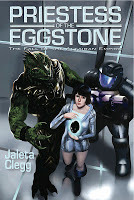
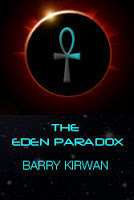
Also, please don't forget to check out Jaleta Clegg's Fall of the Altarian Empire series, Barry Kirwan's Eden series, and my own Blood Siren series!
 Available Now!
 Available Now!
 Available Now!

First my thanks go to Jaleta Clegg and Barry Kirwan for writing the first two posts in this series. I'm intrigued by both their approaches, and also happy to find that my own is something of a mix of both.
If you missed part 1 and part 2 I highly recommend you give them a read.
When I design aliens for my stories I tend to take an "everything at once" approach. I start with the biology (I'm a biologist by training) and build the culture up around it. There are a few key questions I like to ask myself as I go along:
1. What is their home world like?
-Cultural features are a result of environment in many cases. Deserts tend to lend themselves to nomadic or oasis based cultures that are likely to have attitudes about resources different from those cultures of other areas. Jungles can support a sedentary population much easier than a desert can. -Most planets in the "habitable zone" of a star will not have a planet-wide environment, but I try to think about what the dominant culture on a planet will be and then spice it up with some features arising from different parts of the planet.
2. Does the species have any unique biological features that would influence their culture?
-A species that flies is not going to build homes on the ground. Even an advanced species with wings should tend to put their cities, dwellings, etc. up on cliffs or build them on high stilts, etc. where their biology says they'd be comfortable.
-A species like the Savorchans from my book, Blood Siren, sense their environment using sonar instead of light. In designing their culture I had to keep out any influences that might have been visually based. E.g. they do not dress up in flashy clothing. They also can change their shapes to a degree, so restrictive clothing was out as well.
3. How does the species' history, religion, etc. influence the culture of the present?
-Even if a species no longer follows the culture of its past, that culture going to have an influence on the present. Just think of how many buildings in the West are based on ancient Greek and Roman designs. I draw up a brief history for every species I make using broad strokes. E.g. Species B has a history of violent, religious conflict, so the dominant culture will be aggressive and have zealous tendencies.
-In Blood Siren, the Relaen species destroyed their home world through over development. The survivors now live in space, refusing to settle another world and repeat the cycle. Their culture is based on regret for their past, and determination not to repeat it.
-We say "God bless you" in the West because of the ancient belief that a sneeze is one's soul trying to escape the body. It isn't said in the East at all. When I lived in Japan I had to get used to the quiet when I sneezed. When designing alien cultures, it can really bring a species to life to throw in a feature that seems to make no sense, but is actually based in some feature of the past.
After I've got a solid sketch of how a species' culture looks I then make a few decisions on how it influences their decision making process and write them down as a guide for when my point of view characters encounter these aliens. Like Barry Kirwan wrote in his post, the less you actually show your audience, the more alien a species is going to appear. This step is critical in setting how the aliens will "feel" in the story. The more like us they are, the more easily the reader will associate with them.
Going hand-in-hand with this is the decision about how strange a world I want my characters living in. A story that shows a lot of alien "screen time" is going to be less familiar than one where humans are the focus. Though it should be noted that the more time "on screen" you give your aliens, the more familiar they will become. Think about how the Klingons of Star Trek were viewed before they were a regular feature.
In designing the Blood Siren series, I decided I wanted to make book one more familiar and "homey" for the reader before introducing the rest of the galaxy. I want my readers to get nice and comfortable before they venture forth into the rest of my universe. I decided to go with a human-centered story, and evolve it slowly over time to have a broader focus. Book 2 introduces more alien cultures than book one did, and book three will have a broader scope than its predecessor as well.
I hope you, the reader enjoy it.
Also, please don't forget to check out Jaleta Clegg's Fall of the Altarian Empire series, Barry Kirwan's Eden series, and my own Blood Siren series!
Available Now!
 Available Now!
Available Now!
Available Now!
July 25, 2012
Designing Alien Cultures Part 2
In this post's installment, we have the second in the series on Designing Alien Cultures. This one is by the Eden Paradox Series' author, Barry Kirwan. Barry is a talented author who writes suspenseful sci-fi thrillers. I highly recommend reading his books if you're a fan of fast paced, addictive science fiction. You can get more information on Barry and his books from his website.
I'm privileged to have Barry Kirwan as a guest, so without further delay, here is his take on-
Creating alien cultures
First, thanks to Mike Formichelli for inviting me to do this guest blog on creating alien cultures. I’m going to do most of the blog by ‘show don’t tell’, i.e. with excerpts of alien cultures, and a few simple ‘rules’ I use myself when introducing and then deepening alien species. It’s quite a long blog (apologies to the temporally-challenged), but then appreciating a culture can’t be done summarily, as it is more like walking in drizzling rain: after a while you realise you are wet through…
A description of what an alien looks like, or the planet they live on, is not sufficient to convey their culture. All too often on television shows and films, aliens are ‘humaniform’ anyway, and have similar value structures to our own. We can identify with them, sure, but hang on, aren’t they supposed to be alien? Worse, we can even predict what they are going to do, which is not the desired outcome, particularly in science fiction, which ideally gives our minds and imaginations a workout.
If you’ve seen the recent film Prometheus (the ‘prequel’ to the Alien films) at least the life-forms who bioengineer the alien (I’m going to call them the Engineers, for clarity’s sake), though humaniform, definitely have a different culture to our own, and a different value structure. The first fifteen minutes of this film are brilliant, and again near the end (I won’t put in a ‘spoiler’), though the rest became predictable for me. However, if the sequel heads to the Engineers’ home planet, then it could get really interesting.
The approach I take in my books and stories is to link the environment to the alien’s behaviour in that environment, and to give the alien species some history, then put them in a tight spot and see how they react. We learn about our own culture(s) through stories of events, and how people behave when confronted by difficulties, so I figure it can be the same with science fiction and aliens.
Here are five rules I use for creating an alien species and culture:
Describe the aliens, but not in too much detail – let the reader’s mind fill in the rest. If you’re writing ‘multi-protagonist’ (as I do), let different point-of-view characters see the aliens in slightly different ways, or focus on different details, or have different reactions to them.Describe or refer to the aliens’ home world, their origin, their history, their function (what they do), their value structure (what matters to them). BUT:Don’t give it all in one go (a so-called ‘info-dump’). Let the reader learn gradually, like peeling away the layers of an onion. That’s how we naturally learn culture, and also incidentally how we get to know people and make friends. This is how to make your aliens more ‘memorable’.Put the aliens in a difficult position and then show how they behave.Never fully explain their behaviour, keep them alien. If you ever go live in a foreign country, as I have several times, people don’t explain why ‘it’s done like that here’, because for them it’s natural. So, do the same in your science fiction, and as long as it’s not completely incomprehensible, it can actually give more ‘authenticity’ to your depiction of alien culture [see references at end of blog for some writers who do this extremely well].
One of the main species in my Eden Paradox series is the nomadic Q’Roth, a warrior species which is best described as a three metre locust with serrated, thorned legs and seriously bad attitude. Their home planet is only viewed once, briefly, in the second book Eden’s Trial, where it is realised that they pretty much gutted their own planet millennia ago in some kind of (never-explained) accident. In the first book they are portrayed as principally evil, but by the third book they are more nuanced; they have a code, and are impressive fighters, even though they are losing that battle against an inter-galactic invading force. One of the humans who swore vengeance on them in the first book (The Eden Paradox) ends up reluctantly saluting their bravery when they sacrifice three battleships and a thousand warriors to save him and one of their masters.
Here’s an example from the forthcoming third book Eden’s Revenge of an exchange between one of the human characters and a race known as the Mannekhi, who do actually resemble humans (there is a reason for this…), except for their eyes. Because they look like us, I have to make them seem different, which I do via their history and their abrasive and sometimes ruthlessly violent behaviour. The protagonist in this section is a human called Kilaney, who was genetically re-engineered against his will to become a Q’Roth warrior for a time, during which he fought many space battles with the Mannekhi in the ongoing war. Now he looks human again, and has taken over a Mannekhi ship, and needs the crew’s help to save the human race, but the Mannekhi captain and crew are not fooled by his appearance. A Mannekhi female, Tessia, is the first to realise what he is, though not yet who he is:
Tessia withdrew her face from an enclosure screen, and gave Kilaney a long hard look. “He’s a hybrid. Human and Q’Roth.” One of the armed men’s pistol arm went rigid. “I wouldn’t do that, Tolbar,” she said. “He’s injected us all with a Kelleran bloodworm. He has the mother.” Kilaney shrugged. “I found them in your Medlab. I’d heard about them, though never seen them up close before. Pesky little critters. Is it true what they say about them?” He knew damned well, as the Mannekhi used them on prisoners, but he wanted to hear the captain say it, to acknowledge the status quo. The captain folded his arms. “You die, we die. You hurt, we hurt. You’re still in my chair.” Kilaney got up, gesturing to the seat. As the captain took it, Kilaney added, “You have a good crew, captain.” The captain looked taller now, sitting in the command chair. “What is your name?” he asked. “Does it really matter?” Kilaney didn’t want to give them his Q’Roth name, they might well have heard of Q’Tor, and decide that bloodworms or no bloodworms, he had to die. The captain spoke while he called up holos showing the Esperian system they were heading towards. “For Mannekhi, names are everything. Our lineage matters deeply to us. I am Xenic, of the clan of Karanashak, wardens of the twelve jewel planets of our Eastern sector for fifteen hundred generations. I am the first of my line to be captain, all my ancestors were traders, many of them in the Orrat, the resistance, thirty-three of them put to death at the hands of our patrons. I know all their names. If you ask any of my crew, you will hear similar heritage.” His pure black eyes bore down on Kilaney. “As I said, names are important to us. When your entire race is born into servitude, history becomes your lifeline. Our progeny will know our names, and we will live on through them. We are a proud people, and are not afraid to die. So, tell me, what is your name, your heritage.” Kilaney felt stung. He’d slaughtered so many Mannekhi in space battles, yet had never met one before. He drew in a breath. “My name is Bill Kilaney, I was a general back on Earth, our only planet, destroyed by the Q’Roth.” He hesitated. He’d never told anyone the rest, except his wife Sarah back on Earth. But he spat it out. “My father was a petty thief who deserted my mother and I when I was still a child. I found out later he died in a bar fight. My mother, in desperation to feed me, became a prostitute, and at first cared for me, but the drugs she took to cope with what she did stole her from me, piece by piece, until she died in a fire in a cheap motel. I had one lucky break serving as a grunt during the War, when I took a knife missile in the gut intended for a Colonel, and still managed to rip the assassin’s throat out with my bare hands.” He looked down at his fingers. There had been so much anger at that time. “Life turned around after that, and the Colonel promoted me fast through the ranks, even if he didn’t make it through the war himself. My ancestors … I know little of them, the rest of the family shunned me, more so after I became a General.” He stared at the floor, then looked directly at the captain, Xenic. “I’m still a soldier. I have nothing else. I have no children, my wife is dead. I have to say I envy you your ancestry. All I have lies on the planet Esperia, and I am here, you are here, to protect them.” “Protect them from what, exactly?” Xenic’s lieutenant, Silas, spoke up. “From a Q’Roth destroyer.” Kilaney looked over to the Nav officer, then back to the captain. This was worse than he’d anticipated. “It is indeed your chair. I could not operate this ship on my own, certainly not in a battle. The Q’Roth are your sworn enemy, and –” Xenic held up a hand. “What was your Q’Roth designation?” Kilaney chewed his lip, then answered in a quiet voice. “Q’Tor.” Tessia’s eyes widened. She quit her station, stormed up to him, and with speed and power that surprised him, punched his jaw. Kilaney stood and took the force of the blow, while all of the crew except the captain gasped at the shared pain. The girl herself grunted with some satisfaction, and walked back to her station, nursing her jaw. The captain spoke, as the rest of his crew stroked their chins gingerly. “Thank you, Tessia.” He stood. “Silas, you have the bridge. Kilaney – that is what we will call you, or else we will all have very short lives – walk with me.”
So, now you know something about the Mannekhi, right? But you don’t really know them yet… Let’s dig just a little deeper. Here’s a different tack, same species in a later chapter, using a ‘story within a story’ frame (we naturally learn culture through stories), where Kilaney hears about a dark ritual during every Mannekhi child’s upbringing:
Fentra scorned the captain’s suggestion. “You can’t be serious? They’re just legends we tell our children after the Slapping.” Kilaney had no idea what ‘the Slapping’ was. Fentra decided to fill him in, her voice like a cold steel blade cutting through flesh. “We Mannekhi are born into servitude. When any Mannekhi child reaches four, the age we consider them responsible decision-makers, they go with their parents to the local Municipal Hall where others gather in front of one of our sponsor races’ Ambassadors. The Ambassador asks the child to do something.” She looked sideways, clearly remembering what it was for her. Kilaney felt sorry for Fentra already. “For example,” she continued, “to stab my brother’s hand with a knife and make him bleed.” She straightened up. “The child refuses, of course, and then the parents, first the father, then the mother, slap the child across the face. Hard. Most children do not cry out, Kilaney, Q’Tor, whoever you are. It is their parents who weep, later. Some people never –” her voice cracked, she cleared her throat “– never have children, just to avoid this scarring event that keeps us forever in our place.”Kilaney thought about it, could imagine how it would be one of a number of acts to break the spirit. Despite himself, he began to count up all the Mannekhi ships he had destroyed in the past ten years, calculating how many had been killed under his command.
The above excerpt can allow the reader to ‘sympathise’ with the Mannekhi condition, (even if they are not that likeable when humanity first comes across them earlier in the book), but we could not truly imagine what it would be like to be them, having been enslaved and humiliated for thousands of generations, so they remain alien.
At the end of the day, what I try to do with my alien species is let the reader know them a little (enough to satisfy the ‘plot’), but also realise that there is much they do not know. That way, aliens remain alien.
To see how grandmasters do it, read Larry Niven’s Ringworld, any of David Brin’s earlier work (e.g. Startide Rising; the Uplift Wars), Stephen Baxter’s Timelike Infinity, and more recently Embassytown by China Mieville, which is not easy to get into, but is awesome at depicting a truly alien culture – he takes the epithet ‘resist the urge to explain’ to its limit, and gets away with it. I don’t think I’ll ever forget his aliens…
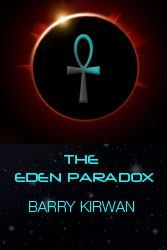
Aside from the Eden Paradox books (The Eden Paradox, Eden’s Trial and Eden’s Revenge – the first two available on Amazon / Barnes & Noble, the third due out in December 2012), there are free stories which focus on alien cultures on www.barrykirwan.comin particular ‘Diplomatic solution’ and ‘The Sylvian Gambit’.There are also other blogs on the website on what makes a good alien character, especially this one: http://www.blog.barrykirwan.com/2011/12/what-makes-good-alien-character-2.html
About the Author: (Taken from Barry Kirwan's Amazon.com Author Page)
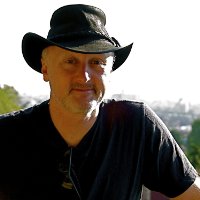
I was born in Farnborough, England, where I used to watch the fast-jet Red Arrows practice low-flying stunts. I fell in love first with science, then science fiction, reading the greats such as Asimov and Clarke. I then studied Psychology and majored in Human Reliability Assessment, which predicts accidents and how to avoid them, and ever since I've applied this approach to nuclear plants, offshore oil & gas platforms, and air traffic safety. But my passion for the past few years is writing science fiction, with a psychological angle, trying to figure out where we (humanity) are headed, and how different aliens could be, not just in looks, but in the way they think and communicate. This is what I explore in my Eden Trilogy, and also in my short stories, which are available free on my website www.barrykirwan.com. I don't expect to sell a million books, just hope to get a few people excited by some of the ideas, worlds and characters I've created, and reflect about it all afterwards.

July 21, 2012
Designing Alien Cultures Part 1
This is the first in a series of posts on designing alien cultures for a sci-fi (or other speculative fiction) story!
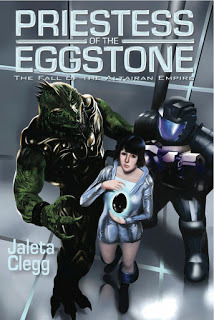
I'm excited to welcome Jaleta Clegg, author of speculative fiction (and a great ally to have in social media) to my blog for part 1 of this series! Her latest project is the sequel to her Priestess of the Eggstone series, Priestess of the Eggstone: The Fall of the Altairan Empire, due out August 10th!
Check her author bio at the bottom of this page for information on where to get your copy!
So without further delay, I turn your eyes over to Jaleta and her writing!
Alien Cultures, not so alien when you pick them apart
The best place to start your alien civilization is right at home. Study an earth culture, figure out what makes it tick. A million details go into every culture. Pare yours down to its basics. What drives your culture? Think biology, society, economics, religion, social values, food supplies, etc. What makes the foundation for your species?
In Priestess of the Eggstone, I introduce the Sessimoniss, seven-foot-tall lizard people. Their society is driven by family structure which is dictated by their biology. My inspirations were documentaries on lizards, baboons, and the Indian caste system. Clan is everything to the Sessimoniss. Without a clan, they die. The most powerful clans hold the best lands and own the most resources. Interclan marriage can help change status. Blood feuds between clans are common and last centuries.
Within a clan are different castes. The highest are the male warriors. Lesser males who are not warriors are servants. Females are split into breeding and immature. No other classifications of female exist. See the caste system idea? You are born to be what you are born to be. A lesser male cannot aspire to become a warrior. It’s unthinkable to them.
Now to complicate things. I added two competing religions. One worships Sekkitass, an ancient god of warriors. Sending surplus males, warriors and lesser, to serve Sekkitass is a mark of status for the clan. Sekkitass demands blood sacrifice. His high priest holds a seat on the Council, along with the six most powerful clan leaders and the high priestess of the Eggstone.
The Eggstone is an artifact, ancient alien computer or sentient rock, take your pick. It stores memories of the Sessimoniss. It forms a bond with one female who becomes the High Priestess. She can come from any clan but she is never a breeding female. Sending immature females and warriors to serve the Eggstone also denotes high clan status.
The Eggstone and Sekkitass have always been at odds.
The Sessimoniss have space travel, but not their own technology. They are a low-tech species in an isolated region of space. They’ve borrowed what technology they have from masters they served thousands of years ago. I tried to depict a civilization on a decline into complete barbarism and a species teetering on the edge of extinction.
The key to making it believable is to have a strong basis, then add enough details to fill out gaps. You don’t have to describe everything, just enough to hold the story together. Your readers will fill in the blanks for you, if you give them the base.
Now go invent some alien cultures!
About the Author:
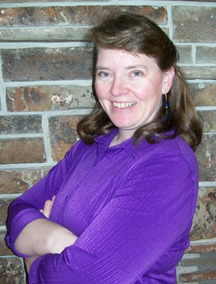
Jaleta Clegg loves to play with words. She writes science fiction and silly horror, and dabbles in everything else. Priestess of the Eggstone, book 2 in her series The Fall of the Altairan Empire, releases on August 10. Pick up your copy today at http://journal-store.com/bookstore/pr...

I'm excited to welcome Jaleta Clegg, author of speculative fiction (and a great ally to have in social media) to my blog for part 1 of this series! Her latest project is the sequel to her Priestess of the Eggstone series, Priestess of the Eggstone: The Fall of the Altairan Empire, due out August 10th!
Check her author bio at the bottom of this page for information on where to get your copy!
So without further delay, I turn your eyes over to Jaleta and her writing!
Alien Cultures, not so alien when you pick them apart
The best place to start your alien civilization is right at home. Study an earth culture, figure out what makes it tick. A million details go into every culture. Pare yours down to its basics. What drives your culture? Think biology, society, economics, religion, social values, food supplies, etc. What makes the foundation for your species?
In Priestess of the Eggstone, I introduce the Sessimoniss, seven-foot-tall lizard people. Their society is driven by family structure which is dictated by their biology. My inspirations were documentaries on lizards, baboons, and the Indian caste system. Clan is everything to the Sessimoniss. Without a clan, they die. The most powerful clans hold the best lands and own the most resources. Interclan marriage can help change status. Blood feuds between clans are common and last centuries.
Within a clan are different castes. The highest are the male warriors. Lesser males who are not warriors are servants. Females are split into breeding and immature. No other classifications of female exist. See the caste system idea? You are born to be what you are born to be. A lesser male cannot aspire to become a warrior. It’s unthinkable to them.
Now to complicate things. I added two competing religions. One worships Sekkitass, an ancient god of warriors. Sending surplus males, warriors and lesser, to serve Sekkitass is a mark of status for the clan. Sekkitass demands blood sacrifice. His high priest holds a seat on the Council, along with the six most powerful clan leaders and the high priestess of the Eggstone.
The Eggstone is an artifact, ancient alien computer or sentient rock, take your pick. It stores memories of the Sessimoniss. It forms a bond with one female who becomes the High Priestess. She can come from any clan but she is never a breeding female. Sending immature females and warriors to serve the Eggstone also denotes high clan status.
The Eggstone and Sekkitass have always been at odds.
The Sessimoniss have space travel, but not their own technology. They are a low-tech species in an isolated region of space. They’ve borrowed what technology they have from masters they served thousands of years ago. I tried to depict a civilization on a decline into complete barbarism and a species teetering on the edge of extinction.
The key to making it believable is to have a strong basis, then add enough details to fill out gaps. You don’t have to describe everything, just enough to hold the story together. Your readers will fill in the blanks for you, if you give them the base.
Now go invent some alien cultures!
About the Author:

Jaleta Clegg loves to play with words. She writes science fiction and silly horror, and dabbles in everything else. Priestess of the Eggstone, book 2 in her series The Fall of the Altairan Empire, releases on August 10. Pick up your copy today at http://journal-store.com/bookstore/pr...
July 16, 2012
The Big B-?
Big Bang or Big Bounce?
 Image Courtesy NASAMost of us don't worry about things that occurred billions if years before we were a twinkle in our sun's eye, but for cosmologists this has been a hotly contested debate for years. Its answer will affect our understanding of how the universe works, and ultimately how we go about interacting with it.
According to a daily galaxy article I read, Loop Quantum Gravity (LQG) seems to offer the greatest promise for solving the mathematical issues involved in having the entire universe crunched up into a single point. (Classical physics breaks down under such extreme conditions).
LQG is the theory that gravity is made of interacting fields forming something called the quantum foam (read that as the turbulent interactions forming the underlying fabric of space-time). LQG indicates that the universe is locked into a never ending cycle of expansions and crunches. There is a growing support for this theory because it can explain the mathematics of the moment before the big bang.
But wait! This is not the end of the story. There were a few things I felt were missing from my other reading.
The article failed to address the phenomena of Dark Energy, the mysterious force that physicists believe started pushing the universe apart at a rate faster than what could be accounted for by the Big Bang alone. In fact, universe expansion is accelerating even today. This has been observed and confirmed many times over, and is not consistent with a big crunch theory.
Although the Big Bang's existence has been supported by multiple observed phenomena, the moments preceding and just after the event are so strange that they represent a vast frontier in the field of cosmology. We live in a time now where our technology is just starting to be able to investigate these questions. The recent discovery of a Higgs-boson like particle has opened a whole new vector from which we can attack these problems.
Whichever theory ultimately triumphs will be a question of time and technology.
 Photo Courtesy NASA
July 13, 2012
NASA's on the way to Pluto!
It's been a long time since I've done a science update, and I just couldn't help myself after hearing about this!
New Horizons, a space probe launched in 2006, is on its way to Pluto. Although it still has 4 years left until it arrives, it's already starting to reveal some of the cold dwarf-planet's mysteries. Pluto appears to have multiple moons! Personally, I never would have imagined this would be the case. I always thought of Pluto as small, and wondered how it could have a moon at all.
2016 should be a very interesting year. New Horizons is going to pass so close to Pluto's surface that it will be able to take detailed pictures of its surface. Watch the movie for details!
(Video courtesy NASA)
New Horizons, a space probe launched in 2006, is on its way to Pluto. Although it still has 4 years left until it arrives, it's already starting to reveal some of the cold dwarf-planet's mysteries. Pluto appears to have multiple moons! Personally, I never would have imagined this would be the case. I always thought of Pluto as small, and wondered how it could have a moon at all.
2016 should be a very interesting year. New Horizons is going to pass so close to Pluto's surface that it will be able to take detailed pictures of its surface. Watch the movie for details!
(Video courtesy NASA)
Nero's Niche
Blogging about the things that inspire my writing: science, science fiction, fantasy, and the universe around us!
- Michael Formichelli's profile
- 23 followers

