
Michael Formichelli's Blog: Nero's Niche, page 17
December 8, 2012
Life on Other Worlds?
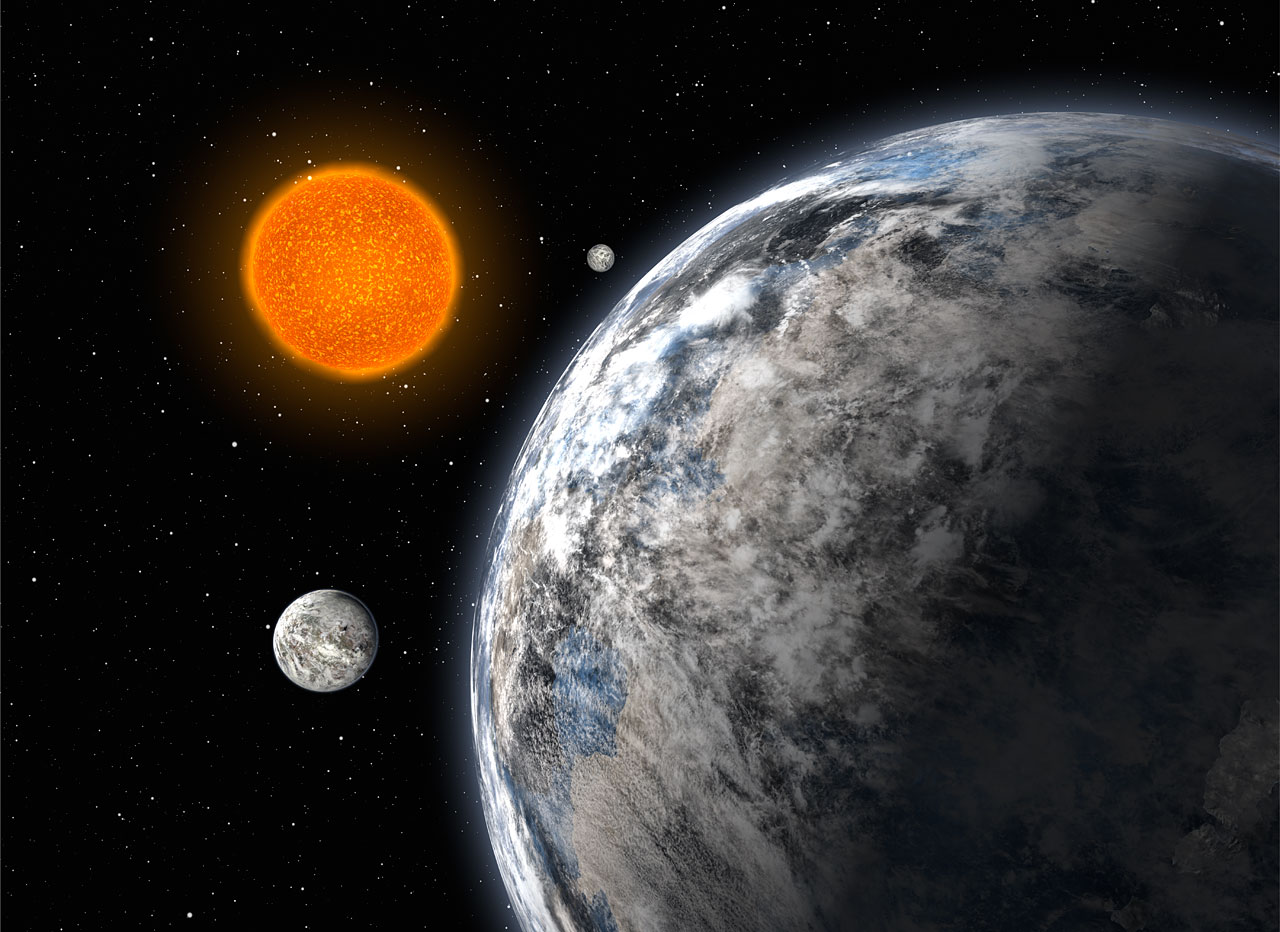 Image Courtesy ESO
One of the biggest questions surrounding space exploration, perhaps the biggest one to the common person, is whether or not we are alone in the universe. I don't think it is a reach to say that most writers of science fiction, and perhaps most astronomers—if pressed—would say it's likely we are not alone. The universe is too big a place to imagine that life is so special it only formed here on Earth. Despite the statistical odds and calculations (most famously, the Drake Equation) being in life's favor, we still have yet to find actual proof of extra-terrestrial life.
However, there are many promising signs of life on other worlds to be found if we look hard enough. For one, here on Earth, we find life in the oddest places—like inside rocks in Antarctica:
 Image courtesy Wikipedia under GNU Free Document License
—at the bottom of the ocean where no light penetrates:
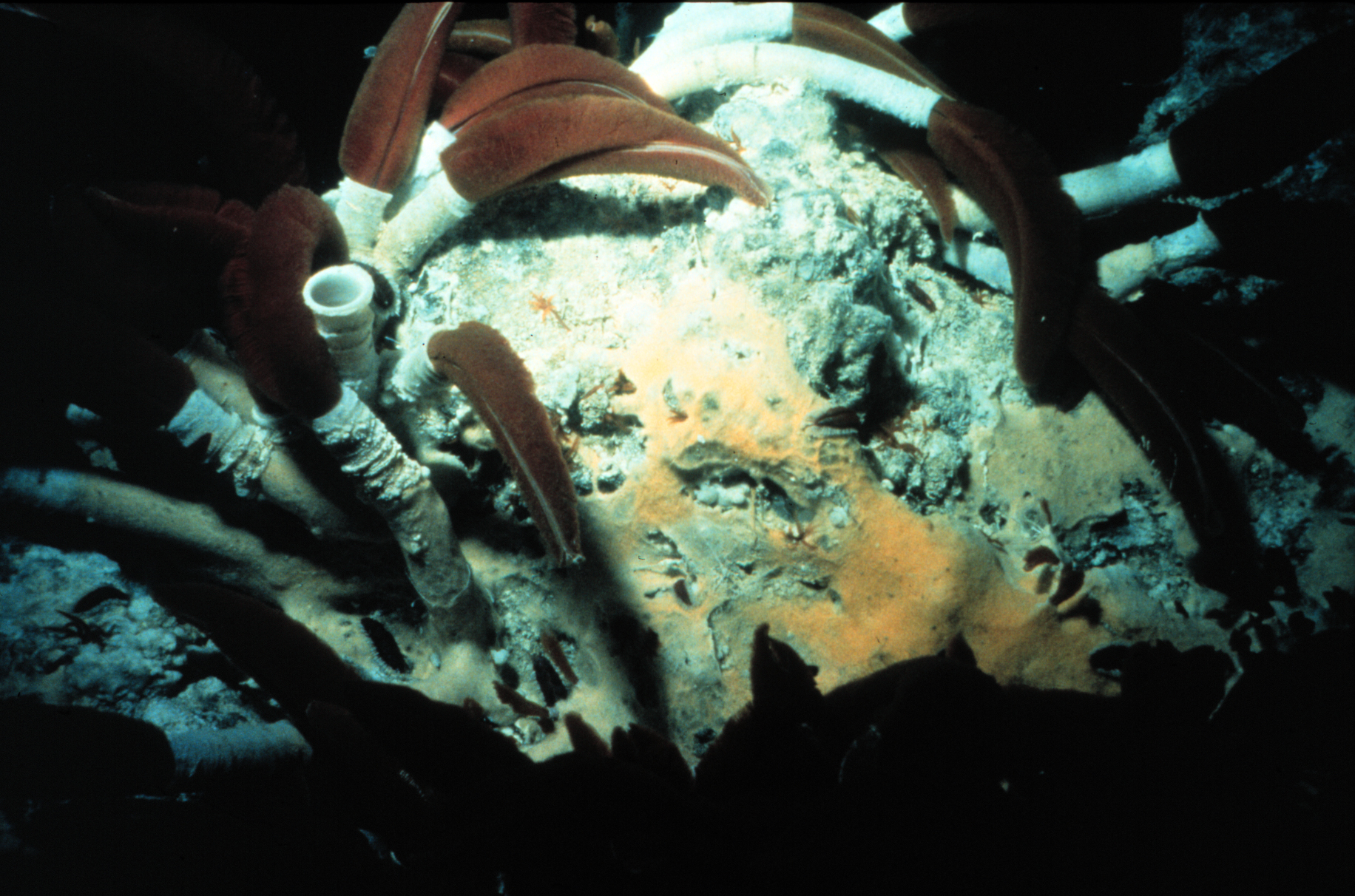 Image courtesy Wikipedia & NOAA
—and even volcanoes, arid deserts, and other inhospitable environments:
 Image courtesy Wikipedia Commons
 Image courtesy Wikipedia under GNU Free Document License
 Methanopyrus kandleriImage courtesy Wikipedia under GNU Free Document LicenseGiven that we can find such living things on Earth, it's not a far reach to imagine them in like-environments on other planets.
Recently, the Habitable Planets Catalog by the University of Puerto Rico at Arecibo celebrated its first anniversary on December 5. This is a catalog is dedicated to listing known planets around other stars with the potential to host life as we know it. When it was first created, the catalog listed only two planets, but over the past year it's grown to seven confirmed worlds with nearly thirty planets and thirty moons with the potential for life awaiting analysis.
Below is a video from the catalog showcasing the confirmed worlds.
I personally find these discoveries to be very heartening. As a writer of science fiction I'd like to believe the things I dream about could actually exist somewhere in some form. The thought that we are unique in the universe is a very lonely one, and I'm happy to say mathematically improbable given the vast scope of even just our galaxy. Even if we don't find life in our solar system, remember that we're looking at a billion-billion-billionth of what's actually out there just in our galaxy. There are hundreds of Earth-type suns within just a few thousand light-years of us. That fact gives me a sense of hope for the future that one day we will throw off our earthly shackles, sail among the stars exploring the galaxy, and maybe better ourselves in the process.


November 24, 2012
Constellation-Fiction
I was reading this review of Prometheus on a blog I found on Tumblr (by Locustar), and I was struck by something that was touched on, but not explored in the text. The author mentioned that he took out mythology books, repeatedly, from the library as a kid, and moved on to science fiction as he got older. I had the thought that this memory of his was a close mirror of my own childhood, which led me to wonder how many more of us have had this path in our lives? How many more of us started on mythology and wound up hooked on science fiction?
As I wrote in my bio for Amazon, mom let me stay up late to watch Star Trek and other sci-fi shows (like Doctor Who and Blake's 7) when I was a kid, and I attribute that to the feelings of excitement and happiness I get when watching scifi, but as Locustar's post reminded me, there's a definite link between scifi and the mythology of the ancient world.
The examples are really too numerous to list, so I'll mention just a couple of science fiction stories in the public eye. As Joseph Campbell pointed out, Star Wars is the Hero's Journey from ancient mythology (there's a nice summary of it here), almost verbatim The movie Prometheus, as mentioned by Locustar, is not just a prequel to Alien, but a mirror of the Greek myth of Prometheus who brings enlightenment to humanity and is punished for it forever. Even the recent Battlestar Galactica can be seen as an Odyssey metaphor.
In my opinion, all storytelling draws on mythology either directly by retelling a story, or indirectly by borrowing the techniques, in one way or another. Science fiction, and speculative fiction in general, seem to be more directly related than most. Perhaps it is because the genre, just as the myths do, is used to both entertain and to educate (at least when it's more than just special effects). Free of the bonds of the immediate world around us, speculative fiction can get to the heart of what it is to be human and the dangers and benefits of being the most we all can be—just as the mythology of old did. Looking at it in this light, I guess it's not really a surprise that mythology can be a "gateway drug" to science fiction.
Who knew wondering around the Greek wing of the Metropolitan Museum of Art as a kid would lead to dreaming about walking among the stars?

November 12, 2012
Blood and Chrome Premiers!
I just finished watching the first two episodes of Battlestar Galactica: Blood and Chrome after spending a weekend forgetting to do it.
My initial impressions are good ones.
The show has the intensity of the "original" (referring to the Edward James Olmos 'Galactica that ran from 2004-2009 and NOT the actual original series from decades ago), and I found myself wrapped up in the action immediately. The webisode format is probably adding to the intensity of the drama, as the action only has 10-12 minutes to tell a story, but someone seems to have remembered what made the 2004 series so good and I'm happy they did. I also think I can learn a thing or two about character portrayals from the writer, who manages to tell you who the players are and what they're about within moments of meeting them in an impressively quick fashion while avoiding the feeling of "info-dump" that sometimes rears its ugly head in fiction (and science fiction in particular).
I can honestly say, for the first time in a while, I can't wait for Friday night to roll around so I can see what happens next!
Below is the first episode for your viewing pleasure. You can find the other(s) as they come out on Youtube.

November 9, 2012
More Battlestar For Your Buck!
I'm very excited for this evening.
Although I was disappointed in the end of the Syfy original series, Battlestar Galactica, I did love the episodes leading up to it and was left with wanting more of the good stuff.
It seems, thanks to an on-line release through Machinima on Youtube, we all get a chance to get it.
Premiering tonight, 11/9/12-
Now, if only they'd continue Stargate Universe somehow...

Although I was disappointed in the end of the Syfy original series, Battlestar Galactica, I did love the episodes leading up to it and was left with wanting more of the good stuff.
It seems, thanks to an on-line release through Machinima on Youtube, we all get a chance to get it.
Premiering tonight, 11/9/12-
Now, if only they'd continue Stargate Universe somehow...
October 31, 2012
Hurricane Sandy
I'm just posting a quick note here to say a few words about the recent hurricane.
First, I'm in the zone affected by it and have no power, so there will be a delay in my responses to comments, tweets, etc. Please bear with me, and I'll be back on line asap.
Second, to all those who have it tougher than myself (I only suffered a loss of power and heat), my heart goes out to you, with my condolences and wishes for better days ahead.
First, I'm in the zone affected by it and have no power, so there will be a delay in my responses to comments, tweets, etc. Please bear with me, and I'll be back on line asap.
Second, to all those who have it tougher than myself (I only suffered a loss of power and heat), my heart goes out to you, with my condolences and wishes for better days ahead.
October 27, 2012
A Brief Review of Red Shirts
For me, the initial attraction to this book was its amusing concept. It played itself out pretty well, and had some clever moments I thoroughly enjoyed, but in some ways the satirical aspect went on a bit long for my tastes. By the end, I had a lukewarm feeling about the book. I think the work wound up being too much of a meta-Russian doll for my tastes, but that's really a statement about me and not any reflection on the book. It's well written, by someone who worked on one of my all-time favorite sci-fi shows (SGU), and if you enjoy multi-layered satire, laughed at Star Trek (at least it's original version), you'll probably enjoy this book a lot.
Oh, one last note before I sign off: The book probably could have done without the codas at the end (though I did enjoy the first one).

October 25, 2012
Positing A Question
So this one is for all of you time-travel junkies out there.
There is an interesting thought posed by John Scalzi's Red Shirts:
Does time travel to the past violate the conservation of matter and energy? (Since the atoms and energy that make up you, or the object, etc. are already in the past- time travel to the past would be introducing matter);
-OR-
Does the conservation of mass and energy apply not from moment to moment, but holistically across all-time space so matter borrowed from the future isn't actually removing or introducing matter from the system as a whole?
I'm actually fascinated by this idea (since I'm of the mind that time travel to the past is pure fantasy or requires so much energy it's impractical).
I'm curious, what do you think?

October 16, 2012
With Fingers Crossed
I know I should be writing a longer blog post than this, but I'm going to plead exhaustion tonight.
Yesterday I managed to get Blood Siren in under the wire for the Harper-Voyager open submissions. I've got my fingers crossed for the next three months!
In re-editing the book (cleaning up some post-publishing typos, errors, and such—I'll be looking into getting corrections out for Kindle and NOOK soon) I came up with some more ideas about things going on in the background (the story behind the story) that will fill in some details. So, I'm working on some "filler" short stories and the like. Perhaps, one day, I'll put them into one volume in a kind of "Blood Siren Complete Edition" or some such—but for now, they'll stay separate while I wait to hear if Blood Siren made it or not.
Here's to hoping!

October 4, 2012
Making the Impossible Real Part II
Making the Impossible Real Part II-Making Sure Your Reader Can Relate To Your Story
The most important thing for a story after internal consistency is to have characters and environments that the readers can relate to. This might seem like an impossible task for someone writing high fantasy or science fiction. After all, part of writing things like far future stories is making the environments strange enough to give the reader a sense that "this is not the time or the world we live in." Yet, there are ways to achieve a balance between the alien and the familiar in order to create an experience that readers can both feel was new, and still relate to.
How is this possible?
The key to writing any good story is to put some aspect of the readers' experience into the tale.
For example, the television series Star Trek and all of its spin-offs are set in a future where people zip about the galaxy in ships capable of reaching between the stars in a matter of hours, days, or weeks. While watching this we accept such phenomena, and can even imagine ourselves doing it, because the shows have factors that make their universe familiar to us. Gene Roddenberry set up the Klingons of the original series to be representative of the Russians, and their conflict with the Federation represented that of Russia with the USA during the cold war. Fresh out of the Cuban Missile Crisis when Star Trek debuted, audiences in the 1960's were able to relate to that dramatic tension, and plug themselves right into the events going on in the show. The shared sense of threat created a connection with the show that rendered the other outlandish things, including the ridiculous special effects, not only acceptable but lovable. Star Trek is the brand it is today because when the show was cancelled, the fans took it upon themselves to write in and get it resurrected (though in a different form). That kind of brand loyalty would not have been possible if the show was just a collection of aliens and blinking lights.
Having your fiction resemble current events is not the only way to open the door to the seemingly impossible for your audience. Sometimes the creator of a work of speculative fiction doesn't want to date the story by relating it to current events. One way to avoid this while still maintaining a connection is to put a strong current of humanism into one's work. Star Trek did this by having its characters be deeply human despite their futuristic setting (which was another reason for its strong following). Star Wars did this by telling a tale of science fiction using archetypes and a style of storytelling taken from heroic mythology dating back to ancient Greece. Firefly used the mythology of the American Old West, while Doctor Who does it with a lovable, quirky and intelligent lead character who likes to travel through time and space with ordinary people like you and me.
The list of ways to get your audience to think, "I feel for that character, I love this work," is limited only by your creativity and ability to connect the story in your head to the experiences and mindset of your audience. Connecting to your readers consistently throughout your tale makes all the difference between a story they'll want to talk about, and one that they'll quietly put down unfinished never to be looked at again.

The most important thing for a story after internal consistency is to have characters and environments that the readers can relate to. This might seem like an impossible task for someone writing high fantasy or science fiction. After all, part of writing things like far future stories is making the environments strange enough to give the reader a sense that "this is not the time or the world we live in." Yet, there are ways to achieve a balance between the alien and the familiar in order to create an experience that readers can both feel was new, and still relate to.
How is this possible?
The key to writing any good story is to put some aspect of the readers' experience into the tale.
For example, the television series Star Trek and all of its spin-offs are set in a future where people zip about the galaxy in ships capable of reaching between the stars in a matter of hours, days, or weeks. While watching this we accept such phenomena, and can even imagine ourselves doing it, because the shows have factors that make their universe familiar to us. Gene Roddenberry set up the Klingons of the original series to be representative of the Russians, and their conflict with the Federation represented that of Russia with the USA during the cold war. Fresh out of the Cuban Missile Crisis when Star Trek debuted, audiences in the 1960's were able to relate to that dramatic tension, and plug themselves right into the events going on in the show. The shared sense of threat created a connection with the show that rendered the other outlandish things, including the ridiculous special effects, not only acceptable but lovable. Star Trek is the brand it is today because when the show was cancelled, the fans took it upon themselves to write in and get it resurrected (though in a different form). That kind of brand loyalty would not have been possible if the show was just a collection of aliens and blinking lights.
Having your fiction resemble current events is not the only way to open the door to the seemingly impossible for your audience. Sometimes the creator of a work of speculative fiction doesn't want to date the story by relating it to current events. One way to avoid this while still maintaining a connection is to put a strong current of humanism into one's work. Star Trek did this by having its characters be deeply human despite their futuristic setting (which was another reason for its strong following). Star Wars did this by telling a tale of science fiction using archetypes and a style of storytelling taken from heroic mythology dating back to ancient Greece. Firefly used the mythology of the American Old West, while Doctor Who does it with a lovable, quirky and intelligent lead character who likes to travel through time and space with ordinary people like you and me.
The list of ways to get your audience to think, "I feel for that character, I love this work," is limited only by your creativity and ability to connect the story in your head to the experiences and mindset of your audience. Connecting to your readers consistently throughout your tale makes all the difference between a story they'll want to talk about, and one that they'll quietly put down unfinished never to be looked at again.
September 26, 2012
Making the Impossible Real- Part I
I know I've been quite remiss in blogging over these last few weeks. I could blame a number of things, but really that would just be showering you with excuses. So, instead, along with a mea culpa, I'll just jump right into the first in a series of posts I've planned concerning writing genre fiction.
Making the Impossible Real- Part I
It is the job of the genre writer, whether it be fantasy, horror, or science fiction, to make the impossible, or improbable, possible in the mind of the reader. There are a variety of ways writers employ to do this, but the best stories follow a set of guidelines that keep the reader's mind in the perspective of the world of the story. As long as the reader doesn't think, "oh, come on," then the writer has done the job right.
Game of Thrones by George R.R. Martin, for example, has dragons, the walking dead, and blood magic (among other things). None of these things causes us any trouble while we're reading it. Instead of saying to ourselves, "oh, that's ridiculous," we say, "oh, how cool!" How is this possible when none of these things are experienced in the world around us?
First rule of the improbable-
Internal Consistency
If the writer establishes what is possible in the realm of the story, and keeps things within those boundaries for the length of the story, then we are more likely to accept them no matter how ridiculous these things would be in the real world.
For example, if in the first three chapters of a book, we hear tales of witches who fly on broomsticks in the night, and then the main character encounters one in chapter four, we are not surprised even if other characters have told the main character he is stupid for believing in witches. The author has established that witches could exist in the universe, so we can accept that they do.
If, however, the author establishes that the world of the book is supposed to be the world in which we all live, and then we see a person walking through walls without any further explanation as to how this could be, we as readers will rightly be saying to ourselves, "wait, what the hell?"
I've read books before where things are set up and run smoothly, the writer is stays within his own established limits and then, in the middle, something happens that goes against what the writer has spent so much time setting up. The feeling is like being on a train that just jumped off the tracks. There's a bump, and then the sickening sensation of something being horribly wrong before the crash of emotions and confusion at the end. When I was a teenager, this happened in one of my favorite book series and I threw the book across the room in disgust. I didn't touch it again for six months (it stayed in the corner of my room, gathering dust on the floor. I didn't even want to look at it). Obviously, as a writer this is not the reaction you want to illicit from your reader.
Internal consistency, sticking to the rules of the universe that you, the writer, established is probably the single most important factor in making the impossible, or improbable, palatable. I cannot stress this enough. Without it, the world of the book just doesn't make sense and the reader may even feel cheated.
In the next post I'll confront the second guideline to making the improbable possible, Making Sure Your Reader Can Relate to Your Story.
-Coming Soon!
Making the Impossible Real- Part I
It is the job of the genre writer, whether it be fantasy, horror, or science fiction, to make the impossible, or improbable, possible in the mind of the reader. There are a variety of ways writers employ to do this, but the best stories follow a set of guidelines that keep the reader's mind in the perspective of the world of the story. As long as the reader doesn't think, "oh, come on," then the writer has done the job right.
Game of Thrones by George R.R. Martin, for example, has dragons, the walking dead, and blood magic (among other things). None of these things causes us any trouble while we're reading it. Instead of saying to ourselves, "oh, that's ridiculous," we say, "oh, how cool!" How is this possible when none of these things are experienced in the world around us?
First rule of the improbable-
Internal Consistency
If the writer establishes what is possible in the realm of the story, and keeps things within those boundaries for the length of the story, then we are more likely to accept them no matter how ridiculous these things would be in the real world.
For example, if in the first three chapters of a book, we hear tales of witches who fly on broomsticks in the night, and then the main character encounters one in chapter four, we are not surprised even if other characters have told the main character he is stupid for believing in witches. The author has established that witches could exist in the universe, so we can accept that they do.
If, however, the author establishes that the world of the book is supposed to be the world in which we all live, and then we see a person walking through walls without any further explanation as to how this could be, we as readers will rightly be saying to ourselves, "wait, what the hell?"
I've read books before where things are set up and run smoothly, the writer is stays within his own established limits and then, in the middle, something happens that goes against what the writer has spent so much time setting up. The feeling is like being on a train that just jumped off the tracks. There's a bump, and then the sickening sensation of something being horribly wrong before the crash of emotions and confusion at the end. When I was a teenager, this happened in one of my favorite book series and I threw the book across the room in disgust. I didn't touch it again for six months (it stayed in the corner of my room, gathering dust on the floor. I didn't even want to look at it). Obviously, as a writer this is not the reaction you want to illicit from your reader.
Internal consistency, sticking to the rules of the universe that you, the writer, established is probably the single most important factor in making the impossible, or improbable, palatable. I cannot stress this enough. Without it, the world of the book just doesn't make sense and the reader may even feel cheated.
In the next post I'll confront the second guideline to making the improbable possible, Making Sure Your Reader Can Relate to Your Story.
-Coming Soon!
Nero's Niche
Blogging about the things that inspire my writing: science, science fiction, fantasy, and the universe around us!
- Michael Formichelli's profile
- 23 followers

