Heather Holleman's Blog, page 177
March 2, 2019
Gather the Wise Ones
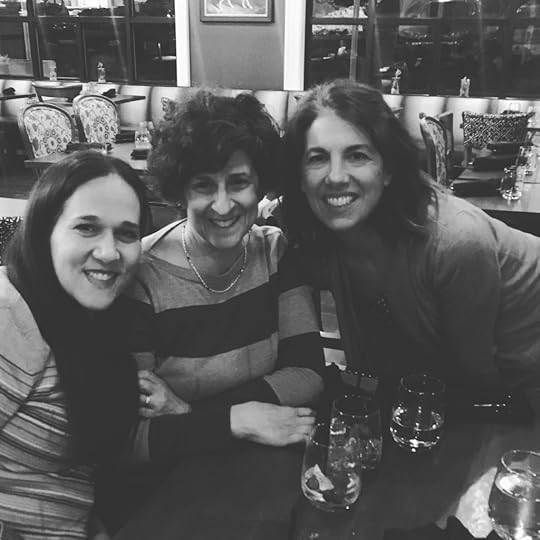
I listen well when Italian Mamas share wisdom about aging, creativity, friendship, and love. I learn about all the times in life a woman must reinvent herself, and I listen to how that happens, what it’s like, and what to expect. Everyone needs friends who gather to pass on wisdom.
When you find those friends, gather and listen. Take notes if you must. Reflect and recalibrate. Ask questions. Ask lots of questions.
The evening passes. I think about aging gently, gracefully, and beautifully. I think about launching children into adulthood, about caring for myself differently, and about trusting God more deeply than ever.
A man with a guitar plays a Bruce Springsteen song in the background, and we can hardly believe it. All New Jersey Italians love Bruce!


March 1, 2019
More Italian Mama Wisdom: You Need You Sometimes
The Italian Mama offers wisdom today as she describes advising friends to be there for themselves. It’s like softly saying to me–but will full Italian Mama authority–“Heather needs Heather today.”
You need you today.
We discuss how mothers know how to care for everyone else but themselves. They put everyone aside in order to be there for children, spouses, friends, coworkers, students, everyone.
But what if mothers practiced being there for themselves, too? Imagine the Italian Mama pointing a kind but stern finger in your face and saying, “You need to be there for yourself right now.”
You need you to take care of you like you would care for someone else. Shall I say it again?
You need to take care of you like you would care for someone else.
Otherwise, you run yourself ragged. You start shutting down. You overextend and overcommit.
If you’re the one caring for everyone, you might just need some of yourself today for you. You doctor yourself. You comfort yourself. You prepare nutritious foods and bring the comforts for yourself. You are also a member of your own family.
You need you sometimes.
It’s wise, timely advice for moms today.
February 28, 2019
“As you always do. . .”
I read in Psalm 119:132 the cry of the priest who writes, “Turn to me and have mercy on me, as you always do to those who love your name.”
As you always do. . .
The phrase reminds me that God’s character never changes and He will not fail to turn to us and respond in mercy.
I can hardly contain the joy in my soul to know that we serve a God who turns to us–to give us His attention, imagine!–and has mercy on us.
Instead of ignoring you, He turns to you.
Instead of punishing you, He shows compassion and goodness.
It’s His way, His manner of doing things, His good character. He looks upon you and me even at this moment and shows us His favor, His blessing, and His goodness.
As He always does.
We don’t need to worry if this attention and mercy will operate on our behalf today. It will. It always will.
I wonder now: What changes about our day when we know we have God’s attention and His mercy?
February 27, 2019
Caring for Others (When they Don’t Like Being Fussed Over)
My husband does not like to be fussed over. When he’s sick (like he is now), that means I have to care for him while pretending like I’m leaving him alone.
It’s an art form.
But I’m well-trained in offering support that doesn’t look like support (after all, that’s what teenagers like).
So I make tea supposedly for myself but then nonchalantly deliver tea to him. (He doesn’t know I prepared it with ginger and honey and all the great antioxidants of organic green tea). I tuck blankets around him without saying a word and then retreat stealth-like away from the bed.
I gently suggest all my healing remedies: a detoxifying bubble bath, hydration, and special, nourishing foods. I pretend he hasn’t declined them. I place the fresh water by the bed, and he drinks without rebellion.
Mostly, I practice being quietly present, but I’m ready with comforts that seem subtle and unplanned.
He’ll wake from his nap with fresh fruit nearby (who knows how it got there?). It won’t feel like someone has fussed over him.
Even though someone has.
February 26, 2019
Give It Time
My friend mentions that when she wasn’t feeling well last week that, even when well again, it took three days to feel like herself again.
“It takes three days,” she says again.
(I actually remember a nurse telling me that once. She said that the first day I begin to feel better means I should still rest. I should give it time. Take another day after that day, and then maybe another. One should wait a few days before reentering life. Apparently, you can easily run yourself ragged if you emerge from illness too quickly.)
When I tell my friend I felt under the weather today, she said again, “You’ll be yourself in three days.”
Three days? That’s a lifetime!
I tend to want to bounce back immediately after a day of feeling fatigued or having a headache or congestion. And especially if I’ve had a less-than-happy mood, I’m so discouraged if I don’t pop out of bed the next day as the refreshed, full-version me.
But I think of the three day standard for returning to normal. Perhaps you need one day to cleanse out all the toxic things, one day to replenish, and one day to reset all the systems–whether physical, emotional, or spiritual.
I like this idea. I like thinking about taking three days to rehabilitate before launching full force back into life. Living with flair means you give yourself time to feel like yourself again. It won’t be tomorrow or the next day. But the next day? Yes!
I realize that the arbitrary assignment of three days doesn’t work for longer illnesses (like the time I had the norovirus and felt ill for two weeks and then not fully recovered internally for two months), but the idea of things taking time makes sense. We don’t rush healing. We don’t rush whatever we need to do to replenish and reset.
It might take three days or three months. The important principle I’m learning is that it won’t be tomorrow. We give things time.
February 25, 2019
Safe In Here
All evening and into the morning, the wind howls. We wake to black branches scattered on the snow and green trash cans tumbling down the icy sidewalks. I hardly sleep.
I burrow into my coat to make it safely to my classroom. As I teach, the high-pitched wind shrieks against the windows. It’s a haunting, eerie howl now, more angry and less like the lonely and sorrowful moan of the night wind.
There’s an enemy out there. It comes against us today.
We’re all in here together, wind-whipped and hesitant of a future walk away from this building to the next. But for now, we’re safe in here.
Days come that remind us of our fragility, that tip us over with great force, that howl and shriek.
But it’s just wind. It will pass. And we’re safe in here. Besides, I consider my spring-planted golden gingko tree who stands so skinny and frail—just a few feet tall. This wind that won’t break him makes his trunk stronger than ever.
February 24, 2019
Ask, Seek, Knock
This morning, the pastor spoke on Matthew 7: 7 and this astonishing sentence: “Ask and it will be given to you; seek and you will find; knock and the door will be opened to you.”
I find myself wondering about the difference between the three verbs.
Ask. Seek. Knock.
We ask for what we need. We seek for what seems missing or lost. We knock on a door of opportunity. I ask the Holy Spirit to guide my asking, my seeking, my knocking.
At my very best, I’m asking for more of Jesus, seeking for Him, and knocking on the door that will lead me deeper into the life of Christ.
February 23, 2019
Years That Ask
This morning I read a line from Zora Neale Hurston:
“There are years that ask questions and years that answer.”
So true. An asking year means, perhaps, that an answering year is just around the corner. In an asking year, one goes deeper into prayer, into faith, and into hope. In an answering year, I suppose it’s a different kind of joy, of understanding, and of passing on of wisdom. Both kinds of years possess their own wonder and beauty.
February 22, 2019
A Little Writing Lesson: 3 Questions
Think about your current writing project, especially if you’re at the proposal stage. When you compose any piece of writing, begin with these three questions that, if answered, greenlight the project:
Why this?
Why now?
Why me?
These questions tap into the rhetorical theory we’ve worked on in my class all semester:
Why this? helps shape the passion behind the writing, the emotional appeal (pathos) that creates urgency and a reason to read. Why are you writing this? What will happen if we don’t read this? What will we miss? It also presents the reason behind the argument (logos). What question will your writing answer and why must we answer it?
Why now? means we’re aware of the timeliness (kairos) of the writing and of the conversation happening around our ideas. Why write this now as opposed to later? Is this an outdated topic? Who is also talking about this topic right now? What current research or trends am I responding to?
Why me? invites the writer to consider his or her authority to write at all (ethos). What expertise might I draw upon? What authority do I have because of my experience and my unique history?
Try it out. Place your project to the test: Why this? Why me? Why now?
Why this? Why now? Why me? also works for deciding upon other projects, not just writing.
February 21, 2019
All That Is Ours
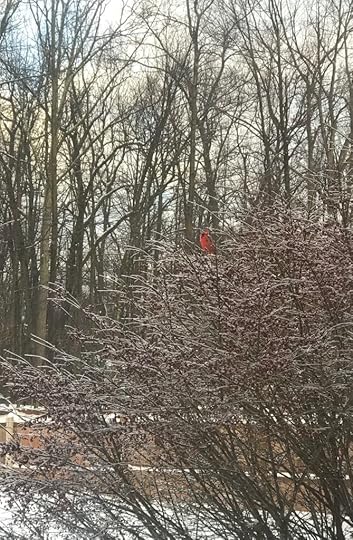
The sun emerged this morning and lit the icy backyard, the berries, and the Northern Cardinal that always returns. I’m not a photographer, so you’ll have to imagine the beauty:
Imagine the chipper call of that bird against the silence of a winter morning. Imagine the clean smell of snow. Imagine his bright red feathers. Imagine the glistening of icy branches.
I leave for my day of campus meetings and errands, and I return to the afternoon sun now shedding different light. The Northern Cardinal rests in the Winterberry Bush, surveying all that is his. We both rest here in the bright sun.