Libby Gill's Blog, page 10
May 21, 2019
Personality & High-Performance Teams
Just like people, teams have personalities. While the nature of teams has shifted since our tribal hunter-gatherer days, teams are still one of our most crucial social structures. How we introduce hopefulness into our teams can be the difference between joyful collaboration and frustrating second-guessing.

While you may not always have the luxury of hand-picking your team members, the more you understand the personalities involved, the more you’ll be able to predict and manage the group dynamic. See if you recognize yourself and your co-workers in the list of team member archetypes below.
1. The Driver. Drivers are the leaders who keep the team focused and moving forward. Often, these are designated leaders, but in flat teams or organizations where everyone is meant to be equal, leaders often emerge naturally. If there’s no clear leader, one of the first team tasks should be to choose someone to direct the team. Typically, that person will be charged with guiding group discussions, assigning roles, and managing conflict –in short, keeping the team moving efficiently toward the end goal.
Drivers: focused, outcome-oriented, communicative, opinionated
2. The Organizer. With a strong Organizer on board, the team leader may be able to shift some of the administrative activities. Organizers are process-oriented and often adept with lists, calendars, and charts. Rather than impose their will on others (as some Drivers tend to do), they love to put systems in place to create an atmosphere of order and harmony where everyone can thrive. Be grateful if you have someone like a former assistant of mine who told me proudly at our initial interview, “I live to organize.” It was music to my Driver ears and the beginning of a long and fruitful relationship.
Organizers: process-oriented, detailed, supportive, team-focused
3. The Visionary. Visionaries are the creative engines of the team machine. Though they may sometimes seem lost in the clouds, it is precisely their ability to dream – and dream big – that can bring a breakthrough idea to the team. These creative types aren’t just found in positions like marketing or design, but can be found in any area. Learn to tolerate their flights of fancy, give them encouragement to express their thoughts and you may find they’re full of fresh process and people solutions that can help solve even the thorniest problems.
Visionaries: creative, big picture, imaginative, future-focused
4. The Naysayer. Contrarians of the corporate world have gotten a bad rap for being negative. But that’s actually their blessing. If you can put up with the Naysayers’ occasional sourpuss style, you’ll discover that their out-of-the-box way of looking at the world can bring an enormous amount of innovation to the group. Deal with their disruptive attitudes, listen to their wild ideas, embrace their sometimes-unusual methods and you may strike gold.
Naysayers: disruptive, innovative, challenging, idea people
5. The Diplomat. Like the Organizer, the Diplomat is focused on the common good. Diplomats are relationship-builders and talented team players who can soothe ruffled feathers and bring out the best in others. They may not always like to take the lead, but they’ll happily weigh in with their own thoughts and encourage input from others. Respect their emotional nature, appreciate their calm demeanor and you’ll have a connector who can rally the team even in the most difficult moments.
Diplomats: relationship-oriented, harmonious, influential, bridge-builders
6. The Expert. Though everyone on the team should have skills that allow them to contribute to problem-solving and organizational growth (except for the Wild Card), there should be at least one person on the team with deep subject matter knowledge. The Expert is the go-to answer person on the problem at hand, a skilled researcher, and someone who can pose and answer the questions no one else even thought to ask. Treasure them.
Experts: knowledgeable, research-savvy, informed, problem solver
7. The Wild Card. Not every team needs a Wild Card, that is, a person who comes from a completely different discipline and might not normally interact with the group. But by bringing a Wild Card onto a team or even just an occasional meeting, particularly brainstorming sessions where all ideas are welcome, you may get some great surprises. People who are new to the organization or business unit can often be great Wild Cards, bringing fresh perspectives and competitive knowledge that can be invaluable.
Wild Cards: fresh thinkers, challenging, information seekers, creative
Fun Challenge ExerciseIdeally, by having a mix of personalities, you get the benefit of different skills sets, depth and type of experience, and temperaments. Ask your team to identify their personality types and discuss how the group might click or clash. By putting differences on the table for discussion, you not only build trust and rapport, but you also make “otherness” a positive benefit to the entire team, instead of an isolating factor. Go team!


March 27, 2019
Take the Hope Quiz
When positive psychologist Dr. Rick Snyder was on sabbatical from his teaching job at the University of Kansas, he went to the library to study the academic research on hope, only to discover that there was none. Why? Because no one had thought hope was a measurable concept.
But that didn’t stop Dr. Snyder. Wanting to understand the impact of hopefulness in our daily lives – including how to measure our levels of hope – he designed the first assessment tool to look at the inherent levels of hope in adults over age 15. The questionnaire consists of twelve questions that look at agency (I energetically pursue my goals) and pathways (I can think of lots of ways out of a jam), as well as hope overall.
To discover your hope levels, answer the questions below, then score yourself on three separate scales: the agency score, the pathways score, and your overall hope score which is the sum of the agency and pathway scores. The hope score ranges from a minimum of 8 to a maximum of 64, with agency and pathway scores ranging from a minimum of 4 to a maximum of 32. The higher the scores, the higher the level of hope in each of the three areas. Give the Hope Scale a try and see where you fall.
Directions: Read each item carefully. Using the scale below, select the number that best describes YOU and write that number down.
1. Definitely False
2. Mostly False
3. Somewhat False
4. Slightly False
5. Slightly True
6. Somewhat True
7. Mostly True
8. Definitely True
___ 1. I can think of many ways to get out of a jam.
___ 2. I energetically pursue my goals.
___ 3. I feel tired most of the time.
___ 4. There are lots of ways around any problem.
___ 5. I am easily beat* in an argument.
___ 6. I can think of many ways to get the things in life that are important to me.
___ 7. I worry about my health.
___ 8. Even when others get discouraged, I know I can find a way to solve the problem.
___ 9. My past experiences have prepared me well for my future.
___10. I’ve been pretty successful in life.
___11. I usually find myself worrying about something.
___12. I meet the goals that I set for myself.
*Note: I changed Dr. Snyder’s word “downed” to “beat” since I discovered that some people have a hard time with Snyder’s meaning with that word. Thanks to the Journal of Personality and Social Psychologyfor permission to use the Hope Scale.[1]
Scoring:
· Add up your scores for items 2, 9, 10, and 12. This gives you your agency score, which represents your ability to take action.
· Next, add up scores for items 1, 4, 6, and 8 make up the pathway subscale. This measures your ability to find multiple means of reaching a desired goal.
· Finally, add your agency and pathways scores together to get your overall hope score.
Now, no matter where you fall on the scale, ask yourself: How can I infuse my workplace or home with a greater sense of hope about the future?
[1]C.R. Snyder et al., “Development and Validation of the State Hope Scale,” Journal of Personality and Social Psychology70 (1996): 321
September 18, 2018
Surprising Research About Team Communication
While it may seem obvious that teams that communicate effectively are apt to be more successful than ones that don’t, the data tells a far richer story than that. Researchers at MIT’s Human Dynamics Lab conducted multiple studies to see how the most successful teams communicate. What they learned may surprise you.

One of their most striking discoveries is that how teams communicate is far more critical in terms of productivity and success than what they communicate. After studying multiple groups, they came to the conclusion that three key determinants affecting communication and, ultimately, team success. Those traits are energy, engagement, and exploration.
Where we might think of energy as strength or vitality, the scientists defined it as the number and nature of shared communications, anything from a head nod to an affirmation to a conversation. What they determined – and you may have observed – is that face-to-face communication is far more effective than any other form, with email and texting the least effective, and video chatting (the fewer people the better) somewhere in between. Teams with a high level of team energy would have numerous interactions, often delivered in face-to-face settings.
The second factor is engagement, which the study authors describe as the “distribution of energy” among teammates. In other words, it’s where team members interact with all other team members with a similar level of frequency and enthusiasm, rather than focusing their communications solely on the leader or one or two other team members. Team success, they found, was far more likely in the highly engaged teams.
The final success factor in team communication is exploration, defined as the practice of engaging with members outside the team, as well as team members. Individuals who sought connections and information outside their immediate circles, and then brought that information back to the group, expanded the knowledge base and problem-solving potential.
The single biggest problem in communication is the illusion it has taken place.- George Bernard ShawHere’s how the MIT team summed up the five most critical factors for effective team communication:
1. All team members talk and listen in approximately the same amounts, keeping their contributions succinct and straightforward.
2. Team members physically face each other and their discussions and gestures are lively and energetic.
3. Members connect with one another, not just the team leader.
4. Members carry on side conversations or back-channel discussions within the team. (The old leadership advisory - “Let’s just have one meeting, people” - doesn’t really stand up to scrutiny.)
5. Members meet, break, go exploring outside the team, and bring back information to share with teammates.
Organizations as far flung as a call center in the US and a bank in the Czech Republic that enacted changes based on this data found that communication improved rapidly. By instigating simple solutions, like having an entire team take their coffee break at the same time, or replacing small cafeteria tables with longer community tables to encourage interaction, companies increased engagement significantly, making the way for far greater team success.
What simple changes can you make to encourage lively face-to-face interaction?
“ELEPHANT IN THE ROOM” EXERCISE: To open lines of communication and discuss problems candidly, try this exercise. Ask each team member to spend a few minutes writing about an issue or challenge that can be difficult to discuss with the team, i.e. the elephant in the room. Ask them to identify whether this is an issue over which they have control, one they can influence, or one which they must accept.
Explain that there will be no judgement or reproach and then have each team member share the challenge with the group. Spend 10-15 minutes discussing each elephant and how the issue might be resolved.
August 20, 2018
Test Your Stress Creep with 10 Quick Questions
Are you suffering from stress creep? Discover how to nip it in the bud!

You know what it’s like when you’re down to the wire on a project and suddenly that jolt of adrenalin kicks in and gets you to the finish line? That’s stress. In small doses, stress can give you a welcome energy boost and the increased focus you need to get the job done. But when you’re dealing with massive doses of stress – especially unrelenting stress with no recovery periods - it can take a physical, mental and emotional toll.
When your brain perceives danger – real or imagined - your natural survival instincts spring to your defense and you go into “fight or flight” mode. Your heart rate speeds up, your muscles tighten, your focus sharpens and your blood starts pumping faster. Stress can protect you by increasing your reaction time so that you’re able to slam on the brakes and avoid hitting a car that suddenly pulls out in front of you. Stress also keeps you sharp when you’re giving a presentation or studying for final exams.
The problem is that the amount of stress in your life can elevate without your even realizing it. I call this stress creep. It’s not hard for our stress to creep up on us in our ultra-driven society where we seem to pride ourselves on being crazy, busy, slammed on a 24/7 basis. And it’s literally 24/7 since our cyber-gadgets and social networking systems have added a right-now urgency and around-the-clock accessibility to our lives like never before.
So how do you know if your stress is under control or off the charts? Get a quick snapshot by answering the questions below with the following scores: 4 always, 3 often, 2 sometimes, and 1 never.
TEST YOUR STRESS CREEP
1. Are you drowning in deadlines?
2. Has your stress increased over the past year?
3. Are you juggling multiple responsibilities?
4. Have you lost or gained more than 10 pounds in the past year?
5. Is achievement important to you?
6. Are you able to relax, nap or enjoy down time?
7. Do your ever feel guilty that your prioritize work over family or friends?
8. Are you impatient or irritable?
9. Have you taken a vacation of more than 2-3 days in the past year?
10. Do you loved ones ever beg you to slow down?
Now, add your scores and see how your stress levels stack up.
10 – 20 TOO LAID BACK
While it’s good to be laid back in moderation, you’ve got so little stress in your life you’re probably not achieving much. You may also lack excitement or stimulation. Could it be that you’ve traded stress for stuck?
21 – 30 UNDER CONTROL
You’ve got a good handle on managing your stress, juggling your responsibilities and living a well-balanced life. Continue to keep your stress under control while you start getting more aggressive about getting unstuck. You can handle it!
31 – 40 OVER THE TOP
You are waaaaay too stressed. Get it under control or you may be heading for some serious repercussions. Start some de-stressing tactics immediately and consider scheduling a full physical. How are you going to get unstuck when you’re recovering from a stroke or heart attack?
If you landed in the “too laid back” category, maybe you’ve already written yourself off as an unmotivated, low-energy loser. Or, perhaps, you’re at the “over the top” end of the spectrum, but think your headaches, nausea and sleeplessness are just part of being a high-achiever. Wake up and smell the cortisol! We’re fooling ourselves to think that feeling bad is causing our stress when, in fact, it’s the other way around. It’s often our stress that’s making us feel bad. Lots of us, apparently, because numerous studies have indicated that between 60-90% of doctor’s visits are stress-related.
Not convinced yet that stress could be creeping up on you right this minute? Let’s go a little deeper into how stress presents itself in your life physically, behaviorally and emotionally. While it may not be unusual to suffer from some, or even many, of the symptoms from time to time, ask yourself if yours have become more pronounced or prolonged in the past year. If so, that could be a sign of unchecked stress creep. Look over the checklist below and circle any of the symptoms that you experience on a regular basis. Take this list to your next check-up or, if you’re concerned, schedule an appointment with your doctor right away to discuss your stress levels.
Physical
Fatigue Headaches
Constipation/Diarrhea Sleep problems
Back pain/tension Clenched jaw/teeth-grinding
Weight loss or gain High blood pressure
Sex problems/lack of drive Fatigue
Increased sweating Skin breakouts/rashes
Emotional
Mood swings Constant negative thinking
Restlessness Guilt feelings
Sudden job dissatisfaction Resentment
Anxiety/Insecurity Inability to concentrate
Burnout Feelings of anger
Forgetfulness Sadness/depression
Behavioral
Drug use Increased smoking
Overeating Under-eating
Excessive drinking Outbursts of anger or blaming
Lack of productivity Irritability
Crying bouts Relationship problems
Stress robs you of the energy, focus and enthusiasm you need to change your life. But stress doesn’t just keep you stuck, stress kills. It can elevate your blood pressure, raise your risk of heart disease and stroke, and suppress your immune system. In the most stressful year of my life, I went through a divorce, left the corporate world, started my own business, published my first book, bought a house and my dad passed away. I ended up with at least half of the symptoms on that checklist and wouldn’t wish a year like that on anyone.
I’d always thought my tolerance for stress was fairly high, but I definitely hit my ceiling that year. We all have different levels of stress tolerance, or course. Some people thrive on the high-pressure lifestyle, while others have a much lower threshold. It’s important to recognize your personal tolerance level so you don’t go beyond it, at least not on a regular basis. Luckily, there are some inherent conditions that enhance people’s ability to handle stress. See if you are fortunate enough to possess any of the following factors:
A solid network of supportive friends and familyOpenness to change and an ability to roll with the punchesAn optimistic outlook about lifeA sense of humor and cheerful attitudeA belief in a higher power or life purposeSelf-control and confidence in your ability to copeRecognizing how much stress you’ve let creep into your life is your first line of defense for creating a de-stressed lifestyle!
July 18, 2018
LEADING BY LISTENING
It’s time to rediscover the lost art of listening.
As an executive coach specializing in leadership, I conduct a lot of 360 assessments. If you’re unfamiliar with that process, it’s a development tool that gathers feedback from a client’s supervisor, colleagues, and direct reports to see what’s working – and what’s not – in terms of their performance and productivity.

Although some jaded types look askance at the 360 process I find it incredibly valuable. Given that most people are far more comfortable sharing candid feedback with an objective outsider (i.e. me) than they are with the colleague who needs the feedback, it’s a powerful way to identify areas for improvement.
After seventeen years in this field, it no longer surprises me that one of the biggest areas of complaint from employees is that their leaders are not great listeners. Granted, those leaders may be juggling huge projects and managing lots of people, but that’s no excuse when your hard-working team deserves your time, energy, and respect. And your ear.
See how you’re doing with basic listening skills by asking yourself the following:
· Do you maintain appropriate eye contact with the person who’s speaking?
· Do you lean in, mirror body language, and show the speaker that you are actively engaged in what he/she is saying?
· Do you refrain from interrupting until a break in the speaker’s thoughts?
· Do you summarize or reflect the speaker’s ideas in positive ways back to them?
· Do you ask thoughtful questions that encourage further dialogue?
· Do you put your phone, computer, and other distractions away until the conversation has been completed?
If you said yes to all or most of the questions, good for you. You’re a good listener. But there’s a deeper level of listening that the best leaders demonstrate - the kind that makes the speaker feel like the most important person in the room. It is called “focused listening.” The listener’s caring attitude can encourage the speaker to share openly without feeling judged or chastised.
Dating back to tribal times, when we had to quickly distinguish friend from foe, people can tell pretty quickly whether you genuinely care about them simply by your level of attentiveness. Focused listening requires a deeper discipline than basic listening; it calls for commitment, concentration and caring. When you routinely practice focused listening, you can create a culture based on trust, respect, and an open flow of information.
Try the following to take your listening skills to a deeper level:
· Experiment with A-B-A communication - I witnessed this when I toured a nuclear enrichment plant a few years ago. A technician initiated a process with a verbal announcement of the procedure about to take place, the other technician echoed back a confirmation of the announcement and then the originating tech, confirmed the confirmation. In other words, it was an A-B-A check-and-balance scenario - A: I say something, B: you confirm what I just said, and A: I confirm your confirmation. If this works in a nuclear power plant, you can be pretty sure it will work in your office.
· Before attending a function where you’ll meet a lot of new people, make the conscious commitment to remember the names of as many attendees as possible. When you’re in “the zone” and you’ve shut out distractions it’s a lot easier to remember names. And as they say, a person’s own name is the sweetest music.
· If you feel your attention getting diverted, zero in on the eyes. Whether in a social or business situation, concentrating on a speaker’s face as she talks will keep you present in the conversation.
· Connect with the speaker by genuinely caring about what he/she has to say. Listen to the intent behind the words and observe body language and demeanor. Fuel your focused listening with compassion and curiosity about the other person’s point of view, even if it’s completely different from your own.
· Choose 5-7 words that the speaker has said and repeat those back in your own way. When we pick up on others’ words, phrases, and themes, we create a powerful unconscious connection.
· Use focused listening to pose tough questions including, are we solving the right problem? What are next steps? What’s my/your role in the process? Only through listening deeply can you create the type of meaningful exchange that leads to positive action. And isn’t that what we really want?
June 18, 2018
Choose a Name That Backs Your Brand
As part of my work, I’ve helped name products, book titles, service packages and a couple of companies. Although it’s likely that your business or the company you work for already has a name, that doesn’t mean that you’re through with the naming process. You may be charged with naming a project, team, corporate initiative, blog, campaign, community activity, book, TED talk or just about anything else at some point in your career. Names can be critically important and shouldn’t be taken for granted. Some names not only tell you who the company is and what they do, but they also provide an attitude, a tone, even a specific promise.
Although there are few hard and fast rules for naming - and often you don’t know if you’ve got a great name until it’s stood the test of time - there are some things you can do to increase your odds of landing on a name that backs up your brand. Check out these suggestions:
Say who you are. When possible, it’s a great idea to encapsulate the value proposition of the enterprise into the name. We immediately get the gist, if not the whole picture, of Whole Foods or Boston Consulting Group. Even company names that play with words like Zappos (a pun on the Spanish word zapatos for shoes) or Italiatour, can say a lot about their business with just their names.Combine clarity and cleverness. Although I almost always advocate for being clear over being clever, you don’t want your name to be dull or boring. Conveying a sense of energy, enthusiasm, and personality can lay the groundwork for telling your clients how to feel about you, like Krispy Kreme or CharityBuzz. When you make your name aspirational in a way that connects with people's emotions like Operation Smile or Save the Children, it can make a huge difference in building followership.Make it sticky. Think about how memorable your name is. Can people recall it a day or two after you’ve told them what it is? Can they spell it? Does it make sense when spoken and written? How about when you add a dotcom or other web extension after it? Once you’ve done some brainstorming, think back to your list of proposed names - including the good, the bad and the ugly - and see how you feel about them. You may be surprised to see what names have stuck with you or sparked additional usable ideas.Short is sweet. When it comes to naming, size matters and short is better. Short names are generally easier to remember than long ones and often look better on websites and printed materials. Be sure to check BetterWhoIs.com or other domain buying websites to find out if the URL of your name is available. I recommend that you buy several variations of it, including misspellings, so you can redirect users to your site if online searchers get the name wrong.Create a word. Eventually, you’ll be creating a whole brand language so why not start with your name? The advantages of creating a name from scratch are that it can be easier to acquire a URL and trademark (you’ll need to clear it with copyright attorney or through USPTO.gov), since it’s unlikely a made-up word will already be in use. The disadvantage is that it may require some ongoing explanation and awareness-building before it sticks, since it may be unfamiliar or obscure to potential users. Some well-known businesses like Google, Verizon and Skype created unique names by combining words in unusual ways. Google founders Larry Page and Sergey Brin joked that their online search engine could search for a googol of information, or the equivalent of the number 1 followed by 100 zeros. Verizon was a combination of the word veritas, Latin for truth, and horizon. And Skype was originally dubbed Sky-Peer-to-Peer and eventually shortened to the relatively sticky Skype. Enjoy your name game!Learn more about naming, positioning and branding in Capture the Mindshare and the Market Share Will Follow!
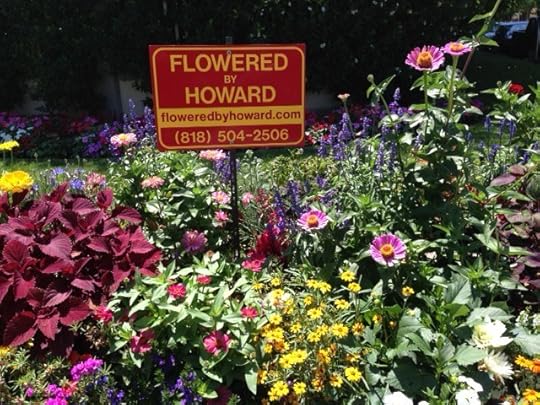
Love this "Flowered by Howard" sign I spotted in a neighbor's front yard. The name says it all!
June 8, 2018
We Need to Talk About Suicide
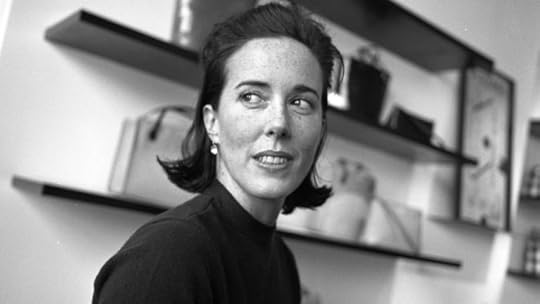
First Kate Spade. Then Anthony Bourdain. Then the report released by the CDC saying that suicide has increased by 25% since 1999, making it the 10th leading cause of death in the US. If we learn anything from these losses – including the non-celebrities among them – it’s that the conversation about addiction, mental illness, and suicide needs to come into the light.
Mental illness is an issue that hits close to home for me. My stepmother, who suffered from chronic depression, committed suicide when I was young and my brother, a retired college professor, is schizophrenic. He was gracious enough to let me interview him for my latest book, where I talk about “radical hopefulness” and the extreme challenges of health, homelessness, and mental illness.
Here are some eye-opening stats from the World Health Organization and the National Alliance on Mental Illness that I discovered when I was researching my book:
1 in 5 adults in the US suffers from mental illness every year1 in 25 adults in the US suffers from a mental illness so severe that it limits one or more major life activitiesOf the 20.2 million people in the US who have experienced a substance abuse problem, half of them also have a mental disorder26% of people living in homeless shelters suffer from a mental illnessAn estimated 18-22 veterans die by suicide each dayMore teenagers and young adults die from suicide than from cancer, heart disease, AIDS, birth defects, stroke, pneumonia, influenza, and chronic lung disease combined.The Awesome Quote
“The most beautiful people we have known are those who have known defeat, known suffering, known struggle, known loss, and have found their way out of the depths. These persons have an appreciation, a sensitivity, and an understanding of life that fills them with compassion, gentleness, and a deep loving concern. Beautiful people do not just happen.” — Elisabeth Kübler-Ross
The Righteous Challenge
Learn the signs of mental illness and know who to call when you or a friend, family member, or co-worker needs help. While it can be hard to tell if someone has a serious mental problem, especially if you’re not a trained healthcare clinician, there are some warning signs. Changes in emotions or actions, especially sudden ones, can be an indication that your loved one needs assessment and support. Look for the following signs in adults and adolescents:
ConfusionDepression, sadness, or irritabilityExtreme high and low moodsWithdrawal from normally pleasurable social activitiesChanges in eating and sleepingAuditory or visual hallucinationsStrange or paranoid thoughts or delusionsAnger or excessive fearSubstance abuse or self-medicationSuicidal thoughtsIf you are concerned that your loved one could be a danger to him/herself or others, call 911 and be prepared to describe the symptoms that prompted your call. Contact the Suicide Prevention Lifeline or National Institute for Mental Health for more help. Here are links:
https://www.nimh.nih.gov/index.shtml
https://suicidepreventionlifeline.org/
Praise for The Hope-Driven Leader
"Having HOPE is something we all struggle with at some point in our lives. It’s comforting to know that others have fought this same battle and have come out the other side, happier, healthier and yes, more hopeful. This is a book for anyone who fearlessly tackles each day as it comes." - Tracey Noonan, CEO & Co-Founder of Wicked Good Cupcakes, Inc.
“Hope. That ethereal and ever-elusive component we seek. Libby Gill’s The Hope-Driven Leader guides the reader through the maze and to that place where hope dwells, how to collaborate with hope, and open up to the possibilities that hope will bring. The Hope-Driven Leader is a guide for all leaders, may they lead at work, at home, or at heart. - Catherine Carr, Humanitarian, Doctors Without Borders
My thanks to the brave people who shared their stories about dealing with issues of mental and physical health and homelessness in The Hope-Driven Leader. Although it may seem overwhelming, I share simple strategies in my book for helping those who are struggling with these crippling conditions. Please read it and be ready to take action!
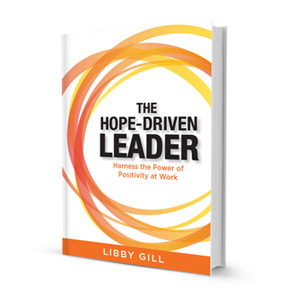
Order on Amazon
June 5, 2018
It's Never Too Late to Start Aging Hopefully
I just returned from keynoting at the Arizona Leading Age conference for people who work in the elder care space. These dedicated experts have such an abundance of compassion for the seniors in their care, I was inspired to share this information from my new book, The Hope-Driven Leader: Harness the Power of Positivity at Work.
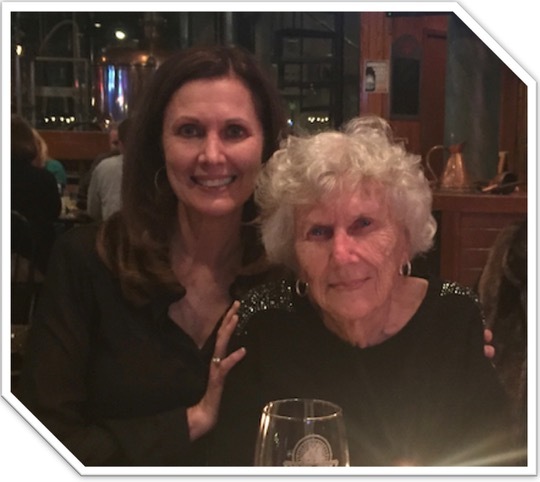
Having coached leaders in elder services, I’ve observed that (acute illness aside) some seniors maintain incredible enthusiasm well into their later years, while others seem to fade prematurely. My mother Barbara has been a bundle of energy her entire life, learning to fly a plane in her twenties, play golf in her thirties, and race sailboats in her sixties, all while working in healthcare. Now 97 years old, she still takes a daily walk, is a voracious reader, and occasionally contemplates writing a book about what 90-year-olds could be doing with their remaining time.
Curious about longevity around the globe, as well as my own life expectancy, I consulted the Blue Zones project for my book. Founded by explorer, author, and educator Dan Buettner, he teamed up with National Geographic demographers to locate the world’s longest-living people and figure out what gave them not only their longevity but their youthful spirit. They identified five geographical locations with the greatest proportions of people who lived to age 100 or more: the highlands of inner Sardinia; the Aegean Island of Ikaria, Greece; Nicoya Peninsula in Costa Rica; Loma Linda, California (home to a large group of Seventh Day Adventists); and Okinawa, Japan.
I learned that the average life expectancy in the US for someone born today is 78.2 years. When I took the Blue Zones Test, I discovered that my healthy life expectancy is 88.2 years, my actual life expectancy is 95.5, and my potential life expectancy - if I make a few changes - is 97.8 years. Here’s what Blue Zones, and other experts, say are critical to maintaining a positive spirit.
1. Move naturally. Forget the gym and throw out your weed-whacker. Do house and garden work under your own steam and reap the physical rewards.
2. Purpose. As I discuss in my this book, having a deep sense of purpose gives you something to live for, potentially adding seven years to your life.
3. De-stress. Stress leads to chronic inflammation and other age-related diseases. Find routines and rituals like the Blue Zone folks, from prayer to naps to happy hour.
4. Stop eating when you’re 80% full. Okinawans recite a Confucian saying before meals to remind them to stop eating when they are 80% full. Blue Zone seniors eat their biggest meal in the morning and their smallest in the early evening, eating nothing after that.
5. Be plant-centric. Beans, including fava, lentils, black, and soy, are the number one choice among centenarians. They favor vegetables in general, typically eating only five portions of meat per month. That’s less than many of us eat in a week.
6. Wine. Here’s some good news. People in Blue Zones drink moderately, but regularly. One or two glasses of wine per day maximum is suggested, preferably taken with meals and friends.
7. Practice your faith. Almost all of the centenarians belong to a faith-based community of some sort. You can add 4-14 years to your life by attending a weekly service. It doesn’t much matter, apparently, what the denomination is.
8. Family first. Living with or near loved ones and relatives can add years to your life. Interestingly, having elders living with you also reduces disease and mortality rates for kids in the home, too. Commit to a life partner and you can add three years to your expectancy.
9. Choose your tribe carefully. Supportive social groups, whether friends or family, that reinforce healthy habits can also add years to your life. Research, such as the Framingham Study, has shown that both healthy and unhealthy behaviors are contagious, so choose carefully. The Okinawans select groups of five friends, called “moais,” that commit to support each other for life. How’s that for an accountability group?
March 19, 2018
Think It Takes 21 Days to Form a Habit? Think Again!
There’s a common misconception that you can form a habit in 21 days. Like lots of other urban legends, this one is rooted in a little bit of truth. Dr. Maxwell Maltz was a plastic surgeon who wrote the blockbuster self-help book Psycho-Cybernetics in 1960. Dr. Maltz noticed that when he performed plastic surgery on patients, it took most of them approximately 21 days to become accustomed to their new nose, chin, or implants. Over the years, his message got twisted and restated by his many fans, among them teachers, coaches and self-help gurus, who insisted that it took 21 days to form a habit. But research tells us that it can take up to 66 days to form a habit that sticks.
While we tend to think of habits as behaviors that get repeated, in psychological terms, habits are actions that are automatically triggered in the context of a specific situation. For example, putting on your seatbelt after getting in the car or washing your hands after using the bathroom. When the action is repeated based on the contextual cue that triggers it, it becomes a habit.
When I was a kid, people rarely used seatbelts. Changing people’s seatbelt-wearing habits required a long-term, multi-pronged effort including legislation, advertising, and even the cooperation of film and television studios showing the stars buckling up. I was part of the effort to lobby TV producers to portray their lead characters buckling up. The goal wasn’t just to educate people about safety, it was to make seatbelt wearing automatic. Now, if you try to back out of your driveway without giving your kids the necessary time to buckle their belts, you’re likely to hear them holler. Most people don’t even think about it anymore – they just secure the belt. That’s automaticity.
The beauty of automaticity is two-fold. First, the action requires so little thought on your part that your brain is free to focus on other things, like that bike in the driveway, or the truck that’s pulling out behind you. Secondly, when your willpower or motivation starts to wane, the habit still sticks because it takes so little effort that it’s become reflexive. Further, if you fail to perform the action (take, for example, not wearing your seatbelt, or missing your workout), it just feels weird. Eventually, it takes more effort not to perform the task you’ve worked so hard to program into your mind and life.
I’ve broken down what I consider to be the four essential steps to habit formation. If you approach them in order, one step at a time, forming positive habits will be easier than you think.
Step #1 of habit formation is selection phase, where you choose the behavior and the context in which it will be performed. For example, if you’ve decided you need to incorporate more fruit into your diet, you make it part of your daily breakfast. If you want to make walking a part of your exercise routine, you leave your shoes beside your bed at night and head out every morning at 6:30. When you repeat the behavior in the same context – fruit for breakfast, walking at 6:30 - it’s more likely to stick.
Step #2 is the repetition phase, where you perform the chosen behavior linked to the appropriate context over a length of time. For some people, this might be as few as 66 days (again, let go of the 21-day notion) or it could be as long as nine months before automaticity kicks in. Once the behavior becomes automatic, it’s just a matter of keeping it going, especially when your lifestyle or routine changes. Missing the chosen behavior once in a while doesn’t seem to affect the overall process of habit-formation. So don’t give up on the action if your routine gets disrupted – which it inevitably will. Just get right back on the habit horse.
Step #3 is the expansion phase, where you increase the intensity, time, or strength of the habit you’re forming. For example, say you’ve started walking (action) at 6:30 each morning (context) for 20 minutes. After a week, add a little bit to the time or intensity. Maybe you increase your 20 minutes to 25 or you add an uphill stretch to your walk. When you ramp up your time, pace, or intensity in small increments, you’ll hardly even notice that you’ve increased the effort needed. Do this for a week, then add on a little more. If it’s a strain, back it down to your prior level and work your way up again. The idea is to add micro-increases slowly over time. Trust me, the small wins will add up to big results.
Step 4 is the automaticity phase, where the habit has become so routine that you rarely even think about it – you just do it. At this point, you’ve achieved solid habit strength and the action has become a normal part of your life, requiring very little effort on your part. In case you’re wondering, stopping a habit is far more difficult than forming a habit. It’s hard to make a habit out of not doing something. If you’re trying to stop smoking or overeating or overdrinking, I applaud you. But you may want to try forming a new habit that slowly replaces the old one.
A word of caution: variation is the enemy of automaticity. Even though many experts suggest that you “mix it up” to stave off the boredom of repetition, it’s actually the repetition – in context – that builds automaticity. So be wary of switching up the context in which you perform the action. Even if your schedule gets hectic or you’re traveling, you’re still likely to be able to find a piece of fruit for breakfast or take a walk at your usual time. And, as I said before, a miss or two won’t affect your overall habit formation, so don’t even try to tell yourself you might as well give it up if your routine gets thrown off.
Let’s recap the process of habit formation:
Choose a goal that you'd like to achieve. Make it count. If you don’t care about it, you’re not likely to stick with it.Select a simple daily action that will move you toward your goal.Decide when and where you will practice that action consistently. This provides the context for the action.Repeat the action each day.Expand the intensity, time, or effort in tiny increments.Keep going until you’ve achieved automaticity. Remember the 66-day rule and cut yourself some slack until it becomes effortless.You’ve formed a positive habit. Time to celebrate!Want to spread hope? Help me get the word out by logging onto the Thunderclap link below. Sign in (free and easy), pick the social media platforms you use, and add your quote or use the ones I’ve pre-loaded. All the posts will blast out on April 10th, launch day for my new book The Hope-Driven Leader!
thunderclap.it/projects/68828-libby-gill-company
P.S. If you want to read the first chapter before you comment, download it on my homepage. Thanks a million!
March 7, 2018
Can Being Selfish Be Good for Your Career?

While most of us consider selfishness an unsavory trait, there are times that it’s absolutely critical to watch out for number one. Like in your career!
If you want to stay happy and hopeful in your current position while you pave the way for an even better professional future it’s essential that you learn to be selfish. Not in a mean curmudgeonly kind of way – nobody likes that person – but in an appropriately self-protective manner. After all, if you’re constantly putting everyone else’s priorities above yours, not only will you fail to do your best work, but you may also unconsciously be sending the message that you’re incapable of being a strong leader.
In a later post, I’ll address 10 Ways to Say No and Make It Feel Like Yes so you don’t give people the perception that you’re uncooperative and non-collaborative. But right now, let’s look at the key five reasons you need to develop a selfish streak.
1. You know your priorities better than anyone. Granted, you’ve probably got a boss who dictates roles and assigns tasks, but you have the ultimate control of when and how you execute on those deliverables. If you let too many people get in the way of what you need to accomplish, you’re handing over your power and allowing them to decide what’s important and what’s not. Don’t cave when it counts.
2. You need to protect your calendar. If you let other people determine how you should spend your time, your calendar will fill up faster than you can say time is money. While your colleagues may think you’re really nice (or a total pushover) for saying yes to every request that comes along, you will soon discover that your day or quarter has been used up on other people’s priorities while you haven’t been able to accomplish what’s important to you. Stick to your scheduling guns.
3. You’ll teach others how to treat you. I helped launch the Dr. Phil Show and I must have heard him say, “You teach people how to treat you,” about a million times. And it’s so true. If you refuse (politely, of course) to give in to others’ demands when you’ve got your hands full, people will soon learn not to bother you with extraneous requests or time-wasting busywork. Nip those non-productive behaviors in the bud.
4. You can develop new skills and grow your network. Assuming you want to continue to grow professionally, you need to focus on learning new skills and expanding your contact base. The best way to do that is to protect your time and energy so you can do a great job in your current role. Only then will you be in a position to request additional coaching or training, or even the funds to help you continue your education. Remember, the most valuable employees are the lifelong learners.
5. You can reduce stress, improve health, and maintain your sanity. This may be the most important reason of all to be selfish at work. Even when things are going well, work can be emotionally and physically draining. Only by staying true to yourself - meaning that you hold your time, energy, and resources sacred – can you serve others at the highest level. And that includes serving you.
So go forth and be selfish in work and life. You’ll be happier and healthier. If you have a favorite tip for being appropriately selfish in the workplace, comment below or send it to me at Libby@LibbyGill.com.