Azly Rahman's Blog, page 9
January 5, 2019
#21: Liberals vs Islamists - ongoing useless debaters?
Liberals vs Islamists - ongoing useless debaters?Opinion |
Azly Rahman
Published: 4 Aug 2016, 1:41 am | Modified: 4 Aug 2016, 1:41 am
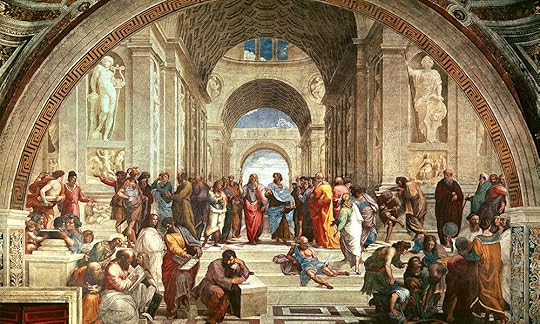
A+ A- We live in a time of ideological, philological, and semantic confusion, I feel, because we have trapped ourselves in words; because we use elusive concepts to define words we employ, to argue, to clarify, to elaborate, to extrapolate, to state our point of view, to deduce, to induce, and to conclude and to lock ourselves in this prison-house of language and we swallow the keys.I am still trying to grasp the meaning of the ongoing, futile debate between, especially the ‘liberals’ and the ‘Islamists’ of Malaysia and to discern not the dichotomies and the seemingly irreconcilable worldviews that seem to clash with each other a la that Samuel Huntington thesis produced some time ago.There is now a ‘liberal’ camp and an ‘Islamist’ camp. We must look into the mind of these campers, some happy and some unhappy, and see what the neural network of complexities look like, what concepts gets linked from one another as the sub-concepts of the definitions try to find way to connect to what is meaningful as if they are creepers in my Walden II, some sweet smelling, some not.Al Rushd, or Averroes as the Greeks Hellenized him, sits by the steps watching the liberals and the Islamist in New York City debating the nature of reality, the structure of truth and whether 9/11 was an inside job. The Islamist speaker in the Malaysian forum, holding a Japanese-LIBERAL-made microphone, occasionally checking time on his Swiss-LIBERAL-made Omega SA watch he got from his wife who works in that Big-Four neo-LIBERAL accounting firm, wearing a new retro Travolta-styled haircut he got the week before from a UNISEX hair saloon housed in that LIBERAL-Kuala Lumpur mall build by ultra-neo-LIBERALS schooled in post-post Friedmanian economics while his head contemplates the perfect Islamic society ruled by the Khalifah whose early appearance is in the form of an Imam Al Baghdadi, the leader of IS...Connections in the brain are made; none of the speakers debating which is better and more moral - Islam or Liberalism - while thinking about what is for lunch.We must go into each other’s minds and speak of this prison-house of language. We could find a way to resolve contradictions, if we believe that ‘philosophy can clip the wings of angels’ and see, as the German poet Rilke once said, how “angels can be terrifying”.Evolutionary period of paradigmatic changesAs Al Rushd, or again, Averroes, in the great Renaissance master-painter Raphael’s work, ‘The School of Athens’, glanced upwards waiting for Plato and Aristotle to come down the steps of the Academy, hoping that the philosophers par excellence of the Hellenistic period would say “Hi” to him and thank him for doing those Arabic translated work to add to the corpus of the body of knowledge of the ars liberalis, or the arts of the free Man that will eventually become building blocks to the Enlightenment period first, Renaissance next, Age of Discovery and Exploration, Age of Science, to Age of the Application of Scientific Principles, and next Age of Industrialisation to Age of Machines, to Age of Thinking Machines to Spiritual Machines to Machines installed in Gardens of Eden, to Age of Neural Networks to Computing to High-Speed Computing, to the Age of post-Humanism-Cyberneticism and Bio-chip Implantation - this evolutionary period of paradigmatic changes in human consciousness as technology, culture, and human genomics come into play, Al Rushd/Averros asked: what must people argue if these exist as oppositional nature of ideas as in this raging yet useless debate between ‘Islam’ and ‘liberalism’.And thus, Averroes sat on the steps wandering, those great thinkers of the Age of Philosophy, that Axial Age of Spirituality, that Athens of the 5th century BC, now long gone passed the spot where he sat, like the great beggar Diogenes; Averroes still wonders till late that night. Where did Islam go wrong in thinking that 5,000 years of globalisation of ideas of Man had ended up in the impossibility of a marriage between the LIBERALS and the RELIGIONISTAS.Shall I unleash more questions on the nature of Man, Matter, God and the Universe and all then, so that not only Descartes can benefit from my musings but the Islamic State of Iraq and Syria will not come into being in the early 21st Century? So that the idea of the Mutazillahs will reign supreme over pre-Wahhabi and Salafi notion of what must a human being be, and how must society look like, and what will be the nature of the State as it tries to define itself in the framework of the this idea of the Ummah?And Averroes could not sleep that night. Under the stars, under the clear blue sky painted by the Italian master Raphael, he wondered: have we, from the fall of the Empire of Uthmaniyah right up till the 21st century taken the wrong semiotic turn?Liberals and Islamists - what say you?
A+ A- We live in a time of ideological, philological, and semantic confusion, I feel, because we have trapped ourselves in words; because we use elusive concepts to define words we employ, to argue, to clarify, to elaborate, to extrapolate, to state our point of view, to deduce, to induce, and to conclude and to lock ourselves in this prison-house of language and we swallow the keys.I am still trying to grasp the meaning of the ongoing, futile debate between, especially the ‘liberals’ and the ‘Islamists’ of Malaysia and to discern not the dichotomies and the seemingly irreconcilable worldviews that seem to clash with each other a la that Samuel Huntington thesis produced some time ago.There is now a ‘liberal’ camp and an ‘Islamist’ camp. We must look into the mind of these campers, some happy and some unhappy, and see what the neural network of complexities look like, what concepts gets linked from one another as the sub-concepts of the definitions try to find way to connect to what is meaningful as if they are creepers in my Walden II, some sweet smelling, some not.Al Rushd, or Averroes as the Greeks Hellenized him, sits by the steps watching the liberals and the Islamist in New York City debating the nature of reality, the structure of truth and whether 9/11 was an inside job. The Islamist speaker in the Malaysian forum, holding a Japanese-LIBERAL-made microphone, occasionally checking time on his Swiss-LIBERAL-made Omega SA watch he got from his wife who works in that Big-Four neo-LIBERAL accounting firm, wearing a new retro Travolta-styled haircut he got the week before from a UNISEX hair saloon housed in that LIBERAL-Kuala Lumpur mall build by ultra-neo-LIBERALS schooled in post-post Friedmanian economics while his head contemplates the perfect Islamic society ruled by the Khalifah whose early appearance is in the form of an Imam Al Baghdadi, the leader of IS...Connections in the brain are made; none of the speakers debating which is better and more moral - Islam or Liberalism - while thinking about what is for lunch.We must go into each other’s minds and speak of this prison-house of language. We could find a way to resolve contradictions, if we believe that ‘philosophy can clip the wings of angels’ and see, as the German poet Rilke once said, how “angels can be terrifying”.Evolutionary period of paradigmatic changesAs Al Rushd, or again, Averroes, in the great Renaissance master-painter Raphael’s work, ‘The School of Athens’, glanced upwards waiting for Plato and Aristotle to come down the steps of the Academy, hoping that the philosophers par excellence of the Hellenistic period would say “Hi” to him and thank him for doing those Arabic translated work to add to the corpus of the body of knowledge of the ars liberalis, or the arts of the free Man that will eventually become building blocks to the Enlightenment period first, Renaissance next, Age of Discovery and Exploration, Age of Science, to Age of the Application of Scientific Principles, and next Age of Industrialisation to Age of Machines, to Age of Thinking Machines to Spiritual Machines to Machines installed in Gardens of Eden, to Age of Neural Networks to Computing to High-Speed Computing, to the Age of post-Humanism-Cyberneticism and Bio-chip Implantation - this evolutionary period of paradigmatic changes in human consciousness as technology, culture, and human genomics come into play, Al Rushd/Averros asked: what must people argue if these exist as oppositional nature of ideas as in this raging yet useless debate between ‘Islam’ and ‘liberalism’.And thus, Averroes sat on the steps wandering, those great thinkers of the Age of Philosophy, that Axial Age of Spirituality, that Athens of the 5th century BC, now long gone passed the spot where he sat, like the great beggar Diogenes; Averroes still wonders till late that night. Where did Islam go wrong in thinking that 5,000 years of globalisation of ideas of Man had ended up in the impossibility of a marriage between the LIBERALS and the RELIGIONISTAS.Shall I unleash more questions on the nature of Man, Matter, God and the Universe and all then, so that not only Descartes can benefit from my musings but the Islamic State of Iraq and Syria will not come into being in the early 21st Century? So that the idea of the Mutazillahs will reign supreme over pre-Wahhabi and Salafi notion of what must a human being be, and how must society look like, and what will be the nature of the State as it tries to define itself in the framework of the this idea of the Ummah?And Averroes could not sleep that night. Under the stars, under the clear blue sky painted by the Italian master Raphael, he wondered: have we, from the fall of the Empire of Uthmaniyah right up till the 21st century taken the wrong semiotic turn?Liberals and Islamists - what say you?


January 4, 2019
#20: Time to give birth to radical thinkers in our varsities
Time to give birth to radical thinkers in our varsitiesOpinion |
Azly Rahman
Published: 17 Aug 2018, 11:42 pm | Modified: 17 Aug 2018, 11:42 pm A+ A- "Knowledge which is acquired under compulsion obtains no hold on the mind."- PlatoCOMMENT | I once taught Thinking Skills, Foreign Policy, and Ethics. My approach towards teaching thinking was about increasing the capacity of the mind to explore newer perspectives, make critical judgement, and envision a scenario of a society of peace and justice, based on the principles of multiculturalism. I value such an experience and have grown with it. We need to create and nurture a culture of thinking in a world that is increasingly hostile to radical and ethical ideas.What could be even more important now as we enter a new phase of Malaysian intellectual evolution, at a time when we hear stories of vice-chancellors are enemies of the people’s mind and are being removed?In my teaching, the approach combines universal ethical values, creativity, critical thinking and problem solving, and futuristics. I think there is value in such an approach.If we can radicalise student thinking, teach them to stand for their rights, give them choices in thinking, have them articulate great ideas in their own words, we can make them better graduates.We can train them to become good ethical revolutioners who will remove oppressive and corrupt leaders and redesign a society that will continue to rejuvenate itself. We can teach them to continue to demand the resignation of corrupt leaders – or even have an entire cabinet resign.We can also teach them to punish polluters, especially corporations that dump poison into our rivers or release deadly smoke into our environment. We can create socially-conscious futurists out of our children.
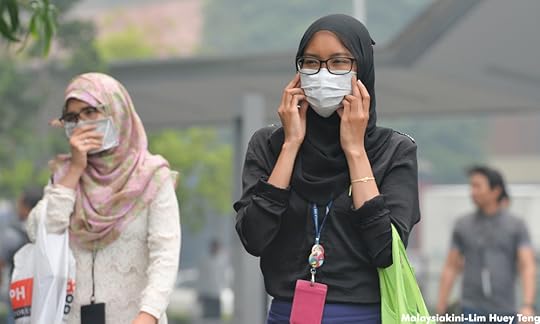 Futurists conjure scenarios of societies they want to have – build from the ruins of one that has crumbled out of the need for greed and economic speed.Radical futurists conjure newer social order reconstructed out of the ruins of the ones ruled by leaders addicted to raw power; power employed to rape the environment and humanity these leaders are entrusted to "govern".But first, we must have the teachers and lecturers prepare for all these as well. We have many bright, young, academics eager to explore newer perspectives on politics, economic, and cultural aspects of our world. Can they do these in a cognitively-controlled environment? How do we help them?Critical thinking is not about ‘criticising’It seems that there is a deeper meaning to "critical thinking" than just "criticising" something or anything.It is a process of the personal evolution of metacognition (beyond cognition itself); to understand one's own thinking process and to govern it with the tools one acquires through interacting with the environment and processing information that will become meaningful through the complex neural connections made in the brain.There has to be a good repertoire of knowledge in one's brain/mind/consciousness in order to understand the "dialectical and dialogical" aspect of thinking.Our education system must encourage this development through the love of reading – the exploration of good and great books taught by teachers who love books and have the passion to challenge students to think and think.Thinking must be encouraged; students must live their daily lives in classrooms without fear of being punished or ridiculed for thinking critically and creatively.Our classrooms must encourage dialogues and debates even if the subject matter is sensitive, difficult, painful, and intellectually challenging. We must have good teachers to groom students to become brave thinkers and communicator of ideas.These teachers/professors themselves must embody the virtues of radical thinking and become beacons of hope for newer thinkers, much like what Socrates was to the Athenians in fifth century BC.
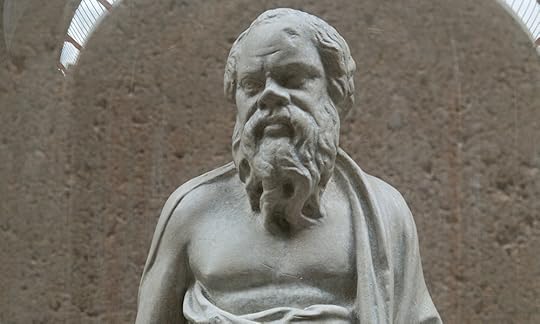 Radical thinkers must be celebrated and honoured, not imprisoned and shamed. Only a shameless government doing shameful acts would jail good, ethical, socially-conscious thinkers who speak truth to power.If in our universities, thinking means thinking about what the state dictates and students are being punished for speaking out on issues that concern their role as future inheritors of their society, we have a got a national problem. How do we make our universities even free from the dictates of the new regime?Higher order thinkingThe essence of higher order thinking skills is the "Why" question and the "What if" and "Why not this". These questions help our students to critique dominant paradigm and allow them to conjure newer perspectives, much like what radical social futurists would do.What is the culture of critical thinking in our Malaysian classrooms these days? Is it enabling the culture of thinking or retarding it?
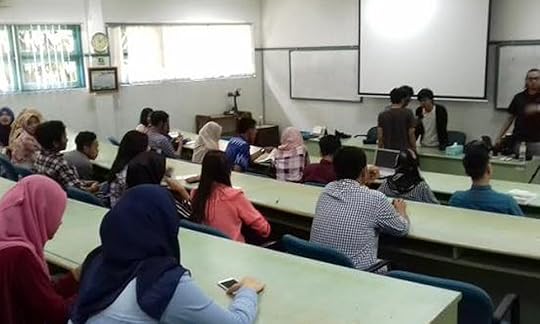 Critical thinking is also not about running in the streets screaming for this or that change; it is a process of intellectual embodiment and the democratisation of one's personal understanding of the intellectual basis of change.For too long we have seen our students doing that, yet the nature of protests could be traced to what politicians wanted or use the students to advance this or that politician’s desire for total power.Thinking is a process subjective and individually unique in nature, first and foremost. The great American feminist and anarchist Emma Goldman once said, “If I cannot dance to it, it is not my revolution.” Such is a reminder of thinking as an existential act.Today it must not be about blindly supporting the dying regime of Najibism nor the re-surfacing of Mahathirism. It has to be an act of deconstructing both and unshackling the prison-house of one’s thinking.It is a process of constructing a "republic of virtue" in which each citizen is a philosopher-ruler in his/her own right. Each individual, perhaps like the notion held by the Buddhist, is "aware" of the surrounding, mastering his/her own environment, aware of cause and effects of beingness, to identify oppressive signs and symbols that govern him/her and others, to destroy structures that are shacking, to essentially be able to look at his/her life like a crystal ball.Is this idea of creating world-wise radical intellectual and movers and shakers possible in our Malaysian educational system?
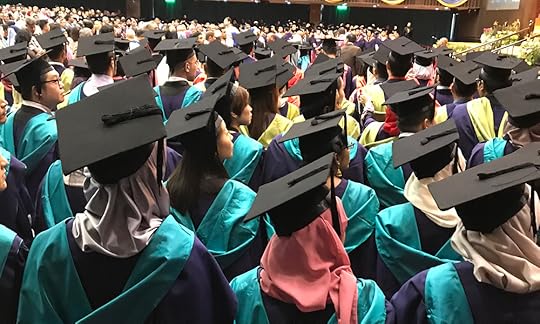 This is the greatest challenge of this century, for our nation especially. If we wish to remove, the University and University Colleges Act (UUCA) which has in it the ‘Pledge of loyalty to the state’, and remove all acts that are anathema to a healthy thinking culture, we must rethink how we think.We owe a good education system to our children – a system that will teach children to systematically revolt against systems, especially against those which still want to divide and rule based on race and religion. Especially against yet another regime that might also use the tools of colonialism and apartheid, even against its own people, retarding the grown of a progressive generation.We are not yet free. We might still be moving from one totalitarian system to another. Hegemony in transition, as the Italian thinker Antonio Gramsci would say.I think, therefore I exist, Rene Descartes said.I'd say we think, therefore we revolt - we must work towards that.
A+ A- "Knowledge which is acquired under compulsion obtains no hold on the mind."- PlatoCOMMENT | I once taught Thinking Skills, Foreign Policy, and Ethics. My approach towards teaching thinking was about increasing the capacity of the mind to explore newer perspectives, make critical judgement, and envision a scenario of a society of peace and justice, based on the principles of multiculturalism. I value such an experience and have grown with it. We need to create and nurture a culture of thinking in a world that is increasingly hostile to radical and ethical ideas.What could be even more important now as we enter a new phase of Malaysian intellectual evolution, at a time when we hear stories of vice-chancellors are enemies of the people’s mind and are being removed?In my teaching, the approach combines universal ethical values, creativity, critical thinking and problem solving, and futuristics. I think there is value in such an approach.If we can radicalise student thinking, teach them to stand for their rights, give them choices in thinking, have them articulate great ideas in their own words, we can make them better graduates.We can train them to become good ethical revolutioners who will remove oppressive and corrupt leaders and redesign a society that will continue to rejuvenate itself. We can teach them to continue to demand the resignation of corrupt leaders – or even have an entire cabinet resign.We can also teach them to punish polluters, especially corporations that dump poison into our rivers or release deadly smoke into our environment. We can create socially-conscious futurists out of our children.Futurists conjure scenarios of societies they want to have – build from the ruins of one that has crumbled out of the need for greed and economic speed.Radical futurists conjure newer social order reconstructed out of the ruins of the ones ruled by leaders addicted to raw power; power employed to rape the environment and humanity these leaders are entrusted to "govern".But first, we must have the teachers and lecturers prepare for all these as well. We have many bright, young, academics eager to explore newer perspectives on politics, economic, and cultural aspects of our world. Can they do these in a cognitively-controlled environment? How do we help them?Critical thinking is not about ‘criticising’It seems that there is a deeper meaning to "critical thinking" than just "criticising" something or anything.It is a process of the personal evolution of metacognition (beyond cognition itself); to understand one's own thinking process and to govern it with the tools one acquires through interacting with the environment and processing information that will become meaningful through the complex neural connections made in the brain.There has to be a good repertoire of knowledge in one's brain/mind/consciousness in order to understand the "dialectical and dialogical" aspect of thinking.Our education system must encourage this development through the love of reading – the exploration of good and great books taught by teachers who love books and have the passion to challenge students to think and think.Thinking must be encouraged; students must live their daily lives in classrooms without fear of being punished or ridiculed for thinking critically and creatively.Our classrooms must encourage dialogues and debates even if the subject matter is sensitive, difficult, painful, and intellectually challenging. We must have good teachers to groom students to become brave thinkers and communicator of ideas.These teachers/professors themselves must embody the virtues of radical thinking and become beacons of hope for newer thinkers, much like what Socrates was to the Athenians in fifth century BC.Radical thinkers must be celebrated and honoured, not imprisoned and shamed. Only a shameless government doing shameful acts would jail good, ethical, socially-conscious thinkers who speak truth to power.If in our universities, thinking means thinking about what the state dictates and students are being punished for speaking out on issues that concern their role as future inheritors of their society, we have a got a national problem. How do we make our universities even free from the dictates of the new regime?Higher order thinkingThe essence of higher order thinking skills is the "Why" question and the "What if" and "Why not this". These questions help our students to critique dominant paradigm and allow them to conjure newer perspectives, much like what radical social futurists would do.What is the culture of critical thinking in our Malaysian classrooms these days? Is it enabling the culture of thinking or retarding it?Critical thinking is also not about running in the streets screaming for this or that change; it is a process of intellectual embodiment and the democratisation of one's personal understanding of the intellectual basis of change.For too long we have seen our students doing that, yet the nature of protests could be traced to what politicians wanted or use the students to advance this or that politician’s desire for total power.Thinking is a process subjective and individually unique in nature, first and foremost. The great American feminist and anarchist Emma Goldman once said, “If I cannot dance to it, it is not my revolution.” Such is a reminder of thinking as an existential act.Today it must not be about blindly supporting the dying regime of Najibism nor the re-surfacing of Mahathirism. It has to be an act of deconstructing both and unshackling the prison-house of one’s thinking.It is a process of constructing a "republic of virtue" in which each citizen is a philosopher-ruler in his/her own right. Each individual, perhaps like the notion held by the Buddhist, is "aware" of the surrounding, mastering his/her own environment, aware of cause and effects of beingness, to identify oppressive signs and symbols that govern him/her and others, to destroy structures that are shacking, to essentially be able to look at his/her life like a crystal ball.Is this idea of creating world-wise radical intellectual and movers and shakers possible in our Malaysian educational system?This is the greatest challenge of this century, for our nation especially. If we wish to remove, the University and University Colleges Act (UUCA) which has in it the ‘Pledge of loyalty to the state’, and remove all acts that are anathema to a healthy thinking culture, we must rethink how we think.We owe a good education system to our children – a system that will teach children to systematically revolt against systems, especially against those which still want to divide and rule based on race and religion. Especially against yet another regime that might also use the tools of colonialism and apartheid, even against its own people, retarding the grown of a progressive generation.We are not yet free. We might still be moving from one totalitarian system to another. Hegemony in transition, as the Italian thinker Antonio Gramsci would say.I think, therefore I exist, Rene Descartes said.I'd say we think, therefore we revolt - we must work towards that.#19: What Umno and all need to know about the Malays
What Umno and all need to know about the MalaysOpinion |
Azly Rahman
Published: 28 Jun 2018, 8:40 pm | Modified: 28 Jun 2018, 8:40 pm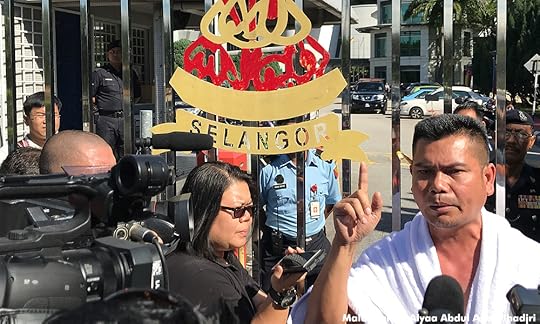 A+ A- COMMENT | I think political parties wishing to understand the Malays need to know the following, through an essay I wrote a while ago, I hope relevant now.Analysing the events that happened the years preceding the 14th general election - the humiliation of peaceful protesters, the harassment, the intimidation, the threats - leading to the 60,000 strong yellow shirt Bersih rally that ended peacefully in Kuala Lumpur, I have this to say about those who are out to misrepresent the Malays:Aren’t Malaysians tired of seeing the Malays being represented as buffoons, stupid, amok-prone, close-minded, Rempits, keris-kissing fools, Ali Baba forty-thieves, rejects, religious fanatics, red-shirts, whatever shirts?It is a clever production and reproduction of the Malay ruling class, both feudal and wannabe-feudal so that the Jebat aspect of the Malay – the amok, the wannabe-sultan, the misogynistic, the sex-maniac royal-groper and rapist of ancient Malacca, the hedonistic, the grotesque epicure, the gangster, the absurd – is pushed forward and propagated to strengthen the Tuah aspect.The fool that followed the foolish orders of the Malacca sultan – the bad hombre of Malay culture – these are the twin representation of the Malays. A laughing stock – the Malays are made to become.This is what the then ruling class wanted to use as ‘Hitlerian Youth’. This image must be forever destroyed. For way too long the image of the Malay as wise, learned, philosophical, tassauwuf/Sufistic being, the communicatively competent, the old school pre-Merdeka Johor type, the prudent, the proverb-loving, the artistic, the high-cultured, of high intellect and Jawi-literate Malay, the deeply perceptive and reflective, the viewer of materialism both as “rezeki/god’s bounty” to be careful with and to not let it be a corrupter of the soul, the raja haji-type of Malay (warrior who fought against the Dutch with bravery and with philosophy has been ignored. Where are you now, these Malays?Aren’t we sick of the red-shirts’ antics and their representation of the Malays? A representation that has also been used successfully by the non-Malays through the power of discourse of a newer Malay fascism hegemonising national perceptions?Then there is the display of silat to ineffectively and hilariously scare people off.Malays don’t need this representation as well. It was useful as a way for good, morally upright warriors of the 15th century to kill their sultans, such as in the famous story of the death of the power-drunk sultan, Mahmud of Kota Tinggi, Johor. He was killed by his own Laksamana Megat Seri Rama while he was being carried by his serfs on his mobile throne, the ‘julang’, hence the story Mahmud Mangkat di Julang.That evil-fool called a sultan killed the laksamana’s wife Dang Anum simply because she ate a piece of jackfruit (sebiji buah nangka) from the Raja’s orchard – because she was craving for it. She was pregnant. The raja ordered her stomach to be cut open to retrieve the jackfruit. That was the story of the Malay sultan worshipped by his people.Laksamana Megat Seri Rama, skilled in silat, had to put the fool to death. Good for the sultan. That’s what a good silat man or woman ought to do – get rid of tyrants while they are on their throne.But strangeness we are seeing in the use of the Malay art of self-defence. Lost is the meaning of silat as I understood it – ‘silatur-rahim’ or to make peaceful connections with other human beings – with Chinese, Indians, Hindus, Christians, Buddhists, Martians, Jupiterians, robots and androids - or even Trump-supporters. Silatur-rahim, that is what it means. Some Malays don’t even understand the simple meaning of a Malay word.The multicultural MalayRead…read… read…If only each family inculcates the love of reading, of wisdom, of humility, of perspective-taking, of respecting others, of appreciating and learning from the arts, sciences, world music and of becoming a good global citizen, we will not need to do this in public - beat each other up with planks while doing the breakdance.Read…read…read… in the name of thy Lord who created thee…that foundational verse: “Iqra bismi rab bikal lazee khalaq”.I’d say, stay home, take off your coloured shirt, wear your singlet and your sarong/kain pelikat if you are still feeling hot and angry, help mum bake cookies and read and read, read and be more intelligent in understanding what is ailing our society.What a waste of time some of these Malays are doing harassing people on the streets, storming buildings, running after cars, yelling incomprehensibles – all in the name of truth?What truth then?How much money was being given to the cause of the rebellion without a real cause? This is the puzzling aspect of the red-shirt movement – why are they harassing those who want to see a better Malaysia? A cleaner society and one that is not only for the Malays or for the Muslims but a Malaysia for all Malaysians. Is that not a simple concept of good citizenship to comprehend and to fight for?The way those troubles were created seem troubling and ‘out of place’ in a Malaysia – a globalised Malaysia of the 21st century. It seemed like a very awkward, rude, uncouth, uncultured way of exercising free speech. It seemed like a well-paid job done without rhyme or reason or sincerity.But the worst part was that it was claimed to be one of “defending the rights of the Malays” when the Malays, in general, did not wish to be defended as such. It is a shameful way.What ought to be done is to stop these grotesque ways of behaving and start the work of helping the Mat and Minah Rempits, the single mothers, the youth who are about to go into the dungeons of drug addiction, and the Malays who think that Tanah Melayu is theirs alone and others are “intruders in history” and ought to be sent back to where they came from.These are the Malays that need to be helped and their dignity restored. That would be a nobler job for the red-shirt gang or any gang wearing whatever shirt yelling for Malay rights. That is the “jihad” of peace the Malays, in general, would agree to be associated with.Not the run-amok, latah, and drunken Jebat and foolish Tuah Malays we no longer wish to see. Let us help destroy this image of the Malays. We are not fools. We have never been.The new Malay will not need to be defended. They need philosophical, scientific, and republicanist thinking, They need to be existentialists, rather than follow some theocratic nut trying to establish a kingdom of "ketuanan Melayu". The new Malay is a multicultural Malay living emphatically with Malaysians of other races.That's what a Malay ought to become. Until it was destroyed by a dominant Malay party.AZLY RAHMAN is an educator, academic, international columnist, and author of seven books. He grew up in Johor Baru, and holds a Columbia University doctorate in international education development and Master’s degrees in five areas: education, international affairs, peace studies communication, and creative writing.
A+ A- COMMENT | I think political parties wishing to understand the Malays need to know the following, through an essay I wrote a while ago, I hope relevant now.Analysing the events that happened the years preceding the 14th general election - the humiliation of peaceful protesters, the harassment, the intimidation, the threats - leading to the 60,000 strong yellow shirt Bersih rally that ended peacefully in Kuala Lumpur, I have this to say about those who are out to misrepresent the Malays:Aren’t Malaysians tired of seeing the Malays being represented as buffoons, stupid, amok-prone, close-minded, Rempits, keris-kissing fools, Ali Baba forty-thieves, rejects, religious fanatics, red-shirts, whatever shirts?It is a clever production and reproduction of the Malay ruling class, both feudal and wannabe-feudal so that the Jebat aspect of the Malay – the amok, the wannabe-sultan, the misogynistic, the sex-maniac royal-groper and rapist of ancient Malacca, the hedonistic, the grotesque epicure, the gangster, the absurd – is pushed forward and propagated to strengthen the Tuah aspect.The fool that followed the foolish orders of the Malacca sultan – the bad hombre of Malay culture – these are the twin representation of the Malays. A laughing stock – the Malays are made to become.This is what the then ruling class wanted to use as ‘Hitlerian Youth’. This image must be forever destroyed. For way too long the image of the Malay as wise, learned, philosophical, tassauwuf/Sufistic being, the communicatively competent, the old school pre-Merdeka Johor type, the prudent, the proverb-loving, the artistic, the high-cultured, of high intellect and Jawi-literate Malay, the deeply perceptive and reflective, the viewer of materialism both as “rezeki/god’s bounty” to be careful with and to not let it be a corrupter of the soul, the raja haji-type of Malay (warrior who fought against the Dutch with bravery and with philosophy has been ignored. Where are you now, these Malays?Aren’t we sick of the red-shirts’ antics and their representation of the Malays? A representation that has also been used successfully by the non-Malays through the power of discourse of a newer Malay fascism hegemonising national perceptions?Then there is the display of silat to ineffectively and hilariously scare people off.Malays don’t need this representation as well. It was useful as a way for good, morally upright warriors of the 15th century to kill their sultans, such as in the famous story of the death of the power-drunk sultan, Mahmud of Kota Tinggi, Johor. He was killed by his own Laksamana Megat Seri Rama while he was being carried by his serfs on his mobile throne, the ‘julang’, hence the story Mahmud Mangkat di Julang.That evil-fool called a sultan killed the laksamana’s wife Dang Anum simply because she ate a piece of jackfruit (sebiji buah nangka) from the Raja’s orchard – because she was craving for it. She was pregnant. The raja ordered her stomach to be cut open to retrieve the jackfruit. That was the story of the Malay sultan worshipped by his people.Laksamana Megat Seri Rama, skilled in silat, had to put the fool to death. Good for the sultan. That’s what a good silat man or woman ought to do – get rid of tyrants while they are on their throne.But strangeness we are seeing in the use of the Malay art of self-defence. Lost is the meaning of silat as I understood it – ‘silatur-rahim’ or to make peaceful connections with other human beings – with Chinese, Indians, Hindus, Christians, Buddhists, Martians, Jupiterians, robots and androids - or even Trump-supporters. Silatur-rahim, that is what it means. Some Malays don’t even understand the simple meaning of a Malay word.The multicultural MalayRead…read… read…If only each family inculcates the love of reading, of wisdom, of humility, of perspective-taking, of respecting others, of appreciating and learning from the arts, sciences, world music and of becoming a good global citizen, we will not need to do this in public - beat each other up with planks while doing the breakdance.Read…read…read… in the name of thy Lord who created thee…that foundational verse: “Iqra bismi rab bikal lazee khalaq”.I’d say, stay home, take off your coloured shirt, wear your singlet and your sarong/kain pelikat if you are still feeling hot and angry, help mum bake cookies and read and read, read and be more intelligent in understanding what is ailing our society.What a waste of time some of these Malays are doing harassing people on the streets, storming buildings, running after cars, yelling incomprehensibles – all in the name of truth?What truth then?How much money was being given to the cause of the rebellion without a real cause? This is the puzzling aspect of the red-shirt movement – why are they harassing those who want to see a better Malaysia? A cleaner society and one that is not only for the Malays or for the Muslims but a Malaysia for all Malaysians. Is that not a simple concept of good citizenship to comprehend and to fight for?The way those troubles were created seem troubling and ‘out of place’ in a Malaysia – a globalised Malaysia of the 21st century. It seemed like a very awkward, rude, uncouth, uncultured way of exercising free speech. It seemed like a well-paid job done without rhyme or reason or sincerity.But the worst part was that it was claimed to be one of “defending the rights of the Malays” when the Malays, in general, did not wish to be defended as such. It is a shameful way.What ought to be done is to stop these grotesque ways of behaving and start the work of helping the Mat and Minah Rempits, the single mothers, the youth who are about to go into the dungeons of drug addiction, and the Malays who think that Tanah Melayu is theirs alone and others are “intruders in history” and ought to be sent back to where they came from.These are the Malays that need to be helped and their dignity restored. That would be a nobler job for the red-shirt gang or any gang wearing whatever shirt yelling for Malay rights. That is the “jihad” of peace the Malays, in general, would agree to be associated with.Not the run-amok, latah, and drunken Jebat and foolish Tuah Malays we no longer wish to see. Let us help destroy this image of the Malays. We are not fools. We have never been.The new Malay will not need to be defended. They need philosophical, scientific, and republicanist thinking, They need to be existentialists, rather than follow some theocratic nut trying to establish a kingdom of "ketuanan Melayu". The new Malay is a multicultural Malay living emphatically with Malaysians of other races.That's what a Malay ought to become. Until it was destroyed by a dominant Malay party.AZLY RAHMAN is an educator, academic, international columnist, and author of seven books. He grew up in Johor Baru, and holds a Columbia University doctorate in international education development and Master’s degrees in five areas: education, international affairs, peace studies communication, and creative writing.#18: After six decades, time to reconceptualise national identity
After six decades, time to reconceptualise national identityOpinion |
Azly Rahman
Published: 1 Jun 2018, 11:57 pm | Modified: 1 Jun 2018, 11:57 pm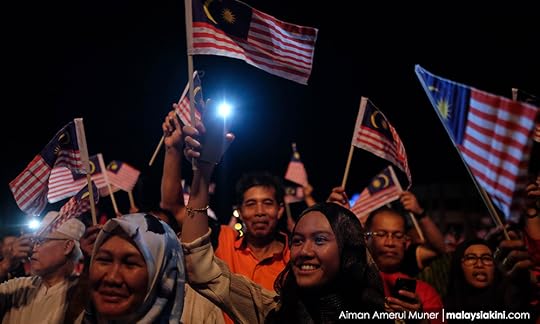 A+ A- "Political power is what we are only left with
One that will determine the fate of our nation
Wealth of this nation flows into the hands of others
Sons and daughters of the soil suffer in solace..."- National Civics Bureau song, my translationCOMMENT | I do not think we have a clear understanding of what the lyrics above from a National Civics Bureau song in the 1980s means. I doubt if the songwriter even understands what a ‘people's history of Malaya’ means.History is a complex syntagmatic pattern of interplay between technology, ideology, culture, inscription and institutionalisation, which cannot be easily reduced to simplistic lyrics sung in the manner of pre-war German nationalistic compositions.History is about the complex evolution of the ruling class who owns the technologies of control. As Karl Marx would say, at every epoch it is the history of those who own the means of production that will be written and rewritten. The winners write history, the losers write poetry or study anthropology.Back to the lyrics. After 60 years of independence, who is suffering in Malaysia? Who has become wealthy? Who has evolved into the robber barons? The language of power and ideology is at play in those lyrics, as it the definition of ‘bumiputera’.It has become a problematic word in this age of deconstructionism, an age where “the centre cannot hold,” to borrow from WB Yeats.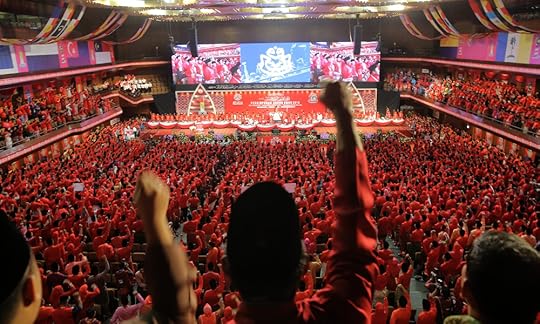 Rock fans will recall the Scorpions' famous song “Winds of Change” serenading the fall of the Berlin Wall and the beginning of the breakdown of the Soviet Empire.Now, we are forced to face the ‘wrath’ of the word ‘bumiputera’.Process of rebirth There is an old Malay practice in Johor of renaming a child 'buang' if his given name does not 'suit' him.My grand uncle who passed away in the early 1970s was called Buang. His old name was deemed not to suit him, as he was often sick when he was a child 'carrying' his old name.‘Buang’, of course, means 'discard'. But I would call this 'reconceptualisation', which we must do to the concept of 'bumiputeraism'.Several semesters ago, when I was lecturing an undergraduate class in African philosophy, using Chinua Achebe's Things Fall Apart, I began to understand how similar my granduncle's predicament is with that of protagonist Okonkwo.In short, the term ‘bumiputera’ has to undergo reconceptualisation, or even a rebirth. The Indonesians already had their process of 'buangisation' as Bung Karno (Soekarno) envisioned.We indulge in this ritual called 'elections', another problematic word, commissioned to be executed 'fairly'. But now that we are done with that, we have to realise that it is the unseen hands of local and international corporate-crony-crypto-conspicuous-consuming capitalist class that is corrupting our material, emotional, ideological and spiritual landscape.
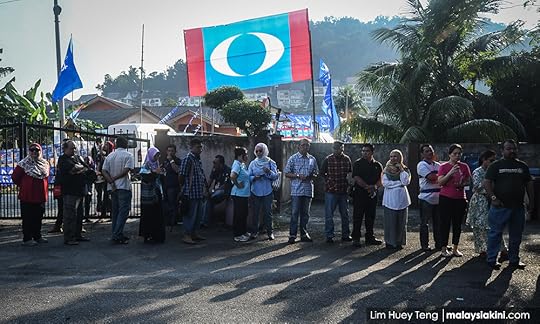 Then we can start this postmortem process of 'buangisation' or 'reconceptualisation' of bumiputeraism.The previous regime could not perform this process of Malaysian 'divining' and 'discarding'. It could not conduct this 'buangisation' because it no longer possessed a good spiritual core.Its vegetative soul, as Syed Muhammad Naquib al-Attas would call it, is too calloused with the carcinogens of corruption, that its rational soul is forever lost and transported into this materially corrupt world, the kali yuga.The ceremony must be performed by a group of philosopher-rulers whose idealism lies in the establishment of a 'republic of virtue'; one that drives its economic foundation from the accumulation of spiritual and metaphysical rather than the material capital.The Das Kapital of the spiritual accumulation of wealth will be the product of this divination. Georg Hegel would agree with this idea of spiritual revolution. It cannot be performed by investment bankers-cum-politicians.Names connote and denote something. They are words that Steven Pinker or Jacques Lacan or any semioticians or linguistic anthropologists would say carry metaphors and manifestations of history, material, power, knowledge and ideology. Worse still these words become institutions and become institutionalised into architectures of power and control.Writers such as Lewis Mumford and Jacques Ellul have analysed this phenomena of architectures of power, as these structures relate to the nature of man within the context of the language in which he/she is situated.'Bumiputera' is one such word. A problematic word. A word that assumes race and religion as one. To say that a Malay is generally a Muslim and hence a 'bumiputera' and therefore have special rights and privileges is an imprecise way of explaining a concept. It is an old-school approach to defining that word.We must find ways to enrich the concept better so that it will become inclusive. Who toils for the soil? Labour, more than language, seems to be more a more linguistically just way to look at the definition of bumiputera and how we will go about the 'buangisation' process.
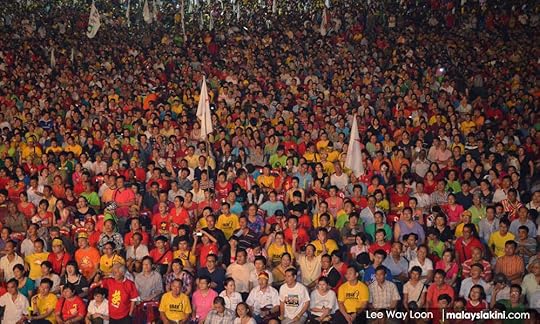 We need a premise for this process though. Let's begin with this phrase: "We hold these truths to be self-evident and divinely sanctioned that all Malaysians are created equal and that they are endowed by their Creator the inalienable rights, that among these are life, liberty, happiness, justice and social equality, and we shall resoundingly declare that from now on we will be constructed as equal and be called 'the new bumiputera'...This to me sounds like something Jean-Jacques Rousseau, John Locke, and Thomas Jefferson, as well as all the holy books would advocate, but with a Malaysian ethos as its foundation.That can be our premise for this radical change. Which will lead to the second stage of the 'buangisation' process can begin.Critique the ideology We must do something different to ourselves if we are to move to the next level of evolution as Malaysians.Let us reconstruct the old concept of 'bumiputera' so that we will have a better foundation in preparation for a redefinition in the Federal Constitution – so that the constitution can now protect all rather than the few.Isn't democracy for the powerful few only good for plutocracy, kleptocracy and cronyism?Who is a 'bumiputera'? After 60 years this term should have evolved and changed. The base and superstructure, the ideology and material foundation, and the body and spirit of this nation-state called Malaysia have changed.
 The old definition has run its course. It is fine to see this as the right time to change. We must remember that words get refined and redefined in the course of history. Ask any linguist.Words like democracy, freedom, justice and equality get reconceptualised after every social revolution. Words like Malays, Indians, Chinese, East and West Malaysians used as classification systems are good during the colonial period and in the early years of independence.They have lost their connotative and denotative power as we approach our 60th year of independence.Language is reality – words become flesh, inscriptions become institutions.Redefine what 'bumiputera' means, so that we will not be forced to sing more propaganda songs.After 60 years of Merdeka, aren't we all bumiputera now?
A+ A- "Political power is what we are only left withOne that will determine the fate of our nation
Wealth of this nation flows into the hands of others
Sons and daughters of the soil suffer in solace..."- National Civics Bureau song, my translationCOMMENT | I do not think we have a clear understanding of what the lyrics above from a National Civics Bureau song in the 1980s means. I doubt if the songwriter even understands what a ‘people's history of Malaya’ means.History is a complex syntagmatic pattern of interplay between technology, ideology, culture, inscription and institutionalisation, which cannot be easily reduced to simplistic lyrics sung in the manner of pre-war German nationalistic compositions.History is about the complex evolution of the ruling class who owns the technologies of control. As Karl Marx would say, at every epoch it is the history of those who own the means of production that will be written and rewritten. The winners write history, the losers write poetry or study anthropology.Back to the lyrics. After 60 years of independence, who is suffering in Malaysia? Who has become wealthy? Who has evolved into the robber barons? The language of power and ideology is at play in those lyrics, as it the definition of ‘bumiputera’.It has become a problematic word in this age of deconstructionism, an age where “the centre cannot hold,” to borrow from WB Yeats.
Rock fans will recall the Scorpions' famous song “Winds of Change” serenading the fall of the Berlin Wall and the beginning of the breakdown of the Soviet Empire.Now, we are forced to face the ‘wrath’ of the word ‘bumiputera’.Process of rebirth There is an old Malay practice in Johor of renaming a child 'buang' if his given name does not 'suit' him.My grand uncle who passed away in the early 1970s was called Buang. His old name was deemed not to suit him, as he was often sick when he was a child 'carrying' his old name.‘Buang’, of course, means 'discard'. But I would call this 'reconceptualisation', which we must do to the concept of 'bumiputeraism'.Several semesters ago, when I was lecturing an undergraduate class in African philosophy, using Chinua Achebe's Things Fall Apart, I began to understand how similar my granduncle's predicament is with that of protagonist Okonkwo.In short, the term ‘bumiputera’ has to undergo reconceptualisation, or even a rebirth. The Indonesians already had their process of 'buangisation' as Bung Karno (Soekarno) envisioned.We indulge in this ritual called 'elections', another problematic word, commissioned to be executed 'fairly'. But now that we are done with that, we have to realise that it is the unseen hands of local and international corporate-crony-crypto-conspicuous-consuming capitalist class that is corrupting our material, emotional, ideological and spiritual landscape.Then we can start this postmortem process of 'buangisation' or 'reconceptualisation' of bumiputeraism.The previous regime could not perform this process of Malaysian 'divining' and 'discarding'. It could not conduct this 'buangisation' because it no longer possessed a good spiritual core.Its vegetative soul, as Syed Muhammad Naquib al-Attas would call it, is too calloused with the carcinogens of corruption, that its rational soul is forever lost and transported into this materially corrupt world, the kali yuga.The ceremony must be performed by a group of philosopher-rulers whose idealism lies in the establishment of a 'republic of virtue'; one that drives its economic foundation from the accumulation of spiritual and metaphysical rather than the material capital.The Das Kapital of the spiritual accumulation of wealth will be the product of this divination. Georg Hegel would agree with this idea of spiritual revolution. It cannot be performed by investment bankers-cum-politicians.Names connote and denote something. They are words that Steven Pinker or Jacques Lacan or any semioticians or linguistic anthropologists would say carry metaphors and manifestations of history, material, power, knowledge and ideology. Worse still these words become institutions and become institutionalised into architectures of power and control.Writers such as Lewis Mumford and Jacques Ellul have analysed this phenomena of architectures of power, as these structures relate to the nature of man within the context of the language in which he/she is situated.'Bumiputera' is one such word. A problematic word. A word that assumes race and religion as one. To say that a Malay is generally a Muslim and hence a 'bumiputera' and therefore have special rights and privileges is an imprecise way of explaining a concept. It is an old-school approach to defining that word.We must find ways to enrich the concept better so that it will become inclusive. Who toils for the soil? Labour, more than language, seems to be more a more linguistically just way to look at the definition of bumiputera and how we will go about the 'buangisation' process.We need a premise for this process though. Let's begin with this phrase: "We hold these truths to be self-evident and divinely sanctioned that all Malaysians are created equal and that they are endowed by their Creator the inalienable rights, that among these are life, liberty, happiness, justice and social equality, and we shall resoundingly declare that from now on we will be constructed as equal and be called 'the new bumiputera'...This to me sounds like something Jean-Jacques Rousseau, John Locke, and Thomas Jefferson, as well as all the holy books would advocate, but with a Malaysian ethos as its foundation.That can be our premise for this radical change. Which will lead to the second stage of the 'buangisation' process can begin.Critique the ideology We must do something different to ourselves if we are to move to the next level of evolution as Malaysians.Let us reconstruct the old concept of 'bumiputera' so that we will have a better foundation in preparation for a redefinition in the Federal Constitution – so that the constitution can now protect all rather than the few.Isn't democracy for the powerful few only good for plutocracy, kleptocracy and cronyism?Who is a 'bumiputera'? After 60 years this term should have evolved and changed. The base and superstructure, the ideology and material foundation, and the body and spirit of this nation-state called Malaysia have changed.The old definition has run its course. It is fine to see this as the right time to change. We must remember that words get refined and redefined in the course of history. Ask any linguist.Words like democracy, freedom, justice and equality get reconceptualised after every social revolution. Words like Malays, Indians, Chinese, East and West Malaysians used as classification systems are good during the colonial period and in the early years of independence.They have lost their connotative and denotative power as we approach our 60th year of independence.Language is reality – words become flesh, inscriptions become institutions.Redefine what 'bumiputera' means, so that we will not be forced to sing more propaganda songs.After 60 years of Merdeka, aren't we all bumiputera now?#17: At the UN, what do we tell the world?
At the UN, what do we tell the world?Opinion |
Azly Rahman
Published: 27 Sep 2018, 8:59 pm | Modified: 27 Sep 2018, 8:59 pm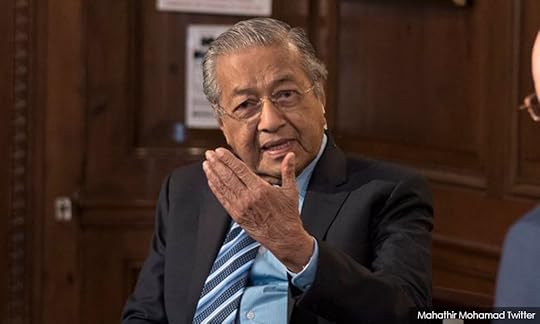 A+ A- COMMENT | "Silence our war drums". That was what the president of the 73rd. United Nations General Assembly appealed to the delegates, pointing out to the increasing urgency to stop militarizing each other and antagonizing societies as we attempt to sustain the planet. Then there is the question whether the UN itself is, or has been, effective in silencing drums, ensuring human rights violations are reduced, protecting the environment, and making the world sustainable.The UN is essentially a social club, and an elitist and expensive one to maintain, whose operations depend on member contributions. It is a place - since 73 years ago during the time of Woodrow Wilson's proclamation to end all wars - to air grievances, call for help from member states in cases of state-to-state aggression, and in general, to talk and perhaps walk the talk on issues of grave concern to the well-being of humanity and the environment.I spend the day, whilst preparing my lectures on global issues, listening to speeches I felt highlight the perennial issues plaguing us. I sat and watched speeches by Donald Trump, Hasan Rouhani, Mahmoud Abas, president of the 73rd General Assembly Maria Fernanda Espinosa, European Council president Donald Tusk, and Benjamin Netanyahu.Since I started studying about the UN in the 80s, closely studying its function in the late 90s, visiting its New York headquarters many times, and today factoring in the UN sustainable development goals in my lectures on international affairs, focusing on the interplay between sustainability, human rights, peace, security, and justice, I have always wondered year after year, delegates have spoken about reforming the system, especially in the nature of its Security Council. Has it not been working well at all, to be calling for reform yearly?There are comforting and troubling messages in the seven videos I watched and took notes on, reminiscent of my ethnographic "scratch-notes-taking sessions" of my dissertation-data gathering days at Columbia, analyzing hundreds of pages of speeches on the nation-state and cybernetic change, ploughing into data-sets daily, triangulating words with numbers, and visual images with statistics, and seeing the elegance of themes emerging as I tried to find explanation of a new Malaysian world emerging using the framework of grounded theory.Fun stuff, ethnographic research on the anthropology of peace, economic development, and the emerging cybernetic state.So, what did I find out today, concerning the world we are living in as represented and characterized by the heads of states of the leaders of today? And how must Malaysia proceed in her existence, after the regime change of the same-old-ideology perhaps, if she must honour the promises of globalism and the framework of the 17 UN sustainable development goals?What must Malaysia do to silence the war drums in the country?What shall we trumpet?Every world leader, including the one from Israel and Venezuela and of course the United States, wants to tell the world how good their government has been to the people and the planet.President Trump spoke of "principled realism", of making America great again by renewing the effort to create both enemies and new friends. Hence, Iran as a potential country the US could go to war with to help Israel, and the beginning of acceptance North Korea as a potential new friend under the aura of the "little rocket man's repentance", as Trump, the president of the most powerful military power on earth called Kim Jong-Un. In his speech the US president was seen alluding to bombing Iran to Persian oblivion in the name of establishing world peace, much to the cringing looks of the UN delegates.Israeli Prime Minister Benjamin Netanyahu spoke about the Iranian threat and why the Islamic Republic is the real aggressor and a dangerous regime, and a threat to peace in the Middle East, with its secret facilities and 300 tons of nuclear-related materials in Maher Alley, Teheran, exposed by the Israeli intelligence. The Israeli leader also made his own country look good by reporting on how Israel, despite the hostility of world opinion, is a great example of a democratic country with her fine treatment of Arabs and Muslims too, humane treatment of LGBTs, and how the country has contributed so much to the world's technological innovation, and that the Palestinian issue has never been an issue, but a misconstruction of a truth.So after all these, what would our Malaysian leader be telling the world on the issues of sustainability, human rights and peace, justice, security?How do we treat the LGBTs? How do we treat Malaysians equally, not leaving any Malaysian behind, based on race? What do we tell the world of how we preserve the environment when Malaysia has been the worst destroyer of the forests, even in the most pious and Islamic of states such as Kelantan, let alone in the hill-shaving-happy state such as Sabah?What about the way we bully the indigenous people? Our attitude towards the mullahs who love championing underage marriages? What are our efforts in slowing down the spread of the radical Wahabbi-Salafi brand of Islam that could be a continuing fertile ground for an IS-type of utopianism? How do we respect the rights of those who profess other faiths and help them flourish?What about the way we structure our educational apartheid system, in the whole scheme of the Malay-Muslims wanting to prolong the system of preferential treatment within the ideological march of Malay superiority (false as it may seem), which runs counter to the spirit of what it means to be a Malaysian?What would His Excellency Dr Mahathir Mohamad, the prime minister of Malaysia, rhetoricize in his UN speech to let the world believe that we are a country that is worthy of being congratulated for practising good democracy, whether framed from a Western or Eastern perspective?Do we preach what we have failed to do?AZLY RAHMAN is an educator, academic, international columnist, and author of seven books. He grew up in Johor Bahru, and holds a Columbia University doctorate in international education development and Master’s degrees in five areas: education, international affairs, peace studies communication, and creative writing.
A+ A- COMMENT | "Silence our war drums". That was what the president of the 73rd. United Nations General Assembly appealed to the delegates, pointing out to the increasing urgency to stop militarizing each other and antagonizing societies as we attempt to sustain the planet. Then there is the question whether the UN itself is, or has been, effective in silencing drums, ensuring human rights violations are reduced, protecting the environment, and making the world sustainable.The UN is essentially a social club, and an elitist and expensive one to maintain, whose operations depend on member contributions. It is a place - since 73 years ago during the time of Woodrow Wilson's proclamation to end all wars - to air grievances, call for help from member states in cases of state-to-state aggression, and in general, to talk and perhaps walk the talk on issues of grave concern to the well-being of humanity and the environment.I spend the day, whilst preparing my lectures on global issues, listening to speeches I felt highlight the perennial issues plaguing us. I sat and watched speeches by Donald Trump, Hasan Rouhani, Mahmoud Abas, president of the 73rd General Assembly Maria Fernanda Espinosa, European Council president Donald Tusk, and Benjamin Netanyahu.Since I started studying about the UN in the 80s, closely studying its function in the late 90s, visiting its New York headquarters many times, and today factoring in the UN sustainable development goals in my lectures on international affairs, focusing on the interplay between sustainability, human rights, peace, security, and justice, I have always wondered year after year, delegates have spoken about reforming the system, especially in the nature of its Security Council. Has it not been working well at all, to be calling for reform yearly?There are comforting and troubling messages in the seven videos I watched and took notes on, reminiscent of my ethnographic "scratch-notes-taking sessions" of my dissertation-data gathering days at Columbia, analyzing hundreds of pages of speeches on the nation-state and cybernetic change, ploughing into data-sets daily, triangulating words with numbers, and visual images with statistics, and seeing the elegance of themes emerging as I tried to find explanation of a new Malaysian world emerging using the framework of grounded theory.Fun stuff, ethnographic research on the anthropology of peace, economic development, and the emerging cybernetic state.So, what did I find out today, concerning the world we are living in as represented and characterized by the heads of states of the leaders of today? And how must Malaysia proceed in her existence, after the regime change of the same-old-ideology perhaps, if she must honour the promises of globalism and the framework of the 17 UN sustainable development goals?What must Malaysia do to silence the war drums in the country?What shall we trumpet?Every world leader, including the one from Israel and Venezuela and of course the United States, wants to tell the world how good their government has been to the people and the planet.President Trump spoke of "principled realism", of making America great again by renewing the effort to create both enemies and new friends. Hence, Iran as a potential country the US could go to war with to help Israel, and the beginning of acceptance North Korea as a potential new friend under the aura of the "little rocket man's repentance", as Trump, the president of the most powerful military power on earth called Kim Jong-Un. In his speech the US president was seen alluding to bombing Iran to Persian oblivion in the name of establishing world peace, much to the cringing looks of the UN delegates.Israeli Prime Minister Benjamin Netanyahu spoke about the Iranian threat and why the Islamic Republic is the real aggressor and a dangerous regime, and a threat to peace in the Middle East, with its secret facilities and 300 tons of nuclear-related materials in Maher Alley, Teheran, exposed by the Israeli intelligence. The Israeli leader also made his own country look good by reporting on how Israel, despite the hostility of world opinion, is a great example of a democratic country with her fine treatment of Arabs and Muslims too, humane treatment of LGBTs, and how the country has contributed so much to the world's technological innovation, and that the Palestinian issue has never been an issue, but a misconstruction of a truth.So after all these, what would our Malaysian leader be telling the world on the issues of sustainability, human rights and peace, justice, security?How do we treat the LGBTs? How do we treat Malaysians equally, not leaving any Malaysian behind, based on race? What do we tell the world of how we preserve the environment when Malaysia has been the worst destroyer of the forests, even in the most pious and Islamic of states such as Kelantan, let alone in the hill-shaving-happy state such as Sabah?What about the way we bully the indigenous people? Our attitude towards the mullahs who love championing underage marriages? What are our efforts in slowing down the spread of the radical Wahabbi-Salafi brand of Islam that could be a continuing fertile ground for an IS-type of utopianism? How do we respect the rights of those who profess other faiths and help them flourish?What about the way we structure our educational apartheid system, in the whole scheme of the Malay-Muslims wanting to prolong the system of preferential treatment within the ideological march of Malay superiority (false as it may seem), which runs counter to the spirit of what it means to be a Malaysian?What would His Excellency Dr Mahathir Mohamad, the prime minister of Malaysia, rhetoricize in his UN speech to let the world believe that we are a country that is worthy of being congratulated for practising good democracy, whether framed from a Western or Eastern perspective?Do we preach what we have failed to do?AZLY RAHMAN is an educator, academic, international columnist, and author of seven books. He grew up in Johor Bahru, and holds a Columbia University doctorate in international education development and Master’s degrees in five areas: education, international affairs, peace studies communication, and creative writing.#16: What's new in Mahathir's UN speech?
What's new in Mahathir's UN speech?Opinion |
Azly Rahman
Published: 29 Sep 2018, 10:19 pm | Modified: 29 Sep 2018, 10:19 pm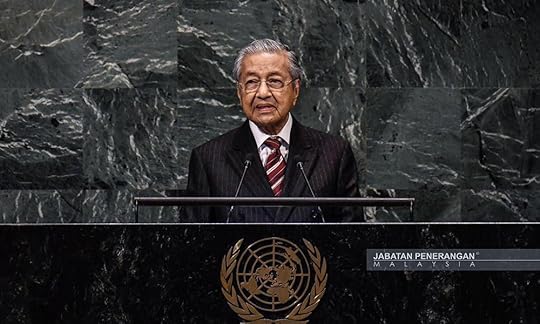 A+ A- COMMENT | Sharp as he was and is, Prime Minister Dr Mahathir Mohamad rattled off his speech to the international community at 11.40am EST in a shaky voice, befitting a 93-year-old man's cranking of the vocal cords.He spoke with a slight Kedah Malay twang, at times swallowing his words and mispronouncing a few. Perhaps the long trip to New York, jet lag, and age itself contributed to an unsmooth and forceless start. Behind the light golden frame of his glasses, his eyes look puffed, and heavy with bags. He looked tired and groggy. But he was making his comeback, and the global community to know it.Five minutes into the speech, he went right into trumpeting the idea of a 'new Malaysia', a slogan more and more now picked up by many Malaysians in their emails and WhatsApp messages – replacing the old "Salam 1Malaysia" which recalls 1MDB, now synonymous with the mysterious and puzzling grand theft of the nation's coffers, the people's savings, by Malaysia's crime ministers and their merry band of more than thieves, including those in turbans and green robes.So, the grand old man – a veritable GOP of one, or the Vito Corleone of Malaysian politics – spoke at length about the new regime's commitment to ensuring the country's equitable share of the nation's wealth."My last speech here was in 2003, and fifteen years later, the world has not changed much. In fact, it is worse now," he lamented.
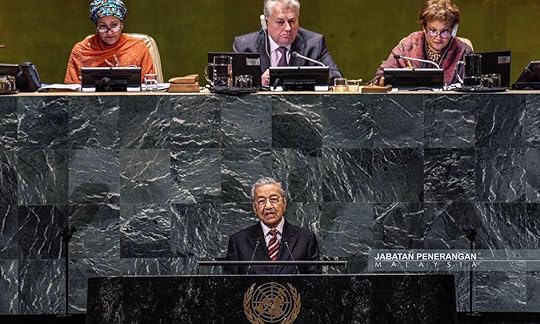 Against the jade-green UN General Assembly wall, he spoke of Malaysia's foreign policy of "prosper thy neighbour." He spoke with a heightened tone of how in May he overthrew race and religious bigotry to destroy the dominant 60-old party he led for 22-years, at a time when there was still no term limit. A time of consolidation of power, inspired by what Niccolò Machiavelli taught to the prince.Seize power, consolidate power, and disperse it as hegemony, That is the lesson on the deep state of things. Love thy self, know thy enemies, one hundred battles, one hundred victories.The New Malaysia is faced with the global issues of the effects of the US-China trade war, an attack to the institution of marriage, and the war on terrorism, he complained to the assembly.But it was, in general, a good speech. Vintage Mahathir. Anti-imperialist, anti-hegemony, anti-oppression, and anti-US, primarily. I did not expect anything different in content, delivery and tonality from the prime minister.He sounded as defiant as David throwing stones at Goliath or Hang Nadim warding off the swordfish with just a keris, as he did during the time of Fidel Castro, Yasser Arafat, Shimon Perez, George Bush, Bill Clinton, and Robert Mugabe – his peers in the general assembly, not all of whom lasted as long as he has.This defiance is how Malaysia's foreign policy was crafted and communicated to a world that continues to prioritise bombs over bread.I used to like it when Mahathir spoke to the world. He, for lack of a better cliché, called a spade a spade. I just didn't like what he did to the country in his 22 years of 'solopreneurial'-political rule. While calling for world justice, he did several degrees of harm to the country's economic, political, and educational culture, and ensured that almost all power is concentrated in the executive.But at the UN General Assembly this year, Mahathir had nothing new to say: strive for peace in a world defined by, to use Willy Brandt's term, "arms and hunger."I did, however, like Mahathir's mention of the military-industrial complex, of the world arming itself, and the proliferation of conflicts in a paradigm governed by the all-too-familiar maxim "in order to have world peace, nations must prepare for war."
  It is a Bismarckian world the current president of the US would uphold, what with the "principled realism" undergirding the country's foreign policy – a realism based on the might of the right, and the Pentagonian power of war-loving corporate America of defence contractors, bomb makers, Lockheed-Martin, Boeing, DuPont, and Raytheon; builders of warmongering tools of peace; speakers of the language of the war system, realpolitik and gunboat diplomacy.Thank you, Mahathir, for pointing that out.As the Malaysian 'comeback kid' left the podium, teleprompter and all, I did not feel anything except a sense of academic nostalgia – of ploughing through hundreds of pages of his speeches of the 1980s, as he spoke of world peace.Same tone same message, perhaps taken from old files, but whose contents still work fine.Because the world is still the same. Sane and insane. Whether in the global arena, or at home, in Mahathir's Malaysia.AZLY RAHMAN is an educator, academic, international columnist, and author of seven books. He grew up in Johor Bahru, and holds a Columbia University doctorate in international education development and Master’s degrees in five areas: education, international affairs, peace studies communication, and creative writing.
A+ A- COMMENT | Sharp as he was and is, Prime Minister Dr Mahathir Mohamad rattled off his speech to the international community at 11.40am EST in a shaky voice, befitting a 93-year-old man's cranking of the vocal cords.He spoke with a slight Kedah Malay twang, at times swallowing his words and mispronouncing a few. Perhaps the long trip to New York, jet lag, and age itself contributed to an unsmooth and forceless start. Behind the light golden frame of his glasses, his eyes look puffed, and heavy with bags. He looked tired and groggy. But he was making his comeback, and the global community to know it.Five minutes into the speech, he went right into trumpeting the idea of a 'new Malaysia', a slogan more and more now picked up by many Malaysians in their emails and WhatsApp messages – replacing the old "Salam 1Malaysia" which recalls 1MDB, now synonymous with the mysterious and puzzling grand theft of the nation's coffers, the people's savings, by Malaysia's crime ministers and their merry band of more than thieves, including those in turbans and green robes.So, the grand old man – a veritable GOP of one, or the Vito Corleone of Malaysian politics – spoke at length about the new regime's commitment to ensuring the country's equitable share of the nation's wealth."My last speech here was in 2003, and fifteen years later, the world has not changed much. In fact, it is worse now," he lamented.Against the jade-green UN General Assembly wall, he spoke of Malaysia's foreign policy of "prosper thy neighbour." He spoke with a heightened tone of how in May he overthrew race and religious bigotry to destroy the dominant 60-old party he led for 22-years, at a time when there was still no term limit. A time of consolidation of power, inspired by what Niccolò Machiavelli taught to the prince.Seize power, consolidate power, and disperse it as hegemony, That is the lesson on the deep state of things. Love thy self, know thy enemies, one hundred battles, one hundred victories.The New Malaysia is faced with the global issues of the effects of the US-China trade war, an attack to the institution of marriage, and the war on terrorism, he complained to the assembly.But it was, in general, a good speech. Vintage Mahathir. Anti-imperialist, anti-hegemony, anti-oppression, and anti-US, primarily. I did not expect anything different in content, delivery and tonality from the prime minister.He sounded as defiant as David throwing stones at Goliath or Hang Nadim warding off the swordfish with just a keris, as he did during the time of Fidel Castro, Yasser Arafat, Shimon Perez, George Bush, Bill Clinton, and Robert Mugabe – his peers in the general assembly, not all of whom lasted as long as he has.This defiance is how Malaysia's foreign policy was crafted and communicated to a world that continues to prioritise bombs over bread.I used to like it when Mahathir spoke to the world. He, for lack of a better cliché, called a spade a spade. I just didn't like what he did to the country in his 22 years of 'solopreneurial'-political rule. While calling for world justice, he did several degrees of harm to the country's economic, political, and educational culture, and ensured that almost all power is concentrated in the executive.But at the UN General Assembly this year, Mahathir had nothing new to say: strive for peace in a world defined by, to use Willy Brandt's term, "arms and hunger."I did, however, like Mahathir's mention of the military-industrial complex, of the world arming itself, and the proliferation of conflicts in a paradigm governed by the all-too-familiar maxim "in order to have world peace, nations must prepare for war." It is a Bismarckian world the current president of the US would uphold, what with the "principled realism" undergirding the country's foreign policy – a realism based on the might of the right, and the Pentagonian power of war-loving corporate America of defence contractors, bomb makers, Lockheed-Martin, Boeing, DuPont, and Raytheon; builders of warmongering tools of peace; speakers of the language of the war system, realpolitik and gunboat diplomacy.Thank you, Mahathir, for pointing that out.As the Malaysian 'comeback kid' left the podium, teleprompter and all, I did not feel anything except a sense of academic nostalgia – of ploughing through hundreds of pages of his speeches of the 1980s, as he spoke of world peace.Same tone same message, perhaps taken from old files, but whose contents still work fine.Because the world is still the same. Sane and insane. Whether in the global arena, or at home, in Mahathir's Malaysia.AZLY RAHMAN is an educator, academic, international columnist, and author of seven books. He grew up in Johor Bahru, and holds a Columbia University doctorate in international education development and Master’s degrees in five areas: education, international affairs, peace studies communication, and creative writing.January 3, 2019
#15: The Butterfly Effect, ‘Merdeka!’ and M’sia today
The Butterfly Effect, ‘Merdeka!’ and M’sia todayOpinion |
Azly Rahman
Published: 29 Aug 2018, 9:58 pm | Modified: 29 Aug 2018, 9:58 pm A+ A- COMMENT | We live in a world patterned by randomness, of systems of organized chaos, of butterflies that flapped their wings in the ‘70s in the Amazonian jungle creating ripples surrounding them, which today indirectly created hurricanes, thunderstorms of a massive scale, creating tsunamis, and shifts in ocean floors that became chaos in the weather system.There is no cause and effect, or causal relationship here, but there is a sense of inter-relationships of events, which may be discerned mathematically, of which fractal-geometric patterns could be constructed. We have complex systems of unpredictability at work, like the inner workings of fate and determinism, of deus ex machina, of the human agency and divine intervention. Music of the Newtonian spheres meets Buddhist koan music meets Jimi Hendrix's and Eddie Van Halen's guitar riffs.I thought of my beloved country, Malaysia, today, after having a conversation with students on global issues and chaos theory, on how to read the world and interpret it, linking the idea that we cannot predict things, that there will be war and violence, interspersed by relative periods of peace, detente, ceasefires, but the bombings and maiming will continue, whether in Yemen by the US-Saudi-Israeli led coalition, or the mass-killings of the stateless Rohingya Muslims by the Buddhist-monk-led pogrom aided by the military, or the violence perpetually committed by the Zionist-state of Israel upon the Palestinians, especially in Gaza and the West Bank.I thought of karma, of the world as perhaps a battleground of good versus evil, a Zarathustrian notion. A location of the reincarnations of avatars at war with one another. We live in a violent world, as if God had long ago left the scene, letting human beings slaughter one another using now meaningless arguments of race, religion, nationalism, wealth, power, inclusivity, exclusivity, this and that racial superiority - these as leitmotif and reason to dominate and annihilate one another.A hopeless world we are living in? "Empty spaces, what are we living for? Abandoned spaces, I guess we know the score. … Doesn't anybody know what we are living for?" I recall Freddy Mercury of the British rock group Queen lamenting in one of his songs.Then, my long existential moment came a-visitin'. What is the meaning of all these? Of war, violence, poverty, of powerful individuals running the planet? Of the world getting hotter, weapons of mass destruction getting deadlier, of the world's poverty and hunger getting closer to NO-EXIT, like an absurd play of the existentialist philosopher Jean-Paul Sartre.I thought of Malaysian politics in all its absurdity as well. I tried to think about the meaning of the patterns of randomness and chaos, of the Butterfly Effect ,of her ‘Merdeka!’ or "independence" and what it means, or if it has any meaning at all. I only have questions, Socratic if you may, of what if and what then and why this and that. Or why has it come to this stage in our evolution. Merdeka questions. O' merde! I exclaimed in silence, inside.Here are my thoughts as I imagine myself that Amazonian butterfly thinking of the shape of things, events, as I whirl and whirl, like a drunk Sufi master dancing aimlessly into nothingness, hoping to reach god.Merdeka! Are we really?The massive debt inherited by the new regime, after a 60-year looting by the government of Ali Baba and the Forty robber-barons. The PAS-Umno love affair in times of political cholera. One hundred days of solitude of the new regime crafting a labyrinth for a generalissimo rebranded. Themes of continuity of the Colombian Nobel laureate Gabriel Garcia Marquez' masterpieces. Orang Asli blockades and the struggle of the tribes against those with power and money, patroned by the government. The reported 2.1 billion ringgit left by a politician who died (mysteriously, I suppose) in a helicopter crash, en route to a friend's wedding.The continuing saga of Anwar Ibrahim and Mahathir Mohamad of the struggle to ensure the promised peaceful transfer of power will indeed happen, by human design or by divine intervention. The nagging debate on education and equal opportunity, such as the stubbornness of those in power to grant graduates of the UEC university entry. And the absurd technological fantasy of reviving a new car industry when all in the past have not been a glory. Check out the Multimedia Super Corridor.Then of course, there is the new global Communist Chinese hegemony unleashing its capitalist libidinal-urgency in a "debt-trapping-Ah Long” economic strategy, imposed on poor countries.You can add to the list to complexities plaguing this country as the forces of race, religion, class, and national identity play their role in structuring the "butterfly effect of things".How long will the Pakatan Harapan government last in the face of a forceful oppositional coalition resurfacing, subverting, buying politicians to switch allegiance, manufacturing crises, orchestrating the "bangkit Melayu" this and that, to nurture yet another mass provocation a la the prelude to May 13, 1969? How long?We don't have any answers to all these. This is the pattern of random chaos, of the Butterfly Effect of things as it plays with the Internet of things, with the politics of things, with the rise of political dynasties on both sides of the divide, whose family members all try not only to keep their political jobs given by the people, but perhaps pursue the Malaysian Dream of Merdeka - of being billionaires through the manoeuvring of wealth and power.All this, while the rakyat moan and groan on promises unfulfilled, while the headlines appease the angry masses through yet another breaking news of 1MDB or Jho Low's whereabouts. That's entertainment.Welcome to the show that never ends. Have a great Merdeka Day. Keep observing the butterfly, flapping its wings!AZLY RAHMAN is an educator, academic, international columnist, and author of seven books. He grew up in Johor Bahru, and holds a Columbia University doctorate in international education development and Master’s degrees in five areas: education, international affairs, peace studies communication, and creative writing.
A+ A- COMMENT | We live in a world patterned by randomness, of systems of organized chaos, of butterflies that flapped their wings in the ‘70s in the Amazonian jungle creating ripples surrounding them, which today indirectly created hurricanes, thunderstorms of a massive scale, creating tsunamis, and shifts in ocean floors that became chaos in the weather system.There is no cause and effect, or causal relationship here, but there is a sense of inter-relationships of events, which may be discerned mathematically, of which fractal-geometric patterns could be constructed. We have complex systems of unpredictability at work, like the inner workings of fate and determinism, of deus ex machina, of the human agency and divine intervention. Music of the Newtonian spheres meets Buddhist koan music meets Jimi Hendrix's and Eddie Van Halen's guitar riffs.I thought of my beloved country, Malaysia, today, after having a conversation with students on global issues and chaos theory, on how to read the world and interpret it, linking the idea that we cannot predict things, that there will be war and violence, interspersed by relative periods of peace, detente, ceasefires, but the bombings and maiming will continue, whether in Yemen by the US-Saudi-Israeli led coalition, or the mass-killings of the stateless Rohingya Muslims by the Buddhist-monk-led pogrom aided by the military, or the violence perpetually committed by the Zionist-state of Israel upon the Palestinians, especially in Gaza and the West Bank.I thought of karma, of the world as perhaps a battleground of good versus evil, a Zarathustrian notion. A location of the reincarnations of avatars at war with one another. We live in a violent world, as if God had long ago left the scene, letting human beings slaughter one another using now meaningless arguments of race, religion, nationalism, wealth, power, inclusivity, exclusivity, this and that racial superiority - these as leitmotif and reason to dominate and annihilate one another.A hopeless world we are living in? "Empty spaces, what are we living for? Abandoned spaces, I guess we know the score. … Doesn't anybody know what we are living for?" I recall Freddy Mercury of the British rock group Queen lamenting in one of his songs.Then, my long existential moment came a-visitin'. What is the meaning of all these? Of war, violence, poverty, of powerful individuals running the planet? Of the world getting hotter, weapons of mass destruction getting deadlier, of the world's poverty and hunger getting closer to NO-EXIT, like an absurd play of the existentialist philosopher Jean-Paul Sartre.I thought of Malaysian politics in all its absurdity as well. I tried to think about the meaning of the patterns of randomness and chaos, of the Butterfly Effect ,of her ‘Merdeka!’ or "independence" and what it means, or if it has any meaning at all. I only have questions, Socratic if you may, of what if and what then and why this and that. Or why has it come to this stage in our evolution. Merdeka questions. O' merde! I exclaimed in silence, inside.Here are my thoughts as I imagine myself that Amazonian butterfly thinking of the shape of things, events, as I whirl and whirl, like a drunk Sufi master dancing aimlessly into nothingness, hoping to reach god.Merdeka! Are we really?The massive debt inherited by the new regime, after a 60-year looting by the government of Ali Baba and the Forty robber-barons. The PAS-Umno love affair in times of political cholera. One hundred days of solitude of the new regime crafting a labyrinth for a generalissimo rebranded. Themes of continuity of the Colombian Nobel laureate Gabriel Garcia Marquez' masterpieces. Orang Asli blockades and the struggle of the tribes against those with power and money, patroned by the government. The reported 2.1 billion ringgit left by a politician who died (mysteriously, I suppose) in a helicopter crash, en route to a friend's wedding.The continuing saga of Anwar Ibrahim and Mahathir Mohamad of the struggle to ensure the promised peaceful transfer of power will indeed happen, by human design or by divine intervention. The nagging debate on education and equal opportunity, such as the stubbornness of those in power to grant graduates of the UEC university entry. And the absurd technological fantasy of reviving a new car industry when all in the past have not been a glory. Check out the Multimedia Super Corridor.Then of course, there is the new global Communist Chinese hegemony unleashing its capitalist libidinal-urgency in a "debt-trapping-Ah Long” economic strategy, imposed on poor countries.You can add to the list to complexities plaguing this country as the forces of race, religion, class, and national identity play their role in structuring the "butterfly effect of things".How long will the Pakatan Harapan government last in the face of a forceful oppositional coalition resurfacing, subverting, buying politicians to switch allegiance, manufacturing crises, orchestrating the "bangkit Melayu" this and that, to nurture yet another mass provocation a la the prelude to May 13, 1969? How long?We don't have any answers to all these. This is the pattern of random chaos, of the Butterfly Effect of things as it plays with the Internet of things, with the politics of things, with the rise of political dynasties on both sides of the divide, whose family members all try not only to keep their political jobs given by the people, but perhaps pursue the Malaysian Dream of Merdeka - of being billionaires through the manoeuvring of wealth and power.All this, while the rakyat moan and groan on promises unfulfilled, while the headlines appease the angry masses through yet another breaking news of 1MDB or Jho Low's whereabouts. That's entertainment.Welcome to the show that never ends. Have a great Merdeka Day. Keep observing the butterfly, flapping its wings!AZLY RAHMAN is an educator, academic, international columnist, and author of seven books. He grew up in Johor Bahru, and holds a Columbia University doctorate in international education development and Master’s degrees in five areas: education, international affairs, peace studies communication, and creative writing.#14: Jamal Khashoggi and Malaysian murder mysteries
Jamal Khashoggi and Malaysian murder mysteriesOpinion |
Azly Rahman
Published: 20 Oct 2018, 9:32 pm | Modified: 20 Oct 2018, 9:32 pm A+ A- COMMENT | Here are my thoughts on what then we must do with our relationship with Saudi Arabia, especially in our dealings with the current regime. I wrote these notes on my Facebook page the day I read about the torture and murder of the Saudi journalist Jamal Khashoggi.Saudi Arabia is the guardian of Mecca and the bearer of the green flag that says "There is no god but Allah, and Muhammad is the messenger of Allah," with the sword as a symbol of the tool of the spread of Islam.What then are we to do with this kingdom-orchestrated assassination, if confirmed?Not in the name of Islam should this kind of murder be committed, not even in the name of any godless ideology, especially in times of high-speed Internet-information dissemination technologies. What news to wake up to just before writing a paper on complexity theory.According to the news report, the Washington Post columnist was murdered because he knew too much about the Saudi royal family. He was also said to be working on a report to enhance and expand the circle of Twitter community critical of the regime of Crown Prince Muhammad bin Salman (photo).
 But what else did he know that led to his horrific murder? He was still alive when the killers dismembered him and one of them who cut him into pieces even said that he listens to music while doing this sort of thing and that others should also do the same.But what is it that makes monarchs of this world, including in Malaysia, dislike those who know too much about their families and try to expose the world of disparity between their intellect, character and spirituality? In doing so, they put a dent into the whole idea that a "king can do no wrong" and that there are two sets of laws, even in Islam – one for the royalty and the other for the commoner.In today's world, hudud may not apply to sultans but its implementation and administration on the powerless and the poor will keep the idea of the Islamic state still alive.Therefore, Islamic leaders from the royal houses can do whatever they want that demonstrate the exact opposite of what the prophet of Islam prohibits. Syariah law and its methods of punishment must be carried out in the framework of justice in Islam, as claimed.In a postmodern, post-truth, post-post-everything age of governance, the monarchy, whether absolute or constitutional, cannot continue to plunder, rape, kill or do whatever it wishes, using the state apparatuses and instruments of authority and absurdity at their disposal while they sit gleefully on their golden thrones.The more people know about the abuse of power in the name of the divine rights of king, the more there will be mounting dissatisfaction and ultimately disgust and mass anger that will eventually translate into an uprising and revolution.In the case of the Middle East and North Africa, that was what the Arab Spring was all about.
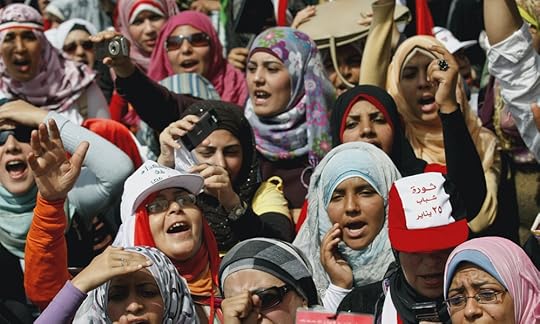 That is an example of complexity theory as applied to the story of the monarchy. The French Revolution, the American Revolution and the Chinese Revolution were all about that. So was the Iranian Revolution that toppled the Peacock Throne.In the case of Malaysia, the 1988 Constitutional (or Judicial) Crisis was meant to educate Malaysians of the excesses of power, of the disparity between character and the intellect and why no one should be above the law, albeit consolidating the power of Dr Mahathir Mohamad vis-a-viz Umno.Brutality back homeWhile we were all horrified by the brutal assassination of Khashoggi, perhaps killed by his own government in the name of silencing his criticism, especially of the royalty and also of US President Donald Trump, we must also demand the truth into the murders of Altantunya Shaariibuu, Kevin Morais, Teoh Beng Hock and of what happened to the good souls that went missing – Raymond Koh, Peter Chong, Joshua and Ruth Hilmy, and Amri Che Mat (photo).
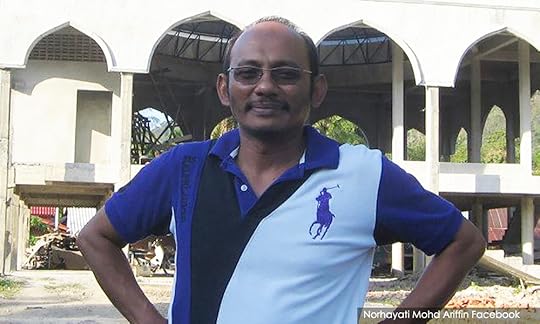 What are we to do with our own brand of brutality? Will the Pakatan Harapan government tell us the truth, especially of the missing persons? Of who was involved? Is the government an accomplice too? What is the motive behind the disappearance of Koh, Chong, Joshua and Ruth Hilmy, and Amri?If the current government is quick at investigating the 1MDB scandal and sending the filthy and the corrupt to jail, we expect it to solve the missing person mystery with urgency.So, as a country vocal on the issues of the Palestinians and the Rohingya Muslims, in light of our commitment to be known as a champion of international human rights however lousy our records are back home, what are we to do with the Saudis?We are not selling weapons to them like the United States, which sold 18 percent of its arms to Saudi Arabia. Unlike the US, our prime minister does not have any personal interest in selling luxury properties in Saudi Arabia. We are not like the US whose former president George W Bush was once best friends with the Saudi royal family.
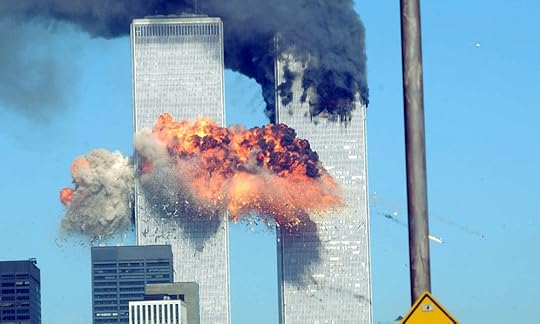 The US invaded Iraq in the aftermath of the attack on the Twin Towers in New York, and rebuilt the country with the help of Halliburton and other American companies. And then there was the war in Afghanistan. These two make the US military-industrial complex alive and well.What about Malaysia? We only have perhaps some investment deals and our people go to Saudi Arabia yearly for religious tourism activities.As for the Khashoggi case, what then must we do? Why have we not condemned the kingdom and why are we not at least hinting that we cannot tolerate being an ally with a state that carried out such brutalities in the name of Islam?Once the Turkish investigations are over, and the truth ascertained, we must make a statement, especially when it concerns the degeneration of Islamic nations.We are too tied to religious sentimentality. Let us look at things objectively and disengage ourself from such as country as well as worshipping some brand of ideological brutality.AZLY RAHMAN is an educator, academic, international columnist, and author of seven books available here. He grew up in Johor Bahru, and holds a Columbia University doctorate in international education development and Master’s degrees in six areas: education, international affairs, peace studies communication, fiction and non-fiction writing. Twitter @azlyrahman. More writings here.
A+ A- COMMENT | Here are my thoughts on what then we must do with our relationship with Saudi Arabia, especially in our dealings with the current regime. I wrote these notes on my Facebook page the day I read about the torture and murder of the Saudi journalist Jamal Khashoggi.Saudi Arabia is the guardian of Mecca and the bearer of the green flag that says "There is no god but Allah, and Muhammad is the messenger of Allah," with the sword as a symbol of the tool of the spread of Islam.What then are we to do with this kingdom-orchestrated assassination, if confirmed?Not in the name of Islam should this kind of murder be committed, not even in the name of any godless ideology, especially in times of high-speed Internet-information dissemination technologies. What news to wake up to just before writing a paper on complexity theory.According to the news report, the Washington Post columnist was murdered because he knew too much about the Saudi royal family. He was also said to be working on a report to enhance and expand the circle of Twitter community critical of the regime of Crown Prince Muhammad bin Salman (photo).But what else did he know that led to his horrific murder? He was still alive when the killers dismembered him and one of them who cut him into pieces even said that he listens to music while doing this sort of thing and that others should also do the same.But what is it that makes monarchs of this world, including in Malaysia, dislike those who know too much about their families and try to expose the world of disparity between their intellect, character and spirituality? In doing so, they put a dent into the whole idea that a "king can do no wrong" and that there are two sets of laws, even in Islam – one for the royalty and the other for the commoner.In today's world, hudud may not apply to sultans but its implementation and administration on the powerless and the poor will keep the idea of the Islamic state still alive.Therefore, Islamic leaders from the royal houses can do whatever they want that demonstrate the exact opposite of what the prophet of Islam prohibits. Syariah law and its methods of punishment must be carried out in the framework of justice in Islam, as claimed.In a postmodern, post-truth, post-post-everything age of governance, the monarchy, whether absolute or constitutional, cannot continue to plunder, rape, kill or do whatever it wishes, using the state apparatuses and instruments of authority and absurdity at their disposal while they sit gleefully on their golden thrones.The more people know about the abuse of power in the name of the divine rights of king, the more there will be mounting dissatisfaction and ultimately disgust and mass anger that will eventually translate into an uprising and revolution.In the case of the Middle East and North Africa, that was what the Arab Spring was all about.That is an example of complexity theory as applied to the story of the monarchy. The French Revolution, the American Revolution and the Chinese Revolution were all about that. So was the Iranian Revolution that toppled the Peacock Throne.In the case of Malaysia, the 1988 Constitutional (or Judicial) Crisis was meant to educate Malaysians of the excesses of power, of the disparity between character and the intellect and why no one should be above the law, albeit consolidating the power of Dr Mahathir Mohamad vis-a-viz Umno.Brutality back homeWhile we were all horrified by the brutal assassination of Khashoggi, perhaps killed by his own government in the name of silencing his criticism, especially of the royalty and also of US President Donald Trump, we must also demand the truth into the murders of Altantunya Shaariibuu, Kevin Morais, Teoh Beng Hock and of what happened to the good souls that went missing – Raymond Koh, Peter Chong, Joshua and Ruth Hilmy, and Amri Che Mat (photo).What are we to do with our own brand of brutality? Will the Pakatan Harapan government tell us the truth, especially of the missing persons? Of who was involved? Is the government an accomplice too? What is the motive behind the disappearance of Koh, Chong, Joshua and Ruth Hilmy, and Amri?If the current government is quick at investigating the 1MDB scandal and sending the filthy and the corrupt to jail, we expect it to solve the missing person mystery with urgency.So, as a country vocal on the issues of the Palestinians and the Rohingya Muslims, in light of our commitment to be known as a champion of international human rights however lousy our records are back home, what are we to do with the Saudis?We are not selling weapons to them like the United States, which sold 18 percent of its arms to Saudi Arabia. Unlike the US, our prime minister does not have any personal interest in selling luxury properties in Saudi Arabia. We are not like the US whose former president George W Bush was once best friends with the Saudi royal family.The US invaded Iraq in the aftermath of the attack on the Twin Towers in New York, and rebuilt the country with the help of Halliburton and other American companies. And then there was the war in Afghanistan. These two make the US military-industrial complex alive and well.What about Malaysia? We only have perhaps some investment deals and our people go to Saudi Arabia yearly for religious tourism activities.As for the Khashoggi case, what then must we do? Why have we not condemned the kingdom and why are we not at least hinting that we cannot tolerate being an ally with a state that carried out such brutalities in the name of Islam?Once the Turkish investigations are over, and the truth ascertained, we must make a statement, especially when it concerns the degeneration of Islamic nations.We are too tied to religious sentimentality. Let us look at things objectively and disengage ourself from such as country as well as worshipping some brand of ideological brutality.AZLY RAHMAN is an educator, academic, international columnist, and author of seven books available here. He grew up in Johor Bahru, and holds a Columbia University doctorate in international education development and Master’s degrees in six areas: education, international affairs, peace studies communication, fiction and non-fiction writing. Twitter @azlyrahman. More writings here.#13: Trishakti — the real Malaysian manifesto we need
Trishakti — the real Malaysian manifesto we needOpinion |
Azly Rahman
Published: 13 Oct 2018, 8:06 pm | Modified: 13 Oct 2018, 8:06 pm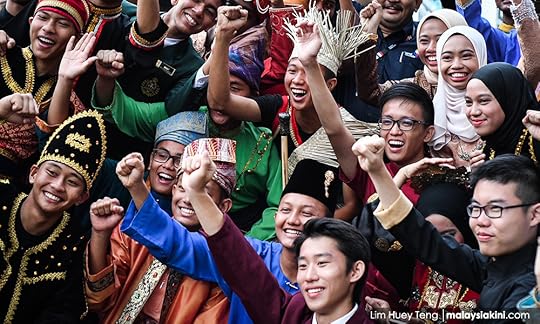 A+ A- COMMENT | The “manifesto” shoved down the eyes, ears , and brain of the voters – one that promised good things in life: no tolls, greater educational future, more equality for everything that can be equalised, less cronyism, massive arrests of white collar-songkok wearing thieves in political garments, and so on. These promises pushed the old regime of the Barisan Nasional to the corner to become losers in the 14 th general elections. This is not the sum total of a manifesto. It should not have been called a manifesto.These are mere promises made to lure voters. To amass votes. Now they are confessing that these promises were not meant to be kept. They are meant to get the votes, get into power, maintain power, consolidate power, and leave the voters shortchanged. That’s the politics. And there are apologists to that game.But what is a manifesto if the one that was presented by the Pakatan Harapan coalition is merely a set of to-do-list of things to implement; some to throw away and some to seduce voters into voting?What must a manifesto do for a multicultural polity such as Malaysia, yearning to become a truly multicultural Malaysia? What language of change must it be written in, what narrative employed, what tone of discourse weaved in to make it as memorable and alive as The Communist Manifesto written by Marx and Engels, or the Declaration of Independence of the United States of America drafted by Thomas Jefferson, or even the Tennis Court Oath of the French Revolution worked on by the Paris Commune? Or even as fanciful as the Transhumanist or Cyborg-Humanoid Manifesto of today’s geeks?Herein lies the need to redo the manifesto or for another coalition for a new government to come up with one in preparation for the next general election, since the current regime that is sloganising a “New Malaysia” seems to be slipping into the ethos, ethics, anatomy, and psychology of the Old Malaysia, with the modus operandi of the new nation building mirroring the old ways of doing things.
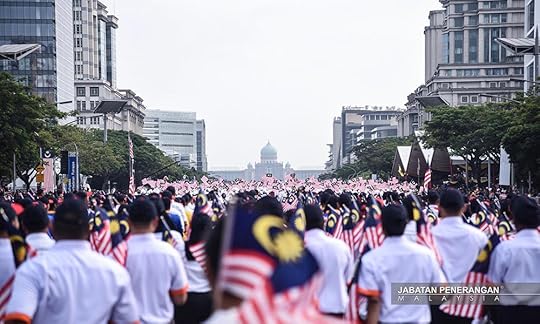 A Third Force may emerge out of this possibly short-lived regime that seemed not quite interested in honouring the promises. Race politics is coming back, or too stubborn to leave the consciousness of the leaders of the new regime, although a majority of them are from parties that have multi-ethnic soldiers and major-generals. These parties may be intimidated by the hegemony and authority and insincerity of mono-racial parties that want to continue the agenda of one-race-one-religion superiority.Hence, missing in the “manifesto” are abolishing race-based parties, levelling the racial playing field of education, combating racial and religious extremism, designing a truly social-democratic and emphatic-based economy model that is sustainable, and graced with sound principles of human rights and justice. Plus all those good things that ought to be in a manifesto which will move society rapidly and deterministically to another progressive phase of our evolution. But it seems we are made to step backwards. The new regime seems to be unsure what to do with its “manifesto” and how to honour the promises.Elegance is missing in that thing called the manifesto. More than elegance, the bedrock of change is missing: a new national philosophy that promises to make the dream of founding fathers such as Tunku Abdul Rahman come true. The dream of a true Malaysia in which no Malaysians will be left behind. The dream of a nation “clean, efficient, trustworthy” mooted by Mahathir Mohamad who ruled for 22 years. The dream of a society not ruled by the arrogant, the privileged, the filthy rich, and those who think they are entitled to power and wealth passed down as easily as any of the world’s monarchy ruling over the enslaved majority.The Trishakti manifestoHere are my thoughts on the coming wave of change - of “trishakti” as a dimension of change:Come the 15th general election, who’s going to lead the cybernetic revolution of the Third Force, Third Wave, guided by the Third Eye? The Messiah we need to get us out of the Matrix - from Najibism to neo-Mahathirism? How do we craft a shift in social-political-economic-cognitive paradigm?Third Force, Third Wave, Third Eye = Trishakhti - a force that should shape new politics away from the current ideological impasse. Bloggers and commentators in social media must come together and ignite this new intellectual revolution in educating the masses. Trishakti - Third Force, Third Wave, Third Eye … a force that will colour Malaysian politics blind. A force that will be a vigilante to the abusers of power. No one can stop it. The internet is anarchy - ride its wave.The Kuhnian Revolution in science proposed that when there are too many questions that go unanswered as a consequence of the end of history for the prevailing worldview, the paradigm is meeting the near-collapse of its existence. This is said in Kuhn’s classic work The Structures of Scientific Revolution. (Thomas Kuhn is a Harvard historian of science.)Malaysia is facing such a crisis - the collapse of the Barisan Nasional paradigm and the emergence of a newer one. There are too many questions unanswered and too many structures crumbling - judiciary, education, law enforcement, economics, culture, and so on that needed to be rebuilt but yet the old architectural plan is still used. The Third Wave is here - postmodernity.The First Wave - traditional societies - gave way to modernisation. Malaysian politics must respond to the coming of this wave.
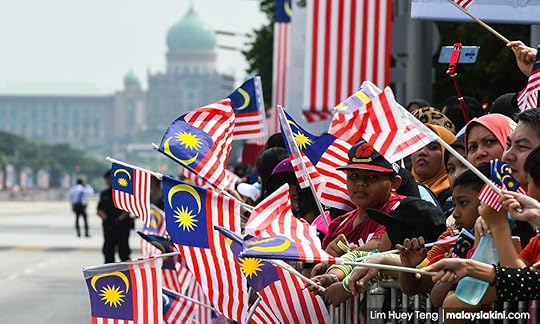 In Malaysia, both waves have failed as a result of the failed policies of modernisation taken over by privatisation, Look East, and Malaysian Inc policies. Vision 2020 is a meaningless slogan created by the ideology of the past. Capitalism developed without ethics, fuelled by greed and facilitated by race-based politics. The world is experiencing the earthquake of a new global ideology surfacing.The Third Wave is here. The March 2008 tsunami was a warning of its inevitability. The May 2018 transfer of power was a testament of voter nausea and irritability.But the Third Wave needs a Third Force and a Third Eye. The Third Force cannot be stopped and the Third Eye cannot be blinded.Trishakti is here. We need a leader - an intellectual leader. Current leaders do not understand this force. They are in it and are drowned by it, like fish in the water.Let us push this idea to the masses and see it dance in the Malaysian cyberspace and gets translated into praxis. Trishakti resides in the cave - Plato’s cave, where philosophers, architects, culturalists, and futurists of change are congregating.We have failed to scan the global environment and understand the waves of change affecting us now and in future.We need a real manifesto. No mere set of promises to be broken. Will a Third Force emerge?AZLY RAHMAN is an educator, academic, international columnist, and author of seven books available here. He grew up in Johor Bahru, and holds a Columbia University doctorate in international education development and Master’s degrees in six areas: education, international affairs, peace studies communication, fiction and non-fiction writing. Twitter @azlyrahman. More writings here.
A+ A- COMMENT | The “manifesto” shoved down the eyes, ears , and brain of the voters – one that promised good things in life: no tolls, greater educational future, more equality for everything that can be equalised, less cronyism, massive arrests of white collar-songkok wearing thieves in political garments, and so on. These promises pushed the old regime of the Barisan Nasional to the corner to become losers in the 14 th general elections. This is not the sum total of a manifesto. It should not have been called a manifesto.These are mere promises made to lure voters. To amass votes. Now they are confessing that these promises were not meant to be kept. They are meant to get the votes, get into power, maintain power, consolidate power, and leave the voters shortchanged. That’s the politics. And there are apologists to that game.But what is a manifesto if the one that was presented by the Pakatan Harapan coalition is merely a set of to-do-list of things to implement; some to throw away and some to seduce voters into voting?What must a manifesto do for a multicultural polity such as Malaysia, yearning to become a truly multicultural Malaysia? What language of change must it be written in, what narrative employed, what tone of discourse weaved in to make it as memorable and alive as The Communist Manifesto written by Marx and Engels, or the Declaration of Independence of the United States of America drafted by Thomas Jefferson, or even the Tennis Court Oath of the French Revolution worked on by the Paris Commune? Or even as fanciful as the Transhumanist or Cyborg-Humanoid Manifesto of today’s geeks?Herein lies the need to redo the manifesto or for another coalition for a new government to come up with one in preparation for the next general election, since the current regime that is sloganising a “New Malaysia” seems to be slipping into the ethos, ethics, anatomy, and psychology of the Old Malaysia, with the modus operandi of the new nation building mirroring the old ways of doing things.A Third Force may emerge out of this possibly short-lived regime that seemed not quite interested in honouring the promises. Race politics is coming back, or too stubborn to leave the consciousness of the leaders of the new regime, although a majority of them are from parties that have multi-ethnic soldiers and major-generals. These parties may be intimidated by the hegemony and authority and insincerity of mono-racial parties that want to continue the agenda of one-race-one-religion superiority.Hence, missing in the “manifesto” are abolishing race-based parties, levelling the racial playing field of education, combating racial and religious extremism, designing a truly social-democratic and emphatic-based economy model that is sustainable, and graced with sound principles of human rights and justice. Plus all those good things that ought to be in a manifesto which will move society rapidly and deterministically to another progressive phase of our evolution. But it seems we are made to step backwards. The new regime seems to be unsure what to do with its “manifesto” and how to honour the promises.Elegance is missing in that thing called the manifesto. More than elegance, the bedrock of change is missing: a new national philosophy that promises to make the dream of founding fathers such as Tunku Abdul Rahman come true. The dream of a true Malaysia in which no Malaysians will be left behind. The dream of a nation “clean, efficient, trustworthy” mooted by Mahathir Mohamad who ruled for 22 years. The dream of a society not ruled by the arrogant, the privileged, the filthy rich, and those who think they are entitled to power and wealth passed down as easily as any of the world’s monarchy ruling over the enslaved majority.The Trishakti manifestoHere are my thoughts on the coming wave of change - of “trishakti” as a dimension of change:Come the 15th general election, who’s going to lead the cybernetic revolution of the Third Force, Third Wave, guided by the Third Eye? The Messiah we need to get us out of the Matrix - from Najibism to neo-Mahathirism? How do we craft a shift in social-political-economic-cognitive paradigm?Third Force, Third Wave, Third Eye = Trishakhti - a force that should shape new politics away from the current ideological impasse. Bloggers and commentators in social media must come together and ignite this new intellectual revolution in educating the masses. Trishakti - Third Force, Third Wave, Third Eye … a force that will colour Malaysian politics blind. A force that will be a vigilante to the abusers of power. No one can stop it. The internet is anarchy - ride its wave.The Kuhnian Revolution in science proposed that when there are too many questions that go unanswered as a consequence of the end of history for the prevailing worldview, the paradigm is meeting the near-collapse of its existence. This is said in Kuhn’s classic work The Structures of Scientific Revolution. (Thomas Kuhn is a Harvard historian of science.)Malaysia is facing such a crisis - the collapse of the Barisan Nasional paradigm and the emergence of a newer one. There are too many questions unanswered and too many structures crumbling - judiciary, education, law enforcement, economics, culture, and so on that needed to be rebuilt but yet the old architectural plan is still used. The Third Wave is here - postmodernity.The First Wave - traditional societies - gave way to modernisation. Malaysian politics must respond to the coming of this wave.In Malaysia, both waves have failed as a result of the failed policies of modernisation taken over by privatisation, Look East, and Malaysian Inc policies. Vision 2020 is a meaningless slogan created by the ideology of the past. Capitalism developed without ethics, fuelled by greed and facilitated by race-based politics. The world is experiencing the earthquake of a new global ideology surfacing.The Third Wave is here. The March 2008 tsunami was a warning of its inevitability. The May 2018 transfer of power was a testament of voter nausea and irritability.But the Third Wave needs a Third Force and a Third Eye. The Third Force cannot be stopped and the Third Eye cannot be blinded.Trishakti is here. We need a leader - an intellectual leader. Current leaders do not understand this force. They are in it and are drowned by it, like fish in the water.Let us push this idea to the masses and see it dance in the Malaysian cyberspace and gets translated into praxis. Trishakti resides in the cave - Plato’s cave, where philosophers, architects, culturalists, and futurists of change are congregating.We have failed to scan the global environment and understand the waves of change affecting us now and in future.We need a real manifesto. No mere set of promises to be broken. Will a Third Force emerge?AZLY RAHMAN is an educator, academic, international columnist, and author of seven books available here. He grew up in Johor Bahru, and holds a Columbia University doctorate in international education development and Master’s degrees in six areas: education, international affairs, peace studies communication, fiction and non-fiction writing. Twitter @azlyrahman. More writings here.BOOK REVIEW #1 : 'Beauty is a Wound': A portrait of modern Indonesia
'Beauty is a Wound': A portrait of modern IndonesiaOpinion |
Azly Rahman
Published: 22 Dec 2017, 10:11 pm | Modified: 22 Dec 2017, 10:11 pm
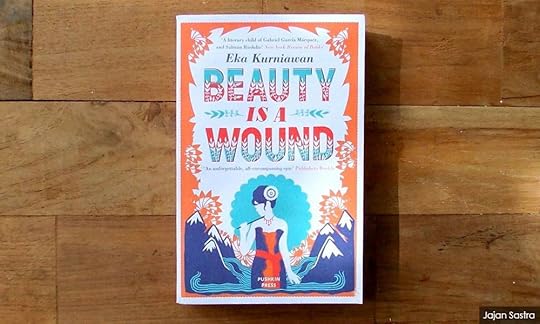
A+ A- I took some time from this column to go back to what I have always loved doing most since I was a child: reading.Of late I have been working on several manuscripts, a collection of 400 poems, a book on educational theory, a book-length analysis of Malaysia’s road to the Islamic state, a collection of cultural-philosophical essays, and memoir of growing up in Johor Bahru in the hippie 1960s, and my favourite, a novel.So, I have been busy. And I have missed my column and my fellow brilliant commentators who have never given up educating us on the need for Malaysia to be a better society. I’d like to share a book I had just finished reading and analysing, "Beauty is a Wound" (or "Cantik itu luka"), by Eka Kurniawan, a promising and engaging Indonesian author.Here is my critical reading of that important Indonesian novel, post-Pramoedya Ananta Toer.I propose chronicling a nation's pattern of mega-change is an aspect of the novel that is worth exploring as an instance wherein the author crafts the philosophical underpinning of the story of the birth and growth of Indonesia, a country sold into prostitution by the forces that march history, and how the worldview of the nation is shaped primarily by the pathological condition metaphored by prostitution.In the protagonist Dewi Ayu, the portrait of the new nation as a prostitute, and in Comrade Kliwon, the life force that tried to save the nation from being forever being a whore.I find this notion of ethos and pathos "worldview of the tragic-existentialism" recurring, in a story elegantly weaved with elements of mystical magical Javanese symbolism, well-controlled plot, yet presented in the genre of time-space collapse, inspired by the complexity of the subplots of the Ramayana and Mahabharata, the elements of the theatre of the absurd or French surrealistic/ symbolic/ absurdist theatre, some elements of Javanese syncretistic thinking, and most importantly, in the tradition of the spirit of Raden Adjeng Kartini - the legendary feminist-educator-liberator of the mind - the voice given to women, perhaps true to the idea of motherland or ibu pertiwi in which women hold more than half of the earth at every epoch in history.These are the broad techniques and themes employed in crafting "Beauty is a Wound."Indeed, I believe, the title signifies the pathos associated with being beautiful, or even exotically and ecstatically and even more so, in this story the exhilaratingly erotically beautiful, as beautiful as the prostitute Dewi Ayu, who, like young and prideful Java and later Indonesia was relegated to become a prostitute to the Dutch, and later to the Japanese, and later to her own "nationalists" and much later by the military-regime-turned civilian-rule of General Suharto.Thus, the portrait of Indonesia as a prostitute whose saviour is communism, the latter destroyed by the purge which saw the mass graves of hundreds of thousands of communists killed by the US-CIA-backed Suharto. So that colonialism can continue in newer but less visible form. In the novel, pride led to the suicide of the communist leader, Comrade Kliwon.In my close readings of this seminal chapter on the metaphoring and chronicling of the mega-change of Indonesia, albeit through the prostitutionalising of the nation, I draw instances of Eka Kurniawan’s use of the philosophising-chronolising device, in chracterising Comrade Kliwon, as literary device and subtext.Portrait of Indonesia as prostituteReminiscence of the writing of the once 14-year-imprisoned-50s-writer Pramoedya Ananta Toer (“Prem”) in seminal works such as ‘Keluarga Gerilya’, ‘Bumi Manusia’, ‘Cerita dari Blora’ - those that presented the point of view of the revolutionary fighters of Indonesia aka the "communists" - Eka Kurniawan's characterisation of Conrad Kliwon is one of sympathy in tone of the Marxists and the communists, as if continuing the legacy of "Prem" or Pramoedya.Throughout, the classic arguments of the International Workers of the World and the Marxist-Leninist Third International is revisited, giving today's readers a reminder of what was Indonesian history about and how the struggles between the natives, the nationalists, the communists, and even the Islamists, overseen like a panopticon and synopticon of imperialism (Dutch, Japanese American) continue to define the theme of emerging nation-states such as Indonesia.And like a cycle of human and social progress, there is the high and low tide of revolutionary waves of change in all its bloody and bloodless consequences. Eka Kurniawan attempted to present a history lesson of the birth of Indonesia, as how Salman Rushdie skilfully did with the birth of India and Pakistan in his novel ‘Midnight's Children’.In Eka Kurniawan's work, to be beautiful is to be cursed and raped as to be Indonesia is to be exploited and ravaged and raped as well. To be raped then leads to be giving birth to deformities and monstrosities, as in the march of history and the inevitability of the perpetual birth of civilisational insanity."No one knew how Comrade Kliwon ended up becoming a communist youth, because even though he had never been rich, he'd always been a hedonist." (page 161).Herein lie the thesis of this chapter in Eka Kurniawan's ‘Beauty is a Wound’ that tells the story of Indonesia during the formative years of becoming a republic, of what I call "the portrait of modern Indonesia as prostitute" (with apologies to James Joyce's "portrait of the artist as a young man" and the Filipino playwright Nick Joaquin's "portrait of the artist as Filipino").He led a gang of marauding neighbourhood kids, stealing whatever they could get their hands on for their own enjoyment: coconuts, logs, or a handful of cacao beans that could be eaten on the spot. One night before Eid, they would steal a chicken and roast it, and then the next day they would find the chicken's owner to ask for forgiveness. (page 161)There is a sense of foreshadowing of what the nature of transformation the young man, later Comrade Kliwon is to undergo, leading the way to his fascination with Marxism and later to be a member of the Indonesian Communist Party, the seeds of the metamorphosis could be shown in the idea that Kliwon is a thief yet with a conscience, in which perhaps in the idea of the march of socialism towards communism via the global agenda of the Third International, the rationale of stealing from the rich and taking away their property is clear: destroy capitalism and say that it an inevitable historical progress or the march of history in order for the perfect Communist state to emerge as a "kingdom of god", a modern supra-trans-millennialistic movement guided by the Hegelian-philosophy-inverted, served by the philosophy of history conjured by Marx (and Engels) - see historical and dialectical materialism as fundamental twin concepts of Marxism and Praxis.Here the author, Eka Kurniawan, is giving the readers a history lesson on the influence of communist ideas in Indonesia at the onset of Independence.
A Brief Note on Indonesian LiteratureThe evolution of Indonesia literature is more exciting than that of the Malaysian, let alone Singaporean from the “thick-descriptive-Geertzian-big emotions-intensity-of-narrative arcs – because ( if we are to contend that good literature needs to show depth-of-despair, dying, and death as catharsis as opiates and dramatic eruptions) of the former’s history of such bloody and profound transformations, beginning with the ancient kingdoms, the Hindu-Buddhist political-philosophical dominance (see the wealth of literature on statecraft in Java, for example), to the war between the maritime powers, the arrival of the Dutch primarily and the establishment of Batavia (Betawi) as a trading post of the Dutch East India Company, to the more than 300-year enslavement of the Javanese and others by the Dutch, to the arrival of the British in the area and the struggle of the colonial powers, to the demise of the kingdoms, and the arrival of the Japanese to the intent to build and Indonesia Raya with the passion and collaboration shown by Achmed Soekarno and Hatta via the Nipponization of Indonesia and of course Soekarno’s campaign of “Ganyang Malaysia “_Crush Malaysia), to the surrender of the Japanese surrender after the loss of the Axis Power of Germany-Italy-Japan, to the complex and bloody struggle for Indonesian independence and next, even bloodier, the CIA-backed Suharto massacre of more than half a million Indonesians in a purge against so-called “Communists” so that General Suharto the “Bapak Judistira”, fashioned after the story of the Five Pandawas, can help the Americans siphon oil money out of Indonesia with the advise of the “Berkeley-Mafia” economists of the Kennedy Era …. the rest is history, right till today, Indonesia is blessed with a Heavy-Metal Metallica-loving president Bapak Jokowi who plays the bass guitar for a Metallica-inspired band …. such exciting history of the Muslim-fundamentalist strong and perhaps South-East-Asia endangering country bent towards ISIS … such fine historical evolution of the dialectics of social change that Indonesia’s literary evolution, from the time of the enculturalization of the Ramayana to the age of the wayang and the “Islamization of the Ramayana” to the emergence of the poets and prose writers of Peojangga Baroe (Pujangga Baru) or the primacy of Takdir Ali Syahbana, Boeya Hamka, and the emergence next of the fiery writers of LEKRA (Lembaga Kebudayaan Rakyat) of Prameodya Ananta Toer, of the 50s (which influenced the birth of Malaya’s ASAS 50 (Kassim Ahmad was one its pioneers), to the literary force provided by Chairil Anwar and next came the 60s Hippie-Days poetry of WS Rendra, prose of Putu Widjaya, the stories of urban life weaved by Muchtar Lubis, Sutarji Calzoum Bachri, and the emergence of the writers of the 80s such as Supardi Djoko Damono and as time and literary periods proceed, responding to the temper of the day we see more and more exciting writers who still, like their forefathers such as the Rimbaud-influenced-existentialist poet Chairil Anwar, these new modern writers, singing the rock songs of Achmed Akbar of the prog-rock band God Bless or the radical tunes of internationally-acclaimed public-rocker-intellectual Iwan Fals, these new and equally fiery writers so to speak, write as if they “write in blood, write naked, and write in exile” … about the things around them. And then we have Eka Kurniawan, an interesting new blood bringing a new perspective of radicalism.A Melancholic Note:I took a deep breath, after finishing my reading of Eka Kurniawan’s mystical-magical-historical-satirical fiction Beauty is a Wound (Cantik Itu Luka). Closed my eyes for a few minutes to first let a cognitive map of the style, form, and craft emerge, and next allow the memory of my childhood growing up in the village in which the Javanese culture (although I am partly Bugis whose ancestry goes back directly-seven-generations to Raja Haji the rebel rouser of Sulawesi) is a dominant feature of the inhabitants of my village in Majidee Johor Bahru.Although the 470-page novel is a translation, I did not find the story a “lost-in-translation” piece of work. I am all too familiar with the setting and the context of how the characters operate albeit having to work harder in thinking about the culture of the Soekarno era.Words such as “dukun”, “orkes Melayu”, “preman”, “becak” and a few others used in the translated version brought me back to the enriching and enchanting worldview of the Indonesian-Malays primarily of the Javanese, and more word-associations formed in my mental image vis-a-viz the story, momentarily taking me away from another culture — the American culture — that has become part of me after spending more than half of my life in it. The shifting of worldviews, of one culture to another was smooth and even poignant and nostalgic as I emerge out of the literary world build by the author. Nostalgic in the sense that the elements of Javanese and Malay magic — of divining, spirit possession, spiritual healing with mantras in old Javanese and Arabic combined, and of the rites, rituals, tools of work and play used by the “dukun” (spiritual healer), of the cultural practices of healing (or even voodoo-ing) — these brings back fond memories of those vicarious moments of learning as well as of immersing myself in the hidden and informal out-of-class curriculum of my life-long learning experience. In short, from a very young age, I was immersed, like a little postmodern flanuer, in my fascination with Malay-Javanese mysticism — elements that shape and color Eka Kurniawan’s novel.In fact, I wanted to have the power of the “dukuns” and become invincible and powerful and cool and feared, as such as Si Buta Dari Gua Hantu, Si Gondrong, Mata Malaikat, and many of the movie characters of the Javanese magical-warrior class/Kshatriya class, imbued with superhuman powers. I wanted to fly invincibly and be shot with a hundred bullets of the Dutch (like my great great grandfather Raja Haji who died as such) and not die not hurt at all. I wanted to go into other people’s body and soul, and see the future, and also cast and break spells. If I were Javanese, I wanted to become the Arjuna-Krishna hybrid of the Nine Javanese saints or the Wali Songo or the Wali Sembilan: pure, pristine, and pirate-of-the-Caribbean-type of gung-ho-Shaolin masters. That type. I wanted to kill my enemies without even touching them. That cool of a warrior.My dream as child of perhaps thirteen.The dream of being “a beautiful warrior and wound others”! Ahaaa –beauty is a wound indeed.Herein lie the aspect of Eka Kurniawan craft I will discuss further: crafting of the mystical into the real and into the story of vengeance whist portraying the actors
A LONGER VERSION HERE:
http://www.eurasiareview.com/24122017-chronicling-mega-changes-in-portrait-of-modern-indonesia-as-prostitute-analysis/http://www.eurasiareview.com/24122017-chronicling-mega-changes-in-portrait-of-modern-indonesia-as-prostitute-analysis/
A+ A- I took some time from this column to go back to what I have always loved doing most since I was a child: reading.Of late I have been working on several manuscripts, a collection of 400 poems, a book on educational theory, a book-length analysis of Malaysia’s road to the Islamic state, a collection of cultural-philosophical essays, and memoir of growing up in Johor Bahru in the hippie 1960s, and my favourite, a novel.So, I have been busy. And I have missed my column and my fellow brilliant commentators who have never given up educating us on the need for Malaysia to be a better society. I’d like to share a book I had just finished reading and analysing, "Beauty is a Wound" (or "Cantik itu luka"), by Eka Kurniawan, a promising and engaging Indonesian author.Here is my critical reading of that important Indonesian novel, post-Pramoedya Ananta Toer.I propose chronicling a nation's pattern of mega-change is an aspect of the novel that is worth exploring as an instance wherein the author crafts the philosophical underpinning of the story of the birth and growth of Indonesia, a country sold into prostitution by the forces that march history, and how the worldview of the nation is shaped primarily by the pathological condition metaphored by prostitution.In the protagonist Dewi Ayu, the portrait of the new nation as a prostitute, and in Comrade Kliwon, the life force that tried to save the nation from being forever being a whore.I find this notion of ethos and pathos "worldview of the tragic-existentialism" recurring, in a story elegantly weaved with elements of mystical magical Javanese symbolism, well-controlled plot, yet presented in the genre of time-space collapse, inspired by the complexity of the subplots of the Ramayana and Mahabharata, the elements of the theatre of the absurd or French surrealistic/ symbolic/ absurdist theatre, some elements of Javanese syncretistic thinking, and most importantly, in the tradition of the spirit of Raden Adjeng Kartini - the legendary feminist-educator-liberator of the mind - the voice given to women, perhaps true to the idea of motherland or ibu pertiwi in which women hold more than half of the earth at every epoch in history.These are the broad techniques and themes employed in crafting "Beauty is a Wound."Indeed, I believe, the title signifies the pathos associated with being beautiful, or even exotically and ecstatically and even more so, in this story the exhilaratingly erotically beautiful, as beautiful as the prostitute Dewi Ayu, who, like young and prideful Java and later Indonesia was relegated to become a prostitute to the Dutch, and later to the Japanese, and later to her own "nationalists" and much later by the military-regime-turned civilian-rule of General Suharto.Thus, the portrait of Indonesia as a prostitute whose saviour is communism, the latter destroyed by the purge which saw the mass graves of hundreds of thousands of communists killed by the US-CIA-backed Suharto. So that colonialism can continue in newer but less visible form. In the novel, pride led to the suicide of the communist leader, Comrade Kliwon.In my close readings of this seminal chapter on the metaphoring and chronicling of the mega-change of Indonesia, albeit through the prostitutionalising of the nation, I draw instances of Eka Kurniawan’s use of the philosophising-chronolising device, in chracterising Comrade Kliwon, as literary device and subtext.Portrait of Indonesia as prostituteReminiscence of the writing of the once 14-year-imprisoned-50s-writer Pramoedya Ananta Toer (“Prem”) in seminal works such as ‘Keluarga Gerilya’, ‘Bumi Manusia’, ‘Cerita dari Blora’ - those that presented the point of view of the revolutionary fighters of Indonesia aka the "communists" - Eka Kurniawan's characterisation of Conrad Kliwon is one of sympathy in tone of the Marxists and the communists, as if continuing the legacy of "Prem" or Pramoedya.Throughout, the classic arguments of the International Workers of the World and the Marxist-Leninist Third International is revisited, giving today's readers a reminder of what was Indonesian history about and how the struggles between the natives, the nationalists, the communists, and even the Islamists, overseen like a panopticon and synopticon of imperialism (Dutch, Japanese American) continue to define the theme of emerging nation-states such as Indonesia.And like a cycle of human and social progress, there is the high and low tide of revolutionary waves of change in all its bloody and bloodless consequences. Eka Kurniawan attempted to present a history lesson of the birth of Indonesia, as how Salman Rushdie skilfully did with the birth of India and Pakistan in his novel ‘Midnight's Children’.In Eka Kurniawan's work, to be beautiful is to be cursed and raped as to be Indonesia is to be exploited and ravaged and raped as well. To be raped then leads to be giving birth to deformities and monstrosities, as in the march of history and the inevitability of the perpetual birth of civilisational insanity."No one knew how Comrade Kliwon ended up becoming a communist youth, because even though he had never been rich, he'd always been a hedonist." (page 161).Herein lie the thesis of this chapter in Eka Kurniawan's ‘Beauty is a Wound’ that tells the story of Indonesia during the formative years of becoming a republic, of what I call "the portrait of modern Indonesia as prostitute" (with apologies to James Joyce's "portrait of the artist as a young man" and the Filipino playwright Nick Joaquin's "portrait of the artist as Filipino").He led a gang of marauding neighbourhood kids, stealing whatever they could get their hands on for their own enjoyment: coconuts, logs, or a handful of cacao beans that could be eaten on the spot. One night before Eid, they would steal a chicken and roast it, and then the next day they would find the chicken's owner to ask for forgiveness. (page 161)There is a sense of foreshadowing of what the nature of transformation the young man, later Comrade Kliwon is to undergo, leading the way to his fascination with Marxism and later to be a member of the Indonesian Communist Party, the seeds of the metamorphosis could be shown in the idea that Kliwon is a thief yet with a conscience, in which perhaps in the idea of the march of socialism towards communism via the global agenda of the Third International, the rationale of stealing from the rich and taking away their property is clear: destroy capitalism and say that it an inevitable historical progress or the march of history in order for the perfect Communist state to emerge as a "kingdom of god", a modern supra-trans-millennialistic movement guided by the Hegelian-philosophy-inverted, served by the philosophy of history conjured by Marx (and Engels) - see historical and dialectical materialism as fundamental twin concepts of Marxism and Praxis.Here the author, Eka Kurniawan, is giving the readers a history lesson on the influence of communist ideas in Indonesia at the onset of Independence.
A Brief Note on Indonesian LiteratureThe evolution of Indonesia literature is more exciting than that of the Malaysian, let alone Singaporean from the “thick-descriptive-Geertzian-big emotions-intensity-of-narrative arcs – because ( if we are to contend that good literature needs to show depth-of-despair, dying, and death as catharsis as opiates and dramatic eruptions) of the former’s history of such bloody and profound transformations, beginning with the ancient kingdoms, the Hindu-Buddhist political-philosophical dominance (see the wealth of literature on statecraft in Java, for example), to the war between the maritime powers, the arrival of the Dutch primarily and the establishment of Batavia (Betawi) as a trading post of the Dutch East India Company, to the more than 300-year enslavement of the Javanese and others by the Dutch, to the arrival of the British in the area and the struggle of the colonial powers, to the demise of the kingdoms, and the arrival of the Japanese to the intent to build and Indonesia Raya with the passion and collaboration shown by Achmed Soekarno and Hatta via the Nipponization of Indonesia and of course Soekarno’s campaign of “Ganyang Malaysia “_Crush Malaysia), to the surrender of the Japanese surrender after the loss of the Axis Power of Germany-Italy-Japan, to the complex and bloody struggle for Indonesian independence and next, even bloodier, the CIA-backed Suharto massacre of more than half a million Indonesians in a purge against so-called “Communists” so that General Suharto the “Bapak Judistira”, fashioned after the story of the Five Pandawas, can help the Americans siphon oil money out of Indonesia with the advise of the “Berkeley-Mafia” economists of the Kennedy Era …. the rest is history, right till today, Indonesia is blessed with a Heavy-Metal Metallica-loving president Bapak Jokowi who plays the bass guitar for a Metallica-inspired band …. such exciting history of the Muslim-fundamentalist strong and perhaps South-East-Asia endangering country bent towards ISIS … such fine historical evolution of the dialectics of social change that Indonesia’s literary evolution, from the time of the enculturalization of the Ramayana to the age of the wayang and the “Islamization of the Ramayana” to the emergence of the poets and prose writers of Peojangga Baroe (Pujangga Baru) or the primacy of Takdir Ali Syahbana, Boeya Hamka, and the emergence next of the fiery writers of LEKRA (Lembaga Kebudayaan Rakyat) of Prameodya Ananta Toer, of the 50s (which influenced the birth of Malaya’s ASAS 50 (Kassim Ahmad was one its pioneers), to the literary force provided by Chairil Anwar and next came the 60s Hippie-Days poetry of WS Rendra, prose of Putu Widjaya, the stories of urban life weaved by Muchtar Lubis, Sutarji Calzoum Bachri, and the emergence of the writers of the 80s such as Supardi Djoko Damono and as time and literary periods proceed, responding to the temper of the day we see more and more exciting writers who still, like their forefathers such as the Rimbaud-influenced-existentialist poet Chairil Anwar, these new modern writers, singing the rock songs of Achmed Akbar of the prog-rock band God Bless or the radical tunes of internationally-acclaimed public-rocker-intellectual Iwan Fals, these new and equally fiery writers so to speak, write as if they “write in blood, write naked, and write in exile” … about the things around them. And then we have Eka Kurniawan, an interesting new blood bringing a new perspective of radicalism.A Melancholic Note:I took a deep breath, after finishing my reading of Eka Kurniawan’s mystical-magical-historical-satirical fiction Beauty is a Wound (Cantik Itu Luka). Closed my eyes for a few minutes to first let a cognitive map of the style, form, and craft emerge, and next allow the memory of my childhood growing up in the village in which the Javanese culture (although I am partly Bugis whose ancestry goes back directly-seven-generations to Raja Haji the rebel rouser of Sulawesi) is a dominant feature of the inhabitants of my village in Majidee Johor Bahru.Although the 470-page novel is a translation, I did not find the story a “lost-in-translation” piece of work. I am all too familiar with the setting and the context of how the characters operate albeit having to work harder in thinking about the culture of the Soekarno era.Words such as “dukun”, “orkes Melayu”, “preman”, “becak” and a few others used in the translated version brought me back to the enriching and enchanting worldview of the Indonesian-Malays primarily of the Javanese, and more word-associations formed in my mental image vis-a-viz the story, momentarily taking me away from another culture — the American culture — that has become part of me after spending more than half of my life in it. The shifting of worldviews, of one culture to another was smooth and even poignant and nostalgic as I emerge out of the literary world build by the author. Nostalgic in the sense that the elements of Javanese and Malay magic — of divining, spirit possession, spiritual healing with mantras in old Javanese and Arabic combined, and of the rites, rituals, tools of work and play used by the “dukun” (spiritual healer), of the cultural practices of healing (or even voodoo-ing) — these brings back fond memories of those vicarious moments of learning as well as of immersing myself in the hidden and informal out-of-class curriculum of my life-long learning experience. In short, from a very young age, I was immersed, like a little postmodern flanuer, in my fascination with Malay-Javanese mysticism — elements that shape and color Eka Kurniawan’s novel.In fact, I wanted to have the power of the “dukuns” and become invincible and powerful and cool and feared, as such as Si Buta Dari Gua Hantu, Si Gondrong, Mata Malaikat, and many of the movie characters of the Javanese magical-warrior class/Kshatriya class, imbued with superhuman powers. I wanted to fly invincibly and be shot with a hundred bullets of the Dutch (like my great great grandfather Raja Haji who died as such) and not die not hurt at all. I wanted to go into other people’s body and soul, and see the future, and also cast and break spells. If I were Javanese, I wanted to become the Arjuna-Krishna hybrid of the Nine Javanese saints or the Wali Songo or the Wali Sembilan: pure, pristine, and pirate-of-the-Caribbean-type of gung-ho-Shaolin masters. That type. I wanted to kill my enemies without even touching them. That cool of a warrior.My dream as child of perhaps thirteen.The dream of being “a beautiful warrior and wound others”! Ahaaa –beauty is a wound indeed.Herein lie the aspect of Eka Kurniawan craft I will discuss further: crafting of the mystical into the real and into the story of vengeance whist portraying the actors
A LONGER VERSION HERE:
http://www.eurasiareview.com/24122017-chronicling-mega-changes-in-portrait-of-modern-indonesia-as-prostitute-analysis/http://www.eurasiareview.com/24122017-chronicling-mega-changes-in-portrait-of-modern-indonesia-as-prostitute-analysis/