Azly Rahman's Blog, page 8
January 18, 2019
#30: Create Christianophobia, we must not (written in 2015)
Create Christianophobia, we must notOPINION | AZLY RAHMANPublished: 17 Dec 2015, 10:33 pm | Modified: 17 Dec 2015, 10:33 pm
Malaysians are angry and deeply bothered by the recent issue of Universiti Teknologi Mara (UiTM) organising what was reported as an “anti-Christianisation” conference.There is nothing new about the need for such institutions to train students to fear themselves and non-Muslims and non-Malays especially. It is a natural programme to instill fear as part of a culture to defend the existence of race-based ideology. It is part of an apartheid strategy of Malaysian education I have written about in many articles.What is new is the question: how do we dismantle this system and work towards peaceful co-existence?[image error]I do not think the Christians and Catholics in Malaysia appreciate being bullied endlessly. I do not think they want to be branded as “evil people trying to spread false and dangerous message threatening Islam”.I do not think they need to be associated with the Crusade War a thousand over years ago, or even linked to the brutality of the Christian-imperialist army who were chanting “guns, guts, god, and glory” before annexing cultures and massacring the natives of Latin America, Africa, Asian, and even Northern America - so that the Crusaders carrying the order of the European monarchs can built churches while sucking the blood, sweat, and tears of the natives they enslave.I don’t think the Christians and Catholics in Malaysia want to be known as inheritors and carriers of the sins of their fathers. I think they just want to live, work, and worship in peace and be ensured that their safety in an majority Malay Muslim country be guaranteed.Why do institutions such as UiTM need to instill such a fear and to unnecessarily turn young and hopefully not-yet-Daesh/IS radicalised students into hating the Christians and Catholics? If Muslims in predominantly Christian nations such as the United States, Canada, and Australia can help protect the safety of Muslims from Christian extremists-wannabe-terrorists, why can’t Malaysia do similarly by not allowing conferences that promote hate to be fed to students?Why not encourage education for peace and conflict resolution? Why not teach empathy through ongoing good dialogue amongst Malaysians of different faiths? Why warn them of the “dangers of Christianisation” and not expect some lunatic fundamentalist groups to take the warning one step further and translate it into violent action, sanctioned and legitimised by the authorities?What education should look likeHaven’t we heard the word ‘Islamophobia’? Why create ‘Chistianophobia’ at a time when the world is bipolar, violent, and plagued with all kinds of phobias?Let us come back to our senses. Here is my thought on what education should look like if we are to prevent racial and religious riots in future:The education of today's bumiputeras via the special privileges given to them in all aspects, from preschool to postgraduate - especially the education of Malay Muslims through the racially-based institutions linked to the ruling party - has one objective.It is to produce more and more members of the Malay-Muslim-bumiputera privileged class who will ensure that the non-bumiputera-non-Muslims be kept outside the gate of equality, equal opportunity and meritocracy, even though they are the rightful citizens of this country whose parents and grandparents have laboured for this country so that the most privileged class of Malays and non-Malays can continue to be created to enslave the labour class of all races.No need to have a complex understanding on Malaysia's philosophy of education, national development, frameworks of class evolution, politics of curricular studies, interplay between race, religion, and ideology, or any other complex theories of neo-feudalism to understand this simple fact of education and social reproduction in Malaysia.We need to turn the system upside down and renew prosperity of this country, based not on the advancement of this or that race, but the simple human logic that each and every one of us is a human being with dignity and an important part of Humanity.UiTM was different back in the days, especially in the 70s and early 80s.There is a vast difference in the way Malays were educated in the institution. It was a place to harness the creative energy and problem-solving gung-ho cognitive capabilities of students who had so much energy than just reading books only, so that they may further their studies and contribute to the development of the nation's post-independence.This is because the leadership knew what education and human liberation meant. Because the first prime minster was a firm, fair, and wise man. A good man. The best we have had.However, beginning in the mid-80s till today it is looking like a place to engineer the development of totalitarianism and fascistic mono-ethnic thinking of a diploma mill used for political means by political masters only concerned with their own survival and vainglory, in all the excesses of political authority and one-dimensionality instilling fear of others instead of promoting diversity and the love for ethnic differences and cultural beauty.The difference between our premiersAll these - and not much about the plain honesty of creating a generation of Malays able to see the true nature of their own potentials and be ready for an ever-changing world of globalising predatory.Because today’s prime minster is a very weak and unwise man. Not a good man at all. The worst we have ever had, many are saying.That's the difference, if we agree. How then must the rakyat reclaim those once admirable institutions?Wake up, speak up, alumni and all. Education is the art and science of creating the free man and woman.“A multicultural, multi-vocalic, multidimensional understanding of Malaysia's complex society.” This is what we need. This is a major theme on global education and international and intercultural understanding that Malaysian institutions such as UiTM need. This is it, rather than ones that continue to stupefy the students with themes that divide and insult the human intelligence as they relate to race and religion.These institutions are not fit to be called universities and educational institutions if they continue to nurture cognitive-pathological thinking in an institution that is already mono-cultural. This is not necessary for an institution that denies the opportunities for the students to work together with students of other races, befitting of what Malaysia is and ought to be about.I hope this misguided paradigm of educational progress and intellectual attainment can be changed with a gradual change in leadership; one that understands what education in the broadest sense of the word means.Whilst universities the world over are taking pride in being globalised and oftentimes scrambling and racing to make their campuses truly diverse and multicultural, UiTM and Mara elite secondary schools i.e. Maktab Rendah Sains Mara (MRSM) are still taking pride in defending the rights to be exclusively one-race, one religion, one-myopic vision at the expense of the development of the students' minds yearning to be multi-intelligent and able to develop multiple talents.This has to change. Malaysians need to push for this change - because education is matter of national interest.Enough of Islamophobia. Enough of Christian and Muslims massacring each other the world over. Let us not create another version of Chistianophobia or Islamophobia right here in Malaysia!

Malaysians are angry and deeply bothered by the recent issue of Universiti Teknologi Mara (UiTM) organising what was reported as an “anti-Christianisation” conference.There is nothing new about the need for such institutions to train students to fear themselves and non-Muslims and non-Malays especially. It is a natural programme to instill fear as part of a culture to defend the existence of race-based ideology. It is part of an apartheid strategy of Malaysian education I have written about in many articles.What is new is the question: how do we dismantle this system and work towards peaceful co-existence?[image error]I do not think the Christians and Catholics in Malaysia appreciate being bullied endlessly. I do not think they want to be branded as “evil people trying to spread false and dangerous message threatening Islam”.I do not think they need to be associated with the Crusade War a thousand over years ago, or even linked to the brutality of the Christian-imperialist army who were chanting “guns, guts, god, and glory” before annexing cultures and massacring the natives of Latin America, Africa, Asian, and even Northern America - so that the Crusaders carrying the order of the European monarchs can built churches while sucking the blood, sweat, and tears of the natives they enslave.I don’t think the Christians and Catholics in Malaysia want to be known as inheritors and carriers of the sins of their fathers. I think they just want to live, work, and worship in peace and be ensured that their safety in an majority Malay Muslim country be guaranteed.Why do institutions such as UiTM need to instill such a fear and to unnecessarily turn young and hopefully not-yet-Daesh/IS radicalised students into hating the Christians and Catholics? If Muslims in predominantly Christian nations such as the United States, Canada, and Australia can help protect the safety of Muslims from Christian extremists-wannabe-terrorists, why can’t Malaysia do similarly by not allowing conferences that promote hate to be fed to students?Why not encourage education for peace and conflict resolution? Why not teach empathy through ongoing good dialogue amongst Malaysians of different faiths? Why warn them of the “dangers of Christianisation” and not expect some lunatic fundamentalist groups to take the warning one step further and translate it into violent action, sanctioned and legitimised by the authorities?What education should look likeHaven’t we heard the word ‘Islamophobia’? Why create ‘Chistianophobia’ at a time when the world is bipolar, violent, and plagued with all kinds of phobias?Let us come back to our senses. Here is my thought on what education should look like if we are to prevent racial and religious riots in future:The education of today's bumiputeras via the special privileges given to them in all aspects, from preschool to postgraduate - especially the education of Malay Muslims through the racially-based institutions linked to the ruling party - has one objective.It is to produce more and more members of the Malay-Muslim-bumiputera privileged class who will ensure that the non-bumiputera-non-Muslims be kept outside the gate of equality, equal opportunity and meritocracy, even though they are the rightful citizens of this country whose parents and grandparents have laboured for this country so that the most privileged class of Malays and non-Malays can continue to be created to enslave the labour class of all races.No need to have a complex understanding on Malaysia's philosophy of education, national development, frameworks of class evolution, politics of curricular studies, interplay between race, religion, and ideology, or any other complex theories of neo-feudalism to understand this simple fact of education and social reproduction in Malaysia.We need to turn the system upside down and renew prosperity of this country, based not on the advancement of this or that race, but the simple human logic that each and every one of us is a human being with dignity and an important part of Humanity.UiTM was different back in the days, especially in the 70s and early 80s.There is a vast difference in the way Malays were educated in the institution. It was a place to harness the creative energy and problem-solving gung-ho cognitive capabilities of students who had so much energy than just reading books only, so that they may further their studies and contribute to the development of the nation's post-independence.This is because the leadership knew what education and human liberation meant. Because the first prime minster was a firm, fair, and wise man. A good man. The best we have had.However, beginning in the mid-80s till today it is looking like a place to engineer the development of totalitarianism and fascistic mono-ethnic thinking of a diploma mill used for political means by political masters only concerned with their own survival and vainglory, in all the excesses of political authority and one-dimensionality instilling fear of others instead of promoting diversity and the love for ethnic differences and cultural beauty.The difference between our premiersAll these - and not much about the plain honesty of creating a generation of Malays able to see the true nature of their own potentials and be ready for an ever-changing world of globalising predatory.Because today’s prime minster is a very weak and unwise man. Not a good man at all. The worst we have ever had, many are saying.That's the difference, if we agree. How then must the rakyat reclaim those once admirable institutions?Wake up, speak up, alumni and all. Education is the art and science of creating the free man and woman.“A multicultural, multi-vocalic, multidimensional understanding of Malaysia's complex society.” This is what we need. This is a major theme on global education and international and intercultural understanding that Malaysian institutions such as UiTM need. This is it, rather than ones that continue to stupefy the students with themes that divide and insult the human intelligence as they relate to race and religion.These institutions are not fit to be called universities and educational institutions if they continue to nurture cognitive-pathological thinking in an institution that is already mono-cultural. This is not necessary for an institution that denies the opportunities for the students to work together with students of other races, befitting of what Malaysia is and ought to be about.I hope this misguided paradigm of educational progress and intellectual attainment can be changed with a gradual change in leadership; one that understands what education in the broadest sense of the word means.Whilst universities the world over are taking pride in being globalised and oftentimes scrambling and racing to make their campuses truly diverse and multicultural, UiTM and Mara elite secondary schools i.e. Maktab Rendah Sains Mara (MRSM) are still taking pride in defending the rights to be exclusively one-race, one religion, one-myopic vision at the expense of the development of the students' minds yearning to be multi-intelligent and able to develop multiple talents.This has to change. Malaysians need to push for this change - because education is matter of national interest.Enough of Islamophobia. Enough of Christian and Muslims massacring each other the world over. Let us not create another version of Chistianophobia or Islamophobia right here in Malaysia!


January 12, 2019
#29: When critique is criminalised
When critique is criminalisedOpinion |
Azly Rahman
Published: Today 6:20 pm | Modified: Today 6:20 pm A+ A- COMMENT | When the Multimedia Super Corridor was created in the mid-1990s, during Dr Mahathir Mohamad’s first tenure as prime minister, the rakyat was promised that the internet would not be censored. Thirty years later, it is still largely uncensored, nor is any grand governmental filter like China’s Green Dam firewall put in place.I was a keen observer of the impact of digital communications technologies on the degree of how nation-states are deconstructed by the power of the technologies that shrink time and space and put distance to death. I wrote a dissertation on this topic, with the birth of Cyberjaya as a case study of hegemony and utopianism in an emerging ‘cybernetic Malaysia’.Today, the internet in Malaysia is king, the monarch of misinformation but also messenger of good things, delivered instantaneously. What kind of messiah the internet – the most personalising and democratising tool ever invented – will turn out to be we do not know.How then is a new government – that promised clean, efficient and trustworthy governance – deal with the inherent contradiction of wanting to allow citizens to tell the truth on the one hand, but refusing to be voted out by the tsunami of critiques on anything, on the other?In cyberspace, on a daily basis, criticisms are mounted as if a great war is brewing. As if a prelude to the yet another storming of our Bastille. In other words, Pakatan Harapan cannot always hide behind security laws in the age of greater and more massive free speech as practised by its citizens, especially those who voted for change – real, radical change – and not for some new regime that lies through its teeth.Critical massHow do we then critique the monarchy, kleptocracy, theology, and ideology – at a time when the powers-that-be seem to be increasingly panicky with the speed by which things are going?This is a Habermasian question of public space, of “defeudalisation”, and of the way we educate citizen internet vigilantes to exercise free speech in an increasingly authoritarian world.
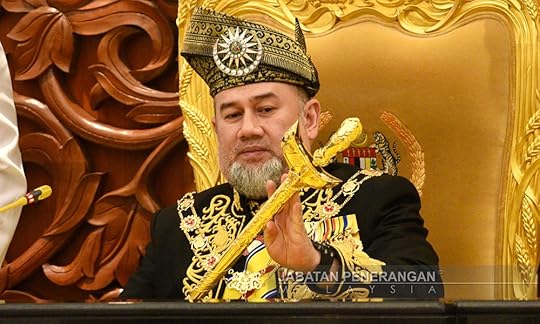 Consider the scenario the last few weeks. Netizens are getting hauled to the police station for passing comment on the king who abdicated. Not very nice things were said to the monarch.Pro-monarchy netizens are in an informational war with those angry and dissatisfied with the king who did not tell the country why he went on leave for a few weeks, only to find out later that he was allegedly attending to his own wedding. A racial-antagonistic dimension of this can be discerned.The Seafield Temple riots in November were made known to the public almost instantaneously with devastating effect, not only on how it got worse, but how the government and the people were trying to deal with the aftermath.Sadly, a firefighter died and this tragedy is in fact another example of how the internet is a tool of production of both the truth and fake news. In cyberspace, comments take on a troubling racial and religious dimension.Most of the promises broken by the new regime were leaked at lightning speed, with widespread implications. From the government’s reluctance to recognise the Unified Examination Certificate (UEC), the news of the new car project being public-funded to some degree, members flocking into Bersatu like locusts from Umno and now the Special Affairs Department (Jasa) to the confusing and annoying statements coming from the Education Ministry, the political appointments to GLCs – all these and many more point to the idea that citizens are using the internet to exercise their rights as voters and citizens.They are speaking up and able to again decide if a new government that can deliver promises better ought to be voted into power in the next election. The internet is king. You can think of more examples of how this technology is a double-edged sword both for the ruler and the ruled. And now we see the Sedition Act 1948 about to be used to compel the rakyat to not speak up.Those having their voice as internet vigilantes against power abusers continue to play their role. It will take a keen anthropologist to catalogue the thousands of comments that exemplify disgust towards the powers-that-be – produced, reproduced, and made viral – as compared to the few that caught the attention of the authorities.How to critiqueThe internet is a virgin forest of information with a life of its own. From it emanates the phenomena of the evolution of truth, multiple truths, alternative truths, and post-truths.It is a very exciting time for philosophers to study the post-modern thinking activities of the human species. And the internet is the location or space of the battlefields of truths fighting against each other, something those in the US military would call the dromological nature of things, or the speed by which politics moves and removes things, and makes or breaks or multiplies whole truths and half-baked truths.
 Is the government looking into this phenomenon? Is it looking into how to educate the rakyat not to say nasty things out of anger and ‘cyber-amok’ conditions – even if what is said is the truth – but to teach them how to say the truth with sound reasoning, using the tools of the critique of power and ideology?Can the Education Ministry or the Communications and Multimedia Ministry at least provide guidelines on how to critique the monarchy, kleptocracy, ideology, and theology, using sound cultural, philosophical, ideological and liberatory means? This will save netizens from writing things that are true, yet unsubstantiated, and end up in jail.The government of any day owes the citizens the promise of education for critical consciousness, so that democracy can evolve nicely, and regimes can come and go if it fails to deliver.It was the internet that helped the new government grab power. It was netizens that helped Harapan win.
 Today, the new government must cultivate a new culture of critical consciousness, to teach citizens how to use the Excalibur of the new regime, new excitement, new society. Not for the new emperors to have a newer sword of Damocles hanging over citizens wishing to speak truth to power.So educate. Teach us how to critique the power abusers be they politicians, theologians, or the monarchs, safely and scientifically.Wasn’t that the grand promise of Harapan, to leave the idiocracy behind?
A+ A- COMMENT | When the Multimedia Super Corridor was created in the mid-1990s, during Dr Mahathir Mohamad’s first tenure as prime minister, the rakyat was promised that the internet would not be censored. Thirty years later, it is still largely uncensored, nor is any grand governmental filter like China’s Green Dam firewall put in place.I was a keen observer of the impact of digital communications technologies on the degree of how nation-states are deconstructed by the power of the technologies that shrink time and space and put distance to death. I wrote a dissertation on this topic, with the birth of Cyberjaya as a case study of hegemony and utopianism in an emerging ‘cybernetic Malaysia’.Today, the internet in Malaysia is king, the monarch of misinformation but also messenger of good things, delivered instantaneously. What kind of messiah the internet – the most personalising and democratising tool ever invented – will turn out to be we do not know.How then is a new government – that promised clean, efficient and trustworthy governance – deal with the inherent contradiction of wanting to allow citizens to tell the truth on the one hand, but refusing to be voted out by the tsunami of critiques on anything, on the other?In cyberspace, on a daily basis, criticisms are mounted as if a great war is brewing. As if a prelude to the yet another storming of our Bastille. In other words, Pakatan Harapan cannot always hide behind security laws in the age of greater and more massive free speech as practised by its citizens, especially those who voted for change – real, radical change – and not for some new regime that lies through its teeth.Critical massHow do we then critique the monarchy, kleptocracy, theology, and ideology – at a time when the powers-that-be seem to be increasingly panicky with the speed by which things are going?This is a Habermasian question of public space, of “defeudalisation”, and of the way we educate citizen internet vigilantes to exercise free speech in an increasingly authoritarian world.Consider the scenario the last few weeks. Netizens are getting hauled to the police station for passing comment on the king who abdicated. Not very nice things were said to the monarch.Pro-monarchy netizens are in an informational war with those angry and dissatisfied with the king who did not tell the country why he went on leave for a few weeks, only to find out later that he was allegedly attending to his own wedding. A racial-antagonistic dimension of this can be discerned.The Seafield Temple riots in November were made known to the public almost instantaneously with devastating effect, not only on how it got worse, but how the government and the people were trying to deal with the aftermath.Sadly, a firefighter died and this tragedy is in fact another example of how the internet is a tool of production of both the truth and fake news. In cyberspace, comments take on a troubling racial and religious dimension.Most of the promises broken by the new regime were leaked at lightning speed, with widespread implications. From the government’s reluctance to recognise the Unified Examination Certificate (UEC), the news of the new car project being public-funded to some degree, members flocking into Bersatu like locusts from Umno and now the Special Affairs Department (Jasa) to the confusing and annoying statements coming from the Education Ministry, the political appointments to GLCs – all these and many more point to the idea that citizens are using the internet to exercise their rights as voters and citizens.They are speaking up and able to again decide if a new government that can deliver promises better ought to be voted into power in the next election. The internet is king. You can think of more examples of how this technology is a double-edged sword both for the ruler and the ruled. And now we see the Sedition Act 1948 about to be used to compel the rakyat to not speak up.Those having their voice as internet vigilantes against power abusers continue to play their role. It will take a keen anthropologist to catalogue the thousands of comments that exemplify disgust towards the powers-that-be – produced, reproduced, and made viral – as compared to the few that caught the attention of the authorities.How to critiqueThe internet is a virgin forest of information with a life of its own. From it emanates the phenomena of the evolution of truth, multiple truths, alternative truths, and post-truths.It is a very exciting time for philosophers to study the post-modern thinking activities of the human species. And the internet is the location or space of the battlefields of truths fighting against each other, something those in the US military would call the dromological nature of things, or the speed by which politics moves and removes things, and makes or breaks or multiplies whole truths and half-baked truths.Is the government looking into this phenomenon? Is it looking into how to educate the rakyat not to say nasty things out of anger and ‘cyber-amok’ conditions – even if what is said is the truth – but to teach them how to say the truth with sound reasoning, using the tools of the critique of power and ideology?Can the Education Ministry or the Communications and Multimedia Ministry at least provide guidelines on how to critique the monarchy, kleptocracy, ideology, and theology, using sound cultural, philosophical, ideological and liberatory means? This will save netizens from writing things that are true, yet unsubstantiated, and end up in jail.The government of any day owes the citizens the promise of education for critical consciousness, so that democracy can evolve nicely, and regimes can come and go if it fails to deliver.It was the internet that helped the new government grab power. It was netizens that helped Harapan win.Today, the new government must cultivate a new culture of critical consciousness, to teach citizens how to use the Excalibur of the new regime, new excitement, new society. Not for the new emperors to have a newer sword of Damocles hanging over citizens wishing to speak truth to power.So educate. Teach us how to critique the power abusers be they politicians, theologians, or the monarchs, safely and scientifically.Wasn’t that the grand promise of Harapan, to leave the idiocracy behind?January 10, 2019
#28: Learn democracy from jazz and rock (2005)
Learn democracy from jazz and rockOpinion |
Azly Rahman
Published: 20 Jun 2005, 1:27 am | Modified: 20 Jun 2005, 1:27 am

It is June 19, 2005. Happy Father's Day. I think history did not coin the word 'Fatherland' for nothing. It is interesting to hear how the word father has evolved - from that used in Latin and Sanskrit to describe the gods (from pather to deus-pather to Jupiter) to that used in English to describe 'fathers of jazz and rock'. In Malaysia, the latter would be Zain Azman, and Ramli Sarip respectively. This week I have decided to write about another passion of mine: music. There is so much I have learned and continue to learn from the artistic form called music and from two genres I grew up with - jazz and rock and roll. Growing up and dreaming of what my future might be, I wanted to be so many things: a nuclear physicist, a psychologist like Sigmund Freud, a leader of a spiritual movement, a transcendental poet like Lord Byron, sailor Robinson Crusoe, the great Italian actor Al Pacino, and a rock musician. Those were my evolving dreams. But what remained constant was that I spent a lot of time listening to rock music first and next, jazz of all genres. I then began to move away from these two and engulfed myself in World music, Classical music, Baroque, and for a while 'the sound of silence' (of my own heartbeat and the stillness of nature). Lessons from jazz In America, I taught an elective, 'The History of Jazz' as part of an offering in the series of 'The History of the United States', which I have been teaching for several years. My love for jazz prompted me to develop a website in honour of the great American jazz musician Dizzy Gillespie who has since died of cancer in Inglewood, New Jersey. Concurrently, I developed another website on the American Civil Rights movement, in honour of its two greatest warriors, The Reverend Dr Martin Luther King and Brother Malik El-Shabbazz a. k. a. Malcolm X. I felt a deep connection with these two heroes and what they had to go through to give dignity to the African American and how they were both assassinated while in their late thirties. I love jazz - the most American art form, uniquely and essentially American. In jazz, Americans find the meaning of freedom. In it lies the story of human liberation, from slavery to the accomplishment of Wynton Marsalis as the resident artist and jazz guru in New York's Lincoln Centre for the Performing Arts. For many years, since high school, I studied jazz first as a musical form and later as an intellectual form. I studied the complexity of its structure and how it embodies the meaning of individual expression and group creativity and how this contributes towards a means of illuminating the audience of the meaning of existentialism in the face of human and non-human systems of oppression. Frequent visitors of the world-famous New York jazz Club in Greenwich Village, The Blue Note might agree to the idea of freedom, creativity, improvisation, and the respect for individual talent in an advant garde jazz performance such as that by Terence Blanchard's Sextet. It is a group of extremely talented and dedicated musicians who also played soundtrack for one of my favorite Denzel Washington's movie, 'X', about the martyr Malcolm X, whose life itself is an embodiment of jazz growing up as a pimp to meeting death as a world-renowned African American Muslim who left the parochialism of Louis Farrakhan's The Nation of Islam. It was also Malcolm X who brought Muhammad Ali (Cassius Clay) into the religion. There is so much to learn from the intellectual history of jazz as it spreads globally. If Malaysian jazz musicians in particular and musicians in general begin to study in depth the parallel history of democracy in the history of jazz, and become 'Malaysian jazz messiahs' - and beacons of hope and peace like John Coltrane, Louis Armstrong, Gillespie, Miles Davis, Billie Holiday, Harry Belafonte, Sarah Vaughn, Jaco Pastorious, and Marsalis - we will not merely consume, but become educated consumers ourselves. Jazz in Malaysia has been around for quite some time. I remember my grandfather playing the saxaphone in the court of the Sultan of Johor, Sultan Ibrahim. On many fine afternoons in the late 1960s, we watched Gillespie on television together. How unfortunate it is these days that in Malaysian schools, music education has been placed in the back burner especially due to the overzealous religious movement that seem to either discourage or ban it altogether. I hope this trend will change and we will continue to see the development of modern and advant garde jazz music as it was pioneered by the brilliant producer Roslan Aziz who I think, is a committed pioneer in good Malaysian music.
Then there was rock For those Malaysians about to rock, I salute you but you may begin your career by listening to the amazing human being named Carlos Santana. If in jazz I find the meaning of human freedom and expression in its most improvised form, in Santana's rock music, one finds the history of one musician's commitment to not only his brand of music, but also to spirituality and world peace. From his early days to his exploration of Hindu philosophy through Guru Sri Chinmoy and renaming himself Devadip Carlos Santana to his new sound of the year 2000, he is a musician as committed and as exemplary and socially committed as others like Bob Dylan, Paul Simon, Neil Young, Gordon Sumners (Sting), Bruce Springsteen, and Bono (of U2). Perhaps I taught myself the electric guitar and rock music after being happily indoctrinated in the 1970s by tunes such as 'Black Magic Woman', ' Samba Pa Ti' , ' Oye Como Va' and 'Evil Ways'. I could not understand the lyrics then. I merely love the sound of Latin American rock. Thirty years after those, Santana produced the award-winning album 'Superstition' with beautifully crafted tunes such as 'Smooth' and 'Maria Maria'. There is so much evolution of the musician as exemplified in his recent concert in New York City's Madison Square Garden. It is amazing how much the man has become his music and his music has become him, in a beautifully evolved scheme of things spiritual. Observing and analysing the history of Santana, I am reminded by the life history of a Malaysian musical and artistic genius, M. Nasir whose music and songs have been ever-meaningful in the history of the Malay world specifically and the Nusantara in general. Santana is a transcultural philosopher who brings the message of peace, tolerance, and social justice to his audience and followers. He would begin with his concert with such messages as: (If we believe in) "an eye for an eye the whole world will go blind". In 'Maria Maria' - about the survival of the Chicano in Spanish Harlem - he lamented that the rich are getting richer, the poor are getting poorer, and that there are shootings and lootings and fighting in the streets. His music encapsulated not the parochial identity of a Mexican but of the hybridity of what he is now proud of a Chicano or a Mexican-American. This is a very interesting notion of what it means to be an American for Santana. If sound of jazz is about being authentically American, the sound of Santana is about being authentically Chicano a sense of creative and profoundly intellectual nationhood and meaningful democracy many a hyphenated American holds dear. Whither Malaysian music? We Malaysians are yet to evolve musically-intellectually-nationalistically in the sense that jazz and Chicano rock have demonstrated. The closest we have come to is, again, in the artifacts produced by award-winning jazz producers who are able to bring the diverse races together to produce music that touches the human spirit and moves the soul into metaphysical heights - as perhaps what Sir Isaac Newton said about the metaphysicality of the music of the spheres. In Malaysia, we need more musicians who can get together cross-culturally and play music that will create a sense of true multi-cultural nationhood. I am reminded by the brilliantly produced Malaysian album of the early 1990s, Zainal Abidin's Hijau. It embodied the transculturalism of not only the music but also the musicians and the musical instruments. It makes a great educational piece for teachers to teach the meaning of multi-culturalism and radical critique on the social ills that have plagued and continue to plague Malaysia. This brand of transculturalism reminds me of my childhood days of watching countless games of the Merdeka Cup of the 1970s in which names of the soccer heroes will forever be in my mind the great striker Shaharuddin Abdullah, the great goalkeeper V Arumugam, and the great defender Soh Chin Aun, and the great captain Santokh Singh. That was a truly nationalist team as how great leaders like Tunku Abdul Rahman and Hussein Onn would have us feel and believe. That was a great moment in nationalism! Transcultural musical forms I call upon Malaysian musicians to do the following: - study the intellectual history of the artform you are producing - understand the ethical dimensions of producing the messages in your music - junk lyrics produce junk minds - produce music that will make people think; through complex compositions and poetry of the words -break new frontiers through a deeply meaningful synthesis of the ideas of the old and new - form musical groups that reflect the multi-cultural nature of our society - present to the audience message of peace, love, brotherhood and social justice - understand the role of the musician as individuals who will not be used by any political parties to advance political agenda that will go against the grain of radical multi-culturalism - be committed to your craft intellectually and continue to find newer forms of expression without sacrificing the unique style of music you wish to be a pioneer in - consume intelligently outside influences - call upon Malaysian schools to provide comprehensive and free music education in line with the principle of developing the musical Intelligence in our children. Music education should not merely be for the children of the rich. (According to research, children who have good musical skills will do well in mathematics). For those about to jazz up the Malaysian music scene, I salute you.

It is June 19, 2005. Happy Father's Day. I think history did not coin the word 'Fatherland' for nothing. It is interesting to hear how the word father has evolved - from that used in Latin and Sanskrit to describe the gods (from pather to deus-pather to Jupiter) to that used in English to describe 'fathers of jazz and rock'. In Malaysia, the latter would be Zain Azman, and Ramli Sarip respectively. This week I have decided to write about another passion of mine: music. There is so much I have learned and continue to learn from the artistic form called music and from two genres I grew up with - jazz and rock and roll. Growing up and dreaming of what my future might be, I wanted to be so many things: a nuclear physicist, a psychologist like Sigmund Freud, a leader of a spiritual movement, a transcendental poet like Lord Byron, sailor Robinson Crusoe, the great Italian actor Al Pacino, and a rock musician. Those were my evolving dreams. But what remained constant was that I spent a lot of time listening to rock music first and next, jazz of all genres. I then began to move away from these two and engulfed myself in World music, Classical music, Baroque, and for a while 'the sound of silence' (of my own heartbeat and the stillness of nature). Lessons from jazz In America, I taught an elective, 'The History of Jazz' as part of an offering in the series of 'The History of the United States', which I have been teaching for several years. My love for jazz prompted me to develop a website in honour of the great American jazz musician Dizzy Gillespie who has since died of cancer in Inglewood, New Jersey. Concurrently, I developed another website on the American Civil Rights movement, in honour of its two greatest warriors, The Reverend Dr Martin Luther King and Brother Malik El-Shabbazz a. k. a. Malcolm X. I felt a deep connection with these two heroes and what they had to go through to give dignity to the African American and how they were both assassinated while in their late thirties. I love jazz - the most American art form, uniquely and essentially American. In jazz, Americans find the meaning of freedom. In it lies the story of human liberation, from slavery to the accomplishment of Wynton Marsalis as the resident artist and jazz guru in New York's Lincoln Centre for the Performing Arts. For many years, since high school, I studied jazz first as a musical form and later as an intellectual form. I studied the complexity of its structure and how it embodies the meaning of individual expression and group creativity and how this contributes towards a means of illuminating the audience of the meaning of existentialism in the face of human and non-human systems of oppression. Frequent visitors of the world-famous New York jazz Club in Greenwich Village, The Blue Note might agree to the idea of freedom, creativity, improvisation, and the respect for individual talent in an advant garde jazz performance such as that by Terence Blanchard's Sextet. It is a group of extremely talented and dedicated musicians who also played soundtrack for one of my favorite Denzel Washington's movie, 'X', about the martyr Malcolm X, whose life itself is an embodiment of jazz growing up as a pimp to meeting death as a world-renowned African American Muslim who left the parochialism of Louis Farrakhan's The Nation of Islam. It was also Malcolm X who brought Muhammad Ali (Cassius Clay) into the religion. There is so much to learn from the intellectual history of jazz as it spreads globally. If Malaysian jazz musicians in particular and musicians in general begin to study in depth the parallel history of democracy in the history of jazz, and become 'Malaysian jazz messiahs' - and beacons of hope and peace like John Coltrane, Louis Armstrong, Gillespie, Miles Davis, Billie Holiday, Harry Belafonte, Sarah Vaughn, Jaco Pastorious, and Marsalis - we will not merely consume, but become educated consumers ourselves. Jazz in Malaysia has been around for quite some time. I remember my grandfather playing the saxaphone in the court of the Sultan of Johor, Sultan Ibrahim. On many fine afternoons in the late 1960s, we watched Gillespie on television together. How unfortunate it is these days that in Malaysian schools, music education has been placed in the back burner especially due to the overzealous religious movement that seem to either discourage or ban it altogether. I hope this trend will change and we will continue to see the development of modern and advant garde jazz music as it was pioneered by the brilliant producer Roslan Aziz who I think, is a committed pioneer in good Malaysian music.

Then there was rock For those Malaysians about to rock, I salute you but you may begin your career by listening to the amazing human being named Carlos Santana. If in jazz I find the meaning of human freedom and expression in its most improvised form, in Santana's rock music, one finds the history of one musician's commitment to not only his brand of music, but also to spirituality and world peace. From his early days to his exploration of Hindu philosophy through Guru Sri Chinmoy and renaming himself Devadip Carlos Santana to his new sound of the year 2000, he is a musician as committed and as exemplary and socially committed as others like Bob Dylan, Paul Simon, Neil Young, Gordon Sumners (Sting), Bruce Springsteen, and Bono (of U2). Perhaps I taught myself the electric guitar and rock music after being happily indoctrinated in the 1970s by tunes such as 'Black Magic Woman', ' Samba Pa Ti' , ' Oye Como Va' and 'Evil Ways'. I could not understand the lyrics then. I merely love the sound of Latin American rock. Thirty years after those, Santana produced the award-winning album 'Superstition' with beautifully crafted tunes such as 'Smooth' and 'Maria Maria'. There is so much evolution of the musician as exemplified in his recent concert in New York City's Madison Square Garden. It is amazing how much the man has become his music and his music has become him, in a beautifully evolved scheme of things spiritual. Observing and analysing the history of Santana, I am reminded by the life history of a Malaysian musical and artistic genius, M. Nasir whose music and songs have been ever-meaningful in the history of the Malay world specifically and the Nusantara in general. Santana is a transcultural philosopher who brings the message of peace, tolerance, and social justice to his audience and followers. He would begin with his concert with such messages as: (If we believe in) "an eye for an eye the whole world will go blind". In 'Maria Maria' - about the survival of the Chicano in Spanish Harlem - he lamented that the rich are getting richer, the poor are getting poorer, and that there are shootings and lootings and fighting in the streets. His music encapsulated not the parochial identity of a Mexican but of the hybridity of what he is now proud of a Chicano or a Mexican-American. This is a very interesting notion of what it means to be an American for Santana. If sound of jazz is about being authentically American, the sound of Santana is about being authentically Chicano a sense of creative and profoundly intellectual nationhood and meaningful democracy many a hyphenated American holds dear. Whither Malaysian music? We Malaysians are yet to evolve musically-intellectually-nationalistically in the sense that jazz and Chicano rock have demonstrated. The closest we have come to is, again, in the artifacts produced by award-winning jazz producers who are able to bring the diverse races together to produce music that touches the human spirit and moves the soul into metaphysical heights - as perhaps what Sir Isaac Newton said about the metaphysicality of the music of the spheres. In Malaysia, we need more musicians who can get together cross-culturally and play music that will create a sense of true multi-cultural nationhood. I am reminded by the brilliantly produced Malaysian album of the early 1990s, Zainal Abidin's Hijau. It embodied the transculturalism of not only the music but also the musicians and the musical instruments. It makes a great educational piece for teachers to teach the meaning of multi-culturalism and radical critique on the social ills that have plagued and continue to plague Malaysia. This brand of transculturalism reminds me of my childhood days of watching countless games of the Merdeka Cup of the 1970s in which names of the soccer heroes will forever be in my mind the great striker Shaharuddin Abdullah, the great goalkeeper V Arumugam, and the great defender Soh Chin Aun, and the great captain Santokh Singh. That was a truly nationalist team as how great leaders like Tunku Abdul Rahman and Hussein Onn would have us feel and believe. That was a great moment in nationalism! Transcultural musical forms I call upon Malaysian musicians to do the following: - study the intellectual history of the artform you are producing - understand the ethical dimensions of producing the messages in your music - junk lyrics produce junk minds - produce music that will make people think; through complex compositions and poetry of the words -break new frontiers through a deeply meaningful synthesis of the ideas of the old and new - form musical groups that reflect the multi-cultural nature of our society - present to the audience message of peace, love, brotherhood and social justice - understand the role of the musician as individuals who will not be used by any political parties to advance political agenda that will go against the grain of radical multi-culturalism - be committed to your craft intellectually and continue to find newer forms of expression without sacrificing the unique style of music you wish to be a pioneer in - consume intelligently outside influences - call upon Malaysian schools to provide comprehensive and free music education in line with the principle of developing the musical Intelligence in our children. Music education should not merely be for the children of the rich. (According to research, children who have good musical skills will do well in mathematics). For those about to jazz up the Malaysian music scene, I salute you.
#27: How we get indoctrinated
How we get indoctrinatedOpinion |
Azly Rahman
Published: 14 Feb 2005, 1:27 am | Modified: 14 Feb 2005, 1:27 am
To understand how our consciousness is constantly being fragmented, and how the self is constantly deconstructed and reconstructed, and how 'truth' is an ever-changing 'construct' based on the intended and unintended designs of forces of economic and cultural production, we must understand what 'indoctrination' means. A doctrine is a set of concepts produced from a particular point of view that is then packaged by the believers into a regime of truth that is then propagated via enabling technologies. Indoctrination then is a process of enforcing the doctrine that contains 'truth-force'. The believers of a doctrine often use the state apparatuses (the branches of government, the media, and the educational sector) to further promote the doctrine. Intellectuals that become promoters of ideology become the 'intelligentsia'. Hence, at every epoch of human progress the intelligentsia is produced through whatever kind of political state that is established. Let us look closer at how 'truth-force' works in the process of indoctrination. How might this force become brutish and violent in the way it shackles the human mind? How might ignorance be multiplied and becomes hegemonic? There are many ways 'truth-force' can be funneled into the minds of the people for example, through education and the means of modern communication. Let us list some examples on how religion and education becomes tools of indoctrination. Truth-force and theocracy The producers of truth may tell the people anything that may strike fear in their hearts, strip them off the necessity to think and to philosophsise. "It is better to be feared that to be loved," said Machiavelli. The poor, ignorant, and the meek, as well as the sure and confused among us will all be saved in this grand design of the production of truth. Why do we need to follow this and that law of the theocratic state when we sense that there is something oppressive about it? Why do we need to surrender our individuality to the dictates of a few theocratic leaders who came into power through a successful production, promotion, and propagation of the 'truth-force'? Must we continue to roll the rock up the hill and imagine ourselves happy, as the Algerian thinker Albert Camus ( photo ) might say? Especially in the poorest Malay states, the government takes ownership of religion. Religion becomes an institution and its followers become institutionalised. It becomes the religion of the state (a theocracy) and not of the common person. A religion of the state is an anti-thesis to the philosophy of human liberation. It crushes the notion that the human self is a kingdom unto itself, and that one is given the freedom to know oneself through the philosophical inquiry of what he/she believes in. The state will rob the human self of the necessity to find his/her own meaning in what he/she believes. The theocratic state will have the urge to go to war in the name of jihad, crusade, or in the name of the doctrine of 'detachment' as embodied in the conversation between Arjuna and Krishna in the 'Bhagavad-Gita'. The believers in a theocratic state live in a tight regime of truth. Higher truths become unattainable because the free will and freedom to philosophise is weakened and slowly destroyed. Philosophy, the enterprise and exercise to sharpen the mind of people, is never made to flourish, whereas what is needed in any religion is the reconstruction of the structure of the belief system through Reason and the Philosophical quest. In a theocracy, people become afraid to think. Because, to question and to think means to subvert one's belief system. It is better to have all of the answers than some of the questions, say these people. There is the fear of being drawn into polemics as well as into the complexities of things that make authoritarianism the best alternative. It is this feeling that makes those in power produce more and more 'truth-polices'. We must begin to become scientists and philosophers that will inquire into the practice and the future of theocratic states. We must engineer a 'renaissance' in the practice of statehood. Let us begin to turn our citizens into makers of their own history. Public universities It is not only the theocratic state that lives and breathes the regimes of 'truth-force'. Public universities, too, have their own philosophy of statehood and strategies of statecraft. In the language of international relations, borrowing from John Lewis Gaddis, the universities have their "strategies of containment in cold wars that are happening in their backyards". Public universities are producing public one-dimensional beings trapped in their own logic bubbles. University leaders operate on the idea that all ideas must point to the dictates of the State. In this environment of intellectualism, one loses hope of the creation of more 'committed' or, borrowing from Gramsci, "organic" intellectuals that will become the beacons of hope for a multi-cultural generation of thinkers. The theme of this Shakespearian-like theatre of the absurd playing at these universities is this: 'It is Not that I love Philosophy less, but I love Brutal Politics more'.
  Public universities become a mini 'police state'. Any dissenting view must be crushed. Each question, each doubt, and each deflecting view must, at all cost, be neutralised to fit the thinking of the 'philosophy of the university'. Each university lecturer or professor must be given guidelines of what truth to believe in and to funnel into the minds of the students and which truth must be avoided. Each academician must be monitored closely in the style and conviction of the American senator-witch-hunter of the 1950s, Joseph McCarthy. Each student who questions the government of the university and the government of the day must be suspended or removed. The university student lives in a universe of comfort and they are made to fear to speak of newer realities, to explore and to think, and to innovate and to question assumptions. There is a prevalent corruption of the 'philosophy of the university itself'. In all mission statements of the university or in any sensible, safe, and sound learning institution from the tabika and tadika (kindergartens) to post-graduate programmes, we pledge to create 'open-minded' citizens who will live a progressive life but in reality we are afraid to carry out that mission. We are trapped in the language we use. We are now incarcerated in our own prison-house of language. The world of the university student has become a world of higher order vocational education. Professors may have contributed to the design of this kind of world - this utopia called university. Professors act as though they have all of the answers, all the truth there is. They impose their beliefs, however faulty these beliefs may be. But this is understandable as there is no such culture as the culture of 'challenging a professor'. To these educators, to 'teach' is, following the Brazilian educator Paulo Freire, "to bank" into the students the truths the latter will consume, but never to teach them to question. Never teach them the most profound of all questions: on human freedom and the quest for meaning.
  Is this the confidence we put in our public educational institutions? The word 'public' and its correlation 'res public' and its transmutation 'republic' should be powerful enough to make us understand that the universities do not belong to the state or the Vice-Chancellors, but belong fundamentally to the aspirations of the peoples whose philosophies are superior to the state and its apparatuses. We must return the deeply Politicised and Policed Universities to the deeply-rooted tradition of the university as a world of study of the "arts and sciences of the free man and woman". We must educate our public universities of the meaning of progressive education if we wish our children to enter learning institutions that call themselves 'world class'. 'World class-ism' has its foundation in deep inquiry and total respect for the intellect. It does not give the licence for university administrators to expel students and academician for their dissenting views. We must cultivate critical thinking. We must teach our students to question taken-for-granted assumptions we live by, using the proper tools of scientific, philosophical, and ethical reasoning. "Dissent", as an American statesman-philosopher once said, "is the highest form of patriotism". This is what embodies the thinking of many a great Malaysian philosopher-statesman such as Onn Jaafar. We must engineer a 'renaissance' of our public educational institutions. Let us begin to set the universities free.

To understand how our consciousness is constantly being fragmented, and how the self is constantly deconstructed and reconstructed, and how 'truth' is an ever-changing 'construct' based on the intended and unintended designs of forces of economic and cultural production, we must understand what 'indoctrination' means. A doctrine is a set of concepts produced from a particular point of view that is then packaged by the believers into a regime of truth that is then propagated via enabling technologies. Indoctrination then is a process of enforcing the doctrine that contains 'truth-force'. The believers of a doctrine often use the state apparatuses (the branches of government, the media, and the educational sector) to further promote the doctrine. Intellectuals that become promoters of ideology become the 'intelligentsia'. Hence, at every epoch of human progress the intelligentsia is produced through whatever kind of political state that is established. Let us look closer at how 'truth-force' works in the process of indoctrination. How might this force become brutish and violent in the way it shackles the human mind? How might ignorance be multiplied and becomes hegemonic? There are many ways 'truth-force' can be funneled into the minds of the people for example, through education and the means of modern communication. Let us list some examples on how religion and education becomes tools of indoctrination. Truth-force and theocracy The producers of truth may tell the people anything that may strike fear in their hearts, strip them off the necessity to think and to philosophsise. "It is better to be feared that to be loved," said Machiavelli. The poor, ignorant, and the meek, as well as the sure and confused among us will all be saved in this grand design of the production of truth. Why do we need to follow this and that law of the theocratic state when we sense that there is something oppressive about it? Why do we need to surrender our individuality to the dictates of a few theocratic leaders who came into power through a successful production, promotion, and propagation of the 'truth-force'?
Must we continue to roll the rock up the hill and imagine ourselves happy, as the Algerian thinker Albert Camus ( photo ) might say? Especially in the poorest Malay states, the government takes ownership of religion. Religion becomes an institution and its followers become institutionalised. It becomes the religion of the state (a theocracy) and not of the common person. A religion of the state is an anti-thesis to the philosophy of human liberation. It crushes the notion that the human self is a kingdom unto itself, and that one is given the freedom to know oneself through the philosophical inquiry of what he/she believes in. The state will rob the human self of the necessity to find his/her own meaning in what he/she believes. The theocratic state will have the urge to go to war in the name of jihad, crusade, or in the name of the doctrine of 'detachment' as embodied in the conversation between Arjuna and Krishna in the 'Bhagavad-Gita'. The believers in a theocratic state live in a tight regime of truth. Higher truths become unattainable because the free will and freedom to philosophise is weakened and slowly destroyed. Philosophy, the enterprise and exercise to sharpen the mind of people, is never made to flourish, whereas what is needed in any religion is the reconstruction of the structure of the belief system through Reason and the Philosophical quest. In a theocracy, people become afraid to think. Because, to question and to think means to subvert one's belief system. It is better to have all of the answers than some of the questions, say these people. There is the fear of being drawn into polemics as well as into the complexities of things that make authoritarianism the best alternative. It is this feeling that makes those in power produce more and more 'truth-polices'. We must begin to become scientists and philosophers that will inquire into the practice and the future of theocratic states. We must engineer a 'renaissance' in the practice of statehood. Let us begin to turn our citizens into makers of their own history. Public universities It is not only the theocratic state that lives and breathes the regimes of 'truth-force'. Public universities, too, have their own philosophy of statehood and strategies of statecraft. In the language of international relations, borrowing from John Lewis Gaddis, the universities have their "strategies of containment in cold wars that are happening in their backyards". Public universities are producing public one-dimensional beings trapped in their own logic bubbles. University leaders operate on the idea that all ideas must point to the dictates of the State. In this environment of intellectualism, one loses hope of the creation of more 'committed' or, borrowing from Gramsci, "organic" intellectuals that will become the beacons of hope for a multi-cultural generation of thinkers. The theme of this Shakespearian-like theatre of the absurd playing at these universities is this: 'It is Not that I love Philosophy less, but I love Brutal Politics more'. Public universities become a mini 'police state'. Any dissenting view must be crushed. Each question, each doubt, and each deflecting view must, at all cost, be neutralised to fit the thinking of the 'philosophy of the university'. Each university lecturer or professor must be given guidelines of what truth to believe in and to funnel into the minds of the students and which truth must be avoided. Each academician must be monitored closely in the style and conviction of the American senator-witch-hunter of the 1950s, Joseph McCarthy. Each student who questions the government of the university and the government of the day must be suspended or removed. The university student lives in a universe of comfort and they are made to fear to speak of newer realities, to explore and to think, and to innovate and to question assumptions. There is a prevalent corruption of the 'philosophy of the university itself'. In all mission statements of the university or in any sensible, safe, and sound learning institution from the tabika and tadika (kindergartens) to post-graduate programmes, we pledge to create 'open-minded' citizens who will live a progressive life but in reality we are afraid to carry out that mission. We are trapped in the language we use. We are now incarcerated in our own prison-house of language. The world of the university student has become a world of higher order vocational education. Professors may have contributed to the design of this kind of world - this utopia called university. Professors act as though they have all of the answers, all the truth there is. They impose their beliefs, however faulty these beliefs may be. But this is understandable as there is no such culture as the culture of 'challenging a professor'. To these educators, to 'teach' is, following the Brazilian educator Paulo Freire, "to bank" into the students the truths the latter will consume, but never to teach them to question. Never teach them the most profound of all questions: on human freedom and the quest for meaning. Is this the confidence we put in our public educational institutions? The word 'public' and its correlation 'res public' and its transmutation 'republic' should be powerful enough to make us understand that the universities do not belong to the state or the Vice-Chancellors, but belong fundamentally to the aspirations of the peoples whose philosophies are superior to the state and its apparatuses. We must return the deeply Politicised and Policed Universities to the deeply-rooted tradition of the university as a world of study of the "arts and sciences of the free man and woman". We must educate our public universities of the meaning of progressive education if we wish our children to enter learning institutions that call themselves 'world class'. 'World class-ism' has its foundation in deep inquiry and total respect for the intellect. It does not give the licence for university administrators to expel students and academician for their dissenting views. We must cultivate critical thinking. We must teach our students to question taken-for-granted assumptions we live by, using the proper tools of scientific, philosophical, and ethical reasoning. "Dissent", as an American statesman-philosopher once said, "is the highest form of patriotism". This is what embodies the thinking of many a great Malaysian philosopher-statesman such as Onn Jaafar. We must engineer a 'renaissance' of our public educational institutions. Let us begin to set the universities free. #26: The production of truth-force (2005)
The production of truth-forceUnderstanding how worldview and propaganda is produced and promoted Opinion |
Azly Rahman
Published: 7 Feb 2005, 1:06 am | Modified: 7 Feb 2005, 1:06 am

To understand the meaning of our existence and how we think we have existed, and what determines the manner we exist, we must examine the nexus of knowledge and power and its relationship to truth. Our existence, I believe, has been based on 'borrowed truths'. I shall explain what 'borrowed' means as a 'transcultural phenomena rooted in materialism'. But first, let us look at the fundamental character of truth as well as its origin. The dominance of one truth over another or over many others depends on how much that truth is propelled by force. Scientific knowledge, scientism, belief systems, political ideologies, myths and superstition, Grand and subaltern narratives of one's culture, are products of 'truth-force' authored by human beings. What do we mean by this? Let us look at some examples of how truth is produced and broadcast either gently or by force. We begin with the idea of diversity of truths that has, in history, become conventional wisdom. The German philosopher Jurgen Habermas urged us to look into "knowledge-constitutive" interests in analysing the nature of claims to truth. In looking at the structure of institutionalised truth called "ideology", Habermas prescribed the use of "ideologikritik" or the critique of ideology to dissect knowledge that helped build the foundation of truth. Inspired by the Habermasian proposition, I would go a step further with the suggestion that we need to analyse how truth is a product of a transcultural flow of idea that has colonising properties it acquired in the process of its growth. Borrowed truths Let us explore the notion of how a truth is "borrowed" and how it is "hegemonising" and dominant by a few examples. I will primarily use the experience of the Malays as a case in point. The foundation of Malay civilisation for instance, is arguably among others, based on a set of canons of "truth" such as ' Sejarah Melayu ', ' Tuhfat al-Nafis ', the grand and subaltern narratives that manifested in the form of the hikayat or the epics and creation myths that glorified the traditional Malay Kings. Modern Malay thoughts too are based on certain truths such as ' Kisah Pelayaran Abdullah ', and in later days, the popular text ' The Malay Dilemma '. These truths become knowledge base that becomes ideology that drives political philosophy of the United Malays National Organisation (Umno). The truth is hence exclusively Malay and is considered foundational to the state's basis of power and dominance. It remains 'a' truth nonetheless, presenting itself as 'the' truth. Then there is a regime of truth that has its roots in the Arabic culture. The idea flowed transculturally into the region of Southeast Asia and into the Malay lands and into the consciousness of the natives. It is called Islam. It becomes another layer of the genealogical sub terrain of Malay thinking. It gets transmutated into the cultural stem-cells of the philosophies in vogue. But the truth embedded in the variety of Islamic experiences in Malaysia, over the generations and as impacted by the patterns of economic production and reproduction is not a 'homegrown truth'. It is not derived from the knowledge and experience of the native. It is borrowed truth, just like the way the other cultures of Southeast Asia have been an amalgamation of philosophies in vogue from Hinduism to Hindu-Buddhist traditions to Dutch and British ideological installations to folk philosophy that survives in some parts of the consciousness of the native. As the modernisation ideology colonises Malaya, more regimes of truth developed based on the varied responses to the pleasures and pains brought into the mind of the otherwise pastoral peoples. Regimes of 'truth' We saw truth developed into a regime of truth into an ideology as embraced by another radical Malay party which called itself, Parti Islam SeMalaya (PAS). Another embodiment of a truth was born and, like Umno, wants to become dominant. The truth that was inscribed through a transcultural process of the flow of ideas from the deserts of Arabia and later from Egypt, India, Afghanistan, Iran and Pakistan, became appealing to the consciousness of the Malays by virtue of the power of fear and promise of salvation neatly crafted into the ideology. The signs and symbols and significations and representations of Islam for instance, the white moon against a green background become a symbol of the regime of truth. Nonetheless, it remains 'a' truth struggling to become 'the' truth. Not only the nationalist-Malays and the Islamist-Malays were engaged in the production and reproduction of their own truths, but other ethnic groups were constructing their own truth in an economic system founded upon Social Darwinism, or the survival of the fittest. We have also seen other regimes of truth produced to organise human beings into more varieties of modern to post-modern industrial tribalism. We saw social-democracy in the Democratic Action Party, Fabian socialism in the early Parti Sosialis Rakyat Malaysia, Ghandinian-inspired nationalism in the Malaysian Indian Congress, and Chinese political pragmatism in the Malaysian Chinese Association. These do not include other regimes of political truths authored from the world views of other Malaysian natives. As we approach the next general election, we now have the "political reconstructivism" of Parti Keadilan Rakyat (PKR) that is characterising the mahabharatha or 'the great war' in Malaysian politics. The PKR has produced another regime of truth to counter attack the existing coalition of sub-regimes of truth called Barisan Nasional. We therefore are seeing multiple truths at war. We are all made confused by the fragmentation of ideologies and the multitude of the claims of truths we are bombarded with. The more truths get multiplied, the more we see society gets fragmented. At every political campaign season, we are presented with the display of the signs and symbols of these fragments of society and the politics of identity in a nation controlled by the invisible powers of global oligopolies. The Center-Periphery thesis of World Systems Theory is still useful for our analysis. Twin cities How might inscriptions become installations and become ideology? Language becomes a tool of domination and colonisation of the consciousness of the people. One's existence in the regime of truth becomes embedded in the language used. Language colonises and creates the economic condition which in turn creates the means of subsistence. National needs and wants cannot be easily differentiated. Language no longer mirrors reality but creates subjective realities. Borrowing from the French sociologist Pierre Bourdieu, one lives in the habitus. Borrowing the title of a movie, we live in ' The Matrix '. In Malaysia there is an interesting example of how a new reality was created in the economic boom years of 1990s. This is a good example of how human beings are not only conditioned by signs and symbols that pre-exists, but become the signs and symbols of international corporate dominations themselves. I shall now illustrate the idea of Malaysia's twin intelligent cities. The cities of Cyberjaya and Putrajaya, inhabited by hyper-modern, cybernetic Malaysians exemplify the primacy of language and how it creates a truth that in turns creates two 'technoploes' or 'wired cities' that define the way people in these cultural-industrial-complexes live, work, and play. The name of the city, Cyberjaya itself exemplify the glorification of the ideology of cybernetics. Like the flow of "Arab consciousness" and notions of nationalism and supranationalism onto the minds of Malays that hence created the Islamists, cybernetics as a truth-force and an ideology is creating the new 'cybernatic Malays'. The citizens of Cyberjaya and Putrajaya are a product of a postmodern transplantation of an ideology that originated, no longer from one brought over by the assassin-prince Parameswara, or a Marco Polo or a Zheng He (Cheng Ho), or Arab or Gujerati trader, or a Frank Swettenham or a JWW Birch − but an ideology right out of California's Silicon Valley. It is a transplantation of the Stanford University-inspired form of hyper-modern developmentalist paradigm that utilises the commodity called 'information' as both base and superstructure of human existence. The human self is now created anew using the signs and symbols and a regime of truth hyper-modern in character − one, borrowing from Habermas, whose truth and knowledge-constitutive interest lies in the truth produced by cybernetic and transcultural capitalism. There is, if we may suppose, no ultimate truth. Our existence, as I have argued is constructed from 'regimented truths' that transforms kaleidoscopically like a Mandelbrott set. We need Chaos or Complexity Theory to understand this proposition. Truth is produced by those who own the means of constructing and disseminating it. Such truth is called 'the truth' when it is actually 'a truth'. A certain truth therefore can be advanced through gentle persuasion or through brute force. How then do we deconstruct our understanding of what to believe when we are constantly ushered from one truth arena to another? How might we discover the nexus of knowledge/power within ourselves as a way to become architects of our own habitat of truth and not become inmates of the prison-house of truth constructed by those who own the means of producing bigger and more fearful truths?


To understand the meaning of our existence and how we think we have existed, and what determines the manner we exist, we must examine the nexus of knowledge and power and its relationship to truth. Our existence, I believe, has been based on 'borrowed truths'. I shall explain what 'borrowed' means as a 'transcultural phenomena rooted in materialism'. But first, let us look at the fundamental character of truth as well as its origin. The dominance of one truth over another or over many others depends on how much that truth is propelled by force. Scientific knowledge, scientism, belief systems, political ideologies, myths and superstition, Grand and subaltern narratives of one's culture, are products of 'truth-force' authored by human beings. What do we mean by this? Let us look at some examples of how truth is produced and broadcast either gently or by force. We begin with the idea of diversity of truths that has, in history, become conventional wisdom. The German philosopher Jurgen Habermas urged us to look into "knowledge-constitutive" interests in analysing the nature of claims to truth. In looking at the structure of institutionalised truth called "ideology", Habermas prescribed the use of "ideologikritik" or the critique of ideology to dissect knowledge that helped build the foundation of truth. Inspired by the Habermasian proposition, I would go a step further with the suggestion that we need to analyse how truth is a product of a transcultural flow of idea that has colonising properties it acquired in the process of its growth. Borrowed truths Let us explore the notion of how a truth is "borrowed" and how it is "hegemonising" and dominant by a few examples. I will primarily use the experience of the Malays as a case in point. The foundation of Malay civilisation for instance, is arguably among others, based on a set of canons of "truth" such as ' Sejarah Melayu ', ' Tuhfat al-Nafis ', the grand and subaltern narratives that manifested in the form of the hikayat or the epics and creation myths that glorified the traditional Malay Kings. Modern Malay thoughts too are based on certain truths such as ' Kisah Pelayaran Abdullah ', and in later days, the popular text ' The Malay Dilemma '. These truths become knowledge base that becomes ideology that drives political philosophy of the United Malays National Organisation (Umno). The truth is hence exclusively Malay and is considered foundational to the state's basis of power and dominance. It remains 'a' truth nonetheless, presenting itself as 'the' truth. Then there is a regime of truth that has its roots in the Arabic culture. The idea flowed transculturally into the region of Southeast Asia and into the Malay lands and into the consciousness of the natives. It is called Islam. It becomes another layer of the genealogical sub terrain of Malay thinking. It gets transmutated into the cultural stem-cells of the philosophies in vogue. But the truth embedded in the variety of Islamic experiences in Malaysia, over the generations and as impacted by the patterns of economic production and reproduction is not a 'homegrown truth'. It is not derived from the knowledge and experience of the native. It is borrowed truth, just like the way the other cultures of Southeast Asia have been an amalgamation of philosophies in vogue from Hinduism to Hindu-Buddhist traditions to Dutch and British ideological installations to folk philosophy that survives in some parts of the consciousness of the native. As the modernisation ideology colonises Malaya, more regimes of truth developed based on the varied responses to the pleasures and pains brought into the mind of the otherwise pastoral peoples. Regimes of 'truth' We saw truth developed into a regime of truth into an ideology as embraced by another radical Malay party which called itself, Parti Islam SeMalaya (PAS). Another embodiment of a truth was born and, like Umno, wants to become dominant. The truth that was inscribed through a transcultural process of the flow of ideas from the deserts of Arabia and later from Egypt, India, Afghanistan, Iran and Pakistan, became appealing to the consciousness of the Malays by virtue of the power of fear and promise of salvation neatly crafted into the ideology. The signs and symbols and significations and representations of Islam for instance, the white moon against a green background become a symbol of the regime of truth. Nonetheless, it remains 'a' truth struggling to become 'the' truth. Not only the nationalist-Malays and the Islamist-Malays were engaged in the production and reproduction of their own truths, but other ethnic groups were constructing their own truth in an economic system founded upon Social Darwinism, or the survival of the fittest. We have also seen other regimes of truth produced to organise human beings into more varieties of modern to post-modern industrial tribalism. We saw social-democracy in the Democratic Action Party, Fabian socialism in the early Parti Sosialis Rakyat Malaysia, Ghandinian-inspired nationalism in the Malaysian Indian Congress, and Chinese political pragmatism in the Malaysian Chinese Association. These do not include other regimes of political truths authored from the world views of other Malaysian natives. As we approach the next general election, we now have the "political reconstructivism" of Parti Keadilan Rakyat (PKR) that is characterising the mahabharatha or 'the great war' in Malaysian politics. The PKR has produced another regime of truth to counter attack the existing coalition of sub-regimes of truth called Barisan Nasional. We therefore are seeing multiple truths at war. We are all made confused by the fragmentation of ideologies and the multitude of the claims of truths we are bombarded with. The more truths get multiplied, the more we see society gets fragmented. At every political campaign season, we are presented with the display of the signs and symbols of these fragments of society and the politics of identity in a nation controlled by the invisible powers of global oligopolies. The Center-Periphery thesis of World Systems Theory is still useful for our analysis. Twin cities How might inscriptions become installations and become ideology? Language becomes a tool of domination and colonisation of the consciousness of the people. One's existence in the regime of truth becomes embedded in the language used. Language colonises and creates the economic condition which in turn creates the means of subsistence. National needs and wants cannot be easily differentiated. Language no longer mirrors reality but creates subjective realities. Borrowing from the French sociologist Pierre Bourdieu, one lives in the habitus. Borrowing the title of a movie, we live in ' The Matrix '. In Malaysia there is an interesting example of how a new reality was created in the economic boom years of 1990s. This is a good example of how human beings are not only conditioned by signs and symbols that pre-exists, but become the signs and symbols of international corporate dominations themselves. I shall now illustrate the idea of Malaysia's twin intelligent cities. The cities of Cyberjaya and Putrajaya, inhabited by hyper-modern, cybernetic Malaysians exemplify the primacy of language and how it creates a truth that in turns creates two 'technoploes' or 'wired cities' that define the way people in these cultural-industrial-complexes live, work, and play. The name of the city, Cyberjaya itself exemplify the glorification of the ideology of cybernetics. Like the flow of "Arab consciousness" and notions of nationalism and supranationalism onto the minds of Malays that hence created the Islamists, cybernetics as a truth-force and an ideology is creating the new 'cybernatic Malays'. The citizens of Cyberjaya and Putrajaya are a product of a postmodern transplantation of an ideology that originated, no longer from one brought over by the assassin-prince Parameswara, or a Marco Polo or a Zheng He (Cheng Ho), or Arab or Gujerati trader, or a Frank Swettenham or a JWW Birch − but an ideology right out of California's Silicon Valley. It is a transplantation of the Stanford University-inspired form of hyper-modern developmentalist paradigm that utilises the commodity called 'information' as both base and superstructure of human existence. The human self is now created anew using the signs and symbols and a regime of truth hyper-modern in character − one, borrowing from Habermas, whose truth and knowledge-constitutive interest lies in the truth produced by cybernetic and transcultural capitalism. There is, if we may suppose, no ultimate truth. Our existence, as I have argued is constructed from 'regimented truths' that transforms kaleidoscopically like a Mandelbrott set. We need Chaos or Complexity Theory to understand this proposition. Truth is produced by those who own the means of constructing and disseminating it. Such truth is called 'the truth' when it is actually 'a truth'. A certain truth therefore can be advanced through gentle persuasion or through brute force. How then do we deconstruct our understanding of what to believe when we are constantly ushered from one truth arena to another? How might we discover the nexus of knowledge/power within ourselves as a way to become architects of our own habitat of truth and not become inmates of the prison-house of truth constructed by those who own the means of producing bigger and more fearful truths?
January 9, 2019
#25: Vigilantes against abuse of power (2005)
Vigilantes against abuse of powerOpinion | Azly Rahman Published: 30 Jan 2005, 10:50 pm | Modified: 30 Jan 2005, 10:50 pm

Indoctrination comes from the way power is derived and disseminated. Let us further explore what this means. I will then talk about how to differentiate between negative power and positive power and how we can become 'vigilantes against power abusers'. Power, to put it in simple modern management terms, is the ability to make things happen or to make other people do things for those who want to make things happen. Power must be made to be visible through legitimation and through the display of the signs and symbols of power. Power, as exercised in democratic settings can be liberating and transformative, but when exercised in totalitarian settings can be shackling and oppressive. I believe that we must learn to deconstruct the meaning of power, to analyse how it operates, and to deconstruct its meanings and manifestations so that we may understand what are negative and positive uses of power. Power can come from legitimation and from the instilling and institutionalisation of fear. Power can be exercised through Virtue and Terror, like the French revolutionaire Robespierre who put the concept to devastating use. Those who owns the means to control others can also exercise power in the most sophisticated and gentle way so that the means of oppressing others can be the least visible. Power, as Machiavelli advised, must first be acquired/wrestled for, consolidated/maintained, and expanded and used to control and dominate via ways that will make it effective and long-lasting. In a post-modern state, those in power desire to arrive at, borrowing Antonio Gramsci, a state of "hegemony" or moral and intellectual leadership whereby total power is derived from coercion and consent. To understand how power relations evolve and how those in power may cleverly use the ideological state apparatuses, one must understand how hegemony develops and how leaders or totalitarian regimes that produce regimes of truth survive. Manifestations of power It is no wonder that especially in the economic boom years of the 1980s and 1990s in at least one Malaysian university and other corporate educational settings there was an obsession to read two major classic work of raw power namely, Niccolo Machiavelli's 'The Prince', and Sun Tze's 'The Art of War'. There was an obsession to study the history of warriors and warmongers such as Attila the Hun, Genghis Khan, and Bismarck and craft business strategies via 'guerilla marketing techniques' and use them to govern human beings. I believe the greatest danger is when these principles of war are used in higher educational settings to control the growth of democratic voices. I believe the exercise of power through the application of such war principles, is one way to chart future ruins to the monuments and testament of democratic thinking Malaysia is constructing. Power must be understood in all its dimensions and complexities. It is manifested in the use of language, in signs and symbols of things around us, in the choice of knowledge 'being made official', in the control of the print, broadcast, and digital media.
 It is also manifested in the control of law-making and executing, in the way educational ideologies take shape, in the way the state educates its citizenry for a particular purpose, in the way human relations are conducted at any point in time, and in a multitude of other ways. Power can be concentrated and dispersed, seen in the way rites and rituals are publicly displayed, made evident through the most mundane and minute of all forms of official communications, in the forms of addresses, in materials culture, and in the way one uses it as signs and symbols of history. Power is ascribed through one's very existence as an economic or cultural being; in one's professional life as well as one's cultural self. There is power in the image one produces through the fashion statement one makes and through the visual communication in which one engages. Michel Foucault often used the term power/knowledge as one. How is this a possible amalgamation in our analysis of the world as a 'book of signs'? Knowledge becomes power in the hands of those who produce or reproduce it. There is knowledge to transform the human self and there is knowledge to imprison it. 'Negative' power When is power 'negative'? In the hands of those who own the means of transforming others, or entrusted to make decision for others, negative use of power can be seen in many dimensions. When given power, the leader uses it to summon the resources to his/her own political, economic, and cultural agenda by building a network of peoples who can support the leaders' rise to higher levels of power. One can observe the rise of leaders and how power is gained, maintained, and used for particular gains. One can see how the ideological state apparatuses are used - the political, economic, military, social machinery - to further gain the legitimation to have power over others. When given the power, the leader imprisons those who opposes him/her. There is another example from my own profession as an academician. When an educational leader is given power in a public educational institution, the leader will use his/her power to curb academic freedom, silence the voices of dissent, define what questions can be asked and what is forbidden, what bodies of knowledge to filter into the minds of the students, and how to manage the organisation like an efficient production house of good workers obedient to the dictates of the prevailing ideology. The leader will ensure that the teaching faculty will not be allowed to teach the students how to think and to curb dissent among the faculty members. A leader who abuses power in academia is one who will discourage dissenting points of view. Leaders with power, in both instances, are exemplified as good users of negative power, They are, in short good abusers of positive power. Malaysia's transformation as a 'knowledge society' cannot afford to have such abusers of power. 'Positive' power When is power 'positive'? When given the power, a good leader of the people will make sure that he/she is first and foremost a representative of the people and elected into public office to make things better for the greatest number of people. A good user of positive power will free people from the shackles of domination and to ensure that being a political leader does not mean being an inheritor of colonialist thinking. He/she must understand, as the Algerian thinker Albert Memmi would put it, who is the "coloniser and who is the colonised" and "how the colonised can gradually transform into a coloniser". A good political leader is not elected to further divide and sub-divide people so that it will be easy for his/her regime to rule and to profit from turning people into utilities and consumers.
  A good political leader learns from the moral and ethical philosophies of the people governed and transform his/her understanding to create a humanistic and socially just nation of diverse peoples, guiding them through a careful path of social and technological progress; one that values social needs more than profits for the national and international few. A good political leader will allow the growth of a strong system of check and balance, be they in the form of clear and efficient separation of power (of the executive, judiciary and legislative) or through the setting up of a strong opposition coalition in Parliament or Congress. A good political leader will allow himself/herself not serve indefinitely. A good government might even agree to share and rotate power amongst coalition parties in the spirit of 'collaborative' politics. One-dimensional beings And, what is a good educational leader, then? How can we recognise whether he/she has used power wisely? A good university leader will assume the role of a philosopher and an intellectual leader, and not one playing the role of a politician or a commander of a regime of an ideology. A good university leader is one who understands philosophy. Philosophy is about helping people make choices, helping develop strong principles in support of the choices made, and helping use the people's diverse opinions to create a learning environment in which diversity and dissent will in turn create a strong foundation of intellectualism. The university should be a logical place to nurture the spirit of free inquiry wherein professors are not afraid to speak their truth and ask questions, and students are responsible enough to decide what political direction they are to choose. A good university leader must be a social-democratic thinker in order to entertain and to encourage multiple voices to flourish. He/she must be a strong moral and intellectual leader who ensures that multi-dimensional thinking reigns and not one who will create, in the words of the American sociologist Herbert Marcuse, "one-dimensional beings".
  The public university is therefore not a place for authoritarian leaders who has not understood what a 'university' means, let alone what a 'public university' built for the common good signifies. A good university leader helps the place grow more intelligent and open. He/she will ensure that the institution will not turn to be a place for students to be suspended for asking questions in a university forum, or faculty members to be expelled, among other reasons, for asking for further clarifications on the fundamental issue of academic freedom. This has unfortunately happened in a Malaysian public university. Power, in the instances I have sketched above, can therefore be conveniently abused or properly used. As democratic Malaysian citizens, we must learn to become vigilantes against those who have promised to serve us but choose to be intoxicated by the sweet arrogance of power.
 #24: Reading the book of signs (2005)
Reading the book of signsOpinion |
Azly Rahman
Published: 24 Jan 2005, 1:46 am | Modified: 24 Jan 2005, 1:46 am

(VISUAL: The Negarakertagama by Prapancha)
We are a book of signs. We are also living in a book of signs. We must learn how to read it. "Read, in the name of Thy Lord who Create Thee, from a clot (of Blood)." This foundational and genealogic Quranic verse suggests the importance of reading. We can interpret this as reading being more than an act of understanding; that reading is an act of knowing, naming, de-constructing, and reconstructing the world. What are we to read in our lifetime? How are we to live a life that has been pre-determined by the ideological framework that awaits us at the point of departure from that clot of blood? "Man, in a word, has no nature . . . what he has is history," said the Spanish thinker Ortega y Gassett. " Cogito ergo sum (I think, therefore I exist)," said the French mathematician Rene Descartes. The Western tradition suggests that circumstances and historical-materialism create the conditions of human existence. This seems to suggest to the idea that we must use our mental capacities to master our environment and the possibilities that await us, provided that we recognise the structures of oppression we are in. This seems to further suggest that to exist, as a "free human being" one must first be aware of the visible and invisible systems created by other human beings. One must be aware in order for his/her existence to be one of "being and becoming" and in order for the human self to live with its own "global positioning system". All of these sayings suggest the idea of "reading" the signs and symbols of the world we inhabit. They ask us to understand the significance of language we use, the culture we inhabit, the ideologies our consciousness are shaped by, and the way we as human beings are "produced and reproduced" by those in control of the historical march of "progress". But how are we to read, what is the history of our existence, and how is the human self degenerating? Many have laboured on with this issue - philosophers of the Eastern and Western worlds, from ancient times to the frontier thinkers of the post-modern tradition. Socrates, the great teacher, taught people to ask questions so that they may be free from the state and from the gods created by the Athenians, Plato suggested the principles of ethics, metaphysics, poetics, and through 'The Republic', wrote what utopia is. Modern philosophers and thinkers of the Western tradition - Nietszche, Locke, Hobbes, Mann, Rousseau, Hegel, Marx, Heidegger, Santayana, Habermas, Sartre, Foucault, Lacan and Derrida - continued the legacy of defining what free human beings ought to be. The texts of the Judeo-Christian traditions, of Chinese and Hindu philosophies, and of other grand and subaltern voices have spoken on the need for the human self to be recognised as the highest form of existence. These texts have also explained the relationship between the human being and the universe it inhabits. How might human beings be totally free in the entire scheme of human control? Foundations of a dialogical self I think we now ought to understand what the foundations of civilisation are and understand the complexities of the structures of human control. If we understand what the creative, critical, and ethical foundations are, we might be able to read the society we live in better. We might even have to labour less on the question of for example, "how to reduce corruption in society" or "how to make politics more ethical" or "how to educate citizens to become more obedient to the dictates of the state". These questions have their own unique history. We must learn to ask the right questions. From our understanding of the foundations of civilisation, we can then comfortably explore what it means to be free and to be liberated from the prison of structures that have been erected by those who own the means of economic and intellectual production. We can then understand how language can free or shackle us by the very nature of language as part of the system of signs and symbols. We can then understand how "language is power" and whoever owns the language owns the knowledge to control others, or that whoever is in power can further produce systems of control through the use of specialised knowledge. From our understanding of the foundations of knowledge and the tools to explore issues of power/knowledge/control, we may begin to examine the structures that oppress us and others and learn to be critically aware of unique spaces of power and knowledge we inhabit or to understand the "cartography of our existence", so that we can then fully appreciate the thoughts we possess as a human being who is born free. We therefore must first learn to "read", in order to be free. Dialogical thinking, as the Russian thinker Mikhail Bakhtin might agree, will prepare us with the foundations of building new ideas and breaking new frontiers in the way we conceive what life might possibly be. Dialogical thinking can help us examine the way we think what history can alternatively be, as in the manner many counter-factual historians might think. Many of us have the urge to learn how to demystify age-old dogma, recognise faulty styles of thinking, and analyse flawed systems of perceptions. The urge to de-construct can be turned into a set of principles we can adopt on our road towards becoming a thinking being and on our road towards "illuminations". The phenomena of globalisation, the rapidisation of technology, the control of resources in the hands of the global few, the increasing fragmentation of nations and the rise of "post-modern post-industrial tribes" is making this world an increasingly complex place. Signs and symbols We were born into pre-designed economic conditions and systems. In traditional societies, we were born as agricultural beings. In modern societies we were born into structures defined as "modern". In this age we are born into Homo Cyberneticus (Cybernetic Beings), especially when we declared ourselves inhabitants of a Malaysian Multimedia Super Corridor living in the intelligent cities of Cyberjaya and Putrajaya. In Malaysia for example, the economic design is one of an amalgamation of post-colonialism and Oriental Despotism, a legacy of nationalism and laissez faire economic structure and superstructure. We inherit these structures from the historical march of dominant economic ideologies chosen out of political preferences. The knowledge we acquire is dependent upon/tied to the economic condition. The more sophisticated the ideology, the more hegemonic would be its impact on the way we acquire knowledge. We define our existence from this ideological point of view. Following Rousseau, we were already born in chains; chained by the ideology of the political and the economic condition. The spiritual belief system is also of our own construction; based on packaged knowledge of myth and magic and manifestations of the nature of economic practices transplanted from faraway lands. This manifestation becomes culture. The synthesis and interplay of narratives, myth, and political-economic structures become culture; as we see in the culture of the nomads of the Bedouin desert as well as the "post-industrial" nomads of Silicon Valley, California. The structure of the development of the historical-materialism of things can be read from the nature of the development of culture and its interplay with technology and the development of human consciousness. Culture may become belief systems. Belief systems in turn become enculturalised through the installation of ideologies based on dominant inscriptions. We consume whatever that is termed as history; memories based on recollections of human experiences, archived by human beings and written by those "who knows how to write" and "those who owns the pen." We are taught packaged knowledge, through the process of education as social reproduction and the process of schooling as a deliberate attempt to indoctrinate and tame the mind, so that these minds will not rebel against the structures they are born into. Creatures of perception Let us now look at some examples in history of how institutions and ideologies shape the human self. I shall draw examples of how we have become creatures of perception, constructed by signs and symbols of the institutions that reproduced us. During the early days of the Malay College Kuala Kangsar, for example, children were taught packaged knowledge based on what was then the beginning of Eton-styled education system. That was the dominant installation of the British ideology. Later in the 1970s, the Maktab Rendah Sains Mara system installed an educational ideology based, among others, on the model of the Bronx School of Science using an American-styled curriculum. There were also models of indoctrination using Islamic-based principles of teaching and learning. One can go farther back in history and analyse how Christian missionary schools were build to have the minds reproduced according to the designs of the producers. Another example will be the development of vernacular schools and ideologies based on race and ethnicity dictates the development of the self. In the heyday of the "Islamisation process" in Malaysian politics, then minister of education prepackaged an "Islamic" version of knowledge and called it Kurikulum Bersepadu to indoctrinate children into believing what political reality is about and to ensure his truth and the aligned truth of a prevailing doctrine be broadly disseminated. Much later, in the heyday of Malaysia's conversion into an "Information Age" society, educationalist pre-packaged knowledge by introducing other means of disseminating truths and educating by designing Smart Schools (aligned with the demands of the Information Age). In Kelantan and Trengganu and in the Malay economic belts, other forms of schooling and indoctrination rule. Those in power and in their capacity to design systems of control install stronger structures of control; control of the minds of children who possess the ability to become frontier thinkers. Human creativity is curbed to ensure that dogma will reign. Regimented truths are systematically forced into the curious young minds. These truths are borrowed from faraway lands and disseminated through specialised language. Such are regimes of truth we have created out of our political-economic conditions. We must learn to read the meaning of how our learning institutions have produced us, as well as the power structures that produce such regimes of truth.
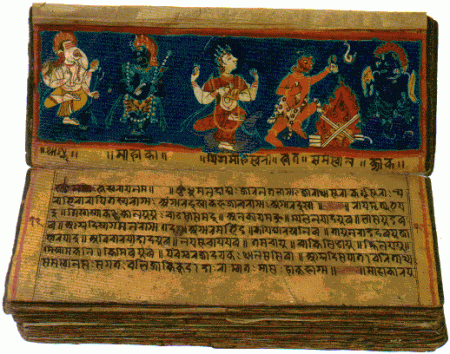
(VISUAL: The Negarakertagama by Prapancha)
We are a book of signs. We are also living in a book of signs. We must learn how to read it. "Read, in the name of Thy Lord who Create Thee, from a clot (of Blood)." This foundational and genealogic Quranic verse suggests the importance of reading. We can interpret this as reading being more than an act of understanding; that reading is an act of knowing, naming, de-constructing, and reconstructing the world. What are we to read in our lifetime? How are we to live a life that has been pre-determined by the ideological framework that awaits us at the point of departure from that clot of blood? "Man, in a word, has no nature . . . what he has is history," said the Spanish thinker Ortega y Gassett. " Cogito ergo sum (I think, therefore I exist)," said the French mathematician Rene Descartes. The Western tradition suggests that circumstances and historical-materialism create the conditions of human existence. This seems to suggest to the idea that we must use our mental capacities to master our environment and the possibilities that await us, provided that we recognise the structures of oppression we are in. This seems to further suggest that to exist, as a "free human being" one must first be aware of the visible and invisible systems created by other human beings. One must be aware in order for his/her existence to be one of "being and becoming" and in order for the human self to live with its own "global positioning system". All of these sayings suggest the idea of "reading" the signs and symbols of the world we inhabit. They ask us to understand the significance of language we use, the culture we inhabit, the ideologies our consciousness are shaped by, and the way we as human beings are "produced and reproduced" by those in control of the historical march of "progress". But how are we to read, what is the history of our existence, and how is the human self degenerating? Many have laboured on with this issue - philosophers of the Eastern and Western worlds, from ancient times to the frontier thinkers of the post-modern tradition. Socrates, the great teacher, taught people to ask questions so that they may be free from the state and from the gods created by the Athenians, Plato suggested the principles of ethics, metaphysics, poetics, and through 'The Republic', wrote what utopia is. Modern philosophers and thinkers of the Western tradition - Nietszche, Locke, Hobbes, Mann, Rousseau, Hegel, Marx, Heidegger, Santayana, Habermas, Sartre, Foucault, Lacan and Derrida - continued the legacy of defining what free human beings ought to be. The texts of the Judeo-Christian traditions, of Chinese and Hindu philosophies, and of other grand and subaltern voices have spoken on the need for the human self to be recognised as the highest form of existence. These texts have also explained the relationship between the human being and the universe it inhabits. How might human beings be totally free in the entire scheme of human control? Foundations of a dialogical self I think we now ought to understand what the foundations of civilisation are and understand the complexities of the structures of human control. If we understand what the creative, critical, and ethical foundations are, we might be able to read the society we live in better. We might even have to labour less on the question of for example, "how to reduce corruption in society" or "how to make politics more ethical" or "how to educate citizens to become more obedient to the dictates of the state". These questions have their own unique history. We must learn to ask the right questions. From our understanding of the foundations of civilisation, we can then comfortably explore what it means to be free and to be liberated from the prison of structures that have been erected by those who own the means of economic and intellectual production. We can then understand how language can free or shackle us by the very nature of language as part of the system of signs and symbols. We can then understand how "language is power" and whoever owns the language owns the knowledge to control others, or that whoever is in power can further produce systems of control through the use of specialised knowledge. From our understanding of the foundations of knowledge and the tools to explore issues of power/knowledge/control, we may begin to examine the structures that oppress us and others and learn to be critically aware of unique spaces of power and knowledge we inhabit or to understand the "cartography of our existence", so that we can then fully appreciate the thoughts we possess as a human being who is born free. We therefore must first learn to "read", in order to be free. Dialogical thinking, as the Russian thinker Mikhail Bakhtin might agree, will prepare us with the foundations of building new ideas and breaking new frontiers in the way we conceive what life might possibly be. Dialogical thinking can help us examine the way we think what history can alternatively be, as in the manner many counter-factual historians might think. Many of us have the urge to learn how to demystify age-old dogma, recognise faulty styles of thinking, and analyse flawed systems of perceptions. The urge to de-construct can be turned into a set of principles we can adopt on our road towards becoming a thinking being and on our road towards "illuminations". The phenomena of globalisation, the rapidisation of technology, the control of resources in the hands of the global few, the increasing fragmentation of nations and the rise of "post-modern post-industrial tribes" is making this world an increasingly complex place. Signs and symbols We were born into pre-designed economic conditions and systems. In traditional societies, we were born as agricultural beings. In modern societies we were born into structures defined as "modern". In this age we are born into Homo Cyberneticus (Cybernetic Beings), especially when we declared ourselves inhabitants of a Malaysian Multimedia Super Corridor living in the intelligent cities of Cyberjaya and Putrajaya. In Malaysia for example, the economic design is one of an amalgamation of post-colonialism and Oriental Despotism, a legacy of nationalism and laissez faire economic structure and superstructure. We inherit these structures from the historical march of dominant economic ideologies chosen out of political preferences. The knowledge we acquire is dependent upon/tied to the economic condition. The more sophisticated the ideology, the more hegemonic would be its impact on the way we acquire knowledge. We define our existence from this ideological point of view. Following Rousseau, we were already born in chains; chained by the ideology of the political and the economic condition. The spiritual belief system is also of our own construction; based on packaged knowledge of myth and magic and manifestations of the nature of economic practices transplanted from faraway lands. This manifestation becomes culture. The synthesis and interplay of narratives, myth, and political-economic structures become culture; as we see in the culture of the nomads of the Bedouin desert as well as the "post-industrial" nomads of Silicon Valley, California. The structure of the development of the historical-materialism of things can be read from the nature of the development of culture and its interplay with technology and the development of human consciousness. Culture may become belief systems. Belief systems in turn become enculturalised through the installation of ideologies based on dominant inscriptions. We consume whatever that is termed as history; memories based on recollections of human experiences, archived by human beings and written by those "who knows how to write" and "those who owns the pen." We are taught packaged knowledge, through the process of education as social reproduction and the process of schooling as a deliberate attempt to indoctrinate and tame the mind, so that these minds will not rebel against the structures they are born into. Creatures of perception Let us now look at some examples in history of how institutions and ideologies shape the human self. I shall draw examples of how we have become creatures of perception, constructed by signs and symbols of the institutions that reproduced us. During the early days of the Malay College Kuala Kangsar, for example, children were taught packaged knowledge based on what was then the beginning of Eton-styled education system. That was the dominant installation of the British ideology. Later in the 1970s, the Maktab Rendah Sains Mara system installed an educational ideology based, among others, on the model of the Bronx School of Science using an American-styled curriculum.
There were also models of indoctrination using Islamic-based principles of teaching and learning. One can go farther back in history and analyse how Christian missionary schools were build to have the minds reproduced according to the designs of the producers. Another example will be the development of vernacular schools and ideologies based on race and ethnicity dictates the development of the self. In the heyday of the "Islamisation process" in Malaysian politics, then minister of education prepackaged an "Islamic" version of knowledge and called it Kurikulum Bersepadu to indoctrinate children into believing what political reality is about and to ensure his truth and the aligned truth of a prevailing doctrine be broadly disseminated. Much later, in the heyday of Malaysia's conversion into an "Information Age" society, educationalist pre-packaged knowledge by introducing other means of disseminating truths and educating by designing Smart Schools (aligned with the demands of the Information Age). In Kelantan and Trengganu and in the Malay economic belts, other forms of schooling and indoctrination rule. Those in power and in their capacity to design systems of control install stronger structures of control; control of the minds of children who possess the ability to become frontier thinkers. Human creativity is curbed to ensure that dogma will reign. Regimented truths are systematically forced into the curious young minds. These truths are borrowed from faraway lands and disseminated through specialised language. Such are regimes of truth we have created out of our political-economic conditions. We must learn to read the meaning of how our learning institutions have produced us, as well as the power structures that produce such regimes of truth. #23: Seeking out the history of questions (2005)
Seeking out the history of questions(my First Opinion on Malaysia, in Malaysiakini))Opinion |
Azly Rahman
Published: 16 Jan 2005, 11:49 pm | Modified: 16 Jan 2005, 11:49 pm
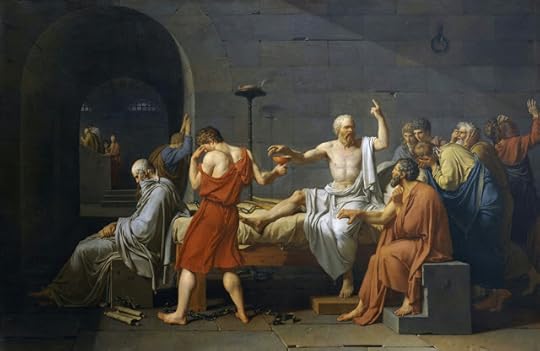
We live in interesting times with questions concerning our existence. How are human beings controlled by those who own the means of intellectual and economic production? How does power, in its raw and refined form, operate in our society? How is it dispersed? How is power sustained? How is truth produced? How is truth multiplied? Still more questions plague me. How is the self constructed? How are we alienated? What is inscribed onto the body and into the mind, in the process of schooling? How is human imagination confined and how might it be released? How is the mind enslaved by the politics of knowledge? How is historical knowledge packaged? How do we define our existence in this Age of Information? Still more questions: Who decides what is important in history? What is an ideal multi-cultural society? How has our ideas of multi-culturalism influence the way we live our lives? What historical knowledge is of importance? What tools do we need to create our own history? And as I grow older, there are even more questions: How is the individual more powerful than the state? How is a philosopher-king created? How is justice possible? Who should rule and why? How are we to teach about justice? And finally, how might we realise a democratic-republic of virtue - one that is based on a form of democracy that is meaningful and personal? These questions come to mind as I plow daily through the columns in malaysiakini, in search of a terrain to plant the seeds of frontier thinking. I want to honour the work of the thinkers in this forum, and wish to share mine from the point of view of an educationist/academician who will always defend one's right think to freely. Inadequate answers I stand on the shoulder of giants of Malaysian socio-political thought who have contributed much to the development of this nation that thinks; giants like Abdullah Munsyi, Onn Jaafar, Zaa'ba, Hussein and Naguib Al-Attas. Ungku Aziz, Kassim Ahmad, Dr Mahathir Mohamad, Dr Syed Husin Ali, Chandra Muzaffar, Prof Khoo Khay Kim, Lim Kit Siang and Prof KS Jomo. Throughout the course of my study on the origin and fate of this society, I have learned how much the work of these people have contributed to the social construction of the Malaysian self and the democratic ideals that this nation aspires to realise. I have learnt what the early philosophical journeys of the Malays look like, what kind of statecraft was practised what the metaphysical system of this group constitutes, what form of social-humanism is to be fought for, what a Malaysian social justice may mean, what a multi-cultural Malaysian might look like, and finally, what brand of nationalism must be embraced in an age wherein "the Centre cannot hold". I have been enlightened by these thinkers. However, the answers they have provided are inadequate especially in these challenging times. I nevertheless appreciate their contributions and wish to continue their legacy through the dialogues in this column. I wish to speak to academicians and students essentially, and to readers who wish to engage in dialogical thinking. I want to explore the history of the questions asked and to find out how we arrive at this or that historical juncture. I believe these questions will help us go back to the origin of things and in the process, to understand the world in which we live. I believe that these questions can help one way for human beings to go back to the Centre and its Primordial Nature, through what Rousseau calls "sentimental education" or, to explore, as the Indonesian poet W S Rendra once said in his play 'The Struggle of the Naga Tribe', the "world within and the world without". Through these questions I believe one can break free from the shackles of domination and release the imagination. And as Rousseau continues: "Man is born free... and everywhere He is in chains", and that the first language he needs is the cry of Nature. Flow of ideas Based on a thesis I produced on the origin of the city of Cyberjaya, I am currently further developing a "social theory of how nations develop and hypermodernise as a result of transcultural flow of ideas and in the process of developing, how the human being loses its essence, gets alienated, and become conditioned by the system of signs and symbols; by its genealogy, anatomy, chemistry, and its cybernetic properties". Ideas dance and do the hip hop and flow gracefully from one nation to another; from the mind of one group of people to another, from a nation at the Centre to the peripheries and the hinterlands. But in their dance there is always the beauty and the deadly persuasion. It is believed that in this age, we are born into a matrix of Chinese complexities, and we will spend our lifetime understanding it, possibly escaping it, and consequently constructing an understanding of our Existential self. We are born to be makers of our own history. In this world without borders, are all essentially, transcultural citizens differentiated only by our national identity cards and our passports. I want to share the experiences I have in developing the human mind and in the teaching multiple perspectives of knowing. I am looking forward to these contributions. At the end of my writings, I hope we can name the inherent contradictions between our existentialism and the world of cybernetics we inhabit.

We live in interesting times with questions concerning our existence. How are human beings controlled by those who own the means of intellectual and economic production? How does power, in its raw and refined form, operate in our society? How is it dispersed? How is power sustained? How is truth produced? How is truth multiplied? Still more questions plague me. How is the self constructed? How are we alienated? What is inscribed onto the body and into the mind, in the process of schooling? How is human imagination confined and how might it be released? How is the mind enslaved by the politics of knowledge? How is historical knowledge packaged? How do we define our existence in this Age of Information? Still more questions: Who decides what is important in history? What is an ideal multi-cultural society? How has our ideas of multi-culturalism influence the way we live our lives? What historical knowledge is of importance? What tools do we need to create our own history? And as I grow older, there are even more questions: How is the individual more powerful than the state? How is a philosopher-king created? How is justice possible? Who should rule and why? How are we to teach about justice? And finally, how might we realise a democratic-republic of virtue - one that is based on a form of democracy that is meaningful and personal? These questions come to mind as I plow daily through the columns in malaysiakini, in search of a terrain to plant the seeds of frontier thinking. I want to honour the work of the thinkers in this forum, and wish to share mine from the point of view of an educationist/academician who will always defend one's right think to freely. Inadequate answers I stand on the shoulder of giants of Malaysian socio-political thought who have contributed much to the development of this nation that thinks; giants like Abdullah Munsyi, Onn Jaafar, Zaa'ba, Hussein and Naguib Al-Attas. Ungku Aziz, Kassim Ahmad, Dr Mahathir Mohamad, Dr Syed Husin Ali, Chandra Muzaffar, Prof Khoo Khay Kim, Lim Kit Siang and Prof KS Jomo. Throughout the course of my study on the origin and fate of this society, I have learned how much the work of these people have contributed to the social construction of the Malaysian self and the democratic ideals that this nation aspires to realise. I have learnt what the early philosophical journeys of the Malays look like, what kind of statecraft was practised what the metaphysical system of this group constitutes, what form of social-humanism is to be fought for, what a Malaysian social justice may mean, what a multi-cultural Malaysian might look like, and finally, what brand of nationalism must be embraced in an age wherein "the Centre cannot hold". I have been enlightened by these thinkers. However, the answers they have provided are inadequate especially in these challenging times. I nevertheless appreciate their contributions and wish to continue their legacy through the dialogues in this column. I wish to speak to academicians and students essentially, and to readers who wish to engage in dialogical thinking. I want to explore the history of the questions asked and to find out how we arrive at this or that historical juncture. I believe these questions will help us go back to the origin of things and in the process, to understand the world in which we live. I believe that these questions can help one way for human beings to go back to the Centre and its Primordial Nature, through what Rousseau calls "sentimental education" or, to explore, as the Indonesian poet W S Rendra once said in his play 'The Struggle of the Naga Tribe', the "world within and the world without". Through these questions I believe one can break free from the shackles of domination and release the imagination. And as Rousseau continues: "Man is born free... and everywhere He is in chains", and that the first language he needs is the cry of Nature. Flow of ideas Based on a thesis I produced on the origin of the city of Cyberjaya, I am currently further developing a "social theory of how nations develop and hypermodernise as a result of transcultural flow of ideas and in the process of developing, how the human being loses its essence, gets alienated, and become conditioned by the system of signs and symbols; by its genealogy, anatomy, chemistry, and its cybernetic properties". Ideas dance and do the hip hop and flow gracefully from one nation to another; from the mind of one group of people to another, from a nation at the Centre to the peripheries and the hinterlands. But in their dance there is always the beauty and the deadly persuasion. It is believed that in this age, we are born into a matrix of Chinese complexities, and we will spend our lifetime understanding it, possibly escaping it, and consequently constructing an understanding of our Existential self. We are born to be makers of our own history. In this world without borders, are all essentially, transcultural citizens differentiated only by our national identity cards and our passports. I want to share the experiences I have in developing the human mind and in the teaching multiple perspectives of knowing. I am looking forward to these contributions. At the end of my writings, I hope we can name the inherent contradictions between our existentialism and the world of cybernetics we inhabit.
January 5, 2019
#22: Rebranding the myth of the ‘lazy Malay’
Opinion |
Azly Rahman
Published: Today 6:57 pm | Modified: Today 6:57 pm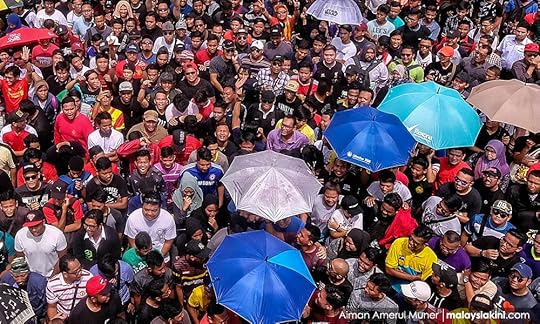 A+ A- COMMENT | To wage war upon others, you dehumanise them. To enslave your own people, you call them lazy and create a structure of dependency.To cure these two mental ills of the two colonisers, you deconstruct and destroy the myth. The once oppressed among us have become the oppressors. Brown skin, white masks. This is what I am writing about in the following passages.Aren't politicians the laziest, profiting from the myth of the benevolent ruler? They get paid a lot, they fight too much, they don't attend well to the people's needs. They go missing, produce contradictory statements, and churn out propaganda to fool people. They beg for votes and when they win, they invite the latter to a beggar’s banquet.To call a people ‘lazy’ is to legitimise a system of discipline, punishment and continual dependency – the politician's excretory rhetoric. Capitalism thrives by telling workers that they are lazy when they cannot produce as fast as the owners can profit.Rebranding the mythConsider how much the common person works these days, how many hours a day and on weekends, just to put food on the table in an economy plagued, plundered, and ravaged by those who called the natives ‘lazy’. How many jobs do people you know work these days before and after the 1MDB fiasco?
 Malaysia is built upon the blood, sweat and tears of workers, farmers, share-croppers, Felda settlers, taxi drivers, petty traders, shopkeepers, and the working class whose culture the politicians say needs to be ‘changed’.The myth of the lazy natives is now reproduced by the acquired ignorance of our leaders. What is the politics behind the continuing labelling? New Party. New Coalition. Same Excretion?Billionaire-club Malays will often say Malays are lazy when they cannot enslave the Malays of blood, sweat, fears. “Sickos,” as Michael Moore would call them. That’s the worldview of the one percent. That’s their “mental habitus”, to borrow from Pierre Bourdieu.
 We continue to carry the wrong sunglasses of history, fogged by the haze of winner’s history. Who cares if Yap Ah Loy or Sutan Puasa ‘founded’ Kuala Lumpur? I want to know what happened to the natives. How were they chased out by these ‘founders’? Just like how Christopher Columbus was instrumental in killing 10,000 Arawak Indians in his quest to be baptised as the one who ‘discovered’ America.I want our young generation to learn the people’s history of Malaysia. Teach not the history of glory of kingdoms, of fake kings, but the sufferings and successes of our ancestors. Family history first that runs parallel to the one’s personal history. Therein lies the core of human dignity as makers of history.As Jean-Jacques Rousseau said, “Man is born free, yet everywhere he is in chains.”Multiple truthsWe must acknowledge that there are multiple truths to choose from, depending on one's cultural perception of what spirituality means. I read and taught the major scriptures to see the beauty of each, especially as cultural perspectives, and good, magical, fantastical stories written by scribes, collectively, from long ago.I love Bible stories. And the Mahabharata, the Ramayana, the Analects of Confucius, the Tao Te Ching, the I Ching and even the Dianetics of the Church of Scientology. These contain their own truths, fanciful stories of creation, deconstruction, destruction. Religion and its scriptures rely on storytelling and the crafting of degrees of believability, sustainable enough to be passed down from one generation to another. We live in a universe of stories we love sharing with one another. The Bible and the Quran too serve such purposes. One truth, many paths.
 But what are we as Malaysians? Each of us a child of immigrants. Our place, this place we inhabit, is what Pramoedya Ananta Toer called “bumi manusia” or earth of mankind. Bumi Malaysia, where each race is a product of history, exploited by the colonial masters, in collaboration with the local rulers and chieftains.Whether we were here as kampung folk, or we came as a band of kangchu and kangani, we are here, challenged to mediate our differences, to live as if civil war and genocide are words that do not exist in our vocabulary.Orientalising to deathThe British colonial policy of divide and rule, their conjuring up of the myth of the lazy native to describe Malayo-Polynesians, their construction of the other based on what was in it for them, their Conradesque narratives pounded into others ‘three-quarters as human’ as they are.Peeking at the styles of other colonialists, we find similar themes of dehumanisation in the French ‘civilising mission', the defining of ‘Bangsa Indonesia’ by the Dutch, and the Spanish racial delineation in the Philippines. All these illustrate the craft of imperialism.Knowledge is power, and in the use of policies based on the construction of otherness and the emphasis on differences for economic-exploitative goals – all historical ingenuity. The story of Malcolm X's return from pilgrimage in Mecca is, I think, a powerful narrative on the deconstruction of the matter and manner called race.Back to who we now are, as peoples once enslaved. We are a model of civil dialogue. We seem to be doing well. We share a memory, a wonderful, yet equally challenging time we once had and lived gracefully. In poverty lies wealth, dignity, and ethics – this is what we learned from the post-Merdeka days.
 We had to do that for historical logic – we came in and out of the bloody riots of May 13, 1969 and the brutal process of decolonisation, though we were spared the full Pandora’s box of human madness over power, wealth and violence.We Malaysians learned to live with each other and grow with the differences we were born with and into. Because we are human beings, essentially and within us lies cultural hybridity, of the elements of cultures of ‘otherness’ weaved into our psyche, philosophy of living, and our physicality. We love each other's food, fashion, and festivities. At the level of the masses we are good as a people of a relatively new nation.But now we are facing a crisis of identity. A manufactured one. Today, identity has turned political – of the forbidden-ness and the halal-haram of things. Of fascist-type rallies fuelled by false sentiments of race and religion. Those uber-rallies that will soon lose their pomp and be seen as a genre of weekly pageants of irrationality.The first mistakeWherein lies the mistake of our cultural evolution? Education, I’d say. In this enterprise of “drawing out, of human potentials” lies that gentle profession the politicians have emboldened with the lava of racial prejudice and the myth of the limited economic pie.
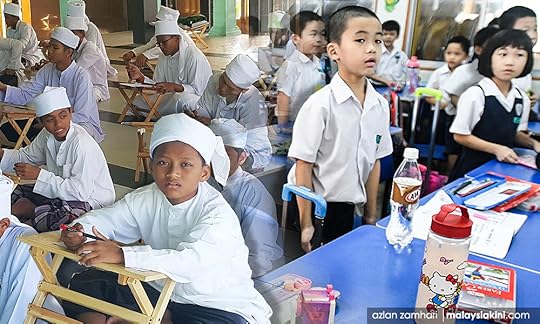 Is there hope? We must begin with the amber, of what's glimmering and what's promising, but we cannot twist the arms of politicians if their bodies are wrapped with the straitjacket of wealth and power made out of that lava of latter-day-capitalism, insisting that the only way forward is to traverse the path suggested by Niccolo Machiavelli and Sun Tzu.Maintain power by whatever means necessary, use deceit, use strategies to outdo the enemy, kill if you must, play with numbers, make statistics lie even better, and go to war with each other perpetually. Use education as a tool of apartheid, mental oppression, so that we may produce more myths, while the rich watch the numbers go up and down in the ticker-tape of the stock exchange. The ‘standards and poor’, where global poverty is the gold standard of the one percent of the new imperialists.What do we actually want? Today the myth is recreated, reconstructed, and rebranded, as if we are living in an amnesiac society, ruled by leaders who are plagued with selective dementia.It does not make sense to turn our politics and policy-making into a ghoulish carnival of the living dead, the ghosts of yesteryear being perpetually resurrected and used to instil fear in a new generation of Malaysians of each other – as if they must be forced to carry the burden of Malaysia’s violent episodes of history, crafted by the powers that want to maintain hegemony and the master-slave narrative.That is what is happening now and, since independence, and the purposeful reluctance of accepting sane and logical solutions to our racial and religious ailments – like the debates over the United Examination Certificate (UEC), all-Malay elite boarding schools, proliferating tahfiz schools, English-language instruction, and the ketuanan educational-philosophical orientation.We all want the best for our society, especially for the young ones struggling to make sense of the world. It is their future we are entrusted to craft. Hence, educational visioning must be undertaken as soon as a new government takes shape.Leadership needs philosophy, process, innovation, and management of change, as we know. It needs empathy in the case of educational leadership, so that we may not discriminate and turn this gentle profession of educating into a hidden system of apartheid. This is what I see happening here. Continuation of unclear vision and the rabid hanging on to racial and religious dogma.We have a lot to gain if we understand education for mental liberation in all its complexity in a multiracial society. One avenue to begin our restructuring is to learn from the diaspora who have seen what education looks like in diverse settings, and why advanced countries continue to advance and outlaw racial discrimination.
 We should stop believing and supporting politicians who wish to continue to divide us through their rhetoric. We must wage an ideological yet dialogical battle with those who still call this and that race ‘lazy’, ‘greedy’, and ‘dirty’, and all kinds of demeaning and derogatory representations of these peoples’ pride and dignity.These are the politicians who thrive on wealth, wilfully blind to the fact that poverty cuts across race and religious lines, that extremism is in all religions, and that the future generations need not be punished with the sins of their fathers and be made to feel helpless and hopeless with all kinds of unkind misrepresentation.We must, especially through our educational philosophical and pedagogical design, shape a more peaceful, productive, and collaborative future amongst the races. So that we will not produce more amnesic politicians who will continue to sing us more lullabies about the ‘lazy, greedy, and dirty’ natives.We have a lot to work on to achieve the goals of the political rhetoric of ‘Vision 2020’. But first, we must educate for peace, progress, and prosperity that “makes the many, one, and the one many".It must begin with a grand design of our educational future. A truly Malaysia future. No child left behind. Just look into the eyes of the children of Malaysians on their very first day of school. Do they tell us what discrimination means and will turn them into? Will they be in chains, when they are born free?Have a safe 2019 fellow Malaysians!AZLY RAHMAN is an educator, academic, international columnist, and author of seven books available here. He grew up in Johor Bahru and holds a Columbia University doctorate in international education development and Master’s degrees in six areas: education, international affairs, peace studies communication, fiction and non-fiction writing. Twitter @azlyrahman. More writings here.
A+ A- COMMENT | To wage war upon others, you dehumanise them. To enslave your own people, you call them lazy and create a structure of dependency.To cure these two mental ills of the two colonisers, you deconstruct and destroy the myth. The once oppressed among us have become the oppressors. Brown skin, white masks. This is what I am writing about in the following passages.Aren't politicians the laziest, profiting from the myth of the benevolent ruler? They get paid a lot, they fight too much, they don't attend well to the people's needs. They go missing, produce contradictory statements, and churn out propaganda to fool people. They beg for votes and when they win, they invite the latter to a beggar’s banquet.To call a people ‘lazy’ is to legitimise a system of discipline, punishment and continual dependency – the politician's excretory rhetoric. Capitalism thrives by telling workers that they are lazy when they cannot produce as fast as the owners can profit.Rebranding the mythConsider how much the common person works these days, how many hours a day and on weekends, just to put food on the table in an economy plagued, plundered, and ravaged by those who called the natives ‘lazy’. How many jobs do people you know work these days before and after the 1MDB fiasco?Malaysia is built upon the blood, sweat and tears of workers, farmers, share-croppers, Felda settlers, taxi drivers, petty traders, shopkeepers, and the working class whose culture the politicians say needs to be ‘changed’.The myth of the lazy natives is now reproduced by the acquired ignorance of our leaders. What is the politics behind the continuing labelling? New Party. New Coalition. Same Excretion?Billionaire-club Malays will often say Malays are lazy when they cannot enslave the Malays of blood, sweat, fears. “Sickos,” as Michael Moore would call them. That’s the worldview of the one percent. That’s their “mental habitus”, to borrow from Pierre Bourdieu.We continue to carry the wrong sunglasses of history, fogged by the haze of winner’s history. Who cares if Yap Ah Loy or Sutan Puasa ‘founded’ Kuala Lumpur? I want to know what happened to the natives. How were they chased out by these ‘founders’? Just like how Christopher Columbus was instrumental in killing 10,000 Arawak Indians in his quest to be baptised as the one who ‘discovered’ America.I want our young generation to learn the people’s history of Malaysia. Teach not the history of glory of kingdoms, of fake kings, but the sufferings and successes of our ancestors. Family history first that runs parallel to the one’s personal history. Therein lies the core of human dignity as makers of history.As Jean-Jacques Rousseau said, “Man is born free, yet everywhere he is in chains.”Multiple truthsWe must acknowledge that there are multiple truths to choose from, depending on one's cultural perception of what spirituality means. I read and taught the major scriptures to see the beauty of each, especially as cultural perspectives, and good, magical, fantastical stories written by scribes, collectively, from long ago.I love Bible stories. And the Mahabharata, the Ramayana, the Analects of Confucius, the Tao Te Ching, the I Ching and even the Dianetics of the Church of Scientology. These contain their own truths, fanciful stories of creation, deconstruction, destruction. Religion and its scriptures rely on storytelling and the crafting of degrees of believability, sustainable enough to be passed down from one generation to another. We live in a universe of stories we love sharing with one another. The Bible and the Quran too serve such purposes. One truth, many paths.But what are we as Malaysians? Each of us a child of immigrants. Our place, this place we inhabit, is what Pramoedya Ananta Toer called “bumi manusia” or earth of mankind. Bumi Malaysia, where each race is a product of history, exploited by the colonial masters, in collaboration with the local rulers and chieftains.Whether we were here as kampung folk, or we came as a band of kangchu and kangani, we are here, challenged to mediate our differences, to live as if civil war and genocide are words that do not exist in our vocabulary.Orientalising to deathThe British colonial policy of divide and rule, their conjuring up of the myth of the lazy native to describe Malayo-Polynesians, their construction of the other based on what was in it for them, their Conradesque narratives pounded into others ‘three-quarters as human’ as they are.Peeking at the styles of other colonialists, we find similar themes of dehumanisation in the French ‘civilising mission', the defining of ‘Bangsa Indonesia’ by the Dutch, and the Spanish racial delineation in the Philippines. All these illustrate the craft of imperialism.Knowledge is power, and in the use of policies based on the construction of otherness and the emphasis on differences for economic-exploitative goals – all historical ingenuity. The story of Malcolm X's return from pilgrimage in Mecca is, I think, a powerful narrative on the deconstruction of the matter and manner called race.Back to who we now are, as peoples once enslaved. We are a model of civil dialogue. We seem to be doing well. We share a memory, a wonderful, yet equally challenging time we once had and lived gracefully. In poverty lies wealth, dignity, and ethics – this is what we learned from the post-Merdeka days.We had to do that for historical logic – we came in and out of the bloody riots of May 13, 1969 and the brutal process of decolonisation, though we were spared the full Pandora’s box of human madness over power, wealth and violence.We Malaysians learned to live with each other and grow with the differences we were born with and into. Because we are human beings, essentially and within us lies cultural hybridity, of the elements of cultures of ‘otherness’ weaved into our psyche, philosophy of living, and our physicality. We love each other's food, fashion, and festivities. At the level of the masses we are good as a people of a relatively new nation.But now we are facing a crisis of identity. A manufactured one. Today, identity has turned political – of the forbidden-ness and the halal-haram of things. Of fascist-type rallies fuelled by false sentiments of race and religion. Those uber-rallies that will soon lose their pomp and be seen as a genre of weekly pageants of irrationality.The first mistakeWherein lies the mistake of our cultural evolution? Education, I’d say. In this enterprise of “drawing out, of human potentials” lies that gentle profession the politicians have emboldened with the lava of racial prejudice and the myth of the limited economic pie.Is there hope? We must begin with the amber, of what's glimmering and what's promising, but we cannot twist the arms of politicians if their bodies are wrapped with the straitjacket of wealth and power made out of that lava of latter-day-capitalism, insisting that the only way forward is to traverse the path suggested by Niccolo Machiavelli and Sun Tzu.Maintain power by whatever means necessary, use deceit, use strategies to outdo the enemy, kill if you must, play with numbers, make statistics lie even better, and go to war with each other perpetually. Use education as a tool of apartheid, mental oppression, so that we may produce more myths, while the rich watch the numbers go up and down in the ticker-tape of the stock exchange. The ‘standards and poor’, where global poverty is the gold standard of the one percent of the new imperialists.What do we actually want? Today the myth is recreated, reconstructed, and rebranded, as if we are living in an amnesiac society, ruled by leaders who are plagued with selective dementia.It does not make sense to turn our politics and policy-making into a ghoulish carnival of the living dead, the ghosts of yesteryear being perpetually resurrected and used to instil fear in a new generation of Malaysians of each other – as if they must be forced to carry the burden of Malaysia’s violent episodes of history, crafted by the powers that want to maintain hegemony and the master-slave narrative.That is what is happening now and, since independence, and the purposeful reluctance of accepting sane and logical solutions to our racial and religious ailments – like the debates over the United Examination Certificate (UEC), all-Malay elite boarding schools, proliferating tahfiz schools, English-language instruction, and the ketuanan educational-philosophical orientation.We all want the best for our society, especially for the young ones struggling to make sense of the world. It is their future we are entrusted to craft. Hence, educational visioning must be undertaken as soon as a new government takes shape.Leadership needs philosophy, process, innovation, and management of change, as we know. It needs empathy in the case of educational leadership, so that we may not discriminate and turn this gentle profession of educating into a hidden system of apartheid. This is what I see happening here. Continuation of unclear vision and the rabid hanging on to racial and religious dogma.We have a lot to gain if we understand education for mental liberation in all its complexity in a multiracial society. One avenue to begin our restructuring is to learn from the diaspora who have seen what education looks like in diverse settings, and why advanced countries continue to advance and outlaw racial discrimination.We should stop believing and supporting politicians who wish to continue to divide us through their rhetoric. We must wage an ideological yet dialogical battle with those who still call this and that race ‘lazy’, ‘greedy’, and ‘dirty’, and all kinds of demeaning and derogatory representations of these peoples’ pride and dignity.These are the politicians who thrive on wealth, wilfully blind to the fact that poverty cuts across race and religious lines, that extremism is in all religions, and that the future generations need not be punished with the sins of their fathers and be made to feel helpless and hopeless with all kinds of unkind misrepresentation.We must, especially through our educational philosophical and pedagogical design, shape a more peaceful, productive, and collaborative future amongst the races. So that we will not produce more amnesic politicians who will continue to sing us more lullabies about the ‘lazy, greedy, and dirty’ natives.We have a lot to work on to achieve the goals of the political rhetoric of ‘Vision 2020’. But first, we must educate for peace, progress, and prosperity that “makes the many, one, and the one many".It must begin with a grand design of our educational future. A truly Malaysia future. No child left behind. Just look into the eyes of the children of Malaysians on their very first day of school. Do they tell us what discrimination means and will turn them into? Will they be in chains, when they are born free?Have a safe 2019 fellow Malaysians!AZLY RAHMAN is an educator, academic, international columnist, and author of seven books available here. He grew up in Johor Bahru and holds a Columbia University doctorate in international education development and Master’s degrees in six areas: education, international affairs, peace studies communication, fiction and non-fiction writing. Twitter @azlyrahman. More writings here.
LATEST COLUMN: Rebranding the myth of the ‘lazy Malay’
Opinion | Azly Rahman Published: Today 6:57 pm | Modified: Today 6:57 pm
A+ A- COMMENT | To wage war upon others, you dehumanise them. To enslave your own people, you call them lazy and create a structure of dependency.To cure these two mental ills of the two colonisers, you deconstruct and destroy the myth. The once oppressed among us have become the oppressors. Brown skin, white masks. This is what I am writing about in the following passages.Aren't politicians the laziest, profiting from the myth of the benevolent ruler? They get paid a lot, they fight too much, they don't attend well to the people's needs. They go missing, produce contradictory statements, and churn out propaganda to fool people. They beg for votes and when they win, they invite the latter to a beggar’s banquet.To call a people ‘lazy’ is to legitimise a system of discipline, punishment and continual dependency – the politician's excretory rhetoric. Capitalism thrives by telling workers that they are lazy when they cannot produce as fast as the owners can profit.Rebranding the mythConsider how much the common person works these days, how many hours a day and on weekends, just to put food on the table in an economy plagued, plundered, and ravaged by those who called the natives ‘lazy’. How many jobs do people you know work these days before and after the 1MDB fiasco?Malaysia is built upon the blood, sweat and tears of workers, farmers, share-croppers, Felda settlers, taxi drivers, petty traders, shopkeepers, and the working class whose culture the politicians say needs to be ‘changed’.The myth of the lazy natives is now reproduced by the acquired ignorance of our leaders. What is the politics behind the continuing labelling? New Party. New Coalition. Same Excretion?Billionaire-club Malays will often say Malays are lazy when they cannot enslave the Malays of blood, sweat, fears. “Sickos,” as Michael Moore would call them. That’s the worldview of the one percent. That’s their “mental habitus”, to borrow from Pierre Bourdieu.We continue to carry the wrong sunglasses of history, fogged by the haze of winner’s history. Who cares if Yap Ah Loy or Sutan Puasa ‘founded’ Kuala Lumpur? I want to know what happened to the natives. How were they chased out by these ‘founders’? Just like how Christopher Columbus was instrumental in killing 10,000 Arawak Indians in his quest to be baptised as the one who ‘discovered’ America.I want our young generation to learn the people’s history of Malaysia. Teach not the history of glory of kingdoms, of fake kings, but the sufferings and successes of our ancestors. Family history first that runs parallel to the one’s personal history. Therein lies the core of human dignity as makers of history.As Jean-Jacques Rousseau said, “Man is born free, yet everywhere he is in chains.”Multiple truthsWe must acknowledge that there are multiple truths to choose from, depending on one's cultural perception of what spirituality means. I read and taught the major scriptures to see the beauty of each, especially as cultural perspectives, and good, magical, fantastical stories written by scribes, collectively, from long ago.I love Bible stories. And the Mahabharata, the Ramayana, the Analects of Confucius, the Tao Te Ching, the I Ching and even the Dianetics of the Church of Scientology. These contain their own truths, fanciful stories of creation, deconstruction, destruction. Religion and its scriptures rely on storytelling and the crafting of degrees of believability, sustainable enough to be passed down from one generation to another. We live in a universe of stories we love sharing with one another. The Bible and the Quran too serve such purposes. One truth, many paths.But what are we as Malaysians? Each of us a child of immigrants. Our place, this place we inhabit, is what Pramoedya Ananta Toer called “bumi manusia” or earth of mankind. Bumi Malaysia, where each race is a product of history, exploited by the colonial masters, in collaboration with the local rulers and chieftains.Whether we were here as kampung folk, or we came as a band of kangchu and kangani, we are here, challenged to mediate our differences, to live as if civil war and genocide are words that do not exist in our vocabulary.Orientalising to deathThe British colonial policy of divide and rule, their conjuring up of the myth of the lazy native to describe Malayo-Polynesians, their construction of the other based on what was in it for them, their Conradesque narratives pounded into others ‘three-quarters as human’ as they are.Peeking at the styles of other colonialists, we find similar themes of dehumanisation in the French ‘civilising mission', the defining of ‘Bangsa Indonesia’ by the Dutch, and the Spanish racial delineation in the Philippines. All these illustrate the craft of imperialism.Knowledge is power, and in the use of policies based on the construction of otherness and the emphasis on differences for economic-exploitative goals – all historical ingenuity. The story of Malcolm X's return from pilgrimage in Mecca is, I think, a powerful narrative on the deconstruction of the matter and manner called race.Back to who we now are, as peoples once enslaved. We are a model of civil dialogue. We seem to be doing well. We share a memory, a wonderful, yet equally challenging time we once had and lived gracefully. In poverty lies wealth, dignity, and ethics – this is what we learned from the post-Merdeka days.We had to do that for historical logic – we came in and out of the bloody riots of May 13, 1969 and the brutal process of decolonisation, though we were spared the full Pandora’s box of human madness over power, wealth and violence.We Malaysians learned to live with each other and grow with the differences we were born with and into. Because we are human beings, essentially and within us lies cultural hybridity, of the elements of cultures of ‘otherness’ weaved into our psyche, philosophy of living, and our physicality. We love each other's food, fashion, and festivities. At the level of the masses we are good as a people of a relatively new nation.But now we are facing a crisis of identity. A manufactured one. Today, identity has turned political – of the forbidden-ness and the halal-haram of things. Of fascist-type rallies fuelled by false sentiments of race and religion. Those uber-rallies that will soon lose their pomp and be seen as a genre of weekly pageants of irrationality.The first mistakeWherein lies the mistake of our cultural evolution? Education, I’d say. In this enterprise of “drawing out, of human potentials” lies that gentle profession the politicians have emboldened with the lava of racial prejudice and the myth of the limited economic pie.Is there hope? We must begin with the amber, of what's glimmering and what's promising, but we cannot twist the arms of politicians if their bodies are wrapped with the straitjacket of wealth and power made out of that lava of latter-day-capitalism, insisting that the only way forward is to traverse the path suggested by Niccolo Machiavelli and Sun Tzu.Maintain power by whatever means necessary, use deceit, use strategies to outdo the enemy, kill if you must, play with numbers, make statistics lie even better, and go to war with each other perpetually. Use education as a tool of apartheid, mental oppression, so that we may produce more myths, while the rich watch the numbers go up and down in the ticker-tape of the stock exchange. The ‘standards and poor’, where global poverty is the gold standard of the one percent of the new imperialists.What do we actually want? Today the myth is recreated, reconstructed, and rebranded, as if we are living in an amnesiac society, ruled by leaders who are plagued with selective dementia.It does not make sense to turn our politics and policy-making into a ghoulish carnival of the living dead, the ghosts of yesteryear being perpetually resurrected and used to instil fear in a new generation of Malaysians of each other – as if they must be forced to carry the burden of Malaysia’s violent episodes of history, crafted by the powers that want to maintain hegemony and the master-slave narrative.That is what is happening now and, since independence, and the purposeful reluctance of accepting sane and logical solutions to our racial and religious ailments – like the debates over the United Examination Certificate (UEC), all-Malay elite boarding schools, proliferating tahfiz schools, English-language instruction, and the ketuanan educational-philosophical orientation.We all want the best for our society, especially for the young ones struggling to make sense of the world. It is their future we are entrusted to craft. Hence, educational visioning must be undertaken as soon as a new government takes shape.Leadership needs philosophy, process, innovation, and management of change, as we know. It needs empathy in the case of educational leadership, so that we may not discriminate and turn this gentle profession of educating into a hidden system of apartheid. This is what I see happening here. Continuation of unclear vision and the rabid hanging on to racial and religious dogma.We have a lot to gain if we understand education for mental liberation in all its complexity in a multiracial society. One avenue to begin our restructuring is to learn from the diaspora who have seen what education looks like in diverse settings, and why advanced countries continue to advance and outlaw racial discrimination.We should stop believing and supporting politicians who wish to continue to divide us through their rhetoric. We must wage an ideological yet dialogical battle with those who still call this and that race ‘lazy’, ‘greedy’, and ‘dirty’, and all kinds of demeaning and derogatory representations of these peoples’ pride and dignity.These are the politicians who thrive on wealth, wilfully blind to the fact that poverty cuts across race and religious lines, that extremism is in all religions, and that the future generations need not be punished with the sins of their fathers and be made to feel helpless and hopeless with all kinds of unkind misrepresentation.We must, especially through our educational philosophical and pedagogical design, shape a more peaceful, productive, and collaborative future amongst the races. So that we will not produce more amnesic politicians who will continue to sing us more lullabies about the ‘lazy, greedy, and dirty’ natives.We have a lot to work on to achieve the goals of the political rhetoric of ‘Vision 2020’. But first, we must educate for peace, progress, and prosperity that “makes the many, one, and the one many".It must begin with a grand design of our educational future. A truly Malaysia future. No child left behind. Just look into the eyes of the children of Malaysians on their very first day of school. Do they tell us what discrimination means and will turn them into? Will they be in chains, when they are born free?Have a safe 2019 fellow Malaysians!AZLY RAHMAN is an educator, academic, international columnist, and author of seven books available here. He grew up in Johor Bahru and holds a Columbia University doctorate in international education development and Master’s degrees in six areas: education, international affairs, peace studies communication, fiction and non-fiction writing. Twitter @azlyrahman. More writings here.