Azly Rahman's Blog, page 5
August 4, 2019
Khat and the ecology of creeping Islamization
Khat and the ecology of creeping IslamizationOpinion |
Azly Rahman
Published: Today 7:00 pm | Modified: Today 7:00 pm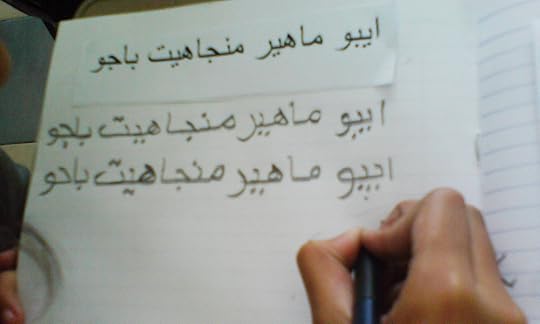 A+ A- COMMENT | Some say the issue of mandating the teaching of the Islamic scriptural artform of “khat” in the curriculum is a molehill. I say, yes, it is. A molehill sitting on top of a mountain of radical Islamism. My question: Are the leaders who wish to preserve "khat" good enough to fight corruption that is destroying Malay-Islamic culture? We must believe that the survival of a nation not only lies in the writing script, but primarily with cognitive ability amidst tides of mediocrity.As I have said in my previous column on the link between anthropology and education, even the political leader needs training in Diversity and Cross-Cultural Management. A minister of Education from an all-Malay party will naturally push the agenda for an all-Malay exclusivity. Not good.Spend time strengthening English Language skills in schools -- even for teachers. Less time arguing.Advertisement
Behind the backdrop of "anti-liberalism", khat is the molehill atop a mountain of Wahabi-Salafi radicalism. Khat can be taught alongside other scripts and artform, to have children be introduced to multilingual scripts.Though PH won with the blessings of a multicultural vote, the core ideology remains Ketuanan Melayu-Islam, not Multiculturalism. Progress or digress in Education is dependent upon who is at the helm and what ideology is being pushed.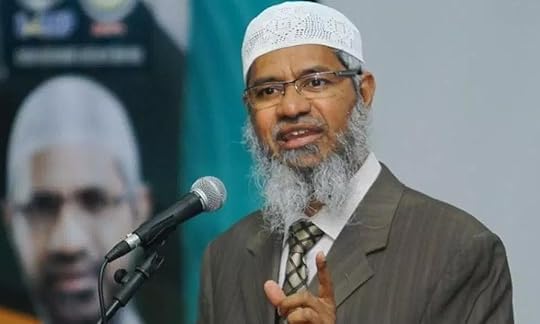 First, it was the use of "Allah" in the Malay Bible. It was a huge controversy. Then came the proclamation that schools can be good "medan dakwah". Later came the adoration of Zakir Naik (above). It is not about "khat". It's about the expansion of the ecology of creeping and creepy Islamization engineered by the Ministry of Education.There is something called "penmanship" if you wish to foster the skill of beautiful handwriting. Khat is Islamic calligraphy and the non-Muslims feel that this is not a welcoming activity, understandably. Islamization comes with subtle replacement of themes and curricular materials, from one ideology to another. A curriculum can never be neutral. There is always an agenda run by those who author it. Malaysia needs a multicultural curricular agenda, not more attempts to Islamize. I wish the MoE knows this simple idea of the ideology of schooling. I do believe that policymakers in the Ministry need Cross-cultural Training urgently. What if the Buddhist teachers start insisting that children learn to create Mandalas? Will the Islamists in the Ministry object?Too much time is wasted not teaching the STEM subjects in English. Whereas the MoE is busy Malayo-Islamizing the schools. This is a wrong move in our national agenda for education.
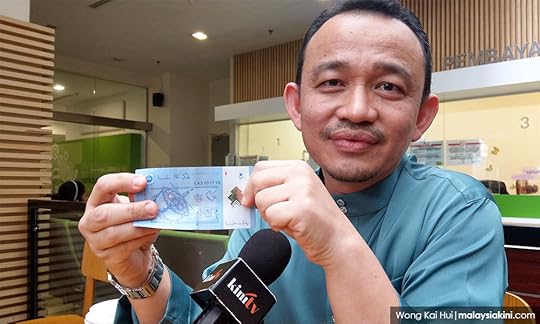 On those banknotes are not "khat" They are simple Jawi prints. I know Jawi and I know the difference. Khat is Islamic/religious calligraphy. Not part of "Malay culture." Wrong claim made here. Don't get me wrong. I like looking at "khat-work" It is beautiful. So is Chinese calligraphy, Korean script, Egyptian hieroglyphics, and the beautiful graffiti in the Bronx and Harlem, New York city.Why not teach more coding skills? More English skills? Good voting skills? And those Industry 4.0 skills you talk about? Not frills. The idea of "radically revamping" education for a new society does not seem to be of interest to this government.Today under PH, race-based parties are strengthened and a new Indian party is created. What did the people vote for? The Pakatan Harapan government is pushing for a new brand and agenda for the Islamization of schools, detrimental to multiculturalism. Difficult to have a ministry that is not composed of philosophers and anthropologists of education. Dangerous, in fact.The goal of the Ministry of Education seems clear now, after one year of promising progressive reform: To radically Islamize the schools through culture and the curriculum. This is a wrong move. In schools we need to get students to study and discuss life of great scientists of the Eastern and Western world. Liberal ones, especially. Why not create secular-liberal spaces in classroom learning, not more religious-indoctrinating semiotics of learning?Back to the khat controversy.
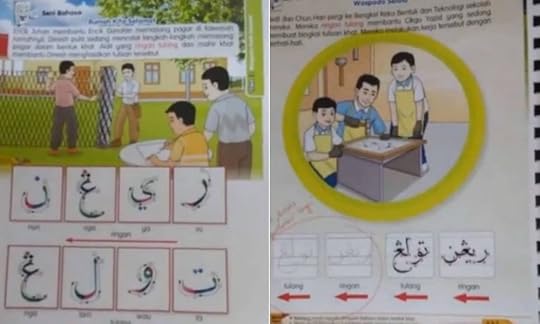 Seni Khat is essentially an Islamic artform used to promote the Quran. That's why non-Muslims are questioning. Give children time to be innovative, to read more, to have intelligent conversations. Not more drills of frill re: khat and Jawi.The issues discussed in Malaysian education continue to centre around race, religion. Not cognition, excellence, and futurism.Why not teach Malay, Chinese, Tamil, The Bronx, Sumerian and Ancient Egyptian calligraphy then? Not khat. It is a form of religious calligraphy, Jawi is cultural appropriation script. In all these quarrels, one thing is clear: how poor our decision-makers are in cultural management that till today the same old ethnic-division-nonsense is our politics. Therefore, we have this controversy: to teach or not to teach “khat”. The larger issue is: how do we ensure cultural diversity is promoted and the curriculum is made to serve the idea of an inclusive education, in a country rich in cultural diversity, but poor in managing and celebrating possibilities in newer hybridizations of artifacts of cultural ingenuity.
A+ A- COMMENT | Some say the issue of mandating the teaching of the Islamic scriptural artform of “khat” in the curriculum is a molehill. I say, yes, it is. A molehill sitting on top of a mountain of radical Islamism. My question: Are the leaders who wish to preserve "khat" good enough to fight corruption that is destroying Malay-Islamic culture? We must believe that the survival of a nation not only lies in the writing script, but primarily with cognitive ability amidst tides of mediocrity.As I have said in my previous column on the link between anthropology and education, even the political leader needs training in Diversity and Cross-Cultural Management. A minister of Education from an all-Malay party will naturally push the agenda for an all-Malay exclusivity. Not good.Spend time strengthening English Language skills in schools -- even for teachers. Less time arguing.AdvertisementBehind the backdrop of "anti-liberalism", khat is the molehill atop a mountain of Wahabi-Salafi radicalism. Khat can be taught alongside other scripts and artform, to have children be introduced to multilingual scripts.Though PH won with the blessings of a multicultural vote, the core ideology remains Ketuanan Melayu-Islam, not Multiculturalism. Progress or digress in Education is dependent upon who is at the helm and what ideology is being pushed.
First, it was the use of "Allah" in the Malay Bible. It was a huge controversy. Then came the proclamation that schools can be good "medan dakwah". Later came the adoration of Zakir Naik (above). It is not about "khat". It's about the expansion of the ecology of creeping and creepy Islamization engineered by the Ministry of Education.There is something called "penmanship" if you wish to foster the skill of beautiful handwriting. Khat is Islamic calligraphy and the non-Muslims feel that this is not a welcoming activity, understandably. Islamization comes with subtle replacement of themes and curricular materials, from one ideology to another. A curriculum can never be neutral. There is always an agenda run by those who author it. Malaysia needs a multicultural curricular agenda, not more attempts to Islamize. I wish the MoE knows this simple idea of the ideology of schooling. I do believe that policymakers in the Ministry need Cross-cultural Training urgently. What if the Buddhist teachers start insisting that children learn to create Mandalas? Will the Islamists in the Ministry object?Too much time is wasted not teaching the STEM subjects in English. Whereas the MoE is busy Malayo-Islamizing the schools. This is a wrong move in our national agenda for education.On those banknotes are not "khat" They are simple Jawi prints. I know Jawi and I know the difference. Khat is Islamic/religious calligraphy. Not part of "Malay culture." Wrong claim made here. Don't get me wrong. I like looking at "khat-work" It is beautiful. So is Chinese calligraphy, Korean script, Egyptian hieroglyphics, and the beautiful graffiti in the Bronx and Harlem, New York city.Why not teach more coding skills? More English skills? Good voting skills? And those Industry 4.0 skills you talk about? Not frills. The idea of "radically revamping" education for a new society does not seem to be of interest to this government.Today under PH, race-based parties are strengthened and a new Indian party is created. What did the people vote for? The Pakatan Harapan government is pushing for a new brand and agenda for the Islamization of schools, detrimental to multiculturalism. Difficult to have a ministry that is not composed of philosophers and anthropologists of education. Dangerous, in fact.The goal of the Ministry of Education seems clear now, after one year of promising progressive reform: To radically Islamize the schools through culture and the curriculum. This is a wrong move. In schools we need to get students to study and discuss life of great scientists of the Eastern and Western world. Liberal ones, especially. Why not create secular-liberal spaces in classroom learning, not more religious-indoctrinating semiotics of learning?Back to the khat controversy.Seni Khat is essentially an Islamic artform used to promote the Quran. That's why non-Muslims are questioning. Give children time to be innovative, to read more, to have intelligent conversations. Not more drills of frill re: khat and Jawi.The issues discussed in Malaysian education continue to centre around race, religion. Not cognition, excellence, and futurism.Why not teach Malay, Chinese, Tamil, The Bronx, Sumerian and Ancient Egyptian calligraphy then? Not khat. It is a form of religious calligraphy, Jawi is cultural appropriation script. In all these quarrels, one thing is clear: how poor our decision-makers are in cultural management that till today the same old ethnic-division-nonsense is our politics. Therefore, we have this controversy: to teach or not to teach “khat”. The larger issue is: how do we ensure cultural diversity is promoted and the curriculum is made to serve the idea of an inclusive education, in a country rich in cultural diversity, but poor in managing and celebrating possibilities in newer hybridizations of artifacts of cultural ingenuity.

July 30, 2019
Teach our students to manage cultural differences wisely
Teach our students to manage cultural differences wiselyOpinion |
Azly Rahman
Published: Today 12:11 am | Modified: Today 12:11 am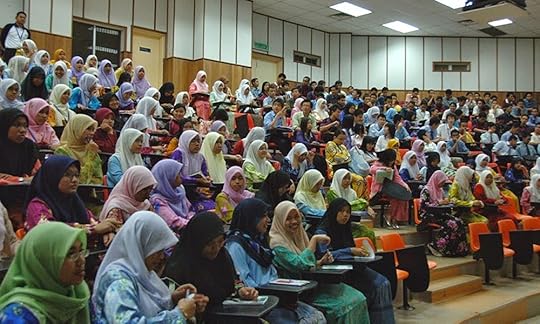 A+ A- COMMENT | Over the last two weeks, I had the opportunity to teach a course on cross-cultural management with a professor from a university in Mexico.I took the lectures on culture and education concepts and he weaved them with advanced management skills in a global environment. We worked well as instructors, from the planning stage to the final assessment.I picked up some Spanish words and phrases months before the sessions in Ensenada, a beautiful Mexican resort city and read as much as possible on the history and people of the place.Our goal was to bring out the best of the 21 students we had in the international summer program.Advertisement
The theme was not only cultural appreciation but also how to understand the culture of work in our increasingly technological world.Our students came from Mexico, the United States, Germany, Austria, Peru, China, and England.It was a culturally enriching learning experience for them as they engaged in active and fun learning, exploring differences, understanding what it means to work in a global company, and how to negotiate differences by first, suspending judgement.We visited the Fender guitar factory, Navico Marine GPS manufacturing plant, a winery, and engaged in a variety of cultural experience, including salsa dancing, taco-making, and chocolate making.We had fun comparing how cultures differ in the worldview of things: time management, family values, production of the arts, and how industries take care of the worker.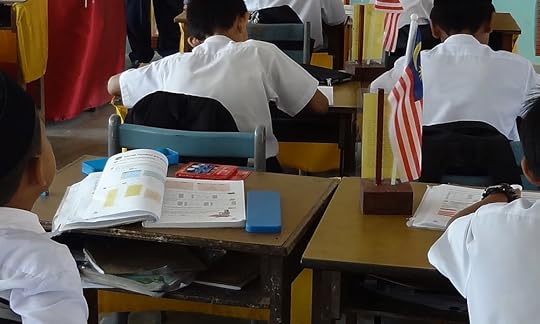 As usual, I thought of Malaysians and how we can benefit from a similar educational approach to schooling, at least to start with, at the university level.I thought of how our youngsters can be taught to manage cultural differences and work together as Malays, Chinese Indians, Iban, Kadazan, etc. so that we will not continue to reproduce hate that breeds like cancer in our society, although we can consider ourselves economically better than many countries.At present, I do not see the political will of our Education Ministry in mandating cross-cultural training for teachers.We are still at the stage where we continue to divide according to the races, for political-economic purposes. We have a long way to go to work our way towards a cultural policy that promotes the idea of a Malaysian Malaysia, political ideologies and branding aside.We must, however, demand our Education and National Unity Ministries to work on this important platform for national resilience through cultural appreciations and the sustaining of pride.I am sharing a closing speech which I wrote and delivered on behalf of the international faculty members, reminding students of their role as cultural beings:Such a wonderful place, wonderful people, wonderful institution and you wonderful students of the International Summer program, without you we would not be here.
 As the Brazilian philosopher, Paulo Freire would say, we need to become more critical human beings and learners.We need to become more human, in a world that continues to be more dehumanising.There is a Persian saying: “I wept when I had no shoes until I saw a man with no feet”.We must become more humble and kinder as we grow more knowledgeable because the world continues to favour the powerful … in a world of deforestation, war, destruction, racial and religious intolerances, militarisation, and corruption.The French philosopher of enlightenment Jean Jacques Rousseau warned us against the arrogance of knowledge, saying “Everything is good in the hands of the author of things, everything degenerates in the hands of Man”.Because we failed to be aware of what it means to be emphatic, to use our knowledge and the privilege we are acquiring to help the less fortunate and the wretched of the earth.Heal the world. Use science for the people, as tools to build greatness in our civilizations. Hold your moral compass to close your hearts. Always.Be close to the people who will need your help, more than being close to power, ideology, and money.Your teachers in this program hope you will continue to seek knowledge and enrich yourself with experiences so that you will continue to craft your own version of wisdom.Let us say goodbye here.Have a wonderful life ahead.
A+ A- COMMENT | Over the last two weeks, I had the opportunity to teach a course on cross-cultural management with a professor from a university in Mexico.I took the lectures on culture and education concepts and he weaved them with advanced management skills in a global environment. We worked well as instructors, from the planning stage to the final assessment.I picked up some Spanish words and phrases months before the sessions in Ensenada, a beautiful Mexican resort city and read as much as possible on the history and people of the place.Our goal was to bring out the best of the 21 students we had in the international summer program.AdvertisementThe theme was not only cultural appreciation but also how to understand the culture of work in our increasingly technological world.Our students came from Mexico, the United States, Germany, Austria, Peru, China, and England.It was a culturally enriching learning experience for them as they engaged in active and fun learning, exploring differences, understanding what it means to work in a global company, and how to negotiate differences by first, suspending judgement.We visited the Fender guitar factory, Navico Marine GPS manufacturing plant, a winery, and engaged in a variety of cultural experience, including salsa dancing, taco-making, and chocolate making.We had fun comparing how cultures differ in the worldview of things: time management, family values, production of the arts, and how industries take care of the worker.
As usual, I thought of Malaysians and how we can benefit from a similar educational approach to schooling, at least to start with, at the university level.I thought of how our youngsters can be taught to manage cultural differences and work together as Malays, Chinese Indians, Iban, Kadazan, etc. so that we will not continue to reproduce hate that breeds like cancer in our society, although we can consider ourselves economically better than many countries.At present, I do not see the political will of our Education Ministry in mandating cross-cultural training for teachers.We are still at the stage where we continue to divide according to the races, for political-economic purposes. We have a long way to go to work our way towards a cultural policy that promotes the idea of a Malaysian Malaysia, political ideologies and branding aside.We must, however, demand our Education and National Unity Ministries to work on this important platform for national resilience through cultural appreciations and the sustaining of pride.I am sharing a closing speech which I wrote and delivered on behalf of the international faculty members, reminding students of their role as cultural beings:Such a wonderful place, wonderful people, wonderful institution and you wonderful students of the International Summer program, without you we would not be here.As the Brazilian philosopher, Paulo Freire would say, we need to become more critical human beings and learners.We need to become more human, in a world that continues to be more dehumanising.There is a Persian saying: “I wept when I had no shoes until I saw a man with no feet”.We must become more humble and kinder as we grow more knowledgeable because the world continues to favour the powerful … in a world of deforestation, war, destruction, racial and religious intolerances, militarisation, and corruption.The French philosopher of enlightenment Jean Jacques Rousseau warned us against the arrogance of knowledge, saying “Everything is good in the hands of the author of things, everything degenerates in the hands of Man”.Because we failed to be aware of what it means to be emphatic, to use our knowledge and the privilege we are acquiring to help the less fortunate and the wretched of the earth.Heal the world. Use science for the people, as tools to build greatness in our civilizations. Hold your moral compass to close your hearts. Always.Be close to the people who will need your help, more than being close to power, ideology, and money.Your teachers in this program hope you will continue to seek knowledge and enrich yourself with experiences so that you will continue to craft your own version of wisdom.Let us say goodbye here.Have a wonderful life ahead.July 13, 2019
Study anthropology, not convert the Orang Asli
Study anthropology, not convert the Orang AsliOpinion |
Azly Rahman
Published: 12 Jul 2019, 10:18 pm | Modified: 12 Jul 2019, 10:18 pm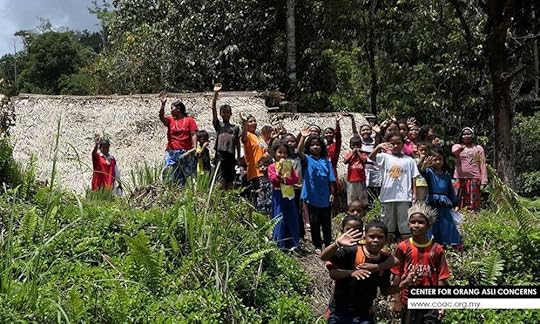 A+ A- COMMENT | Those entrusted with the nation’s Education must study anthropology instead of trying to convert the Orang Asli. This is what I call “Poverty-of-Local Knowledge Syndrome”. The Ministry of Education, especially, needs to work harder understanding the link between education and cultural preservation while assisting with the sustainable progress of the indigenous peoples.We are hearing reports of the children of Orang Asli dropping out of school and the Ministry of Education is merely lamenting about it. But why the high drop out rate? There is perhaps the main explanation: Because schools are based on Ketuanan Melayu-Islam Hegemony and meaningless to their reality. If you want children to stay in school, make the place exciting. Learn this from marketing and customer loyalty. Work hard, those in the relevant ministries!The Ministry of Education should spend less time and effort turning schools into "medan dakwah". Instead, more time is needed in doing real teaching with rigorous, exciting content-learning.Every culture has its own indigenous knowledge, grounded in ethics of authenticity and spirituality and a system of culturally-relevant technology. Use this notion of knowledge acquisition and construction to design curriculum. Not to destroy pride using a now detested Ketuanan-Melayu-based national curriculum. For example, why not teach in schools how and why the Malay sultans in the past took the Orang Asli as slaves. Advertisement
In the case of understanding historical knowledge, for example, even the Orang Asli is puzzled why Yap Ah Loy and Sutan Puasa are claiming they "found" Kuala Lumpur. Be careful what genre of fake history shoved down the mind of our children. As we know, history is written by the winners, using well-paid scribes and fiction writers masquerading as historians. Isn’t this true of historical writing in Malaysia too? Tun Sri Lanang who wrote the Malay Annals (Sejarah Melayu) is one good example of such a historical-mythical-fiction author.The shrewdest politician will find it most profitable to have all the races, religionists, and ideologues fight one another. “Historical facts” (an oxymoron) is used to ignite intellectual as well as political chaos.Culture and educationWe live in a world of multiplicities. Culture versus culture. Of hybridity. Diverse constructions of reality. Study this to educate. Has any of the people in the Ministry of Education sought to study the needs of the Orang Asli, ethnographically?Educating is not about Islamising or Christianising the natives. Enough of this is done in the name of guns, guts, glory. Our educational policymakers probably lack interest in studying the anthropology of educating. Only interested in positions.And how do you teach Orang Asli children to like school when you and your governmental gang bulldozed their habitat for profits?RESIST! That's what you need as curriculum design for the natives in danger of extinction. Of the education of the Orang Asli too. I cannot imagine their children being turned into wannabe Arabs in the process of schooling as medan dakwah. A picture of absurdity! Stop sending preachers into the Orang Asli communities. Send anthropologists instead. Send the good ones who will speak for the people. Not ones paid well by the ideologically trapped in a certain sociology of knowledge. Not the ones who sit all day in air-condition offices making policies for those living in the jungle. That would be like those predatory World Bank and IMF “experts” sitting in Washington, DC boardrooms who writes developmental policies for padi farmers in Sekinchan, Selangor and Changlun, Kedah. Neo-imperialist absurdity! Schooling for indigenous people needs to enhance native cognitive abilities that emphasise in-depth local and spiritual knowledge, one that enables good cultural practices and instil pride. Not one that destroys culture and society. The Ministry of Education should worry about fixing Mat Rempitism first. That's your medan dakwah. That plague is the power of Malay subaltern narrative gone wrong. Perhaps the government should send gangsta rapper-anthropologists to study the issue plaguing this disabling aspect of Malay-urban-youth culture.If the Ministry of Education consists of predominantly Malay-Muslim directors and policy-makers, we have got a major cultural diversity problem. We will have one-dimensional minds looking at circular problems through square pegs, offering solutions with one style of triangulation.I spoke of anthropology in this essay. It is simply a field of study of human beings in their environment. Ethnography is the art and science of mapping cultural elements of the field of human study. I offer a poem on what ethnography means as I have understood over the decades of studying anthropology and doing ethnography.Poetry on anthropology and “doing ethnography”ETHNOGRAPHY ... as exciting as acting maybe..making the strange familiarand the familiar, strangeto suspend judgement,it is a study of cultures,whatever they may bewherever their locations may bewhatever we make culture to beperspectives,meaning-making,rites,rituals,of thick description,of in-depth interviews,of going into the field as participantor non-participant observerof describing cultures, not judging them (yet),but most importantly to learn a bit moreof what it means to be human,all too humannever buried under numbersto understand variations,of the tools we use to work and playin the house that we and others inhabitto write notesto write memosto codeto decodeto constructto deconstructto un-ground theoriesto construct patterns of meaningand finally. naturally. to tell storiesin all their strangenessand familiarity -- all these ...and the reward?to help perhaps defend the culture studiedand to become "one of them"albeit not entirely being in themyet be able to return to laughter,and finally, to have that honourof having "the anthropological veto”.. we are all, in our own way,daily anthropologists trying to make senseof phenomena around usand discern patterns of meaning,so that we will all not go bonkers/insane being aliensand being hateful of thingswe do not yet understand ...- Azly Rahman This is what I hope our educators will one day master. It requires a political will to prepare teachers to go “into the field” and work with the “natives”. It requires empathy, sensitivity, and the urge to educate the children peacefully as the criteria for a successful teacher training system. Content preparation alone is not enough, because this is just the information part of the social construction of knowledge. Education is a cultural and social activity in which we are in constant critical, ethical, creative, and futuristic dialogue with the junior members of society.We need to have a serious national dialogue on this aspect of educational philosophy: the social and cultural construction of social reality.Culture and transformationBelow are my thoughts on the idea of cultural change as it is impacted by globalisation and the rapid growth of technology, and our education system. One that has impacted not just the Orang Asli and Orang Asal, but all of us. Because we have been transformed and we need to understand what this means, culturally."Culture" has become an important debate in an age wherein boundaries continue to shift and peoples began to claim their rights as citizens of the country they are in, and the meaning of democracy is beginning to be understood. Culture, to me, is not merely about the house we inhabit or merely the tools we use, but a combination of both and more than this, it is about the way we enrich the sense of humanism we embody.I am reminded by what the Spanish philosopher Ortega y Gasset said, "Man does not have nature what he has is history." This seems to be a notion of humanity worth exploring if our belief about human evolution takes into consideration how human beings take what is available form nature and transform the resources into tools and institutions, and then turn institutions into tolls that will transform human beings into classes of people who have the power to turn less powerful others into machines or automatons who have lost their soul to the spirit of the machine.One can also argue that the origin of domination of human beings over others comes not via the manifestation of "evil within" as theologians would argue, but also a consequence of enabling technologies that speed up the enabling of "evil within". As in the case of slavery, it is not merely through "evil" that slavery was born but through human being's control of knowledge and consciousness and the nature of
how one defines each other
. It is through the technology of "language" and the written and spoken word, and whoever has better control of these will determine the nature and nurturance of slavery.In the history of Malaysia, the natives were once enslaved. The Orang Asli were, by the Malay sultans. We cannot allow the Master-Slave Narrative to continue in our modern era. We must first teach those in the Ministry of Education what ethnography of education means. Only when our educators have mastered this field of study will we perhaps, logically, learn from the natives, rather than try to save their souls, religiously!
Schooling for indigenous people needs to enhance native cognitive abilities that emphasise in-depth local and spiritual knowledge, one that enables good cultural practices and instil pride. Not one that destroys culture and society. The Ministry of Education should worry about fixing Mat Rempitism first. That's your medan dakwah. That plague is the power of Malay subaltern narrative gone wrong. Perhaps the government should send gangsta rapper-anthropologists to study the issue plaguing this disabling aspect of Malay-urban-youth culture.If the Ministry of Education consists of predominantly Malay-Muslim directors and policy-makers, we have got a major cultural diversity problem. We will have one-dimensional minds looking at circular problems through square pegs, offering solutions with one style of triangulation.I spoke of anthropology in this essay. It is simply a field of study of human beings in their environment. Ethnography is the art and science of mapping cultural elements of the field of human study. I offer a poem on what ethnography means as I have understood over the decades of studying anthropology and doing ethnography.Poetry on anthropology and “doing ethnography”ETHNOGRAPHY ... as exciting as acting maybe..making the strange familiarand the familiar, strangeto suspend judgement,it is a study of cultures,whatever they may bewherever their locations may bewhatever we make culture to beperspectives,meaning-making,rites,rituals,of thick description,of in-depth interviews,of going into the field as participantor non-participant observerof describing cultures, not judging them (yet),but most importantly to learn a bit moreof what it means to be human,all too humannever buried under numbersto understand variations,of the tools we use to work and playin the house that we and others inhabitto write notesto write memosto codeto decodeto constructto deconstructto un-ground theoriesto construct patterns of meaningand finally. naturally. to tell storiesin all their strangenessand familiarity -- all these ...and the reward?to help perhaps defend the culture studiedand to become "one of them"albeit not entirely being in themyet be able to return to laughter,and finally, to have that honourof having "the anthropological veto”.. we are all, in our own way,daily anthropologists trying to make senseof phenomena around usand discern patterns of meaning,so that we will all not go bonkers/insane being aliensand being hateful of thingswe do not yet understand ...- Azly Rahman This is what I hope our educators will one day master. It requires a political will to prepare teachers to go “into the field” and work with the “natives”. It requires empathy, sensitivity, and the urge to educate the children peacefully as the criteria for a successful teacher training system. Content preparation alone is not enough, because this is just the information part of the social construction of knowledge. Education is a cultural and social activity in which we are in constant critical, ethical, creative, and futuristic dialogue with the junior members of society.We need to have a serious national dialogue on this aspect of educational philosophy: the social and cultural construction of social reality.Culture and transformationBelow are my thoughts on the idea of cultural change as it is impacted by globalisation and the rapid growth of technology, and our education system. One that has impacted not just the Orang Asli and Orang Asal, but all of us. Because we have been transformed and we need to understand what this means, culturally."Culture" has become an important debate in an age wherein boundaries continue to shift and peoples began to claim their rights as citizens of the country they are in, and the meaning of democracy is beginning to be understood. Culture, to me, is not merely about the house we inhabit or merely the tools we use, but a combination of both and more than this, it is about the way we enrich the sense of humanism we embody.I am reminded by what the Spanish philosopher Ortega y Gasset said, "Man does not have nature what he has is history." This seems to be a notion of humanity worth exploring if our belief about human evolution takes into consideration how human beings take what is available form nature and transform the resources into tools and institutions, and then turn institutions into tolls that will transform human beings into classes of people who have the power to turn less powerful others into machines or automatons who have lost their soul to the spirit of the machine.One can also argue that the origin of domination of human beings over others comes not via the manifestation of "evil within" as theologians would argue, but also a consequence of enabling technologies that speed up the enabling of "evil within". As in the case of slavery, it is not merely through "evil" that slavery was born but through human being's control of knowledge and consciousness and the nature of
how one defines each other
. It is through the technology of "language" and the written and spoken word, and whoever has better control of these will determine the nature and nurturance of slavery.In the history of Malaysia, the natives were once enslaved. The Orang Asli were, by the Malay sultans. We cannot allow the Master-Slave Narrative to continue in our modern era. We must first teach those in the Ministry of Education what ethnography of education means. Only when our educators have mastered this field of study will we perhaps, logically, learn from the natives, rather than try to save their souls, religiously!
A+ A- COMMENT | Those entrusted with the nation’s Education must study anthropology instead of trying to convert the Orang Asli. This is what I call “Poverty-of-Local Knowledge Syndrome”. The Ministry of Education, especially, needs to work harder understanding the link between education and cultural preservation while assisting with the sustainable progress of the indigenous peoples.We are hearing reports of the children of Orang Asli dropping out of school and the Ministry of Education is merely lamenting about it. But why the high drop out rate? There is perhaps the main explanation: Because schools are based on Ketuanan Melayu-Islam Hegemony and meaningless to their reality. If you want children to stay in school, make the place exciting. Learn this from marketing and customer loyalty. Work hard, those in the relevant ministries!The Ministry of Education should spend less time and effort turning schools into "medan dakwah". Instead, more time is needed in doing real teaching with rigorous, exciting content-learning.Every culture has its own indigenous knowledge, grounded in ethics of authenticity and spirituality and a system of culturally-relevant technology. Use this notion of knowledge acquisition and construction to design curriculum. Not to destroy pride using a now detested Ketuanan-Melayu-based national curriculum. For example, why not teach in schools how and why the Malay sultans in the past took the Orang Asli as slaves. AdvertisementIn the case of understanding historical knowledge, for example, even the Orang Asli is puzzled why Yap Ah Loy and Sutan Puasa are claiming they "found" Kuala Lumpur. Be careful what genre of fake history shoved down the mind of our children. As we know, history is written by the winners, using well-paid scribes and fiction writers masquerading as historians. Isn’t this true of historical writing in Malaysia too? Tun Sri Lanang who wrote the Malay Annals (Sejarah Melayu) is one good example of such a historical-mythical-fiction author.The shrewdest politician will find it most profitable to have all the races, religionists, and ideologues fight one another. “Historical facts” (an oxymoron) is used to ignite intellectual as well as political chaos.Culture and educationWe live in a world of multiplicities. Culture versus culture. Of hybridity. Diverse constructions of reality. Study this to educate. Has any of the people in the Ministry of Education sought to study the needs of the Orang Asli, ethnographically?Educating is not about Islamising or Christianising the natives. Enough of this is done in the name of guns, guts, glory. Our educational policymakers probably lack interest in studying the anthropology of educating. Only interested in positions.And how do you teach Orang Asli children to like school when you and your governmental gang bulldozed their habitat for profits?RESIST! That's what you need as curriculum design for the natives in danger of extinction. Of the education of the Orang Asli too. I cannot imagine their children being turned into wannabe Arabs in the process of schooling as medan dakwah. A picture of absurdity! Stop sending preachers into the Orang Asli communities. Send anthropologists instead. Send the good ones who will speak for the people. Not ones paid well by the ideologically trapped in a certain sociology of knowledge. Not the ones who sit all day in air-condition offices making policies for those living in the jungle. That would be like those predatory World Bank and IMF “experts” sitting in Washington, DC boardrooms who writes developmental policies for padi farmers in Sekinchan, Selangor and Changlun, Kedah. Neo-imperialist absurdity!
Schooling for indigenous people needs to enhance native cognitive abilities that emphasise in-depth local and spiritual knowledge, one that enables good cultural practices and instil pride. Not one that destroys culture and society. The Ministry of Education should worry about fixing Mat Rempitism first. That's your medan dakwah. That plague is the power of Malay subaltern narrative gone wrong. Perhaps the government should send gangsta rapper-anthropologists to study the issue plaguing this disabling aspect of Malay-urban-youth culture.If the Ministry of Education consists of predominantly Malay-Muslim directors and policy-makers, we have got a major cultural diversity problem. We will have one-dimensional minds looking at circular problems through square pegs, offering solutions with one style of triangulation.I spoke of anthropology in this essay. It is simply a field of study of human beings in their environment. Ethnography is the art and science of mapping cultural elements of the field of human study. I offer a poem on what ethnography means as I have understood over the decades of studying anthropology and doing ethnography.Poetry on anthropology and “doing ethnography”ETHNOGRAPHY ... as exciting as acting maybe..making the strange familiarand the familiar, strangeto suspend judgement,it is a study of cultures,whatever they may bewherever their locations may bewhatever we make culture to beperspectives,meaning-making,rites,rituals,of thick description,of in-depth interviews,of going into the field as participantor non-participant observerof describing cultures, not judging them (yet),but most importantly to learn a bit moreof what it means to be human,all too humannever buried under numbersto understand variations,of the tools we use to work and playin the house that we and others inhabitto write notesto write memosto codeto decodeto constructto deconstructto un-ground theoriesto construct patterns of meaningand finally. naturally. to tell storiesin all their strangenessand familiarity -- all these ...and the reward?to help perhaps defend the culture studiedand to become "one of them"albeit not entirely being in themyet be able to return to laughter,and finally, to have that honourof having "the anthropological veto”.. we are all, in our own way,daily anthropologists trying to make senseof phenomena around usand discern patterns of meaning,so that we will all not go bonkers/insane being aliensand being hateful of thingswe do not yet understand ...- Azly Rahman This is what I hope our educators will one day master. It requires a political will to prepare teachers to go “into the field” and work with the “natives”. It requires empathy, sensitivity, and the urge to educate the children peacefully as the criteria for a successful teacher training system. Content preparation alone is not enough, because this is just the information part of the social construction of knowledge. Education is a cultural and social activity in which we are in constant critical, ethical, creative, and futuristic dialogue with the junior members of society.We need to have a serious national dialogue on this aspect of educational philosophy: the social and cultural construction of social reality.Culture and transformationBelow are my thoughts on the idea of cultural change as it is impacted by globalisation and the rapid growth of technology, and our education system. One that has impacted not just the Orang Asli and Orang Asal, but all of us. Because we have been transformed and we need to understand what this means, culturally."Culture" has become an important debate in an age wherein boundaries continue to shift and peoples began to claim their rights as citizens of the country they are in, and the meaning of democracy is beginning to be understood. Culture, to me, is not merely about the house we inhabit or merely the tools we use, but a combination of both and more than this, it is about the way we enrich the sense of humanism we embody.I am reminded by what the Spanish philosopher Ortega y Gasset said, "Man does not have nature what he has is history." This seems to be a notion of humanity worth exploring if our belief about human evolution takes into consideration how human beings take what is available form nature and transform the resources into tools and institutions, and then turn institutions into tolls that will transform human beings into classes of people who have the power to turn less powerful others into machines or automatons who have lost their soul to the spirit of the machine.One can also argue that the origin of domination of human beings over others comes not via the manifestation of "evil within" as theologians would argue, but also a consequence of enabling technologies that speed up the enabling of "evil within". As in the case of slavery, it is not merely through "evil" that slavery was born but through human being's control of knowledge and consciousness and the nature of
how one defines each other
. It is through the technology of "language" and the written and spoken word, and whoever has better control of these will determine the nature and nurturance of slavery.In the history of Malaysia, the natives were once enslaved. The Orang Asli were, by the Malay sultans. We cannot allow the Master-Slave Narrative to continue in our modern era. We must first teach those in the Ministry of Education what ethnography of education means. Only when our educators have mastered this field of study will we perhaps, logically, learn from the natives, rather than try to save their souls, religiously!July 10, 2019
Re-imagining Malaysia after Mahathir
Re-imagining Malaysia after MahathirOpinion | Azly Rahman Published: Today 1:26 am | Modified: Today 1:26 am
 A+ A- COMMENT | Jailing of a preacher under the promised-to-be-abolished Sedition Act. An education system still without a clear direction on a transcultural-relations policy and the construction of bastions against authoritarianism and technopoly. The almost-daily nagging on the discourse of who the next-Prime Minister shall be. Implosions in all the component parties. The continuing criminalization of the powerful over the powerless, especially in regard to the plight and rights of the indigenous people. The wish to bring home IS fighters who will be a clear and present danger to national security. The love affair between the government and a manipulative radical Islamic preacher. The refusal to fulfil election promises, relegating voters to mere fools to be used by the cunning to be in power. The intimidation of schoolchildren who are learning how to speak up against the destruction of the environment. The chickening out of schools that are supposed to be examples of what kind of thinkers ought to be created in a nation sorely in need of critical thinkers, doers, pragmatists, rationalists, and futurists.
 The failure to locate missing pastors and religious preachers whose fate no one except, perhaps, the government knows.You add to the list of what is ailing this country when promises were made, but shattered a year after. By design. By decree, By the act of political deception.The new Malaysia, beyond the broken-promise-laden coalition called Pakatan Harapan, needs to get real with not going back on promises. No breaking them. In cyberspace many are asking: will a Third Force emerge, gradually replacing Mahathirism? What will this process of change look like?The outlookOn August 31, 2019, our nation will be celebrating sixty-two years of Merdeka, an experiment in being a sovereign state. As another ritual approaches, and as we think of the hopes, dreams, and legacy of the best prime minister we had, Tunku Abdul Rahman, I think of the requirement for a new spirit and structure of citizenship.
 The nation must be made to be Malaysian once and for all. Malaysia is one country and cannot be considered in parts. There can be no such thing as first- and second-class citizens anymore. This Malaysian brand of apartheid is morally reprehensible and must be abolished once and for all. The future of education still looks bleak – the race-based Malay party controls the process of making decisions. The economic commentators still talk about a pie in which the major race controls how much to eat and how to continue to bake the same pie, using the same recipe and the same oven. The idea of “national unity” is vague. Because our educational policy of engaging the young multiculturally is non-existent, the training of teachers for cross-cultural sensitivities is still unheard of, and worse, educational leadership is still struggling with the most relevant philosophy to be used as GPS, in this time that requires a different way of knowing and looking at things.We Malaysians have a dream. That of Tunku Abdul Rahman who was ousted. Because he spoke for multiculturalism. Like Onn Jaafar. Like the early nationalists and socialists. These folks had a better vision of what Malaysian needed, but the greedy and those who use race and religion to divide and plunder won the game of power. Ploughing through the narratives of the Kirby-Brinsford teachers back in those day, I conclude that we had that vision and that teachers were there to make it come true. But pride and prejudice took over and the seeds of destruction were planted,
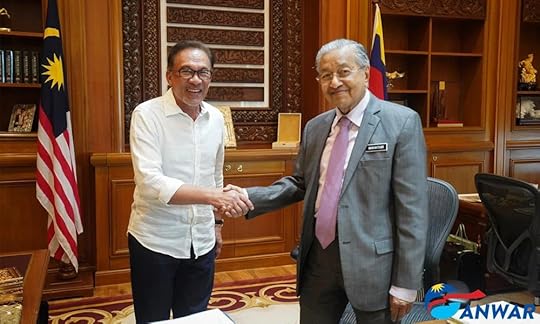
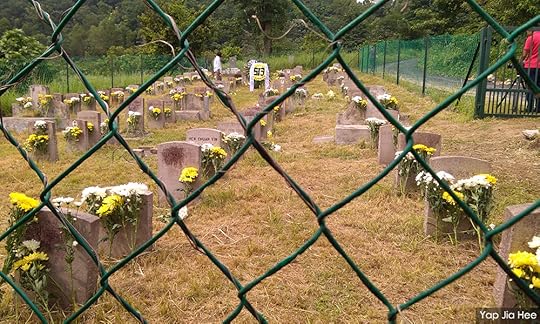 Then May 13 1969 came. It changed the landscape of our political-economy and social-justice. Whether it was orchestrated or it was an event that went out of control or whether it was a “natural occurrence,” the impact changed race dynamics. Till today.We must move forward. Leave the abyss. Plant new seeds of social reconstruction. Engineer a “third wave of change.” A third force.MusingsEssentially, below are considerations for a grand plan or the big picture of change that needs to be created in order for Malaysia to realize the “Malaysian Dream.”We cannot escape from the idea that there ought to be winners and losers, whether it is in the way we give grades to students, design economic policies, organise the political system or, ironically, even in the way we understand religion and God, and how these relate to what Mohandas Gandhi would call the harijan (children of God).The continuing issues of succession plaguing the leadership of the major components of all the ruling parties, for example, reflects a virtueless leadership. It even reflects the system of dictatorship and authoritarianism that we have allowed to take root in all parties.
 We are seeing the development of another dangerous excess of authoritarianism – the development of political dynasties. We continue to see this culture in the Malay and Chinese political parties.If all that energy is used to design a better system of participatory democracy and philanthropy, and to reach out to other ethnic groups to collaborate in solving the issue of poverty, we, as Malaysians, will become a miracle nation. Poverty is not the problem of various races – it is the problem of humanity.How can the rich be saved if the poor are multiplying in large numbers? We will have a society that will need more sophisticated surveillance systems in order to reduce robbery, kidnapping, etc.The poor look at the rich and ask themselves: “Am I poor because I am lazy? Or is he rich because he works a hundred times better? Or is it the system we build that will continue to make the rich richer and the poor poorer?”What resources do the rich have vis-à-vis the poor to compete in a world that is increasingly technological, technicist, and informational? We have created a system of ethnically-based structural violence. A republic of virtueWe need to bring back “virtue” to the forefront of our political philosophies and into our economic paradigm, and use it to design a virtuous foundation for our economic system. From a virtuous foundation, we will then see a healthier re-organisation of our lives as economic beings.Education, and education alone, though slow and tedious as a process of transformation, will be the most powerful tool of cognitive restructuring and the teaching of virtue. Education for peace, social justice, co-operation, tolerance and spiritual advancement will be the best foundation. But where is our education heading?
 How do we begin creating a republic of virtue if we do not yet have the tools of analysing what a corrupt society is and how corrupt leaders are a product of the economic system created to produce more sophisticated forms of corruption?We, the concerned Malaysians who wish to see genuine change and not be lied to after every election, must engineer a revolution of our consciousness. From the revolution in our minds, we move on to the revolution of our collective consciousness. Gradually, as we realise that a better collective consciousness can be created, we will be aware of the oppositional forces that are disabling real human progress.What then after Mahathirism ends?We must now become makers of our own history and help others do the same. We must first learn to deconstruct ourselves and draw out the virtue within us, even if the process can be terrifying. Is there hope today? After 60 years of Umno dominance? After the end of the second Mahathirist Revolution? Will a third force – a trishakti – be possible to gradually replace the old and totalitarianising political thinking? One that will address our high hopes that have turned into broken promises.
 July 4, 2019
Why be afraid of student environmental activism?
Why be afraid of student environmental activism?Opinion |
Azly Rahman
Published: Today 1:27 am | Modified: Today 1:27 am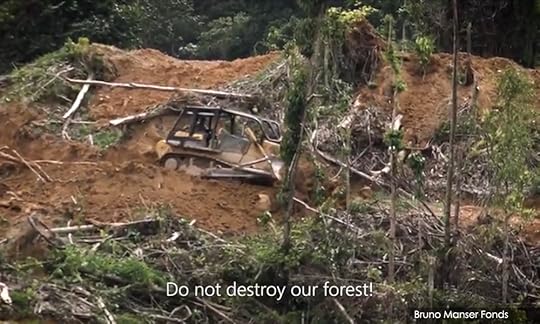 A+ A- COMMENT | "Found in everything from shampoo to donuts, palm oil is now the most common vegetable oil in the world - and also one of the world's leading deforestation drivers... "Palm oil is extracted from the fruit of the oil palm tree, Elaeis guineensis, which thrives in humid climates. "The large majority of palm oil production occurs in just two countries, Malaysia and Indonesia, where huge swathes of tropical forests and peatlands (carbon-rich swamps) are being cleared to make way for oil palm plantations, releasing carbon into the atmosphere to drive global warming, while shrinking habitats for a multitude of endangered species. " – Union of Concerned Scientists, USAIf the orangutans could protest, they'd take over the Parliament, like the Hong Kongers, and demand a stop to palm-oil-related deforestation. Their habitat has been destroyed for decades, out of our greed to profit from the global market-driven economy. Advertisement
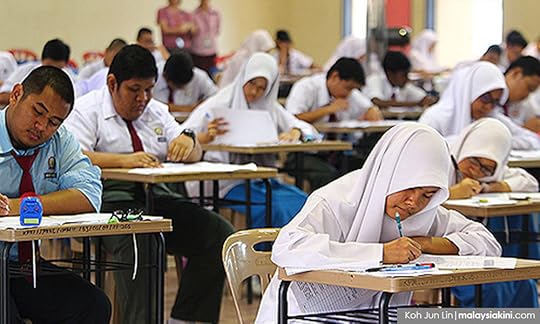
From Perak to Johor, Sabah to Sarawak, and massive parts of Indonesia, oil palm is threateningly rooted for miles. Threatening the well-being forests, the lungs of the earth.Why the anger?A couple of days ago a minister was angry with an international school for hosting a play depicting the plight of the orang utan. I was puzzled at the lack of understanding of the relationship between economy and sustainability and the idea of what a nation ought to care about. Isn’t this what education for critical and ecological consciousness is all about? One that needs to be made a foundation of Malaysian public schools? In that the young are taught to take ownership of the future they wish to have, after the adults have plundered and destroyed the world? Isn't this the way forward, better than all those petty statements and concerns over black shoes, and whether all school sessions need to start with doa selamat?This statement of anguish concerning what the international school did signifies the inability to understand what a school is and the ideology that needs to govern the educational process. I thought our ministers know better about "environmental education", if not Deweyian, Freirian and Montessorian perspectives in education.Where is all the talk about critical thinking by these parties who were in the Opposition then? Now everybody wants to become apologists for destructive paradigms of progress. We wish to have our 18-year-olds vote, assuming they are wise enough not to vote for polluters, corrupters, and race and religious haters.I was involved in writing an English language textbook in 1990 and one of the topics covered in the syllabus was environmentalism, getting students to be aware of the destruction of the rainforests, poisoned rivers, global warming, and the depletion of the ozone layer.
 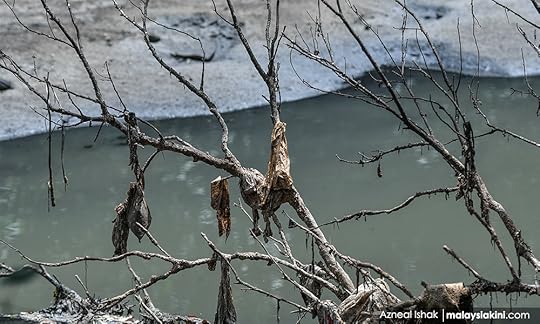 Schools were encouraged to not only celebrate Earth Day, but to do research on the extinction of species of plants and animals, flora and fauna, as a consequence of human activities leading to the destruction of the rainforests. That was what the Ministry of Education then, wanted children to learn. Environmental activism and how to save the planet. Because there is no Planet B.So, isn’t it puzzling to read that the ministry of primary industries and, ironically, the ministry of education, are ignorant of what ought to be taught in schools? I suppose the children in schools could do a better job telling the ministries what the United Nations Sustainable Development Goals (UNSDG) is all .Amongst the 17 goals agreed upon by all nations, including Malaysia, is the goal of ameliorating climate change and deforestation.I suggest the two ministries educate themselves on the UN-SDGs, and have a dialogue with the children they are angry with.Palm oil and eco-destructionMalaysia and Indonesia, through their oil palm plantations, are the world's great deforesters. Rethink paradigm of progress! Talk about economic progress and a high-income nation bores us to death. Who owns, who benefits, at whose expense - are key questions we need to ask. People are addicted to the language of progress, failing to see the human and ecological consequences. Masking plunder.One must consider this: meaningful development is one "of the people, by the people, for the people". Not for the greedy and brutal few. Weak local government, lack of critical analysis - these prevent activism against eco-destruction. Remedy this!
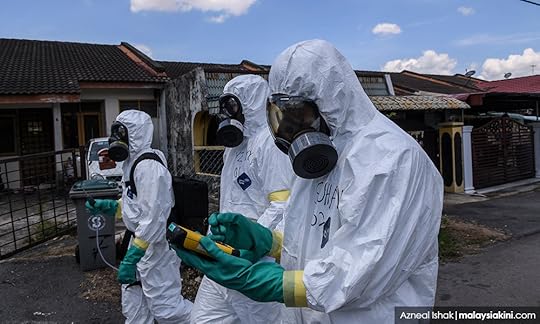 Johor has always been a location of massive pollution and destruction of the environment, because we are blinded by "progress". People of Pasir Gudang should be very angry with the lack of urgent attention and action in the cases of poisoned rivers and air poisoned. "Pasir Gudang" itself is a strange name. As if the place is only worth as a location for unchecked industrialization.Instead of merely pushing 18-year-olds to vote, get them to care about the environment. Why not get schoolchildren in Pasir Gudang, Johor to do research on the ownership of the factories that pollute and poison. Our universities need to start teaching how to analyze controlling interests and how politicians and businesspersons control the economy. Of the vast plantations that do not produce food. Of the trees cut down for the logging industry. These enrich politicians and capitalists. Who cares if the natives suffer and die, if the orangutans lose their habitat, and the country gets hotter and the air fouler?The idea of "controlling interests" is applicable here, through the crafting of projects, the approving of contracts, leading to rent-seeking. The idea of developmental paradigm, as subscribed by those in political power, entails the inception of a project approved by the government, leading to family and dynastic interests taking shape, form, and root. Empires run by political leaders define the nature of control. Learn from themLearn from the schoolchildren who are trying to raise awareness of what is dear to us: the natural world. Reforestation is not the best way to slow down environmental destruction. Having the political will to preserve our rainforests – the lungs of our earth, the provider of oxygen, the habitat of the species we live with symbiotically – these are some of the major concerns we need to work on.Strange things are happening in this new regime. Let us not promote ignorance and mistake children’s concern for the future as “propaganda”. In fact, the ideology of palm oil production can be considered a system of political-economic propaganda. Of progress that is not trickling down. A disease of corporate-crony capitalism.
A+ A- COMMENT | "Found in everything from shampoo to donuts, palm oil is now the most common vegetable oil in the world - and also one of the world's leading deforestation drivers... "Palm oil is extracted from the fruit of the oil palm tree, Elaeis guineensis, which thrives in humid climates. "The large majority of palm oil production occurs in just two countries, Malaysia and Indonesia, where huge swathes of tropical forests and peatlands (carbon-rich swamps) are being cleared to make way for oil palm plantations, releasing carbon into the atmosphere to drive global warming, while shrinking habitats for a multitude of endangered species. " – Union of Concerned Scientists, USAIf the orangutans could protest, they'd take over the Parliament, like the Hong Kongers, and demand a stop to palm-oil-related deforestation. Their habitat has been destroyed for decades, out of our greed to profit from the global market-driven economy. AdvertisementFrom Perak to Johor, Sabah to Sarawak, and massive parts of Indonesia, oil palm is threateningly rooted for miles. Threatening the well-being forests, the lungs of the earth.Why the anger?A couple of days ago a minister was angry with an international school for hosting a play depicting the plight of the orang utan. I was puzzled at the lack of understanding of the relationship between economy and sustainability and the idea of what a nation ought to care about.
Isn’t this what education for critical and ecological consciousness is all about? One that needs to be made a foundation of Malaysian public schools? In that the young are taught to take ownership of the future they wish to have, after the adults have plundered and destroyed the world? Isn't this the way forward, better than all those petty statements and concerns over black shoes, and whether all school sessions need to start with doa selamat?This statement of anguish concerning what the international school did signifies the inability to understand what a school is and the ideology that needs to govern the educational process. I thought our ministers know better about "environmental education", if not Deweyian, Freirian and Montessorian perspectives in education.Where is all the talk about critical thinking by these parties who were in the Opposition then? Now everybody wants to become apologists for destructive paradigms of progress. We wish to have our 18-year-olds vote, assuming they are wise enough not to vote for polluters, corrupters, and race and religious haters.I was involved in writing an English language textbook in 1990 and one of the topics covered in the syllabus was environmentalism, getting students to be aware of the destruction of the rainforests, poisoned rivers, global warming, and the depletion of the ozone layer. Schools were encouraged to not only celebrate Earth Day, but to do research on the extinction of species of plants and animals, flora and fauna, as a consequence of human activities leading to the destruction of the rainforests. That was what the Ministry of Education then, wanted children to learn. Environmental activism and how to save the planet. Because there is no Planet B.So, isn’t it puzzling to read that the ministry of primary industries and, ironically, the ministry of education, are ignorant of what ought to be taught in schools? I suppose the children in schools could do a better job telling the ministries what the United Nations Sustainable Development Goals (UNSDG) is all .Amongst the 17 goals agreed upon by all nations, including Malaysia, is the goal of ameliorating climate change and deforestation.I suggest the two ministries educate themselves on the UN-SDGs, and have a dialogue with the children they are angry with.Palm oil and eco-destructionMalaysia and Indonesia, through their oil palm plantations, are the world's great deforesters. Rethink paradigm of progress! Talk about economic progress and a high-income nation bores us to death. Who owns, who benefits, at whose expense - are key questions we need to ask. People are addicted to the language of progress, failing to see the human and ecological consequences. Masking plunder.One must consider this: meaningful development is one "of the people, by the people, for the people". Not for the greedy and brutal few. Weak local government, lack of critical analysis - these prevent activism against eco-destruction. Remedy this!Johor has always been a location of massive pollution and destruction of the environment, because we are blinded by "progress". People of Pasir Gudang should be very angry with the lack of urgent attention and action in the cases of poisoned rivers and air poisoned. "Pasir Gudang" itself is a strange name. As if the place is only worth as a location for unchecked industrialization.Instead of merely pushing 18-year-olds to vote, get them to care about the environment. Why not get schoolchildren in Pasir Gudang, Johor to do research on the ownership of the factories that pollute and poison. Our universities need to start teaching how to analyze controlling interests and how politicians and businesspersons control the economy. Of the vast plantations that do not produce food. Of the trees cut down for the logging industry. These enrich politicians and capitalists. Who cares if the natives suffer and die, if the orangutans lose their habitat, and the country gets hotter and the air fouler?The idea of "controlling interests" is applicable here, through the crafting of projects, the approving of contracts, leading to rent-seeking. The idea of developmental paradigm, as subscribed by those in political power, entails the inception of a project approved by the government, leading to family and dynastic interests taking shape, form, and root. Empires run by political leaders define the nature of control. Learn from themLearn from the schoolchildren who are trying to raise awareness of what is dear to us: the natural world. Reforestation is not the best way to slow down environmental destruction. Having the political will to preserve our rainforests – the lungs of our earth, the provider of oxygen, the habitat of the species we live with symbiotically – these are some of the major concerns we need to work on.Strange things are happening in this new regime. Let us not promote ignorance and mistake children’s concern for the future as “propaganda”. In fact, the ideology of palm oil production can be considered a system of political-economic propaganda. Of progress that is not trickling down. A disease of corporate-crony capitalism.June 28, 2019
Are our 18-year-olds ready to vote?
Are our 18-year-olds ready to vote?Opinion |
Azly Rahman
Published: Today 12:31 am | Modified: Today 12:31 am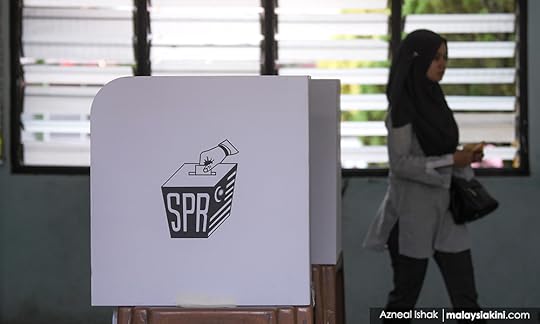 A+ A- COMMENT | On July 4, the day of American independence, a proposal will be tabled to lower the voting age to 18.Malaysia is one of the few countries in the world that has mature voters who are not able to decide who they want in government. As many as 3.8 million citizens will be eligible to vote if this is passed. They will join millions of others and participate in this ritual of Malaysian-styled “guided democracy,” inspired by the Suharto regime.I am sure we will be hotly debating this matter after the issues surrounding the latest sex scandal video affair – or "porno-politics" – have simmered down. Advertisement
But what will our 18-year-olds vote for when democracy itself is not mature? When authoritarianism still reigns, and when schools have not prepared the young on the basic idea of voting?When lewd and gutter politics is the norm, and when politics is about robber barons fighting for loot? Which political party is the 'cleanest'? Or are we only going for numbers for old politics to stay in power? Voter maturityWe should first educate first the young on what sustainable politics look like. The ages between 18 to 21 ought to be a "gestation period" for young, potential voters to learn about a third force, to choose what they want as their political future. Politics is not about replacing one sick hegemony over another. It is about renewal. Platonic politics, not the porno-politics we are seeing now. Watching the way the Americans scrutinise their presidential hopefuls from the Democratic party a few nights ago, I was left with a sense of hopelessness and hopefulness.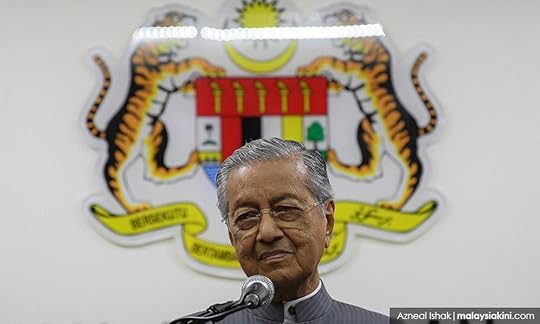 Hopelessness because the Malaysian political culture is a disabling one, with the vestiges of Mahathirist authoritarianism and brand of bulldoze-politics still dominating as the anchor to the multitude of post-Umno excesses of abuse of power and public funds, religious ridiculousness, and race-based-addiction to policy implementation. A year after the Pakatan Harapan won, politics is the mere rebranding of old practices, with those in power keeping ways of doing things that will still be profitable, with promises of promises being kept.But I am also hopeful because there is still the chance to educate the young on what it means to vote and to be a citizen, amid the destruction made by the elders who do not deserve this respect.Why the rush? Here are my thoughts and questions concerning the rush to make our voters younger.Malaysia's prime ministerial candidates should undergo public scrutiny, as in the US primaries. Can we have that system? Our system of 'transfer of power' is not sustainable. We must do better than just promising to pass the baton. Why not have many capable prime ministerial candidates running for the post? Make the public know where each candidate stands on issues critical to the progressive evolution of Malaysia as a liberal and tolerant multicultural society.Our young cannot be made to vote at 18 if they are to be used and bribed by religious and racist parties. Educate them first. We’d rather have three million 18-year-olds abstain from voting than to be used to prop up yet another authoritarian regime.
 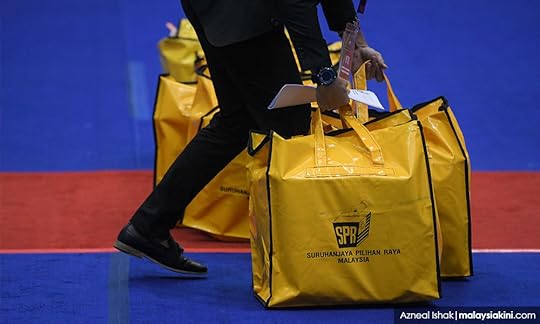 Teach our youth to be radical, independent thinkers critical of existing political parties, than to be the new 'Hitler youths.' Our youths need to be activists of social, educational, ecological issues, not be blind voters at 18, ready to be bought. Do 18-year-old Malaysians know about the rights to be a citizen, the constitution, being participants of democracy? Don't rush to lower the voting age. The youth now confused what it means to be a politician, let alone what those parties stand for. Since the time Dr Mahathir Mohamad became prime minister in the early 1980s, what have we seen in terms of the check and balances and respect for the three branches of government? Are we proud enough to teach the young what sustainable politics means?In the US and many advanced countries, primary school children are already taught about how presidents are chosen. Do we have this educational culture in Malaysia? If we ask the young of today what they think the qualities of a prime minister in a multicultural society is, what do you think their answer would be?Civics education firstDo Malaysians want to teach their children that a prime minister can stay as long as he or she wants to? Voter maturity depends on that of the country's population. Democracy should not be for sale. Look what happened for 60 years. What are we seeing in today’s politics that would give us the confidence that our 18-year-olds would be wise enough to choose leaders who will be sane enough not to turn the country upside down, and in turn, damage the future of the young voters who chose them?
 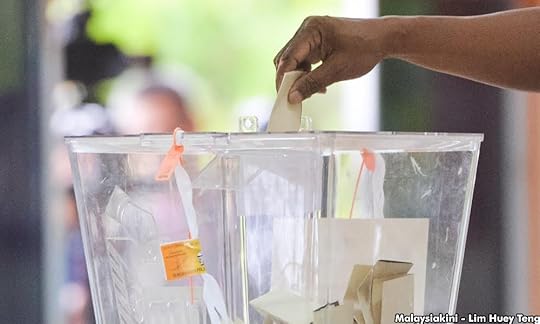 Why rush through the proposal, when what we need to do is for the Education Ministry and Youth and Sports Ministry, and perhaps the Prime Minister's Department, to work together and find ways to revamp our education on civics and ethics? We ought to prepare our youth to understand not only how to vote and who to vote for, but also why we vote, by making wise choices. This is a lifelong educational process. Voting is only part of 'politics'. The laying of the foundation of political consciousness, the practice of good citizenship, and to do public service to help fellow men and women – this is what 'politics' is supposed to mean.I doubt our 18-year-olds have a sense of this yet. We need to prepare a strong foundation for democratic participation through education. Or else, we will still see young and old voting because they are being paid a ringgit or two, given free gifts, or be promised the moon and the stars for voting in parties that thrive on race and religious bigotry. Or worse still, the promise of paradise.Remember that today’s installed leaders are a result of the choices supposedly mature voters made. See how much we are in a mess? Imagine our 18-year olds deciding. What will they have been taught in schools by then? What would the Education Ministry have done to prepare them?
A+ A- COMMENT | On July 4, the day of American independence, a proposal will be tabled to lower the voting age to 18.Malaysia is one of the few countries in the world that has mature voters who are not able to decide who they want in government. As many as 3.8 million citizens will be eligible to vote if this is passed. They will join millions of others and participate in this ritual of Malaysian-styled “guided democracy,” inspired by the Suharto regime.I am sure we will be hotly debating this matter after the issues surrounding the latest sex scandal video affair – or "porno-politics" – have simmered down. AdvertisementBut what will our 18-year-olds vote for when democracy itself is not mature? When authoritarianism still reigns, and when schools have not prepared the young on the basic idea of voting?When lewd and gutter politics is the norm, and when politics is about robber barons fighting for loot? Which political party is the 'cleanest'? Or are we only going for numbers for old politics to stay in power? Voter maturityWe should first educate first the young on what sustainable politics look like. The ages between 18 to 21 ought to be a "gestation period" for young, potential voters to learn about a third force, to choose what they want as their political future. Politics is not about replacing one sick hegemony over another. It is about renewal. Platonic politics, not the porno-politics we are seeing now. Watching the way the Americans scrutinise their presidential hopefuls from the Democratic party a few nights ago, I was left with a sense of hopelessness and hopefulness.
Hopelessness because the Malaysian political culture is a disabling one, with the vestiges of Mahathirist authoritarianism and brand of bulldoze-politics still dominating as the anchor to the multitude of post-Umno excesses of abuse of power and public funds, religious ridiculousness, and race-based-addiction to policy implementation. A year after the Pakatan Harapan won, politics is the mere rebranding of old practices, with those in power keeping ways of doing things that will still be profitable, with promises of promises being kept.But I am also hopeful because there is still the chance to educate the young on what it means to vote and to be a citizen, amid the destruction made by the elders who do not deserve this respect.Why the rush? Here are my thoughts and questions concerning the rush to make our voters younger.Malaysia's prime ministerial candidates should undergo public scrutiny, as in the US primaries. Can we have that system? Our system of 'transfer of power' is not sustainable. We must do better than just promising to pass the baton. Why not have many capable prime ministerial candidates running for the post? Make the public know where each candidate stands on issues critical to the progressive evolution of Malaysia as a liberal and tolerant multicultural society.Our young cannot be made to vote at 18 if they are to be used and bribed by religious and racist parties. Educate them first. We’d rather have three million 18-year-olds abstain from voting than to be used to prop up yet another authoritarian regime. Teach our youth to be radical, independent thinkers critical of existing political parties, than to be the new 'Hitler youths.' Our youths need to be activists of social, educational, ecological issues, not be blind voters at 18, ready to be bought. Do 18-year-old Malaysians know about the rights to be a citizen, the constitution, being participants of democracy? Don't rush to lower the voting age. The youth now confused what it means to be a politician, let alone what those parties stand for. Since the time Dr Mahathir Mohamad became prime minister in the early 1980s, what have we seen in terms of the check and balances and respect for the three branches of government? Are we proud enough to teach the young what sustainable politics means?In the US and many advanced countries, primary school children are already taught about how presidents are chosen. Do we have this educational culture in Malaysia? If we ask the young of today what they think the qualities of a prime minister in a multicultural society is, what do you think their answer would be?Civics education firstDo Malaysians want to teach their children that a prime minister can stay as long as he or she wants to? Voter maturity depends on that of the country's population. Democracy should not be for sale. Look what happened for 60 years. What are we seeing in today’s politics that would give us the confidence that our 18-year-olds would be wise enough to choose leaders who will be sane enough not to turn the country upside down, and in turn, damage the future of the young voters who chose them? Why rush through the proposal, when what we need to do is for the Education Ministry and Youth and Sports Ministry, and perhaps the Prime Minister's Department, to work together and find ways to revamp our education on civics and ethics? We ought to prepare our youth to understand not only how to vote and who to vote for, but also why we vote, by making wise choices. This is a lifelong educational process. Voting is only part of 'politics'. The laying of the foundation of political consciousness, the practice of good citizenship, and to do public service to help fellow men and women – this is what 'politics' is supposed to mean.I doubt our 18-year-olds have a sense of this yet. We need to prepare a strong foundation for democratic participation through education. Or else, we will still see young and old voting because they are being paid a ringgit or two, given free gifts, or be promised the moon and the stars for voting in parties that thrive on race and religious bigotry. Or worse still, the promise of paradise.Remember that today’s installed leaders are a result of the choices supposedly mature voters made. See how much we are in a mess? Imagine our 18-year olds deciding. What will they have been taught in schools by then? What would the Education Ministry have done to prepare them?June 19, 2019
Platonic politics, not porno-politics please
Platonic politics, not porno-politics pleaseOpinion |
Azly Rahman
Published: Today 1:19 am | Modified: Today 1:19 am A+ A- COMMENT | Our leaders are wasting precious time they have in helping those who need help, those who are alienated, marginalized, oppressed by the system created by politicians who care about wealth and power and how to keep these forever. Come back to your senses. We have had enough of your lewd democracy, lies and deceit, and pornographic politics you practice behind a mask of religiosity, reformasi, and Islam hadari and madani and whatever shadows in the Platonic allegorical cave you are using.Platonic politics of our times is to bring back ethics and insist on making politicians and traditional rulers subservient to the reasonable demands of the people, to educate the masses on what politics should be. Today we have Mahathirist authoritarianism ruling, in all its absurdity, with the younger generation worshiping the principles, and the old wondering why the style of politics has not changed and how this has made the smooth transition of power both difficult and anti-democratic. The excesses and ramifications of the age of post-truths and doctored information, viralled in a dromological fashion, has made politics take the path of the hyper-loop. The speed of destruction of people and parties in the political game is increased at a rate so intense that those entangled in the web of informational and mis-informational matrix can no longer escape the wrath of self-destruction.Doctoring truthThere is an overdose of talk these days on the words “post-truth” and “fake news” and the way the corporate media especially is making discourse go viral, true to its ethos of profiting from reporting about conflicts. From “all the news that’s fit to print,” we now have “all the views that count as equal truths.” Anything goes as long as it sells, in an age of the globalization of packaged and branded nothingness.
 Daily, especially when one is living in America and watches television, consumes the news, is amused by the programmes, transformed into televisual and online consumers, informed by newscasters and talk-show hosts arguing at each other, one is confronted with the cruel choice of accepting “truths”.We live in a world mediated by corporate media that is now mutating into new forms: from those emanating from TV broadcasts to the self-aggrandizing personal podcasts created in an age of post-humanism and intelligent machines. The media and the way truth is “epistemologized,” produced through sound bites, click streams, fake-reproductions, sensationalized and viralled, is creating us in ways we still do not know how and to what effect.Herein lies the complexity of the world we live in. Herein lies the need, I feel, for introspection and occasionally to “leave our mediated self,” or the Platonic allegorical cave we are forced into en masse. Now is the time to look at what we have been made to become by the words, thoughts, concepts, and definitions we consume. This is a complex task. How do we get away from the "prison" of "reality-defining language," and find out the process of how we become "constructed"?Lewd democracyKeen observers of Malaysian politics, of the story of the birth of Umno, Parti Keadilan Rakyat, Parti Bersatu, etc., may now conclude that these parties began with some sense of idealism, stated vague enough to be scrutinized, using general terms such as "justice for all", "progressive society", "empathic economics", variants of rhetoric hiding realities. These parties are now so immersed in the world of money, the shadows in our Platonic cave of political hope are now made out to be the manifestation of reality.Once the battle for control is over, elections won, the true self of the politicians emerge, albeit the self that is constructed out of the lies and deceit of the will, the urge to dominate the less intelligent and aware amongst us, so that the uniquely Malaysian "lewd democracy" can be achieved. Hence, the broken promises and the rationale to continue with the old ways of authoritarianism. Power is to be maintained at all costs.
 "It is better to be feared, than to be loved" as written in the classic 'The Prince' by Niccolo Machiavelli. Indeed, today, in an age of post-truth and doctored videos, enemies are subjected to the worst humiliation in the attempt to overkill. But then again, politicians, those who are not material for "philosopher-rulers", said Plato, love to "walk into their own trap". You may cite a few politicians you know.Education and subservienceOne way to keep the majority subservient is to provide them with an education system so mediocre enough and devoid of critical sensibility, they cannot differentiate between shadowy form and substance, realism and fantasy, rhetoric and true belief. Keep them obedient so that when there is a leader smarter than many, he is put on a pedestal and allowed to be in power as long as he or she can make the masses subservient.
That's what indoctrination means in a society that cannot think of alternative futures. As if political leadership is the domain of those who have established dynasties, those with money and power, and those who could lie to the people using all the means of control at their disposal. Transfer power from father to son, husband to wife and vice versa, son to daughter, amongst siblings, amongst close and trusted friends who can maintain the culture of vulture and plunder. The people are mere consumers of ideology created by those who own the means of production, only to subjugate. Get children to memorize useless information, pound their consciousness with useless grand narratives called "historical facts," however oxymoronic that term is, and when they grow older, train them to be voting-age zombies in love with sensational "porno-politics."
A+ A- COMMENT | Our leaders are wasting precious time they have in helping those who need help, those who are alienated, marginalized, oppressed by the system created by politicians who care about wealth and power and how to keep these forever. Come back to your senses. We have had enough of your lewd democracy, lies and deceit, and pornographic politics you practice behind a mask of religiosity, reformasi, and Islam hadari and madani and whatever shadows in the Platonic allegorical cave you are using.Platonic politics of our times is to bring back ethics and insist on making politicians and traditional rulers subservient to the reasonable demands of the people, to educate the masses on what politics should be. Today we have Mahathirist authoritarianism ruling, in all its absurdity, with the younger generation worshiping the principles, and the old wondering why the style of politics has not changed and how this has made the smooth transition of power both difficult and anti-democratic. The excesses and ramifications of the age of post-truths and doctored information, viralled in a dromological fashion, has made politics take the path of the hyper-loop. The speed of destruction of people and parties in the political game is increased at a rate so intense that those entangled in the web of informational and mis-informational matrix can no longer escape the wrath of self-destruction.Doctoring truthThere is an overdose of talk these days on the words “post-truth” and “fake news” and the way the corporate media especially is making discourse go viral, true to its ethos of profiting from reporting about conflicts. From “all the news that’s fit to print,” we now have “all the views that count as equal truths.” Anything goes as long as it sells, in an age of the globalization of packaged and branded nothingness.Daily, especially when one is living in America and watches television, consumes the news, is amused by the programmes, transformed into televisual and online consumers, informed by newscasters and talk-show hosts arguing at each other, one is confronted with the cruel choice of accepting “truths”.We live in a world mediated by corporate media that is now mutating into new forms: from those emanating from TV broadcasts to the self-aggrandizing personal podcasts created in an age of post-humanism and intelligent machines. The media and the way truth is “epistemologized,” produced through sound bites, click streams, fake-reproductions, sensationalized and viralled, is creating us in ways we still do not know how and to what effect.Herein lies the complexity of the world we live in. Herein lies the need, I feel, for introspection and occasionally to “leave our mediated self,” or the Platonic allegorical cave we are forced into en masse. Now is the time to look at what we have been made to become by the words, thoughts, concepts, and definitions we consume. This is a complex task. How do we get away from the "prison" of "reality-defining language," and find out the process of how we become "constructed"?Lewd democracyKeen observers of Malaysian politics, of the story of the birth of Umno, Parti Keadilan Rakyat, Parti Bersatu, etc., may now conclude that these parties began with some sense of idealism, stated vague enough to be scrutinized, using general terms such as "justice for all", "progressive society", "empathic economics", variants of rhetoric hiding realities. These parties are now so immersed in the world of money, the shadows in our Platonic cave of political hope are now made out to be the manifestation of reality.Once the battle for control is over, elections won, the true self of the politicians emerge, albeit the self that is constructed out of the lies and deceit of the will, the urge to dominate the less intelligent and aware amongst us, so that the uniquely Malaysian "lewd democracy" can be achieved. Hence, the broken promises and the rationale to continue with the old ways of authoritarianism. Power is to be maintained at all costs."It is better to be feared, than to be loved" as written in the classic 'The Prince' by Niccolo Machiavelli. Indeed, today, in an age of post-truth and doctored videos, enemies are subjected to the worst humiliation in the attempt to overkill. But then again, politicians, those who are not material for "philosopher-rulers", said Plato, love to "walk into their own trap". You may cite a few politicians you know.Education and subservienceOne way to keep the majority subservient is to provide them with an education system so mediocre enough and devoid of critical sensibility, they cannot differentiate between shadowy form and substance, realism and fantasy, rhetoric and true belief. Keep them obedient so that when there is a leader smarter than many, he is put on a pedestal and allowed to be in power as long as he or she can make the masses subservient.That's what indoctrination means in a society that cannot think of alternative futures. As if political leadership is the domain of those who have established dynasties, those with money and power, and those who could lie to the people using all the means of control at their disposal. Transfer power from father to son, husband to wife and vice versa, son to daughter, amongst siblings, amongst close and trusted friends who can maintain the culture of vulture and plunder. The people are mere consumers of ideology created by those who own the means of production, only to subjugate. Get children to memorize useless information, pound their consciousness with useless grand narratives called "historical facts," however oxymoronic that term is, and when they grow older, train them to be voting-age zombies in love with sensational "porno-politics."
May 28, 2019
Does life provide meaning?
Does life provide meaning?OPINION | AZLY RAHMANPublished: Today 7:50 pm | Modified: Today 7:50 pm A+ A-COMMENT | Do we live in a rational world, one in which things make sense, explainable by the simple logic of cause and effect and correlation? Or has the world been an unpredictable universe of chance and randomness, and unpredictable events, from which we try to find patterns, meanings, explanation and console ourselves with the lessons learned?Could an event that happened years, or even decades before, one that is seemingly insignificant, impact today’s world in a momentous way? Like a butterfly flapping its wings in the Amazon jungle in the 1970s, creating ripples with its wings and the ripples creating bigger ones as they interact with other ripples and over time, bigger ripples becoming waves of energy, consequently creating changes in the weather pattern. Plausible? Correlational? Consequential?This is a world of randomness we are in, of unpredictability we are trying to make sense of, before assigning their effect to the force of deux et machina, or fated determinism, or “God’s will”.Consider these “butterfly effects” in Malaysian politics:Dr Mahathir Mohamad’s revolt against Tunku Abdul Rahman narrated in “May 13: Before and After”, in all its chaos and complexity, order and randomness, Fate and Determinism, has buried the possibilities of the emergence of a truly multicultural society, with the rise and Machiavellian control of Malay politics.The chance of non-bumiputeras to get equal opportunity and fair access to resources in education and social services continues to be sealed, as a “butterfly effect” of the victory of the Umno-Ultras during the post-May 13, 1969, political consolidation and institutionalisation of race-based politics.
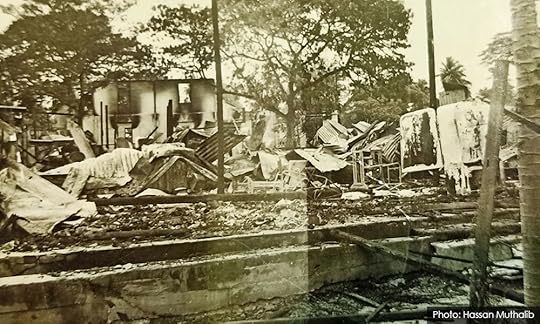 Yesterday’s rebel has become today’s hero, in the person of Mahathir. It could have been a different story had Najib Abdul Razak won last May's elections. The chaos could have been faster and more devastating, the class divisions wider, the people’s misery more painful and pronounced. Most importantly, there would have been no second Mahathirist Revolution that we are now seeing. Nor will there be a full investigation and prosecution of the wrongdoings allegedly committed during Mahathir’s first tenure as prime minister.Anwar Ibrahim’s Islamisation agenda, patroned by the Mahathir leadership, in all its sincerity and complexity of emulating the ideology of Ikhwanul Muslimin (Muslim Brotherhood) of Egypt and the 1979 Islamic Revolution of Iran, with all the flapping of the wings of countless ideological butterflies, has created the kind of Islamic radicalism hegemonising the political elite, the masses and government servants, providing a fertile ground for another wave of change: the demand for an Islamic State.What could have happened, had the 1997 Asian financial crisis not existed, and Anwar, as finance minister then, did not have to agree to the IMF and World Bank prescriptions to get out of the George Soros-induced financial quagmire that made the country's finances parlous? It may not have led to the dismissal of Anwar Ibrahim as deputy prime minister and the birth of PKR.
 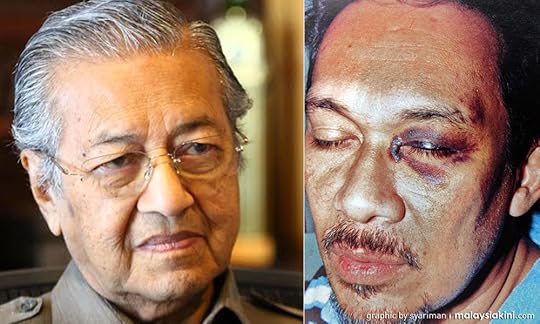 The flappings of the wings of those ideological butterflies, in the years since “Anwar's black eye” incident, have created, in all the randomness and chaos, today's difficult transition of power from Mahathir to the next prime minister. The issue of trust dominates the consciousness of the two leaders who go a long way back to the early 80s, a period of plenty when Thatcherism and Reaganism were the dominant free-enterprise ideologies.In a world of the Butterfly Effect, nothing is certain. As Lao Tzu once said, the only permanent thing is change. Throw in the notion of politics, wherein there are no permanent enemies nor friends, and to survive the Machiavellian way, one has to use lies and deceit, even murder. Such is the certainty of uncertainties.Those are two examples of how one can employ the perspective of looking at butterflies in Malaysia's socio-political evolution. We do not know what force governs these.As rational beings, we need explanations, or else some of us will go mad trying to make sense of this existential, Kafkaesque world in all its absurdities. A world in which dictators live long.Does life have meaning?“I don’t know,” as Socrates would answer.
A+ A-COMMENT | Do we live in a rational world, one in which things make sense, explainable by the simple logic of cause and effect and correlation? Or has the world been an unpredictable universe of chance and randomness, and unpredictable events, from which we try to find patterns, meanings, explanation and console ourselves with the lessons learned?Could an event that happened years, or even decades before, one that is seemingly insignificant, impact today’s world in a momentous way? Like a butterfly flapping its wings in the Amazon jungle in the 1970s, creating ripples with its wings and the ripples creating bigger ones as they interact with other ripples and over time, bigger ripples becoming waves of energy, consequently creating changes in the weather pattern. Plausible? Correlational? Consequential?This is a world of randomness we are in, of unpredictability we are trying to make sense of, before assigning their effect to the force of deux et machina, or fated determinism, or “God’s will”.Consider these “butterfly effects” in Malaysian politics:Dr Mahathir Mohamad’s revolt against Tunku Abdul Rahman narrated in “May 13: Before and After”, in all its chaos and complexity, order and randomness, Fate and Determinism, has buried the possibilities of the emergence of a truly multicultural society, with the rise and Machiavellian control of Malay politics.The chance of non-bumiputeras to get equal opportunity and fair access to resources in education and social services continues to be sealed, as a “butterfly effect” of the victory of the Umno-Ultras during the post-May 13, 1969, political consolidation and institutionalisation of race-based politics.Yesterday’s rebel has become today’s hero, in the person of Mahathir. It could have been a different story had Najib Abdul Razak won last May's elections. The chaos could have been faster and more devastating, the class divisions wider, the people’s misery more painful and pronounced. Most importantly, there would have been no second Mahathirist Revolution that we are now seeing. Nor will there be a full investigation and prosecution of the wrongdoings allegedly committed during Mahathir’s first tenure as prime minister.Anwar Ibrahim’s Islamisation agenda, patroned by the Mahathir leadership, in all its sincerity and complexity of emulating the ideology of Ikhwanul Muslimin (Muslim Brotherhood) of Egypt and the 1979 Islamic Revolution of Iran, with all the flapping of the wings of countless ideological butterflies, has created the kind of Islamic radicalism hegemonising the political elite, the masses and government servants, providing a fertile ground for another wave of change: the demand for an Islamic State.What could have happened, had the 1997 Asian financial crisis not existed, and Anwar, as finance minister then, did not have to agree to the IMF and World Bank prescriptions to get out of the George Soros-induced financial quagmire that made the country's finances parlous? It may not have led to the dismissal of Anwar Ibrahim as deputy prime minister and the birth of PKR. The flappings of the wings of those ideological butterflies, in the years since “Anwar's black eye” incident, have created, in all the randomness and chaos, today's difficult transition of power from Mahathir to the next prime minister. The issue of trust dominates the consciousness of the two leaders who go a long way back to the early 80s, a period of plenty when Thatcherism and Reaganism were the dominant free-enterprise ideologies.In a world of the Butterfly Effect, nothing is certain. As Lao Tzu once said, the only permanent thing is change. Throw in the notion of politics, wherein there are no permanent enemies nor friends, and to survive the Machiavellian way, one has to use lies and deceit, even murder. Such is the certainty of uncertainties.Those are two examples of how one can employ the perspective of looking at butterflies in Malaysia's socio-political evolution. We do not know what force governs these.As rational beings, we need explanations, or else some of us will go mad trying to make sense of this existential, Kafkaesque world in all its absurdities. A world in which dictators live long.Does life have meaning?“I don’t know,” as Socrates would answer.
May 26, 2019
The Education Ministry's addiction to apartheid
The Education Ministry's addiction to apartheidOpinion |
Azly Rahman
Published: Today 12:02 am | Modified: Today 12:02 am A+ A- COMMENT | There has been an avalanche of criticisms against the Education Ministry of late. Many are not satisfied with what has been going on in terms of the perceived continuation of racial preferential treatment and access to resources, and its continuing addiction to apartheid. Not good. I suggest we look into our practice of educating, making our thinking global rather than kampung-ish. Education is a 'gentle' profession and not to be used as a tool of oppression, in the case of Malaysia today, against the non-Malays who are rightful citizens, and deserve all the opportunities available, especially through education.I was recently asked by a Facebook commentator of my latest piece on soulless education: how do we get non-Malays and Malays to respect one another in the process of learning. This is in relation to how a teacher can forge an environment of respect.Respect is earned – through appreciating what each other has to offer, what each one believes, and how dialogue on understanding each other can continually be forged. It also involves understanding each other’s history, culture, needs, and most importantly, to know that we are all living in a limited physical time on this earth, so that not only look to avoid conflict, but to see people's anguish and suffering as an opportunity to help.How an Education Minister should thinkAs an educator for the last 33 years, I see all who sit in my classroom as individuals not only can teach me about their cultures, but also those who can be developed to the fullest potential to become good citizens and workers and spiritual-cultural beings. Teaching in Malaysia, I have had students from all states and all ethnic groups, and I reward hard work and dedication and how passionate the student is of the subject he/she is learning. There is no colour of the skin nor race in considering the grades they earn. There is only what I see produced in the process of learning. There is a set of guidelines/rubric that informs my evaluation and assessment process. Teaching in the United States, thousands of students have come my way, from all over the world, from Afghanistan to Israel, from Jamaica to Switzerland and Somalia. I see them as cultural resources and organic intelligent beings waiting to be infused with critical, creative and global thinking. There is no bell curve type of grading I administer. You work hard for the grade. Even if you are a star basketball player, or you are of this and that race claiming superiority, you are not judged by your personality nor potential, but by your performance and the artefacts of learning you produce.Every educator must think this way.
  It is therefore important for a Minister of Education to think as such too because policies he/she makes will affect not only millions, but also create a future for the child. This kind of thinking requires a deep, broad-based understanding of what education, teaching, learning, schooling, human development across cultures, knowledge, wisdom, political-economy, and the development of nations.Most importantly, he/she must be equipped by humanistic philosophy, which simply means looking beyond race, religion, colour, creed, class, since these are mere constructs and can be shattered if they prove to be disabling human progressWhat we have now is a minister merely carrying out a political agenda. Understandably, as the party dictates. A party that is interested in rebranding an old ideology. There seems to be no sincerity in respecting and developing our country as a multicultural polity. The votes gained were merely for the sake of winning this nation's political lottery.Why countries failIn the long run, this nation will fail. In my study over the years of failing and successful states, many of those in dire states of development, a.k.a failing states, are the ones that have failed in all aspects of the UN Sustainable Development Goals, countries such as South Sudan, Somalia, Yemen, Syria, Afghanistan, Central African Republic, and Venezuela. Racial and religious violence predominate, as the political-economic-social structure collapses. Many of these countries have groups fighting for an “Islamic State”, the destabilising forces aligning themselves with terrorist groups such as Boko Haram, Al Shabaab, and the IS.On the other hand, liberal democratic capitalist-socialist hybrids such as Iceland, Finland, Ireland, New Zealand, Sweden, Denmark, South Korea and even Singapore – those that to some degree practice pragmatism in politics and adhere as close as possible to instruments of UN human rights, gauged by the UN SDGs, and constantly evolve themselves as workable democracies – are successful nation-states. Their outlook is global, their respect for human rights is admirable, and their practice of education sustainable. In other words, they think global.
 Socrates said: "I am not a citizen of Athens. I am a citizen of the world." Our world within must harmonise with the world outside. In the case of Malaysia, never turn a school into a “medan dakwah,” or a place to create young Talibans. Because a school is a place where democracy must be taught, by living it as a daily practice of democratic ideals, especially crafted from a homegrown Malaysian multicultural way of knowing, seeing, and doing things. Each child is a cultural and cognitive being to be respected and nurtured.How do we institutionalise such respect in education? How do we not leave any child behind in the educational world of possibilities?
A+ A- COMMENT | There has been an avalanche of criticisms against the Education Ministry of late. Many are not satisfied with what has been going on in terms of the perceived continuation of racial preferential treatment and access to resources, and its continuing addiction to apartheid. Not good. I suggest we look into our practice of educating, making our thinking global rather than kampung-ish. Education is a 'gentle' profession and not to be used as a tool of oppression, in the case of Malaysia today, against the non-Malays who are rightful citizens, and deserve all the opportunities available, especially through education.I was recently asked by a Facebook commentator of my latest piece on soulless education: how do we get non-Malays and Malays to respect one another in the process of learning. This is in relation to how a teacher can forge an environment of respect.Respect is earned – through appreciating what each other has to offer, what each one believes, and how dialogue on understanding each other can continually be forged. It also involves understanding each other’s history, culture, needs, and most importantly, to know that we are all living in a limited physical time on this earth, so that not only look to avoid conflict, but to see people's anguish and suffering as an opportunity to help.How an Education Minister should thinkAs an educator for the last 33 years, I see all who sit in my classroom as individuals not only can teach me about their cultures, but also those who can be developed to the fullest potential to become good citizens and workers and spiritual-cultural beings. Teaching in Malaysia, I have had students from all states and all ethnic groups, and I reward hard work and dedication and how passionate the student is of the subject he/she is learning. There is no colour of the skin nor race in considering the grades they earn. There is only what I see produced in the process of learning. There is a set of guidelines/rubric that informs my evaluation and assessment process. Teaching in the United States, thousands of students have come my way, from all over the world, from Afghanistan to Israel, from Jamaica to Switzerland and Somalia. I see them as cultural resources and organic intelligent beings waiting to be infused with critical, creative and global thinking. There is no bell curve type of grading I administer. You work hard for the grade. Even if you are a star basketball player, or you are of this and that race claiming superiority, you are not judged by your personality nor potential, but by your performance and the artefacts of learning you produce.Every educator must think this way. It is therefore important for a Minister of Education to think as such too because policies he/she makes will affect not only millions, but also create a future for the child. This kind of thinking requires a deep, broad-based understanding of what education, teaching, learning, schooling, human development across cultures, knowledge, wisdom, political-economy, and the development of nations.Most importantly, he/she must be equipped by humanistic philosophy, which simply means looking beyond race, religion, colour, creed, class, since these are mere constructs and can be shattered if they prove to be disabling human progressWhat we have now is a minister merely carrying out a political agenda. Understandably, as the party dictates. A party that is interested in rebranding an old ideology. There seems to be no sincerity in respecting and developing our country as a multicultural polity. The votes gained were merely for the sake of winning this nation's political lottery.Why countries failIn the long run, this nation will fail. In my study over the years of failing and successful states, many of those in dire states of development, a.k.a failing states, are the ones that have failed in all aspects of the UN Sustainable Development Goals, countries such as South Sudan, Somalia, Yemen, Syria, Afghanistan, Central African Republic, and Venezuela. Racial and religious violence predominate, as the political-economic-social structure collapses. Many of these countries have groups fighting for an “Islamic State”, the destabilising forces aligning themselves with terrorist groups such as Boko Haram, Al Shabaab, and the IS.On the other hand, liberal democratic capitalist-socialist hybrids such as Iceland, Finland, Ireland, New Zealand, Sweden, Denmark, South Korea and even Singapore – those that to some degree practice pragmatism in politics and adhere as close as possible to instruments of UN human rights, gauged by the UN SDGs, and constantly evolve themselves as workable democracies – are successful nation-states. Their outlook is global, their respect for human rights is admirable, and their practice of education sustainable. In other words, they think global.Socrates said: "I am not a citizen of Athens. I am a citizen of the world." Our world within must harmonise with the world outside. In the case of Malaysia, never turn a school into a “medan dakwah,” or a place to create young Talibans. Because a school is a place where democracy must be taught, by living it as a daily practice of democratic ideals, especially crafted from a homegrown Malaysian multicultural way of knowing, seeing, and doing things. Each child is a cultural and cognitive being to be respected and nurtured.How do we institutionalise such respect in education? How do we not leave any child behind in the educational world of possibilities? May 23, 2019
No soul in the heart of the Education Ministry
No soul in the heart of the Education MinistryOpinion |
Azly Rahman
Published: Today 6:31 pm | Modified: Today 6:31 pm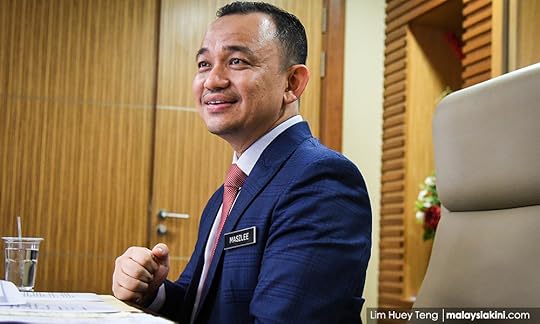 A+ A- COMMENT | Again, and again. Never-ending, useless race-religious debates and unsolved simple issues in Malaysian education. As if there is no political will in the heart and soul of the Ministry of Education. The vengeful approach by the Ministry shows that we still have unresolved matters, post-May 13.We need to do the right thing now. Education need not be used by anyone in power to stage a soap opera. It is about the lives and potential of young minds, regardless of race, religion, colour, creed.What we are hearing about education today is simply troubling. Education is being used as a weapon in a race and religious war. What kind of logic is that? Don’t we have Malay and Indian children learning Mandarin these days? Why doesn't the Ministry of Education think of strategies to help all Malaysian children succeed? To dismantle all forms and stylisation of educational apartheid?Regarding matriculation and knowledge of Mandarin as a job requirement, the Ministry of Education seems to be taking an illogical stand. While the prime minister is talking about the "One Belt Road," and is in love with investment from China, the Ministry of Education, funded by taxpayers, is adopting an opposite stance. Why?Why must educational issues be about DAP vs Umno vs PAS vs, etc? It should be about the future of Malaysians, the concern of parents.
 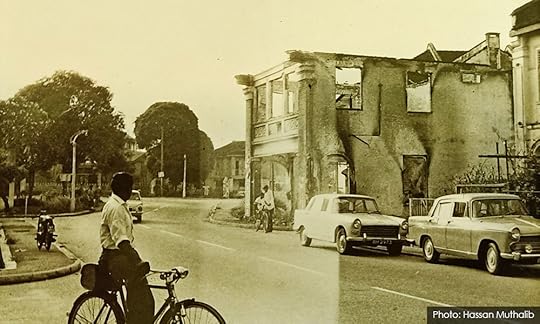 May 13, 1969, erupted partly because of the failure of our education system. Do we want to see a repeat? Reconcile via truth. Defending Malay-Muslims with irrationalism will destroy the Malays as global citizens!Grow up! May 13 was our violent growing up years. Today, we ought to be wiser.Clearly, the Ministry of Education is continuing the old Umno agenda, leaving us with a wealth of chaos.One can speak eloquently about Industry 4.0 this and that, coding skills for children and all, but ultimately what is needed is equality in the system. The child, regardless of race, needs to be nurtured to the fullest potential, not taught that if you are born of a certain race, you will get privileges by virtue of dubious arguments.Education should not perpetuate "Ketuanan Melayu" anymore, any longer. We saw how 1MDB and Umno have destroyed us. Those who screamed and yelled for Malay rights also laundered a mad amount of money. Malays and non-Malays are both losers because we have this false racial and religious dichotomy used by politicians to hold on to power and wealth.Only by harnessing and developing multicultural Malaysian talent can we be leaders, not through more racism! When the Ministry of Education talks about protecting rights, we have a failing institution. Malaysians voted for Pakatan Harapan for a better future for their children. What are they getting instead?A Truth and Reconciliation Commission will need to teach about the May 13 incident, and the way forward. The wounds are still there. The debates about Malaysian education today should have been resolved after May 13, but apartheid reigns.The Ministry of Education, under the Harapan regime, has found it politically profitable to recast old ideology, at the expense of humane philosophy true to the meaning of education and the right of every child to have one. Our nation will continue to be divided and segmented, through half-baked educational policy prioritising the needs of political parties.Dr Mahathir Mohamad's Second Coming was to slowly open a Pandora Box of the complexities and chaos of Malaysian politics to come.The next prime minister will have to confront issues of universal human rights versus religious bigotry. Most importantly, we need a prime minister who will have the sensitivity and political will to offer the best future for the children of all Malaysians. Fail in that task, and everyone, Malay and non-Malay, will be a loser.
A+ A- COMMENT | Again, and again. Never-ending, useless race-religious debates and unsolved simple issues in Malaysian education. As if there is no political will in the heart and soul of the Ministry of Education. The vengeful approach by the Ministry shows that we still have unresolved matters, post-May 13.We need to do the right thing now. Education need not be used by anyone in power to stage a soap opera. It is about the lives and potential of young minds, regardless of race, religion, colour, creed.What we are hearing about education today is simply troubling. Education is being used as a weapon in a race and religious war. What kind of logic is that? Don’t we have Malay and Indian children learning Mandarin these days? Why doesn't the Ministry of Education think of strategies to help all Malaysian children succeed? To dismantle all forms and stylisation of educational apartheid?Regarding matriculation and knowledge of Mandarin as a job requirement, the Ministry of Education seems to be taking an illogical stand. While the prime minister is talking about the "One Belt Road," and is in love with investment from China, the Ministry of Education, funded by taxpayers, is adopting an opposite stance. Why?Why must educational issues be about DAP vs Umno vs PAS vs, etc? It should be about the future of Malaysians, the concern of parents. May 13, 1969, erupted partly because of the failure of our education system. Do we want to see a repeat? Reconcile via truth. Defending Malay-Muslims with irrationalism will destroy the Malays as global citizens!Grow up! May 13 was our violent growing up years. Today, we ought to be wiser.Clearly, the Ministry of Education is continuing the old Umno agenda, leaving us with a wealth of chaos.One can speak eloquently about Industry 4.0 this and that, coding skills for children and all, but ultimately what is needed is equality in the system. The child, regardless of race, needs to be nurtured to the fullest potential, not taught that if you are born of a certain race, you will get privileges by virtue of dubious arguments.Education should not perpetuate "Ketuanan Melayu" anymore, any longer. We saw how 1MDB and Umno have destroyed us. Those who screamed and yelled for Malay rights also laundered a mad amount of money. Malays and non-Malays are both losers because we have this false racial and religious dichotomy used by politicians to hold on to power and wealth.Only by harnessing and developing multicultural Malaysian talent can we be leaders, not through more racism! When the Ministry of Education talks about protecting rights, we have a failing institution. Malaysians voted for Pakatan Harapan for a better future for their children. What are they getting instead?A Truth and Reconciliation Commission will need to teach about the May 13 incident, and the way forward. The wounds are still there. The debates about Malaysian education today should have been resolved after May 13, but apartheid reigns.The Ministry of Education, under the Harapan regime, has found it politically profitable to recast old ideology, at the expense of humane philosophy true to the meaning of education and the right of every child to have one. Our nation will continue to be divided and segmented, through half-baked educational policy prioritising the needs of political parties.Dr Mahathir Mohamad's Second Coming was to slowly open a Pandora Box of the complexities and chaos of Malaysian politics to come.The next prime minister will have to confront issues of universal human rights versus religious bigotry. Most importantly, we need a prime minister who will have the sensitivity and political will to offer the best future for the children of all Malaysians. Fail in that task, and everyone, Malay and non-Malay, will be a loser.