Azly Rahman's Blog, page 4
December 11, 2019
History is not factual but subjective
Share to FacebookShare to MoHistory is not factual but subjective Azly Rahman Published: 7:10 pm | Modified: 7:11 pm A+ A- COMMENT | There is an attempt to write “inclusive history”. A group of historians is seeking public donations to the tune of millions of ringgit to rewrite history. I think it is a good idea, as long as the paradigm of historicising does not create an enriched version of the same old boring stuff that puts our children to sleep with stories of vainglorious sultans of the past, an idiotic sense of the greatness of civilisations, the celebration of tyrants mistaken as benevolent leaders, and above all, the continuing hidden agenda to close the minds of Malaysians. So that History teachers and professors can continue to be “sages on stage” singing praises for dictators, despots, and degenerative leaders whose names are etched in our children textbooks.No, we don't need that kind of inclusive historical writing anymore. We don't need to administer a new brand of opiate to our children, so that they may vape their consciousness away, leaving a legacy of idiocy in the name of curriculum reform.
Historical facts are oxymoronic as a concept, to say the least.
Asking the wrong questionsHow does one teach Malaysian History? Those who think that we cannot question historical facts have not learned the philosophy of history, nor been introduced to more exciting, creative and critical thinking.Teachers and university educators who preach ‘official histories’ need to be introduced to the varieties of teaching strategies for teaching History, as well as the spectrum of views on particular periods of history.A skilled teacher/university educator will humbly entertain any question on history. The more we question ‘historical facts’, the sharper our thinking will become. The more we question the origin of things, the better we will play our role as masters of our own destiny. And the healthier our sense of our democracy will be.A healthy democracy is one that teaches each and every child what ‘politics’ means. In History classes, it teaches the meaning of justice and fairness, and of the use and abuse of power. It teaches the process and possibilities of democracy, and not of democracy as a product created by the elite few. It teaches them to become active and reflective citizens.
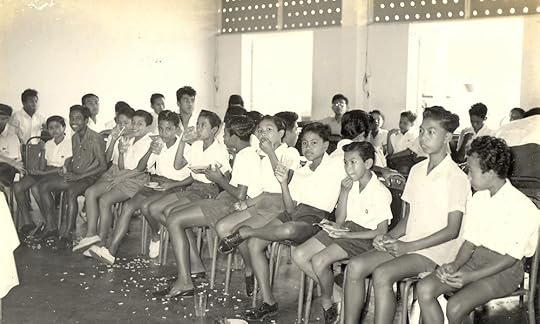 A good History lesson does not teach children to memorise facts that are suspect - of who controlled this or that territory, or which kingdom was overthrown by this or that usurping prince. It teaches them to question 'facts' and to put individuals on trial. It puts Christopher Columbus on trial for murdering thousands of Arawak Indians in the process of being canonised as the ‘founder’ of America.A good History lesson does not teach the idea that Parameswara - who fled his kingdom in an unsuccessful coup attempt in Palembang - is a hero. It teaches children about rulers who were murderers and plunderers and slave-owners.The story of a glorified Parameswara as a founder is a bad history lesson - how can we still glorify a ‘historical fact’ of an usurper and a murderer as a founder of Malacca? It is like glorifying the early history of Manhattan Island, New York City, when it was a haven for smugglers, pirates and bootleggers.A good history lesson makes history come alive by allowing children to play the role of makers of their own history. It allows children to put Parameswara on trial for murder and revolt. It teaches children to question the founding of Malacca and the intention of the author/court-propagandist Tun Sri Lanang who wrote it.A good History class is one that teaches children to revise, debunk and deconstruct history as a tool of mass deception. It challenges students to look at history in radically different ways, to make history come alive, because history is subjective, and ever revisionist.The people’s history of the landA good History class teaches children the people’s history of the land - of those who died building monuments, factories, bridges, tunnels, those who fought and died in the many battles and skirmishes between 'rulers' of the land. These are the unsung heroes of history that our children ought to be taught to honour.A good History lesson teaches children not just other people’s history, but more importantly, their own - beginning with one’s personal history, one’s family, one’s people.The way we still teach History and Social Studies reflects why Malaysians cannot yet evolve from the consciousness of ‘waiting for the messiahs/saviors/matrieya/al-Mahdi/menteri’, to the consciousness of the Self as the true ruler of the Kingdom within.Our land is littered with name after name of individuals who wielded dynastic power since time immemorial - names of those deserving or not. These names are inscribed on road signs, billboards, in many lorong in many, many kampung, landmark buildings, corporate towers, stadiums, schools, higher education institutions, and deep in the consciousness of the people.
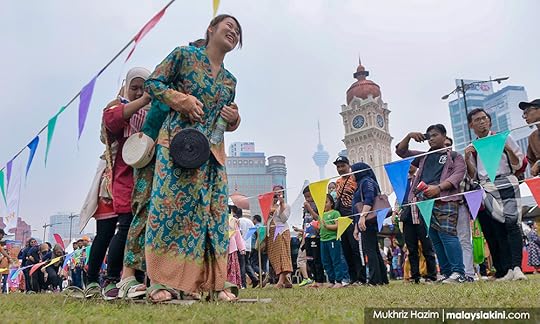 We become colonised by these names, signs, and symbols. The mind becomes paralysed, colonised by these concepts, signs and symbols.Our political conversations will be more meaningful when we stop this colonisation of the mind.“Man makes history,” said the historian EH Carr. It is the “people’s history” as American historian Howard Zinn would say, that ought to be honoured.Questioning historyIt becomes crucial what perspective of history we use in crafting its ancillary - Citizenship Studies/Kenegaraan. We must reconceptualise the way we approach teaching it.It is best to consider the following questions concerning history:What kind of history is most meaningful to the individual?Who writes history?From what point of view is history written?How does history contribute to lethal ethnocentrism?Under what circumstances do historians lie?Is there such a thing as ‘historical facts’ when historical accounts are biases reconstructed based on selective memory?Who gets marginalised in the process of historicising?When will ‘history’ become ‘her-story’?What images of women, immigrants, minorities, natives are presented in history textbooks?In a multiracial and pluralistic society, how is a national history textbook written?Must history continue to glorify individuals, despots, autocrats, dictators, symbols of slavery and oppression?How do we make history lessons come alive?Let us re-evaluate the 'lies' our History teachers told us, and continue to tell us.The question remains: how inclusive must our History curriculum be?

November 30, 2019
Chin Peng’s ashes not the issue
 Opinion0
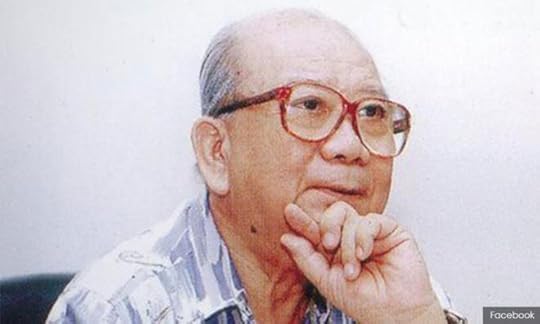
Share to FacebookShare to MoreChin Peng’s ashes not the issue Azly Rahman Published: 6:20 pm | Modified: 6:21 pm A+ A- COMMENT | I am back from a few months of slumber and hiatus. Perhaps the nausea of the state of Malaysian politics made me take a break. But I see writing as a calling and a commitment to continue to think passionately about what is best for our country. I am back in the swing of things. I was also completing my latest book on neo-Mahathirism, on Pakatan Harapan and its promises. Then I read about yet another manufactured crisis, an unfounded fear. Here are my thoughts.What is this smokescreen about Chin Peng’s (photo) ashes? I asked as I read yet another distraction for the rakyat; at the time of the fierce internal struggle within Harapan, on the question of “peaceful transition of power”. I understand the big deal on Chin Peng’s ashes. There were no objections with Shamsiah Fakeh’s and Rashid Maidin’s remains, were there? Then I started thinking about the real fright of those who feared the ashes. It is the fear of something bigger, I hypothesise. Fueled and turbo-charged by one’s ignorance – about ideology and what has been ailing us since independence.
Fear of Marxist critique of society, I presume. I have an antidote for such an imagined disorder. It is called knowledge and the willingness to get out of one’s glass coconut shell. The willingness to explore alternative ideas of economic and social development that promise us a better way to see what is possibly better for Malaysia, a country that still needs to get out of the shackle of one-dimensionality of development – from economic to theological to social, leading to the realisation of each citizen’s individual potential.
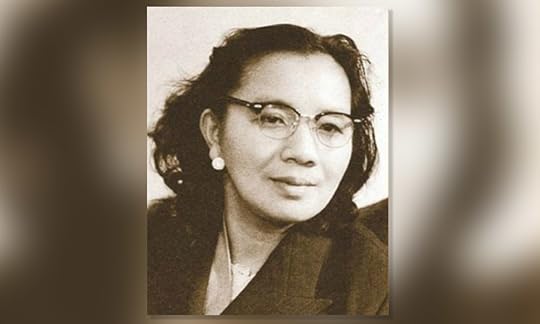 Shamsiah FakehThe will to imagine counter-narratives of history and the march of “progress”. But what has Chin Peng’s ashes got to do with human liberation? After 60 years of independence, we still cannot tell the difference between communism, Marxism, socialism or anarchism. We are well versed in the foundations of crypto-corporate-cybernetic-crony capitalism of the inner workings of the capital market, and on how to get cheap labour and squeeze profits out of modern-day indentured serfs from countries impoverished by the policies of the International Monetary Fund and the World Bank such as Bangladesh.We are good at talking about ''global economics'' and the ''glocalisation'' of Wall Street and Silicon Valley industries, and the so-called 4.0 industries. What is profitable at the global market, we import into our local economies, and what we see profitable in our country, we force our farmers and labourers to produce for the global economies. We then complain about the evils of globalisation without realising that the big capitalists among us are the new globalists of our own labour.At a time when we are exploring the possibilities of becoming a "flying-car nation" (whatever that means), we still have not explored the meaning of ideas we "fear".We still equate communism with armed struggle, just like some Western media conglomerate's tendency of equating Islam with terrorism, and many other concept/word associations that are not accurate and dangerously misleading.We need to explore the story behind the armed struggle to understand the ideology behind the movement. We might denounce the atrocities of the communist insurgents/Malayan co-freedom fighters. However, we must also recognise the intellectual value and power of the Marxist critiques of society as a legitimate, systematic, liberating, humanising and praxical (the translation of theory to practice) body of knowledge that has evolved into an organic discipline itself.One must engage in a systematic study of Marxism in order to be well-equipped with the understanding of what "national development" means. Without this knowledge, we will forever colonise ourselves by importing more and more members of the international advisory panel of any national project we blindly embark upon.
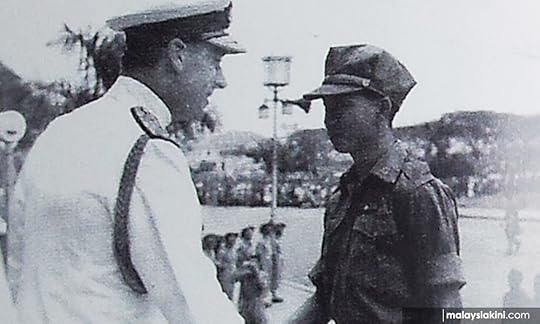 Supreme Allied Commander, Admiral Mountbatten, decorating Chin Peng for wartime services on Jan 6, 1946, at the steps of City Hall. Respect the man, Chin Peng, as a freedom fighter, too. We can have our varied opinions but society is wise in its ability to appreciate history and its dialectical and historical marches. I would ask these questions regarding the Communist Party of Malaya and its fight against the British imperialists whose sole goal is to plunder and suck the blood, sweat and tears out of its slaves in its colonies in places such as Burma, Malaya, Egypt, and India.Had the communists won in Malaya, what kind of power-sharing would there have been?
How might the character of neo-colonialism have turned out had Malaysian political-economic arrangement been based on non-communalism?
Would there be conspicuously rich and - at the other end of the spectrum - silenced under-class poor Malaysians?
Would there be a BN? Would there be Harapan?
What would have been the fate of the monarchy?
What would have been the nature of the distribution of wealth in society and what might the "digital divide" mean?
How might the reformasi movement learn from the theoretical foundations of Marxism, as a radical critique and restructuring tool of society?
What themes in Islam do Marxism share in the areas of social justice and the social control of greed?
How might ancient Chinese philosophy be a powerful and non-oppositional force to Marxism?
How might the concept of Marxist-metaphysical-ism emerge from the synthesis of foundational tenets of the Western and Eastern societies?These and many more might help us explore the possibilities of emergent ideas and make our graduate/Masters/PhD students smarter and our politicians more learned. Imagine the quality of dissertation topics we will have in the archives of our public universities?These topics should generate interest in looking at the possibilities of newer and better arrangement of base and superstructure of the Malaysian society as we develop newer commanding heights, and as we continue to profess our status as an independent nation that is slowly suffocating in the haze of globalisation.Marxism and other 'isms'I have a few suggestions to put a halt to this argument over the independence fighter’s ashes. I suggest we have our undergraduate students read the variety of "isms" and have them construct their own understanding of what this "nebulous of ideas" means. We must give our students the message that these "truths" must be explored and not be shied away from. We cannot continue to have a passion for ignorance.We must even have courses on Marxism, socialism, capitalism and anarchism and encourage our teaching faculty to teach their favourite thinkers such as Karl Marx, Ibnu Sina, Al Farabi, Ali Shariati, Che Guevara, Socrates, Krishnamurthi, Radhakrishna, the French existentialists, Einstein, Malcolm X, Plato, Habermas, Bourdieu, Foucault, Syed Hussein Al-Aattas, Sukarno, Raden Adjeng Kartini, Jose Rizal, Lee Kuan Yew, Gandhi, Kung Fu Tze, Lao Tzi, and Mao Ze Dong. One could even develop a course around the life and times of American poet-musician Bob Dylan (below).
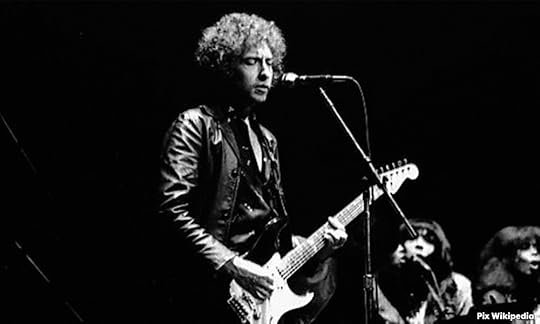 I believe we will create better thinkers amongst our students and lecturers. Campus authorities will not need to use scare tactics during student elections nor university lecturers need not be fired by vice-chancellors and, by extension, the Higher Education Ministry, who are bankrupt of intelligent arguments."The simplest questions are the most profound," said Socrates.Our education system and the way we teach history have not produced enough leaders well-read enough of the history of ideas. It has, since independence, created better “little brown brothers and sisters” and those who fear the act of looking into the mirror of history.In fact, what has the education system produced thus far? It has perhaps produced billionaire leaders from the old paradigm and now those who are aspiring to become like the old. This was made possible by the way we drown ourselves in an ideology called capitalism/free enterprise we cannot fully understand, yet we vulgarize and idolise.Chin Peng’s ashes have been scattered. It is our role now to think of the man beyond what he and the Malayan communists did, but ask why the world today is rising up against the power-elite and oligopolies.What are we seeing now in Malaysia? What lens do we use in analysing the interplay between culture, capitalism, and human liberation? What do we teach in our universities so that we will stop producing mediocrity and this fanaticism of race and religiosity?May Chin Peng rest in peace. He is part of Malaysian history, an important part, whose struggle was perhaps misunderstood.
October 5, 2019
BUTTERLIES in THE PAKATAN HARAPAN CLOSET
BUTTERLIES in THE PAKATAN CLOSET and
MY CONFUSION THESE DAYS
by Azly Rahman (Notes after a hiatus)

The meaning we search for in Malaysian politicsDo we live in a rational world, one in which things make sense, explainable by the simple logic of cause and effect and correlation? Or has the world been an unpredictable universe of chance and randomness, and unpredictable events, from which we try to find patterns, meanings, explanation and console ourselves with the lessons learned?Could an event that happened years, or even decades before, one that is seemingly insignificant, impact today’s world in a momentous way? Like a butterfly flapping its wings in the Amazon jungle in the 1970s, creating ripples with its wings and the ripples creating bigger ones as they interact with other ripples and over time, bigger ripples becoming waves of energy, consequently creating changes in the weather pattern. Plausible? Correlational? Consequential?This is a world of randomness we are in, of unpredictability we are trying to make sense of, before assigning their effect to the force of deux et machina, or fated determinism, or “God’s will”.
Consider these “butterfly effects” in Malaysian politics:Dr Mahathir Mohamad’s revolt against Tunku Abdul Rahman narrated in “May 13: Before and After”, in all its chaos and complexity, order and randomness, Fate and Determinism, has buried the possibilities of the emergence of a truly multicultural society, with the rise and Machiavellian control of Malay politics.The chance of non-bumiputeras to get equal opportunity and fair access to resources in education and social services continues to be sealed, as a “butterfly effect” of the victory of the Umno-Ultras during the post-May 13, 1969, political consolidation and institutionalisation of race-based politics.Yesterday’s rebel has become today’s hero, in the person of Mahathir. It could have been a different story had Najib Abdul Razak won last May's elections. The chaos could have been faster and more devastating, the class divisions wider, the people’s misery more painful and pronounced. Most importantly, there would have been no second Mahathirist Revolution that we are now seeing. Nor will there be a full investigation and prosecution of the wrongdoings allegedly committed during Mahathir’s first tenure as prime minister.Anwar Ibrahim’s Islamisation agenda, patroned by the Mahathir leadership, in all its sincerity and complexity of emulating the ideology of Ikhwanul Muslimin (Muslim Brotherhood) of Egypt and the 1979 Islamic Revolution of Iran, with all the flapping of the wings of countless ideological butterflies, has created the kind of Islamic radicalism hegemonising the political elite, the masses and government servants, providing a fertile ground for another wave of change: the demand for an Islamic State.What could have happened, had the 1997 Asian financial crisis not existed, and Anwar, as finance minister then, did not have to agree to the IMF and World Bank prescriptions to get out of the George Soros-induced financial quagmire that made the country's finances parlous? It may not have led to the dismissal of Anwar Ibrahim as deputy prime minister and the birth of PKR. The flappings of the wings of those ideological butterflies, in the years since “Anwar's black eye” incident, have created, in all the randomness and chaos, today's difficult transition of power from Mahathir to the next prime minister. The issue of trust dominates the consciousness of the two leaders who go a long way back to the early 80s, a period of plenty when Thatcherism and Reaganism were the dominant free-enterprise ideologies.In a world of the Butterfly Effect, nothing is certain. As the Chinese philosopher Lao Tzu once said, the only permanent thing is change. Throw in the notion of politics, wherein there are no permanent enemies nor friends, and to survive the Machiavellian way, one has to use lies and deceit, even murder.
Such is the certainty of uncertainties.Those are two examples of how one can employ the perspective of looking at butterflies in Malaysia's socio-political evolution. We do not know what force governs these.As rational beings, we need explanations, or else some of us will go mad trying to make sense of this existential, Kafkaesque world in all its absurdities. A world in which dictators live long.Does life have meaning?“I don’t know,” as Socrates would answer. -- ar
MY CONFUSION THESE DAYS
by Azly Rahman (Notes after a hiatus)

The meaning we search for in Malaysian politicsDo we live in a rational world, one in which things make sense, explainable by the simple logic of cause and effect and correlation? Or has the world been an unpredictable universe of chance and randomness, and unpredictable events, from which we try to find patterns, meanings, explanation and console ourselves with the lessons learned?Could an event that happened years, or even decades before, one that is seemingly insignificant, impact today’s world in a momentous way? Like a butterfly flapping its wings in the Amazon jungle in the 1970s, creating ripples with its wings and the ripples creating bigger ones as they interact with other ripples and over time, bigger ripples becoming waves of energy, consequently creating changes in the weather pattern. Plausible? Correlational? Consequential?This is a world of randomness we are in, of unpredictability we are trying to make sense of, before assigning their effect to the force of deux et machina, or fated determinism, or “God’s will”.
Consider these “butterfly effects” in Malaysian politics:Dr Mahathir Mohamad’s revolt against Tunku Abdul Rahman narrated in “May 13: Before and After”, in all its chaos and complexity, order and randomness, Fate and Determinism, has buried the possibilities of the emergence of a truly multicultural society, with the rise and Machiavellian control of Malay politics.The chance of non-bumiputeras to get equal opportunity and fair access to resources in education and social services continues to be sealed, as a “butterfly effect” of the victory of the Umno-Ultras during the post-May 13, 1969, political consolidation and institutionalisation of race-based politics.Yesterday’s rebel has become today’s hero, in the person of Mahathir. It could have been a different story had Najib Abdul Razak won last May's elections. The chaos could have been faster and more devastating, the class divisions wider, the people’s misery more painful and pronounced. Most importantly, there would have been no second Mahathirist Revolution that we are now seeing. Nor will there be a full investigation and prosecution of the wrongdoings allegedly committed during Mahathir’s first tenure as prime minister.Anwar Ibrahim’s Islamisation agenda, patroned by the Mahathir leadership, in all its sincerity and complexity of emulating the ideology of Ikhwanul Muslimin (Muslim Brotherhood) of Egypt and the 1979 Islamic Revolution of Iran, with all the flapping of the wings of countless ideological butterflies, has created the kind of Islamic radicalism hegemonising the political elite, the masses and government servants, providing a fertile ground for another wave of change: the demand for an Islamic State.What could have happened, had the 1997 Asian financial crisis not existed, and Anwar, as finance minister then, did not have to agree to the IMF and World Bank prescriptions to get out of the George Soros-induced financial quagmire that made the country's finances parlous? It may not have led to the dismissal of Anwar Ibrahim as deputy prime minister and the birth of PKR. The flappings of the wings of those ideological butterflies, in the years since “Anwar's black eye” incident, have created, in all the randomness and chaos, today's difficult transition of power from Mahathir to the next prime minister. The issue of trust dominates the consciousness of the two leaders who go a long way back to the early 80s, a period of plenty when Thatcherism and Reaganism were the dominant free-enterprise ideologies.In a world of the Butterfly Effect, nothing is certain. As the Chinese philosopher Lao Tzu once said, the only permanent thing is change. Throw in the notion of politics, wherein there are no permanent enemies nor friends, and to survive the Machiavellian way, one has to use lies and deceit, even murder.
Such is the certainty of uncertainties.Those are two examples of how one can employ the perspective of looking at butterflies in Malaysia's socio-political evolution. We do not know what force governs these.As rational beings, we need explanations, or else some of us will go mad trying to make sense of this existential, Kafkaesque world in all its absurdities. A world in which dictators live long.Does life have meaning?“I don’t know,” as Socrates would answer. -- ar
August 24, 2019
What does "genuine education reform" look like?
What does "genuine education reform" look like?Opinion |
Azly Rahman
Published: Today 7:58 pm | Modified: Today 7:58 pm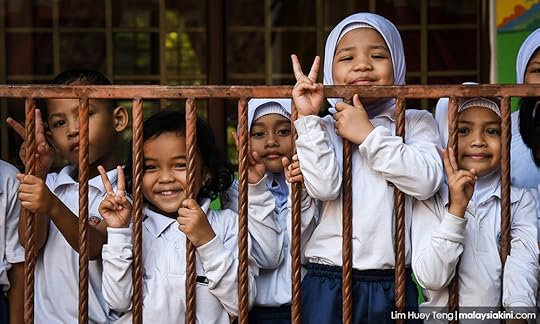 A+ A- COMMENT | The idea of culture and education and economic evolution of a nation, framed within Malaysia’s evolutionary stage, is key to answering the question in my heading. Let us not dwell yet into the comparative aspects of successful countries and how they frame the process of genuine educational change, from crafting philosophy to framing paradigm, to structuring classroom daily practice right until assessing what students need to know and if they already know, understand, and can create new artefacts, as perhaps what Benjamin Bloom’s 'Taxonomy' or Howard Gardner’s 'Multiple Intelligences Theory' suggested. That’s the depth of what ought to happen in Malaysian education. But first things first. I’d suggest a simple idea, for those in the Ministry of Education: begin by having, as American academics would say, “brown bag discussions” on the exact philosophy Malaysian education needs - multicultural sensitivity. Philosophy guides practice, just as corporate vision and ethos drives organisations. I have written about this.What changes, thus far?Advertisement
Thus far, what sort of “genuine changes” have been at least articulated? What brand of philosophy has been trumpeted at least to appease voters who voted for genuine change because they wished their children can no longer be left behind, in a country problematic in terms of race relations and religious rhetoric gone berserk.The above - prelude to first and second order changes as educational futurists would say - has not been articulated enough right from the start of this hurrah of “genuine reform”. Wherein lies the mistake of our cultural evolution? Education, I’d say. In this enterprise of “drawing out of human potentials” lies that gentle profession the politicians have emboldened with the lava of racial prejudice and the myth of the expansive economic pie.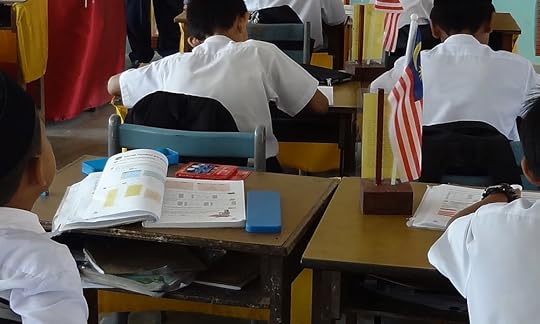 Is there hope? We must begin with the amber, of what's glimmering and what's promising, but we cannot twist the arms of politicians if their bodies are wrapped with the straitjacket of wealth and power made by-capitalism, insisting that the only way forward is to traverse the path suggested by Niccolo Machiavelli and Sun Tzu.Maintain power by whatever means necessary, use deceit, use strategies to outdo the enemy, kill if you must, play with numbers, make statistics lie, and go to war with each other perpetually. Use education as a tool of apartheid, mental oppression, so that we may produce more myths, while the rich watch the numbers go up and down in the ticker-tape of the stock exchange. Where global poverty is the gold standard of the one percent of the new imperialists.What Malaysians want What do we want? Today the myth is recreated, reconstructed, and rebranded, as if we are living in an amnesiac society, ruled by leaders who are plagued with selective dementia.It does not make sense to turn our politics and policy-making into a ghoulish carnival of the living dead, the ghosts of yesteryear being perpetually resurrected and used to instill fear in a new generation of Malaysians of each other – as if they must be forced to carry the burden of Malaysia’s violent episodes of history, crafted by the powers that want to maintain hegemony and the master-slave narrative.That is what is happening now and since independence, and the purposeful reluctance to accept sane and logical solutions to our racial and religious ailments – like the debates over the United Examination Certificate (UEC), all-Malay elite boarding schools such as the MRSM system, proliferating tahfiz schools, the English-language in instruction, and the ketuanan educational-philosophical orientation.
 Now we have the aftermath and bad after-taste of the ignoble work of a Mumbai preacher worshipped by some Malay-Muslims and their gang of religious bigots wherein the rock-star fame accorded to that man with a microphone spewing his half-baked truths is as big as one accorded the late Freddy Mercury of the rock group Queen.We all want the best for our society, especially for the young ones struggling to make sense of the world. It is their future we are entrusted to craft. Hence, educational visioning must be undertaken as soon as a new government takes shape. But it has been almost a year and a half, and a brand new vision statement on multicultural education is nowhere to be seen. What happened?Leadership needs philosophy, process, innovation, and management of change. It needs empathy in the case of educational leadership, so that we may not discriminate and turn this gentle profession of educating into a system of apartheid. This is what is happening - a continuation of unclear vision and a rabid hanging on to racial and religious dogma. We cannot continue to harp on the idea that schools are “medan dakwah”. What we’ll gainWe have a lot to gain if we understand education for mental liberation in all its complexity in a multiracial society. One avenue to begin our restructuring is to learn from the diaspora who have seen what education looks like in diverse settings, and why advanced countries continue to advance and outlaw racial discrimination.We should stop believing and supporting politicians who wish to continue to divide us through their rhetoric. We must wage an ideological battle with those who still call this and that race ‘lazy’, ‘greedy’, and ‘dirty’, and all kinds of demeaning and derogatory representations of these peoples’ pride and dignity.These are the politicians who thrive on wealth, wilfully blind to the fact that poverty cuts across race and religious lines, that extremism is in all religions, and that the future generations need not be punished with the sins of their fathers and be made to feel helpless and hopeless with all kinds of unkind misrepresentation.
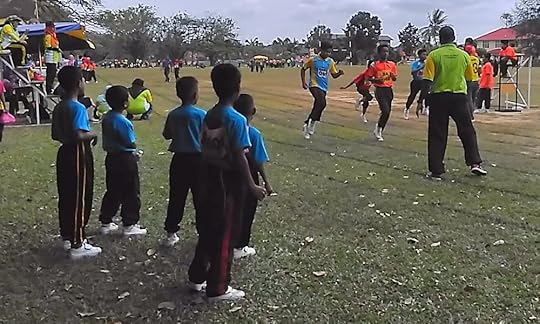 We must, especially through our educational philosophical and pedagogical design, shape a more peaceful, productive, and collaborative future amongst the races. So that we will not produce more amnesic politicians who will continue to sing us more lullabies about the ‘lazy, greedy, and dirty’ natives.We have a lot to work on to achieve the goals of the political rhetoric of ‘Vision 2020’. But first, we must educate for peace, progress, and prosperity that “makes the many one, and the one many".Where to beginIt must begin with a grand design of our educational future. A truly Malaysia future. No child left behind. Just look into the eyes of the children of Malaysians on their very first day of school. Do they tell us what discrimination means and will turn them into? Will they be in chains, when they are born free? Every child is a “child of Merdeka.”Let us hope and demand for “genuine reform” to happen. Let us be made known of the process. Or at least give an announcement of a new philosophy that will honour our diversity and the future of children of all Malaysians. Genuine reform must begin with a genuine interest to dismantle all forms if injustices, so that this land shall be the land for all Malaysians rightfully.
A+ A- COMMENT | The idea of culture and education and economic evolution of a nation, framed within Malaysia’s evolutionary stage, is key to answering the question in my heading. Let us not dwell yet into the comparative aspects of successful countries and how they frame the process of genuine educational change, from crafting philosophy to framing paradigm, to structuring classroom daily practice right until assessing what students need to know and if they already know, understand, and can create new artefacts, as perhaps what Benjamin Bloom’s 'Taxonomy' or Howard Gardner’s 'Multiple Intelligences Theory' suggested. That’s the depth of what ought to happen in Malaysian education. But first things first. I’d suggest a simple idea, for those in the Ministry of Education: begin by having, as American academics would say, “brown bag discussions” on the exact philosophy Malaysian education needs - multicultural sensitivity. Philosophy guides practice, just as corporate vision and ethos drives organisations. I have written about this.What changes, thus far?AdvertisementThus far, what sort of “genuine changes” have been at least articulated? What brand of philosophy has been trumpeted at least to appease voters who voted for genuine change because they wished their children can no longer be left behind, in a country problematic in terms of race relations and religious rhetoric gone berserk.The above - prelude to first and second order changes as educational futurists would say - has not been articulated enough right from the start of this hurrah of “genuine reform”. Wherein lies the mistake of our cultural evolution? Education, I’d say. In this enterprise of “drawing out of human potentials” lies that gentle profession the politicians have emboldened with the lava of racial prejudice and the myth of the expansive economic pie.
Is there hope? We must begin with the amber, of what's glimmering and what's promising, but we cannot twist the arms of politicians if their bodies are wrapped with the straitjacket of wealth and power made by-capitalism, insisting that the only way forward is to traverse the path suggested by Niccolo Machiavelli and Sun Tzu.Maintain power by whatever means necessary, use deceit, use strategies to outdo the enemy, kill if you must, play with numbers, make statistics lie, and go to war with each other perpetually. Use education as a tool of apartheid, mental oppression, so that we may produce more myths, while the rich watch the numbers go up and down in the ticker-tape of the stock exchange. Where global poverty is the gold standard of the one percent of the new imperialists.What Malaysians want What do we want? Today the myth is recreated, reconstructed, and rebranded, as if we are living in an amnesiac society, ruled by leaders who are plagued with selective dementia.It does not make sense to turn our politics and policy-making into a ghoulish carnival of the living dead, the ghosts of yesteryear being perpetually resurrected and used to instill fear in a new generation of Malaysians of each other – as if they must be forced to carry the burden of Malaysia’s violent episodes of history, crafted by the powers that want to maintain hegemony and the master-slave narrative.That is what is happening now and since independence, and the purposeful reluctance to accept sane and logical solutions to our racial and religious ailments – like the debates over the United Examination Certificate (UEC), all-Malay elite boarding schools such as the MRSM system, proliferating tahfiz schools, the English-language in instruction, and the ketuanan educational-philosophical orientation.Now we have the aftermath and bad after-taste of the ignoble work of a Mumbai preacher worshipped by some Malay-Muslims and their gang of religious bigots wherein the rock-star fame accorded to that man with a microphone spewing his half-baked truths is as big as one accorded the late Freddy Mercury of the rock group Queen.We all want the best for our society, especially for the young ones struggling to make sense of the world. It is their future we are entrusted to craft. Hence, educational visioning must be undertaken as soon as a new government takes shape. But it has been almost a year and a half, and a brand new vision statement on multicultural education is nowhere to be seen. What happened?Leadership needs philosophy, process, innovation, and management of change. It needs empathy in the case of educational leadership, so that we may not discriminate and turn this gentle profession of educating into a system of apartheid. This is what is happening - a continuation of unclear vision and a rabid hanging on to racial and religious dogma. We cannot continue to harp on the idea that schools are “medan dakwah”. What we’ll gainWe have a lot to gain if we understand education for mental liberation in all its complexity in a multiracial society. One avenue to begin our restructuring is to learn from the diaspora who have seen what education looks like in diverse settings, and why advanced countries continue to advance and outlaw racial discrimination.We should stop believing and supporting politicians who wish to continue to divide us through their rhetoric. We must wage an ideological battle with those who still call this and that race ‘lazy’, ‘greedy’, and ‘dirty’, and all kinds of demeaning and derogatory representations of these peoples’ pride and dignity.These are the politicians who thrive on wealth, wilfully blind to the fact that poverty cuts across race and religious lines, that extremism is in all religions, and that the future generations need not be punished with the sins of their fathers and be made to feel helpless and hopeless with all kinds of unkind misrepresentation.We must, especially through our educational philosophical and pedagogical design, shape a more peaceful, productive, and collaborative future amongst the races. So that we will not produce more amnesic politicians who will continue to sing us more lullabies about the ‘lazy, greedy, and dirty’ natives.We have a lot to work on to achieve the goals of the political rhetoric of ‘Vision 2020’. But first, we must educate for peace, progress, and prosperity that “makes the many one, and the one many".Where to beginIt must begin with a grand design of our educational future. A truly Malaysia future. No child left behind. Just look into the eyes of the children of Malaysians on their very first day of school. Do they tell us what discrimination means and will turn them into? Will they be in chains, when they are born free? Every child is a “child of Merdeka.”Let us hope and demand for “genuine reform” to happen. Let us be made known of the process. Or at least give an announcement of a new philosophy that will honour our diversity and the future of children of all Malaysians. Genuine reform must begin with a genuine interest to dismantle all forms if injustices, so that this land shall be the land for all Malaysians rightfully. August 22, 2019
Were Zakir Naik's remarks taken out of context?
Were Zakir Naik's remarks taken out of context?Opinion |
Azly Rahman
Published: Today 6:28 pm | Modified: Today 6:28 pm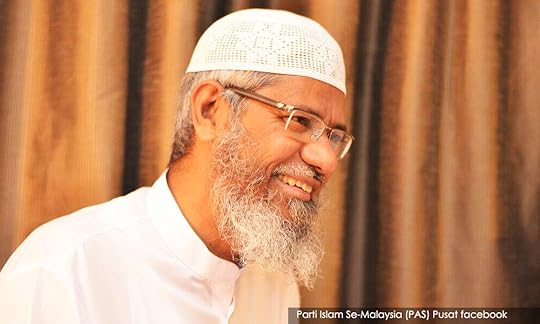 A+ A- COMMENT | I must first congratulate the police (PDRM) for banning Zakir Naik (above) from speaking in public. This shows how much Malaysians, including Malay-Muslims, can no longer tolerate the kind of preaching that is not only filled with half-baked truths but also inciting threats to our multicultural polity. This type of preacher needs to be asked to leave our country. No free speech in shouting “Fire, Fire in a movie theatre“ goes the analogy.But there are still those who assert that Malaysia is only for Malays and that we need a
Saddam Hussein
to unite this country. Saddam Hussein is a mass murderer. Not a good role model for anyone, Muslims included. This kind of statement is at best bankrupt in content and intent, and at worst seditious, in a new Malaysia that promises us less racism and religious bigotry.But was Zakir Naik misquoted or taken out of context?I set myself to ascertain the claim. I listened closely to the words in the two videoclips by the fugitive preacher Zakir Naik. I then analysed them using a quick discourse analysis technique, of the discourse of plain logic, as well as how much knowledge of the subject matter the speaker possesses.Advertisement
A+ A- COMMENT | I must first congratulate the police (PDRM) for banning Zakir Naik (above) from speaking in public. This shows how much Malaysians, including Malay-Muslims, can no longer tolerate the kind of preaching that is not only filled with half-baked truths but also inciting threats to our multicultural polity. This type of preacher needs to be asked to leave our country. No free speech in shouting “Fire, Fire in a movie theatre“ goes the analogy.But there are still those who assert that Malaysia is only for Malays and that we need a
Saddam Hussein
to unite this country. Saddam Hussein is a mass murderer. Not a good role model for anyone, Muslims included. This kind of statement is at best bankrupt in content and intent, and at worst seditious, in a new Malaysia that promises us less racism and religious bigotry.But was Zakir Naik misquoted or taken out of context?I set myself to ascertain the claim. I listened closely to the words in the two videoclips by the fugitive preacher Zakir Naik. I then analysed them using a quick discourse analysis technique, of the discourse of plain logic, as well as how much knowledge of the subject matter the speaker possesses.Advertisement
1] On the video of Malaysian Indians given 100 times more rights in Malaysia:A very strange logic. I can't yet understand what he was trying to say comparing the "hundred times more rights" Hindus are given in Malaysia than Muslims are given in India. What in the world is that kind of right? How do a hundred times more rights compare to basic rights accorded by the UN Declaration of Human Rights of 1946?His statement not only sounds unintelligible but the way the comparison was made, sounds absurd.At one point he said to the effect that he's not going to take away the rights of Malaysian Indians. Now, what makes him think he has the right to grant this concession?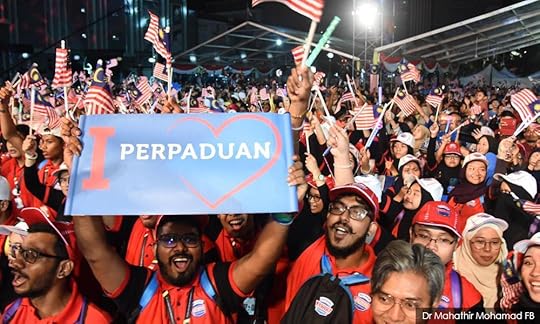 2] On the video of non-Muslims as guests, it is one of the most dangerous statements I have ever heard uttered by a guest and an asylum-seeker out to create havoc in our society.Very confusing, anachronistically, to me. Historical time and space seemed to have been collapsed in his blurting out accusations on the rightful status of Malaysians of Chinese and Indian descent. There is no sense of right and wrong in using the word "guests", let alone the words "Malaysia and Indonesia" in a historical context, let alone speaking about the chronology of Malaysian-Indonesian history from antiquity.This man’s assertions on the “old-guest-status-of-the-non-Malays” demonstrated shallowness in his reading of our history and the struggles of the different races, but also cacophonic in his stringing of historical events, causes and consequences. He made himself unintelligible when he spoke about our history.Because of his carelessness in understanding the history of the peoples of Malaysia and his use of the politically derogatory term “guests,” he made us angry. Very, very angry.When Pakatan took over, they promised to have him sit quietly and if he created trouble, they would send him back. Now he has created a furore. Good that he is now banned from preaching what Islam is not.Arrogant and incitefulArrogance and inciteful, using the "pendatang" argument against non-Malays. A bankrupt argument overused by the old, corrupted regime, through the hateful Biro Tata Negara.
 This is the same horrifying spurious argument he uses in talking about Islam and "comparative religions", of evolutionary theory, of science, a corrupt Muslim leader being better than a non-corrupt non-Muslim.Hate should not be allowed to spread its roots in Malaysia. We have had enough.The Pakatan Harapan’s love, care, and support for him will perhaps cost the coalition a huge loss in the next general elections. I don't think the non-Malays should any longer support any party or coalition that harbours this kind of vile person. Malays, too, should be angry at the humiliation of non-Malays. Because we are Malaysians.Who or what is Zakir Naik a mouthpiece of? He should leave and be in Saudi Arabia where he is a citizen. Or be in India where he should, with Allah’s help, answer the charges on money-laundering. Why is he afraid of man’s judgment if he is a true-blue pious Muslim who leaves everything to God, insya Allah? Islam need not be "defended" here. Islam, in fact, needs no defence. No religion needs to be against any other. “Pendatang” argument ad nauseumAgain, this question of migration bores us to the point of Sartrean nausea (the meaninglessness of concepts). Aren’t we all here in this land now, whether you like it or not?We just need to be moral citizens upholding the ideals of the constitution and living by the spirit of it. We don’t need to keep on manufacturing crises to sustain conflicts and produce new ones. In a Malaysiakini column fifteen years ago, I wrote about a dream for Malaysia I had - of no Malaysian left behind.Why fight over whose grandpa or grandma was here first? What is clear is one’s legal status and citizenship, and what all of us have contributed and will contribute to the betterment of each other.Each citizen must be given equal rights and privileges, whether he became a citizen yesterday or 10,000 days ago. There should be no discrimination in educational opportunity, welfare services, housing, or anything.Race and ethnicity are mere constructs, produced by arrogant theorists. They cannot be taken as real, and be a reason to fight over them.As for the answer to the question of whether Zakir Naik was misquoted or taken out of context? From my analysis, he meant what he said. He may have strong and wide support of those who wish to make Malaysia an “Islamic state”, whatever that may mean. From whatever model that may be shaped, it will be a contradiction to what we Malaysians aspire to become – a liberal, progressive, ethical, and scientific nation.Thank you PDRM and bravo Malaysians! We are united on this. Keep it that way.
A+ A- COMMENT | I must first congratulate the police (PDRM) for banning Zakir Naik (above) from speaking in public. This shows how much Malaysians, including Malay-Muslims, can no longer tolerate the kind of preaching that is not only filled with half-baked truths but also inciting threats to our multicultural polity. This type of preacher needs to be asked to leave our country. No free speech in shouting “Fire, Fire in a movie theatre“ goes the analogy.But there are still those who assert that Malaysia is only for Malays and that we need a
Saddam Hussein
to unite this country. Saddam Hussein is a mass murderer. Not a good role model for anyone, Muslims included. This kind of statement is at best bankrupt in content and intent, and at worst seditious, in a new Malaysia that promises us less racism and religious bigotry.But was Zakir Naik misquoted or taken out of context?I set myself to ascertain the claim. I listened closely to the words in the two videoclips by the fugitive preacher Zakir Naik. I then analysed them using a quick discourse analysis technique, of the discourse of plain logic, as well as how much knowledge of the subject matter the speaker possesses.Advertisement1] On the video of Malaysian Indians given 100 times more rights in Malaysia:A very strange logic. I can't yet understand what he was trying to say comparing the "hundred times more rights" Hindus are given in Malaysia than Muslims are given in India. What in the world is that kind of right? How do a hundred times more rights compare to basic rights accorded by the UN Declaration of Human Rights of 1946?His statement not only sounds unintelligible but the way the comparison was made, sounds absurd.At one point he said to the effect that he's not going to take away the rights of Malaysian Indians. Now, what makes him think he has the right to grant this concession?
2] On the video of non-Muslims as guests, it is one of the most dangerous statements I have ever heard uttered by a guest and an asylum-seeker out to create havoc in our society.Very confusing, anachronistically, to me. Historical time and space seemed to have been collapsed in his blurting out accusations on the rightful status of Malaysians of Chinese and Indian descent. There is no sense of right and wrong in using the word "guests", let alone the words "Malaysia and Indonesia" in a historical context, let alone speaking about the chronology of Malaysian-Indonesian history from antiquity.This man’s assertions on the “old-guest-status-of-the-non-Malays” demonstrated shallowness in his reading of our history and the struggles of the different races, but also cacophonic in his stringing of historical events, causes and consequences. He made himself unintelligible when he spoke about our history.Because of his carelessness in understanding the history of the peoples of Malaysia and his use of the politically derogatory term “guests,” he made us angry. Very, very angry.When Pakatan took over, they promised to have him sit quietly and if he created trouble, they would send him back. Now he has created a furore. Good that he is now banned from preaching what Islam is not.Arrogant and incitefulArrogance and inciteful, using the "pendatang" argument against non-Malays. A bankrupt argument overused by the old, corrupted regime, through the hateful Biro Tata Negara.This is the same horrifying spurious argument he uses in talking about Islam and "comparative religions", of evolutionary theory, of science, a corrupt Muslim leader being better than a non-corrupt non-Muslim.Hate should not be allowed to spread its roots in Malaysia. We have had enough.The Pakatan Harapan’s love, care, and support for him will perhaps cost the coalition a huge loss in the next general elections. I don't think the non-Malays should any longer support any party or coalition that harbours this kind of vile person. Malays, too, should be angry at the humiliation of non-Malays. Because we are Malaysians.Who or what is Zakir Naik a mouthpiece of? He should leave and be in Saudi Arabia where he is a citizen. Or be in India where he should, with Allah’s help, answer the charges on money-laundering. Why is he afraid of man’s judgment if he is a true-blue pious Muslim who leaves everything to God, insya Allah? Islam need not be "defended" here. Islam, in fact, needs no defence. No religion needs to be against any other. “Pendatang” argument ad nauseumAgain, this question of migration bores us to the point of Sartrean nausea (the meaninglessness of concepts). Aren’t we all here in this land now, whether you like it or not?We just need to be moral citizens upholding the ideals of the constitution and living by the spirit of it. We don’t need to keep on manufacturing crises to sustain conflicts and produce new ones. In a Malaysiakini column fifteen years ago, I wrote about a dream for Malaysia I had - of no Malaysian left behind.Why fight over whose grandpa or grandma was here first? What is clear is one’s legal status and citizenship, and what all of us have contributed and will contribute to the betterment of each other.Each citizen must be given equal rights and privileges, whether he became a citizen yesterday or 10,000 days ago. There should be no discrimination in educational opportunity, welfare services, housing, or anything.Race and ethnicity are mere constructs, produced by arrogant theorists. They cannot be taken as real, and be a reason to fight over them.As for the answer to the question of whether Zakir Naik was misquoted or taken out of context? From my analysis, he meant what he said. He may have strong and wide support of those who wish to make Malaysia an “Islamic state”, whatever that may mean. From whatever model that may be shaped, it will be a contradiction to what we Malaysians aspire to become – a liberal, progressive, ethical, and scientific nation.Thank you PDRM and bravo Malaysians! We are united on this. Keep it that way.
August 17, 2019
A Malay Child of Merdeka
A Malay Child of MerdekaOpinion |
Azly Rahman
Published: Today 8:05 pm | Modified: Today 8:05 pm A+ A- COMMENT | As a child born into a Malay family a few years after the shouts of Merdeka” filled the nation’s stadium, and as a child privileged to be given the opportunities accorded to a “bumiputera,” I have a statement of hope to convey to our nation.As an adult growing, learning multiple ways of knowing about the world through people of multiple cultures, I often ask the question of what will happen to the children and grandchildren of Mr. Wong Seng Kwong, my Jawi teacher in Johor Bahru, Auntie Ah Lan the lady who taught my mother how to sew clothes for a living, Dr Das who treated my childhood illness and taught me how to be “patient” about wanting to make changes in the world, Mr. P V Kulasingam, my fearful-looking headmaster, Miss Chan, my favourite maths teacher, who suddenly became angry at me a day after the May 13,1969 riots, Mr. Peter Ng, Miss Christine Yap and Mr. Stephen Ambrose, some of my English teachers who taught me to love the language when I was struggling with other subjects, and countless other “non-Malay non-bumis.”I have become indebted — to those who have contributed to the subjectivity” of what I am as a “cultural being living in an everchanging and evolving world of shifting cultural constructs.”In short, I ask the question – what has this nation done to the children and grandchildren of these people through the policies we create to alienate each other?Because in my profession as an educator, questions are more important than the answers, I present them below:After this Merdeka, celebrations will we all be called the “new bumiputeras”? Will the false dichotomy of “Malays” versus “non-Malays” and “bumiputeras ” versus “non-bumiputeras” be abolished? Will we come together as “true blue Malaysians” who will progress through the guiding national development philosophy crafted by the principles of scientific socialism, multiculturalism, affirmative action and meritocratic principles in a balance, and the respect, cultivation, and preservation of indigenous cultures that sustain the dignity of each race?
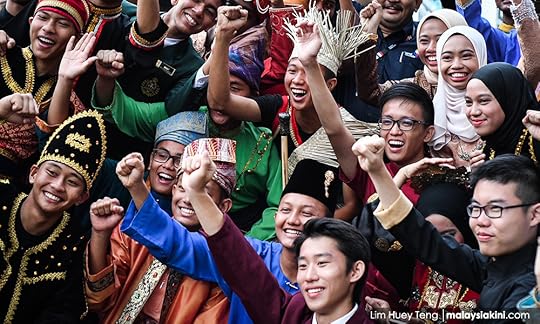 Will more financial aid be given to the deserving students of all races? Will more scholarships be given to “non-Malays” or “non-bumiputeras” so that they too will enjoy the fruits of the labour of the parents and grandparents who toiled for this nation? Will more deserving “non-Malays” be given the much needed aid to study abroad and to come home and serve, so that they will take pride in building the nation that has been kind to them? Will this new preferential treatment cure the ill-feeling and animosity over the awarding of resources amongst the different races?Will the children and grandchildren of great Malaysians – Soh Chin Aun, V Arumugam, Santokh Singh, (the grand-daddies of the Beckhams and Messis and Ronaldos of the Malaysian cultural iconoclasm) and Andre Goh, M.Jegathesan, be given scholarships they deserve? Will preferential treatment be given to those born after Aug 31, 1957, to their children and grandchildren as well?It will be a shame to the hard work of the “founding fathers” of Merdeka if we do not work towards providing equality, equity, and equal opportunity to the children of all races. It would kill the spirit of Merdeka. 0ur Merdeka gone astray?This Merdeka, we have gone astray. Race-politics has reached its boiling point. It is predictable as a consequence of the outgrowth of politics in a pluralistic nation. Scholars who write about the difference between nationalism and socialism have predicted the bankruptcy of the former, in an age of globalisation and mass consumption – in an age wherein blind nationalism has become a blinder or the politics of plunder.This Merdeka, let us extend special rights to all who deserve to live a life of dignity, based on the principles of the universal declaration of human rights. In a nation wherein the three major races help build the nation, the nation must now belong to the children of all these races.
 It is the logic of the brighter side of Social Darwinism – that all must be made fit to survive, not through natural selection, but through an inclusive philosophy of developmentalism. It is an antidote to racial discrimination, based on a sound philosophy of peaceful evolution.We cannot continue to alienate each other through arguments on a ”social contract” that is alien from what Jean Jacques Rousseau wrote about some 300 years ago – a philosophy that inspired the founding of America, a nation of immigrants constantly struggling (albeit imperfectly) to meet the standard requirements of equality, equity, and equal opportunity, especially in education.How do we come together as Malaysians, as neo-bumiputeras free from false political-economic and ideological dichotomies of Malays versus non-Malays, “bumi” versus “non-bumis”, and craft a better way of looking at our political, economic, social, cultural, psychological, and spiritual destiny – so that we may continue to survive as a specie of Malaysians the next 50 years?As a privileged Malay and a “bumiputera”, I want to see the false dichotomies destroyed and a new sense of social order emerging, based on a more just form of linguistic play, designed as a new Merdeka game plan.Think Malaysian – we do not have anything to lose except our mental chains. There is still a reason to celebrate.
A+ A- COMMENT | As a child born into a Malay family a few years after the shouts of Merdeka” filled the nation’s stadium, and as a child privileged to be given the opportunities accorded to a “bumiputera,” I have a statement of hope to convey to our nation.As an adult growing, learning multiple ways of knowing about the world through people of multiple cultures, I often ask the question of what will happen to the children and grandchildren of Mr. Wong Seng Kwong, my Jawi teacher in Johor Bahru, Auntie Ah Lan the lady who taught my mother how to sew clothes for a living, Dr Das who treated my childhood illness and taught me how to be “patient” about wanting to make changes in the world, Mr. P V Kulasingam, my fearful-looking headmaster, Miss Chan, my favourite maths teacher, who suddenly became angry at me a day after the May 13,1969 riots, Mr. Peter Ng, Miss Christine Yap and Mr. Stephen Ambrose, some of my English teachers who taught me to love the language when I was struggling with other subjects, and countless other “non-Malay non-bumis.”I have become indebted — to those who have contributed to the subjectivity” of what I am as a “cultural being living in an everchanging and evolving world of shifting cultural constructs.”In short, I ask the question – what has this nation done to the children and grandchildren of these people through the policies we create to alienate each other?Because in my profession as an educator, questions are more important than the answers, I present them below:After this Merdeka, celebrations will we all be called the “new bumiputeras”? Will the false dichotomy of “Malays” versus “non-Malays” and “bumiputeras ” versus “non-bumiputeras” be abolished? Will we come together as “true blue Malaysians” who will progress through the guiding national development philosophy crafted by the principles of scientific socialism, multiculturalism, affirmative action and meritocratic principles in a balance, and the respect, cultivation, and preservation of indigenous cultures that sustain the dignity of each race?Will more financial aid be given to the deserving students of all races? Will more scholarships be given to “non-Malays” or “non-bumiputeras” so that they too will enjoy the fruits of the labour of the parents and grandparents who toiled for this nation? Will more deserving “non-Malays” be given the much needed aid to study abroad and to come home and serve, so that they will take pride in building the nation that has been kind to them? Will this new preferential treatment cure the ill-feeling and animosity over the awarding of resources amongst the different races?Will the children and grandchildren of great Malaysians – Soh Chin Aun, V Arumugam, Santokh Singh, (the grand-daddies of the Beckhams and Messis and Ronaldos of the Malaysian cultural iconoclasm) and Andre Goh, M.Jegathesan, be given scholarships they deserve? Will preferential treatment be given to those born after Aug 31, 1957, to their children and grandchildren as well?It will be a shame to the hard work of the “founding fathers” of Merdeka if we do not work towards providing equality, equity, and equal opportunity to the children of all races. It would kill the spirit of Merdeka. 0ur Merdeka gone astray?This Merdeka, we have gone astray. Race-politics has reached its boiling point. It is predictable as a consequence of the outgrowth of politics in a pluralistic nation. Scholars who write about the difference between nationalism and socialism have predicted the bankruptcy of the former, in an age of globalisation and mass consumption – in an age wherein blind nationalism has become a blinder or the politics of plunder.This Merdeka, let us extend special rights to all who deserve to live a life of dignity, based on the principles of the universal declaration of human rights. In a nation wherein the three major races help build the nation, the nation must now belong to the children of all these races.It is the logic of the brighter side of Social Darwinism – that all must be made fit to survive, not through natural selection, but through an inclusive philosophy of developmentalism. It is an antidote to racial discrimination, based on a sound philosophy of peaceful evolution.We cannot continue to alienate each other through arguments on a ”social contract” that is alien from what Jean Jacques Rousseau wrote about some 300 years ago – a philosophy that inspired the founding of America, a nation of immigrants constantly struggling (albeit imperfectly) to meet the standard requirements of equality, equity, and equal opportunity, especially in education.How do we come together as Malaysians, as neo-bumiputeras free from false political-economic and ideological dichotomies of Malays versus non-Malays, “bumi” versus “non-bumis”, and craft a better way of looking at our political, economic, social, cultural, psychological, and spiritual destiny – so that we may continue to survive as a specie of Malaysians the next 50 years?As a privileged Malay and a “bumiputera”, I want to see the false dichotomies destroyed and a new sense of social order emerging, based on a more just form of linguistic play, designed as a new Merdeka game plan.Think Malaysian – we do not have anything to lose except our mental chains. There is still a reason to celebrate.August 13, 2019
Jawi good for nostalgia, not a cyber world
Jawi good for nostalgia, not a cyber worldOPINION | AZLY RAHMANPublished: Today 6:44 pm | Modified: Today 6:44 pm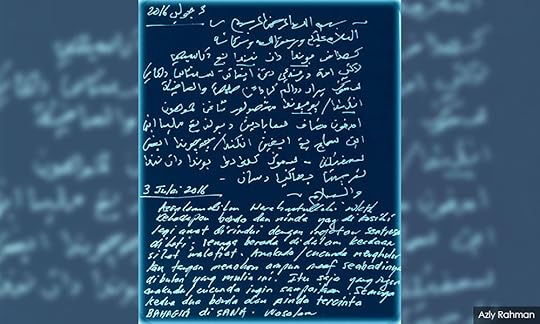 A+ A-COMMENT | I use Jawi only for nostalgia and for reasons of reverence. A special script that connects me to my loved ones, no longer in this physical world. But don't force it on non-Malays, non-Muslims, though. It is not meaningful to most of them. Let it be. They will reject. That is fine. I would be in anguish if those who do not like or love Malay writing start cursing it, out of being forced to learn against their will. I hate reading such angry words. Because Jawi is a memory of my mother and grandmother.My advice, as a 30-year global educationist: educating is not about forcing. It's about "buying in" what is meaningful to the child. Not about advancing Islam and imposing related scripts or way of writing on children of different faiths. Advertisement
Khat is Quranic artform. The Education Ministry must not force, to serve the interests of political masters. It must educate, not aggravate, propagate. When will the Ministry of Education learn the very basic principle of Multicultural Education? Jawi can’t help the Malaysian economyJawi is nice to access ancient Malay texts. But Jawi is not necessarily useful for today's hyper-loop economy. Mind you, cybernetic artifacts are not written in Jawi. Why fight to impose it? The English language is more effective, not only for scientific advancement, but also in fostering unity amongst Malaysians. Though I have mastered Jawi, I seldom use it. Romanized Malay and English are the key lingua franca I utilize. English is my primary language today. I write, lecture, think, argue, create, and contemplate in English.Curriculum design need not be reactionary, ideological, poorly planned when it comes to crafting "national unity". Chinese & Indian scripts existed way longer than Jawi. Let the Chinese and Indian take pride in preserving each. Fair. Just stick to Romanized Malay and English as 21st. century education's emphasis. Jawi for Malays only. Choice for the rest. Chinese & Indians are fighting against Jawi. This shows the failure of national unity. Education is supposed to mediate. Failed.The issue is hegemony, ideology, and semiotics of Islamism. There is no meaning in learning Jawi. Education is about meaningfulness.Did the audience in Kelantan understand Zakir Naik who spoke entirely in English? Or was it just a show of the so-called ‘defending the ummah,” though we do not know what is to be defended and against who?There was a khat controversy in West Virginia in America in 2015, when 24 schools were closed because one Geography teacher was teaching children how to write Quranic verses. What can Malaysians learn from this? Tell the truth about khatThe Ministry of Education must say the truth: that "khat" is Quranic art. Intellectual honesty will go a long way. Deceit will not. I am not against Quranic calligraphy. I write Jawi well, and do khat as an amateur too. But semiotically, it is not for non-Muslims to learn if you wish to be true to the use of khat, i.e. to fall in love with Quranic verses. We are a multicultural society juggling related sensitivities. Respect all religions. Begin the process of separating religion and the state, and how it is approached in schooling.For non-Muslims lovers of Jawi and khat, bravo for your cross-cultural interest for whatever reason and orientation. It is your right to love the Quranic artform. The central issue here is realism. Overzealous Muslims in Malaysia have succeeded in painting a scary image of Islam such that even Jawi is rejected.Rock star mullahs and radical Wahabi preachers get to run around spewing nonsense about the Islamic state and we think non-Muslims are not scared? Had Islam been presented well, with love and compassion, people would even learn to sing Islamic acapella songs. But that is not happening. And Jawi becomes the semiotic scapegoat.
 Khat is a gateway to Islam, to the Quran, perhaps to facilitate a child’s early socialization with a religion. I once wrote how the gateway to Islam in Java was created through the transformation of the wayang kulit, shadow puppet play. The piece was for an undergraduate class in Traditional Literature of Southeast Asia, exploring the philosophy, statecraft, and literature of "Nusantara" during the days of Hindu-Buddhist philosophy, before the arrival of Islam. The idea was to gradually replace the dominant paradigm of thinking, from Hindu-Buddhist to Islam. "Informal education" through the wayangs is used as a gateway to the introduction and consequent infiltration of Islam.This is primarily a view of the "transcultural flow of ideas," an area of interest that led me, much later, to pursue a dissertation concerning the flow of "cybernetics" into the material and psychological landscape of hypermodernity. Today, adults in the political parties are arguing about a writing system. We should stop and ask the kid in school: do you want to learn "khat" or prefer superhero cartooning? We forgot to ask, whose future should it be and what politicians are doing.Culture is dynamic, hybridizing, and about meaningfulness. A Muslim covering her head is cultural. If it's meaningful to her, she can go ahead and fashion herself as such. No arguing about religion. In culture, there are abling and disabling aspects. Choose what to take, choose what to leave behind, to author your identity. How I crafted my “cultural being”Let me share the process of identity formation I went through. My teen years of liking "American culture" led me later to teach American History and the American Experience.I wanted to be like Lao Tzu more than Confucius or Mencius. Lao Tzu is like a Hippie. Nice philosophy. Reading the novels of Haruki Murakami brought me to an exploration of Shintoism. The idea of cleanliness and purity. Loving JS Bach, especially, has brought me closer to learning about Christian philosophy. On the topic of love, especially.My current love for Spanish culture has ignited my interest in learning how to play the Spanish guitar.
 My love for Indian Philosophy led me to learn how to play the sitar and love the classical dances. I love reading the 'Bhagavad Gita'. Profound philosophy of magical-realism-existentialism. Taught it too, in my Anthropology classes. I wanted to be a Shaolin warrior when I was a kid. Never did. But studied Chinese philosophy and literature in later years."Culture" is a system of variegated meanings. If khat is not meaningful to the non-Muslims, don't push it. Don't push grand narratives on those who do not wish to embrace.I wonder: with only 10 minutes of a lesson on khat, what can kids write? (Alif-Mim-Nun-Wau SARKAS! Lol. Bless P. Ramlee, my man, for making me think of a scene in one of his movies.)So, those in the Ministry of Education here’s the thing: the bottom line is you can't force cultural understanding on people. You have to have a cultural appreciation plan. Have roots, then wings. You shall then soar gracefully in a multicultural society.
A+ A-COMMENT | I use Jawi only for nostalgia and for reasons of reverence. A special script that connects me to my loved ones, no longer in this physical world. But don't force it on non-Malays, non-Muslims, though. It is not meaningful to most of them. Let it be. They will reject. That is fine. I would be in anguish if those who do not like or love Malay writing start cursing it, out of being forced to learn against their will. I hate reading such angry words. Because Jawi is a memory of my mother and grandmother.My advice, as a 30-year global educationist: educating is not about forcing. It's about "buying in" what is meaningful to the child. Not about advancing Islam and imposing related scripts or way of writing on children of different faiths. AdvertisementKhat is Quranic artform. The Education Ministry must not force, to serve the interests of political masters. It must educate, not aggravate, propagate. When will the Ministry of Education learn the very basic principle of Multicultural Education? Jawi can’t help the Malaysian economyJawi is nice to access ancient Malay texts. But Jawi is not necessarily useful for today's hyper-loop economy. Mind you, cybernetic artifacts are not written in Jawi. Why fight to impose it? The English language is more effective, not only for scientific advancement, but also in fostering unity amongst Malaysians. Though I have mastered Jawi, I seldom use it. Romanized Malay and English are the key lingua franca I utilize. English is my primary language today. I write, lecture, think, argue, create, and contemplate in English.Curriculum design need not be reactionary, ideological, poorly planned when it comes to crafting "national unity".
Chinese & Indian scripts existed way longer than Jawi. Let the Chinese and Indian take pride in preserving each. Fair. Just stick to Romanized Malay and English as 21st. century education's emphasis. Jawi for Malays only. Choice for the rest. Chinese & Indians are fighting against Jawi. This shows the failure of national unity. Education is supposed to mediate. Failed.The issue is hegemony, ideology, and semiotics of Islamism. There is no meaning in learning Jawi. Education is about meaningfulness.Did the audience in Kelantan understand Zakir Naik who spoke entirely in English? Or was it just a show of the so-called ‘defending the ummah,” though we do not know what is to be defended and against who?There was a khat controversy in West Virginia in America in 2015, when 24 schools were closed because one Geography teacher was teaching children how to write Quranic verses. What can Malaysians learn from this? Tell the truth about khatThe Ministry of Education must say the truth: that "khat" is Quranic art. Intellectual honesty will go a long way. Deceit will not. I am not against Quranic calligraphy. I write Jawi well, and do khat as an amateur too. But semiotically, it is not for non-Muslims to learn if you wish to be true to the use of khat, i.e. to fall in love with Quranic verses. We are a multicultural society juggling related sensitivities. Respect all religions. Begin the process of separating religion and the state, and how it is approached in schooling.For non-Muslims lovers of Jawi and khat, bravo for your cross-cultural interest for whatever reason and orientation. It is your right to love the Quranic artform. The central issue here is realism. Overzealous Muslims in Malaysia have succeeded in painting a scary image of Islam such that even Jawi is rejected.Rock star mullahs and radical Wahabi preachers get to run around spewing nonsense about the Islamic state and we think non-Muslims are not scared? Had Islam been presented well, with love and compassion, people would even learn to sing Islamic acapella songs. But that is not happening. And Jawi becomes the semiotic scapegoat.Khat is a gateway to Islam, to the Quran, perhaps to facilitate a child’s early socialization with a religion. I once wrote how the gateway to Islam in Java was created through the transformation of the wayang kulit, shadow puppet play. The piece was for an undergraduate class in Traditional Literature of Southeast Asia, exploring the philosophy, statecraft, and literature of "Nusantara" during the days of Hindu-Buddhist philosophy, before the arrival of Islam. The idea was to gradually replace the dominant paradigm of thinking, from Hindu-Buddhist to Islam. "Informal education" through the wayangs is used as a gateway to the introduction and consequent infiltration of Islam.This is primarily a view of the "transcultural flow of ideas," an area of interest that led me, much later, to pursue a dissertation concerning the flow of "cybernetics" into the material and psychological landscape of hypermodernity. Today, adults in the political parties are arguing about a writing system. We should stop and ask the kid in school: do you want to learn "khat" or prefer superhero cartooning? We forgot to ask, whose future should it be and what politicians are doing.Culture is dynamic, hybridizing, and about meaningfulness. A Muslim covering her head is cultural. If it's meaningful to her, she can go ahead and fashion herself as such. No arguing about religion. In culture, there are abling and disabling aspects. Choose what to take, choose what to leave behind, to author your identity. How I crafted my “cultural being”Let me share the process of identity formation I went through. My teen years of liking "American culture" led me later to teach American History and the American Experience.I wanted to be like Lao Tzu more than Confucius or Mencius. Lao Tzu is like a Hippie. Nice philosophy. Reading the novels of Haruki Murakami brought me to an exploration of Shintoism. The idea of cleanliness and purity. Loving JS Bach, especially, has brought me closer to learning about Christian philosophy. On the topic of love, especially.My current love for Spanish culture has ignited my interest in learning how to play the Spanish guitar.My love for Indian Philosophy led me to learn how to play the sitar and love the classical dances. I love reading the 'Bhagavad Gita'. Profound philosophy of magical-realism-existentialism. Taught it too, in my Anthropology classes. I wanted to be a Shaolin warrior when I was a kid. Never did. But studied Chinese philosophy and literature in later years."Culture" is a system of variegated meanings. If khat is not meaningful to the non-Muslims, don't push it. Don't push grand narratives on those who do not wish to embrace.I wonder: with only 10 minutes of a lesson on khat, what can kids write? (Alif-Mim-Nun-Wau SARKAS! Lol. Bless P. Ramlee, my man, for making me think of a scene in one of his movies.)So, those in the Ministry of Education here’s the thing: the bottom line is you can't force cultural understanding on people. You have to have a cultural appreciation plan. Have roots, then wings. You shall then soar gracefully in a multicultural society.
August 10, 2019
Questions on Malaysia's transition of power
Questions on Malaysia's transition of powerOpinion |
Azly Rahman
Published: Today 8:47 pm | Modified: Today 8:47 pm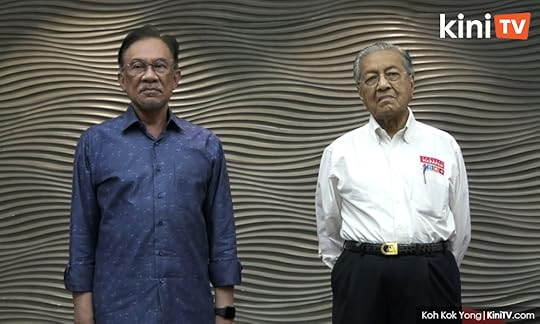 A+ A- COMMENT | Recently a Washington-based online news portal reached out to me on the issue of the transition of power in Malaysia. I gave the editor some answers. I think the rakyat has more. Q: Do you think the deal between Mahathir and Anwar is over? Advertisement
One must understand what a “political promise” means and to draw the answers from Sun Tzu and Machiavellian perspectives, and most importantly from the history of the relationship between Mahathir and Anwar. Add the idea that there are no permanent enemies nor allies in politics. Add family dynamics and the evolution of political dynasties in Malaysian politics. And of course, wealth, power, privilege to go along with this complex issue - whether the deal is over, or whether there was even a “deal” at all, should the old regime be overthrown, gently. What do you get? Q: There is a copy of an open letter to Tun Dr Mahathir and PH leadership on a clear transition package for reforms and stability. What is your comment on the open letter? The letter is a normal letter, what an NGO aspires for, whether it is from Bersih or ABIM or any civil society group. It carries some weight and makes voters think about what happened to the promises made and whether there ought to be a revolt against the unfulfillment of such promises. Political promise in this sense. We have become spectators of this great Malaysian political end-game, or if you may, Game of Thrones, Power Hunger Games. There are supporters and opposers to the choice of “PM in-waiting,” and there is cyberspace and the social media to produce and reproduce and make viral this and that support for this and that future prime minister. The question nobody can answer, except Mahathir himself is: who does he want to install as his successor? And the question for Anwar is: will he be the chosen one, knowing the genealogy of power struggle since the early 1980s, what is the nature of “mistrust” that has been developed since way back then, especially after the Asian Financial Crisis of 1998. We are in a world of the “Butterfly Effect” and organized chaos where things are predictable, yet in a mess. We do not have the culture of political certitude of power transition or balance of power, such as in the US, for example, where a process is in place: terms for the Executive, Legislative, and Judiciary “rule”, how presidential candidates are chosen, primaries, debates and hearings, all these. In Malaysia, everything is a mystery. Of whims and fancies and sustaining of political dynasties. It has not been a healthy democracy. Q: There is a news report by the New Straits Times on Azmin asking for Mahathir to stay - Your comment, please. Reading the New Straits Times report, one thing comes to my mind. Politics can be a mindless game of using, abusing people, and pure utilitarianism as an art. Only Mahathir and God know where Azmin stands in this whole complex scheme of things. His career might be over, or he will be revived.
 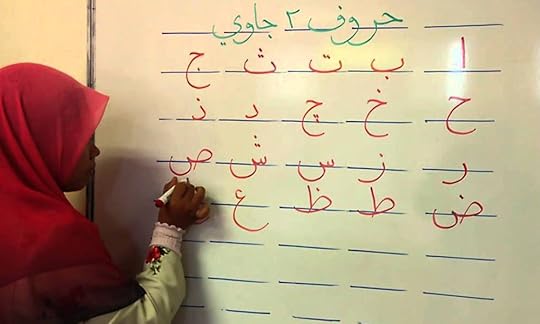 Today it is the issue of khat and Jawi in schools. Tomorrow maybe about the rise of Malay Neo-Nazi punk rock groups as a major national concern. Behind these distractions lie the story of political manipulations and party revolutions. And the Ringgit's downward movement while we read about our trillion Ringgit debt and a new car project. Political strategy has become a complex science in itself. One speaks of the “deep state” these days as an aspect of the complexity. There are manoeuvres in the dark we do not know. There are deals, counter-deals, double-deals we the “rakyat-spectators” will never know. There are real news and fake news produced to manage and manipulate public perceptions, and of course there are videos to kill a political figure, question one’s moral standing and ability to lead Malaysia. In the meantime, precious time for nation-building is wasted. Daily we are fed with stories of squabbles, implosions, political carpet-bombings, sudden ambush. The reality is: Mahathir is really old and Anwar is getting older, and the nation is not patient any more in waiting to see the promises honoured.AZLY RAHMAN is an educator, academic, columnist, and author of seven books. He holds a doctorate in international education development and Master’s degrees in six areas: education, international affairs, peace studies communication, fiction and non-fiction writing. He is a member of the Kappa Delta Pi International Honor Society in Education. Twitter @azlyrahman. More writing here.
A+ A- COMMENT | Recently a Washington-based online news portal reached out to me on the issue of the transition of power in Malaysia. I gave the editor some answers. I think the rakyat has more. Q: Do you think the deal between Mahathir and Anwar is over? AdvertisementOne must understand what a “political promise” means and to draw the answers from Sun Tzu and Machiavellian perspectives, and most importantly from the history of the relationship between Mahathir and Anwar. Add the idea that there are no permanent enemies nor allies in politics. Add family dynamics and the evolution of political dynasties in Malaysian politics. And of course, wealth, power, privilege to go along with this complex issue - whether the deal is over, or whether there was even a “deal” at all, should the old regime be overthrown, gently. What do you get? Q: There is a copy of an open letter to Tun Dr Mahathir and PH leadership on a clear transition package for reforms and stability. What is your comment on the open letter? The letter is a normal letter, what an NGO aspires for, whether it is from Bersih or ABIM or any civil society group. It carries some weight and makes voters think about what happened to the promises made and whether there ought to be a revolt against the unfulfillment of such promises. Political promise in this sense. We have become spectators of this great Malaysian political end-game, or if you may, Game of Thrones, Power Hunger Games. There are supporters and opposers to the choice of “PM in-waiting,” and there is cyberspace and the social media to produce and reproduce and make viral this and that support for this and that future prime minister. The question nobody can answer, except Mahathir himself is: who does he want to install as his successor? And the question for Anwar is: will he be the chosen one, knowing the genealogy of power struggle since the early 1980s, what is the nature of “mistrust” that has been developed since way back then, especially after the Asian Financial Crisis of 1998.
We are in a world of the “Butterfly Effect” and organized chaos where things are predictable, yet in a mess. We do not have the culture of political certitude of power transition or balance of power, such as in the US, for example, where a process is in place: terms for the Executive, Legislative, and Judiciary “rule”, how presidential candidates are chosen, primaries, debates and hearings, all these. In Malaysia, everything is a mystery. Of whims and fancies and sustaining of political dynasties. It has not been a healthy democracy. Q: There is a news report by the New Straits Times on Azmin asking for Mahathir to stay - Your comment, please. Reading the New Straits Times report, one thing comes to my mind. Politics can be a mindless game of using, abusing people, and pure utilitarianism as an art. Only Mahathir and God know where Azmin stands in this whole complex scheme of things. His career might be over, or he will be revived. Today it is the issue of khat and Jawi in schools. Tomorrow maybe about the rise of Malay Neo-Nazi punk rock groups as a major national concern. Behind these distractions lie the story of political manipulations and party revolutions. And the Ringgit's downward movement while we read about our trillion Ringgit debt and a new car project. Political strategy has become a complex science in itself. One speaks of the “deep state” these days as an aspect of the complexity. There are manoeuvres in the dark we do not know. There are deals, counter-deals, double-deals we the “rakyat-spectators” will never know. There are real news and fake news produced to manage and manipulate public perceptions, and of course there are videos to kill a political figure, question one’s moral standing and ability to lead Malaysia. In the meantime, precious time for nation-building is wasted. Daily we are fed with stories of squabbles, implosions, political carpet-bombings, sudden ambush. The reality is: Mahathir is really old and Anwar is getting older, and the nation is not patient any more in waiting to see the promises honoured.AZLY RAHMAN is an educator, academic, columnist, and author of seven books. He holds a doctorate in international education development and Master’s degrees in six areas: education, international affairs, peace studies communication, fiction and non-fiction writing. He is a member of the Kappa Delta Pi International Honor Society in Education. Twitter @azlyrahman. More writing here.August 8, 2019
If khat lessons just tracing and copying, might as well not teach
If khat lessons just tracing and copying, might as well not teachOpinion |
Azly Rahman
Published: 8 Aug 2019, 6:18 pm | Modified: 8 Aug 2019, 6:18 pm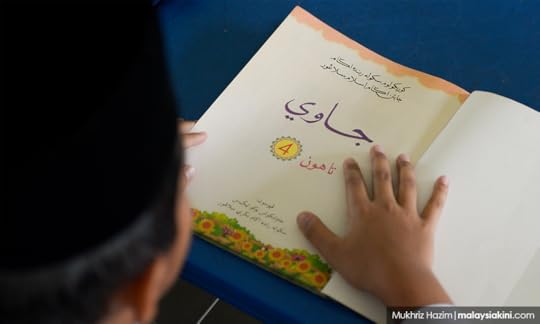 A+ A- COMMENT | Many are happy I wrote about khat. Some are angry because I spoke of hegemony and ideology. I spoke of creeping Islamisation. Of how the young gets introduced to a religion that is now badly represented.Jawi, a Malay writing system, will forever connect me. especially to my beloved mother (bless her soul). She, and a Chinese teacher in my primary school, Wong Seng Kwong, and my religious school in Majidee were my Jawi teachers. I wrote well in Jawi and in English when I was a kid. I still write Jawi well. Then secondary school made me a different being.Whenever I think of my mother, I'll write Jawi. Then I play the guitar. Then I listen to my vinyl LPs. Then I water the plants. Then I cook. Then I feed the cats. Then I watch Quentin Tarantino. Then I listen to the singer Herman Tino. Then I write and write. Then I go teach people.Advertisement
Khat as Islamic artHere is the difference between Jawi and khat to be taught to all children in Malaysia, Muslims and non-Muslims. Perhaps the Education Ministry will get many non-Muslims introduced to Islam at an early and impressionable age. Khat is the gateway. Although it is not exclusively Islamic and Quranic in use as an art form in that Arab Christians also use it, in the case of Malaysia, I sense that khat is not going to be used in schools to promote biblical verses. I may be wrong.Below is Jawi and khat I wrote yesterday. I will need to practice more Jawi and khat. Too much gangsta English has made my soul too excitable.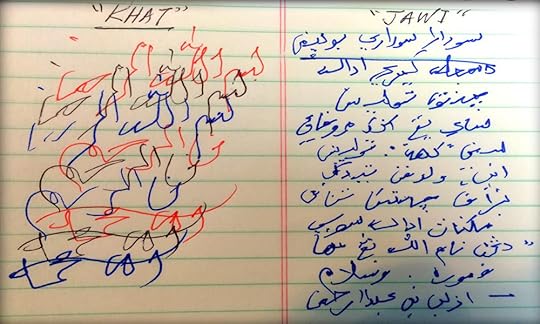 Essentially, khat is the art of Islamic calligraphy to promote the Quran. Will the non-Muslims be okay with this mandate? A gateway to Islamic scripture? Jawi is cultural. Less religious in connotation, denotation, and usage.I foresee problems later. What if the non-Muslims use Arab calligraphy to write verses from their religious scriptures? Will khat or Bahasa Malaysia teachers allow it? Will the children be told not to create anything they wish to create with Jawi and turn it into khat-work? Remember the issue of using 'Allah' in the Bahasa Malaysia Bible? One that almost tore the nation apart?Mindless khat lesson?There is also the promise that children will only learn to trace the letters and copy them. I read this news with horror. If that’s the only thing we’re teaching - copying letters – might as well not teach it.We need thinking skills infused in all our lessons. Higher Order Thinking Skills or the HOTS, not just more drill and practice and mindless exercises. We already have enough of these, the mindset that has created tuition centres and make teachers look forward to offering tuition more than teaching thinking. What a waste of learning time if we continue to do this. For the sake of cultural preservation?The khat that will be taught is not approached with cognitive thinking values. Merely copying and stringing letters? A waste. Then, let the non-Muslim children practice their devotional art too: the mandalas, the chakras, etc. Shall we?
 Why make the Islamic calligraphy art of Quranic writing compulsory for non-Muslim children? Kids these days are more interested in K-pop than khat. Can we acknowledge that cultural shift?Abandon khat?The best alternative is to abandon the introduction of khat. Or introduce other cultural-religious calligraphies. Human beings are souls with culture, ready to be fully developed, not manipulated for political ends.Not only the educational leadership needs revamping, but also curriculum, pedagogy, even daily lesson plans, so that we have "thinking schools"Given their way, the radical Islamists might also want to ban the English language for its "liberalism". Today's Islamists-Salafi-Wahabbis want to take away the childhood of our children. To create that ummah thing. I miss my primary school in Johor Bahru in the late 1960s. No khat. No sweat. Just bola chopping, sepak yem, and roaming around a Chinese graveyard. When I was in secondary school, I wanted to take three electives: silat, kung fu, making murukku. They did not offer these subjects. Disappointing school. But it produced leaders who were then politically connected to the old regime. Politics of patronage rules. Even in this new and improved regime. Old stuff, new branding. I prefer kids learn to draw cartoons than khat. They will be funnier. Less mullah-like. Khat and Jawi merely drill and practice. Nice hobby. Feels cultural. What we need to do is to teach children Science as early as one can.Larger issuesAlready too much drill and practice in schools. Add religious indoctrination to it and we’ll produce religio-humanoids. Our children lack intensive writing, reading, thinking in schools. Restructure the curriculum to allow these.
 Other bigger issues matter such as this: does the education Ministry have any plan to make Orang Asli children happy in school? Or do we prefer to be busy arguing about khat and Jawi? We have got a problem here due to our inadequacy in managing cultural differences and teaching diversity. We need changes.Not only leadership needs revamping, but curriculum, pedagogy, even daily lesson plans, so that we have "thinking schools." Maybe those in the ministry need to stop seeking advice from wayward Islamists trying to turn our schools into one grand medan dakwah. Maybe the Malay language nationalists need to sit still and refrain from discouraging our children from mastering the English language. Maybe headmasters and district education chiefs need to learn to empower schools and teachers, rather than play politics. Maybe our teachers need to be trained to ignite students' interest in learning, so that schools become exciting.Even our History lessons in schools are monarchy-Malay-centric. Change the narrative. People's history is supreme. Rewrite! Struggling with their adequacies, false promises, self-interests, internal squabbles, can the Pakatan Harapan government pay attention to our children? The politicians helming the ministry and those meddling in it are only interested in sustaining a race-based political ideology. Too much 'top-down' reform, forgetting that the child in school is a living, breathing, thinking cultural beingBack to basicsPhilosophical thinking is non-existent in schools, science is of lip-service, cultural appreciation is a taboo. Failures! After 62 years we still have not seen education addressing racism and religious bigotry. When a large segment of our youth is not interested in schools, turning deviant, we have got a philosophical problem. 'Reform' in education is not enough. We must reinvent the Malaysian philosophy of education to address newer realities. This is a daunting task. The ministry does not seem to have grasped Multicultural Philosophy in Education. Hence, now Malaysian education is struggling with mundanity turn monstrous.Focus on strengthening languages (national and English) and integrate other languages into content areas. The ministry's addiction to pushing the ketuanan Melayu ideology is making Malays and all Malaysians lose the sense of progress.In education, there are three curriculums - formal, informal, hidden. The hidden is governed by Wahabbism. Science and philosophy should guide our Education Ministry, not religion and ideology.We still have not seen a document on major reform of education, befitting the new, transformative age we are supposed to be in.
 An Islamic artHere is a clarification of Islamic khat from the Department of Islamic Art at them Metropolitan Museum of Art in New York.“Just as the religion of Islam embodies a way of life and serves as a cohesive force among ethnically and culturally diverse peoples, the art produced by and for Muslim societies has basic identifying and unifying characteristics. "Perhaps the most salient of these is the predilection for all-over surface decoration. The four basic components of Islamic ornament are calligraphy, vegetal patterns, geometric patterns, and figural representation..."Calligraphy is the most highly regarded and most fundamental element of Islamic art. It is significant that the Quran, the book of God’s revelations to the Prophet Muhammad, was transmitted in Arabic, and that inherent within the Arabic script is the potential for developing a variety of ornamental forms. "The employment of calligraphy as ornament had a definite aesthetic appeal, but often also included an underlying talismanic component... One should always keep in mind, however, that calligraphy is principally a means to transmit a text, albeit in a decorative form."Khat is religious art. Do not impose it on those of different faiths than Islam, especially in this country. It takes away our children’s valuable class time
A+ A- COMMENT | Many are happy I wrote about khat. Some are angry because I spoke of hegemony and ideology. I spoke of creeping Islamisation. Of how the young gets introduced to a religion that is now badly represented.Jawi, a Malay writing system, will forever connect me. especially to my beloved mother (bless her soul). She, and a Chinese teacher in my primary school, Wong Seng Kwong, and my religious school in Majidee were my Jawi teachers. I wrote well in Jawi and in English when I was a kid. I still write Jawi well. Then secondary school made me a different being.Whenever I think of my mother, I'll write Jawi. Then I play the guitar. Then I listen to my vinyl LPs. Then I water the plants. Then I cook. Then I feed the cats. Then I watch Quentin Tarantino. Then I listen to the singer Herman Tino. Then I write and write. Then I go teach people.AdvertisementKhat as Islamic artHere is the difference between Jawi and khat to be taught to all children in Malaysia, Muslims and non-Muslims. Perhaps the Education Ministry will get many non-Muslims introduced to Islam at an early and impressionable age. Khat is the gateway. Although it is not exclusively Islamic and Quranic in use as an art form in that Arab Christians also use it, in the case of Malaysia, I sense that khat is not going to be used in schools to promote biblical verses. I may be wrong.Below is Jawi and khat I wrote yesterday. I will need to practice more Jawi and khat. Too much gangsta English has made my soul too excitable.
Essentially, khat is the art of Islamic calligraphy to promote the Quran. Will the non-Muslims be okay with this mandate? A gateway to Islamic scripture? Jawi is cultural. Less religious in connotation, denotation, and usage.I foresee problems later. What if the non-Muslims use Arab calligraphy to write verses from their religious scriptures? Will khat or Bahasa Malaysia teachers allow it? Will the children be told not to create anything they wish to create with Jawi and turn it into khat-work? Remember the issue of using 'Allah' in the Bahasa Malaysia Bible? One that almost tore the nation apart?Mindless khat lesson?There is also the promise that children will only learn to trace the letters and copy them. I read this news with horror. If that’s the only thing we’re teaching - copying letters – might as well not teach it.We need thinking skills infused in all our lessons. Higher Order Thinking Skills or the HOTS, not just more drill and practice and mindless exercises. We already have enough of these, the mindset that has created tuition centres and make teachers look forward to offering tuition more than teaching thinking. What a waste of learning time if we continue to do this. For the sake of cultural preservation?The khat that will be taught is not approached with cognitive thinking values. Merely copying and stringing letters? A waste. Then, let the non-Muslim children practice their devotional art too: the mandalas, the chakras, etc. Shall we?Why make the Islamic calligraphy art of Quranic writing compulsory for non-Muslim children? Kids these days are more interested in K-pop than khat. Can we acknowledge that cultural shift?Abandon khat?The best alternative is to abandon the introduction of khat. Or introduce other cultural-religious calligraphies. Human beings are souls with culture, ready to be fully developed, not manipulated for political ends.Not only the educational leadership needs revamping, but also curriculum, pedagogy, even daily lesson plans, so that we have "thinking schools"Given their way, the radical Islamists might also want to ban the English language for its "liberalism". Today's Islamists-Salafi-Wahabbis want to take away the childhood of our children. To create that ummah thing. I miss my primary school in Johor Bahru in the late 1960s. No khat. No sweat. Just bola chopping, sepak yem, and roaming around a Chinese graveyard. When I was in secondary school, I wanted to take three electives: silat, kung fu, making murukku. They did not offer these subjects. Disappointing school. But it produced leaders who were then politically connected to the old regime. Politics of patronage rules. Even in this new and improved regime. Old stuff, new branding. I prefer kids learn to draw cartoons than khat. They will be funnier. Less mullah-like. Khat and Jawi merely drill and practice. Nice hobby. Feels cultural. What we need to do is to teach children Science as early as one can.Larger issuesAlready too much drill and practice in schools. Add religious indoctrination to it and we’ll produce religio-humanoids. Our children lack intensive writing, reading, thinking in schools. Restructure the curriculum to allow these.Other bigger issues matter such as this: does the education Ministry have any plan to make Orang Asli children happy in school? Or do we prefer to be busy arguing about khat and Jawi? We have got a problem here due to our inadequacy in managing cultural differences and teaching diversity. We need changes.Not only leadership needs revamping, but curriculum, pedagogy, even daily lesson plans, so that we have "thinking schools." Maybe those in the ministry need to stop seeking advice from wayward Islamists trying to turn our schools into one grand medan dakwah. Maybe the Malay language nationalists need to sit still and refrain from discouraging our children from mastering the English language. Maybe headmasters and district education chiefs need to learn to empower schools and teachers, rather than play politics. Maybe our teachers need to be trained to ignite students' interest in learning, so that schools become exciting.Even our History lessons in schools are monarchy-Malay-centric. Change the narrative. People's history is supreme. Rewrite! Struggling with their adequacies, false promises, self-interests, internal squabbles, can the Pakatan Harapan government pay attention to our children? The politicians helming the ministry and those meddling in it are only interested in sustaining a race-based political ideology. Too much 'top-down' reform, forgetting that the child in school is a living, breathing, thinking cultural beingBack to basicsPhilosophical thinking is non-existent in schools, science is of lip-service, cultural appreciation is a taboo. Failures! After 62 years we still have not seen education addressing racism and religious bigotry. When a large segment of our youth is not interested in schools, turning deviant, we have got a philosophical problem. 'Reform' in education is not enough. We must reinvent the Malaysian philosophy of education to address newer realities. This is a daunting task. The ministry does not seem to have grasped Multicultural Philosophy in Education. Hence, now Malaysian education is struggling with mundanity turn monstrous.Focus on strengthening languages (national and English) and integrate other languages into content areas. The ministry's addiction to pushing the ketuanan Melayu ideology is making Malays and all Malaysians lose the sense of progress.In education, there are three curriculums - formal, informal, hidden. The hidden is governed by Wahabbism. Science and philosophy should guide our Education Ministry, not religion and ideology.We still have not seen a document on major reform of education, befitting the new, transformative age we are supposed to be in.An Islamic artHere is a clarification of Islamic khat from the Department of Islamic Art at them Metropolitan Museum of Art in New York.“Just as the religion of Islam embodies a way of life and serves as a cohesive force among ethnically and culturally diverse peoples, the art produced by and for Muslim societies has basic identifying and unifying characteristics. "Perhaps the most salient of these is the predilection for all-over surface decoration. The four basic components of Islamic ornament are calligraphy, vegetal patterns, geometric patterns, and figural representation..."Calligraphy is the most highly regarded and most fundamental element of Islamic art. It is significant that the Quran, the book of God’s revelations to the Prophet Muhammad, was transmitted in Arabic, and that inherent within the Arabic script is the potential for developing a variety of ornamental forms. "The employment of calligraphy as ornament had a definite aesthetic appeal, but often also included an underlying talismanic component... One should always keep in mind, however, that calligraphy is principally a means to transmit a text, albeit in a decorative form."Khat is religious art. Do not impose it on those of different faiths than Islam, especially in this country. It takes away our children’s valuable class timeIf khat lessons just tracing and copying, might as well not teach
If khat lessons just tracing and copying, might as well not teachOpinion |
Azly Rahman
Published: 8 Aug 2019, 6:18 pm | Modified: 8 Aug 2019, 6:18 pm A+ A- COMMENT | Many are happy I wrote about khat. Some are angry because I spoke of hegemony and ideology. I spoke of creeping Islamisation. Of how the young gets introduced to a religion that is now badly represented.Jawi, a Malay writing system, will forever connect me. especially to my beloved mother (bless her soul). She, and a Chinese teacher in my primary school, Wong Seng Kwong, and my religious school in Majidee were my Jawi teachers. I wrote well in Jawi and in English when I was a kid. I still write Jawi well. Then secondary school made me a different being.Whenever I think of my mother, I'll write Jawi. Then I play the guitar. Then I listen to my vinyl LPs. Then I water the plants. Then I cook. Then I feed the cats. Then I watch Quentin Tarantino. Then I listen to the singer Herman Tino. Then I write and write. Then I go teach people.Advertisement
Khat as Islamic artHere is the difference between Jawi and khat to be taught to all children in Malaysia, Muslims and non-Muslims. Perhaps the Education Ministry will get many non-Muslims introduced to Islam at an early and impressionable age. Khat is the gateway. Although it is not exclusively Islamic and Quranic in use as an art form in that Arab Christians also use it, in the case of Malaysia, I sense that khat is not going to be used in schools to promote biblical verses. I may be wrong.Below is Jawi and khat I wrote yesterday. I will need to practice more Jawi and khat. Too much gangsta English has made my soul too excitable. Essentially, khat is the art of Islamic calligraphy to promote the Quran. Will the non-Muslims be okay with this mandate? A gateway to Islamic scripture? Jawi is cultural. Less religious in connotation, denotation, and usage.I foresee problems later. What if the non-Muslims use Arab calligraphy to write verses from their religious scriptures? Will khat or Bahasa Malaysia teachers allow it? Will the children be told not to create anything they wish to create with Jawi and turn it into khat-work? Remember the issue of using 'Allah' in the Bahasa Malaysia Bible? One that almost tore the nation apart?Mindless khat lesson?There is also the promise that children will only learn to trace the letters and copy them. I read this news with horror. If that’s the only thing we’re teaching - copying letters – might as well not teach it.We need thinking skills infused in all our lessons. Higher Order Thinking Skills or the HOTS, not just more drill and practice and mindless exercises. We already have enough of these, the mindset that has created tuition centres and make teachers look forward to offering tuition more than teaching thinking. What a waste of learning time if we continue to do this. For the sake of cultural preservation?The khat that will be taught is not approached with cognitive thinking values. Merely copying and stringing letters? A waste. Then, let the non-Muslim children practice their devotional art too: the mandalas, the chakras, etc. Shall we?Why make the Islamic calligraphy art of Quranic writing compulsory for non-Muslim children? Kids these days are more interested in K-pop than khat. Can we acknowledge that cultural shift?Abandon khat?The best alternative is to abandon the introduction of khat. Or introduce other cultural-religious calligraphies. Human beings are souls with culture, ready to be fully developed, not manipulated for political ends.Not only the educational leadership needs revamping, but also curriculum, pedagogy, even daily lesson plans, so that we have "thinking schools"Given their way, the radical Islamists might also want to ban the English language for its "liberalism". Today's Islamists-Salafi-Wahabbis want to take away the childhood of our children. To create that ummah thing. I miss my primary school in Johor Bahru in the late 1960s. No khat. No sweat. Just bola chopping, sepak yem, and roaming around a Chinese graveyard. When I was in secondary school, I wanted to take three electives: silat, kung fu, making murukku. They did not offer these subjects. Disappointing school. But it produced leaders who were then politically connected to the old regime. Politics of patronage rules. Even in this new and improved regime. Old stuff, new branding. I prefer kids learn to draw cartoons than khat. They will be funnier. Less mullah-like. Khat and Jawi merely drill and practice. Nice hobby. Feels cultural. What we need to do is to teach children Science as early as one can.Larger issuesAlready too much drill and practice in schools. Add religious indoctrination to it and we’ll produce religio-humanoids. Our children lack intensive writing, reading, thinking in schools. Restructure the curriculum to allow these.Other bigger issues matter such as this: does the education Ministry have any plan to make Orang Asli children happy in school? Or do we prefer to be busy arguing about khat and Jawi? We have got a problem here due to our inadequacy in managing cultural differences and teaching diversity. We need changes.Not only leadership needs revamping, but curriculum, pedagogy, even daily lesson plans, so that we have "thinking schools." Maybe those in the ministry need to stop seeking advice from wayward Islamists trying to turn our schools into one grand medan dakwah. Maybe the Malay language nationalists need to sit still and refrain from discouraging our children from mastering the English language. Maybe headmasters and district education chiefs need to learn to empower schools and teachers, rather than play politics. Maybe our teachers need to be trained to ignite students' interest in learning, so that schools become exciting.Even our History lessons in schools are monarchy-Malay-centric. Change the narrative. People's history is supreme. Rewrite! Struggling with their adequacies, false promises, self-interests, internal squabbles, can the Pakatan Harapan government pay attention to our children? The politicians helming the ministry and those meddling in it are only interested in sustaining a race-based political ideology. Too much 'top-down' reform, forgetting that the child in school is a living, breathing, thinking cultural beingBack to basicsPhilosophical thinking is non-existent in schools, science is of lip-service, cultural appreciation is a taboo. Failures! After 62 years we still have not seen education addressing racism and religious bigotry. When a large segment of our youth is not interested in schools, turning deviant, we have got a philosophical problem. 'Reform' in education is not enough. We must reinvent the Malaysian philosophy of education to address newer realities. This is a daunting task. The ministry does not seem to have grasped Multicultural Philosophy in Education. Hence, now Malaysian education is struggling with mundanity turn monstrous.Focus on strengthening languages (national and English) and integrate other languages into content areas. The ministry's addiction to pushing the ketuanan Melayu ideology is making Malays and all Malaysians lose the sense of progress.In education, there are three curriculums - formal, informal, hidden. The hidden is governed by Wahabbism. Science and philosophy should guide our Education Ministry, not religion and ideology.We still have not seen a document on major reform of education, befitting the new, transformative age we are supposed to be in.An Islamic artHere is a clarification of Islamic khat from the Department of Islamic Art at them Metropolitan Museum of Art in New York.“Just as the religion of Islam embodies a way of life and serves as a cohesive force among ethnically and culturally diverse peoples, the art produced by and for Muslim societies has basic identifying and unifying characteristics. "Perhaps the most salient of these is the predilection for all-over surface decoration. The four basic components of Islamic ornament are calligraphy, vegetal patterns, geometric patterns, and figural representation..."Calligraphy is the most highly regarded and most fundamental element of Islamic art. It is significant that the Quran, the book of God’s revelations to the Prophet Muhammad, was transmitted in Arabic, and that inherent within the Arabic script is the potential for developing a variety of ornamental forms. "The employment of calligraphy as ornament had a definite aesthetic appeal, but often also included an underlying talismanic component... One should always keep in mind, however, that calligraphy is principally a means to transmit a text, albeit in a decorative form."Khat is religious art. Do not impose it on those of different faiths than Islam, especially in this country. It takes away our children’s valuable class time
A+ A- COMMENT | Many are happy I wrote about khat. Some are angry because I spoke of hegemony and ideology. I spoke of creeping Islamisation. Of how the young gets introduced to a religion that is now badly represented.Jawi, a Malay writing system, will forever connect me. especially to my beloved mother (bless her soul). She, and a Chinese teacher in my primary school, Wong Seng Kwong, and my religious school in Majidee were my Jawi teachers. I wrote well in Jawi and in English when I was a kid. I still write Jawi well. Then secondary school made me a different being.Whenever I think of my mother, I'll write Jawi. Then I play the guitar. Then I listen to my vinyl LPs. Then I water the plants. Then I cook. Then I feed the cats. Then I watch Quentin Tarantino. Then I listen to the singer Herman Tino. Then I write and write. Then I go teach people.AdvertisementKhat as Islamic artHere is the difference between Jawi and khat to be taught to all children in Malaysia, Muslims and non-Muslims. Perhaps the Education Ministry will get many non-Muslims introduced to Islam at an early and impressionable age. Khat is the gateway. Although it is not exclusively Islamic and Quranic in use as an art form in that Arab Christians also use it, in the case of Malaysia, I sense that khat is not going to be used in schools to promote biblical verses. I may be wrong.Below is Jawi and khat I wrote yesterday. I will need to practice more Jawi and khat. Too much gangsta English has made my soul too excitable.
Essentially, khat is the art of Islamic calligraphy to promote the Quran. Will the non-Muslims be okay with this mandate? A gateway to Islamic scripture? Jawi is cultural. Less religious in connotation, denotation, and usage.I foresee problems later. What if the non-Muslims use Arab calligraphy to write verses from their religious scriptures? Will khat or Bahasa Malaysia teachers allow it? Will the children be told not to create anything they wish to create with Jawi and turn it into khat-work? Remember the issue of using 'Allah' in the Bahasa Malaysia Bible? One that almost tore the nation apart?Mindless khat lesson?There is also the promise that children will only learn to trace the letters and copy them. I read this news with horror. If that’s the only thing we’re teaching - copying letters – might as well not teach it.We need thinking skills infused in all our lessons. Higher Order Thinking Skills or the HOTS, not just more drill and practice and mindless exercises. We already have enough of these, the mindset that has created tuition centres and make teachers look forward to offering tuition more than teaching thinking. What a waste of learning time if we continue to do this. For the sake of cultural preservation?The khat that will be taught is not approached with cognitive thinking values. Merely copying and stringing letters? A waste. Then, let the non-Muslim children practice their devotional art too: the mandalas, the chakras, etc. Shall we?Why make the Islamic calligraphy art of Quranic writing compulsory for non-Muslim children? Kids these days are more interested in K-pop than khat. Can we acknowledge that cultural shift?Abandon khat?The best alternative is to abandon the introduction of khat. Or introduce other cultural-religious calligraphies. Human beings are souls with culture, ready to be fully developed, not manipulated for political ends.Not only the educational leadership needs revamping, but also curriculum, pedagogy, even daily lesson plans, so that we have "thinking schools"Given their way, the radical Islamists might also want to ban the English language for its "liberalism". Today's Islamists-Salafi-Wahabbis want to take away the childhood of our children. To create that ummah thing. I miss my primary school in Johor Bahru in the late 1960s. No khat. No sweat. Just bola chopping, sepak yem, and roaming around a Chinese graveyard. When I was in secondary school, I wanted to take three electives: silat, kung fu, making murukku. They did not offer these subjects. Disappointing school. But it produced leaders who were then politically connected to the old regime. Politics of patronage rules. Even in this new and improved regime. Old stuff, new branding. I prefer kids learn to draw cartoons than khat. They will be funnier. Less mullah-like. Khat and Jawi merely drill and practice. Nice hobby. Feels cultural. What we need to do is to teach children Science as early as one can.Larger issuesAlready too much drill and practice in schools. Add religious indoctrination to it and we’ll produce religio-humanoids. Our children lack intensive writing, reading, thinking in schools. Restructure the curriculum to allow these.Other bigger issues matter such as this: does the education Ministry have any plan to make Orang Asli children happy in school? Or do we prefer to be busy arguing about khat and Jawi? We have got a problem here due to our inadequacy in managing cultural differences and teaching diversity. We need changes.Not only leadership needs revamping, but curriculum, pedagogy, even daily lesson plans, so that we have "thinking schools." Maybe those in the ministry need to stop seeking advice from wayward Islamists trying to turn our schools into one grand medan dakwah. Maybe the Malay language nationalists need to sit still and refrain from discouraging our children from mastering the English language. Maybe headmasters and district education chiefs need to learn to empower schools and teachers, rather than play politics. Maybe our teachers need to be trained to ignite students' interest in learning, so that schools become exciting.Even our History lessons in schools are monarchy-Malay-centric. Change the narrative. People's history is supreme. Rewrite! Struggling with their adequacies, false promises, self-interests, internal squabbles, can the Pakatan Harapan government pay attention to our children? The politicians helming the ministry and those meddling in it are only interested in sustaining a race-based political ideology. Too much 'top-down' reform, forgetting that the child in school is a living, breathing, thinking cultural beingBack to basicsPhilosophical thinking is non-existent in schools, science is of lip-service, cultural appreciation is a taboo. Failures! After 62 years we still have not seen education addressing racism and religious bigotry. When a large segment of our youth is not interested in schools, turning deviant, we have got a philosophical problem. 'Reform' in education is not enough. We must reinvent the Malaysian philosophy of education to address newer realities. This is a daunting task. The ministry does not seem to have grasped Multicultural Philosophy in Education. Hence, now Malaysian education is struggling with mundanity turn monstrous.Focus on strengthening languages (national and English) and integrate other languages into content areas. The ministry's addiction to pushing the ketuanan Melayu ideology is making Malays and all Malaysians lose the sense of progress.In education, there are three curriculums - formal, informal, hidden. The hidden is governed by Wahabbism. Science and philosophy should guide our Education Ministry, not religion and ideology.We still have not seen a document on major reform of education, befitting the new, transformative age we are supposed to be in.An Islamic artHere is a clarification of Islamic khat from the Department of Islamic Art at them Metropolitan Museum of Art in New York.“Just as the religion of Islam embodies a way of life and serves as a cohesive force among ethnically and culturally diverse peoples, the art produced by and for Muslim societies has basic identifying and unifying characteristics. "Perhaps the most salient of these is the predilection for all-over surface decoration. The four basic components of Islamic ornament are calligraphy, vegetal patterns, geometric patterns, and figural representation..."Calligraphy is the most highly regarded and most fundamental element of Islamic art. It is significant that the Quran, the book of God’s revelations to the Prophet Muhammad, was transmitted in Arabic, and that inherent within the Arabic script is the potential for developing a variety of ornamental forms. "The employment of calligraphy as ornament had a definite aesthetic appeal, but often also included an underlying talismanic component... One should always keep in mind, however, that calligraphy is principally a means to transmit a text, albeit in a decorative form."Khat is religious art. Do not impose it on those of different faiths than Islam, especially in this country. It takes away our children’s valuable class time