Annie Cardi's Blog, page 71
October 2, 2012
Links Galore
A few more links for today:
If you’re like me, a trans-Atlantic flight to check out the Roald Dahl Museum and Story Centre isn’t too possible right now. But you can check it out via this interactive.
for your character is a great feeling; Charles Dickens could certainly relate.
Who is this so-called “Tigger,” and other fun BSC trivia.
10 memorable narrators, with lots of great suggestions in the comments.
Just because they’re all publishing houses doesn’t mean they all do things the same way.


YA Doesn’t Hide Its Heart
After reading this interview, I’m pretty sure Libba Bray is going at the top of my “We Need to Be Friends Please” list. This alone gets my vote of awesome:
CultureMap: You say that it was “love at first sight” for you with YA. What drew you to it?
Libba Bray: I just read this great quote by Junot Diaz, he was talking about true intimacy, and he was saying that it was the willingness to be vulnerable and to be found out. That’s what I felt that YA did. It wasn’t pretentious, and it wasn’t hiding its heart. It wanted to be found out…
It felt like those moments when you go to a party and you’re standing around for a long time, going, I don’t fit in here, what am I going to talk to these people about? And everybody’s getting drunk, and then you find this one person, and you end up sitting in some corner talking about all these arcane things.
And then before you know it you’re having a conversation about the meaning of life and it’s four o’clock in the morning. That kind of feeling, that kind of intimacy — I felt like that’s what I got from YA.
I feel like this is the perfect way to describe a career in YA. When I was in college and grad school, most of my fellow writers focused on literary fiction. There’s a lot about literary fiction I like, but it never felt as compelling to me as YA. Like Bray says, I feel that YA isn’t “hiding its heart.” I love that there’s so much heart.


October 1, 2012
Celebrate Reading With Banned Books Week
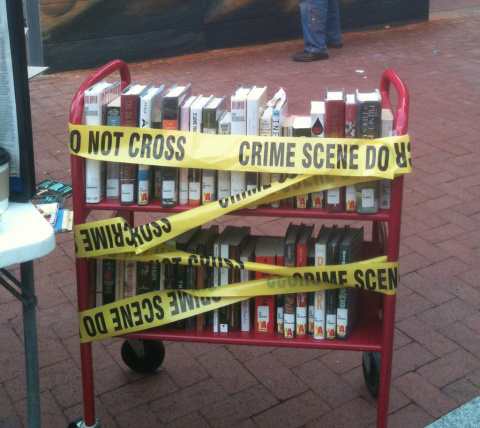 Happy Banned Books Week, everyone! It’s a great time to honor the librarians, educators, and authors who stand up for books and knowledge and against prejudice and hate. Censorship doesn’t help society. Books do.
Check out Bill Moyers’ video about the importance of Banned Books Week, and then watch other famous authors and literary advocates talk about censorship and how it relates to their own work.
Also loving this fantastic timeline, 30 Years of Liberating Literature, from the ALA. It contains some fantastic information about bans on classic books, such as:
The Giver, by Lois Lowry
In 2003, “The Giver” was challenged as suggested reading for eighth-grade students in Blue Springs, MO, where parents called the book “lewd” and “twisted” and pleaded for it to be tossed out of the district. The book was reviewed by two committees and recommended for retention, but the controversy continued for more than two years. Lowry’s novel for young readers has frequently attracted objections due to its “mature themes” including suicide, sexuality, and euthanasia. “The Giver” received the Newbery Medal in 1994.
I’ve mentioned here before how much I love this book and, as a middle-schooler, I was grateful to read about these mature themes. It was the first book that really got me thinking about the value of life (all of life) and how we should function as a society. It infuriates me to think that some people want to take that away from young readers.
It’s easy to feel complacent about our overall access to books, but Banned Books Week is a great reminder that we need to appreciate the access we have and work toward giving everyone that same access. Celebrate with your favorite banned book today and all week long!
(image: Thomas Jefferson Center for the Protection of Free Expression 2011 Banned Books Week celebration, sponsored by the Freedom to Read Foundation’s Judith F. Krug Memorial Fund, via ALA)


Where Letters Come From
At the Rumpus, Jason Novak presents an illustrated version of where letters got their shapes. One of my favorites:
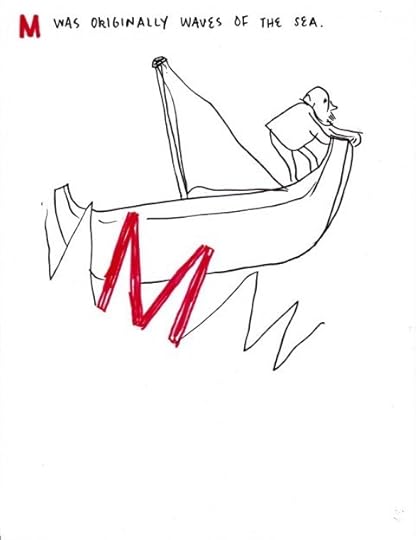 Make sure to check out the whole alphabet.


September 28, 2012
Friday Fifteen
Another Friday, another case of the Friday Fifteens. Check out this week’s fifteen-word book reviews:
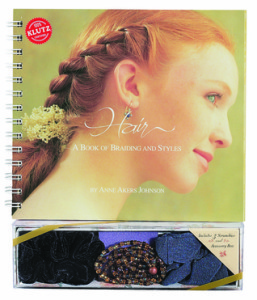 1. Hair: A Book of Braiding and Styles by Anne Johnson
One reason I wear my hair short now. (One day, braided crown, one day).
2. Insurgent by Veronica Roth
Not as fast-paced as Divergent, but pretty sure I’ll pick up the next book.
3. In the Devil’s Snare: The Salem Witchcraft Crisis of 1692 by Mary Beth Norton
Norton looks at the First and Second Indian Wars’ effect on Salem. Interesting take.
4. Little Miss Stoneybrook…and Dawn (The Baby-sitters Club #15) by Ann M. Martin
Toddlers and tiaras, plus the BSC.
5. The Art of Fiction: Notes on Craft for Young Writers by John Gardner
You need to read this in workshop at least once. Solid advice, not very dynamic.


September 27, 2012
Exclamations, Questions, and Commas: Favorite Punctation Marks
For National Punctuation Day, The Atlantic Wire collected favorite punctuation marks from famous writers. I’m with NPR book critic Maureen Corrigan, who says:
“The semicolon is my psychological metaphor, my mascot. It’s the punctuation mark that qualifies, hesitates, and ties together ideas and parts of a life that shot off in different directions.”
Man, I am a semicolon fiend. It lets a sentence breathe while still organizing. In a punctuation world of black and white (full stop!), it’s nice to have a punctuation mark that covers some sentence gray area.
I also love the Oxford comma and get upset whenever I hear a certain Vampire Weekend song.
Share your favorites in the comments!


September 26, 2012
Growing up with Harry Potter
From this New Yorker article about JK Rowling and her new novel:
“[Harvard scholar of children’s literature, Maria] Tatar’s students grew up with the books. “You can’t imagine what happens when I just say ‘Harry Potter,’ ” she said. “They’re transported. And they start to speak Harry Potter among themselves, and I feel like an alien.” Many of her students report that, as children, they learned about learning from the books’ depiction of Hogwarts. “It reshaped their understanding of what education was about—and what adults were about. They could recruit these adults and have them help landscape their lives.””
I grew up just before Harry Potter really took hold, and I remember lots of books and television shows that didn’t feature adults. Parents were generally absent and teachers were pretty nonexistent. I like Rowling’s presentation of adults like Dumbledore, Snape, and Mr. and Mrs. Weasley. They’re not perfect by any means. They have their own flaws and concerns. But Harry depends on and learns from them in very different ways. I think it’s good that kids growing up have a sense of what it means to relate to adults.
And then something I find a little alarming:
“In Edinburgh, I met Alan Taylor, a journalist and the editor of the Scottish Review of Books, who despaired of Rowling’s “tin ear” and said of her readers, “They were giving their childhood to this woman! They were starting at seven, and by the time they were sixteen they were still reading bloody Harry Potter—sixteen-year-olds, wearing wizard outfits, who should have been shagging behind the bike shed and smoking marijuana and reading Camus.””
First of all, who’s to say that these activities are all mutually exclusive? You only have to look at Tumblr to see that. Second, some of us we not hooking up at underground music concerts at 16–and that’s okay. Why does Taylor assume that there’s a “right” way to be a teenager, and that that way must involve a cliched form of rebellion?
There’s a lot in this article, so make sure to read the rest.


September 25, 2012
Word History
Mysteries of the Vernacular is one of my new favorite web series. Beautifully animated sequences take you through the history of one common word, like clue:
This is exactly what I needed when I was nine and asked my mom why we called a tree “a tree” and not “a dog” or “a fireman.” Can’t wait to see the full set of 26!
(via Colossal)(H/T Patrick Truby)


The BSC and Me: Standing up for Middle Grade Series
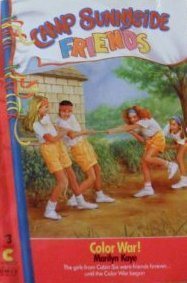
My friend Amy had this one; we used to have reading sleepovers.
Mandy’s post at Forever Young Adult is like looking at the bookshelves of my past. Sometimes I wish that my childhood reading consisted only of Madeleine L’Engle and Frances Hodgson Burnett and Diana Wynne Jones. Although I loved those writers, too, a lot of my early reading consisted of MG series like The Baby-Sitters Club, The Sleepover Friends, and The Gymnasts. A lot of my Christmas/birthday/yard sale money went to these books. Probably not a surprise if you’re a regular reader of the Friday Fifteen.
When you decide to devote your life’s work to children’s literature, admitting you devoured these books feels a little like being a professional chef and admitting that you used to love a good ol’ bowl of Lucky Charms. But maybe there is a little nutritional value in those series. Most of them are written like standard tv shows–a plot that’s easy to follow, characters with one or two defining characteristics, and easy conflict resolution. Not great for deep writing, but it allows young readers to easily follow plots and characters. It’s a good way for young readers, especially those who have difficulty reading, to tackle book series.
Because of their familiar characters and structure, these books are also pretty easy to mimic. I remember writing lots of BSC/Sweet Valley Twin knock-off books. These stories won’t ever see the light of day, but they were a good way for me to explore writing.
Maybe these series were all written by committee. Maybe they were never going to win a Newbery medal or be taught in classrooms across the world. But they sure had a special place on my bookshelf as a kid.
(image: Goodreads)


September 24, 2012
Links Galore
Starting the week right with lots of great links:
JK Rowling’s thoughts on which authors she’d like to be compared to and dressing in disguise. (And seriously, interviewer, why ask Rowling about 50 Shades of Grey?)
Speaking of reporters, a few suggestions on how not to write about libraries.
Winter is coming, so get your hip indie scarves ready for a Game of Tomes.
Some great suggestions for Native American children’s literature and YA.
Which literary t-shirt would you wear?
Love this description of showing vs. telling.
Why submit your stories to literary journals when you can see the standard rejection letters right now?