Annie Cardi's Blog, page 63
November 30, 2012
Friday Fifteen
Managed to make it through the week and to the Friday Fifteen. Check out this week’s list of fifteen-word reviews:
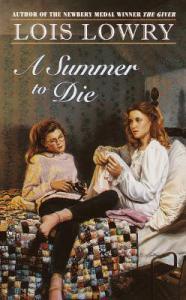 1. A Summer to Die by Lois Lowry
I’d be curious to read this now in conjunction with The Fault in Our Stars.
2. Rebecca by Daphne du Maurier
Ceepy novel with an awkward, meek main character in an English manor home. Heck yeah.
3. Bear Snores On by Karma Wilson and Jane Chapman
Makes me want a winter part with bunnies, badgers, tea and popcorn.
4. World and Space (Childcraft: the How and Why Library #4) by World Book-Childcraft International
Geology, astronomy, and all sorts of natural sciences for kids.
5. Selected Poems And Four Plays of William Butler Yeats by William Butler Yeats, ed. M. L. Rosenthal
Read it for English lit survey class, but Yeats is one to go back to.


Waiting by the Window
What a beautiful print, inspired by J.M. Barrie’s Peter Pan:
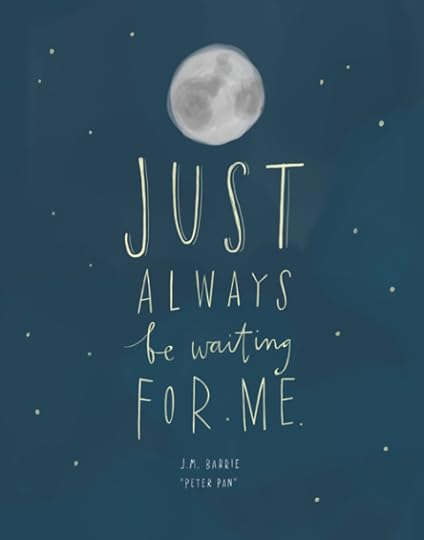
It really captures the sense of longing and struggle in Peter Pan as Wendy navigates having to grow up. It’s part of a whole series of lovely prints based on quotes from classic children’s books.
(image: Emily McDowell)(via Design Mom)


November 29, 2012
Links Galore
A few more links for today:
Reasons adults should check out YA.
Can you identify these actors and their writerly roles?
I may not have read Infinite Jest, but I am a fan of The Boy Detective Fails. How much of a hipster reader are you?
You can take this list of food idioms explained with a grain of salt.
Jane Yolen talks about the SCBWI Mid-List Author Grant.


A Place for Lewis in Poets’ Corner
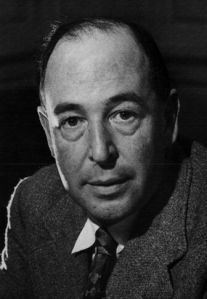 Coming in 2013, C.S. Lewis is to join fellow British writers in Westminster Abbey’s Poets’ Corner:
“Vernon White, Canon Theologian at Westminster Abbey, said Lewis was an “extraordinarily imaginative and rigorous thinker and writer…[Lewis] was able to convey the Christian faith in a way that made it both credible and attractive to a wide range of people…[He] had an enduring and growing influence in our national life”.”
Based on this list of writers memorialized in Westminster Abbey, the only other children’s author I can find is Lewis Carroll. I’m curious to see if any others will follow Lewis, or if Westminster Abbey will include Lewis’s friend and writing buddy, J.R.R. Tolkien. Whatever happens, I’m glad to see Lewis recognized for his contributions to literature and British life.
(image: Wikipedia)


November 28, 2012
The Gift of Books
For me, it’s a given that books are presents. Most of the time, they’re my go-to gift. But finding the right book for friends and family can be hard. You want something that they’ll enjoy but haven’t necessarily experienced yet.
Fortunately, author John Green has some great suggestions that span fiction and nonfiction, adult lit and YA, etc. John also breaks his suggestions into “if you liked X, you may like Y,” which can help fit your individual gift list. Plus John’s really fun:
Which books are you giving or recommending this year?


The Here and Now: Defining Contemporary YA Fiction
When people ask me what I write, I say contemporary young adult fiction. It’s a way to differentiate from paranormal YA or sci-fi or dystopian. But what is contemporary?
At Stacked, Kelly takes a look at what makes a book contemporary. How far back can you go before it stops being contemporary and starts being historical?
“But if we’re talking about YA fiction, we have to consider that today’s 16-year-old was born in 1996. Today’s 12-year-old was born in 2000. Today’s teenagers did not grow up knowing Buffy the Vampire Slayer and most of them don’t have a clue who, say, Veronica Mars is. That’s not to say none of them do — they just didn’t grow up with these references. Many are finding them now and many are loving them, but it’s not part of their cultural knowledge.”
Ouch. My Buffy-loving-heart can’t take that. But I certainly feel this when I need to make certain cultural references. By the time a book is published, celebrities can seem old and tv shows can be cancelled. How can contemporary stay relevant when the cultural landscape changes so quickly?
My writerly answer to that is to avoid as many specific cultural details as possible. I casually mention cell phones and social media, but I try to stay away from really specific references if I can. And even then, I’m sure teens of the future will find references to cell phone hilarious as they fly around on their jet packs and psychically talk to holograms. I think books that avoid a lot of specific cultural/generational touchstones have a greater chance of feeling contemporary years after they’ve been published.
But that doesn’t necessarily mean it is contemporary years later. Kelly looks at Speak by Laurie Halse Anderson (one of my favorites):
Again, published at the very tail end of the 1990s, it makes virtually no references to the time period in which it was written. The topic is entirely relevant and pertinent to today’s teens. It’s read in schools as part of the English curriculum, in fact. And while it has been since the book came out that I’ve read it — and I read when I was in high school as well — I’ve wondered if it were to be written today, would it be different? Would there be references to, say, cell phones? Would that change the plot or the cultural setting of the book? Or would the book have the same effect without those references? Part of what I think makes Anderson’s book so good is that it doesn’t rely on the modern conveniences or trappings of the time period in which it was written. Speak is not historical, despite being written a decade ago, and it is entirely realistic. But I struggle here in wondering if it’s contemporary or not.
Honestly, if you’d told me that Speak came out in 2008 and not the 90s, I would have believed you. As Kelly says, it’s still relevant and nothing about the plot would be changed if it had been written now. Because of this, I’m tempted to say that it is contemporary. Whereas Kelly says her frame of reference for contemporary is five years, mine is a little more general in terms of feel. If I can pick up a book and read it and basically imagine a regular teen having this experience now (as with Speak), I think it could be contemporary. As a young reader, I assumed pretty much everything I picked up was published the exact moment I found it. If a book’s details didn’t give it away as being from another era, I’d classify it as contemporary.
Still, it’s not an exact science, and I think Kelly makes some fantastic points in her argument for a smaller window of contemporary fiction. Make sure to check out her full post.
How do you define contemporary in fiction?


November 27, 2012
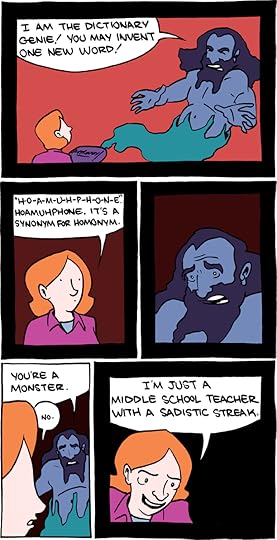


Octopedes Does Sound Pretty Cool


November 26, 2012
Links Galore
A few more links to get you through Monday:
Sometimes parents do understand.
Time travel tv shows + famous literary figures = awesomeness. (Make sure to check out Colin Firth as William Shakespeare!)
Great book-to-movie scores/soundstracks. My favorite has to be “Kindle My Heart” from A Little Princess.
Speaking of adaptations, here’s a list of excellent movies inspired by classic books.
I think novel playlists are essential. But maybe you prefer something more generally instrumental.
Comparing voice and pace in YA and adult fiction.
Use old books in your holiday decorating.


Meg Murry’s Emotional Truth
A great moment from this interview with Anne Lamott:
What book changed your life?
“A Wrinkle in Time” saved me because it so captured the grief and sense of isolation I felt as a child. I was 8 years old when it came out, in third grade, and I believed in it — in the plot, the people and the emotional truth of their experience. This place was never a good match for me, but the book greatly diminished my sense of isolation as great books have done ever since. I must have read it a dozen times.
Such a fantastic description of how a book can profoundly affect your life. I especially like that Lamott didn’t find a book that exactly reflected her experiences–it was the underlying emotion that struck her.
Make sure to check out the rest of the interview as well. I’d also recommend Lamott’s book about writing, Bird by Bird: Some Instructions on Writing and Life, which is a favorite.