Terry Linhart's Blog, page 19
July 15, 2013
Ministry, the Incarnation, and some Car Salesmen

What does a car salesman have to do with ministry leadership? (Getty Images)
Kelly and I survived a bad accident (not our fault) a few weeks ago (story coming later, once everything is settled) that totaled our really nice van. Happy to walk away from an accident that could’ve been much worse, we are now in the market for a replacement vehicle. Also, the boys’ car is falling apart (literally), so they need a new (used) one too. Shopping for two cars at the same time. Nice.
I know a lot of super duper car salespeople. You do too. But our first week out looking around various lots was disappointing, discouraging, off-putting, and the sales routine began to get a bit predictable. Each time we stepped onto a car lot, it was as if some pre-practiced sequence of how to make a sale with a customer (didn’t matter our particular situation) kicked in, the salesperson looking past us as he (they were all men) figured out the commission in his head. Here are some “highlights”:
I stopped to ask about information on one particular car, the salesperson is figuring “commission” and gets my contact information so he can lock up the sale before his colleagues if I come back. I left still never receiving the information. I need some information.
We briefly stopped at one lot, told the salesmen we’re not buying, just checking out various models (which was true. I know it’s a common defense, but it’s a defense because of the way car buying often is for people). For two cars that we looked at, the salesperson did the usual “let me talk to my manager” and went in to the store. He came out with a penciled price on a small slip of paper, his “bid” for what he could sell it to us. We’re not buying today.
We stopped at another place to have Kel sit in some potential vehicles (to see if she liked them, which she didn’t… she’s tall) and since then I’ve had that salesguy call me trying to sell me various cars, including ones we told him wouldn’t work. My wife didn’t like that model.
At another lot, even as I shook hands with the guy my inner voice screamed, “Run away. Run away!” We about did. You don’t come across as trustworthy. It also didn’t help that a tree was growing into one of the cars along the back row.
HOWEVER, we have one dealership in our area that we so loved from the last time we bought a vehicle (8 years ago), that we went back to look again. Loved it again. And we’ll go back there every time to see if they have something that fits because of the way they do business. We love how you act and treat us. We’ll be back every time to consider your cars. Thank you.
What is it about some (not all, of course) car lots? Why is it that we can’t just talk about things for a while without some unseen stopwatch timer in place that pushes a salesperson to make the sale so he/she can get paid?
Do we in ministry come across in similar ways to new people?
It made me wonder if we act in similar ways in ministry. If we meet someone new, could we come across like we’re looking past them toward the Great Commission? Do we, do I, listen, hear their story, and enter into a community-formed relationship or do we think “I need to get them into my group/program? I’m sure I’ve been guilty of that through the years.
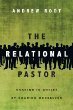
 I’ve been thinking of this lately and reflected on the important work that Andy Root (his latest is The Relational Pastor: Sharing in Christ by Sharing Ourselves) has done in helping us think through our understanding of “relational ministry.” Andy has helped us see that if we say we’re engaged in relational, or incarnational, ministry then we ought to mirror the unconditional qualities of Jesus’ incarnation. And we too often ignore the way in which Jesus humbled himself and suffered for our redemption.
When was the last time you or I humbled ourselves or suffered so that others could experience a new life? That topic is missing in leadership and platform discussions today.
We often say we’re doing relational ministry when there’s little relationship actually happening. We say we’re doing incarnational ministry, but can’t articulate a strong biblical connection for our weekly decision-making, particularly with those around us who are hurting. We meet someone, they want to share their story, and while we’re speaking with them we’re thinking “commission” about how this person can A) come to faith in Christ, B) be used around the church/ministry, or C) their positive reputation will help us grow our ministry. The relationship with them in those moments is actually a utility that gets us to something that helps us. .
A definition of utilitarian: “Exhibiting or stressing utility over other values.” I use the tool, or you, for my purposes rather than value you for you. I think we do that sometimes: “I am in relationship with you only because of the usefulness you are to my purposes.” I can recall numerous instances where that was the case for me as well.
I would like to buy a nice car, no two nice cars, and in that process know that I’m getting my best deal on a solid vehicle. However, I feel as if the commission system is set up to oppose those purposes.
What do the people new to our ministries desire? What about our system may stand in direct opposition to that? What about what we’re doing may want people to run away? Who in our lives do we need to value more rather than use them for our own utility?
Here are some starting steps to help
I’ve probably been one of the most guilty people of utilitarianism in the past and yet feel like in the last 10 years or so I’ve changed. Still, this week has challenged me to make sure I’m being genuine. Here are three steps I’m taking this week on this topic:
Spend some time in Scripture exploring Jesus’ incarnation/how he treated people and noting the community qualities for the early church in Acts and Paul’s writings.
Take a moment to reflect on those around and in our lives, praying for discernment on how to better respond and be in relationship to them.
As I make my week’s schedule out, reflect on this 5-step process to see where I can be sensitive to those around me: WELCOME-LISTEN-PRAY-LOVE-GIVE.
The post Ministry, the Incarnation, and some Car Salesmen appeared first on In this Corner of the World - TerryLinhart.com.






July 9, 2013
Leaders Don’t Lead Solely from the Platform
The social media world has propelled the idea of “building platform” into the world of leadership and I’ve been surprised that this hasn’t generated more critique. Captivated by the idea of increasing notoriety, leaders have gleefully adopted building a platform, largely online, and give time each day to maintaining blogs, managing Twitter (though with Buffer and HootSuite, this has become less time-intensive), and hiding out from other people…. sometimes the very people they’re to be leading.
Now, full disclosure, of course I am involved online and use social media. I mean, it’s obvious isn’t it? But that’s not where I lead. Leading others isn’t being an itinerant speaker or having an online presence. Leadership isn’t writing a book. Leadership is relational, community-centered, and messy.
It’s the business leader giving her/his sweat to make a go of what they care about.
It’s the office manager who invests in his or people for greater productivity.
It’s the parent who gets off the couch to play with his/her kids at what their interested in.
It’s the youth worker who heads to where teens are, spending a good deal of his/her weekly hours with teens.
The problem over time is that the inertia of time keeps wanting to spin people out from the hub to the edges. I find people who once led from the middle now sitting on the sidelines, critical of what’s happening in the middle. I also find young leaders without much proven experience over time not interested in serving for a few years to develop wisdom and wondering why no one is following or listening to them. They haven’t done the work necessary to show they can lead from the middle long enough to move people forward. Middle leaders have the experience to know how things are spinning, they have the positive attitude to supply energy to those around them through the seasons, and they have the strength and humility to take the blame when things go wrong (even if it’s not their fault).
In what ways this week can you take a positive step toward leading from the middle? Are there moments where you find yourself being critical from the perimeter?
I’ve discovered that summer (for us northern hemisphere folks) is a great time to do a bit of self-analysis on our active leadership. It’s easy to slide to the edges versus making the time and energy investment to keep leading from the middle.
I’m jumping in to some new projects in the coming months that will provide new challenges and keep pushing me toward leading from the center. What 2-3 steps can you take this week to help you not let the inertia move you to the edge.
The post Leaders Don’t Lead Solely from the Platform appeared first on In this Corner of the World - TerryLinhart.com.



June 29, 2013
Kelly’s recipes #2 – Grilled Pork Loins with orzo on romaine
My wife is an amazing cook. She just has that knack to stand in kitchen and crank out delicious dishes. And they’re affordable and doable dishes that don’t take special equipment or half a day. The only ‘problem’ with her cooking is that we don’t get to taste these dishes twice (very often, at least) because she doesn’t cook from a recipe.
So, to serve the general public better, whenever we have a meal that is particularly exceptional, I will quiz her about how she cooked it. I will job down the recipe (to the best of her memory) and share it here with you. Kelly wants you to know that all of her measurements are approximate because she cooks “by sight” or “by taste.” So, you may want to try it before you debut these with guests. In the future, I’ll start taking pictures of the plates to better serve the public.
Grilled Pork Loins with orzo on romaine
When this was served, I looked at Sean and said, “This entre would’ve cost you $18.95 at a restaurant.” This will be a winner every time and you can add a fruit, drinks, and dessert and any other embellishments.
Marinate the pork loins (boneless, Not the roast style, these look more like chops)
The marinade is 1/3 cup soy sauce, 1 cup lemonade, and 1 tsp garlic powder.
Marinate for over an hour.
Grill over charcoal. [On a regular-sized grill, we put charcoal on one side and then had the 4 pieces of meat over the coals. This allowed us to cook them a bit slower at the end by moving them to the side. And we could time their completion with the other food better.]
The pork is to be served on a bed of large-leaved romaine leaves with a side of orzo.
To prepare the orzo:
Mix 1 tbsp of butter, 1 tbsp of olive oil in a wok.
Add 3/4 of a medium onion, chopped.
Add box of orzo (2 cups) and toast it until lightly browned.
Add one cube chicken bouillon.
Then add water appropriate to orzo instructions.
Add 1/8 cup of dried basil or 1/2 cup of fresh basil.
Cook per orzo package instructions.
Cover a plate with 2 layers of fresh romaine leaves. When all food is ready, place a pork loin in the middle and then add 2 large spoonfuls of orzo just to the side of the loin, but on the leaves. Make available 2-3 different salad dressings for people to add if desired.
The post Kelly’s recipes #2 – Grilled Pork Loins with orzo on romaine appeared first on Terry Linhart.



June 24, 2013
3 adolescent results to help you do youth ministry (video)
This year I will again be speaking at the National Youth Workers Convention about the latest adolescent research that matters to youth workers. Last year’s seminar was packed full of great stuff and we had good groups at San Diego and especially in Dallas. This fall, I’ll be presenting on Sunday afternoon in San Diego and Nashville.
In this video I share three themes from last year’s seminar that will help you as you lead your youth ministry. Adolescent moodiness is a big deal and we often can confuse it for something else. I do it sometimes as a parent. Moodiness is just part of the transition to adulthood. Some of us are still moody as adults! In this video, I discuss moodiness, touch on anxiety in adolescents, and then encourage youth ministry leaders to develop their mentoring ministry.
The post 3 adolescent results to help you do youth ministry (video) appeared first on Terry Linhart.



June 22, 2013
“Kelly’s Recipes” #1 – Mouth watering hamburgers with “not enough” Tater Tots
My wife is an amazing cook. She just has that knack to stand in kitchen and crank out delicious dishes. And they’re affordable and doable dishes that don’t take special equipment or half a day. The only ‘problem’ with her cooking is that we don’t get to taste these dishes twice (very often, at least) because she doesn’t cook from a recipe.
So, to serve the general public better, whenever we have a meal that is particularly exceptional, I will quiz her about how she cooked it. I will job down the recipe (to the best of her memory) and share it here with you. Kelly wants you to know that all of her measurements are approximate because she cooks “by sight” or “by taste.” So, you may want to try it before you debut these with guests.
Mouth-watering hamburgers (grilled)
Some of us grew up in homes where adding ‘stuff’ to the ground beef was limited to pepper. But, some of us know that adding material to the ground beef can result in hamburgers that amaze and make our mouth water for more.
Take 2 pounds of hamburger into a large mixing bowl.
Add 2-3 teaspoons of soy sauce.
Add 1 tsp. of sesame oil.
Sprinkle Famous Dave’s Rib Rub across top, going back and forth 2x. (This adds smokey flavor)
Add 1/2 cup of Sweet Baby Ray’s BBQ sauce.
Add 2 tablespoons of honey mustard.
Add 2 tbsp’s of minced garlic.
Add a pinch (or 2 or 3) of dried onion flakes.
Add 1 tbsp of oregano.
Add 1 egg and whisk the yoke.
Mix all of this together with clean hands or with a wooden spoon.
After mix, make them into patties and grill.
We are now almost exclusively charcoal grillers. We’ve found we get a better taste, can control the heat better, and it makes the cooking process less hurried. Maybe it’s our travels overseas, but the preparation, cooking, and delivery of the food with friends and family is part of what we enjoy.
“Not enough” Tater Tots
Sure, we’re not talking the healthiest meal here, but it’s worth trying and see how people like it.
Take a bag of frozen tater tots (and who doesn’t love tater tots, right Napoleon?) and put them in a bowl.
Coin about 10 whole carrots and add them as well.
Dice a whole onion and add it to the tots and carrots.
Add 1/2 cup of olive oil.
Add 2 tbsp’s of butter.
Add 2 tbsp’s of minced garlic.
Add garlic salt, but just a bit (your discretion).
Sprinkle Dave’s BBQ Rib Rub once across.
Mix it all and put it in a wok. Don’t mess with it (but you can add oil or butter as needed). After 5 minutes, flip it all over once. When it is done cooking, sprinkle some homemade ranch dressing over it.
Let us know how these go!
The post “Kelly’s Recipes” #1 – Mouth watering hamburgers with “not enough” Tater Tots appeared first on Terry Linhart.



June 21, 2013
What makes a youth ministry exemplary? – YS Roundtable with Dr. Wes Black
Wes Black has been one of the shaping forces to the field of youth ministry over the past 40 years. Dr. Wes served in local youth ministry for many years before taking a teaching position at Southwestern Baptist Theological Seminary. He has been involved in many books, including the best-selling (globally one of the most popular YMN books from the US) Four Views of Youth Ministry and the Church. Wes has been a facilitator and encourager and has been a leader on the boards of the North American Professors of Christian Education and the Association of Youth Ministry Educators. Beyond all of his accomplishments, Wes is known to his friends as a man of deep faith in Christ with a great sense of humor. It is a personal honor for me to have Wes spend time with us at the Youth Specialties‘ Roundtable.
In this interview, I talk with Dr. Wes about the findings from the book, The Spirit and Culture of Youth Ministry.
The post What makes a youth ministry exemplary? – YS Roundtable with Dr. Wes Black appeared first on Terry Linhart.



June 19, 2013
3 ways to improve your speaking so youth learn (video)
Often when we speak to youth we can get stuck. You know what I mean. No matter how many years we’ve been in youth ministry, there are just those moments. Perhaps it’s when we realize our point is taking too long and we’re losing students’ attention. Or, perhaps when we conclude our talk or lesson, we can tell that students aren’t responding in that way we had hoped.
In this video, I share three ways you can hone your speaking and teaching to help improve your students’ learning.
The post 3 ways to improve your speaking so youth learn (video) appeared first on Terry Linhart.



June 17, 2013
New book to help Associate Pastors
 For seven years in ministry I served as an Associate Pastor. I loved it, but I constantly had to find creative answers to questions like, “What do you do all week?” and “When do you want to become a real pastor?” I was blessed to serve then at a church that treated associates as the fully-gifted and credentialed pastors that they are. But, I know that’s not always the case. Now, there’s a resource that is written specifically to this unique vocation.
I was happy to receive a new book to review from Alan Rudnick called The Work of the Associate Pastor (Work of the Church) from Judson Press. It’s a small book that provides an overview of the profession and calling of associate pastors. The book details what it takes to be an associate pastor, the nature of the work of an associate pastor, and the context of ministry. Alan helps readers out of his own experience, but also shows awareness of a wide range of associate roles, including those from diverse Christian denominations.
Alan talks about the identity crisis that often accompanies being an associate:
As associates, they are called to serve the congregation like any other pastor, but they do so in a role of number two (and sometimes number three or four) pastor. That functional hierarchy can generate an internal struggle as associates strive to discern and develop their position within the church or community. After all, aren’t pastors, whether associate or senior or solo, called to the same gospel work as servant leaders of God’s people? (15)
Each chapter includes helpful questions at the end for various types of readers. There are some case studies included as well, though it’s not always clear what the reader is to do with some of them. The book doesn’t delve into a critique or discussion of professional clergy; its purpose is to help support those in associate roles. I know of people who serve in associate ministry roles their entire working life, and happily so.
The strongest part of the book, and the reason for purchasing a copy, is PART THREE where Alan discusses the challenges and opportunities of the associate pastor. He talks about what makes it risky and what makes it rewarding. In this section, he writes with great conviction and provides wisdom for those considering being an associate … or quit being one due to discouragement.
The book isn’t large and it’s not trying to be something other than a helpful practical guide to those in associate roles, churches considering associates, and considering how to make the most of being an associate.
For more on Alan, visit his website, alanrudnick.org.

The post New book to help Associate Pastors appeared first on Terry Linhart.



June 10, 2013
“I Can’t Get No Ministry Satisfaction”: 3 Litmus Tests on Discouragement
I want to be an encouragement to you today. What you do matters. The ministry you’re involved in, though you may not see it, is making a difference. But, it’s sometimes difficult to understand that, isn’t it? It’s easy to be discouraged or feel restless – and it’s difficult to interpret what that means.
Every week it seems like I talk with a person in ministry contemplating a move to a new ministry. He or she has either been contacted about a new opportunity or they’ve become restless and begun “looking around.” I get that. I’ve been there more than once through the years of full-time youth ministry. It’s difficult to know how/when God is leading or if it’s something else.
There are a few books that are annual reads for me, books that have so shaped me that I conclude I need to read them each year to “stay on track.” I’ve had Eugene Peterson’s book, Under the Unpredictable Plant: An Exploration in Vocational Holiness, for some time now, but hadn’t ever read it thoroughly. Until this month. Now it may be an annual read – and I think you need to check it out too (if you haven’t already). 
Eugene’s work addresses the difference between a “religious career” (he makes the case that this seduction is idolatry) versus a holy vocation:
These conditions in which pastors work – institution, congregation, and ego – are inescaple and powerful. Braided together, they make a huge hawser that pulls us away from vocational holiness. If we are to repudiate a promising career in religion, avoid impressment in the production of idols, and escape Aaronic vanity, we are going to have to put together a strong defense that is at the same time a winning offense. (88)
Peterson writes out of his own experience with ministry as vocation, “I discovered that I have let culture dictate my opinions and practice of prayer, at times treating it as an oppressor to rebel against (in favor of ministerial action) or unnecessary” (11). I’ll write more on this at a different time.
I think there are three “litmus tests” we in ministry can use to quickly see if we need to step back and reevaluate. Not only do these question prompt us to look back at how we’ve been doing, but we can watch our reactions to their results.
How common is prayer and Bible study (not just reading) in our lives? Peterson describes this as the slow leak or “spirit loss” that will sink effective pastoral ministry. (56)
How do we respond to the mundane each week, the people with whom we’re placed? Is there a persistent impatience combined with a self-focused desire for something more attractive?
What ambitions and dreams do we have, the kind that make us feel undervalued or unrecognized? Is there a desire to be known, or as Peterson describes to “expand our influence” (89) or “hog the show” (85) from what God is trying to do where we are currently planted?
There is a health in thorough contentedness. I’ve had to learn that. Ok, I’m learning that. Being contented to serve in what Peterson describes as the pastoral soil where we are placed. Yet, some of us wrestle at times with discontent. We can easily become focused on what’s next in our career steps versus making the most of the week before us. We can let our consumeristic culture, which champions the next big “thing”, to shape how we think about ministry as a holy vocation and make it a religious career instead.
There is a richness present in your work this week. Nothing is too mundane for you. It is the “human soil” within which we in ministry toil. And our field is enough for this week. God is big enough to lead us to another field when it’s time. In His time. We don’t need to be looking over the fence while weeds are growing behind us.
Be encouraged!
What you do in ministry with others this week matters.
The post “I Can’t Get No Ministry Satisfaction”: 3 Litmus Tests on Discouragement appeared first on Terry Linhart.



May 23, 2013
Helping Youth with Tragedy and Crises – A YS Roundtable video with Chad Meister
When tragedy strikes, or when evil happens, we often ask, “Why?’ Some get mad at God for letting painful things happen, others doubt a loving God exists if there’s evil the world, and some work to find a reason behind tragedies, as if God is sending a sign or judgment.
In the midst tragedy and evil/pain, we hurt, cry, get mad, feel despair, and often feel hopeless. And these moments often seem without reason or purpose. Some ask why does God let bad things happen to good people? Yet, we all go through pain, have loved ones die unexpectedly, and deal with sudden tragedy.
For the latest YS Roundtable, I talked with Chad Meister about the topic of pain and suffering in life. Chad is one of the leading speakers/authors in the world on this topic. Beyond that, he’s a great guy who is still involved in ministry each week and rides a motorcycle.
YS Roundtable :: Chad Meister from Youth Specialties on Vimeo.
The post Helping Youth with Tragedy and Crises – A YS Roundtable video with Chad Meister appeared first on Terry Linhart.