Terry Linhart's Blog, page 15
April 28, 2014
The Item We Value the Most also Limits Us
Holidays and special occasions are ones where many of us overspend in the zeal of giving. We see something that would be “good” for a loved one and we purchase...
The post The Item We Value the Most also Limits Us appeared first on Terry Linhart.






March 31, 2014
What has been happening on Terry’s website?
… nothing.
And some of you had probably wondered what was happening. Well, the website (and the entire server we were on) was hacked three times – and hacked very well, thank you. It sent a variety of recovery efforts into action and accelerated a plan to update, revise, improve, and move the website to new digs.
So, we’re on the new server (yeah!) and the incredible design staff are working on the new design. The future website will have a variety of cool new features with a few surprises thrown in. We’re going to be taking a big step forward in service, resources, and offerings – all wrapped up in a cool new website.
So, I am sorry for the absence of posts in the last month. I am excited for the very near future and where this is heading.
Thank you for your patience.
- Terry
The post What has been happening on Terry’s website? appeared first on In this Corner of the World - TerryLinhart.com.



February 25, 2014
7 Skills Vocational Youth Workers need to Master
In a recent morning reading routine, I ran across this fantastic article “9 Agonizing Business Skills you Need to Grit Your Teeth and Learn” from Corey Eridon at Hubspot Inbound Hub. As I read it, I thought of youth ministry, the field that I primarily work in. Youth ministry requires a caring heart for youth, an ability to generate enthusiasm in youth, and a commitment teaching the Christian faith. But, to succeed in youth work, it takes more than that. Many young leaders think that if they just care for kids, have an upbeat personality, and present God’s truth that those will be enough to have a job in youth ministry. They soon find out differently.
Ministry is ultimately about getting things done and for most youth workers (many who have a “high I” personality) this can be problematic. We can promise the world, but fail to meet deadlines (often due to a long list of reasons and insecurities) and we end up limiting our potential to influence a community.
Every year I see students leave colleges for vocational ministry thinking that if they care for teens and are committed to God, that the rest will fall into place. And sometimes that may be true. But we are to “co-labor” with God (I Corinthians 3:9) and labor equals work/effort. Proverbs 22:29 (and other verses) suggest that this work involves skills and that some are more skilled than others. It makes us uncomfortable to think like this when we want everyone to feel good and have an equal opportunity.
But, what if we could work on developing our skills? What if we can be better at ministry leadership next year because of our focused effort (in addition to our prayer life and dependence on God)? I think that balance and goal are possible, and Eridon’s article suggest a skill set that will give you more “firepower” to complete the tasks of ministry. I’ve taken the liberty of translating a few of her suggestions to the youth ministry context and adding one or two of my own, presented in no particular order.
Public Speaking – I know this is my opinion and some folks push back at me on this, but I think this is a primary skill for those who want to be success in youth ministry. I like how Corey paints in her article, “You’ll need to get comfortable to get up in front of a group of people.” You don’t have to be a stadium speaker, but can you talk to a group of parents with solid preparation and delivery? There’s a consistent element among youth workers who have a high ceiling – they consistently work to improve their large group communication skills.
Writing – This skill surprises youth workers and I tell this to my college students:You’ll communicate with more people more often through writing than speaking. Being able to craft good sentences and clear instructions are important foundations steps before you begin to write lessons, devotionals, and handbooks. I recommend buying On Writing Well, 30th Anniversary Edition: The Classic Guide to Writing Nonfiction as a resource for improving your writing. Clearly, as you can see by my blog posts, I am still working on this one!
Counseling – Can you sit down and help someone work through a problem? How well do you listen to others and be able to practice spiritual discernment? Every programmatic element we do in youth ministry gets us to THIS moment, the personal relationship between a godly adult and a teenager. Being able to listen and give appropriate, biblical, and practical wisdom is an essential skill to effective youth work.
Delegation – I’m consistently surprised at the absence of this skill in youth ministries, even those of substantial size. I’m not sure why it’s so infrequent. My hunch is that it is just a lack of experience. Learn this skill! You’ll be more effective with a higher ceiling if you do. And, like driving a car, you learn this skill by doing it and then learning from your practice of it. Leadership is the ability to take’s others’ talents and align them for ministry purposes.
Networking – Youth work can be one of the most discouraging jobs in a particular community. Many churches don’t know how to support a youth ministry (they could benefit by reading Sustainable Youth Ministry: Why Most Youth Ministry Doesn’t Last and What Your Church Can Do About It ) and so a strong ability to network will help sustain you for the long haul. However, networking is more than just support, if you can connect well with others you’ll provide a rich horizon of resources that may help you and your work in the future in unforeseen ways. One last recommendation here: No matter your “tribe” or denomination, make sure you’re connected to the National Network of Youth Ministries as part of your work.
Office Skills – How well you function in the office affects how well you lead outside of it. Beyond your study and prayer time, your ability to be efficient with your time usage, ability to use word processing, spreadsheets, and budgets, and even your technical skill (like solving pesky computer problems) will either propel you forward or resemble a road full of potholes that bounce you around. This list is extensive, but might also include supervision, meeting management, curricular oversight, and a variety of legal issues. I think the whole youth ministry world is in anticipation of Ginny Olson and Mike Work’s updated book, Youth Ministry Management Tools , due out this fall. That text is full of wonderful “office skill” helps and tools to help you manage and lead well.
Design & Style – Each of these I don’t have, as indicated by the car I drive. I am a “function” and logistical person. You may be nodding your head in agreement at this “get ‘er done” approach. Well, the reality is that in our cultural context, style and design are part of the message. They help us communicate the message better, help us be be productive and creative, and help us learn more about our world. It’s been a lesson I’ve had to learn.
What skills are your strongest? Which ones do you need help from others in mastering? What skills would you add? How have you navigated the strange youth ministry “mix” of being dependent on God and yet developing your skills for greater effectiveness?
====
You can sign up for Email delivery of posts from the website. I don’t spam or sell, but I do give away some free stuff from time to time to those on the mailing list. You can also follow on Twitter or connect via Facebook. And, if you like what you read here, be sure to tell others and pass it along. Thanks! ^TL


 by
by 
The post 7 Skills Vocational Youth Workers need to Master appeared first on In this Corner of the World - TerryLinhart.com.



February 24, 2014
7 Skills Vocational Youth Workers need to Master
In a recent morning reading routine, I ran across this fantastic article “9 Agonizing Business Skills you Need to Grit Your Teeth and Learn” from Corey Eridon at Hubspot Inbound Hub. As I read it, I thought of youth ministry, the field that I primarily work in. Youth ministry requires a caring heart for youth, an ability to generate enthusiasm in youth, and a commitment teaching the Christian faith. But, to succeed in youth work, it takes more than that. Many young leaders think that if they just care for kids, have an upbeat personality, and present God’s truth that those will be enough to have a job in youth ministry. They soon find out differently.
Ministry is ultimately about getting things done and for most youth workers (many who have a “high I” personality) this can be problematic. We can promise the world, but fail to meet deadlines (often due to a long list of reasons and insecurities) and we end up limiting our potential to influence a community.
Every year I see students leave colleges for vocational ministry thinking that if they care for teens and are committed to God, that the rest will fall into place. And sometimes that may be true. But we are to “co-labor” with God (I Corinthians 3:9) and labor equals work/effort. Proverbs 22:29 (and other verses) suggest that this work involves skills and that some are more skilled than others. It makes us uncomfortable to think like this when we want everyone to feel good and have an equal opportunity.
But, what if we could work on developing our skills? What if we can be better at ministry leadership next year because of our focused effort (in addition to our prayer life and dependence on God)? I think that balance and goal are possible, and Eridon’s article suggest a skill set that will give you more “firepower” to complete the tasks of ministry. I’ve taken the liberty of translating a few of her suggestions to the youth ministry context and adding one or two of my own, presented in no particular order.
Public Speaking – I know this is my opinion and some folks push back at me on this, but I think this is a primary skill for those who want to be success in youth ministry. I like how Corey paints in her article, “You’ll need to get comfortable to get up in front of a group of people.” You don’t have to be a stadium speaker, but can you talk to a group of parents with solid preparation and delivery? There’s a consistent element among youth workers who have a high ceiling – they consistently work to improve their large group communication skills.
Writing – This skill surprises youth workers and I tell this to my college students: You’ll communicate with more people more often through writing than speaking. Being able to craft good sentences and clear instructions are important foundations steps before you begin to write lessons, devotionals, and handbooks. I recommend buying On Writing Well, 30th Anniversary Edition: The Classic Guide to Writing Nonfiction
 as a resource for improving your writing. Clearly, as you can see by my blog posts, I am still working on this one!
Counseling – Can you sit down and help someone work through a problem? How well do you listen to others and be able to practice spiritual discernment? Every programmatic element we do in youth ministry gets us to THIS moment, the personal relationship between a godly adult and a teenager. Being able to listen and give appropriate, biblical, and practical wisdom is an essential skill to effective youth work.
Delegation – I’m consistently surprised at the absence of this skill in youth ministries, even those of substantial size. I’m not sure why it’s so infrequent. My hunch is that it is just a lack of experience. Learn this skill! You’ll be more effective with a higher ceiling if you do. And, like driving a car, you learn this skill by doing it and then learning from your practice of it. Leadership is the ability to take’s others’ talents and align them for ministry purposes.
Networking – Youth work can be one of the most discouraging jobs in a particular community. Many churches don’t know how to support a youth ministry (they could benefit by reading Sustainable Youth Ministry: Why Most Youth Ministry Doesn’t Last and What Your Church Can Do About It
 ) and so a strong ability to network will help sustain you for the long haul. However, networking is more than just support, if you can connect well with others you’ll provide a rich horizon of resources that may help you and your work in the future in unforeseen ways. One last recommendation here: No matter your “tribe” or denomination, make sure you’re connected to the National Network of Youth Ministries as part of your work.
Office Skills – How well you function in the office affects how well you lead outside of it. Beyond your study and prayer time, your ability to be efficient with your time usage, ability to use word processing, spreadsheets, and budgets, and even your technical skill (like solving pesky computer problems) will either propel you forward or resemble a road full of potholes that bounce you around. This list is extensive, but might also include supervision, meeting management, curricular oversight, and a variety of legal issues. I think the whole youth ministry world is in anticipation of Ginny Olson and Mike Work’s updated book, Youth Ministry Management Tools
 , due out this fall. That text is full of wonderful “office skill” helps and tools to help you manage and lead well.
Design & Style – Each of these I don’t have, as indicated by the car I drive. I am a “function” and logistical person. You may be nodding your head in agreement at this “get ‘er done” approach. Well, the reality is that in our cultural context, style and design are part of the message. They help us communicate the message better, help us be be productive and creative, and help us learn more about our world. It’s been a lesson I’ve had to learn.
What skills are your strongest? Which ones do you need help from others in mastering? What skills would you add? How have you navigated the strange youth ministry “mix” of being dependent on God and yet developing your skills for greater effectiveness?
====
You can sign up for Email delivery of posts from the website. I don’t spam or sell, but I do give away some free stuff from time to time to those on the mailing list. You can also follow on Twitter or connect via Facebook. And, if you like what you read here, be sure to tell others and pass it along. Thanks! ^TL
by The post 7 Skills Vocational Youth Workers need to Master appeared first on In this Corner of the World - TerryLinhart.com.



February 13, 2014
5 Helpful Phrases for Young Leaders to Use
 I spend most of my work time developing young leaders who step into ministry leadership positions in their early 20s, most just after finishing college. Most of us who’ve been at this for a while know that leadership, especially those positions related to Christian ministry, has a way of pressing out the toxic brew of pride and insecurity. Most of us try to convince ourselves that we don’t struggle with pride and insecurity, but the traits are quite common.
For young leaders, their education or training had an intense focus on their own personal development. Once in leadership, they have to manage a quick 180 degree turn toward being focused on others and their needs and their development. For many, this turn happens too slowly and the early years of ministry leadership is often characterized by a self-focus (and sometime self-protectionism) that is obvious to others – and it limits their progress as leaders of others.
Truthfully, it takes most of us a few years to navigate the turn. We are more insecure and proud than we’d want others to know. And I will tell you that insecurity is more common among older leaders than most would guess. But, for the most part, we eventually get it (well, most do) and we learn how to be focused on and care for others.
Young leaders, and even we more veteran ones, can use the following five phrases to help us keep the focus on others.
“And what about you?” I still use this one often in conversation to turn the focus back to others. Most people want to share or disclose information, but if we’re not careful the talk can center on ourselves too quickly. Some people will just be quiet, politely waiting for an opportunity to jump in. We may never let them. This phrase helps keep others sharing more than us and allows us to learn about and from others.
“Congratulations!” My amazing wife, Kelly, had to teach me this phrase early in our marriage. I would have students and adults sharing their successes with me and my response was muted, as if I didn’t know what to say. I hadn’t learned how to say “congratulations” to others. So, Kelly would often lean in and whisper “congratulations” to me so that this word became part of my vocabulary. (This process eventually became a small elbow or tap to my side.) I needed to learn to celebrate with others. For you, it may be a different phrase (i.e. “thank you” or “well done!”), but my hunch is we could all examine our language for being others-focused and learn how to celebrate their lives better.
“What do I need to know about _________?” The insecurity of early leadership, especially for those who have college degrees in related fields, creates a sense of self-sufficiency (leadership problems will eventually “correct” this). So, one of the best phrases we can use with godly mentors/coaches is to ask what we need to know. It can be about skills, people, culture, context, situations, or even personal matters, but the idea is simple: Be a learner from this point forward. Be so committed to being a humble lifelong learner that you spend your last days on earth learning new things. And, remember, when we learn best, we aren’t the teacher. Learn from others. They’ll help you know what you need to know.
“What do you notice about my approach to leadership ?” This one and the next one are the two toughies and yet are quite absent in leadership today. Mike Myatt speaks strongly about the need for leaders to have others help them with blind spots in his fantastic leadership book, Hacking Leadership: The 11 Gaps Every Business Needs to Close and the Secrets to Closing Them Quickly. Even the great golfers and tennis players have coaches. Those coaches don’t play better than the star players, but they help see things that can be addressed. There’s a fascination today among Christian leaders that the only people that we’ll see out to help us lead are greater leaders, and greatness is usually measured by numerical influence. Perhaps we ought to seek the wise and trusted folks closer to us who know us well and can lovingly help us.
“What is one thing I could do that would make me a better leader?” Who should answer this question? My opinion is that we ask the ones we lead. Yet, few of us do this enough and the reasons for this may expose some pride and entitlement issues that we’d probably just rather ignore. I’ll never forget asking a similar question my second week in full-time ministry and receiving the best 27 minutes of advice on communication I have ever received. And I still remember it 28 years later.
I’m sure you’ve thought of others as you read through these. What phrases have helped you as a leader, youth worker, or manager?
===
If you enjoyed this article, can you please pass it along to others? I’d appreciate it. Thanks!
You can sign up for Email delivery of posts from the website. I don’t spam or sell, but I do give away some free stuff from time to time to those on the mailing list. You can also follow on Twitter or connect via Facebook. And, if you like what you read here, be sure to tell others and pass it along. Thanks! ^TL
by The post 5 Helpful Phrases for Young Leaders to Use appeared first on In this Corner of the World - TerryLinhart.com.



February 8, 2014
Like it or not, Likeability Matters [Repost]
The recent series of NFL (see Detroit and Tampa) and NCAA (see USC) coaching changes exposes a growing reality that exists for those in management and leadership: Likeability matters. If you don’t treat people well, and others don’t like you, no one will come to your rescue when things go sour. Gone (for a while at least) are the days where leaders can lead and not care if anyone likes them. The drill sergeant model doesn’t work for the long term, and often has questionable results for the short term.
If you have a dominant personality, one that leans task-0riented (what is commonly known as a “high D” personality), you’ll have to be extra attentive to this gap. Though you have have people lining-up behind you, they can just as easily be secretly resenting that and counting the minutes until they can be out of there.
All of us want to be more likeable. Well, I hope so. Likeability matters more than ever - for managers, pastors, teachers, and even authors. If people aren’t drawn to you, there are plenty of others to go follow, work alongside, or give our attention to.
Fortunately, there are three practices each of us can do to be more likeable.
Listen. I don’t mean notice. I mean, listen. How good of a listener are you? Or do you often do most of the talking? That’s the first quick measurement of our ability to listen. Think of the people you lead. Can they share with you what’s on their mind? This past month for me has been super busy and I have this nagging feeling that I just need to spend time with those around me, just talking, listening, and reconnecting now that a new season has begun. The issue here is that you and I can’t determine whether we’ve listened or not. The others around us need to feel like they’ve been heard. If you’re married, you know the difference.
Develop warmth. This one is less easy. It’s more than a single step, especially for those of us who are task oriented. Warmth is the ability to give grace to others so that they can be exactly who they were created to be when around you. Do you seem like a “yes” person or a “no” person? Do you know how to welcome others in, can you laugh, and are you even able to enjoy a mistake or failure? Listen, as much as we esteem various strategies and processes, the final evaluation for many of our decisions about what to do is whether we like someone or some organization.
Empathize with others. The fundamental issue with likeability is that one of its elements is to not focus on ourselves. As we listen and develop warmth, empathy is the result that will seal the deal. We all want to be known by others as we are, and we spend each day carefully crafting our interactions with others so that we relate in an acceptable (and likeable) way! Usually. It’s when a person connects with us that we feel safe, they “get” us.
The themes in this post have been constant for me on this blog because I’m regularly surprised at how often people push others away. And in doing so, we miss opportunities. I remember reading a book by author Chuck Sambuchino of Writer’s Digest. While traveling, he was sitting next to a lady who he guessed was an aspiring writer and so he asked. She was an unpublished author and, instead of telling her story, had quickly assessed whether Chuck could be worth talking to. She guessed he wasn’t and in a prickly fashion dismissed him directly. Little did she know that she was speaking to a guy who’s Twitter tagline says, “I help writers get published.”
How often do we miss similar opportunities because of our defensiveness, pride, and prejudice?
We all have amazing people around us in our lives and work. They are not obstacles to eliminate, peasants to be lorded over, or robots to get to do our bidding. They are wonderful people with fascinating stories and numerous talents and capabilities.
What is it that makes you “like” someone?
by The post Like it or not, Likeability Matters [Repost] appeared first on In this Corner of the World - TerryLinhart.com.



February 3, 2014
The Latest “Not So Newlywed” Game Show Idea
 When I first posted an idea for the “Newlywed” game, perfect for a marriage retreat, I had no idea how many popular that post would become. I crafted another “Not So Newlywed” game show idea that received equal interest. So, with Valentine’s Day just ahead, here’s the latest “not so newlywed” game that you can play at a marriage retreat, group party, or other event for married couples.
The game idea is based off the old Newlywed Game Show, which means you’ll need to act (and dress?) like a game show host…. and you’ll need an assistant writing down the answers in marker on decent-sized poster board. Once you learn how the game runs, this format is a great opening to have some fun, build repoire, and get to know some people from your group. The format ‘works’ so if you think any of these are lame, feel free to edit/add your own!
THE LATEST NOT SO NEWLYWED GAME SHOW
5-6 couples upfront. Ladies leave first. Have someone off stage writing down the answers on half-sheets of poster board so that the back row of your room can read them when held up (will take a large marker).
Men, questions are worth 10 points.
If your wife used a motor vehicle to describe you, what would she say you were most like?
Heavy Duty 4-Wheel Drive SUV
Sports car
Hybrid economy car
A farm tractor
A minivan
What phrase best describes the way your spouse’s bedroom looked when she was in high school?
Well organized
Artistic and unique
Normal
A creative mess
Out of control
If you wanted to get your wife’s “attention,” what of the following would work the best?
Rub her hair
Blow in her ear
Say something nice
Buy a nice present
Send her a text message
For 15 points, besides the TV, what’s the first household appliance your husband would like to replace?
Bring ‘em back in!!!!
Go through each one, have the women answer the question, then have her husband put up the answer to see if they’re correct. If so, they get the points. If not, be sure to ask the obvious follow up questions (get the laugh if you can).
Before the men leave, announce the scores of the couples. Then have the men leave.
Women, questions are worth 10 points.
Finish this sentence, “What has surprised me the most about my husband is ……”
The way that he makes me laugh.
The way that he loves me.
The way that he kisses.
The way that he helps around the house.
If the two of you went to Disneyworld, where would your husband want to go?
The Magic Kingdom
Epcot Center
Disney’s Hollywood Studios
Disney’s Animal Kingdom
The Hotel Pool (to save some money)
If you husband could pick any place to go on vacation, where would he want to go?
What has been the most meaningful present (gift) your husband has given to you?
BONUS QUESTION – (worth 20 points)
If your husband could guest host a TV show for a day, which of the following would he choose?
Cooking show on the Cooking Network
A travel show on the Travel Channel
A Home Decorating show on HGTV
Live with Kelly and Michael
Meet the Press on NBC
Have the men come in and go through the answers for each of the four questions (like you did with the women’s guesses). Then, announce the total scores of the couples before heading into the bonus round. Then, read the BONUS question and ask couples in reverse order (lowest score first) and build the suspense, etc.
——–
If you are running a marriage retreat, you can then award a prize and applaud (it’s what Americans do when they don’t know what to do… even in church). Have the couples sit back with everyone else and then announce that you’re going to give each couple a chance to play the game on their own by answering three questions for each other – just them (but while sitting in the large room). You can either put these on a screen or whiteboard or pass out slips of paper with them on there. Each person in the couple is to answer each one, going back and forth.
What two qualities about your spouse are the most meaningful to you?
What two things, any thing, are you looking forward to most this year?
If there was one instant thing you could do to improve your marriage, what would it be? What answer would your spouse want it to be?
Give everyone about 7-10 minutes to answer the three. Then you can wrap-up with a well-prepared 5-minute talk (be encouraging!) and transition to the next event on the schedule.
—-
OPTIONAL QUESTIONS:
[For Christian groups] What aspect of your spouse’s spiritual life do you admire the most?
His/her: Bible Study Prayer Life Church commitment Witness & example Helpfulness to others
===
You can sign up for Email delivery of posts from the website. I don’t spam or sell, but I do give away some free stuff from time to time to those on the mailing list. You can also follow on Twitter or connect via Facebook. And, if you like what you read here, be sure to tell others and pass it along. Thanks! ^TL
by The post The Latest “Not So Newlywed” Game Show Idea appeared first on In this Corner of the World - TerryLinhart.com.



January 30, 2014
5 Tools to be Instantly Creative on Your Project [BOOK GIVEAWAY]
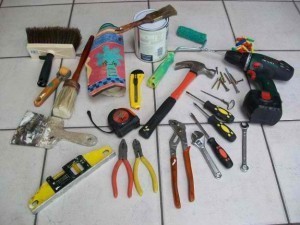
Hey, I’m giving a free book on creativity to a randomly selected individual from those who try this and comment. Details below.
Have you ever found yourself stuck on a project and wondering how you can harness that creative spirit you once had in college? Ever read a book jealous for the author’s ability to write in a style and his or her ability to connect deeper concepts with fresh simplicity and examples? Do you feel like you’re in a style rut, repeatedly producing the same material in the same way? Join the club.
I love talking about creativity and learning from those who are truly creative. But, in reality, most of us feel quite “normal” when it comes to the topic. And, the older we get, the more we find ourselves in patterns that confine us. Since I’m aging and normal at best, I find myself working to be creative.
I’ve had some success in getting myself beyond the rut and I use a wide range of methods to do so (this blog post is just one idea). There are some helpful books, like A Whack on the Side of the Head: How You Can Be More Creative or Steal Like an Artist: 10 Things Nobody Told You About Being Creative
 , to get you thinking differently. Until you get this, I’ve got five tools that you can do right now to help you see your project (lesson, event, sermon, or writing) differently and to experiment with so you can get it moving forward with a fresh level of creativity.
Before you begin, you need space. Block out a full 90 minutes, turn off your phone, music (some of us like music when being creative, so you can decide for yourself on this one), and eliminate distractions. Find an open place where you can use all sorts of items to help – sticky notes, good pencils/pens, and maybe an iPad. To be honest, I’m of the guild that thinks computers or iPads can create more distractions than provide benefits during the intensely creative moments that demand full attention and space.
5 Tools to be Instantly Creative on Your Project
The Disney Perspective – take what you’re working on and pretend the imagineering group from Disney is taking it over. What would the story be now? The colors they would use? What would they illustrate? What would the “customer service” elements be? What would they clean up (they’re notorious for cleanliness and clarity)? What characters would they create as hosts? What would Disney do?
The Talk Show Visit – imagine your project went on a talk show with your favorite (and funniest!) host – you can insert who that might be. For me, David Letterman, when at NBC, was the best. So, I imagine that he’s booked the project on his show and I take it through two scenarios: First, how would he help make the project funny? What would he do that might be a bit quirky and odd, but would help us laugh about it a bit? Second, what questions would he ask of the project to help him understand it better, as if he were about to interview it as a guest (with the goal of getting a laugh).
The Target Audience Exercise – this one I use with my writing. I find when I’m stuck it’s often because I don’t know to whom I’m writing. So, I find 4-5 people to be my imaginary audience, friends that I know bring out my best wit and work. On one fiction project a few years back, I even printed out pictures of the people to help this process. Sounds weird, but creativity demands that we experiment a bit and it helped that I saw their faces as I wrote.
“Can we Have Some Style in Here?” process – I saw the benefits of this one firsthand with one of the best student leadership conferences I have EVER seen. Ever. [In fact, just last week I met a college student who had attended - I was a speaker there - and he mentioned how good the conference was.] What helped the student leadership be successful and focused was the approach to style that the leaders took. They asked, “What if we took an iPad approach to content delivery?” So, everything you saw, experienced, and heard felt like Apple had honed it and shaped it. And it connected instantly - and students can still recall what they learned during those conferences.
Now this one is more visual, so the front door to this process may feel a bit uncomfortable. However, find some style source and imagine that style shaped everything you were doing. Please don’t pick leisure suit style or boy band style.
By the way, you already have a style in place. So, it’s not you haven’t done this already. I’m just suggesting change it a bit for a while to see what happens.
5. Draw a Cartoon - If #4 didn’t make some of you uncomfortable, this one will do so. You can take two paths on this one. You can draw a quick cartoon about your project. I’ve been increasingly intrigued that many of the leaders I admire use visual processes to help them conceptualize. More than graphs, I’m asking you do think of how your work can show up as a cartoon of sorts. If you don’t like that path, then imagine that a cartoonist has your project in hand and he/she wants to do the drawing for you. How would you explain it to her so that they can create characters that use your material in funny ways? What humor might he/she develop?
This process is called bricolage, taking perspectives (or tools) at our disposal to help us build something. We can look at one topic (your project) through many different lenses to help us see the potential in fresh and creative ways.
Again, this is just one method, with five variations, for accelerating your creative thinking.
NOW… I need testimonials, thank you. I’d like for you to take a “stuck” project and then try this process. Report back here with a comment about what your project is, why you felt stuck, which of these you did, and the results. On February 15th, I will conduct a drawing from among those who’ve commented (all names thrown in a bowl and my secretary will draw a name at random) and will send them a brand new copy of either A Whack on the Side of the Head: How You Can Be More Creative or Steal Like an Artist: 10 Things Nobody Told You About Being Creative (your choice).
Good luck! Go get ‘em!
by The post 5 Tools to be Instantly Creative on Your Project [BOOK GIVEAWAY] appeared first on In this Corner of the World - TerryLinhart.com.



January 27, 2014
Good Content Matters … Most?
 Content matters. Most. What you “produce” will be the final evaluation of your work versus your style (though some could argue that style is a product). What you give to people (including time) is what will last beyond any manufactured notoriety – and investing in the lives of others is some of the best content you can have.
People flash onto the stage and leave just as fast as they came, the “15 minutes of fame” rule at its best. Others discover how short life is and in their last days wish they’d have invested their time in people and “products” that would have lasted longer.
My favorite restaurant (see picture to left) is housed in a block building that is maybe 24′ x 24′ it is a great Mexican restaurant and it is nonstop busy. The reason? It’s the best Mexican food in the region. In fact, I’d like to head there right now if not for the snow drifts in between here and there.
My favorite custard stand (picture on right side) is a small stand in St. Louis, but visit there most summer evenings and you’ll see multiple lines of people waiting to have their custard fix. Why? The custard is that good that people will drive from all over to taste it. In fact, I’d like to head their right now for a chocolate chip concrete. 
What makes these two places so good? It’s the content. The food. And I think it’s the word-of-mouth reputation. People gladly talk about these places because of what they mean to them and because of the experience they’ve had. They address an appetite for great Mexican food and amazing custard. Business is nonstop, advertising is at a minimum for the markets’ size … and customers keep coming back.
Good Content Helps us Take People Farther
Many of us are busy building organizational structures (of all types), working on design/style (to attract more people), and running programs, but give small amounts of time to the content. Study and preparation, the foundations for successful ministry, are crammed into a busier administrative schedule and we can find ourselves (without much effort) with stylish programs, hot music, but our content can sound like little more than bumper sticker thinking. I’m often surprised how often “good enough” is good enough for many teachers and leaders when it comes to study and helping their people move deeper on various topics.
It’s been interesting this week to see a variety of blog posts about content lately. The Anchorman 2 marketing approach was impressive, though the movie was a dud. Adam McClane wrote about how content should be our focus in our work and writing. To learn more about what “content marketing” is see this video or these examples. Literary agents have begun reminding their authors that, though platform is important, they should work on their prose, the content of what writers do. Seth Godin recently wrote about the limits of just pure marketing, that a business can’t sustain increasing awareness to gain customers. The content of their work (see my examples above) is what the focus should be on.
What is the content of what you do? What are people’s perceptions of that content?
In ministry there is a tipping point where the gatherings and events are so meaningful to those who come that advertising isn’t necessary (though clear communication is always important). I’ve seen this with churches, youth ministries, and campus events that have earned the reputation as being meaningful places to be. The momentum is in place and people will make every effort to be a part of it. I’ve also seen events that were of a caliber higher than previous ones and the people were surprised at the quality. Those responses are telling and worth paying attention to for future planning of your content.
Valuing those who give us their time and attention
What an honor it is that others would give to us their most valuable commodities – their time and attention. What if we didn’t take that for granted, even with young people, and worked to be diligent in making sure our content is meaningful? Here’s the caveat that few of us like about this though, the evaluation of what is meaningful is in the minds of those making the meaning. Like it or not, people vote with their feet … and their remotes. They show up and tune in to what matters to them. They choose communities that encourage and propel them forward.
We show how much we value the people who attend our meetings, listen to our talks, and read our words by our diligence to be sure our content matters, most.
What “content” goals do you have for 2014? How did you decide where to focus?
by The post Good Content Matters … Most? appeared first on In this Corner of the World - TerryLinhart.com.



January 17, 2014
3 Helpful Components for Effective Mentoring of Young Adults
I jot a lot of notes down. I go few places without a way to take notes, which is why I’m learning to use Evernote to its fullest this year. If you don’t know much about Evernote, give it a try. I also recommend getting this Kindle book, Mastering Evernote The 2 Hour Guide: Unlock the Power of Evernote to Never Forget Anything to help.
The problem I have is: MY NOTES ARE OFTEN MESSY AND CONFUSING. I jot them down fast and my handwriting is bad enough at normal speed.
So, I found a page of notes about mentoring, but I don’t know the source. There IS a source (these are not original to me), s0 to whichever colleague I was listening to, I’m sorry (I believe the source is Dr. David Setran of Wheaton College.) But these are too good to not pass along. I’ve added my comments after each one.
When mentoring young adults, these three areas are worthy of your focus:
DEVELOPMENT OF SKILLS. The transition from adolescence to adulthood involves a wide range of skills. Sometimes young adults’ hesitancy isn’t a “don’t want to” but is more of a “don’t know how to” gap. Setran says it’s necessary for young adults to learn self-regulation, particularly in the area of financial management. Most college graduates seem to expect to adopt a lifestyle similar to the one they grew up in, not realizing it took them 20 years to get there. So, delayed gratification (not a cultural norm for most anyway) is an important concept for building a healthy future. What other skills do you think are important to develop necessary skills in young adults?
FOSTERING CRITICAL THINKING. When we mentor young adults we want their thinking to stand on its own and that means they need to be able to think against the cultural grain. They need to be able to interact with a book, not just absorb it or quickly skim it for content. Setran says we need to help young adults think (and discuss with us!) what is natural/expected as a flourishing adult? As a parent? As a boss? What does maturity look like? How does one learn to manage time? What other ways do you think we can foster critical thinking? About what topics?
CULTIVATING A REALISTIC SELF-IMAGE. Dr. Tim Elmore and other thought leaders have helped us realize that many adolescents don’t have a realistic self-image. They’ve been given a ribbon or award for everything they do. Elmore says that this coddling has stolen ambition from teens (read this post from Psychology Today for more on this). This one is trickier for mentors because we can too easily begin bashing young adults while forgetting what we were like at their age … what we were REALLY like.
Those are the three that I had down on my notes. What more would you add?

by The post 3 Helpful Components for Effective Mentoring of Young Adults appeared first on In this Corner of the World - TerryLinhart.com.