Melissa Wiley's Blog, page 69
November 25, 2013
Eric Carle and the Story Behind ‘Brown Bear, Brown Bear’
“Mommy,” asked Rilla, “how do illustrators make books?”
She knows how the writing part happens, or at least the part of it that involves someone stalking down the hall into the kitchen, muttering, staring abstractedly into the open fridge, oblivious to questions, and then disappearing back behind a closed door in a room with books piled all over the place. She wants to know about the important part, the pictures.
I start to answer with words, as is my way, but I think better of it and, on a hunch, Google “Eric Carle interview video.” As I hoped, treasure awaited us at the other end of the search button.
ThingsI didn’t know: that Bill Martin Jr (author of Brown Bear, Brown Bear, What Do You See?) couldn’t read until he was twenty! And he wrote the rhythm of his stories first, then put in the words? Astonishing.
Eric Carle speaks of his own struggles in school under a strict disciplinarian teacher. “Back then, they didn’t recognize whether you were learning disabled or whatever. But I’m sure I was.”
And all the while we’re watching him make a bear in collage. I love how he cuts out circles for the bear’s eyes and turns them into ears.
There are many more videos of Mr. Carle at work. Rilla liked this one about her favorite book, The Artist Who Painted a Blue Horse.
Afterward, we found this nice video for an easy Eric Carle-style collage butterfly project.
If you’re feeling more ambitious, this collage preying mantis is pretty splendid!








November 24, 2013
Little bits of blog business
I’ve been doing some housekeeping on Bonny Glen (because, you know, it’s easier than doing ACTUAL housekeeping) and decided to give it a bit of a makeover while I was at it. Just the blog, not the rest of the site. Mainly I wanted an excuse to keep on looking at these gorgeous autumn leaves (taken during my Portland trip the other week) for a while longer. I suppose this means I’ll have to overhaul yet again in a few weeks. But that’s probably about the extent of how long these colors will appeal to me, anyway. 
(For the link colors, I wanted to try to match one of the red-orange shades in the leaves. On a whim, I Googled “color picker from image” because surely someone has invented that magic, right? And sure enough! I found this. You hover your mouse over an image and it tells you what it thinks the hex color is for a particular pixel area. I tried a lot of shades before settling on this one, which isn’t quite as red as I was going for. But you know, house full of children yadda yadda yadda. Sooner or later you gotta say close enough.)
Anyway, I’ve checked it in various browsers and it’s looking good to me in all (except that iOS has the banner image shifted oddly to the left, and I don’t know how to fix that), but if anything looks off to you, do let me know. Thanks!



November 23, 2013
Picture Book Spotlight: Mustache Baby
 Mustache Baby by Bridget Heos, illustrated by Joy Ang.
Sometimes you just want a book that makes a kid belly laugh. From the moment Baby Billy makes his appearance, mustachioed from the get-go, Huck and Rilla were in stitches. As Billy grows, his mustache makes it easy for him to assume a variety of roles: cowboy, cop, painter, circus ringleader. But beware the toddler with a long, twirly, Snidely Whiplash mustache: you might have a wee villain on your hands. The surprise ending generated the biggest guffaw of all from my small fry. When Huck discovered the book had gone back to the library, he very nearly grew a bad-guy mustache on the spot. Don’t worry—just like Billy, he recovered his good-guy wits before any dastardly deeds were done. Mustache Baby will be making a repeat visit very soon.



“…do other people cherish and love each other like we do?”
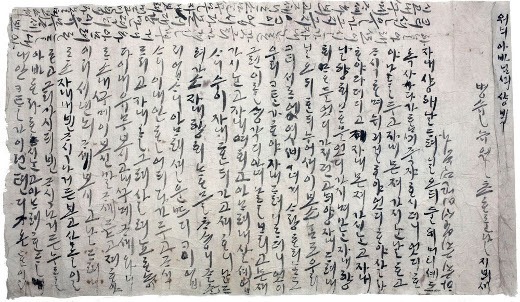
This ties in beautifully (and heartbreakingly) to yesterday’s discussion: Love Letter Found on 500-Year-Old Mummified Body.
You always said, “Dear, let’s live together until our hair turns gray and die on the same day.” How could you pass away without me? Who should I and our little boy listen to and how should we live? How could you go ahead of me?
How did you bring your heart to me and how did I bring my heart to you? Whenever we lay down together you always told me, “Dear, do other people cherish and love each other like we do? Are they really like us?” How could you leave all that behind and go ahead of me?
I just cannot live without you. I just want to go to you…
Read the rest. If you can bear it. I need to go cling to Scott for a while.



November 22, 2013
“There’s a fundamental belief that the human heart hasn’t changed that much…”
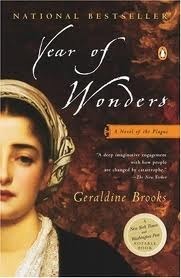 The historical fiction course I’m taking at Coursera continues to delight me, and this week’s Geraldine Brooks seminar on her plague novel, Year of Wonders, pretty much knocked my socks off. The professor, Dr. Bruce Holsinger of UVA, posted a long excerpt from what was also my favorite part of the seminar–Brooks on how she writes characters from other eras, how she forms their consciousness.
“And as a foreign correspondent in the contemporary world, I would hear people all the time saying, ‘They’re not like us.’ One side saying about the other—white South Africans about black, Palestinians about Israelis—‘Their values are different, they don’t love their kids, they’re willing to sacrifice them, they don’t have the same material needs that we have,’ and it’s all BS in my view. You know, the sound of somebody keening for a dead child, is exactly the same, no matter if they’re in a…New York apartment, or an Eritrean refugee camp. There’s a fundamental belief that the human heart hasn’t changed that much. … At a time when you couldn’t expect to raise your kids, when death was ever present, there would’ve been a different approach to loss. But I don’t think it felt any different, I don’t think the emotion of loss felt any different, and I don’t think hatred felt any different, and I don’t think love did. And so, that for me is, where you start, with believing that human beings have these strong emotions in common.”
There’s more, well worth the click-through. And if you sign up for the course (free), you can watch the videos. Such a treat to hear smart people talk about their work. Author Jane Alison’s seminar on her Ovid novel, The Love Artist, was also fascinating and thought-provoking. I haven’t yet watched the Katherine Howe videos (The Physick Book of Deliverance Dane)—greatly looking forward to it. Dr. Holsinger’s lectures have captivated me, to a one. Lots of peeks at rare first editions from UVA’s special collections library (swoon) and really excellent, meaty discussion of various historical fiction novels in their own historical context: Tale of Two Cities, Clotel, Anna Katharine Green‘s detective novel The Forsaken Inn (new to me, and the genesis of a subgenre, historical mystery). Dr. Holsinger even has me wanting to give James Fenimore Cooper another shot, which is saying something.
Looking forward to upcoming seminars on Mary Beth Keane’s Typhoid Mary novel, Fever, and Yangsze Choo’s The Ghost Bride.
• Plague, Witches, and War: The Worlds of Historical Fiction •



November 21, 2013
Martha and Charlotte go to Indonesia
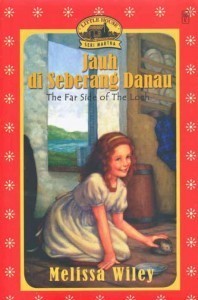
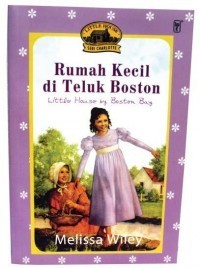
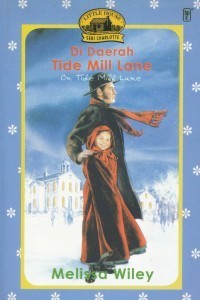
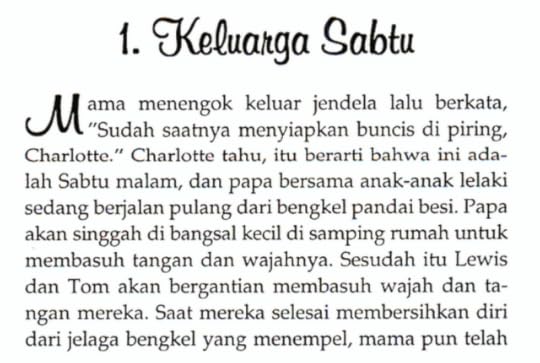
I recently learned that an Indonesian publisher has purchased the reprint rights for my Martha and Charlotte books. The first two books in each series came out in 2011, and the rest of them are coming out this year, is my understanding. The website is a bit puzzling: the entry for “Mellissa Wiley” shows the three books above, but seemed to be missing Little House in the Highlands. Then I realized Boston Bay‘s cover was there twice, with different titles. Here’s Highlands, courtesy of Google Books:
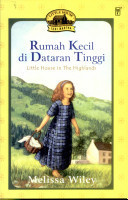
My publisher says I’ll be receiving copies sometime soon. It’s awfully fun to see one’s work in a new language.



November 18, 2013
Reading list for my imaginary book club
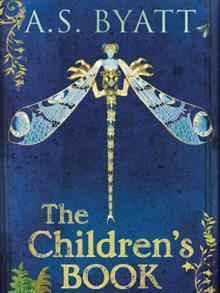
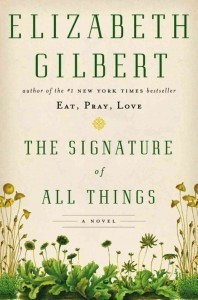 I’m not in a book club at present, but I’ve been entertaining myself with thoughts of what books I would suggest to my book club if I belonged to one. This is because I finished Elizabeth Gilbert’s sweeping, sad, thoughtful The Signature of All Things, and naturally I’m yearning for a nice long discussion of it, preferably involving baked goods. (I’m also wanting to start a moss garden, which in San Diego would be no mean feat.)
Other books I would throw into the ring:
November 15, 2013
Fun math app free today
Heads up! Artgig makes some of my favorite math apps. Their Mystery Math Museum is free today!
|||||
0
Like
|||||



November 13, 2013
“Only grownups would say boots were for keeping feet dry…”
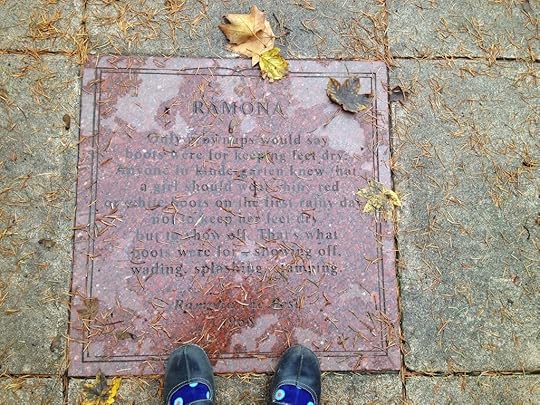
During my visit to Portland last week, my friend Ron took me to several Beverly Clearly sites he knew I’d want to see. Didn’t have to travel far to Klickitat Street, and found a geocache there, which delighted me (and, when I got home and told them, my children). We drove by Beverly Cleary’s childhood home, and the nearby elementary school which now bears her name. Between them was a busy intersection where I imagined Henry Huggins performing his stalwart crossing-guard duties.
Then we wandered over to Grant Park, where the statues are.
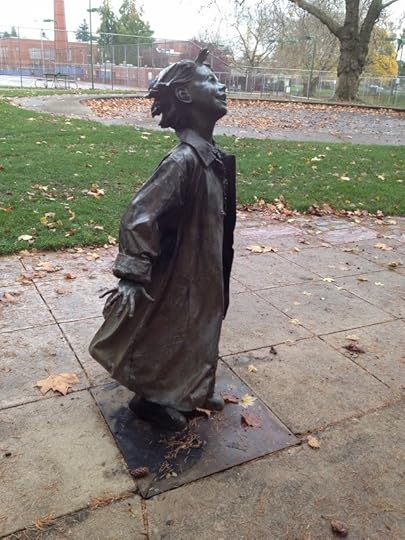
Ramona
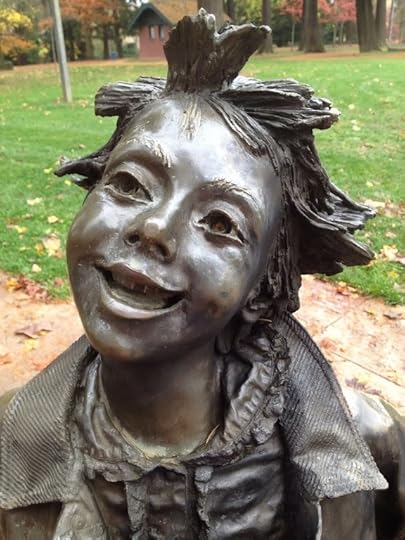
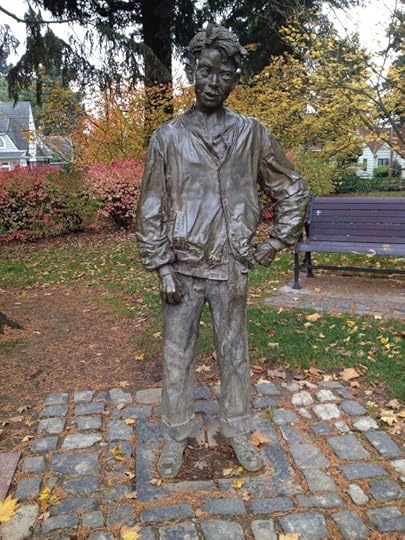
Henry
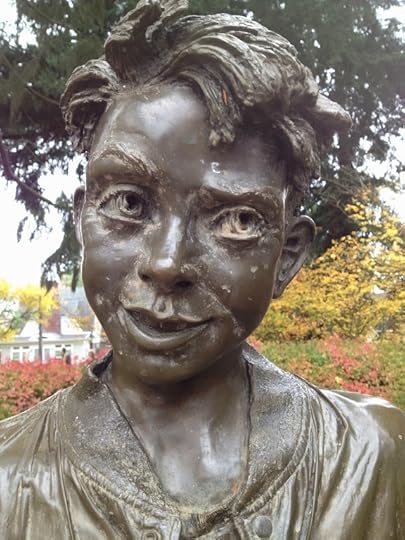

Ribsy
Poor Beezus! No statue!
There’s a geocache nearby named after the statues, but we couldn’t find it, despite a diligent hunt. I guess I’ll have to leave it to my kids when I take them to this site someday.
Karen E., naturally I thought of you and your Ramona the whole time. Perhaps our next family meetup should be in Portland? 
|||||
3
Like
|||||



November 12, 2013
I genuinely like Like

Related to the ongoing discussion about blogging and commenting: Lesley kindly shared the link to the little heart-button plug-in she uses at her Bower. Now, I know Facebook’s like button comes in for lots of ribbing, some of it earned. Many people have written about the superficiality of ‘like’ culture. Clicking a button to ‘like’ a cause is a far cry from actually participating in the cause. I get it. But the humble, mockable like button serves another purpose, a kind one, an actually meaningful one. It says: I’ve read this, I paused a moment in my busy day and took note of something you said, I appreciate your words, I’m grateful you shared this thought (or link) with me. It’s quite nice, really, how much companionable message can be conveyed by that quick click. “15 likes” can mean “15 smiles.”
I’ve been noticing this particularly on Twitter of late. For years, I all but ignored the “favorite” button there. I took it literally, understanding it to indicate a truly outstanding tweet, the sort that must by definition be rare. But somewhere in the past year, I realized people had begun using “favorite” as “like.” Quite often, it’s a way to let someone know you appreciated his or her comment even if you didn’t have anything to say in reply. I favorite quite liberally now, just as over on Facebook I like with abandon. And my appreciation is genuine. You’re saying interesting or amusing things, and I like them.
Anyway, I’ve added the like plug-in here, in case you’d like (heh) a way to say hello without leaving a comment. I haven’t yet decided how I want to label it (I’ve left it just ‘like’ for now). Lesley or Sarah, which one of you was it who had a “nodding quietly” button for a while? I liked that designation very much. I’d click a heart for it if I could, and mean it.
|||||
7
Like
|||||