Melissa Wiley's Blog, page 65
February 7, 2014
“Our ground time here will be brief”
Wherever we’re going
is Monday morning
Wherever we’re coming from
is Mother’s lap.
Maxine Kumin, Pulitzer Prize-winning poet, has died at 88. I loved her work, especially this poem. You can hear her read it below, or at the Poetry Foundation.
http://melissawiley.com/wp-content/uploads/2014/02/OurGround.mp3








February 5, 2014
Recently Read
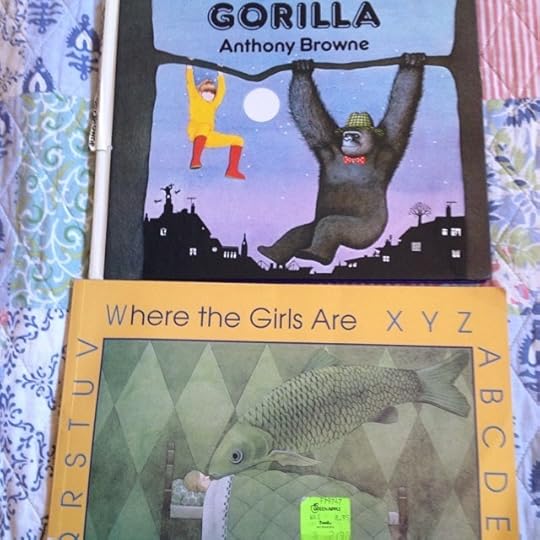
I think I mentioned before that I’m trying to take a picture of all our readalouds—an easier way to record the books than writing them down.
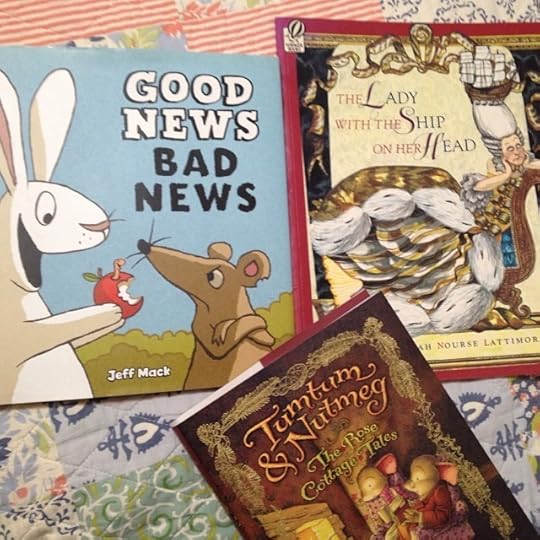
These are a few of our recent lineups. All out of order, but the dates don’t matter, do they?
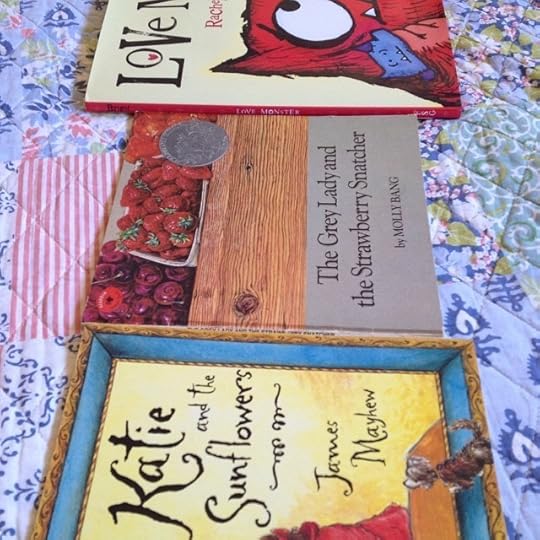
Rilla is so in love with the Post-Impressionists right now. I kept saying, We need to go to the library to get the Katie books, and then a bunch of things slid off a shelf and there was this one right on top. I’d forgotten we owned a copy!
The Grey Lady and the Strawberry Snatcher fills me with all kinds of warm, wistful feelings. One of my first-ever purchases from Chinaberry, I believe, way back in the day. How many hundreds of times have I pored over its pictures with a wonder-eyed little one?
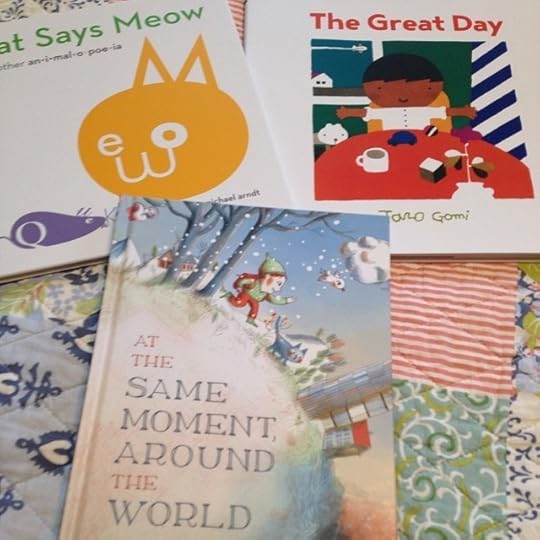
Okay, this one—a stunner. At the Same Moment, Around the World. Just what it sounds like: one moment in time, chronicled time zone by time zone, country by country, in beautiful illustrations full of cheer and heart, and rich in visual detail. We’re in love. (It doesn’t come out until March; this is a review copy.)
Cat Says Meow is charming, too, a bit of typographical fun that tickled Rilla’s funnybone especially.
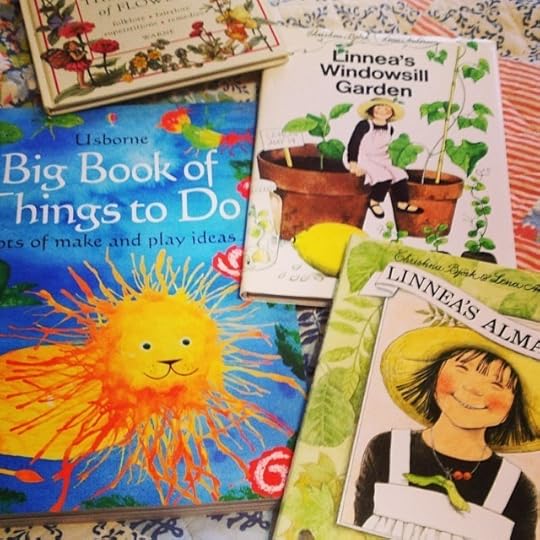
Linnea is another one that carries me back to earlier days—in this case, before I even had children. I bought my copy of Windowsill Garden with my employee discount at the children’s bookstore where I worked during grad school. I grew millions of houseplants in those days, and Linnea was a girl after my own heart.
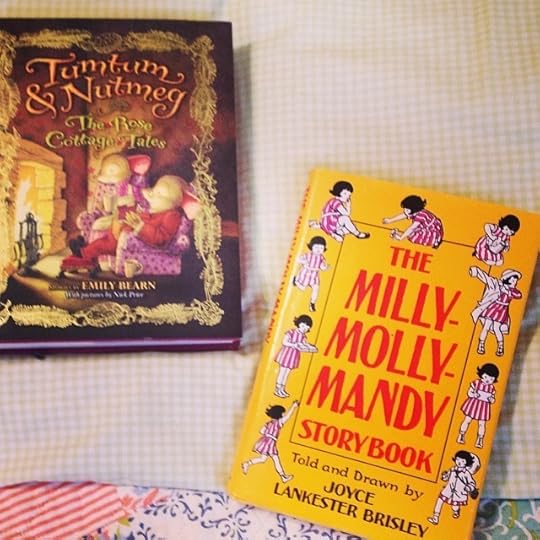
And these two, oh how beloved. Rilla and I read a chapter of each, every day (or nearly so). She was skeptical about Milly-Molly-Mandy at first—the cover didn’t do much for her—but I started reading the first chapter and as I suspected, she was swept right up by the magic of MMM holding all those separate errands in her head. And then chapter two, when Milly-Molly-Mandy has to decide how to spend a penny? I’m not being the slightest bit ironic: this is seriously captivating stuff. Every day I’m so excited when it’s time to curl up for our double-header.



February 2, 2014
Downton Abbey Season 4, Episode 5: Only the Foolish Are Foolhardy
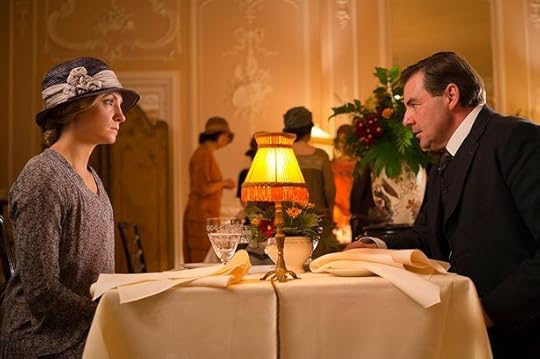
“Look, I’m as unhappy about this storyline as you are.”
SPOILERS BELOW.
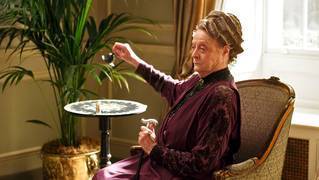
So here we are at episode 5—that’s episode 6 by UK reckoning, or if you’re watching via Amazon—more than halfway through the season. And if I have realized anything during these past few weeks, it’s that I would pay good money to watch a show featuring Isobel Crawley as a village sleuth—a sort of “indigation-fueled ” Miss Marple (to borrow Violet’s excellent phrase) minus the knitting—solving local crimes in between rounds of barbed exchanges with her crotchety relation. The whole Young Peg plot was a predictable throwaway, really—he’s a thief! no wait, I’ve been sitting on the paper-knife this whole time—but it allowed for some of the most amusing dialogue and face-making of the season. (And some champion bell-ringing on Violet’s part.) Game, set, match to the Dowager, indeed. Did you catch the stink-eye Isobel shot the good doctor at that remark? Coming to take his staunch loyalty for granted, are we?
As for the rest of them, there’s a lot of stasis going on. Edith keeps getting caught crying in corners, and Robert and Cora express much sympathy but then immediately turn their thoughts to other topics. The conversation between the two of them in the bedroom that one night was amazing. They each uttered one sentence about “poor Edith” and then swept immediately on to Cora’s brother Harold’s mysterious predicament.
Of course, if they knew what Edith was really crying about, they’d be talking of nothing else. Our predictions about last week’s doctor visit in London were confirmed: Edith is expecting. Now what? And still no news of Michael.
Speaking of Uncle Harold, Robert’s had bad news of him in a letter, some scandal he’s involved with; seems Harold is “in a fine fix” and has “backed a lame horse” and when Robert starts trotting out strings of clichés I always want to hug him. Life’s brisk changes are endlessly perplexing to him and he takes such comfort in well-worn phrases, poor dear.
And now the Downton aristocrat-farmers are going to try their hand at pigs! Oh, I do hope one of them breaks loose and wanders into Violet’s house, and Isobel has to solve the mystery of The Mud on the Carpets.
Thomas continues to badger Baxter for upstairs secrets. She picks up a whiff of Rose’s birthday plans for Robert, but not the specifics, only that a secret exists. This, of course, drives Thomas to immediately suspect all manner of diabolical deeds brewing in the minds of his employers. (The most diabolical of all, apparently, being possible layoffs. He’s so far off-base, so needlessly dramatic, that it would be comical if it didn’t seem a rather hamhanded attempt to inject some tension into a house that is actually running pretty smoothly at the moment.)
Having been tipped off that Mrs. Hughes is in on the secret, he tries to pry it out of her, and she has so much private entertainment in stringing him along (“I’m a woman of mystery if ever there was one”) that I’ve decided to cast her in my No. 1 Downton Ladies’ Detective Agency show. I’m thinking an 80s-style montage for the opening credits, what do you think?
Anyway. Big news in the kitchen: Alfred gets a letter of acceptance to the cooking school, after all. Daisy, whose glee at his having been rejected spurred her to break servants-hall protocol and (gasp) serve him the first scone, is once more downcast, and bitterly angry at Ivy (as usual). But it was nice to see Daisy rally, there at the end, and give Alfred a genuinely sweet goodbye. Also, that was a lovely pie crust she was rolling out.
Jimmy takes Ivy on another date—to see Rudolph Valentino in The Sheik—and then tries to get fresh with her afterward. Ivy’s having none of it. Back in the kitchen, Mrs. Patmore and Mrs Hughes console Ivy, and then Daisy bites her head off again, and Mrs. Hughes says Ivy had it coming. Rough night for Ivy.
Anna and Bates are each struggling, one tearful, one sinister and brooding, to cope with life after Anna’s rape. I’m fed up with Bates; he’s being just awful. If you must brood, do it where she can’t see you, for Pete’s sake. In an attempt to “make new memories,” they go out to dinner at a hotel, where they meet the maître d’ from Ferris Bueller’s Day Off. (Snooty? Snotty.) Fortunately, Cora (the Sausage King of Downton Abbey) comes to their rescue, effortlessly tying the mortified host in knots. That was enjoyable. It was nice to see Cora have something to do, for once.
(Tangent: I’m dying to know what books she’s been reading all season. She reads constantly. Are they books from the Downton library? Are they new and popular novels from town? It’s killing me.)
Of course, one fancy dinner can’t erase the pain Anna and Bates are in. Whisperings of their unknown troubles reach Baxter’s ears, who relates them to Thomas reluctantly and for no good reason. I mean, I know that Thomas is holding some kind of leverage over Baxter, but that doesn’t mean she had to tell him that specific scrap of gossip if she didn’t want to. I assume the tension between them is going to boil over soon, and perhaps we’ll find out what dark secret Thomas is wielding. But Baxter doesn’t seem terrified; really she just comes off as weary of the whole game. Which must be frustrating as all get-out for Thomas.
Lovely moment between Mary, Tom, and Isobel in the nursery, reminiscing about how they all fell crazy in love with their lost spouses. It was touching and sweet, and Isobel is so wonderful when she lets her soft side show: “Well, aren’t we the lucky ones.” Beautiful.
Though I did want to pinch her a little when she declined the chance to hold baby George because he wouldn’t know who “this funny old lady was.” See, you have to actually interact with babies once in a while if you want them to know you are, Grandmama.
(I’m wondering how Cora will feel about being assigned “Granny.”)
Molesley, upon learning that Alfred is leaving after all, reappears with hope in his heart—that footman position may be beneath him, but it’s better than digging roads—and Carson smacks him down quite ruthlessly. Doesn’t matter if you’re scrubbing toilets at Downton, you’d jolly well better be excited about it. So off slumps poor old Mose once more, but Mrs. Hughes intercepts him and before you can say “One lump or two,” she’s got the whole matter sorted. (Proving again that the housekeeper holds the keys to everything at Downton, including Carson’s heart.) She hires Molesley to serve tea to the servants. Violet accepted the news that her grandaughter ran off with the chauffeur more calmly than Carson reacted to the sight of Molesley in a kitchen apron. OH FINE, you can be a footman.
Robert, upon realizing propriety says he should call Molesley “Joseph” now, suffers a minor heart attack at his birthday dinner. Fortunately his mother is there to breeze right over it. Molesley he is, and Molesley he shall remain. Which is a pity, because his name is surprisingly hard to type.
But before we get to the birthday dinner, we must meet Mary’s new sparring partner. Evelyn Napier has arrived with his boss, the handsome Charles Blake, who lands immediately on Mary’s bad side. (Which is generally where Mary prefers her love interests to be.) Charles, it seems, has been dispatched by Lloyd George’s government to survey failing estates—not with an eye toward assisting their struggling owners, as Mary had assumed, but in order to assess the likelihood of food shortages. So: Mary dislikes Charles, Charles dislikes Mary, Napier is seated way at the opposite end of the table, and I’m thinking it’s just as well Tony Gillingham went ahead and proposed to poor old Mabel.
Well, Rose’s big birthday surprise has the desired effect: the Downton crowd both upstairs and down are staggered by the jazz band, especially Mr. Ross. But they rally quickly, make a few earnestly patronizing statements about what a decent fellow Ross seems to be, and the upstairs crowd demonstrates some genuine enthusiasm during the dancing. Isobel, never one to miss an opportunity to moralize, points out to Tom (who has spent the episode continuing to ponder emigration to America) that if jazz can happen at Downton, why, anything can, and so he oughtn’t to give up on the family quite yet. Tom smiles at her with that sweet expression of his that says, “I’m way too polite to argue with you, but seriously, you don’t really think they’re going to let me date anyone here, do you?”
There’s one more surprise in store for Mary, who catches Rose making out with Jack Ross downstairs after the party. Mary, who abhors a scene, backs quietly up the stairs and calls out a warning to give the lovebirds a chance to jump apart, and then politely ignores the guilt written all over Rose’s face during the ensuing conversation about the band’s bill. Mary walks back up the stairs looking troubled, and there’s our Melrose Abbey exit music.
Well, if you’ll excuse me, I need to go set fire to the abbey and dance round it painted with woad and howling.
My previous Downton Abbey recaps are here.



January 31, 2014
Stuff that’s working
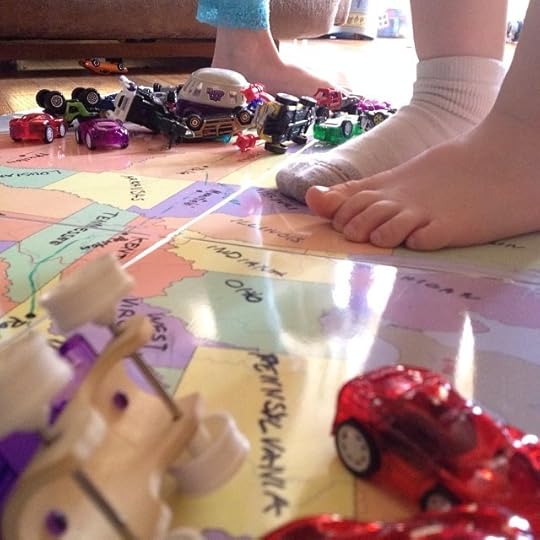
Some quick notes on things we’re using a lot lately:
• Spellosaur app (Rilla and Huck). With the paid version, you can enter lists of spelling words for each kid. They both ask to play it daily, which is fine by me.  Huck’s favorite part is recording his own audio for the words, which he then laughs at on playback during the activities. I wouldn’t normally be working on spelling with a five-year-old but he enjoys the app so much, it isn’t work. For Rilla, I’ve been entering word lists from an old copy of Spelling Power. She also created a second user account to use for French words. Here, too, she loves recording the audio herself.
• I couldn’t find our Chronology game (I know it’s around here somewhere), but Rose and Beanie have been absorbing a lot of history this year, in a jumble of time periods. Science history in the Renaissance, American history between the Revolutionary and Civil Wars, medieval English literature (now heading into Renaissance there too), all sorts of non-coordinated reading going on. We took our old timeline down last year—it was up too high and we weren’t really adding to it anymore—and I wanted some way to make chronological sense of all these events they’re soaking up. So I had a brainstorm and made our own custom Chronology set, sort of. We got index cards and wrote various key events and people on them, with a little stripe of colored highlighter on one side to indicate science, literature, arts, or political history.* They put the dates on the back of each card. We play the game just like Chronology: I put down one starter card and then they take turns picking another card, taking a stab at the date, and putting it down in a row in chronological order. If we can keep it up, we’ll build a nice collection of the main points of our history/science/literary studies this year. They get pretty giggly and competitive in the game, so it’s been way fun so far.
*A fifth color denotes fictional works related to a period we’re studying. There are certain novels and films that will always represent a particular time and place—Betsy in Spite of Herself, for example, popped immediately into the girls minds when we read about German immigrants building a home away from home in Milwaukee.
• The other thing we do quite a lot in our history studies is link whatever we’re reading about to our own family history, as far as we’re able. This applies mostly the 18th century and on, of course (although we do have a couple branches on the family tree traced back to the 16oos). I like to pull up our tree on Ancestry.com and take a look at who among our ancestors was living in a particular area at a given point in time. The big waves of Irish and German immigration in the first half of the 19th century, for example, became much more vivid to the girls when they got a look at the names and disembarkation dates of their forebears who were among those masses.



Overheard
Rilla: Wait, what’s a protractor again?
Rose: It’s that thing Huck makes cheeses with.



January 29, 2014
Brief follow-up to the commonplace-book discussion
It occurred to me that I could use the voice-record feature on my phone to dictate a quote directly into Evernote. Then, later, when I’m back at my laptop, I can clean up the typos (voice recording always generates some gems) and paste the quote into my Tumblr, which, as I mentioned the other day, I’ve decided to try out as my commonplace book.
I’m still using my tumblr to collect other articles as well, but I’m using a tag to collect all the book quotes I want to hold on to. So far, I’m enjoying the process: the format encourages me to add my own thoughts below a quote, if I wish, but there’s no pressure.



January 27, 2014
Downton Abbey Season 4, Episode 4: Nothing Is Over, and Nothing Is Done With
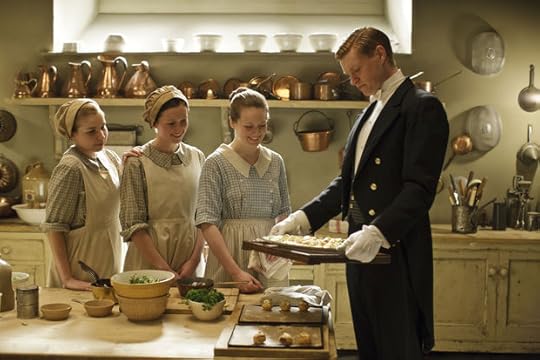
After the high drama of last week, this episode proceeds at a more subdued pace—right up until the final scene, which comes off like a promo instead of a scene: Previously on Melrose Abbey. But truly, there wasn’t a whole lot of Melrose in the house this time around. The most shocking development was that Mary voluntarily spent ten minutes in the nursery with baby George.
We open in a somber mood: Bates walking alone and lonely from the cottage, Anna in silent misery in the maids’ room, covering her fading bruises with powder. When she finds Bates waiting for her in the passage downstairs, she’s short with him: “I don’t know why you always wait for me. There’s no need.” He tries to answer with the old warm smile, but when she rebuffs him again, he shifts into that forceful, almost angry tone that makes him seem more like the bully his first wife claimed he was rather than the gentle Bates we fell in love with along with Anna. Of course we’ve seen, more than Anna has, his tough side; we know how he was able to take care of himself in prison. I’m wondering, this season, if Julian Fellowes wants us to harbor doubts about whether or not Bates really was innocent in the matter of Vera’s death, after all. In response to Anna’s sudden and unexplained distancing, Bates slips quickly into a stern countenance. He doesn’t plead with her to explain so much as order her to.
The tense exchange is interrupted by the new lady’s maid, Miss Baxter. Time for this week’s Newfangled Gadget! What will Mrs. Patmore make of Baxter’s electric sewing machine? At least she needn’t worry that it will replace her in the kitchen. (Hold onto your corset-strings, Mrs. P.; before the evening’s over, Lady Cora will ambush you with a refrigerator.) A nice moment with Daisy: When Miss Baxter offers her a try at the machine, we get the first smile we’ve seen out of that girl all season.
And Mrs. Patmore may not be a futurist (loved that line) but she’s forward-thinking enough to encourage Alfred’s dream of attending the cooking school at the Ritz. “Hope I’m not inciting a revolution!” she sings out, sounding for all the world as if she wouldn’t mind if she did. Daisy is giving Albert cooking lessons—and demonstrating her own competence as she does, though she seems unaware of it. It’s nice to see how far she’s come in her profession, given how little she seems to have matured emotionally these past ten-odd years.
Miss Baxter seems off to a good start, wooing Cora with orange juice because she’s heard Americans like it. She is friendly and likable, and though we learn soon enough that Thomas has landed her this job because he wants a spy both above and below-stairs, Miss Baxter doesn’t seem like a schemer. I’m sure Thomas will put the squeeze on her soon, and we’ll see how she reacts under pressure, but for now, I’m rooting for her.
***
Isobel, at the good doctor’s prompting, takes a young villager under her wing, securing him a position as the Dowager Countess’s undergardener. This is a minor subplot, introducing a bit of tension between Isobel and Violet, which always makes for good dialogue. Violet lands some of her pointiest blows in recent weeks, seeming to revel in the open (but oh so genteel) warfare with her do-gooder relation. “I wonder your halo doesn’t grow heavy. It must be like wearing a tiara round the clock!” And now a letter opener’s gone missing, and my guess is it would positively make Violet’s day to see Isobel humbled by having put forward a thief. Isobel, despite having been pressured into recommending Peg by the doctor in the first place, climbs to the highest heights of her high horse at the very suggestion. It’s to these actresses’ credit that they can ratchet this rather banal storyline into some of the sharpest comedy of the episode.
***
Meanwhile, in Affairs of the Estate: an aged tenant has died and since he hasn’t paid rent in a long time, his heirs are to be evicted. But his son, Mr. Drew, an earnest man of middle age, pleads with Lord Grantham to let him take over the farm.
“Our family has farmed at Yew Tree since the Napoleonic Wars. Surely that’s got to mean something.”
“It means a great deal to me,” Robert replies, promising to see what he can do—meaning, see if he can talk Mary into letting the man renew the lease. Interesting to see how helpless Robert already feels when it comes to decisions regarding the estate. Just a few weeks ago he was tsk-tsking over the idea of Mary having any involvement at all, and now he’s all furrowbrowed over the prospect of approaching her for permission.
Later, Mr. Drew visits Robert in the house. He speaks frankly, with dignity: he can’t pay the arrears right away, but “we’ve worked this land in partnership with the Crawleys for centuries.” This resonates with Robert. He offers to lend Mr. Drew the back rent out of his own pocket, so that the estate books may be brought clear.
When Mary hears that her father wants to give the lease back to the Drews, she’s a bit peeved. Robert makes an earnest case for the partnership—that word again.
“If we don’t respect the past, we’ll find it harder to build our future,” he says at dinner, prompting a comic reaction from his mother, who finds it too fine a sentiment: “The one thing we don’t want is a poet in the family.” It’s become impossible to know when Violet is serious, and when she’s just trolling. A chauffeur she can adjust to, but a poet? Horrors. “The only poet peer I’m aware of is Lord Byron. And I presume we all know how that ended.”
As for Mr. Drew, it seems even Cora is in his corner, pointing out the moral (not legal) obligation to work with him. I enjoyed Tom’s reaction to Mary’s prodding. He’s on the farmer’s side, of course! “I haven’t abandoned all my socialism.” Tom continues to struggle with questions of identity—bit of a Pygmalion thing going on—but for the most part the family whisks past his mental turmoil. They’ve welcomed him into their inner circle and it’s baffling to them that he might not feel at ease there in the long run.
By the end of the episode, Mary and Tom have discovered Robert’s secret loan to Mr. Drew. Mary is heartened by Robert’s confidence in the man, and by his kindness. Echoing her father’s expression, she remarks to Tom that the incident tells her they are “in partnership with a good man.” Mary doles out compliments sparingly (just ask Edith), so this was a nice little beat.
***
Meanwhile, Mr. Carson (mightily pleased with his cleverness) has decided to kill two birds with one stone by offering Alfred’s job to Molesley, should Alfred get into the cooking school. Woe to Molesley for not responding with groveling gratitude. His hesitation offends the dickens out of Carson, who seems to take relish in rescinding the offer when poor Alfred gets a rejection letter. Molesley’s reaction to the bad news is rather hilarious. “You’ve missed your chance.”—(shrugs) “As I generally do.”
But wait! Alfred’s in, after all! Will Molesley get another chance? Will he grovel to Carson’s satisfaction this time? Will the tide ever turn for this longsuffering Eeyore?
***
And back we come to Anna and Bates. I was bothered by the two bootroom scenes. Isn’t that where the rape occurred? It’s horrible to have Bates looming over Anna in such a disagreeable way, there in the very site of her attack, his tone never gentle, earnest, or imploring, but rather stern and grim. He’s reading her sudden coldness as an indication that she no longer loves him, and his reaction to that seems to be primarily anger (not anguish) because she won’t tell him what he did wrong.
When he eavesdrops on her conversation with Mrs. Hughes, he gets a glimmer of understanding that maybe he hasn’t trangressed after all. First chance he gets, he transfers his hostile interrogation to the housekeeper. If she won’t spill Anna’s secret, he’ll have to leave Downton immediately. He’s playing hardball, and it works. Mrs. Hughes reluctantly explains. He guesses the culprit but Mrs. H. denies it, even (under his relentless inquisition) swearing on her mother’s grave. She’s a staunch and generous soul, that Mrs. Hughes.
Alone in the hall, Mr. Bates breaks down and sobs. But before long he’s back in the bootroom, confronting Anna—and again with the menacing edge, for the first part of the conversation. He confirms Anna’s worst fears: “If it was the valet, he’s a dead man”—forcing poor Anna into the terrible position of having to defend Green, lest Bates go hunt him down and wind up back in jail.
Because of all this menacing on Bates’s part, the tearful reconciliation didn’t move me the way I think it was meant to. Bates’s words were touching, and he sounded sincere— “Why do you talk of shame? You are made higher to me and holier because of the suffering you have been put through. You are my wife, and I have never been prouder or loved you more than this moment”—but I was too bothered by his prior behavior to be melted by this speech. I’m glad, at least, that he and Anna are reunited, if not recovered. Bates’s parting words to Mrs. Hughes at the episode’s close make it clear recovery is a long way away. And that scene, as I suggested above, struck me as completely superfluous to actual plot. There’s no reason Bates needs to glower at Mrs. Hughes and tell her the matter isn’t over and done with. If he’s harboring revenge plans, what point is there in troubling her with them, except to milk a bit of drama out of the ending?
***
Odds and ends:
• No letters for Edith, who still hasn’t heard from Michael. All right, gang: do any of you have guesses about what’s become of him? Her doctor visit suggests tempests ahead.
• Tony Gillingham is engaged to Lucky Mabel, but I wouldn’t order their wedding gift just yet.
• Looks, it’s nice Mr. Napier, last seen shaking his head in regret over having lost Mary’s attention to his Turkish friend in season one. (I presume we all know how that ended.) He’s still carrying a torch for her, obviously. But, oh, poor Evelyn. “It’s lovely to see you looking so…lovely.” Mary requires a more witty bantering partner than that. He’s in Yorkshire on government business: he’s involved with an assessment of the estates in the area and manages to wrangle an invitation for himself and his boss to stay at Downton for the duration. Hasn’t he learned not to invite competition?
• “Mrs. Patmore, is there any aspect of the present day you can accept without resistance?” “Oh my lady…I wouldn’t mind getting rid of me corset.”
• Tom: “Made me face the fact that I’m living where I don’t belong.”
Edith: “Welcome to the club.”
Mary: “Oh, stop moaning.” Boy, when she told Edith (after Sybil’s death, was it?) that they were never going to be friends, she wasn’t kidding.
• Cousin Oliver Rose has an idea for Robert’s birthday party. Gee, I wonder what ::coughjazzbandcough:: that might be?
• Mostly I want to talk about that awesome moment when Violet says to Isobel, “Nobody cares as much about anything as you do” and then chortles to herself for the next ten minutes. That laugh, burbling out of her in fits and starts, was amazing. You could fill an entire episode with Maggie Smith chuckling over her own witticisms and I would watch it on repeat.
My previous Downton Abbey recaps are here.



Fandom
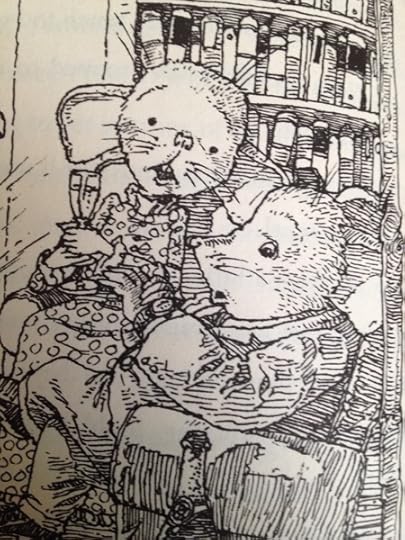
Rilla just told me she ships Tumtum and Nutmeg so hard, she can’t even.



January 26, 2014
Do you keep a commonplace book?
Bee avatar from Lesley Austin of Wisteria & Sunshine
Ryan Holiday on How And Why To Keep A “Commonplace Book”:
A commonplace book is a central resource or depository for ideas, quotes, anecdotes, observations and information you come across during your life and didactic pursuits. The purpose of the book is to record and organize these gems for later use in your life, in your business, in your writing, speaking or whatever it is that you do.
Some of the greatest men and women in history have kept these books. Marcus Aurelius kept one–which more or less became the Meditations. Petrarch kept one. Montaigne, who invented the essay, kept a handwritten compilation of sayings, maxims and quotations from literature and history that he felt were important. His earliest essays were little more than compilations of these thoughts. Thomas Jefferson kept one. Napoleon kept one. HL Mencken, who did so much for the English language, as his biographer put it, “methodically filled notebooks with incidents, recording straps of dialog and slang” and favorite bits from newspaper columns he liked. Bill Gates keeps one.
Not only did all these famous and great individuals do it. But so have common people throughout history. Our true understanding of the Civil War, for example, is a result of the spread of cheap diaries and notebooks that soldiers could record their thoughts in. Art of Manliness recently did an amazing post about the history of pocket notebooks. Some people have gone as far as to claim that Pinterest is a modern iteration of the commonplace book.
Fun to hear thoughts on this topic from someone outside homeschooling circles. Apart from a few quiet book bloggers, nearly everyone I know who is familiar with or interested in commonplace books is a homeschooler.
I’ve tried many interations of the practice over the years. (This recent Onion piece made me laugh, because I relate all too well to the feeling that just the right notebook and just the right pen will make, this time, all the difference—only re quote-keeping rather than creative writing.)
It’s always the copying out by hand that gets me. I bookmark quotes all over the place (via Diigo, Tumblr, or Evernote, depending on whether I want to share them, if indeed I want to share them at all). And I highlight the dickens out of the things I read on Kindle. But as methods go mine are pretty scattered—and, except for the Kindle highlights, only cover my internet reading. I’ve no single place to go to pore over passages that have struck me in, you know, books made of paper.
Mental Multivitamin has made a consistent practice out of commonplace-book-style blog posts for some ten years, recording quotes that struck her in the books she has read. Would that I had followed her example. The paper-loving side of me craves a handwritten version, but realistically I know myself (and my achy wrists) well enough to know that I would wind up with that dogeared stack of waiting books Ryan mentions in his post—the very thing he cautions you to avoid. Typing is always going to work better than writing, for me.
I wonder if I would keep up with a Commonplace Tumblr? Typing or pasting book quotes into that platform? Same principle, easier on the wrists. It would certainly be a steadier use of my tumblr than the haphazard link-collecting I do there. (My original vision for my tumblr back in 2009—good grief, has it really been that long?—was to collect links to all the reading I do online, or all significant reading, at least: a companion to my reading log. That didn’t pan out over the long haul.)
***
I began this post a couple of days ago and have since decided to give it a try. I’ve hit the reset button on my tumblr (figuratively) and am going to try to copy out book quotes into once or twice a month. It’s an experiment; I may lose steam after a while, but we’ll see.
(I could do it here instead, but when I post things here I feel more pressure—entirely self-imposed—to add my own commentary. Over there I don’t seem to mind tossing a quote onto the page and letting it speak for itself. Then, if I have more to say—as indeed turned out to be the case with the article above—I can bring it over here and expand upon it.)
***
While finishing up this post just now, I was amused to find “commonplace book” among my categories. I probably made a similar resolution years ago. Didn’t take, obviously.



January 24, 2014
Huckisms to Remember

Me: Sorry, buddy, you can’t have any more juice right now. If you’re truly thirsty, have some water.
Huck: But I’m not truly thirsty. I’m only normal thirsty.
***
The way he pronounces “unfortunately.” Unforchally, I went outside in my socks.
***
Okay, I know I should tell him the mouse’s name is really “Tumtum” when he says “Numnut and Nutmeg,” but…it’s just so dang funny.
***
Also, this.