Melissa Wiley's Blog, page 64
February 21, 2014
What I read today: Friday
Superquick!
Middlemarch, chapter 14
With Rose and Beanie:
• a section of Wormwood Forest
• “Lines” by Martha Collins
• Sonnets #18, 29, and 130, Shakespeare
Helped Rose study her falconry manual
Friday is Journey North day, so not a huge reading day for any of us.
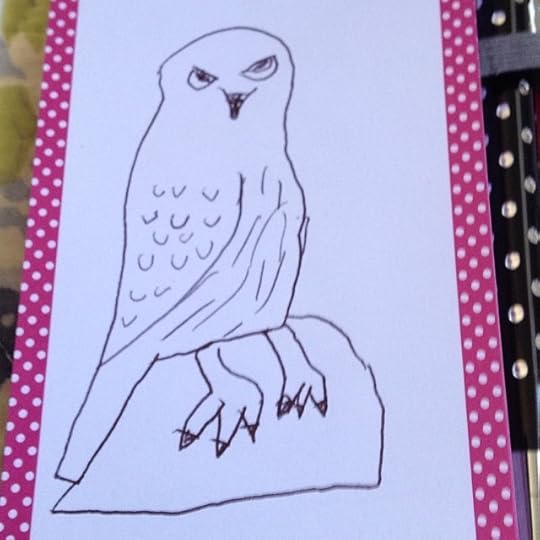
Hawk by Rilla






February 20, 2014
What I read today: Thursday

I’m not going to have time to post anything significant in the next couple of weeks, but I thought I might try jotting down a few quick reading notes each day, just to keep the blog warm.
Early a.m.: Middlemarch chapter 13.
“The banker’s speech was fluent, but it was also copious, and he used up an appreciable amount of time in brief meditative pauses.”
Mid-morning, with Rose and Bean:
Landmark History of the American People, first half of the Eli Whitney chapter.
Story of Science: Keppler.
Poem: “The Blue Bowl” by Jane Kenyon.
Marlowe’s “The Passionate Shepherd to His Love” and Ralegh’s “The Nymph’s Reply”—neither of the girls had read these before, so we had ourselves a good time. I remarked that I would have said yes to the shepherd, and Rose laughed and said, “You did.”
With Beanie:
Sir Gawain and the Green Knight, first half of Fytte the Second. Bit heavy on the armor & weapon descriptions, but good golly is the language delightful. All that alliteration.
With Rose (on separate Kindles):
Bird by Bird, introduction
After lunch, with Rilla:
The Blue Fairy Book, “East of the Sun, West of the Moon”
Tumtum and Nutmeg, finally finished the Christmas story
Milly-Molly-Mandy, next chapter.
Early afternoon:
Snatched a few minutes’ reading time before a meeting, started Howard’s End Is on the Landing. Have been looking forward to this one—Susan Hill’s memoir about spending a year reading only books she already owned. I’ve had that same urge myself more than once! I think it’s going to be a fun read even though she’s a bit crotchety on the subject of the internet: its “insidious, corrosive effect” “fragmenting the brain,” leading to “mental malnutrition,” etc etc. By the time she got to those “infernal systems on websites” that allow you to catalog your books, I was rolling my eyes pretty hard. Don’t go knocking my GoodReads! But I’ll give her a chance. I have a soft spot for curmudgeonly types.



February 19, 2014
What I read today: Wednesday

Early a.m.: Middlemarch chapter 12.
Particularly struck by how skillfully Eliot builds tension in the first visit to Stone Court—Featherstone ordering Fred to get a letter from Bulstrode averring he doesn’t believe Fred made promises about paying debts out of his expected inheritance. How rapidly this escalates! Featherstone has already made it clear to his sister, Mrs. Waule, that he thinks the rumor is “stuff and nonsense…a got-up story” and he defends Fred against her insinuations. “Such a fine, high-spirited fellow is like enough to have [expectations].” But then after Mrs. Waule leaves, Featherstone whips out the accusations, almost teasingly, and the order to get a letter from Bulstrode has the air of a whim, at first. And suddenly there Fred is in a terribly awkward situation that is only going to get awkwarder, and eventually quite serious. It’s a gripping conflict, it puts us squarely in Fred’s corner while leaving us under no illusions that his imprudence (those fine high spirits) has helped put him in this pickle. Featherstone is utterly believable, a difficult person who enjoys being difficult, and who enjoys having scraps of power over people. All the rest of the morning my mind kept coming back to this scene, picking over how artfully Eliot created a major conflict (in plot terms) out of a fragment of gossip.
Midday: Finished Underfoot in Show Business.
Am now bereft: it was the last (well, the first for her, but the last for me) of Helene’s memoirs. I wish she’d written five more. The tales in this one: so rich! That first summer she spends at the artist’s colony—sitting down at the desk in her quiet studio and seeing Thornton Wilder’s name written on the plaque listing all the previous occupants of this cabin. He’d stayed there in 1937; she realizes he’d written Our Town in this very spot. For a moment it throws her—I completely understood that wave of comparative despair—until she registers that in the long list of writers under Wilder, there’s no one she ever heard of. This makes her feel better, and then she’s able to work.
And the early story about how she gets to NYC in the first place—winning a fellowship for promising young playwrights. Late 30s, the second year of the award. In the first year, the two winners were given $1500 apiece and sent out to make their way in the world. In Helene’s year, the TheatreGuild decides to bring the three fellowship winners (Helene is the youngest, and the only female) to New York to attend a year-long seminar along with some other hopeful playwrights. The $1500 prize pays her expenses during this year of what sounded very similar to a modern MFA program, minus the university affiliation: classes with big-name producers, directors, and playwrights. Lee Strasberg! An unprecedented opportunity for these twelve young seminar attendees. And the fruit of this careful nurturing? Helene, chronicling the story decades later, rattles off the eventual career paths of the students: there’s a doctor, a short-story writer, a TV critic, a couple of English professors, a handful of screenwriters.
“The Theatre Guild, convinced that fledgling playwrights need training as well as money, exhausted itself training twelve of us—and not one of the twelve ever became a Broadway playwright.
“The two fellowship winners who, the previous year, had been given $1500 and sent wandering off on their own were Tennessee Williams and Arthur Miller.”
I laughed my head off when I read that.



February 18, 2014
What I read today: Tuesday
I’m not going to have time to write anything thinky in the next couple of weeks, but I thought I might try jotting down a few quick reading notes each day, just to keep the blog warm.
Last week I decided to try something new: instead of reaching for my phone and checking my mail when I wake up, I’m reaching for my phone and reading a book. My boys wake up très early and get to watch TV for 30 or 40 minutes before Scott and I drag ourselves out of bed. Usually I use that time to doze, and then check in on everything that’s piled up in my inbox during the East Coast’s head start on the day. But I’m always grumping about not having enough time to read—I fall asleep three pages in, every night—so I thought I’d give a morning reading session a go. It’s been quite nice. I have eleventy-thousand books queued up, so naturally I decided to reread Middlemarch. (I’ve given up trying to figure out my capricious reading whims anymore. If a book insists it wants to be read, I read it.)
This is my third trip to Middlemarch. Read it first the year between college and grad school, when I was working as a publicist for my undergrad alma mater’s drama department and trying to fill in gaps my English degree hadn’t. Loved the novel, had trouble settling on anything else for a long while after. Reread it a few years ago—I could check my archives here to find out when—and loved it even harder. And now here I go again. Why is it I’m hollering at Dorothea every time and yet she still goes and marries him?
So anyway, this morning it was a chapter and a half of Middlemarch (enter Fred Vincy, munching on a grilled bone).
Later: the first section of Sir Gawain and the Green Knight with Rose and Bean.
Poem: “The Summer I Was Sixteen” by Geraldine Connolly.
After lunch: a couple of chapters of Helene Hanff’s Underfoot in Show Business, which is making me deliriously happy.
Assorted articles online.
No picture books! Made a Staples run in the early afternoon that ate up our Rillabook window.



What I read today
I’m not going to have time to write anything thinky in the next couple of weeks, but I thought I might try jotting down a few quick reading notes each day, just to keep the blog warm.
Last week I decided to try something new: instead of reaching for my phone and checking my mail when I wake up, I’m reaching for my phone and reading a book. My boys wake up très early and get to watch TV for 30 or 40 minutes before Scott and I drag ourselves out of bed. Usually I use that time to doze, and then check in on everything that’s piled up in my inbox during the East Coast’s head start on the day. But I’m always grumping about not having enough time to read—I fall asleep three pages in, every night—so I thought I’d give a morning reading session a go. It’s been quite nice. I have eleventy-thousand books queued up, so naturally I decided to reread Middlemarch. (I’ve given up trying to figure out my capricious reading whims anymore. If a book insists it wants to be read, I read it.)
This is my third trip to Middlemarch. Read it first the year between college and grad school, when I was working as a publicist for my undergrad alma mater’s drama department and trying to fill in gaps my English degree hadn’t. Loved the novel, had trouble settling on anything else for a long while after. Reread it a few years ago—I could check my archives here to find out when—and loved it even harder. And now here I go again. Why is it I’m hollering at Dorothea every time and yet she still goes and marries him?
So anyway, this morning it was a chapter and a half of Middlemarch (enter Fred Vincy, munching on a grilled bone).
Later: the first section of Sir Gawain and the Green Knight with Rose and Bean.
Poem: “The Summer I Was Sixteen” by Geraldine Connolly.
After lunch: a couple of chapters of Helene Hanff’s Underfoot in Show Business, which is making me deliriously happy.
Assorted articles online.
No picture books! Made a Staples run in the early afternoon that ate up our Rillabook window.
February 16, 2014
Downton Abbey Season 4, Episode 7: Ice Cream Should Sort It Out
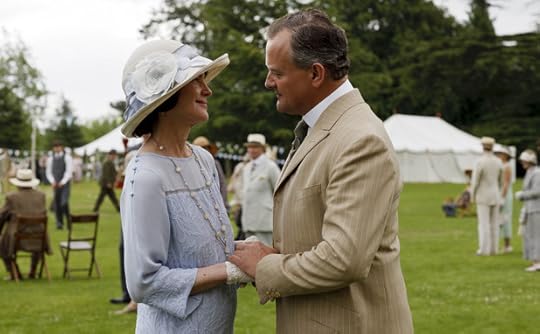
Darling, I’m so glad you survived your time in the land of Prohibition.
(UK / DVD episode 8. Also, spoilers below.)
Proving it has its priorities firmly in place, this episode starts with the VIPs: the Very Important Pigs. Look at ’em, up and drinking, fat and sassy! Oh, what a relief. I’m only sorry we never got to meet that dastardly fellow, the Negligent Pigman. After the great trough catastrophe, Tom and Mary have decided to offer sturdy Mr. Drew, whose devotion to Yew Tree Farm has proven his mettle, the job of Keeper of the Pigs.
Let’s just take a moment to savor this: Downton Abbey is full of grown men and women who require another adult’s help to change clothes three times a day, but Mr. Drew can be trusted to tend these somewhat delicate Pigs and FARM AN ENTIRE FARM. In fact, he’s so reliable that Edith is eyeing him as a potential foster father for her child. (She’ll be talked out of that by Aunt Rosamund, but that comes later.) For once I’m not making fun of the show; I think this is a pretty realistic depiction. I have no doubt that Mr. Drew is fully capable of running his farm and tending the Pigs. And while Mary has shown that she can do a hard night’s work in an extraordinary circumstance (and even elegantly scramble an egg afterward), it’s amusing how different the family’s definition of “farming” is from Mr. Drew’s. When Mary and Robert speak of “farming Downton themselves,” they mean making plans and hiring people to carry them out. When Mr. Drew speaks of farming, he means getting up at 4:30 in the morning to check on the Grantham Pigs before milking his own cow.
A recurring theme throughout the four seasons of this show has been how much happier the upstairs crowd is when they have some real work to do. During the War, we saw Edith blossom as an aide to the recovering soldiers (and, later, as a newspaper columnist), and Sybil grew from a restless cause-seeker to a woman who found real satisfaction in her nursing duties. We began this season with Mary and Isobel in zombie states, six months after Matthew’s death. The spark came back into Mary when she was nudged into taking an interest in the management of the estate, and Violet basically applied a bellows to Isobel, dumping the problem of Carson’s down-and-out former friend in Isobel’s lap, fanning the embers of her do-gooder zeal back into the fire she runs on.
We’ve seen it with Cora, too, this season: so many scenes in which she looks absently up from a book, smiles benignly, and does nothing of consequence—she has seemed more like an amiable ghost than a person whose actions have any effect on the world. This week, Cora was zooming around in a whirl of bazaar preparations, and although her somewhat vapid remarks seemed designed to elicit eye-rolls from her family as well as the audience, the truth is that organizing an event on the scale of that one is a mammoth undertaking. If you tried to assign me that job, I’d run away with the Pigman. I appreciated Tom’s insightful “beast of burden” remark near the end of the episode, his recognition of how hard Cora had toiled over the bazaar. I still found myself wanting to roll my eyes at everything Cora said—I’m serious when I say I think the script wanted me to—but Tom’s right. We very seldom see Cora at work, but she does work. There are parts of her job she could do a great deal better; she’s been only superficially aware of Edith’s misery and Rose’s mischief all season. But she organized a mighty impressive bazaar, and I’m glad Tom gave her her props.
But I’m jumping ahead. This week saw the Dowager Countess back on her feet, poking Isobel with her customary relish. She drags Isobel in to help entertain Mary’s godfather and seems mildly surprised to see the distinguished widower taking an interest in our Mrs. Crawley. Lord Merton walks Isobel home, totally spaces that her son has died, and sends a gorgeous flower arrangement in apology. Did anyone catch his rank? I’m not sure I see Isobel remarrying (she’s too easily irritated), but it would be pretty funny if she married into a higher rank than Violet’s.
Through Violet, we learn that Uncle Harold is mixed up in the Teapot Dome Scandal, which I think a lot of us suspected, given the timing and the hints. So far, this plotline has had little effect on the Downton main players except to remove Robert and Thomas from the scene for a couple of episodes. Frankly, we needed a rest from both of them. Thomas’s absence has allowed a nice little relationship to flourish between Miss Baxter and Molesley, who is absolutely astonished to see himself through Miss Baxter’s eyes. She envies him his lifetime in a community that, in her words, respects him and likes him. Molesley, after sinking just about as low as he could go—reduced to digging roads and begging for a footman’s job—has finally encountered someone who doesn’t view him as the ultimate sad sack. It’s quite sweet.
Violet’s other occupation this week is to ferret out the truth about Edith, and to respond with deep understanding. Rosamund has tipped her mother off that Edith “needs cherishing,” and when, shortly afterward, Rosamund makes a sudden visit to Downton to announce she’s taking Edith to Switzerland for several months—to improve her French—Violet does the math. If she tsk-tsks Edith, we never see it. Instead, she offers to pay Edith’s travel expenses. Edith is not exactly happy about the plan—it kills her to think she won’t be any part of her baby’s life—but she’s relieved not to have to tell Cora she’s pregnant, at least.
Another round of Alfred Drama sets the kitchen crowd fluttering once again, but mostly only because no one wants Daisy know what’s going on. Since the tactic Mrs. Patmore and Mrs. Hughes apply to Hiding Things from Daisy is to make alarmed faces at her every time she walks into the kitchen, Daisy susses out the truth pretty quickly. Alfred has written to propose to Ivy; Ivy has turned him down; and now Alfred is going to swing by Downton to say goodbye forever. Mrs. Patmore sends Daisy off to visit her father-in-law, Mr. Mason, to spare her the pain of watching Ivy break Alfred’s heart one last time. But Mr. Mason persuades Daisy to go back and say a real goodbye to him, leaving “nothing jagged, nothing harsh” between them. This is probably the wisest advice anyone’s ever given Daisy, whose heart is full of jagged edges, and she carries it out so gracefully that for the first time we have hope she may not turn out a bitter, sharp-tongued shrew. Mrs. Patmore’s heartfelt praise afterward (“I couldn’t have been prouder if you were my own daughter”) clearly touches Daisy. Actually, Miss Baxter’s words to Molesley apply very much to Daisy as well—in her eleven years at Downton she has developed quite a supportive (if sometimes overzealous) network of friends, whether she realizes it or not. Including Mr. Mason, who is basically a more talkative Matthew Cuthbert. Daisy, like Molesley, is luckier than she realizes. Perhaps someday we’ll see her realize it.
Charles Blake and Evelyn Napier announce they’ll be ending their prolonged stay at Downton, both of them leaving their hearts at Mary’s feet. (Mary fails to notice Napier’s and accidentally kicks it under the sofa, where it will lie forgotten until 1941, when a young London evacuee will discover it and it to his collection of birds’ eggs and owl pellets.) Before Charles goes, however, he jumps another notch in Mary’s esteem by demonstrating his undaunted willingness to do that which most Downton upstairs folk quail from: he voluntarily holds Baby George, and even seems to like it. First Pigs, now babies. (At Downton we don’t uppercase babies; that might make them think we’ve remembered they exist.)
To make sure Mary is well stocked up on attention before her suitors depart, Tony Gillingham sends word that he’s going to stop by for the night. For Anna, this is terrible news: it means another encounter with Tony’s valet, Mr. Green—and another opportunity for Mr. Bates to put two and two together about the identity of her rapist (but he’s already done that math, hasn’t he). Anna, distraught by the prospect of Green’s return, finally reveals to Mary that he was her attacker. Mary is horrified and wants to notify the police, but Anna swears her to secrecy. If Bates learns the truth, he’ll kill Green and hang for it; of this everyone in the know seems quite certain. Because obviously, Anna’s rape is All About Bates. I’m sorry, I’m so disgusted with this entire narrative thread.
Including the way every major scene involving Bates (all season) seems to take place in the bootroom—the site of Anna’s attack. Green is the villain, but it’s Bates we see here, over and over, making his sinister, brooding faces. It’s here Bates badgers Anna about Green’s return: “And Mr. Green? He’ll be coming back? Have you gone off him? You liked him so much when he first came.” WE GET IT, BATES. Don’t be a monster. But Green will arrive, and Anna will go tharn at the servants’ table, sickened by his presence, and Bates will ask leading questions about where exactly in London Green lives, furthering Anna’s torment. I miss first-season Bates. Season 4 Bates is worse than Thomas. At least Thomas doesn’t pretend to be anything but self-serving.
Tom and Isobel go to Thirsk, the small town six miles from Downton, where Tom spies Rose caressing Jack Ross’s cheek in a restaurant. Back home in the village, Isobel and Tom (who spend a lot of time together this season) bump into Sarah Bunting, village teacher, the young woman Tom met at the political meeting last week. This was my favorite scene of the week, because of the way Isobel rushes to speak up on Tom’s behalf when he won’t. He’s a keen political thinker, she informs Sarah, unafraid to question his own beliefs. Tom’s been in such existential turmoil lately, it was nice to see Isobel characterizing it in a way he might be able to make his peace with. Isobel gives Sarah Bunting a stamp of approval too: “She knows her own mind”—a quality Isobel appreciates in everyone except Violet.
Back home, Tom takes his uncomfortable Rose secret to Mary. (Best moment of the week: his absolute panic when Mary asks why he isn’t in tails for dinner. After all, Granny’s coming. Poor Tom.) Mary takes the Rose news in stride—it wasn’t a total surprise to her, after all, since she caught them making out weeks ago. She’ll deal with it.
At dinner that night, the main course is We’re All in Love With Mary, with a side of Thinking Is a Dangerous Occupation. Tony’s been rambling around Scotland having epiphanies while Charles and Mary were being perfectly splendid at rescuing Pigs. In the morning, Tony confesses to Mary that he has broken his engagement with Mabel, not that Mabel knows it yet. Mary still can’t promise to marry Tony, however, she’s “not on the market.” Honey, this season you are the market. Next morning, her trio of admirers departs, leaving the ladies behind to debate the best collective noun for suitors, while Mary smiles serenely and pretends to be annoyed.
Regarding the matter of Rose’s suitor, Mary plays a more active role. Rose declares she’s going to marry Jack Ross, they’re totally in love and also it will really upset her mother. Mary immediately makes plans to go to London the next day, where she will pay a visit to Ross and put the kibosh on the wedding plans. Now, this is a show that thrives on making high drama out of mild events (“Alfred’s coming for a visit? BATTLE STATIONS, EVERYBODY!!”), but then we’ll have a storyline that might conceivably be expected to generate some theatrics, and it’s defused in the most mellow fashion, over a cup of tea. Jack thinks Mary is underestimating Rose’s mettle, but no worries, he’ll call off the engagement anyway. He loves Rose and doesn’t want her to have to face the societal censure she’ll incur by marrying a black man. Sorry, Rose.
Anna is spending the night in London with Mary, freeing Bates to head off to York on mysterious errands of his own. Mary lunches with Tony Gillingham, swatting away a few more declarations of undying devotion, including the news that Tony has now officially broken his engagement to Mabel, who by all accounts is as good a sport as Jack Ross. But Mary’s real purpose in meeting Tony is to ask him to fire Mr. Green, no questions asked. Naturally, Tony agrees. Mary says jump, you jump. (But would Charles Blake jump? I’m not so sure. I think he’s a better sparring partner for Mary. Sigh, I miss Matthew.)
Tom happens upon Sarah Bunting, stranded by the side of the road with car problems. She’s surprised to learn Lord Grantham’s son-in-law is actually out on estate business—she assumed it was a figurehead position—not to mention that he knows his way around a car engine. Tom fills her in on his past. This makes Sarah “take a kinder view of the family”—she doesn’t generally “warm to their type.” “I don’t believe in types,” says Tom. “I believe in people.” So now I want to run off to America with Tom.
Back at Downton, look who’s in the bootroom! It’s Bates, being secretive about what he did in York all day. “This and that.” He’s not even trying to put on a front for Anna anymore. He’s been a total Mr. Hyde this whole episode. Dear Julian Fellowes, this is why my husband won’t watch the show with me anymore.
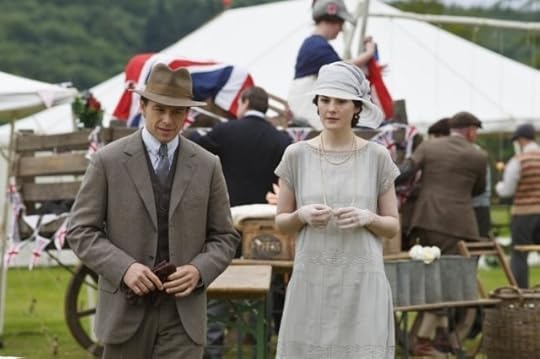
The day of the bazaar arrives, sunny and beautiful. Look—a miracle! There’s Mary holding baby Geo—nope, wait, she’s handing him back to Nanny. Whew, I thought the earth was going to crack open there for a second. Rose pouts to Mary about her nixed engagement; Molesley, basking in Miss Baxter’s admiration, trounces Jimmy at a game of Ring the Bell; and menfolk converge upon the Downton women from all directions. Robert’s back! Tony Gillingham’s back! Charles Blake is back! Sorry, Edith, no one here for you. Have some ice cream.
Robert’s return is wreathed in smiles. Actually, the way Edith lit up in genuine joy when she saw him was very touching. Even Mary smiled, like a real smile that showed teeth, and the sight was so startling I realized how seldom we’ve seen her that way. Cora and Robert have a reunion as loving and affectionate (and, yes, cornily written) as their parting last episode. The warmth between these two has been given a lot of screen time this year.
Robert’s mission was successful; Uncle Harold is saved. We’ll get to meet him next week in the final episode of the season. (And since he’s played by Paul Giamatti, I can’t wait.)
Lord Gillingham brings less cheerful news. I’m sure we were all shocked (shocked!) to learn that his valet, Mr. Green, is dead. Stumbled and fell into traffic in Picadilly the day before. Mary still won’t tell Tony why she wanted him to fire Green, and I’m sure he doesn’t suspect anything when she immediately walks over to Anna and tells her the news. That’s about when Charles Blake shows up, and Mary pulls him aside to ask his advice about turning in a man you suspect of committing a crime you personally believe was a very good crime to commit. Charles says he’d keep quiet, which is what Mary is hoping he’ll say but is a reaction that makes very little sense. Who can answer a hypothetical like that? What kind of crime, Mary? There’s a pretty big range of possibility there. Charles, I thought you had more gumption.
Anna murmurs to Bates that she wishes she knew what he’d been up to the day before. He says, “You know me, when I do a thing I like to have a very good reason for doing it”—which is TOTALLY NOT SUSPICIOUS AT ALL. You’d think his time in prison would have taught him how to cover his tracks better.
Of course Robert’s return means Thomas is back, too. He sidles up to Miss Baxter and starts picking for secrets—always with the everlasting secrets—but Molesley nips at him and escorts Miss Baxter away. Anticlimactic return for Thomas.
Now all that’s left is for Mary’s suitors to proclaim their determination to wait as long as necessary for her frozen heart to melt in one direction or the other, and let’s all raise our glasses to the best bazaar in Downton history, or least since Violet was in charge.
My previous Downton Abbey recaps are here.



February 14, 2014
Your Favorite Memoirs

My Helene Hanff kick (about which more later) continues—after Duchess of Bloomsbury Street, I tore through Q’s Legacy, and yesterday when Underfoot in Show Business arrived via interlibrary loan, I squealed and quit work half an hour early to dive in. This binge got me thinking about how much I enjoy memoir. I asked my Facebook friends what their favorites are, and the list could swallow a whole year of reading time. I think you should be able to view it even if you aren’t on Facebook—or does FB make you log in to read anything there, even the public threads?
I’ll try to get the list moved over here at some point, but I’m afraid I won’t have any free time until I’ve finished reading Underfoot. Oh Helene, Helene, I wish you’d written thirty memoirs.
***
Wait! I realized I could just paste in the thread. But then I worried my friends might not want their names and faces plastered on my blog, so I’ve stripped out everything except the book comments. Forgive the lack of formatting!
Please add your own favorites in the comments! I have a few to contribute too, later. And happy Valentine’s Day, everyone.
***
Gladys Taber’s Stillmeadow Books.
Corrie Ten Boom’s The Hiding Place
Tender at the Bone, Ruth Reichl
The Glass Castle, Jeannette Walls
Someone already said Glass Castle, so I’ll throw in A Girl Named Zippy by Haven Kimmel.
Any of Caroline Knapp’s.
Seven Storey Mountain
Glass Castle for me too.
Like all of the above but Glass Castle, hands down not only my favorite memoir but a favorite book of all time.
I really liked Rumer Godden’s– and I’m on a Godden kick this week– A Time To Dance, No Time To Weep is the first volume and A House with Four Rooms is the second.
The Egg and I by . . . Betty MacDonald, I think?
Beyond Dark Hills Jesse Stuart
Booked: Literature in the Soul of Me by Karen Swallow Prior
My favorite genre,so hard to pick. Ambulance Girl, Glass Castle, On Gold Mountain , any Annie LaMott, Helen Hanff, Florence King, Alexandra Fuller, Thunderbolt Kid, any Mitford,Quentin Crisp, Christopher Isherwood …..
Glass Castle.
Good call on Betty MacDonald and Florence King. Add Shirley Jackson (Life Among the Savages) to that list.
Just Kids by Patti Smith
I liked The Spiral Staircase by Karen Armstrong (think you’d really like it) and I like Dance of the Dissident Daughter by Sue Monk Kidd, too.
The Chronology of Water by Lidia Yuknavitch
Nancy and Lawrence Goldstone’s Used and Rare: Travels in the Book World (one of my favorites and since you like 84, Charing Cross Road you might enjoy this one).
I loved Sidney Poitier’s Measure of a Man.
It’s Always Something by Gilda Radner.
Angela’s Ashes
Period Piece, Raverat
An American Childhood by Annie Dillard
Love all Gladys Faber, and Anne Morrow Linbergh. And for comic fun, Bill Bryson’s Walk in the Woods!
Anything by Nancy Mitford.
Not So Wild A Dream by Eric Sevareid. Brilliantly written.
Not Even Wrong by Paul Collins. The only “autism memoir” I love. He is amazing.
I don’t know if it’s my favorite, but The Glass Castle has stuck with me.
The Girl From Yam Hill
A Private History of Awe by Scott Russell Sanders
I’ve been meaning to read WILD forever now and I always loved IN PATAGONIA by Bruce Chatwin–which is maybe more travelogue than memoir–but it has stayed with me.
In a Sunburned Country by Bill Bryson is just so funny and learning about Australia is fascinating.
The Middle Place. Or any of Anne Lamotts.
The Moon’s a Balloon by David Niven. But I haven’t read many.
O I love this! I’m so into memoirs recently, I love to hear people telling their stories. What a great resource this list is. I hate to have to choose a favorite anything, but let me add from recent reading Journal of Best Practices. I don’t think I saw Ann Patchett’s This is the Story of a Happy Marriage on this list yet, which I’m thinking might have been your recommendation.
I’m crazy about memoirs. Our book club read “Prize Winner of Defiance Ohio:How My Mother Raised 10 Children on 25 Words or Less” a few years ago. It’s still one of my top favorites. My least fave….A Widow’s Story by Joyce Carol Oates.
So hard to pick just one. Of course I loved Two-Part Invention by Madeleine L’Engle….
Katherine Graham: Personal History
So many! But Drinking: A Love Story, by Caroline Knapp, is up there.



February 13, 2014
Our New Family Motto?

From an Amazon review of Sir Arthur Quiller-Couch’s 1919 lecture series, The Art of Reading:
Until fairly recently a girl’s school in the east of England had the school motto “Video, Audio, Disco.” No prizes for guessing why it was changed. But in Latin it is a reasonable aspiration for a school: I see, I hear, I learn.



February 9, 2014
Downton Abbey Season 4, Episode 6: Heartbreak to Flavor Our Puddings for Weeks to Come
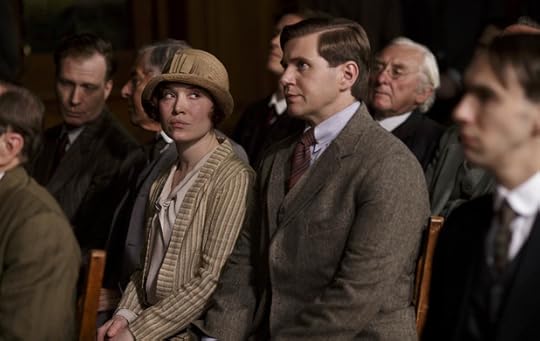
“You do realize even Alfred gets more screen time than you do?”
(UK / DVD episode 7. Also, spoilers below.)
Telegram! Robert has been summoned to America by Cora’s Horrible American Mother to assist Cora’s Impossible American Brother. There’s a scandal involving oil and a Senate committee who may or may not be favorably impressed by a titled brother-in-law, because nothing says respectable like an impoverished English earl who snaps up an American heiress to save his estate, and then loses her fortune on bad investments.
Bit of a flurry over the notion that Bates must accompany Lord Grantham to America. (I love how it’s always “America.” Last season, when Shirley Maclaine arrived to out-shout the Dowager, she referred to her home as “America” 100% of the time. You have to wonder if Julian Fellowes has ever chatted with any Americans long enough to discover that if you ask us where we’re from, we don’t name our country; we name our state. Unless you’re a New Yorker, in which case you name your borough.)
Anna puts on a brave face for Bates but sobs in the hall. Mrs. Hughes takes the case to Lady Mary, who puts on her best stone face and insists she would like to help, but she “must know the facts.” What is Mrs. Hughes to do? She reveals Anna’s secret, and Mary marches straight to her father and orders him to take Thomas to America instead of Bates, wearing that exact same stone face and saying, “I can’t explain it. If I could you’d agree with me.” I actually burst out laughing at this, despite the graveness of the subject matter. It’s so Mary. She expects her father to jump when she says jump and take her word that jumping is the gentlemanly thing to do in this circumstance. But by golly, nobody’d better expect her to take any request on faith.
All right, then, it’s settled, Bates stays, Thomas goes, Mary has a moment with Bates (“It wasn’t your fault, Bates. It wasn’t Anna’s, but it wasn’t yours, either”), and—HOLD ON EVERYONE, THE PIGS ARE COMING!
I absolutely love how every time anyone in this episode says “Pigs,” it starts with a capital letter.
Pig interlude over, we can go back to bidding Robert farewell. My second shout of laughter came at Cora and Robert’s parting scene. This dialogue—
“Oh darling. I do think your going to rescue my hopeless brother is an act of real love, and I cherish you for it.”
“That’ll keep me warm as I cross the raging seas.”
“Good. Now kiss me.”
—are you kidding me? We’ve left Melrose Abbey and entered John-and-Marsha territory. I can’t decide if Fellowes is punking us or what.
Thomas is looking forward to his report from Miss Baxter when he returns. Only Thomas could make an abundance of verbal italics come off as sinister. Molesley, loading the suitcases into the car with humble, gloved hands, overhears the italics and furrows a brow in concern.
Robert has tender words for Poor Edith, leaves Rose in charge of “fun,” chides Mary for being preoccupied, is too preoccupied to notice his mother is about to keel over, and admits he’s going to miss his dog Isis most of all. The post-war years have not been kind to Robert.
As soon as he drives off, Violet admits to Isobel that she feels ill. Isobel offers to help her home, but “that is the very last thing I would want.” Which means, of course, that Isobel’s help is the very only thing she’s going to get for the rest of the episode. She comes down with a nasty case of bronchitis, Isobel gamely volunteers to nurse her round the clock, the doctor makes eyebrows, Cora and Mary stand three feet away from the bed on their one and only visit to Granny during the whole episode, and Violet is every bit as mean to Isobel in her fevered delirium as she is in her highest spirits. Last week, the volley of barbs between these two characters was the funniest part of the episode, even if their scenes did have COMIC FILLER written in Sharpie across the top of every page. But this week, ugh. We get it. They annoy each other, they need each other, they have each other’s backs as long as they can grumble about it. Now give me back my Lady Sleuths show, please?
(Violet’s arch “Oh, goody goody” at the end of the episode was almost worth the price of admission, though.)
Mary spars with Charles Blake: he’s frustrated by the stubborn helplessness of the owners of “these failing estates,” and she’s shocked, SHOCKED I TELL YOU, by his suggestion that God isn’t weeping to see aristocrats losing hold of their lands.
Wait, did someone say Pigs? Even better! PIGMAN! There’s a Pigman, and he’s been hired! For the Pigs!
Tragedy strikes the servants’ hall: Alfred wants to stop in for a visit. Mrs. Patmore and Mrs. Hughes are Highly Alarmed, because undoubtedly his presence will reignite the Daisy/Ivy feud—you know, the one that never actually ceased, because it would kill Daisy not to mutter darkly in Ivy’s direction every five minutes. To prevent the reignition, the senior servants whisper plans back and forth through several scenes. I don’t know why they’re whispering; Ivy and Daisy can’t hear them anyway over all their feuding.
Anyway, the grand plan is to tell Alfred there’s flu at Downton and he must stay at the inn, lest he jeopardize his cooking course. I mean, this is one elaborate lie. Carson has to waylay Alfred right off the train and divert him to the inn, and stay and have a drink with him, and foot the bill. Back in the kitchen, Daisy hears Alfred isn’t coming and rips right into Ivy, fueled with fresh ammunition because obviously Alfred doesn’t want to return to the place where his broken heart is buried. Mrs. Hughes and Mrs. Patmore, listening to the warfare, congratulate themselves on having prevented it.
Later, Alfred will pop in anyway, flu be damned. More sniping! The End.
Mary has a heart-to-heart with Evelyn Napier about why Charles Blake seems not to like her. Since Napier’s heart is a timid little rabbit thumping away in his genteel breast, the closest he can come to proposing to Mary (which we all know he’s been wanting to do since the year the Titanic went down) is to tell her Charles Blake thinks he, Evelyn, is blind where Mary’s concerned. Mary’s not listening anyway; she’s still puzzling over the news that Blake finds her “aloof.”
She pesters Anna on this point: Moi? Aloof? “Do you want me to answer truthfully, or like a lady’s maid?” replies Anna, which is entirely too honest for Mary’s comfort. Mary immediately turns the subject to Anna’s secret, which she knows Anna knows she knows. Anna is not ready to talk about it, not to anyone, though she admits to being relieved there is “honesty between us again.”
Stop the presses, THE PIGS HAVE ARRIVED. Oh, but Mary missed it. It seems she was busy standing a safe distance from her grandmother’s bed at the time. Never mind, she can see them tomorrow.
Edith and Rose go up to London, each with her own secret plans. Rose wrangles permission to visit some Totally Respectable Friends, and is next seen floating down the river in a boat with Jack Ross, the jazz singer. He seems pretty level-headed about the future prospects of this relationship, but Rose is all, “Oh shut up and kiss me.” John! Marsha!
Edith’s secret is, of course, much graver. Aunt Rosamund ferrets the truth out of her: Edith has scheduled an abortion. This was a pretty touching scene: Edith’s anguished cry, “I’m killing the wanted child of a man I’m in love with and you ask me if I’ve thought about it” strikes home with Rosamund, who announces she’s going with her to the appointment. Once there, a heartbroken Edith confesses that she can’t bear the thought of being an outcast all her life, as will certainly be the case if she tries to raise a child born out of wedlock. She has always, always been the odd man, even (or especially) in her own home. She can’t let herself become some “funny old woman” living in isolation, endlessly gossiped about and received by no one. But then she hears another patient sobbing, and she changes her mind. Perhaps she can’t bear to be an outcast, but neither can she go through with the abortion. Rosamund takes her home, and we don’t yet know what Edith’s fate will be.
Rose pitches a dainty fit at the news she’s going back to Downton sooner than anticipated, and that’s about it for Rose this week.
But she gets more screen time than Tom, who is mostly busy around the fringes playing chauffeur, dog-watcher, and Greeter of the Pigs. But he does show up at the political meeting Isobel urged him to attend, and winds up sitting next to an amiable young woman—after both of them are singled out to embarrassing effect by the politician at the podium. I assume we’ll meet this new friend again? Here’s hoping.
BUT WHAT ABOUT THE PIGS?! I mean, the suspense has been something awful. Come on, Downton, you promised me Pigs.
Mary and Charles decide to wander out to visit the famous Pigs after dinner, still wearing their fancy dress. (Obviously. One mustn’t underdress for Pigs.) It’s a long walk, but no one gets chilly in a beaded dinner dress in England in the evening, and high heels are perfect for strolling across damp fields. At last we meet them, the marvelous Pigs. But oh no! Where is the Extremely Reliable Pigman? Off celebrating his lucky station in life, no doubt. And if you thought the Alfred situation was tragic, brace yourself: these Pigs are Not Doing Well At All. They’ve knocked over their water trough, and the brutal English sun has baked them to the brink of death.
Cue the special Pig Music! With no time to lose, Charles springs into action. Mary will not sit idly by and watch this loathed fellow save Her Pigs all by himself. It’s nice that there are four water pails so ready at hand. The two of them work tirelessly long into the night, saving the Pigs with carefully apportioned swallows of water. And it’s a well known truism of television that a rich woman never looks lovelier than when she is tastefully smeared with mud (preferably with a lock or two of hair wisping down), so down Mary must go, flop-bott. Charles looks upon her with new eyes, and when, having delivered salvation to her beasts, Mary laughs her throaty laugh, Charles is a goner.
Sorry, Tony Gillingham. Who by chance arrives the next day! But first Ivy has to stumble upon Mary and Charles in the kitchen at the crack of dawn, enjoying well-deserved scrambled eggs and glasses of Carson’s best wine. But no one’s at all suspicious of shenanigans, because Mary Wouldn’t Behave that Way. Well, except for that one time her foreign lover died in her bed and she had to drag his corpse down the hall, but come on. Bygones.
Mary does look genuinely delighted to see Tony. Her face softens and she’s very warm with him, and only jabs him once about Mabel. Seems Tony and Charles are old war buddies. Napier shuffles nervously: oh dear, more competition. It’s sweet the way he thinks he’s actually in the running.
But along with Tony Gillingham comes his valet, the rapist. Mrs. Hughes confronts him: I know who you are and what you’ve done. Green tries to pass it off as if Anna was drunk and willing, but of course Mrs. H. isn’t buying that. Now, here’s the part that confused me. He thanks her for not telling Bates he was the attacker—so he seems to have some inkling that Bates will kill him (probably literally) if he finds out. And yet a few minutes later, there Green is at dinner with the servants, spouting loudly and pointedly about how, on his previous visit, the opera singer was “screaming and screeching as if her finger was stuck in a door” and he escaped her performance by coming downstairs. He knows Bates knows that’s when and where Anna was raped. He’s just begging for revenge. He should have taken Mrs. Hughes’s advice to “stop playing joker, and keep to the shadows.” Because now Bates is looking murder at him, and the Melrose Abbey soundtrack tells us there is danger ahead.
But I very much fear I’m never going to find out what became of the Pigman.
My previous Downton Abbey recaps are here.



February 8, 2014
“Wait here.”
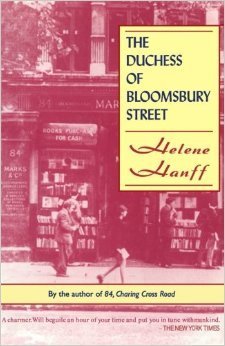 The other day, reading Mental Multivitamin, I discovered there is a sequel of sorts to 84, Charing Cross Road, which is one of my favorite books. On certain days, it is my favorite book, and certainly it is one I return to ever more frequently, as time goes on.
Now, why it hadn’t occurred to me—obsessive googler and binge-reader that I am—to hunt up the rest of Helene Hanff’s books, given my really almost aching love for 84, Apple of My Eye, and Letter from New York (a book that shaped New York City for me before I met it in person)—why this uncharacteristic lack of ferreting-out on my part, I cannot say. Except perhaps that sometimes a kind of obliviousness is my brain’s way of making good things last…I’m far too prone toward immediate gratification when it comes to books, especially older ones by deceased authors, books I can blithely justify snapping up for a penny + $3.99 shipping on Amazon Prime, and clutch in my greedy hands two days later.
(I have this deal with myself: used books only if the author is no longer living. My way of supporting my comrades in the trenches, and also of keeping my floors from collapsing under the weight of all the books I would spend the grocery money on if I didn’t make up rules for myself.)
Anyway, there it was at MM: The Duchess of Bloomsbury Street, a string of quotes (I love how Ms. M-mv does that), Helene Hanff’s diary account of her long-dreamed-of trip to London, two years after Frank Doel’s death. 48 hours later, it was mine, formerly the property of Salt Lake County Library System, Whitmore Library. Seems to be a first edition, published in 1973.
I love Helene Hanff. Not just her writing, but her, the person, the crackling, opinionated, piercingly observant New Yorker who toiled over Ellery Queen scripts and her own never-to-be-produced plays, and who, for twenty years, fired off missives exploding with personality to a mild-tempered, unfailingly polite bookstore employee who died before she could get to England to meet him. It’s Frank’s wife, Nora, and daughter, Sheila, who meet Helene at the airport in the beginning of Duchess. They, too, had come to know and love her over those twenty years.
I love her like an aunt; perhaps I project a little of my beloved Aunt Genia onto her, hear certain tart remarks in Genia’s voice. Their lives were nothing alike, and Aunt Genia never lived in New York, but they share an unabashedness of opinion and a vast generosity of spirit. My aunt died in 1995, Miss Hanff in 1997, and I miss them both. But Helene I get to revisit endlessly. WHAT KIND OF A PEPYS’ DIARY DO YOU CALL THIS? pops into my head at unexpected intervals, and I laugh out loud, sometimes while standing in line at the post office or pushing a cart through Target.
84, Charing Cross Road, about which I’ve written before, was her first really successful published work, and its success was a tremendous surprise to her. People wrote and called her from all over the world; when she was hospitalized shortly before her London trip, strangers sent flowers and presents. In London at last, she was continually receiving invitations from perfect strangers who’d read and loved her book, and were so happy she was visiting their city. I keep crying, living these days with her, and then she’ll say something acid and I’m howling. Oh, I love her.
Something else I didn’t know about her until this week (when my google reflex did kick in at last, and I read all her obituaries) was that she considered herself uneducated. She uses that very word in Duchess. It’s astonishing she should have felt that way. She ran out of money after a year of college, that’s why; but there can’t have been many of her generation who were better read than she; she devoured and re-devoured books, the entire canon practically (except fiction; she far preferred essays and history) and knew chunks of them by heart, and all through her books she cross-references like crazy. She was a walking Wikipedia.
Now, reading Duchess of Bloomsbury Street, I find that’s exactly how her education happened: like a long, looping chain of links.
But Oxford I have to see. There’s one suite of freshman’s rooms at Trinity College which John Donne, John Henry Newman, and Arther Quiller-Couch all lived in, in various long-gone eras. Whatever I know about writing English those three men taught me, and before I die I want to stand in their freshman’s rooms and call their names blessed.
Q (Quiller-Couch) was all by himself my college education. I went down to the public library one day when I was 17 looking for books on the art of writing, and found five books of lectures which Q had delivered to his students of writing at Cambridge.
“Just what I need!” I congratulated myself. I hurried home with the first volume and started reading got to page 3 and hit a snag:
Q was lecturing to young men educated at Eton and Harrow. He therefore assumed that his students—including me—had read Paradise Lost as a matter of course and would understand his analysis of the “Invocation to Light” in book 9. So I said, “Wait here,” and went down to the library and got Paradise Lost and took it home and started reading it and got to page 3 when I hit a snag:
Milton assumed I’d read the Christian version of Isaiah and the New Testament and had learned all about Lucifer and the War in Heaven, and since I’d been reared in Judaism I hadn’t. So I said, “Wait here,” and borrowed a Christian Bible and read about Lucifer and so forth, and then went back to Milton and read Paradise Lost, and then finally got back to Q, page 3. On page 4 or 5, I discovered that the point of the sentence at the top of the page was in Latin and the long quotation at the bottom of the page was in Greek. So I advertised in the Saturday Review for somebody to teach me Latin and Greek, and went back to Q meanwhile, and discovered he assumed I not only knew all the plays of Shakespeare, and Boswell’s Johnson, but also the Second Book of Esdras, which is not in the Old Testament and is not in the New Testament, it’s in the Apocrypha, which is a set of books nobody had ever thought to tell me existed.
So what with one thing and another and an average of three “Wait here’s” a week, it took me eleven years to get through Q’s five books of lectures.
The original rabbit-trailer. My hero. Q’s “five books of lectures” can be had for nothing, nowadays, along with probably all of the works he references. If I start now, I’ll be as educated as Helene by 2025.
(Oh heavens. That number just gave me the vapors. That’s officially the future, man.)
Helene Hanff eventually wrote a book about her autodidacticism called Q’s Legacy. Needless to say, it’ll be here by Tuesday.