Laura K. Curtis's Blog, page 4
May 18, 2016
Julia, a TBR Challenge Read
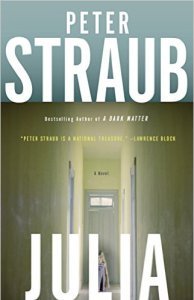 This month’s challenge was to read something in your TBR pile that was “different.” I chose Julia, a classic horror novel by Peter Straub that I somehow didn’t read when I was in my horror phase in the 1980s. Published in 1975, it was made into at least one movie, The Haunting of Julia, starring Mia Farrow.
Julia is an interesting read. It suffers somewhat from the fact that Straub, who I don’t think had really reached his peak as a novelist yet, had undertaken to write an extremely difficult protagonist. Julia has only just been released (perhaps a bit too soon) from an institution where she was confined following the tragic death of her daughter. She is unable to cope with the truth of her daughter’s death, and the lie she tells herself, the lie she fervently believes, distorts everything else around her.
Unfortunately, much of this confusion transmits itself to the reader. Julia feels untethered in her world and the reader feels untethered, too. There is plenty of weird stuff going on, but it’s hard to get truly freaked out about it—without a true connection to the world, you don’t feel the impact of severance. Julia drifts, the reader drifts. Magnus, Julia’s controlling ex-husband is a sort of black blot. Even though we see from his point of view, he seems less than solid. Only the ghost, the supernatural incarnation of evil, seems grounded. Shocking and grotesque, the ghost child is utterly present in way no one else is.
Despite my frustration with some of the reading experience, I was anxious to get to the end (which was…neither unexpected nor particularly satisfying) and I turned the pages quickly. It was a worthwhile read, but I didn’t love it.


April 20, 2016
Named of the Dragon, a TBR Challenge Read
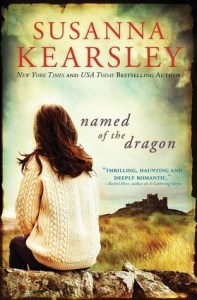 Now, really, there’s no point in writing a review of this book. moved it to the top of my TBR, and you should all immediately go read her review and imagine me saying “ditto.”
The charm of spending the Christmas holidays in South Wales, with its crumbling castles and ancient myths, seems the perfect distraction from the nightmares that have plagued literary agent Lyn Ravenshaw since the loss of her baby five years ago.
Instead, she meets an emotionally fragile young widow who’s convinced that Lyn’s recurring dreams have drawn her to Castle Farm for an important purpose–and she’s running out of time.
With the help of a reclusive, brooding playwright, Lyn begins to untangle the mystery and is pulled into a world of Celtic legends, dangerous prophecies, and a child destined for greatness.
I’ve been reading a rather large number of “strong romantic elements” books of late (I reviewed another from my TBR on the Happy Heart Reads blog today) because actual genre romance has been hard on me, and I’ll be posting a list in the next week or so of recommendations. Named of the Dragon will definitely be on it!
Kearsley’s books are all good, but this one was my own, particular brand of crack. Something relatively few people know about me is that I went to graduate school for medieval literature solely so I could spend hours and hours studying Athuriana, and Kearsley incorporates Arthurian legends from a huge number of sources. Everyone knows Arthur and Lancelot. Many people know Gawain. Few get as far as Gareth. But that doesn’t matter, because Kearsley tells you what you need to know, and she doesn’t do it in a didactic fashion; it’s just blended into the narrative in a completely natural fashion.
In addition to tantalizing me with the Arthurian elements, Named of the Dragon is a classic Gothic romance set in the modern era, complete with brooding but eminently capable hero, an assortment of good-looking men who might be villains, striking and symbolic scenery, and a paranormal element from the deepest reaches of history. They combine beautifully, musically, in this story set in modern Wales, as you can see when Gareth tries to explain to Lyn some of the history of the area:
…y mab darogan, or the son of prophecy—is a cornerstone of Celtic myth. Take Arthur, for example—he’s conceived by magic, raised by strangers, that’s the classic archetype. And Arthur, you’ll remember, didn’t die. Neither did Owain. The bards sang no eulogies over him, gave him no grave.” He paused, and turned his gaze toward the window to the gently rising fields, and his accented voice became something like music, like one of the speeches he wrote for the stage. “We don’t let any of them die, in Wales—Merlin and Arthur and Owain—we keep them close by and asleep in the hills, to be wakened if ever we need them.”
Pick this one up and read it…as soon as possible!
April 12, 2016
The Moleskine “Smart Writing” Set
 Anyone who knows me, even casually, knows that I have a problem with paper goods. Pens, stationery, wrapping paper, journals, notebooks, planners…it’s an addiction. I used to carry a full planner, but now that my life is less plannable, I use a bullet journal, like the one you see at left.
But as much as I love paper, I am a hybrid personality. I think more creatively with a pen in my hand, but I am also hugely computer-centric. (In fact, most of my early relationship with my husband was based on the fact that I was his tech support person.)
I write my novels for the most part by hand. Every scene starts out written in a notebook, then gets transcribed into the computer, where it’s edited, cleaned up made to make sense, and sent to an editor. Then the editor sends it back to me, I print it out, and make all the edits by hand. Then I enter the edits into the computer and send it back.
Unlike many of my friends, I am not a huge fan of Moleskine notebooks. They’re okay, but they don’t take fountain pen ink as well as Rhodias. Of course, Rhodias don’t come in the gorgeous colors that Leuchtturms do. Moleskines aren’t bad. They’re just not my very favorite. (That one up there, that’s a Leuchtturm Bullet Journal from the original Kickstarter campaign.)
When LiveScribe first came out with their pens, I gave them a shot. But the LiveScribe pen was bulky, heavy, and ballpoint. It was a miserable writing experience. (I believe they now have gel pens, but the pens are still far too big for my hand; this is because they have recorders in them, which some people need but I do not.) I have fairly severe arthritis and very severe tendinitis in both of my hands—anything heavy is gone within a minute. I did really enjoy their notebooks, though, and wrote two novels in them with regular pens.
 So when Moleskine advertised the “smart writing set,” I was hesitant. Not so hesitant that I didn’t immediately run to the Moleskine store on my way to a board meeting so I could test it out, you understand, but hesitant enough that I didn’t jump immediately on the bandwagon and order it online sight unseen. When I went into the shop, I scribbled with it, tried the transcription, etc, and in the long run I bought it.
Now that I’ve had a few days to play with it, here are some of my first thoughts:
This is a toy.
Yeah, I am enjoying it, and yeah, I will use it, but I am not entirely sure what the audience for it is. Too expensive for students (it was discounted slightly on release day, but still not cheap), it’s geared toward people who are hand-writing notes who then want to share them, edit the scans, etc. If you do that often, you don’t want to be tied to a flatbed scanner. That sounds like business professionals/graphic artists, but most of them already have digital tablets they’re comfortable with. I would have loved this in college, but I couldn’t have afforded it.
It’s a lot of fun. Seriously. You watch your writing appear on the screen as you write in the notebook. That’s not worth the money, but it is worth a mention.
The pen is very nice. It’s a Neo Smartpen branded for Moleskine. It’s skinny and light in the hand and writes very quickly with gel ink (almost too quickly–my handwriting is messier than it is with a slower pen that creates drag on the page).
There’s some cool stuff in the app, like the ability to highlight text or change the color of your ink, etc. If you were taking notes at a presentation or something and wanted to keep them in your computer, this would be a handy way to do it. I am the kind of person who writes whatever comes into her mind when it enters, so the ability to go back later and separate that stuff out (“Don’t forget to pick up the dry cleaning!” in the middle of a marketing meeting) is pretty useful. You can also erase things like that in the app before you archive the notes or share them with someone.
I’d hoped the app would have somewhat trainable handwriting recognition, but it does not. Here’s what happened with my handwriting, which is admittedly loopy and rather messy, especially if I am sitting on the couch as I was when I wrote the notes below. I wanted to check out the sizes of the other possible notebooks I could use.
 MEO NOTEBOOKS:
Memo:
} approximately
3.5×6
pocket:
Plain: N F xD
Ring: A5
Of course, there is also the moleskin smart
notebook which is susutly narrower than
their usual notebooks.
NEO also makes lined pads in various sizes.
And an undated. planner
uws SJ s s
If you use windows, NEO Makes software
so you can print yor own paper.
I have not been able to get a straight answer about
pen rears.
So, what would I use it for? Well, as I said, I tend to think creatively when I have a pen in hand, so this is one of the first things I did.
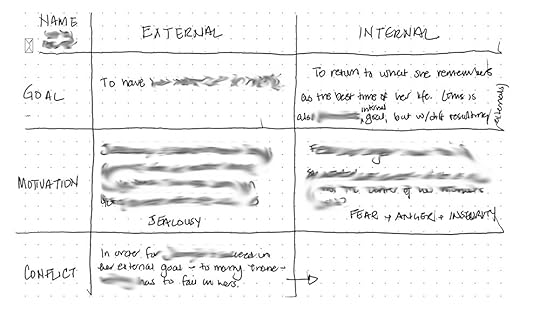
Now, once I’ve written that out for all my major characters, I’d normally put it away. It helps me think through my characters but I rarely refer to it later. I don’t really need to type up the chart–I usually have the notes scrawled around if I need to remind myself of character motivation. I could, of course, simply take a picture of those pages of a notebook, but I usually don’t; I just dig them out later. It’s not worth buying a whole system to outline books, but having this available on mobile devices is handy.
(Also, there MAY be a way to get the system to transcribe something you’ve written horizontally, like this chart, rather than vertically, but I haven’t figured out what it is. The transcription is a stroke transcription–it records your pen strokes and makes sense of them based on where they occur on the page–so you can’t just switch the page orientation. I am sure this is something for which there’s a simple solution, but it’s worth a mention because it could be really annoying if you were expecting something else.)
The other thing I think I would find it very useful for is taking minutes at meetings. If I can get my handwriting neat enough, I should be able to write minutes down and transcribe them. They’re usually pretty neat and I like the fact that the transcription keeps the formatting.
I am a lousy designer, but I can also see this being useful for people who frequently draw things out before writing them. Floor plans, mapping, etc.
Now, if someone wanted to create something I’d REALLY use, Pilot could take this technology and make me a Coleto pen with it, or a fountain pen. The camera aspect means that you can’t really create a separate piece that sits on a regular pen—it would mess up the pen’s balance, but also the internal cameras have to be focused at a specific distance so you can’t just attach it to any pen—but a girl can dream. In the meantime, the Moleskine is a fun addition to the arsenal.
April 4, 2016
Read It or Regret It
 Contracts are a way of life for the self-employed. If you freelance, you probably sign your name nearly as often as you write anything else. Reading those contracts carefully is absolutely essential. There are a few resources that can point out the worst contract clauses (I’ll list those later), but the first thing to do when someone offers you a contract, when they offer you anything that requires your signature is to read Every. Single. Word. And then do a common-sense analysis. You’re a writer. You know what words mean. Think about the ones in your contract and what they’ll mean to you.
For example, I once sat in a lawyer’s office preparing to sign a limited power of attorney form before a hospitalization. But there was a spare “not” in the form. I read it four or five times before pointing it out to the lawyer, who said “What the hell? How did that get in there?” It was a boilerplate form. He had it in his computer and just printed it out. But the fact was, somehow that extra word got in there. It was an easy fix for him to take it out and proceed, but if I had signed the contract as it stood, it would have said that the person I’d placed in charge could NOT do the things I wanted him to do in case of need!
Over the years, I have signed a large number of NDAs (non-disclosure agreements), which is a part of life in the tech industry and, as the publishing world moves further into tech, also a part of that. Recently I was asked to sign one that had a number of clauses to which I could not agree. The people who asked me to sign it were understanding. They struck one clause and altered another so that the thing was workable for me, but if I hadn’t asked, if I’d simply signed, I’d be in a whole lot of trouble later on down the road. They didn’t mean to create a problem, they simply hadn’t thought about what the implications were for me.
For authorial contracts, some resources are:
A Publishing Contract Should Not Be Forever (The Author’s Guild)
From the Writer Beware blog:
Bad Publishing Clauses (Part 1)
Evaluating Publishing Contracts
The “Contracts” Category of Daniel Steven’s blog
Forbes article on some of the bad contract clauses that were (I don’t know if they still are) in Random House’s early e-only contracts.
But as I said above, it’s not just author contracts you need to read carefully. Any time someone asks for your signature, read what you’re being asked to sign and be prepared to ask for changes. In both of the above cases, all I had to do was ask and I received the changes I had requested. It may be that whoever you are dealing with will not alter the clauses in question, in which case you will have to make a decision about what you’re willing to sacrifice. But in general, a bad contract is worse than no contract. Just as a bad agent is worse than no agent and a bad publisher is worse than no publisher. Always look before you leap.
And write on.
March 16, 2016
Rock Your Plot by Cathy Yardley, a TBR Challenge Read
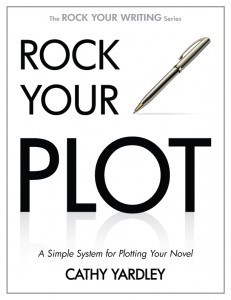 This book actually hasn’t been in my TBR all that long. But at the end of last year I decided I wanted to try writing a different kind of book and as I tried to get my head around it, I had a lot of trouble imagining that I would make it all the way through. I realized that although I’ve been a pantser all my writing life, I needed to get a grip on this particular book’s plot before I could start.
I asked around and several people recommended Rock Your Plot by Cathy Yardley, so I picked it up.
One of the problems I have with most plotting books is how long they are. I get bored. I get bored during the whole plotting process, which is why I don’t do it. But Yardley keeps things short and to the point. Yes, you could go into great depth in each of her sections, but you don’t have to in order to make use of her ideas.
Without giving away too much (because this is Yardley’s system and if you want it, you should buy the book!), Yardley divides the book into a few main sections:
The Premise – making sure it’s strong enough to support a whole novel without being muddy and confusing.
Characterization based on Goals (external and internal), Motivation, & Conflict (GMC)
Major plot turning points and pinch points and where they should occur
Which types of scenes belong where (so that if you are a heavy-duty plotter, you can actually plot every scene of your novel; I will not be doing that)
Rock Your Plot is salted with examples, exercises, and checklists so that you can test your own story to be sure your pacing and plot are on track. This works well for people who like to pants first and then check against the elements of a structured plot.
I really enjoyed this book and I felt as if it gave me the tools to plot at a level I could handle without forcing me to do 5k-word character background sheets and a scene-by-scene synopsis. Yardley also has workbooks on her site for those who sign up for her newsletter. In my opinion, it’s worth signing up to get them. All in all, I’d recommend Rock Your Plot to any pantser looking for a change of pace!
February 17, 2016
The Splendour Falls, a TBR Challenge Read
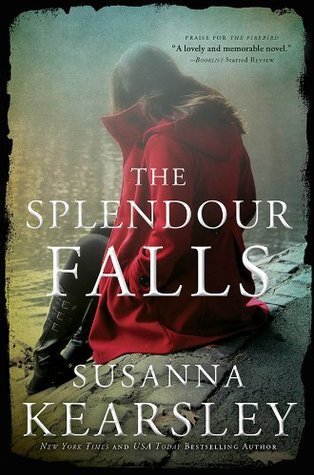 Last year, a bunch of Susanna Kearsley’s books went on sale on Amazon. I’d been wanting to pick them up, but kept putting it off because of the price. If I love an author’s work, I don’t care what it costs, but I had never read her and wasn’t inclined to lay out $10+ for an ebook until I had had a taste.
First I read A Desperate Fortune, and then, while they were still on sale, I bought everything I could. But although this is “series” month in the TBR challenge, I am using that to loosely mean “author you’re glomming” instead of strictly “books in a series.” Each Kearsley is a standalone.
I will say that I was a bit annoyed with the heroine of The Splendour Falls because of what seemed to me a rather facile “if my parents divorced after 30 years together, there must be no such thing as lasting love” attitude. But that’s a minor quibble (the same kind of thing happened in A Desperate Fortune, where she took an “easy out” with a characterization) and because Splendour is an early book (despite the listed publication date, this is a reissue), some of the flaws do show. The pacing is not as tight as in later work, the characters are sometimes overblown and the weave between past and present has some holes. (Also, if you don’t know that this was originally published in 1995, you’re going to be confused by the ages of some of the characters…you need to remember that the book is 20 years old since there’s a WWII-era storyline woven through it.)
Despite its flaws, however, Splendour is worth reading for writing like this:
Between the saints and me a garden grew, a wild garden, mindless of man’s will or rules of order. Here and there the sunken forms of graves spoke of the time when this wild place had been a proper church, with nave and transept, altar and aisles. But the graves were empty now, the bodies moved and buried elsewhere. Above where they had lain the roof had long since fallen and been cleared away, and the once-high walls had crumbled to uneven contours, their jagged stones yet softened by a trailing growth of ivy.
Kearsley’s books are not romance, though they do all have romances in them. They are a marriage of lit fic, mystery, and romance. They’re modern Gothics, with an old-school feel and an emphasis on complex plotting and evocative language rather than full emotional arcs. Like most Gothics, they tend to end rather suddenly, which I know can annoy some people but it doesn’t bother me at all.
This is not a perfect book, not Kearsley at the top of her game, but it is still head and shoulders above much of what is out there and worth a read.
February 12, 2016
Superheroes and Sci Fi at the Movies
 Recently, when my husband was out of town, I caught up on Agent Carter, then followed it up with the various Marvel superhero movies. Why did I wait? Because, despite the comic books from which all these franchises are derived being written for young men, the screen versions don’t seem designed to appeal to the same audience at all.
I grew up with an older brother and a younger brother, which means I grew up with comic books. The ones I remember best were Batman, Fantastic Four, and X-Men, but Spiderman made an appearance on occasion as did several others. We watched both Wonder Woman and The Incredible Hulk on television. (Naturally, the boys pooh-poohed at Wonder Woman, but we watched anyway.)
Comic books, and the television shows made from them, were definitely designed for boys. Boys from about 13 to 25. Boys were supposed to spend their allowances on comic books, which was part of the price point and their positioning in stores. Girls were…not. Boys got “action figures,” girls got “dolls.” (And, oddly enough, the action figures boys got had highly developed musculature that would appeal to a pubescent girl in the same way that Barbie had overly developed breasts that would appeal to pubescent boys. Despite the marketing, someone out there was thinking of the opposite sex. Don’t believe me? Look up Barbie’s history…)
I was thirteen when Star Wars came out. (Damn, a woman is never supposed to reveal her age. Oh, well.) I went with my older brother. Three times the first weekend. I loved it. I loved the giant, sweeping imagination it took to create, the amazing action sequences…and Harrison Ford. Oh, Harrison Ford. He made my tween heart beat faster.
That year, I went with my older brother to a sci-fi and comic convention for the first time. I wasn’t interested in the regular comic books the way he was; I was there for Star Wars stuff. The convention was overwhelmingly male. It was men selling stuff to boys and other men. There were very few girls purchasing things, and the select women in booths were there to attract the males who were shopping; if a customer had a question, the men behind the counter would answer it. (Some would say Comic Con isn’t so different. It is. Really. It’s still male-dominated, but it’s not at all like the cons of 30+ years ago.)
 I bought every paper product having to do with Star Wars I could get my hands on. I still have the original movie poster in both the larger, one-sheet style, and a tall, thin style used in the side windows of theaters of the day. I still have the oversized, cost-you-a-dollar comic books, too, because unlike my brothers, I kept track of what was precious to me, so my mother didn’t toss them out when she found my brothers’. But I didn’t get caught up in the fanaticism all around me, the guys haggling over the perfect issue of this or the first issue of this, or the last issue of that. Comic book superheroes, in and of themselves, didn’t interest me.
And they should have. An imagination tweaked by Star Wars should have found the X-Men appealing, but the comics, the movies, the television shows were all designed for the male gaze. They weren’t written for me. Lynda Carter, much as I loved her, was a hormonal boy’s fantasy. Comic books were supposed to convince people with XY chromosomes to spend their money. But today’s movies—and TV shows—seem aimed at a different audience. I am not saying boys and men don’t enjoy these movies. My husband liked Iron Man. Certainly plenty of guys told me they enjoyed The Avengers. But are these movies made for men? Or are they made for women? Sure, the producers will say “they’re for everyone,” but is that actually the case?
 Some movies are made for everyone: Star Wars. Die Hard. The Batman franchise. The original Terminator. Even The Avengers to a certain point. But aside from the name recognition from any comic books they may read, what appeal do the Thor movies really have for boys/men? I’m not trying to pick on Thor–God knows, I want more Thor movies!–but they are essentially romances, as it the Arrow television series. Sure, there’s a great deal of action, but the main conflict is emotional, not physical. Parents and children, siblings, and romantic entanglements, these are the focus of the movies. And much as I love both my brothers and my husband, none of them are going to find that kind of conflict particularly compelling.
Nor will they find the sight or sound of Hiddleston and Hemsworth nearly as compelling as I do. So I have to ask…who do you think these movies are made for?
January 27, 2016
Maybe Just Don’t
 Today it was brought to my attention that there’s yet another Jewish heroine/Nazi hero romance on the horizon. No, I am not going to link to it. I’m not going to give you the title or author. You can look them up. I don’t want the author to have flags go up if she has a Google search set up for herself because she’s not the focus of this. (Well, okay, she partially is. But honestly, if you give your high-ranking Nazi hero a Dutch name, if you can’t even be bothered to understand that the Germans and the Dutch are radically different peoples, I reserve the right to point out your errors on behalf of my Dutch family and those who sheltered them.)
Let me just put this out there: there are certain periods/events/confrontations that are great, gaping, bleeding wounds in the psyches of huge numbers of people. Am I saying you can’t write about those events, can’t set your novel among them? Nope. But I am saying that there’d better be a vital reason why your story could not take place anywhere else, including in a fantasy society, on a made up world. And more than that, you’d better be deeply, personally connected to that time, place, and/or culture.
For example, what if I wanted to set a novel in a school that was in the process of being desegregated? I went to grade school and high school in an extremely diverse community in the northeast. It was taken for granted when I was a kid that I’d have Hispanic kids, African American kids, Jewish kids, etc. in my class. Yes, I’ve experienced discrimination. I’ve dealt with people who were shocked by the fact that I am Jewish. I’ve lived around people who believed that my epilepsy meant I had been touched by the devil and those who thought depression was just something I should be able to “get over.” I’ve been excoriated for my views on abortion. But none of that occurred in my formative years. I’ve lived in the contemporary Midwest and Southwest, though not the South.
Because I didn’t grow up in the culture, or even in what remains of that culture, writing such a story with an authentic voice would require an immense amount of work. The facts are the easy part. Anyone can go to the library and grab a book on the history of the time. But what did it feel like for the African American kids who were walking into formerly white schools? What was the first impression they had walking in the doors? What happened when the school day was over? How did going to that school change their neighborhood and their relationships in it? And what about the white kids? What are their memories? And the teachers? And the area around the school? What was it like to go from their homes to their classrooms? What changed in the whole community? How was it before the change, and how after? How many years did the change take? What was it like having a huge audience for everything you did? I’d need to know the sights, sounds, smells… There are a million questions I’d need answers to before I could even begin to come up with a realistic setting, realistic characters, realistic emotional depth.
Of course, you don’t have to do the work. You could choose to be Disney. To be mocked for producing utterly unrealistic depictions of every “real” character you write and only lauded for the ones that are completely imaginary. You, too, could write a ridicule-worthy version of Pocahontas, but why would you want to?
I get that World War II carries a substantial emotional wallop. It’s tempting to set your story there because it automatically adds heft. It makes your story seem “bigger.” But if you’re going to do that, you’d better have at least some kind of emotional and cultural connection. You don’t have to be Jewish (though if you’re going to write about Jews during the Holocaust, it would certainly help), or Japanese, or German…there’s no one right connection to have. But you should have a tie that calls to you. And then write from that tie. Don’t have one? Go find a synagogue and spend some time going to services. Get to know the people in that community and listen to their stories, their ancestors’ stories. Sit with their families. Eat their food. And while you’re doing that, read the history books so that the history comes to life for you in the way it has for people who live with it. Learn the facts, but also immerse yourself in the culture.
Or maybe just rethink the whole idea of writing a WWII Nazi romance.
January 19, 2016
Portrait in Shadows by Jane Peart, a TBR Challenge Read
 Over the summer, I wrote a post for All About Romance on defining the Gothic. In the ensuing discussion, people brought up a couple of books I hadn’t read. One of them was Portrait in Shadows and one of my tweeps was kind enough to mail me a copy since it is long out of print and has no e version.
Shocked by her broken engagement, Cameron Forrest blindly accepted Justin Bradford’s offer to come to Gull’s Glen and paint the portrait of the famous author’s beautiful young bride.
In the peace and privacy of the magnificent Big Sur clifftop estate, Cam hoped to lose herself in the assignment…an assignment that could mark a turning point in her career. But far from finding refuge, Cam was suddenly drawn into a dangerous masquerade of forbidden love…and into the arms of a man she dared not trust because she needed him too much.
This book is an unholy mess. I wish I had some kind words for it, but I really don’t. The only reason I read half of it and skimmed the other, instead of quitting entirely at the 1/4 mark was the fact that I was using it for the challenge.
As it is a Candlelight, this is a relatively short book. Only 180 pages. So you’d think every word would be necessary. Instead, it’s full of passages like this one:
Although I’d never been there myself, I’d heard so much about Carmel, I was anxious to explore it. I had to make three complete tours of the streets before I located a place to park. Lucky to have a tiny car, I thought, as I maneuvered my VW into a small space between a Mercedes and a Porsche. Carmel is a very high income area, I reminded myself.
This kind of thing runs rampant in the book and it means a reader is never sure what to focus on. Our introduction to Cam is when she is musing about how terrible it is to have lost “my engagement to young Dr. Doug Stanley and the European honeymoon his parents had promised him…”. You might think, then, that young Dr. Doug would play a big role. He doesn’t. In fact, there’s really no reason Cam needed to be the victim of a broken engagement at all.
But anyway, onward. Perhaps it was my poor reading of the cover, but I assumed that the “forbidden love” in the cover copy was Cameron and the hero, the man she dared not trust. But no. And the big, scary romance with the guy she dares not trust? Not terribly romantic, really. In fact, he doesn’t get much page time.
This book is neither fish nor fowl. Not romantic suspense, not Gothic, not romance. It’s trying really hard to be a Gothic, right down to the big, isolated house and the misty landscape, but there’s not enough substance to make it really work. In a true Gothic, we would fear for Cam, either her person or her sanity, and that never happens. There should be a malevolent force at work, but I am not sure the Candlelight category is a place where malevolence is encouraged, and that means the books doesn’t succeed as a Gothic.
In fact, I shouldn’t have started. The cover should have told me all I needed to know. Big, brooding house, but laughing, preppy couple. A total muddle.
Stay away from this one. Go for a Mary Stewart, Victoria Holt, or Phyllis A. Whitney instead.
January 10, 2016
Depression
 I don’t talk much about depression. Most of the time, my depression is one of the least important things in my life. I have it fairly well managed due to a combination of meds (thank you modern medicine). I rarely go to talk therapy any more, though it (literally) saved my life when I was in my twenties.
But every once in a while, depression comes back so strong and fresh it’s as if it somehow knew I’d stopped thinking about it. I have to stop, recoup, remember that the desire to cut my brain out of my head (and yes, that’s literal, not figurative) is not the first symptom. That I’ve been ignoring my own mental health. And that I’ve felt like this before, and managed to get through it. In fact, since the first time I locked myself into my own closet at age 13, I’ve gotten through it many many times. I will get through it again.
Depression is not monolithic. Mine, mixed with anxiety and OCD, will manifest differently—or at least partially differently—than other people’s. You may hear me on social media discussing depression and think “well, that doesn’t sound anything like this horrible shit show I am going through…so mine must not be depression.”
Let me tell you something right here and now: if you have a healthy mind, self-talk is great. If you are suffering from depression, or a host of other mental illnesses, self-talk can be the very worst thing. Check those impressions with an outside voice. Self-talk telling your you’re lazy? You’re useless? You’re bad at whatever it is you’ve been working really hard to be good at? Yeah…my guess is that the little voice in your head could use an argument.
I’m a little disgusted with myself, to be honest, for letting this go on as long as it has. Partially, I’ve been waiting for my new insurance to okay my meds. Why do I wait with my depression meds when I won’t wait with my epilepsy meds? It’s the same fight. The same insurance company merry-go-round. $300 a month for my epilepsy drug. $300 for my depression drug. I know how to handle the change of insurance companies. I know that I have to wait until my doctor can get the approvals through. I know that I can buy ten pills of each at the beginning of the year and I will get the money back once the insurance company approves me. But I got careless.
For me, here are some of the symptoms of depression I should have noticed before the “can I please stick a knife through my temple and be done now?”
Not meeting goals.
If you know me at all, you know I am incredibly goal-oriented. I love to plan and to tick things off my To Do list. When I don’t even come close to meeting my goals for a day for no good reason, there’s a problem.
Negative muttering.
I’m pretty straightforward. Piss me off, and you’re apt to hear about it. That means most of the time I don’t walk around muttering.
Chronic insomnia combined with not wanting to get out of bed.
Now, even when I am in a good mood, I love sleep. Love it. And even when my meds are on track, I have stretches of insomnia. But when depression and OCD take over, the lack of sleep and the exhaustion have a very particular quality. Depression/OCD insomnia is an odd combination of a constant loop of things you’ve done wrong in your life (since you were a kid, if you’re like me) and things you need to do but cannot possibly do anything about at night. When I have regular insomnia, I can get up, go downstairs, write, clean the kitchen…do stuff. When I have depressed insomnia, I’m paralyzed. I can’t get up. Can’t do much of anything but lie there and worry and berate myself.
Noise in my head.
Not voices. (I’m an author. I always have voices up there.) This is like static, white noise. The stuff that gets so dense sometimes I realize I have missed a good chunk of conversation around me, or what’s on TV, or the book I am reading because the noise won’t let me focus.
Random bouts of tears.
I cry easily at the best of times, but not usually just driving down the street.
Strange physical sensations.
For example yesterday half my face went numb. That’s really when it clicked in for me what had been going on.
If any of those things sound familiar to you, if you’re experiencing any of them now, do something for yourself: find someone to talk to, get on meds, get out of your rut. Don’t judge yourself, don’t judge others, don’t pass go. You won’t collect $200, but you’ll end up in a better location.