
Matador Network's Blog, page 2071
August 17, 2015
Enter to win a 7-day cruise!
#wedge-0 { background-image: url('http://cdn1.matadornetwork.com/blogs/...') }@media(min-width:560px){ #wedge-0 { background-image: url('http://cdn1.matadornetwork.com/blogs/...') } }@media(min-width:1200px){ #wedge-0 { background-image: url('http://cdn1.matadornetwork.com/blogs/...') } }
HAVE YOU ALWAYS DREAMED of visiting incredible places like the US Virgin Islands, Alaska, the Mexican Riviera, the Bahamas, Bermuda…and doing it in style? You’re in luck:
Enter below for a chance to win a 7-day cruise with Norwegian Cruise Line®!
One winner, chosen at random, will receive a certificate good for a 7-day cruise for two with Norwegian Cruise Line departing from the continental US, including airfare to the port of departure. You’ll be cruising on some of the youngest, most innovative ships in the industry, where the activities you find on board will rival the adventures you uncover on shore.
This sweepstakes is open to all legal residents of the contiguous 48 United States, age 21+.
By entering below, you agree to our full Terms & Conditions.
Enter for a chance to win!
Name*
First
Last
Email*
Contact preference

This incredible opportunity is brought to you by Norwegian Cruise Line.


28 signs you were born and raised in Central Jersey

Photo: Ed Ivanushkin
1. You spent many nights calling in to PST to win a prize pack for guessing the Top Five at Nine.
2. You always had grand plans to go out on Mischief Night, but were never allowed.
3. You recognize the distinct area that makes up Central Jersey. Lumping your town in with North or South Jersey is a big no-no.
4. Being from Central Jersey meant you never had to choose between New York teams or Philly teams. Both the Giants and Eagles were well represented in your town.
5. Your town consisted of a small downtown, a whole bunch of neighborhoods, and a strip mall or two. All entirely boxed in by highways.
6. Class trips to the Liberty Science Center were epic. Touch Tunnel? Yes, please!
7. Summers around town were empty because everyone went away to sleep away camp, and those left in the neighborhood spent summer nights playing massive games of manhunt.
8. At Halloween, every farm in the area had it’s own Haunted Hayride, and you went on all of them.
9. At least one of your parents commuted to NYC everyday for work on NJ Transit.
10. At least three malls were in quick driving distance of your house. Quakerbridge was decent, Bridgewater was better, but Freehold was the place to be.
11. You knew you lived in the perfect location; close to NYC, Philly, and the shore.
12. Everyone knew where you were going when you said you were “going to the city.”
13. It’s Great Adventure, not Six Flags, and it’s in your backyard. At some point in your life you had a season pass, and knew going just two times meant you broke even.
14. An EZ Pass was the first accessory in your car when you FINALLY got your license at 17.
15. There were deer everywhere, and their cuteness lost their appeal as soon as you started driving.
16. You never learned how to pump your own gas, but boy are you good at navigating a jug handle.
17. Going 80 mph in the 65 zone on the highway was no big deal. Going 27 mph through a 25 mph residential zone, though, you were almost guaranteed a ticket.
18. Nothing made you angrier than when cars with out of state license plates caused you to miss the light at a jug handle.
19. Wawa is the greatest convenience store to ever exist.
20. Hoagie Haven in Princeton, for you, is the ultimate comfort food to ease all greasy cravings.
21. Late nights spent at diners along 130 or Route 1 were the best way to end a night.
22. You hit up the Grease Trucks at Rutgers as soon as you could drive.
23. It’s Tren-in, not Trent-ton.
24. Your wild Friday night plans consisted of going to the movies, the mall, or a park.
25. Your high school graduation was at Sovereign Bank Arena.
26. When it was time to go to college, you didn’t have to stray far from home. Princeton, Rutgers, TCNJ, Monmouth, and Rider were all a quick drive away.
27. Your town was proud it did not smell like the North Jersey refineries.
28. No one knows where your town is unless they are also from Central Jersey.


13 dilemmas only Chicagoans understand
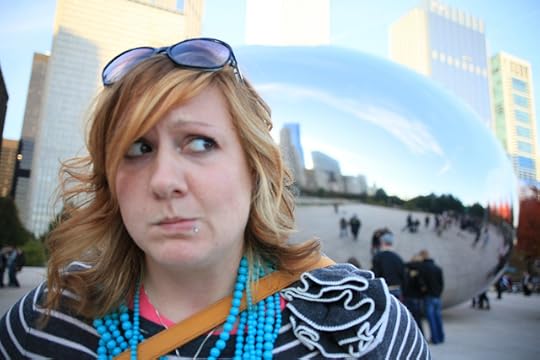
Photo: Amanda MacArthur
1. Wondering whether or not we should cut Derek Rose yet another break.
We all know he’s not going to be the next Jordan. But, for some reason we can’t give up hope… even after his umpteenth blown-out knee.
2. While watching the crime report on Channel 7, wondering if we really are living in Gotham City.
If only a husky-voiced, masked Christian Bale could save us from ourselves…
3. That anywhere worth going besides our own city is at least two hours away by car.
So where will it be? Milwaukee? Another beach along Lake Michigan’s coastline? We like to save ourselves the hours-long road trip and just explore our own backyard.
4. Choosing how to pack on the pounds: The Polish or Lithuanian Bakery?
Decisions, decisions.
Pączki Day is but once a year, and while the rest of the country is getting drunk for Fat Tuesday, we’re stuffing our face with sugary confections. The rest of the time, we’re deciding how best to fill out our pants: an apricot kolacky or some Lithuanian shortbread cookies from Racine Bakery?
5. Trying to find a street parking spot in winter only to see spots “saved” with lawn furniture.
Sweet! You see an opening among the dirty snowbanks and drive towards the holy white light in the hopes that you’ve found your parking spot. It’s large, shoveled and…blocked by two lawn chairs. Someone worked hard to shovel that spot, dammit, and they aren’t going to have any old person take it away from them.
6. Faithfully loving and supporting a sports team that hasn’t won a title in over a century.
Most people stop supporting losing teams over a little thing called pride, but Chicago Cubs fans are an interesting breed. You’d think we’d move on after a 106-year championship dry spell, but no. We’re filling the stadium game after game and turning it into one of the biggest parties on the North Side.
7. Being called the “Second City.”
Says who? We’re constantly defending ourselves against naysayers giving New York City props over us. New York is bigger, but it’s not better. We’re different – from calling our subway the El (the less smelly New York counterpart) to the way we dish up our pizza — and in our eyes, we’re second to none.
8. Explaining to people that we call it Sears Tower.
We might not be able to explain why we’re so particularly attached to Willis Tower’s old name, but Sears Tower just sounds so much better.
9. Summer equalling a blissful three months of wearing shorts, drinking outside, and swimming. Otherwise, dealing with what’s pretty much the polar vortex.
Grappling with Mother Nature’s bipolar disorder is the norm to us. That hint of spring in March? Yeah, get ready for another snowstorm in April.
10. Deciding between Lolla and Pitchfork.
Sometimes we forget how spoiled we are. We have two of the best music festivals in the country going on right in our city. We’ll probably bitch about ticket prices but end up going to both. Now all we have left to worry about is making sure we have the emotional fortitude to sit through a Sam Smith and a Paul McCartney set. The struggle is real, and for Chicagoans and their music festivals, it’s all first world problems.
11. Figuring out whether it was gunshots or fireworks we just heard.
Summertime makes our city come alive with the sound of laughing children, gossiping girls, chatty tourists, and booming fireworks. Or was that gunshots? We’ll tune into Channel 7 later to know for sure, but in the meantime we’ll take cover and party on.
12. Chi-beria.
Some bitter bike messenger must have stumbled home one winter’s eve, soaking wet with salt-stained clothes and invented the word “Chi-beria” — a combination of Chicago and Siberia. Chicagoans fed up with their own misery of the freezing cold temperatures latched onto one guy’s brief moment of cleverness while his brain was defrosting, and the rest is Chicago dictionary history. 
Many Chinese gays prefer fake marriages to facing family at home
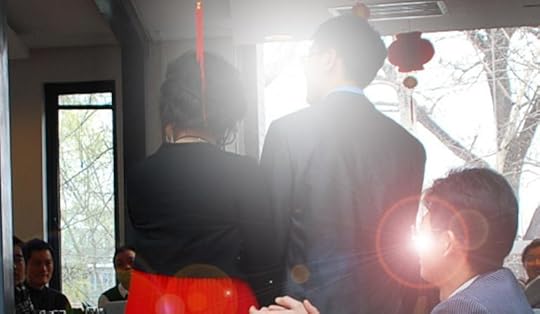
William and Andi at their wedding ceremony. They chose not to have a marriage certificate, so they don’t have legal obligations to one another.
Photo: Courtesy of Andi/GlobalPost
BEIJING, China — William and Andi, husband and wife of four years, hadn’t seen each other for months. Andi arrived at William’s apartment sweaty from a bicycle ride through the Beijing summer haze. William brought her some cold lemon water and handed her a towel. She said he should boil the water first because tap water isn’t clean, and teased him for having grown so muscular his legs looked as bulky as “chicken drum sticks.” He suggested tweaking her gym routine so that it would be easier to fit exercise into her schedule. Reclining on separate couches in William’s spacious living room, they chatted comfortably about work, family and mutual friends.
After several minutes of small talk, conversation quickly turns to whether they should reconsider having children. Andi is 33, which in China is considered old to be childless. William is 36 and works as a human resources manager at a large state-owned company. In addition to pleasing his parents, he thinks having a child would help him at work because his superiors would see him as a family man — and therefore, in the traditional mindset here, a better candidate for promotions. Andi, on the other hand, admits she has a personal desire to become a mother.
“Why should we have kids anyway?” Andi asks.
“To make our parents happy,” William says firmly.
“But where would we raise them? Would I have to move in with you? When would we tell them the truth?” Andi says, shaking her head.
Andi has thick, shoulder-length hair and wears flowing, colorful clothes. She works as a graphic designer and has lived in Beijing with her girlfriend for 10 years. William, meanwhile, has focused on building his career over finding a steady boyfriend. They are both Chinese citizens and, like most of my other interview subjects, chose to give only their English names for this article because they are not openly gay.
The two are in what China’s LGBT community has coined a “cooperative marriage” (“xinghun”), which is essentially a fake marriage between a gay man and a lesbian woman.
Homosexuality was classified as a mental illness in the country until 2001 and a crime until 1997. In a largely conservative society where everyone feels pressure to get married and gay men and lesbians still face serious discrimination, most LGBT people choose to lead double lives.
Out of an estimated 20 million gay men in the country, around 80 percent are in fake marriages, according to research from Qingdao University. Most marry straight spouses, often without first revealing their true sexual orientation to their partner.
But an increasing number of gay men and lesbians are choosing to marry each other. They believe this option is better because it isn’t hurtful to straight spouses and also gives them much more freedom to live open lives. Most cooperative marriage partners do not live with each other after the wedding. Instead, some maintain a shared home to host visiting relatives and others leave their belongings in each other’s apartments to make it appear as if they are co-habitating.
“When we go home to visit my parents, I think they are suspicious,” Andi says. “My mom once remarked to me that I don’t seem very close to William. But she didn’t say anything more. I think they would rather ignore the possibility that the marriage isn’t real.”
In the past, gays and lesbians struggled to connect with each other to arrange fake marriages. While the proliferation of online “matchmaking” forums in the early 2000s has made connecting easier, finalizing a cooperative marriage can still take years of effort, with many potential partnerships falling through because couples cannot agree on shared expectations.
“I tried several times to look for a gay husband, but they were all so demanding,” says Charlene, a Shanghai-based public relations executive.
“They wanted a pretty wife to bring to company parties and many expected me to contribute to the purchase of a shared apartment. One man even asked if I would get plastic surgery to widen my eyes!”
“There are many more people who want to have a cooperative marriage than those who are actually in these marriages,” says Stephanie Wang, a Beijing-based researcher and LGBT community organizer who interviewed 22 cooperative marriage partners for her University of Hong Kong postgraduate thesis in sociology.
In some of the bad cases, people desperate to end a cooperative marriage have “outed” their partner’s homosexual orientation to their spouse’s parents, according to Wang. Others have fought bitterly about issues such as shared expenses, property and whether to raise children, she says. Gender politics also play a role, with women often expecting men to shoulder more expenses.
Gay and lesbian spouses would have little legal recourse if one party failed to honor any agreement. Jing, a lesbian who runs an online forum for people in northern China searching for cooperative marriages, advises approaching it like a business deal.
“You wouldn’t start a business with someone you don’t know. Before making a decision to marry someone, even if it is a fake marriage, you should talk to the other person and agree on as many things as you can think of in advance,” Jing says.
“It is also important to choose someone who can become a friend and with whom you would be happy to have a life-long relationship. Otherwise it is very hard to make things work long term.”
William and Andi say they have not had the problems experienced by some of the more tumultuous couplings they’ve heard about.
Ten years ago Andi replied to a want-ad from William on an internet forum. It was a simple message: gay man in Beijing seeks a lesbian wife in the city. After talking online for several days they met in person at a KFC restaurant. They discovered they had similar expectations. Neither wanted to live together, and they agreed not to get a marriage certificate because they didn’t want to have legal obligations to one another — a common decision in cooperative marriages.
But now that they are debating whether to have a child, the couple is facing their most difficult negotiation yet.
“Tian a! [Oh god!],” Andi sighs, “It would be awful if our parents want to move to Beijing to help take care of the baby.”
“Let’s talk about the details later …” William says, as he busies himself finding spots in his already immaculate apartment to clean.
Andi points out that fake marriages do not take place only in gay communities. In China, some straight people also turn to fake marriages in order to have children. According to Chinese law, children born out of wedlock cannot obtain a household registration permit (“hukou”), which would deprive them of basic social services and educational opportunities.
Marriages between straight people who do not want to have typical romantic relationships for various reasons — because someone doesn’t want to have sex, for example, or needs a partner in order to raise children legally — are colloquially known as “sexless marriages” in China. There are no estimates on the number of “sexless marriages,” but one Chinese website that caters to straight people looking to enter into such unions claims that more than 200,000 people have registered for their matchmaking service and over 25,000 successful matches have been made so far.
The desire to have a child was the main reason why Jasmine, a heterosexual woman, decided to marry a man she didn’t love. After she turned 30, with her parents increasingly nagging her to marry, Jasmine agreed she was running out of time and married the next man she dated. She now lives in an apartment in central Beijing with her husband, their 3-year-old daughter and her in-laws.
“My life is all about my daughter,” Jasmine says.
Unlike William and Andi, Jasmine and her husband do not communicate well. She feels too ashamed to talk to friends about her situation.
In contrast, Andi says she feels optimistic about the challenges ahead.
“I think we will be able to solve the problems that come our way. And gradually, traditional attitudes about sexuality and marriage in China are sure to change.”
By Joanna Chiu, GlobalPost
This article is syndicated from GlobalPost.

August 16, 2015
Living in Mogadishu used to be “hell.” Here’s what it’s like now.
MOGADISHU, Somalia — Streetlights now line this city’s main street, Mecca Avenue. Kids run around, weaving between food stalls, free-range chickens and mangy dogs. Record stores play loud music out of speakers, advertising their selections.
Residents stand in lines at local banks. Pharmacies, butchers, restaurants, grocery stores and mobile phone shops abound. Traders who have trekked into the city from the countryside carry baggage filled with goods to sell at street markets. At the end of the day, they fill their bags with goods to sell back home. Everywhere, new buildings are under construction.
“It’s hard to believe that Mogadishu is safe,” said Halima Haji, the owner of a little grocery shop. “Businesses are doing well here, and we make a lot of profit. People walk freely along the streets without fear of attack.”
Not very long ago, Mogadishu was different.
After Somalia’s central government collapsed in the early 1990s, civil war gripped the country. In 2006, the Al Qaeda-affiliated militant group Al Shabaab arrived on the scene, seizing cities throughout the country and occupying neighborhoods in the capital. In 2010, a famine struck that lasted for two years, adding more chaos to the mix.
But in 2011, Somali and African Union troops pushed Al Shabaab out of Mogadishu. Today, those security forces remain, keeping the peace.
Halima Haji owns a little grocery shop in Mogadishu, Somalia and says she feels safer these days. The city has changed in recent years, with basic city services now coming back online.
“Al Shabaab is a weakened organization that attacks where it sees opportunities,” said Neil Wigan, an ex-British ambassador to Somalia. “Somalia is fully under the control of government forces and African Union troops. It’s a safe place right now.”
The East African nation now has a stable government under President Hassan Sheikh Mohamud, who claims to be setting up government institutions and reforming one of the most corrupt countries in the world.
While Mohamud has little sway in Somaliland, a northwest region of Somalia that has declared independence, and the autonomous region of Puntland in the northeast, the central government is consolidating its power in the capital with the peacekeeping forces’ help.
African Union forces have largely kept Al Shabaab out of the capital, erected fortifications to repel the Islamists’ assaults and killed or apprehended many of the group’s leaders, experts say. Troops are commonly stationed at hotels, banks and government offices.
“Al Shabaab has been driven out of the city and have lost a number of key operatives due to expanded military presence in Mogadishu,” said Nazlin Umar Fazaldin Rajput, national chairperson of the National Muslim Council of Kenya and a close observer of Islamic extremism in the Horn of Africa.
To be sure, an American or European strolling alone on the streets of the city would likely encounter unfriendly, potentially armed men. But locals and accompanied outsiders enjoy a sense of security.
“It’s now safe in Mogadishu for us who were born and partly raised here,” said Basra Mohammad, 29, a business consultant who moved back to the city from Nairobi in 2013. “It used to be a hell. I ran to seek refuge in Kenya. But now security has improved and Mogadishu is coming back to life.”
Basic city services have come back online. Schools are open. Children’s soccer academies are open. Trash collection, fire departments, electrical power and other municipal services are up and running.
“Enrollment for children attending schools has tripled since last year,” said Hassan Ahmed, 38, a teacher at Hamar Jajab Primary School. “We’ve so many people coming to the city to seek education and better their future. They feel secure while studying here.”
Al Shabaab remains a major problem in rural Somalia, and the militants still often stage attacks in Mogadishu. The terror group claimed responsibility for a July 26 attack at the Jazeera Palace Hotel in Mogadishu involving a bomb-filled vehicle that killed 15 people, for example.
But, compared to the worst years of the past decade, the July 26 attack was minor, said residents.
“Mogadishu has really changed when I compare it to how it used to be before I fled to London,” said Abdirahman Khalif, an assistant at a food wholesaler who emigrated to Britain around 2006 and returned to Mogadishu in 2012. “Life was not precious during that time. There was fighting everywhere. Guns rocked the air. People could be killed like cockroaches by Al Shabaab. But it’s now safe.”
Al Shabaab’s most recent attacks highlight the terror group’s desperation, said Capt. Mohamed Hussein of the Mogadishu police department. He noted that the July 26 explosion targeted foreign diplomatic missions in the hotel. The Islamists don’t want to see Somalia rejoining international community, he said.
“We’ve weakened them [Al Shabaab],” Hussein said. “They’ve no place in Somalia. What they are trying to do by attacking unarmed civilians is a sign of a weakened adversary seeking fame.”
Khalif returned to take part in his native country’s transformation. He hoped other Somalis from abroad would return.
“We need them to come and invest here,” he said. “Mogadishu is now becoming an economic hub. There are gas stations and supermarkets everywhere. There are more than 20 new radio stations operating in the country.”
Lifelong Mogadishu resident Basra Mohammad hopes her hometown can become one of the beautiful cities in Africa — as it was in the 1970s and early 1980s, before the central government imploded.
“The government is building and renovating houses and other structures across Mogadishu,” she said. “It’s going to be a developed city, because Mogadishu is now a peaceful place.”
By Tonny Onyulo, GlobalPost
This article is syndicated from GlobalPost.

How to piss off a Spaniard
I should probably preface this whole thing by saying that it’s really not that easy to piss off a Spaniard, unless you’re overtly trying to do so. They, along with the people of Bali, are probably the most easy going and good natured people I’ve ever encountered.
However, it is possible to anger a Spaniard, especially in certain circumstances.
Insult their mother.
The Spanish don’t curse like we do. There’s no equivalent in the language for a simple “Fuck you.” Instead, most real curses invoke the purity, or lack thereof, of the cursee’s mother. I have two favorites I heard while I lived in Madrid. There’s the sort of standard, “I shit in the milk of the mother who bore you,” which is sometimes shortened to just, “the milk!” But my all time favorite is, “I shit in the fourteenth kilometer of the cuckold’s horns of your father.” That’s some imaginative cursing.
Be insensitive to their “national” identity.
Many people don’t know this, but there are at least four distinct languages spoken in Spain: Castellano, which is what we know as Spanish; Catalan, the language of Catalunya, the area around Barcelona; Basque, the language of the area around Bilbao and San Sebastián; and Gallego, the language of the area north of Portugal. All of these people regard themselves as citizens of their own region first and, except for the Castilians, of Spain second. In fact, the Basques and Catalans have very active “Secede from Spain” movements going right now. Be very careful of any generalizations about Spain whichever region you are in.
Make no effort to speak Spanish, or whatever the language of the region you’re in.
When you can manage a few phrases — even as little as por favór and gracias — the Spanish will bend over backward to use their few words of English to communicate with you. But just start out in English without making any attempt to meet them half way, and you’ll likely be dismissed as a tourist completely lacking in any grace…which you are.
Drive slow in the fast lane.
The highways in Spain are a lot better than they used to be. Most of the two lane roads have periodic spots where a passing lane is provided. But woe to him who is driving too slow (ie, less than 20 km/h over the speed limit), or driving in the fast lane when not passing. I once had a truck touch my bumper to suggest I hurry up. At the time I was going 120 km/h. Just keep right at all times is my advice.
Cheer for the Barcelona soccer team when you’re in a bar in Madrid.
And vice versa. It’s said that the first three words a Spanish child learns are fútbol, Barça and Real (Madrid). At least one of the latter two words is often preceded by maldito sea, which means “may they burn in hell.” Imagine cheering for the Red Sox in a Manhattan bar. You get the picture.
Mention Francisco Franco.
The brutal dictator died in 1975, but his successor party is in power in Spain now. There is no such thing as a Spaniard without an opinion on his rule. Best to just avoid the topic unless you know your audience really well.
Try to get a word in edgewise.
Anyone who has ever been in a group of Spaniards knows that there’s no such thing as waiting for someone else to finish speaking before speaking themselves. If there are four Spaniards in a group, there are four people talking. And, as they talk, the volume increases as they each try to make themselves heard above the others. Actually, this doesn’t really piss Spaniards off, that nobody is listening. It’s just the way it is. It will piss you off a lot more than them.
Minimize the Spanish culture.
The French used to have a saying, “Africa begins at the Pyrenees.” This was meant to be the ultimate insult to the Spanish. Perhaps when Franco was in power (or when the Moors were in power 500 years ago) the French had a point. But now the Spanish are extremely proud of their membership in Europe. And, they’re even more proud of their cultural heritage that draws heavily on their Christian, Muslim, and Jewish traditions. Trying to minimize their culture, and their contribution to that of the world, pisses off not only them, but me, too.
Unless you want me to say something about your mother, don’t do it.
Photo: Tchacky

17 signs you’ve been away from Portland too long

Photo: erin_everlasting
1. Your new friends spent all of the last week complaining about the weather being in the mid-sixties and overcast with light showers, but it was the first time in months you’ve felt “whole again”.
2. You refuse to eat nova lox because it is too blunt a reminder that Alaska sockeye is well out of your price range outside of the northwest.
3. All of your friends are convinced you are trying to kill yourself when you walk in front of cars on a busy street with no crosswalk, assuming that they will stop for you without honking/yelling obscenities.
4. You’ve all-but-forgotten the feeling of mud between your toes while dancing naked to some electronic folk bluegrass at a summer festival in the Gorge Amphitheater.
5. You have started pulling out your hair after the miserable realization that nobody in your new town knows what MLS is, and therefore doesn’t want to hear about your next international fantasy match involving a last-minute goal from Diego Valeri. And when you say “bundesliga” people think you are making fart noises with your mouth.
6. You can’t stop doodling Mt. Hood in your daily calendar while wondering if the Meadows’ slopes are open right now.
7. You were recently arrested for biking naked during the Naked Bike Ride… because you were doing it 3,000 miles away by yourself.
8. While lounging at the beach with your friends last weekend, you casually mused that it would be better if it were colder and cloudier, and had more pebbles.
9. You’ve managed to convince yourself that you wouldn’t even mind standing in line at Voodoo, just so you could hear tourists talk about the delightfully shady “we-sell-cold-bacon-on-mediocre-donuts-between-a-strip-club-and-a-porn-theatre” vibe that only Portland rocks.
10. Speaking of strip clubs: You’ve lost count of how many times you’ve had to explain to your friend from a holier-than-thou town that pole dancing is a incredible skill, and doing it while fire spinning six inch flames is a form of art. And no, not all of these women are “victims of a corrupt society.”
11. You’ve gotten food poisoning five times in the last month trying to pretend that food trucks outside of Portland can offer high-quality Hawaiian cheesesteak curry in a challah bowl.
12. Your hopeless friend’s bike chain fell off, so you reset it for them. According to your friend, you then proceeded to readjust the tires, grease the gears and tighten the breaks in a fugue state.
13. Your brunch date got all excited when she saw a unicyclist going by the restaurant, but you were woefully unimpressed (and probably muttered something like, “yeah but he isn’t dressed like Darth Vader playing a fire-belching bagpipe while doing it”).
14. You turn down your friend’s invitation to go to a public pool, because all you have wanted to do for months is float down a river with a case of beer and some of your neighbors’ homegrown weed, and it just isn’t the same.
15. You can’t remember the last time your food and beer budget was higher than your rent.
16. Someone at a bar had the gall to suggest that the tattoos on your neck, arm and face would prevent you from getting a decent job, and, forgetting where you came from for a moment, you almost agreed with them.
17. Your friend ordered a gin and tonic at a local brewery and you cringed as if they had ordered a dead baby seal. 
August 15, 2015
11 ways people are getting naked in the US
Andy Ofiesh founded the Naked Comedy Showcase at the Improv Boston over ten years ago. They now host a showcase every first Thursday of the month, and have expanded to New York. In an interview with the New York Post, Ofiesh said doing stand-up naked “gives you a kind of vulnerability that puts the audience on your side straight away.” The event also encourages audience members to join the naked fun by baring all themselves. Event notices remind the audience that no photography or filming is allowed during the show, and that no lewd or sexual acts are tolerated.
2. Practicing yoga naked in New York
New York has plenty of studios offering yoga classes in the nude: Bold and Naked, Nude York Yoga, and Zensual Yoga to name a few. Classes can be single-gender or unisex and run between $20-30 a class. Zensual Yoga also hosts several other nudist events, including nude meditation sessions,“Zensual Kitchen classes”, outdoor trips to nude beaches and resorts, and even a clothing-optional Drum and Dance Circles, complete with an indoor fire pit.
3. Relaxing naked at Harbin Hot Springs near Napa
Just north of Napa Valley, the resort offers soaking pools of spring water that visitors can experience nude. The resort has over 5,000 acres of privacy- and the location has been noted to have some of the cleanest air in the world. Guests visit not only to experience the amenities and natural setting, but also to partake in the many classes and specialized workshops the resort offers each week. Some examples: “Ecstatic Touch,” “Body as Living Presence,” “Compassionate Communication,” and “Love and Ecstasy Training,” which provides “an in-depth course in embodying the skills of tantric lovemaking.”
4. Attending the Seattle Erotic Art Festival
Hosted by the Center for Sex-Positive Culture and its sister nonprofit the Foundation for Sex Positive Culture, the festival exhibits their best picks of erotic art – paintings, photography, sculptures, poetry, installations, films — from around the world. In addition, the event hosts poetry readings, acrobatic displays, erotic installations, “libidinous” films, and lectures. In the evening, attendees celebrate at the Late Night Festival with DJ’s and performances. Attendees dress up anywhere from black-tie to dance club attire to kink/fetish costumes to practically nude (although Washington Law does technically outlaw complete bare genitalia).
5. Or, attending any of the many other sex-positive events around Seattle
Outside of the festival, the Foundation hosts a wide range of sexy events throughout the year: a Halloween Party, erotic massage workshops, nude drawing classes, support groups for various aspects of sexuality, and more. They’ve also created the Pacific Northwest Library for Sex Positive Culture with over 10,000 pieces collected so far.
The Center and Foundation for Sex Positive Culture both work as registered 501(c)(3) nonprofits, since their goals are not financial, but instead to encourage sex-positive culture at large through their various programs. On their website, they state “As proponents of sex positive culture, we believe that the appropriate uses of sex extend beyond reproduction. They include creating personal pleasure, bonding interpersonal relationships, promoting spiritual growth and enhancing emotional and physical health.”
6. Surfing naked at Black’s Beach near San Diego
Located between La Jolla and Torrey Pines State Beach, this nudist beach is known for attracting nude surfers. The beach is also known for its privacy and seclusion, since cliffs surround it and visitors can only access the beach by hiking down a steep path.
7. Dining naked at one of Manhattan’s Clothing Optional Dinners
Each month certain restaurants and locations around Manhattan devote their evening to hosting a nude dinner. Each event usually includes around 50 diners and past venues have included the Mercantile Grill on Pearl Street and Pete’s Downtown in Brooklyn. Staff remain clothed (because of health regulations) and all customers bring towels or scarves to sit on during the meal. John Ordover, the founder of Clothing Optional dinners assured diners that the nudity is there to enhance the dining experience, not make it sexual. In his interview with NPR, he said “What’s sexual is inappropriate nudity or risque nudity. You get no sense of inappropriateness for being dressed the same way as everybody else in the place.”
8. Using their tax dollars to get naked at the government run clothing-optional beach near Miami
Consistently named one of the best nude beaches in the world, Haulover Beach is one of the only government-run nudist beaches in the States. Because of government support, the beach has lifeguards, public restrooms, changing rooms, and concessions, along with clean white sandy shores. The beach welcomes up to 7,000 visitors each day.
9. Booking a naked getaway with “KinkBNB”
Having just launched May 1st, KinkBNB is like the Airbnb for the sexually adventurous traveler. Members list their homes to swap with travelers around the world, only this time, the spaces often specifically cater to “adult play rooms” or “accommodations with the open-minded”. Some example postings: “Love in the Lascivious Lair” in San Francisco, or “Prison Cell” in Leipzig, Germany. The spaces don’t have to be “playspaces” to be listed. The site only requires that “you have a sex positive attitude towards your guests”.
10. Experiencing 30 minutes naked with a stranger in the traveling Hook-Up Truck
The Hook-Up Truck started as an art project looking at the transition of strangers to lovers. Now, artist Spy Emerson has begun touring the States in her truck, hoping to visit festivals and “sex-positive events” around the country (her ultimate plan is to create a similar truck for Europe). Visitors pay $74 for 30 minutes at festivals, or party organizers can rent the truck for five hours for $2,500. As part of the art project, Emerson also asks willing couples to have their picture taken for a photo series she hopes to create documenting the experience.
11. Volunteering to pose naked for the Nu Project
Started in 2005, the Nu Project’s mission is to “document the many sizes, shapes and beauty of adult women.” Their website contains an online gallery of ordinary women (not professional models) from around the world, posing naturally with minimal makeup. Over 150 women have participated so far. Matt Blum and Katy Kessler, the directors of the project, pick their next shooting locations based on how many volunteer models/hosts show interest. In the summer of 2015, they hope to make it to Italy, Greece and Eastern Europe.

Birthright is meant to strengthen your Jewish identity, here’s how it made mine shaky.
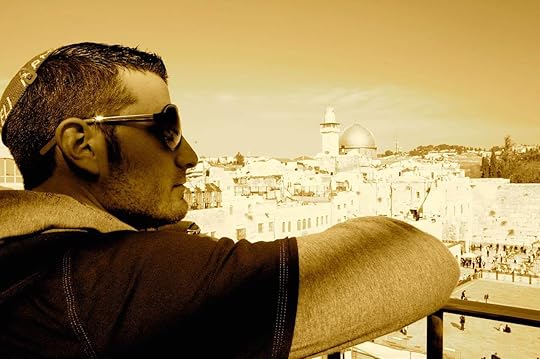
Photo: David Spinks
“Israel is for the Jews. It is a Jewish state,” said Anan, our Birthright group leader. I had liked him a lot before he uttered those words. I wasn’t prepared for this subtle prejudice, but realized then that I had been overlooking comments like these for ten days.
We were nearing the end of our free trip around Israel. Birthright is considered a “gift” to Jews around the world. It is meant to strengthen our Jewish identity while ensuring solidarity with the state of Israel. What they never outright say, but nonetheless drill into your head, is that they want you to “make Aliyah,” to return to the Holy Land and increase Israel’s numbers.
The first few days of our trip had me thinking that I could really move to Israel. The nature of the country alone was startlingly beautiful. Every landscape seemed limitless, despite the fact that Israel is such a small country. Immediately off the plane, our group was boarded onto a coach bus and driven to the tip of the Golan Heights. We stood on the border, looking out at Lebanon to our left, listening to bombs going off in Syria to our right.
For ten restless days, we toured the country on that bus, from the Tel Aviv to the Negev Desert, from the Banias Nature Reserve to Jerusalem. We went from stop to stop, climbing mountains before noon and sleeping somewhere different every night. One night in a hostel in Jerusalem, another night in a kibbutz by the Dead Sea, another in a Bedouin tent in the desert. Almost every time I took my seat on the bus, I’d fall asleep, like everyone else, only to be awoken by sweet Anan saying, “Wakey, wakey, everyone. Kosher food and eggs.”
My days and nights blended together. We moved around so much that I couldn’t keep track of which day we kayaked on the Jordan River and which day we watched the sun rise on the Masada. It didn’t matter. I was making close friends and falling in love with the State of Israel.
Of course, I had been to Israel a few times before with my family, but never as a Jew. My father, a Christian Arab, is an Israeli citizen. He is the youngest of eight siblings, and therefore, the only one who can say that he was born in Israel, and not Palestine. Since my American-born mother is Jewish, I am a Jew, and was thus eligible to go on Birthright. When my group arrived at Ben Gurion airport in Tel Aviv, jet lagged and awkward around each other, Israelis all over the airport called out to us. “Hey, Taglit! Welcome home,” they said. And I knew they meant it.
I’ve never been religious, or even a believer in God. However, there’s something about being raised Jewish that sticks with you. It’s cultural, and unless you’re in the tribe, you don’t get it. For years I had been the token Jew among my friends, enduring jokes about my curly hair or being cheap with a smirk and an equally racist remark. Now, in Israel, I loved how Jewish everything was. After being raised in a Puritan-based society where citizens question President Obama’s Christianity as a condition of his presidency, it was refreshing to suddenly be somewhere where the norm is to party on Thursday night because Friday night is the start of the Shabbat, and Saturday is the day of rest. It was easier to eat kosher than not, and I didn’t feel like I was teaching people about my heritage if I referred to anything I learned in Hebrew school.
We all shared an identity, a system of values that is old and traditional and ours. Who knew I was just an online application and an intense airport interrogation away from being stuck on a bus with 40 other Jews, all of us kvetching about the heat and sharing medicines from our personal pharmacies? I felt like I belonged, like I was with family. Who cares that there were packs of young soldiers with machine guns wandering about everywhere we went? There was a war going on, after all, and they were only protecting their country, right?
I was so caught up in enjoying this opportunity to be among “my people” that I almost forgot about my other people, my Arab side. An experience in Jerusalem provided me with a small reminder of just how unacceptable it is to be Arab in a Jewish state.
When our group arrived in the Holy City, an American man who had made Aliyah greeted us. He had a long beard and wore a kippah and was married to a conservative Jewish woman. Her hair and skin were covered and her hands rested on a stroller that carried their little Israeli citizen. I wasn’t listening to whatever lesson the man was trying to impart on us anyway, so I strolled to a nearby shop for an iced coffee. Every other time I had been to Israel, I always spoke in Arabic. So when I began to greet the woman behind the counter, who couldn’t have been much older than I, in the same tongue, she looked at me with hostility, like I was a terrorist.
“Ma?” She asked. “What?”
“An iced coffee, please?” I tried in English.
Her face broke out into a relieved smile. “Of course,” she responded in English. “5 shekel, please.”
I walked away feeling uneasy. It was odd to me that this woman would speak English over Arabic, considering that every Arab in Israel most likely speaks Hebrew, and that until 1948, possibly later, the primary language spoken in this region was Arabic. It was also odd to me just how many Israelis spoke English very well. I later learned that Jews begin English lessons in elementary school. Arabs in the same country don’t begin their English lessons until middle school.
For the moment, I let that encounter roll off my shoulders. Our Israeli soldiers had arrived to join us for the rest of our trip, a part of the trip called Mifgash, and I was eager to meet them.
I got close to one in particular; he reminded me of family. His name was Noam, he was from Be’er Sheva, and he looked like an Arab — dark skin, black facial hair, hazel eyes. He said his family had lived in Be’er Sheva for centuries, hence his Middle Eastern features. Noam and I became fast friends as he took it upon himself to be my personal translator and haggler at the colorful and humming Machane Yehuda Market. Noam introduced me to a Jerusalem mixed grill, made of chicken hearts, liver and spleen and stuffed lovingly in a pita with salad and other fixings. He led the way into the caves of the archeological site, the City of David, and sang Destiny’s Child in the dark to make me laugh. My mother would have nudged me in his direction and told me he was “a nice Jewish boy.”
Noam spoke perfect English, but only a little Arabic. He knew enough to say, “Step out of the car, please.” “Lift your shirt.” And, “Close the door.” Things a soldier would say to the enemy. He was also fairly religious for a young, Friends-watching Israeli. On Friday night, we held a Havdalah service, a ceremony that marks the end of the Shabbat and the beginning of the new week. Noam piously explained to me that the ceremony is meant to stimulate all five senses. We light a special havdalah candle to see the flame and feel its heat, we pass a cup of wine around to taste, we smell a bag of spices, and we hear the prayers.
On the day we went to Yad Vashem, the Holocaust museum in Jerusalem, Noam and I cried like babies while we watched videos from survivors. We held hands and walked through the museum a little ways back from the rest of the group.
“I am happy to live in a world where Jews finally have a home,” he said.
I pretended to tie my shoe so that I could dislodge my hand from his grasp. I was thinking about my father, my grandmother, my family who call Israel home, yet are not Jewish. This was my first trip to Israel where I noticed a distinguished absence of Arabs, Muslim or Christian, from my prevailing Israeli landscape.
“Right, I’m grateful for that too,” I said. “Especially after World War II. But what about the Arabs who lived here peacefully with Jews and Christians for centuries before Great Britain carved up the land with little regard for cultural territories?”
He smiled at me like I was a child who had asked an adorable question with an obvious answer.
“The Arabs have their land,” said Noam. “God blessed Ishmael and his sons and promised them that their descendants would have a great nation. But Israel is for the Jews, the chosen people.”
“You’re quoting the Bible now?” I asked, incredulous.
“Of course,” he replied with a furrowed brow. “God has given us the State of Israel. It was prophesied that we would lose Israel for our sins, which we have, but we would have to fight for our land, which would one day be restored to us, which it has. Didn’t they teach you anything in Hebrew school?”
“Do you know what we call people who use the Bible as a basis for a social and political argument in my country?” I asked.
He looked at me, waiting.
“Idiots!” I exclaimed. “Don’t you have separation of church and state, or whatever?”
“No, we are a Jewish state.”
“And my family? All those who remain here, degraded to near second-class citizens?”
“They are not second class,” he said, defensively. “Arabs can practice whatever religion they want and live among us. But they will live under our law.”
I didn’t respond. I didn’t know quite how I felt about this conflict inside me. Noam seemed brain washed. Now that I thought about it, many of the Israelis we met seemed ignorantly one-sided. Not necessarily outright hateful, but definitely nationalistic, which history tells us is never a good quality for a population to have. I suppose you might need to feel that way if you were risking your life for your country and there was no way out of it. We had had many group discussions about the importance of the Israeli draft, something Arab citizens are exempt from, and the general consensus among our young Israelis was that they were proud to serve their country and protect their borders.
Noam and I walked silently back to the group, hands at our sides.
After Yad Vashem, our group leaders drove us to Mount Herzl, Israel’s national cemetery, named after Theodor Herzl, the founder of modern Zionism. We paid our respects to the thousands of neat, gardened plots and rock-anointed graves that covered military casualties, some very recent. Anan led us over to a large patch of grass among the gravestones.
“Does anyone know why there is so much open space here?” he asked, arms stretched wide.
One of the girls in the group raised her hand and said, “To make room for more bodies.”
“Exactly,” said Anan. “Our war is far from over.”
That day, the Israelis left our group for their respective homes. Noam promised to keep in touch and try to visit me, which to his credit, he did, but I wasn’t as interested in being his friend. His views felt like an attack on a large part of me. I was proud to be a Jew, but I was also proud to be an Arab.
On the bus, Anan was on one of his spiels, so I was somewhere between staring out the window and dozing off. I perked up when he said, “Israel is for the Jews. It is a Jewish state.”
Again with this? I thought. Anan was sitting on his knees facing the seat behind him across the aisle from me. I don’t remember whom he was trying to brainwash.
“Anan,” I called. He looked at me from under his cowboy hat. “I’ve told you about my father before, haven’t I? He is a Christian Arab and he and his family have lived here in Israel, well, it was Palestine before, for generations. How do you fit Christians who call this land home into your Jewish state?”
“The Arabs don’t want to be a part of the State of Israel,” he said, throwing his hands into the air. “They cannot assimilate.”
“Why should they have to assimilate? They’ve lived here longer than all of the European Jews who immigrated here after the War.”
He started wagging his forefinger at me, smirked, and said, “Arabs are loyal to Arabs over the State of Israel. You ask your father where he lives, and he will say, ‘Israel.’ You ask him what he is, what his identity is, and he will say ‘I am an Arab.’”
A few days later, Birthright was over, and I had extended my stay in the country to visit my family in Kafr Kanna, an Arab town in lower Galilee, where you’re just as likely to be woken up by church bells as by the mosque’s call to prayer. My dad moved back home a few years ago, so this would be the first time I saw him. After a tearful reunion, we set off towards the Israel that I was used to.
Kafr Kanna was a lot smaller than I remembered it, and a lot uglier than the beautiful Jewish towns and cities we had visited during our tour. The streets were tight with sand-colored buildings and old cars. Everything from the shops and restaurants to the clothes people in the streets wore seemed like hand-me-downs. After spending time among the snow-white stone temples in Tzfat and the metropolitan haven of Tel Aviv, Kanna felt like kind of a dump. But this dump was home, and I was happy to be back with my family.
Later that night, over a meal of jaaj maashi, stuffed chicken, I asked my father, “Where do you live?”
“I live in Israel,” he said, with an indulgent smile.
“And what are you? What is your identity?”
“I am an Israeli citizen, habibti.” 
Matador Network's Blog

- Matador Network's profile
- 6 followers

