
Matador Network's Blog, page 2063
August 26, 2015
14 things you miss about Colorado
You’d never be judged for rolling into brunch at Snooze in your workout clothes. Or going to breakfast straight from the campsite with dirt under your nails and smelling like you’d spent three days locked inside of a smoker. If you really wanted to class it up for the night, maybe you’d throw on a flannel and a nice pair of jeans, but no way were you going to leave the trucker hat home.
2. Beer stickers on everything
The hand dryer in the bar bathroom. Your Nalgeen. The bike rack on top of your neighbor’s ‘92 4Runner. Hardly a surface remained unstuck by Odell leafs, New Belgium bikes, Great Divide “I Believes,” or red left hands.
3. Pre-Broncos game grocery store runs
You’d be at King Soopers loading up your cart with brats and queso and get randomly high-fived by a stranger in a Von Miller jersey, then spend 15 minutes in the checkout line talking playoff scenarios with a guy in an orange wig and “Omaha!” shirt. It made you proud of your team and your state and proved how sports can bring people together. That is, unless you weren’t really a fan and you knew the best time to shop was during the game.
4. Cornhole on brewery patios
A cold Compass IPA in one hand, a bean bag in the other. Afternoon sun overhead, a group of friends around a fire pit and a guy playing bluegrass covers in the corner. You holed three bags in one turn. This was the absolute pinnacle of your life.
5. Pueblo chiles, Rocky Ford melons, Olathe sweet corn, Palisade peaches
The true taste of summer — you queued up at the farmers’ market to savor these seasonal delights, knowing they’d be gone in a few weeks, then eagerly await next year’s crop. In other words, it was how humans were meant to eat.
6. The DIA train chime
After long travel days and a seemingly endless string of airports, those little two-second ditties (officially an art exhibit titled “Train Call“) always reminded you that you were finally home.
7. Mountain towns
Whether day trip or weekend staycation, was anything better than a gorgeous drive through the mountains to lost-in-time Lake City, blue-collar Leadville, or heaven-on-earth Crested Butte? You grabbed an Americano at Camp 4, took in a day hike at Oh-Be-Joyful, then a beer and lunch on the patio at Brick Oven Pizzeria, all the while thinking, “Could I live here? Yea, I think I could live here.” On the way back to the car you were inexplicably pulled to the window of the real-estate office, drooling at the possibilities.
8. Fitness guilt
While the credits rolled on your fourth episode of The Wonder Years, you checked your Instagram feed to find a calorie-burning stream of selfies on summits, post-race medals and waist-deep powder. You thought, “oh man, I should really get out there,” and were just about to lace ‘em up when Netflix’s cursed “Autoplay Next Episode” feature kicked in. “Well maybe just one more…”
9. February grilling
You never put the Weber away. There may have been snow on the ground, but you could always bet there’d be a few midwinter 70-degree days.
10. The lack of flying insects
You used to complain about miller moths until you went and moved to Florida and left the screen door open one night. Now you long for the days of dry air and cold winters that would have killed off these pterodactyl-sized beasts you’re ineptly shoeing out of your bedroom.
11. Glorious tap water
Put that Brita away, Rocky Mountain snowmelt was the original #nofilter.
12. Wildlife spotting
Mountain goats on Quandary, elk in Estes Park and bighorn on the cliffs above I-70 in Georgetown…you were pretty sure you could have landed a gig on NatGeo.
13. Subarus everywhere
Seriously, was there anyone who didn’t have (at least) one?
14. Your secret campsite
You had no idea how spoiled you were until you moved to New York and the only star anyone’s ever seen is atop the Rockefeller Center Christmas tree. You close your eyes and visualize your favorite camp spot. It’s one of a thousand hidden away in the Colorado mountains and you only told your closest friends about it. The boughs of the spruces would flicker in the firelight. There was a lake fed by snowmelt. And on clear, moonless nights you could see the Milky Way. A blaring horn snaps you back to reality and you’re almost hit by a cab. As a tirade of Arabic curse words is unleashed upon you, you say aloud, “why did I ever leave?” 


6 places in Tennessee to see before you die
A photo posted by Nicole Land (@travel_ista) on Nov 26, 2014 at 6:47am PST
A photo posted by Natalie Anna-Maura (@nat_attackkz) on Mar 20, 2015 at 3:54am PDT
GSNP has more biodiversity than any region on earth outside the tropics. Key places to hit, all of which have easy access: Chimney Tops for panoramic views, Abram Falls, the Jump Off near Charlies Bunion, and the eerie abandoned logging town of Elkmont. There’s old-growth hemlock forest along the Trillium Gap Trail to the 25-foot-tall Grotto Falls.
The most unique feature of GSMNP happens for just a couple weeks each Spring when endemic species of synchronous fireflies illuminate the Appalachian forest by all glowing on and off simultaneously. There is also a rare species of firefly that glows electric blue.
2. Tennessee’s world class cave systems (+ Nickajack Lake)
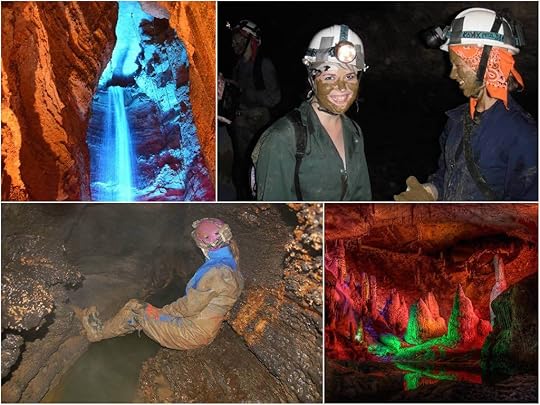
Photos, clockwise from bottom left: Robert Spiegel, Craig Walenta, Robert Spiegel, Scott Oves
Tennessee is home to more caves than any other state in the US. If you’re interested in spelunking, Lost Creek Cave near Sparta is a solid choice for your first time. It has an underground waterfall and extensive passages. If you want to stay above ground, Nickajack Lake is a cool option to bring you to the mouth of a cave system. You can paddleboard across Nickajack Lake at sunset while hundreds of thousands of endangered gray bats swoop and feast on mosquitoes, mayflies, and stoneflies bouncing along the water.
3. The Lost Sea of Craighead Caverns

Photo: The Lost Sea Adventure
Here you can float atop the world’s second largest non-subglacial underground lake in a glass bottomed boat with colorless rainbow trout goggling at your feet. 100,000 years ago this was the home of a prehistoric mega-cat. And crazy to think about: the end to the Lost Sea has yet to be discovered.
4. The Ocoee River
A photo posted by CLJM93 (@cljm93) on Aug 18, 2015 at 12:29pm PDT
A photo posted by Jordi Custers (@jordicvsters) on Aug 20, 2015 at 1:00pm PDT
The Ocoee River was the site of the 1996 Olympic whitewater course, and the river remains a Southeastern rafting and kayaking (especially playboating) classic. Trips run all summer. It’s a great place for intermediate boaters to step up to harder features and lines.
5. Fall Creek Falls State Park
A photo posted by ↟↟ⓜⓐⓝⓓⓘ↟↟ (@freerangemandi) on Aug 26, 2015 at 8:30am PDT
Tennessee’s largest and most visited state park has 26,000 acres of gorges, virgin forests, and lots of waterfalls such as Piney Falls, Cane Creek Falls, Cane Creek Cascades. One of the highest waterfalls in the eastern United States, Fall Creek Falls is 256 feet tall with multiple trails to explore the surrounding terrain. .
6. Chattanooga
A photo posted by RVR ROX Outdoor Festival (@rvrrox) on Sep 12, 2014 at 12:39pm PDT
Chattanooga keeps topping “best town” lists, and you’ll see why when you come here. The city has incredible access to outdoor adventures directly from town, from the nature center at Reflection Riding to the forested slopes of the Skyuka Trail. There’s hang gliding over treetops of the Tennessee Valley, the 92-acre urban wilderness park Stringer’s Ridge, the river views from Edward’s Point, and the swim spots at Rainbow Lake. There’s the North Chick — a classic creek run for advanced kayakers (and a place with lots of fun swimming holes when the water’s down), the the narrow tracks of Raccoon Mountain, and an endless amount of bouldering and climbing. Chattanooga is also home to the Stone Fort leg of the Triple crown, which is part of a series of bouldering competitions to raise the funding for the Southeastern Climbers’ Coalition and The Carolina Climbers’ Coalition. In addition, it hosts the RiverRocks Outdoor Festival, which is an event for amateur to elite-level outdoor adventure athletes accompanied by live music and food vendors. 
WATCH: 1950s parkour
Follow Matador on Vimeo
Follow Matador on YouTube
PARKOUR HAS BEEN SUPER TRENDY FOR a few years now, thanks to the rise of internet streaming video and Hollywood’s use of parkour in a bunch of recent action movies. But Arnim Dahl and John Ciampa were doing crazy urban acrobatics before it was mainstream. Dahl, a German stuntman, and Ciampa, an Italian-American circus performer, were known back in the day for their wild stunts. Dahl once walked on the railing on the roof of the Empire State Building finishing with a handstand. Ciampa (the one climbing the wall with the boy on his back) was once arrested for climbing the exterior of a hotel because onlookers didn’t realize it was a stunt, and thought he was going to commit suicide.
Incidentally, the footage shows Dahl jumping off of a crane into the water. During this jump, he broke his spine, which put him in the hospital for nearly a year before he got out to do stunts again. The footage of the two is from the 1977 documentary Gizmo!, and despite what the YouTube video says, is actually from the 1950s and not the 1930s. 

Lebanon’s protests are about far more than garbage collection

Crowds gather in Beirut’s Riad al-Solh square during an anti-government protest that was sparked by a garbage crisis in the capital. Photo: Richard Hall/GlobalPost
BEIRUT, Lebanon — Protesters clashed with police in central Beirut for a second night on Sunday, as a campaign that began with demands to solve an ongoing trash problem developed into a major crisis for the Lebanese government.
Formed in mid-July as a response to garbage piling up in the streets of the capital, the “You Stink” movement has gained momentum over the past few weeks, galvanizing a weary public that has grown sick of government inaction and corruption.
Several thousand people turned out for the demonstration on Sunday — the largest public action in Lebanon in many years — a day after security forces fired tear gas and rubber bullets to disperse protesters in central Beirut.
Whereas on Saturday police were quick to fire into the air and use tear gas to move protesters along, Sunday’s protest began peacefully. After being pelted with water bottles and other objects by a small section of the crowd, however, police again responded with water cannons and tear gas.
The fighting then escalated into the same back-and-forth between crowds and police seen on Saturday. Protesters damaged property and lit fires in central Beirut. When the army was called in after midnight, the few remaining protesters still out in the streets scattered.
More than 400 protesters were injured over the weekend, including one seriously. Lebanon’s Internal Security Forces said 99 police officers were hurt, and that 32 “rioters” were arrested.

Protesters retreat to Martyrs Square in central Beirut during clashes with security forces on Sunday evening. Photo: Richard Hall/GlobalPost
This isn’t just about garbage
The You Stink campaign was formed in response to trash piling up on the streets of Beirut after the city landfill closed. Environmental campaigners had warned that the country’s largest landfill site was full for some time now, yet no preparations for an alternative site were made.
Mountains of garbage appeared in the streets, alongside homes, schools and hospitals. The country’s health minister, Wael Abu Faour, warned of a “health catastrophe.”
Trash collection has resumed since then, but what happens to that trash is still a big problem: In lieu of a suitable disposal plant, illegal dumps have been sprouting up around the country. People have taken to burning trash, and there have been reports of trucks dumping waste into valleys and other open spaces.
Protests have grown as the campaign has widened its demands to address not just the garbage, but a whole list of other issues that they see rooted in a weak government.
The list is a long one: Lebanon has been without a president for more than a year, electricity is intermittent at best, corruption is rife, the country is hosting more than a million refugees and militants from Syria threaten the country’s eastern border. Underpinning all of this, protesters say, is the sectarian nature of the country’s leaders.
More than 20 parliamentary sessions have been held to elect a president, but the country’s major political blocs have been unable to agree on a candidate. Parliament has extended its mandate twice — the last election took place in 2009.
The result has been gridlock in government, and a very angry public.
A photo posted by Richard Hall (@_richardhall) on Aug 24, 2015 at 3:21am PDT
“People are fed up,” said Tamara Qiblawi, a Lebanese journalist who has been attending the protests. “The trash crisis is the straw that broke the camel’s back. It is the most obvious sign that the government is not just incompetent, but has a vested interest in the public’s demise.”
“The infuriating thing is it that the government knew the exact hour the landfill would expire. They knew the exact hour the trash crisis would begin, yet they did nothing about it. And when it struck, the entire conversation among the political leaders was about how to divide the spoils,” she added.
The government response to the protests has been varied, with each of Lebanon’s political groups seeking to play the protests up or down, depending on their aims.
Speaking on Sunday, Lebanese Prime Minister Tammaam Salam threatened to resign, chastising the police for their heavy-handed response and government ministers for their inability to fix the many problems facing Lebanon.
In a sign that the protests were having an effect, the cabinet announced an emergency meeting on Tuesday to address the garbage crisis.
The country’s environment minister, Mohammed al-Mashnouq, also announced that a contract had been awarded to two companies to deal with Beirut’s trash. He added that he hoped the announcement would be a “happy ending” to the problem.
Where next?
However much the country’s leaders want the protests to end, it seems unlikely that the You Stink movement is done fighting.
You Stink rejected the measures announced by Mashnouq at a press conference on Monday, and called for more protests next Saturday.
“The fact that the Cabinet seized the Independent Municipal Fund transforms the bids into a looting and robbery procedure,” said Marwan Maalouf, a representative of the campaign.
“You Stink is a peaceful, non-political, non-sectarian movement, and it has succeeded in waking citizens up and mobilizing them to fight for their rights,” he said.
Violent police response to the protests has fueled public anger, and the campaign has struck a chord among many Lebanese. The group does, however, face a number of significant challenges.
You Stink has called for the resignation of the government and new parliamentary elections, but due to the sectarian Lebanese political system, it is unlikely another election would yield a significantly different result without a change to the voting law.
Lebanon has 18 officially recognized sects, among whom power is delicately balanced, and that balance enshrined in law. That law stipulates that the country’s president must be Christian, the prime minister Sunni and the speaker of parliament Shia.
Lebanon’s political parties are thus divided along sectarian lines, and the voting follows. Any political movement hoping to change the system in Lebanon — as the You Stink campaigners do — is up against a deeply entrenched voting system that is unlikely to change. In a sense, the very cause of the government’s dysfunction is the same thing that sustains it.
A photo posted by Richard Hall (@_richardhall) on Aug 23, 2015 at 4:43pm PDT
The movement has also sparked a debate about Lebanon’s other great divide: class.
Many protesters, including some of the organizers, have distanced themselves from those who clashed with police, describing them as “infiltrators” and “thugs” sent by sectarian leaders to discredit the campaign. Some pointed out that the people doing the fighting were dressed differently — meaning, poorly.
Others countered that the comments reflect prejudice against working-class protesters.
“Problem with some Lebanese is that they consider poor people thugs. We now have a dress code for our protests? Should I wear heels?” wrote Rana Harbi on Twitter.
“Next time we will bring our yoga mats and say no shirtless people with tattoos allowed” commented So Raya on the You Stink Facebook page.
These divisions aside, the You Stink movement represents perhaps the largest non-sectarian campaign of civil disobedience in a decade. The next few months will determine whether the campaign can harness public anger for real change.
By Richard Hall, GlobalPost
This article is syndicated from GlobalPost.

August 25, 2015
The 15 most inspiring travel photos
EACH WEEK WE CHOOSE OUR favorite images from readers, fans, and travelers who tag their photos with #travelstoke and post them on our Instagram account. These pictures provide a daily dose of inspiration, and challenge us to photograph the world in innovative ways.
Here’s this week’s editors’ picks of people finding some serious #travelstoke.
Yachting in Greenland
A photo posted by Daniel Kordan (@danielkordan) on Aug 10, 2015 at 9:51am PDT
Maligne Lake in Jasper National Park, Alberta, Canada
A photo posted by Eeva Mäkinen (@eevamakinen) on Aug 23, 2015 at 12:37pm PDT
Palouse, Washington, United States
A photo posted by Mark Handy (@mark_handy_) on Aug 18, 2015 at 8:09am PDT
Camping out in Norway
A photo posted by Konsta Punkka (@kpunkka) on Jul 28, 2015 at 3:07am PDT
Chaak Tun Cenote in Mexico
A photo posted by S T O K E R (@andrewstoked) on Aug 21, 2015 at 9:26am PDT
Wadi Shab, Oman
A photo posted by Christian Schaffer (@christianannschaffer) on Aug 18, 2015 at 7:12pm PDT
Tioga Pass, Yosemite, United States
A photo posted by Daniel Peckham (@danielpeckham) on Aug 17, 2015 at 7:27am PDT
Cenote Xkeken near Valladolid, Mexico
A photo posted by Jacob Moon (@moonmountainman) on Jul 21, 2015 at 6:14am PDT
Wolf Peak in Washington, United States
A photo posted by Beau Ramsey (@beauramsey) on Aug 17, 2015 at 9:54am PDT
Mount Assiniboine Provincial Park in British Columbia, Canada
A photo posted by katie|goldie (@goldiehawn_) on Aug 16, 2015 at 6:19pm PDT
Lake Eibsee in Grainau, Germany
A photo posted by Munich & The Mountains (@munichandthemountains) on Aug 17, 2015 at 8:47am PDT
Scaling the mountains in Hawaii
A photo posted by Nolan K. (@nolank808) on Aug 14, 2015 at 2:18pm PDT
Sequoia National Park, California, United States
A photo posted by nancythebeat (@nancythebeat) on Aug 3, 2015 at 9:32am PDT
Biking with a view, Italy
A photo posted by Christoph Oberschneider (@coberschneider) on Aug 5, 2015 at 9:23am PDT
East coast of Australia
A photo posted by Aerial Collective (@seascapes_) on Aug 10, 2015 at 7:28am PDT

50+ amazing resources for listening to (and learning!) Spanish

Photo: Fluent in 3 Months
I’ve said before that listening is one of my biggest challenges when learning a language. My Speak from Day One approach to learning langauges, means I’m usually stronger at speaking than listening.
With that in mind, I’ve collected over 50 resources to help Spanish learners improve their listening skills.
I’ve organised this collection into five categories:
Videos: Watching videos helps you understand body language and provides valuable visual cues for your listening practice.
Podcasts and Radio: For covering a variety of topics and speaking styles, podcasts and online radio can’t be beat.
Music: Listening to music gives you a look at the creative and poetic side of a language.
News: This provides you with more formal, standard use of the language, combined with contemporary topics.
Lessons: It is helpful to listen to Spanish in a structured environment, especially when you are first starting out.
These Spanish listening resources are for everyone, regardless of your level. So, let’s get started!
VIDEOS FOR SPANISH LISTENING: YOUR KEY TO UNDERSTANDING BODY LANGUAGE
Since most communication is nonverbal, seeing the body postures, facial expressions and hand gestures of Spanish speakers will make it easier to understand them. And video is the only type of listening practice which allows you to practise this important part of Spanish communication.
SPANISH YOUTUBE CHANNELS AND WEB SHOWS
Here are some Spanish YouTube series to view life in the Spanish speaking world.
Freaklances: An animated series following the lives of several freelancers.
Malviviendo: This show follows the lives of several friends living on the outskirts of Seville, Spain.
Enseriados: A comedy about two flat mates who share a passion for television. English subtitles are available.
Apples: A comedy about a group of lesbians, a dummy and a stuffed cat who work together to solve their problems.
Gangster Que Hago?: This is a comedy series about a man looking for love in all the wrong places. Please note that it also comes with a parental advisory warning for content.
SUNY Albany: The State University of New York (SUNY) at Albany put together an extensive list of video resources in the Spanish Language.
LIVE VIDEO CHAT WITH NATIVE SPANISH SPEAKERS
I’ve had great success in my language learning missions when video chatting with my tutors and teachers. Interacting with a real person is much more authentic than just watching actors in a movie.
The best part? Everything you watch is 100% related to you and your life!
It’s worth checking out the following:
Google Hangouts: You can chat face-to-face using Google’s popular video and voice calling system. To put yourself out on a limb, you can broadcast the call live to the whole world!
Periscope: If you haven’t jumped on the Periscope bandwagon yet, you might not be too familiar with this live streaming video service. Recently I discovered you can search for live streaming video from different countries around the world, including Spanish-speaking countries. This is a direct pipeline to listen to Spanish (or any language) in a very authentic way. (Follow my Periscope by searching for “polyglot”, and I’ll do streams in Spanish every once in a while!)
Apple Facetime: If both you and your conversation partner have Apple devices, then you can have a free call on Apple’s video conferencing software. This comes bundled with Apple computers, tablets and phones.
Tango: While I don’t have direct experience of this software, I’ve heard it is a good way to have face-to-face conversations with people all around the world.
Skype: The standard for most people when it comes to making video calls online. If you download eCamm’s Skype Call Recorder for Mac, or Pamela on Windows, you can record your conversations to review them later on.
Of course, all this assumes you have someone to speak with in Spanish. If you need a language conversation partner, be sure to check out iTalki, where you can find amazing native Spanish speaking teachers and tutors.
HOW TO WATCH SPANISH TELEVISION ONLINE
There are a wide selection of Spanish language television programmes available online. Here are a few worth checking out:
Drama Fever: This website provides telenovelas (TV dramas) with English subtitles. As a bonus, you can also use it to watch TV dramas from Korea, China and other countries!
Hulu Latino: Hulu, a popular video streaming website based in the U.S., streams televisions shows in Spanish.
Multilingual Books: This website provides a link to online television station streaming video feeds from a wide variety of countries. A treasure trove of Spanish TV.
Streema: Streema is a service that provides links to the websites of many television stations in Spain. You can also search for programmes from other Spanish speaking countries in Central America and South America.
Univision: A network name synonymous with Spanish language television, the Univision website provides access to an amazing selection of their Spansih-language television programmes.
Telemundo: Telemundo is another television network with an extensive selection of programmes in Spanish.
There are actually so many Spanish language television shows available to view online that there’s no way to list them all here, The resources above will get you on the right track.
SPANISH MOVIES
Spanish speaking movie goers are currently the second largest demographic in the United States, and with the startling number of films coming out from all of the Spanish language countries in the world, there is plenty of viewing fare for Spanish language lovers everywhere.
Spanish Movies Online: This website provides exactly what it says: Spanish movies online. Lots to choose from here.
Zumvo: This website provides links to movies from Spain that you can stream online.
Hulu Movies: Hulu comes to the rescue again! Not only do they have Spanish language television shows; they also have Spanish language movies.
SBS: SBS, a service out of Australia, has a large selection of free Spanish language movies from around the world.
Netflix: Netflix has movies from both Latin America and Spain. Just remember that Netflix is a paid service and you may need a VPN (Virtual Private Network) service to view it outside the U.S.
Fandor: Fandor, similar to Netflix, is a paid subscription site that provides many films from around the world in a variety of languages.
SPANISH VIDEO LESSONS
The best part about Spanish language video lessons is that they follow a structured format and are perfect for those new to the language.
The following is a selection of some of my favourites, as well as a few that have come highly recommended.
Spanish Pod 101: You might know Innovative Language’s Spanish Pod 101 podcast series as a great place to learn a language. This is their YouTube channel to help you see the language being spoken.
FluentU Spanish: FluentU curates videos from all over the web, includes subtitles in Spanish and English. Curated videos are carefully organised so you can study them easily.
Yabla Spanish: Yabla specialises in helping you pick up Spanish through videos in a natural way, with real Spanish spoken by real people. Check out some of the their sample videos to see what it’s all about.
About.com: About.com has various videos instructing on aspects of the Spanish language, including a wide selection on verb conjugations.
Web Spanish: An amazingly fun show giving you authentic Spanish instruction with memorable visuals and humour.
ES Audio: This series of videos entitled “How to Speak Spanish Fast” provides insight into many parts of the Spanish language.
Señor Jordan: This might be one of the funniest Spanish language video courses out there. Definitely worth watching if you want to bust a gut while learning a language.
Complete Spanish: Language Transfer have put together this series of Spanish language lessons to take you through their entire Spanish programme.
ONLINE RADIO: COVERING EVERY TOPIC YOU CAN THINK OF
Online radio provides a wide sampling of topics you may not normally be exposed to. That’s why I love listening to it. Plus, it represents Spanish spoken the way you hear it in real life, in accents from all around the world.
Listen Live Europe: This website contains online radio stations for a variety of countries in Europe, including many in Spanish.
Cadena Ser: Several podcasts and shows are available on this network’s website.
E-Spanyol: Over 600 Spanish language radio stations are listed in this directory.
Live TV Radio: A large selection of Spanish language radio channels, organised by country.
TuneIn Spanish: TuneIn is one of my favourite apps for listening to radio stations from around the world. For Spanish radio, check out stations in Central America, South American and Spain.
MUSIC: SPANISH LYRICS AND CREATIVITY
Spanish music uses language differently than in day-to-day conversation. The issues and topics are closer to our hearts and minds.
Spanish music can be an entertaining way to improve your listening skills and gain a deeper understanding of cultures in the Spanish speaking world.
Here are some websites and links where you can find Spanish music online.
Last.fm Spanish: This popular music recommendation site provides great Spanish music and downloadable mp3 files.
8tracks Spanish Playlist: Another music recommendation site where users create their own playlists. These include playlists of Spanish music.
Online Radio Spanish: This list of online radio stations from Spain, Central America and South America has many stations dedicated to music.
Surf Music: A German online radio station directory with a vast list of stations from all over Spain.
TuneIn Spanish: TuneIn is ideal for listening to stations that play Spanish language music. Stations listed are from Spain, Central America, and South American.
NEWS: EVERYDAY TOPICS IN STANDARD SPOKEN SPANISH
Listening to the news in Spanish will teach you valuable current vocabulary, and teach you the best way to phrase common expressions on popular topics. Plus, newscasters tend to use very standard pronunciation, so this is a good way to hear things said in a very clear (although somewhat fast) manner.
About.com: About.com has put together a list of Spanish language news sources, some of which are audio and some printed.
RTVE: Spain’s national public broadcaster, RTVE, has a wide array of news broadcasts in Spanish
SBS: SBS provides a list of Spanish news sources.
MIT: The Massachusetts Institute of Technology has a list of news sources in Spanish in print, audio and video.
News in Slow Spanish: If you are not quite up to speed with the rapid nature of a newscaster’s delivery, this is the resource for you.
PODCAST LESSONS: STRUCTURED SPANISH TO HELP YOU LEVEL UP
Listening to the news or watching television shows might be overwhelming if you’re new to Spanish. Online Spanish language lessons and podcasts are a great way to practise listening to the language using a graded, structured approach.
These online lessons and materials that will help you learn Spanish, while providing valuable listening practice.
SpanishPod101: SpanishPod101 is one of the first resources I recommend to new Spanish learners. Their lessons and materials are top-notch.
Notes in Spanish: Real, authentic Spanish language conversations, broken down to help you build confidence.
Audiria: This podcast, put out by two brothers from Malaga, puts out daily (that’s right: daily) podcasts for Spanish learners.
Coffee Break Spanish: This popular podcast from the Radio Lingua Network provides an introduction to the Spanish language as the host introduces aspects of the language to a beginner learner.
Podcasts in Spanish: Over 170 podcasts for Spanish learners. The audio is free, but you’ll have to pay for the downloadable worksheets.
Spanish Obsessed: Rob and Liz have put together an amazing collection of Spanish language materials, for everyone from total beginners to advanced learners.
Language Treks: Language Treks has a selection of free Spanish language lessons on useful topics for daily life
AiringPods: AiringPods lists dozens of Spanish podcasts you might want to try.
While all of these podcasts are related to Spanish language learners, what if you want to listen to podcasts direct from a Spanish speaking country? Searching through iTunes is often challenging since they target your search results based on your native language or country of residence. Here’s my hack for finding podcasts in your language of choice which will help you locate the best podcasts in the Spanish language. Be sure to check it out!
WHERE DO YOU LISTEN TO SPANISH?
Be sure to use these resources to increase your exposure to Spanish. Soon you’ll be improving both your comprehension and fluency with this wonderful language, and you’ll find that learning Spanish can be easy.
If you have any other suggestions or if I missed your favourite place to listen to Spanish online, let us know in the comments.
This article originally appeared on Fluent in 3 Months and is republished here with permission.

Is Peru’s new anti-drug policy too tough even for Washington?

Photo: Unión Europea en Perú
LIMA, Peru — Could the United States defund counter-narcotics efforts in Peru, one of the world’s top producers of cocaine?
That’s the question after Peru’s single chamber congress voted unanimously 89-0 last week to resume shooting down the small aircraft suspected of ferrying up to 150 tons of the drug, roughly half of national production, out of the Andean country every year.
President Ollanta Humala, a former army officer who prides himself on his no-nonsense approach to drug traffickers, is expected to sign the measure into law.
Although Washington has long used a carrot-and-stick approach to pressure Peru and the two other cocaine-producing nations, Colombia and Bolivia, to interdict more of the illegal export, it has also opposed a shoot-down policy in Peru for one very simple reason.
In 2001, a Peruvian air force jet — thought to be acting on a US tip off — shot down a plane that turned out to be carrying American missionary Roni Bowers. She and her 7-month-old daughter Charity died.
That deadly mistake saw Peru’s shoot-down policy suspended, with Washington, which provides millions of dollars every year to the Andean nation’s counter-narcotics efforts, anxious to avoid new tragedies.
“This is about our armed forces, following international protocols, being able to proceed, in extreme cases, to shoot down planes, such as the light aircraft, that carry drugs to other countries,” said congress speaker Luis Iberico, of the new measure.
But Ricardo Soberon, Peru’s former anti-drugs tsar, told GlobalPost that the US had been exerting “enormous pressure” behind the scenes on members of the Peruvian congress to vote down the law.
“That threat [defunding] existed and it remains on the table,” Soberon added. “I understand the US ambassador has been extremely active on this in recent days.”
In a statement following the Peruvian vote, the US State Department avoided any mention of funding and stressed that Peru was a “sovereign country and close partner” with the “right to determine its own laws and policies.”
But it added that Lima’s counter-narcotics push must be “consistent with international law and the respect for human rights.”
The statement went on:
“The Humala administration has proven successful at combating illicit aerial trafficking without the use of a lethal interdiction program. We encourage the Peruvian government to continue to do so.”
Peru is something of a maverick in Latin America when it comes to narco-politics. Although other governments, notably Mexico and Colombia, cooperate closely with the US, in both nations there has been sustained questioning of the “war on drugs,” including from past and current presidents.
Colombian President Juan Manuel Santos has even called for a global debate on legalizing drugs.
Meanwhile, Bolivia has also moved to reduce cocaine production — even as it firmly rejects Washington’s strategy, and the resulting criminalization of hundreds of thousands of impoverished farmers who produce coca, the key ingredient in the drug.
But in Peru, one of the most conservative nations in Latin America, Humala is committed to a hardline law-and-order approach to halting the drugs trade, including sometimes forcibly ripping up coca plants that are often the only profitable crops of impoverished smallholder farmers.
And the focus of that is on the Valley of the Apurimac and Ene Rivers (VRAE by its Spanish initials), a remote, lawless region where the Amazon overlaps with the eastern Andean foothills, that produces roughly half of Peru’s cocaine.
The cocaine is processed as close as possible to the coca fields. It is then ferried under cover of night by light aircraft to Bolivia using dozens of illegal airstrips that dot the rugged valley.
Remnants of the Shining Path terrorist group keep the army and police at bay and charge the narcos for protection.
Once in Bolivia, the cocaine then fans out to reach markets around the world, from Rio to Tokyo, and London to Moscow.
Humala’s government has attempted to blow up those airstrips — only for new ones to pop almost immediately in even more remote parts of the valley.
Nevertheless, there remains a small possibility that Humala, feeling the heat from Washington, might backtrack on the law.
The president has flip-flopped on a number of key measures in the face of opposition and Soberon echoed the feelings of many Peruvians when he accused Humala of “timidity” on the international stage.
“The possibility that Humala, under pressure from the United States, does not sign it [the law] remains open,” Soberon said. “What he might also do is sign it into law but then never implement it.”
Whichever course the Peruvian president now takes, his nation’s bilateral cooperation with the US on counter-narcotics may just be in for the kind of bumpy ride normally enjoyed by the pilots of the tiny aircraft that ferry so much cocaine out of his country.
By Simeon Tegel, GlobalPost
This article is syndicated from GlobalPost.


27 things to do in Galicia before you die

1
1. Climb all the way up to the Tower of Hercules, and try not to feel dizzy when realizing the Romans already used this lighthouse back in the 2nd century.
Photo: Spanish Coches

2
2. Watch the sun set behind the Cíes Islands.
Photo: Alberto P. Veiga

3
3. Visit those same islands and discuss whether Rodas is the best beach in the world or not.
Photo: Óscar
Intermission
1K+
20 awesomely untranslatable words from around the world
by Jason Wire
4
Wordless wanderlust super saturday
by Carlo Alcos
1
19 epic adventures to have in Chile before you die
by Katie Scott Aiton

4
4. Swim fearlessly in the cold, wild waters of the Atlantic Ocean and the Cantabrian Sea.
Photo: Ana Bulnes

5
5. Wait until the tide is low to walk under the arches at Praia das Catedrais.
Photo: Jose Luis Cernadas Iglesias

6
6. Take part in the Baixada Ajárrate a lo que Poidas to descend the river in Anllóns.
Photo: Andrea Ciambra
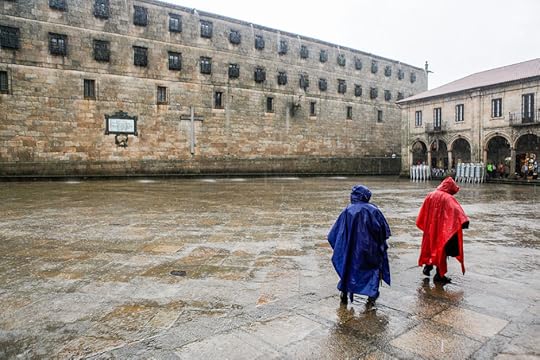
7
7. Discover why rain is art in Santiago de Compostela...
Photo: Andrés Fraga

8
8. ... and watch the Cathedral burn down every July 25th.
Photo: Dariome

9
9. Learn how to dance muiñeira and join every impromptu dance you find.
Photo: Javier Pais
Intermission
223
The 20 coolest towns in the US
by Matador Team
4
The colors of Carnival around the world
by Kristin Conard
2
The ultimate 7-day nightlife guide to Toronto
by Rebecca Burton

10
10. Walk around Lugo’s Roman walls. Then discover what eating tapas really means in the old town.
Photo: Manuel Bóo

11
11. Enjoy a relaxed night out in Pontevedra’s Praza da Leña.
Photo: Contando Estrelas

12
12. Get lost in Fragas do Eume.
Photo: r2hox

13
13. Stay out of the way of the cigarróns during the Entroido (carnival) in Verín.
Photo: Óscar

14
14. Eat as much pulpo á feira as you can (and refuse to take the last piece to feel like a real Galician person).
Photo: Feans

15
15. Walk the Millennium Bridge in Ourense.
Photo: Jose Luis Cernadas Iglesias
Intermission
497
What bartenders actually think of your drink order
by Lisa Millar-Jones
12
Queimada: Galicia’s alcohol-fueled, devil-be-gone ritual
by Susan Greenwood
7 facts about today’s cruise ships that will surprise you
by Jacqueline Kehoe

16
16. Wonder if you had ever felt so calm in Aldán.
Photo: Ana Bulnes

17
17. Climb up to the Castro in Vigo and point with your finger where to go next: Cíes, Cangas, Moaña...
Photo: Juantiagues

18
18. Try every Galician wine you come across: Albariño, Ribeiro, Mencía, Godello...
Photo: Imamon

19
19. Learn about the Celts and how they lived back in the 1st century BC in Castro de Baroña.
Photo: Feans
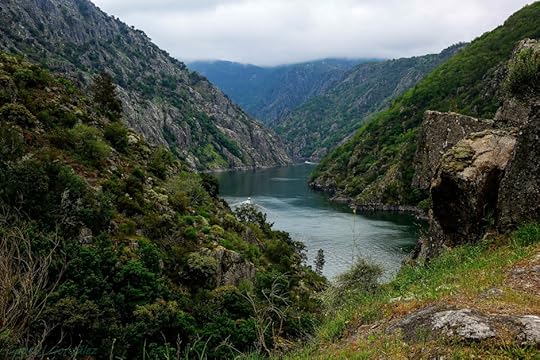
20
20. Find the Sil Canyon and follow the river stopping at every viewpoint. Don’t forget to buy (and taste) Ribeira Sacra wine.
Photo: Gabriel González
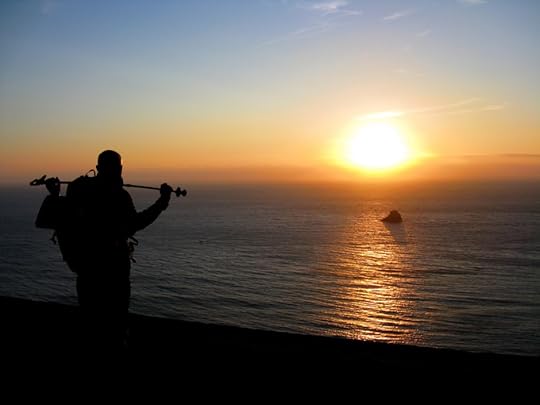
21
21. Understand why the Romans thought Fisterra was the end of the world.
Photo: Alberto Cabrera

22
22. Experience the real ritual of making queimada by memorizing and reciting the spell.
Photo: Contando Estrelas

23
23. Find out the Galician blonde they told you about is not what you thought.
Photo: Óscar
24
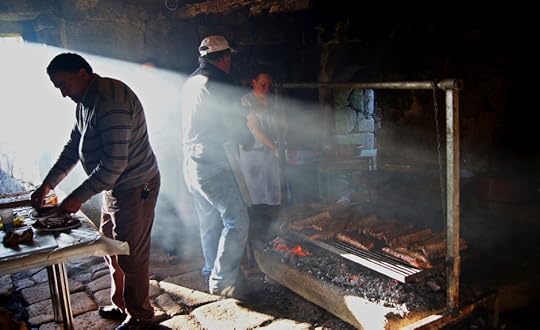
24. Attend at least one gastronomy fair.
Photo: Gabriel González
25
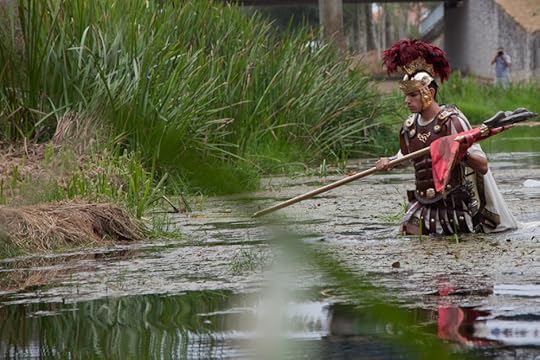
25. Travel back in time by attending some of our historical celebrations, such as the Festa do Esquecemento in Xinzo de Limia.
Photo: Álvaro Pérez Vilariño
26
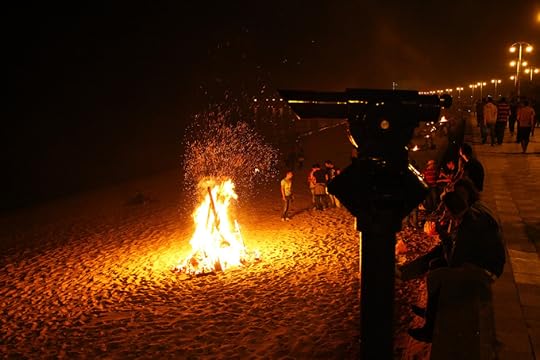
26. Spend the shortest night of the year on the beach, by a bonfire.
Photo: Contando Estrelas

27
27. Wonder how they managed to carve the rocks to build San Pedro de Rocas Monastery in Esgos.
Photo: Cayetano

Matador Network's Blog

- Matador Network's profile
- 6 followers


