
Matador Network's Blog, page 2061
August 28, 2015
Here’s why I’m for arranged marriage (with a little help from my exes)

Photo: Those People Blog
It was Wednesday and I had swiped my way to the edge of the Tinderverse, rejecting all the eligible men between the ages of 30 and dead in a 50-mile radius of Boston, MA. Just like Columbus centuries before, my world was flat and I was peering into the abyss. But my deft thumb muscles and absurd amounts of free time were not harbingers of my impending spinsterhood. They were proof that I’m too damn good.
I’ve only met three guys from Tinder face-to-face and all of them were hits. I happily dated one for a few months before I moved (we’re still friends). The second I dated seriously for close to a year (we’re still friends, although I kind of hope he falls and breaks his dick). And the third one might be my future husband (he’s Canadian, hullo free health care). In case you’re not good at math, that is a 100% Tinder success rate. And in case you’re not good at science, that means I am the winner of the entire fucking internet.
Tinder turns me into a lithe, if picky, jaguar: my prey doesn’t stand a chance.
To be fair, my superpower/curse in life is to raise boyfriends from the ashes of a would-be fling like a blue-balled phoenix. And I’m not exactly on the express train to Marriagetown, either. But even so, I consistently meet the kind of “good men” that my friends bemoan over mimosas and boxed wine. And contrary to popular belief, I’ve found that Tinder is good for serious dating while casual affairs are better for unplanned encounters IRL, where pheromones and spontaneity rule.

So sometimes I wonder if my twitchy Tinder thumbs have rejected perfectly good matches along the way. Maybe one of those shirtless guys in a fedora with his dog or flanked by meaty frat bros was actually the criminally-minded poet-activist I’ve been looking for. Maybe?
No algorithm can predict which scrawny and unremarkable white guy will shock the hell out of me with his electrifying presence. He would never have passed my strict Tinder test, but somehow I have to resist the urge to show up at his doorstep with all of my belongings. Conversely, there is nothing worse than a beautifully mysterious and interesting man from whom you can’t wait to run away.
The solution to modern dating is not more technology, it’s a return to an older way of doing things. We need the farm-to-table, mason jar, heritage collection, Americana kitsch version of dating. We need arranged marriage 2.0.
It should be standard practice for marriage-ready singles to assemble a committee composed of the people who know them best. I would appoint a couple of my closest friends and my brother, Cameron. My parents would be allowed to review some files, but they wouldn’t have actual voting rights (they got married in overalls and were divorced shortly after, they don’t know shit). The majority of my marriage committee would be full of the only people who really know what I’m like in a relationship, the ones who have been to the promised land and politely excused themselves, who spent years at Camp Tylea and decided they preferred boarding school. My exes, of course.
Each committee member would receive a tablet loaded with a Tinder-like application designed specifically for the purpose. They would select their top candidates, the results would be pooled with others in the group, and the top 10 would be summoned for interviews (via hologram, obviously). From those meetings, the panel would select 3–5 finalists for an in-person review. I’m pretty sure I’d find at least one person worth keeping around.
It would be Tinder meets the Bachelorette meets Pinterest meets a small farm town in 1890s Iowa. You get a pool of candidates that is as vast as the internet, as curated as Artifact Uprising, and peer-reviewed by those few people who really know you and love you anyway. This is not to minimize the ways that arranged marriages can or have at times been a tool of misogyny, but instead a recognition that doing this dating thing all alone is really hard.
I am no irresponsible quack, proposing solutions that haven’t been vetted. So I reached out to my list of VIP exes for help. These are the ones that I still talk to and hang out with occasionally and generally enjoy as people. They’re mostly good dudes.
In one sentence, please answer:
“If you had to set Tylea up with a guy, what kind of person would he be?”
(Note: I wasn’t really interested in getting into the conversation that would undoubtedly ensue if I asked my ex-boyfriends to weigh in on what kind of new girlfriend I should get. I kept it hetero to spare myself the headache.)
MY FIRST LOVE
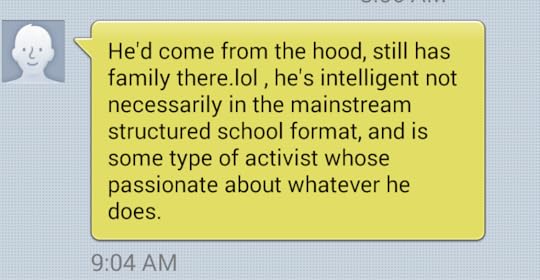
Zing!
THE BEST AND WORST BOYFRIEND EVER
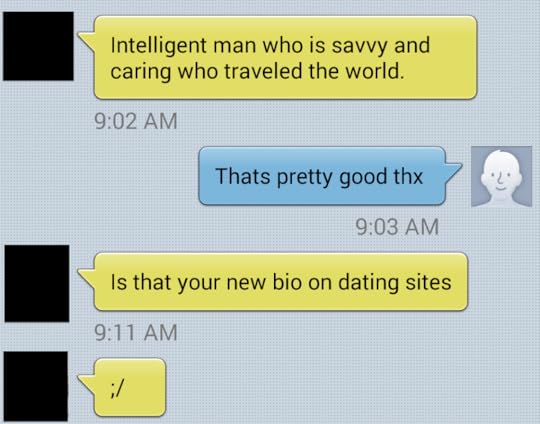
Don’t feel bad for him. It’s a slam dunk answer and he had plenty of time to put a ring on it, so to speak. I do think this would be perfect for my Tinder description though, thanks!
NOT THE ONE THAT GOT AWAY
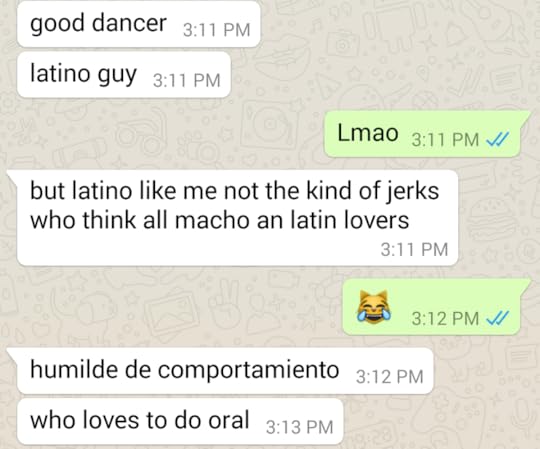
LOL *Fidgets uncomfortably, looks around to see who is watching, adjusts pearls*
Anyway, I was so impressed with these thoughtful answers that I started thinking how valuable it would be to collect responses from the other set of exes. The ones that I don’t talk to, where things ended badly, or I still say “Fuck that guy” every time his name comes up in conversation. Since we’re not friends and they don’t have a reason to protect my feelings, wouldn’t their analysis be even more useful in trying to find a mate?
I decided to reach out to a couple people that I hadn’t talked to in years and probably wouldn’t stop to acknowledge on the street. I don’t hate them because that’s exhausting, but they’ve made it clear that they might kinda hate me a little bit. Surprisingly, they responded pretty quickly:
THE GUY I LOVED ONCE WHO DIDN’T LOVE ME

If you don’t speak Spanish, here is the translation: It has to be someone open-minded, because only a person with a very high tolerance level and saint-like patience could ever deal with your crazy ass. Please don’t contact me again.
THE GREAT GUY BUT TERRIBLE FOR ME BOYFRIEND
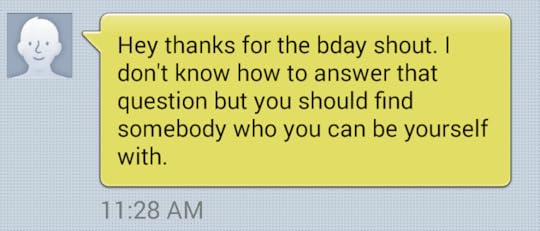
This is the spaghetti with butter answer. It’s the equivalent of eggshell white paint and “Have a great summer. KIT!” in the back of your yearbook. Perfectly nice but bland and uninspiring (kind of like our relationship, now that I think about it). And I’m pretty sure he went to sleep that night smugly assured that I still missed him.
But jokes on you, buddy! I spent all night on Tinder looking for a smart, well-traveled, open-minded Latino from the hood who dances well and is skilled in the oral arts. And I think I have a couple promising leads. 
This article originally appeared on the blog Those People and is republished here with permission.


What Akronites really think about Cleveland

Photo: Valerie Hinojosa
LeBron is ours and you’re lucky to have him.
Make no mistake, Cleveland. Your city may be on the front of his jersey, but there’s no doubt what’s in his heart. Just watch any interview about his upbringing. See much mentioned about Cleveland? No. It’s all Akron, Akron, Akron with the occasional mention of Swenson’s. Speaking of…
Nothing you have or could ever have beats Swenson’s.
Deep down you have to know this, right?
You’re welcome for helping your alcoholics.
Bill Wilson and Dr. Bob Smith founded Alcoholics Anonymous in 1935, two years after prohibition ended, in Akron, Ohio. So in a sense, Akron has prevented Cleveland from becoming the sloppy drunk mess of America (though nothing could be done about the Warehouse District of Flats in the 90s).
Your part of the Towpath is nice, but…
…Akron’s actually goes into downtown and has done so for years. Good luck cleaning up those environmental hazards so you can catch up with construction!
Bigger is not always better. Akron is its own city, not a suburb of Cleveland.
Yeah, Cleveland has been and probably will always be the bigger of the two. But Houston is also bigger than Austin and is there honestly any question where most eople would rather go? Akron may be small, but it packs a punch in history, culture, and the best is only to come.
Let’s talk about the Cuyahoga Valley Scenic Railroad.
Wouldn’t it be nice if you could take a train from your city into a national park or a charming small town like Peninsula? Just a hypothetical. Of course Akronites have known for years what that’s like with the Cuyahoga Valley Scenic Railroad dropping off and picking up just north of downtown. In the meantime, at least you have Independence. And who doesn’t get excited about going to Independence? Freeways for roads, enormous parking lots, and I hear there’s even an Applebee’s.
Don’t get me wrong, Great Lakes Brewing’s Christmas Ale is great.
But nothing beats the classic Christmas Ale recipe in Thirsty Dog Brewing Company’s 12 Dogs of Christmas.
Don-Mother Fucking-Drumm Studios.
That millionth artistic take on the Cleveland skyline plastered over just about every restaurant wall is really, really interesting. We get it. You heart CLE. Well, Akron hearts Don Drumm and his other-worldly Picasso-esque designs.
Where do you get a good waffle?
Lord only knows where you can get a good waffle in Cleveland. Seriously, how do you live? In Akron, it’s 100 percent always Wally’s Waffles in Highland Square for the win.
Alan Freed is Akron’s, too
Every Clevelander likes to brag about being the birthplace of rock and roll all because a little radio DJ by the name of Alan Freed started spinning rock records, cementing its popularity with the Moondog Coronation Ball. But gosh, where did Alan Freed get his start? That’s right, folks. WAKR Akron. You’re welcome for that little gift.
Akron basically kicks your ass on the music scene.
LeBron, Chrissie Hynde and Devo are hardly the only famous gifts to the world. Who do you have to thank for The Black Keys? Yes sir, AK Rowdy. 

A punch to the face in Panama

Ariel
“WHY YOU GO?” You asked in the only English sentence I’d ever heard you speak.
You made a fist and pretended to hit yourself in the eye, eyebrows arched and reaching as if to say, is this why, because I punched you in the face?
I grinned, shook my head. “No.”
“Por qué?” You implored.
Because, Ariel, there are Chilean and Argentinian women on the next island over. Because Nicaragua is calling. Because this is what travelers do.
“Because… yo necesito.” I said curtly in Spanglish. I need to.
Not a good enough reason was the squinty-eyed, pursed-lip look you gave me, as if you’d caught me in a lie. You were eight years old, living on your family’s tiny, remote Panamanian island of nine. I didn’t expect you to understand.
A part of me did feel guilty for leaving. Maybe I deserved the punch to the face. Foreigners. Travelers. We’re always appearing in places, making new friends, enriching our lives, leaving. Over one billion of us a year.
Some people believe that travellers should never go to places like your family’s island, Ariel. That we should be emotionally removed from village encounters out of respect for traditional culture and environment.
In some cases, maybe, yes, in many others, no.
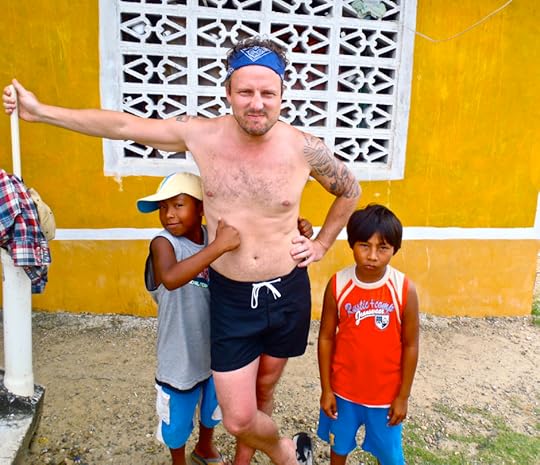
Rob hangin’ tough with Ariel and his bro. Photo by Dawson Simmonds.
Was your little fist in my face saying fuck you for coming into your family’s life? For convincing your dad to let you and your brother come along on our snorkelling trip even though you’re usually not allowed to because you’re too young? For showing you photos of my life back in Canada? For being los blancos, white guys, which your mom was actually starting to like? For being nice? Fun? For all of this…then leaving so soon? Fuck you because you’ll miss us?
It’s years later. I’m writing you from Vancouver. My home. The shiny city you saw on my laptop computer.
I watch the video of me and my travel companion, Dawson, play-fighting with you and your older brother. In it I can hear dogs barking alongside your mother, herself barking what sound like commands to your father; she speaks Guna, a lively, expressive language that could be a forgotten Mediterranean dialect.
I scan the scene for some semblance of remorse from you: I’m in a low, about-to-wrestle stance. You make a hardy little fist, you cock the little fist, then take two confident steps forward and throw a 1–2 combo to my face.
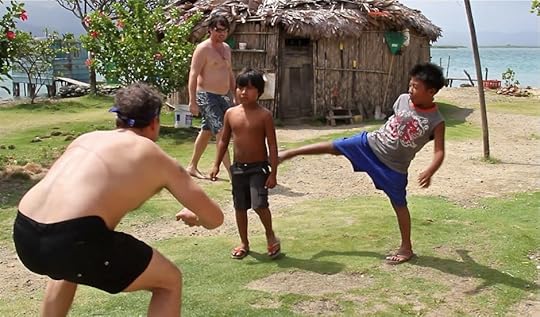
I’m in a low, about-to-wrestle stance.
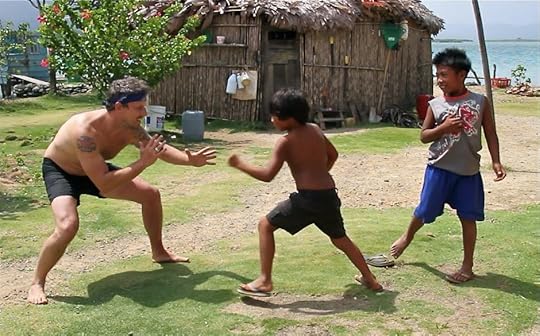
You make a hardy little fist, you cock the little fist…
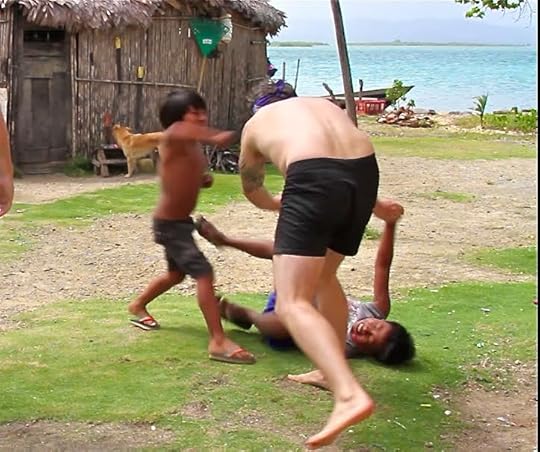
…Then take two confident steps forward and throw a 1–2 combo to my face.
Didn’t see that coming. Head rocks back. The jab stings. I cup my eye.
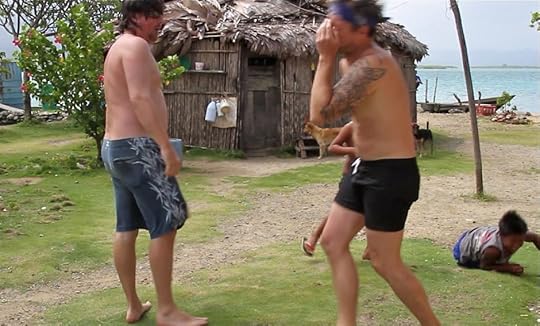
Didn’t see that coming. Head rocks back. The jab stings. I cup my eye.
I remember a hot sun directly overhead, a light Caribbean breeze drifting down from the San Blas Mountains on the mainland, cooling us ever so slightly, barely dispersing the dust we’d been kicking up in the courtyard. I jokingly wobble over to the camera and shut it off. My feelings are a little hurt. But nowhere do you show remorse.
In fact, Ariel, you beam with pride, which, I’m sure, flows through your blood like an unyielding river.
You are Guna after all–one of Latin America’s most independent and politically active indigenous peoples. Guna Yala, Guna Land, is your home; over 360 coral islands and a 230 km strip of jungle on the Caribbean coast of Panama from El Porvenir to Colombia.
Your ancestors rebelled against Spanish conquistadors for hundreds of years, and in 1925 led a successful revolt against the Panamanian government for the right to rule your land. But, Ariel, you probably already know this. The Saila, your spiritual leaders, have sung Guna history to you right from the beginning–down the line to your grandparents, from your grandparents to your parents, from your parents to you.
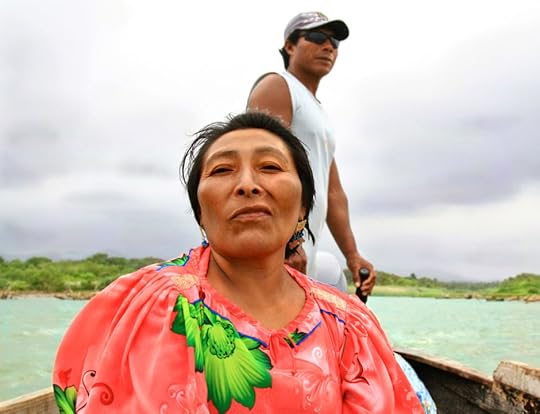
Ariel’s mom and dad.
I wonder, do the Saila sing of the latest struggles?
– – –
Dawson and I were in need of supplies — canned goods, water, beer. Your father agreed to take us to the nearest island village, a 7-minute trip in his motorized dugout canoe. You were bummed you couldn’t come. Remember?
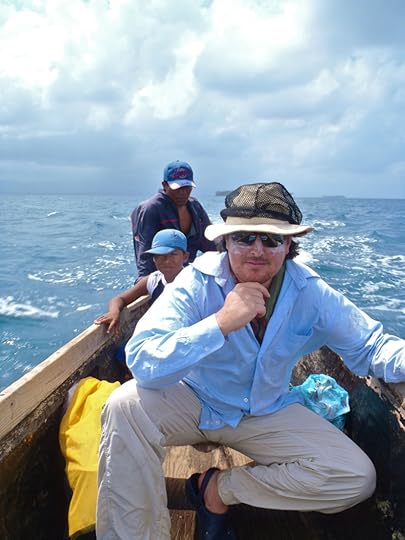
Dawson
But your father had his reasons.
Nearing the village we cut the outboard and quietly sliced through light chop. A pack of ruffians passing around a bottle of rum sat with their legs dangling off the dock, staring stone-faced as we approached. Barefoot, baggy jeans, bandanas and Tupac tees; they gave it their gangster best.
We clambered onto the wood slats. The young men demanded $5 each from Dawson and me in order to pass, and eye-stabbed us when we refused to cough it up. In an act of petty defiance they lobbed their empty rum bottle into the turquoise sea as we walked by. Tourists hate litter, after all. The bottle joined plenty of other flotsam lapping at the shore.
The neglected village was only marginally friendlier. We quickly bought our supplies and retreated back to the canoe. This time the dock posse were standing and waiting for us. They spoke Guna at your father, Ariel, in what sounded like a disrespectful tone. He stopped and slowly turned around. The lines on his face darkened as he recalled what could only be described as bad blood. He returned verbal fire, silencing them, causing them to look down.
Other Guna islands we’d been to were friendly and welcoming.
“What happened here?” Dawson asked in Spanish.
“Drogas,” he replied. Drugs.
“What did you say to them?” Dawson further inquired.
Your father just shook his head. “The Guna are in trouble,” he declared in Spanish.
According to him, the young Guna have no interest in becoming fishermen, or farming on the mainland; they either want to move to the city or sit around and do nothing like the boys on the dock. They listen for low flying planes and rumbling speedboats on route from Colombia under cover of the night. Then at first light the hunt is on for bales of cocaine and marijuana abandoned in the sea during a mission gone wrong. Easy money in a place where money isn’t easy to come by.
I thought of you, Ariel, as we headed back to the safe haven of your home. You have a mean right hook and a convincing scowl. Does this indicate a penchant for thuggery? Have you already started to follow in these boys’ footsteps? Little brother, I truly hope not.
We docked back on your island and your father looked back, pointing. “That is why I moved my whole family from there to here” he said in Spanish.
At the dinner table you were silent and pouty. We had taken you on all our other excursions, why not this one?
I asked Dawson to translate. “Ariel, you didn’t miss anything,” I said. “Sad people live on that island.” You stopped pouting and looked at me. “One day you’ll understand.” I continued. “For now, listen to your father when he tells you to stay away from the strung out village and its wannabe gangsters. Steer clear of the drogas and the tourists looking to get high…okay?”
You looked at your father. “Okaaaay.” You said in English as you nodded.
– – –
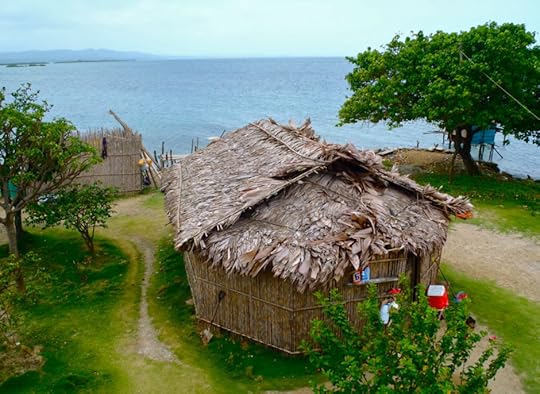
The cooking hut on Ariel’s family’s island. Photo by Dawson Simmonds.
After a week on the island, the decision was made to head north to Costa Rica and then Nicaragua. I placed my bags on the balcony next to Dawson who was snapping a few final photographs. The smell of fish stew and wood smoke wafted up from your grandmother’s cooking hut.
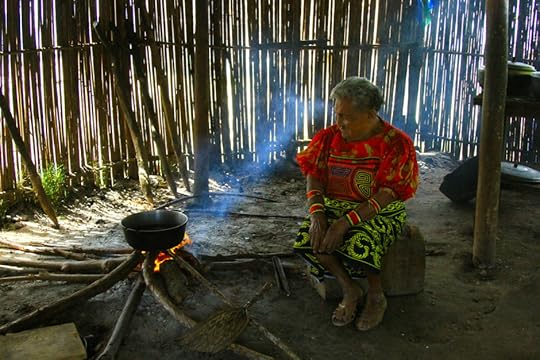
Grandma in the cooking hut.
I looked down into the courtyard to see you and your brother watching us from below. You both looked thoroughly dejected, as though Rob and Dawson were an engaging and humorous television program about to be switched off, just as it started to get good.
“They don’t look impressed, eh?” I asked Dawson.
He turned away from his camera, looked at you. “Nope,” he said.
“What are we supposed to do, stay here forever?” I wondered aloud. Not have come at all?
Ariel, if I believed as some people do, that travellers like Dawson and me should never have visited your island out of respect for your culture, I never would have met you and your family. I never would’ve watched your mother stitch colourful, psychedelic mola patterns into a traditional blouse. I wouldn’t have helped your grandfather clean fish as he reminisced about Panama City in the 1970s. I never would’ve tried the fire-roasted meat of an animal I’ve never heard of, or squatted over a gaping, bamboo hatch and pooped straight into the ocean.
I’m not interested in continuing the frat party wherever I go. Nor am I oblivious to my footprint. I’m not into the staged authenticity of a “traditional Guna village” like that which is offered on other more touristy islands. And I’m not hell-bent on witnessing what no one else on Earth has.
But I confess, I don’t know how to be more removed. I relish in meeting people, listening to their stories, discovering the idiosyncrasies that make their culture so different from mine.
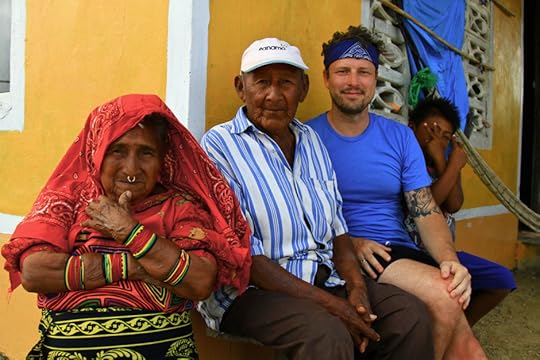
Rob with Ariel’s grandma and grandpa. Photo by Dawson Simmonds.
Had I suppressed my urge to connect with you and your family, perhaps I would not have been reminded of how people living simply, in rhythm with their natural surroundings and their close-knit community, are often more content and at peace than where I come from.
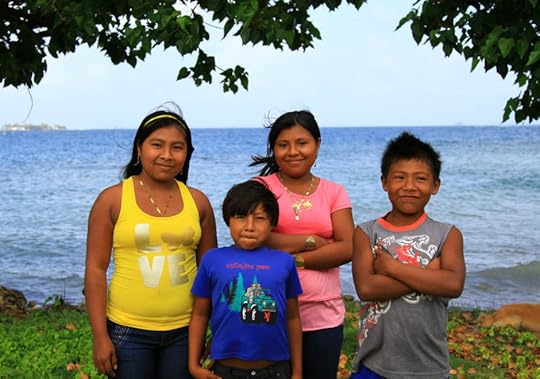
Ariel with his sisters and older bro.
One day when I was sharing a beer with your grandfather I asked him if he ever wished he could have raised his family in Panama City, or even somewhere in the US or Canada. He shook his head.
“No”, he said in English, “You pay us money to be here!” He chuckled.
“Look around.” He pointed to the mainland, to the islands dotting the horizon. “Beautiful.”

Guna Yala
We have all we need…right here,” he said, jabbing his finger at the ground.
If I had been removed emotionally from your family, Ariel, I wouldn’t have been reminded of this simple fact. I would not have bonded with your family and you wouldn’t have been sad to see me leave and I wouldn’t have caught your little fist with my face. But I did.
Culture and identity is our expression of our place in the world. As a guest in someone’s country, someone’s home, I carry awareness with me of who I am and where I come from. When I encounter a new friend, shake their hand, engage in conversation, share stories over drinks, teach them English swear words, something new always emerges. It’s discovery and interconnectedness and identity. For me, as the world takes increasingly more leave of its senses with each passing year, the need to identify with what and who is at hand becomes desperately important, especially if we’re all to coexist in a reasonably harmonious manner.
– – –
Dawson and I gave a round of hugs and handshakes to your family before we stepped into the bobbing dugout canoe. The clouds had parted and the late morning sun was already hot on our backs.
I knelt down to face you, Ariel. Remember? You scrunched your face into tough-guy look, then made a fist with your right hand and punched it into your palm. I shielded my eye socket with my hand. You held your scowl for a few seconds, until your lips began to quiver. When you couldn’t hold it any longer you cracked a smile, then burst into laughter. We hugged and hi-fived.
“You come back?” You asked.
I nodded, yes.
“Be good.” I said.
As the canoe puttered away from your island, and with your whole family waving to us, your father echoed your sentiment. “Come back anytime!” He yelled in Spanish. “We are Guna! We will always be here!”
All images by the author, Rob Chursinoff, unless stated as being by Dawson Simmonds.

Born and raised in Massachusetts

Photo: David Salafia
1. When you talk about the Cape you point to the place you are referring to on your arm.
We have all spent summers testing our abilities to weather the cold with plunges in Chatham’s seal infested waters and the personality filled banks of P-town.
2. You delight in the simple pleasures of a whoopie pie.
You even know how to make a whoopie pie and then how to demolish four of those bad boys in one sitting.
3. Bean boots are your everything.
You’ve even worn them out to the clubs.
4. When you were a kid you ate hoodsie cups like it was your job.
Those delicious chocolate and vanilla cups of ice cream simplicity were the staple treat in your Grandmother’s refrigerator.
5. A good weekend as a kid consisted of milking goats at Old Sturbridge village and playing Jacob’s ladder.
In fact you wanted to be one of the actors who got to wear a bonnet every weekend and churn a bit of butter for fun.
6. You don’t care that it’s no longer the 90’s, you still say ‘Wicked” all the time.
Enough said, life is wicked. There is no better way to put it.
7. You have partied at UMASS.
You have regretted partying at UMASS. You have wished you were invited to a party at UMASS.
8. Any good road trip starts with a stop at Dunkin Donuts.
Sure, there is Krispy Kreme, but only Dunkie’s (as any local will call it) does buttery croissant sandwiches, hash browns, and a bangin’ cup of joe. Plus who can forget munchkins? The ultimate donut experience.
9. No matter how much baseball you actually watch, you always know how well the Red Sox are doing.
Chances are regardless of your actual knowledge of the sport you have seen a game or two at Fenway, because just the atmosphere is enough of a draw.
10. You tell people you are from Boston, because no one knows where Amherst or Whatley are.
She may be a small city, but she is mighty, and with that accent there’s no denying it.
11. You live for the outdoors.
When you were a kid it was common to pitch a tent in the back yard and spend the night outside under the stars. In fact, in general your backyard was a magical land of endless exploration.
12. When you were a kid you had a ritualistic snow day dance.
Mine included a spoon under my pillow, three twirls with my pants on backwards, and a little diddy that had to be sung.
13. You’ve actually called in and reported the location of gnarly potholes.
That’s right. In Mass we watch out for our fellow drivers even when winter does not.
14. You take the T and eat Subway.
The public transit system is knowingly referred to as the T, and a sandwich artist obviously works at Subway.
15. You can spell Massachusetts.
Despite all its double letters.
16. Sometimes you forget your R’s.
17. You drink coffee.
Lots of coffee. Coffee with clam chowder. There’s nothing that coffee doesn’t go with. 
What’s more dangerous — skiing or hiking? Find out with this infographic.
Are you more likely to die skiing or hiking? What’s more deadly: climbing Denali or in the Himalayas? Skydiving or bungee jumping? Those questions and more answered in this infographic, “Your Chances of Dying.”


6 American habits I lost when I became a nomad in Southeast Asia

Photo: Scott Sporleder
1. I stopped living a rushed lifestyle.
One of my first personal transformations when I started living and traveling around Southeast Asia was that of slowing down. Way, way down.
Southeast Asia lies in the tropics. It’s hot and humid year-round. Outside major cities, people tend to spend their days at a leisurely pace. There’s always plenty of time to relax, sit around and chat with friends, and attend religious ceremonies with family. Thais say, “Sabai, sabai.” Take it easy. While Indonesians use, “Pelan, pelan.” Go slowly.
Unlike Americans, Southeast Asians generally don’t consider work the end-all-be-all priority in life. Family, friends, religious customs and leisure time are truly just as important. Before arriving in SE Asia, I had always spent life in a mad, packed-in dash. I would jump up early every morning, dash off to work or classes or sports or errands then continue running until bed time.
After arriving in Bangkok to begin my new life exploring SE Asia by bicycle, it took a couple months, but soon enough I transformed my daily life into a much more leisurely affair. I continued getting up early and keeping myself occupied all day. But more of my daily hours became devoted to chatting with locals, reading books on my guest house verandas, and sipping espressos while over-looking the sea at Sanur, Bali or Langkawi Island, Malaysia. During the evenings I’d go see a movie at MBK in Bangkok or when I was in Kuala Lumpur, KLCC. And my afternoons were usually spent suntanning at my favorite beaches like Amed Beach in Bali or Tonsai Beach in Thailand.
2. I stopped getting so aggravated whenever I had to wait in a line.
At heart I am not a very patient person. I like efficiency, planning and having everything run smoothly. So I get particularly frustrated when I have to wait in a line. But waiting is an unavoidable part of daily life in Southeast Asia. Customers must wait in lines at banks, post offices, clinics and hospitals, train and bus stations, grocery stores, movie theaters — everybody waits, everywhere. Buses often don’t have set schedules. Journeys begin when the buses fill up.
Locals never bat an eye at any of this. They just wait patiently for as long as it takes. Sabai, sabai.
I, on the other hand, used to stand in lines with mounting internal aggravation. I’d want to tear my hair out, scream at the top of my lungs, demand faster service. Instead I’d quietly heave a heavy, frustrated sigh and squirm. After months of such self-induced drama, I finally found a way to keep my cool.
I started using all that empty time to focus on something fun, useful or productive. I started doing stretches, reading books, updating my daily budget, planning the next step of my trip, texting friends, daydreaming about recent adventures or figuring out my clubbing outfit for that evening in Bangkok.
Once I started creating things ‘to do,’ my emotional state greatly improved. Instead of lines being cesspools of negative aggro energy, lines became places where I enjoyed activities, got productive and put myself in a joyous mental state.
3. I gave up a life so separated from nature.
In America’s four-season climates, homes protect people from the continually-changing, often uncomfortable or even dangerous weather conditions. As Americans, our homes are our nests, our cocoons, our security blankets.
In tropical countries, there’s not nearly as much need for buildings to protect people from nature. Many traditional architecture styles are open-aired and more directly connected to the natural world. Open-air balconies, wall-less restaurants, non-glassed windows, open pavilions and other exposed building elements are common.
In SE Asia I spent most of my life outside, connected to nature. I ate at open-aired restaurants and drank at open-aired bars and cafes. I sat outside to read, work online and meet friends. I even got massages outside, in open salas (pavilions) set in gardens and on beaches. Sometimes I even showered while gazing up at trees, flowers or the bright blue sky.
I walked or cycled between stores, restaurants and my budget hotel. When using public transportation, I was often basically outside as well. I took songtaos (open-aired pick-up trucks), tuk-tuks, trishaws, rickshaws, open-window buses and trains.
The only time I was really surrounded by walls there was when sleeping.
4. I stopped craving familiar western food.
Southeast Asian cuisines are exceptionally varied and delicious. They also tend to be healthier. Most warungs (local restaurants), talads (Thai markets), pasars (Malaysian & Indonesian markets) and street stalls serve food cooked on the spot, from scratch, using fresh, locally-grown produce and freshly butchered meats. Not fruits, vegetables and animal products that have been sitting in large grocery stores wrapped in plastic. Dairy products are pretty much absent, thus avoiding many heavy fats and cholesterol found in western cuisines.
Asian foods are so healthy, tasty and varied that I simply ate them all the time, for every meal, every day. I even preferred Asian breakfasts such as khao tom moo (rice soup with lean pork), soto ayam (rice and noodle soup with chicken), khao niao gai (sticky rice with chicken), mie goreng (stir-fried noodles), nasi lemak (rice with fish and veggies), roti canai with te tarik (pan-grilled bread and gravy with frothing milk tea) and Chinese dim sum.
5. And I pretty much dropped cooking all together.
One of the many wonderful aspects of life in Southeast Asia is the fact that all of those delicious Asian meals are available everywhere, and they’re cheap.
No matter where I traveled or lived in the region, I could quickly and easily find at least one great warung or street stall open. For the equivalent of $1 to $3 USD I could eat kao mun gai (chicken on rice), nasi campur (rice with mixed vegetables and meats to order), som tam (papaya salad), pad Thai goong (stir fried noodles with shrimp) or masakan padang (Sumatran-style mixed rice dishes) just about any time of day or night. And I could do so within a 5-10 minute walk from my house.
Habitually going out to eat freed up so much daily time and energy that it was mind-boggling. There was no need to plan meals, make a shopping list, go grocery shopping, bring food home, put it away, cook, pack up and put away leftovers or clean. No food scraps, dishes, counters, tables or silverware to clean. Nada.
Instead, I just walked down the street for a few minutes, selected a choice eatery, pointed out which dishes I wanted, sat down and dug in.
6. I let go of always needing to understand what was going on.
Living in Thailand, Indonesia, Malaysia and the Philippines — countries with very different languages, customs and cultures than I was used to in America — I learned that there was often no choice but to embrace uncertainty and confusion. It was simply not always possible to know what the heck was going on.
For well over a decade I traveled, lived and worked around SE Asia. I made many local friends in Bali, Singapore, Thailand and Malaysia. I spoke conversational level Thai, Malay and Indonesian. Yet I still didn’t always understand what was happening around me.
Sometimes I got the basic gist of things, but didn’t catch the details. Other times I had absolutely no idea what was up. And the thing was, I really didn’t have any way of finding out, either.
Even with years of experience, there were still language barriers, lack of cultural knowledge and the tendency of people in SE Asian countries to not care about details, to not necessarily speak the truth and to not be concerned about the why’s and how’s of things. In many situations there was a good chance the locals didn’t actually know what was going on either. And I grew to find out, that that was all okay. 
August 27, 2015
Welcome to Tajikistan, where celebrating your birthday is a crime
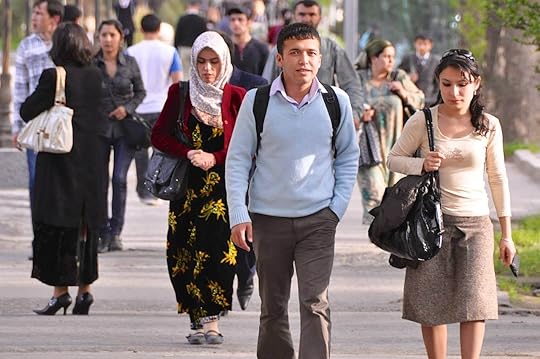
Photo: Veni
We hate to break it to you, but it’s probably time to cancel that epic birthday bash you were planning in Tajikistan.
It’s not because of the Central Asian country’s extreme remoteness, or its stifling political climate.
It’s because Tajikistan is just no place for good parties, and 25-year-old Amirbek Isayev has learned that the hard way.
Isayev was fined about $600 — roughly four times the average monthly salary in the impoverished and landlocked country — after a Tajik court ruled last month he’d violated a 2007 ban on public birthday celebrations.
“I was aware of the law,” he told RFE/RL’s Tajik service this week, “but I always thought it was against people who spend lots of money to throw lavish parties.”
That’s partly true.
The law “on regulation of traditions, celebrations and rituals” was aimed at reducing the financial burden on Tajik families who’ve been prone to outdo themselves over a range of celebrations, RFE/RL reports. It stipulates that birthday parties must be celebrated at home among family.
That’s exactly what Isayev claims he was doing.
Except at one point, he and his girlfriend decided to head out for a cake, stopping by a local bar on the way home to join some friends for a drink.
While there, two buddies reportedly smeared his face with the cake — but no one congratulated him on his birthday, claims a waiter who was a witness in the case.
Still, photos of the occasion, which Isayev himself later posted to Facebook, apparently drew the ire of local authorities — who were clearly in no mood for a party.
By Dan Peleschuk, GlobalPost
This article is syndicated from GlobalPost.

German student living on trains

WHEN LEONIE MÜLLER GOT INTO A DISPUTE with her landlord, she did what countless people before her have done: she decided to move out. What makes Müller different from all of those people before her is where she chooses to live: on trains. Müller realized that the cost of a monthly train pass (around $380 USD) cost less than her previous apartment (about $450), so she decided to just live on the train instead.
The 23-year-old attends Tübingen University near Stuttgart, and is able to carry her tablet and school books with her, as well as clothes and some toiletries. She stays with her family, friends, and boyfriend when she can, and when she can’t, she preps for the day on the train.

Müller getting clean on the train.
“I want to inspire people to question their habits and the things they consider to be normal,” Müller said in an interview with the Washington Post, “There are always more opportunities than one thinks there are. The next adventure is waiting just around the corner — provided that you want to find it.”
Müller blogs about her life on the trains, and plans on using her experiences in her undergraduate thesis. You can follow her on Facebook here.
Matador Network's Blog

- Matador Network's profile
- 6 followers

