
Matador Network's Blog, page 2060
August 30, 2015
22 things you didn’t know about North Korea
Returning from North Korea, there were things that I could only fully grasp after I went through the notes, the recordings, the videos, and the photos. In every shot, I saw something I had not seen when on the ground. The days were so intense that I felt bombarded by an overwhelming amount of information; it was like spending 13-hour days in a museum with a guide going through every detail.
These are some of the things that surprised me most.
All photos by the author.
1. They have Coca-Cola and Macbooks.
It used to be said that North Korea was the only place one could not find Coca-Cola. Those days are gone. Despite the embargo, commonplace American and European brands were easily available. The desk in Kim Jong Il’s train carriage at the Mausoleum had a Macbook. French and Chilean wine was available on the supermarket shelves. The Windows XP logo was bouncing on the computer screens at the Library. It’s true, however, that several things are not available, like camera memory cards or non-local produce.
2. There is shopping to be done.
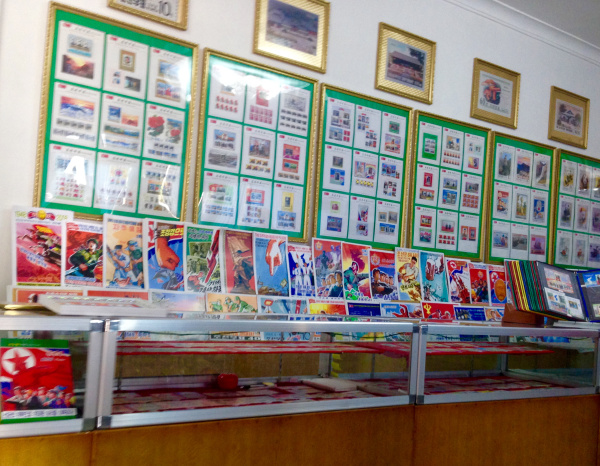
We were told that we could buy some souvenirs but that we would not need a lot of money because everything was included. There were lots of opportunities to buy kitsch souvenirs and other not so kitsch things. North Korea is isolated but most of the international brands have made it into the country. There was Chivas and Coca-Cola. I could buy Tim Tam and Butter Cookies. There were propaganda posters, postcards, stamps, and books to buy and unscheduled activities we could join, like an evening at the Fun Fair, the Circus or even a football match. There were also several microbreweries to stop for a drink.
3. They have lots of microbreweries.
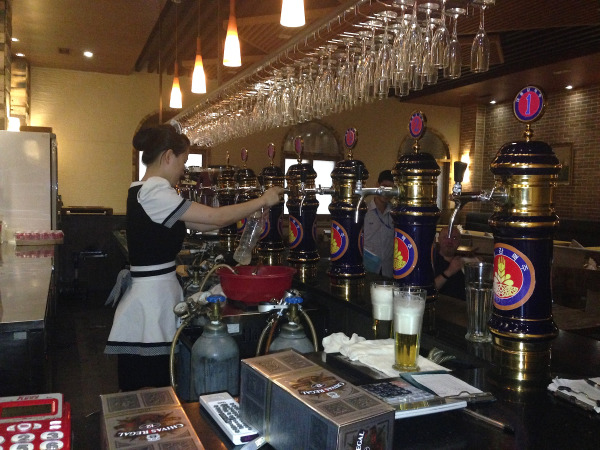
Think that North Koreans don’t drink? Think twice. Soju is well known for being the hard liquor favored by the South and Koreans are known for drinking you hard under the table. They may get red cheeks, as my former Korean flat mate used to point out, but they surely know how to drink. And North Korea was no exception. With rice and barley being widely available, microbreweries have sprouted up in the recent years. Pretty much every bar or hotel makes its own small bulk production. We had scheduled two visits to two different micro-breweries and they were pleasant surprises, even to someone who doesn’t drink beer.
4. Despite what the media shows us, North Koreans do have fun.
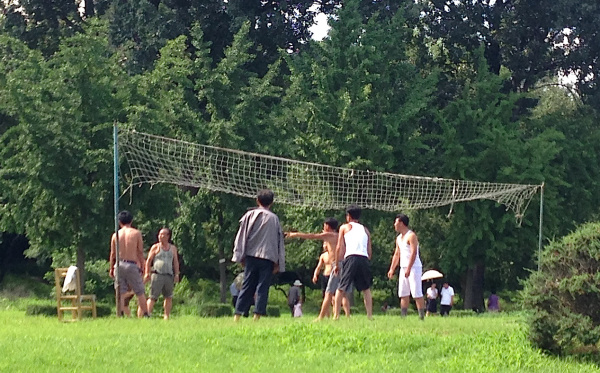
I had imagined the country to be dull, grey and boring with not a lot in the way of entertainment. Not so. Koreans love karaoke, and at every meal the TV was turned on with the Korean karaoke lines. At the School Children’s Palace we attended a children’s talent show complete with singing and dancing. The Fun Fair was crowded; at 9pm there were lines of locals queuing to get on the rides. The beach was packed with children and adults having fun in the water. We spotted a water park through the trees on one of our nature walks and there were several locals enjoying the coolness. In the playgrounds and parks scattered around Pyongyang, children were being children. They were loud, their clothes were untidy and they were running around playing football. One afternoon, as we were taking a walk in one of the parks, we heard the sound of music and singing coming from a pagoda. A group of local men and women were singing, playing the drums and dancing. It did not take long before one of the ladies pulled me in. I found myself dancing to the clapping of the audience with the lady holding my hands and showing me true Korean moves. There were also several groups of men playing volleyball.
5. You CAN take photographs.
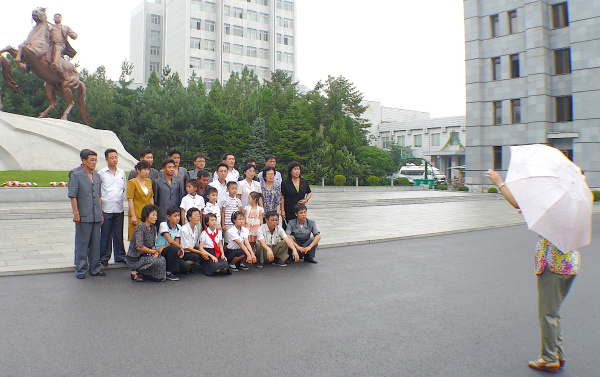
We were warned that photography was restricted, but in reality I took over 2,000 photos and recorded almost 100 Gb worth of video in six days. The only times when I was advised against taking a photo was when we approached a military post, but that is the case in most countries. I had to leave my camera outside at the War Museum and at the Mausoleum, but generally I had the freedom to shoot otherwise.
6. The soldiers are friendly.

There are 1,000,000 soldiers in North Korea and 800,000 reservists making this the 4th largest army in the world. Soldiers are everywhere. They are easily recognizable by their khaki uniforms and red stars but they do not carry guns, except for the ones at the road checkpoints. We interacted with soldiers at the DMZ and the Concrete Wall and, through the translations of our guide, we had regular conversations about our country, the weather and our jobs. The soldiers were smiley and interested to hear our opinions.
7. There are lots of cell phones (but no internet).
As an ex telecoms consultant, I knew that North Korea was one of the last countries to launch 3G and the one with the lowest mobile phone penetration. What surprised me was how many people have jumped on the communication wagon. Internet had just been launched on mobile but it was unclear whether people had it. Our guides did not know what 3G was, but they were on the phone all the time, reporting our whereabouts and checking on our next appointment with the “Big Orwellian Brother.” In the streets, I saw people talking on the phone while riding bikes and scooters. I even saw soldiers texting. However, there is no roaming so your phone will only work at the DMZ where you can pick the South Korean signal up.
8. You can only get there from two countries.

North Korea can only be reached via Russia and China, in turn countries which are relatively hard to get visas for (although China does now have the 72-hour transit visa that facilitates the connection significantly). There are flights from a couple of Chinese cities but the easiest is Beijing. From Russia, one can fly from Vladivostok, a pretty isolated city in itself. For a more scenic ride, take the train from Beijing.
9. They don’t stamp your passport.
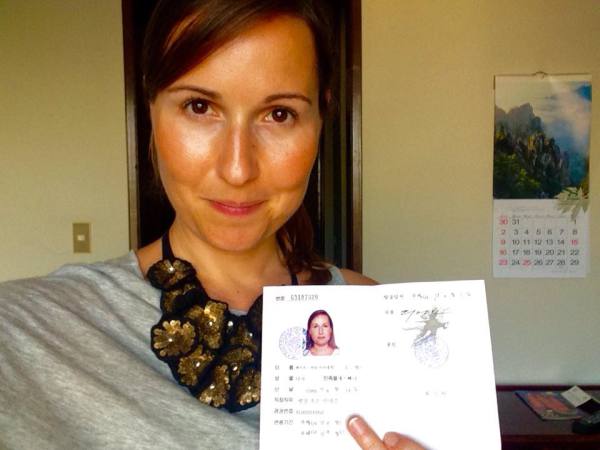
Like Israel, North Korea is the only other country that will not stamp your passport but rather a separate paper. Our visas were processed by the travel agency and handed to us in Beijing. We used them to get into North Korea and the guides took them when we checked in into the hotel, together with our passports. We only got both back on the last day, ready to go through immigration again and hand them back to the officers. Our passports had no mark of the visit.
10. You cannot try to convert others.
Proselytism (trying to convert others to another religion or opinion) is one of the most serious offenses and we were repeatedly warned against this. In the past, few people have got into trouble for leaving Bibles behind, or for trying to get them in. All books you bring in are checked at customs control. Every time I sneezed, there was no “Bless you” from the guides. When I said it to them, I received silence back. I asked the guide what they said when someone sneezed: “Nothing, we say nothing”. Religion in North Korea has been replaced by a personality cult towards Kim Il Song, the Eternal President, and Marshall Kim Jong Il. The ideology closest to a religion is the Juche Idea. Created by the President and the basis for the North Korean calendar, which starts to count on the year of his birth, Juche literally means “subject” and the entire concept revolves around self-reliance and putting Men at the center of the universe. There were no churches or mosques, with the exception of an Orthodox church used by the “Russian embassy people,” as our guide pointed out. Surprisingly, Freedom of religion is a tenet of the Korean constitution, although the country is atheist. Our guide pointed at the traditional religion, Ch’ondo, that rose in importance in the 19th century, as the religion Koreans follow, privately.
11. It’s easy to organize your visa for North Korea.
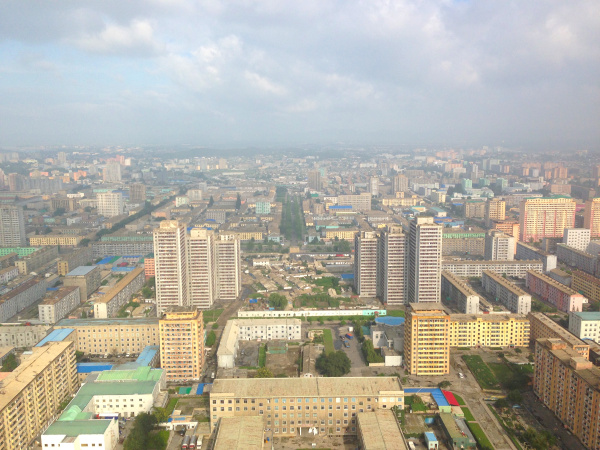
The most common question I’ve got is, “But how?” North Korea is hard to reach in the sense of isolation. You first need to get to Beijing or Vladivostok to get there, and they both require visas that are a pain to get, or downright difficult in the case of Russia. And you need a double entry because you have to fly via Beijing both ways and on the way there, you must spend a night in the Chinese city to get the brief from the travel agency before you board.
However, once you overcome this hurdle, getting a visa and organizing a trip to North Korea is easy. It only required an email exchange with the travel agency and a few basic papers like our passports and a photo, all sent via email. The visa application needed to be submitted four weeks in advance and was dependent on our itinerary. We had to close that before our paperwork could be processed. Our passports were never taken for visa processing.
We also had to sign a couple of documents for the protection of the agency. One stated that we would not do anything we were not supposed to. The other recognized that we were not journalists. The travel agency could get their license revoked if we were secretly entering as tourists but were indeed journalists. Journalist visas can be obtained, but I suspect they would take much longer. The acknowledgement paper accepted personal travel blogs and only forbid me from entering as a contracted writer or journalist. I promptly disclosed my blog’s address and this made it to the guides, who knew the name of my blog, albeit they thought it was a travel company and I suspect they never saw it on the internet. The only people who would have a hard time to get in are South Koreans, who are not allowed. Americans, despite being despised and hated throughout the country, can easily get in via the same process, but must fly and cannot take the train. They may not feel very welcomed. “They are arrogant and ignorant and too young to care about the war. They don’t care about anything”, concluded our guide.
12. There are modern cars on the streets.
We came out of the hotel one evening to a brand new Mercedes Benz SUV. Elsewhere, cars did not look dated or broken down, DPRK is not the Cuba I visited in 2001. North Korea still trades with Russia and China. Cars from both these countries, Europe and even Japan, were seen in the streets. They were not owned by regular Koreans who cannot afford the $10,00 price of an average car on $100-200 a month, but companies (and diplomats) do indeed drive modern cars.
[/mn_slideshow_slide]
13. North Korea has its own timezone.
Since Liberation Day in 2015, aka 15th August, North Korea has a new time zone. “Pyongyang Time” is now 30 minutes behind Japan (GMT+08:30) which is what it was before Japanese colonization.
14. Personal style doesn’t exist.
Remember the 28 approved haircuts? That applies to clothing too.
This was expected of a country that produces most of its light industry products but the uniformity of dress styles and clothes was hard to grasp in real life. Women dressed in pencil skirts, knee long, and with short or long sleeve shirts in standard colors. Patterns were rare, as were bright colors, reserved for the beach. Children were almost always dressed in their uniforms, with navy blue trousers, white shirts and red scarves that make the Young Pioneers uniform. Men wore long trousers with white or blue shirts. Seeing so many people so homogeneously dressed is unthinkable in today’s consumer society. In North Korea, it is the norm.
15. They play BBC and Al Jazeera.
We were not going to bother turning on the TV, expecting that it would show propagandistic programs in Korean and the pervasive karaoke lines, but we were surprised to find the BBC World and Al Jezeera on. We happened to be there on the week of the celebration of the 70th Anniversary of the end of the Japanese Struggle and of World War II and the BBC was uncensored, openly broadcasting all the Japanese leader’s speeches. The announcement of the execution of the DPRK’s Vice-Premier in May 2015 was also played on the news on the day of our departure. For a country that is so closed off and which has regularly been referred to as being covered with a “mosquito net”, the easily availability of foreign independent news channels was a very strange find. We could not help but wonder if it had been a mistake, forgotten behind after the visit of a foreign official. As we watched, it felt as if we were doing something wrong.
16. You won’t find media of the current leader.
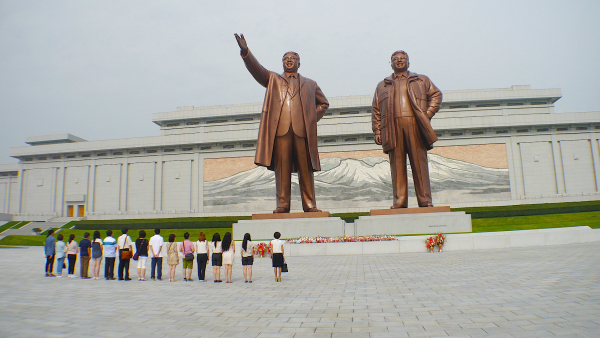
Everyone will have seen the propaganda billboards and the various photos of Kim Il Song and Kim Jong Il across the city. The country is big on personality cult but, that is exclusively aimed at the Eternal President and Marshall Kim Jong Il. Where is the current Leader? He features nowhere on official sites. His photo is not included, his name not mentioned. At every visit, when the number of times that each Leader has visited the site was recited, Kim Jong Un was never mentioned. “Why is the current Leader never mentioned or appearing on photographs?”, I asked the guide on the last day. She had heard that one before. “Because he is very modest and does not like to be photographed.” And the answer ended there. We could not be sure of the real reason but he sure featured on every newspaper providing “Guidance on “so and so” industry” not looking very shy.
17. Visitors don’t use the local currency (the Won).
You cannot get your hands on local Won but can interchangeably use Euro, USD, and Chinese Yuan at any point. Often times, you will receive your change in a different currency to your payment. They seemed to prefer Euro the most but were always accepting of all three. Getting Won out of the country is illegal and we certainly never saw the currency anywhere.
18. It’s not as dry and barren as you might think.
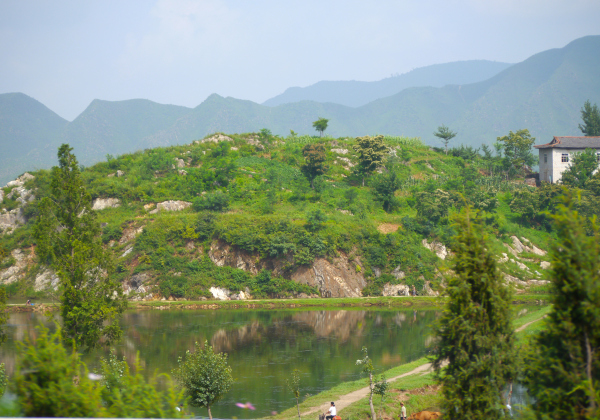
North Korea made the news in the last few years due to famine and starvation killing many people. We expected the countryside to look arid, dry, and barren. Instead, we found it to be largely covered in mountains with various rivers and streams cutting through. We drove by lakes and through valleys and gorges and all we could see was farmland stretching as far as the eye could see. However, looks can be misleading. Famine and starvation looms over North Korea this year too, due to poor rain and snowfall severely decreasing the amount of water for rice fields, and with such little availability of farmland (20% of the territory) the country suffers from dependence on agriculture, lack of international trade, and limited mechanization.
19. The guides are warm and friendly.

This was the hardest element of the trip to anticipate. I did not know if the guides would be serious, fun, easy-going or officious and I was positively surprised by their warm if serious personalities. Towards the end of the trip they opened up more, but they remained soft-spoken and polite. We did not ask compromising or difficult questions and were largely well behaved, something which surely helped make them feel more at ease. With time, they gave us more space, although we were escorted at all times, and we progressively entered their lives a bit more. Contrary to other people’s experiences, ours was that of a well-trained tour guide. They fell asleep in the car journeys as much as we did and were helpful and willing to adapt the trip to our taste. We were asked, repeatedly, if we were happy and if we were enjoying the trip. “Our company has told us that you paid a lot of money for this trip so we need to make sure you have the best time.” This was a sentence that stayed with me and which surprised me, for customer service I had assumed, was something North Korea would not worry about.
20. There are UNESCO sites in the country.
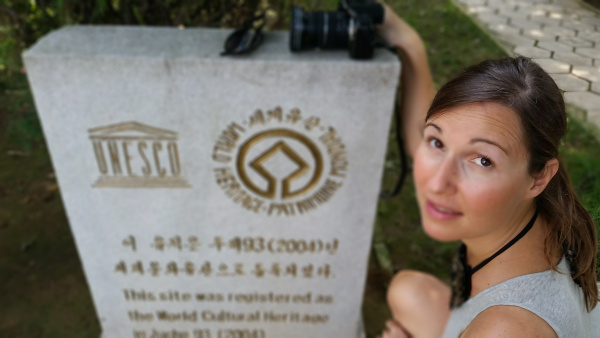
Most people do not consider the DPRK a cultural hub. However, aside from the various man-made, Socialist and personality-cult related sites, the country also has two UNESCO listed sites, the Koguryo Tombs and the Complex and relics of Kaesong. We visited both and, although they are not as well-documented as they could be, they were both very interesting representations of the country’s heritage.
21. Despite famine conditions, visitors get way too much food.
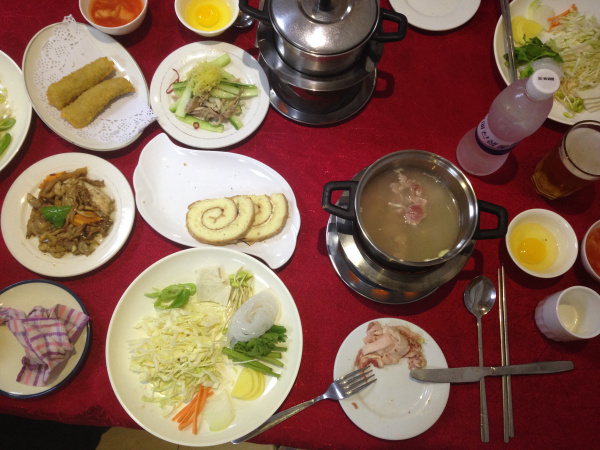
North Korea is sadly known for the famine that killed north of half a million people in the 90s. Fears of such events repeating this year are reverberating in the international media. I was very shocked to see so much food left over after each meal. There was no way we would ever be able to finish the food that was provided, there was simply twice as much every time. However, this is expected as Koreans will make sure that there is always enough food and so, if you were to finish it all, they would worry that they didn’t provide enough. Elements of propaganda and staging a lack of food scarcity could also play a role but, most likely, it is the cultural values of hospitality that are so common in other cultures too.
22. They consider North Korea just Korea.
In the DPRK, the official name of the country, they do not refer to themselves as North Korea, they refer to it as Korea. In their minds, and certainly in their maps and materials, the country appears as one. There is no border or separation. To them, there is no South and North Korea, both countries are simply Korea. Perhaps strange, but always observed by the guides and by any materials we saw. We were not to ever refer to the country as North Korea, we could however say, the Northern part of Korea. 
This article originally appeared on Once in a Lifetime Journey and is republished here with permission.


August 29, 2015
Crazy tricks on a road bike
Follow Matador on Vimeo
Follow Matador on YouTube
Pro trial rider Vittorio Brumotti does what everyone thought was impossible to do on a road bike: insane stunts. Although the video is a tribute to Martyn Ashton, creator of the Road Bike Party film series, Brumotti takes it up a notch for our eye-popping pleasure. 
14 differences between a normal mom and a Brazilian mom

Photo: Fotostrasse
1.
A normal mom will give you a normal birthday party with family and maybe a few of your friends.
A Brazilian mom will give you a mega-ultra party filled with candy, cake, brigadeiros, bala de coco, coxinhas, pão de queijo, beijinho, decorations, a whole theme, a clown, a princess, Ben 10, Adventure Time, and Chaves & Chapolin.
2.
A normal mom will tell you that the socks are in the left drawer. If you don’t find them there (because you really didn’t look for them), then she’ll think she’s made some kind of mistake.
A Brazilian mom will tell you that the socks are in the left drawer. And if you don’t find them there (because you really didn’t look for then), she’ll scream from the other side of the house: “Se eu for ai e achar, eu vou esfregar na tua cara!” Or: “If I go there and find them, I’ll rub your face in them.” Brazilian moms have a low tolerance for BS.
3.
A normal mom will take one shower a day.
A Brazilian mom will take at least two if it is spring, autumn or winter. But if it’s summer, that number’s going to go up to 3 or 4. It’s not just that we’re a warm country, a Brazilian mother has a ‘harsher’ sense of personal hygiene than the rest of the world. She likes her things and her people clean.
4.
A normal mom will tell you to bring a jacket.
A Brazilian mom will ask for the love of god and everything that is sacred for you to bring a jacket. Because it might get cold. And you might get sick. And she loves you too much to even think about you getting sick. And just in case, she’s already hidden an extra jacket in your backpack.
5.
A normal mom will hire a babysitter or even a nanny to help her with childcare.
A Brazilian mom will hire a nanny, just so she can keep a close eye on that nanny. Because it turns out, she doesn’t trust her cub with another woman and she’ll end up having 2x as much trouble and stress than not having a nanny at all.
6.
A normal mom will tell you to stop watching football and go clean your room instead.
A Brazilian mom will watch it with you wearing her jersey or at least holding a flag. Actually, the whole family will probably be there too.
7.
A normal mom will go and knock on your bedroom door to ask you something.
A Brazilian mom will scream out loud from across the house for you to come to her so she can ask for something.
8.
A normal mom will let you stay indoors occasionally and play video games.
A Brazilian mom will physically drag you outside for a walk, to play with your friends at the pool, to go to the garden, the street, the park or the beach. As long as it is outside, she doesn’t care what you’re doing.
9.
A normal mom will give you a grilled cheese for a snack or cook you a fast and nice meal for dinner.
A Brazilian mom will spend hours cooking pão de queijo, coxinhas, brigadeiro and misto quentes for your snack and will prepare a whole meal for your dinner with rice, black beans, egg, steak, salad, vegetables and more.
10.
A normal mom doesn’t really want you to play with a stranger’s dog.
A Brazilian mom will let you play, she’ll ask the owner more about the dog, she’ll then become friends with its owner and then she’ll treat the dog like it’s basically her dog too.
11.
A normal mom will tell you that you need to be at your grandmother’s house at noon.
A Brazilian mom will still be blow drying her hair at 12:30. She’ll still be indecisive on what to wear. We Brazilians are not very strict with punctuality, but a Brazilian mother will be mad if you’re the one who is late.
12.
A normal mom will ask for a call once a week while you’re living abroad.
A Brazilian mom will die if she does not talk to you everyday. She’ll need to know exactly what your plans are for tonight and with whom, even though she’ll have no clue where the place is and she’s never even met your friends — but just to know their names will calm her down.
13.
A normal mom will bring you medicine and let you sleep when you’re sick.
A Brazilian mom will bring you medicine, cook you chicken soup with her family’s old recipe, bring you honey and lemon for your sore throat, help you get into your PJs and tuck you in with double the amount of covers.
14.
A normal mom will let you go to someone’s birthday party with just a card.
A Brazilian mom will never let you leave for a birthday party without a gift. She actually has a closet full of spare gifts for those times when you all forgot about the party. And if someone shows up to your birthday party (or her birthday party) without a gift, it’s weird. 
Why legalizing their slaughter might save India’s dying camel population
NEW DELHI, India — In a shaky video clip, a camel bellows in protest as a crane lifts it into a waiting panel truck bound for an underground slaughterhouse. In others, camels thrash with their throats slit, which ensures their flesh remains halal.
It’s not pretty. But the trade in camel meat has surprising advocates in the western desert state of Rajasthan — where the export and slaughter of camels was banned this March.
For centuries, the Raika, a caste of camel breeders, have worshipped the hardy animal the way most Hindus revere the cow. But with the demise of the royal camel herds kept by the state’s once-plentiful rajas and maharajas, followed by the replacement of camel carts with cheap cars and trucks, the few camel breeders that remain in Rajasthan worry that outlawing camel slaughter will ensure they disappear altogether.
That’s because unlike wild animals, the continued survival of domesticated livestock depends on their profitability, argues Hanwant Singh Rathore, who runs a nonprofit called Lokhit Pashu Palak Sansthan, or “Welfare Organization for Livestock Keepers,” that works closely with the Raika.
“Nobody is buying camels, so nobody is keeping camels,” Rathore said.
“If you’re a young camel breeder, you can’t find a wife, because you don’t have any income.”
The Raika aren’t the most surprising advocate of legalizing camel slaughter, however. That title belongs to the co-founder of LPPS, German veterinarian-turned-anthropologist Ilse Köhler-Rollefson. A tall, athletic-looking woman with wild, curly hair, Köhler-Rollefson came to India 25 years ago when unrest in Sudan forced her to abandon a research project involving the Bedouin.
At that time, India had the world’s third-largest population of wild and domesticated camels, so it seemed a natural choice. But soon after she arrived, the anthropologist learned that India’s main camel herders, a desert-dwelling caste called the Raika, were unlike the Bedouin or any other camel-based society she’d ever encountered. Moreover, their cultural taboos were rapidly causing the animal from which they’d always derived their identity to disappear.
Unlike the camel breeders of Africa and the Middle East, the Raika traditionally did not believe in slaughtering camels for meat, and historically only sold them for use as riding or draft animals. They thought selling camel’s milk brought with it a plague of misfortunes ranging from drought to disease — even new grazing fees issued by the forest department. They consumed camel’s milk themselves, of course. But the only real income they earned from them came from selling them at the huge annual livestock fair in Pushkar, where prices had plunged due to the growing affordability of trucks and tractors that replaced camels as a means of transport.
Since her first introduction to the Raika, the anthropologist has gone native. She’s bought a camel. She’s founded a non-profit trust for pastoralists. She’s pioneered a milk-selling cooperative. She’s led teams of bards and shepherds to Germany and Africa for international conferences, and she’s undertaken a 500 mile camel trek across the state known as “the land of kings” to draw attention to the rapid decline in the camel population, which plunged from more than a million to fewer than 200,000 over the past 20 years.
Gradually, she and Rathore—who started out as her driver and made himself indispensable—have succeeded in convincing many Raika to break their cultural taboos, though they still don’t like to talk about camel slaughter. But their dogged advocacy backfired earlier this year when their long campaign to get the camel declared Rajasthan’s state animal finally bore fruit.
Instead of releasing grazing land controlled by the state forest department or encouraging camel’s milk products, the government simply named the camel a protected animal, barring export and slaughter of the animals for meat.
“We were initially very happy, because we thought there would be all kinds of support for camel breeders,” Köhler-Rollefson said. “But exactly the opposite happened.”
Pressured by a signature campaign that attracted tens of thousands of animal rights activists, the government opted to apply the same approach to protecting the camel that Rajasthan and other states have used to protect cows—a subject that draws more pressure from Hindu groups. But anecdotal evidence already suggests that has been counterproductive, because it makes raising livestock unprofitable. Half of the animals born are males, which cannot be sold for as much as the cost to raise, since there is no legal market for their meat.
“If you have 150 female camels, you only need one male camel,” said Rathore, who points out that Rajasthan’s recent law also bans castration.
“If you have 10-15 male camels, they’re fighting and killing each other.”
Calling any potential move to normalize camel slaughter “a cop out,” Arpan Sharma, a spokesman for the Federation of Indian Animal Protection Organisations (FIAPO), says Indian state governments should instead look for other ways to support breeders like the Raika.
“All of us have more than a full empathy with the plight of many such [people],” Sharma said. “But there is a moral and an ethical question, whether camels should pay the price.”
In principle, Köhler-Rollefson and Rathore agree. They just worry that alternatives to camel’s meat aren’t profitable enough.
The unlikely team, along with a group of die-hard Raika breeders, are fighting a rearguard action to save the state’s camels and the Raika culture through the sale of products made with camel’s wool and camel’s milk. But even though a growing, if unproven, belief that nutrients in camel’s milk can be beneficial to autistic children has driven Indian parents to go so far as to fly from Mumbai to Rajasthan on literal “milk runs,” Köhler-Rollefson fears there may not be any camels left by the time a viable mass market develops.
Currently, Rajasthan’s milk cooperatives don’t officially accept camel’s milk—though they do so on the sly in times of shortage—and prices based on fat content prevent that from being a very profitable outlet.
News that the multi-billion dollar, Gujarat-based dairy cooperative Amul aims to add camel’s milk to its product mix by the end of the year is more encouraging. But Köhler-Rollefson is skeptical that the initiative can succeed in Gujarat, due to its low number of camel breeders, and the issue of fat content.
That’s why, to keep the herds alive, she and her Raika associates want Rajasthan to roll back the ban to allow the trade in male camels, as ugly as it may look on YouTube.
By Jason Overdorf, GlobalPost
This article is syndicated from GlobalPost.

Top 10 spots to teach English abroad
12. Vietnam
Vietnam continues to open up, and the cost of living remains low, so it’s a natural choice for ESL teachers. Most of the jobs are to be found in the two largest cities, Hanoi and Ho Chi Minh City. Check out this online guide to teaching and finding the best teaching jobs in Vietnam.
11. Taiwan
Good weather, solid pay, and one of the higher standards of living in Asia? Yes please. Like all other countries on the list, you need to be careful about where you sign up to teach – there are always scams and less-than-great schools – but online resources like this guide can keep you from making the big mistakes.
10. Brazil
Brazil’s effort to internationalize yields many opportunities to teach English abroad, in both business and traditional school settings. However, you must have a lot of patience to legally obtain a work visa. CEL LEP and Alumni School are good places to start looking.
9. Saudi Arabia
The Middle East is where you will find some of the highest paying jobs offered for teaching English abroad. This is not for the faint of heart; you must be interested in life in the Middle East and well versed in cultural differences to appreciate the experience. Bayt Recruiting is a good job reference.
8. Italy
Cheap travel and fantastically inexpensive gourmet food are just some of the benefits of living in Italy. There is, however, an annoying amount of red tape. It is recommended to go through a TESOL online certification program from a school that guarantees you job placement. For a list of recommended programs, visit Transitions Abroad.
7. Thailand
The American University Alumni (AUA) Language Center, the oldest and largest language school in Thailand with almost 400,000 graduates, is a nonprofit school with an excellent reputation in the country. The AUA is always looking for TESOL teachers.
6. Japan
Asian nations are practically begging for English teachers and you should be able to find plenty of opportunities to teach English abroad just through a Google search. Most schools recruit year round and provide successful applicants with visa sponsorship, apartment, partially paid national insurance, etc. The largest schools in Japan are with AEON. You can also find work with JET, or the Japan Exchange and Teaching Program.
5. Russia
Old stereotypes of an economic system fueled by vodka and general lawlessness have made native English teachers scarce in Russia. The demand for native speakers to teach English abroad far exceeds the supply, making it easy to gain employment with the benefits of visa support, accommodations, and often airfare reimbursement. The largest schools are BKC International and English First.
4. China
With great compensation packages including salary, apartment, visa sponsorship and sometimes airfare, China is becoming a popular choice to teach English abroad. Journey East offers links to internships, paid positions, and other information.
3. Mexico
If you’re looking for sun and comfort, Mexico is the place to be. In general, the minimum academic requirement for English teaching positions in Mexico is a university degree and a TESOL certificate. Jobs are difficult to find pre-entry, but are plentiful upon arrival. One option is to look for work in a university. If you have any teaching experience, this is the way to go. Visit ESL Employment for more details.
2. South Korea
Offering many perks such as airfare, housing, insurance benefits, decent salaries, and a low cost of living, South Korea gives the ability to travel and make good money while teaching English abroad. A good place to start is the job board at Dave’s ESL Cafe. Contracts are usually for 1 year and a bachelor’s degree is required.
1. Czech Republic
Ideal location, amazing scenery, high demand, and relative ease of entry make the Czech Republic — specifically Prague — our #1 choice. The Prague Post, a weekly English language newspaper, is the best place to look for possibilities from home.
Have you had good (or bad) experiences teaching English abroad? Tell us about them in the comments.
Photo: Hansel and Regrettal

Born and Raised in Sofia

Photo: Decar66
You call yourself korenyak sofianets with great pride.
Even someone who has lived in Sofia for half their life must not call himself a Sofianite. This is a privilege only for those who have cried here as newborns. The longer your pure bloodline goes back in Sofia, the more superior you deserve to feel. Ancestral Sofianites are scarce and have unlimited bragging rights for life within Bulgarian culture.
You can’t stand other dialects and you can’t help but correct them.
It is not nie, it is pronounced ne [nɛ]. The same applies to dobrie, dovizhdanie and obicham tie. Every time people from the country stress the last verb syllable it sounds like nails scratching a blackboard next to your ear. And please don’t say “Отидо́х на Софията!” You somewhat hypocritically feel that the pure Bulgarian language is endangered and should be saved, while it is not important if you mix English words in your speech like “това е малко disappointing.”
You adore Christmas just because all non-Sofianites go back to their home towns.
The best thing about Christmas and New Year’s Eve is not that you get to spend time with your family, exchange presents and have a feast. No. You appreciate the winter holidays mainly because you and your city are finally left alone. Every 1st of January, you take a walk on the empty streets, fill your lungs with the chilling post-firework air and wish you had a very specific superpower — to close the roads that lead to Sofia before the crowds come back.
You believe Sofia residency should be returned.
You think that the only good thing about pre-communist and communist times was that out-of-towners had to obtain permission and residency to live in the capital. New settlement in Sofia used to be prohibited with an ordinance from 1942 to 1990. Social media initiatives to return this practice already exist and you are almost tempted to join one. The fact that this is unconstitutional is just a tiny detail to you.
You know too many Pernik jokes.
You love to joke with the Bulgarian version of Chuck Norris, the Pernik resident. Those living in the nearby small town have the stereotype image in these jokes as tough people who like to fight. They have a Volkswagen Golf, track suit, thick gold chain around their neck and an inability to say “L”. Pernichani’s favorite snack is Vinkel waffle (V-shaped steel). When the man throws his slipper and his wife returns with rakiya and salad, you know that this is called pernishki boomerang. It is only in Pernik where Chuck Norris walks with security guards.
Many people from the countryside think you are arrogant and smug.
And they are probably right. You often hear your country friends say how dirty, dull and overwhelming Sofia is and it makes you question them, “Why are you here then? There is no space for all Bulgarians in the capital.” You walk around Studentski Grad, shaking (or nodding) your head as you once again note how intruders have completely taken over the area. But some days you want to just let them have it – it has too many chalga clubs and broken sidewalks anyway.
…but those villagers are selyani and will never understand your lifestyle anyway.
There are only two types of Bulgarians for you: Sofianites and seliyani. It doesn’t matter if there are 256 other cities, they are still villages compared to the great Bulgarian capital.
You are immune to the broken sidewalks.
Your legs skillfully jump uneven surfaces and floating tiles that splash you when it rains and pole leftovers that aren’t removed. Your foreign friends always trip and wonder how the hell you can walk so smoothly in this city. But you know Sofia has bigger problems like asshole-drivers who park their cars on the sidewalks, making it impossible for mothers with strollers to pass. Wheelchair users are forced to stay indoors because of these cars, the high curbs and the horrible pedestrian infrastructure.
If you live in the city centre, all neighborhoods outside yours are na mainata si.
You have a meeting in Levski G district you cannot postpone. As your fingers Google “how the hell do I get there,” you open Sofia’s map, roll your eyes, sigh and decide to call a cab. The taxi driver is glad because it costs you a fortune, but you are too grumpy to leave a tip. As you get out, you start cursing the person who dragged you to this far away place and question your relationship. Ovcha Kupel, Orlandovtsi, Bukston and pretty much everything outside the inner central circle sounds like another city where you can get lost.
Vitoshka street’s vanity allures you.
It is enticing to drink elderberry juice while reading a book at Greenwich bookshop, to dine at Raffy Bar, window shop at the ridiculously expensive boutiques or to just take an evening walk to enjoy the beauty and international buzz of Sofia’s most commercial street. You can’t resist this area’s charm and you always find yourself coming back.
You enjoy the weekend getaways to Vitosha Mountain.
Your ideal weekend plans would include hiking from Bistrica or taking a lift from Dragalevtsi. You most likely have a view to the mountain from where you live or work, look at it every day and make a note to yourself, “I should go there more often.” Yet you don’t. 
13 reasons why you should never take your lover to Finland
August 28, 2015
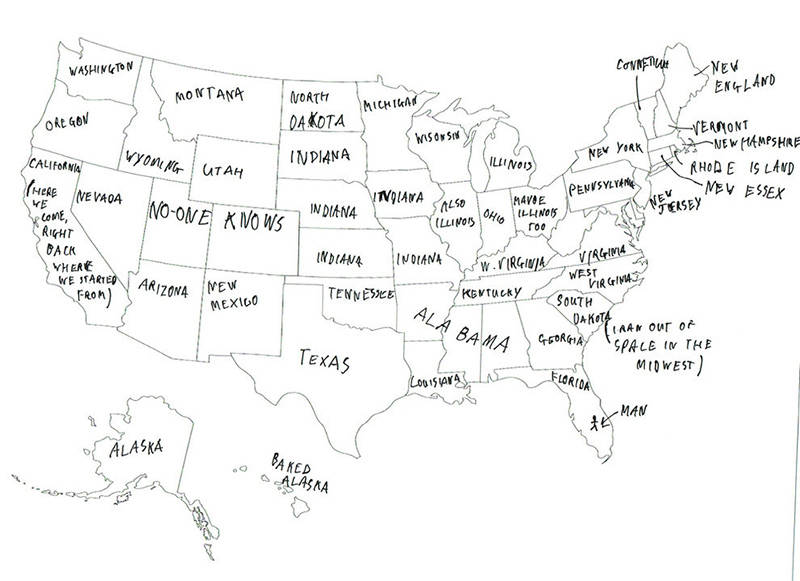
Londoners name maps
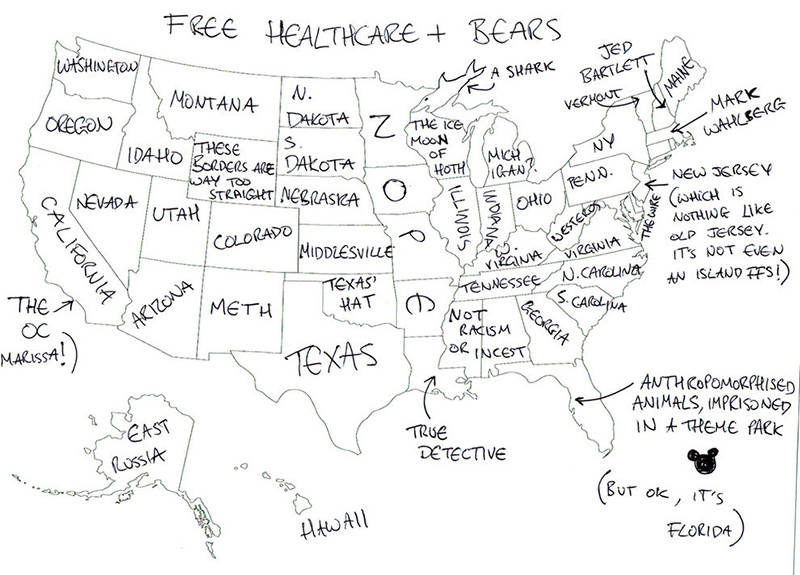
2. Not even sort of Connecticut.
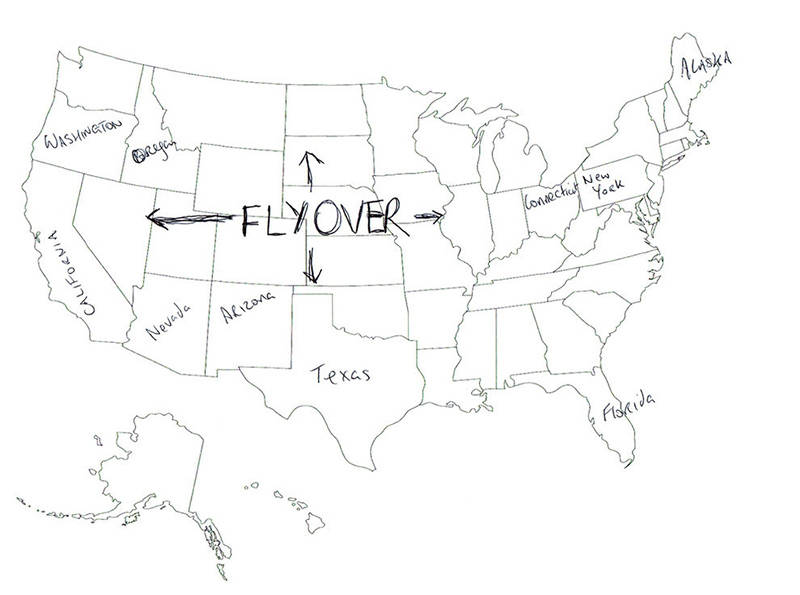
3. So much effort. So little success.
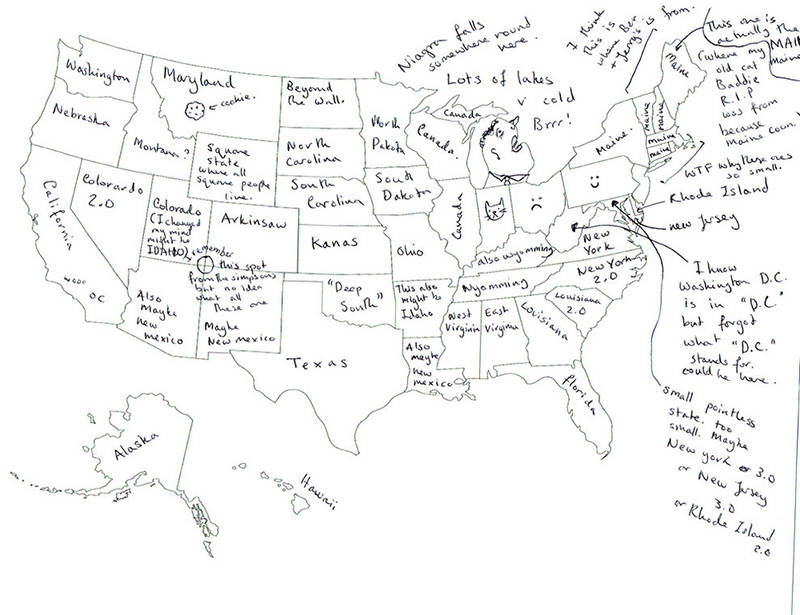
4. Can we change Montana’s name to “Narnia”?
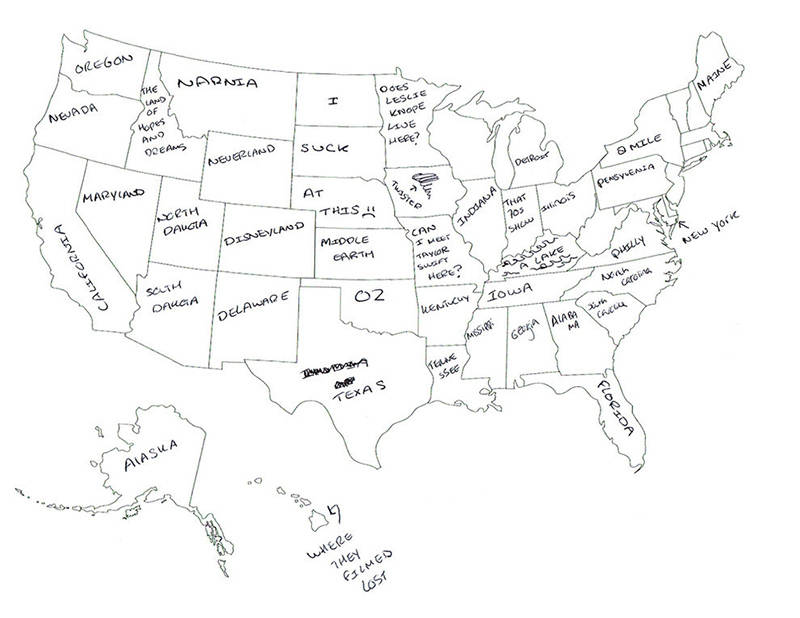
5. Booooo.
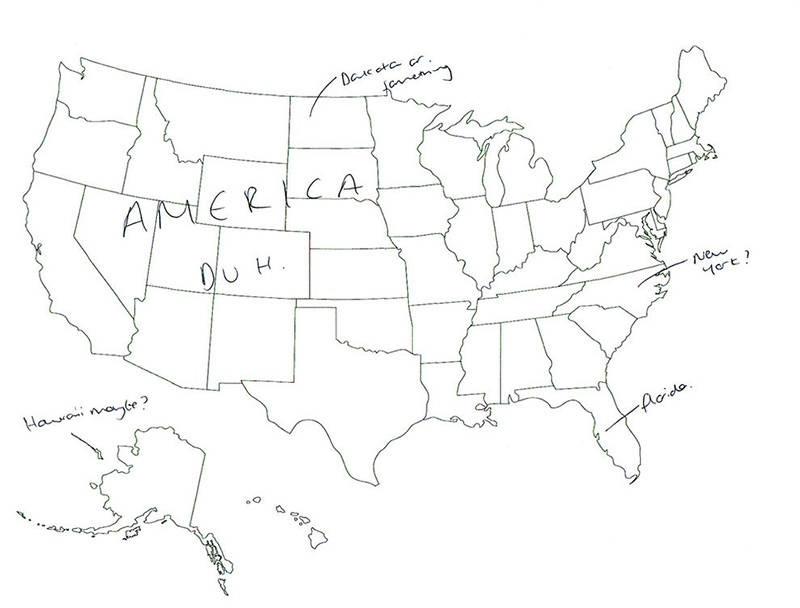
6. Holy crap, it IS a dog.
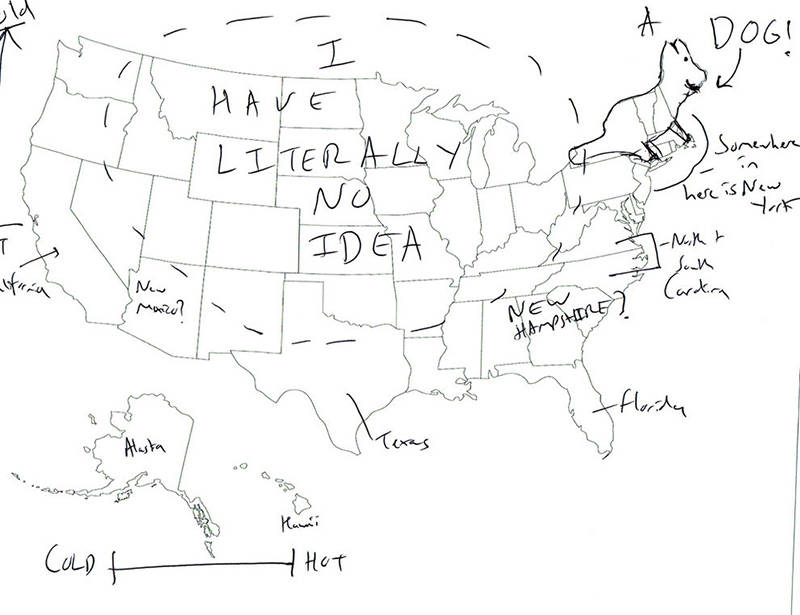
7. How do you know Kentucky but not New York?
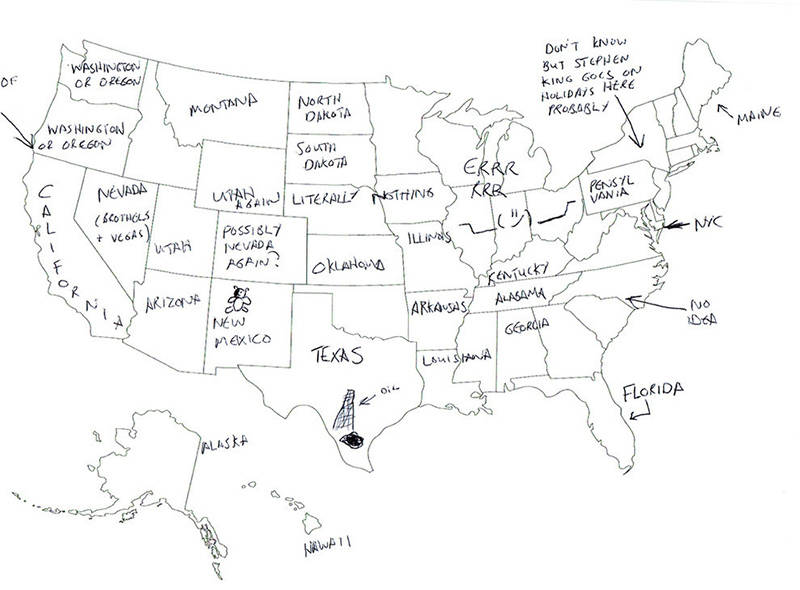
8. That IS where the Fresh Prince came from.
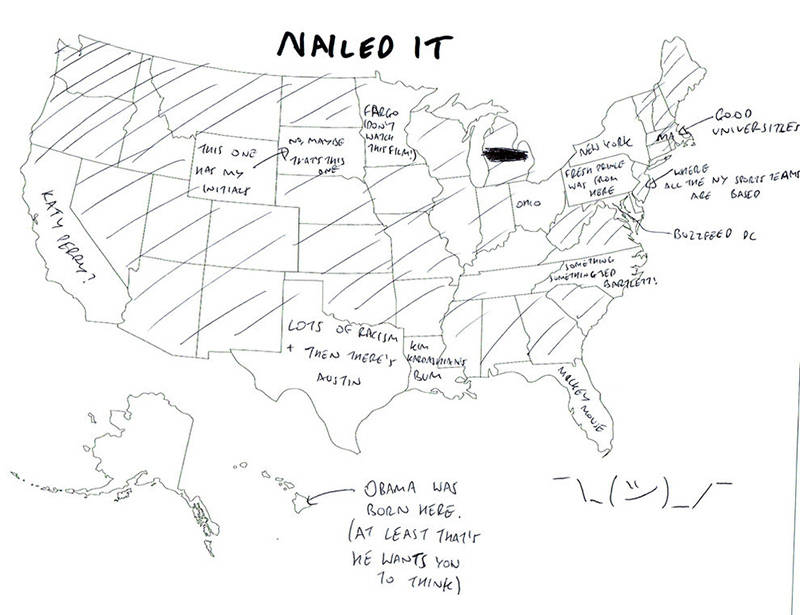
9. I’m not gonna lie, I would definitely not do this well on a map of English counties.
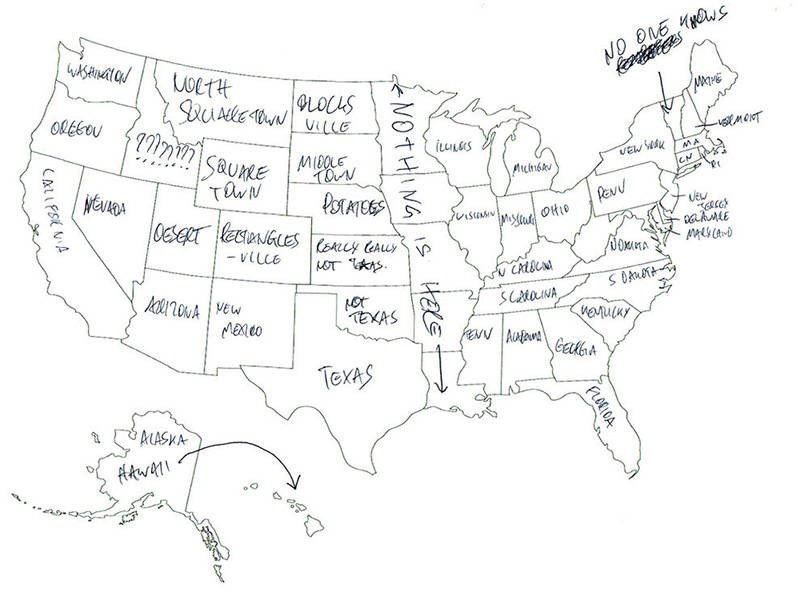
10. We accept your apology.
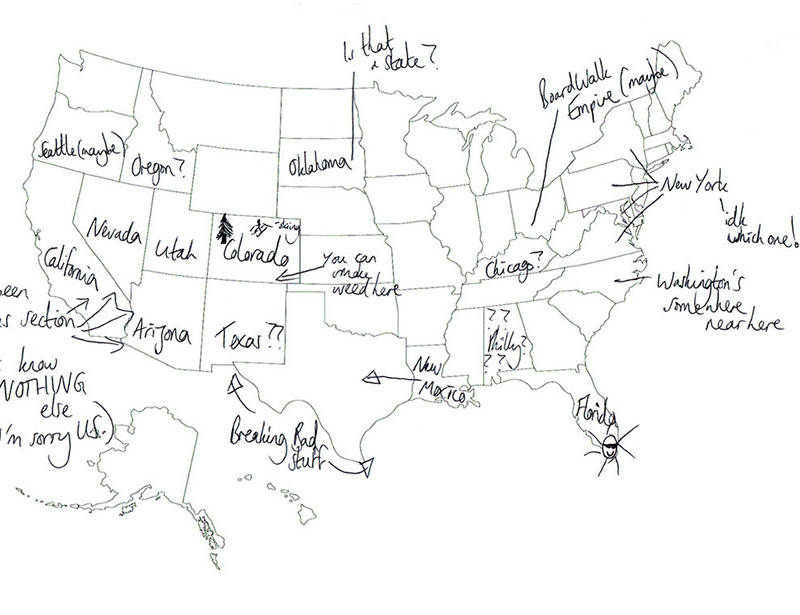
11. Respectable.
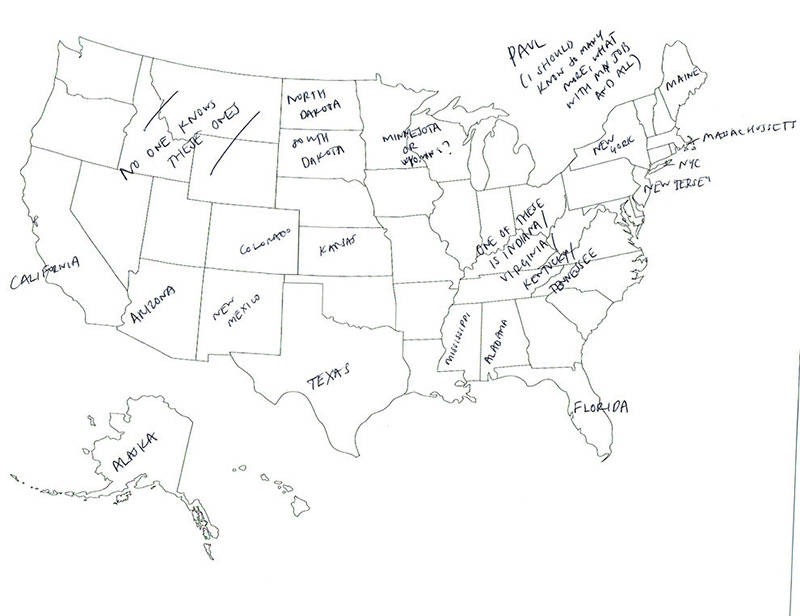
12. Technically, “The Middle Bit” isn’t incorrect.
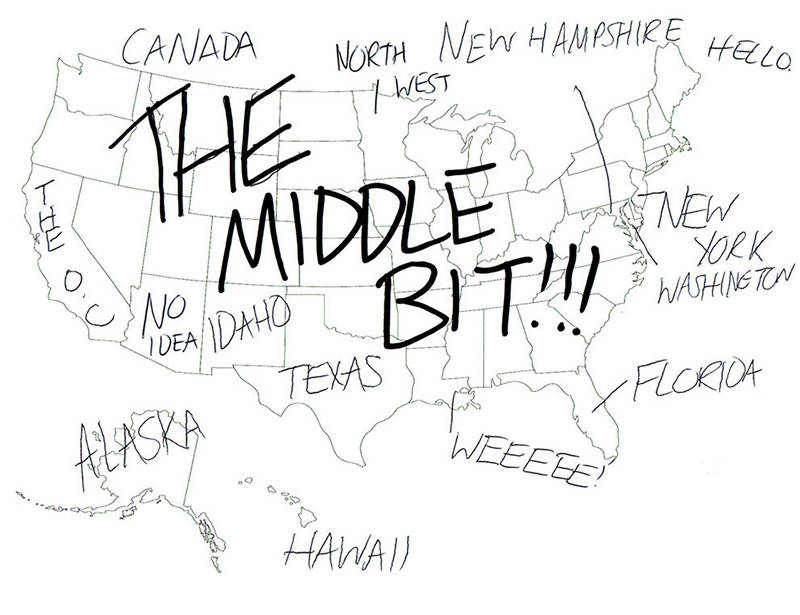
13. Lake America sounds like a nice vacation spot.
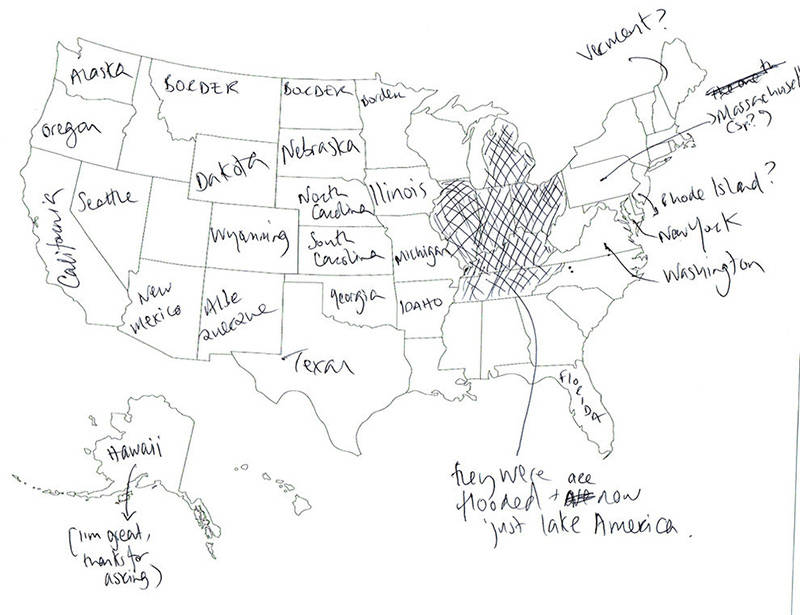
14. Alligators and Lobsters!
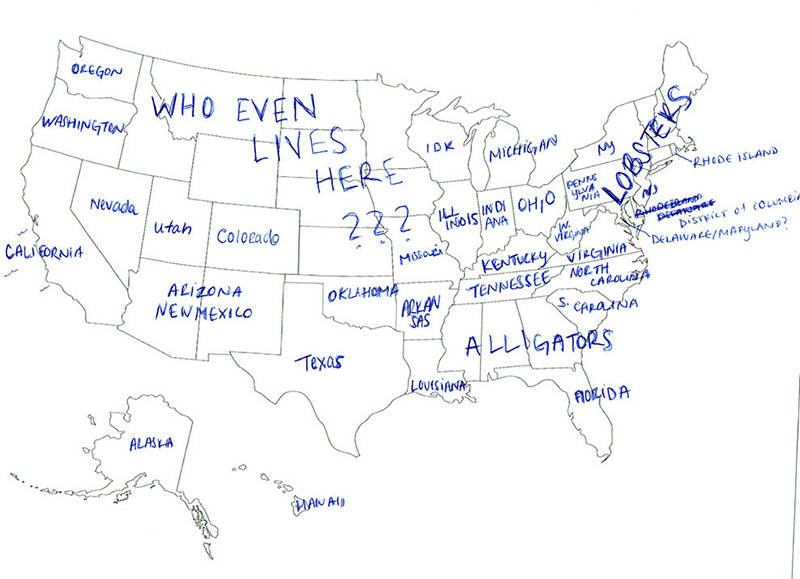
15. So much Indiana.
Via Buzzfeed

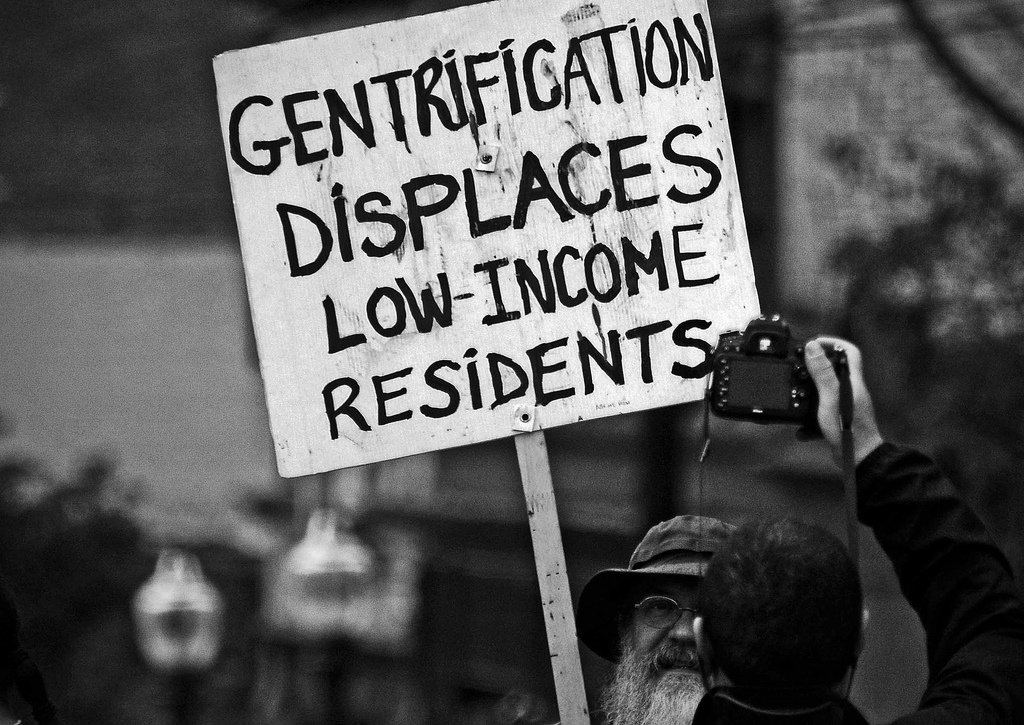
People throw around the word ‘gentrification’ without much context. Check this important history lesson.
(via)
THE COLUMBIA RIVER WAS FIFTEEN FEET ABOVE NORMAL levels the morning of Memorial Day, 1948. Alongside the river rested Vanport, an Oregon town built to house new dockworkers during the World War 2 industry boom. With 18,000 low-income residents it was the largest public housing city in the country, with more federal housing units than New York or Chicago (although during the war its numbers were twice the size). Even though the city was built entirely in a flood plain, the U.S. Army Corps of Engineers assured residents through leaflets that there was no cause for alarm.
They were wrong. At 4:17 PM, one of the railroad embankments protecting the town broke and Vanport was washed away that very day. There was barely a trace left of what was the first semi-integrated African American community in the state of Oregon – with 6,000 black residents before the flood. Thousands were left homeless and at least fifteen were dead.
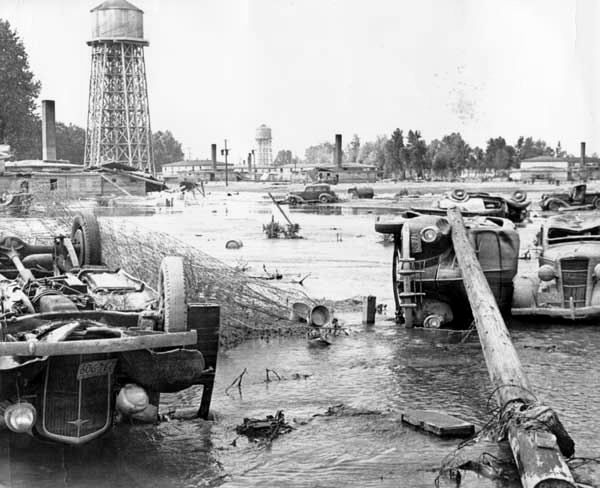
Destruction in the wake of the Vanport Flood, 1948 (via)
Out of the frying pan…
Of course, the possibility of this devastation had been of little concern to the older white community of Portland next door — so long as they didn’t have to integrate or build public housing within city limits. “Portland can only absorb a minimum number of negroes without upsetting the city life,” remarked then-Mayor Earl Riley in an article from The Oregonian. Oregon’s real estate Code of Ethics also ensured that black Americans were allowed to live only in less desirable redlined areas at the time, a practice that was not ended until 1950.
Before the flood, the nearby neighborhood of Albina was home to a large working class white and immigrant population who had organized against building public housing for black Americans in their community, leading to the construction of Vanport. After the flood, thanks to increasing black-white segregation practiced by real estate brokers in mid-20th century Portland, and buildings that were much older than in other neighborhoods, Albina quickly became the largest black community in the city. This was followed by widespread white flight from Albina.
Overcrowded by the flurry of Vanport refugees and neglected by the city, Albina then spent decades fighting poverty, segregation and its identity as a “blighted” neighborhood — situations made worse by urban renewal projects like the new The Memorial Coliseum (in 1959), and the I-5 highway (early 60’s), that each cut up and dispersed large swaths of the area. The Emanuel Hospital expansions also forced many residents out of their homes in the early 70’s. By the late 80’s, Portland was in the throes of a crime wave, and Albina was one of the hardest-hit neighborhoods.
Today, thanks to cheaper rents and Albina’s proximity to downtown, new young and mostly white residents (who, unlike their grandparents, seek both an urban environment and diversity) are quickly, and ironically, overtaking the area.
Gentrification is a large part of the aesthetic reversal of mid-20th century urban planning.
America’s racial segregation is usually mentioned in context with the economic and civil rights disparities faced by people of color, but there are plenty of instances when being a person of color also put you in a region that was ripe for destruction (such as Vanport). This is largely thanks to mid-20th century America’s period of urban renewal, which replaced Jim Crow laws as the less-immediately-noticeable method of forcing the undesirable and politically powerless into, and then out of, places like Albina.
Urban renewal as a tool to segregate and destroy neighborhoods of color was perfected under Robert Moses, the “master builder” of New York City from the thirties through the sixties. Thanks to his superstar status in the U.S. as a city planner, his unelected reign over New York City influenced many American cities to undergo some of the most bizarre, ugly and, in the case of San Francisco and Detroit (among many others), destructive retrofitting in urban history.
Moses was most famous for his preference of cars over public transportation. This meant building highways and parkways in urban centers to better service the rapidly expanding, wealthier, and whiter suburbs (most notably, the controversial Cross Bronx Expressway).

“[Moses] influenced many American cities to undergo some of the most bizarre, ugly […] and destructive retrofitting in history.” The Cross Bronx Expressway, ca. 1973. (via)
He also built public parks in ways that deliberately did not allow for public transport, public housing that barred people of color from living in it and leveled sections of communities that have still not fully recovered from his policies (including The Bronx). The American conception of the “inner-city” being a scary, depressed and drug-addled wasteland was, in part, the outcome of this man’s policies.What we are seeing now in gentrifying cities like San Francisco, Chicago and Portland is a wholesale rejection of Moses’ low density, high-traffic and amenity-free suburbanized sprawl. This is actually a wonderful thing for residents of places like LA, which have started reconsidering the need for effective public transit. Even New York City, Moses’ former playground, has reclaimed a number of spaces for pedestrians in recent years, including the once notorious and now-shopping-mall Times Square.
In terms of creating stronger infrastructure and healthier communities in urban centers, gentrification is actually a good thing. But during this process of re-urbanization, the underlying issues of systemic racism and classism mean that gentrification favors the same people that ran to the safer suburbs fifty years ago — the majority of whom are white.
But the ramifications of gentrification are even more profound.
What some of us may not realize is that this push on lower income citizens to leave the city thanks to obscene rent hikes is not just a moral problem: it is matter of life and death. We have seen this after Katrina and Sandy, and the little snowstorm that shut down Atlanta– low-density areas cannot handle natural disasters as effectively as places where resources are close at hand, and usually areas with more people of color suffer the most because of it, be it Vanport or New Orleans’ Lower 9th Ward.
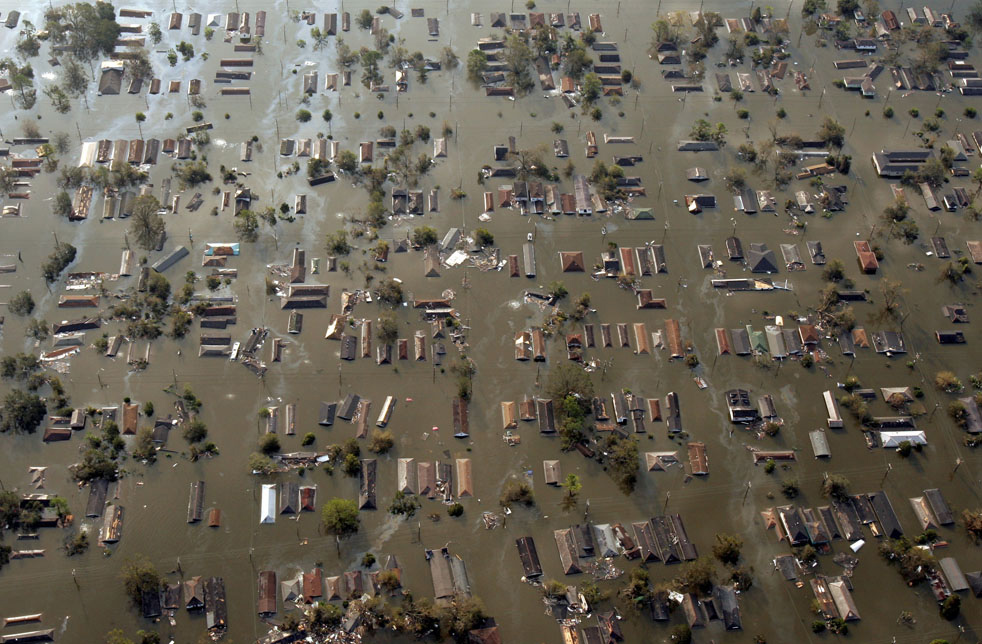
Lower 9th Ward after Katrina (via)
Gentrification is not just a problem because of cultural whitewashing in Oregon’s Albina, disruption of public services in San Francisco and limited housing for low income citizens in Brooklyn, it is a problem because the same people that struggled through the worst of the “blighted inner city” days of the 70’s, 80’s and 90’s, are now being forced to move quietly to the fringes of the city while the tide comes in. 
The EU’s migration crisis explained in 6 tragic facts
The gruesome discovery of up to 71 decomposing bodies, believed to be those of migrants, in an abandoned truck in Austria this week was just the latest tragedy for the hundreds of thousands of people fleeing war, violence and poverty for a better life in Europe.
Austrian authorities believe the migrants had been smuggled into the country from Hungary by human traffickers and were already dead when the refrigerated vehicle crossed the border.
The grisly find came as leaders from the European Union and the western Balkans met in the Austrian capital of Vienna to discuss the worst migration crisis since World War II.
“This reminds us that we in Europe need to tackle the problem quickly and find solutions in the spirit of solidarity,” German Chancellor Angela Merkel said after the bodies were found. “The world’s eyes are upon us.”
The pressure to find a solution is intensifying by the day. Resources are being stretched to the limit, particularly in Greece, Italy and Hungary, where most migrants first arrive before moving on to richer EU countries like Germany, France and Sweden.
As Europe struggles to cope with the influx of so many people in such a short period of time, some countries are taking an increasingly hardline stance on the problem.
Hungary and Macedonia, for example, have deployed security forces along their borders to stop the flow of men, women and children who have mostly traveled from the Middle East and North Africa.
The strategy isn’t working too well.
The response to the crisis so far threatens the “soul” of Europe, Italian Foreign Minister Paolo Gentiloni told the Il Messaggero newspaper, according to Voice of America.
“On immigration Europe is in danger of displaying the worst of itself: selfishness, haphazard decision-making and rows (disputes) between member states. I am very worried. Today it is on this issue that Europe will either rediscover its soul or lose it for good,” Gentiloni said.
Here are six facts and figures that will help explain the scale of the problem — and the challenges to solving it.
1. 340,000 migrants arrived in the EU in the first seven months of 2015.
This is why it has been described as the worst migrant crisis since World War II: Nearly 340,000 migrants entered the European Union between January and July, according to the European Union’s border control agency Frontex.
That compares with 123,500 for the same period in 2014 and 280,000 in all of last year.
In July alone a record 107,500 migrants were detected, more than triple the number for the same month last year.
“Syrians and Afghans accounted for a lion’s share of the record number of migrants entering the EU illegally,” Frontex said.
“Most of them, fleeing instability in their home countries, initially entered Greece from Turkey.”
2. The EU received 184,800 asylum applications in the first quarter of 2015.
European immigration officials have been inundated with applications for asylum.
In the first three months of this year a total of 184,800 people requested asylum for the first time, up a staggering 86 percent on the same period last year, according to Eurostat.
The top three nationalities seeking asylum were Kosovars (48,900), Syrians (29,100) and Afghans (12,900).
Authorities are struggling to keep up. Nearly 122,000 decisions were made, of which 46 percent resulted in “a type of protection status.”
3. 267,121 migrants have crossed the Mediterranean Sea to Europe so far this year.
One of the most popular routes into Europe is the Mediterranean Sea. So far this year, an estimated 267,121 people have made the perilous journey from North Africa and the Middle East, according to the International Organization for Migration.
Tens of thousands of them only survived after being plucked from the ocean by rescuers patrolling the waters.
Last Saturday, Italy’s coast guard rescued more than 4,000 migrants off the coast of Libya after receiving distress calls from more than 20 boats.
4. 2,373 migrants have died attempting to cross the Mediterranean Sea so far this year.
The tragic fact is many migrants don’t survive the journey.
So far this year, 2,373 people — men, women and children – have died attempting to cross the Mediterranean Sea in overcrowded and unseaworthy boats, the IOM said.
That makes it the deadliest migratory route in the world, accounting for 72 percent of the 3,279 migrant deaths worldwide this year.
Many migrants die before they make it to Europe and, as the gruesome discovery of dozens of bodies in an abandoned truck in Austria shows, even after they have crossed the border.
5. Five countries have received 80 percent of asylum applications.
There might be 28 countries in the European Union, but just five – Germany, Hungary, Italy, France and Sweden — took 80 percent of the asylum applications in the first three months of the year, Eurostat data shows.
Germany is taking the lion’s share. German officials have said they expect to receive 800,000 asylum applications this year — nearly double the forecast made earlier this year.
That’s more than any other EU country and way more than the 626,000 applications received by the entire EU last year.
Germany insists it can cope with the huge numbers of migrants, but it has called for a “fairer distribution” to ease pressure on the countries receiving most of them.
“This is a challenge for all of us, [but] Germany is not overwhelmed,” Interior Minister Thomas de Maiziere told the BBC this month.
6. Double the attacks: Violence against migrants is on the rise.
The influx of migrants is fueling tensions along national borders and has sparked violence and protests in towns where migrants are being housed in tents, gymnasiums and disused hotels.
Germany recorded 202 attacks against refugees and asylum shelters, including eight cases of arson, in the first half of this year, the Associated Press reported, citing official data.
That is about twice the number during the same period in 2014.
There have also been protests as a small but vocal minority expresses their disapproval at the arrival of so many migrants.
But German Chancellor Angela Merkel said there would be “no tolerance” for anti-migrant violence.
Elsewhere in Europe, there have been disturbing scenes along Macedonia’s southern border with Greece, where security forces have reportedly used stun grenades, tear gas and rubber bullets to stop people from entering the country.
“These are very serious allegations of excessive force by the Macedonian police firing at people seeking protection,” said Emina Cerimovic, research fellow at Human Rights Watch.
“Macedonian authorities should be protecting migrants, including children and those among them who may be fleeing war and persecution, not giving the police a green light to fire at them.”
Hungary, which is constructing a razor wire fence along its border with Serbia to stop the flow of migrants taking the increasingly popular Balkans route into the EU, is also considering deploying the army.
That would be in addition to the thousands of police it has already sent to the area.
By Allison Jackson, GlobalPost
This article is syndicated from GlobalPost.

Matador Network's Blog

- Matador Network's profile
- 6 followers


