
Matador Network's Blog, page 2059
August 31, 2015
The 20 strangest Cuban expressions and how to use them

Hacé clic para leer este artículo en Español. Tambien podés darnos un “me gusta” en Facebook!
1. For a Cuban you are not the boss and the one who makes the decisions…You are the one who cuts the cod. (El que corta el bacalao.)
2. A Cuban isn’t going through a bad patch or has many economic problems…He is eating a cable. (Se está comiendo un cable.)
3. A Cuban is not upset at someone…He is giving that person a watercress. (Le da un berro.)
4. A Cuban is not stingy…He walks on his elbows. (Camina con los codos.)
5. When a situation reaches its limit and become chaotic, a Cuban doesn’t say What a big mess!…He shouts with all of his power: Tula’s room is on fire!!! (¡¡El cuarto de Tula cogió candela!!)
6. A Cuban doesn’t fight with someone…They tell them what condition they’re going to die of. (Le dice hasta del mal que va a morir.)
7. Cubans don’t say that a situation got a lot worse…They exclaim: We were only few and Catana gave birth to a child. (Éramos pocos y parió Catana.)
8. A Cuban won’t describe it as ‘being so close to reaching your goal.’ They say: So much swimming just to die on the other shore. (Tanto nadar pa morir en la orill.)
9. A Cuban woman is not left waiting for a date who doesn’t show up…She’s left like Pacheco’s girlfriend…all dolled up, but without going to the party. (Se queda como la novia de Pacheco… vestía y sin ir a la fiesta.)
10. A Cuban is not going to cry when the situation worsens…He’s going to cry because “he lost his pacifier.” (Va a llorar porque se le perdió el tete.)
11. A Cuban doesn’t ask you to not worry so much…He’ll ask you, “not to fight, as there’s a lot of cane sugar.” (No cojas lucha, que la caña es mucha.)
12. For a Cuban a situation is not terribly difficult…Instead, “The ball must be played low and near to the ground.” (El pitcheo está bajito y pegao.)
13. For a Cuban the weather is not perfect…It’s “beach-beach-swimming pool-swimming pool.” (Paya playa piscina piscina.)
14. For a Cuban one is not responsible for his own actions…But, “A goat that breaks a drum pays with her own skin.” (Chivo que rompe tambor con su pellejo paga.)
15. A Cuban doesn’t cause damage to himself…He dies like Chacunbele! (¡Muere como Chacunbele!)
16. For a Cuban there are not great problems that come all of a sudden…There is a great belebele. (Se formó tremendo belebele.)
17. A Cuban doesn’t get angry…He become like Picones. (Se pone como Picones.)
18. A Cuban is not lazy nor does he lie…He’s throwing a face! (¡Está tirando con la cara!)
19. A Cuban doesn’t come to the wrong conclusion…He gets lost in the curve. (Se pierde en la curvita.)
20. And a Cuban doesn’t motivate you to enjoy yourself…He’ll tell you enjoy the ball! (¡¡Goza pelota!!)


Mount McKinley is dead; hail Denali

Photo: DenaliNPS
SINCE 1986, THE US GOVERNMENT has officially called North America’s tallest mountain — Mount McKinley — after a president who never even set foot upon Alaskan soil. For decades a quiet fight between Alaska’s governors, federal representatives, and those of Ohio has been taking place in Washington, DC.
Nearly every year Alaska would file a bill to change the mountain back to it ancient native Alaskan name, Denali, and every year Ohio would block the legislation in order to keep the Ohio-born President William McKinley ensconced in mountainous fame.
Even with the forming of Denali National Park in 1980, the moniker remained. The feds still not budging, Alaska changed the name on its own. From then on, on Alaskan maps the mountain was named Denali, everywhere else — it was McKinley.
On Sunday August 30, 2015 Interior Secretary Sally Jewell signed a secretarial order, bypassing congress entirely, to officially change the name of North America’s tallest mountain.
After more than 100 years of denying ancient Koyukon culture, Denali is back. 
RTW travelers now scrubbing toilets

Chanel Cartell and Stevo Dirnberger
EVERY FEW MONTHS, WE SEE AN INSPIRATIONAL headline make the rounds on social media: “Couple quits cushy jobs to travel around the world.” We all feel inspired by their plunge, and consider doing it ourselves, before forgetting about the article and moving on with our lives. South African couple Stevo Dirnberger and Chanel Cartell are one of those couples. Earlier this summer, they were featured in a number of blogs for quitting their jobs at two of South Africa’s top advertising agencies to wander around the world for a year. Their goal was to see how far from home they could get, and they’ve been documenting it on social media.
A photo posted by How Far From Home (@howfarfromhome) on Aug 19, 2015 at 1:31pm PDT
A photo posted by How Far From Home (@howfarfromhome) on Jul 25, 2015 at 2:40am PDT
But this week, Chanel posted an article “Why we quit our jobs in advertising to scrub toilets.”
She writes:
“After being gone exactly 6 months, I feel it necessary we share the uglier side of our trip. Browsing through our blog posts and Instagram feed, it seems like we’re having the time of our lives. And don’t get me wrong – we are. It’s bloody amazing. But it’s not all ice-creams in the sun and pretty landscapes. Noooooo. So far, I think we’ve tallied 135 toilets scrubbed, 250 kilos of cow dung spread, 2 tons of rocks shovelled, 60 metres of pathway laid, 57 beds made, and I cannot even remember how many wine glasses we’ve polished.”
She goes on to describe how life as a full-time, low-on-funds traveler consists of a lot of smelly work: “I am not at my fittest, slimmest or physically healthiest. We eat jam on crackers most days, get roughly 5hrs of sleep per night, and lug our extremely heavy bags through cobbled streets at 1am, trying to find our accommodation (because bus fares are not part of the budget, obviously).”
It’s a refreshingly honest update, and a point that doesn’t get usually get discussed when people talk about “quitting your job to travel”: bills still need to be paid, and most people aren’t rich enough to simply coast on previous savings. The couple relies on the website Workaway, which allows travelers to put in a few hours of work for lodging and accommodation, and that work might not be the most glamorous. But those hours spreading cow dung aren’t necessarily going to make the Instagram feed.
A photo posted by How Far From Home (@howfarfromhome) on Mar 27, 2015 at 6:21am PDT
Social media allows for travelers to only share the coolest, most beautiful moments of their trips, but long-term travel is often a tough, gritty, exhausting lifestyle that demands constant attention and creativity to sustain. “The budget is really tight,” Chanel writes, “and we are definitely forced to use creativity (and small pep talks) to solve most of our problems (and the mild crying fits).”
You should still, of course, consider quitting your job to travel around the world. But you should not think of it as a total escape into a life of easy glamor. A life of travel is rough, even at its most beautiful and fulfilling.
h/t: AdWeek and Cartell and Dirnberger’s blog, How Far From Home.

Know a 4th or 5th grader in Michigan? Here’s how they ski or board free all winter this year.

Photo: Ski Leavenworth
We Michiganders know that our winter can be long and rough, so you might as well give yourself something to look forward to this go-around. If you know a 4th or 5th grader, take them skiing or boarding — for free!
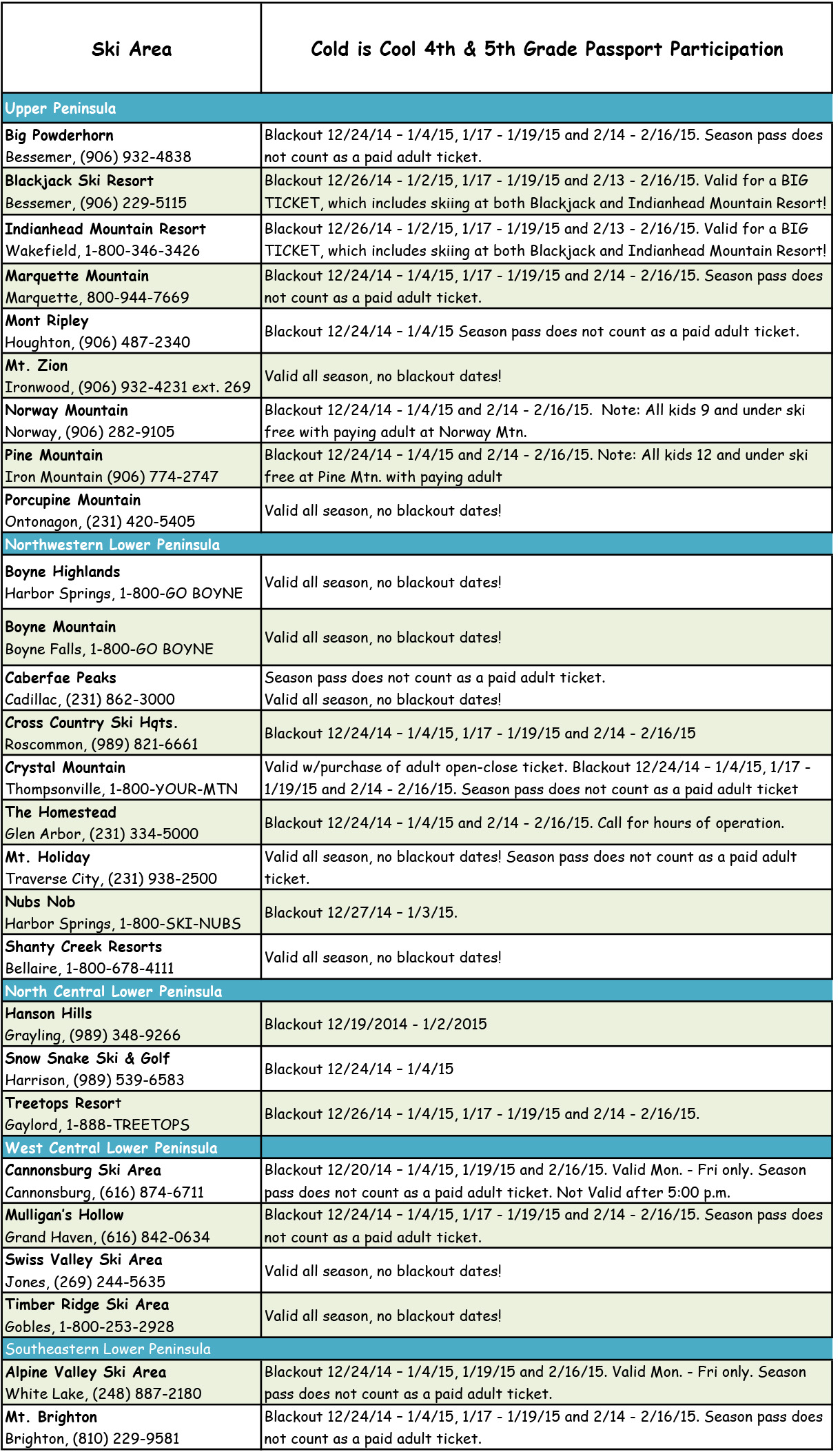
The Michigan Snowsports Industries Association (MSIA) wants to give Michigan kids an opportunity to get out, have fun and get healthy this winter. They established a state-wide program called Cold is Cool that provides every 4th and 5th grader in Michigan with a “passport” that gives them the opportunity to get on the slopes for free. Even homeschooled students who are at the 4th or 5th grade level can get up to three free lift tickets or trail passes at 27 participating ski areas, plus additional discounts on the slopes and in Michigan ski shops.
The Cold is Cool activities are endorsed by the Governor’s Council on Physical Fitness, Health and Sports and they qualify for First Lady Michelle Obama’s Let’s Move campaign.
Steve Kershner, MSIA chairman and director of skiing at Shanty Creek, says “Fourth and fifth graders are the perfect age to learn to ski. They have the coordination to pick up the sport quickly”.
In order for 4th and 5h graders to use the free coupons, a paying adult has to accompany them. “We feel that fourth and fifth graders should be supervised by an adult while on the slopes and trails. Our intention is to make this a fun, affordable and safe activity for the entire family,” says Mickey MacWilliams, MSIA executive director.
With the Cold is Cool Passport, up to two kids can ski or board free with each paying adult. The Passport is valid through April 30, or the end of the 2014/15 ski season, whichever comes first.
The Passport also includes a coupon for 20% off a helmet purchase and $15 off the purchase of $100 at over 50 participating ski shops. Bonus: some ski areas have also included coupons for equipment rental and free or discounted lessons. Super bonus: free lift tickets in New Hampshire, Northwest Rockies, New York, Pennsylvania and Vermont are also included. Family spring break has never been cheaper!
Proof of 4th or 5th grade status is required, but just one page of a report card or progress report is fine. If the child is home schooled, the parent or guardian can just include a note stating the child’s grade equivalent.
You can start to order online soon (at the date of this publication, orders were still not being taken yet). For now, you can download this application form and fill it out. If you have more than one child in 4th or 5th grade, you must order each passport separately.
Check out the list of participating ski areas with their offers:


This family stopped traveling
It was when Hannah was only six-month-old that her parents, Anna and Thomas decided to concretize their dream of a life filled with travels and adventures and went on a 6-month road trip around the Black Sea. Shortly after, Anna gave birth to Mila, but that did not prevent this worldly couple, authors of the biggest family travel blog in Europe, The Family Without Borders, to keep going. When Mila was half-a-year-old, the whole Family went on a 4-month trip around Central America. Since then, they went on extensive trips through Bosnia and Herzegovina and New Zealand and the South Pacific.
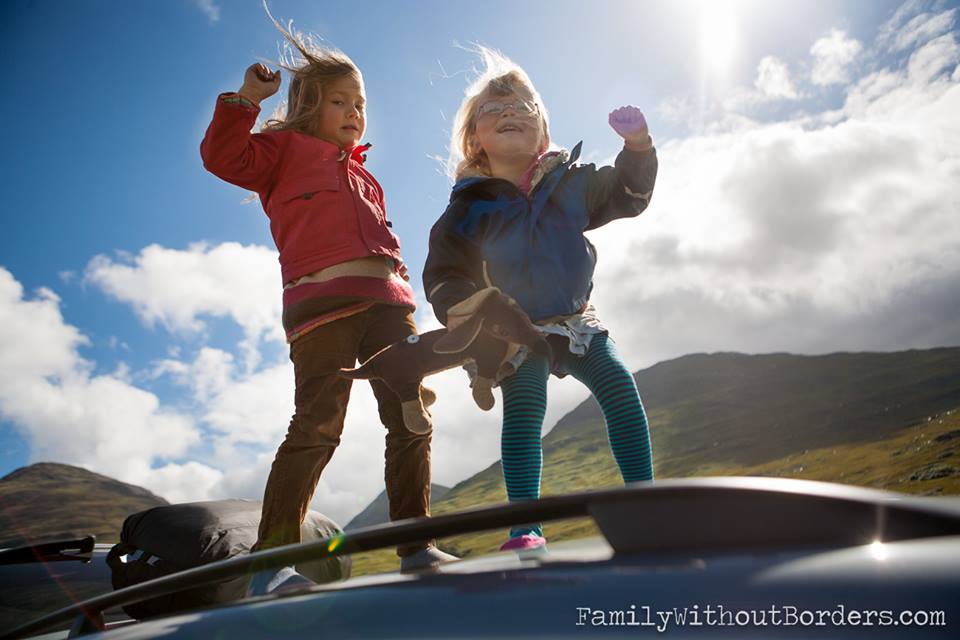
Photo: The Family Without Borders
But all of this is going to change very soon.
Hannah has reached the age to attend her first year at school and her parents are not willing to homeschool her. Why settle down and put aside their cool nomadic lifestyle when they could teach their kids on the road and keep traveling? Well, Thomas and Anna have thought about it long and hard:
We simply think that the school is so much more than just studying biology, geography, and English (all those things could easily be taught while travelling). School is not only about getting up early, being on time, and being forced to learn things you may never need. It’s a big lesson on social life, life between many different people and yourself. Meeting people you maybe wouldn’t meet where your parents take you. Meeting people you would not choose to meet on your own. Meeting the good teachers and the bad teachers. And learning to face it.
We want our children to meet the real world: all of what the world is offering. All the difficult kids, all the unfair teachers.
But we also don’t want to combine two roles: of being a parent and being a teacher. Kids need a lot of adult examples of behaviours, to watch and respect.
The Family Without Borders will then stay put in Berlin where Hannah will be going to two different schools, a German one and a Polish one (Anna is Polish, Thomas is German). The six-year-old girl is very excited about the upcoming change and carries her school backpack everywhere she goes! Even now as she is traveling through Scotland with her parents before the big day.
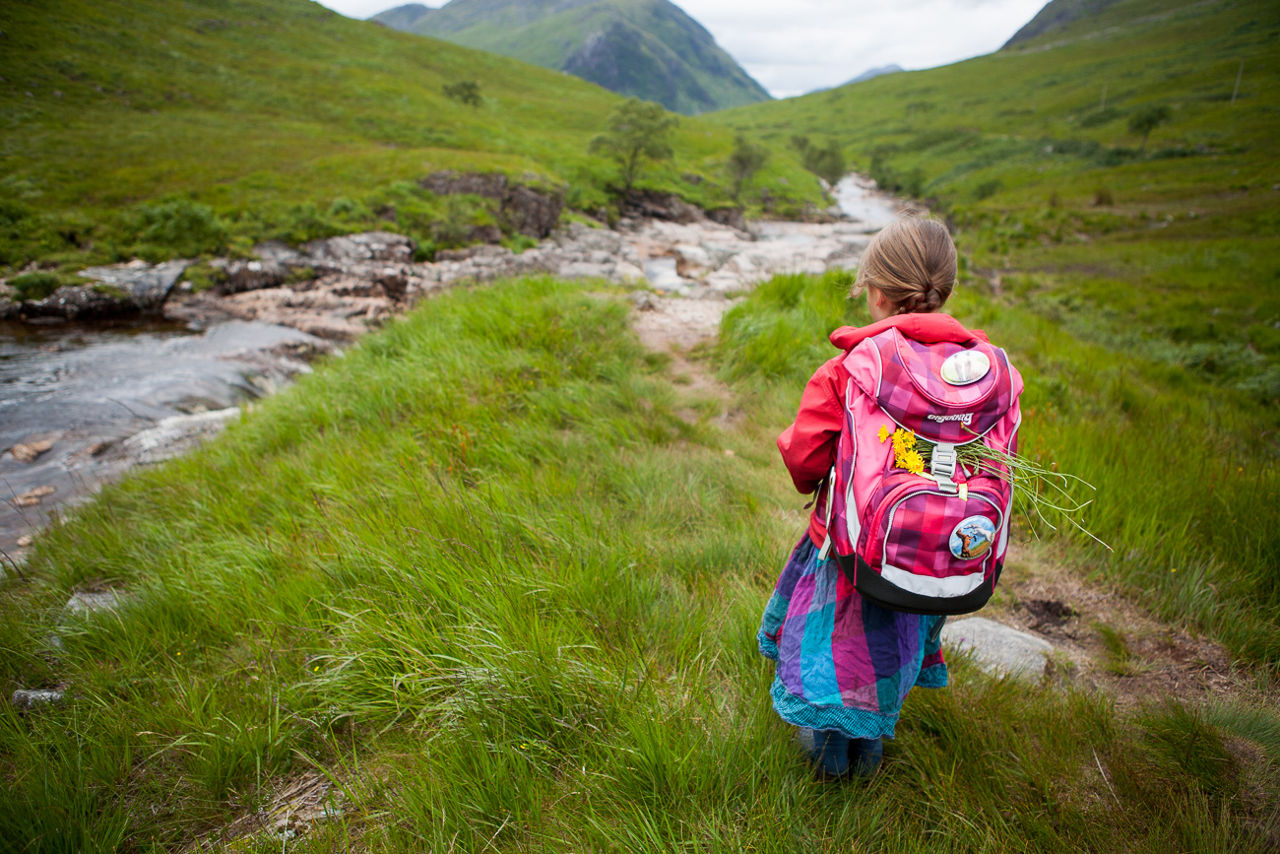
Photo: The Family Without Borders
Her parents will have to adapt to this new lifestyle, but they have already planned to keep traveling for shorter periods of time and manage their lives differently to be able to combine Hannah’s schedule and their dream.
It will be not easy. It’s the first time ever we will have to respect some dates and deadlines. We are travelling through the wilderness of Scotland at the moment and we realize that we have to come back home before September 5th. That we cannot stay longer, whatever happens. That we MUST be back. It feels a bit strange, that’s true. But it’s just another trip! Another life lesson.

8 African Instagrammers you should be following
A photo posted by @lafrohemien on Jun 27, 2015 at 5:19am PDT
Sarah Waiswa, aka The Afrohemian Nomad, is a Nairobi-based photographer with a knack for capturing the most interesting people in the city. Commonly featured on her Instagram feed are the brother/sister duo of Velma Rossa and Papa Petit who together as 2manysiblings have left an impressionable mark on the Kenyan fashion scene. Wasiwa’s Instagram account is a passionate affair with portraits and the occasional landscape taken from little known hide-outs in the city and her jaunts outside of it. She uses her iPhone and Canon to capture the city’s joys and triumphs.
A photo posted by @lafrohemien on Apr 9, 2015 at 10:37pm PDT
A photo posted by @lafrohemien on Jul 21, 2015 at 10:55pm PDT
2. @accraphoto
A photo posted by Forward (@accraphoto) on Aug 4, 2015 at 6:06am PDT
Francis Kokoroko is a Ghanaian-based photographer whose images capture the creativity at play in its capital city, Accra. His photos are a take on juxtaposition and portray texture, light and joy. When not capturing portraits of the city’s inhabitants, Kokoroko meets them in their places of congregation: at the beach, in transit, at school, and in their homes, where he captures candid moments of family and friends.
A photo posted by Forward (@accraphoto) on Jun 9, 2015 at 6:35am PDT
A photo posted by Forward (@accraphoto) on May 3, 2015 at 1:38pm PDT
3. @africashowboy
A photo posted by Nana Kofi Acquah (@africashowboy) on Jul 23, 2015 at 3:46pm PDT
For years, Nana Kofi Acquah’s Instagram feed has been featured on many lists of Instagrammers to follow. His photos are an elongated love letter to Africa and its people.
A photo posted by Nana Kofi Acquah (@africashowboy) on Jul 11, 2015 at 4:44am PDT
A photo posted by Nana Kofi Acquah (@africashowboy) on Jan 17, 2015 at 3:45am PST
4. @stevenchikosi
A photo posted by Steven Chikosi (@stevenchikosi) on May 27, 2015 at 8:38pm PDT
Steven Chikosi is a photographer based in Harare, Zimbabwe. His work mirrors that of Nana Kofi Acquah’s through a shared vision for telling Africa’s stories with dignity. But where Acquah focuses on portraits, Chikosi is more intrigued by landscapes and cityscapes.
A photo posted by Steven Chikosi (@stevenchikosi) on Mar 7, 2015 at 12:35pm PST
A photo posted by Steven Chikosi (@stevenchikosi) on Jun 23, 2015 at 9:24am PDT
5. @emballashment
A photo posted by Bella van der Linden (@embellashment) on Jul 1, 2015 at 8:25am PDT
Though South Africa is home to many envy-inducing Instagrammers, Bella van der Linden, a photographer based in Port Elizabeth, stands out as taking photos that are a nature-loving traveler’s dream.
A photo posted by Bella van der Linden (@embellashment) on Mar 29, 2015 at 7:15am PDT
A photo posted by Bella van der Linden (@embellashment) on Jun 22, 2015 at 10:34am PDT
6. @yagazieemezi
A photo posted by Yagazie Emezi (@yagazieemezi) on Aug 1, 2015 at 12:22pm PDT
While studying in the US, Yagazie Emezi fell deeper in love with her home continent and its arts. She eventually moved back to Lagos, Nigeria where she is now based, and began capturing the sights and faces of Africa’s largest city. Emezi describes herself as a “visual curator” and also runs Bialere, a “digital project set out to locate young and upcoming photographers with the intent of providing a platform that showcases their work and points of view of Africa.”
A photo posted by Yagazie Emezi (@yagazieemezi) on Jul 26, 2015 at 2:48am PDT
A photo posted by Yagazie Emezi (@yagazieemezi) on Jun 20, 2015 at 2:36pm PDT
7. @ayoubarouk
A photo posted by Ayoub Arouk (@ayoubarouk) on Jun 14, 2015 at 4:14pm PDT
Ayoub Arouk, based in Agadir, Morocco, takes photos that study life in Africa’s northermost and often forgotten parts. Meshing images from Agadir’s beautiful beaches and streets, Arouk’s photos invite quiet contemplation and wonder.
A photo posted by Ayoub Arouk (@ayoubarouk) on Mar 17, 2015 at 5:01pm PDT
A photo posted by Ayoub Arouk (@ayoubarouk) on Apr 1, 2015 at 6:47am PDT
8. @abdi_latif
A photo posted by Abdi Latif Dahir (@abdi_latif) on Mar 1, 2015 at 4:45am PST
After decades of unrest, Somalia is a country struggling to redefine its image in the 21st century while making a cultural and economic comeback. Abdi Latif Dahir is an avid traveler, which means many of his photos are shot from across the globe. But when he turns his camera back to his country, and shares his version of Somalia, it is with both cutting humor and adoration.
A photo posted by Abdi Latif Dahir (@abdi_latif) on Feb 22, 2015 at 11:55pm PST
A photo posted by Abdi Latif Dahir (@abdi_latif) on Mar 14, 2015 at 9:39am PDT

Embarrassing questions in Vietnam

Photo: Kyle Taylor
Why am I so American?
Back in America I could happily ignore my monolingualism and the fact that I look like every other Midwestern girl around, but in Vietnam? Here I’m surrounded with 12-year-olds who have better English than I do, who also speak Vietnamese natively, and are studying Japanese or French on the side. Fml. That’s not even to mention all the beautiful French, Russian, and Italian chicks I have to compete against for a potential mate. Bested by 12-year-olds and exotic women. Greaaaat. My favorite.
Why am I so fat?
One time in my house in Vietnam, my bra scared a group of kids I was tutoring. That was the last time I ever left my laundry out, that’s for sure. Shopping was sad enough as it is, the massage parlor wondered why I didn’t wear the Barbie-size panties they gave me, and now my home has been compromised, too? I can’t escape it. No one who weighs over 80 pounds can escape it.
“It” being the size medium in America, of course.
Why don’t I have the balls to tell this creeper to stop staring at me?
I guess that’s only halfway true. After a year and a half or so of just accepting it, I started staring back. It’s a small compromise, but it felt like a big win. Like a big-hug-of-self-love-wrapped-in-a-death-glare kind of win.
Why did I even bother putting make up on?
Monsoon season, meet me trying to be cute. Every day, Mother Nature would soak me to the bone, send my mascara fleeing down my cheeks, and make me resent not having naturally beautiful everything. I guess not wearing makeup is good for your skin and I always liked the idea of a society that didn’t seem to require it, but this isn’t exactly the scenario I had imagined.
Why do I know fuck all about world history?
I feel proud of myself for knowing that the 22nd and 24th presidents were both Grover Cleveland, but when it comes to thousands of years of history east of the Roman Empire, I draw mostly a blank, and I’m pretty sure I’m not alone. Right? Right?! I mean, I’m decent when it comes to WWII, but other than that, my guesses are pretty much shots in the dark.
Sigh. What a vicious cycle. See the point about being American above.
Why can’t I get away with wearing bows and giggling?
All these dark, silky-haired girls flashing peace signs, wearing bows and heels (and still being 5’2”), giggling as they take selfies of each other – I could never get away with that. Do I want to get away with that? I kind of want to get away with that. Do I? No, that’s gross. Or do I? God. Who am I? What is this struggle?
Why am I shelling out 6 dollars for imported yogurt?
I lasted a long, long time just living off of street-side markets and vendors, but eventually, the call of the imported goods store was just too strong to resist. You don’t know what lengths you’ll go to to make a good ol’ fashioned pie (or cookies or cake or anything that resembles dessert) until you live somewhere in Asia; four trips to four different shops and $40 later, you don’t have enough energy to even turn the oven on. If you even have an oven. You probably have one of those small convection ovens, but that’s fine, it’ll work, TRUST ME. Then again, nothing is wrong with a giant bowl of raw cookie dough.
Why did I just let that person cut me in line?
The kind, English-speaking woman next to you sees it and says, “Don’t mind her, she’s just Vietnamese.” To which in your head you think, “THAT’S NOT AN EXCUSE.” But you let it happen anyway. When it happens the next time, you have no excuse. But the third time, that’s when you’re so inappropriately in the bubble of the person in front of you that you could swear potential cutters are giving you the evil eye. Let them.
But for those first couple of times, the self-loathing is rough.
Why am I turning into such a bitch?
Eventually, you turn. You’re not letting people cut you, you’re staring back at the men staring at you, you’re cutting off other motorbikes who’ve already cut you off in the street, and whenever someone is trying to pull the wool over your eyes while they’re smiling, you tell them you know a way to wipe that silly, conniving smile right off their pretty little face.
No? Just me?
Why can’t this be real life?
A legit French meal for $7? Doing voiceovers and commercials and modeling simply because I’m white? Having people ask me for my photo because they think I’m awesome and/or famous? Giving my autograph because my name is just that amazing to look at?
Why did I have to come from an alternate universe that I know exists and will likely eventually have to go back to? 
August 30, 2015
9 ways to parent like the French
Helicopter parenting, where parents “hover” over their children in an attempt to control their lives (social, academic, psychological, athletic, etc.), is the polar opposite of how the French parent. There is little desire to control a child’s life; on the contrary, the goal is rather to make them more self-sufficient early on by letting them experiment, experience failure, and make age-appropriate decisions. Walk onto a playground anywhere in France and you are unlikely to see parents standing next to their children helping them with the monkey bars. It’s not a matter of indifference or negligence, instead French parents believe that real learning comes from trial and error.
2. Create family-only time.
The French make time for their families throughout the week and weekends. During the week, evening meal times are at the heart of quality family time. The French sit down together for a home-made dinner (no matter how simple), put the screens away and focus on one another. Families spend a large part of their weekends together, whether playing sports, going for a long walk, taking in a museum, or simply relaxing. Chauffeuring children to multiple activities, sporting events, or non-stop playdates is not the norm.
3. When it’s playtime, it’s playtime!
And speaking of playgrounds, outdoor playtime and physical activity is extremely important in France. The school day is academically rigorous, and children are expected to behave properly and focus for long hours (usually 8:30am to 4:30pm even for the little ones). So when they go out to play, it is all about letting loose. During a typical school day there are up to three recess periods for children; two shorter ones and one long one. Not only is playing a physical activity, but the French believe it is a booster for the brain as well!
4. When it’s not playtime, it’s not playtime!
There is definitely a code of conduct and proper manners in France that are taken seriously. Early on, children are taught to sit down at the table for the entire meal, great adults properly (bisous on the cheeks), not interrupt others when they are speaking, and to sit still when the occasion calls for it. You won’t see children running around at restaurants, they are sitting down (without screens) and participating in conversation.
5. Serve your children real food.
You won’t find many French children, including toddlers, who eat only plain pasta and Cheerios! The French take their food seriously, and this includes the food they serve to children. More often than not, from a young age, children are expected to eat the same food as adults. There is no custom of serving the children one meal, and adults a different one. They pretty much eat the same, only in smaller quantities. Once they are big enough to handle a glass, they drink out of adult glasses, use regular place settings, and sit in regular chairs. Even relatively “adult” foods like mushrooms, raw oysters, any type of shellfish, foie gras, and all the other foods that make French cuisine famous, become part of the repertoire early on. And that includes exposure to France’s 300+ varieties of cheese!
6. Make sure the parents are considered just as important as children.
Parents, especially mothers, do not tend to “lose themselves” when they have children. They consider their priorities and well-being as important as the child’s. After all, if they aren’t taking care of themselves, what good are they to their kids? Careers continue (many new mothers get several months off for maternity leave, then go back to work) as daycare is plentiful and full-time public schooling begins at age 3. Husbands and wives tend to carve out time for themselves, perhaps relying on grandparents to help out with babysitting duties. And French mothers don’t consider having children a barrier to dressing well, staying feminine and keeping their strong sense of self.
7. Do not overschedule.
French children are not as highly scheduled as their North American counterparts. They do participate in sports and music programs, but there isn’t a desperate fear amongst French parents that their child will fail in life if they aren’t an athletic champion, president of the debate club, and a top musician simultaneously. The French take a more relaxed approach to activities. If it interferes too much with family life, is it really worth it? If the child is too tired, what is the point? They have a long, rigorous school day as it is, why add on too much? French mothers will not sacrifice sanity and their well-being for their children, nor do they believe that more is better when it comes to extra activities. Moderation tends to rule in this instance.
8. Screens are to be used with restraint.
In North America, I have walked into restaurants where a family of five is sitting at a table, each of them looking at their own screen. No conversation. Eating while texting. This is something that has not yet made it across to France. The French understand screen time is the reality in today’s world, but they are not slaves to it. They tend to avoid anything that completely shuts out family communication, and certainly at the dinner table.
9. Let the grandparents hold a significant role.
It is very common to see grandparents in France taking care of younger children. Extended family is important in France, and an amazing help to couples with young children. Not only are they extra pairs of reliable hands, but grandparents help pass on family and regional traditions to their grandchildren, which is of great importance to the French. Grandparents are often the key to restoring balance to the parents’ lives once they have children. And with all the school holidays in France, grandparents represent a huge support of value added childcare to working couples.
Photo: Tourisme Creuse

Must-go places in New Hampshire
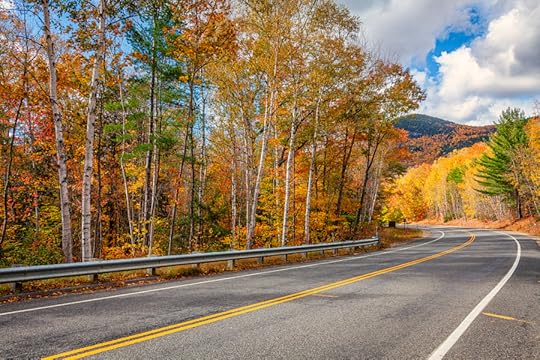
The Kancamagus, or “Kanc”, as it’s also known, is a 34.5-mile stretch of highway along NH’s scenic Route 112. This is THE place to be for leaf peeping in the fall. One of the most beautiful things about the drive is that there are absolutely no restaurants, hotels, gas stations or stores of any kind, just gorgeous views of the White Mountains, secluded swimming areas, and campgrounds.
2. Laconia Motorcycle Week, Laconia
Granted you can only catch Motorcycle Week once each year, if you happen to find yourself on the Weir Beach Boardwalk, it’s worth a visit. Bet you didn’t know that little old NH hosts the world’s oldest bike rally — it’s been happening since 1916 — and welcomes thousands and thousands of bikers to celebrate for a week each June.

3. Franconia Notch State Park, Lincoln
Located in the thick of the White Mountain National Forest, Franconia Notch is a mountain pass that encompasses the land between the Flume Gorge and Echo Lake. The absolute epitome of NH’s wilderness, us locals know that must-see spots include the Basin and the Baby Flume, natural waterfalls created by the rushing waters of the Pemigewasset. Bring a bathing suit, towel, picnic lunch, and a little courage so you can traverse the park and take a dip in the icy waters.
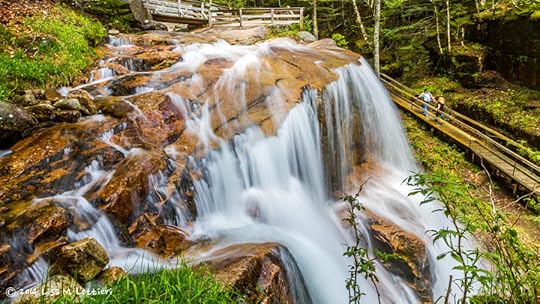
4. Prescott Park, Portsmouth
Prescott Park is a gorgeous ten-plus acre waterfront park on the Piscataqua River in Portsmouth that hosts a bunch of interesting festivals, movie nights, concerts series, community showcases, and theater productions. You can catch the 11th annual Fairy House Tour (two hundred hand-crafted fairy houses made by artists, florists, and local children), take in some Shakespeare in the park, or enjoy a Chili Cook-Off. It’s also pretty much expected that every visitor, local, and tourist alike, sit atop (or at the very least stand next to) the granite whale sculpture for a commemorative photo.

Photo: Prescott Park Arts Festival
5. Isles of Shoals, Rye
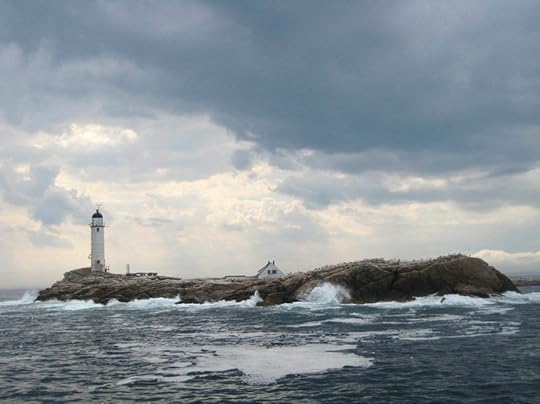
Sitting about seven miles out to sea between the New Hampshire and Maine border lies nine tiny islands that comprise the Isles of Shoals. Originally used as fishing villages, visitors to the Shoals can now go on whale watch outings and harbor tours to view lighthouses, historic forts, and the Olde Port Waterfront.
6. Literally every lake in the Lakes Region
It is absolutely impossible to put together a list of places to visit in NH without including a number of our cool, clear, and pristinely clean lakes. For consolidation reasons, I will list here my top suggestions only: Winnipesaukee, Sunapee, Newfound, Squam, Winnisquam, Ossipee, and Echo.

7. Parker’s Maple Barn, Mason
No visit to NH would be respectable without some pancakes and homemade syrup thrown in there somewhere. Located in Mason, the quaint little town where Uncle Sam just so happened to grow up, Parker’s is more than some kick-ass pumpkin pancakes and maple coffee. The family business also runs a Sugar House and the Corn Crib Gift Shop, which I promise you’ll find yourself perusing for much longer than expected.

Photo: Amy Meredith
8. Mount Washington State Park, Sargent’s Purchase
Mount Washington is the highest peak in NH and all of the Northeast. At 6,288 feet, there’s a reason some people have “This car climbed Mt. Washington” and not “I climbed Mt. Washington” bumper stickers. But if you can hack it, the views of surrounding states are well worth it.

9. Lull Farm, Hollis and Milford
If you’re into picking your own produce, New Hampshire is a pretty good place to be. Lull Farm in Hollis is open year round and you can pick your own blueberries, strawberries, and apples. You can also shop for artisanal cheeses and fresh baked goods as well as celebrate Halloween on the farm with homemade apple cider, apple cider donuts, and pumpkin picking.

Photo: Allegra Boverman
10. New Hampshire Historical Society, Concord
For those who don’t know, Concord is the third most populous city in New Hampshire and the state capital. If you’re even remotely interested in Granite State history, then the Historical Society should be one of the first places on your list. The museum has revolutionary war flags, flasks, clothing and enough artifacts to piece together what our little state was like at the very beginning.
11. Canterbury Shaker Village, Canterbury
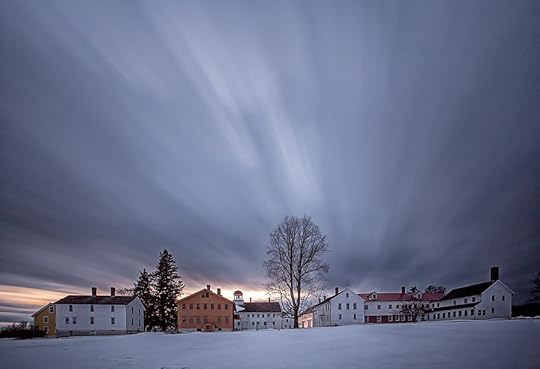
The Canterbury Shaker Village is a National Historic Landmark that sits on 694 acres of land in Canterbury, NH, and also happens to be a popular — and favorite — field trip spot for many elementary-aged kids across the state. If you’ve ever wanted to make your own broom, learn to can your own vegetables, use a letter press, or just pretend you live in 1700s, this is your place.
12. Odiorne Point State Park, Rye
As you can probably tell, NH has quite a few state parks worth visiting, but Odiorne is unique. Odiorne is 330 acres of rocky shore, sheltered tide pools, pebble beaches, fresh water marshes, woodlands, and picnic areas. Also within the park is the Seacoast Science Center, a non-profit marine science education center where you can hold starfish, pet snails, and check out blue lobsters. Blue lobsters, people! Does your state have them?

13. The Mount Washington Cog Railway, Bretton Woods
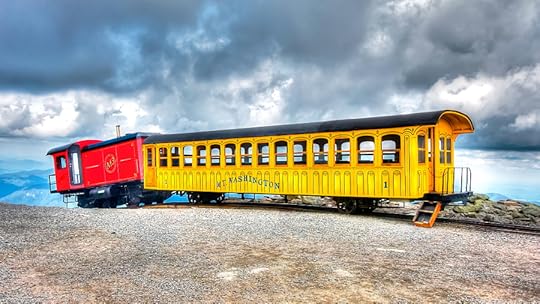
The Cog Railway was the very first mountain climbing train in the world, with its first successful attempt being completed in 1869. Today visitors can take a three-hour, round-trip train ride April through November. Chugging up the mountain while taking in 360 degree views of NH backcountry is a perfect time to appreciate the world’s beauty, and to take some killer photos.
14. Santa’s Village & Story Land, Jefferson and Glen
Visiting both Santa’s Village and Story Land are rites of passage for nearly every NH kid. The Christmas and fairytale-themed parks spelled out school vacation and summertime fun for everyone with a parent cool enough to take them.

Photo: Santa’s Village
15. Milford Drive-In Theater, Milford
Drive-in theaters are a dying breed, but NH is lucky enough to still have a couple of the beloved theaters alive and in action. The Milford Drive-In opened in 1958 during America’s peak drive-in boom and now has two screens that show double-features every weekend. Don’t forget to turn off your headlights – your car battery will die by the end of the show.
16. Clark’s Trading Post, Lincoln
Another popular spot for families with children, Clark’s Trading Post is known for their trained black bears, the White Mountain Central Railroad, and their stellar gift shop. My sister and I forced our parents to buy us many a popgun, rainstick, and dreamcatcher during our summer visits here.
17. Moose Alley, Pittsburg
Reaching to the Canadian border, Moose Alley along Route 3 is known for its active moose population. While I understand that seeing a moose can be quite exciting — for those who have never seen one, it’s kind of like seeing a mythical creature — don’t get too close. They will charge when they feel threatened.

18. Canobie Lake Park, Salem
Canobie Lake Park has been in operation since 1902 and has managed to snag the likes of Duke Ellington, Frank Sinatra, and Sonny & Cher to perform in their Dancehall Theater. Canobie strikes a perfect balance between tiny fair amusement park and mega theme park and gains points for the Yankee Cannonball, a 1930s somewhat-rickety, wooden roller coaster that’s definitely a fave among locals.


Matador Network's Blog

- Matador Network's profile
- 6 followers

