
Matador Network's Blog, page 2058
September 1, 2015
17 dilemmas only Iowans face

Photo: Jessica Pankratz
1. Downloading apps like Tinder or Yik Yak.
You click the “install” button and then you realize, “I’ll probably just be talking to my cousin. Or my next-door neighbor pretending to be my cousin. Or my science teacher. I guess that last one’s okay. …Oh god, did I just think that?”
2. Running into someone with the same RAYGUN shirt as you.
Between the two of you, it’s 150% vowels, 200% awesome.
3. The odd time the tenderloin fits on the bun and you feel existentially underwhelmed.
You turn the plate one full revolution, stare at it for a second, lean back, and go to your happy place. Your friends will nudge you when it’s time to go. They’ve all been there, too.
4. The flight attendant mispronouncing “Des Moines.”
OMG you get paid to go places. The least you could do is know how to say them. You can understand why the pilot says, “And now, ladies and gentlemen, we’re about 20 minutes away from landing in…[coughs]…Cedar Rapids,” but utter disrespect for not only Des Moines but anglicized French? Tsk, tsk.
5. Never knowing what to wear to the fair.
It’s seriously keeping me from getting some apple-pie-on-a-stick in my mouth right now.
6. Car accidents happen because the corn is too tall.
It’s better to just get out of the car and check beforehand.
7. It’s not worth watching TV at least a year before the election.
It’s all ads. It’s all mud-slinging, negative attack ads. On top of that, we’re bombarded with images of Hillz clearly not digging her pork on a stick, Trump causing traffic jams, and yard sign after yard sign after yard sign just busy taking up green space and being ineffective. Our roads aren’t immune, our yards aren’t immune, and our homes are definitely not immune. The Iowa State Fair is just an escape, people.
8. Alternatively, trying to figure out which candidate is causing the hold up on 380.
…or maybe it’s Amish rush hour?
9. Seeing your favorite bartender at Wal-Mart and not knowing if you should apologize or not.
At least this time your shirt’s on the right way and you’re not yelling at someone who doesn’t exist, so he knows you’re not doing that all the time…right?
10. Having to bring a jacket, umbrella, stocking hat, shorts, and sunscreen to any function outdoors.
If you have a tornado kit, bring that, too.
11. The mosquitoes being so bad you forget about your allergies.
It’s Mother Nature’s way of putting in effort to make you feel better about life, which is okay, because you have bug spray in your bag at all times if there isn’t snow on the ground. It can double as mace, which is a perk?
12. Asking about vegetarian or “lite” options…
In this situation, a few things may happen. A) You get told there’s a turkey burger on the menu, B) you’re given a haughty and self-satisfying “Nooooope,” or, my personal favorite, C) “We have Miracle Whip?”
13. Having to explain to everyone where Iowa is and that, yes, it exists.
And no, it’s not Idaho. Or Ohio. Or EE-owa, bless your little heart.
14. When the guy in front of you just grabbed the last slice of Casey’s breakfast pizza.
On a good day, you’ll wait 10 minutes until they bring out some more. On a really good day, they haven’t seen you yet, so they have a piece for you in the back. On a really really good day, you run into Mila Kunis. …Kutcher?
15. You just want to see some goddamned water.
I got 99 counties but a beach in none. Which isn’t true, technically (lake beaches! River beaches!), but you feel super street saying it.
16. There’s just too much safety, affordable housing, progressive thinking, and delicious food here. It totally stifles my starving artist creativity.
I just want to start a protest already! Maybe a peaceful sit-in or a march. How about that too-small tenderloin? No, no, not quite right. The fact that gay marriage wasn’t passed quickly enough? That’s better. Not enough things on sticks? No, that’ll just make our reputation worse. More baseball movies? More Trader Joe’s stores?
17. Only having one bread sack for your feet.
Kidding. We don’t actually do that. Everyone knows that right? 


Watch thisslack line stunt
Follow Matador on Vimeo
Follow Matador on YouTube
ON AUGUST 2ND, 2015 Spencer Seabrooke broke the world record for the longest free solo slackline. This was no small feat: he was 1,000 feet off the ground, walking along a 2½-centimetre-wide slack line, and he was not wearing a safety harness.
Although this might look like an insanely dangerous way to spend one’s spare time (especially since he tumbled twice while trying to set this record), Seabrooke explained to the CBC: “[..] I would rather live my life doing what I want to do, instead of living in fear”. 
What a melting glacier in Greenland means for a billion people worldwide
A hundred years after it spawned the iceberg that sank the Titanic in the North Atlantic, the Jakobshavn Glacier is now a major contributor to global sea-level rise, this time threatening the homes and lives not of 2,200 passengers and crew but of a billion people across the world.
As climate-watchers and coastal-dwellers keep a weather eye out for signals of irreversible changes in the environment, the world’s fastest-moving glacier has already begun self-destruction.
Jakobshavn is now shedding ice nearly three times as quickly as it was 20 years ago, dumping enormous and growing quantities into the ocean. It’s contributed 0.1 millimeters per year to worldwide sea-level rise — more than 3 percent of the 3 mm produced globally — for the past decade.
The glacier “has been retreating for the last 100 years,” according to Ian Joughin, senior principal engineer at the Polar Science Center, part of the University of Washington’s Applied Physics Laboratory. “Retreat” means a glacier is shrinking in length, losing more ice from its face that meets the water than accumulates from higher up.
But it was only in recent decades that the retreat reached extreme levels.
Jakobshavn’s story isn’t unique. For decades now, more ice has been melting into the ocean than is falling from the sky in the world’s mountain and polar regions, where ice sheets store two-thirds of the planet’s fresh water — and the science shows us the situation won’t reverse any time soon.
To understand exactly what’s happened and what’s likely to come, it’s critical to understand the topography underneath each glacier.
First, a note on how to think about glacial ice: it’s not as simple as frozen water. Scientists consider glaciers to be “nonlinear viscous fluids,” which behave like both solids and liquids. Think of a glacier as a frozen river, always flowing at some speed from source to outlet, but growing and receding with the seasons. Because ice is heavy and not a perfect solid like rock, it flows under gravitational pull and pressure from above. Sometimes big chunks become unstable and fall into the sea. When Earth’s climate is in balance, about the same amount of water flows into the oceans from glaciers as is evaporated and then precipitated as snow onto ice sheets from which those glaciers are made.
The Jakobshavn Glacier, known in Danish as Jakobshavn Isbræ, has its origins in large areas of land well above sea level, from which it flows down toward the ocean (in this case, Ilulissat Icefjord), where it calves icebergs into the water.
As physicist Joughin describes it, Jakobshavn Glacier flows off the land and into the 1,600-meter-deep fjord, filling it entirely with ice for a distance of about 50 kilometers, ultimately climbing up a slope in the sea floor that peaks at about 600 meters of depth. The narrow sheet of ice coming off the edge of the glacier at that peak — called a “glacier tongue” — once served as a sort of “cork” for the glacier, holding it back significantly and preventing quicker loss of ice.
You can see the rise in sea-bed elevation just to the left of center in this graphic.
In 1992, Jakobshavn was melting at a rate of about 6 kilometers a year. It was “about in balance” with the natural rhythm — gaining and losing roughly the same amount of ice over the course of a year’s winter accumulation and summer melting, Joughin said.
But in the late 1990s, the glacier’s tongue broke off, and the “uncorked” Jakobshavn began to calve and lose mass in ever-deeper water.
By 2000, the glacier was losing 11 kilometers in length every year, nearly twice the stable speed. As of last summer, according to a paper Joughin and others published recently in academic journal The Cryosphere, it was losing nearly 17 kilometers a year, retreating up the fjord into increasingly deep water that could cause it to melt even faster in the coming decades.

This graphic shows ice flow velocity as color over SAR amplitude imagery of Jakobshavn Isbræ in a) February 1992 b) October 2000. In addition to color, speed is contoured with thin black lines at 1000 m/yr intervals and with thin white lines at 200, 400, 600, and 800 m/yr. Note how the ice front has calved back several kilometers from 1992 to 2000. Further retreat in subsequent years caused the glaciers speed to increase to 12,600 km/yr near the front. The town of Illulisat is just off the edge of the image on the north side of the fjord. (Courtesy of PSC/APL/UW)
Jakobshavn’s dramatic change was recorded in the 2012 film “Chasing Ice,” in a compelling scene that captured the calving of a kilometer of ice in a single event. That happens throughout the summer, Joughin said, though not always in such significant individual moments. (When it does, though, global seismic monitors have been known to register them as 4 or 5 on the Richter scale, he said.)
Here’s the clip from the documentary:
Eventually — perhaps in about 100 years — the glacier will have retreated far enough that it will no longer feed directly into the fjord. At that point, essentially landlocked, the glacier will only shrink through melting, which happens much slower than calving. With that slowing will come more stability in terms of the glacier’s size. “The next stable condition could be a regionally smaller ice sheet,” Joughin said.
Jakobshavn would still contribute a significant amount of global sea-level rise before then. But the real danger lies at the other end of the Earth, in the West Antarctic Ice Sheet (WAIS), which holds enough water to raise the ocean between three and six meters.
The WAIS is also melting, but it’s doing it in open water; once the process starts, the sheet will never stop calving.
“The [WAIS] glaciers are going to keep retreating. At this point there is nothing we can do but watch,” said Eric Rignot, a glaciologist at the University of California Irvine who published his latest paper about the WAIS in December’s Geophysical Research Letters. “Just how fast they can flow, we don’t know,” he said.
It could take hundreds or thousands of years, but as Joughin puts it, the next stable point for WAIS is “no ice sheet.” By then huge areas of land, home to massive proportions of the world’s population, would be under water.
The question facing scientists and coastal dwellers is akin to the one facing the Titanic’s passengers: The water is rising, and we don’t quite know how fast it’s coming, or how quickly it will accelerate. But we need to plan, move, and adapt if we are to survive. There’s no way to stop the water, and no time to waste.
By Jeff Inglis, GlobalPost
This article is syndicated from GlobalPost.

Most bands want the spotlight. Cloud Cult turned it on the struggles and stories of their fans.
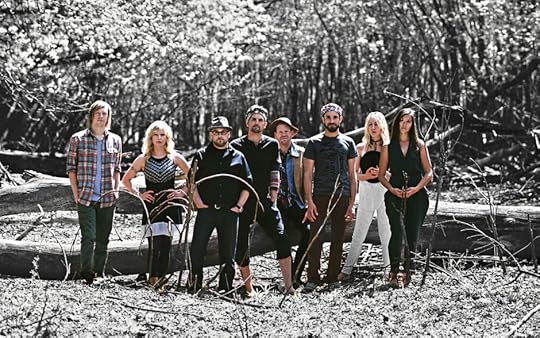
Cloud Cult in 2015. Photo by Graham Tolbert.
‘I FEEL LIKE MUCH OF THE MEDIA focuses on the negative stories out there, and that leaves many of us feeling uninspired about humanity. But if you look at the bigger picture, you start seeing there are many people out there doing absolutely amazing and inspiring things, and they just don’t get the same kind of attention,’ says Craig Minowa, lead singer for the band Cloud Cult.
This was the impetus behind Cloud Cult’s new webseries, Stories from the Road, which looks at the most challenging moments in the lives of fans. The idea was conceived while touring, Minowa says.
“The crazy thing is that after night, the stage lights are shining on us, but there is a crowd full of people who have amazing and inspiring stories that they have been living through, who deserve to have the lights on them. So this series of films is our chance to take the limelight away from us and shine it on some people who deserve to have their stories told, and it teaches us that the real “show” isn’t about what’s going on on stage, but rather with how people choose to live and perform in their everyday lives.”
Over the next several weeks, Matador will be releasing new episodes of the series. Each new episode will go live at 3pm eastern.
In the meantime, enjoy episode 1 below and stay tuned for more Stories from the Road.

Drone footage of Teahupoo
Follow Matador on Vimeo
Follow Matador on YouTube
Brent Bielmann and Eric Sterman’s four-minute video captures Teahupoo, the legendary monstrous Tahitian wave (recently tackled by stunt rider Robbie Maddison on a dirt bike), from unique angles that provide an incredible outlook on the beauty and dangers of surfing. 
True size of countries quiz
Featured Photo:

For people learning multiple languages, the following rules are essential

Photo: CollegeDegrees360
I’ve always thought of myself as an avid learner, someone who enjoys challenges and discovering new things. In truth, I’m only avid when I have a choice in what I’m learning. Ahead of our extended stay in France, I thought I would approach French with the same zest with which I studied Spanish. In reality, I’ve halfheartedly completed three (out of 78) levels in Duolingo and left it at that. It’s not that I’m resistant to French but that I don’t want to dilute my progress with Spanish. With this in mind, I spoke to a number of polyglots and multilinguals to see how they acquired their numerous languages. They shared a wealth of information, the best of which is shared below.
Note: ‘First language’ is used to denote the first foreign language you have chosen to learn, not your mother tongue.
1. DON’T GIVE UP ON YOUR FIRST CHOICE.
Most people choose their first language for a reason. This may be via a systematic review of the best language to learn, a desire to speak with locals while travelling, or an interest in a specific foreign culture. Giving up on your first language sets a precedence, making it easier to quit subsequent efforts.
“Instead of quitting, find what works for you,” says London-based Kiyeun Baek who speaks English, Spanish, Korean, Japanese and French, some daily in her role as head of business development at global publisher DK. “For me, it’s starting to read real novels in the language as soon as possible.”
Judith Meyer who runs learnlangs.com and organises an annual Polyglot Gathering speaks nine languages (with another four at beginner or intermediate level). She advises: “Try a different method or different materials first. If you’re bored with a course or you can’t understand it, just do something else for a while: a different course or even some fun activities like surfing the web or watching funny videos.”
Meyer advises native English speakers to choose a European language first before advancing to more difficult languages further afield: “Any European language is an okay first choice and it doesn’t make much sense to switch — for example, from French to Spanish — when you run into trouble because you’ll lose your progress only to encounter the exact same difficulties again.”
2. UNDERSTAND THE COMPONENTS OF ‘NATURAL TALENT.’
Our experts agree that motivation is the most important ingredient in learning multiple languages. Interestingly, they urge us to interrogate the notion of ‘natural talent’. Rather than a singular trait that some people have and some don’t, natural talent can be broken down into components.
Julia Saperia, a London-based statistician who speaks five languages, told us: “I think there are several different talents — if you happen to have them all, then you’re lucky. I’m good with grammar because I have a logical mind and my ear is good because I’m musical. Some people are able to absorb languages by being immersed in them, others are unafraid to make mistakes and learn without knowing or caring much about the rules. That is a talent with which I am not blessed!”
Meyer elaborates: “I think there are talents for various aspects that are important in language learning. For example, there are people who have the gift of imitating accents: they hear very well and they are able to reproduce sounds more faithfully than the rest of us. There are also people who have particularly good memory skills. Daniel Tammet, who made the news for learning Icelandic in a week, formerly placed fourth in the World Memory Championships. [His memory] definitely helped. Synaesthesia also helps. However, I don’t believe in a separate language gene.”
Framing natural talent in this way makes it less daunting. You may not have a great memory but you might be great at talking to people without worrying about making mistakes. Equally, you may not be great with grammar but your accent might be perfect.
3. LAYER YOUR LEARNING BY FOLLOWING THE 70/30 RULE.
One question asked by every aspiring polyglot is: should I learn my languages in parallel or in sequence? Our considered answer is neither.
Lora Green from 2Polyglot speaks four languages and explains: “Don’t start learning two languages at once because all rules and definitions will be mixed in your mind, but don’t wait until you speak one language fluently before taking courses in the second because there’s no strict line where you can tell you speak a language fluently. You will just waste time. When you can express your opinion, understand grammar basics and follow what’s going on in a TV series in your first language, use this as a sign that you may start learning another one.”
Green adds: “I use a proportion of 70/30. I use 70% of my language learning time on the new language and 30% for the language I know on an intermediate level.” This allows her to build her languages in layers.
Meyer uses a similar approach: “The approach that works best for me is to have just one beginner language that I’m actively studying and one intermediate or advanced language that I’m also focusing on. With the intermediate/advanced languages I sometimes focus on more than one but not with the beginner languages. That has always turned into a disaster!”
4. DEVELOP PERSONAS FOR EACH LANGUAGE.
Once you have made progress in several languages, it can be hard to compartmentalise them, especially if they are similar.
Natasha Asghar, a London-based presenter for Zee TV, speaks three Indo-Aryan languages and three European languages – four of which she uses in her job on a daily basis. She tells us: “I learnt English, Hindi, Urdu and Punjabi at the same time and then went on to study French and German later on. One useful tip for new learners is to develop ‘personas’ for each language. This will help keep them separate in your head.”
So, for French, your persona may be a whimsical waitress like Amélie who smiles and gesticulates a lot. For German, it may be a stern scientist who speaks in clipped tones. If you adopt their mannerisms, their tone of speaking and cadence of speech, it will help you keep the languages separate.
If you layer your languages following the 70/30 rule, it may also help to change your environment for each language and study them on different days.
5. BE SYSTEMATIC.
If you are serious about learning multiple languages, consider logging the hours you spend on each one.
Meyer tells us: “I’m impatient when I don’t quickly see results, so I keep a log of when I study and how long I study. I use a spreadsheet for this because daily updates should take no time at all. My current major project is Hebrew and I can tell exactly that I have studied 136 hours of Hebrew since January 1st, which is a little over half an hour per day on average.”
Recording your study in this way will encourage you to celebrate small wins, motivate you to keep putting in the hours and give you solid metrics against which to measure future language efforts.
6. UNDERSTAND THAT LANGUAGE LEARNING IS MORE LONG THAN HARD.
Most of us believe that language learning is hard. Without a doubt, it can be frustrating, challenging and unrewarding for long stretches of time but it’s not hard in the same way astrophysics or advanced mathematics are hard. Learning multiple languages — or indeed just one — is more long than hard. Even the arguably easy languages take 600 hours of study to achieve proficiency.
Staying focused and motivated is clearly the key. San Francisco-based designer Shannon Del Vecchio speaks English, Spanish, Italian, Portuguese and Japanese. She tells us: “When I first met my wife, Gina, I already spoke four languages. I learned Italian in part because her family is Italian and I now have an Italian last name. She used to tell everyone, ‘Shannon is so good at languages! She is amazing! She speaks four of them like it’s nothing.’ After watching me learn Italian, she now says, ‘You would not believe Shannon’s power of concentration when it comes to learning languages. She can sit down and work on it for two hours and nothing sways her focus. It is crazy.’
7. DON’T WORRY ABOUT KEEPING THEM ALL IN YOUR HEAD.
One of my concerns about learning French is that it will somehow ‘override’ my progress in Spanish, either diluting it or pushing it aside, an erroneous belief most likely linked to the discredited ‘separate underlying proficiency’ (SUP) hypothesis.
Academic Nayr Ibrahim explains: “This theory suggests that languages are stored in separate compartments or containers, which represent half the capacity of the monolingual brain. These ‘containers’ have limited storage space, and, as the brain cannot hold so much information, it ‘elbows out’ the other language.” Ibrahim adds that SUP has been discredited by decades of research into bi- and multilingualism.
In short, your brain has space for numerous languages. Just don’t worry about keeping them all in your head at the same time. Baek tells us: “In my experience, the languages I use the most are readily ‘accessible’ and the others I’ll have to ‘activate’.” Meyer adds that “it’s hard to keep all languages equally accessible” but that she can reactivate dormant ones with a few hours of study.
Don’t be defeated by the fear of losing a language before you even begin.
This article originally appeared on Atlas & Boots — Travel with Abandon and is republished here with permission.
Read more language articles from this author:
5 LANGUAGE LEARNING TOOLS FOR THE LAZY LEARNER
5 LANGUAGE LEARNING MYTHS
WHAT IS THE BEST LANGUAGE TO LEARN?

15 back-to-school confessions from a dad who took his son traveling all summer
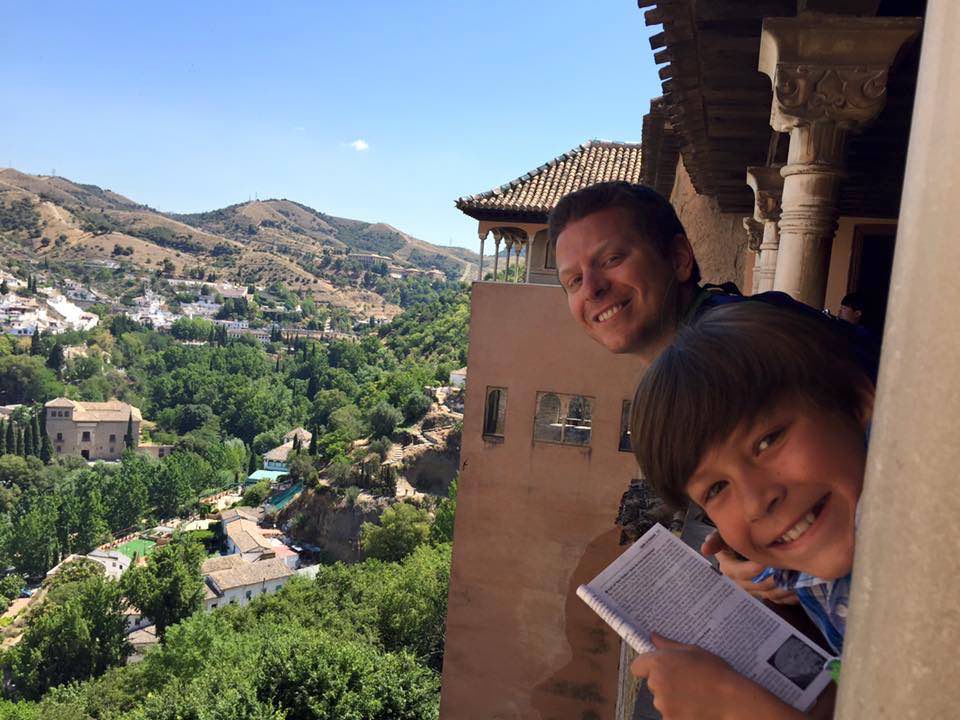
Guiding us through the Alhambra in Granada, Spain. Photo: Rory Moulton
Yes, indeed, that is Lonely Planet and Rick Steves on my son’s summer reading list.
What’s not included: innumerable museum plaques and informational pamphlets, a dozen different metro and city maps, countless bus, train and subway schedules, menus in eight different languages, a week’s worth of London’s free commuter rag Metro and a whole plethora of other worldview-developing and vocabulary-building texts that were not on the recommended summer reading list.
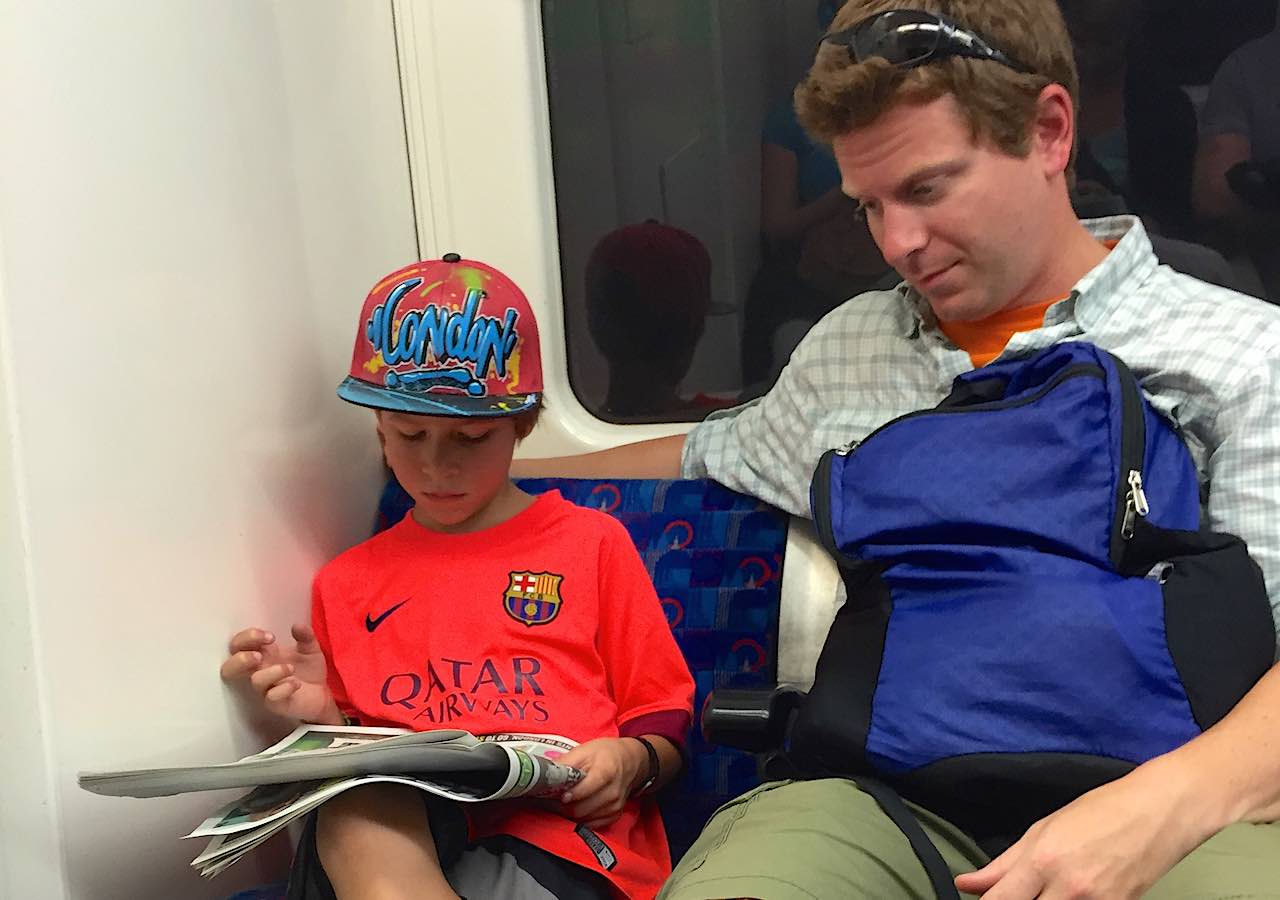
Catching up on the gruesome and the gossip while riding the Tube, London. Photo: Rory Moulton
2. We neglected to do those summer study materials.
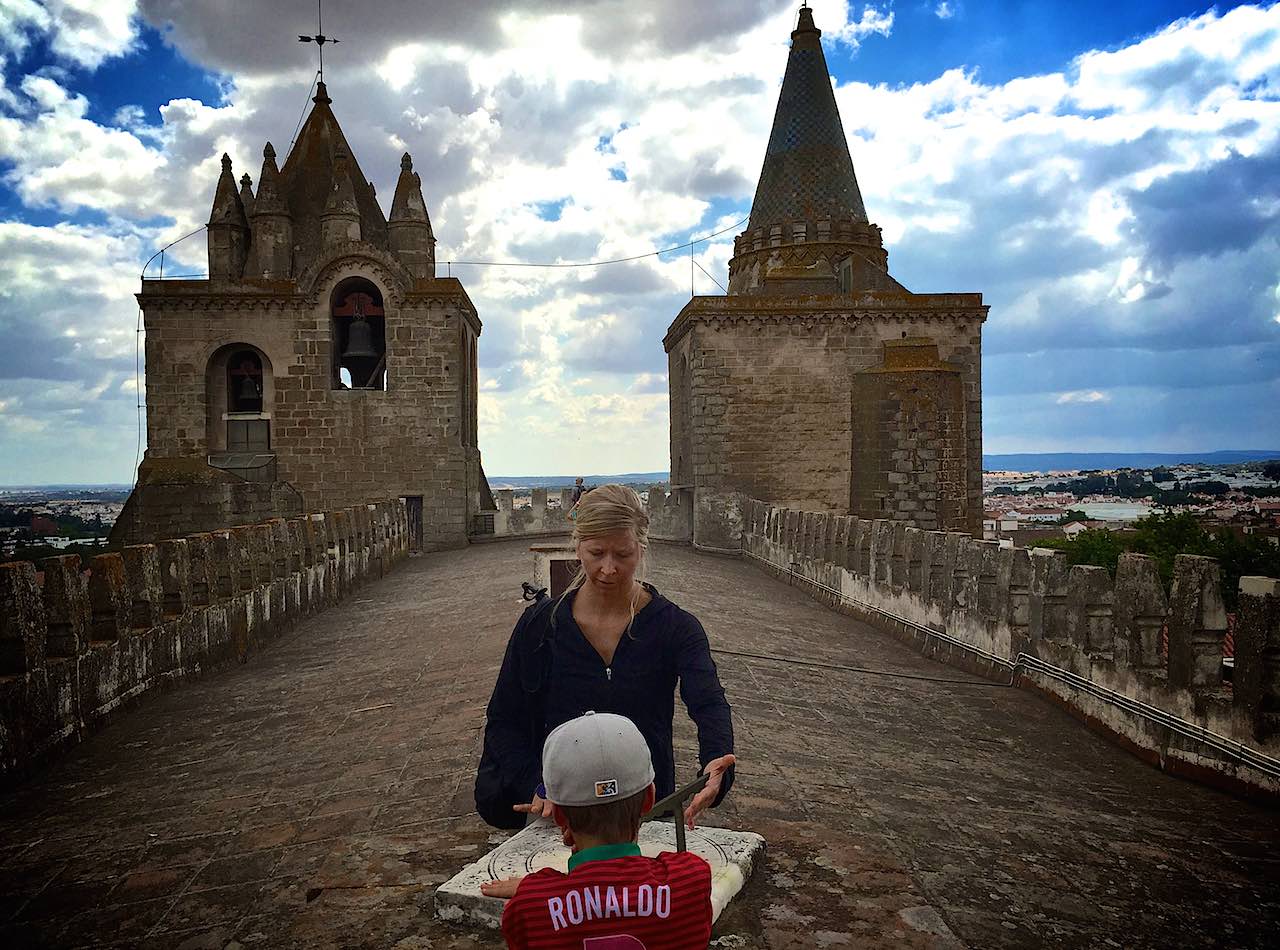
Learning firsthand how a sundial works in Evora, Portugal. Photo: Rory Moulton
But we got hands-on — medieval sundials, Renaissance-era astrolabes, WWII uniforms, scientific experiments, Roman ruins…
3. He might tell stories about a chihuahua on a train.

Welcome to Lisbon. Photo: Rory Moulton
Don’t believe a word he says.
4. In retrospect, he drank a bit too much Fanta.
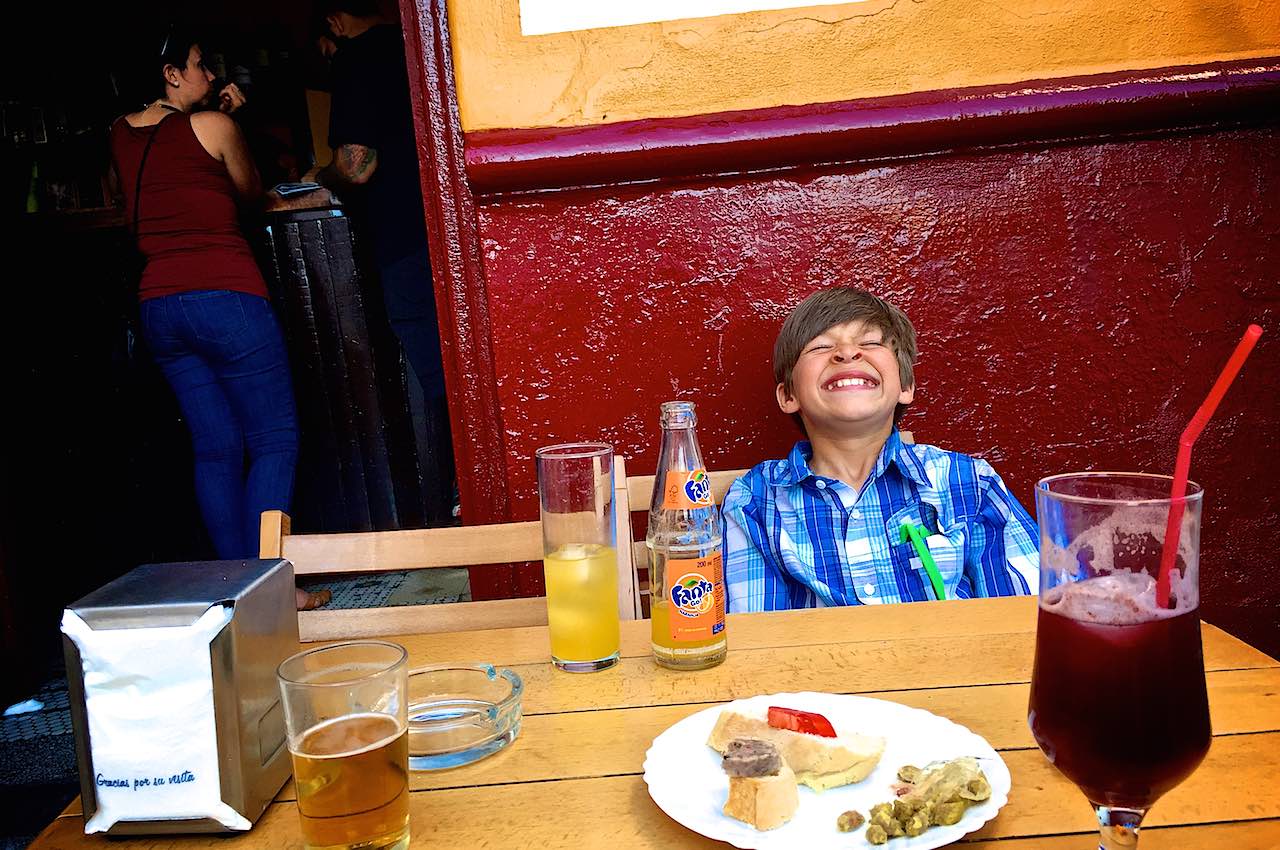
Photo: Rory Moulton
Live every day like it’s your last; know what I’m saying?
5. We didn’t take many family bike rides.
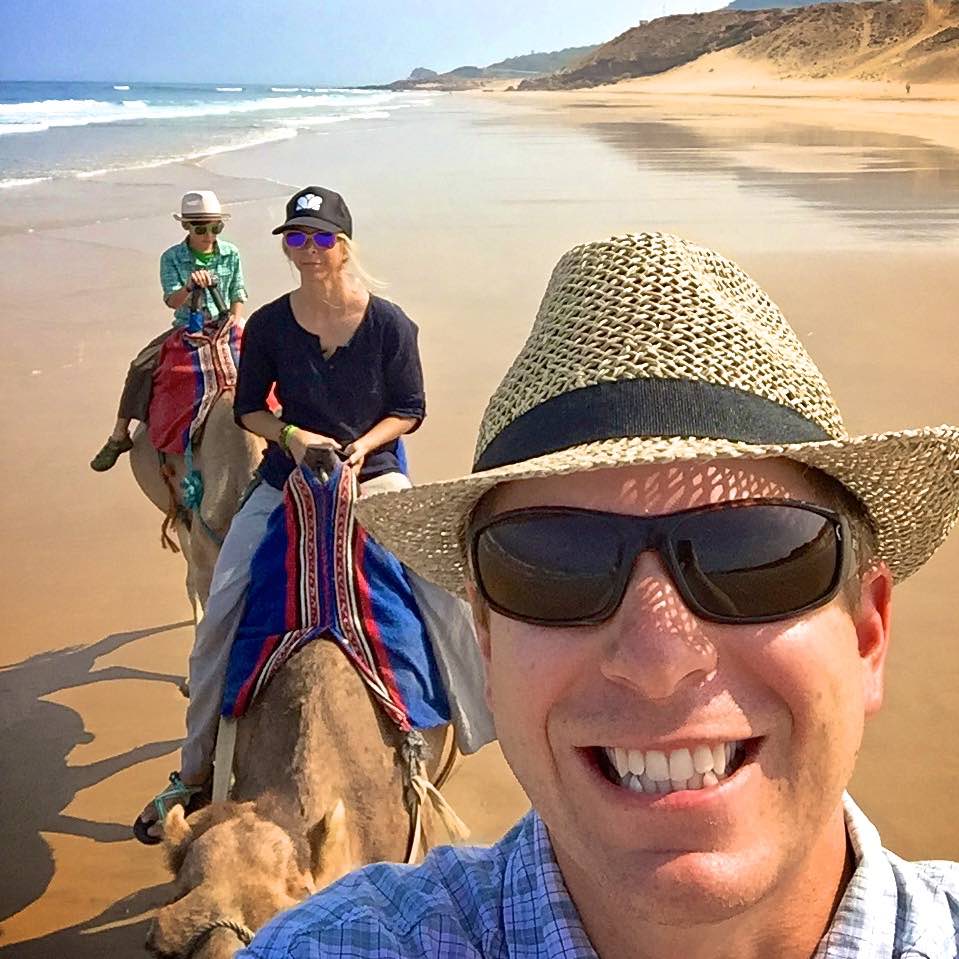
Photo: Rory Moulton
But we made do.
6. Bedtime kinda got thrown out the window.
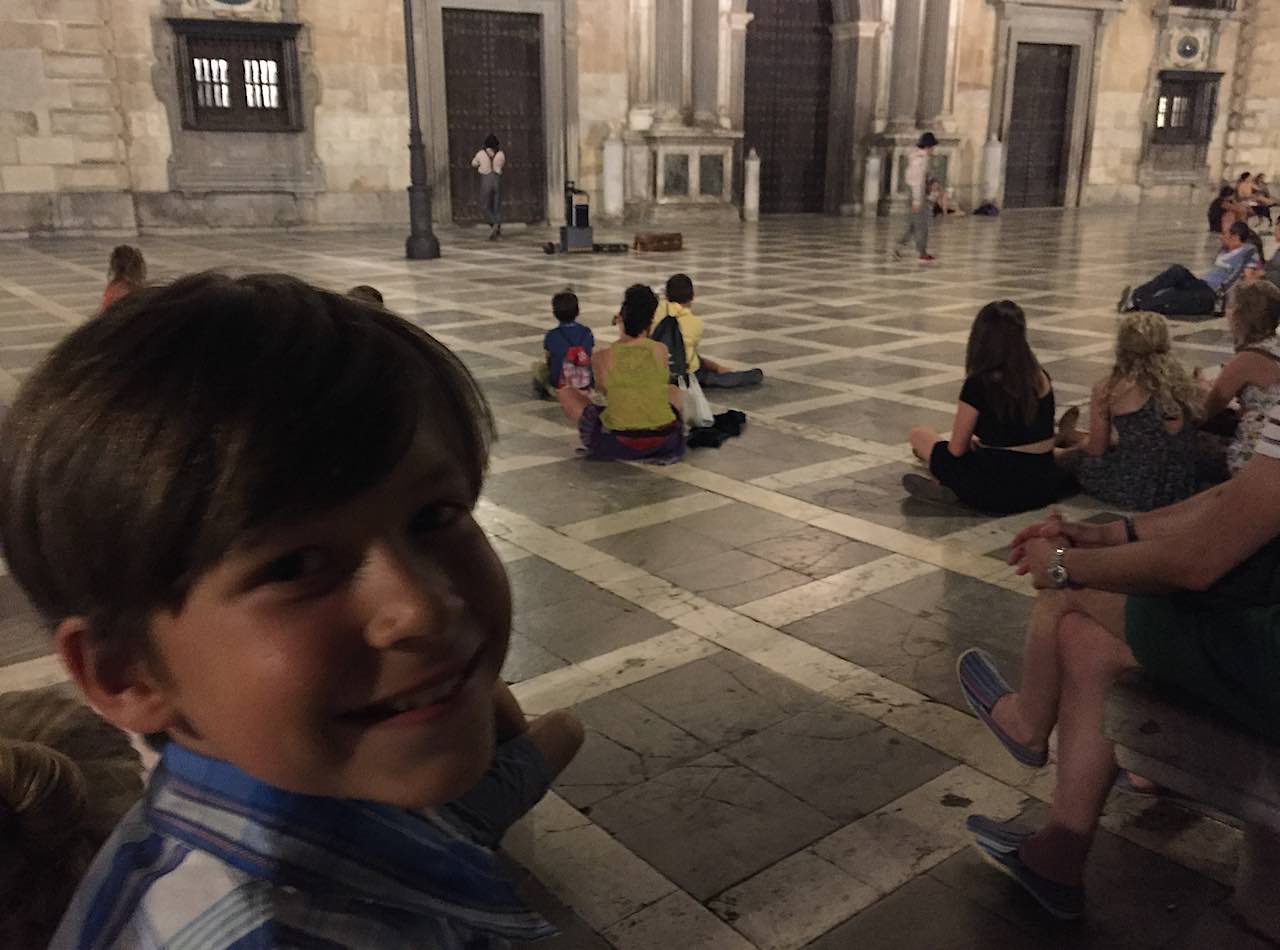
Catching a late-night comedy performance in Granada’s Plaza Nueva. Photo: Rory Moulton
He’s still adjusting to this early-to-bed, early-to-rise routine.
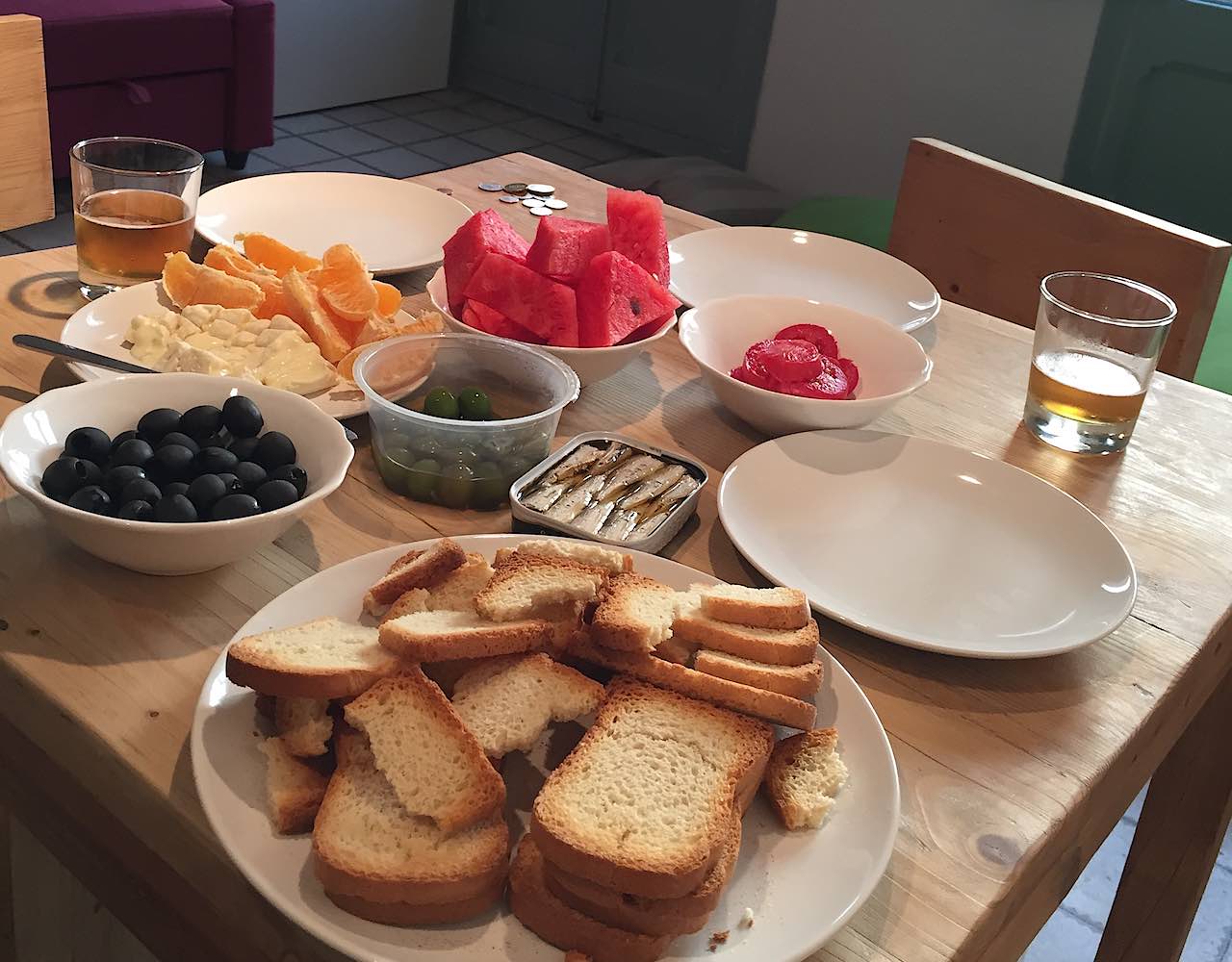
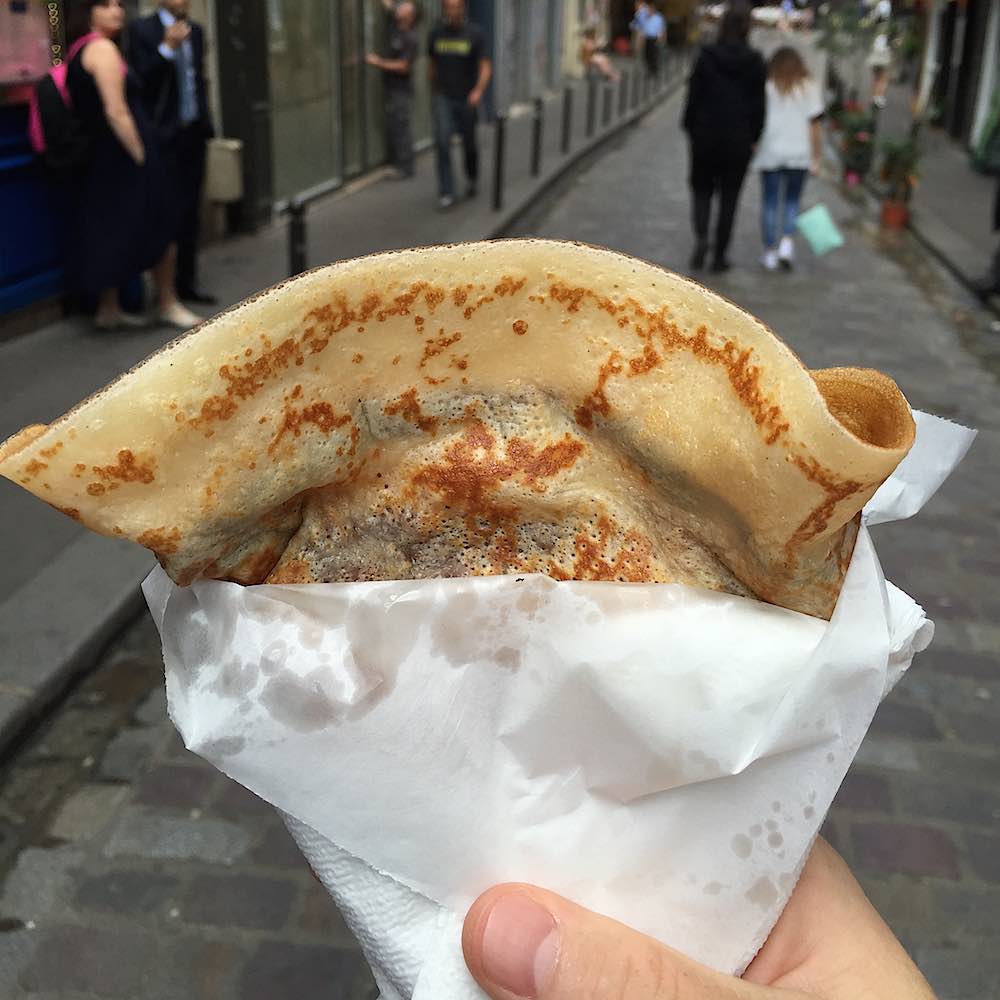
7. We ignored the whole food-pyramid thing.
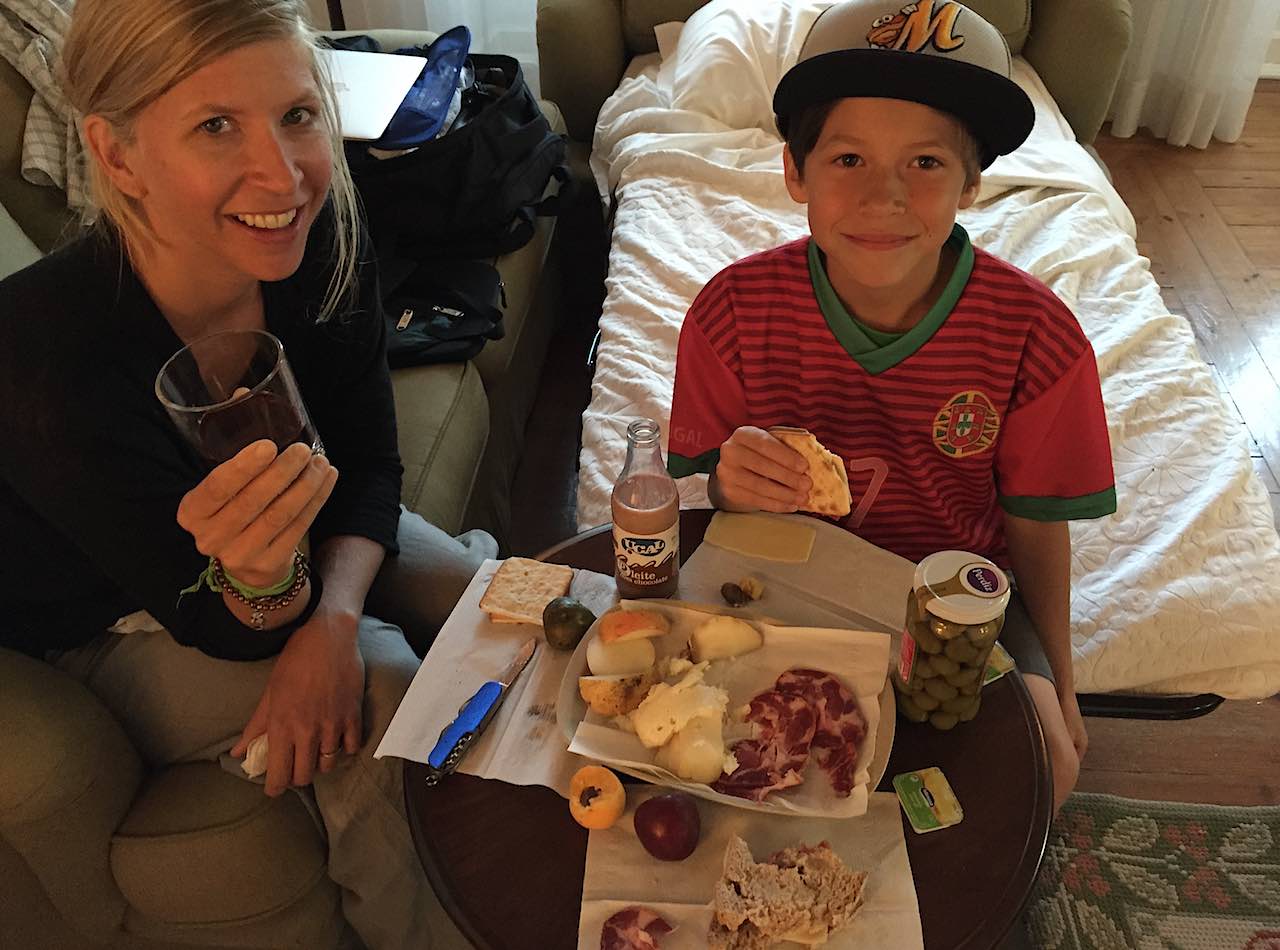
Photo: Rory Moulton
What
Food
Pyramid
Thing?
8. I allowed my son several — gasp! — sips of beer and wine.
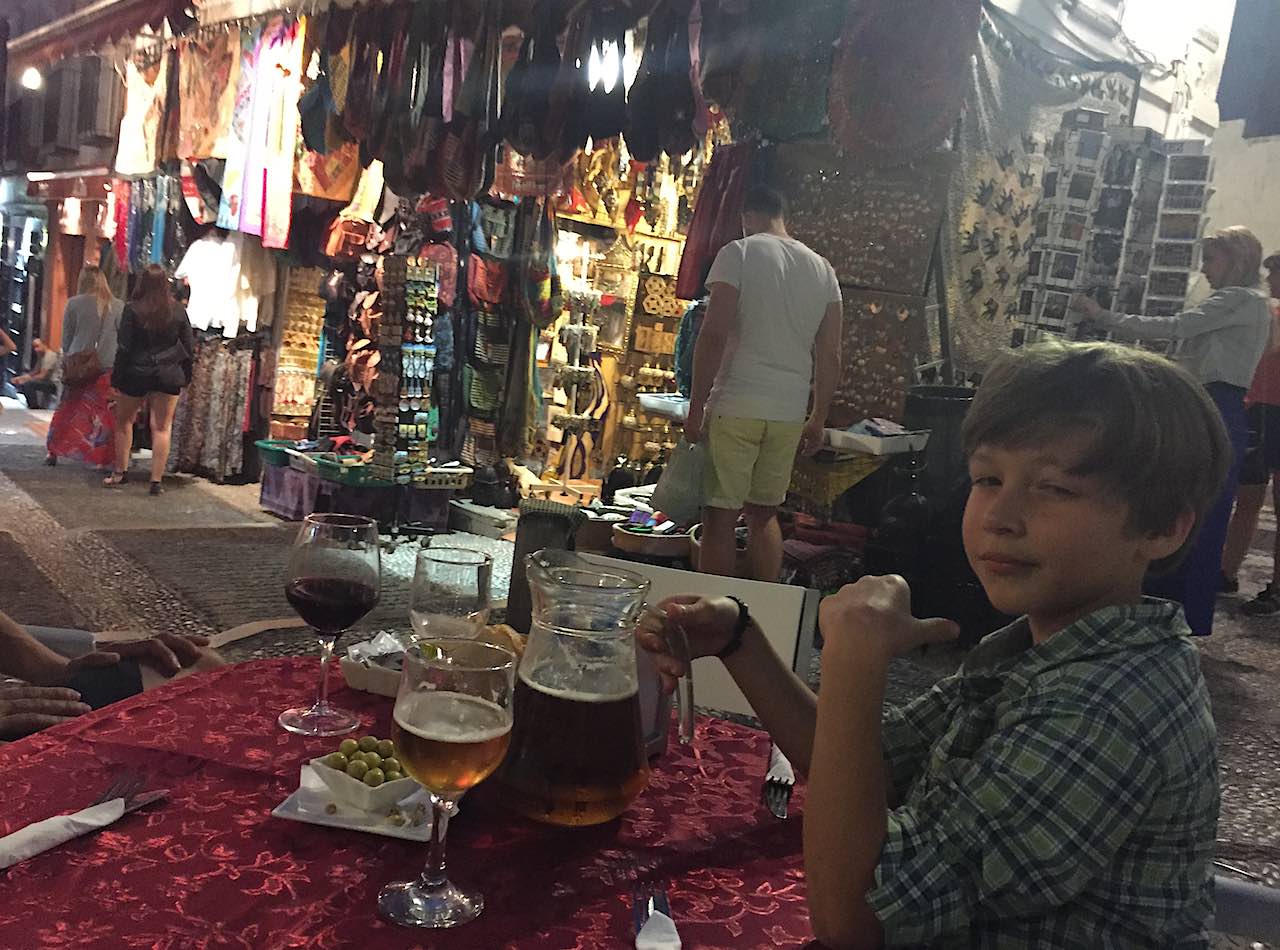
“No, thanks dad.” Dinner in the Albayzin, Granada, Spain. Photo: Rory Moulton
He still thinks beer and wine are gross. (Except for Italian Fragolino; he’d like some more of that please.)
9. The poor guy was subjected to frequent nudity.
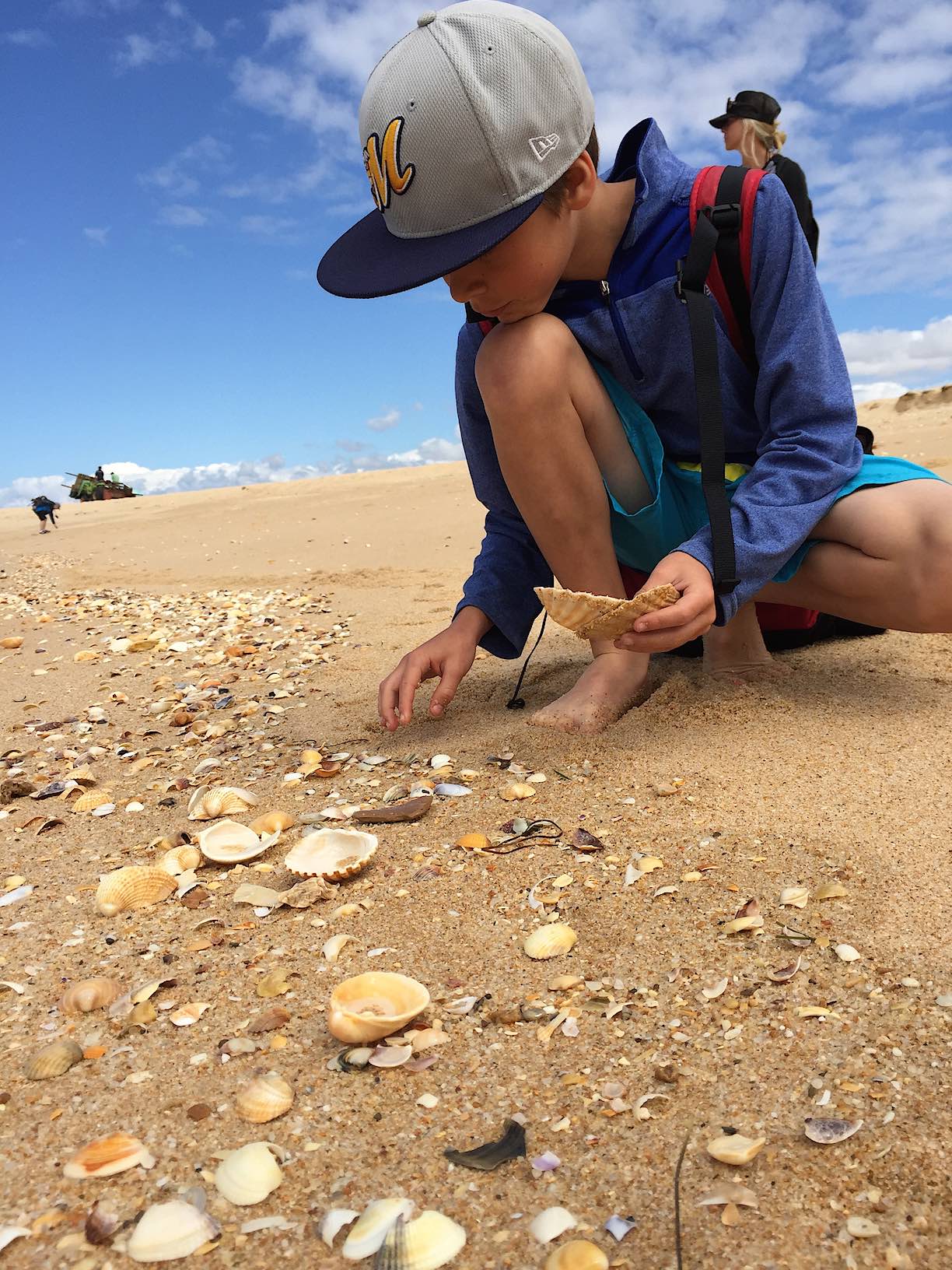
Shelling on Ilha Deserta on the Algarve, Portugal. Photo: Rory Moulton
He still managed to have fun at the beach.
10. We spent an inordinate amount of time around dead people.
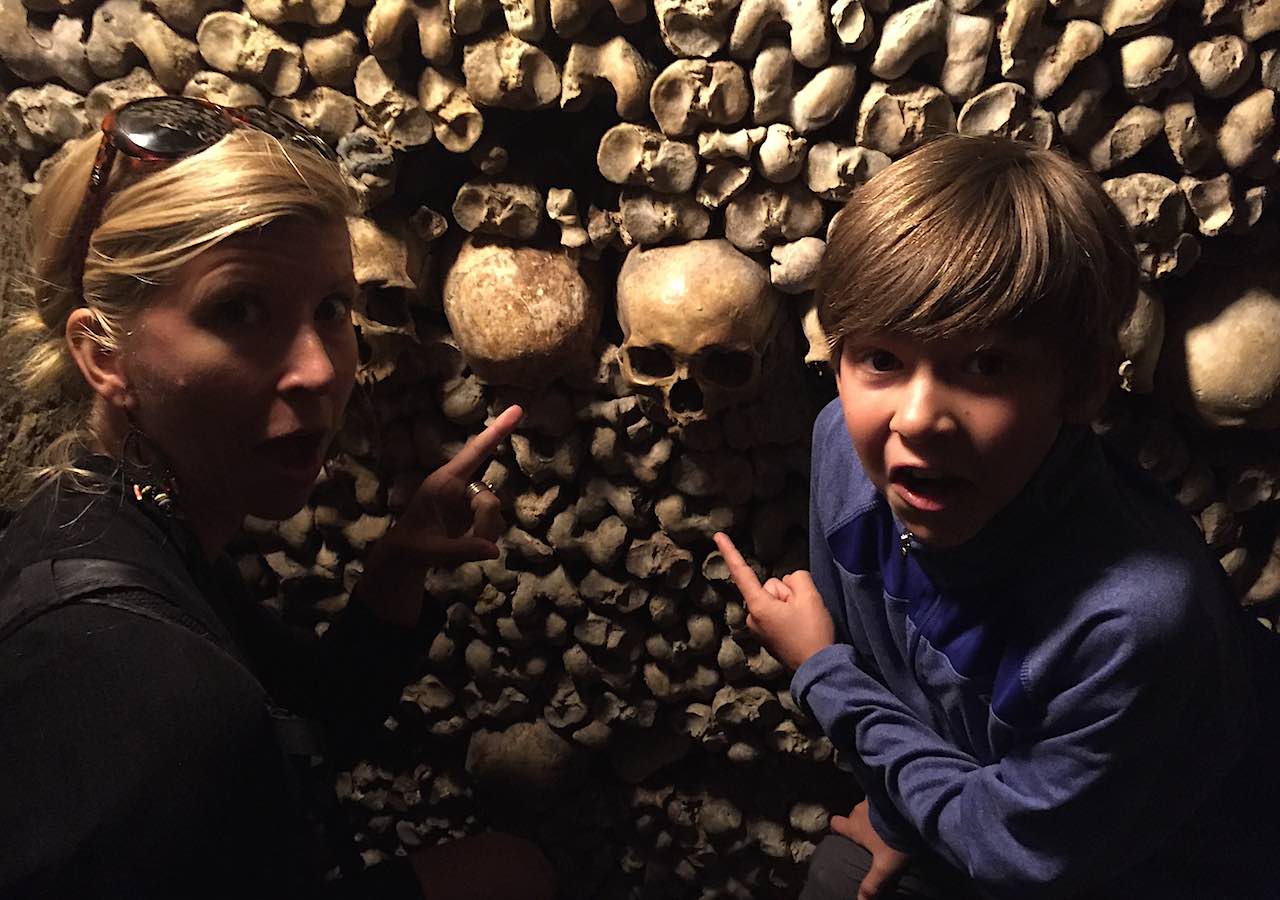
Photo: Rory Moulton
Cemeteries, sarcophagi, tombs, crypts and, the granddaddy of them all, Paris’ Catacombs.
11. Sometimes we did absolutely nothing.
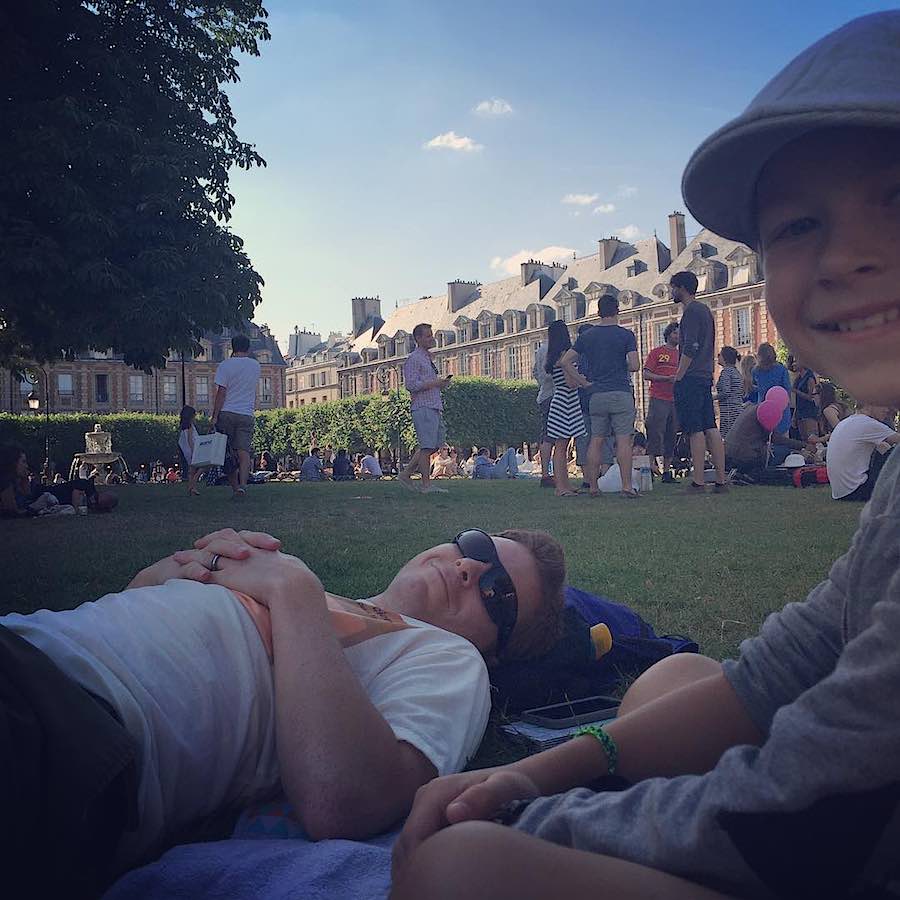
Well-deserved downtime on the Place des Vosges in Paris. Photo: Rory Moulton
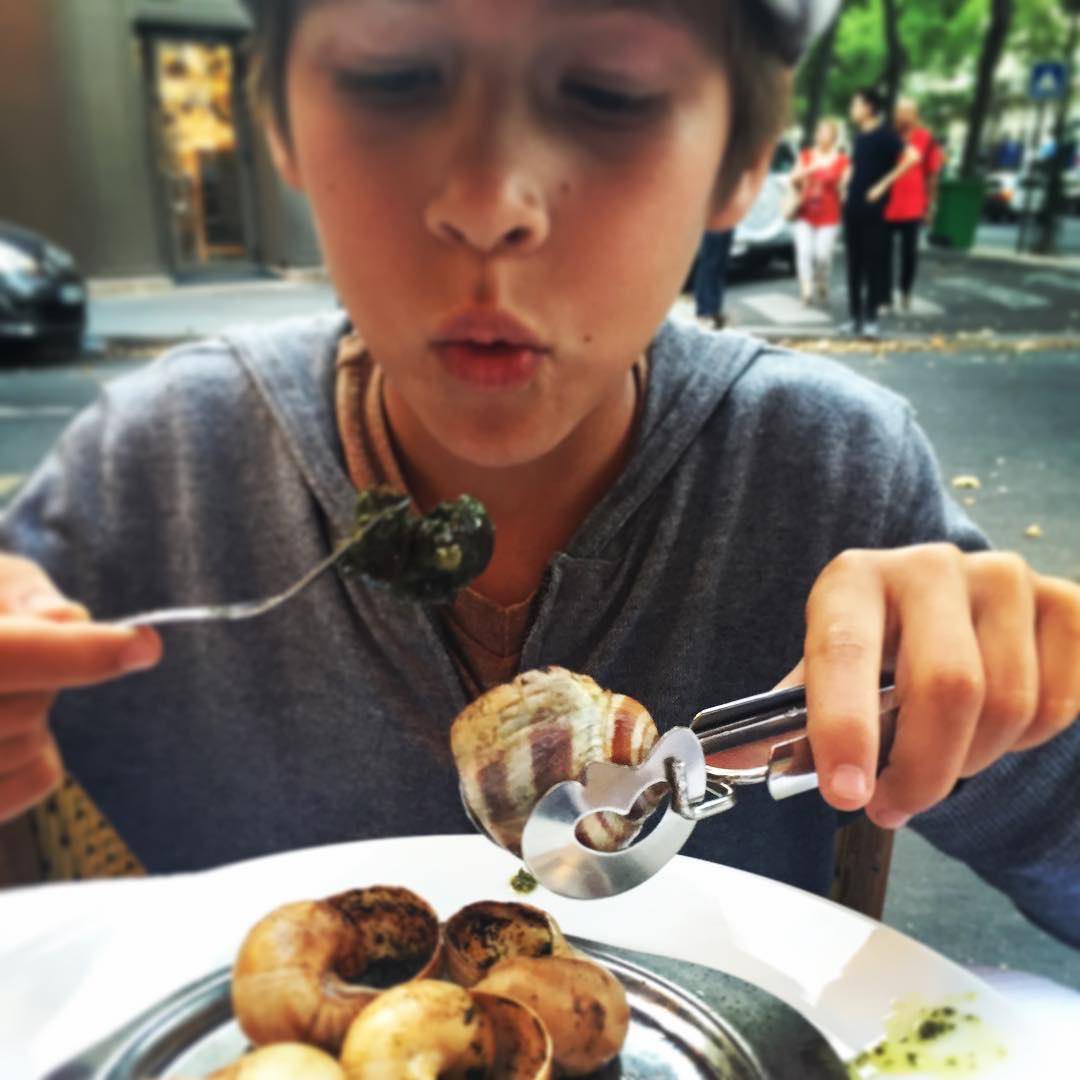
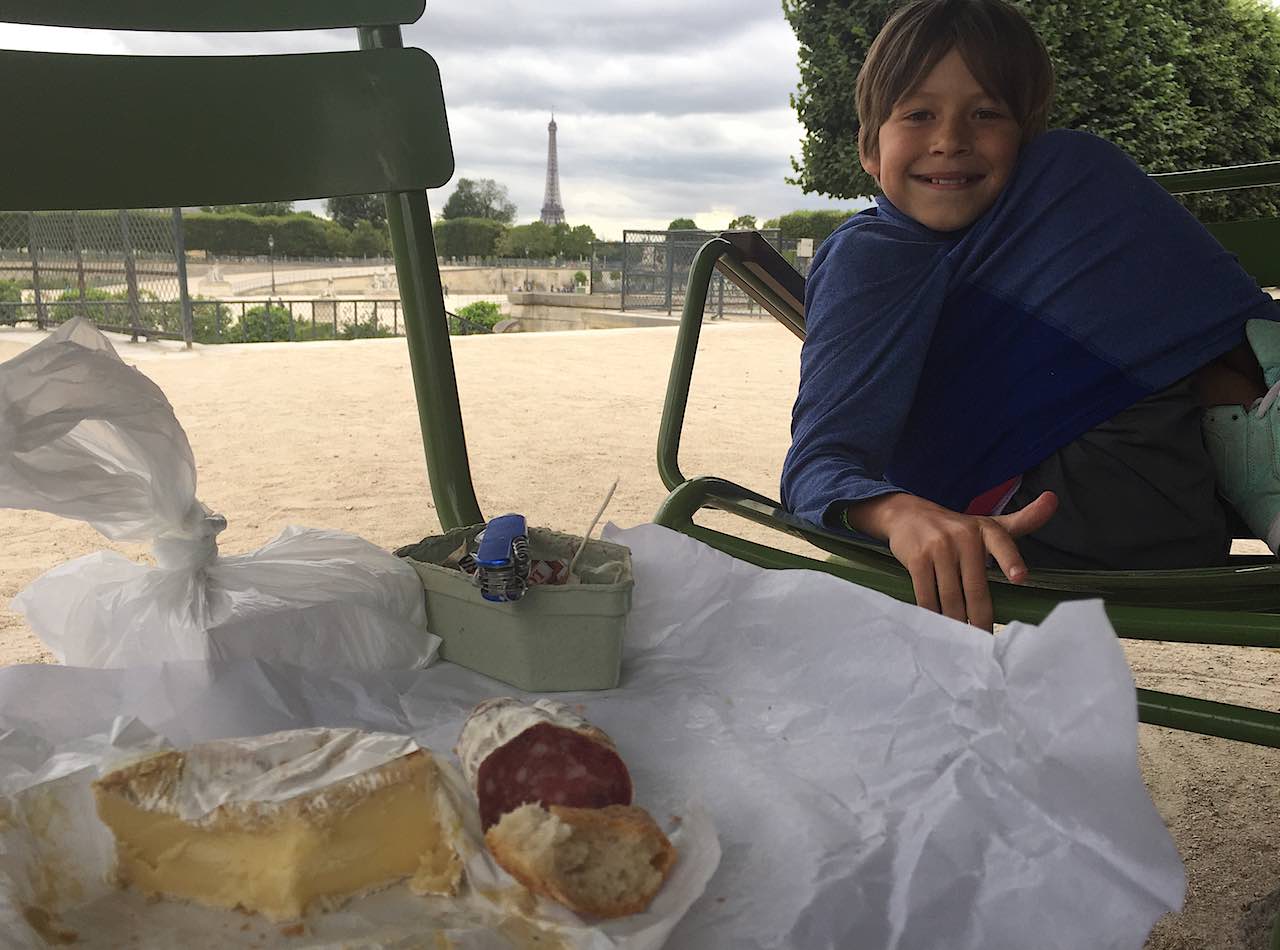
12. We ate out too much.
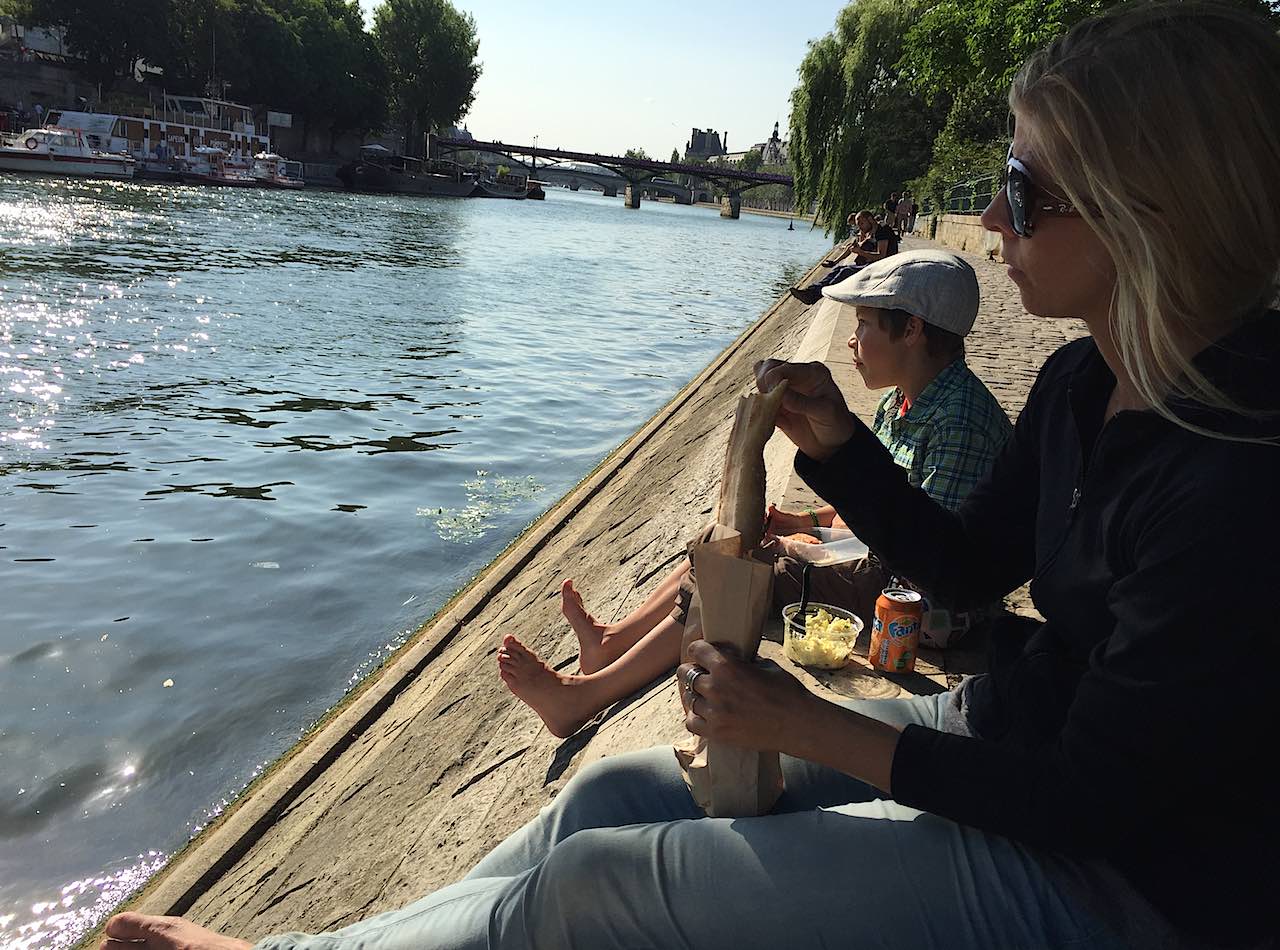
Picnic on the Seine at the Pont Neuf, Paris. Photo: Rory Moulton
Out-side.
13. We ditched mom one time.
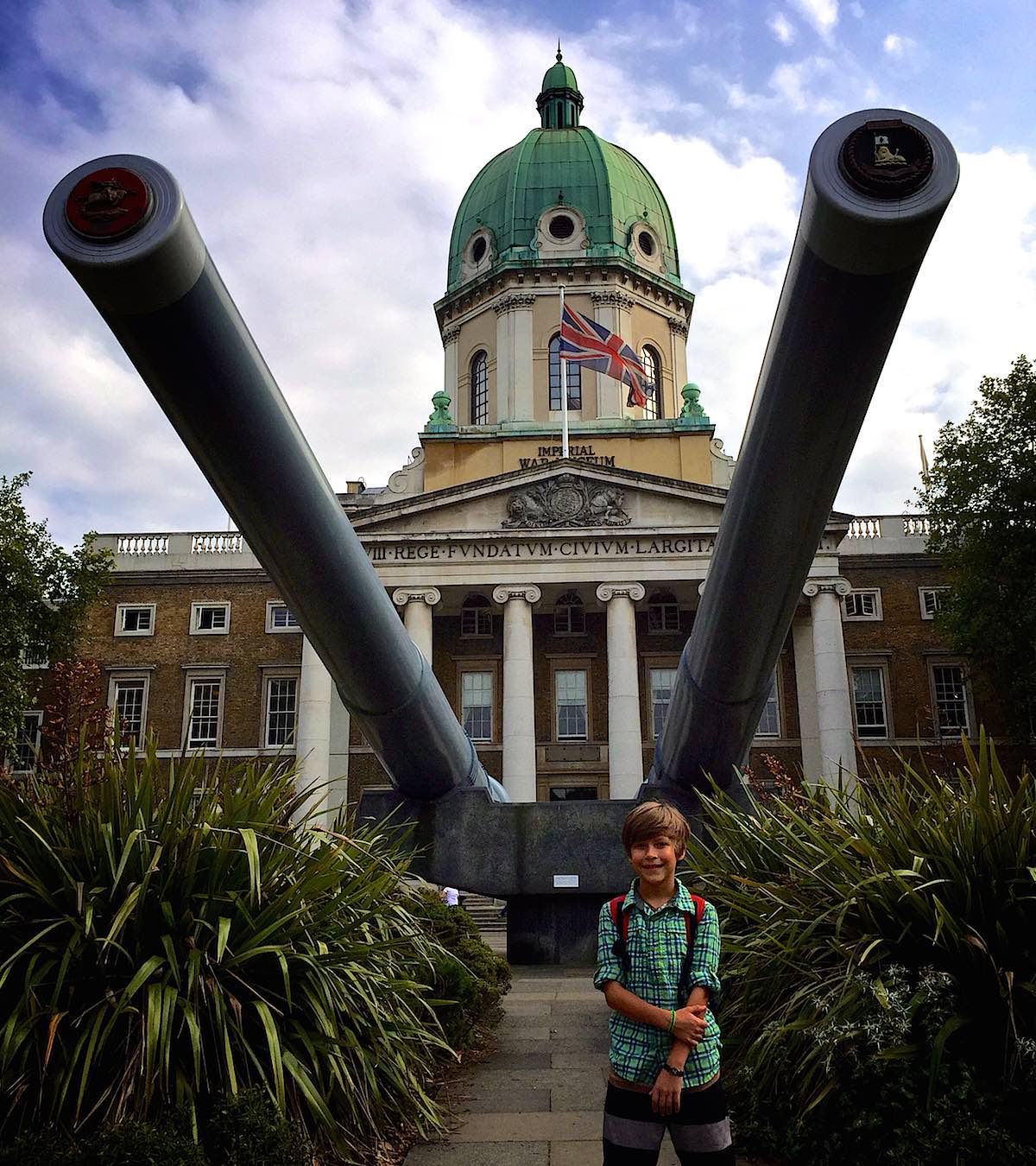
Photo: Rory Moulton
Boys day at the Imperial War Museum in London! But where’s mom? Catching up with an old friend at the Tate Modern.
14. We didn’t go to all the big art museums.
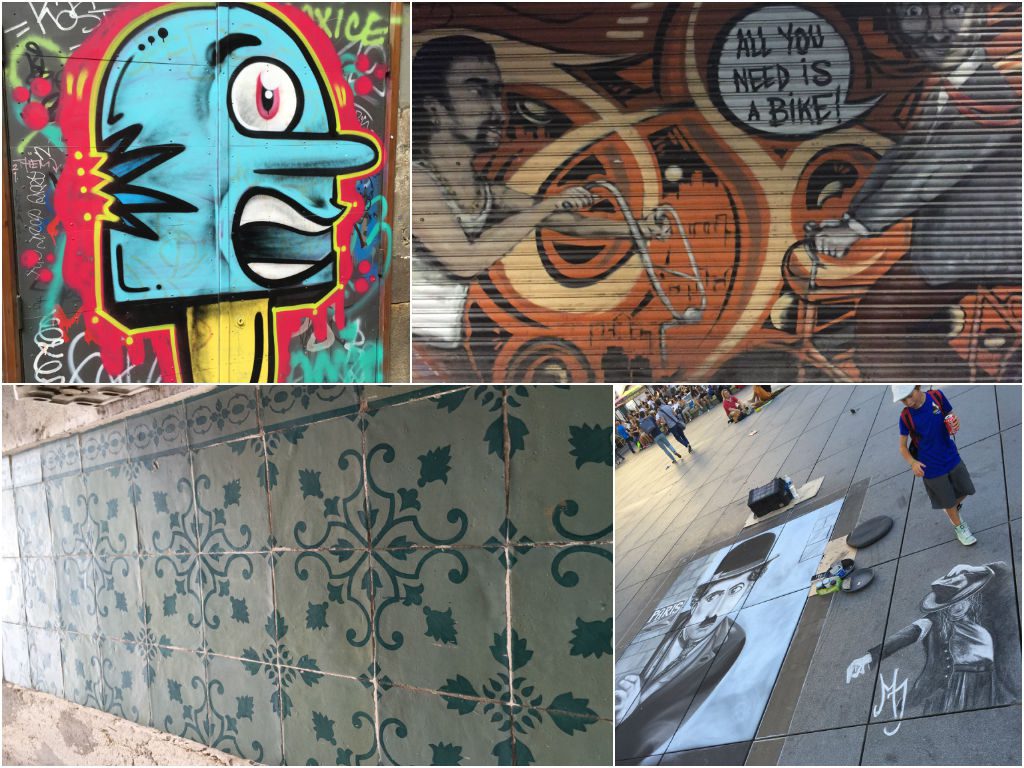
Photos: Rory Moulton
Luckily, art was everywhere.
15. You might catch him staring out the window this year.
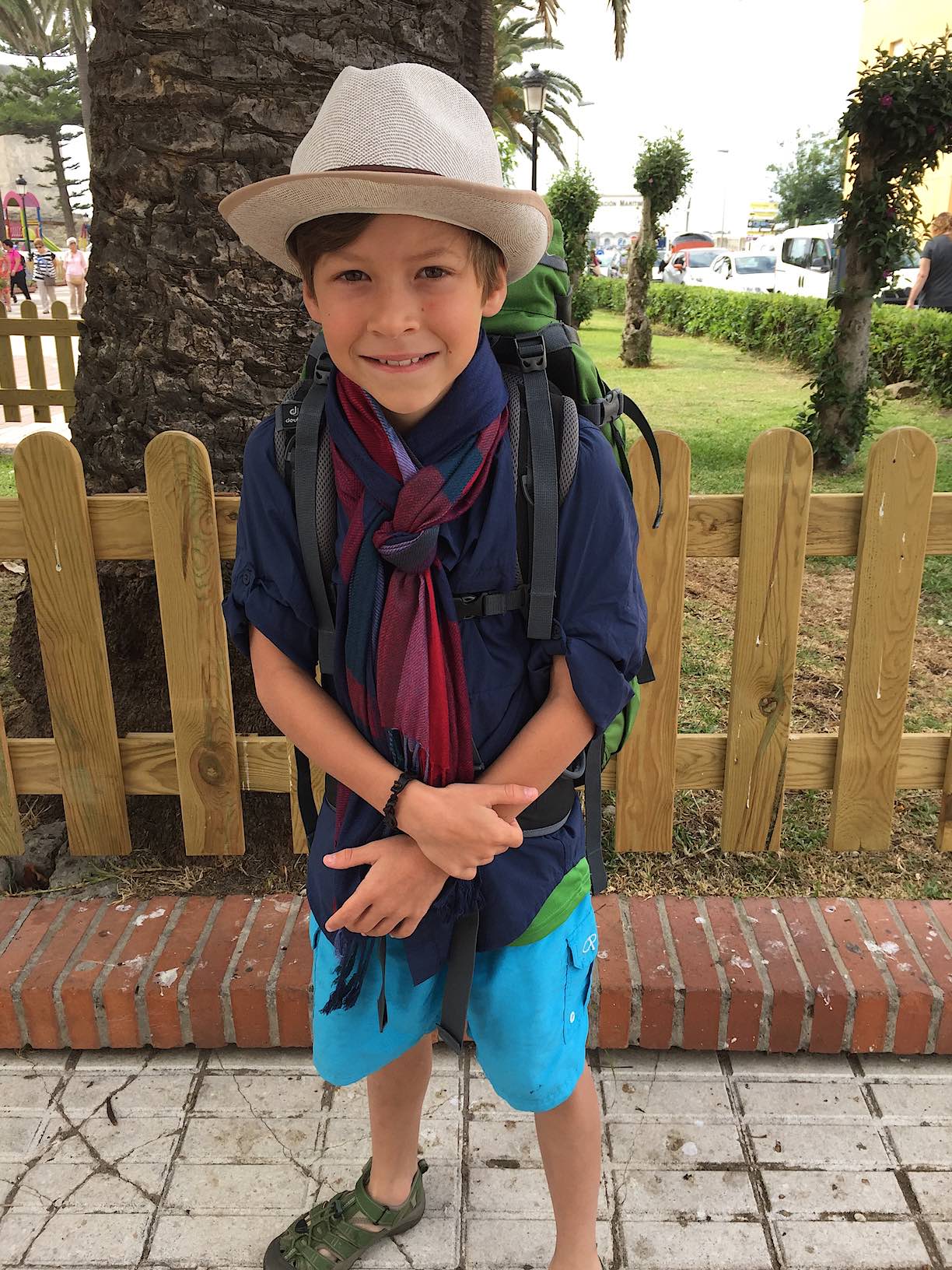
Photo: Rory Moulton
“So where are we going next summer, dad?” He’s a traveler now.
This article originally appeared on RoryMoulton.com and is republished here with permission. Interested in backpacking Europe with your family? Get a head start with my guidebook, Paris with Kids. Coming this fall: Southern Spain with Kids, London with Kids and Washington, DC with Kids.

August 31, 2015
Cycling the Rockies with kayaks
Cycle touring with kayaks is not easy. In addition to the 20kg of camping gear, food, and clothing, two kayaks add a further 40kg with the trailer.
Starting in Vancouver and cycling over 2,500km to the Rockies and back meant we pulled our beastly luggage across more than just a flat valley trail. From sea level, we climbed thousands of metres of altitude with steep grades over some of Canada’s highest highway passes into the alpine. Neither of us were cycle tourists; I was hardly a cyclist. But the idea of a human powered adventure and the allure of slowly exploring British Columbia and the Rockies won us over.
In six weeks, we crossed seven mountain ranges, followed river valleys for hundreds of kilometres and sweated through a sprawling arid desert beside the sage bushes and tumbleweeds. We followed historic gold rush trails, abandoned train routes, and glacial alpine passes.
1
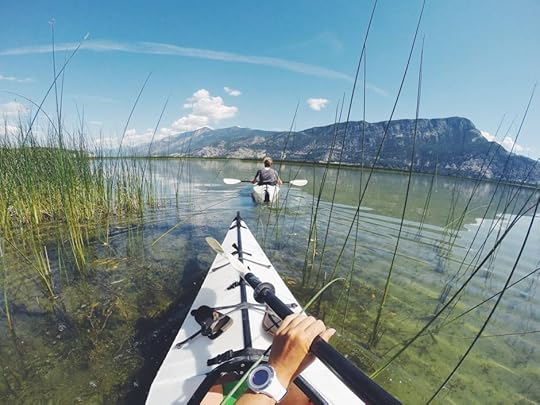
Columbia Wetlands, Columbia Lake
We were already 1100km in when we reached the Columbia Wetlands and had gone more than a few days without using the kayaks.We started to wonder if they were worth bringing along. On an early morning, we found this waterway when pedalling was the last thing we wanted to do. As the official source of the mighty Columbia River, it was a sight. Crystal clear green waters shimmer beneath an intimidating wall of the Rocky Mountain's jagged peaks rising from the lake's eastern flanks. As we cruised between the tall weeds we knew, bringing the kayaks was a good decision.
2
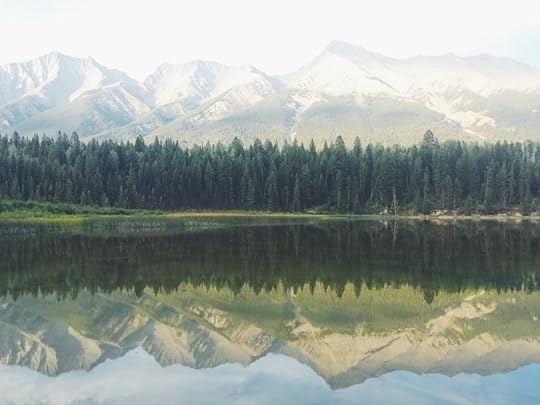
Kootenay National Park, Dog Lake
As a cycle tourist, detours are the most difficult decision. We poured over maps of dream-like trails to far off peaks that were 20km off our trail. But three weeks in, the decision to detour often fails in favour of taking the easiest or most direct route. Kootenay National Park is accessed by one main road, Hwy 93, that could rival any as one of the world's most magnificent drives. Massive copper colored canyon walls of Sinclair Canyon stand as the entrance to the park with grades up to 11% spread over 11km to follow for those wanting to get into the alpine wilderness.
Even with that grind and some of the worst shoulder conditions for cyclists with cracks and fault lines out numbering any smooth sections, it was worth every sweaty stride. We couldn't manage all the detours we wanted. But we did manage Dog Lake, an easy 2km hike that lays in Mt Harkins shadow. It was a small detour, the only our bodies could handle, but well worth the extra effort.
3
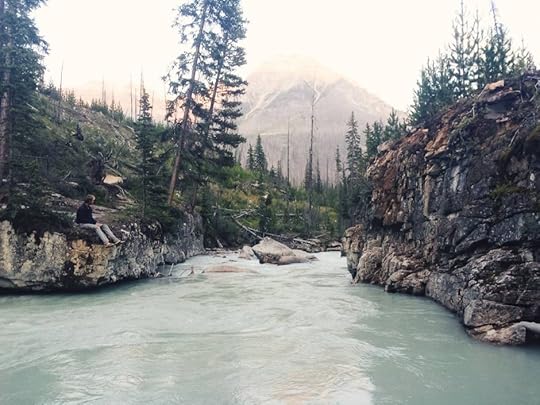
Kootenay National Park, Marble Canyon
Our route was based on places we hadn't been. When your province is six times the size of Great Britain, finding new places to explore is easy. The Kootenay Rockies were one of those places. With Banff and Jasper as its neighbours, receiving more than seven million tourists combined, it is shocking how few people go to Kootenay National Park. Each destination was ours alone and the campgrounds were mostly empty.
Marble Canyon encompasses all the best of the park. Sandstone rock canyons carved by milky green rivers running alongside endless slopes of charcoal remains from one of BC's largest forest fires, with vibrant green new growth pine trees standing above a blanket of sweet smelling red fireweeds. And no one else in sight.
Intermission
1K+
20 awesomely untranslatable words from around the world
by Jason Wire
62
Have a 4th grader in the US? Your family gets free admission to national parks. Here’s how.
by Cathy Brown
2
11 ways to capture the beauty of everyday life with your camera
by Ingrid McQuivey
4
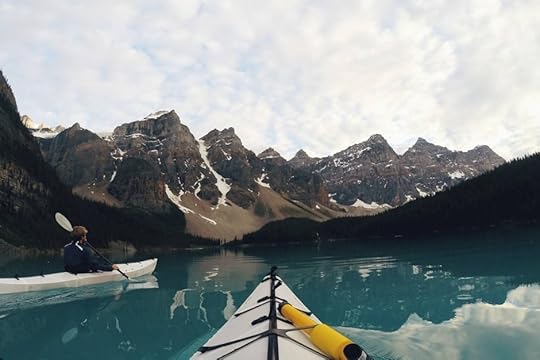
Morraine Lake, Banff National Park
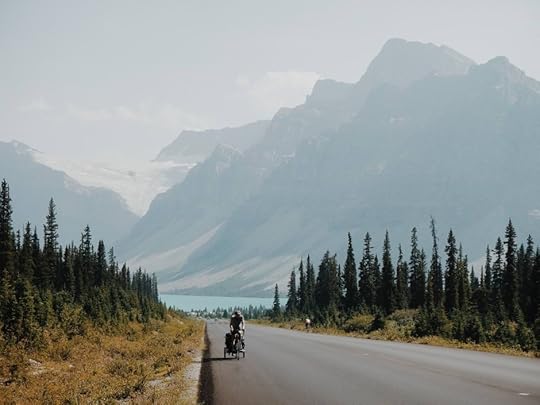
No stop in the Rockies is complete without stopping at Canada's most photographed lake. The topaz blue lake colour beneath the Valley of the Ten Peaks is so picturesque, it almost looks fake. We hardly ever made it to our final destination before sunset. In cases like Morraine Lake, this was to our advantage. The thousands of tourists and dozens of tour buses had been reduced to near nill, and the lake was buttery smooth as the evening turned cast pink shadows on the rocky peaks.
5
Icefields Parkway Bike, Bow Summit
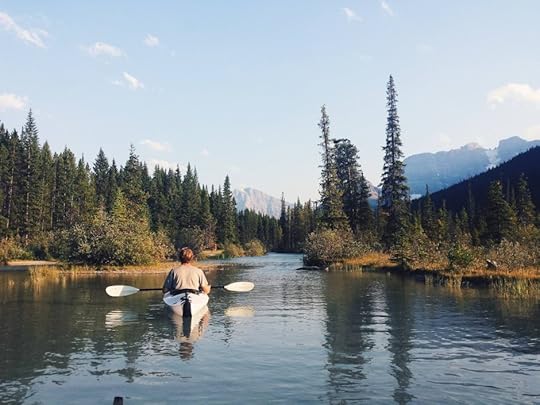
To tour through the Canadian Rockies by bike you have two choices: the 2800km Great Divide Trail that starts in Banff, Canada and cuts back and forth across the mountain range until it reaches New Mexico, or the Icefields Parkway. With road bikes, the latter is the only option. Stretching 230km from Lake Louise to Jasper, every moment is photo-worthy. Green and blue coloured lakes dot the sweeping valley surrounded by towering mountains with glacial capped peaks. Less than a dozen people were on the same cycle tour route as us. Not a single one of those people brought kayaks.
6
Waterfowl Lake, Banff National Park
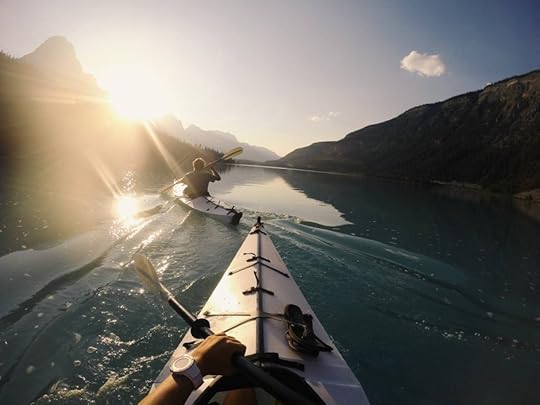
After a long few weeks of unseasonally warm temperatures hovering around 30 degrees and after climbing up to the 2088m Bow Summit, we couldn't get into Waterfowl Lake quick enough. Alpine lakes feel an ice bath, and cut your breath short by a sharp piercing feeling as soon as you enter. A swim is never long. But a kayak, at sunset, while catching the sun's last rays as it dips behind the peaks engulfing the valley, you want that feeling to last forever.
7
Waterfowl Lake - Banff National Park
The first few weeks were rough. We had several close encounters with semi trucks and motor homes hugging too close to the shoulder. We didn't use the kayaks once in the first week. Our campsite was robbed on our third day. Our whole trip was in jeopardy after our first attempt at a mountain pass as we figured our load was too heavy to haul over the Coastal Mountains. We finally made it over the mountains and hit a heat wave. But we continued on, somehow. The negative parts of the trip seem so insignificant in a place like Waterfowl Lake. Any challenge you faced feels worth it. There's very few ways to travel that can be so challenging and so rewarding.
8
Athabasca Glacier, Columbia Icefields
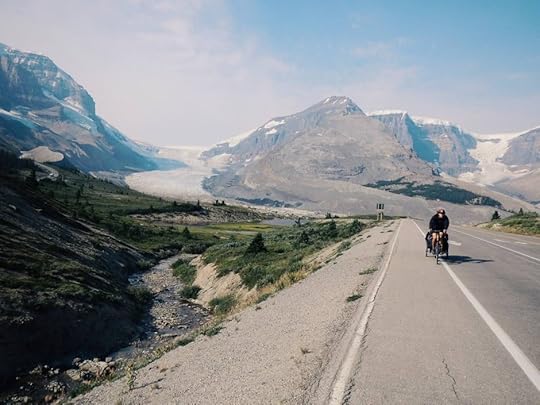
The ascent into Jasper National Park by way of the Sunwapta Pass is both gorgeous and brutal. Starting around 1400m, the roads twists and turns around relentless switchbacks for 20km to over 2000m. RVers stare with gaping mouths as the hill drags on and on for seemingly ever. But the reward is sweet: alpine meadows and glacial icefields so close you can nearly touch them from the highway.
9
Patricia Lake, Jasper National Park
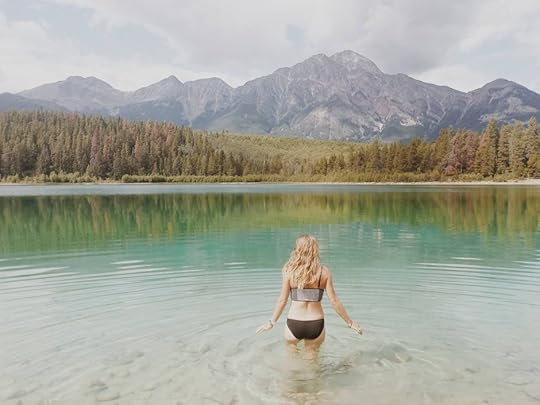
Neither of us thought we'd make it to Jasper. It was over 1500km from where we started and the longest ride I had done prior was a mere 20km along a sea wall. How your body feels after four weeks is, simply, exhausted. Your legs, shoulders, hands and neck ache to be rested. Your clothes you've been wearing for days on end have changed their colour. You start forgetting what sleeping in a bed and not cycling for five plus hours a day really feels like. And yet you find yourself, having a bath in a near ice cold glacially green lake with an aptly named Pyramid Mountain looming in your view. And once you've dried, you set off on another 800km leg of the journey.
10
Mud Lake, Blue River, BC
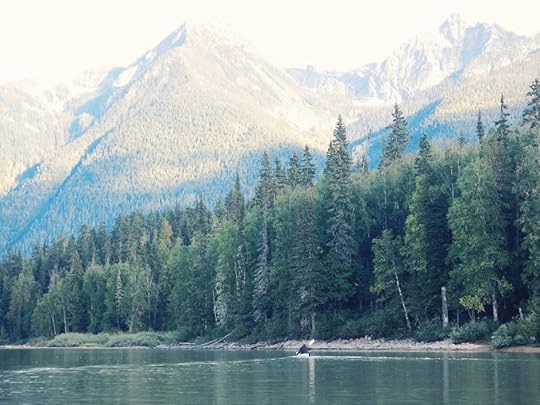
On more than one occasion we hit bad weather. One rain storm was so bad, our air mattresses seemed to be floating on the flash flood running through our tent. Our first night in Blue River, our first destination out of the Rockies, was greeted by 24 hours of heavy downpour. But after the first break in the rain we were off to the nearest lake we could find. Luckily for us, it just happened to be a beautiful lake as well.
*For more photos of this adventure across BC, follow the couple's Instagram: @meandertheworld

US habits I lost moving to Vietnam
Prior to Vietnam, I was one of those girls. You know the kind: the ones who scream when they see a spider and proceed to leave it under a mug for days. I’m not proud — that’s just how things were. But then I was adopted by the great country of Vietnam, where more often than not, the trà đá (iced tea) comes with a complimentary garnish of protein.
2. I no longer craved sweets 24/7.
For breakfast, I generally dream about oatmeal, scones, muffins, or cereals. I used to describe myself as a vegetarian for lack of the term “dessertarian.” Therefore in Vietnam, I had my work cut out for me — their version of dessert is sticky rice, chè, flan, or, God forbid, moon cakes.
But one one day a switch got turned on, and I thought to myself, “Man, I could really go for some flan right about now. With some ice cubes and coffee on top? Mmm.” If this happens to you, don’t be alarmed. This is just assimilation. Your tastebuds do it, too.
3. I quit turning my nose up at questionable sanitary conditions.
Because in Vietnam, you never assume you won’t get diarrhea. Every menu item from rau muống xào tỏi to bún bò Huế is like a “Choose Your Own Adventure” story. And that bucket of water next to that hole in the ground? Fantastic, that’s all I need. I’ll just swat away these flies, thanks. Khong sao. Sure, a man waiting to hand me Egyptian cotton towels to dab my face with would be nice, but this bidet from 1987 is just as useful. And there’s no toilet paper? Yeah, I know. That’s what this handy-dandy wad in my pocket is for. No, I’m not sharing. Get your own.
4. I stopped avoiding strangers’ stares.
In America, there’s kind of this unwritten rule: if you catch someone looking at you, you quickly look away. Then, when you’re the one caught sneaking a peek, the other person returns the favor. In Vietnam? No such luck. There is no way to deter someone from staring at you short of a hairdo full of snakes (just kidding, they still would).
To cope, what do you do? You start staring back, that’s what. It may take months to finally get used to it, but eventually you’ll wish staring contests were an Olympic sport. Fifteen-second blinkless gawks at a red light on Hai Bà Trưng? Child’s play. Sometimes you throw a violent twitch in there just to see if they flinch.
They rarely do.
5. I quit feeling self-conscious about my body.
As a 5’11″ normal-sized American female, it’s pretty safe to say that I don’t fit in with most other women in Vietnam. More than once I had this point drilled home to me, but the most defining moment stands alone: I walked into a birthday party for my friend, Hai, immediately noting that I was the only foreigner present. His mom turned to the table of partygoers as I walked in, cheekily said something in Vietnamese, and the entire table erupted into laughter.
I had to beg Hai to tell me what she said — my Vietnamese was okay, but only with context — and with enough prodding, he relayed her message:
“You only get tits like that on butter and cheese.” So, after that, screw it.
6. I didn’t consume dairy any more.
Like many Asian countries, dairy just isn’t often used in Vietnamese cuisine. Condensed milk is pretty common for obvious reasons, but other than that, no dice. A student of mine once visited Minnesota (of all places), and when I asked him what he thought of it, his reply was one word: “cheesy.”
That was actually quite astute, and somehow I found it just as surprising: the food in Vietnam is so good that you don’t really notice that it’s not topped with cheese or butter. You can definitely find cow’s milk and cheese if you look for it, but “soya” milk is all the rage, and it’s delicious to boot. Now back in the States, I’m a soy-milk-drinking, tofu-loving American (though I still put cheese on whatever I can).
7. I quit refusing the help of strangers.
Once on a backroads scooter trip, my friends and I came to a road near the village of Rang Rang that was being turned into a reservoir. In other words, there was a giant lake that had just been planted in the middle of our route. Our options were to either turn back (which required spending another five or six hours working our way down this muddy, dangerous mountain) or to let two 16-year-old boys essentially caulk our scooters and float them, Oregon-Trail style. I had to let go of my lack of belief in others — especially two emaciated-looking young boys with 150-lb Vespas — and trust that they were resourceful and knew what they were doing. And 45 minutes later, the six of us and our two scooters made it in their canoe across the lake, no worse for the wear (just 300,000 VND shorter).
8. But I also stopped trusting the world around me.
While Vietnam does have the ability to let you see the resourcefulness in others, it also helps you see the conniving, manipulative side of that resourcefulness, too. Talk to any expat in this neck of the woods, and they’ll likely have a story to tell you about their bag getting snatched. My roommates and I had our bikes stolen from the gated patio connected to our house and the bars on our kitchen windows were mysteriously warped on a few different occasions.
Eventually, you do learn to walk around with a don’t-fuck-with-me vibe, and you no longer become an obvious target for petty theft. Once I was stupidly walking down Nguyễn Đình Chiểu with my wallet in hand when two men drove up on a shoddy Honda Wave and tried to wrestle it from me. Luckily, I had a split second’s worth of this skill developed, and they drove away empty-handed.
9. I stopped wearing makeup.
I’ll never forget the time I had to drive 20 minutes through a monsoon wearing a plastic tarp barely trying to pass as a poncho. I was soaked to the bone and absolutely miserable. When I walked into Ngon, my friends’ eyes widened and their jaws dropped. One prompted me to look in the mirror and, needless to say, the black stains running down my face were not cute. Sure, some mascara is waterproof, but few are Vietnamese-downpour proof. After that day, I was done. I decided to go au natural.
10. I wouldn’t cough up more than $10 for a meal.
One of the best things about Vietnam is the cost of living. Even at a nice, upscale restaurant you can get a good meal for single digits. That being said, you can get a good meal on the street for much, much less. And a beer? Leave your bills at home — your pocket full of quarters will do. Grabbing some street phở and a ba-ba-ba on Bui Vien is addictive, and I found myself yearning for plastic stools at aluminum tables more than pillowed seats in air conditioning. And back in the States where a banh mi is $8? HA. Nice try, America. I’ll give you $1.50. That’s, like, three times what it goes for in its homeland.
11. I quit expecting order out of chaos.
The streets of Vietnam are the same as their elevators are the same as their hallways are the same as their green space. If there’s room, someone is going for it. Six inches available on the sidewalk? That’ll be a competition between a dozen motorbikes. Three people trying to get off the elevator? Nope. Sorry, guys. You have to wait until seven people get on. The door to the jetway is now open? Sit back down, unless you want to throw some ‘bows. And don’t get attached to that strip of grass next to your house. In six months, that will be a Mobiphone and a KFC.
12. I stopped needing silence to relax.
Karaoke being blasted from next door? Relentless honking at 3am? Ah, bliss. The sounds of Vietnamese lullabies.
13. I stopped being a law-abiding citizen.
Cops in Vietnam are notoriously corrupt. They’ll pull you over for absolutely nothing and demand as much cash as you have on you. But for being as corrupt as they are, they’re certainly not strict. In America, a cop chases you down with a Crown Vic. In Vietnam, they stand on a corner and chase you down with the wave of a white plastic baton. What always blew my mind was that most people — locals, at least — respect this. They see the baton pointing at them, and they act as if their hand was caught in the cookie jar. They pull over, take off their face mask, and start apologizing for whatever it is they did — likely not knowing what they did, because they didn’t do anything — and shovel out some cash.
Personally, I prefer driving by, waving, and smiling. And it definitely works, considering 95% of the time there’s two dozen motorbikes surrounding you. One time I even high-fived an officer as he was waving for me to pull over. I like to think it made his day, but the highlight was probably the hours he spent on the corner playing Angry Birds on his cell phone after that.
14. I didn’t stop listening to Christmas music on December 26th.
It’s April and Mariah Carey’s “All I Want for Christmas Is You” is playing? Followed by “Happy Birthday?” Yep, sounds about right. Don’t hold out for cake; it’s not coming. If it were, I never would have left.
Photo: Chris Goldberg

Matador Network's Blog

- Matador Network's profile
- 6 followers

