
Matador Network's Blog, page 2056
September 3, 2015
Repression in Uzbekistan grows — you won’t believe what they just banned.
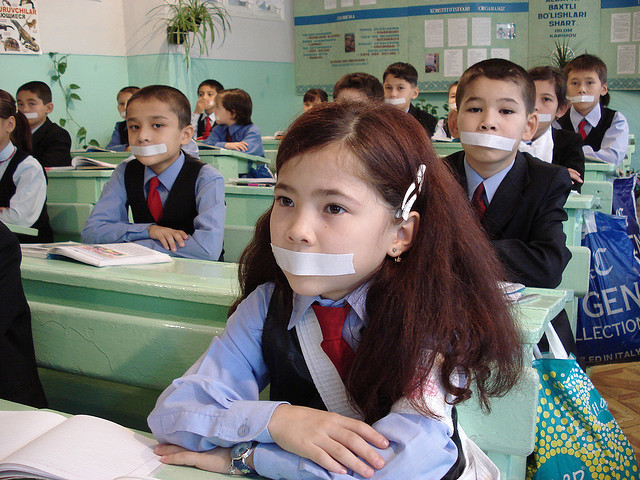
Photo: Chris Schuepp
Political science students in much of the world are gearing up for the new school year, but in one country, their peers had better scramble fast for a different major.
Uzbekistan, the former Soviet republic in Central Asia, apparently just banned poli-sci from universities across the country.
There hasn’t been a government announcement yet. But a prominent Uzbek political scientist recently posted a rare open letter on Facebook denouncing the move, and other Central Asia watchers have concurred. According to the political expert, Uzbekistan’s Ministry of Higher and Specialized Secondary Education ordered the ban last week.
He said the reasons include what officials believe to be the discipline’s lack of scientific rigor, as well as its “exclusively” Western body of literature, which apparently obscures the particular Uzbek nature of politics.
But critics see right through that.
Uzbekistan, ruled by strongman Islam Karimov since 1990, is widely considered to be one of the most corrupt and repressive countries in the world. Citizens have no say in the political process, and dissent is brutally crushed.
“Political science analyzes the legitimacy of the authorities, state institutions, elections, and political parties,” said Daniil Kislov, the editor of Fergana News, an independent Moscow-based news site that covers Central Asia. The outlet posted what it purports to be a scanned copy of the ministry’s order.
“How can you argue the legality of the Uzbek president if he has been reelected six times already, and in reality is set to remain in place for life? How can you talk about political parties if there are no real political parties, and when they only represent a sham image to serve the powers that be?”
The move wasn’t totally out of the blue. According to Radio Free Europe/Radio Liberty, political science had been gradually phased out as a major, with the last degrees granted in 2013. Now it appears any and all courses in it are prohibited.
It’s not just poli-sci that the regime’s weeding out.
Uzbekistan is also known to take aim at pop stars and other cultural figures because the government says they’re not “patriotic” enough.
Just last week, officials deported a respected Russian anthropologist who studies nationalism and identity in Central Asia. Sergey Abashin, of the European University at St. Petersburg, was given no reason for the rejection.
But, without referring to Uzbekistan in particular, he says scholars like him are in a “highly vulnerable” position.
“It is no coincidence that [anthropologists] are often called ‘spies,’” he wrote on Sunday.
“Because an anthropologist by their very identity, by the spirit of the profession, strives to enter into areas and communities which are considered closed, inaccessible and inconvenient for research.” 
By Dan Peleschuk, GlobalPost
This article is syndicated from GlobalPost.


14 things you say when you’re late in NYC

Photo: Jonathan Malboeuf
1. “My taxi driver didn’t know how to get to Brooklyn!”
It is mind-boggling how often this is really true.
2. “Sorry! I had to take the G train to get here.”
Oh, yes, the good old ‘ghost train.’ There isn’t any middle ground here. When it’s good, it’s amazing. When it’s bad, you can find yourself down on a platform somewhere in Brooklyn or Queens with a few hundred of your closest friends waiting for a train that never shows up.
3. “There was a sick passenger on the train.”
The dreaded ‘sick passenger’ announcement can cripple a subway line for hours. No one ever knows ‘sick from what.’
4. “There was police activity on the 2/3 line.”
Another one of the MTA’s cryptic announcements: “Due to police activity, 2/3 trains are running with delays.”
5. “The tunnel was backed up.”
Technically, those who use this one live in New Jersey and are trying to get into the city…but we’ll let that slide.
6. “The president is in town.”
Whenever our great city gets a visit from President Obama, traffic is effectively snarled for hours, streets are blocked off, and epic gridlock ensues.
7. “The 2/3 was running local.”
When express trains run local without warning, your commute time can often double.
8. “I couldn’t get a cab in this rain!”
9. “Girls was filming on my block.”
I work in the film business so I can never get away with this one (no, I don’t work on Girls) but the presence of Lena Dunham and 8-15 film trucks on your block can definitely muck things up a bit.
10. “I couldn’t get out of Queens.”
Weekends in Queens often mean that the 7 train isn’t running. The N and Q are on the R line or maybe it’s the V line — which is now the M line — and you find you’re effectively stranded in Queens.
11. “Some idiot was double parked next my car.”
This is one of the reasons why it’s good to not have a car in the city: there really isn’t enough parking for all the cars that are already here.
12. “I thought I left my cell phone in a cab.”
Not a real reason for being late but we’ve all used this one at least once.
13. “I called an Uber but it never showed up.”
What this really means is “I waited too long to leave and it was too late to take the train and I thought I could hail a cab but then I couldn’t find one so I called an Uber instead and by then I was already late.”
14. “Trains were effed-up!”
The classic, all-encompassing NYC excuse for lateness anytime. 
World's most spoken languages
THERE ARE 7,102 LANGUAGES ON THE PLANET, 23 of which are spoken by 50 million people or more. Alberto Lucas Lopez, a journalist for the South China Morning Post created this beautiful infographic to reflect these 23 languages, and just how widely spoken they are around the world. What’s truly incredible is how, despite China’s total dominance in terms of speakers, how much it is dwarfed by English when it comes to the languages most people around the world are learning. Even more surprising is how many languages there are on this graphic that are spoken by millions which you have likely never even heard of. 
Image created by Alberto Lucas Lopez
Via Alberto Lucas Lopez. Click here for the original, larger image.


What happens when you move to France

Photo: Marko Kudjerski
1. It becomes normal to dip your breakfast food into your breakfast beverage.
The first meal of the day is taken quite seriously in La République with all manner of buttery croissants, brioche, and pain au chocolat to be had. The thing is, most breakfasts involve dipping your chosen viennoiserie into the coffee, hot chocolate, or even tea you’re drinking alongside it, especially if you’re dining with French people. While not unpleasant, it can feel a bit weird to begin with, especially if you’re more inclined to snarf some cereal before heading out.
2. You find out all the French you learnt at school is useless.
Opening a bank account is a straightforward process, until you realise no-one ever taught you the French word for overdraft. Or interest rate. Or even “bank account”. In fact, more or less the same thing happens when you’re setting up every frustrating, grown-up thing you need when moving to a new country, from registering with a doctor to getting your IKEA haul delivered. Awkward and sometimes sweaty though it may be, however, this linguistic baptism of fire ensures you’ll never forget this useful, new vocabulary.
3. Eating vegetarian gets much harder.
France is a carnivorous nation, fueled by steak frites and charcuterie. As such, meat is about as prevalent as the cafés and brasseries that serve it, i.e. you can find it everywhere. Sadly for vegetarians, this means finding something remotely interesting on the menu at many restaurants can be challenging, and for vegans, almost impossible. Luckily, a lot of establishments are prepared to make you up a plate or salad according to your requirements if you ask nicely!
4. Bureaucracy becomes your nemesis.
Paperwork seems to be France’s unofficial national sport. Whether you’re filing tax returns, or even just setting up a phone contract, you’ll need to provide proof of everything, from your address to your place of birth, and you’ll have to do a lot of it by post. For the sake of your own sanity, you should take every official document you own with you, keep every French payslip you ever receive, and never toss a bank statement or tax bill. Oh, and photocopy everything. Twice. And maybe laminate one.
5. Bread becomes a staple part of every meal.
Like meat, bread is everywhere in France. From breakfast to supper, every meal comes with a side of bread, quite likely in a big basket if you’re eating out or in large ripped-off chunks if you’re staying in. Unsurprisingly, gluten-free life isn’t all plain sailing either as a result.
6. Wine becomes your alcoholic drink of choice.
Wine is inexpensive and delicious in France, and everyone drinks it all the time, though not (usually) with breakfast. Even some of the bottom shelf stuff in the supermarket will pass muster for a BYOB situation, just make sure you don’t choose a screw top or plastic bottle. That degree of sacrilege will earn you the kind of dirty looks that just aren’t worth enduring for a 2€ saving.
7. You spend way too much time practicing the French “R” sound.
A huge part of getting your French accent down involves mastering the sultry, throaty, and sometimes spit laden “R” sound. So, expect to spend several hours practicing it in its various forms, whether in front of the mirror or to actual French speakers, or both. It’ll happen eventually, probably when you least expect it (or after a few glasses of vin rouge).
8. Crêpes become your drunk food of choice.
Going home from a night out often involves some kind of fast food, and the greasier it is, the better. In France, that means a crêpe, ideally involving plenty of cheese… then, maybe another crêpe stuffed with Nutella and banana slices for dessert. Well, you might as well do it properly, right?
9. Europe starts to seem a lot smaller.
Once you’re on the continent, Europe starts to feel a lot more accessible than it does even from the UK. Cheap flights, reasonably priced trains, and 5€ bus tickets abound, as do several car share options to neighboring and relatively nearby countries. Add to that the significantly reduced travelling time, and you have no reason not to tick off some bucket list destinations!
10. Eating al fresco often means eating on the pavement.
During the summer months, and much of the spring, autumn and winter, French people like to eat outside whenever possible. The kind of ‘terrasse’ you’re likely to find here, however, is really just cordoned off pavement, unlike the actual gardens and patios you’re more likely to find in much of the UK or US. It gives street food a whole new meaning!
11. You consider trains a seriously viable alternative to planes.
The TGV trains in France are fast and pleasant to travel on, and they’re practical, too. There’s just no other way to get from central Paris to central Marseilles in three hours, even if you fly! 
10 years after Hurricane Katrina, these orgs are still working for a more equitable New Orleans

Photo: Natalie Maynor
It’s hard to believe it’s been ten years since Hurricane Katrina. But as one of the founding members of Gulf South Allied Funders, I am honored to be reconnecting with others in this moment to reflect on the disaster and help continue supporting ongoing efforts in the Gulf South region.
I helped start Gulf South Allied Funders months after Hurricane Katrina hit. We raised over $3 million to support groups doing grassroots, social justice, equitable, anti-racist rebuilding work. Ten years later, there is still much work to do. Below is a list of organizations and projects you can support to help the region’s ongoing struggles:
1. Gulf South Rising
GSR is a regional strategy to unify Gulf South movements. It is the outcome of a five-year movement building strategy anchored by Colette Pichon Battle, the founder of GCCLP (Gulf Coast Center for Law and Policy) in connection with Project South. They’re currently raising money to mobilize around the 10th anniversary.
2. STEPS Coalition
They were formed in 2006, right in the aftermath of Hurricane Katrina. They are comprised of over 39 non-profit organizations and community members that convene to “provide the space for a community to define and advocate for its priorities” and “to build capacity and leadership.”
3. Mississippi NAACP
The Mississippi NAACP has been central to the STEPS Coalition and pre and post-Katrina Gulf Coast Mississippi organizing.
4. Jane Place Neighborhood Sustainability Initiative
JPNSI is a housing and community development organization that uses the community land trust (CLT) model of shared equity and land stewardship to help create equitable and just neighborhoods in the area.
5. NENA — Neighborhood Empowerment Network Association
This is a recovery center in the Lower 9th Ward that offers assistance to displaced residents (both homeowners and renters).
6. The Workers’ Center for Racial Justice
This organization organizes workers, day laborers, and homeless residents to build a social movement in post-Katrina New Orleans. Projects include: Alliance of Guestworkers for Dignity, Congress of Day Laborers, and STAND with Dignity.
7. Southern Mutual Help Association
Founded in 1969 to be an agent of change in rural Louisiana, this organization aims to “build strong, healthy and prosperous rural communities” by creating new approaches to the root causes of poverty, racism, sexism and classism. Some of their work has included protecting the environmental assets and land of rural communities, fostering economic development in stressed communities, developing rural housing,providing homeowner assistance, assisting fisher businesses and fisher families’ work, and more.
8. Ashe Cultural Center
An initiative of the nonprofit Efforts of Grace, this center’s mission is to “use art and culture to support human, community and economic development” in the area.
9. Women with a Vision
A grassroots collective of African-American women created WWAV in 1989 in response to the spread of HIV/AIDS in communities of color. These days, they focus on sex worker rights, drug policy reform, HIV positive women’s advocacy, and reproductive justice outreach. Their vision is “an environment in which there is no war against women’s bodies, in which women have spaces to come together and share their stories, in which women are empowered to make decisions concerning their own bodies and lives, and in which women have the necessary support to realize their hopes, dreams, and full potential.”
10. Advocates for Environmental Human Rights
AEHR is a nonprofit, public interest law firm that provides legal services, community organizing support, public education, and campaigns that defend and advance the human right to a healthy environment. They also advocate for the human rights of internally displaced Gulf Coast hurricane survivors.
11. V.O.T.E.
From their website: “Voice of the Ex-Offender is a grassroots, membership based organization founded and run by Formerly Incarcerated Persons (FIPs) in partnership with allies dedicated to ending the disenfranchisement and discrimination against FIP’s.”
For Youth:
1. VAYLA
This is a multiracial community-based organization in New Orleans that empowers youth and families through supportive services. Their vision states “We recognize youth has a voice, so we equip them with the confidence to speak for themselves, and the skills and knowledge to do it effectively.”
2. Kids Rethink New Orleans
This organization uses participatory education and action-research to develop the organizing and leadership skills of New Orleans youth.
3. BreakOUT! New Orleans
This organization seeks to “end the criminalization of lesbian, gay, bisexual, transgender, and questioning (LGBTQ) youth to build a safer and more just New Orleans.” They build on the “rich cultural tradition of resistance in the South” to empower LGBTQ youth ages through youth organizing, healing justice, and leadership development programs.
4. Family and Friends of Louisiana’s Incarcerated Children
From their website: “FFLIC’s mission is a grassroots membership-based organization working to transform the systems that put children at risk of prison. Through empowerment, leadership development, and training, we strive to keep children from going to prison, and support those who have.”
Other resources
Books
This Changes Everything: Capitalism vs the Climate, Naomi Klein’s book (2014). Chock full of what’s happening in terms of resistance across the Gulf Coast as well as at other frontline sites nationally and internationally.
FLOODLINES: Community and Resistance from Katrina to the Jena Six, Jordan Flaherty (2010).
Articles
“A Movement Lab in New Orleans: The 10-year fight for a just recovery from Hurricane Katrina has driven a surge in innovative, progressive organizing.” Jordan Flaherty, The Nation, Aug-Sept 2015.
“New Orleans Katrina Pain Index at 10: Who Was Left Behind“, Bill Quigley, Huffington Post, July 20, 2015.
“10 New Orleanians on How Katrina Changed Their City,” Next City
“After the Deluge” The New Republic, July/August 2015. Mixed but some good history.
Video
Hurricane Katrina Didn’t Kill New Orleans — But It Almost Did. A new 25-minute documentary that Jordan Flaherty just directed for the Laura Flanders Show.
“Come Hell or High Water: The Battle for Turkey Creek” is an award-winning documentary by filmmaker Leah Mahan (earlier films include “Holding Ground” and “Gaining Ground”). Its streaming free August 26-September 4. See the website for more info.
Websites
The Land Of Opportunity interactive website
Visit Bridge the Gulf to stay abreast of Gulf Coast happenings, and on Facebook. A community journalism and storytelling project founded immediately post the BP oil explosion.
KatrinaTruth.org. Launched by the Advancement Project and Families and Friends of Louisiana’s Incarcerated Children (FFLIC). The website is an overview of how African Americans in New Orleans have been left behind in the city’s recovery efforts and the decade-long displacement and neglect this community has suffered.
This post was created with help from the following people: Laura Wernick, Donna Hall, Tracy Hewat, Amelie Ratliff, Rev. John Vaughn, Sam Seidel, Nancy Dalwin, Amy Laura Cahn, Erica Waples, Amira Anne Glickman, Jamie Schweser, Tracy Burt, Roan Boucher, and Christina Case.

22 questions only a Philadelphian can answer

Photo: Antoine Robiez
1. What does “Jawn” mean?
2. Why do Philadelphians call water “wooder?”
3. What exactly is a “City Wide Special?”
4. Should I get my cheesesteak “wit” or “witout?”
5. Why is there no 1st Street or 14th Street?
6. Where do you go “down the shore?”
7. There’s no downtown? You just call it “Senner Siddy?”
8. What’s “wooder ice?”
9. So you ring in the New Year by dressing up as a Mummer and “strutting down Broad Street?”
10. And then after “strutting down Broad” you join the Mummers for a party on “Two-Street?”
11. I can order a hoagie but why can’t I order a sub?
12. I can get jimmies on my ice cream, but why can’t I get sprinkles?
13. What is a “Fishtown Ice Tea?”
14. You don’t ride the Metro? You ride SEPTA?
15. So, your sports teams don’t suck, they just can’t win any championships as a result of the Curse of Billy Penn?
16. Why did the bartender give me a Yuengling when I ordered a lager?
17. Why do you have to buy beer from a distributor and liquor from the “state store?”
18. So the West Philly Orchestra isn’t technically an orchestra and doesn’t play symphonies?
19. How long will it take for the PPA to figure out that I’m parked illegally?
20. Can I wear shorts and sneakers with no socks to Hop Sing Laundromat?
21. Pat’s, Geno’s, Jim’s, Steve’s, or Tony’s?
22. What’s so great about Wawa?

19 signs you’re riding your bike like a boss in NYC

Photo: Alejandro De La Cruz
1. You can successfully navigate the 2nd avenue and 1st avenue obstacle courses through the East Village, dodging delivery trucks, meandering (often drunk) pedestrians, opening car doors, and left turning drivers with ease and grace.
2. Your morning commute includes at least three instances of yelling at a car driver that is about to run into you.
3. Your morning commute includes at least four instances of yelling at a pedestrian that is standing in a bike lane on their cell phone.
4. Your morning commute includes at least two instances of yelling at another cyclist that is salmoning.
5. No matter how often you say you won’t, you always end up racing some dude on a fixie over the Manhattan Bridge.
6. You are not afraid of multi lanes of moving, honking traffic and can weave your way through it all to get to the entrance of the 59th St Bridge.
7. You never cycle across the Brooklyn Bridge unless it’s 5am. Only tourists do that.
8. You know that sometimes it’s safer to ride in traffic than in one of the cities ‘protected’ bike lanes.
9. You know exactly when the bike lanes on 2nd Ave and 8th Ave are going to switch sides.
10. You know when to make a complete stop at a red light in Central Park and when it’s ok to slow, look, then coast through it.
11. You’ve attended the Red Hook Crit and you know somebody who raced it.
12. You have at least four horror stories of either you or someone you know getting hit by a car. You still maintain that bike commuting is the best way to get around the city.
13. You’ve ridden the New York City Century a few times. The first time you probably paid for it.
14. You’ve gotten up at 4am on a Saturday to be in Central Park by 5am to race with a bunch of other crazies. These are your people.
15. You’ve rode 9W to Piermont or Nyack more times that you can count.
16. You’ve gone to Bicycle Roots in Crown Heights to have Joe fix your bike. Because he rocks.
17. You carry your bike up four flights of stairs to your 5th floor walkup apartment. Most of the time, you don’t think twice about it.
18. You know that as a cyclist you get to experience some of the city’s best views, especially when crossing a bridge during sunset or sunrise. You’ve Instagrammed a photo from the Manhattan Bridge looking northeast during sunrise. One of the best photos you ever took was from the Pulaski Bridge looking west to Manhattan at sunset.
19. You own three or four bikes: an all black matte Trek or Cervelo all carbon racing bike that may or may not have Di2 shifting, an old grey or yellow steel framed Bianchi, a Piranello or Focus cyclocross bike, and a Specialized hybrid with panniers and fat tires for Trader Joe’s excursions. You’d choose any one of your bikes over the subway or a taxi any day — even when it’s raining. That’s what rain gear is for. 
30 awesome Turkish expressions

Photo: Andrew Czap
TURKS HAVE A SAYING FOR EVERY OCCASION. These expressions serve as bookends to each conversation, providing a handy and automatic beginning and end to every human interaction. They’re adages that serve as social glue, meaning you’ll never find a Turk who’s lost for words, even in the most unexpected circumstances.
Many of these sayings are known as ata sözü, which literally translates to “words of our ancestors.” (As a half-Turkish, half-American child who was raised outside Turkey, I used to think the word ata referred to the idolized founder of the Turkish Republic, Atatürk, and was amazed that he’d been able to create so many sayings in his relatively short life.)
Today, I know many more expressions than I used to, but I’m still delighted when I discover a new one. Here are some of my favorites.
1. Hoş geldiniz
”Your arrival is lovely”
Said as a greeting to visitors to make them feel at home.
2. Şeytan tüyü
“The devil’s feather”
What seems like an insult is actually a compliment used to describe someone who has a mysterious, devilish charm.
3. Taş attı da kolu mu yoruldu?
“Did he throw a stone so his arm got tired?”
Said to berate someone who’s being lazy.
4. Bir yastıkta kocasınlar
“May they grow old with one pillow”
Kind of like telling couples to never go to bed angry, this is said to newlyweds who traditionally share a single, long pillow in a marital bed.
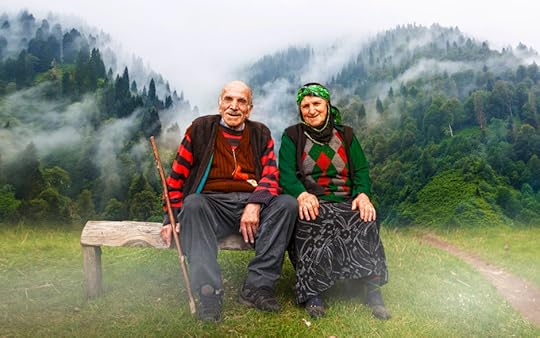
Photo courtesy of the Turkey Ministry of Culture and Tourism
5. Etekleri zil çalıyor
“The bells on their hems are ringing”
I recently learned this evocative saying used to describe someone who’s very excited.
6. Pabucu dama atıldı
“His shoe has been thrown onto the roof”
Often said of a father when a new baby monopolises the mother’s attentions, or by anyone who has been passed over in favour of another.
7. Balık etli
“Fish fleshed”
Turkish men usually like women with a bit of meat on their bones, and this is a lovely compliment to curvy girls.
8. Havadan sudan
“Of the air and water”
Turks love to chat, often at length, and about nothing in particular. This is a great way of describing idle chatter — a lot like Irish craic.
9. Elini sallasa ellisi
“If he waves his hand fifty will come”
A great way to comfort a friend after a breakup, it means there are plenty more fish in the sea.
10. Ciğerimin köşesi
“The corner of my liver”
This anatomic description is actually used to describe someone who is very precious to you. You might hear it featured as a lyric in love songs.
Photo courtesy of the Turkey Ministry of Culture and Tourism
11. Armut piş ağzıma düş
“May the pear be cooked on the tree and fall into my mouth”
This describes a person who doesn’t like to work, to whom everything comes ready and done — or falls literally in their lap.
12. İyi ki doğdun
“It’s good that you were born”
Turkish for Happy Birthday. I think this expression is a lot more meaningful than the English version, and I even use the literal English translation on my non-Turkish friends’ birthdays.
13. Boşver
“Give empty”
Perhaps my favorite saying, Boşver means “let it go,” a la Frozen.
14. El elden üstündür
“A hand is superior to another person’s hand”
Said to show that there’s always someone who can do a better job.
15. Battı balık yan gider
“A sunken fish goes sideways”
This one’s pretty hard to parse, but it means that the worst-case scenario has already happened (the fish has sunk), so you might as well stop worrying and have some fun!
16. Ateş almaya gelmek
“Coming over just for a light”
You can cheekily accuse a visitor of this when you want them to stay a while longer.
Photo courtesy of the Turkey Ministry of Culture and Tourism
17. Cami yıkılmış ama mihrab yerinde
”The mosque is a ruin but the mihrap is standing”
One of my personal favorites, this phrase describes an older woman who retains her charms. It’s like saying a church is in ruins but the pulpit is standing. Basically, it’s the opposite of “mutton dressed as lamb.”
18. Geçmiş olsun
“May it be the past”
Said when someone is sick or has had a bad experience. I love how it recognizes someone’s pain, but also expresses the hope that it will soon be behind them.
19. Nazar değmesin
“May you not be touched by the evil eye”
Said after giving a compliment, particularly to a child. Although I’m a pretty rational person, I do believe in the power of the evil eye and use this saying a lot.
20. Hayırlı olsun
“May it be auspicious”
Said whenever someone has a new undertaking, such as a new job.
21. Allah analı babalı büyütsün
“May God let him/her grow up with both a mom and dad”
Perhaps the most meaningful thing you could wish for a newborn child.
22. Kolay gelsin
”May it be easy for you”
This is a great way to acknowledge another person’s labors, even a stranger on the street, who has a difficult task at hand.
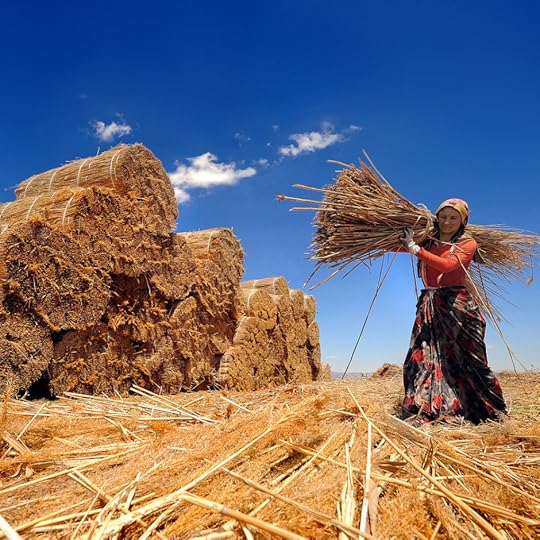
Photo courtesy of the Turkey Ministry of Culture and Tourism
23. Çok yaşa
“May you live long”
Turkish for “bless you,” çok yaşa is said after someone sneezes. The sneezer then replies sende gör (may you also see my life) or hep beraber (may we all have many more years to live).
24. Kafayı üşüttü
“They’ve caught a cold in their head”
Turks have a congenital fear of catching a chill, which can strike any part of your body. If you’ve caught a cold in your head, it means you’ve gone crazy.
25. Sıhhatler olsun
“May it bring your health”
Older generations who grew up before hot running water in homes, and who only had baths once or twice a week, will say this when you come out of the shower in case you catch a chill (see above).
26. Başınız sağolsun
“May your head stay healthy”
A thoughtful way of wishing someone condolences when they are grieving the loss of a loved one.
27. (Benim) ilk göz ağrım
“The first pain of my eye”
This is said to a first love or first child to avoid giving them the evil eye (I used to feel very jealous when my grandmother said this to my brother, her oldest grandchild.)
28. Ellerine sağlık
“Health to your hand”
Said to someone who has created something beautiful with their hands, particularly to a cook or a Turkish mom after she’s cooked up a feast for her family.
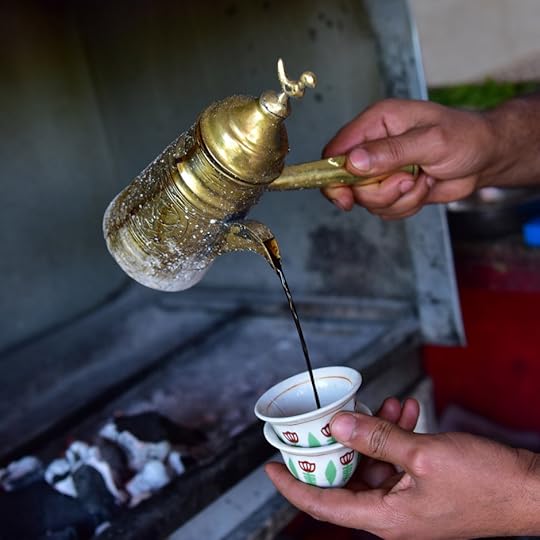
Photo courtesy of the Turkey Ministry of Culture and Tourism
29. Bir musibet bin nasihatten iyidir
“One bad experience is worth a thousand warnings”
No explanation needed.
30. Güle güle gidin
“May you go laughing”
This is said to departing visitors to help take the edge off sad goodbyes.
Powered by Turkey Home.

September 2, 2015
Rescuing 33 mistreated circus lions was the easy part. Airlifting them to Africa is the real challenge.
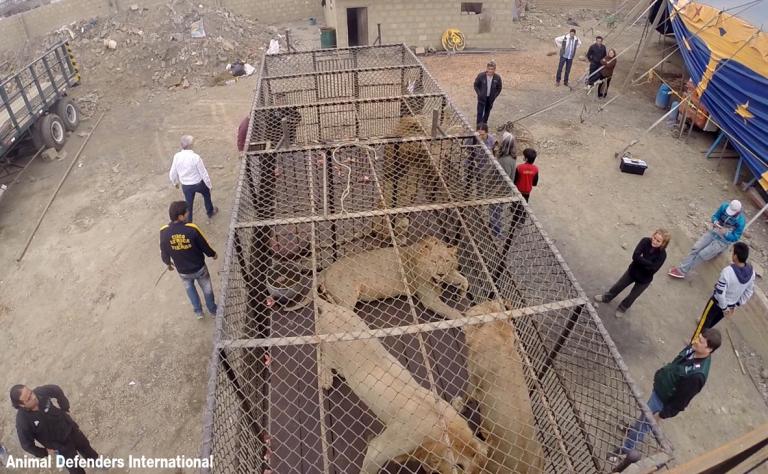
Animal Defenders International helped rescue circus lions in Peru and Colombia. Now they’re going to airlift them to South Africa.
Photo: ADI
LIMA, Peru — After the shocking death of Cecil the lion this summer, here’s a rare piece of good news for Africa’s biggest cat. A total of 33 lions rescued from miserable lives in circuses in South America are heading home next month, back to Africa, in what’s being billed as the largest ever airlift of its kind.
Many of the felines spent years in Peru and Colombia being mistreated, underfed and forced to perform tricks for the public.
Working with local authorities, British group Animal Defenders International (ADI) has rescued the animals over the last couple of years, and is now organizing a charter Boeing 747 flight to South Africa.
There the animals will start a new life of relative freedom, in pristine African bush at the 12,000-acre Emoya Big Cat Sanctuary in Limpopo province.
That’s the best possible outcome for the lions given that they would be unable to survive in the wild. Many were born in captivity and have never learned basic survival skills, including hunting.
But that may be the least of it. Almost all the lions had their claws removed in captivity and many have broken teeth. One is almost blind.
Emoya is a private reserve, off limits to the public. It also operates a no-breeding policy, putting it at odds with South Africa’s booming big game hunting sector.
That industry makes huge profits by rearing thousands of animals every year for wealthy tourists to shoot — the fate that befell Cecil in neighboring Zimbabwe.
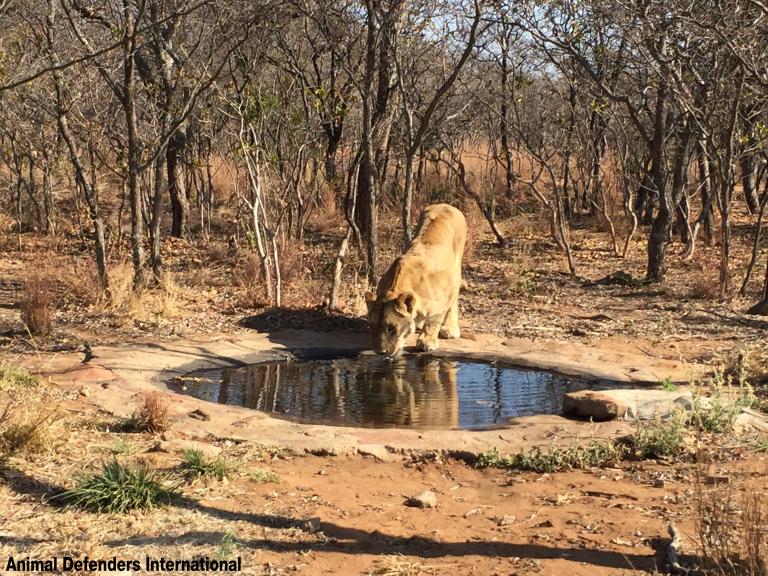
A rescued lioness at the Emoya Big Cat Sanctuary. Photo: ADI
In a statement, ADI President Jan Creamer said she was “delighted” the lions are returning to Africa, where they belong.
“The climate and environment are perfect for them,” she added. “When we visited Emoya Big Cat Sanctuary we knew this is a dream come true for ADI and, more importantly, the lions.”
The sanctuary is owned and run by the Heuser family with financial backing from the public.
Creamer also praised the commitment of officials in Colombia and Peru to enforce new laws, brought in following ADI’s campaigning, that ban circus acts with animals.
Peru actually outlawed the practice in 2011. But many circuses refused to stop, and the animal rights group’s experts, accompanied by government officials and police, braved several violent confrontations with circus performers to rescue lions.
To avoid the crackdown one Peruvian circus even escaped to Ecuador, where it continues to perform.
In total, 24 lions were rescued in Peru and nine from Colombia. Roughly another 60 animals, including mountain lions and monkeys, were also saved.
The lions are currently recovering from their ordeal at a special reserve near the Peruvian capital Lima. With many of them malnourished and having spent their entire lives in tiny cages, vets are working to improve the animals’ muscle tone and overall health.
Originally, ADI planned to take them to a private reserve in Colorado. But when the opportunity at Emoya came, the group couldn’t pass it up.
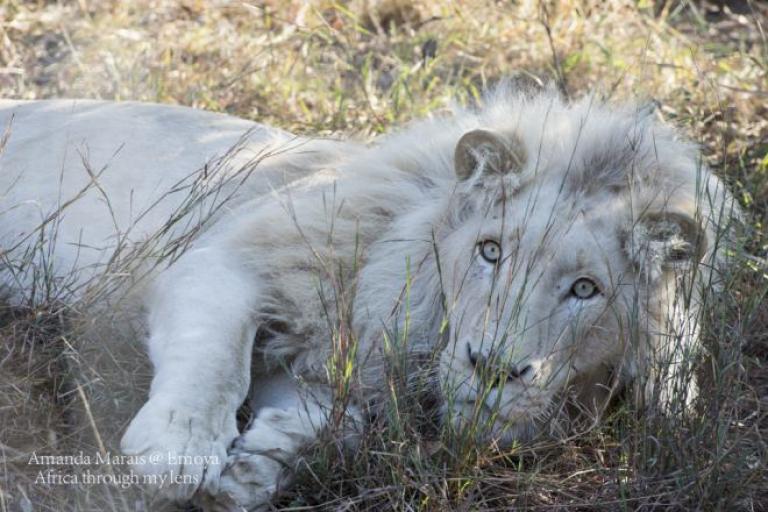
Another rescued lion at Emoya.
Photo: Amanda Marais/Emoya
The airlift is schedule for late October. ADI is still raising money for it — priced around $600,000 — but said it’s confident it will reach its goal.
“It is more expensive to relocate these animals to Africa, but who can put a price on taking them home to where they belong?” Creamer said. “It also sends such a clear and important message about protecting wildlife in their natural habitats and ranges.”
Emoya founder Savannah Heuser added: “Their lives were forcibly wasted away in horrific tiny cages, the doing of mindless circus acts.”
“They have a lot of lost time to make up for. They will live out the rest of their lives in a natural habitat, the closest they can ever come to freedom.”
By Simeon Tegel, GlobalPost
This article is syndicated from GlobalPost.

Matador Network's Blog

- Matador Network's profile
- 6 followers

