
Matador Network's Blog, page 2052
September 9, 2015
Why Iran’s Millennials support the nuclear agreement
TEHRAN, Iran — Medical students hang out in front of the University of Tehran one stifling summer day, chatting and checking their smartphones. Asked about the nuclear agreement that had recently been signed in Vienna, they quickly offer opinions about a deal that could dramatically shape their lives.
Iman Adeli, a 21-year-old future doctor, says Iran has long been isolated because of international sanctions.
“We were alone and at war with the world,” Adeli says. “If the sanctions are lifted, trade will come back. We’ll import and export more easily compared to the time of sanctions.”
The handsome young man dressed in jeans and a T-shirt, like many Iranian young people, is an avid user of an Iranian messaging service called Telegram. The app kept students appraised of progress with negotiations in Vienna. The nuclear agreement, signed in July and awaiting the approval of US Congress, requires Iran to sharply reduce production of nuclear material and adhere to stringent inspections of its nuclear power program. In return the UN will lift economic sanctions, although the US will continue unilateral sanctions in an ongoing dispute over Iranian human rights violations and support for terrorism.
Thousands of young people spontaneously rallied on the streets of Tehran in support of the Vienna agreement, formally known as the Joint Comprehensive Plan of Action (JCOPA), in July. “It’s a great event, and people have the right to be happy about it,” said Adeli.
Some young participants used the opportunity to hold up pictures of Mir-Hossein Mousavi and Mehdi Karoubi, two 2009 presidential candidates who have been under house arrest for four years due to their opposition to the government. Police dispersed those demonstrators, fearing they could spark wider protests.
Young Iranians have been at the forefront of support for the accords because they are among the hardest hit by sanctions. Banks wouldn’t transfer funds from Iran, so some students were stranded abroad. Many youth also hope the accords, by lessening tensions with the West, will lead to greater domestic reform. Whether at spontaneous rallies or on social media, young Iranians are impacting Iran’s politics in ways not seen for years.
Students and youth have long played an important role in Iranian politics. In the 1970s they helped lead the struggle against dictator Shah Reza Pahlavi. They joined the 1979 revolution, which brought the Islamic government to power, and they fought in the brutal Iran-Iraq War of 1980-88.
But young people today only read about those struggles in history books. Iran experienced a baby boom from 1985-95. So 41 percent of Iran’s population of 81 million is under 25.
The baby boomers came of age during the 2009 Green Movement when millions of Iranians poured into the streets to protest fraudulent elections and call for major societal change. The government brutally cracked down on the protesters, but the demonstrations lasted for months. The government jailed leaders and ultimately prevailed.
Ironically, in the intervening years, Iran has also become victim to its own success in making higher education more widely available to ordinary people. Students can attend traditional public universities, private universities, part-time colleges and take a wide array of online courses. Today over half of Iranians between the ages of 18-24 attend some form of higher education. The government wants to expand that to 60 percent by 2025.
The surplus of over qualified graduates “is a serious problem,” said Foad Izadi, an associate professor at the University of Tehran. Iranian students attend college with government subsidies, and then can’t find work, he said. “We actually have more college grads than we need.”
Some take jobs that don’t require a college education. Others join the informal economy driving their own cars as unofficial taxis. Some others act as middlemen in the sale of homes or cars.
The unemployment crisis has led some students to join the newly invigorated reform movement. They want to keep the current Islamic system but improve it through gradual change, says Javad Etaat, an associate professor of political science at Beheshti University, who has written a number of academic papers on Iranian youth.
“Right now no one believes in the need for another revolution,” he said. “When you make a revolution, you don’t need another one right away. Those who protest are looking for reform.”
Reformists seek an end to tight religious controls on daily life and freedom to criticize the government. They want the authorities to focus on improving the domestic economy rather than spending money to aide Lebanese Hezbollah or Bashar al-Assad in Syria. While opposing US aggression in the region, they want to see friendlier relations with the West.
After years of quiescence, the reformist movement surged in 2013. The entire country had come to oppose the disastrous policies of right-wing populist President Mahmoud Ahmadinejad, who held office from 2005-2013. Under his administration the economy collapsed, with inflation hitting 40 percent and GDP shrinking by over 7 percent in 2012. Iran also faced international isolation because of Ahmadinejad’s Holocaust denial and harsh repression of political opposition.
In 2013 that popular discontent boiled over when Iranians, including large numbers of young people, voted for President Hassan Rouhani. While Rouhani is not part of the reformist camp, he won the election with strong reformist support.
And now young people have been energized by the signing of the JCOPA. A large group of human rights and pro-democracy activists have announced their support. Some, including one political prisoner still in jail, posted messages of support on YouTube.
“The majority of the reform movement is young people,” said Prof. Etaat. “The principalists (conservatives) tend to be older people.”
The conservatives are known as principalists because they stand by the principles of the Iranian Revolution. They back crackdowns against dissent, and support the Revolutionary Guard and its sometimes violent militia known as the Basij.
Principalists also call for continued military support for Hezbollah, the Syrian government and Shia militia groups in Iraq. They remain suspicious of the US and the West in general.
Conservatives have some support among the youth. Ruhollah Hosseinian, a leading principalist member of the Iranian parliament, says young people don’t trust the US to live up to its commitments under the JCOPA. The US could falsely claim that nuclear research is taking place at a military base, for example, and if Iran refuses to allow inspections, sanctions could be re-imposed.
“It’s like a hammer above our head,” said Hosseinian.
He says many young people support the conservative viewpoint as seen by their devotion to Shia Islam. “After the revolution, a huge number of youth went towards religion,” he said. “Before the revolution at the University of Tehran mosque, you would see only a handful of students praying. Nowadays they hold prayers in two sessions because it gets so full.”
Etaat concedes that some youth support the principalists. But he emphasizes that religious practice doesn’t necessarily mean support for the conservative cause.
“We have young people who are very religious right now,” he said. “Religion runs deep in Iran because of the culture. It’s their own personal belief, and it’s not related to politics.”
Both reformist and conservative youth do share one thing in common, however: using social media to promote their views.
Drivers honk their horns in a futile effort to get through the crowded street where the gaggle of medical students are still standing. They eagerly discuss the latest social media fads. The US has Twitter, Facebook and WhatsApp, they say, but Iran has Telegram. It’s a messaging application that allows computer and smartphone users to quickly send text and photos.
The Internet can be very slow in Iran due to technological problems and because the government impedes access to sites critical of the regime. “Telegram is the most popular app because it’s very fast,” said Mehrdad Barati, a 24-year-old medical student.
Most young people use Telegram to exchange photos, jokes and text messages. “I use it to contact my girlfriend, of course,” said Barati with a laugh. “And she answers right back.”
Telegram usage has upended Iranian life, according to Mehrdad Khadir, editor of the Omid Javan (Hope of the Youth) weekly magazine.
“In Iran no one is in front of the TV,” he said with a smile. “No one is reading books. No one is reading newspapers. From young to old people, they’re all using Telegram.”
Warming to his topic, Khadir continued, “The dad is looking at his cell phone; the daughter is looking at her cell phone. If I want to tell my daughter to bring me water, I tell her on Telegram.”
Khadir points out that while wealthy Iranians can afford to buy a smuggled iPhone 6, which costs about $700, working class Iranians have access to a no-frills Chinese Huawei smart phone for only $80.
Everyone can have one, he said, “from the boss to the lowest employee.”
Indeed, according to one academic study, 45 percent of Iranians go online, making them by far the highest per capita users in the Middle East. By comparison Saudi Arabia ranks second with 18 percent.
Based on his studies and personal observation, Prof. Etaat estimates that 70-80 percent of Telegram content deals with personal issues or activities not hostile to the government. For example, young people will use social media to organize for religious festivals.
“Perhaps 20 percent are against the system,” he said. “Some of them protest how the country is ruled. Some undermine the whole structure of the system.”
The government tries hard to block such use of the Internet. Parliament member Hosseinian justifies the censorship by blaming foreign powers. He says the US and Britain constantly try to undermine Iran’s government through the Internet, as well as foreign broadcasts on TV and radio.
“It’s natural that the government should defend its own culture,” he said. “Iran should defend the morals of Islam. In moral matters the government should definitely block certain sites.”
As recently as 2013 government censors blocked many websites. A Google search in English, for example, would produce a list of links but none were accessible. Many more sites became available over the past two years under the Rouhani administration, according to experts.
These days magazine editor Khadir has no problem accessing Google. But news and political sites deemed hostile to the government are still blocked. That includes BBC Persian and Green Movement sites produced abroad, among others.
Facebook and Twitter are banned outright in Iran because of their use during the 2009 anti-government demonstrations. But so far Telegram has escaped that fate, except for stickers (icons) that display porno or cuss words. Pornography is defined broadly to include films with sexy scenes as well as hard-core video.
To get around government censorship, many young people buy access to black market Virtual Private Networks (VPN). They log onto a website that connects them to foreign servers beyond the reach of Iranian censors. They can then access any website. But then the government blocks the VPNs, only to have new ones quickly emerge. The cat-and-mouse game continues on a daily basis, becoming a profitable enterprise for people selling the VPNs.
Prof. Izadi says the government censorship is sometimes clumsy. “The people doing the filtering, some of them don’t speak English,” he said.
“They see a picture they don’t like and they filter it. They don’t realize the content may be of use to some people.”
Most young people would like to see Internet access opened far wider. “If it were up to me,” said Prof. Etaat, reflecting the views of his students, “I would make the Internet much faster to make it easier to use social media. But it’s up to the government. Even a reformist government would want to keep social media in line with its own beliefs.”
Taking a long term view, Etaat notes the progress made in Iran since the 1979 revolution. “Iran has changed a lot,” he said. “Before the revolution, the religious people wouldn’t even watch TV. Now, according to our statistics, the use of social media in Iran is equal to that in the West.” 
GroundTruth Special Correspondent Reese Erlich received a grant from the Pulitzer Center on Crisis Reporting for his Iran coverage. His latest book is “Inside Syria: The Back Story of Their Civil War and What the World Can Expect.”
This story is presented by The GroundTruth Project.
By Reese Erlich, GlobalPost
This article is syndicated from GlobalPost.


12 reasons why SW England kicks London’s ass
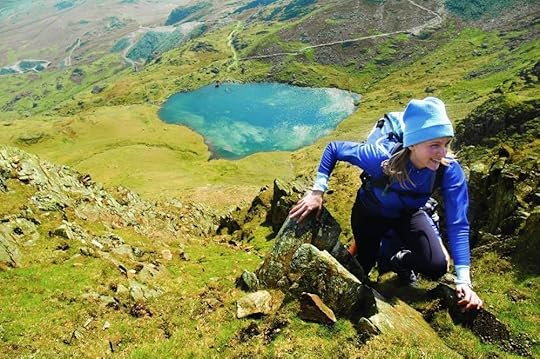
Photo: Mountain Travel Sobek
1. Fresh air
Ain’t nothing like stepping out of your front door, strolling down your steps and breathing in the thick, choking smog of a London bus chugging past, right? No.
Luckily for us in England’s green and pleasant southwest, we’ve got acres and acres of fresh, pollution-free air that seasons itself over woodlands, moors and oceans before it works its way into our lungs. The only thing we need to worry about breathing in is a rogue fly from the farm down the way.
2. Communities
The southwest’s calendar is filled to bursting with community events, school fetes and town festivals. We all love getting together to sell cakes and raise some cash for charity and have a right old knees up whilst the kids play in their school band. We look after each other’s kids when needed and know everyone from old Ethel round the corner to the mad bag lady who wanders the streets clutching her toy cats. We natter in corner shops and can go to the pub on a Friday by ourselves, because there will always be someone in there we know, or who knows our mum’s, cousin’s son. You don’t get that in London town now, do you?
3. Real cider
I’ve said it once and I’ll say it again, we make the best cider in the country down here in the foot of England. Our apples are sweet and our cider is so pungent it smells of feet. It’s cloudy, it’s crisp and it’s made no less than three hours away from where we drink it. More often than not, it’s made up the road. Tell me about your cider, London. Go on, I dare you.
4. Wide, green open spaces
We’ve got tons of ‘em. Sod Hyde Park, don’t even bother with Richmond Park and why would you even waste your time by jumping on the tube and ending up in London Fields when the southwest is so full of nature that we don’t know what to do with it? Wild camp on Dartmoor without being told off, walk for days on Exmoor for some time out in the great outdoors and climb England’s rudest hill, Brown Willy, on Bodmin Moor. Nothin’ better for the soul than green fields, muddy boots and miles under your belt. ‘Ansome.
5. Beaches
We’ve got loads of them, too. From Porth Cressa on the Isles of Scilly to Selworthy Sands in Somerset and Seatown in Dorset, the southwest is fringed by miles and miles of sand and salty air. What’s London got? A slimy, pollution riddled Thames. Put that in your pipe and smoke it.
6. Affordable rounds
According to the Telegraph, the average cost of a pint in London is £4.01 (exchange rate correct at time of writing). The average price of a pint in the southwest, however, is £3.31. Quids in for us, don’t you say?
7. A visible sky
There are things in the sky that twinkle at night called stars. We can see them down here because there is so little light pollution to ruin the view. We also have horizons and blue skies rather than sky scrapers.
8. People smiling
Even on public transport. Really.
9. Locally sourced produce
Whether we’re cooking a roast or making a cuppa, our veg, meat and milk probably all came from a farm up the road. We know it’s fresh and we’re proud to be supporting our local economy, even if we have to lie to the little ones in the families about where poor little Sally the pig went whilst carving the joint at the table.
10. Slower pace of life
We’re happy to stroll and wait for the bus and it’s OK to be late for work because you got stuck behind a herd of cows crossing the road. We dawdle behind tractors and we amble to the pub, we take country walks to find a cream tea at the end and we’re happy to sit and watch and wait. Our local shops trust us to come back with some change if we’re caught short and Grandma’s lunch will be an hour later than she promises. We can’t handle your London rushing, and we wouldn’t want to.
11. Our own West End
Go and check out the Minack Theatre and tell me more about great theatres.
12. Festivals like nowhere else
Beautiful Days. Leopallooza. 3 Chords. Sat in a Field. Boardmasters. Looe. Rock Oyster. Camp Bestival. Womad. Boomtown Fair. And of course, Glastonbury. I rest my case. 
September 8, 2015
Lesson for Donald Trump: border walls don’t work

Photo: Gage Skidmore
Donald Trump might think that border walls are a great idea, but try telling that to the South American neighbors currently split apart by one.
In recent months, residents from the leafy Paraguayan town of Encarnacion and its equally verdant Argentine neighbor Posadas have found themselves divided by a stark concrete wall, measuring 15 feet high and nearly a mile long.
They’re not happy about it.
In fact, they’re so mad that nearly 7,000 of them have already signed this Change.org petition started by a Posadas man demanding to have the structure torn down.
The wall was built by the Yacyreta company, which runs a huge bi-national hydroelectric dam of the same name. The principal purpose of the wall, which protects a new customs center, is to stop the flow of contraband goods, including drugs. Yacyreta claims it was required to put up the barrier under the terms of Mercosur, a trade pact that unites Paraguay, Argentina and neighboring countries.
Carlos Freaza, Yacyreta’s head of operations, has said that the wall will be accompanied by new parks and “green spaces.”
But that’s not placating locals, who say the wall impedes important flows of students, tourists, and trade. The petition text describes the structure as “shameful” and as appearing to have come from the playbook of the “reactionary ultra-rightwing” Trump, the surprise frontrunner in the US Republican presidential primary.
It adds that the wall is a “horrible” eyesore on the banks of the Parana River that is otherwise “an example of natural beauty.”
The text implies that the South American wall may have something else in common with the brash New York real estate mogul’s grandiose plan: It won’t work.
Critics have warned that Trump’s wall would be an outdated response to the 21st-century problem of illegal migration, with many Mexicans and Central Americans desperate to reach the United States likely to find ways over, around and under the wall, while millions of others enter on legal visas but overstay them.
The South American petition text concludes similarly: “They wall up the most important entry point in the province…while they fail to take care of hundreds of border points where drugs and contraband cross in bulk.”
By Simeon Tegel, GlobalPost
This article is syndicated from GlobalPost.

5 dangerous habits I picked up in Indonesia

Photo: Benjamin Rochette.
1. Guerilla parking and the pre-surf motorbike stash
I have to lump these two together because they’re co-dependent. Access to some of the best surf breaks means parking on private land. Guerilla park, and the local hoods will jimmy your seat-lock faster than you can say, “Hey Mister.” After three months of getting nickel and dimed, literally, for every imaginable human necessity, I tried to subvert the parking fee at Way Jambu by concealing my motorbike in a cluster of palms. I returned Gumby-limbed and famished from hair-raising surf to find my tires slashed and the under seat compartment relieved of my polarized sunnies. The price of protection/extortion: IDR 5,000 (about 40 cents USD). Lesson learned; comply with the locals and pay for protection.
2. Marinating in the surf camp
The Mandiri Beach Club serves three giant meals a day, offers unlimited wifi and cable TV with “all movie and sports channels”, a pool table, a mini concrete skate park, and all the filtered water/Bintang you can imbibe. To further compound a potential lull into apathy, a surf check is a neck swivel from your hammock. You won’t move from your camp.
“Was Lampung a local dish? Or was it that little village we rattled through after the driver picked us up from the airport? Whatever. Crack me another Anker, dewd.”
3. Daredevil high-fiving village children at on the morning surf commute
Sumatra’s pock marked “roads” are filled with livestock, frenetic motorbikes, precariously overloaded cargo trucks, and speeding techno-dut thumping taxi-vans. At first, high-fiving villagers in transit seemed like good sport. But give one paw-flailing child a gesture of reciprocation, and every local under the age of 16 will dart into the road, risking life and limb to make contact.
4. Smoking potent kretek cigarettes that snap, crackle, and pop
It started with Marlboro Light Menthol after a couple of beers in Bali. Within a week, I had bought a pack at the local warung. By the time my travels had taken me to Sumatra, I had slipped into a habit long forgotten. A habit grossly contrasting the amount of cardiovascular exertion needed to spend the majority of my day fighting currents and dodging cleanup sets. When I asked my losmen proprietor in Lagundri Bay if I could bum one of his kreteks, he said, “Noooo. Not for you. Too strong.” Pufaw, I thought. I smoked cloves in junior high. Nevermind that a Dji Sam Soe (“234”), the proprietor’s brand, has 39mg of tar and 2.3mg of nicotine per stick. (A Marlboro Red has 12mg of tar and 1mg of nicotine.)
To make matters worse, a third of the kretek blend is made up of cloves, which has a numbing effect on the esophagus, and the tips are dipped in sugar, maple, and licorice — a combination that helps ease the chemical cocktail through the bronchi, into the expanding alveoli, and absorbed in the helpless capillaries where the nicotine is passed into the bloodstream with enough potency to make the president of Philip Morris turn green—a condition I experienced after a retired policeman at Jenny’s Right offered me a Djarum Black. Furthermore: all travelers are delegates of their country, and no popular culture is without a simulacrum of the US.
5. Sporting “minimalist” attire while ripping around on my dilapidated motorbike
When I rented my first motorbike in Thailand, I wore shoes, socks, jeans, a long sleeve shirt under a windbreaker, and a tightly fastened helmet. Fast-forward to 5 months later in Southwestern Sumatra. My motorbike attire has become reductive: a pair of boardshorts and a t-shirt (sometimes). Cepcep at Jenny’s Surf Camp didn’t offer me a helmet and I didn’t ask for one. My irresponsibility doesn’t stop there. The following items were missing from the vehicle: side view mirrors, surf-rack, horn, turn signals, head and tail lights, and a key (two wires hidden beneath the front wheel well started and killed the engine). I had to brave a three-hour commute into Krui and back four days straight in order to negotiate the replacement of the debit card I’d left in an ATM in Kuta, Bali. Imagine a scantily clad Westerner exiting the local BRI branch and hot wiring a motorbike that looks as if it has barely survived a high-speed chase. Basically, a policeman’s wet dream.
Furthermore, consider the risk of permanent injury, mind altering brain damage or death. Helmet laws are poorly enforced throughout Indonesia. The notoriously under-reported national road-related death toll for 2010 is 31,234 — at least three people an hour. The luckier ones get a $25,000 helicopter ride to Singapore strapped to a gurney, and most travel insurance is void under negligent circumstances.
Remember: zombies don’t surf. 
Alaska from the air
Follow Matador on Vimeo
Follow Matador on YouTube
“The power of imagination makes us infinite” — John Muir
A visual nature essay from the costal wilderness of Southern Alaska — water, mist, mountains, glaciers, icebergs, whales, fjords, forests, and bears.
Filmmakers: Richard Sidey and Aliscia Young
Filmmakers on Facebook: facebook.com/RichardSideyPhoto + facebook.com/AlisciaYoungPhotography
Filmmakers on Vimeo: https://vimeo.com/sidey
Music: “Transcendence” by Inga Liljestrom 
What you’ll miss if you don’t take the Lares route to Machu Picchu

Photo: Kevin Jones
Solitude
500 people a day set out on the Inca trail to Machu Picchu, making it the most famous and famously traversed hike in South America. The lesser known road to the citadel, the Lares trail, offers a crowd-free alternative. Beyond my own group of twelve guests and guides and the ever present packs of llamas and alpaca, I saw only villagers and a handful of other hikers on the trail. I was also, by merit of short legs and labored breathing, alone more often than not. My whiskey shooting, swine swallowing, Marlboro breathing boyfriend was always a shaming quarter mile ahead of me, proving with each smug step that my teetotal clean eating yoga preparations were practiced in vain.
Unruined ruins
Machu Picchu is absolutely spectacular and has more than earned its place among the world’s seven new wonders. Consequently it is South America’s most popular tourist destination and you will have to compete for views and personal space with throngs of other visitors. Some of these people will be in such desperate pursuit of a photo that they will, with wet teeth and weaponized selfie sticks, press you precariously close to death on the edge of a narrow cliff path.
While traveling the Lares trail I had the opportunity to visit several Inca and pre-Inca sites that were in addition to being unbelievably beautiful, virtually empty. Scheduling efforts are made by the company and tour I trekked with, the Mountain Lodges of Peru (MLP) Lares Adventure, to bring guests to the ruins of Chinchero, Moray, Ollantaytambo, Pisaq and Ancasmarkas during off peak hours so they can be experienced reverently. Not a selfie stick in sight.
For future Machu Picchu visitors, a word of advice, the much talked about sunrise cannot be counted on and the citadel will more often than not be shrouded in mythically thick fog. Unless you plan on hiking in via a pre dawn ascent from Aguas Calientes or the Inca Trail itself the earliest bus to the site leaves at 5:30 and arrives after sunrise. Early morning is also the most popular time of day for tourists. Lunch time is when the herd usually thins and returns to Aguas Calientes to feed or catch a train, if it’s privacy you’re after this is your window.
Eco and sustainable accommodations
Because the Lares trail winds by remote villages and often directly through backyards and pastures, certain tour companies have responded by operating with an emphasis on sustainability and community tourism.
Mountain Lodges of Peru have constructed two rustic eco lodges along the Lares route, offering a camping option on the trek. Lodge accommodations are non-traditional and relatively indulgent for a hike like this, but for me the promise of a stiff drink and an outdoor tub to steep my bones in made the last miles of the day pass a little easier. Each lodge is fully staffed by the local community, and all meals, from the quinoa fried chicken (genius) to the trail mix you fill your pockets with, are locally sourced.
The more remote of the two lodges, Huacahuasi, named for the village that surrounds it, cuts into a mountainside at 12,585 ft. Each of the guest rooms comes complete with an outdoor soaking tub to soak hikers’ weary bones. The Huacahuasi lodge was formed as a commercial partnership between the community and MLP. In exchange for the use of the land, community members receive a 25% stake in the business.
In addition, Planeterra has established Peru’s first and only community-owned ecological campsite. Inaugurated in February and located in the isolated village of Cuncani, the campsite welcomes trekkers for their first evening on the Lares hike. The site offers solar showers and a flush toilet biodigestion system. Additionally, Planeterra has installed home-based gardens for surrounding families interested in growing their own vegetables. It is an effort to create revenue and contend with the staggering 75% malnutrition rate in the Lares Valley. The Planeterra campsite is open to all trekkers.
Immersion
Many of the villagers who live along the Lares trail are direct descendants of the Inca and maintain the Quechua language and traditions of their ancestors. A cornerstone of Andean tradition is the art of weaving. MLP offers daily cultural alternatives to hiking, among these was a visit to Choquecancha, a highland outpost renowned for the quality of its weavings. Before departing on the trip we were given a brief lesson in Quechua to ensure we could at the very least communicate gratitude to the people we met.
Climbing to the top of the village we were welcomed into a courtyard by women in wide brimmed bowler hats — their weavings, still holding the smell of woodsmoke in their stitches, hung over stone walls and branches. Our guides served as translators, explaining that the craft is handed down matrilineally and includes the old method of pressing dyes from beetles, ashes, and flowers.
Halfway through our second day of hiking, rain falling in slanted sheets we reached the village of Viacha. Tents were pitched and tables were spread with pitchers of chicha morada, a warm blood colored brew of boiled purple corn and cloves. Outside the hot coals of a Pachamanca earth oven were blooming the caveman bouquet of fire and meat. We were served blistered corn, roasted potatoes, and blackened cuy (guinea pig). For the curious, the taste of the rodent is surprisingly good, greasy and more like duck than chicken.
The Pachamanca preparation has been a part of Andean practice for centuries, the ritual act of cooking food underground, respectfully returning it to the belly of the earth before consumption, honors the mother earth deity Pachamama. Cuy has been eaten in the Andes for centuries and was the primary source of protein until the Spanish brought livestock in the 16th century. So important are the guinea pig to the Andean diet that an oil painting inside the Cathedral of Cusco depicts the last supper with a spit roasted cuy, belly up under the shadow of Christ’s halo, as the table’s centerpiece.
Because group sizes on the Lares Adventure are kept small and many of the communities passed through are not part of a traditional tourist route, visiting them felt less like an intrusion and more a respectful crossing of paths.
What you should know
The number of days spent on the Lares Trail can be condensed or expanded depending on your preferences anywhere from four to seven days, most trips include an overnight stay in Aguas Calientes and a visit to Machu Picchu. The MLP Lares Adventure is a seven day, six night trip that stops at several Inca ruins beyond the traditional Lares Valley route. High season for trekking is May through August when the trail is at its driest. According to the guides I traveled with, April is a beautiful time to get on the trail as the rains have gone but left the countryside riotously lush, September and October are likewise blessed with good weather and waning crowds.
[Note: Reda was a guest of Mountain Lodges of Peru.]

Is the Appalachian Trail getting blown out with party hikers?

Photo: Gabriel Amadeus
When Jackson Spencer set out to tackle the Appalachian Trail, he anticipated the solitude that only wilderness can bring — not a rolling, months-long frat party.
Shelters where he thought he could catch a good night’s sleep while listening to the sounds of nature were instead filled with trash, graffiti and people who seemed more interested in partying all night, said Spencer, who finished the entire trail last month in just 99 days.
“I wanted the solitude. I wanted to experience nature,” he said. “I like to drink and to have a good time, but I didn’t want that to follow me there.”
Spencer, or “Mission” as he is known to fellow thru-hikers, confronted what officials say is an ugly side effect of the increasing traffic on the Georgia-to-Maine footpath every year: More people than ever causing problems.
At Maine’s Baxter State Park, home to the trail’s final summit on Mount Katahdin, officials say thru-hikers are flouting park rules by openly using drugs and drinking alcohol, camping where they aren’t supposed to, and trying to pass their pets off as service dogs. Hundreds of miles away, misbehaving hikers contributed to a small Pennsylvania community’s recent decision to shutter the sleeping quarters it had offered for decades in the basement of its municipal building.

Photo: mroach
With last year’s release of the movie Wild, about a woman’s journey on the Pacific Crest Trail, and what experts call a growing interest in outdoor activities, the number of people on the Appalachian Trail has exploded. And the numbers are only expected to climb further after A Walk in the Woods — a movie based on the 1998 Bill Bryson book about the Appalachian Trail– hits theaters this week.
More than 830 people completed the 2,189-mile hike last year, up from just 182 in 1990, according to the Appalachian Trail Conservancy, based in Harpers Ferry, West Virginia. At Baxter, the number of registered long-distance hikers grew from 359 in 1991 to more than 2,000 in 2014.
The growing number of hikers is becoming a management nightmare at Baxter, where officials say they also believe the culture and attitude of the people using the footpath is changing.
Jensen Bissell, director of the park, said in a letter to the Appalachian Trail Conservancy late last year that AT hikers are “open and deliberate in their desire for freedom from all rules and regulations.” He warns that the trail may need to end somewhere besides Katahdin if something doesn’t change soon.
“If we have 2,000 hikers now, how will it be when we have 3,500 or 4,000 hikers?” Bissell said.
Some say there appears to be a growing sense of entitlement among thru-hikers, many of whom are just out of college or have enough money to leave work for months at a time.
“We had to take off half a year of working, and not a lot of people can do that,” Karl Berger, a 24-year-old Maine resident known on the trail as GQ, said from a camp site in Baxter, where he was resting with his father behind finishing the hike up Katahdin. “I don’t think a lot of hikers acknowledge that it’s a privilege to be out here.”
Many hikers said they believe the concerns are being overblown.
“There is always a bad apple or two, but these are people that spend four to six months for a year on the trail, on their feet, experiencing the wilderness. I can’t imagine them wanting to do things that would violate the wilderness,” said Scott Jurek, an ultramarathoner from Colorado who last month completed the trail in a record time of 46 days, eight hours.
After celebrating with a bottle of champagne at Katahdin’s summit, Jurek received citations for consuming alcohol, hiking with a large group and littering. He argued that the citations were unfair and that Baxter officials were using him to send a message to problem hikers.
Policies regarding alcohol vary by state and park. Dogs are allowed along most of the trail except for a few places, including Baxter.
Ron Tipton, executive director of the Conservancy, said the vast majority of thru-hikers are respectful and on the trail for the right reasons. He said he believes that the sharp increase in hikers has simply made it more challenging to deal with the behavior of a few.
His group has implemented several initiatives to deal with the surge in trail use, such as encouraging people to start the path at different spots to better distribute hikers. It also recently held a meeting with Baxter officials to address the concerns about hiker behavior and is dedicated to resolving the issues, Tipton said.
With the end of the trail in jeopardy, there’s much at stake, officials and hikers say.
“Katahdin is such an icon; it’s such a prize that it motivates all kinds of people,” said Lester Kenway, president of the Maine Appalachian Trail Club. “Having the trail end somewhere short of that would be a disappointment for many of us.”
This article originally appeared on Yahoo! Travel and is republished here with permission.

Where the great writers drank
THE BEST TOURIST THING I’VE EVER DONE was a “Literary Pub Crawl” in Edinburgh, Scotland. Guides led us around town and told us tales of boozing Scottish writers at the pubs they drank at, while we all enjoyed a pint. As it turns out, this type of tour can be done in pretty much any major city: writing is a lonely job, and writers love their booze, so many a great writer ended their day with friends at the pub.
If you want to start up your own literary bar bucket list, the assignment writing service Assignmentmasters has put together this infographic of some of the favorite drinking spots of the world’s great writers. 
Created by Linda Craig with Assignmentmasters.


Couples road-tripping experiences

Photo: Ben Seidelman
1. Car-aoke.
“It’s 3090 miles to Boston. We have a full tank of gas, half a growler of kombucha, and The Roots bumpin through the stereo… HIT IT!!”
2. The “F-Word.”
Being in an enclosed space with your significant other for extended periods of time will ultimately expose your darkest, most pungent secrets. While I win the award for frequency, nothing in our relationship had prepared me for what she unleashed at mile marker 84 in Montana.
3. What to do when 20 questions fails.
And eye spy, and slug bug, and counting road kill, and singing along to the radio, and audio books, and conversation. *SHUDDER*
4. Arguing over who’s the better copilot.
She is.
5. Trying to find a radio station in the Midwest that isn’t country or Christian.
Good luck, brave adventurers.
6. Having someone to share the unexpected beauty of the landscape.
If you’re road-tripping across America, You. Will. Be. Stunned. The best views were of the Cascades in Washington, mountain lakes in Idaho, Montana sky, North Dakota’s Painted Canyon, Lake Erie and Upstate New York.
7. Determining an acceptable amount of shoes to pack.
If they don’t all fit in a single grocery bag, you’re bringing too many.
8. The joys of being fed while driving.
And here I’ve been, feeding myself all these years like a sucker.
9. Learning to Recognize the tell-tale symptoms of carsickness.
“Pull. Ove– Bllleeeeaaaarrrggghh!”
10. The sad realization that GPS isn’t infallible.
Fortunately that false sense of security GPS lulls us into can easily be replaced with panic and maps.
11. Guiltlessly trashing hotel rooms.
I’m not advocating any Led Zeppelin-style hotel shenanigans here (though my hat’s off to you if that’s your M.O.), but who doesn’t feel a little smug knowing they don’t have to clean up after themselves?
12. Realizing that true love is still able to kiss your greasy, pimply, fast food sweating partner goodnight after 14 hours of driving.
Yep, that snoring, smelly, blanket-stealing lump is your one and only. That, my lovelies, “is Amore.”
13. Admiring/identifying the different bug species collected on your grill and windshield.
“Ooooh! Is that a stag beetle?”
14. Unexpected delays.
No matter how tight your planning game is, getting from point A to point B always takes longer than expected. Stress not, dear ones. Just enjoy it and love the adventure for what it is.
15. Yelling in unison at shitty drivers.
Do you ever find yourself going 40 mph in a 65 then refusing to actually merge onto the interstate? Are you too busy texting and drinking your Big Gulp to engage the turn signal? Do you enjoy following too close, then passing on the right? If so, you just may be a shitty driver. And we hate you.
16. Crying as you hit tolls.
The tears came right about the time we crossed over into Illinos, and didn’t stop till we arrived in Boston. West Coast, we miss you already. 
Matador Network's Blog

- Matador Network's profile
- 6 followers


