
Matador Network's Blog, page 2050
September 11, 2015
Signs you're an ambiverted traveler

Photo: Artur (RUS) Potosi
“I COULD PARTY NON-STOP with complete strangers in Goa every night for the rest of my life because raves are life.”
Does that phrase fit you?
No? How about this one:
“I would love to be alone in an isolated cabin in the middle of the Canadian Wilderness for the next forty years, or so.”
If that one doesn’t fit you either, chances are, you’re an ambivert. Welcome to the club — it’s big.
Despite it seeming like something a millennial just cooked up to describe another form of bigotry, ambiversion is a term that has been around for some time. Coined in 1947 by German-born psychologist, Hans Eysenck, an “ambivert” includes those who exhibit qualities of both extroversion and introversion.
It’s the less rigid sliding-scale version of its more popular siblings: The Loud One and the Quiet One. You’re the switch-hitter of the group and you like to travel.
1. But traveling alone can be difficult for you.
Rewarding as it is, traveling alone can be hard for you. It means breaking out of your perfectly comfortable shell in order to experience the culture and connect with other people. You know this, so you do it anyway.
2. Traveling in groups is worse.
You like to spend time with people, but the thought of getting on a bus with 50 loud tourists and an itinerary that schedules in “Photo-Op” makes you want to throw yourself in front of a songthaew.
3. You are relieved when you notice there is no one else sharing your 4-bed hostel dorm-room.
4. Yet, when you hear laughter from a group of travelers across the hall, you feel lonely.
5. So you decide to join them.
6. You don’t like to talk to groups very much, so you laugh, smile and find where you stand.
7. Once you know where you stand, you can adapt your personality to fit the needs of the group.
There’s a talker? You’re a listener.
8. You’re a social chameleon that likes to make everyone happy.
But you sometimes envy those who always say what they mean.
9. You think before you speak.
Sometimes so much so that by the time you actually say something it can come out sounding forced and mis-timed. Probably followed by a nervous chuckle.
10. You can be charming when you need to be.
But it’s draining and you much prefer real, meaningful conversations with friends.
11. You feel relieved when the conversation moves past “Where are you from? Where have you been? What do you do?”
12. You like to be around people but you don’t necessarily want to talk, so you go to the coffeeshops and bars that have plenty of tables.
13. Being put on the spot in front of a lot of people can make you lock-up.
14. But you like being listened to.
15. You don’t mind the sidelines, but can dance like a new-age goddess when you’re feeling it.
16. And after being around people too long you begin to fantasize about the post-apocalyptic episode in the Twilight Zone where Bemis has “Time Enough At Last” to read all the books in the world without human distraction because everyone’s dead but him.
17. But you see the moral of the story: That scenario sucks, too.
18. You’d rather share a cabin with Myanmese locals on your overnight train to Mandalay, rather than, say, a group of Australians on holiday.
Because after a few brief exchanges with the local, all the conversation neither of you know has been exhausted and the rest of the trip will be spent in mutual isolation making sure you don’t fall off your bunk. Not so, with, say, Australians. Not so.
19. Part of you wishes you could party like an Australian.
Because, you’re a human. And humans are all over the map. 


Things no one tells you about Paris

Photo: Omarukai
1. It’s kind of grimy.
Paris is the City of Light, the fashion capital of the world, the most beautiful city on earth… that also happens to be chock full of urine scented alleys and cobbled streets strewn with (mostly) dog feces. Not so chic, eh? Don’t worry, though, put a filter on it and the people back home will never know.
2. Everything is expensive.
Apart from bread and the bottom-shelf wine at the supermarket, nothing in Paris is cheap. Sure, there are some decent happy hours and several bars with cheap beers all night long, but all the other stuff — rent, conditioner, blueberries — requires a baller bank balance.
3. Finding a decent, affordable apartment is HARD.
To rent an apartment in Paris, you need to prove you have more than enough money to pay rent, as well as a guarantor to cover your derrière should you fall on hard times. Not only that, but landlords can be seriously picky about who they deign suitable for their minuscule and often shabby flats that boast little to no natural light, and a lifetime’s worth of plumbing disasters waiting to happen. Some prefer students with super rich parents, while others favour yuppie couples with a combined income that could support a family of ten. Funnily enough, no one wants a recent graduate with only a three-month internship lined up, and overdrafts in two countries. Trust me, I tried.
4. You’ll probably get mugged.
You might get pickpocketed, either in a classic grab and run incident, or as a result of some elaborate distraction technique, like the “lost tourist” routine. Some muggers even operate in groups, lifting their victims off the ground in order to rummage through their pockets before returning the newly wallet-less individual to the pavement which, like hangovers, is a lot funnier when it’s happening to someone else.
5. Drinking in public is completely fine.
In the park, by the Seine, on a bench, on a bridge, there isn’t really anywhere that’s off limits when it comes to boozing in public. The best part about this is that when you forget to bring a corkscrew, someone drinking nearby will have one you can borrow.
6. You’ve never heard of the coolest places.
Tourists don’t know anything. The best places in Paris are nowhere near the Eiffel Tower or the seven rings of hell, sorry, the Champs Elysées. Cheaper, more pleasant places to be include in Bellville, by the canals, the parts of Montmartre that are closer to Barbès than the Sacré Coeur, and anywhere in the 11th arrondissement. The beer tastes better in these areas for some reason, perhaps because it didn’t cost upwards of 6 euros for a half pint.
7. The metro will make you ruder.
The metro is a dog-eat-dog microcosm, and only the toughest survive (get a seat). After a few weeks of trying to be polite, or diplomatic at the very least, you’ll stop caring about not pissing people off. Without strictly pushing other commuters out of the way, you will start to push past them, scanning for empty seats as if your life depends on it, before nabbing the first one that comes up, even if somebody else’s backside is already poised to take it. Don’t be naive, however, because this works both ways. You’ll be shoved, trodden on, and clobbered with multiple bags and umbrellas, all of which entitle you to call out the idiot who did it, and create an exaggerated display of pain.
8. Not everyone speaks English.
A lot of people arrive in Paris sans much in the way of the local lingo, expecting most of the city’s inhabitants to speak English. While many of them do, a lot of Parisians are reluctant to use anything but French, especially if you’re doing something important like opening a bank account. Conversely, they will respond in English if they decide your Français isn’t up to much.
9. You won’t venture beyond the 20 arrondissements very often, if at all.
Central Paris, everything within le périphérique, is where all the interesting things happen. Well, that’s what you’ll start to believe anyway. As a result, you’ll rarely make it beyond the confines of the twenty arrondissements, shunning invitations to parties in the suburbs, unless you can sleep over, or share a taxi back to civilization with at least two other people in order to spread the cost.

Things you'll miss in Wisconsin

Photo Jim Simonson
1. The “squeak” of fresh Carr Valley Cheese curds.
Happy cows come from Wisconsin, NOT California. Wisconsin produces over 600 varieties of cheese and we all have a favorite cheesemaker. Carr Valley Cheeseis by far my favorite. I love their cheese curds and Eight Year Aged Cheddar!
2. Drinking New Glarus’ Spotted Cow whenever I want.
New Glarus’ Spotted Cow can not be sold legally outside of Wisconsin (as a tavern in Minnesota found out) which makes it extra remarkable. Nothing makes me more homesick than when I am craving “a Cow” and I know I will have to wait until my next visit to get my hands on one.
3. MA-waukee, not MIL-waukee.
I’m sorry, I can’t hear you over Summerfest.
4. Having your Bloody Mary with a chaser.
In Heaven, a Bloody Mary is served with a small glass of beer. Sorry, rest of America, a Bloody just doesn’t feel complete without a swig of beer to finish up those last spicy dregs of tomato juice.
5. Trips “Up North.”
“Up North” refers to a cabin in northern Wisconsin near a body of water, a bait shop, a general store and a dive bar that serves a damn good fish fry. I don’t remember much of what I learned in junior high but I do remember fishing, blackberry picking and racing to the outhouse in the middle of the night.
6. Friday Fish Fry.
Fridays mean fish. Every Friday night, “supper clubs” fill up with Sconnies looking for a couple pieces of broiled or deep-fried fish, a potato, coleslaw, a bread roll and chances are, a Brandy Old Fashioned (that’s right, not Whiskey).
7. Going to Amish Auctions.
One of my favorite memories growing up was going to Amish Auctions with my Mom and Grandma. Giant pole barns with cars and horse-drawn buggies parked side by side full of people bidding on gorgeous hand-made quilts and furniture that lasts generations. And the hot, sugary, homemade donuts dunked in coffee with the freshest cream you’ve ever tasted.
8. Three words: Go Pack Go.
Vince Lombardi once said, “God, Family and the Green Bay Packers. In that order…” In Wisconsin, Packer gear qualifies as Sunday best. Imagine a state filled with green and gold, kitchens fully stocked with cheese-laden snacks and conversations about the greatest football coach ever, the Frozen Tundra and how “the Bears still suck.”
9. Motorcycle Riding in the Driftless Area
Sconnies are on their bikes as soon as the spring temperatures hit 45 degrees. Of all the places to cruise in the state, the Driftless area in southwestern Wisconsin is the best ride. As you weave in and out of the Kickapoo Valley, the temperature goes from warm to cool with each turn, you smell the lush greenery and can’t help but appreciate the farms dotting the landscape. Let’s go for a ride.
10. Exploring downtown Madison.
State Street, Memorial Union, Camp Randall and Freakfest. Need I say more?
11. The time of year between snow and more snow.
Days spent out on the lake, tailgating at Miller Park, eating your way through the thousands of festivals across the state paired with chilly nights sitting around a bonfire in jeans and a hoodie. We only put up with Wisconsin winters because the summers are so damn worth it.
12. The glory that is Culver’s.
Leaving Wisconsin means losing regular access to Butterburgers, deep-fried cheese curds and custard. Every mile outside the state line takes me further away from my beloved Mushroom & Swiss Butterburger. I promise to be good, please don’t make me go!
13. Eating brats on every occasion.
Bratwursts are such a staple of Wisconsin culture that you can find them anywhere, any time of year. Of course you’ll see them tailgating but why not stop over at a brat fry and donate to the local Kiwanis Club? My Grandmother even makes them at Christmas! 
War-torn Ukraine’s craft beer makers defy the odds
LVIV, Ukraine — Massive financial loans and American military trainers may be some of the most talked-about Western imports to Ukraine lately.
But that’s just in the headlines. These days, gourmet burger bars, stylish barber shops and fixed-gear bicycles are also becoming fixtures in major cities as the former Soviet republic turns increasingly west.
Now another trend all the cool kids can get behind: craft beer.
Ukraine already loves its beer. But in the past year or two, industry experts say, craft brewing has slowly started taking root, part of a broader new wave of Western-inspired gastronomy.
It’s not unusual to find urban, educated 20-somethings kicking back pints of cloudy, unfiltered local beers on Friday nights at bars here that seem straight out of Brooklyn or Seattle.
Small breweries are hoping to break into a market dominated by a handful of giants and shift local taste buds away from bland, mass-produced lagers.
The government isn’t making it easy by imposing frustrating regulations on the industry. But brewers are still determined to spark the kind of appreciation for quality beer that’s become popular in the United States.
“I have no doubt that what’s happening now in the US will happen here,” said Yuri Zastavny, co-owner of the “Pravda” Beer Theater here in western Ukraine’s largest city.
Up and coming
In the US, craft beer accounts for 18 percent of production. Ukraine is still far behind — it’s less than 1 percent of the local market.
But fans say it’s just the beginning of something beautiful.
Beer culture in Ukraine is steadily gaining momentum, according to the Craft Brewers’ Guild, spawning growing hoards of experts, enthusiasts and specialty pubs. The US Brewers Association defines craft beer in terms of smaller volume, smaller ownership and certain types of ingredients. But as far as Ukrainian brewers are concerned, any local, independent beer that’s brewed with care fits the bill.
The country is now home to around 200 small breweries, with the capital of Kyiv, Lviv and the southeastern city of Dnipropetrovsk being key hubs.
Lviv, once part of the Austro-Hungarian empire, was historically a hotspot for brewing. The hometown brand, Lvivske, was founded in the 18th century and has since grown to become one of Ukraine’s largest producers.
Many say the mass production led to a deterioration in quality, which is why local brewers say Ukrainians are curious to try new, tastier varieties.
“After a person tries ‘live’ [unpasteurized] beer for the first time, they won’t want to drink beer from the major producers,” says Nazar Zhyvak, who runs Tipsy Lion, a Lviv-based microbrewery that produces about 20 tons of beer per month.
Changing minds
Still, gourmet beer can be a tough sell in a cash-strapped country where mass-produced local beers are pretty cheap — and their flavor safe enough to satisfy most casual drinkers.
Tangy Belgian tripels, for example, aren’t exactly commonplace here.
What’s more, says Zastavny, the “Pravda” Beer Theater co-owner, most locals are still misinformed about the virtues of quality beer and how it’s made.
“There is this misconception in the minds of Ukrainians that good, fresh beer must go bad quickly, which is both funny and sad,” he said, adding that big brewers help perpetuate such misbeliefs.
Zastavny’s brewery, an imposing, five-story building on the Old Town square, has enlisted a helping hand from the West: wunderkind Cory McGuinness, their 27-year-old chief brewer from Portland, Oregon.
With experience in the US and a diploma in brewing technology, McGuinness is hoping to turn the local crowd onto everything from flavorful, Belgian-style brews to bitter IPAs.
Like some of its American counterparts, “Pravda” brews beers with style, giving each run a quirky theme and custom-designed label. For instance, its “Frau Ribbentrop” wheat beer — with coriander and orange peel — features a stern-looking German Chancellor Angela Merkel in purple military dress. Its stout, “Obama Hoped,” has the US president on a dollar-bill-style label, along with beer-lover Homer Simpson.
But that’s only part of the marketing strategy.
“It’s a lot about word of mouth,” McGuinness said. “You have to have that one friend who’s cool [to introduce you to craft beer], or you have to have someone who’s a little bit more adventurous.”
A photo posted by Dan Peleschuk (@dpeleschuk) on Aug 22, 2015 at 7:24am PDT
While local demand is gradually rising, so are official hurdles for brewers.
Beer-lovers have panned a raft of new regulations on the industry, the most damaging of which for microbreweries is an expensive wholesale license.
Supporters of the new law, which also restricts advertising and sales, say it’s aimed at cracking down on alcohol abuse. But Zastavny and Zhyvak say the new fee unfairly targets them — the little guys. They’ll end up paying the same amount for the license — roughly $22,600 per year — as the largest beer makers do.
While “Pravda” Beer Theater would suffer financially, smaller ones like Tipsy Lion would most likely have to close. Some already have.
“No one’s asking the state for any low-percentage loans or some kind of tax breaks,” said Zhyvak, of Tipsy Lion. “Just leave things the way they are, and don’t interfere.”
There is some hope for the boutique producers.
Brewers and enthusiasts have banded together to petition officials for legislative changes that would either significantly lower the fee for small brewers, or scrap it altogether. Parliament is currently considering those proposals. It’s unclear exactly when — or whether — they’ll vote on them.
In the meantime, Zastavny is staying positive, planning for the future, and perhaps even collecting some inspiration for his newest brew.
“Maybe we’ll make a beer devoted to that ugly initiative,” he says.
By Dan Peleschuk, GlobalPost
This article is syndicated from GlobalPost.

7 US state parks with great camping
Photo: Pierce Martin

This post was produced by Matador for our friends at REI, where it appeared in its original form.
1. Gorges State Park, near Brevard, North Carolina
Gorges SP encompasses some of the steepest and most spectacular river gorges in the Southeast, with trails along the Toxaway and Horsepasture rivers leading to exceptional waterfalls, swimming holes, and diverse wildlife habitat.
There is primitive camping for backpackers in the Frozen Creek Access Area, Raymond Fisher Campground, and the Grassy Ridge Access Area. The “secret spot”: six free sites along the Foothills Trail — first come first serve. Note these are just a short hike from the car, so they’re perfect for young families.
2. Hunting Island State Park, South Carolina
Not gonna lie: Hunting Island can be brutal in terms of biting insects (sand fleas), heat, and humidity during the summer. Over the winter however, it’s an exceptional terrain to explore. With five miles of Carolina coast in its native state, maritime forests stretch all the way to the dunes. There are huge swaths of salt marsh, inlets, and lagoons, and with decent swell, the surf conditions are surprisingly good. There’s also the only publicly accessible lighthouse in the state, and a large campground. Look for sites at the ends of the loops for more primitive-feeling areas to set up your tent.
3. Sinks Canyon, Lander, Wyoming
In the southern edge of the Wind River Mountains in Wyoming, Middle Fork of the Popo Agie River flows through a dramatic class IV-V canyon before disappearing underground in a natural geologic phenomenon called “The Sinks.” This is car camping in about as pristine a setting as you can get, with pinyon-juniper foothills rolling up through coniferous areas to high meadows of aspen.
4. Enchanted Rock, Texas
Enchanted Rock is a classic go-to spot for car camping with quick access to trails and bouldering, as well as primitive options that get you away from the masses. There’s a cool cave passage through the top of the main rock, and good swimming/wading/cool-off opps in Big Sandy Creek. Notably, Enchanted Rock is an International Dark Sky park.
5. Eleven Mile Canyon, Colorado
West of Colorado Springs, Eleven Mile Canyon encompasses both a beautiful class III-IV (V) whitewater stream with easy roadside access, and, further upstream, a huge reservoir with some of the best fishing in the Rockies.
The area sees fairly high traffic, but there is a large camping infrastructure to accommodate it, including sites only accessible by foot or boat where you can get away from the crowds. Eleven Mile is distinctive in the area in that it’s solid granite, making for a different kind of whitewater run and exceptional climbing.
6. Baxter State Park, Maine
One of the few campgrounds in the country that has a truly “traditional camping” feel, many campsites in Baxter SP have been used for almost 100 years. It’s the base camp for hikes up Mt. Katahdin as well as explorations around Daicey Pond and other beautiful lakes and streams. There is a variety of accommodations including bunkhouses, cabins, lean-to shelters, and backcountry tent sites. Early September, as colors are changing, this area is absolutely the most beautiful place in the country.
7. Jedediah Smith Redwoods State Park, California
Camping in a redwood forest is mystical. Tucked within a massive canopy of redwood, western hemlock, Sitka spruce, grand and Douglas fir, and with the huge layer of duff over the forest floor, there’s a sense of quiet and peace here. The sounds are dampened. Jedediah Smith is one of the best places to camp — just imagine looking up through the huge branches and the understory of madrone and bigleaf maple.
This post was produced by Matador for our friends at REI, where it appeared in its original form.

September 10, 2015
Growing up poor made me travel
MONEY SUCKS. Well, at least for the many of us who don’t have it. It especially sucks when you’re growing up and you don’t really understand why you don’t have it.
$40,000 a year for a single mom to feed four kids, two of which she adopted, doesn’t exactly leave a lot left over for luxuries. There were definitely times when I resented not being able to do or buy things that other kids could. I was extremely self conscious about having to use the reduced lunch coupons, or wear hand-me-down clothing, but fast forward to fifteen years later and everything about growing up poor has only encouraged me to travel the world.
How do you travel the world if you have no money? That seems to be the million dollar question. Well, if you grow up without much, you learn a few things. At least I did.
1. It made me adventurous and curious.
All images by the author
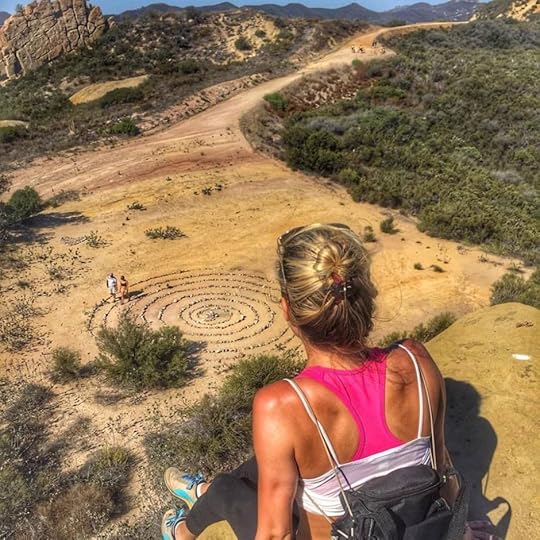
What do you do when you’re a kid and you don’t have the latest and greatest toys? You go play outside…like you’re supposed to. Although I hated how far we lived from the main town, especially since people would refer to it as the “booneys” (an equestrian area), I loved the giant backyard we had that literally made me feel like I was in the Jungle Book.
You better believe as I got older my desire to go see a real Jungle Book only grew stronger. You better also believe my curiosity and wanderlust has ten-folded since I got back from Thailand.
2. It taught me to value experiences, not items.
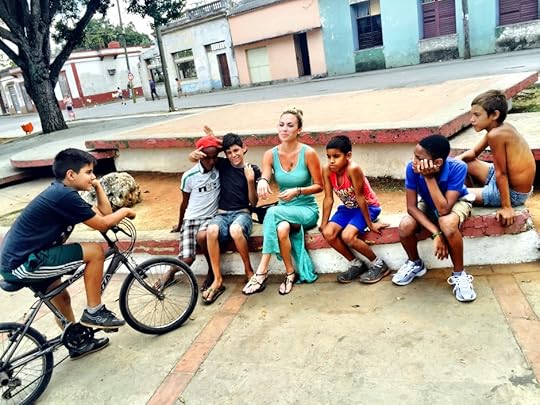
Since I knew damn well when I was younger that we would only be getting new clothes once a year, I never really experienced how it felt to get expensive things. To me, getting to go to “Imagination Station” (the local park), or even Taco Bell was a huge deal, and it’s those experiences that I remember today over what I wore or had.
Today, the first thing I think of when I look at the price of pretty much anything is, “That’s almost the price of a plane ticket,” even if it’s $29.99 — no where near the price of a plane ticket.
3. It made me ambitious and determined.
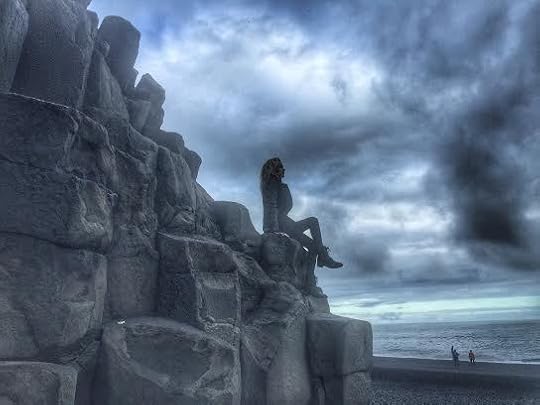
Once I turned 13 and realized I could make money working as a waitress (totally legal, I swear), I became insanely determined to make as much money as possible. I had proof at such an early age that working more meant more money and opportunities, and that it was up to me to make it happen.
Today that hustler-esque ambition has turned me into someone who will stop at nothing to achieve my goals. I’ve figured out how to support myself and travels by working long hours doing freelance writing, while maintaining my own travel blog, and traveling as much as possible.
4. It taught me to be fearless, independent, and take risks.
I can’t imagine that there weren’t many times when my mom wasn’t afraid that we wouldn’t have enough money for bills, but I can’t remember a single time when she showed it. She did what she needed to do, on her own, to raise four kids, which is what taught me to be so independent and fearless.
I have a very strong “I can do anything” mentality, which sometimes gets me in trouble, but has also led me to a lot of awesome adventures, like solo traveling, travel blogging, and even starting my own charity.
5. It taught me to get crafty and be frugal.
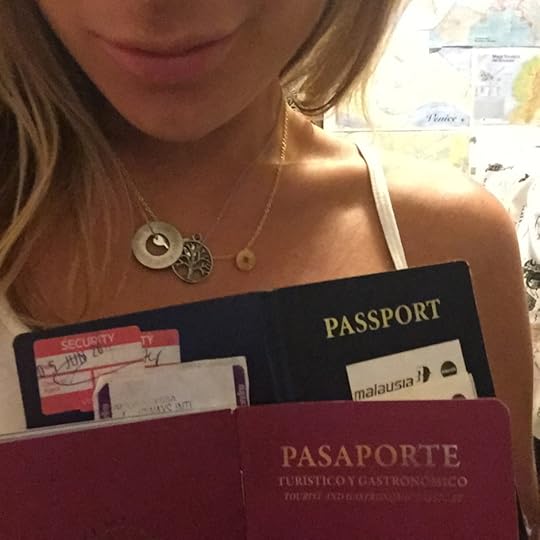
I didn’t have money then, I don’t have much money now, but luckily I’m really good at not spending what I do have and figuring out how to travel as affordably as possible. The only things I actually spend money on are rent, insurance, food, wine, and dog food, and I use my travel rewards credit card as much as I can.
Instead of searching cheapest flights for somewhere I want to go, I search the cheapest flights in general, then make plans accordingly. I also just started Airbnb-ing my apartment out, which not only forces me to go travel so I can rent my place out — cuts my rent down to half as much, or less.
6. It made me want to help those less fortunate.
Compared to a lot of people, especially in third world countries, I was no where near poor, which is why I’ve always been involved in charities and volunteer work. Last year I had a strong urge to do more, and to really make a statement about helping others, which is where I got the idea to go volunteer in South Africa.
It was my first solo travel trip and one of the most eye-opening experiences I’ve ever had. It not only encouraged me to start my charity to give back to people in the places I travel to, but to continue traveling, and learning about the world, the people in it, and how to do see it when you don’t have much money.
7. It taught me that anything is possible.

Realizing now how much we “had” with so little money makes me recognize and appreciate how someone can make things possible if they work hard and never give up.
There’s a reason why so many people write about traveling the world with no money, and why you see people actually doing it. It’s because they’re making it happen any way that they can. For me, even if something seems like it’s impossible, like actually profiting from traveling, I’ll work my ass off to figure out how to make it happen, instead of worrying about why it won’t. 
Here’s how locals insult each other in 12 major cities around the world
There are more than 6,500 languages spoken around the world today — each developed with the express purpose of facilitating communication between individuals, sharing ideas, capturing emotions or states-of-being and, apparently, insulting one another.
To uncover all of the colorful ways people curse each other around the world, the team at Cut Video sent their video producer Blaine to Berlin, Bangkok, Adelaide, Dubai, Bogotá, Shanghai, Seattle, Paris, Tokyo, Rome, Addis Ababa and New Delhi. In each location, Blaine interviewed locals about what they say when they need to lay a verbal smackdown in their native languages.
Here’s what Blaine discovered:
Frankly, I think we all ought to add “soft egg” into regular rotation.
Got a favorite insult in another language? Sound off in the comments. 
15 signs you learned to drink in Brazil
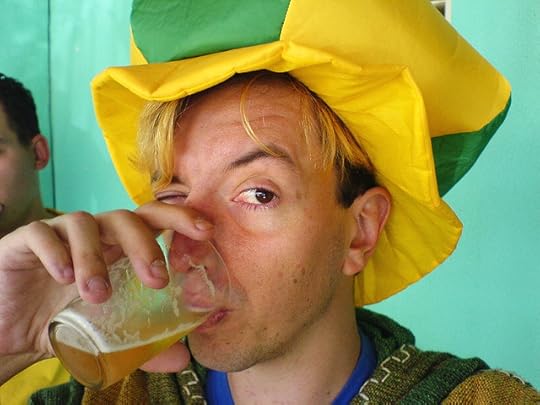
Photo: clurichaun
1. You can spot a newbie by the way they drink their cachaça.
A good cachaça is not made to drink as a shot, like most hard liquors. You can drink an amazing vodka shot and be accepted by Russian society; you can drink a good tequila shot and be accepted by Mexican society; but, if you’re served a good, high-quality cachaça, you cannot drink it all at once. Cachaça is meant to be enjoyed from the first sip to the last drop.
2. You never go to a boteco for “just one beer.”
And even when you say you are, you still end up drinking six or even ten beers with your friends anyway.
3. You know that one beer before lunch keeps you thinking straight.
This is the catch phrase from one of the most iconic songs from the Brazilian singer Chico Science. And you’ve busted out in song with every other Brazilian at the bar, singing: “Uma cerveja antes do almoço é muito bom para ficar pensando melhor…”
4. You’ve ended up pagando o pato at least once in your life.
Brazil’s way of sharing beer comes at a price: that last person always gets left with the bill.
5. You miss the small “copo americano” that Brazilians drink their beer out of on hot summer days.
6. You hold the secret magic of the caipirinha.
I really don’t know why, but — usually — gringos cannot succeed in this business. You’ve got to be a born Brazilian to understand the hidden magic behind our perfect summer drink.
7. You know that a traditional and cheap boteco will never have “boteco” in its name.
Instead it’ll be called something like “Real Bar e Lanches.” And you know that if it does say ‘boteco,’ it’s most likely a fancy and posh bar trying to imitate the real thing.
8. You’re very picky about cheap beer.
Even though we all know that they taste the same. If somebody poured some Skol in your glass, and told you that it was Brahma, you wouldn’t be able to tell the difference.
9. You lament the smoking ban.
We all celebrate the fact that our clothes and hair smell better, but banning smoking outside of bars has caused sitting on the street and enjoying a gelada to lose a bit of its traditional charm.
10. You’re speechless whenever you travel to a new country and can’t drink outside.
What do you mean I’m not allowed to drink here? I’m right in front of the bar and I want to sit outside. It’s a wonderful summer night!
11. You know how to appreciate the Brazilian craft-beer scene.
I’ll admit that Brazil has some of the worst mass produced beers I’ve ever tasted. They are more water than beer, you can’t even drink it if it isn’t below 0 degrees and you’re pretty much always going to get a hangover.
But our craft beer scene is one of the best in the world. Morada, Colorado, Bodebrown, Schornstein, Eisenbahn — there are so many great ones.
12. You question every German or British person who thinks it’s ok to drink lukewarm beer.
Beer for Brazilians is served below the water’s freezing point, and more often than not, if you’re not careful, you’ll ended up having a block of ice instead a glass of beer.
13. And you know how to properly deal with -8.C beer bottles.
You know that you have to grab with the tip of your fingers on the very top and never — I mean NEVER — in the middle. If you don’t know how to do it after one or two ruined beers, we’ll judge you.
14. You always share your beer with your friends.
Germany has 500ml beer bottles, England has the pint and Americans have the big cans. Brazilians have a 600ml beer that will arrive at your table in a thermo-protective case. And from this bottle, everybody will serve the necessary amount for 10~15 min of beer, about 150ml each.
15. You’ve learned how to hold a conversation on football.
It doesn’t matter if you’re not into sports, football always comes up while drinking. So you’re always prepared. 
Americans are eating sushi all wrong according to this Tokyo chef
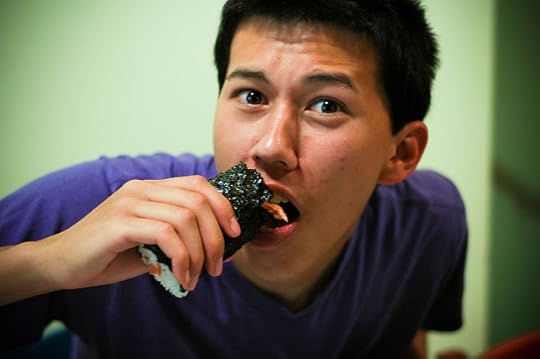
Photo: Clifton
By Annemarie Dooling, Yahoo! Travel
For more than 200 years, this rice and fish meal has been a staple of Japanese cuisine, and no matter where you eat it here, it is a foodie rite of passage. I traveled through Tokyo, Osaka, Kyoto, and Hiroshima in search of the perfect plate of sushi, along with food expert and Australian MasterChef contestant Hayden Quinn. Ten days of sashimi, soups and tempura later, we had a pretty good idea of what constitutes the most amazing meal in Japan; we were hooked on fresh sushi.
If you’re eating sushi in Japan, your trip needs to start at the Tokyo Fish Market. The Tsukiji Market runs 24/7 and is the largest wholesale food market in the entire world. Narrow, winding walkways along a crowded warehouse show off overflowing buckets of long-legged spider crabs, writhing squid, and enormous tuna fresh from the water and cut with hand saws. The market is a spectacle, with more than 60,000 employees and an earnings value of $5 billion annually. I want to give you fair warning. This is not a tourist attraction.
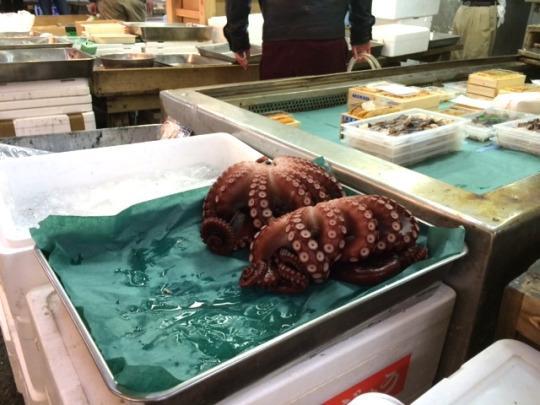
I was treated to plates of yellowtail, tuna, and other familiar fish, as well as sizeble hunks of omelette, eel, and squid. Photo: Annemarie Dooling
Walking away from the giant slabs of tuna and toward the outdoor stalls of vegetables and fruit, you may notice a brown and green stick of something completely foreign, but with a slightly familiar bitter odor. It’s wasabi in it’s natural state. It is completely different from the version we eat in the States. While the green paste that ends up on our plates is more of a mixture of horseradish and food coloring, in Japan you might be given a big hunk of natural wasabi and a small grater with your dinner so that you can create your own bit of paste your meal. A little bit of this stuff goes a long way.
In the center of Tokyo, Quinn and I took a class taught by one of Japan’s only female sushi chefs; it is believed that because the temperature of a woman’s body is warmer than a man’s, she is not the ideal candidate for sushi-making.
Our chef surprised me from the start with a plate of thick slabs of seafood, much meatier than the pieces I’d seen during sushi meals at home. The pieces of fish that are cut to make sushi are extraordinarily different than the chunks we are used to munching in the Western world. These are confident, hearty, meaty slabs. With slight dabs of wasabi, they are placed gently across small balls of sticky rice — a drastic difference from the starchy pieces we eat at home, which can be more rice and accoutrements than actual fish.
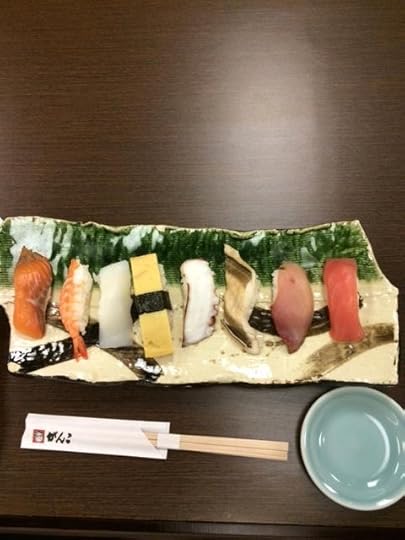
I was treated to plates of yellowtail, tuna, and other familiar fish, as well as sizeble hunks of omelette, eel, and squid. Photo: Annemarie Dooling
The most notable difference for me is the lack of the ‘sushi roll,’” Quinn said after his third sushi meal in a row in two days. “The majority of sushi is the small, bite-sized nigiri sushi … but not once did I see salmon used in sushi preparation.
I highly recommend watching the chefs make your sushi in Japan. The speed and concentration of a Japanese sushi chef is second to none. You’ll hear that the Japanese are a meticulous people who put a lot of care and concentration into everyday tasks, but their food preparation is on another level. The cuts of fish are perfect, the rice is rolled with care, and even the utensils are chosen with insight. “Our incredibly talented sushi chef was using a classic Yanagiba, or Japanese slicer, which is used specifically for filleting long pieces of fish,” Quinn explained to me. “The interesting thing about this knife is that is has a one-sided edge perfect for slicing fish. They are right- and left-handed, as the cutting edge needs to be on the outside of the slice.
When it comes to eating the sushi, you’re doing it all wrong. During sushi creation, the slightest dab of wasabi is placed between the rice and the fish — and that is the only wasabi that should be used. Piling it on top of your roll, or swirling it into a bowl of soy sauce is a big no.
But that isn’t the only condiment that’s being used incorrectly. “One thing I never knew was that the pickled ginger is to be used as a palate cleanser between selections and not as a garnish,” adds Quinn. As for your chopstick skills, you are officially off the hook. Sushi should be eaten by hand, as the best rolls are just too delicate to be eaten with the tricky sticks, and you should be able to eat a piece in just one big bite. Same goes for passing a piece to a friend. Drop the sticks and pass your plate instead. Chopsticks are to be used for your big bowls of rice, but never, ever stick the chopsticks straight into the rice bowl, as it’s a major sign of bad luck. One more thing — don’t rub your disposable sticks, called waribashi, together unless you want to offend your chef; after all, top-quality chopsticks never produce splinters.
Rice should be sticky, but not too sticky, and enhance the delicate flavors of the fish. The rice side of your sushi should never touch a soy sauce bowl, instead, dip fish first. When you’re done with your delicious meal, wrap your disposable chopsticks back into the wrapper they came in, or place them together over your bowl, but whatever you do, do not cross them when you lay them down.
When it’s time to leave your food, do just that. Walking, talking, and eating in public in Japan is considered rude, and you’ll rarely find public garbage cans anyway. Before you leave the restaurant, as a thank you to your chef, you might want to bow as a show of appreciation and say, “Gochisōsama deshita! (Thanks for the feast!),” but expect him or her to bow back. Big shows of gratitude are one of the great aspects of Japanese culture, so go ahead and get into a long bow-off, adding an “arigato (thank you)” or two.
This article originally appeared on Yahoo! Travel and is republished here with permission.

Things Portuguese will never say

Photo: Pedro Ribeiro Simões
“Why does my mother insist on buying Bolo Rei for Christmas?”
“Yes, darling, I would love to do the dishes while Benfica is playing against Sporting.”
“Don’t bother buying the twelve raisins for New Year’s Eve. My wishes never happen anyway.”
“I never heard RFM.”
“I’d never think of stealing a fig, especially from that loaded fig tree across the road.”
“I live alone, pay the bills and go on holidays. All of it earning the minimum wage.”
“Nope. Never saw Morangos com Açucar.”
“Amália… Amália who?”
“Lisbon is too cool, I don’t feel like venturing out of it.”
“Cod? Too salty.”
“I will never wake up early again to buy freshly baked bread and eat it while it is still hot with butter with a great cup of coffee.”
“Our multibanco (ATM) system sucks. I can pay the bills, make transfers, top up my mobile phones, etc. Having too many options overwhelms me.”
“I honestly don’t think I know any Portuguese expats living abroad.”
“Albufeira is so quiet in the summer.”
“Socrates did great things for the country.”
“I wish the roasted chestnut sellers would stop contaminating the streets with that horrible smell every autumn.
“We should modernize and replace our castles with shopping malls.”
“I miss the days we had to wait for hours to be served at the bank.”
“I love doing the IRS every year.”
“Please, whatever you do, just don’t add garlic to it.”
“No thank you, I just had dinner.”
“Would you prefer a large or a small Cristal?”
“I would invite you in to drink coffee but we ran out. Could you come back tomorrow?”
“When I have visitors, I always buy foreign wine to show off.”
“I don’t think Sardinha Assada should be sold during the Marchas Populares.”
“Does nobody question why we need so many regional pastries?”
“I think you should buy a souvenir instead of going to a masriqueira.”
“Sintra? Never heard of it.”
“That statue of a man wearing a hat and glasses outside A Brasileira? I don’t know. Maybe he was a politician?”
“If I were you, I’d not go to Gêres. Just go cross the border, it is more beautiful there.”
“Every time I go to my neighbor’s “pôr a escrita em dia” (to catch up) she invites me to eat something. It gets annoying.”
“My favourite Portuguese dish? Carbonara.”
“I don’t see the point of having food at a party. Surely it would be better if we had more booze and less rissóis.”
“If I were you, I’d skip Azores. Their pineapple is a bit insipid and don’t bother with their cavacos.”
“If you’ve been to Lisbon, you’ve seen it all here. Throughout the country, we all pretty much eat the same food and produce the same things.”

Matador Network's Blog

- Matador Network's profile
- 6 followers

