
Matador Network's Blog, page 1446
November 23, 2017
Killer whale-style rides in London
Who doesn’t want to ride a killer whale? Predator Adventures, out of London, England, is offering just that in a high-speed watercraft straight out of a James Bond film. They’re the first (and so far only) licensed commercial tour company offering this unique experience in the United Kingdom.
The Seabreacher is a highly advanced submersible watercraft developed by a couple of friends — New Zealand born boat builder, Rob Innes, and certified machinist, Dan Piazza — who together launched Innespace Productions out of Redding, CA in 1997. The craft can reach speeds of 60 mph on the surface, 20 mph underwater, and launch 18 feet into the air. Its thrust trajectory mimics that of actual sea creatures — like the killer whale.
The watertight cockpit seats two, and the experience is like pairing a dolphin with a fighter jet. In a word, unforgettable. You can buy your own Seabreacher for $80-100,000. The folks at Predator Adventures are the official UK distributors; they can hook you up.
As for the tours, their expert pilots do the driving, and all you have to do is sit back and scream a little (probably). Being that it’s a 1:1 experience, you get to decide if you like it mild or wild; just tell your pilot before takeoff.
Experiencing this tour means taking a trip to the Royal Victoria Docks in East London. Predator Adventures is launching their tours February 1, 2018, but they’re taking bookings now. Rides are offered as 20 or 30-minute individual rides or two 15 minute rides for pairs — and it’s highly recommended you book in advance.
How to get there
Predator Adventures is the only place in the UK to experience a Seabreacher tour. They’re located at the Royal Victoria Docks in East London.
Park at the Royal Victoria Car Park (L2). It’s located behind the Crowne Plaza Hotel on Western Gateway, offers 750 parking spaces and is a five-minute walk away. Alternatively, you should be able to find free parking on DOCK Rd.
What to consider
Arrive 15 minutes before departure.
Book early, book online.
If you’re injured, you probably shouldn’t put yourself a high speed, high-pressure situation like this.
Due to the confines of the cockpit, there is a height and weight restriction. (6’5” and 240lbs, respectively).
A Predator Adventures tour makes a great gift.
Rides start at £89.
Your experience is not weather-dependent (because of the watertight cockpit), but if there is dense fog, they’ll reschedule you.


More like this: Mapped: The best restaurants in London for every cuisine imaginable


When Japan becomes home
Making a foreign country a place you’d call home, even for a short time, is no easy task. Throw in a language barrier and a wide array of cultural differences, and integrating to the point where you feel comfortable could take years. In Japan, there are a few ways you know you’ve at least started the process.
1. You bow when making an apology over the phone.
2. You measure the rice you cook in go.
3. You actually see Japanese gameshows as more than background noise.
4. You fall asleep on the Yamanote Line leaning against a complete stranger and make it all the way around before waking up.
5. You find udon or soba to be a well-balanced, completely satisfying lunch.
6. You forget what Mexican food is even supposed to taste like.
7. You start joining in the scolding looks when a foreigner answers his phone on the train.
8. You stop maintaining eye contact in conversations and rely upon aisatsu.
9. You don’t even bother with the heater in the winter; turn on the kotatsu.
10. While on a train, you spot someone you know on a train heading in the opposite direction, a la Kimi No Na Wa.
11. Your autocorrect doesn’t even bother with Romanized Japanese words.
12. You withdraw tens of thousands of Yen because you know when the ATMs close.
13. You start randomly muttering whether it’s hot or cold, or whether you’re tired or sleepy, even in English.
14. You hear all the stories of calamities across the world and feel safer in Japan… then you remember the earthquakes.
15. You buy several sets of guest slippers for your tiny apartment.
16. You stop connecting with every foreign English teacher that moves into your area, because you know they’ll most likely be gone soon.
17. You’re no longer foolish enough to answer the door when the NHK man rings.
18. When someone from home asks you why you put up with something, you’re tempted to just shrug and say “shoganai.”
19. You plan your garbage runs around your stops to the convenience store or supermarket.
20. You brush your teeth after lunch.
21. You just think to yourself, “Oh look, another shrine. And another. And another.”
22. You don’t even bother to lace up your shoes anymore; you keep them tied just tight enough to walk in, but loose enough to slip off.
23. You know not to eat all your rice first.
24. Your first instinct at a red light on an empty street isn’t to jaywalk.
25. You feel at peace knowing US political issues are 5000 miles away.
More like this: 5 things expats in Japan are total snobs about
November 22, 2017
From The Air: Philippines and Kenya
In these sequels to our original From the Air series, we went back and revisited two of the most dream-state inducing places we’ve ever seen: the Palawan Archipelago in the Western Philippines, and Kenya.
First up, Palawan, where we filmed at Linapacan Islands, Bacuit Archipelago, and Coron. A special thanks to Tao Philippines.
Check our full Matador Originals video catalog for more travel inspiration.
Next up, Kenya, where Matador filmmakers Blaze Nowara, Joshua Morin, and Scott Sporleder explored some of the most intense regions of wildlife and wild open terrain on earth including Manda Bay, Mt. Ololokwe, Lake Alice, and Mt. Kenya.
There are few bonus scenes as well from a very special Maasai ceremony that’s part of another soon-to-be-released Matador Original called Jacob’s Story.
Follow Matador on
Vimeo
Follow Matador on
YouTube

complete guide to Appalachian trail
The Appalachian Trail is a behemoth of an adventure. With more than 2,000 miles (or 5 million steps) of wilderness between Maine and Georgia to tackle, many “thru-hikers” plan for this challenge months in advance. Considering that the optimal starting month for South-North hikers is March, now might the time to start planning your conquest of the epic AT.
The first thing you need to figure out is how much time this trip will take you. Depending on your skill level, this trek can require 6 months to complete. And you will need to purchase food along the way as well new equipment that will keep you safe and dry in any climate (well, not Arctic, but it wouldn’t hurt). As you will be passing through 14 states and quite a few national parks, there are also permits to obtain (including a few that cost money). Put simply, if you wait until February to plan this, the logistics alone might overwhelm you.
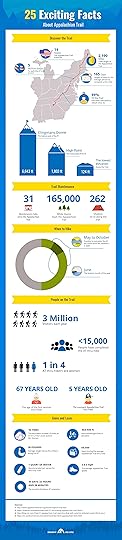
Fortunately there is this excellent 6-chapter AT guide that travel writer Kathryn Wilde put together for HikeandCycle.com. Below are infographics covering all the basics, including a map of the trail, FAQs, and a prep checklist. Safe travels!
1. Map of the Appalachian Trail
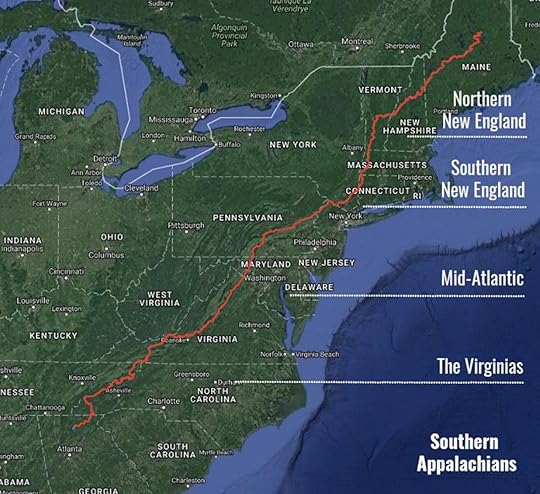
Photo: Kathryn Wilde
2. Facts about the AT
3. Prepping for the AT
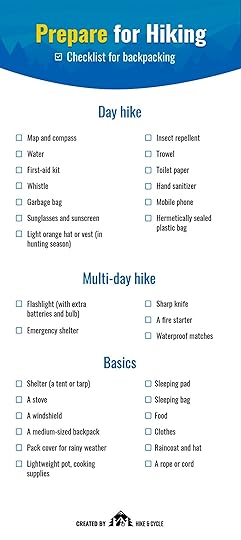
Photo: Kathryn Wilde
More like this: 14 signs you were born to hike the Appalachian Trail


10 slang phrases you need to know in Korea
When you are having so much fun, it is like eating honey.
Example:
A: 콘서트 어땠어? (kon-seo-teu eo-ddae-sseo?)
How was the concert?
B: 꿀잼! (ggul-jaem!)
So fun!
2. 노잼 (no-jaem) | No fun
When something not enjoyable at all.
Example:
A: 드라마 재밌어? (deu-la-ma jae-mi-sseo?)
Was the drama interesting?
B: 진짜 노잼이야. (jin-jja no-jaem-i-ya.)
It was not fun.
3. 셀카 (sel-ka) | Selfie
In Korea, you don’t take selfies, you take self-cameras or in short form, selcas.
Example:
A: 셀카 찍자. (sel-ka jjig-ja.)
Let’s take a selca.
B: 콜! (kol!)
Okay!
4. 콜 (kol) | Deal
콜 came from the word ‘call’, but it is used to mean ‘sure’, ‘deal’ or ‘okay’.
Example:
A: 라면 먹을래? (ra-myeon meog-eul-lae?)
Shall we have ramyeon?
B: 콜! (kol!)
Sure!
5. 라면 먹고 갈래? (ra-myeon meog-go kal-lae?) | Netflix and chill
Netflix and chill. Used by girls as a cute way to invite a guy over for something more than ramyeon.
Example:
A: 집에 아무도 없네… 라면 먹고 갈래? (jib-eh ah-mu-do eob-neh… ra-myeon meog-go kal-lae?)
There’s no one at home… Do you want to have ramyeon before you go?
B: 콜! (kol!)
Sure!
6. 쩔어 (jjeol-eo) | Dope
Dope. Freaking awesome.
Example:
A: 오늘 헤어스타일 쩔어! (o-neul he-eo-seu-ta-il jjeol-eo.)
Your hairstyle today is dope!
B: 고마워! (ko-ma-wo!)
Thanks!
7. 강추 (gang-chu) | Strongly recommend
Example:
A: 이 식당 어때? (i sik-dang eo-ddae?)
How’s this restaurant?
B: 강추! (kang-chu)
I strongly recommend it!
8. 어장관리 (eo-jang-kwan-ri) | Playing the field
In Korea, you don’t say that someone is playing the field. You say that someone is managing the fishery.
Example:
A: 어장 관리 하는거야? (eo-jang gwan-li ha-neun-geo-ya?)
Is he playing the field?
B: 아니야. 그냥 정겨운 사람이야. (a-ni-ya. geu-nyang jeong-gyeo-un sa-ram-i-ya.)
No. He’s just an affectionate person.
9. 9. 멘붕 (men-bung) | Mental breakdown
Example:
A: 회의는 어땠어? (hoe-ui-neun eo-ddae-sseo?)
How was the meeting?
B: 멘붕이었다. (men-bung-i-eott-da.)
I had a mental breakdown.
10. 헐 (heol) | What?
Similar to ‘omg’, ‘what the –’ and ‘huh?’.
Example:
A: 밥 안 먹어? (pab ahn meog-eo?)
You’re not gonna have dinner?
B: 헐. 벌써 11시야? (heol. beol-sseo yeol-han-si-ya?)
What the — it’s already 11pm?
More like this: 11 reasons you should never date a Korean guy

Tasmania's wildlife sanctuary
Australia’s wildlife ranges from deadly and dangerous to sweet and adorable. Most visitors to the land down under will want to see some of these animals while traveling the country.
I usually try to avoid animals in tourism as I just don’t know how they’ve been treated in captivity, but Australia actually has plenty of places where you can see the local animals without going to a zoo. One of those places is Bonorong Wildlife Sanctuary in my home state of Tasmania.
The sanctuary sits on a large hillside pasture, which has been designed to imitate an environment similar to the natural habitat of its animals. Each of the animals at the sanctuary is there for a reason, most of the time because they were orphaned or injured and needed care (most of the time due to road accidents). Many of the wild animals that arrive at Bonorong are released back into the wild once they are healthy enough.
Tasmania has previously been a victim of species extinction when the Tasmanian tiger (thylacine) died out in the 1930s, so conservation programs are a major part of Bonorong’s operation. These programs have helped restore and protect the population of endangered species, such as the world famous Tasmanian devil (which happens to look nothing like the cartoon character). The number of wild devils was drastically reduced due to a facial tumor disease that has affected the population since 1996. Conservation programs like the one at Bonorong help to stop species like this from going extinct.
Visitors to the sanctuary can interact with many of the animals in a way that doesn’t stress them. Cuddling a koala is not allowed, but patting the back of a koala while it sits comfortably in a tree is something that every guest will have the opportunity to do. Hand-feeding kangaroos is also an experience enjoyed by every visitor to Bonorong. The entrance fee includes a bag of kangaroo pellets (which are mostly made of oats) and the local kangaroos will often hop up to visitors for a feed and a chest rub.
How you can help
There are many things that the average local or visitor to Tasmania can do to help the endemic species. The sanctuary’s website lists these and they include, among others:
Become a wildlife rescuer.
Drive more safely at night. Keep your speed below 80 km/h (half of road kills occur when vehicles are going more than this speed).
If you do hit or come across a dead marsupial (like a kangaroo), you can check its pouch for a joey (a baby). If they’re found soon enough the sanctuary’s emergency line (0447 264 625) can be called to rescue it.
Remove roadkill from the road. Scavengers will be attracted to roadkill and are more likely to also get hit by passing cars.
Do NOT feed wildlife.
How to get to the Bonorong Wildlife Sanctuary
As Bonorong is located about 25 minutes out of Hobart (Tasmania’s capital city), renting a car is the easiest way to get to the sanctuary. There are currently no public transport options, but there are a few local tour operators that will take you to Bonorong as part of their trips.
What you should consider
The sanctuary is open from 9:00 AM – 5:00 PM daily.
The costs of admission are: Adult $29 / Child (3-15) $15 / Infants FREE / Family Pass $80.
The entrance fees cover the operation of the sanctuary and its wildlife assistance programs, so you can feel good about your money going to a good cause.
Group tours of the sanctuary are included in the admission price. Tours depart at 11:30 AM, 2:00 PM, and 3:30 PM. Private and more in-depth tours are also available — see the Bonorong website for more information on bookings and prices.
More like this: 30 images of Tasmania we can’t stop looking at

Instagram is ruining travel
My story is stereotypical. I quit my two jobs, sold all my stuff, moved out of my home of five years, and took off to parts unknown on a one-way flight to travel the world and work as a digital nomad and travel blogger. To make things work out, I took a deep dive into Instagram as a way of getting my blog out there and started following all the top travel bloggers and traveling Instagram influencers.
At first, the travel photos were motivating, but slowly, a feeling of uneasiness and inadequacy started creeping in. Every Instagram post was trying to one-up the others with the next best-fabricated travel photo to get the most likes and drive the most traffic to their website. I was taking pictures of myself sweaty and in proper hiking apparel when the rest of the community appeared to be models climbing mountains in sundresses.
I love a good exotic travel photo as much as the next person, but eventually, I started asking myself if Instagram was doing more harm than good. If our minds are constantly plotting about how to share the most epic photo in the most bad-ass location, are we truly experiencing the joy of traveling and exploration? Or are we just collecting destinations like a materialistic person collects possessions? Wasn’t this “keeping up with the Joneses” mindset what I had run away from? Yet, here I was again, feeling like I didn’t measure up because my country count wasn’t high enough and I wasn’t the first traveler to post from the latest trendy destination.
How do you avoid the Instagram follower rat-race? How do we keep the mystery, spontaneity, and joy in travel while still being able to share it in a fun way? Well, first, catch yourself the next time the ‘gram starts making you feel less-than and remember that “comparison is the thief of joy.” Second, live your best life, without worrying about how it looks on social media — where is the fun in spending hours posing for the best image when you could be enjoying the beauty of a place and its people instead? Third, take a break from being overly connected and go somewhere beautiful without your camera or phone — you may stumble upon a great spot that no one has ever heard about and keep it a secret from the rest of the traveling community.
More like this: Traveling Narcissist: The rise of ‘look at me’ travelers
Bali even cheaper than you think
Indonesia is an affordable destination to reach from elsewhere in Southeast Asia. With Air Asia flying into Jakarta and Denpasar for under 200 USD most of the year, and the islands easily accessible to Australians for a tropical getaway, it’s no wonder the infrastructure and amenities have radically changed over the past few decades. Not too long ago, travelers could take it for granted that Bali was a budget destination. However, with the influx of Starbucks, high-end hotels, and vendors capitalizing on western tourists, it’s not impossible to live on the cheap in Bali, but it doesn’t hurt to know where to look.
1. Eat nasi goreng.
This staple Indonesian dish is available everywhere, but that doesn’t mean you should head into a four-star restaurant and spend $10-20 for something you can find for $1 or less. Fried rice with vegetables and meat, usually chicken, is enough to sustain you between $2.50 beers on the beach. Let’s be honest: there are plenty of amazing Indonesian foods available on Bali for reasonable prices, but when it comes to getting only what you need to keep going, nasi goreng is the cheapest you’ll find.
2. Rent a motorbike, don’t take a taxi.
Riding a motorcycle in Southeast Asia is still one of the few things in this world that scares me, due to the number of accidents I’ve seen and heard about. Nevertheless, renting a small scooter — AND a helmet, please — is clearly the cheapest and easiest way to explore Bali. Uber is still completely illegal in all of Indonesia, and drivers caught operating the app have been cornered and beaten. Taxi prices are inflated, even from the official kiosk at the airport, and drivers will haggle with you at every turn.
3. Go snorkeling in Pemuteran.
A lot of water activities in Bali can set you back quite a few bucks: renting a surfboard, taking a ferry to the Gili Islands, diving classes, and signing up for the weird and oddly entertaining water jetpack. Nevertheless, it won’t cost you more than a few dollars to slather on some sunscreen, rent a snorkel and mask, and jump in the waters around Amed and Pemuteran. The famous submerged Buddhist temple is actually about 15-20 meters down, but if the water is particularly clear, you’re swimming during low tide, and you’re lucky, you just might be able to catch a glimpse without even being certified to dive.
4. Take free and cheap yoga classes.
Cheap yoga classes are available all over Bali, but the highest concentration of studios can be found in Canggu. If you time it just right, you can actually hop from one free class to another, but even if you need to pay, they start at around $10. Just don’t expect air conditioning or heavy mats; you’ll be sweating your heart out any time of the year, but your money will stay put.
5. Crash Nusa Dua’s beach.
If your time in Bali has been limited to stays in Kuta or Seminyak, you might be sick of the crowds, vendors hustling on the beach, and feeling as though this is not the idyllic getaway you were looking for. A sunset on this section of beach is still hard to beat, but if you really want something more low key, head over to Nusa Dua early in the morning for the sunrise and a walk to the Water Blow. The hotels in Nusa Dua are all upscale and massive, meaning their owners probably make extra efforts to ensure the beaches are cleaner and quieter… for the most part.
More like this: 17 side effects I had as a traveler in Bali
Don't say this to flight attendant
Every day is different for flight attendants, but we do hear some of the same comments and questions on a regular basis… some of which could really go away:
1. “Can I just sit anywhere?”
Of course! The airline just likes to put that letter-number combination on your boarding pass to pretty it up. Take your assigned seat, please. We don’t need extra mayhem on today’s flight.
2. “How do you stand to work for such a terrible company?”
Despite whatever negative experience you personally had with an airline, that is not indicative of the company as a whole — nor does it make the airline awful to work for.
3. “Which one of you is dating the pilot?”
The flight attendant and pilot relationship is a fun stereotype — and heck, you might even be right — but really, can’t you strive to be a tad bit more original or creative than that?
4. “Why was the gate agent so rude to me?”
I’m sorry that happened to you, but my terrain is the plane.
5. “Since we were delayed, can I get free stuff?”
Flight attendants aren’t authorized to give that much away, but we’re probably more likely to do it if you don’t moan and groan about it.
6. “You’re probably happy we’re delayed because you’re getting paid.”
We’re not. Wheels up to wheels down, buddy. Flight attendants only get their hourly wage when they’re actually flying. That chaos during boarding doesn’t even count.
7. “What happens if I don’t turn my phone on airplane mode?”
The plane will explode. No. Really, you’ll just drain your phone’s battery while it searches for a signal. Just do it. While the risk your phone poses to the pilots’ communication is muddy at best, why not just switch it off anyway? Disconnect. Airplane mode is good for you.
8. “Do you have a girlfriend/boyfriend everywhere you stay?”
Well, I don’t, but what if one of us does? It’s not all that much different from casually dating several people in the one place you live and usually stay. Everybody’s at different points in their dating game, flight attendant or not.
9. “Why are you reading a book on the job?”
Hm. Well. We’re in the air, we finished service, everything is cleaned up, no call bells are going off, I just walked the aisle with trash. Should I just flip the switch on my shoulder to shut down until someone needs me? I’ll be getting back to my psychological thriller now, friend.
10. “Why are you all standing around chatting on the job?”
See above.
11. “You don’t have to give me the spiel about the exit row; I’ve already heard it.”
Oh, have you? Well, you’re going to hear it once more because it’s an important part of my job and you should take sitting in that seat seriously.
12. “Don’t you ever get sick of slinging Diet Cokes for a living?”
Only to people like you.
13. “I’m never flying your airline again.”
These are the comments that keep me up at night. Just kidding. Good.
14. “I hurt my leg. Can I sit in the exit row so I can stretch out?”
As much as I truly do wish I could offer you a more comfortable seating arrangement, the whole point of having people in the exit row and briefing them is to ensure they are willing and physically able to assist with operating that exit in an emergency situation. Any kind of injury that would hinder your ability will disqualify you from sitting there.
15. “Can I get off the plane before everyone else?”
Even in cases where we’re aware of a connecting flight that departs shortly after we land, all we can do is make an announcement requesting that the rest of the passengers stay put until you deplane. There’s no guaranteeing your fellow travelers will comply. So yeah, you can ask this — just know that it could very well be a losing battle.
16. “If no one sits in that upgraded seat, can I sit there for free?”
Gotta have the money, honey.
17. “Your airline really doesn’t offer Wi-Fi?”
Yes, really. And personally, I think it’s great. Being on a plane and away from your online world for a few hours can do wonders for your well-being and even your general outlook on life. To this type of question, I usually like to say, “No, but you can talk to your neighbor for free!” Take a break and make a real connection.
18. “I CAN’T BELIEVE the prices you charge for food and drink on this airplane.”
You know how it costs more to eat at super popular tourist destinations where there’s not a lot of variety? Well, this is exactly the same. We’re 30,000 feet in the air and you have no other options. You really think the airlines would pride themselves on snack affordability at that point? If it matters that much to you, bring your own stuff from home or buy slightly less overpriced airport food.
19. “Can I get a buddy pass?”
I don’t know — are we buddies?
20. *Any comment that resembles sexual harassment.*
We’ll shut it down real quick.
21. “So you’re basically just a waitress in the sky.”
We are, but with our core responsibility being everyone’s safety — your lives are basically in our hands. Primarily, we’re there for your safety, not your comfort.
22. “What hotel are you going to?”
The one where you’re not going to be.
More like this: The emotional strain of life as a flight attendant
Matador Network's Blog

- Matador Network's profile
- 6 followers

