Matador Network's Blog, page 1444
November 27, 2017
9 things to know about South Padre
Texans know that if you want to do a beach trip right, you head to South Padre Island. SPI, as it’s known, is a city located on a barrier island of the same name, just 20 or so miles, as the piping plover flies, from the border with Mexico.
But there’s more than white sand and clear waters here. We’re talking abundant wildlife and the chance to easily view it, extreme adventures and the operators who’ll set you up for them, incredible music and art and the opportunity to see it all. Once you visit, you’ll understand — until you do, here’s a sample.
1. World-class music festivals + beach = awesome.

Photo: Ultimate Music Experience
During the last decade, several serious festivals have chosen to make their homes on South Padre Island. There’s the SPI Beach Bash Music Fest, an eclectic mix of performances that happens every March (usually lining up with spring break) and that is, obviously, held on the beach. Then there’s the UME Festival — an EDM bonanza whose headliners have included Steve Aoki and David Guetta — which has become the wildest of its kind in Texas. There’s even an Island Folk Festival for acoustic fans. No matter your genre (or your vacation schedule), there’s a local festival with your name on it.
2. Adopting a sea turtle is good for your karma.
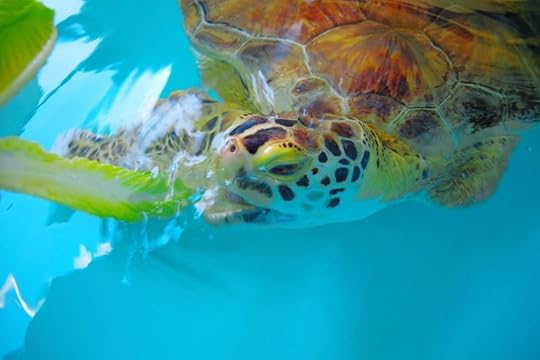
Photo: Sea Turtle Inc.
The Kemp’s ridley sea turtle is found in the waters around South Padre and, for decades, has been critically endangered. In 1977, Ila Fox Loetscher — the “Turtle Lady of South Padre” — founded Sea Turtle Inc. to try to help out and make sure the species lasts a bit longer. Four decades in and still dedicated to the rehabilitation and conservation of these local creatures, the nonprofit sanctuary is open to the public for tours, field trips, and the karma-boosting Adopt-A-Turtle program. What’s more heroic than helping to save teensy reptiles from extinction?
Bonus: Visit anytime from April to November (nesting season) and you may be lucky enough to be around for one of the center’s scheduled hatchling releases.
3. You should always pack more SPF than you think you need.
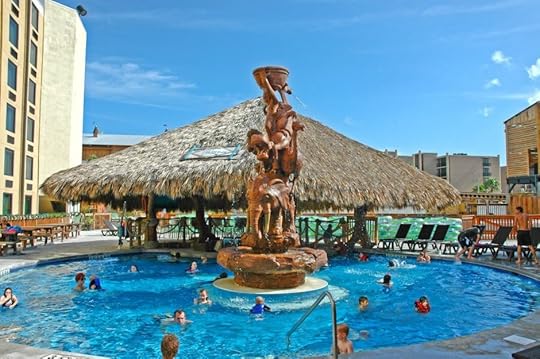
Photo: Schlitterbahn
Because it’ll be hard to spend time indoors. SPI’s Schlitterbahn, the outdoor waterpark and resort and all-out water extravaganza, is a summertime tradition for Texans and tourists alike. There’s 24 rides, the biggest Boogie Bahn Surfing Wave of any Schlitterbahn, and it’s all connected by a lazy river. Consider it a conveyor belt of awesome.
But if “adventure” to you doesn’t just mean water, head to the Wells Family’s Island Adventure Park, a 40-acre landmass stretching from gulf to bay. Here, you’ll find full-moon horseback riding and what feels like unlimited ziplining. Then there’s the high-adrenaline escapades with companies like Skydive South Padre, American Diving, and South Padre Surf Company. You can find out firsthand why SPI is considered by some to be “the premiere surfing destination” in the state.
4. Birds have layovers, too.

Photo: Isaac Sanchez
South Padre’s location at Texas’s southern tip, where it bulges out into the Gulf of Mexico, makes it an essential stopover for migratory birds traveling to Mexico and Central America. The island teems with rare species, like the piping plover and the peregrine falcon, resulting in South Padre being designated a World Birding Center.
Their arduous journey is our gain — South Padre Island Birding and Nature Center is open throughout the year, though the cooler fall and early winter is when particularly stunning flocks tend to congregate. When you’re here, check out the five-story viewing platform and then hit the boardwalk for some downtime on the island with its local winged visitors.
5. And where there are birds, there are butterflies.
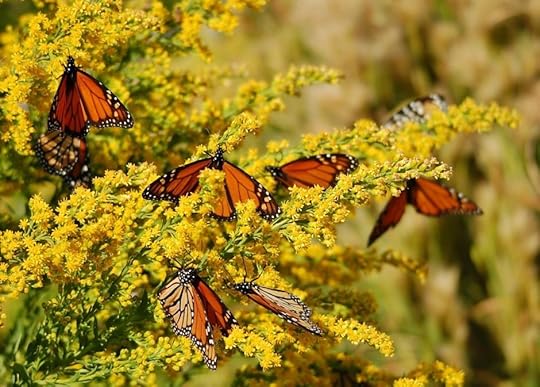
Photo: Javier Gonzalez for the South Padre Island Birding and Nature Center
Birds aren’t the only important species to choose SPI as their migratory home. Significant populations of Monarch butterflies pass through every September on their way to Michoacán. Their preservation is among the islanders’ major initiatives, a communal passion great enough to make national news.
In a similar vein, the community has also prioritized green space. Take your family through Water Tower Park off Laguna Boulevard, visit Turtle Park’s lush greenery or the statues at Queen Isabella Memorial Park, and always keep an eye out for butterflies.
6. There may not be a better fishing spot in Texas.
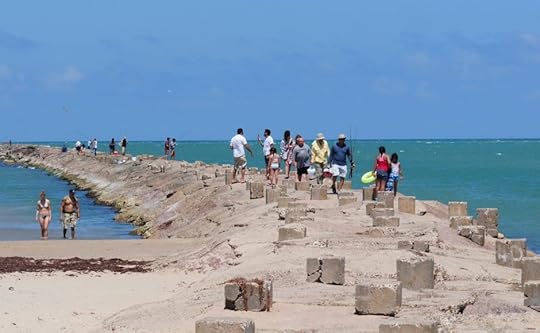
Photo: Vince Smith
It’s not often you see a bait stand intended for the public, but at the southern jetties that split SPI from Boca Chica Beach, locals and tourists stop by to pick up bait before going after the day’s catch. Serene and brimming with sealife — sheepshead, black drum, mangrove snapper, etc. — the surrounding waters are renowned for the variety of their catches. To top it off, the jetties themselves are among the most attractive features of nearby Isla Blanca Park.
Every August, SPI and nearby Port Isabel host Texas’ largest saltwater fishing competition, the Texas International Fishing Tournament. But what’s most notable is the incredible contribution it makes to the community — this year, TIFT raised $25,000 for Hurricane Harvey relief.
7. Art is more fun when you have to hunt for it.
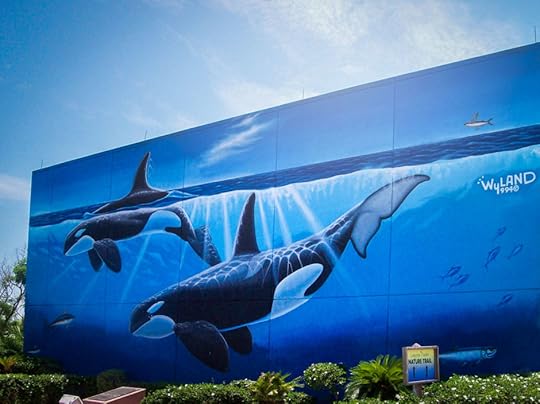
Photo: Christine H.
No trip to SPI is complete without a visit to the Wyland Whaling Wall mural, titled “Orcas of the Gulf of Mexico,” at the SPI Convention Centre. Find it. Instagram it. You’re welcome.
8. South Padre takes its watersports seriously.
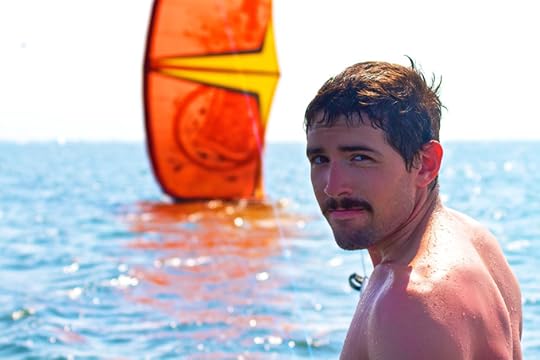
Photo: Zach Dischner
In 2017, SPI entered the watersport big leagues with its second annual Open Water Festival, a weekend-long series of competitions in “the cleanest water in the country.” As Olympic Gold Medalist Rowdy Gaines eloquently summarized it in the Brownsville Herald, “This is a city completely surrounded by water. [S]wimming, and water-based sports in general, are a way of life for everyone in this area.”
So, it should probably go without saying that you can do pretty much anything you want to here when it comes to getting in the water. Kiteboarding, flyboarding, windsurfing, paddleboarding, kayaking, surfing, or just chilling with the dolphins — it’s all here somewhere along this 30-mile shoreline.
9. Beachfront lodging can be stunningly affordable.
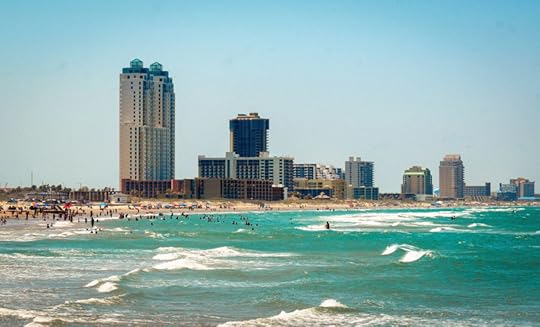
Photo: Vince Smith
For travelers watching their budgets, lodging can determine the destination. Fortunately, affordable beachfront rooms are plentiful in South Padre. Go with a group in fall, and you can split a spacious eight-person condo without burning a hole through your wallet. And wherever you stay, since the island stretches barely more than a half mile at its widest, it’s easy to get in some quality beach time. Really, it’s just steps away. 


November 26, 2017
US economies compared to countries
While the United States has long carried the title of “Richest Nation in the World”, it sure doesn’t always feel that way. Considering that real wages for the average worker have barely risen since the 1970s, it is hard to jump for joy when an economist rants at you about our GDP. Still, our Gross Domestic Product per capita is bonkers compared to other rich nations (only some of the world’s smallest countries, like Qatar and Switzerland, beat us on that front). But it is difficult to visualize just how massive the American economy is.
HowMuch.net created this map of the economic size of American metropoleis and how they compare to nations around the world. And it does, indeed, reveal that the economic output in this nation is virtually unrivaled (ahem, China). For instance Qatar, which is the richest per capita country in the world, has an economy about the size of Portland’s (OR). And California’s economy is the size of the economies of Greece, Turkey, Finland, and Nigeria combined. The New York metropolitan economy, America’s biggest, is the same as that of Canada. Sheesh.
Get ready for the next infographic we share, in which an economist explains why you should be grateful for having a paycheck that barely keeps up with inflation.
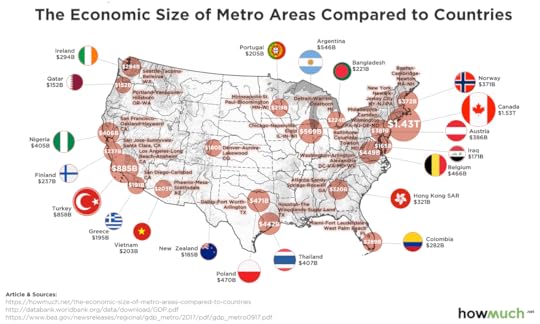
Photo: HowMuch.net

Colorado's cat and dog hike besties
Back in 2014, Cynthia Bennett and her boyfriend decided to adopt a dog to join them on their hiking adventures around Colorado. They were initially looking for a Golden Retriever mix at an adoption event, but when Cynthia entered the pen, a pup “five times bigger” than the other dogs his age ran straight for her and flopped into her arms. It was love at first sight, and the couple brought Henry home.
From the start, Henry was a big fan of the hikes his parents took him on. He quickly earned the nickname “little mountain goat” due to his love of bounding up boulders and cliffs just to look over the edge. Life was good for Henry. And then, in September, it got even better.
“I really wanted a rescue kitten,” Bennett said in an interview. “I’d looked for five months, and I saw lots of different kittens, but none of them really had the right personality or fit. I knew that I wanted to take him anywhere — camping, hiking.”
Then the couple met Baloo. A Siamese mix from a local shelter who took an immediate liking to Henry. Henry liked Baloo back, and Baloo refused to be left behind when the rest of the family hiked. So the human couple bought a cat harness, although Baloo didn’t need it: all he wanted to do was ride on his best friend’s back, and also on his head sometimes.
“I call them brothers,” Bennett said, “but I think Baloo thinks that Henry’s his mom because he constantly looks for a teet. So he’ll go in, and you can tell he’s looking because he’s nuzzling under Henry’s armpit.”
The result of this special relationship is the most adorable family hike photo series ever taken.
This is Henry. He is an avid climber and loves his mom.
How to see Matanuska Glacier
Matanuska Glacier, just 100 miles north-east of Anchorage, Alaska, is the largest glacier in the United States that you can access by car. This valley glacier is located in southcentral Alaska’s Matanuska-Susitna Valley (known to the locals as Mat-Su or The Valley) and terminates in the Matanuska River.
The Mat-Su was carved by glaciers, leaving thousands of lakes in their path. About 10,000 years ago, the Matanuska Glacier retreated and remains as a reminder of those great, gone landscape sculptors. At 27 miles long and 4 miles wide, it’s a swath of moving ice that is one of the most easily explored in North America.
The Valley was originally occupied by the Athabaskan people, but the etymology of the word Matanuska is somewhat shrouded in mystery. It’s most likely derived from the Russian word for the “Copper River people”—Matanooski—and since the late 1800’s, has been twisted and translated into English to represent one of southcentral Alaska’s most identifiable landmarks.
It’s possible to explore the glacier on your own, but if you’ve never been inside a glacier, or made snow-angels on top of one, the tours of Matanuska offer that experience. You can visit the glacier in both summer and winter; although, at 13,164 feet in elevation, winter makes for a chilly trip, but it’s also one of the most spectacular times to view the glacier. Tradeoffs.
How to get there
The Matanuska Glacier is two hours northeast of Anchorage via Glenn Highway. You’ll spot it for miles before reaching the Matanuska Glacier State Park (at mile marker 102). It’s a privately owned park that offers the only access point to the glacier.
Once you pay your entrance fee, you’ll drive in and park next to the glacier. From there you can explore the ice on foot. However, if you want to really see the more extraordinary sites of the glacier, take a guided tour.
What to consider
Access to the glacier is on private land.
If you’re on your own, you’ll need to pay a $30 visitor fee at the entrance office before driving to the parking lot.
Alternatively, you can go with a guide. If you want to really explore the glacier, this is recommended.
The glacier (and tours) are open year round.
You may want spikes for your shoes and poles for stability.
If you go with a guide, they’ll outfit you completely.
It makes a good day trip from Anchorage.

More like this: Skiing down a glacier is just as badass as it sounds

November 25, 2017
4 sports that should be in olympics
From race-walking to dressage, there are a lot of events that seem a little dated and lacking a fan base to still be in the Olympics. Meanwhile, there are hordes of professionalized sports just waiting for their chance to show the world that they deserve a place next to the 100-meter dash. Some, like the speed-climbing coming to Tokyo in 2020, are extensions of familiar ground. Others are a whole new awesome thing.
Great Big Story recently showcased four unusual and popular sports (double dutch, paragliding, foosball, and putt-putt golf) that straight-up need to be in the Olympics. Just think about how awesome any of these would be at the Olympic level: cities competing to build the wildest and most challenging 18-hole putt-putt courses in the world, double dutch matches featuring the freshest beats off the pop charts, foosball players sent to the hospital after getting an eye knocked out by the sports world’s smallest ball, and paragliders zipping between skyscrapers to land in the middle of an arena. Beats the triple jump.
Follow Matador on
Vimeo
Follow Matador on
YouTube
More like this: 11 sports we wish were in the Winter Olympics
Africa before and after colonialism
In 1884, a group of European leaders and diplomats met in Berlin to carve up Africa in service of their imperial interests. While there had been colonies in parts of coastal Africa for centuries, new advances in weapon technology, trains, and a liquid defense against malaria meant that European powers could now invade the interior. Great Britain was entering the height of its colonial power, while the French 3rd Republic and Otto von Bismarck of Germany were each constructing their own new empires. What followed the Berlin Conference is known as the “Scramble for Africa.”
What is often left out of Western history books are the African kingdoms, caliphates, sultanates, and empires that had, in some cases, existed for centuries. Most notable among them is the Mali Empire, which may have produced the richest man in history and covered an area about the size of western Europe. Others include the Ethiopian Empire, which, after crushing the Italian invaders in the Battle of Adwa, was the only African state to defeat a European colonial power. Save a ten-year span during World War 2, Ethiopia was governed by the Abyssinian imperial dynasty from 1270 until 1974, a period two times longer than the British Empire.
The maps below present Africa just before the Berlin Conference and the way it looked after colonization. The contrast is striking, but Ethiopia stands out as a defiant thorn in the side of European imperialism.
Africa before late-19th century colonization
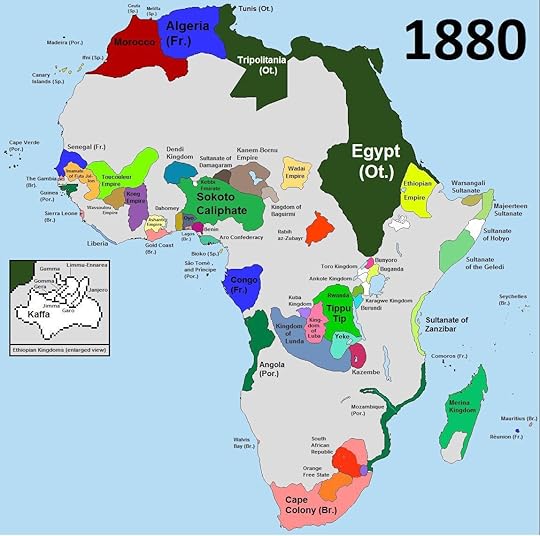
Photo: ajgloe
Africa after colonization

Photo: davidjl123 / Somebody500
More like this: This incredible map tool reveals just how much the Mercator map distorts the world

Visiting Japan's Robot Restaurant
Tokyo is well-known as a city of lights, extremes, and futuristic technology, and the Robot Restaurant is a really fun way to experience the intersection of all this. It’s located in Kabukichō — aka the Red Light District, and it’s exactly what it sounds like, a restaurant where you can see robots. Furthermore, it’s an electronic dance show featuring a combination of human performers and their machine counterparts. There’s nothing that can prepare you for what you’re about to see. It’s a mixture of controlled chaos, neon lights, 15-foot monsters, lasers, pyrotechnics and a killer soundtrack to pull it all together. In this 2-hour show, you’ll see multiple acts with silly storylines to appeal to lovers of all genres.
The outside of the building entices you with its flashing lights and robot displays. Walking into the venue, you’re whisked down a rainbow hallway covered in bright, sparkly bulbs and wacky wallpaper. Before the show starts, you’re treated to a robot band serenading you as you sip your drink. Then when the show begins, you’re transported into an intense fantasy land that can barely be described as anything but whimsical. It’s definitely a tourist destination, but one with some bite.
How to get there
The Robot Restaurant is located in Kabukichō, which is a small neighborhood in the Shinjuku district of Tokyo. The closest subway stations are Seibu-Shinjuku, Shinjuku-sanchome, and Shinjuku-Nishiguchi. There are signs everywhere in the area to guide you to the venue that are marked in rainbow English lettering.
What to consider
Tickets are 8,000 yen if purchased through the website, however there are many vendors who sell discounted tickets.
Book well in advance because this is a popular spot and it is unlikely you can show up the day of a show and get a seat.
When you arrive, go across the street to the ticket office to pick up your reservation before you enter the venue.
If you have visible tattoos, you must cover them up before entering. In Japan, tattoos are seen as a symbol of gang alliance and not looked well upon.
There are pyrotechnics and loud bangs, so if you’re sensitive to smoke or noise, prepare for that.
There is an option to purchase a bento box dinner for 1,000 yen, however, it’s better to eat before your arrival (especially when there are so many wonderful places to get food in Tokyo).
The show runs about 90-120 minutes with multiple breaks in-between acts to go to the bathroom and purchase snacks.
Before you enter the show, there’s a waiting area with a fully stocked bar. Compared to drink prices in fancy venues around the world, these cocktails are actually appropriately priced at about 600-800 yen each.
Arrive at least 30 minutes early so you can catch the robot band playing in the decked out silver 70s vibe lounge.
You can take as many photos and videos as you want, so bring your camera and phone fully charged.
In the past few years it’s become an incredibly popular tourist destination, so don’t expect it to be overly “Japanese” in content or authenticity.

South Korea becomes your home when
In a country where foreign residents stand out even more so than usual, South Korea’s non-Asian expat population consists primarily of English teachers, US military, and investors. Even so, many stick around for the long haul and start noticing certain mannerisms and knowledge in themselves they never could have imagined stepping off a plane so many years ago. So how do you know when South Korea has become your home?
1.
You forget there are prices that end in numbers besides zero.
2.
Someone abroad tells you about the crazy weekend drinking he did, and you just think of that as a typical evening.
3.
You stop running your fan when you sleep.
4.
You think the cats inside of cafes are as cute as can be, while the ones outside are like tigers.
5.
You know to find a seat or grab a handle immediately after stepping on a bus.
6.
You think 10,000 Won is more than enough to find a place to sleep for the night.
7.
You discover the mystery of why women smell like smoke after using a public toilet.
8.
You ask someone’s age within two seconds of meeting them.
9.
You know better than to try and break up a shouting match.
10.
You’re just waiting to see how it works out for Jo Jung Suk and Hyeri. Will that ghost ever leave for good, and will they still be in love?
11.
You’ve developed a taste for Finger Lickin’ Braised Pork Pringles.
12.
You need time to get into uniform and prepare an elaborate meal before you go hiking.
13.
You see lines as optional.
14.
You don’t even bother asking someone if his glasses have lenses.
15.
You ask your 22-year-old friend why he’s not married yet.
16.
You really wish they would include toothpaste with that humidifier on sale…
17.
You know the lyrics to all of Super Junior’s songs.
18.
You think Korean kids need to study more.
19.
You praise someone’s Korean skills after they say “hello.”
20.
All your communication is done on KakaoTalk.
21.
The idea of using a toilet without a trash makes you squeamish.
22.
You lament the dearth of cafes outside of Seoul.
23.
You think maybe Dokdo really is sacred Korean territory.
24.
Kimchi actually starts tasting spicy.
25.
You stop paying attention to anything coming out of North Korea.
More like this: 10 slang phrases you need to know in Korea
November 24, 2017
9 survival tips I learned in NYC
“Despite the reputation, I find New Yorkers to be pretty cruisy.”
My tilted head and single raised eyebrow silently requested my student to explain his Australian slang. Cruisy?
“Yeah, you guys are pretty chill travelers.” It must be because I just taught him yoga, I thought, he’s doing the compassion thing. While the rest of the conversation about our time in India, the other countries we’ve traveled to, and the people we’ve met is rather hazy, this accidental compliment stuck with me.
While this isn’t the first word I would use to describe us New Yorkers, (can’t-be-bothered and blunt are closer to what I had in mind), I can understand the comment. Most of us use disgustingly profane language for no particularly good reason, we walk as if there is a constant fire burning behind us, it’s never too cold to open your window and flip the bird during road rage, and we never hold doors for each other. However, I’ll admit there are a few things about being accustomed to city life that can make us rather cruisy in our travels.
After over a quarter of a century of life in the concrete jungle, these survival tips inevitably snuck into my backpack before hitting the road:
1. High tolerance for chaos
Traffic. Horns. People shouting. Garbage reeking. Performers performing. People pushing. Little brats crying. Moms screaming. Jackhammers roaring. Ambulances blaring. Pandemonium.
I’m convinced that New York is the birthplace of Murphy’s law — anything that can go wrong will go wrong. This goes for everything: public transit delays, streets closed for construction, parades for holidays and celebrations you never knew existed, your favorite restaurant is inaccessible because there’s a protest outside — there is always something.
I’m used to having the not-updated-since-1990 automated voice droning “We are delayed because of train traffic ahead of us. Thank you for your patience” as my regular morning soundtrack, for years. So I felt right at home across the globe when my public bus was delayed for three hours because of a Himalayan landslide.
The same tolerance goes for the disorder of a foreign city whose organization may not be like that of the typical west. In New York, you don’t have time to pick a fight with the taxi driver that almost wiped you off that street corner, because you have a meeting in five minutes. On the road, you may have time, but the unresponsive attitude sticks.
2. Pack for EVERYTHING
New York isn’t Los Angeles, or any other suburban town, where we have the luxury of throwing our entire lives into our car and treating it as a moving house. Instead, before you leave in the morning you better think long and hard about every single business meeting, social gathering, and any other mischief you might possibly get into. On a typical day, I have work clothes, workout clothes, going out clothes, workout shoes, going out shoes, electronics along with a tangled mess of chargers of all sorts, books for waiting, and anything else that may prove beneficial in preparation for the unexpected madness that ensues due to the chaos mentioned in #1… all jammed in my tote. We just always seem to be lugging around a bunch of shit.
When you’re out exploring during your travels, you’re less likely to stop back at your hotel or hostel in the middle of the day. Hone your catch-all packing skills ASAP and you’ll be less flustered throughout the day and less of a complainer about your heavy bag.
3. Street smarts
During his six months in India, my friend managed to get his cellphone stolen not once, not twice, but THREE times. Just… how?! He wasn’t from New York, obviously. As New Yorkers, we’re trained to always watch our bags, be on the lookout for the next psycho on the loose, don’t smile at the guy who whistles at you, and know that anyone who does smile is a con artist. We also realize that any purse or briefcase left behind is a bomb and if anyone seems too generous, they’re swindling you. Okay, I’m kidding (not really). This is extreme, but even a small dose of this skepticism can keep you out of easily avoidable situations abroad, like having your phone stolen three times. This awareness also means that when a shop owner tries to overcharge me because I’m foreign, I don’t freak out or take it personally. A shrug of the shoulders and a mental reminder that we all rip off tourists (hello, midtown Manhattan) makes it more bearable.
4. Cultural sensitivity and appreciation
I’ve always thought it was really interesting that I could stand on the corner of 5th Avenue and 42nd Street inhaling a sandwich just purchased from a French restaurant, as I hear a father scold his child in Spanish, see a woman clad in traditional Indian dress, and feel the aroma from a Greek gyro food stand hit my nose… all in the very same second. In New York, you never know where someone’s from, what language they speak, or what religion they practice. Needless to say, this awareness goes a long way in a foreign place. We get past the shocking, ‘weird’, uncomfortable, and different shenanigans more quickly and have the liberty to zoom into the culture itself.
5. If your two feet work properly, you walk.
It’s funny when my international or even just out-of-state friends visit New York and complain about having to walk 10 city blocks — “shouldn’t we just take a taxi?” Umm, no dude, we shouldn’t. We can spend that money on pizza when we’re drunk later, we’d take three times as long sitting in traffic, and Uber surge is about 5.7x right now… so, no. When you’re traveling, you usually don’t have a car, taking constant taxis is either a drain on your bank account or a sketchy scam, and places are much more charming when explored on foot anyway.
6. Personal space? What’s that?
If you live in New York and you can open your fridge and your kitchen cabinet at the same time without whacking them into each other — hell, if you even have a kitchen — you’ve made it. Whether it’s in someone’s shoebox — whoops, I mean apartment, on the subway, in an elevator, fighting over cubicles in an office (this is a real thing), or even walking down the street, we just accept having no space. I’ve kept calm on overpacked public transit in Delhi, saved tons of money by being okay with basic accommodation in Thailand, and have been more tolerant of cultures whose norm is to converse a foot away from my face… all thanks to being crushed and trampled all my life in New York City.
7. Navigating
When I laugh at the non-New York friends for #5, they laugh back at me when I Google how to get to another part of the city. “Haven’t you lived here all your life? Don’t you know how to get there?” What people don’t understand is just how expansive and intricate the city really is. And just when you think you’ve got it all figured out, you can refer back to #1 for all the things Google can’t predict. Living in New York may not have made me a direction wizard (anyone who knows me knows I am a disaster in this department), but it has built my patience for being lost in foreign places, to say the least.
8. Decision making
New Yorkers are constantly choosing from a ridiculous amount of options all the time — where to eat lunch (fun fact: according to UberFacts, you can eat at a different place every day for 54 years without ever repeating), which train to take, which type of entertainment you want to spend your money on, and the best way to make your free time less miserable than work. I know I can’t do everything. I will die before I experience even a tenth of all there is in New York. When I applied this sense of acceptance to choosing countries for my first backpacking trip, it made things less overwhelming and more digestible.
9. Pace
There are few places on this earth as fast-paced as New York. So while some might argue the opposite (picture bratty American tourists snapping their fingers at a super chill waiter in Jamaica), it’s quite refreshing to me that everywhere else I go is slower paced than NYC. Growing up in the madhouse has caused me to appreciate the opposite end of the spectrum, not to be frustrated by it. When I found out it was culturally acceptable to be 30 minutes late for a social event in Costa Rica, I pretty much took advantage of that every single time.
***
Flying over Manhattan into JFK airport upon my return from Thailand the other night, the speakers started blaring a song I’ve heard ad nauseam since I was a child: Sinatra’s New York, New York. I rolled my eyes and thought: are they really playing this right now? But then again, I’d be lying if I said I didn’t feel a tinge of pride to be a native.
More like this: 8 lies every person tells themselves when they move to NYC
How to visit Hawaii cheaply
Hawaii may not technically be the most expensive place to travel in the US, but it’s certainly in the top ten. At the very least, it’s difficult to find flight deals across the Pacific and even harder to find the type of hotel you’d want on a tropical retreat without breaking the bank. However, there are ways to travel cheaply and still have your fun in Hawaii.
1. Climbing is practically free.
Some of the most popular climbing routes on Oahu are open to the public during all daylight hours and under $1. The Pillbox Hike overlooking Lanikai is easy for beginners and costs nothing. Diamond Head, with a decent view of Honolulu and Waikiki, is only $1.
2. Not carrying a bag.
The USS Arizona Memorial tour is free if you just show up at the gates, but often the crowds are so massive it’s better to reserve a place for $1.50 on the website. However, no visitors are allowed to carry bags on the property, and the staff charge $3 per bag for storage. It’s a similar story in Hanauma Bay State Park; bags are allowed, but lockers start at $8. Hawaii might be a good time to start the no baggage challenge.
3. Eating local.
It sounds cliché, but in Hawaii’s case it happens to be the only practical option. Imports from the mainland and Asia cost 3-4 times more than you’d expect, and this is reflected in grocery stores and restaurants… even Walmart. However, there are quite a few local brands that can sustain you during your trip: Kona Brewing Company on Oahu and The Big Island, Manoa Chocolate which offers factory tours for $10, Dole pineapples in central Oahu, and seafood like poke is substantially less than other fish (though you will find restaurants hiking up the price).
4. There actually is public transit.
There used to be a regular ferry between all six islands, but that doesn’t run anymore. Even so, Oahu, Kauai, Maui, and the Big Island have bus services at reasonable prices, while you usually have to rent a vehicle or hire a service to explore Molokai and Lanai. Hawaii may still be paradise for some, but it’s far from the high prices of chartering a private plane to your island in the Maldives.
5. You can be a beach bum… minus the bum.
Most beaches are free, but free and cheap accommodations within reach of them aren’t always easy to find. Kauai and The Big Island require permits for camping anywhere. Oahu allows camping in state parks, but at a rate of $18/night with fees for each additional person. This is before we consider any parking charges. Fortunately, it doesn’t cost anything to lay down a towel on the beach, swim in the ocean, and soak up that Hawaiian sun. But if you’re thinking you can get away with just pitching a tent next to the beach for the duration of your stay on any island, you might be in for a rude awakening.
6. Travel in February.
Like almost any other place around the world, Hawaii is inundated with tourists around the holidays and summertime. As a result, already insanely overpriced hotels are beyond the reach of budget travelers, while the existing hostels are filled to the brim. However, things start slowing in late January and early February — better flight deals, cheaper rates on hotels — making Oahu a much easier escape. It doesn’t hurt that February is also the best time for whale watching.
More like this: Hawaii: Where to go, what to see, do, eat and drink
Matador Network's Blog

- Matador Network's profile
- 6 followers