
Matador Network's Blog, page 1440
December 1, 2017
What you need to know about drug use in Southeast Asia
Before going completely buck wild in Southeast Asia, keep in mind that the laws can be super strict when it comes to drugs. In fact, several countries still hand out the death penalty for drug trafficking, something a drug-smuggling group of Australians found out the hard way just a couple years ago. To help keep you off death row, or even just free of needing to bribe a local cop, we have put together a brief rundown of regulations in every country in mainland Southeast Asia.
Doing a bit of homework before you go can make the difference between the vacay of your dreams and a trip to hell on earth. So study up!
Thailand
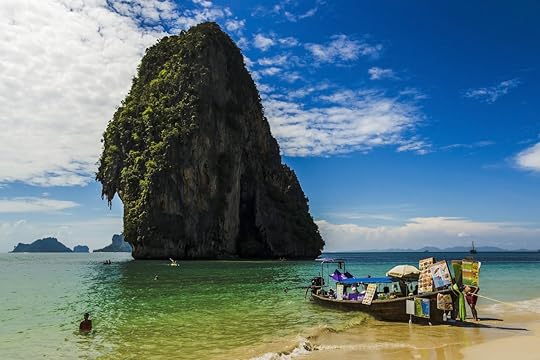
Photo: Guillén Pérez
Drug use is no joke in Thailand. In fact, the nation has the largest prison population in Southeast Asia, most of it made up of minor drug offenses. Thankfully, the country amended its drug policy in early 2017 and lifted an assumption that everyone who possesses drugs is automatically presumed to be selling them, something punishable by death. Under the new law, plant drugs like marijuana, magic mushrooms, and kratom are category 5 and carry lighter penalties, but chemical drugs including MDMA, LSD, and heroin are category 1 and can still catch you a life sentence. But hey, that’s better than a beheading right?
Vietnam
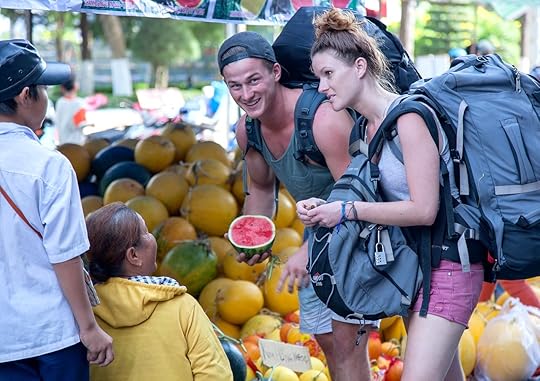
Photo: MIOTRAN
Once a major opium-growing region, Vietnam has been spending lots of money over the last couple decades to stamp out drug production and trafficking. While these results have been largely successful, the country continues to have a major drug use problem and a large population of drug offenders behind bars. Possession of heroin can still get you the death penalty in Vietnam, although the country is altering its punitive laws to emphasize treatment over incarceration, according to a recent report by the Brookings Institute. Marijuana and other drugs are illegal in Vietnam, although travelers report they are easy to come by.
Cambodia
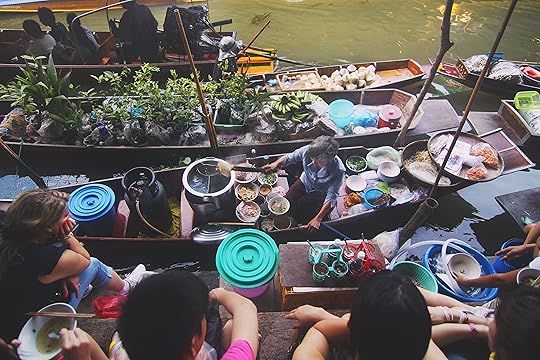
Photo: Harvey Enrile
A major producer and supplier of both heroin and marijuana, Cambodia is one of the countries in South East Asia where drugs are cheap and easy to come by for travelers. While marijuana is semi-legal and few people are prosecuted for it, travelers report having to pay bribes to local police if caught with possession. Heroin and other drugs can be a different story. Heroin is cheaper in Cambodia than the likes of cocaine, thus it is often used to cut cocaine. It is important at this point to keep in mind that an overdose here or in many of the countries listed here could be fatal due to poor healthcare services. Although the country does not prescribe the death penalty for drug charges, the dozens of foreigners locked up in Prey Sar prison might persuade you to stay clean.
Laos
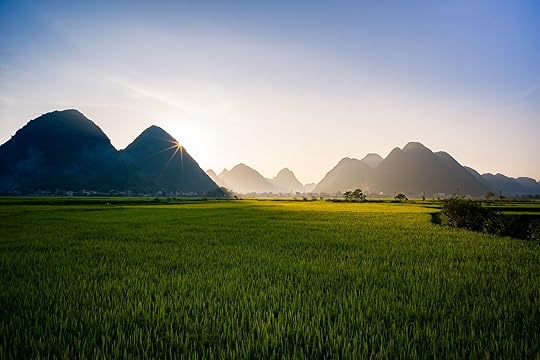
Photo: Sa Pa
Laos is another Golden Triangle player and has long been a major producer and supplier of both heroin and marijuana. In fact, Vang Vieng is known as one of the best party towns in all of South East Asia and has long been popular with backpackers on a shoestring budget looking for cheap drugs. As much fun as Laos might be, keep in mind that opium, marijuana, and other drugs are still technically illegal and possession of large amounts can leave you facing the death penalty.
Myanmar

Photo: Roxanne Desgagnes
For a long time, Myanmar was known for its large-scale heroin production and the harsh but mostly ineffective drug war that the country fought against. For visitors, drugs remain illegal in Burma but are easy to find. High rates of local addiction, however, have forced the country to rethink its drug policies and a new bill, proposed to parliament in September 2017, could drastically change the drug problem from a criminalization to a focus on health policy. What that means to travelers is yet to be seen.
Malaysia
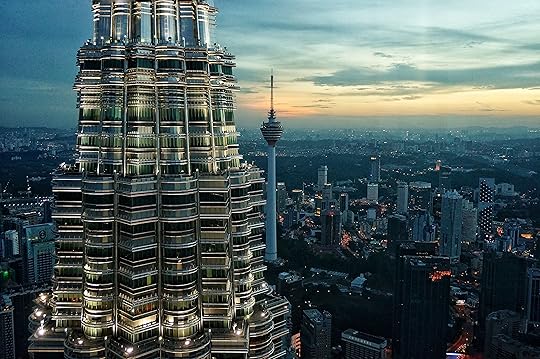
Photo: Pawel Szymankiewicz
Despite the fact that Malaysiav is emerging as a major producer of chemical drugs like ecstasy and amphetamines, the nation is known internationally for its “zero tolerance” approach to drug possession. In fact, two Australians were executed in 1986 for attempting to transport heroin out of the country. Capital punishment is still mandatory for drug trafficking in Malaysia and even possession of small amounts is seen as a serious offense that can land you in the slammer. 

More like this: Magic mushrooms: A first-timer’s guide


Vegan hostel kitchen recipes
When you travel on a budget, using the hostel kitchen is a must. When you’re a vegan budget traveler in a country where animal products reign supreme, it’s nothing short of a life-saver. But vegan recipes often require hard-to-find ingredients that can make it difficult to whip up something tasty in a collective kitchen that only has the bare minimum. All of the recipes listed below are easy to make and you won’t need any special equipment or ingredients. Get ready to save some money by cooking easy, healthy, cruelty-free food.
Note: all these dishes were tested in hostel kitchens. If I can do it, so can you!
1. Potato pasta

If you like starch, you’re in for a treat with this Hungarian dish.
Cook flat pasta such as tagliatelle. (If you don’t know how to cook pasta, you should stop reading right now.)
Peel and cut a potato into small pieces. Boil the pieces in water until soft and strain them. Mash the potato on a plate with a fork.
Heat up some oil in a frying pan and fry one diced onion. Once the onion is fried, add the mashed potato and season with salt, pepper, and red paprika. When the potato and onion are mixed, add the pasta and stir.
Remove from the heat when the dish is hot enough to your taste and add diced pickles.
2. Cabbage pasta
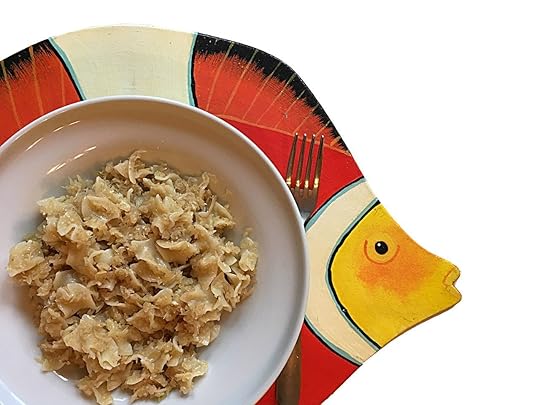
Same as above, but healthier for those who want to avoid eating carbs like there’s no tomorrow. Also, a good dish for vegan gluten-intolerant folks.
Cook flat pasta such as tagliatelle.
Grate cabbage or slice it very thin if you don’t have a grater handy.
Heat up some oil in a frying pan and fry one diced onion. Once the onion is fried, add the grated cabbage and season with salt and pepper. Cover the frying pan with a lid and add a tiny bit of water to the pan to steam the cabbage. When the cabbage is soft, add the pasta and stir.
Remove from the heat when the dish is hot enough and season to your taste. Note that, in Hungary, some people season this dish with sugar. Your call.
3. Green pea bulgur with lemon
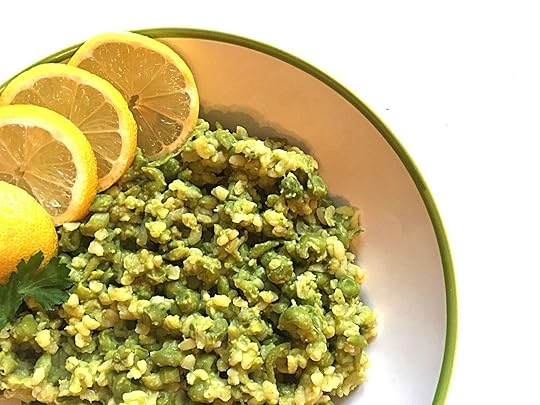
Grate one onion. If you don’t have a grater, cut the onion into small and thin pieces.
Fry the onion in a well-oiled pan. When the onion is transparent, add 1 cup of green peas to the pan. Season with salt and pepper and cook until soft.
Mash half of the peas with a fork.
Add two cups of cold water and one cup of bulgur to the pan and cook until the grain is soft (about 15 min).
Stir the mixture and add some lemon juice.
4. Lecsó
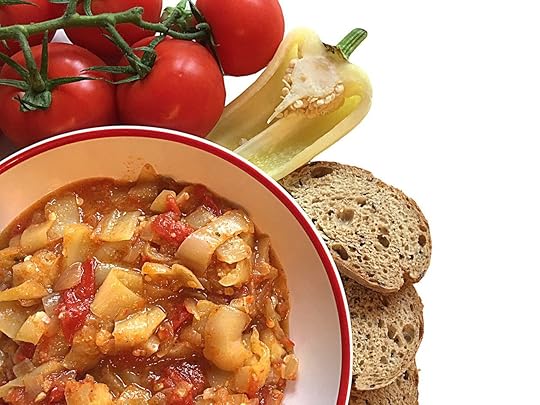
Grate one onion. If you don’t have a grater, cut the onion into small and thin pieces.
Fry the onion in a well-oiled pan.
Dice 10 yellow peppers and 4 tomatoes and add them to the fried onion. Season with salt, pepper, and nutmeg. Stir regularly for 5 minutes and add a small amount water to the pan to steam the vegetables. Cover with a lid.
Once cooked, add nutritional yeast to the mix for creaminess.
Eat with bread.
5. Cauliflower rice with caramelized carrots

Grate cauliflower. If you don’t have a grater, cut the cauliflower florets into small pieces. If you’re dining alone, half a cauliflower is enough.
Add some oil to a frying pan and fry the cauliflower in the same way you would fry cooked rice.
In a separate pan, fry some carrot slices in oil until caramelized.
Add the carrots to the fried cauliflower rice and season with salt and pepper.
6. Vegetable ragout with quinoa
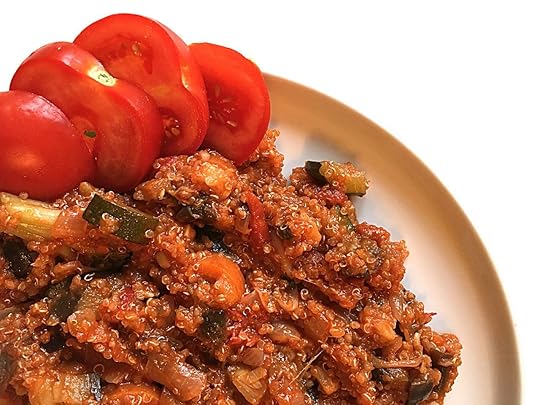
Grate one onion. If you don’t have a grater, cut the onion into small and thin pieces.
Dice two carrots, half a zucchini, one eggplant, one tomato, and some cauliflower and broccoli florets.
Fry the onion and the veggies in a large frying pan until soft.
Add tomato juice and some water (two cups of liquids in total) to the mix with one cup of quinoa. Cook for another 15 minutes with a lid on.
7. Chickpea omelet
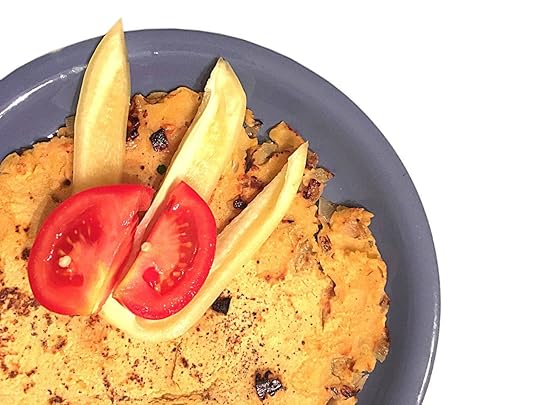
Mix one cup of chickpea flour with one and a half cups of water and a dash of salt. Let it sit for 30 minutes and add herbs (my favorite ones are cilantro and basil) and pepper.
Heat up an oiled frying pan and pour in half a cup of the mixture. Fry it until the top is hard enough to flip it, then fry until the whole omelet is hard enough to your taste.
Add vegetable ragout or sour cream on top (optional but delicious).
8. Tomato lentils with parsley
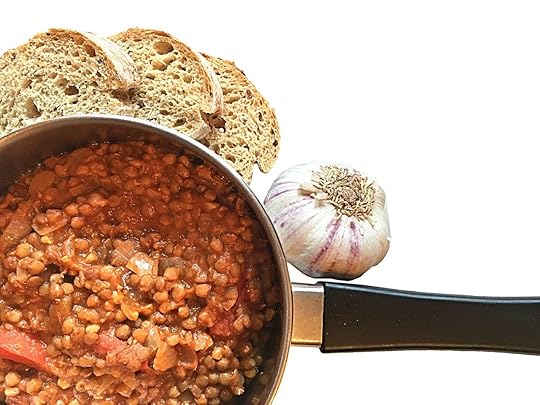
Dice one onion and one clove of garlic. Fry them in an oiled pan.
Add 2 cups of canned lentils to the pan and stir. Check the label of the canned lentils before buying — it might be cooked in meat broth.
Pour tomato sauce over the mixture and cook all together.
Add some salt, pepper, and freshly-chopped parsley.
9. Butternut squash dip
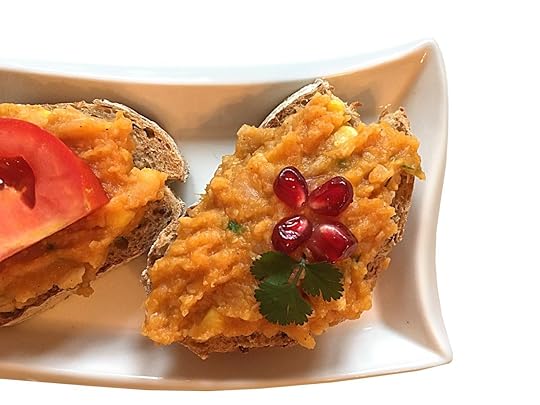
Peel and cut a butternut squash into large pieces and bake them into the oven under foil with some unpeeled garlic cloves.
Once soft and caramelized (about 40 min), mash the squash with a fork in a bowl.
Remove the garlic from its shell and add it to the puréed squash.
Add two cups of mashed chickpeas.
Season with salt and pepper and add freshly-chopped cilantro.
Eat with bread or use it as a dip for veggies.
10. Chickpea “meatballs” with mashed potato and wilted cabbage
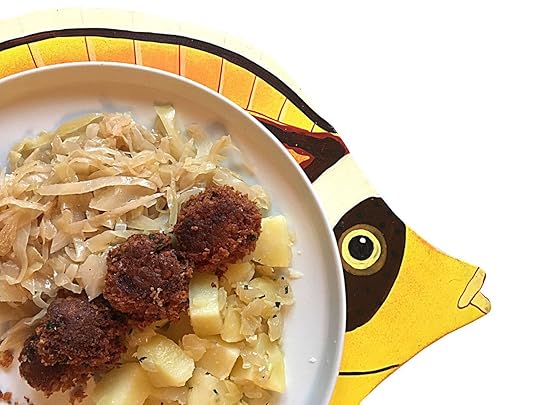
Chickpea meatballs:
Dice one onion and one clove of garlic. Fry them in an oiled pan.
In a bowl, mash two cups of chickpeas. (Buying canned chickpeas is much easier than having to soak them overnight)
Add the onion and garlic to the bowl. Season with salt, pepper, nutmeg, and cumin.
Using your hands, make small balls with the mixture and fry them in hot oil until brown and crispy on the outside.
Mashed potatoes:
In a large pot of hot water, boil potatoes until soft (test with a fork). Peel them and cut them into smaller pieces.
Fry an onion in an oiled pan than add it to the potatoes.
Season the mix with salt and pepper. Mix well.
Wilted cabbage:
Slice one onion and fry it in a well-oiled pan.
Slice half a cabbage and add it to the frying pan. Add some water to the pan and cover with a lid to steam. Serve when soft.
More like this: The 10 ultimate cities in the world for vegans

Hurricane aftermath photoshoot
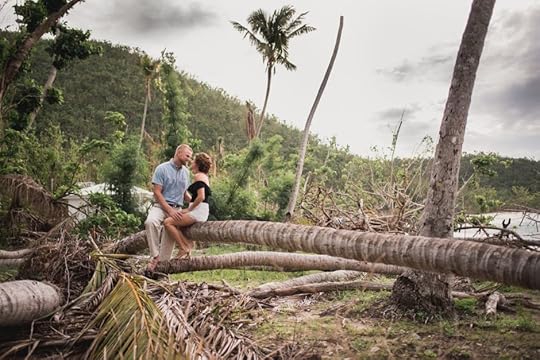
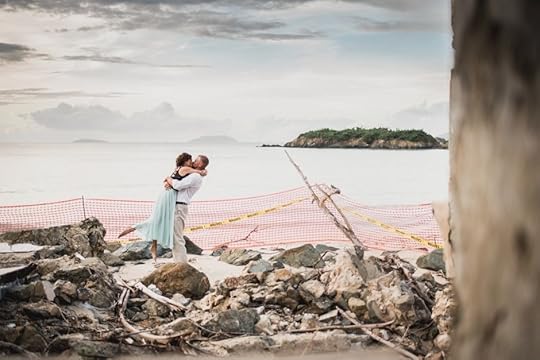
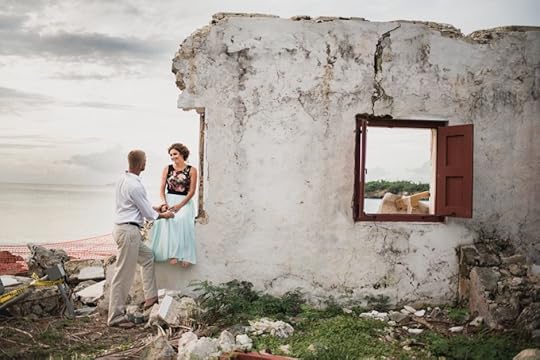
Hurricane Irma destroyed the Virgin Islands, leaving the island of St. John without power or clean water and displacing many residents whose homes were destroyed and jobs were eradicated, forcing them to move back to mainland USA and build a new life. Marty Bruckner and Lauren Saia met in St. John six years ago, and planned on doing their engagement shoot there. When Irma hit, Lauren was visiting her family in Boston, but Marty was already on St. John with photographer Anne Bequette.
They had no idea of the storm’s impending severity and the fear that everyone would face. Once things settled down post-Irma, Marty wanted to have their love captured amongst the wreckage, signifying what they could survive together. Marty and Anne had rode the storm out together, so it seemed only fitting to trust Anne with capturing this powerful moment. Stepping through broken glass and caution tape, climbing on uprooted trees, sitting atop debris, Anne photographed “Love In the Ruins,” hoping to show there was still beauty in the wreckage.

1
All photos are courtesy of STJ Creative, and are reused with permission.

2

3
Intermission
Trip Planning
11 awesome itineraries for your trip through the Alps
Jacqueline Kehoe
sponsored
Trip Planning
35 of the world’s best places to travel in 2017
Matador Team
Galleries
Nothing will boost your Instagram feed like a trip to Turkey. Here’s proof.
Jordan Hammond

4

5
6
7

8
9

10
All photos are the author’s.
More like this: WATCH: 48 hours in Egypt and a marriage proposal

Visit Santa Barbara NOW
Right now is a great time to visit Santa Barbara. The city is experiencing a renaissance of sorts, with many developments that are turning heads and transforming the area.

And, of course, there’s the food. Santa Barbara had been on my radar as a foodie paradise since my days working on shows for the Food Network, but I didn’t expect to see and taste as much as I did in such a short amount of time. Between the food and wine, there were plenty of flavors to entertain my tastebuds and an equal number of ways to burn off the calories.
1. Buzz
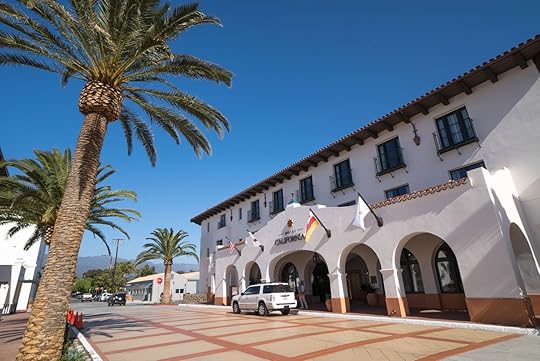
This beautiful stretch of Californian coastline has obvious draws, but recently the area near the waterfront has been undergoing some major changes, connecting two of Santa Barbara’s most popular areas: the beaches and the downtown shopping corridor.

The grand opening of Hotel Californian in September 2017 is a big deal. It spans three city blocks in a lot that was vacant for 20 years. Its Spanish-inspired facade nods to the original 1925 Hotel Californian, while the interior has a Moorish style of décor. Plus, there’s a Moroccan-inspired spa. The rooftop pool has refreshing views of the waterfront and the Santa Ynez Mountains; it’s an easy place to hide away for the day. To be just a few blocks from the waterfront and steps to the trendy Funk Zone is a great reminder that you deserve an escape. This, along with other exciting developments in recent years (and more to come), makes it a hot time in Santa Barbara.
2. The food
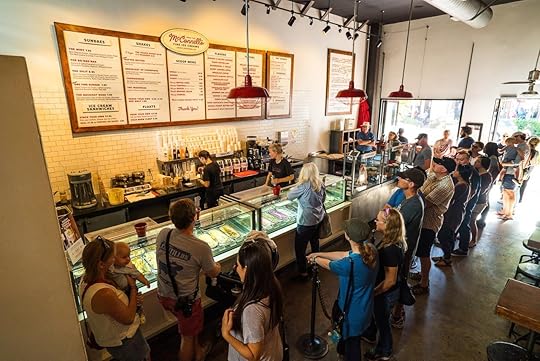
Santa Barbara’s food scene is no joke. Their year-round growing season produces a healthy supply of fresh local produce that fuels the restaurant industry and overflows into frequent farmers’ markets. The best way to get a taste for the city is to book a walking food tour. I let Santa Barbara Tasting Tours show me around for the afternoon, squeezing in six locations in our four-hour tour. We sampled everything from savory nibbles to sweet treats, biting into handmade lobster ravioli and spoonfuls of McConnell’s fine ice cream. We also devoured vegan walnut-black-bean sliders at The Honey B Kitchen — so good I didn’t miss meat one bit!

One of my favorite stops was Chocolats du Cali Bressan. I can’t stop thinking about those delectable treats! These handmade French chocolates come in a variety of fun shapes and flavors. The caramel-filled Buddha Beauties and French Bissous (“kisses”) were irresistible. I would have taken a whole suitcase of chocolates home with me if I could.
3. The architecture

The city of Santa Barbara has a certain swagger. Everywhere you look, you’ll see the famous red-tile roofs and white-washed buildings that make this city so iconic. It’s charming, to say the least. After a devastating earthquake in 1925, the city was rebuilt in the Spanish Colonial Revival style of architecture and was rewarded with a strong sense of identity.
The Santa Barbara County Courthouse is a shining example of Santa Barbara’s quintessential Spanish-Colonial style of architecture, built in 1929 and still a functioning courthouse. There’s lots to see inside and out.
Climb (or ride the elevator) to the top of the clock tower to take in the scenery and admire the red-tile rooftops abound. One note: this observation deck closes a bit earlier than the rest of the complex at around 4:45.
4. The Funk Zone

The emergence of Santa Barbara’s Funk Zone makes for a unique experience in this town. Considering the style and class of State Street, it’s nice to see a more raw section of town making a racket. This area was once a manufacturing hub for the fishing industry. Now, it’s an eclectic 12-square-block area near the waterfront and east of State Street that has become an interesting mix of eateries, wine-tasting rooms, craft breweries, art galleries, industrial buildings, and more.
I woke up early to wander around on foot, discovering colorful artwork around every corner. It seems even the locals have a hard time choosing a favorite and so did I. Along East Yanonali Street between Anacapa Street and Helena Avenue, you can find some colorful work by the Los-Angeles based artist David Flores, who got his start in Santa Barbara That said, these magical murals disappear when the shopkeepers open for business, so come early or late.
5. Wine
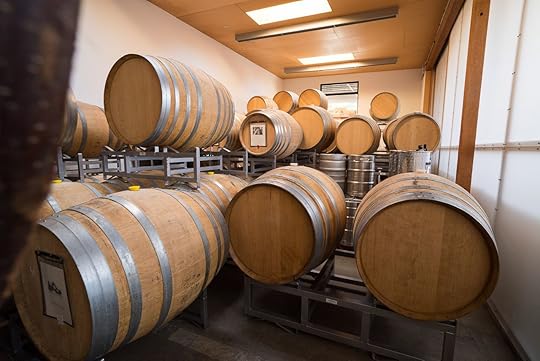
Santa Barbara’s surrounding wine country offers many excuses to sample the wine. The region is known for its diversity, producing 50+ varietals of grapes. Novices and aficionados will both enjoy tasting along Santa Barbara’s Urban Wine Trail, a collection of over two dozen wineries.
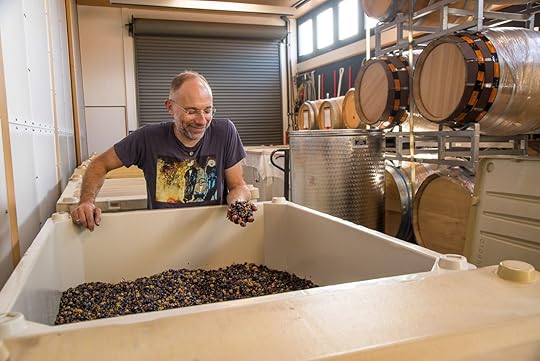
I scheduled a tasting at Sanguis. It’s a bit off the beaten path, tucked away in an industrial zone, but worth the trip. They house their tasting room and production facility in a converted warehouse, so I could spy on their production process. I got to meet the main man himself, Matthias Pippig, who is the head of the operation and responsible for their unique small-production blends. I loved witnessing their creative minds come up with names for their wine blends, honoring musicians, celebrities, or whatever inspires them at the moment.
6. Tacos
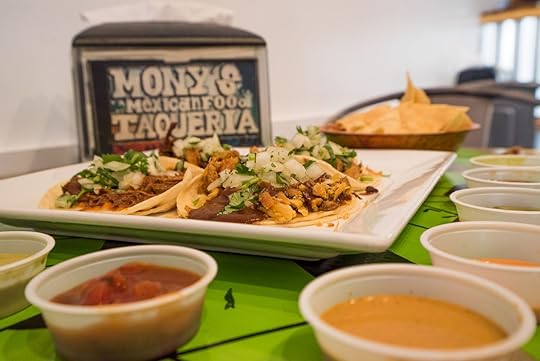
One thing you have to eat when you come to Santa Barbara ix the tacos. It’s a right of passage. People are passionate about their taco traditions, be it a hole-in-the-wall mom-and-pop joint or a Taco Tuesday event. And the crowds, they line up with patience. With so many tacos to try, and so little time, thank goodness the Taco Trail will point you in the right direction.
Speaking of tacos, I scarfed down several at Mony’s Taqueria in the Funk Zone. This family-run Mexican Food favorite had some of the most creative and flavorful salsas — pistachio, avocado, and mango. Mmm! Every bite was a delightful surprise. I recommend coming at 11 to avoid the crowds.
7. Outdoor adventure

Of all things to do in Santa Barbara, I highly recommend spending some time outdoors. With 300 days of sunshine, there’s plenty of opportunities to enjoy the water. Conveniently located at the harbor, Paddle Sports Center has SUP boards and kayaks available for hourly rentals and guided tours on the water. I took to the water by kayak for a self-guided paddle, a welcome excuse to get some exercise and enjoy the serene waters. You might see some sea stars under the wharf or maybe even spot dolphins. I made a commitment to pay a visit to the sea lions at their favorite navigation buoy. When I got there, I think they were out to lunch.
Right before I returned my kayak, I discovered a lone sea lion hanging around the fishing boats. While the fishermen were not serving lunch, it was fun to see the sea lion right up close, in its most optimistic state of mind.
8. Creative accommodation

When it comes to places to stay, the Wayfarer is a stylish boutique hotel that uniquely doubles as a hostel in Santa Barbara’s up and coming Funk Zone. I enjoyed a private room and king size bed, not realizing that there was a bunk bed hiding in the oversize headboard. On second thought, that was not hard to believe after seeing how one corner of the bathroom transformed the room into a shower, with help from a swinging glass door that protected the toilet and mirror from getting a spray. Four dorm rooms are equipped with bunk beds and lockers, offering an affordable yet stylish option for those on a budget.
The upscale shared kitchen space was a welcome comfort of home. I liked the convenience of having a self-serve style breakfast, perfect for a gal on the go like me. Guests can also sit down at the community table and read the paper and make new friends. The colorful community area, heated pool, and calendar of activities make the Wayfarer just the type of stylish community experience this world needs more of.
9. The harbor

Being so close to the water, it’s easy to talk yourself into a sunset boat ride. At golden hour, you can hop aboard Celebration Cruises‘ multi-level 70-foot yacht for a ride along the coast. I boarded the Whisper, an electric boat available for private charter. It was surprisingly quiet, so you could really take in the sounds of being on the water and hear your own thoughts. It was pure magic when the sky turned pink and orange and the reflections in the water mirrored the sky. What a perfect ending to a great day in Santa Barbara.

All photos are the author’s.
Note: Juliana was a guest of Visit Santa Barbara.
More like this: 16 unforgettable moments you’ll experience in Santa Barbara, CA

11 experiences in Santa Maria Valley
Three hours north of Los Angeles, stretching from northern Santa Barbara to San Luis Obispo, is some of what I like to think is the best of the Pacific coastline. It’s known as the Santa Maria Valley, and here you’ll find everything from wine-tasting to hot-air ballooning. If ever there were a place ripe for equal parts exploring, adventuring, and kicking back, this is it. It also just so happens to be one of the “Happiest Cities in the US,” according to Nat Geo.
Everything you need to pack the itinerary is within a 30-minute drive from the city of Santa Maria, the perfect home base while you’re learning all about what we call #SantaMariaStyle. Forget the traffic and the crowds down south and up north — here’s 11 experiences to prove that what matters lies in between.
1. Drinking a Syrah in your shorts

Photo courtesy of Visit Santa Maria Valley
Santa Maria Valley sits in the middle of six AVAs (American Viticultural Areas), the American equivalent of European wine-growing regions. Classy, sure, but the vibe couldn’t be any more different from places like Napa. This is the “I can wear a t-shirt and play giant Jenga and not be asked to leave after it crumbles six times” kind of vibe.
Renowned for everything from Pinot Noir to Chardonnay, the Valley will throw more varietals at you than you’ll be able to remember, but what you really want to try is the Syrah — it stands alone. There are 34 wineries and tasting rooms in the area, and each is going to bring something slightly different to the table. Have fun finding your favorite!
Follow the Foxen Canyon Wine Trail for more: Riverbench, CORE Wine Company, and Bien Nacido & Solomon Hills Estates
2. Grabbing a beer, chasing it with a cider
Prep your palate for the hops and malt…this is California we’re talking about, after all. From IPAs to experimental, never-before-seen-in-a-pint-glass concoctions (try the spicy Pepper Blonde at Naughty Oak Brewing Co. in Orcutt), if you’re bored here, that’s on you. Heck, there are even options for fans of the simple apple. Head out on the Avila Valley Apple Trail, starting just north of Pismo Beach, which comprises five local, family-owned orchards (definitely don’t miss SLO Creek Farms). You can even get your apple champagne on at a couple of the tasting room stops.
Right around the corner: Firestone Walker Brewing Co. (gotta try that Stickee Monkey!) and Santa Maria Brewing Co.
3. Eating the West Coast’s best barbecue
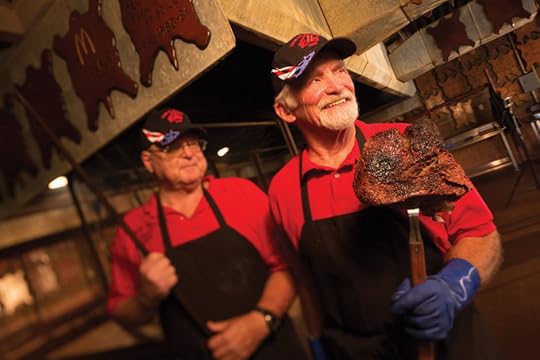
Photo courtesy of Visit Santa Maria Valley
The American South doesn’t have a monopoly on barbecue, and California’s Santa Maria Valley has a style of its own namesake. #SantaMariaStyle predominantly features Top Sirloin, and the only seasonings needed are salt, pepper, and garlic for a meal that’ll have you firing wildly into the air like an old-timey cowboy. The style is so popular it’s copyrighted by the Santa Maria Valley Chamber of Commerce. Just like a good steak shouldn’t be contaminated with sauce, good barbecue doesn’t need it, either.
Barbecue joints within a 15-minute drive: Hitching Post, Far Western Tavern, and Jocko’s, to name just a few
4. Taking it to the limit, #SantaMariaStyle
There literally is nothing more thrilling than seeing Santa Maria Valley from above, whether gliding gently over it or screaming as you plummet towards those luscious grape vines on an 18,000-foot dive. (Turns out, I can scream in a very high pitch.) From the air, the Santa Maria Valley is a feast worthy of consumption, whether seen via a serene hot-air balloon ride or while skydiving. I prefer the former, personally — less screaming.
More adventures nearby: Sky’s the Limit Ballooning, Skydiving.com Santa Maria, and Vista Largo Adventure Park
5. Treating yourself to Doc Burnstein’s ice cream

Photo: Santa Maria Valley
Wherever I am in the Santa Maria Valley, a whisper on the wind always finds me, and it’s usually Doc Burnstein’s voice calling. His ice cream shop is called a “lab” for a reason, and it’s more akin to Willy Wonka’s factory than an ice cream parlor. Fountains of ice cream, walls of ice cream — this place (in Old Town Orcutt) will make you question why you’ve thought of the dessert as just a dessert for so long.
There’s over a 100 recipes to try, though you shouldn’t leave without tasting the “Motor Oil” (it’s a classic). Occasionally, you’ll find demonstrations going on, too — of course, every flavor is made onsite.
Other unique eats nearby: Jaffa Café in Santa Maria, the mushroom Swiss burger at The Swiss Restaurant & Bar, the “Had Too Much To Drink Last Night Omelette” at Kay’s Orcutt Country Kitchen, and the best aebleskivers of your life at Solvang Restaurant
6. Scoring a one-of-a-kind gift to take home
Once you’re stuffed, you either need to nap, or budget time for some quality walking (gotta work off that Motor Oil somehow). In Orcutt, I never miss the Old Town Market, nor do I skip the opportunity for super-unique homemade and handmade goods. Who needs a jar of pinquito beans and a bag of Susie Q’s oak chips? This guy. I never leave without a Syrah or Pinot Noir, and I’ve seriously considered buying a Danish aebleskiver pan.
More within a 30-minute drive: The Lucky Hen Larder in Santa Ynez for all your cheese needs, and the Pismo Beach Farmers Market and the Solvang Farmers Market, both on Wednesdays, in season, for just about everything else
7. Finding a new favorite band in Santa Maria

Photo: Ca’ Del Grevino Cafe & Tasting Room
Santa Maria Valley is barbecue and wine and beer and outdoor recreation, so obviously it’s also live music. The dozens of wineries are consistently jam-packed with tunes, and lively pubs fill the void whenever you’ve had enough Syrah. My personal favorite to-do is to seek out Ca’ Del Grevino Cafe & Tasting Room in Orcutt, where live music is featured pretty much nightly, or I just take a walk in downtown Santa Maria and follow my ears.
Practically around the corner: O’Sullivan’s Pub, 510 Event Center, and Santa Maria Philharmonic Society, along with the PCPA and The Great American Melodrama & Vaudeville for stage productions
8. Picking up some knowledge
Flannel, beer, and hops, yes. Outdoor adventures, thermoses of fresh-roasted coffee, and brunch stops, of course. But nothing says culture quite like popping in a monocle and visiting a museum, and somehow the Santa Maria Valley has its share of that kind of history scattered throughout, too. There’s the Natural History Museum, the Railway Historical Museum, the Discovery Museum — and that’s not mentioning the intense geological history you’ll find outside, for example when hiking to Mussel Rock or stargazing on the trails around Los Flores Ranch.
Other educational spots to hit up: The Elverhoj Museum of History and Art and the Wildling Museum in Solvang, Gallery Los Olivos
9. Seeing the coast from atop both mountains and sand dunes

Photo: Anita Ritenour
Questions, questions: Should you put on your hiking boots for a walk around Oso Flaco Lake and the Rancho Guadalupe Dunes Preserve, or climb to the top of South Hills near downtown SLO to watch the sunrise? How about renting an ATV at Pismo ATV Rentals and going nuts on the dunes? Or maybe horseback riding, mountain biking, or hiking on the 15 miles of trails that wind through Los Flores Ranch Park? Decisions, decisions. Personally, can’t beat the views on a coastal hike, but therein lies the problem: All of the views are spectacular.
Other scenic spots worth seeking out: Cachuma Lake, San Luis Obispo’s Irish Hills Natural Reserve
10. Cycling the Foxen Canyon Wine Trail
One does not tend to walk into the Santa Maria Valley and walk out without an epic trail experience — and sometimes that trail is a wine trail. The Foxen Canyon Wine Trail winds for 32 miles from Santa Maria to Los Olivos, passing 16 wineries along the way. That ratio is also what we call #SantaMariaStyle.
You can drive the route, too, but cycling it means taking it at a slower (safer) pace and getting some fresh-air time with those views. It’s mostly rolling hills and gradual climbs, but head north earlier in the day if you can to avoid those valley winds.
Notable stops along the route: Costa de Oro Winery, Fess Parker Winery, and Martian Ranch and Vineyard
11. Digging a few clams and wetting your feet

Photo courtesy of Visit Santa Maria Valley
You know how your dating profile says you enjoy long walks on the beach? Stop saying it and really do it — you can be your curated, wonderful online self on one of the many stretches of sand within 30 minutes of Santa Maria.
And, of course, you can do other stuff, too. Fond memories of sitting around a bonfire on Avila Beach with a bag of freshly caught clams (well, you dig ’em up on Pismo Beach, where clamming is a local pastime) and good friends come to mind for me. For others, it might be climbing what’s said to be one of the highest dunes in the Western US at the Guadalupe-Nipomo Dunes Center. Turns out, both are #SantaMariaStyle in spades.
More fun water-and-beach activities in proximity: Mustang Water Park in Arroyo Grande (in season), and the most scenic surfing imaginable at Surf Beach in Lompoc
1 This giveaway is solely sponsored by Santa Maria Valley and is in no way sponsored or administered by Matador Network.

November 30, 2017
where americans study abroad
Studying abroad is more popular than ever. It could be that the overall costs of travel have dropped over recent decades, or that more young Americans find greater value in exposing themselves to other cultures (or that they are aware that they are going to be in debt forever and might as well make the most of it), but a record 325,339 US students received school credit outside the States in 2016. Below is a a list of the top ten countries these students picked for their studies, as provided by Statista.com.

Photo: Statista.com
More like this: Can't decide where to study abroad? Try these shortcuts to pick a country

antarctic ice marathon 2017
Running a marathon, as far as I can tell, is basically impossible. The whole sport only exists because the first guy who did it died from doing it. Yet, for some, a warm 26-mile jaunt across New York City just isn’t brutal enough. So they invented the Antarctic Ice Marathon. While most marathons encourage competitors with massive cheering crowds and local news cameras, there is one that decided to forego the adulation and smog for subzero temperatures and 24 hours of daylight. Enjoy this video of the marathon, which took place over the weekend, and the smiling faces of the crazy people who just ran a deadly event in -13 degrees Fahrenheit.
Follow Matador on
Vimeo
Follow Matador on
YouTube
More like this: I went to North Korea to run the Pyongyang Marathon. Here's what it was like.
Hilarious guide to French Canadian
French people take a tremendous amount of pleasure in mocking and mimicking the French Canadian accent, but until they’ve been to Quebec and hung out with Canadian French speakers, they don’t know just how different the two versions of the language really are.
Mark Hachem is a Lebanese Canadian born and raised in Montreal, Quebec who nails the peculiarities of Canadian French in this hilarious video. Give it a watch and start swearing like the good people of Quebec! Tabarnak!
More like this: 10 Québecois idioms the French don’t understand

3 essential steps to reframe the way you think about climate change
Look around you. Look around in your community, town, city, state, country, and the world itself. Look at our media, our politics, our businesses, and our culture. You will see that people act as if they are separate, alone, and have no relations. As a result, we think and behave in ways that cause needless suffering, further division, and reckless destruction. We act as if our behavior does not impact the circle of life, and as a result of that denial, we are out of harmony.
When it comes to the environment, that false feeling of separateness plays out in the way humankind uses the earth, its creatures, and its resources as if all of these are not impacted by one another. It also occurs in a way that may be less easy to identify, though, especially for those of us who consider ourselves to be environmentally conscious: we fall into the trap of blaming “the other.”
So, how do we get back into harmony and remember our connection to both Mother Earth and one another? Here are three steps to get us started.
1. Own it.
Own the situation at both the micro and macro levels. The way we treat our world reflects the way we treat ourselves. Indigenous Elders from all over the globe have come together to offer humanity four scared gifts, and we can use these gifts in our lives to heal ourselves, heal our relationships at every level, and heal the world:
Forgiveness: Forgiveness stops the cycle of blame that shackles us to what we don’t want, separating ourselves from each other and the earth.
Unity: We are interconnected, and the more we are awakened to this truth, the more we can understand the power and sensibility of oneness and take action together.
Healing: Reawakening our connection to nature, the earth and each other is powerful medicine that can heal many ills.
Hope: Focus on what gives you hope and let that inspire you to take positive action.
2. Stop pointing the finger.
We are quick to blame “evil” multinational corporations, greedy politicians, powerful media interests, and more. These entities could not exist, though, if we were not complicit. They thrive on our fear, division, despair, lethargy, and judgment. Return to step 1 and examine how you can take accountability and positive action outside of blame.
3. Connect from the heart.
Reconnect with each other and with the cycles of the natural world, including the movement of weather conditions and plant and animal behavior. Most of all though, we must reconnect with our true selves. When we honor the spirit that resides within us, this will be reflected in our external world. It starts and ends with love.
The world is in turmoil and people wonder what they should do. The problems seem daunting. The indigenous Elders say that we must change our consciousness now by shifting from the mind to the heart. Our challenges will not be resolved with logic and reason. Solutions are not found using the same thinking that created the problems. Let your heart guide you, and be open to looking at problems that arise through a new lens of love, accountability, and positive action.
More like this: 11 natural world wonders that are being destroyed by climate change

Matador Network's Blog

- Matador Network's profile
- 6 followers

