
Matador Network's Blog, page 1437
December 6, 2017
6 things reality TV gets wrong about Alaska
Alaska’s fraught relationship with reality television began with the early success of shows like Deadliest Catch and Alaska State Troopers. State officials saw an economic opportunity and a potential boon for the tourist industry, and soon, the lure of strong ratings and public subsidies brought reality producers to the state in droves, like prospectors eager to rake in their fortunes. Of nearly 20 reality shows shot in Alaska, most have centered on a few familiar themes: dangerous jobs, surviving at the edge of the wilderness, and the strange cast of characters the state supposedly draws. Despite their positive reception among outsiders, to locals, these shows are laughable at best — and at worst, they grossly misrepresent our lifestyles. With their cringe-worthy tropes, manufactured drama, and cheap camera tricks, reality shows would have you believe that Alaska is filled with kooks and that every day is a struggle for survival.
Here are 6 things reality TV gets wrong about living in Alaska.
1. One unsuccessful hunt won’t lead to starvation.
Between our abundant natural resources and the expensive food prices up north, most Alaskans embrace the subsistence lifestyle. While it’s true that hunting and fishing offer us sustenance through the winter, reality shows often take this concept to the extreme. Their stars stomp through the forest slinging hunting rifles while narrators dramatically proclaim that a family’s survival hinges on the success or failure of one hunt. But let’s be real — we’re not going to starve if we fail to bag that moose, bear, or squirrel. They might make a nice addition to our winter freezers, but we can still rely on the grocery store, food pantry, or if all else fails, the generosity of neighbors to help us out.
2. We take calculated risks, not stupid ones.
Reality shows love to highlight the inherent dangers Alaskans face to maintain their livelihoods. (Some threats are real, while others are ridiculous – but that’s a topic for another day.) Commercial fishing, mining, or working on the slope carry serious risks, which is why people who work in these fields are no-nonsense when it comes to safety precautions. While reality producers have been known to prod their stars into performing stupid stunts for cheap thrills, real Alaskans avoid unnecessary risks, because we know they come with life-threatening consequences.
3. The laws do apply — and the regulations too.
Reality shows love to boast that at the edge of the wilderness, “laws do not apply.” They paint their subjects as outlaws who make their own rules and are accountable only to their own survival. But in truth, regulations govern all major aspects of Alaskans’ lives, from where we live and set up camp to what and when we can hunt and fish. Perhaps this mentality is what has lead so many reality shows into legal trouble for everything from hunting violations to PFD fraud.
4. Not all remote-ness is created equal.
Most Alaskan reality shows are filmed in close proximity to small towns. But through optical illusions and camera tricks, shooting locations are made to appear in the middle of nowhere. For instance, people from my hometown love to gripe that the reality show shot there only pans its camera west — conveniently leaving out views of the town’s economic center, grocery stores, and restaurants. Some shows are truly set in the middle of nowhere, but often the feeling of isolation is based more on clever editing than reality.
5. We’re not all outlaws and trigger-happy rednecks.
Like all reality television, Alaskan-based shows are powered by tropes and controversial characters. Reality shows would have you believe that Alaska is inhabited by shady outlaws, wild-western types, and trigger-happy rednecks with quasi-southern accents. Not so. They also fail to portray the state’s diversity — shows cast almost exclusively white protagonists, and at least one has come under fire for its portrayal of Native Alaskans. The public may be familiar with these overblown caricatures about Alaskans, but thanks to reality shows, they get far more traction than they deserve.
6. Life is not a survivor marathon.
Life in Alaska is also depicted as a series of disasters, each of which carries life-threatening implications. Machinery breaks down and supposedly jeopardizes a family’s livelihood. They’ll starve if they don’t shoot the squirrel, and even still they might be eaten by a bear or trapped in the frozen wilderness with inadequate food, or fall victim to some other mortal peril. Reality show characters are perpetually vulnerable, and appear to live at the mercy of the elements. While living in rural Alaska carries its setbacks, it is not a survivor marathon or a constant struggle for survival. Alaskans are frugal and pragmatic enough to weather the difficulties of the frontier, even when they lack production value or dramatic fervor. 

More like this: 21 questions Alaskans are sick of hearing


Iceland is the most feminist country
I love watching documentaries. Sit me down in front of an HBO documentary or one that comes highly recommended, and I’ll be glued to the television and then frantically googling information afterward — I go down the rabbit hole for hours, even days, researching and learning more.
One such documentary that continually popped up on my Facebook feed this year, was “Where to Invade Next,” by Michael Moore. I have seen a few of Michael Moore’s previous documentaries, and although a controversial figure, I enjoy his slightly dry humor. The premise of this film was a quest to find how other countries are excelling in areas where the United States is failing. He profiled the school system in Finland, the prison system in Norway, and the debt-free education system in Slovenia. What struck me the most is when the film took a detour to Iceland and profiled their stance on gender equality and women’s rights. I was shocked to learn the first democratically elected female president in the world was from Iceland! Her name is Vigdis Finnbogadóttir, and she’s a divorced, single mother, who ran for president of Iceland and shocked the world when she won.
Vigdis is quick to offer credit to the female population of Iceland for her win in 1980 (she was Iceland’s president for 16 years). Just 5 years prior to her election, on October 24, 1975, Icelandic women staged a nationwide walkout and protest where about 90% of all women across the country walked off their jobs and out of their homes to protest and bring awareness to how much women contribute to society both in the home and workforce. It has come to be known as Women’s Day Off and its anniversary is celebrated throughout the country each year on October 24th. Just as I was planning my trip to Iceland, I realized that we would be there for the anniversary. With that in mind, and after learning about the Women’s Day Off movement, I knew there was a draw for me that delved deeper than the landscape.
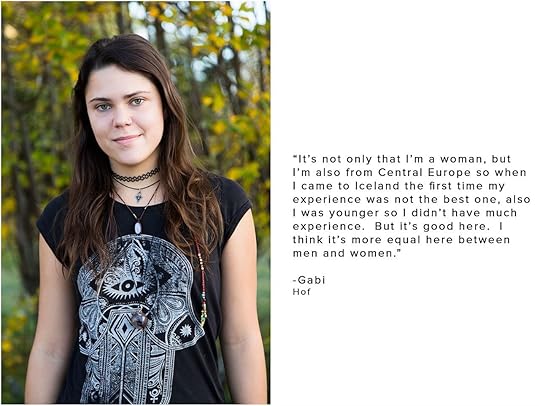
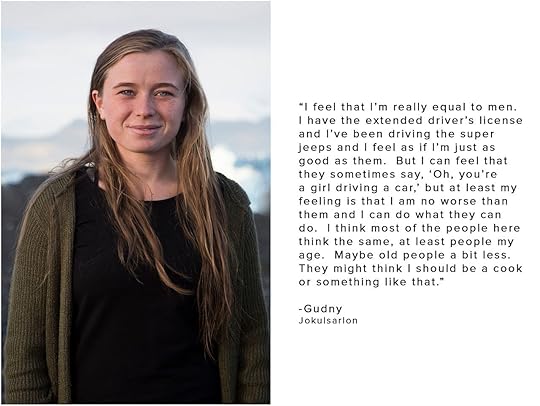
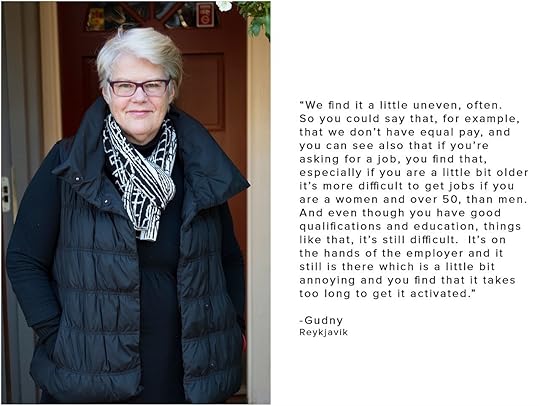
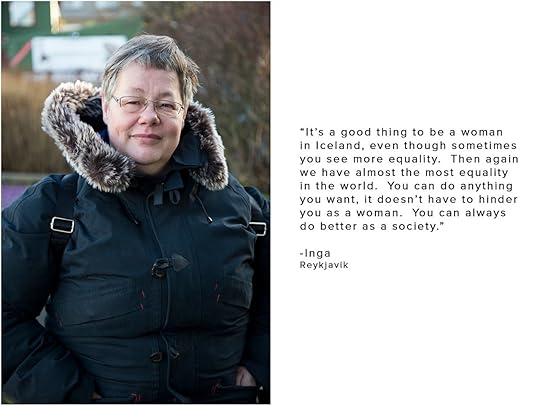
I devised a portrait series and project to conduct throughout our ventures across the island. As we drove the Ring Road, I photographed portraits of diverse local women living in Iceland, and asked them one question, “What does it feel like to be a woman in gender progressive Iceland?” I was astounded, pleasantly surprised, and cheering alongside each girl or woman who was gracious enough to let me photograph and interview them.
Pride emanated from each of them; they were very happy to share their thoughts with a foreign audience about how progressive their country is in terms of gender equality.
Some were quick and concise with their answers, others elaborated and turned their interview into a soul-bearing conversation with me, a stranger. I noticed that being a female and asking other females about gender equality immediately formed a bond. Interviewing these women was an enlightening experience that I am very proud to share.
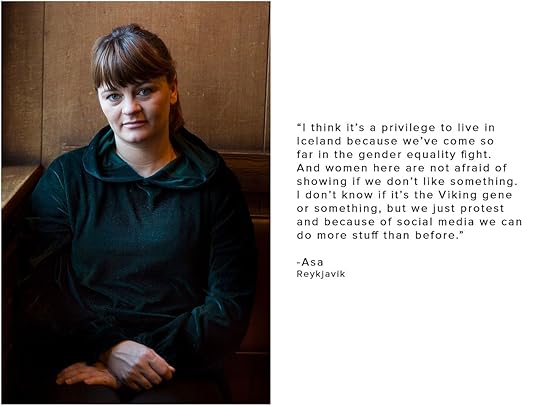
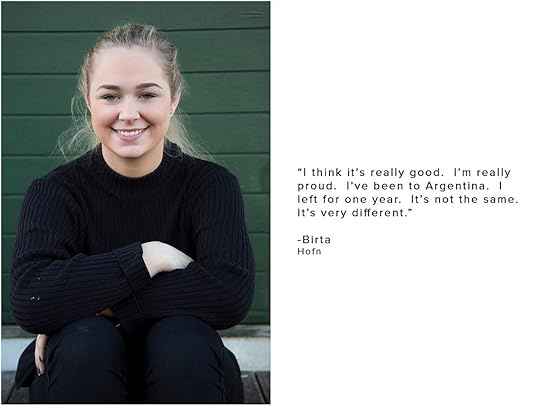
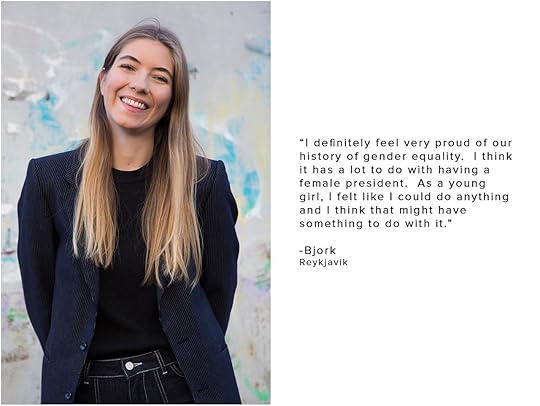
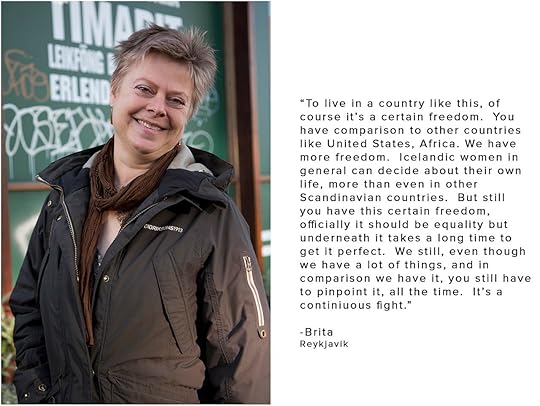
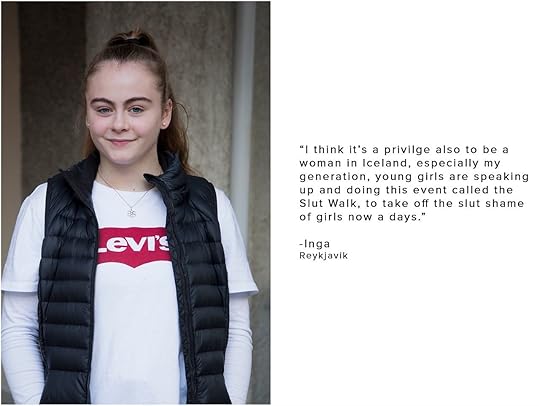
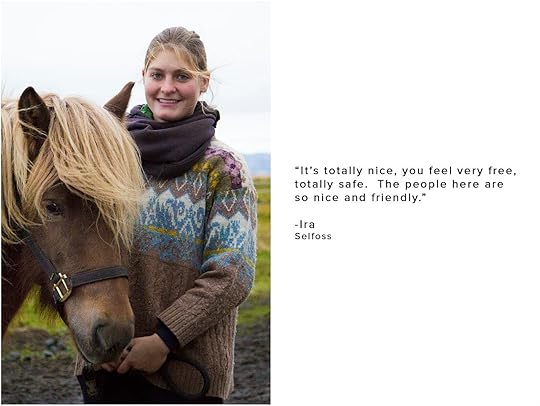
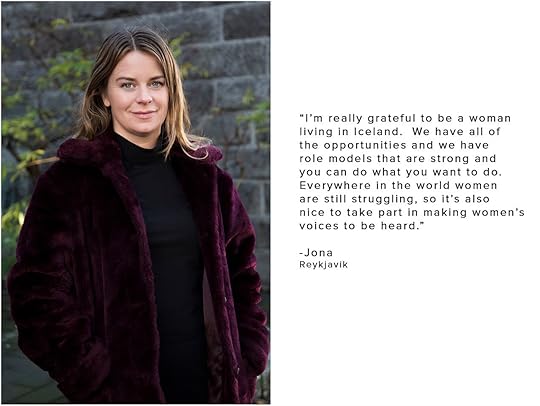
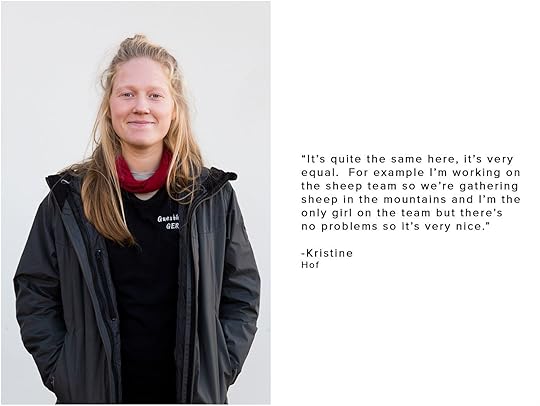
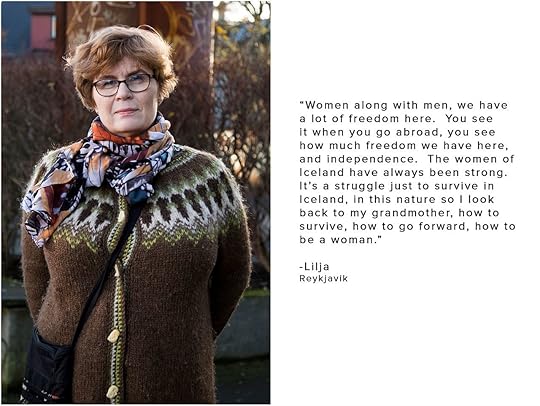


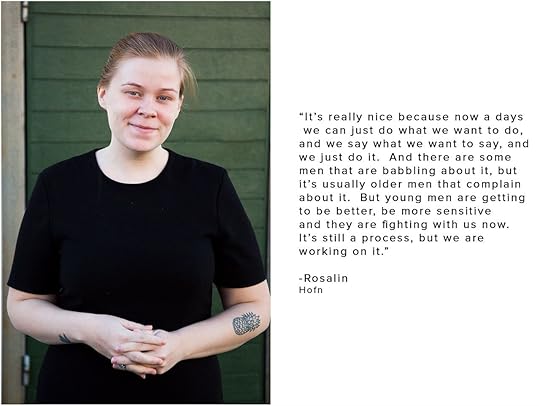
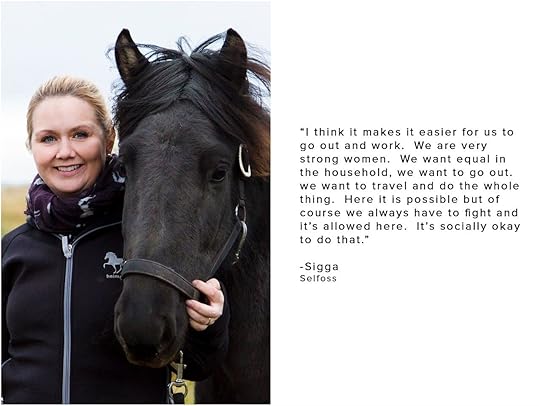
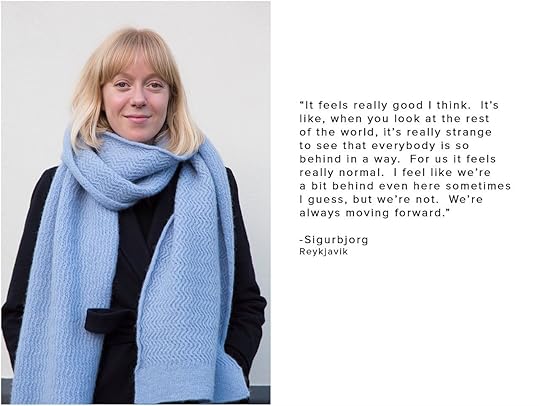
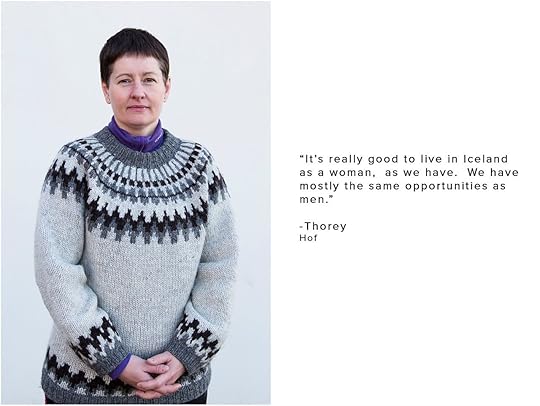
For more about Yasmin Tajik’s work, check out her website and follow her on Twitter and Instagram.
More like this: The world's best countries for women in 2017

Think Seattle is grey in the winter?
I frankly don’t know why Seattle gets a bad rep when it comes to weather. The weather is mild, rarely extremely hot or extremely cold. It rains, sure, but we seldom get a downpour; in fact, most days few of us even bother with umbrellas. We get snow in the city only about a couple of times a year, but we can drive less than an hour to a ski resort for our snow fix. Even when it is grey and cloudy, moody and broody is a good look on Seattle. I have fallen in love with this city and I am okay with our gloomy, bad weather days, they just make me appreciate our good days even more. And there are good, beautiful, clear, color-rich days. Don’t believe me? Check out some of my favorite photos taken during winter here.

1
Hot pink
Some of the best sunrises of the year happen in winter. This one was in December, and it's one of the best I have ever seen here. Mount Rainer rises up to greet the sun.
2
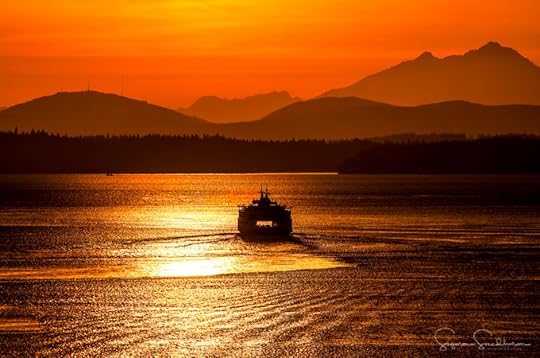
Fiery orange
A Washington state ferry heads toward the Olympic Mountains and into a fiery sunset.
3
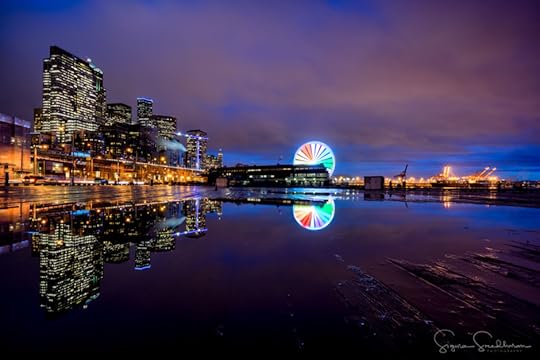
Rainy purple
All the rain offers some lovely reflection possibilities, doubling the color in the shot. Seen here is the Seattle Great Wheel and a puddle on one of the Elliot Bay piers.
Intermission
Trip Planning
35 of the world’s best places to travel in 2017
Matador Team
Accommodations
Here are the best Airbnb options for Seattle
Katie Scott Aiton
Galleries
Nothing will boost your Instagram feed like a trip to Turkey. Here’s proof.
Jordan Hammond

4
Twinkling red and green
Seattle comes alive for Christmas and the holidays. This is the Macy's Christmas star and the Westlake Center's Christmas tree bringing cheer after dark.
5
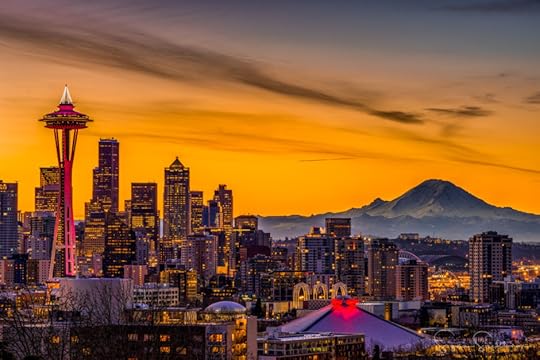
Magenta and orange
Around New Year's Eve, the Space Needle is turned magenta, as the fireworks (at midnight) are sponsored by T-mobile. Mount Rainer towers in the background.
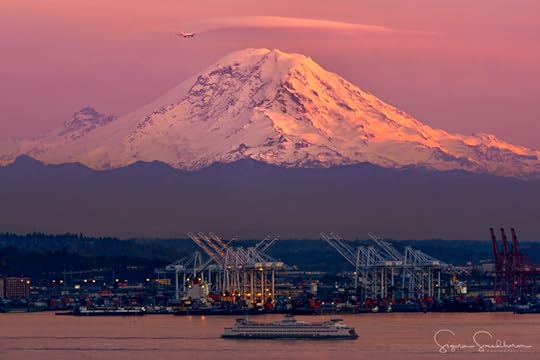
6
Alpenglow pink
Weather changes this time of year bring lenticular clouds around Mount Rainer. These types of clouds are not only lovely and soft but catch the light in a beautiful way. While we get lots of rain, winter also brings crisp clear days to see Rainer in all its glory.
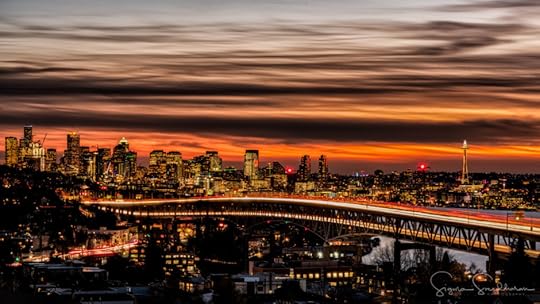
7
Traffic-light red
Sunset and rushhour coincide in the winter, and nature puts on a show while everyone waits to get home.
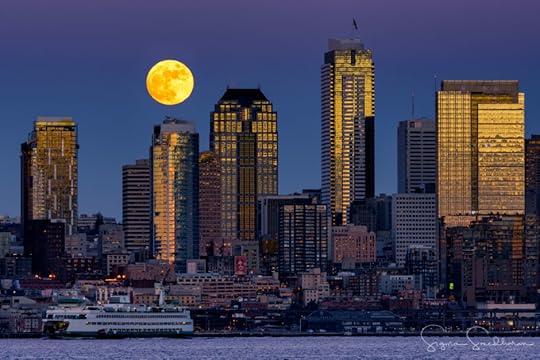
8
Blue moon
Winter is a great time to catch the full moon on a clear night. The sky is cold and crisp but you can see all the details of the face.
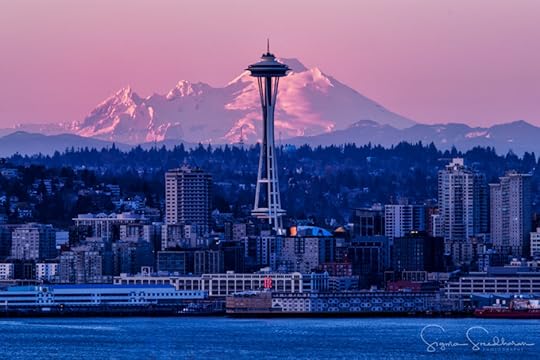
9
Purple (non)haze
Summers are sometimes rife with humidity and haze. While a bit chilly, this view on a clear winter day is just incomparable and the clarity is unmatched.
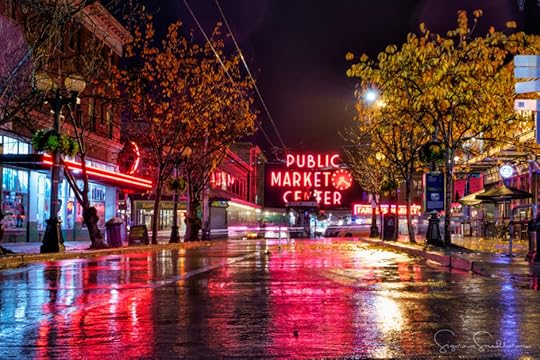
10
Neon Pink
The iconic public market spills pink puddles all over the wet road after a good rain. And yes, it rains. And yes, sometimes it is grey. But it's also so much more than those two things!
More like this: 12 things only someone who’s been to Seattle will understand

Visit the Colorado crystal mill
The crystal mill, reputed to be one of the most photographed sites in Colorado, is historically known as the Sheep Mountain Power House or Lost Horse Mill. Built in 1893, the mill harnessed the power of the Crystal River to run its massive air compressor which, in turn, drove power to drills in the Sheep Mountain and Bear Mountain silver mines.
When the Sheep Mountain mine closed in 1917, the mill, too, was abandoned. It was decreed a landmark and put on the National Register of Historic Places on July 5th, 1985 and has been a standing skeleton ever since, just a quarter mile outside the ghost town of Crystal — a former silver mining camp established in 1880, which has never had (and still does not have) electricity, although it is home for a few inhabitants.
Reachable only in the summer and fall months, access to the mill is by a 4-wheel drive road that you can drive, hike (a much prettier experience), bike, or ride a horse. The mill isn’t the only awesome sight to see on the trail, though. Winding through the Elk Mountains outside of Marble — a tiny town with a population of about 130 people — the road follows the Crystal River and winds in and out of Aspen groves and around Lizard Lake. You’ll ascend and descend rolling hills, and, overall, it’s a picturesque and moderately easy hike with the hardest part the the beginning.
Make sure you go the extra quarter mile after the mill and check out the 19th century town of Crystal.
How to get there
The Crystal Mill site is located just outside the tiny town of Marble, CO. Drive through the town, past Beaver Lake, you’ll see mailboxes on the right and the parking is on the left. You’ll see a sign for the town of Crystal, follow the left-most trail. AllTrails will give you good GPS directions.
What to consider
If you choose to hike it’s an 8.2 mile out and back.
Your starting elevation is about 7,900 ft and you’ll gain around 1,000 feet over the course of the trail.
There are about 6-8 parking spots at the trail head.
Cell phone service is spotty in the area so know where you’re going way before you get to Marble.
The first part of the climb is the most difficult, about a mile of uphill, but after that you’ll be greeted by flat terrain and gentle rolling hills.
Bring adequate water for a full day, snacks, layers and, of course, a camera.
It’s not only a hiking trail, it’s also a road, so be aware of vehicles.
There are almost no signs, so pay attention to the directions.
When you see the sign, “Town of Crystal 4 miles” you know you’ve passed the hardest part.
The town of Crystal has a small bookstore and some private buildings; it’s worth checking out.
More like this: The paint mines of Colorado

December 5, 2017
How to help save Utah's lands
ON MONDAY, December 4, 2017, President Trump announced that around 2 million acres of federally protected land in Utah will be taken out of the National Monument system. Since 1906, under the Antiquities Act, presidents have had the power to unilaterally assign land to be protected as national monuments. Sixteen presidents to date have done so, creating 129 protected areas; some of them, including the Grand Canyon, have been turned into National Parks.
In September 1996, President Clinton established Grand Staircase-Escalante National Monument (over 1.8 million acres). In December 2016, President Obama established Bears Ears National Monument (over 1.3 million acres). If the Trump administration’s orders come to fruition, Bears Ears will be reduced to 15% of its current size. Grand Staircase-Escalante will be slashed in half. It doesn’t appear it will stop there, either. There are already recommendations to reduce four more national monuments.
Both Bears Ears and Grand Staircase-Escalante are widely known as some of the most diverse and beautiful public parks, not just in Utah, but in all the US. They are home to slot canyons, ancient rock art, caves, rivers, mesas, and hundreds of species of insects and animals that are endemic to the areas. With its rich history, Bears Ears is also considered sacred land by more than six Native American tribes in the area.
How to join the fight to save the land
Many have already begun fighting to reverse these threats by taking this policy to court. Five Native American tribes — Navajo Nation, Hopi, Ute Mountain Ute Tribe, Ute Indian, and Pueblo of Zuni — have joined to challenge the shrinking of Bears Ears National Monument. They claim that the Antiquities Act does not allow presidents to remove or modify national monument status, only to designate. Another lawsuit has also been filed on behalf of ten environmental groups to challenge the order to reduce Grand Staircase-Escalante National Monument.
It should be noted that never in the 111-year history of the Act have the courts had to weigh in on these matters. There have been times when presidents have reduced areas of protected land but they’ve never been challenged in court. Trump’s reductions are the largest in history.
If you want to take up the fight to stop this from happening, here are a few ways you can get involved and support the organizations who are fighting to keep the lands preserved:
Contact your senator
Use the pre-made message by the Southern Utah Wilderness Alliance to urge your senators to fight for these national monuments.
It’s no secret that President Trump doesn’t shy away from engaging on this social platform. Click on the link below to write a tweet through the Outdoor Industry Association and join thousands of voices like yours.
Tweet President Trump to Stop Attacking America’s Protected Lands
Kickstarter
There’s a Kickstarter campaign to raise funds to build a Bears Ears Education Center. Shortly after Trump’s announcement, they hit their fundraising goal of $100K — so they’ve stretched their goal by, symbolically, 85%.
Support the Bears Ears Coalition
You can contribute financially to help the Native American tribes in their battle for Bears Ears National Monument. Go to this page where you can also sign up to get updates and use a pre-composed Tweet to show President Trump where you stand.
Support the Grand Staircase Escalante Partners
There are three things you can do today to support Grand Staircase-Escalante.
For more ways to help in this matter and others that affect our lands, visit the Outdoor Industry Association. 
Record-breaking SUP trip in Malaysia
I started to worry when I stopped sweating. I felt dizzy and faint; my body felt weak and my skin felt hot. I collapsed onto my knees, balanced on the board, and vomited into the ocean. In the blistering heat with no shelter, I discovered paradise is a harsh place.
I was floating off the island archipelago of Langkawi in Malaysia, approximately 8km offshore. There was no one else around. I had just paddled 33km of open water and was 9km from the end of my trip.
I recognized the symptoms of heat stroke. I went into the water to cool my body, took tiny sips of water to rehydrate, and ate small morsels of tinned sardines. In the space of two hours, I was able to move and somehow found the energy to paddle that final 9km. I made landfall two hours after sunset: tired, exhausted, dehydrated, and in pain.
There were no feelings of jubilation and excitement upon the completion of my journey. They would come later. At that moment, on the moonlit beach near the pier, all I could feel was relief that it was over.
This was the last day of my attempt to become the first person to circumnavigate the Langkawi island archipelago by human power alone.
***
I used a second-hand inflatable SUP not designed for expedition travel. With a combination of recycled ghost netting, bungee straps, and micro carabiners I was able to secure my gear to the board. In total, my gear weighed 8kg — packing light was critical.
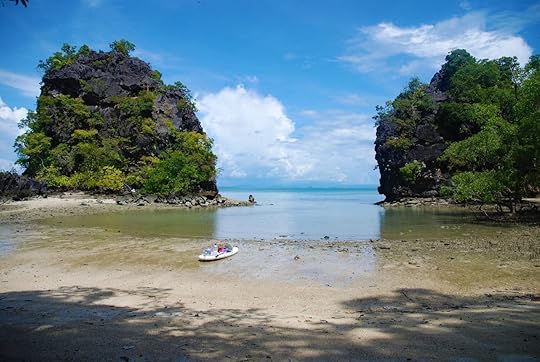
Photo by author
I slept in a hammock using a plastic tarpaulin to keep the rain off. My equipment was stored in dry bags. I carried 8L of water with me and regularly consumed 4L per day. I cooked my food on a portable gas stove and removed all my rubbish, leaving only footprints.
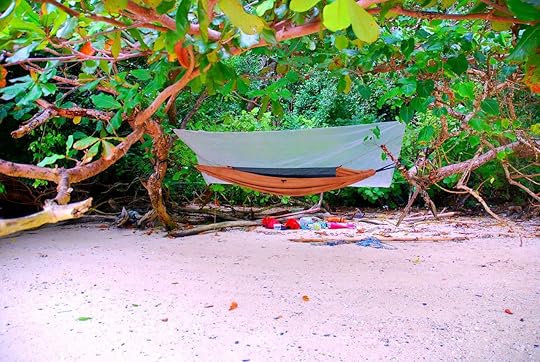
Photo by author
***
Every night, I camped on uninhabited islands in hidden coves. These beaches were framed by steep cliffs of dense rainforest with monkeys and eagles inhabiting the upper canopy, which made for a magical setting. It was (almost) perfect.
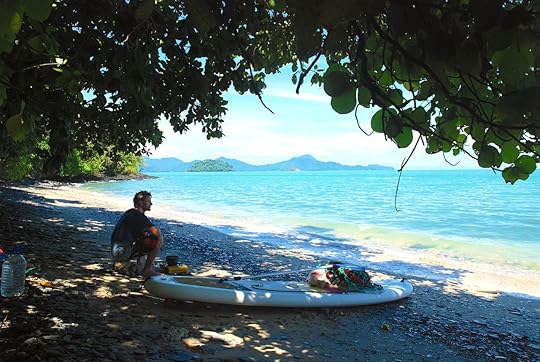
Photo by author
On day 2, I cut my foot on some dead coral. The repeated saltwater immersion prevented the wound from healing. By day 3, it was swollen and infected. Unable to get medical help, I simply dealt with it as best I could.
At the end of day 4, unusual calmness was sitting on the land. Sea otters feeding in the water swam past. They spotted me and uttered their husky alarm calls but they were distracted. They kept looking over their shoulders. I soon found out why.
A broiling mass of dense grey cloud was being blown toward me. Distant lighting could be seen and thunder heard. This wasn’t simply monsoon rain. This was a full tropical storm. I laughed with false bravado and challenged the weather to do its worst.
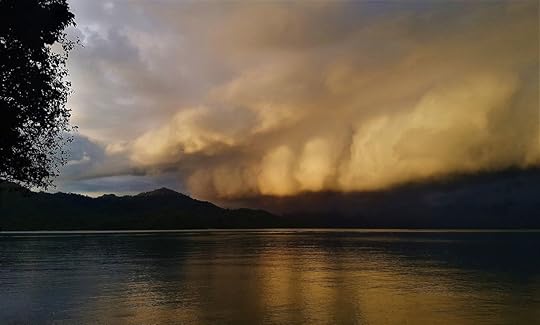
Photo by author
The storm exploded around me. Strong gusts of wind tore the tarpaulin in half. Lighting struck barely 15 meters away from my camp and the thunder was so loud that it shook the ground. My gear was thrown across the beach and my hammock supports snapped.
There was nothing I could do. I used the spare rope to secure my gear together then curled up in the fetal position on the sand, wrapped in the rags of the tarpaulin. Over 6 hours of torrential rain followed. Shivering, cold, and wet I lay there as sleep eluded me. The hours until dawn passed with anxious slowness. I could only think how truly helpless man is when confronted by the forces of nature.
Every night after that was filled with heavy monsoon rains that soaked the ground. With no tarpaulin, I either slept on the beach in my waterproofs or in a wet hammock. I started to dread setting up camp. Lack of sleep and constant wetness became a torment.
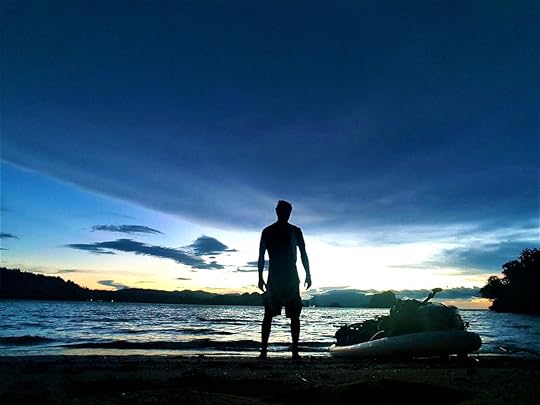
Photo by author
Daytimes were a dream. Bright sunshine, hot temperatures, and flat water made for spectacular paddling. Otters, birds, and dolphins would regularly accompany me on my journey.
***
I wanted to undertake this trip solo and unsupported. I had never camped in tropical rainforest or done a paddleboard expedition before. Those lonely hours spent paddling in absolute silence brought intense reflection. Solitude was distressing at times (especially in the middle of a storm), but I know myself better for having had these internal voyages of discovery.
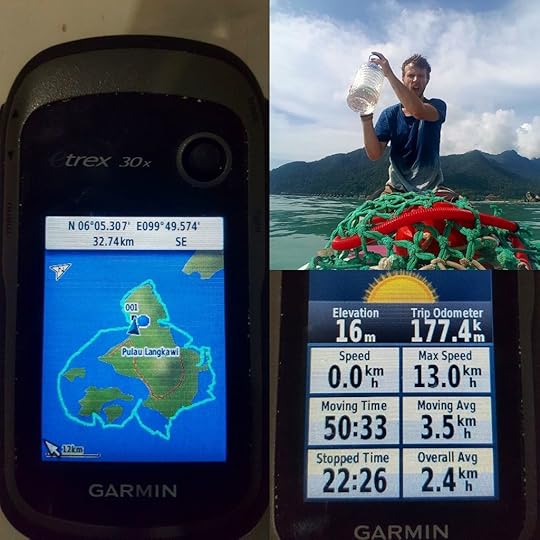
Photo by author
In total, I paddled 177km in 10 days. My route took me around the outer edge of the entire archipelago encircling all 104 islands. On the 20th of November, I became the first person to circumnavigate the entire archipelago by human power alone.
More like this: SUP Squatch: Gigantic stand up paddle boarding
The 45 most disturbing mythical creatures from around the world
Everyone loves a good scary tale, and we have been telling them since the dawn of times. In real life, humans are often the scariest creatures, but the cool thing about creating stories is we can imagine evil monsters and grotesque beasts. Cultures around the world have their own disturbing mythical creatures populating their traditional tales. Don’t worry, none of these beasts are real… or are they?
If you feel brave and want to tempt your imagination and nightmares, this is for you. The guys at CostumeCraze have created an infographic with the world’s most disturbing mythical creatures. Sweet dreams.

More like this: 15 fantastic mythical beasts from around the world (and where to find them)

where to see the Northern Lights
It’s Northern Lights season. And if you’ve never considered traveling abroad just for the chance to see those shimmering greens light up the night sky, there are plenty of destinations that might be able to convince you. From ice hotels and snow castles to geothermal pools by arctic waters, Northern Lights hunting comes with some of the most spectacular side amenities that you won’t come across on any other vacation.
1. Sorrisniva Igloo Hotel, Alta, Norway
How to actually enjoy long-haul flights
Long-haul flights are an unpleasant fact of travel, but there are ways to improve your next experience that — surprise! — don’t involve upgrading. International flights do not have to cost a fortune to be bearable, take it from the person who took 13 flights in 3 weeks. The key is to plan ahead and accept that yes, your flight is going to last 16 hours.
Here are some tips on how to not only survive long-haul flights but actually enjoy them.
1. How to get comfortable anywhere.
Come prepared for sleeping in uncomfortable situations.
This is one place where upgrading would probably make life easier, but if you, like most people, don’t have a spare grand lying around for a business class seat there still are ways to get some shut-eye. An eye mask, set of earplugs, and neck pillow will all help you sleep away at least a couple hours, even if your flight is graced by the sonorous presence of angry small children and/or equally angry nasal passages.
On the topic of neck pillows, inflatable ones are the best for lightweight packers.
I never travel with more than my backpack, daypack, and purse so I am hesitant to bring anything along that is only used once, like a bulky neck pillow. An inflatable neck pillow will hold its shape from Sydney to Los Angeles while folding down into a case the size of a soda can. Another interesting new invention in the sleeping-on-planes category is this lightweight, foldable neck support.
Always bring warm clothing.
Airlines are notorious for over-air conditioning and there is no better way to stay awake for every dreadfully long second of your flight than by freezing your bum off huddled under the always-insufficient free airline blankets. A jumper will let you sleep like a baby and also makes a good pillow in a pinch. There is no reason to forget this, even if your trip is to the Sahara Desert.
Wear comfortable clothing and leave the jewelry in your luggage.
There is nothing any frequent flier hates more than waiting for the fashionista in front of them to remove approximately 15 pounds of jewelry and complicated boots to go through security. An airport is not the catwalk; no one cares what you look like as long as you don’t hold up the line. I find that a pair of cotton joggers, sandals (with socks in my purse for cold toes during the flight), and a simple T-shirt make up the best outfit for in-flight comfort and ease. Don’t feel afraid to wear your PJs, either.
2. Organize your in-flight food and entertainment.
Make sure to book a flight that includes complimentary in-flight entertainment.
In this day and age in-flight movies should not cost extra on a long haul flight, but with the resurgence of extreme budget airlines, some are starting to charge for access to the latest blockbusters. Do yourself a favor and avoid budget airlines for any flight over 8-10 hours, the small savings are not worth the discomfort. Also, after you pay for an in-flight meal and a movie or two, you will have wasted any money you saved on the ticket.
Communicate any dietary restrictions prior to your flight.
Airlines servicing the long haul routes have seriously upped their culinary game and the food on most is, at the very least, palatable and often actually quite nice. However, the improvements to at-altitude dining will be lost on you if you can’t eat anything that is being served. Luckily, all you need to do is specific any dietary restrictions when you purchase your ticket and you will have a special meal delivered directly to your seat. They also bring out specialty meals first, so while your meat, gluten, and dairy eating compadres are waiting for the food cart to crawl its way down the aisle you can be happily munching away on your allergy-safe meal.
Enjoy the free alcohol, moderately.
Once you’ve made the intelligent decision not to fly Ryanair you will be rewarded with complimentary wine and beer. Indulge, but do so with more caution than usual as drinking at altitude affects the body differently than drinking at sea level and you may find yourself waiting in line at customs with a nasty hangover.
3. Take your time reserving your ticket and save yourself stress and money.
Use flight search apps for research, but never purchase through the app.
Apps that check prices of multiple airlines are great for making sure you are getting the best deal as you can try different combinations of dates and airlines to find the cheapest airfare. However, never buy tickets through the app. Always go to the airline’s official website to purchase tickets so you have recourse if something goes wrong. Airlines are far more likely to honor tickets bought through their website than tickets bought through third-party websites.
Always do your flight searches in incognito mode.
If cookies are enabled websites will track what flights you search and, if you do not buy them, they will show you inflated prices the next time you search those flights. The idea is to make it seem like flight prices are going up in order to incite you to buy now before they increase more. By doing all your searches in incognito, you avoid being manipulated by algorithms.
If possible, make your own connections.
Tickets through major hubs will always be cheaper than tickets that go through those hubs but on to smaller airports. You can save money if, instead of buying one ticket all the way through, you build your own connections by purchasing the major hub legs separately from the smaller airport legs. Using this method I flew from Darwin to Sydney to Auckland to Los Angeles to New Mexico to Hawaii to Portland and back through Los Angeles, Auckland, Sydney, and Perth for less than $1,300 USD. (Side note: this was for the previously mentioned 3-week trip to the US from Australia that included a wedding in New Mexico, a wedding in Portland, and my mom’s 60th birthday in Hawaii.)
But, always allow plenty of room for built connections.
An airline will honor connections they promised to get you through, but if you’ve made them yourself to save money, you’re out of luck. Make sure to leave yourself at least 4 hours of connection time in self-built connections. Remember, you’ll need to get your bags, re-check in, and go through security again. It may sound like a hassle, but you can seriously save hundreds of dollars. Let your wallet decide if it’s worth it.
4. Plan in advance in order to enjoy layovers.
Research the airports your layovers will be in ahead of time.
Some airports are amazing for layovers (think Changi in Singapore), others… not so much (LAX). If you can, try to plan longer layovers in better airports, but if worst comes to worse bring a book or Kindle. But, seriously, try to fly through Changi, they have a free in-airport slide!
Download Google Maps or CityMaps2Go before you leave the house.
Almost all truly long-haul flights are international, thus when you land you will possibly not have cell phone service. Most airports have free WIFI nowadays, but just to be safe make sure you have an offline map app downloaded. This helps you know that you can make it back to the airport in time for your next flight if you decide to go explore Amsterdam while you wait. Don’t let yourself be caged by the airport walls, prepare, and you’ll be exploring in no time.
Prepare, do your research, and enjoy the flight.
Long haul flights do not have to be an exercise in masochism; in fact, with the right planning, they can be downright enjoyable, all without costing you multiple months’ rent!
More like this: 8 must-have flight apps that will save you money

Matador Network's Blog

- Matador Network's profile
- 6 followers

