
Matador Network's Blog, page 1436
December 7, 2017
Credit cards for travelers
Do you have a case of Instagram envy when you see attractive people traveling in first class and staying in five-star hotels? Even if you consider yourself a budget traveler and are just as happy sleeping in a mud hut without AC as you are waking up with 1000 thread count sheets in the penthouse of the Park Hyatt in Tokyo, there’s something to be said for living through the experience, even if you don’t make a habit of it. These activities of the super rich (as opposed to the ultra rich, flying on private jets to their own islands) aren’t nearly as out of reach for the average traveler as we would like to think. Here are some of the ways you can join their ranks for a day or two.
1. Hotels: Hyatt Visa Credit Card
This credit card offers two consecutive free nights in any Hyatt property around the world after spending $1000 in three months. This includes the Park Hyatt Maldives Hadahaa, where standard rooms can exceed $2000/night depending on the season. Considering you only need to spend $333/month on average to reap $4000+ in rewards, I’d say this credit card tops the list.
2. Flying: Alaska Airlines Visa Signature® Card
If there’s one thing we know from watching Casey Neistat’s videos and hearing stories of travel hacking, it’s that short of chartering a private jet, there is no more luxurious way to fly than in Emirates’ first class suites on an A380.
At this time, the private rooms featuring a full-size bed and closing door cannot be booked with points, but first and business class can: 150,000 and 82,500 to travel from Dubai to the US, respectively. Short of spending $82,000, how can ANYONE ever hope to get these numbers?
The Alaska Airlines Visa Signature® Card offers between 25,000-50,000 points just for signing up and making one purchase, and these points can be redeemed on a partner like Emirates. This is a standard offer for rewards cards, but what makes this one unique is the fact that the standard two-year turnaround between cancelling the card and applying again to reap the benefits isn’t necessary, meaning a budget traveler can cancel the card within a — reasonable — time limit and possibly be approved again soon afterwards… so long as they don’t abuse it.
3. Trains: Amtrak Guest Rewards® World Mastercard® Credit Card
Let’s just admit that a lot of us don’t think of train travel, especially in the US, as luxurious. Back in the day, when trains had to cater to the elite — traveling across the country while sipping brandy, no doubt — it was reasonable to expect staterooms with fitted seats and amenities that would make most long-distance lines today seem like Greyhound.
Amtrak hasn’t fallen quite that far, still offering private rooms on cross-country trips with dining cars offering meals that — in this writer’s humble opinion — far exceed those in air economy class. Booking a 2-3 day trip in a roomette can cost several hundred dollars, while a premium bedroom can easily go over $1000.
With the time and cost involved, why travel in such a way? Because it truly is a throwback to a more luxurious time in travel, when we could avoid unnecessary security screenings, haul 17 bags for every passenger, and not be stressed about arrival times. Spending $1000 on the Amtrak Mastercard within 90 days will earn a cardholder 20,000 Amtrak points: just enough for a private roomette across most of the country.
4. Gold: Etihad Guest Miles Program
You can still buy gold bars on top of the Burj Khalifa in Dubai, but why pay for something when you can get it for free? There’s nothing richer than purchasing something guaranteed to depreciate in value and acting like you’re a genius. Should you fly often enough on Etihad Airlines, you can redeem 118,900 points for a 10-gram, 24-karat gold ingot.
5. Space Travel: Virgin Atlantic Flying Club Miles
Anyone else remember when Lance Bass paid $20 million just to go into space as a tourist, and how we thought that kind of travel would forever be out of reach to all but millionaires and astronauts?
Sub-orbital flights may be getting cheaper, but they’re definitely still in the realm of the super rich. Virgin Atlantic promoted redeeming two million points for a seat worth $250,000 on their Virgin Galactic flight, meaning one to the moon would probably be over ten million. Whether this will actually be honored once these flights get up and running is subject to debate. If a Hyatt is established on Mars, do you think the free nights from the visa would be honored? 

More like this: How to ‘churn’ credit cards and travel for free


Commandments for expats in Mexico
I never really gave it a good thought when my partner suggested I should move with him to his home country of Mexico. I had been traveling through Mexico for months and, with each day, I fell in love with the country and its people even more, so I said yes instantly. But when I finally put down my luggage and settled, I realized that traveling and living in a place were two totally different things. Here are the challenges I faced upon moving to Mexico.
1. Thou shalt not ask if the food is spicy, though shalt ask if it has chili.
In Mexico, every dish is seasoned with at least one of the 200 varieties of chili growing there. Mexicans start to consume chili as children, many of them at the age of 3 or less, so it’s not surprising that their perception of spiciness differs so much from ours, foreigners’. A number of times, a waiter or a cook ensured me that a dish “no pica nada” (it’s not spicy at all), but I ended up giving the food to my partner because it was impossible for me to eat. Slowly but painfully, I learned that if I wanted to avoid a burning mouth, watering eyes, endless sneezing and gastritis I have to stop asking if the food is spicy but ask if it contains chili instead.
2. Thou shalt get accustomed to driving in chaos.
I obtained an international driving license in Slovenia before moving to Mexico so I wouldn’t depend on public transportation or my partner to get around. It seemed easier to pay 30 EUR for a piece of paper than going through the process of acquiring a Mexican license. But once in Mexico, I found out that the traffic police didn’t consider the paper valid even though the country is on the list of signatory states.
The good thing about getting a license in Mexico is that the driving classes aren’t mandatory, so you save yourself some money; however, you do need to visit the local Vehicle and Licensing Office and pass the theory test. I did it in a time when my Spanish was pretty basic, so while I was acquainted with traffic signs and rules, I hardly understood any of the questions I was asked — it was pure luck that I passed. Nevertheless, if you fail you can repeat it the next day, and the next day, and the next day without spending much money, until you’re successful.
But the real challenge is sitting behind the wheel. Inconsiderate drivers who never use indicators, frequently go through red lights, and pass you on the right are all too common. Giant potholes and unmarked speed bumps make driving a living hell.
3. Thou shalt take safety seriously.
The statistics on homicides and kidnappings portray Mexico as one of the most dangerous countries in the world, and this year is about to break records in being the most violent one since the beginning of this kind of data compilation.
Soon after I moved to Puebla, somebody burgled our house. It was during daylight and our house was in an enclosed area that was under surveillance. My friends talked about how they got mugged with firearms pointed at their face, or how their family members were kidnapped and killed.
Of course, this doesn’t mean that you’ll inevitably end up being the victim of a crime; however, it is wise to follow certain rules and avoid situations that increase the odds. As a woman, it’s not recommended that you take a cab alone (rather grab an Uber, Cabify, or Laudrive, a service offered in Mexico City only to women by women chauffeurs) or walk the street after 10 PM. When you go out at night, it might be wiser to leave the credit card at home and bring only the necessary amount of cash. Don’t take a public bus when you’re carrying expensive and important objects, such as a laptop or a professional camera. Stay really close to your children in public places and hold their hands while walking the street. Don’t leave your bag hanging from a chair when you’re in a bar or restaurant, rather keep it in your lap. And regularly send messages to your partner, children, friends or any other trustworthy person about your whereabouts when you leave your house or job.
4. Thou shalt have a hard time staying away from unhealthy food.
Mexicans eat an awful lot of junk. A typical daily menu in a restaurant never includes salad; street food is either deep fried or extremely greasy; Sunday family lunches are made of tacos and gallons of soda; and parties are all about snacks and candies, stuffed with dozens of artificial preservatives, colorings, and flavorings.
While it’s easier for you as an adult to avoid unhealthy food, it’s pretty impossible to impose such rule to a small child when all their friends indiscriminately eat everything served. I also can’t control what my daughter consumes when she stays for a day or two with her grandparents.
Part of the solution to this unhealthy eating is preparing your own food. Check carefully the labels when shopping and cook as much as you can. The good thing is that fruits and vegetables grow here year-around, so they’re always fresh and cheap.
5. Thou shalt remain patient.
Time in Mexico is relative. Everything is done at a slow pace and everybody is always late, so you better get used to it otherwise you’ll lose your mind.
If a concert is scheduled at 8 PM, the crew is probably only arranging the stage at that time. If you have an appointment with a friend at 3 PM, she’ll still be having a shower at 3:10 PM. If someone sends you a message letting you know that they’ll be here in 10 minutes, you won’t see them before half an hour, at least. And if a plumber tells you he’ll finish the work in a week, expect it to be two.
So, if you invite friends to dinner and you don’t want to see the food getting cold while you’re waiting for them, tell them to come an hour earlier. If somebody tells you he’ll send the documents “ahorita” (now) it may mean in half an hour or never, so don’t hesitate to regularly remind him of his duty.
6. Thou shalt not be too direct.
In the first couple of years, my partner warned me several times that I was being rude to the people. According to him, I didn’t ask for the jam politely enough, and it was really unfriendly for me to hang up the phone on a woman who was trying to convince me to get a bank loan even though I had repeated at least three times that I wasn’t interested. He also considered inappropriate to complain or express my disagreement too openly, whether it had to do with a badly-prepared food in a restaurant or an opinion in a family reunion.
Later on, when a Slovenian friend visited Mexico for three months, I realized it was a cultural thing. Do say “please” and “thank you” often; when you meet people treat them as if they were your best friends even if you barely know them; and choose your world wisely when you wish to express your disagreement.
7. Parents shalt deal with illogical school workdays.
Almost all private kindergartens have relatively short workdays. Most of them open at 9 AM and close at 1 PM, offering daycare for extra money until 3 PM maximum. Besides, every last Friday of the month, children stay at home since that’s when teachers have their meetings. And then there are Teacher’s Day, Mother’s Day, Spring Day, etc. when the school is closed.
Such school workdays can be a problem if you’re a working parent. Most formal positions start work at 9 AM and finish at 6 AM, with a two-hour break — that’s when parents usually pick up their children and leave them in care with their grandparents. So, unless you have relatives that can babysit your kids or have a freelancing job that allows you to manage your own schedule, you might have a problem.
More like this: 6 uncomfortable truths about living in Mexico
Traveling to anti-LGBT destinations
Traveling as a member of the LGBT community is a radical act because the majority of the world is still grappling with the question of our legitimacy and mere existence. I have a complicated relationship with the morality of traveling to destinations that are perceived to be anti-LGBT or have clear anti-LGBT policies in place. On one hand, I’m an individual queer person but on the other hand, I bring with me thousands of internet friends when I travel somewhere. Because of my platform and my background as a professional LGBT activist, I’m forced to think through my individual travel choices in a different way than other people. I’ve come to a point in my career and interests where I will be traveling to more destinations beyond the traditional gay meccas, and I wanted to share the questions I’ve been grappling with over the years in an effort to help you come to your decisions in terms of your travel choices. I hope it will inspire you to challenge your perspective on LGBT issues around the world.
1. Do travel bans and boycotts from governments and corporations work?
It’s fair to say that 2017 has been the year of the ban and the boycott. Back in January we experienced Donald Trump’s politically loaded executive order, which banned travel to the USA from seven predominantly Muslim countries — Iran, Iraq, Libya, Somalia, Sudan, Syria, and Yemen — for 90 days which was followed by citizens from multiple countries around the world boycotting the United States as a travel destination.
But that’s not the only ban that has been put in place this year. California issued a ban on state-funded and state-sponsored travel to eight states that have anti-LGBT laws in place and has denied reprieve from the ban to cities within some of those states that are known to be LGBT affirming, like Louisville, Kentucky and Austin, Texas.
Earlier this year North Carolina also received scorn on all sides for their controversial HB-2, the so-called “bathroom bill”, which required transgender people to use the bathrooms, changing rooms, and showers in state-run buildings that correspond to the sex on their birth certificate rather than their gender identity. As a result of the controversial bill dozens of high profile events pulled out, including the games from the NBA, NCAA, and ACC. They also lost contracts for expansions with Paypal and received a very public scolding from 68 companies, including tech giants like Apple, Dropbox, Salesforce, Slack, and Yelp.
According to the tourism boards of the state’s three largest cities, tourism was hit harder than any other industry because they lost $109.4 million to canceled conferences and other events — not including major sporting events. When you include sporting events, which is akin to a religion in North Carolina, the state lost $395 million.
The boycott is a useful tool of pressure and coercion that people, businesses, and governments use to achieve policy goals be they foreign or domestic, but do they work?
On the side of positive effects, the swift social media response to HB-2 and California’s travel ban resulted in an avalanche of public awareness on the issues and brought transgender rights to the forefront of public discourse. The businesses and celebrities boycotting the events aligned people and brands of influence with the LGBT movement. Plus, major sporting empires with a traditionally conservative male audience took a stand in favor of LGBT people.
To those ends, the bans and boycotts definitely have an impact, but were they effective in reversing the laws they were initially protesting? In a word — no. Yes, HB-2 was repealed but the replacement bill HB142 was arguably worse than the initial bill. The repeal resulted in no additional protections for transgender and gender nonconforming people in North Carolina. It did create a ban on the creation of nondiscrimination protections for public accommodations and private employment practices until 2020. Which means local areas throughout North Carolina cannot pass laws protecting LGBT citizens from discrimination by their employers, landlords, or businesses denying them services.
Governments care about large scale business decisions, tax revenue, and reelection campaigns. We’d have thought that this would have made other states more cautious to backlash but Alabama, Kentucky, South Dakota, and Texas have all based similar laws in the wake of the viral backlash against HB-2.
Those who create travel bans are making a bold assumption that places with anti-LGBT policies give a shit about the approval of outsiders.
What about outside of the United States? The Russian policies on LGBT people are atrocious. Russia faced a lot of backlash during the Sochi Olympics from a coalition of 40 international human rights groups, including Amnesty International and Human Rights Watch. The groups came together to submit pleas urging sponsors to pull out or to run ads promoting equality for LGBT people. The top advertisers of the Olympic Games pay tens of millions of dollars to be headline sponsors. Of the top ten sponsors, only AT&T, DeVry University, and Chobani created LGBT specific campaigns. None of the top sponsors pulled support.
Three years after the Sochi Olympics, reports of gay men being held in camps and tortured as part of a campaign against gay males in Kremlin-backed Chechnya began circulating widely.
International laws regarding LGBT people vary by policy, identity, and even regions within countries. For example, being LGBT-identified is illegal in 72 countries and 5 territories. In 10 of those countries, gay male sex is punishable by death. Several of those countries have recently been in headlines revolving their treatment of LGBT people. The UAE made headlines for denying model and internet personality Gigi Gorgeous entry because she’s transgender. Recently, Egypt was in the headlines for arresting 52 people at a concert for flying a pride flag. While there are fewer laws regarding lesbian and bisexual female identity there are different social issues that are concerning, including the practice of corrective rape.
I believe Ashton Giese, Outreach Director for OutRight Action International, said it best in his interview with
10 things you’ll miss about the North Pole when you leave
You miss the “everybody knows your name” feeling and pride in your community that everyone from the North Pole seems to have. Shopping local and supporting locally made/grown products was just part of living in the North Pole.
2. PFD
The PFD aka Permanent Fund Dividend, I mean money you just get for living in the state: yes, please! You planned on what you were going to do with the money all year long and looked forward to those PDF specials.
3. The drive up coffee huts
Ah… those drive up coffee huts brewed with North Pole coffee are just so good you still have cravings. I will have a Frosty Moose White Chocolate Mocha, please!
4. Outdoors and fresh air
Trees and trees and more trees all around the North Pole, you don’t see many tall buildings or much concrete hence the air smells just a little wilder and ready for anything. In the summer you enjoyed camping, hiking, fishing, and ATVing. When the first snow fell you looked forward to snowmachining, snowboarding/skiing, and sledding. Bring on the snow!
5. Salaries
When you go to the “States” the starting salary is much lower than you are used to it’s quite the shock! Back home the starting salary is ranked second highest in the country so taking $10k less per year may be a little difficult to swallow.
6. Northern Lights
Looking at the sky in the winter and seeing the dancing lights in green, blue, and sometimes red and purple is amazing and something you may take for granted until you move away and can’t see it.
7. Traffic
You miss no traffic. Taking extra time to get somewhere during rush hour makes you reminisce for the days of very few cars on the road.
8. Christmas year round
You miss leaving your Christmas lights on all year and driving down streets lined with candy cane lights. Not to mention Santa Claus living just down the road on St. Nicholas Drive; you couldn’t help but feel a little jolly.
9. No tick or flea prevention for pets
Oh, the days of no prevention medication, sprays, and special collars for Fido. Just how much money did you save not having to worry about ticks and fleas?
10. No poisonous spiders and snakes
You miss not having to look out for snakes and spiders. Even though it was cold it kept the poisonous critters at bay.
More like this: 23 signs you were born and raised in the North Pole

Virginia Beach is mastering brunch
In Virginia Beach, brunch is a beloved weekend tradition. A religious event. A prepping-for-Monday game plan. Because the coastal city has such a solid brunching scene — there are tons of options, all with distinct vibes — it’ll be immediately obvious why everyone is flocking here all year long to try a bite (or a hundred bites).
Whether you’re an early riser or one of those lucky-to-get-out-of-bed-before-noon folks, these eight brunch spots have got you covered for an unforgettable “Virginia Beach Brunch” experience.
Brunch Spot #1: Bay Local Eatery

Photo courtesy of Visit Virginia Beach
Gotta try: the “Bloody Blue”
If you follow any East Coast foodie Instagrammers, you’ve likely seen a picture of one of Bay Local Eatery’s legendary “Bloody Blues” (a spin on the classic Bloody Mary). Topped with local Chesapeake Bay soft-shell crab, these seasonal babies are as delicious (and downright filling) as they are Insta-famous. Apart from Bloody Marys, the restaurant’s extensive cocktail menu includes an assortment of “crushes” made with fresh juices, as well as mega mimosas so huge they’re made for sharing with your fellow brunchers.
Bay Local’s self-described “Coastal Southern” food menu is full of classic Southern soul food combined with savory local seafood inspired by the Chesapeake Bay. You can’t go wrong with the Crab Cake Bennie — it’s a spin on Eggs Benedict, served with two pan-seared crab cakes and topped with crispy applewood smoked bacon. The Willis Wharf Special — an omelet with house Rockefeller mix and topped with fried oysters — is also a crowd pleaser.
Brunch Spot #2: Lubo Wine Tasting Room
Gotta try: Soppressata and Eggs
By night, Lubo Wine Tasting Room is exactly what it sounds like: a wine bar that offers high-class wine tastings and impressive gourmet eats. The local secret is that on weekend mornings, Lubo opens up its quaint dining room — and its comfy couch seating — for brunch. The kind of brunch you impress a date with. The kind of brunch you mark on your calendar.
Yes, there’s the mimosa and the Bloody Mary specials (mimosas for $3!), but don’t stop there. Their brunch menu includes so many delicious things: baked eggs with roasted garlic and basil marinara sauce, creamy Italian sausage and gravy over pan toast, French toast served with caramelized bananas… The Soppressata and Eggs dish — made with Italian soppressata, green peppers, and perfectly cooked eggs — feels like a combination of flavors your palate hasn’t experienced before. For the record, everything on the menu will definitely leave you more than satisfied.
Brunch Spot #3: Citrus
Gotta try: any of the signature mimosas or coffee cocktails
Chesapeake Bay area residents swear by Citrus, and it definitely lives up to all the local hype. Case in point: Citrus has become so popular that the owners recently added a spacious second location in the Great Neck area (conveniently close to I-264 and other major roads). Around here, you’re never lacking in motivation to get out of bed.
The Citrus menu includes about a dozen unique varieties of mimosas, and it’s best to go in fully cognizant of this fact, because otherwise you’ll be tempted to try them all. The Citrus Mimosa — made with champagne, fresh-squeezed OJ, mango juice, pineapple juice, and cranberry juice — is super refreshing and tasty. There’s even a separate section of the drink menu for hot coffee cocktails, including Flamin’ Pumpkin coffee, Mexican coffee, and Godiva Dream, to name a few.
The food menu is all about always-made-from-scratch breakfast items with local flair, like jumbo lump crab omelets, smoked Atlantic Salmon Benedicts, and the Citrus Signature Pancakes (gotta try that citrus glaze). If you’re feeling health-conscious, check out their “healthy breakfast” menu section — it’s been approved by Jim White, a resident fitness and nutrition studio.
Brunch Spot #4: Commune

Photo courtesy of Visit Virginia Beach
Gotta try: the Off-the-Farm Biscuits and Gravy
When it comes to fresh food, Commune has distinguished itself as the Prince of Bel Air. Situated in a historic building within the ViBe Creative District, Commune serves up artistic, off-the-farm takes on classic breakfast dishes. Everything is prepared with ingredients harvested at its farm just minutes away, so you know it’s as fresh as possible.
Case in point: the heirloom cornmeal waffles, served with pasture-raised fried chicken or breakfast sausage — homemade, of course. They also have flavorful organic buckwheat crepes and breakfast sandwiches that are somehow fit for royals (prosciutto, sourdough brioche bun, organic greens…you get the idea). And if you’re pressed for time, there’s a coffee bar and bakery in house.
Brunch Spot #5: Mary’s Restaurant
Gotta try: the pecan Belgian waffles
If you’re looking for an inexpensive and authentically Va Beach breakfast joint, Mary’s is your next stop. It’s something of a local beach hangout, complete with surfboards on the walls, and it’s been going strong for more than 40 years.
The food will totally remind you of your grandmother’s homecooking. They’ve got all the breakfast basics, and you can customize your meal pretty much any way you can imagine. They nail all the classics, but if you’re feeling like a specialty, try Mary’s pecan Belgian waffles or the Surf N Turf — three eggs any style served with a boneless filet of deep-fried catfish. (Yes, Va Beach loves seafood at all hours of the day.)
Brunch Spot #6: Doc Taylor’s
Gotta try: Dr. White’s Virginian Omelet
You’ll find Doc Taylor’s right on the oceanfront, a former beach cottage that’s been transformed into a homey brunch restaurant. Once actually a doctor’s home, it now serves dishes named after locals — local doctors, fittingly — or following other medical themes (i.e., the Stroke, The Heart Attack, etc). It’s a bit of a strange choice, sure, but once you’re there, you’ll see how it definitely works (and how it’s definitely memorable).
Dr. White’s Virginian Omelet — prepared simply with country ham, tomatoes, and cheese and topped with hollandaise — is the best way to try Virginia’s famous country ham. Another worthy contender is Doc Conkwright’s Cobb Omelet, served with chicken breast, bacon, avocados, and other veggies.
Locals’ tip: Grab a seat at the bar, and you’ll get to see the ultra-skilled cooks in action.
Brunch Spot #7: the closest Va Beach coffeehouse to wherever you are

Photo: Three Ships Coffee
Gotta try: the Norwegian-style brew at Three Ships Coffee
If there’s one thing Va Beach is picky about, it’s the quality of their coffee. Lucky for you, there are tons of local coffee shops in Virginia Beach. Odds are you’re never more than a few minutes away from one, wherever you’re staying.
It’s all about the beach here, and the vast majority of the local shops incorporate coastal vibes into their drinks accordingly. At Three Ships Coffee, a nautical-themed spot near the oceanfront (whose name pays tribute to the area’s first settlers), each and every one of their locally roasted drinks has a unique story (ask the barista and you’ll get the rundown). At nearby Java Surf Café, you’ll find a surf-chill ambiance, delicious espressos, and countless other flavorful coffee drink variations. Coffee fans who enjoy a little “something extra” in their cuppa (and need the afternoon pick-me-up) can stop by American Brew — a recent addition to the Chesapeake Bay coffee scene — for one of their whiskey-infused coffees. A solid recommendation is the crème brûlée latte with a shot of vanilla Crown Royal. That’ll wake you up.
Brunch Spot #8: the local farmers’ markets
Gotta try: the local seafood, fruits, and veggies
If you’ve got the Betty Crocker skills, you always have the option to source your own goodies, especially in a city like Virginia Beach. After all, the only way to truly know where your ingredients came from is to get them yourself, right? Enter Virginia Beach’s farmers’ markets.
The Old Beach Farmers’ Market, a certified Virginia Green market within the ViBe Creative District and only six blocks from the ocean, has a ton of seasonal fresh fruits and vegetables, meats, eggs, seafood, cheeses, baked goods, artisanal breads, and more. After you’ve prepared your smorgasbord with locally sourced ingredients, head on down to the beach and enjoy it seaside with your toes in the sand. You know, just an idea.


December 6, 2017
Illuminate the Bike: Romania
Follow Matador on
Vimeo
Follow Matador on
YouTube
After racing all over the world, from China to Taiwan to Azerbaijan to Korea, Team Illuminate was thrilled at the chance to finally race in Europe.
Although Romania was a country they knew little about beforehand, the team was stoked to get a big win and to connect with the local community. As filmmaker Kris Evered notes, “We had a local bike mechanic on our team and he took us to meet his family. When we went to his house it was amazing to see how self-sufficient they were. They pretty much grow everything or buy it from their neighbor. They even make their own alcohol (wine and rakia), and I was really impressed with their quality of life. Everyone seemed really happy even though they did not have much.”
Stay tuned for more Matador Originals each Wednesday here at Matador. 
How to get around Mexico City
Mexico City is huge and chaotic (it’s one of the biggest metropoleis in the world), so it’s natural to feel overwhelmed by it, especially for first-time visitors.
This quick guide will help you master the art of transportation in CDMX so that you’ll soon be able to get around with your eyes closed (almost).
1. Public transportation
2. Uber and Cabify
3. Taxis
4. Ecobici
5. Transportation from the airport
Public transportation
Mexico City has three main options for public transportation:
1. Subway
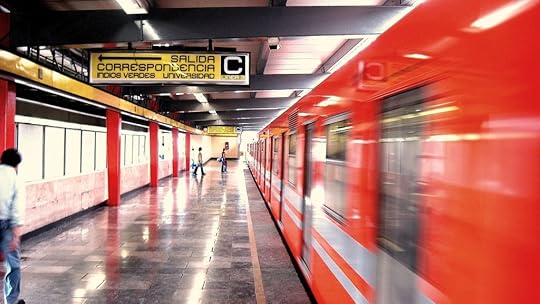
Photo: 16:9clue
This is the best way to move around the city. Its network is large enough to get you to the areas visitors need to explore. It is fast, cheap, well connected and easy to use. You can buy single tickets ($5 pesos) in any train station, or a rechargeable card for $10 pesos extra (this card can also be used in the Metrobús).
Subway cars and stations are safe, although you have to be aware of pickpockets.
Subway stops are regular (check out the network map here).
Operation hours:
Monday to Friday: 5 AM – 12 AM
Saturday: 6 AM – 12 AM
Sunday and Holidays: 7 AM – 12 AM
For more information, visit the official website of the CDMX metro: metro.cdmx.gob.mx
2. Metrobús
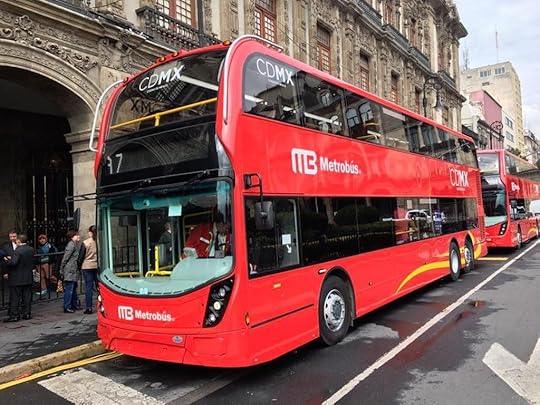
Photo: Metrobús
The Metrobús is nothing more than a fast bus (it has its own circulation lane). It is found only in the following areas of the city:
The historic center
The trendy neighborhoods of Condesa and Roma
The south of the city — including the fascinating area of Ciudad Universitaria, the main campus of UNAM, the biggest and most important public college in Mexico.
The airport
Get the Metrobús system map here.
This service works exclusively with a rechargeable card that you can buy directly in the stations. It costs $16 pesos and includes the first ride. Afterwards, you can recharge it in any station. A single ride costs $6 pesos. The same card can be used in the Metro.
There are six lines of Metrobús and each one has different operation hours, but all of them run from around 5 AM to 10 PM. For the complete schedules of all the lines click here.
3. Regular buses

Photo: Eneas De Troya
Best-known as “peceros”, they are all over the city but are the last option I recommend for getting around CDMX. They are old, operators drive very poorly, and they change their routes as they please (this is not that common, but it happens). Even locals get lost, so it’s not an advisable mean of transportation if you’re a first-time visitor. If you still want to give “peceros” a try, download the Citymapper mobile app where you’ll get accurate information on which bus to take, where to get off, etc. Regular buses in Mexico City only accept cash, and some of them don’t give change, so be sure to have coins with you.
Uber and Cabify
Both Uber and Cabify are excellent options for private transportation in the city. In comparison to the rates in the United States and Europe, Mexico’s are super cheap and the service is very good.
If you’re a woman and feel unsafe using Uber or Cabify, try Laudrive — it provides service exclusively to women.
Taxis
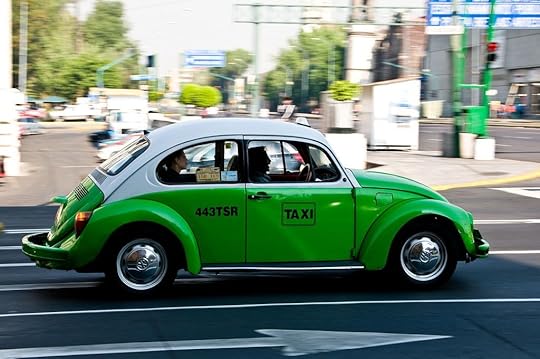
Photo: Robert Brands
Unfortunately, taxis circulating on the street are not a safe option to get around CDMX. Instead, use “taxis de sitio” — they are very safe. There are dozens of companies serving different areas of the city, if you want to call one of them, you should ask the hotel or to a local friend for the phone number, or you can try calling “Global Rent Taxi” (5803 2888).
Ecobici
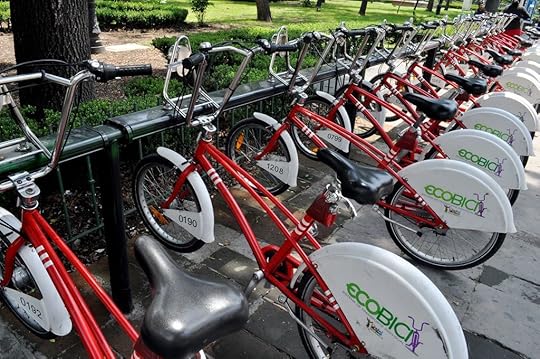
Photo: katiebordner
Ecobici is Mexico City’s bicycle loan service. It works very well and has stations (where you can take or leave bicycles) in the main areas of the city such as:
The historic center
Polanco
Reforma
Chapultepec
Roma and Condesa neighborhoods
As a visitor, you can easily register for a temporary service of one, three, or seven days. It has a handy mobile app for iOS and Android where you can locate the stations, see if there are available bikes, and report any incident.
See the full map of Ecobici stations here.
Transportation from the airport
Mexico City’s airport is located just 20 minutes away by car from the historic city center. There are several transportation options to move from the airport to other areas of the city.
The easiest and most comfortable ones are:
Uber
Cabify
Airport taxis (note that they can be quite expensive)
For budget travelers, both Metro and Metrobús have stations in the airport. “Terminal Aérea” metro station is located just steps away from Terminal 1. Metrobús stations can be found in both Terminal 1 and 2.
More like this: Mexico city with kids: Everything you need to know to have fun with the family
Patagonia money-saving tricks
If you love hiking, trekking, or just getting out into nature, chances are Patagonia has a place on your travel list. But due to its isolation and how spread out everything is, it can also be a pretty expensive undertaking. Between flights, hotels, food, and activities, a trip to Patagonia can set you back a fair amount. We’re talking thousands of dollars.
Luckily, there are plenty of ways to scrape and save both before and during your trip, putting South America’s final frontier at your fingertips.
1. Skip high season.
The Patagonian summer months of December through February mark high season in the region, and it is when popular destinations like Los Glaciares National Park in Argentina and Torres del Paine National Park in Chile will be at their most crowded and most expensive. Opt instead to visit in spring (September through November) or autumn (March through May) for fewer crowds, better rates, equally good weather as summer, and the chance to see Patagonia either in spring bloom or fall foliage!
2. Cook on your own.
Granted, a trip to Patagonia is a once-in-a-lifetime treat, so budget for an authentic asado and a few nice meals, but hitting up the local supermarket before hitting the trails gives you the freedom to budget shop, pick your favorite trail foods, and not have to pay for overpriced meals at refugios or hotels while trekking. Go for simple, portable foods with easy preparation like pastas, instant soups, and granola, and try to avoid ingredients that require refrigeration (it’s not like you can stick those eggs into a glacier during the day!) Doing your own cooking at hostels while you’re in town is also a great way to save money for either more traveling or a fun night out after completing a trek!
3. Go camping.
You are in the heart of one of Mother Nature’s cathedrals to the great outdoors, so experience it as it was meant to be experienced: camping style! At parks like Torres del Paine and Los Glaciares, campsites inside the park are nicely equipped and set up with bathrooms, designated sites, grills, and more, although some lesser-known areas may have slightly rougher accommodations. But most parks or areas of interest have at least rudimentary campsites (with varying rates depending on high or low season), so roughing it in a tent is a great way to save some smackeroos, in addition to being closer to nature.
4. Hostels vs. hospedajes
Sadly, many hostels these days are no longer the ultimate budget travel option, where you’re paying more for the ambience, experience, and comfort than a cheap place to crash. During high season, most rooms will have to be booked well in advance and will come at higher rates, which is why an alternative can be hospedajes or residenciales. These local versions of B&Bs or short term rentals are usually rooms in locals’ homes, where for a nightly fee you can have access to a room and basic amenities like a bathroom and kitchen. Speaking a bit of Spanish may come in handy here for chatting with your temporary landlords, and you get the added benefits of practicing your Spanish and getting to know some of the locals!
5. Take advantage of local transport.
Using buses and national airlines can be a huge pennysaver, as Patagonia’s isolation means that just getting there is a pricey endeavor. But that’s changing quickly as the region gains popularity. Long distances buses in Chile and Argentina are actually quite comfortable and a great economic choice (if you don’t mind a long ride with pretty views; just stock up on podcasts for the drive!), and recently the market in low cost flight operators has boomed, with airlines like SKY, JetSMART, and even LATAM offering flights from major cities like Santiago and Buenos Aires to high traffic Patagonia airports for as low as $30 USD a leg. Once again, traveling in low season will have lower rates, and booking flights or buses using the Spanish version of the sites can have lower rates that don’t include the “tourist tax.”
6. Gear rentals
To avoid extra baggage fees and lugging around a bulky, awkward bag on long trips (also to be less conspicuous to potential pickpockets), use gear rental stores. Most towns near top destinations like Torres del Paine or Los Glaciares will have places where you can rent gear by the night like tents, camping stoves, hiking poles, and more. If there isn’t a designated store, sometimes tour operators or hostels have their own stash of supplies to rent out to guests.
That being said, there are a few items you should definitely bring from home like good, sturdy hiking boots, and your own sleeping bag.
7. Do research beforehand and forego a guide or tour.
There are plenty of resources out there about popular hiking trails and activities in Patagonia, and most treks (such as the W Trek in Torres del Paine) can be done on your own, without paying out the nose for a guide or tour company. The trails are well-marked and safe, and there are generally other hikers or park officials around to offer a helpful point in the right direction if needed. Of course, ditching a tour or guide can require a bit more logistic finagling on your end (pre-booking campsites, reserving tickets, figuring out transportation, etc.) but you will save more money in the long run and can walk away with the satisfaction that you planned your Patagonian adventure all on your own.
8. Hitchhiking or cycling
If you want to be the ultimate budget traveler, it doesn’t get more bare bones than hitchhiking or cycling your way around Patagonia! The region’s wide open spaces, beautiful views, and friendly locals make for a safe and comfortable hitchhiking environment, which is the norm for many budgeting students or young people visiting the area. This may be easier to do during high season when there are more frequent cars, and once again, knowing some Spanish will be helpfuñ. If you’re not comfortable hitch-hiking, cycling is also a great option but it can be tiring and strenuous due to the distance between towns and destinations. But if you enjoy going at your own pace and don’t mind taking your time, cycling is a wonderful way to appreciate the landscapes and wildlife.
More like this: 12 reasons why you should visit Patagonia this winter
Wild cats in their natural habitat
I step out of the car into complete darkness and immediately feel the chill of the Tibetan Plateau. The car thermometer shows 6 degrees, but it is probably closer to zero, factoring in the windchill. Here, on the Ruoergai grassland, in the remote northern tip of China’s Sichuan province, at 3600 meters above the sea level, the wind seems to be a constant presence.
To my right, the imposing shape of an abandoned quarry towers over the grassland. Beyond it, the landscape dissolves into the night. I scan the area with a powerful spotlight and immediately spot two bright green dots — an animal’s eyes, reflecting back at me from halfway up the face of the quarry.
‘Pallas’s cat!’ exclaims Sid, my guide on the plateau. The cold and the wind immediately forgotten, I hold the light glued to the spot, while Sid hurries to set up the scope and trains it on the shining eyes. Once it is focused, Sid motions for me to have a look.
The sight takes my breath away. A beautiful face of a Pallas’s cat appears to be inches away, its small pink nose sharply outlined against the silvery grey color of its face, its dense fur all fluffed up against the cold of the night.

A Pallas’s cat.
A few years ago, I set myself on an ambitious quest to see all 40 species of wild cats in their natural habitat. That’s 40 instances of sheer luck, of being in exactly the right place at exactly the right time. So, here I am, standing on the roof of the world, looking at one of the most beautiful and most unusual members of the feline family.
Cautiously, we make our way to the face of the quarry, huffing and puffing in the rarefied air. The cat is snugly curled up in a small crevice and doesn’t seem to mind our presence. Pallas’s cats are masters of camouflage; they rely on their ability to remain motionless to avoid detection. Perhaps it thinks we can’t see it.
Grateful for the opportunity of such a close encounter, we don’t want to push the friendship and after taking a few photographs slowly return to the car.
Chasing the ghost
Our next challenge is to find the ghost. At least, that’s what it feels like. Most cats are rare, of course, but some are much more elusive than others. The Chinese Mountain cat, in particular, is so rarely seen in the wild, that not much is known about its ecology, behavior, or even the exact distribution range. How do you find a cat that no one ever sees?
Enter Sid Francis, the expat birder and wildlife guide, who has, against all odds, found the Chinese Mountain cats, as well as Pallas’s cats at his birding sites on the Ruoergai grassland.
We head down the quarry road. Despite the increasingly cold temperature, I keep my window completely rolled down, so I can spotlight out of the car as we drive along.
Within minutes I pick up another eye-shine off the road — two burning dots against the blackness of the night. There is no time to set up the scope, so we examine the animal through a pair of binoculars. Unbelievably, it is a Chinese Mountain cat hunting on the grassland. It pauses to look at us briefly and then turns back to its unseen prey, following it deeper into the grassland until it disappears into the night.

A Chinese Mountain cat.
Crossing Zoige Grassland
The next morning, I wake up to a gloomy sky and drizzling rain. ‘We probably won’t see much wildlife in this weather’, muses Sid and suggests a visit to the nearby town of Langmusi, which is home to two large Tibetan monasteries.
‘Nearby’ by Tibetan standards turns out to be 86 kilometers away, which means plenty of opportunities for sightseeing. The road meanders across the vast landscape of the Ruoergai Wetland National Nature Reserve that sprawls over 2,600 square kilometers on the Eastern edge of the Tibetan plateau. This harsh and remote region is considered to be the largest high-altitude peat marsh in the world and is a major source of water for two of China’s biggest rivers: The Yangtze and the Yellow River.
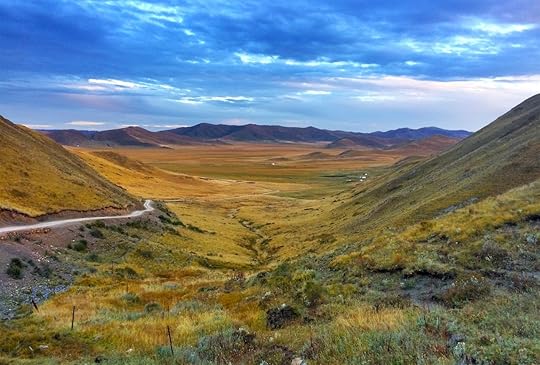
We travel through the endless succession of yellow-hued meadows and rugged hills interspersed with greener, wetter patches of marshes and bogs. White nomads’ tents with smoky chimneys grow like mushrooms on the sides of the road, surrounded by the obligatory herds of domestic yak and protected by the menacing Tibetan mastiffs. The smell of burning yak dung hangs in the air, mixed with the pungent scent of the animals themselves.
By the time we arrive in Langmusi the rain had stopped and the sun is fighting its way through a thick layer of clouds. Encircled by forest-covered mountains and bookended by two white-washed Tibetan monasteries the town is inhabited primarily by Amdo Tibetans and Hui Muslims.
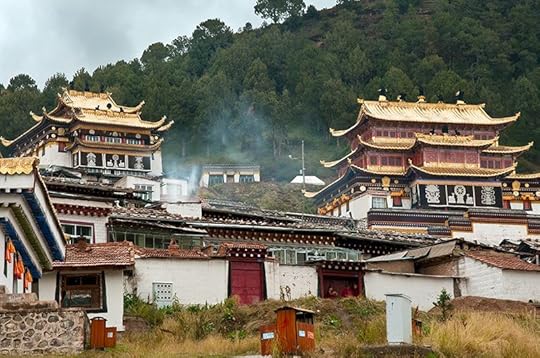
My first impression of Langmusi is that of a Tibetan Hogwarts. There are as many young novice monks on its narrow twisting streets as there are plain-clothed locals. I half expect them to pull out their wands and conjure up a ghostly Patronus.
We stop for lunch at a Muslim noodle shop, and while we wait for our meals, two young monks wrapped in dark burgundy robes walk in and take a table by the wood burning stove. A Muslim serving girl, hair tucked in underneath a headscarf, takes their order. Another table is occupied by a Han Chinese family, making their way through a large helping of noodles. The two of us add some exotic flavor to the ethnic diversity of the clientele.
Return to the quarry
After dark, we return to the quarry and find the Pallas’s cat sleeping in the same crevice as the night before. Sid spots another pair of feline eyes shining from the darkness on the slope of the neighboring hill. Surely this can’t be another Pallas’s cat. Cats do not like company. Sid peers through the scope and bursts out: “The Chinese Mountain cat!”
I can barely make out the shape of an animal concealed in a thick patch of grass, but I have learned to trust Sid and, without questions, I hurry after him up the slope. Despite the hurrying, however, our progress is painfully slow.
At this altitude, even a slight incline in topography feels like a mountaineering challenge. My lungs are starting to struggle to get enough air. The ground underneath our feet is peppered with broken rocks ranging in size from small pebbles to baseball-sized rugged lumps. The rocks are concealed underneath a thick carpet of wild oats — an obnoxious plant with its entire reproductive strategy being based on the ability of its seeds to burrow into the hide of a passing animal to hitch a ride away from the parent plant.
As we slowly make our way up the hill gulping air, tripping over unseen rocks and assailed by sharp seeds drilling themselves into our feet and ankles, we know all too well that at any moment the cat can get up and leave. Eventually, it does. Helplessly, we watch it walk away. As it reaches the crest of the hill, almost out of reach of Sid’s powerful torch, it stands out against the black sky like a ghostly apparition, before disappearing out of view.
Having climbed so far, in very relative terms, we are reluctant to give up. We labor up to the crest of the hill and scan the grassland below. Distant eye shine tells us that the cat is circling back to the quarry. We follow it again, struggling to keep up.
The next time we spot it, it is sitting contentedly on a pile of rocks mere few meters away from the Pallas’s cat’s layer. Shivering underneath all my clothing, I feel envious of its thick winter coat. Unlike me, the cat is completely at home on the cold, windswept plateau.

A Pallas’s cat.
We watch the cat through the scope for what seems like an eternity and I feel a profound sense of gratitude for this moment in time that means so much to me. If I could find the Chinese Mountain cat, the species that has not even been photographed in the wild until only a decade ago, then perhaps my quest is not that impossible after all.
All photos are the author’s.
More like this: Big Cat Rescue: Florida’s sanctuary for abused and neglected big cats

whitewater park in New Zealand
There are few summer activities as thrilling and popular as whitewater sports. Fortunately, the industry is starting to catch on to the reality that, as more people want to take a kayak off a Category 4 waterfall, more safety lessons need to be taught.
Let me introduce you to the Vector Wero Whitewater Park, which hosts two river runs (Categories 1-2, and 3-4) that together include over 1600 feet of drops, eddies, stoppers, and exposed “rocks”. There is even a waterfall that fully submerges a raft when it lands at the base. This course is run by Olympic gold medalist Ian Ferguson and his team, who also teach the basics (and not-so-basics) of whitewater sports, including rafting and kayaking safety. While this whitewater park looks especially thrilling, other similar parks have been popping up in places like the edge of London and Sydney. These were built both to serve the Olympic games and to provide city dwellers with new venues for outdoor activity. Hopefully a major American city will be getting one soon…
Follow Matador on
Vimeo
Follow Matador on
YouTube
More like this: Welcome to the Green: World's most hardcore whitewater community
Matador Network's Blog

- Matador Network's profile
- 6 followers

